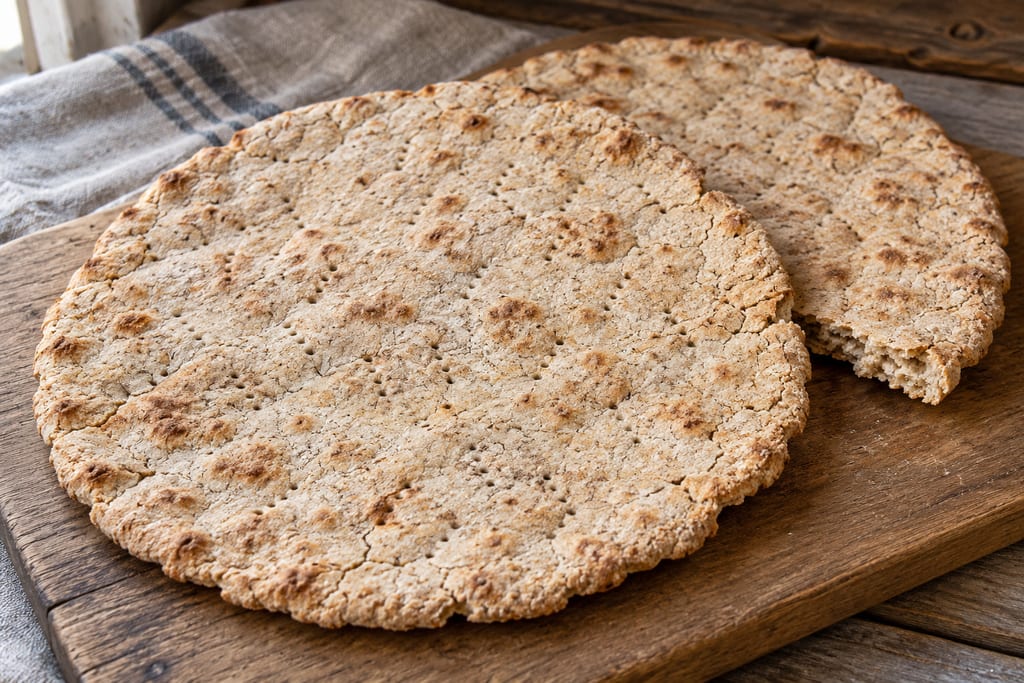
Lapland barley rieska
Two barley flatbreads made with cold dough and baked rapidly on a hot sheet, following Timo Lepistö's northern Finnish formula.
 FermenteaWhere food goes to change
Substrates
Barley flour is ground barley grain; whether it comes from pearled or hulless kernels, its milling and limited wheat-like gluten-forming ability shape the doughs and foods it can make.
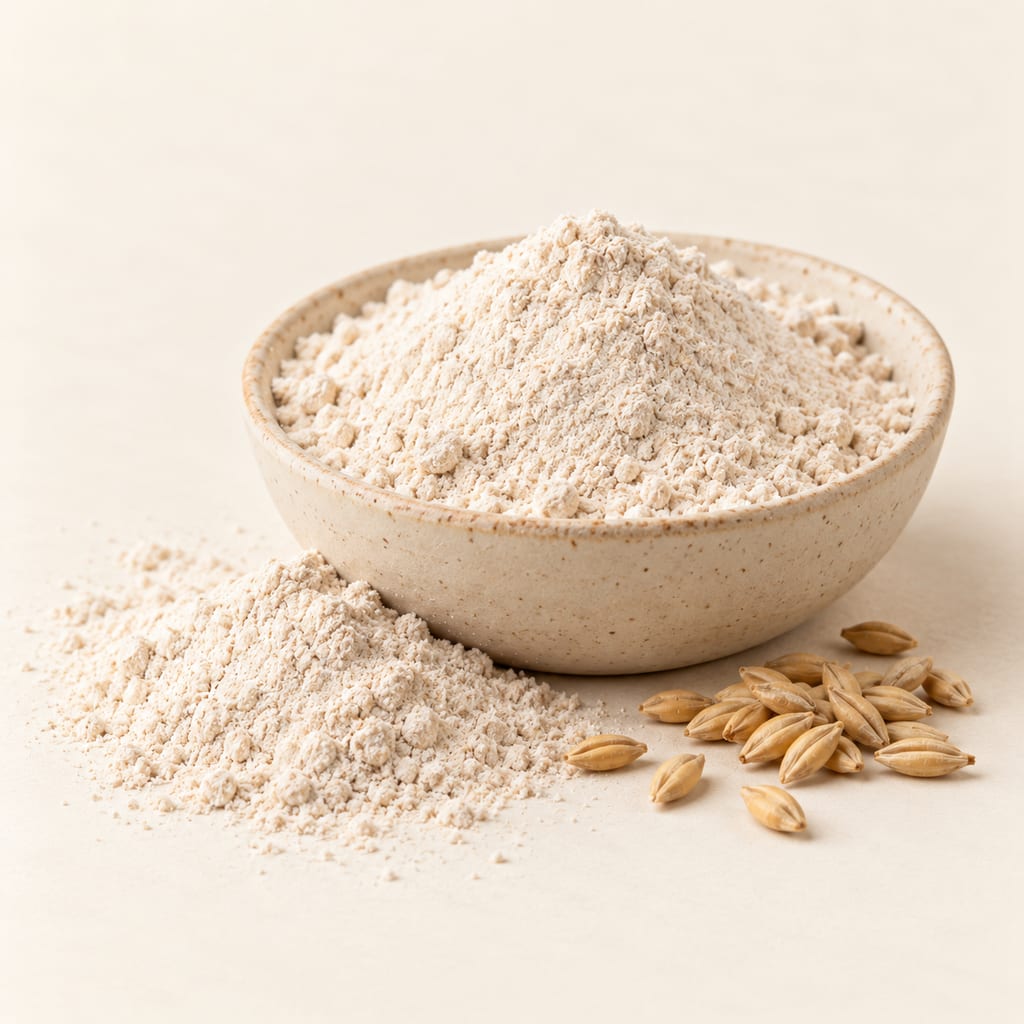
Barley flour is a powder made by milling barley kernels, usually from cultivated Hordeum vulgare. Barley types may retain their hull or thresh free of it. The flour's name alone does not reveal how much bran remains: mills can make it from pearled, covered or hulless barley, and those routes yield different products.
This page is about raw milled flour, not whole barley, pearl barley, groats, flakes or malt. Groats are cracked or coarsely processed kernels; flakes are flattened grain. Malt begins with controlled germination and drying. Malt flour, including diastatic and non-diastatic products, therefore has a different processing history and baking role. A recipe that asks for barley flour should not silently receive roasted barley, groats or malt powder.
Bere is a traditional barley of northern Scotland, and the Rowett Institute leaflet names beremeal in its Orkney recipe. That local term identifies a specific flour, not a synonym for every barley flour. Keep named local grains distinct where a source identifies them.
Commercial processing may clean and condition barley, remove the inedible hull, separate loose material and pear the kernel before roller-milling it to flour. Barley bran can be a by-product. The review also describes covered or hulless barley as flour sources; the exact milling route depends on the grain and mill. Particle size and bran content affect color, texture, hydration and the dough a baker gets.
Milling is physical size reduction, not fermentation. It does not make plain flour into malt. Malting is a separate controlled germination process that activates enzymes, followed by drying. Ground malt may contribute enzymes or flavor in formulations designed for it, but it is not a default replacement for plain flour.
The sources consulted describe industrial milling and flour in named recipes; they do not give a universal home-milling method. This page therefore gives no mill setting, kernel conditioning schedule or home-sieving procedure. Use the flour as purchased and follow the recipe's own directions.
Barley flour contributes cereal flavor, color, starch and fiber. Its proteins do not create the same elastic gas-retaining network as wheat flour. In studies summarized by the review, increasing barley flour in yeast-raised breads reduced loaf volume, and high-barley formulations could have denser texture. The result varies with the flour, formula and process; these findings do not support one universal replacement percentage.
Flatbreads and mixed flours offer well-documented uses. A wheat blend can provide more of the structure that barley flour lacks, while barley changes the taste, color and composition. Barley flour also appears in cakes, cookies, pasta and other cereal products. These are uses in documented food families, not a promise that any wheat recipe can be converted without adjustment.
Barley flour is an ingredient, not a fermentation culture. In a fermented dough it supplies cereal material while the recipe's microorganisms do the fermenting. A bread containing barley flour is not automatically sourdough, and milling alone is not a ferment.
ThisisFINLAND's modern Lapland recipe for Lapin ohrarieska names barley flour with cold water, salt and baking powder. It recommends cold ingredients and a very hot oven. The source also says rieska has local versions across Finland, so this one formula should not stand for every Finnish flatbread. Baking powder raises this recipe chemically; it is not a fermentation.
The Rowett Institute leaflet describes bannocks as a family of flatbreads associated with Scotland, Ireland and northern England. It distinguishes Orkney's beremeal bannock from fruit-rich Selkirk bannock. Anne Johnson's Orkney formula allows beremeal or barley flour as one option, alongside a separate oatmeal or oat-flour option, with white flour and other ingredients. It can be cooked on a griddle or baked. The stated choice preserves a local variation without treating bere and ordinary barley as identical.
Tamil Nadu Agricultural University's account says barley flour is generally mixed with wheat or gram flour for chapatis in India; it also describes bread made with wheat and barley, rye or oat blends. These regional examples document use, not a birthplace for the flour.
Eitam and colleagues tested reconstructed Natufian mortars with wild barley. Their experiments show how the tools could peel hulled kernels and grind them into groats and fine flour. The authors interpret this as support for flour-making around 12,500 years ago and suggest unleavened bread from fine flour may have joined earlier groat meals in the Late Natufian.
This is experimental archaeology: it demonstrates a plausible way to process wild barley and interprets tools from archaeological sites. It is not a directly recovered and dated flour sample or proof of a single place where barley flour began. The current sources do not establish a general first attestation or origin, so the history field leaves those claims unknown.
Choose the form the recipe names. Fine pearled flour, wholegrain flour and flour from hulless kernels can differ. Read the label, especially when a source names beremeal or another local grain. The checked sources do not establish a common grading system or a reliable one-for-one swap among those products.
No source checked gives a storage duration that applies to every barley flour, package and climate. Follow the package directions; this page supplies no invented shelf-life figure. The milling sources explain product forms, not a household storage guarantee.
Flour is raw. The FDA warns that uncooked flour can carry harmful bacteria from grain grown outdoors. Do not taste raw flour or dough; cook the food according to its directions and wash hands and surfaces that touched uncooked flour. This page does not offer a universal home heat-treatment schedule for raw consumption.
Barley contains gluten. Barley flour is unsuitable for people who need to avoid gluten, including many people with celiac disease. Do not describe ordinary barley-flour breads as gluten-free, and do not imply that mixing barley flour with another flour removes the barley.
gluten
This modern recipe names barley flour; it does not claim Lapland as the origin of barley flour or of rieska.
The leaflet gives beremeal or barley flour as alternatives in one Orkney bannock recipe; it does not make Orkney a flour origin.
Tamil Nadu Agricultural University records barley flour mixed with wheat or gram flour for chapatis; the source makes no origin claim.
Two barley flatbreads made with cold dough and baked rapidly on a hot sheet, following Timo Lepistö's northern Finnish formula.
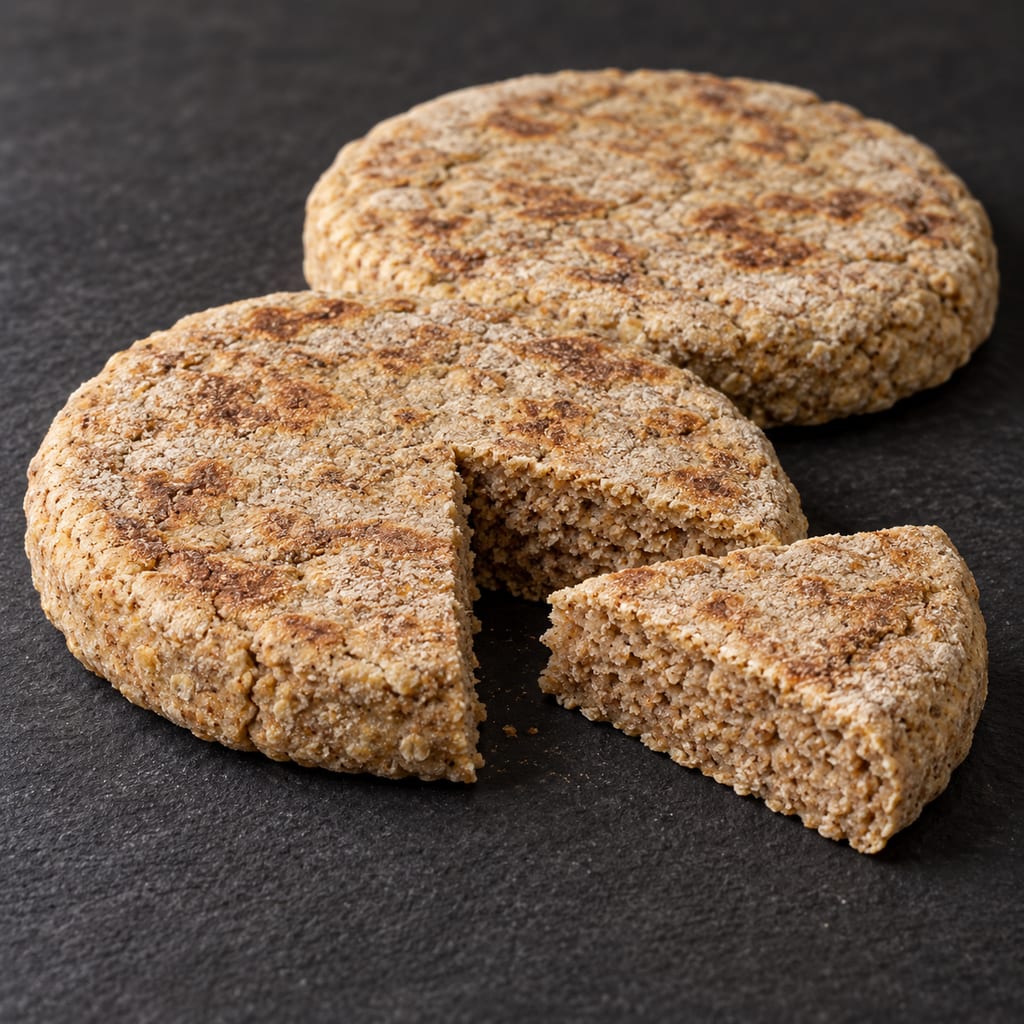
Two round, chemically raised bannocks made with equal weights of white flour and beremeal, barley flour or oat flour, following Anne Johnson's Orkney formula.
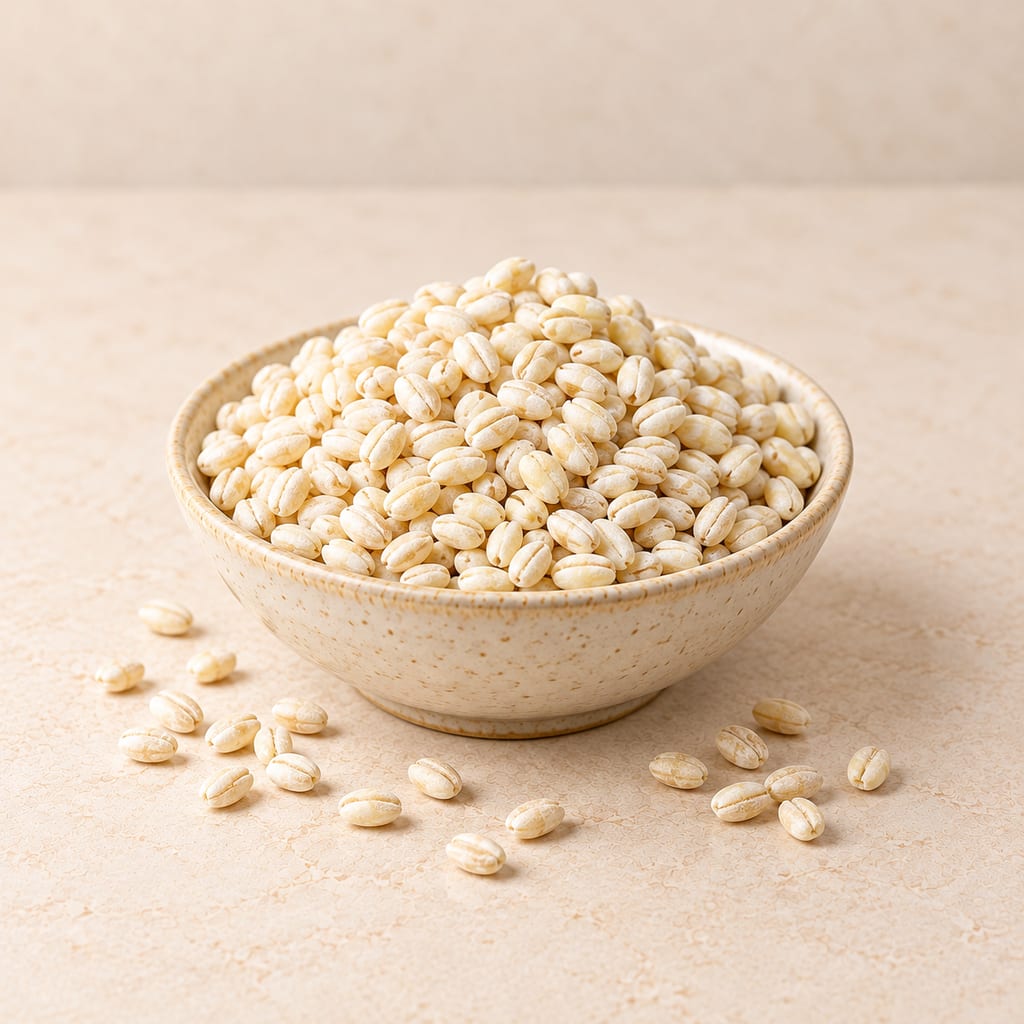
Barley is a hardy cereal, domesticated in the Middle East over 10,000 years ago, eaten whole, pearled or milled, malted for brewing, and grown with koji mold for barley miso.
No community contributions have been published for this entry yet.
Sign in to contribute. Published comments and photos are free to read.
Plants / MDPIIdentity · Processing · Uses
Barley in the Production of Cereal-Based ProductsThe review describes flour milled from pearled, covered or hulless barley and a roller-milling sequence after cleaning, conditioning, dehulling and pearling; bran can be a by-product.
Barley flour has weaker wheat-like dough structure and is commonly used in flatbreads or composite flours; studies summarized in the review report loaf-volume reductions as the barley share rises.
Cited in: A flour made from barley grain; From kernel to flour; How barley flour behaves in dough
PLOS ONE / PubMedHistory
Experimental Barley Flour Production in 12,500-Year-Old Rock-Cut Mortars in Southwestern AsiaThe authors experimentally processed wild barley in reconstructed Natufian mortars and report a process for groats and fine flour around 12,500 years ago.
They propose unleavened bread from flour as a Late Natufian use; this is a reconstruction, not a direct preserved flour find.
Cited in: An early history with a limit
ThisisFINLANDUse · Geography
Delicacies from the top of the world go down well: northern Finnish recipesA Lapland barley flatbread recipe names barley flour with cold water, salt and baking powder and recommends cold ingredients and a very hot oven.
Cited in: Flatbreads in Lapland and Orkney
Rowett Institute, University of AberdeenUse · Geography
BannocksThe leaflet describes a broad Scottish, Irish and Northern English bannock family and distinguishes the Orkney bere-barley bannock from Selkirk bannock.
The Orkney formula offers beremeal or barley flour alongside white flour, with griddle and oven options.
Cited in: A flour made from barley grain; Flatbreads in Lapland and Orkney
Tamil Nadu Agricultural University, Agritech PortalProcessing · Use
Barley ProcessingThe page lists barley flour among milled barley products and distinguishes milling from malting, a controlled germination that activates enzymes and converts starch to fermentable sugars.
It states barley flour is generally mixed with wheat or gram flour for chapatis in India and wheat blends are used in bread.
Cited in: From kernel to flour; How barley flour behaves in dough; Flatbreads in Lapland and Orkney
U.S. Food and Drug AdministrationSafety · Allergen
Gluten and Food LabelingFDA identifies barley as a grain containing gluten.
Cited in: Choosing, keeping and cooking it
U.S. Food and Drug AdministrationSafety · Handling
Handling Flour Safely: What You Need to KnowFDA explains that flour is raw and that field-grown grains may carry Salmonella and pathogenic E. coli; uncooked flour is not ready to eat.
Cited in: Choosing, keeping and cooking it