Fermented meat around the world
Dry salami, sour pork with rice, matured sheep and aged blubber follow different paths from animal to food. Their stories connect microbes with climate, slaughter, migration and the meals people share.
 FermenteaWhere food goes to change
مري · murri · murri (medieval Arabic condiment) · murrī
A dark, salty fermented condiment of the medieval Arabic kitchen, made from fermented barley and flour, which seasoned dishes where later cooks would use soy sauce, salt or sumac.
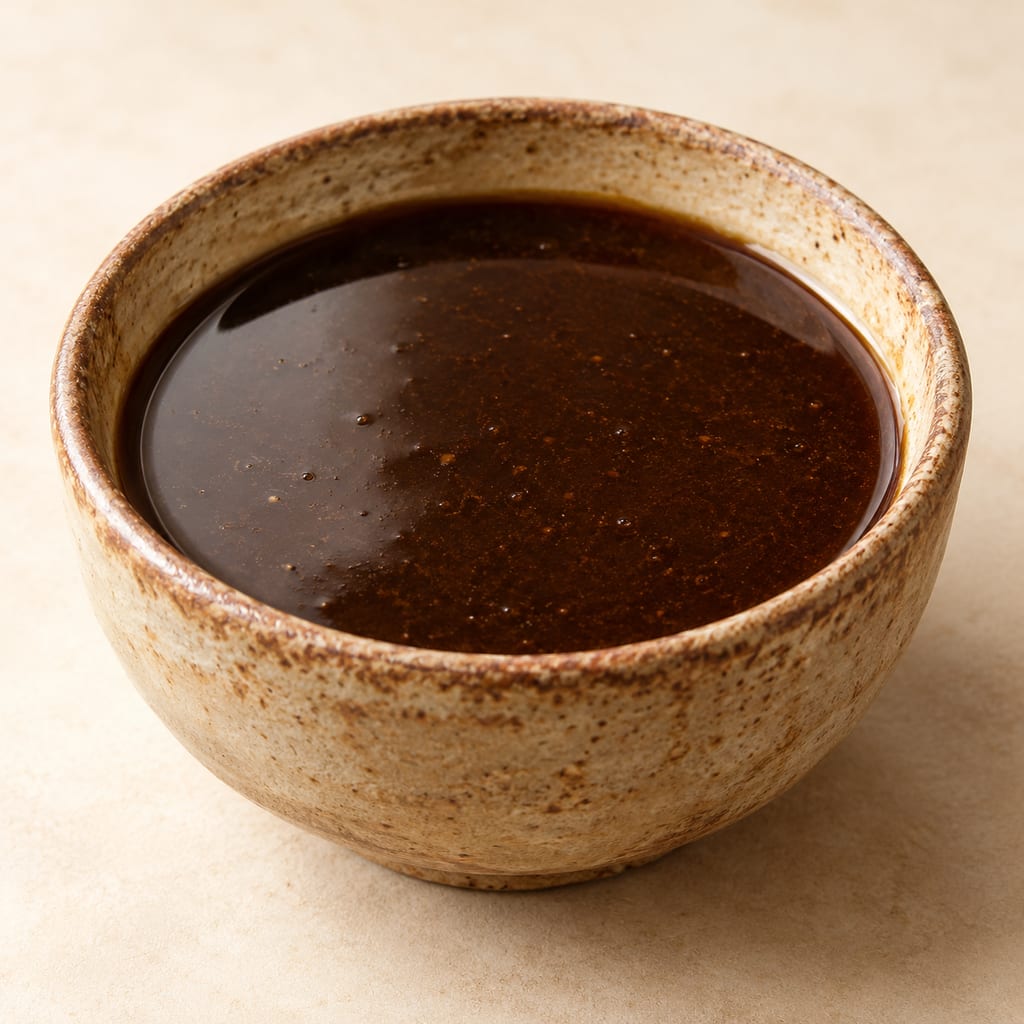
Murrī was the salt-and-umami seasoning of the medieval Arabic kitchen. The medieval cookbooks use it in small amounts in almost every substantial dish, and it is named in the tenth-century Kitab al-Tabikh attributed to Ibn Sayyar al-Warraq. The finished product was a dark, liquid seasoning made from fermented barley, not from soybeans.
Modern writers have compared murrī with soy sauce because both are dark, salty and brewed from grain or beans. The comparison helps a reader place the flavour, but it does not describe the same material or process. The Aramco World article on the medieval Arabic cookbooks notes that murrī was never made from beans and was always a liquid. It was not borrowed from China.
The method yields a fermented barley mass, not a sauce made in one step. In the North African method, barley is ground and mixed with water into a dough, which is wrapped in fresh fig leaves. The leaves help a mould develop. The dough is dried slowly over many weeks until it hardens into budhaj, the starter used for the next step.
Budhaj is then ground, mixed with water, salt and often more flour, and left to ferment again. Pressing the resulting paste yields the dark liquid. The Iraqi-style version given in later Arabic cookery books wets a mix of ground flatbread, barley flour and salt and lets it ferment, so the bread and the grain both feed the fermentation.
The sources do not identify which organisms do the work. Mould growth on the barley is documented in the descriptions; the roles of bacteria, yeasts and enzymes are not established by the sources read. Breakdown of starch and protein is the plausible route to the savoury taste, but the sources do not measure it, so it is not claimed here.
Barley is the substance of the process. The flour supplies starch and protein for the moulds and the second fermentation. Fig leaves were the medium used to encourage mould on the dough in the North African method, and the sources treat them as part of the method rather than as flavouring. Salt slows unwanted growth and shapes the flavour of the finished liquid. Flatbread, used in the Iraqi-style version, adds starch and some bread flavour.
The historical sources do not record exact weights. A reader should not infer a fixed ratio of barley to salt from this record.
Two families of method appear in the sources. The Iraqi-style murrī, given in the tenth-century Kitab al-Tabikh and the thirteenth-century Kitab Wasf al-Atima al-Mutada, uses ground flatbread, barley flour and salt. The Maghrebi style described in Kitab Wasf uses barley flour alone and flavours it with carob, fennel stems, citron, pine nuts, mixed spices and bitter orange wood, according to the Wikipedia summary of those texts.
Other medieval murrī recipes are not fish-based. Barley and must versions are documented as separate records in the research programme and are not merged here.
Murrī was a background seasoning. The Aramco World article says most murrī-flavoured dishes in the book are vinegary, with one exception: a sweet, honey-glazed lamb recipe from the al-Barmaki manuscript. Murrī also seasons a fried eggplant dish with pepper and caraway, which the article calls the most unexpected flavouring in the book.
Because it was used in small quantities, it was closer to a salt or a sour-savoury note than to a sauce poured at the table.
The sources conflict on timing. One gives about forty days for each stage. Another gives a month or more. A third gives four months in total. The variation is itself the finding: the medieval texts did not standardise the method in a way that survives. Whatever the reader makes of these figures, they describe a historical process that ran for weeks to months under conditions the texts do not control.
The attribution also needs care. A 13th-century Kitab al-Tabikh by Muhammad bin Hasan al-Baghdadi is a different book with the same title, and murrī recipes appear in it. Quantities should be checked against a translation of Ibn Sayyar's text before anyone relies on them.
Murrī is named in the tenth-century Kitab al-Tabikh attributed to Ibn Sayyar al-Warraq and in the thirteenth-century Kitab Wasf al-Atima al-Mutada. The books describe a barley-based fermented liquid rather than a fish sauce. Not every medieval condiment called murrī was fish-based.
The historical method relies on spontaneous mould on barley dough. The sources give no controls, and the reaction cannot be reproduced safely from them.
Hazard sourceHistorical description, not a safe starter specification.
The medieval method is not a tested home procedure. Do not reproduce it as a safety-validated recipe.
No source in this record establishes a place.
Dry salami, sour pork with rice, matured sheep and aged blubber follow different paths from animal to food. Their stories connect microbes with climate, slaughter, migration and the meals people share.
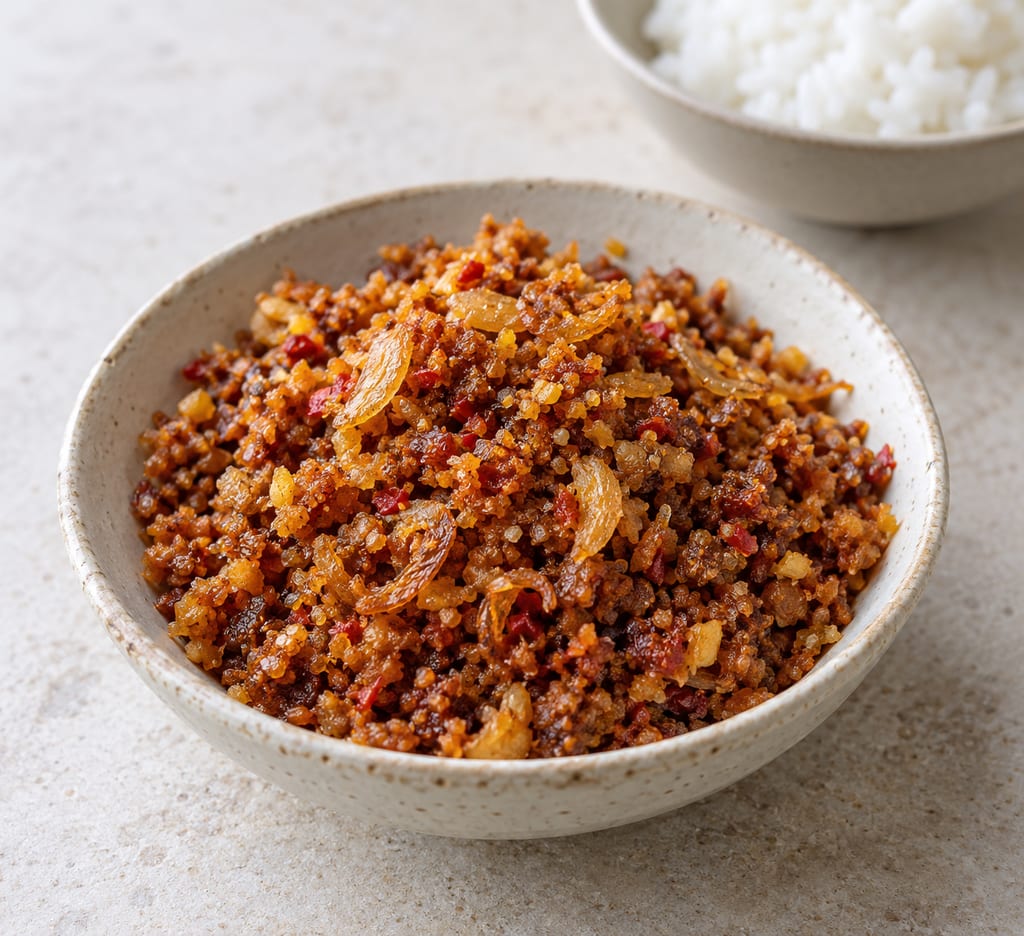
A Myanmar relish of dried shrimp, fried eschalot and garlic, chilli, turmeric, tamarind and ngapi. Naomi Duguid’s published recipe makes about 1 cup; it contains crustacean shellfish.
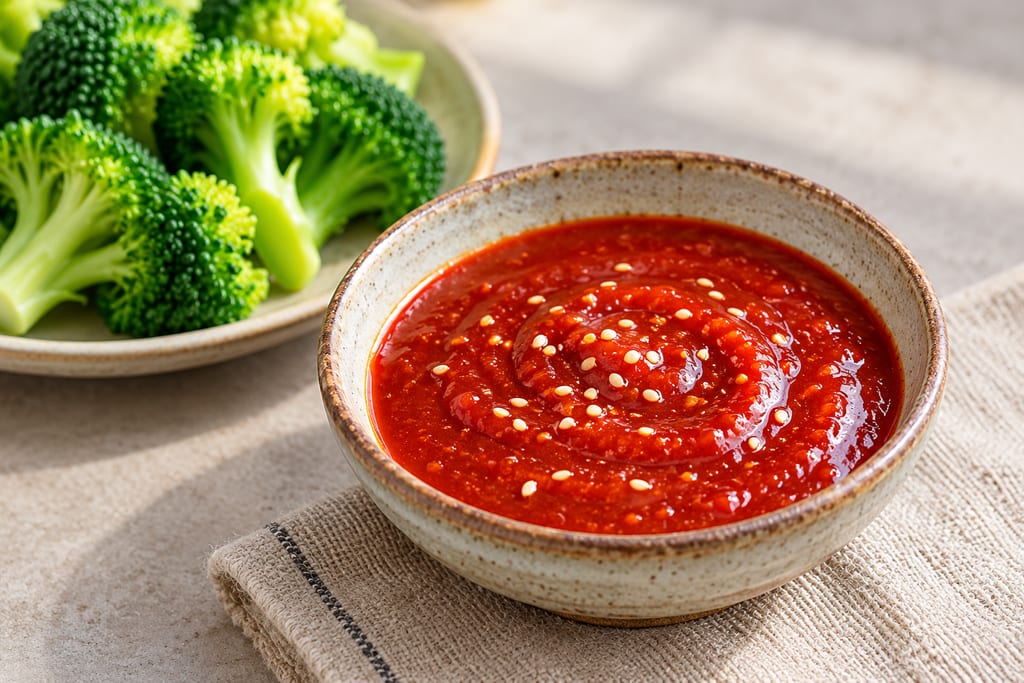
Chogochujang is a Korean sweet-sour sauce made by seasoning gochujang with vinegar and sugar. This development batch adds water and toasted sesame seeds, with optional garlic for the portion being served.
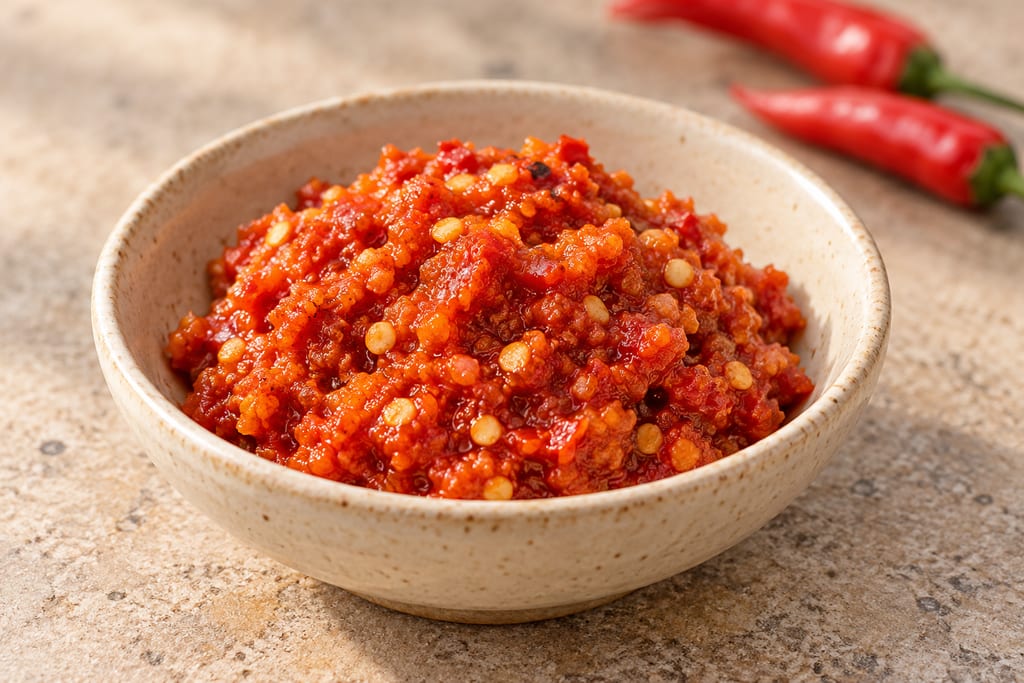
Dinanche, or donne' dinanche, is a Chamorro hot pepper paste of crushed chillies that Guam cooks use on its own or stir into fina'denne'. Its versions range from pepper alone to ones with eggplant, miso or coconut milk.
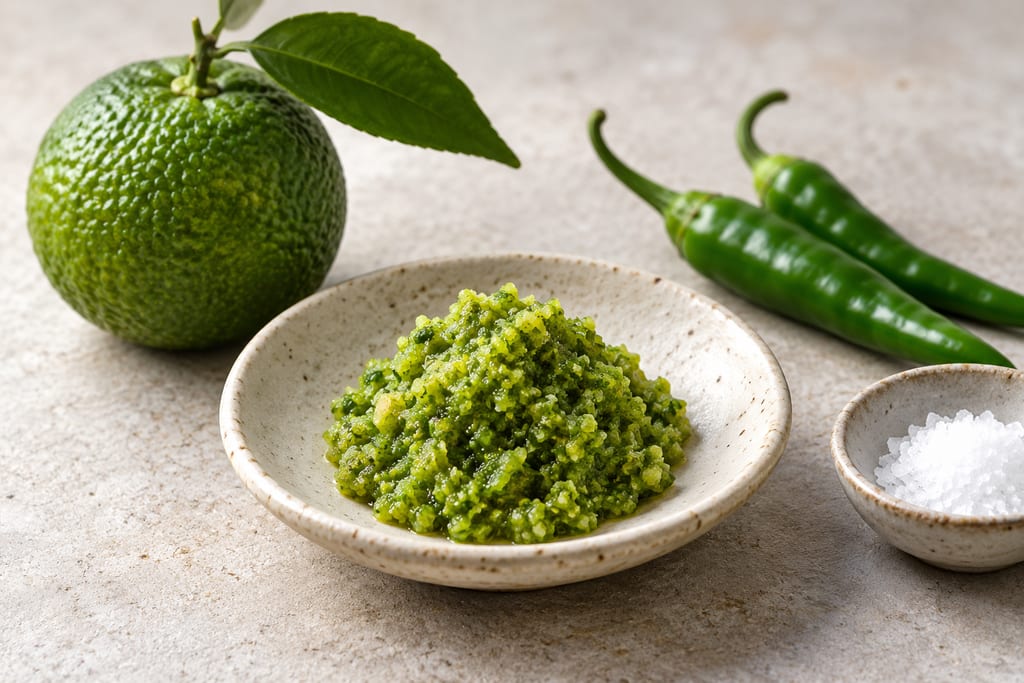
A fresh, uncooked yuzu and green chilli paste inspired by Kyushu’s yuzu kosho, made here as an untested small-batch seasoning rather than a preservation formula.
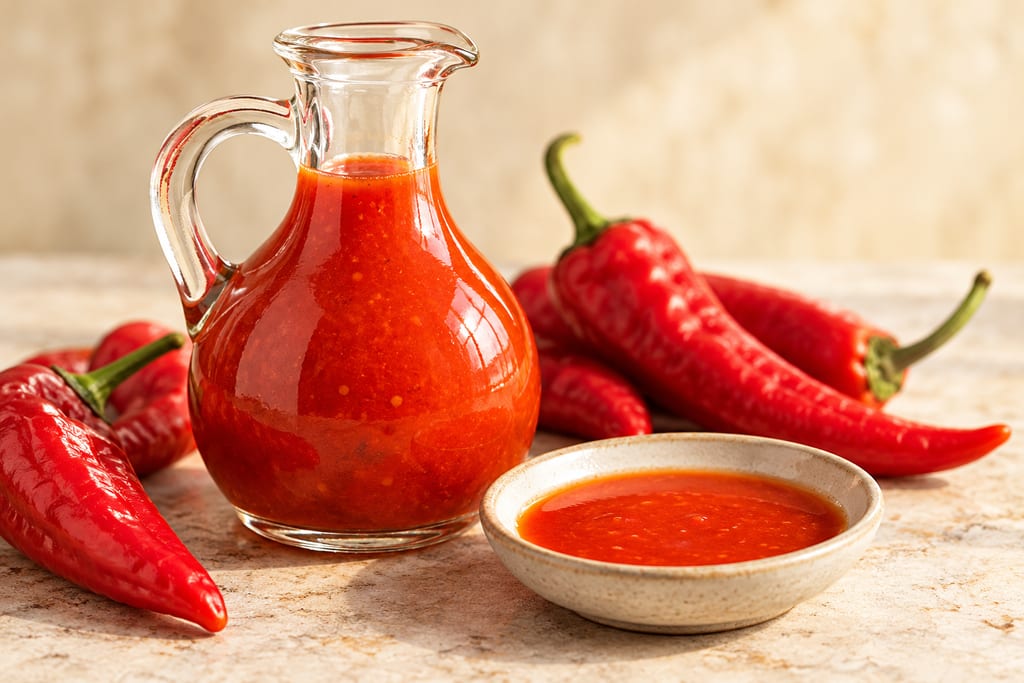
Fresh hot peppers ferment beneath a measured salt brine, then become a bright, tangy sauce blended from the peppers and their liquor.
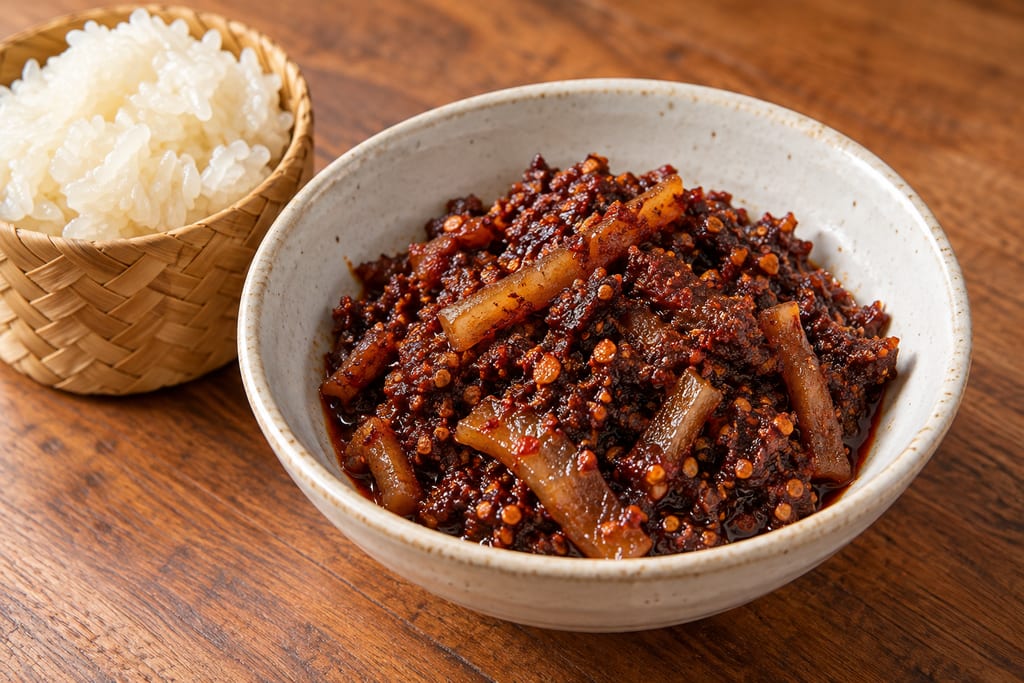
Jeow bong is a Lao paste of dried chilli, shallot, garlic and galangal cooked with buffalo or cow skin, a Luang Prabang specialty eaten with sticky rice and grilled meat.
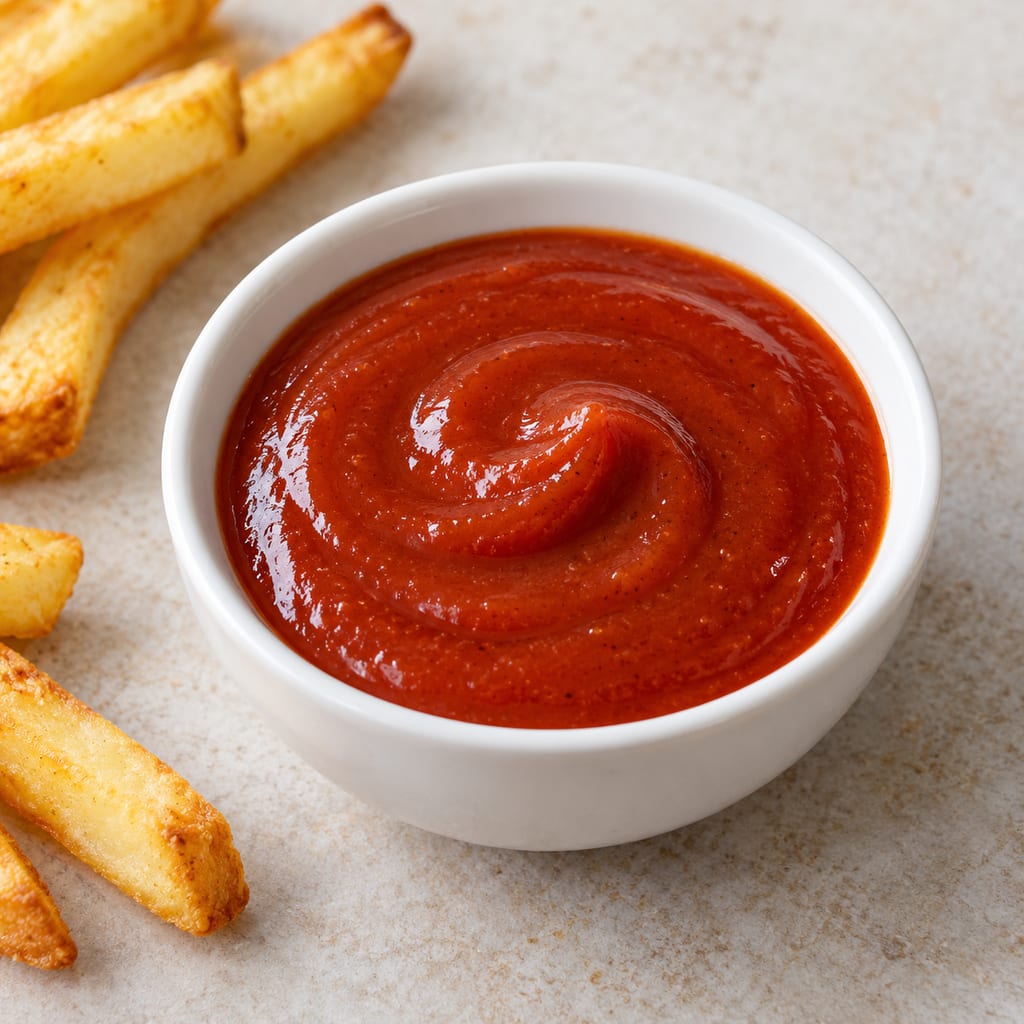
A modern tomato condiment sharpened with the spicy, savoury tang associated with kimchi; this measured version whisk-mixes prepared ketchup and commercial kimchi seasoning.
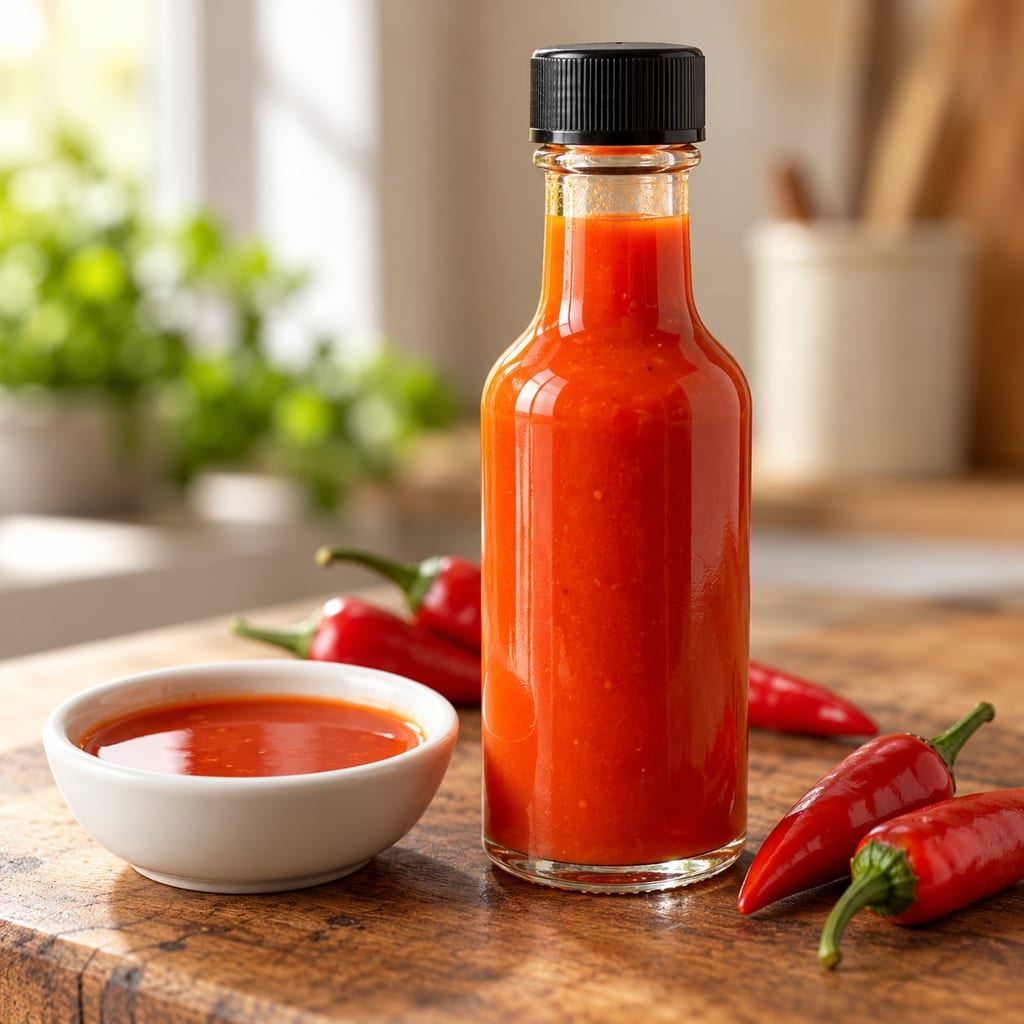
Documentary account of Louisiana pepper sauces, using TABASCO's published barrel-aged commercial process as one specific example; the source does not provide a validated home recipe.

Protected Italian vinegar made only from cooked grape must, fermented and aged in a battery of wooden barrels for at least 12 years: sweet, sharp and syrupy.

Airag is Mongolia’s fermented mare’s-milk drink, traditionally churned with saved starter in a reusable cowhide khokhuur.

Appam, or hoppers, are South Indian and Sri Lankan rice pancakes made from a fermented coconut-and-rice batter and cooked in a curved pan to a crisp lacy rim and a soft, spongy centre.

Auricularia tremellosa is a wood ear fungus of the genus that supplies most dried wood ear sold in China; its own food record is thin, and the culinary practice described here comes from the closely related wood ear species.

Ayran is Turkey’s cold, savoury yogurt drink: plain yogurt is loosened with water and lightly salted, then whisked smooth or aerated into a soft cap of foam.
A thin stone griddle used over an open hearth. Norwegian archaeology documents the established tradition from the early Middle Ages; a Viking-period origin is only a cautious suggestion linked to Shetland.

Crushed or milled barley cooked in water until the starch softens and the mixture thickens, the plainest way a northern household turned stored grain into a meal, here with apple and hazelnut.

Black carrot is the anthocyanin-pigmented Eastern carrot (Daucus carota var. atrorubens), the purple root that preceded orange types and still colours kanji and şalgam.
No community contributions have been published for this entry yet.
Sign in to contribute. Published comments and photos are free to read.
Saudi Aramco WorldHistory · Method
Cooking with the CaliphsMurri is made from fermented barley, flour, salt and water, with fig leaves used to develop mould.
The moulded barley is mixed with flour and salt and fermented for a month or more, then pressed into a dark-brown liquid that tastes like soy sauce.
Murri was never made from beans, was always a liquid and was not borrowed from China.
Most murri dishes in Kitab al-Tabikh are vinegary; one honey-glazed lamb recipe from the al-Barmaki manuscript and a fried eggplant dish are exceptions.
WikipediaHistory · Lead
Murri (condiment)Iraqi-style murri in Kitab al-Tabikh and Kitab Wasf al-Atima al-Mutada uses ground flatbread, barley flour and salt.
The Maghrebi style in Kitab Wasf uses barley flour flavoured with carob, fennel stems, citron, pine nuts, mixed spices and bitter orange wood.
Murri has been compared with soy sauce by several writers because of its glutamate content.