
Fermented meat intake
Fermented meat around the world
Dry salami, sour pork with rice, matured sheep and aged blubber follow different paths from animal to food. Their stories connect microbes with climate, slaughter, migration and the meals people share.
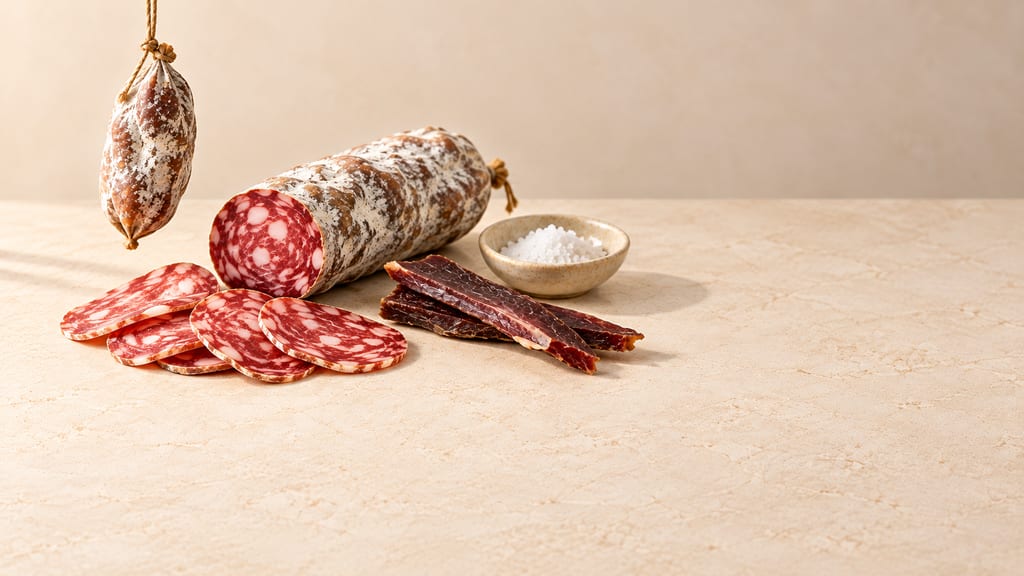
Salami, dried strips and a hanging sausage: meat fermented and cured in many ways, far beyond the slice.
More than a slice of salami
A slice of dry salami makes meat fermentation look familiar: a firm red mosaic of lean meat and pale fat, sometimes beneath a white surface bloom. Yet that image leaves out much of the world. In Thailand, pork and cooked rice become a sour, compact food. In the Faroe Islands, sheep cuts mature in moving air. Sudanese households have made seasonings from fat, offal and bones. In Arctic communities, particular tissues of birds and marine mammals acquire valued flavours through deliberate ageing. The material can be a muscle, an organ, a skin, a blood-rich mixture or fat. The finished food can be sliced, fried, stirred into a sauce or shared at a feast.
These foods ask different questions of a cook and a historian. Does microbial growth change the food, and how? What also happens through salt, smoke, drying or the animal's own enzymes? Is a name attached to one precise process, or to several? The answers determine which foods can usefully be compared. A sour pork parcel and an air-matured sheep cut belong in the same atlas without becoming versions of one recipe.
The atlas includes a separate aquatic branch for fish, shellfish and roe. That branch reveals useful parallels, particularly between meat-and-grain foods and rice-fermented fish, but keeps the animals and the processes clear. A fish sauce, a dried sausage and a rendered fat are different kinds of food even when maturation links their histories.
What the microbes do, and what they do not
Fermentation involves desired microbial growth and transformations caused by microbial enzymes. In a lactic meat ferment, bacteria use available carbohydrate and produce acids. That change contributes sourness and alters the environment in which the rest of maturation takes place. The carbohydrate may be deliberately added sugar, cooked rice or another starchy ingredient. Salt, the starter community, temperature and the physical form of the food all help shape what follows. A sausage filled with chopped meat and fat is a different environment from a whole cut.
Drying removes water. Smoking exposes a food to smoke compounds. Curing introduces salt and, in some products, specified curing agents. Protein and fat can also break down through enzymes already present in animal tissue. These operations can accompany fermentation, but none proves it has occurred. The word matured is therefore broader than fermented. Finding bacteria in a finished food does not, by itself, show what they did during its preparation.
The contrast is visible within familiar names. Contemporary gravlax is generally a salt-and-sugar cure; a historical association with buried fish does not establish a fermentation stage in today's product. A fresh chorizo can share its name with a dried fermented sausage. Even the pepper-rich Calabrian preserve ’nduja has received different process classifications in scientific studies. The useful unit is the particular formulation and method, rather than the name alone. Fermentation also does not automatically make a food probiotic: that term requires evidence beyond the presence of microbes.
Europe's many sausage interiors
European dry sausages share a recognisable form while differing in grind, fat, seasoning, casing, smoke and maturation. Salame Piacentino, from the province of Piacenza, has been studied across local factories using both spontaneous and added-starter production. Ventricina del Vastese contains conspicuous pork pieces and red pepper and undergoes slow fermentation and drying. Its texture and pace differ from a finely chopped salami. Pitina, from the mountain valleys of western Friuli, makes the difference even clearer: sheep, goat or game meat can form a casing-free ball or loaf, with pork fat and an exterior coating of maize flour.
Surface and interior are separate habitats. In Szegedi téliszalámi, smoke, extended ripening and the characteristic surface mould community all matter. Lactic bacteria inside a sausage and moulds on its casing do different work. A white exterior cannot establish the identity of a culture, and a photograph cannot distinguish deliberate ripening organisms from unwanted growth. The rind is part of a specified process, not a decoration that can safely be copied from its appearance.
Casing and size also shape local identities. An Ardèche sausage can appear in several named formats, while Lithuanian skilandis uses a large casing around coarse meat and fat. Swiss Landjäger is pressed into a rectangular section and cold-smoked. Its heritage record traces the name to the nineteenth century and describes changing meat mixtures in later recipes. That history shows why a recognisable shape need not imply an unchanged formula. Regional names preserve relationships among foods; they do not freeze every ingredient and stage in time.
When rice becomes part of the meat
In many Asian sour-meat traditions, grain is part of the ferment itself. Thai naem combines lean pork, prepared pork skin, cooked rice, garlic and salt. The skin contributes a chewy texture alongside the finely worked meat. Sai krok Isan is a sour sausage with pork, fat, rice and seasoning. The two belong to a related meat-and-grain world without being interchangeable products. The rice changes the mixture's carbohydrate supply and its texture; garlic is an ingredient in the ferment, rather than simply a finishing garnish.
Southwestern China's suān ròu includes Miao, Dong and Buyi preparations. Related Tujia suān zhǎ ròu combines pork with rice flour. These names describe community practices whose differences deserve to remain visible. A contemporary microbial study can establish fermentation in sampled foods while saying little about the year a tradition began. An ancient textual category such as Chinese hǎi, the animal-based sauces discussed in historical writing, is important evidence in its own right. It does not establish an uninterrupted recipe connecting every modern sour meat to a classical text.
Taiwan's Indigenous food traditions widen the comparison. An Amis/Pangcah siraw record documents a rice-associated pork preparation at Kaadaadaan, while Atayal tmmyan can involve pork or fish with millet or rice. Paiwan valeng uses dried taro powder with pork and salt. Its starch comes from a root crop, and the resulting food can enter a sour soup. Similar operations cross the land-animal and seafood boundary, but community names, ingredients and ceremonial uses remain specific. Treating all of them as Asian salami would conceal what makes them useful to compare.
Buffalo, beef and the words that travel
Pampanga's pindang damulag is made from water-buffalo meat. Research has followed its changing acidity, organic acids and microbial populations during natural fermentation. It belongs beside pork burong babi in Kapampangan food history, but the animals and formulations differ. The word pindang needs its local setting: in Indonesia it also names boiled fish and meat preparations that do not follow this Kapampangan process. Modern sweet tocino likewise cannot count as fermented merely through a historical relationship to sour-matured pork.
In Banyuwangi, East Java, Osing bekamal conserves meat with salt and sugar through maturation, with accounts linking it to slaughter surplus including Eid al-Adha. It is normally cooked afterwards. Bali's urutan includes a documented fermented pork-sausage form, while Brunei's belutak uses beef or buffalo and incorporates maturation, drying and later cooking. These foods have changing household and commercial versions. Subsequent cooking is part of how several are eaten; fermented does not mean ready to eat raw.
Across Türkiye and adjoining regions, sucuk-related names tell another story of travel and variation. Kayseri's household production is associated with autumn's warm days, cool nights and drying conditions. Tokat bez sucuğu uses cloth around the sausage. Afyon's geographical specification permits more than one processing route, including heat treatment. A protected name can therefore identify a place and product without proving that every package has undergone the same microbial transformation.
Beyond lean meat: fat, organs and bones
A meat atlas built only around muscle would miss foods designed as seasonings. In Sudanese accounts, miriss is fermented fat used for flavouring. Dodery transforms meat-bearing or marrow-rich bones into a condiment paste. Musran concerns small intestine, while adum involves bones with meat and tendons. Dirar's early-1990s survey records names and household preparations across historical Sudan. Those records establish a broader animal-food vocabulary; they do not place every name neatly inside today's national borders or give every preparation a resolved microbial mechanism.
Harar's wakalim provides a more closely studied sausage example. Beef, fat, onion, garlic and other seasonings form a product associated with households, cafés and celebrations. Studies have followed its microbial changes and found lactic bacteria prominent during later stages. It deserves its place beside European and Asian fermented sausages while retaining its own setting in Harar's food culture. The dates of those studies document scientific attention, rather than the invention of the sausage.
Farther east, Mizo sa-um matures pork fat, including caul fat, in a dried bottle-gourd container. Household practice responds to the weather, using sunshine when conditions permit and proximity to the hearth when they do not. Molecular work has examined its microbial community and fat breakdown. Lachungpa khyopeh in North Sikkim instead combines yak meat, fat and organs within the rumen, followed by prolonged smoking and maturation. Both enlarge the meaning of fermented meat beyond a sour lean-meat mixture. Neither can be translated into a standard salami schedule.
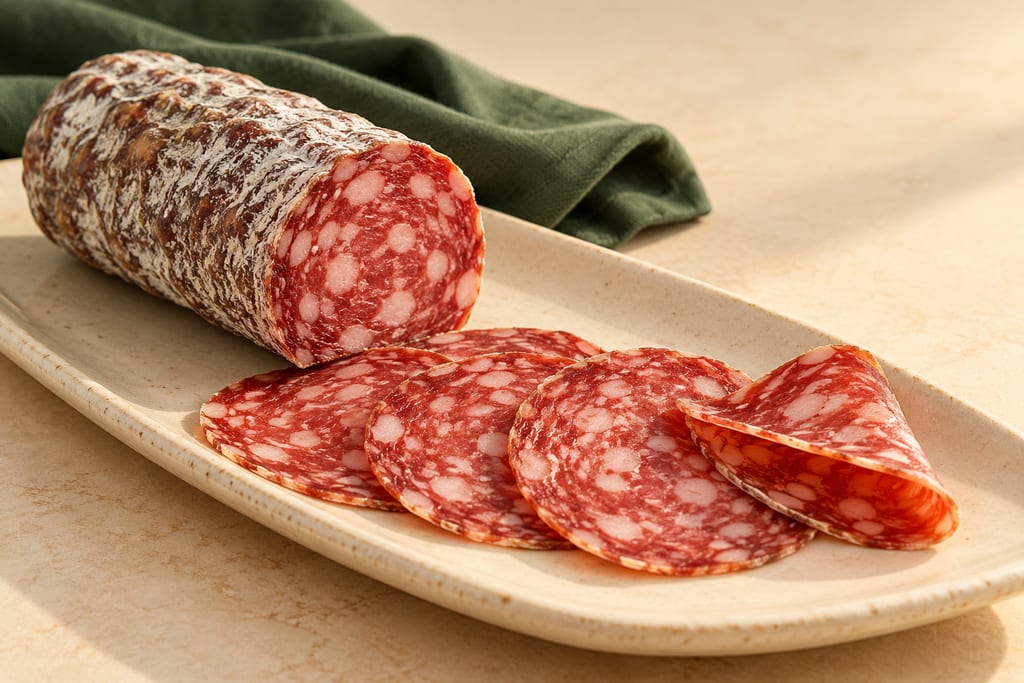
The cut hanging in the Atlantic air
Faroese sheep meat offers a whole-cut counterpart to the sausage interior. Cuts mature in a ventilated hjallur, moving through the strongly flavoured ræst stage toward the drier skerpikjøt. These are stages within a tradition, rather than two unrelated foods. The process normally lacks the salt-and-spice system familiar from continental salami, and household knowledge attends closely to air, weather and the changing meat. Autumn slaughter, often in October, supplies meat that may reach the ræst stage around Christmas and continue drying afterwards.
The building and the season are part of the food's environment. A household cannot be understood simply as leaving meat for a certain number of days: its location, airflow and weather differ from those of another household. Recent research has sought to characterise the associated microbiota more closely, while ethnography records considerable variation in practice and results. Fermentation, the animal's enzymes and moisture loss belong in the account together. The available evidence does not support replacing that locally learned system with an invented universal temperature or duration.
This is also a reminder that slow preservation and later eating have separate calendars. Faroese ræst meat near Christmas, Lithuanian skilandis held for summer farm work and Kayseri sucuk made in autumn describe different relationships between manufacture and a meal. Modern climate control can loosen a season's practical constraint without erasing the history carried by a food's name.
Arctic foods belong to particular communities
Northwest Greenland's kiviaq uses whole seabirds, particularly little auks, matured in a sealskin package. Canadian Inuit igunaq involves deliberately aged animal tissues, with local methods and meanings. Quaqtaq research describes beluga preparations and distinguishes them from misaraq, matured blubber used as a dip. These are specific foods within living communities. They should not be collapsed into one pan-Arctic recipe, or assigned to every Inuit, Iñupiat, Yup'ik or Chukchi community.
Mikiġaq in Alaska's North Slope connects whale meat and maktak with blubber and blood in documented preparations. Ethnographic work places it within the distribution and celebration of the spring whaling harvest, including Apugauti and Nalukataq. Sharing is part of the food's purpose, not an incidental detail after preservation. A description that records only the animal and the ageing misses the social work of allocating, preparing and eating the harvest together.
The history also includes change. Bering Strait ethnography documents suppression, shifting tastes and renewed appreciation of aged foods during the twentieth century and afterwards. This complicates the familiar picture of an untouched prehistoric survival. Collaborative research has begun comparing the microbial communities of fermented mammal tissues and fish, while keeping community knowledge within the investigation. Detecting organisms does not establish every organism's role, and sparse laboratory evidence should not be mistaken for sparse cultural knowledge.
Migration makes new sausage geographies
The Americas add regional histories rather than a second set of European labels. Pennsylvania's Lebanon bologna is an all-beef fermented sausage with a Pennsylvania German association. San Francisco Italian-style dry salami has been studied through the practices of local manufacturers. Their methods, use of starters and later processing belong to their particular production settings. A city can develop a recognisable sausage without possessing one exclusive microbial population.
In Argentina, nineteenth-century migration helped shape dry-salame centres across the Pampas. Colonia Caroya's official history connects local salame with Friulian families arriving in 1878 and with cellar maturation. Tandil has its own mixed pork-and-beef identity. Their later geographical recognitions record legal milestones in already existing traditions. The date a protected name was registered cannot stand in for the first time someone made the food.
Southern Brazil's salame colonial has been examined in Santa Catarina, where lactic bacteria and yeasts contribute to a living artisanal production tradition. Llama-meat sausages studied in Jujuy, Argentina, show regional diversification using an Andean animal. They are documented modern products, not evidence for an identical Inca salami. In Australia and Aotearoa New Zealand, fermented smallgoods likewise belong to contemporary local manufacturing and research. Their history should sit alongside, and remain distinct from, Indigenous animal-food traditions.
Fish shows why the process boundary matters
The aquatic branch covers several transformations. Japanese funazushi and other narezushi mature fish with rice. Korean sikhae combines fish and cooked grain, with millet characteristic of some northern forms. Thai rice-soured fish belongs beside these, whereas high-salt fish sauces and pastes follow another route. Protein breakdown in a sauce can involve both salt-tolerant microbes and the fish's own enzymes. Sourness, saltiness and a strong aroma therefore describe different properties, rather than a scale on which every animal ferment can be ranked.
Other products separate the stages still further. In Tahitian fāfaru, the seafood-derived liquid matures before fresh fish is briefly placed in it. The fermented medium and the treatment of the final fish portion are distinct. Māori toroi can combine mussels with pūhā or watercress; research has studied a fermented form, while the same name can also appear in descriptions of a fresh relish or soup. Eulachon grease includes ripening before heat rendering, so the finished fat and its earlier biological stage need separate descriptions.
Ancient garum adds a historical vocabulary rather than a universal ancestor for all these foods. Mediterranean evidence establishes fish processing, sauce production and trade, including sites at Pompeii before 79 CE. Ancient terms covered different materials and products. Modern similarities do not prove that every fish sauce descends through one unchanged recipe. The aquatic branch remains a comparison to the meat atlas, with its own species, local names and histories.
Preserved is a wider word than fermented
Biltong, droëwors, jerky, charqui and pemmican belong in preservation history without being automatically counted as ferments. Drying and salting can be the principal operations; pemmican combines dried meat with rendered fat and sometimes fruit. Likewise, a Maghrebi name such as gueddid spans methods whose microbial contribution differs. A sausage casing, a long storage period or a familiar sour flavour cannot resolve the classification on its own.
Those distinctions matter when reading a process as well as when building an atlas. Uncooked, fermented and shelf-stable describe separate properties. Meat fermentation requires product-specific control of hazards, not an assumption that acidity or drying has removed them all. Research on traditionally prepared walrus kopalhen found that the treatment did not reliably eliminate Trichinella nativa. That finding concerns a particular parasite and process; it is a concrete reason not to borrow assurances from a different animal food.
This article compares transformations and foodways. It supplies no production formula, salt concentration, acidity target or storage life. The linked foods retain their own ingredients, evidence and limits. A starter culture used in one sausage, a mould selected for one rind or a schedule observed in one climate does not become an interchangeable control for another preparation.
A map with room for what remains unknown
The atlas records a broad set of traditions, not a census of every country. Its coverage is denser where product specifications, scientific studies and accessible archives are plentiful. Parts of Central Asia, the Caucasus, South Asia, the Levant, Central America and the Pacific remain less fully documented here. An empty space means the evidence assembled for this atlas is incomplete. It does not establish that a community never fermented meat.
History needs the same restraint. A recent study is not a food's birthday. An old word is not a complete manufacturing specification. A festival's founding date, a company's opening and a legal registration each describe a different event. Archaeological fish remains interpreted as fermentation at Norje Sunnansund in Sweden offer an early preservation hypothesis; they do not identify the microbes of a surviving batch or establish the first fermented meat in the world.
The strongest comparisons keep the material, transformation, place and occasion together. Rice in pork, a casing around minced beef, a ventilated storehouse around sheep cuts and a community's distribution of a whale harvest each explain something that the broad word fermentation cannot. Reading across those differences makes the atlas useful: it shows how many ways animal foods can acquire their texture, flavour and place at the table, while leaving each tradition enough detail to remain itself.
Related
Discussed in this article

'Nduja di Spilinga
Soft, spreadable Calabrian pork sausage made with a great deal of red chilli and fatty pork, stuffed into natural casings, sometimes smoked and matured while staying soft.
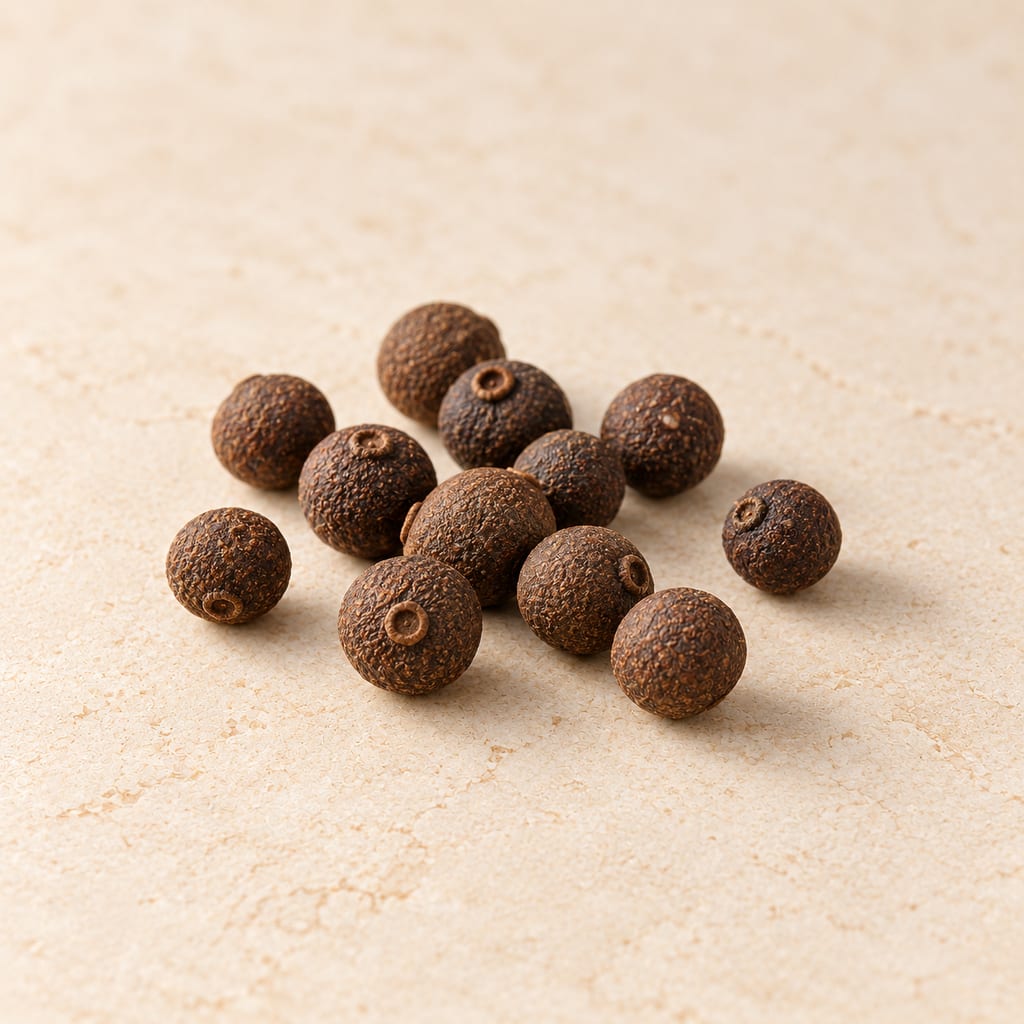
Allspice
Allspice is the dried unripe berry of Pimenta dioica, a Caribbean and Central American tree, used whole or ground in jerk seasoning, sauces, pickles, sausages and baking.
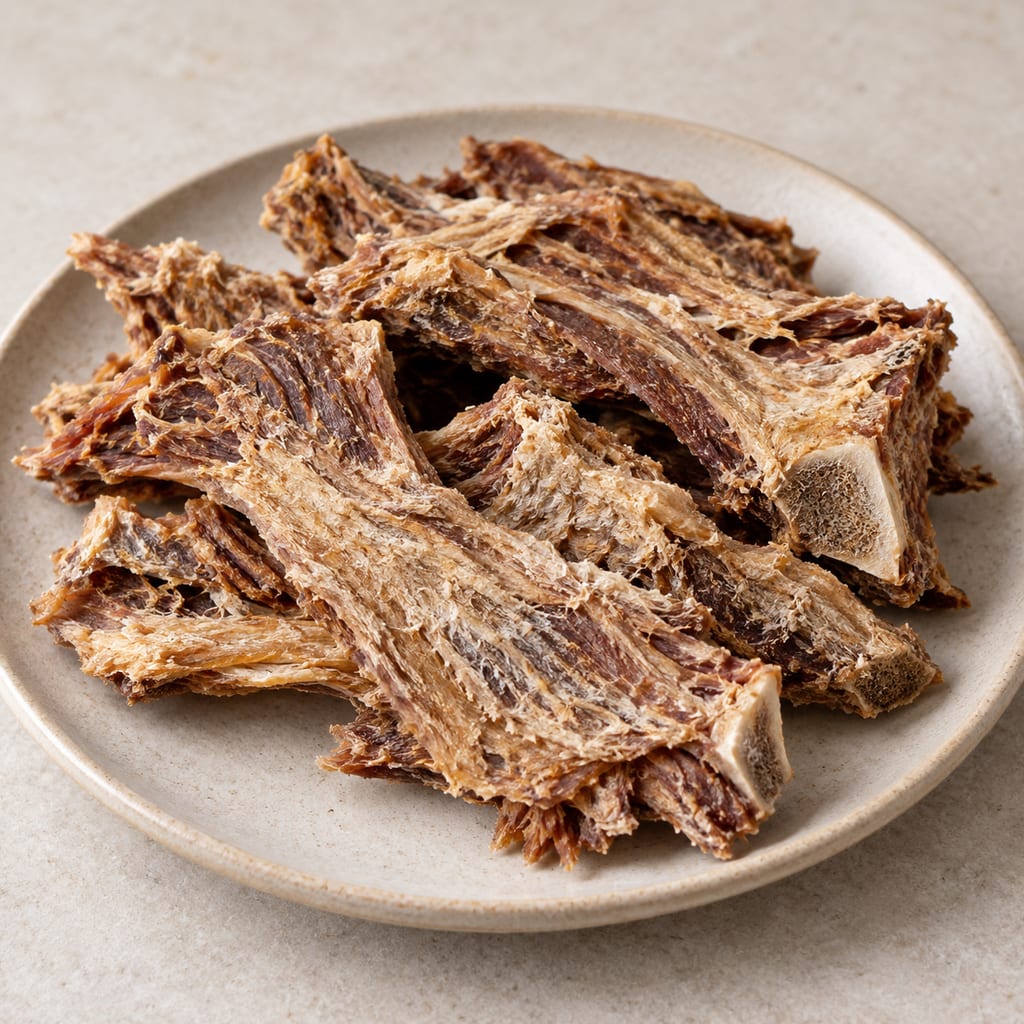
Alpaca charqui
Alpaca charqui is Andean dried meat, made from camelid meat exposed to hot sun by day and frost by night at high altitude, the ancestor of the modern word jerky.

Arabushi (smoke-dried bonito)
Japanese skipjack tuna cooked, then repeatedly smoked and dried over a wood fire by the hand-fired tebiyama method into a hard block for shaving into dashi: the first stage of katsuobushi.
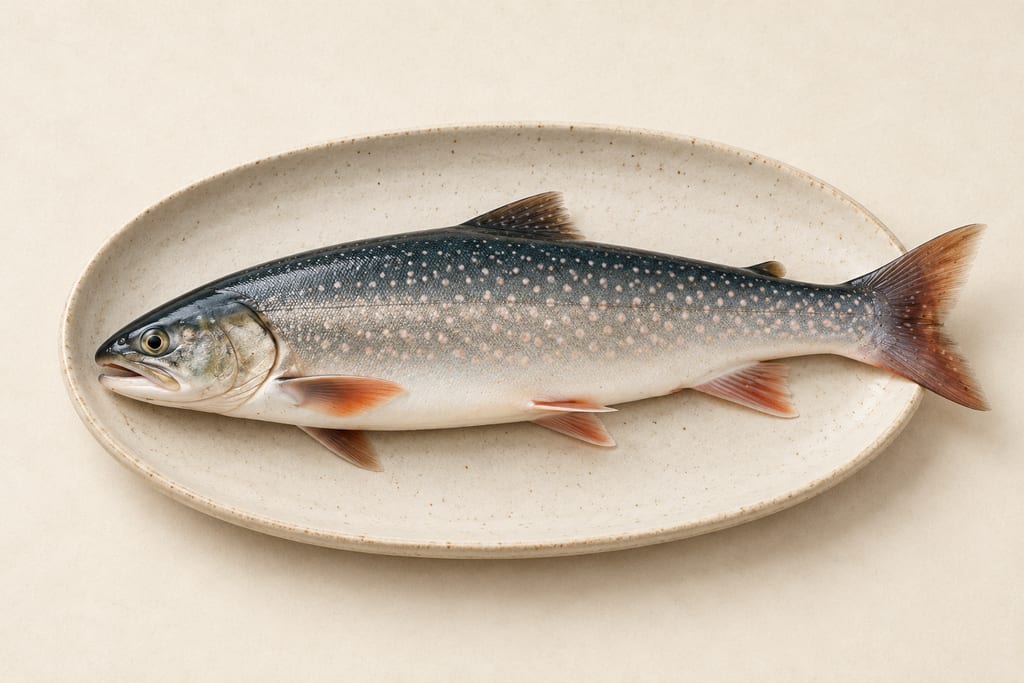
Arctic char
Arctic char (Salvelinus alpinus) is a circumpolar salmonid eaten fresh and preserved in northern communities. Its local forms and food traditions vary; dried or smoked fish and fermented char are distinct from the raw ingredient.
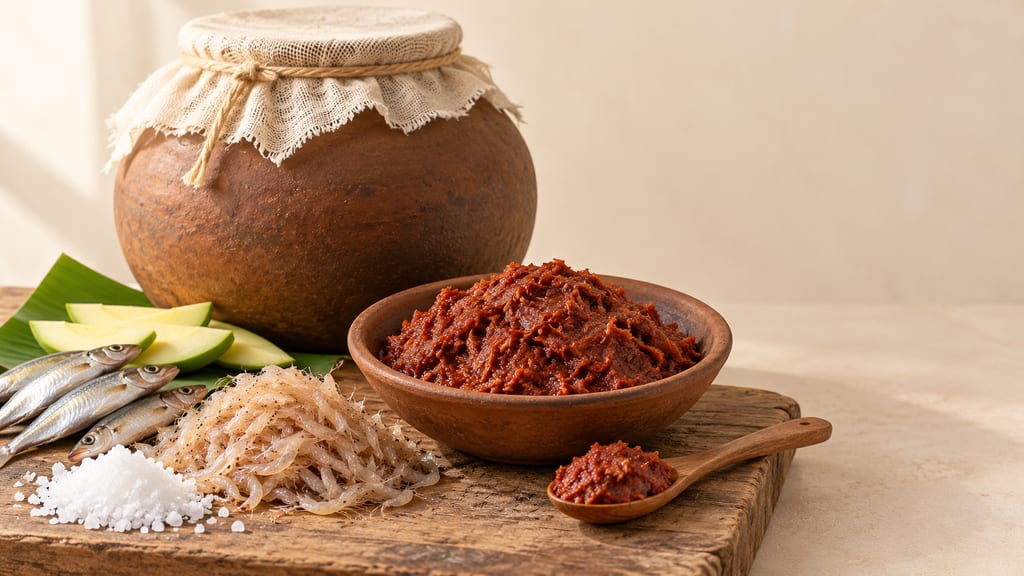
Bagoong has no standard recipe, and the numbers show it
Philippine fish and shrimp pastes are salted at 1:3 or 2:5 and ripened for anything from 30 days to six months or more. Each source describes one batch, not a rule, and the pH figures do not even agree.
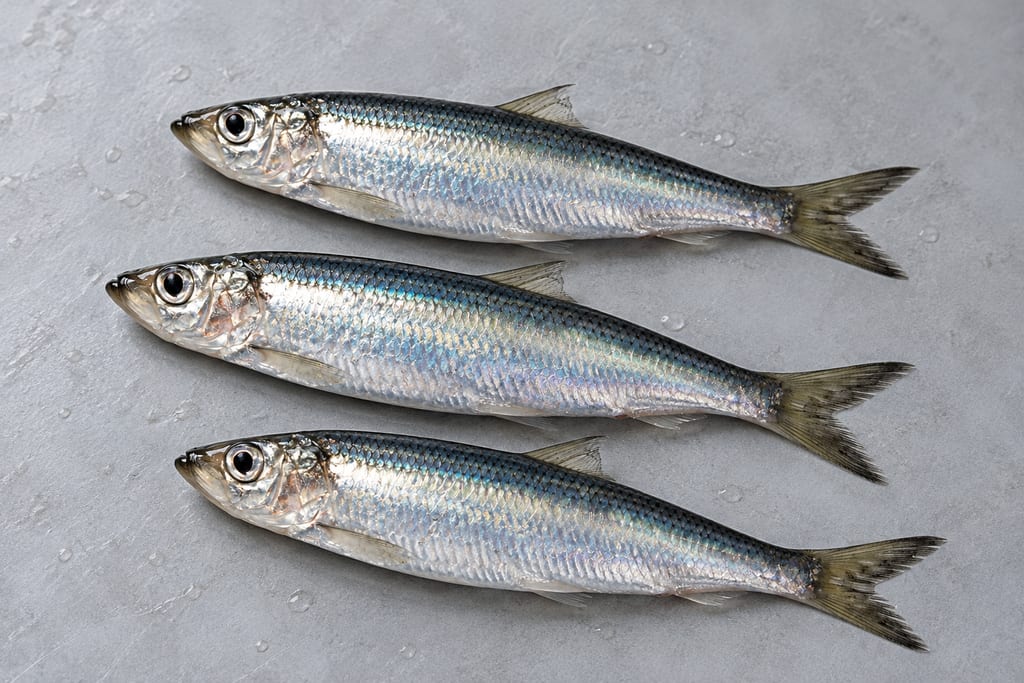
Baltic herring
A small, schooling herring of the brackish Baltic Sea, sold under regional names including Finnish silakka and Swedish strömming. It is the raw fish behind several regional preparations, including Sweden’s fermented surströmming.
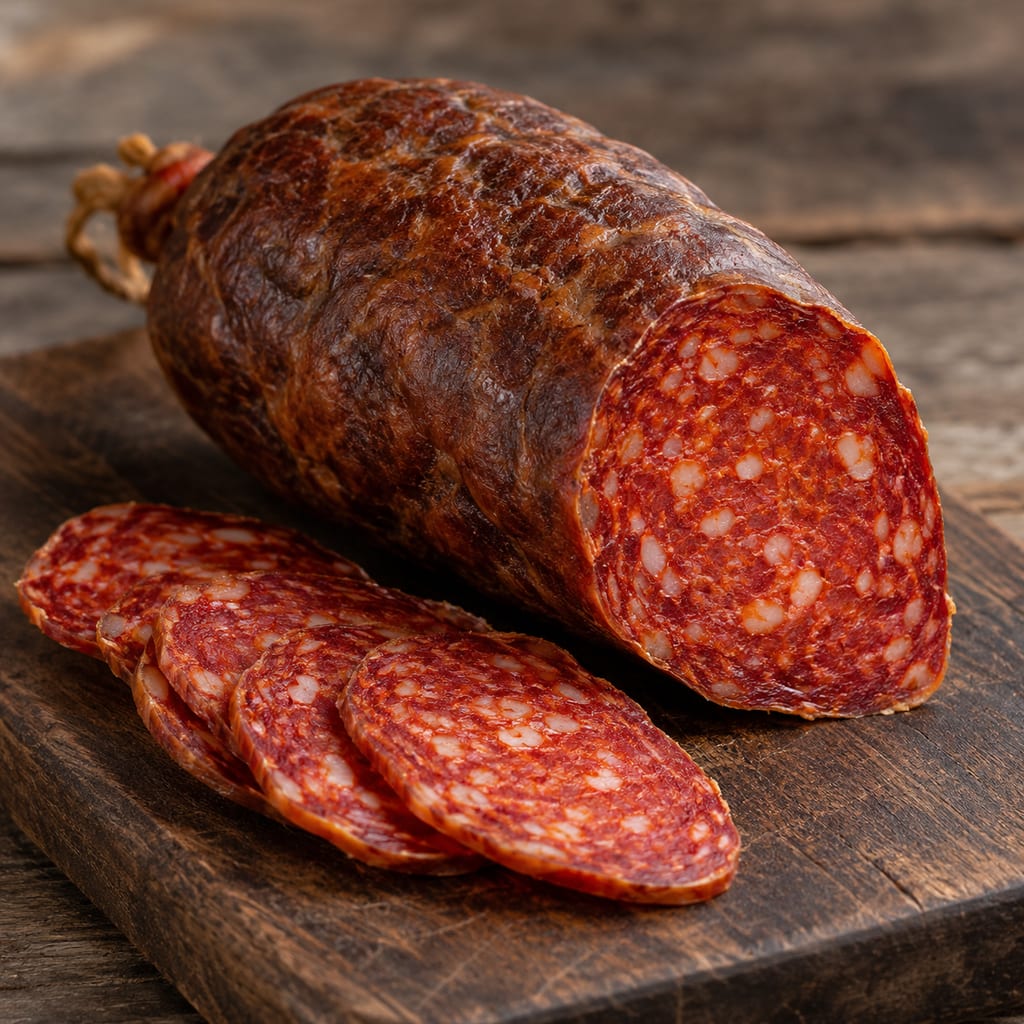
Baranjski kulen
Baranjski kulen is a Croatian protected fermented pork sausage seasoned with sweet and hot paprika, garlic and white pepper, stuffed into a pig’s caecum called katica, cold-smoked and matured.
Community
No community contributions have been published for this entry yet.
Share what you made
Sign in to contribute. Published comments and photos are free to read.
Sources
Ministry of Education / National Chengchi University
Indigenous knowledge encyclopedia entry on preserved and fermented meatCited in: When rice becomes part of the meat
AMB Express
Metagenomic analysis and the functional profiles of traditional fermented pork fat “sa-um” of Northeast IndiaCited in: Beyond lean meat: fat, organs and bones
Indian Journal of Traditional Knowledge
Khyopeh, a traditional fermented yak meat product of SikkimCited in: Beyond lean meat: fat, organs and bones
Frontiers in Microbiology
Molecular Characterization of Bacteria, Detection of Enterotoxin Genes, and Screening of Antibiotic Susceptibility Patterns in Traditionally Processed Meat Products of Sikkim, IndiaCited in: Beyond lean meat: fat, organs and bones
JIRCAS / Kasetsart University
NaemCited in: More than a slice of salami; When rice becomes part of the meat
Journal of Ethnic Foods
Fermented foods of Southeast Asia other than soybean- or seafood-based onesCited in: Buffalo, beef and the words that travel
Microbiology Resource Announcements
Draft genome sequence of Pediococcus acidilactici 3G3 isolated from Philippine fermented porkCited in: Buffalo, beef and the words that travel
GMA Network
Ang pinagmulan ng tocino, aalamin sa “Pinas SarapCited in: Buffalo, beef and the words that travel
Food Research / University of the Philippines Los Baños repository
Microbial load, physico-chemical properties, and organic acid profile of a naturally fermented carabeef, Pindang damulag, as affected by fermentation timeCited in: Buffalo, beef and the words that travel
Fermentation
Metagenomic Insights into the Bacterial Diversity of Balinese Fermented Sausage (Urutan) from the Household IndustryCited in: Buffalo, beef and the words that travel
IOP Conference Series: Earth and Environmental Science
Isolation and Identification of Lactic Acid Bacteria of Bekamal (Banyuwangi Traditional Fermented Meat)Cited in: Buffalo, beef and the words that travel
Universiti Brunei Darussalam
Studies of Belutak and Budu Kupang — Traditional Fermented Products of Brunei DarussalamCited in: Buffalo, beef and the words that travel
Japan Ministry of Agriculture, Forestry and Fisheries
なれずしCited in: Fish shows why the process boundary matters
Japan Ministry of Agriculture, Forestry and Fisheries
ふなずし/滋賀県Cited in: Fish shows why the process boundary matters
JIRCAS / Kasetsart University
Plaa-som/koong-somCited in: Fish shows why the process boundary matters
Journal of Ethnic Foods
Fermented mutton in the Faroe Islands: the survival of a local artisanship and food heritageCited in: More than a slice of salami; The cut hanging in the Atlantic air; A map with room for what remains unknown
Faroese Food and Veterinary Authority / PURE Faroe Islands
Identification and in-depth characterization of microbiota associated with spontaneously fermented Faroese ‘skerpikjøt’: a pilot studyCited in: The cut hanging in the Atlantic air
Meat Science
Microbial, chemico-physical and volatile aromatic compounds characterization of Pitina PGI…Cited in: Europe's many sausage interiors
Italian Journal of Food Safety
Features of Lactobacillus sakei isolated from Italian sausages: focus on strains from Ventricina del VasteseCited in: Europe's many sausage interiors
Journal of Food Safety / Università di Bologna repository
Physicochemical, microbiological, and sensory characterization of ’Nduja…Cited in: What the microbes do, and what they do not
PubMed Central
Pathogen Behaviour and Survival Dynamics … During the Ripening of ’Nduja, a Traditional Spreadable Fermented SausageCited in: What the microbes do, and what they do not
Institut national de l’origine et de la qualité
Cahier des charges de l’IGP Saucisson de l’ArdècheCited in: Europe's many sausage interiors
European Commission
Lietuviškas skilandis / Skilandis TSG dossierCited in: Europe's many sausage interiors; The cut hanging in the Atlantic air
Journal of Ethnobiology and Ethnomedicine
Ræstur fiskur: air-dried fermented fish the Faroese wayCited in: What the microbes do, and what they do not
Oxford University Press
The Porta Stabia Neighborhood at Pompeii, Volume ICited in: Fish shows why the process boundary matters
International Journal of Food Microbiology
Bacterial diversity in typical Italian salami at different ripening stages as revealed by high-throughput sequencing of 16S rRNA ampliconsCited in: Europe's many sausage interiors
Nature Reviews Gastroenterology & Hepatology
The International Scientific Association for Probiotics and Prebiotics (ISAPP) consensus statement on fermented foodsCited in: More than a slice of salami; What the microbes do, and what they do not
Journal of Archaeological Science
Something rotten in Scandinavia: The world's earliest evidence of fermentationCited in: A map with room for what remains unknown
USDA Food Safety and Inspection Service
Ready-to-Eat Fermented, Salt-Cured, and Dried Products GuidelineCited in: What the microbes do, and what they do not; Preserved is a wider word than fermented
Applied Microbiology
Microbiology of Lebanon BolognaCited in: Migration makes new sausage geographies
International Congress of Meat Science and Technology
Study of the microbial flora during the natural commercial fermentation of Italian-dry salami and identification of species suitable as startersCited in: Migration makes new sausage geographies
ANLIS / Universidad Nacional de San Martín
Caracterización morfológica, bioquímica y molecular de la población fúngica de embutidos secos fermentados de las principales localidades productoras de la República ArgentinaCited in: Migration makes new sausage geographies
Ministerio de Agricultura, Ganadería y Pesca, Argentina
Resolución 986/2011Cited in: Migration makes new sausage geographies; A map with room for what remains unknown
Consejo de la Denominación de Origen Salame de Tandil
Descripción y materia primaCited in: Migration makes new sausage geographies
Secretaría de Agricultura, Ganadería y Pesca, Argentina
Resolución 37/2014Cited in: Migration makes new sausage geographies; A map with room for what remains unknown
Agencia Córdoba Turismo
Delicias en la 36º Fiesta Provincial del Salame Típico de Colonia CaroyaCited in: Migration makes new sausage geographies; A map with room for what remains unknown
Foods
Detection of Enteric Viruses and Core Microbiome Analysis in Artisanal Colonial Salami-Type Dry-Fermented Sausages from Santa Catarina, BrazilCited in: Migration makes new sausage geographies
Revista Mexicana de Ciencias Pecuarias
La calidad sanitaria del chorizo rojo tradicional que se comercializa en la ciudad de Toluca, Estado de MéxicoCited in: What the microbes do, and what they do not
Microbiome Research Reports
Better understanding of food and human microbiomes through collaborative research on Inuit fermented foodsCited in: More than a slice of salami; Arctic foods belong to particular communities
Ambio
On the crucial importance of a small bird: The ecosystem services of the little auk (Alle alle) population in Northwest Greenland in a long-term perspectiveCited in: Arctic foods belong to particular communities
Arctic Science
Weaving together Inuit knowledge and western science: a mixed-methods case study of qilalugaq (beluga whale) in Quaqtaq, NunavikCited in: Arctic foods belong to particular communities
Bulletin of the Hokkaido Museum of Northern Peoples
On Sharing of Bowhead Whale Meat and Maktak in an Iñupiat Community of Barrow, Alaska, USACited in: Arctic foods belong to particular communities; A map with room for what remains unknown
Current Anthropology
The Rotten Renaissance in the Bering Strait: Loving, Loathing, and Washing the Smell of Foods with a (Re)acquired TasteCited in: Arctic foods belong to particular communities
Russian Journal of Parasitology
Влияние процесса ферментации на сохранение инвазионных свойств личинок трихинелл в традиционном продукте питания «Копальхен» коренного населения ЧукоткиCited in: Preserved is a wider word than fermented
International Journal of Circumpolar Health
Ooligan grease: a traditional food fat of western Canada and AlaskaCited in: Fish shows why the process boundary matters
University of Waikato
Microbiological Quality of Toroi: A Māori food delicacyCited in: Fish shows why the process boundary matters
Te Ara — The Encyclopedia of New Zealand
Māori foods – kai MāoriCited in: Fish shows why the process boundary matters
Chambre de l’agriculture et de la pêche lagonaire, Polynésie française
Tama'a maita'iCited in: Fish shows why the process boundary matters
NSW Food Authority
Uncooked Comminuted Fermented Meat manufacturersCited in: Migration makes new sausage geographies
International Journal of Food Microbiology
Microbial ecology involved in the ripening of naturally fermented llama meat sausages. A focus on lactobacilli diversityCited in: Migration makes new sausage geographies
Microorganisms
Exploring Coagulase-Negative Staphylococci Diversity from Artisanal Llama Sausages: Assessment of Technological and Safety TraitsCited in: Migration makes new sausage geographies
SENASA, Peru
Otorgan autorización sanitaria a planta procesadora de Charqui en JunínCited in: Preserved is a wider word than fermented
Parks Canada
Like Distant Thunder: Canada's Bison Conservation StoryCited in: Preserved is a wider word than fermented
National Research Council / National Academies Press
Sudan's Fermented Food Heritage.Cited in: More than a slice of salami; Beyond lean meat: fat, organs and bones
Journal of Microbiology, Biotechnology and Food Sciences
Screening of lactic acid bacteria from Sudanese fermented foods for bacteriocin production.Cited in: Beyond lean meat: fat, organs and bones
European Journal of Agriculture and Food Sciences
Can Indigenous Foods Play Role as ‘the Food of Survival’?Cited in: Beyond lean meat: fat, organs and bones
Ethiopian Journal of Biological Sciences
Microbiological study of Wakalim, a traditional Ethiopian fermented sausage.Cited in: Beyond lean meat: fat, organs and bones
Journal of Food Quality
Microbial dynamics during the fermentation of wakalim, a traditional Ethiopian fermented sausage.Cited in: Beyond lean meat: fat, organs and bones
Meat Science
El Gueddid, a traditional Algerian dried salted meat: Physicochemical, microbiological characteristics and proteolysis intensity during manufacturing.Cited in: Preserved is a wider word than fermented
Meat Science
Screening for anti-listerial bacteriocin-producing lactic acid bacteria from ‘Gueddid’ a traditionally Tunisian fermented meat.Cited in: Preserved is a wider word than fermented
New Zealand Ministry for Primary Industries
Guidance concerning uncooked fermented comminuted meat products.Cited in: Preserved is a wider word than fermented
International Journal of Food Microbiology / University of Ghana repository
Microflora and chemical composition of Momoni, a Ghanaian fermented fish condiment.Cited in: Fish shows why the process boundary matters
Food Control
Kinetics of traditional Turkish sausage quality aspects during fermentation.Cited in: A map with room for what remains unknown
Türkiye Ministry of Culture and Tourism
Kayseri Sucuğu.Cited in: Buffalo, beef and the words that travel; The cut hanging in the Atlantic air
Türk Patent ve Marka Kurumu
Afyon Sucuğu,” geographical indication and product specification.Cited in: Buffalo, beef and the words that travel
Korean Journal for Food Science of Animal Resources
Biogenic Amine Formation in ‘Bez Sucuk,’ a Type of Turkish Traditional Fermented Sausage Produced with Different Meat:Fat Ratios.Cited in: Buffalo, beef and the words that travel
Gaps
- The age and present distribution of several household and Indigenous names remain uncertain.
- Some maturation processes combine microbial action and endogenous enzymes without a quantified division of their roles.
- Coverage is uneven across Central Asia, the Caucasus, South Asia, the Levant, Central America and the Pacific.
Updated 2026-10-28