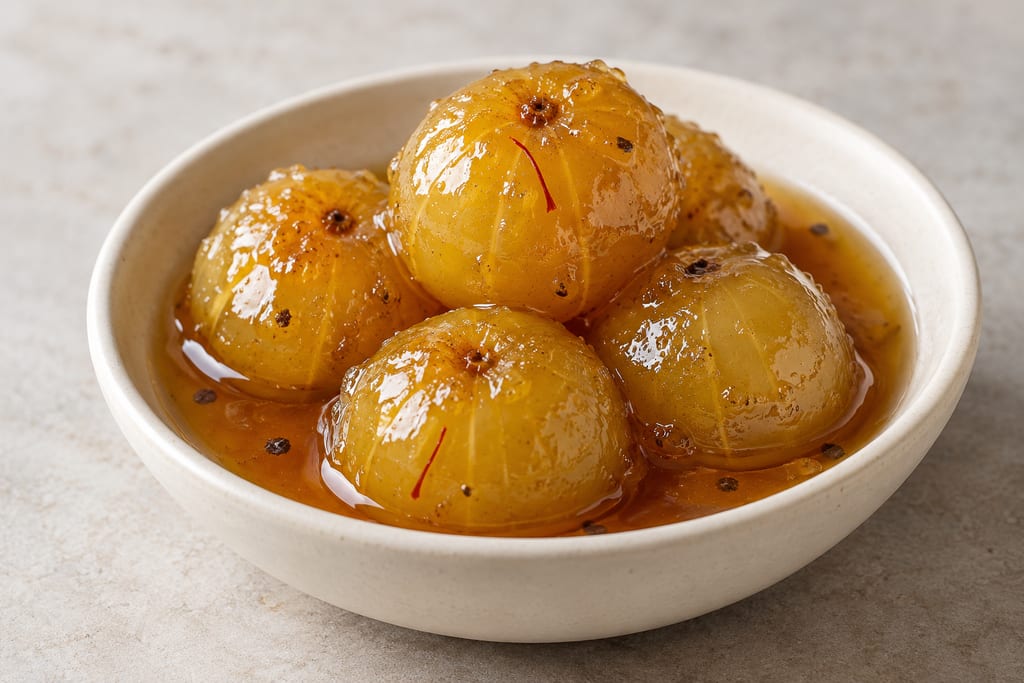
Amla murabba
Amla murabba preserves whole Indian gooseberries in a heavy sugar syrup scented with cardamom and sharpened with pepper and black salt. This household method soaks the fruit before cooking.
 FermenteaWhere food goes to change
Substrates
Amla is the firm, sharply sour fruit of Phyllanthus emblica. Cooks transform it into murabba, pickles, chutneys, drinks and dried snacks.
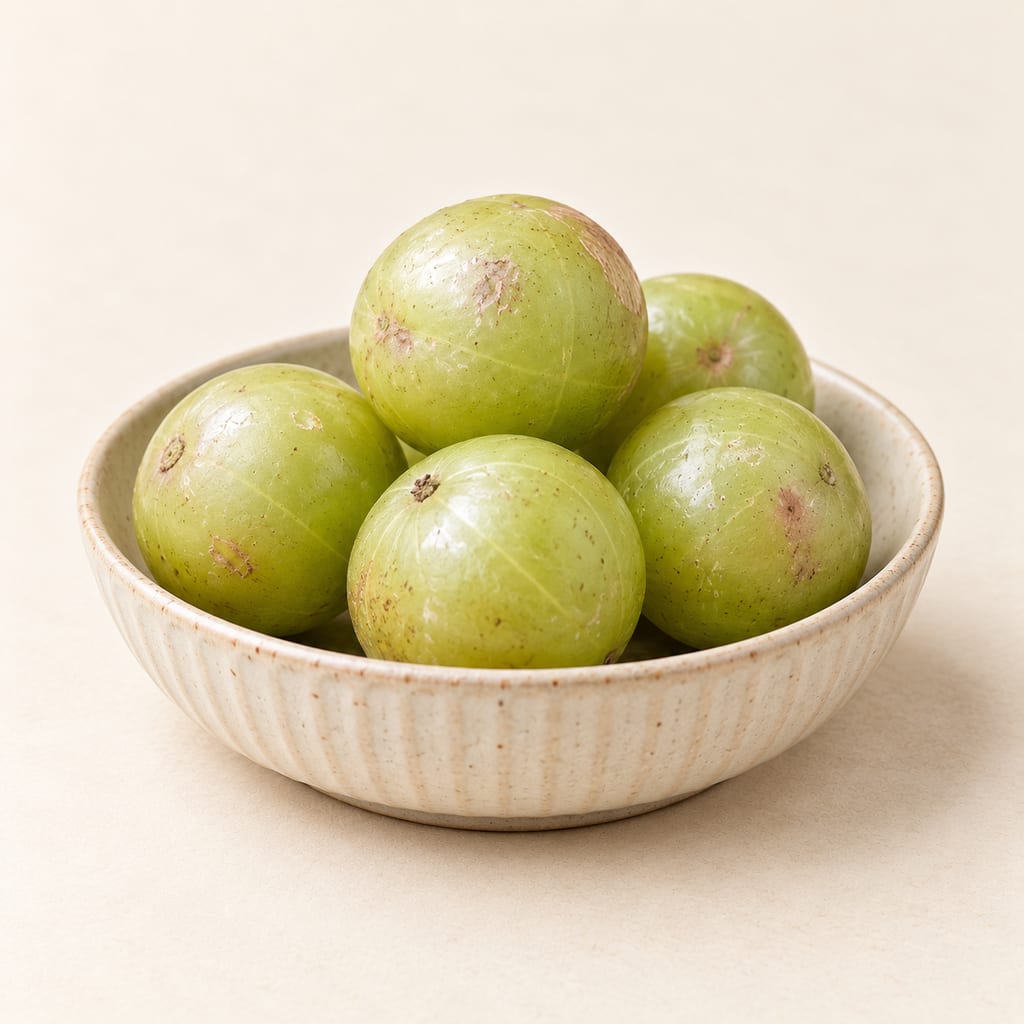
The fruit commonly sold as amla is from *Phyllanthus emblica* L., a member of Phyllanthaceae. Older botanical and food writing may use *Emblica officinalis* Gaertn.; Kew lists that name among the synonyms of the currently accepted one. “Indian gooseberry” is a familiar English name, but it can mislead: amla is not a true gooseberry (*Ribes*) and does not have the same soft, sweet-tart berry character. Indian horticultural writing often calls the crop aonla, while nelli, nellikkai, usirikaya, amalaki and their regional spellings appear across South Asian languages. The plant name is a useful anchor; the kitchen name changes with place.
Kew places the species’ native range across tropical and subtropical Asia, including the Indian subcontinent and parts of Southeast and East Asia. Its story is not confined to one modern national boundary. India’s commercial orchards and named cultivars have made amla especially visible in Indian markets, but the species is also native to Bangladesh, Sri Lanka, Myanmar, Thailand, China and elsewhere in its range. Wild, village-grown and orchard-grown trees do not necessarily produce fruit of the same size or texture.
The fruit is a firm, nearly spherical drupe with shallow vertical grooves and one hard central stone. NHB describes fully developed brown-coloured fruit as ready for harvest. Earlier stages may be green to yellow-green in markets; color changes with maturity and cultivar. Its smooth skin encloses crisp, pale flesh. Raw, it is sharply sour and leaves a drying, puckering sensation. Those first bites explain why cooks temper it with salt, chile, oil, jaggery or sugar, or transform it through cooking, drying, brining or pickling. Amla’s defining culinary quality is not sweetness: it is a sturdy, acid fruit whose astringency can be redirected into both condiments and sweets.
India's National Horticulture Board describes aonla as a subtropical crop suited to dry subtropical conditions, with growing belts in Uttar Pradesh, Madhya Pradesh, Haryana, Karnataka and Tamil Nadu. Its orchard account lists Kanchan (NA-4), Krishna (NA-5), NA-6, NA-7 and NA-10 among commercially cultivated varieties. A market basket can therefore hold fruits from selected orchards as well as less uniform local trees. The cultivar names orient a grower or buyer to real differences in the crop without turning one listed variety into the only suitable fruit for a pickle or preserve.
The fruit has a practical place in processing. NHB says aonla is not generally treated as a table fruit and emphasizes value-added products, maturity and careful handling. Large fruit may be selected for preserve and candy; other sizes and grades enter different products. The same government guide records only 6–9 days of storage under ordinary conditions. Choose firm, unbroken fruit and plan to use it promptly.
Commercial orchards are only part of the picture. Household fruit may come from a tree at the edge of a field or in a village landscape, and can be smaller than selected orchard fruit. Older or regional preparations may therefore be written around fruit that is not uniform. When cutting, work around the central stone: score the lobes, segment them, or remove flesh according to the intended use. Wash the fruit; dry it when the preparation calls for a dry surface. Discard fruit with soft, wet or fermenting patches. Firmness helps the fruit hold shape in a preserve, though it softens with heat and prolonged soaking. It can be served raw, cooked, pickled or preserved.
Amla’s taste combines sourness with a drying, puckering sensation. Organic acids supply the sour edge; tannins and other phenolic compounds are associated with astringency. This distinction helps explain the range of preparations: a pickle balances acidity with salt, oil and spice, while a sweet preserve counters it with sugar. The fruit also has pectin in its cell walls. Pectin contributes structure in cooked fruit, but it does not guarantee that every amla jam will set. Ripeness, acidity, sugar concentration, cooking and the quantity and condition of pectin all matter; a tested formula may add pectin or combine amla with another fruit.
Published nutrient figures should be treated as ranges, not promises about the fruit in a basket. A review of studies reports vitamin C values from about 190 to 720 mg per 100 g among samples and cultivars. Values vary with cultivar and study, so a range is more informative than one headline number. Dry-weight measurements cannot be compared directly with fresh-weight figures.
Acidity matters to flavor and preservation, but it does not make a jar shelf-stable by itself. Preservation depends on the complete process: proportions, acidification, heat, container, storage and tested instructions. In pickle, salt, acid, oil coverage, sanitation and the recipe’s method jointly shape keeping quality. In a sweet preserve, concentrated syrup can lower available water, but sweetness or a traditional long-keeping claim is not evidence of a validated preservation process. Treat traditional recipes as culinary evidence and follow tested guidance when planning unrefrigerated storage.
Amla murabba makes a virtue of the fruit's firm, segmented body. In Reetu Uday Kugaji's documented preparation, whole fruits first sit in water overnight and are pierced, then gently cooked until tender. The soaking and short cooking soften the flesh without reducing it to pulp; the reserved cooking liquid joins the syrup. A whole fruit can then be lifted from the jar as a distinct sweet, still shaped like amla beneath its glossy coating. The method differs from jam, where the fruit is broken down into a spread, and from candy, where a drained or coated piece can be eaten apart from its syrup.
This version pairs 1 kg fruit with 1.5 kg granulated sugar. The sugar is dissolved and boiled to a one-string syrup before the amla is added. Lemon juice goes in while the cook skims and strains the syrup; here its immediate job is clarification. After the fruit returns to the pan, the liquid thickens to a two-string stage. Those tactile stages describe what the cook sees and feels as water evaporates, rather than a laboratory measure to transfer to every preserve. The fruit and syrup are cooked together so sweetness reaches beyond the surface while the fruit's tart core remains perceptible.
Black-cardamom seeds, pepper, saffron and optional slivered almonds give this murabba more than simple sweetness. The crushed seeds and pepper season the syrup around the fruit; saffron colors and perfumes it, while almonds add a separate texture. A pinch of rock salt arrives at the end. Each addition is small beside the fruit and sugar, but the finished spoonful moves between tart, fragrant, warm and sweet. The source asks that the cooled fruit remain immersed in syrup. That is part of the dish's presentation and texture; its suggested long keeping time is not a measured shelf-life rule for jars made under other conditions.
Cutting opens a different route into amla. The Government of India's AYUSH recipe calls its South Indian gooseberry preparation a stir fry or pickle. The fruit is washed, dried, cut and freed from its stones before meeting gingelly oil in a pan. Curry leaves, black pepper, turmeric and salt follow; a little asafoetida is offered as an optional note. Pepper, rather than the chile more familiar in many pickle mixtures, supplies its particular heat. The cut surfaces take up seasoning while a brief fry softens the pieces, so the result is a savory, sour accompaniment rather than a fruit suspended whole in syrup.
Gingelly oil has work beyond making the pan slick. It carries curry-leaf and pepper aromas across the pieces and gives them a rounded, coated mouthfeel against the fruit's astringency. Drying the washed fruit before it reaches the oil also changes what happens in the pan: wet fruit would sputter and steam more readily. Salt sharpens the contrast between the puckering fruit and the warm spices. The recipe's method is a cooked condiment, not a raw brine fermentation. A spoonful can sit beside a mild rice dish or another meal where its sour, peppery edge is welcome.
Fresh fruit can also be taken in smaller, simpler bites. NParks describes amla as eaten raw or cooked and records desserts and condiments; Kew lists preserves, tarts and chutney. A raw segment with salt lets the hard, crisp flesh and immediate pucker lead. In a chutney the fruit can be chopped or cooked until its sourness joins aromatics in a spoonable mixture. A tart turns that acidity toward pastry and sweetness. The change of form matters: a segment gives distinct bites of flesh, while a cooked relish spreads the flavor across the plate.
Drying takes away water and makes amla easier to carry beyond the short fresh-fruit season. Pieces or powder bring a concentrated sour note to foods without the volume or crisp bite of a new fruit. NHB's grading account sends larger fruits mainly to preserve and candy, while small and blemished grades move into other products, including powder. That commercial sorting is not a household rule, but it explains why a large, even fruit is attractive when the finished sweet keeps its rounded shape. A smaller fruit may be entirely useful when it will be cut, cooked down or ground.
FAO records cooked fruit, sweetmeat, pickle, jam, jelly and syrup among amla's food forms. The common thread is a dense sour flesh that tolerates several treatments, not one standard balance of sugar or salt. Some forms leave the fruit recognizable; others draw flavor into a liquid or paste. Amla also carries religious and Ayurvedic associations in South Asia, and commercial powders may be sold for those contexts as well as cooking. Those histories belong to the ingredient's cultural life, while the pantry decision stays concrete: choose whole fruit for a shaped preserve, cut flesh for a seasoned dish, and a dried form when its bright acidity is wanted without fresh-fruit texture.
Choose mature fruit that feels firm, with intact skin and no soft or wet patches. Color varies with variety and maturity, so it is not a stand-alone quality test. Small local fruit may offer less flesh around the stone than selected large fruit; tasting one helps decide how much sugar or seasoning to use. Keep fruit cool and do not count on a long counter life. NHB’s short ordinary-storage period is a reminder to process fresh fruit soon, not a guarantee for every kitchen.
For fresh eating, score or cut around the stone, then season as desired. For preserve, follow the recipe’s preparation: some methods prick, blanch or segment fruit to help it cook and take up syrup. For pickle, remove surface moisture when the instructions call for dry fruit, and use clean tools and containers. A fruit’s acidity and toughness are not substitutes for safe handling. If storing unrefrigerated, use a tested preservation method with explicit proportions, processing and storage directions; otherwise refrigerate and follow the recipe’s storage guidance.
Taste amla in two forms to understand its range. Raw, it is crisp, very sour and puckering; sweetened or cooked, that intensity softens and the flesh yields. In a seasoned pickle the sourness stays vivid, meeting salt, oil and spice. These are different decisions about one ingredient whose force can stand up to both sugar and seasoning.
Indian horticultural guidance describes growing, harvest and preserve/candy processing.
Amla murabba preserves whole Indian gooseberries in a heavy sugar syrup scented with cardamom and sharpened with pepper and black salt. This household method soaks the fruit before cooking.
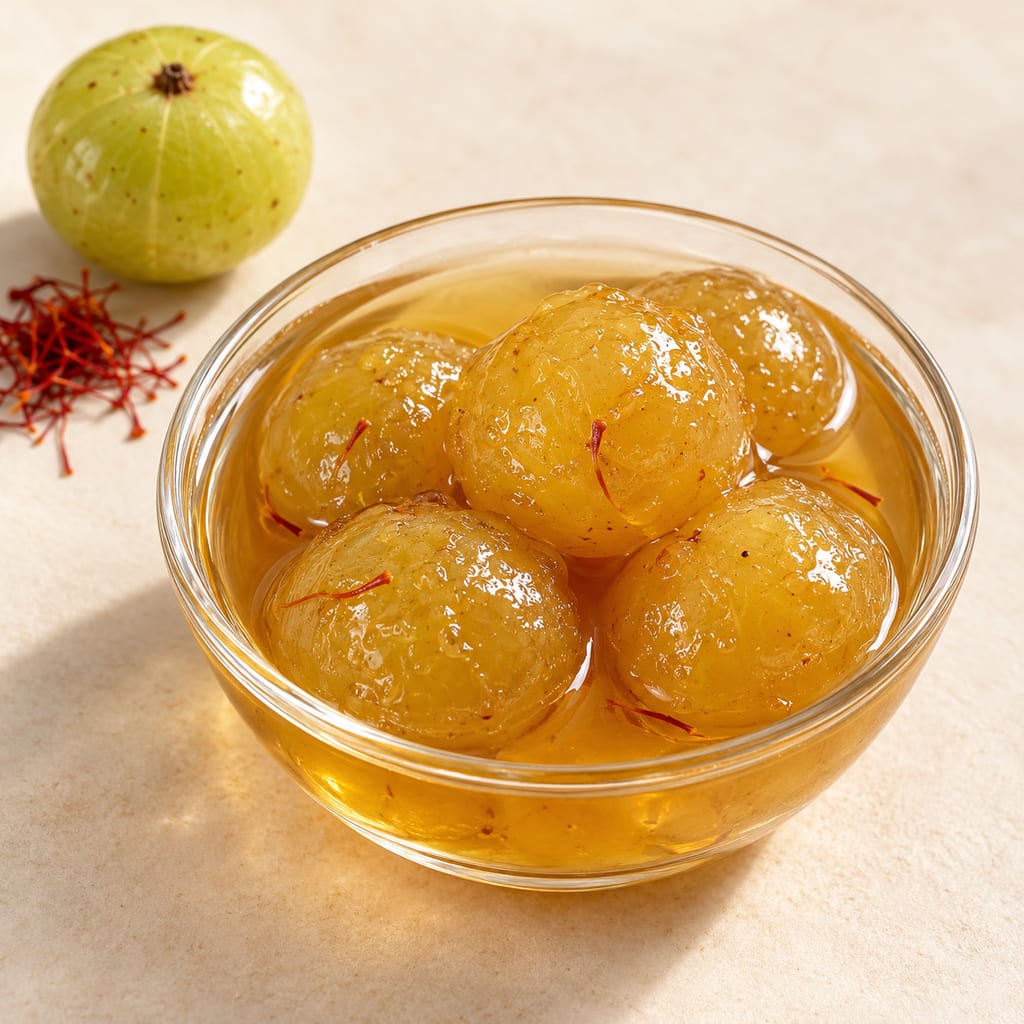
Whole amla simmer in sugar syrup with saffron, black cardamom and pepper in this chef's version of the Indian fruit preserve. The fruit is soaked overnight before cooking.
Cheese, tofu, agar, nixtamal and cured ham all begin with a liquid or soft food made to set, sour or keep. Rennet is one branch of that history, beside plant enzymes, acids, minerals, alkalis, gels, finings and curing salts.

A gelling polysaccharide extracted from red seaweeds, sold as kanten strips or powder; it sets firm at a low concentration and stays solid until about 85 °C.
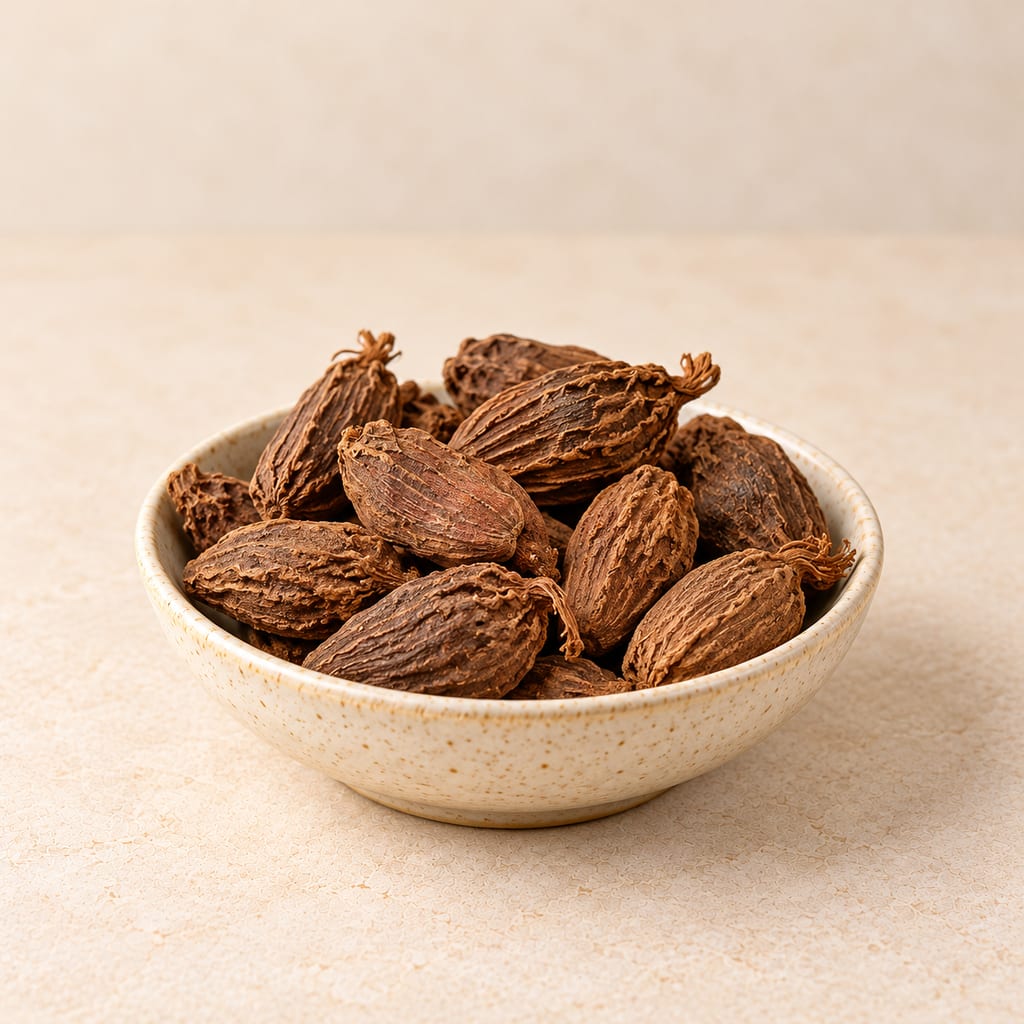
Alainchi is the large or black cardamom of the eastern Himalaya, the dark, smoke-dried pods of Amomum subulatum. Its camphor-cool, smoky seeds season Himalayan and North Indian cooking and a sweet Nepali lapsi achar.
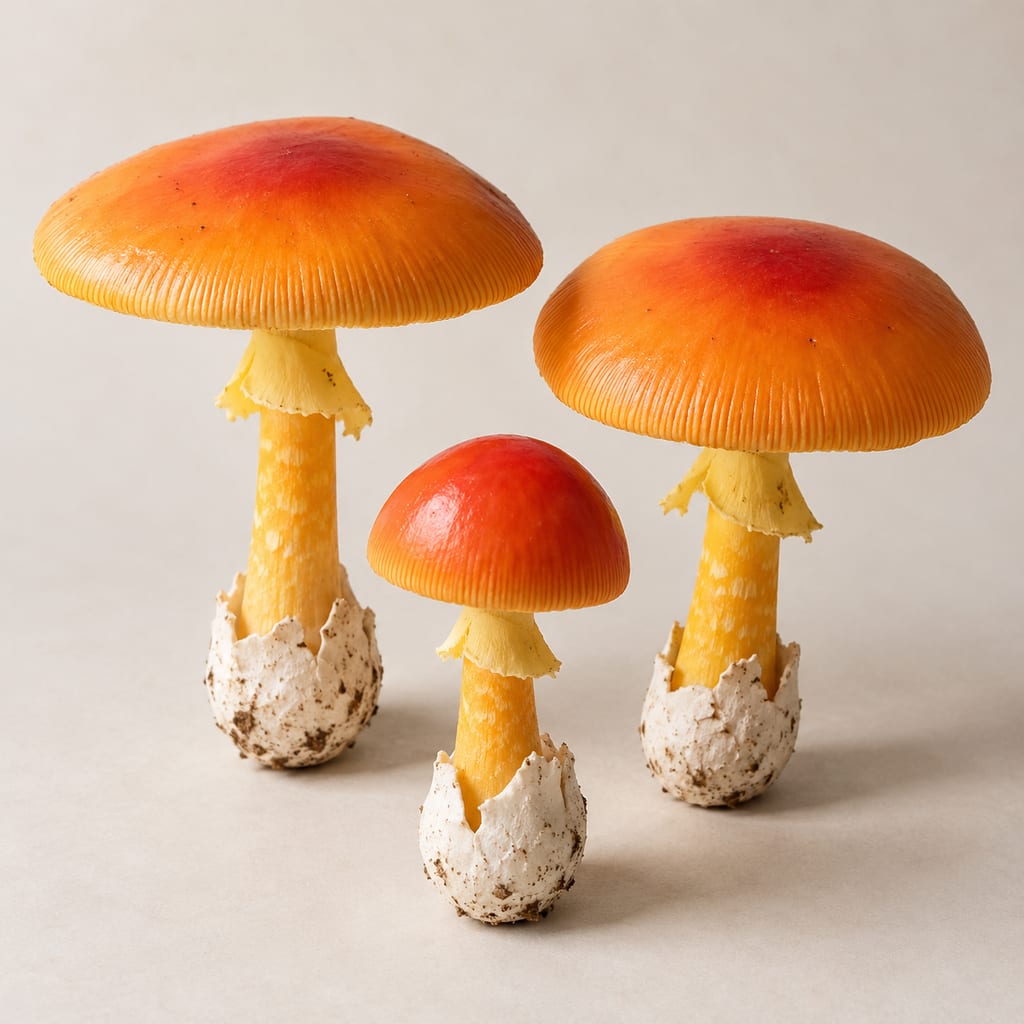
A wild Asian Amanita reported as food in regional literature and listed in China’s edible-fungi catalogue. Lookalikes include lethal species; this record is not a guide to identifying wild mushrooms.
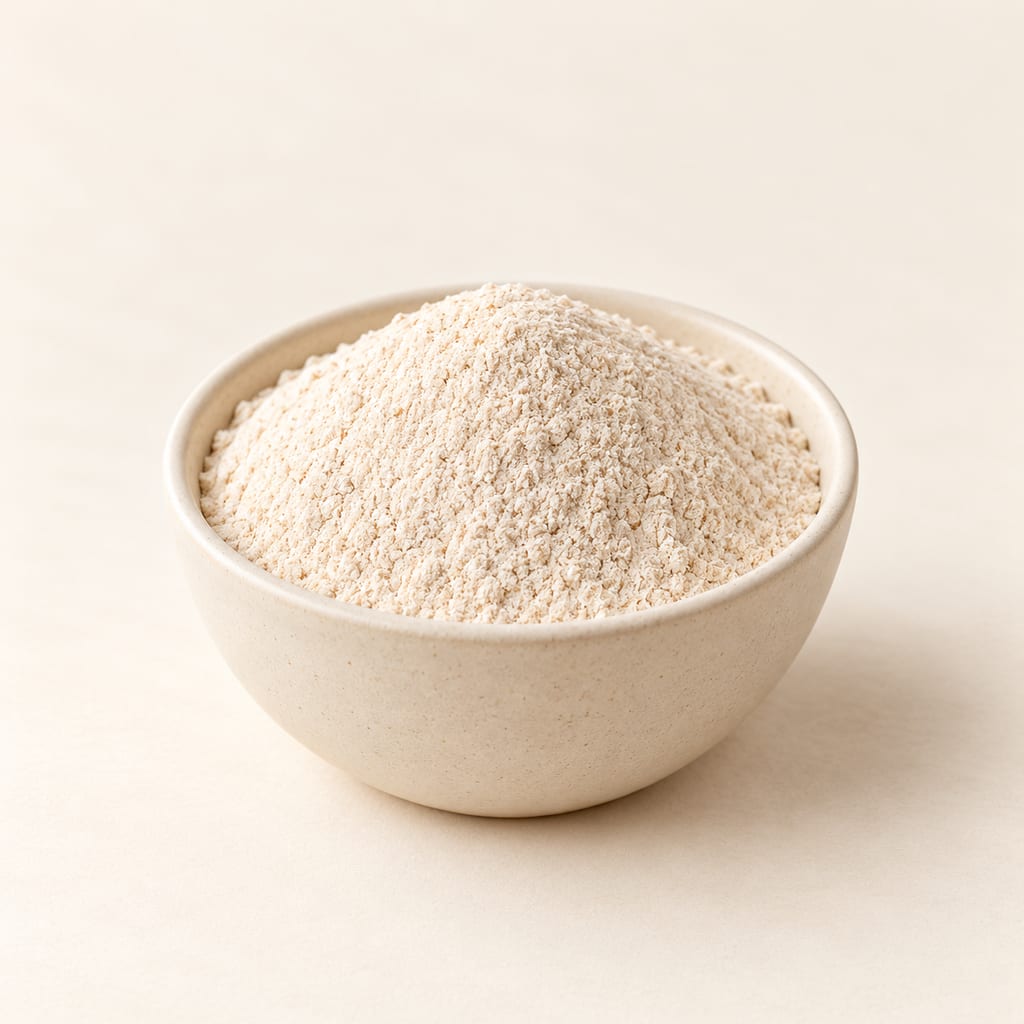
Atta is wheat flour used across South Asian bread traditions. Indian standards distinguish wheat flour (atta) from resultant atta; milling route and particle size shape its behavior in chapati dough.

Bamboo shoots are the young culms of many bamboo species, eaten after boiling or leaching in Asia, and fermented into sour and preserved foods in the Himalayas, northeast India and Burma.
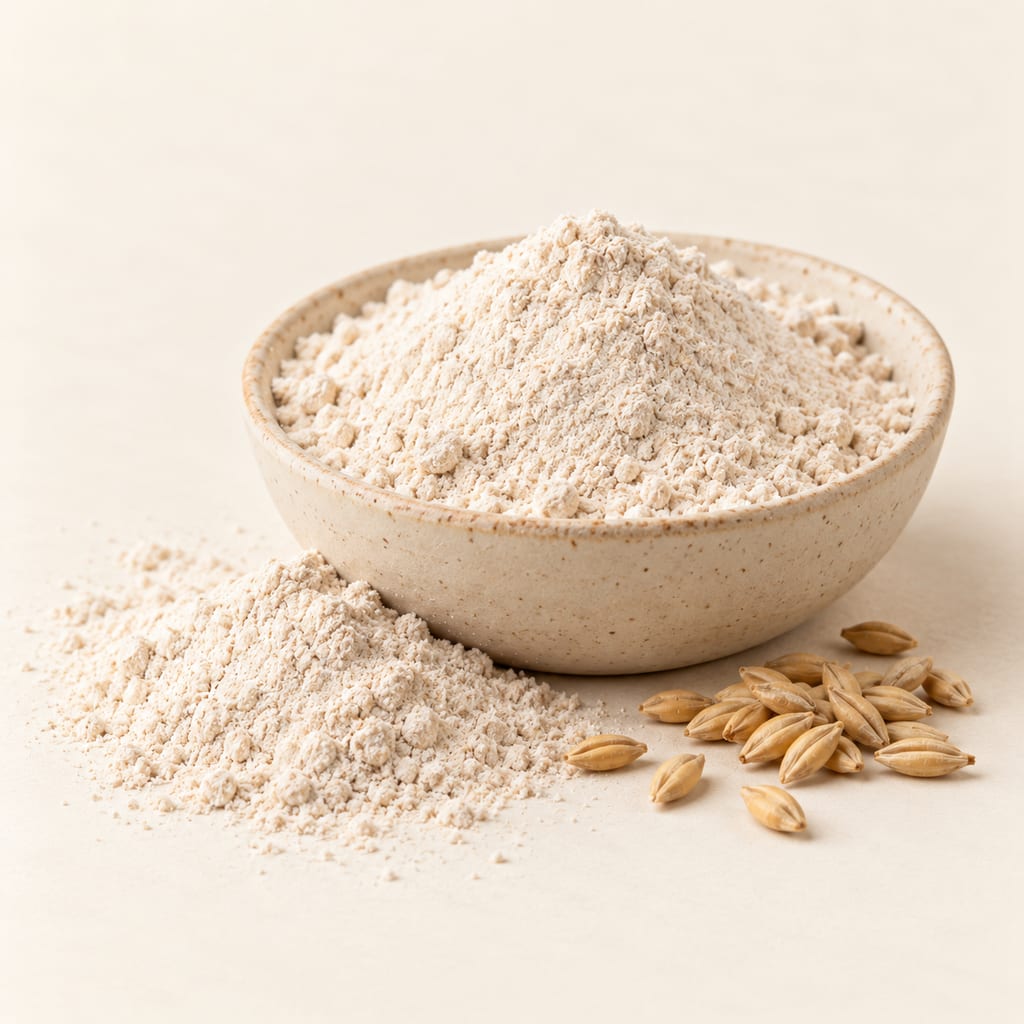
Barley flour is ground barley grain; whether it comes from pearled or hulless kernels, its milling and limited wheat-like gluten-forming ability shape the doughs and foods it can make.

Black carrot is the anthocyanin-pigmented Eastern carrot (Daucus carota var. atrorubens), the purple root that preceded orange types and still colours kanji and şalgam.
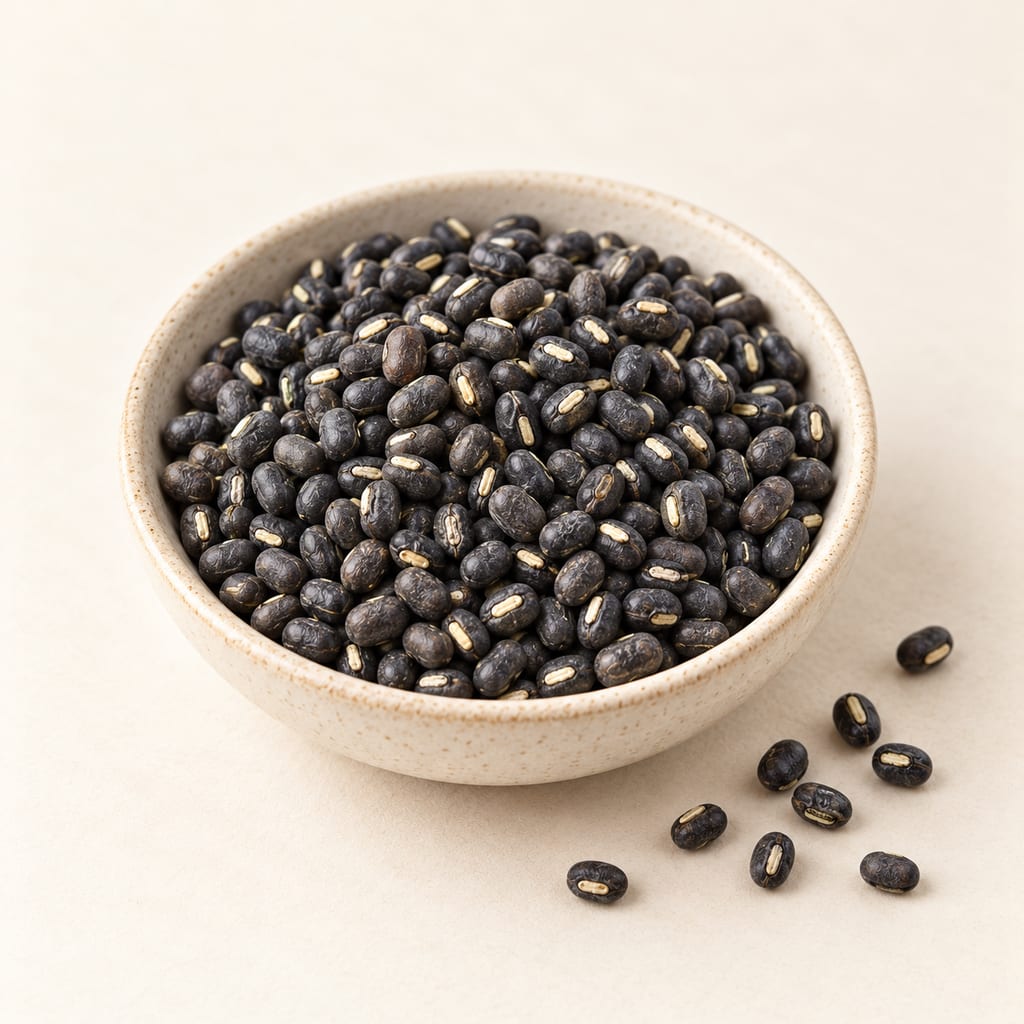
Black gram, or urad, is a South Asian pulse whose whole dark seeds and dehulled white dal make distinct cooked and fermented foods.
No community contributions have been published for this entry yet.
Sign in to contribute. Published comments and photos are free to read.
ecocrop.apps.fao.orgBotanical identity, horticulture or culinary use, as mapped in sections
View crop: Emblica officinalisThe FAO crop profile lists amla as cooked fruit, sweetmeat, pickle, jam, jelly and syrup.
Cited in: Fruit beyond the fresh basket
extension.umn.eduBotanical identity, horticulture or culinary use, as mapped in sections
Making fruit spreadsFruit-spread guidance explains how fruit acidity, pectin, sugar and a tested process shape gel texture and storage.
Cited in: Sourness, astringency and structure; Buying and handling
food.ndtv.comBotanical identity, horticulture or culinary use, as mapped in sections
How to Make Amla Murabba at HomeReetu Uday Kugaji's amla murabba uses 1 kg fruit and 1.5 kg granulated sugar; the fruit is soaked, pierced, gently cooked and finished in one- to two-string syrup with spices.
Cited in: In syrup, whole and fragrant
indembkwt.gov.inBotanical identity, horticulture or culinary use, as mapped in sections
Traditional Food Recipes from AYUSH Systems of MedicineThe gooseberry stir-fry recipe washes, dries and cuts amla, removes the stones, then cooks it in gingelly oil with curry leaves, pepper, turmeric and salt; asafoetida is optional.
Cited in: Pepper, curry leaf and cut fruit
nhb.gov.inBotanical identity, horticulture or culinary use, as mapped in sections
AonlaThe NHB model describes Indian growing belts and Kanchan, Krishna, NA-6, NA-7 and NA-10 varieties; mature brown fruit, size grading and 6–9 days of ordinary storage are documented.
Cited in: A fruit with several names; Orchard fruit and local variety; In syrup, whole and fragrant; Fruit beyond the fresh basket; Buying and handling
nhb.gov.inBotanical identity, horticulture or culinary use, as mapped in sections
Post-Harvest ManagementThe NHB post-harvest report treats aonla as a crop commonly processed into value-added foods and covers harvest stage, sorting, cooling, packing and transport.
Cited in: Orchard fruit and local variety; Buying and handling
powo.science.kew.orgBotanical identity, horticulture or culinary use, as mapped in sections
Phyllanthus emblica L. | Plants of the World OnlineKew accepts *Phyllanthus emblica* L., lists *Emblica officinalis* as a synonym and maps the species' native range across tropical and subtropical Asia.
Cited in: A fruit with several names
pubmed.ncbi.nlm.nih.govBotanical identity, horticulture or culinary use, as mapped in sections
Vitamin C content and antioxidant activity of the fruit and of the Ayurvedic preparation of Emblica officinalis Gaertn.Scartezzini and colleagues measured ascorbic acid and antioxidant activity in the sampled fruit and an Ayurvedic preparation; the results reflect those materials and methods.
Cited in: Sourness, astringency and structure
pubs.rsc.orgBotanical identity, horticulture or culinary use, as mapped in sections
Thermal and nonthermal processing of an underutilized fruit Emblica officinalis (Amla)The RSC review collates amla composition and processing research, including published fresh-fruit vitamin C values spanning about 191–720 mg per 100 g.
Cited in: Sourness, astringency and structure
www.kew.orgBotanical identity, horticulture or culinary use, as mapped in sections
Indian gooseberryKew describes the fruit's sour culinary uses in preserves, tarts and chutney and records its wider religious and cosmetic associations.
Cited in: A fruit with several names; In syrup, whole and fragrant; Pepper, curry leaf and cut fruit; Fruit beyond the fresh basket
www.nparks.gov.sgBotanical identity, horticulture or culinary use, as mapped in sections
Emblica officinalisSingapore NParks describes green-yellow, round amla fruits and records raw or cooked eating plus preserves, tarts and chutney.
Cited in: Pepper, curry leaf and cut fruit; Fruit beyond the fresh basket