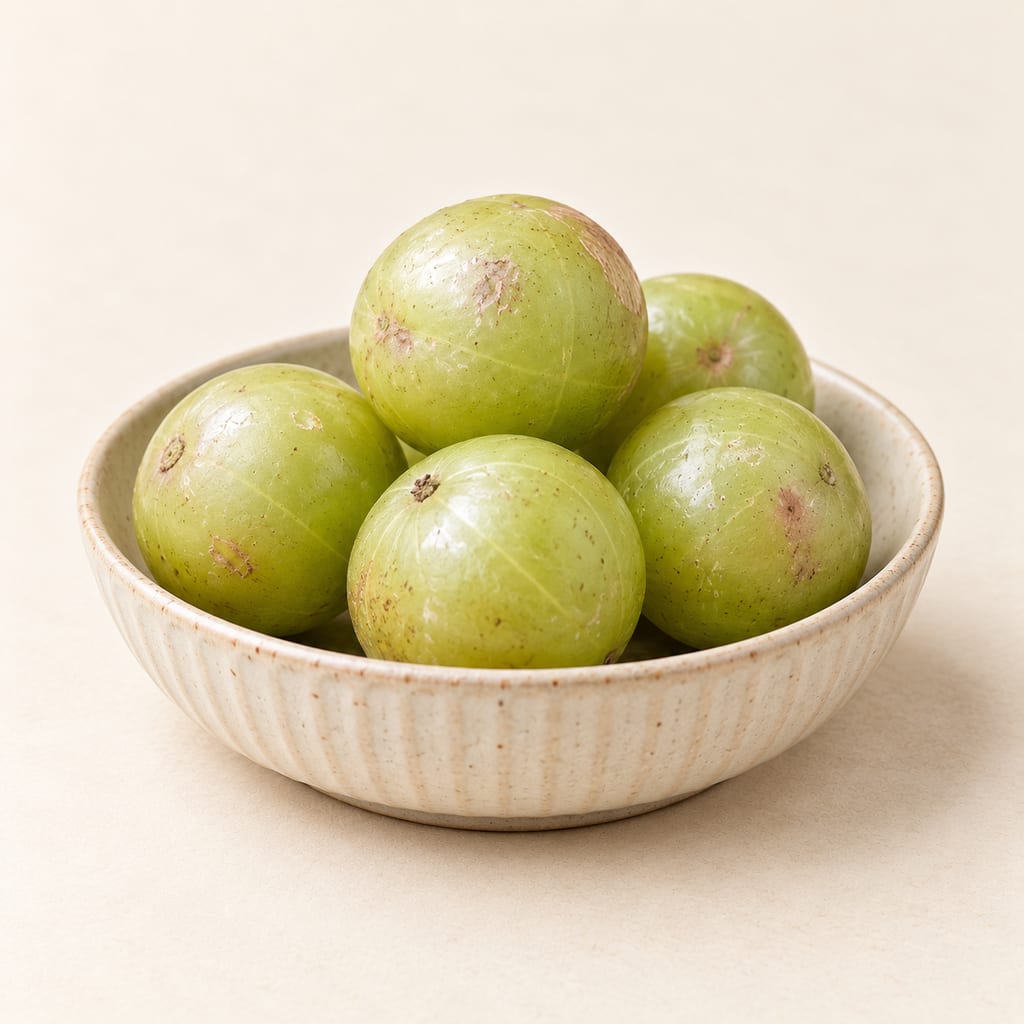
Amla (Indian gooseberry)
Amla is the firm, sharply sour fruit of Phyllanthus emblica. Cooks transform it into murabba, pickles, chutneys, drinks and dried snacks.
 FermenteaWhere food goes to change
Modern method
Amle ka murabba · आंवले का मुरब्बा · Amla murabba
Whole amla simmer in sugar syrup with saffron, black cardamom and pepper in this chef's version of the Indian fruit preserve. The fruit is soaked overnight before cooking.
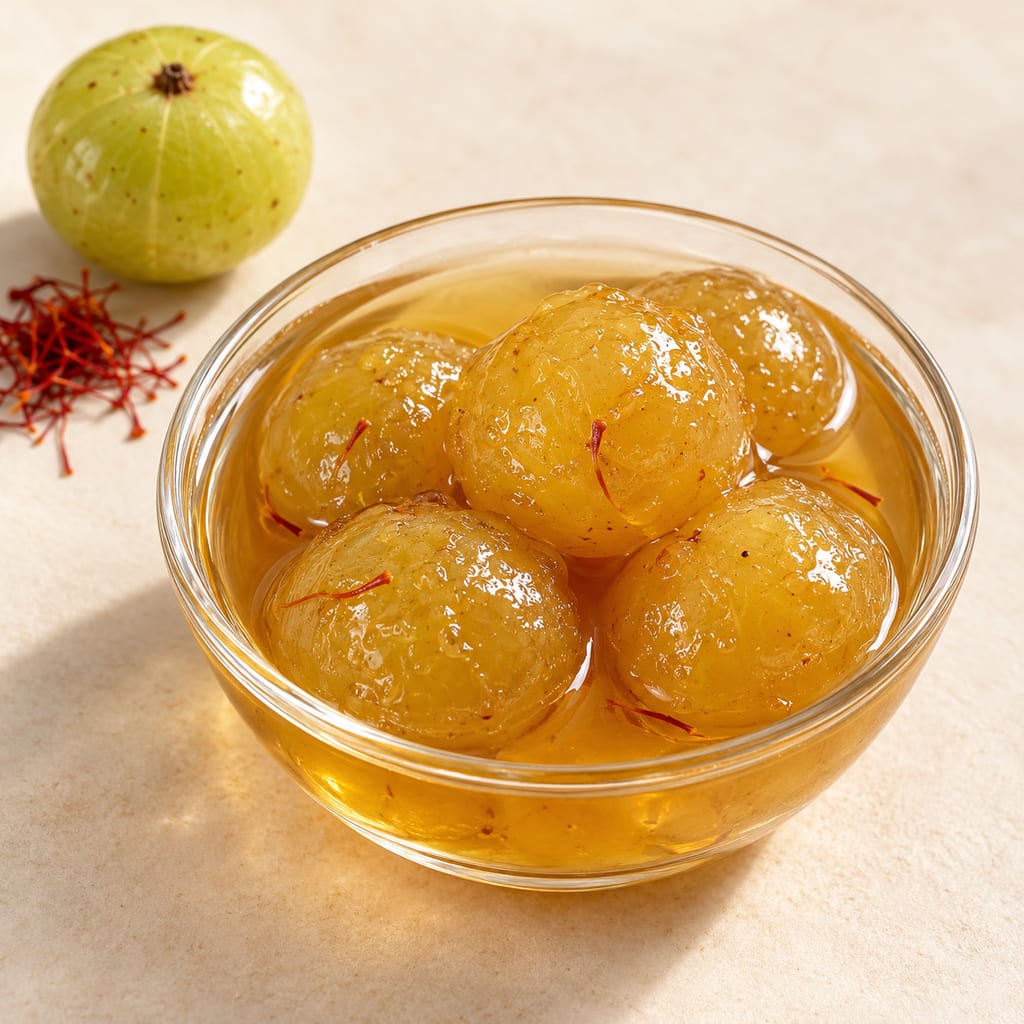
Murabba is a fruit preserve in which whole fruit or large pieces remain in a thick, sweet syrup. In amla murabba, the fruit is the point: a firm, ridged Indian gooseberry becomes tender enough to bite through but keeps its shape, while syrup gathers in and around the fruit. A district government page calls Panna’s version a sweet and spicy relish; the chef’s recipe recorded here makes a saffron-and-cardamom-scented sweet preserve with black pepper and a final pinch of rock salt. The seasoning makes the syrup more than a simple sugar coating, but the source gives no measured balance for acidity, sugar concentration or finished water activity.
The word murabba names a broad family of fruit preserves rather than a single universal formula. Amla, apple, apricot, mango, plum and quince all appear in the chef’s account as fruits that can be preserved with sugar and spices. Amla’s round fruit and distinctive vertical grooves give this version its recognisable look. It is not a jam: the pieces are not crushed into a spread. Nor is it a fermented pickle. In this chef’s method the fruit is soaked, pierced, cooked and held in syrup; no starter, fermentation time or microbial transformation is described. Heat and sugar change the fruit physically and chemically, but the source does not establish fermentation.
Aonla, amla or Indian gooseberry is the fruit of Phyllanthus emblica, a tree cultivated across India and also found in parts of South and Southeast Asia. The names Emblica officinalis and Emblica officinalis Gaertn occur in older horticultural and food literature as synonyms. Aonla is not the European gooseberry, Ribes uva-crispa: it is a different plant with its own fruit shape, flavour and culinary uses. Mature fruit is typically pale green to yellow-green, with a hard central stone and several lengthwise segments visible on the surface. Cultivars vary in shape, size, juice and pulp, so “one amla” does not mean a standard piece of fruit.
Those differences matter in the pan. A review comparing cultivars reports flattened-round fruits in Chakaiya, Kanchan and NA-7; triangular fruits in Banarasi and Krishna; and flattened ovals in Anand cultivars. It reports Chakaiya and Desi as more astringent among the comparisons, while NA-7 was less astringent. These are results from particular cultivar studies, not a taste guarantee for a market purchase. The fruit’s sharp acidity and astringency help explain why it is commonly processed rather than eaten as a fresh dessert fruit. In this recipe, piercing and a long soak precede cooking; the purpose is to soften and open the fruit so syrup can move into it, as the chef describes, rather than to remove its identity as whole amla.
Commercial aonla cultivars include Kanchan, Krishna and several numbered selections such as NA-6, NA-7 and NA-10. Horticultural sources list different cultivation belts and fruit traits; the home recipe does not name its cultivar. It also asks for large fruit but does not identify a grade or variety. If fruits differ in size, maturity or flesh firmness, they will not soften at exactly the same pace. The printed 15-minute low simmer and the spoon’s syrup cues belong to this one household batch; they are not cultivar-independent endpoints.
The available evidence supports a history of use, not a single place or date of invention. The National Horticulture Board describes aonla as indigenous to the Indian subcontinent and lists preserved forms among the fruit’s established uses. Its report names murabba alongside pickles, candy, jelly and jam, and gives historical production figures for 1999–2000. That is useful evidence for a longstanding processing tradition, but it does not date the first amla murabba or identify a founding recipe. No origin story should be inferred from the fruit’s botanical range or from one regional recipe.
Panna is a documented setting for the wider food, not for this exact version. The district administration’s 2019 page describes amla murabba as a sweet-spicy relish and notes the district’s abundance of amla. The National Horticulture Board also lists Panna among Madhya Pradesh’s aonla growing belts. Neither source connects the Reetu Uday Kugaji recipe to Panna, so its recorded preparation location remains unknown. This distinction matters: a food may belong to a region’s documented cuisine even when a particular chef’s batch was made elsewhere.
The small surviving written trail is modern and varied. Sarika Rana’s 2018 NDTV article recalls family jars of murabba served after winter lunches, then credits the specific saffron-and-black-cardamom recipe to Chef Reetu Uday Kugaji. Nisha Madhulika’s Hindi household page describes another amla preparation and seasonal storing practice. These named accounts show how home cooks and food writers preserve methods in circulation; they are not proof that the dish began in the period or place of publication. The careful historical answer is that amla preservation is well documented, while this recipe’s lineage before its publication is not.
The recipe begins with fruit and water, then gives sugar the largest measured share of the batch: 1.5 kilograms for 1 kilogram of amla. The fruit contributes its own water, acid, pectin and plant tissue; the added water lets sugar dissolve and provides the medium in which the fruit first cooks. Sugar sweetens and, in a sufficiently concentrated product, ties up some water so less remains available to microorganisms. That general preservation mechanism is well established for fruit spreads. It does not mean that the ingredient ratio alone proves that a particular jar is shelf-stable: final concentration depends on water lost or retained, fruit size and ripeness, heat and the finished syrup.
Cooking changes the texture in stages. The first covered simmer softens the fruit while the recipe reserves its cooking liquid. The syrup is dissolved separately, clarified with a small amount of lemon juice and strained through muslin. Returning fruit to syrup then exposes the softened skin and flesh to a concentrated sweet liquid; continued heating thickens the syrup and makes the fruit more tender. The source calls the intermediate and final consistencies one-string and two-string, describing what the syrup does when lifted with a spoon. Those are traditional kitchen cues, not calibrated readings of temperature, soluble solids or water activity.
Amla’s sharpness and astringency remain part of the result even when sugar rounds the taste. The black cardamom contributes a deep, smoky aromatic note; ground black pepper adds pungency; saffron adds its distinctive aroma and colour; lemon is used in the syrup step and rock salt is stirred in late. The optional blanched almonds contribute a different texture and should not be mistaken for a defining element of every murabba. The source names each role by placement rather than by a chemical analysis of this batch, so the recipe’s flavour can be described from its named ingredients without claiming that any one spice has a measured preservative effect.
The overnight soak is followed by piercing. The chef says to retain the water, cook the fruit in it on low heat for about 15 minutes, and stop when the amla is tender and the water has reduced by half. The covered pan limits evaporation while the fruit softens. Piercing is a physical change to the skin: it gives liquid entry points and reduces the barrier between the syrup and the inner flesh. The stated caution against overcooking matters for appearance and handling because the chef warns that prolonged water cooking can make the fruit break apart.
After the fruit is drained, its cooking liquid joins the syrup water. The recipe sets a total of 1.5 litres, including that reserved liquid, but does not specify how much fresh water is needed after the reserve is measured. Sugar dissolves in the heated water before lemon juice is added. Skimming and muslin straining remove surface froth and visible impurities; they clarify the liquid but do not constitute a validated sterilisation or canning step. When the fruit returns, the pan is uncovered and kept on low heat until the syrup reaches the chef’s two-string cue. The fruit’s tenderness and the syrup’s thickness are sensory and visual guides to this version, not safety measurements.
The recipe adds rock salt after the final cook and cools the preserve completely before jarring. It recommends a dry glass container, keeping the fruit under syrup and using a dry spoon. Those directions reduce obvious sources of dilution and handling contamination, but they do not establish an approved hot-fill process, seal, storage temperature or duration. The source’s almost-one-year statement is retained as a claim made by the article, not as a recommendation for this batch. For readers, that boundary is practical: the structured method can be followed as a record of the chef’s approach, while long-term room-temperature storage is not validated.
The recipe here should be kept separate from other amla murabba formulas. Nisha Madhulika’s Hindi page uses two days in water, piercing, two days in alum water, two rinses, a brief boil and then a syrup made from sugar and water. It seasons with green cardamom, pepper and black salt, with optional saffron. The same page gives an alternate start in which boiled fruit is covered with sugar for four to five hours so juice forms a syrup. Those steps and ingredients are not in Kugaji’s recipe, so they are not blended into this card.
Other differences are culinary, not merely editorial. Here the cardamom is black and the saffron is measured at half a gram; the household variant names green cardamom pods and describes saffron by a small spoon. This recipe adds lemon juice to clarify syrup, uses rock salt, and permits ten optional slivered almonds. Nisha’s method includes alum, but does not specify a calibrated spoon size or solution concentration in the page; that treatment is not imported or quantified here. Sweetness, spice and texture will therefore differ between the records, even though both are whole amla in syrup.
Murabba is also distinct from aonla candy. The National Horticulture Board lists both among the fruit’s processed forms; in the usual culinary distinction, preserve leaves fruit in syrup, while candy is drained and dried after sugar treatment. A separate product also called amla syrup focuses on the liquid rather than whole fruit. The word murabba itself covers a family of recipes across several fruits and households. Naming one method clearly helps the reader compare these forms without treating them as interchangeable.
Murabba is served as a sweet preserve or relish rather than as a beverage or a side dish that must be cooked again. The chef’s account places it after lunch in winter, one fruit at a time, and the Panna district calls its local version sweet and spicy. The whole fruit can be served with a little syrup, which gives the plate both a tender bite and a sweet, sharp liquid. Because the recipe includes pepper, black cardamom and salt, its profile sits between confection and relish; that balance helps explain why a small portion can accompany a meal as well as finish one.
Aonla’s other forms reveal how cooks respond to the fruit’s intense taste and seasonal supply. It appears as pickle, candy, jelly, jam, juice and preserve in horticultural and review sources. Each form changes the relationship between fruit and liquid: pickle introduces salt, acid or spices; candy ends with a dried surface; jam breaks the fruit down; murabba keeps it whole in syrup. The contrasts are useful when shopping or reading a menu. A jar of whole fruit in syrup is not the same thing as amla chutney, a sour pickle or a dried sweet.
At home, serve the fruit and syrup with a clean, dry spoon as the recipe advises, and avoid mixing the contents with wet utensils. The account does not specify a standard serving size beyond four servings for its one-kilogram batch, so the stated yield is the author’s estimate, not a measured finished weight. It also does not give a sugar-reduced variant. Reducing sugar or changing the fruit-to-water ratio would create a different formula and cannot be assumed to behave like this one.
Sugar can help preserve fruit by lowering water activity, the share of water that microorganisms can use. Fruit spreads still vary in acidity, sugar concentration, processing and storage, and food-safety guidance distinguishes a prepared spread from a tested shelf-stable canning process. This chef’s page supplies no measured final sugar concentration, water activity, pH, jar-processing schedule or sealed-jar test. Its one-string and two-string cues and its almost-one-year claim therefore cannot establish a safe storage life. Keeping fruit submerged and using a dry spoon are the author’s handling tips; they are not substitutes for process validation.
An Indian Food Packer study from 1952 specifically documents spoilage in amla preserves. Its abstract reports gas-producing fermentation, undesirable odours, changed taste and fruit disintegration, with yeast and mould appearing later in storage after initial bacterial contamination. That evidence shows that a sugary fruit preserve can still spoil. It does not prove that every household batch has the same organisms or failure sequence, and the original paper is not fully available in the repository record. We do not import the study’s preservative treatment into this recipe.
Use sound fruit and wash it as the recipe directs; damaged skin can make handling less predictable. The recipe’s cooking, straining and jar transfer are described here faithfully, but a finished syrup that looks thick or smells pleasant is not evidence of safety. The page does not state whether the jar is refrigerated, how long it remains safe after opening, or whether the mixture is processed for room-temperature storage. Readers seeking shelf-stable storage need a tested preservation process that covers this exact formulation, jar and method. Until then, no fixed shelf life is supported.
An NDTV Food article by Sarika Rana, updated 30 July 2018, credits this saffron and black-cardamom method to Chef Reetu Uday Kugaji and recalls family jars served in winter. This version appears in a 2018 article; it does not date murabba’s origin or give a preparation locality. The Panna District listing and horticultural sources support a wider Indian tradition of amla preserve without assigning this particular recipe there.
Yield 4 servings · Scaling: source batch only
The syrup's one-string and two-string cues do not specify a measured sugar concentration or a validated jar process.
Hazard sourceUse dry glass jars and keep the fruit immersed in syrup, as the chef's handling tips describe; these measures do not validate a storage duration.
Control sourceAn almost-one-year storage period is claimed without a measured syrup endpoint or validated packing process.
The district administration documents amla murabba here, not this household or chef's exact batch.
The recipe does not state where this exact batch was prepared.
Amla is the firm, sharply sour fruit of Phyllanthus emblica. Cooks transform it into murabba, pickles, chutneys, drinks and dried snacks.
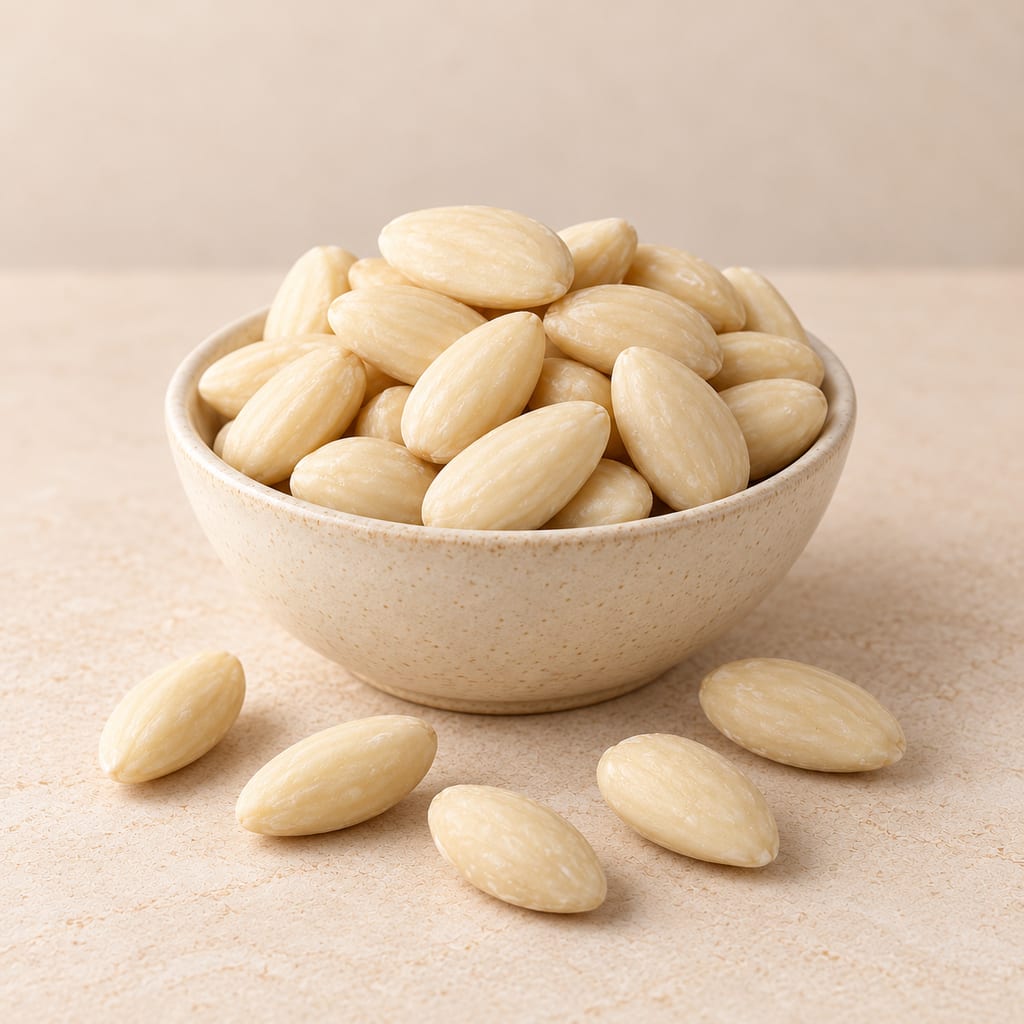
Blanched almonds are sweet almond kernels with the brown seed coat removed. A documented amla murabba cooks ten optional slivered kernels into the finishing syrup with spices and saffron.
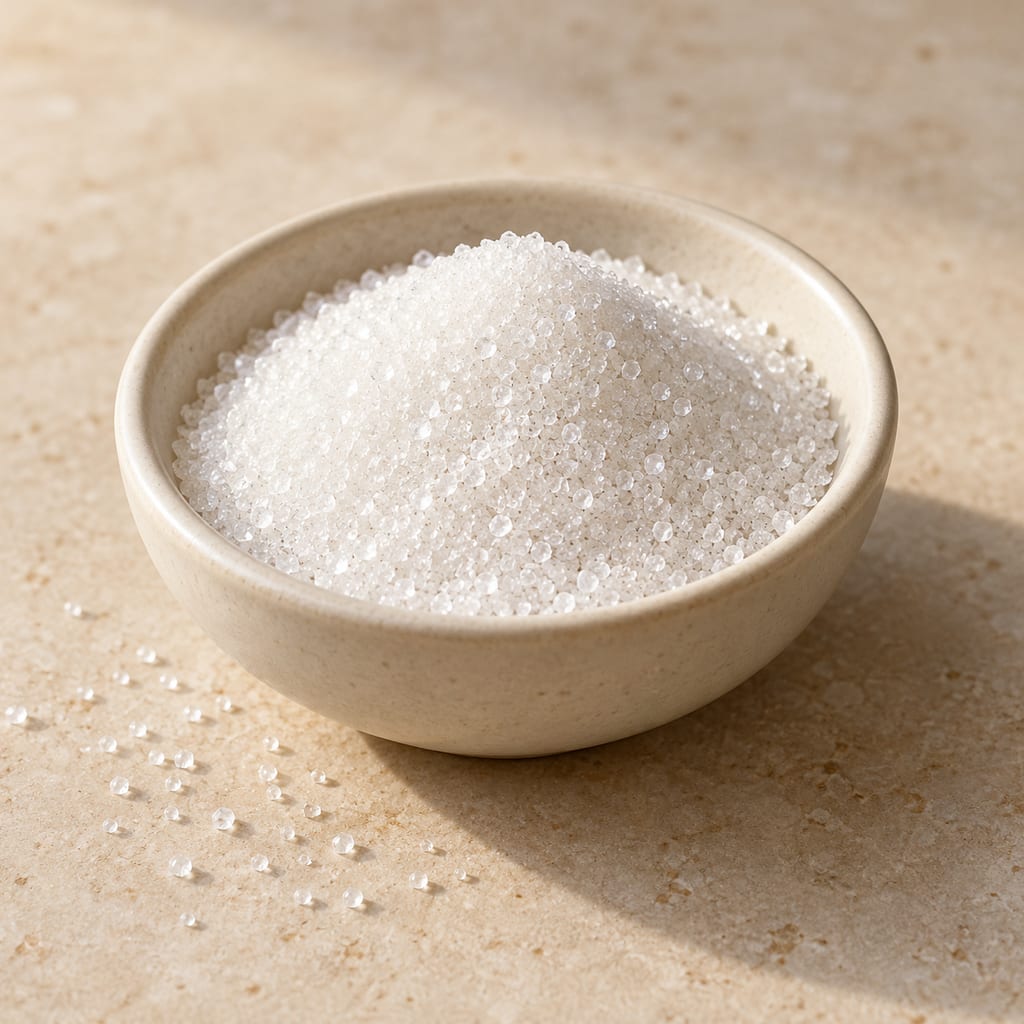
Granulated sugar is dry crystalline sucrose refined from cane or beet. It sweetens dough, feeds baking yeast, and helps set particular fruit spreads.
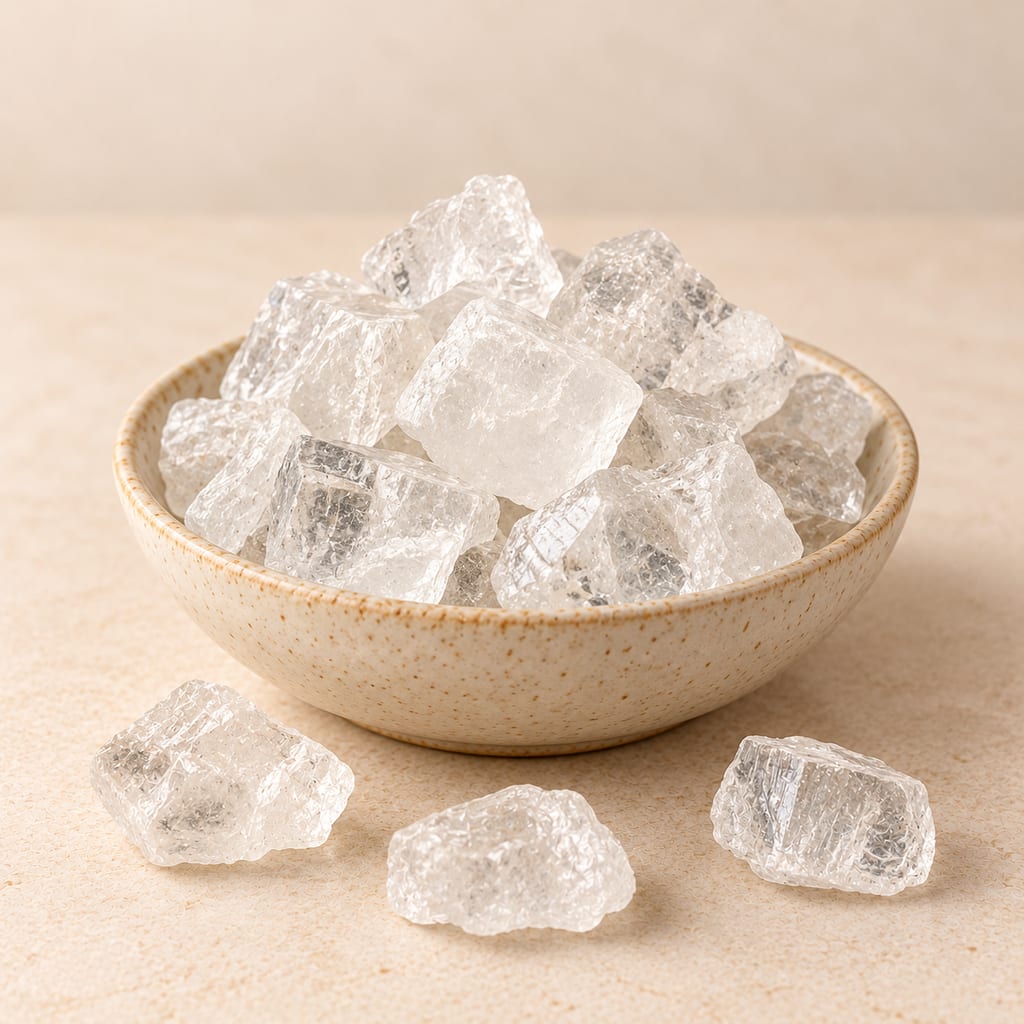
Rock salt is sodium chloride mined from ancient salt beds, sold from coarse grey chunks to pink Himalayan crystals and the fired black salt, kala namak, used in Indian cooking.
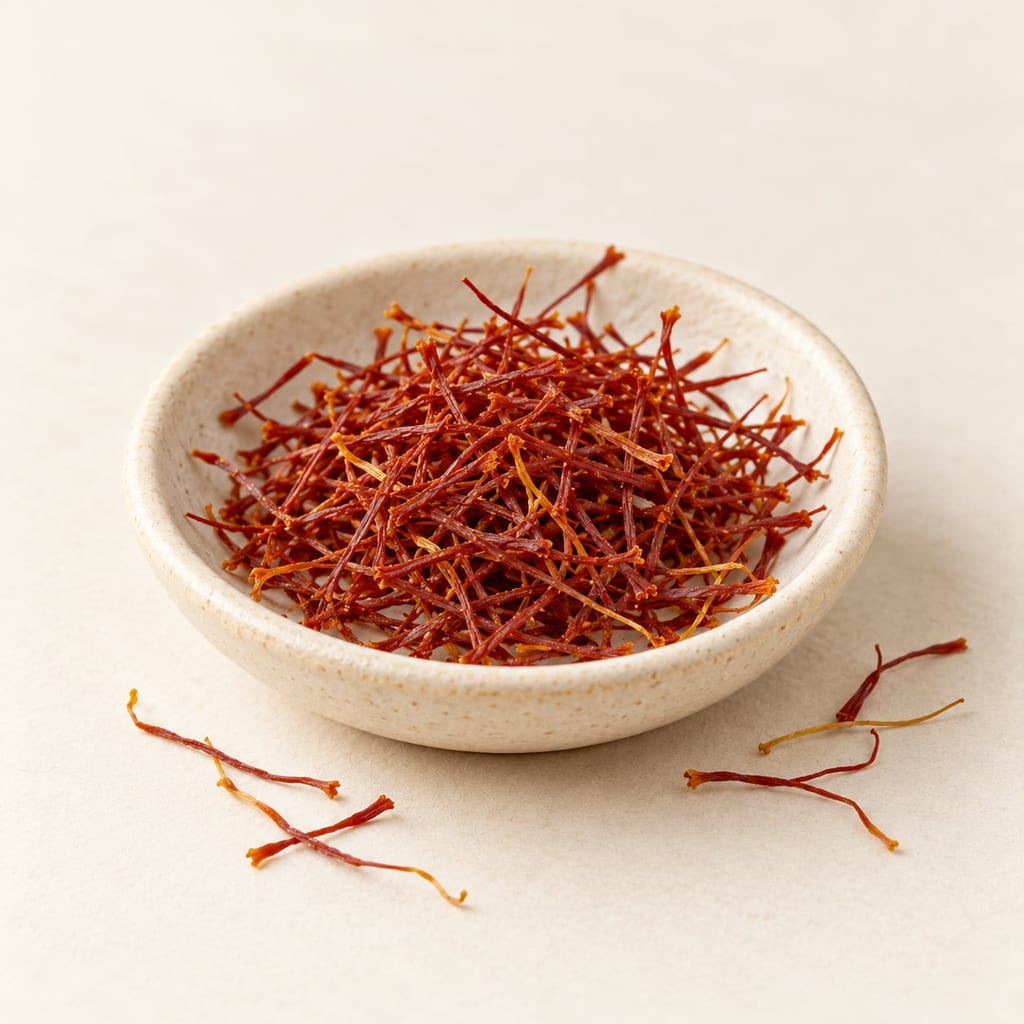
Saffron is the dried stigma of Crocus sativus, valued for its golden colour, floral aroma and gentle bitterness; two linked amla preserves use it at distinct stages and measures.
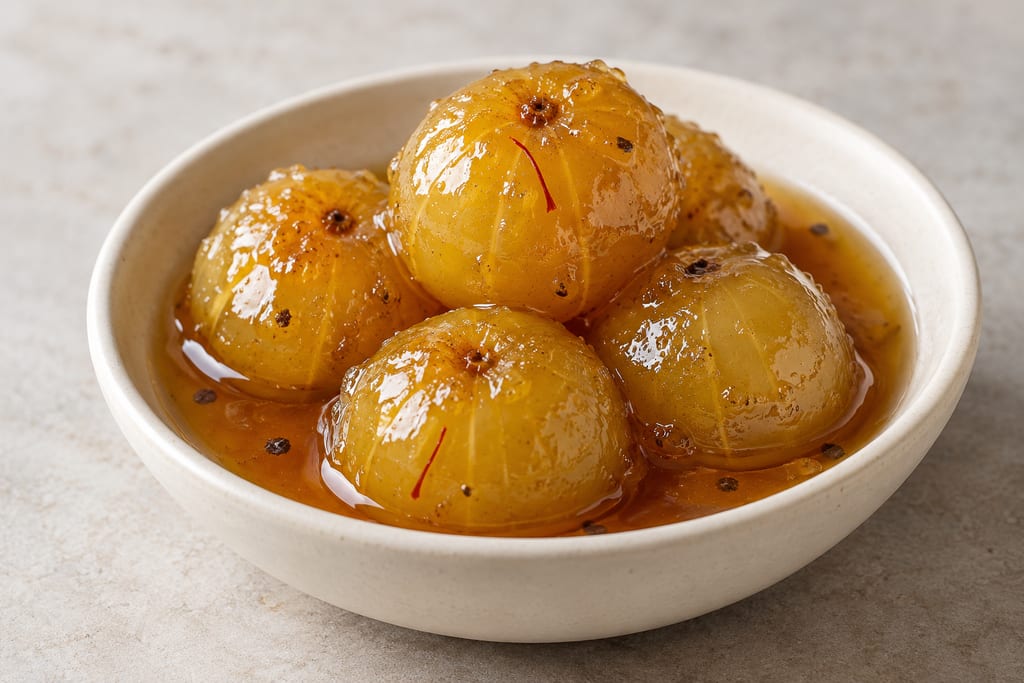
Amla murabba preserves whole Indian gooseberries in a heavy sugar syrup scented with cardamom and sharpened with pepper and black salt. This household method soaks the fruit before cooking.

Aam panna is a tart Indian summer drink made by cooking unripe green mango until its flesh softens, then blending the pulp with sweetener, salt and spices and diluting it with water.
Ripe mango pulp spread thin and dried as a chewy fruit leather. This entry records one controlled unsweetened experiment and distinguishes it from Bengali sun-dried aamshotto and sweetened or spiced variants.

Adrak murabba preserves young ginger in sugar syrup, a sweet South Asian preparation recorded in Indian cookery and food-processing sources.
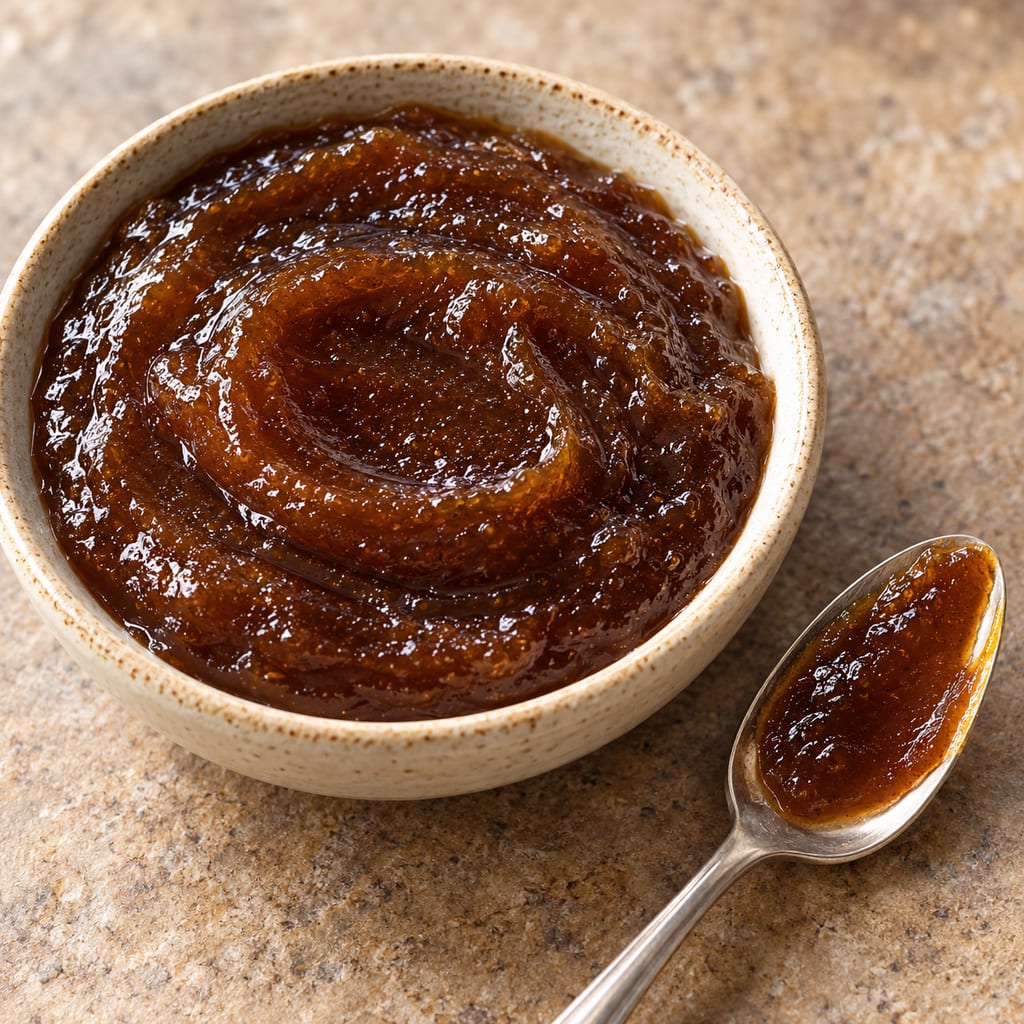
An experimental sweet mushroom preserve developed in Indian food-processing research, made by cooking mushroom pulp with sugar, added pectin and citric acid until concentrated into a thick, spreadable jam.
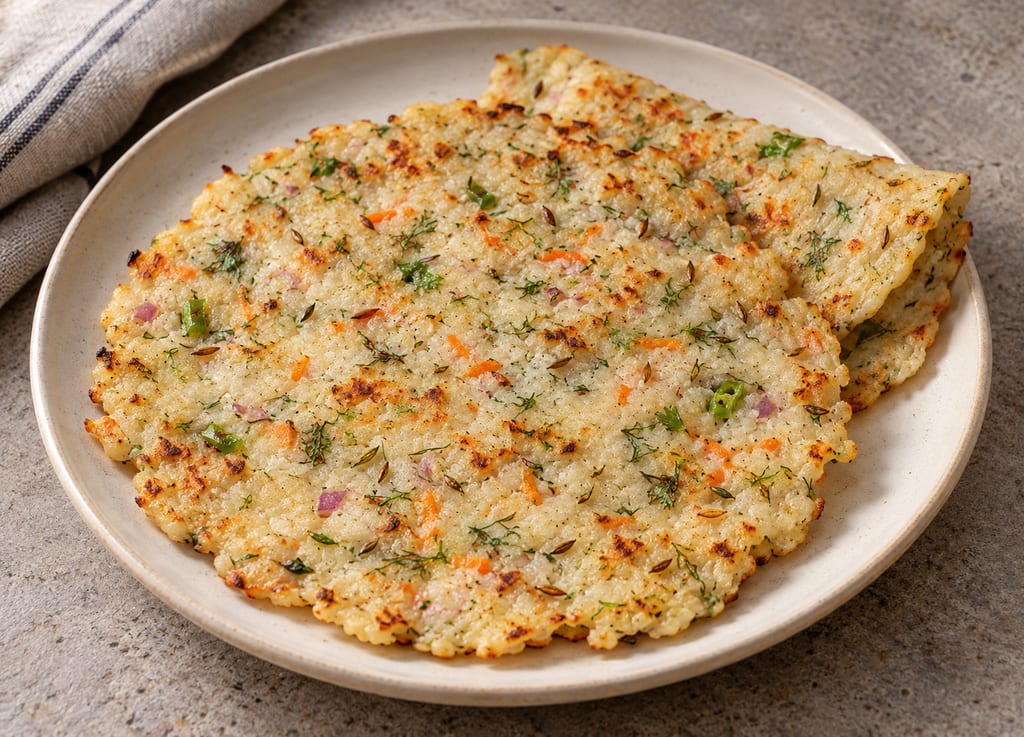
This Karnataka-style akki rotti mixes fine rice flour with vegetables, coconut, herbs and spices, then hand-pats and griddle-cooks the dough.
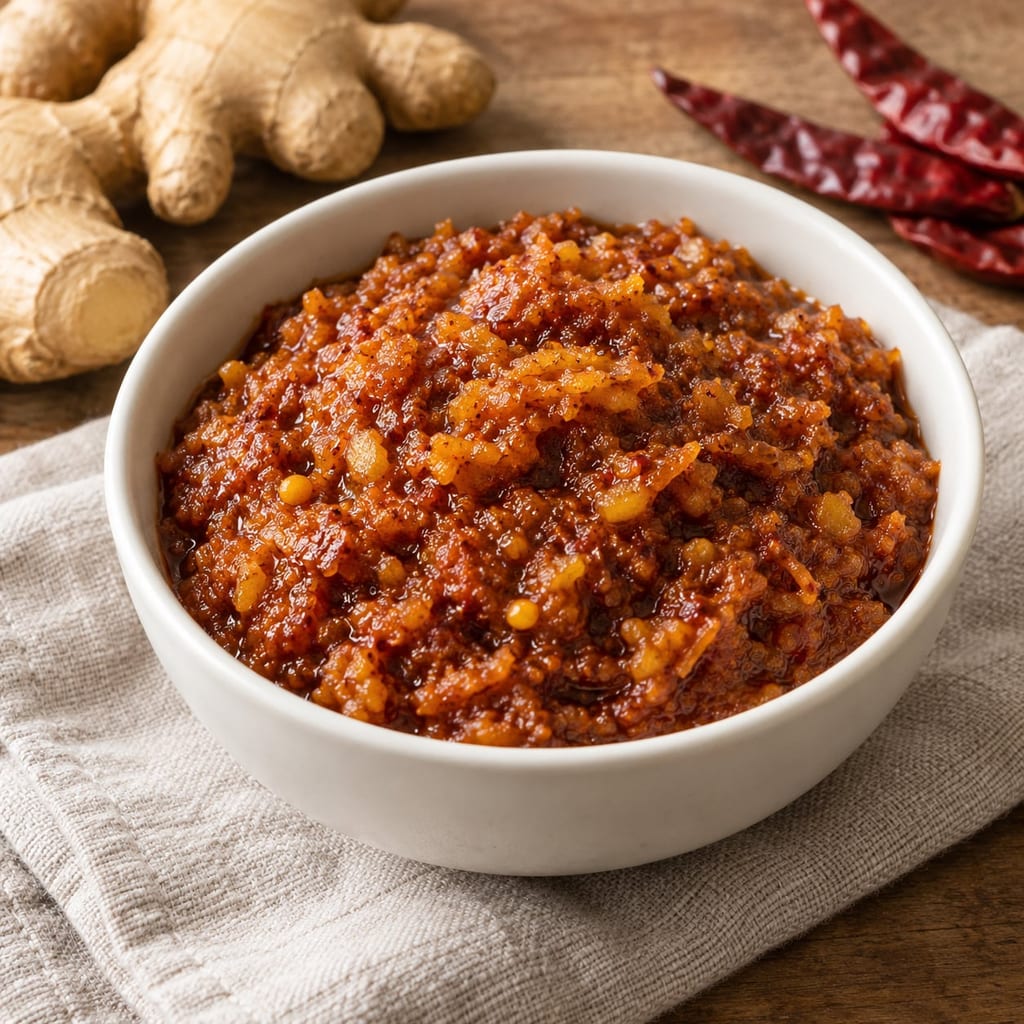
An Andhra ginger-and-urad chutney in which browned dal and briefly fried ginger and chillies are cooled, then ground with jaggery to a coarse paste.
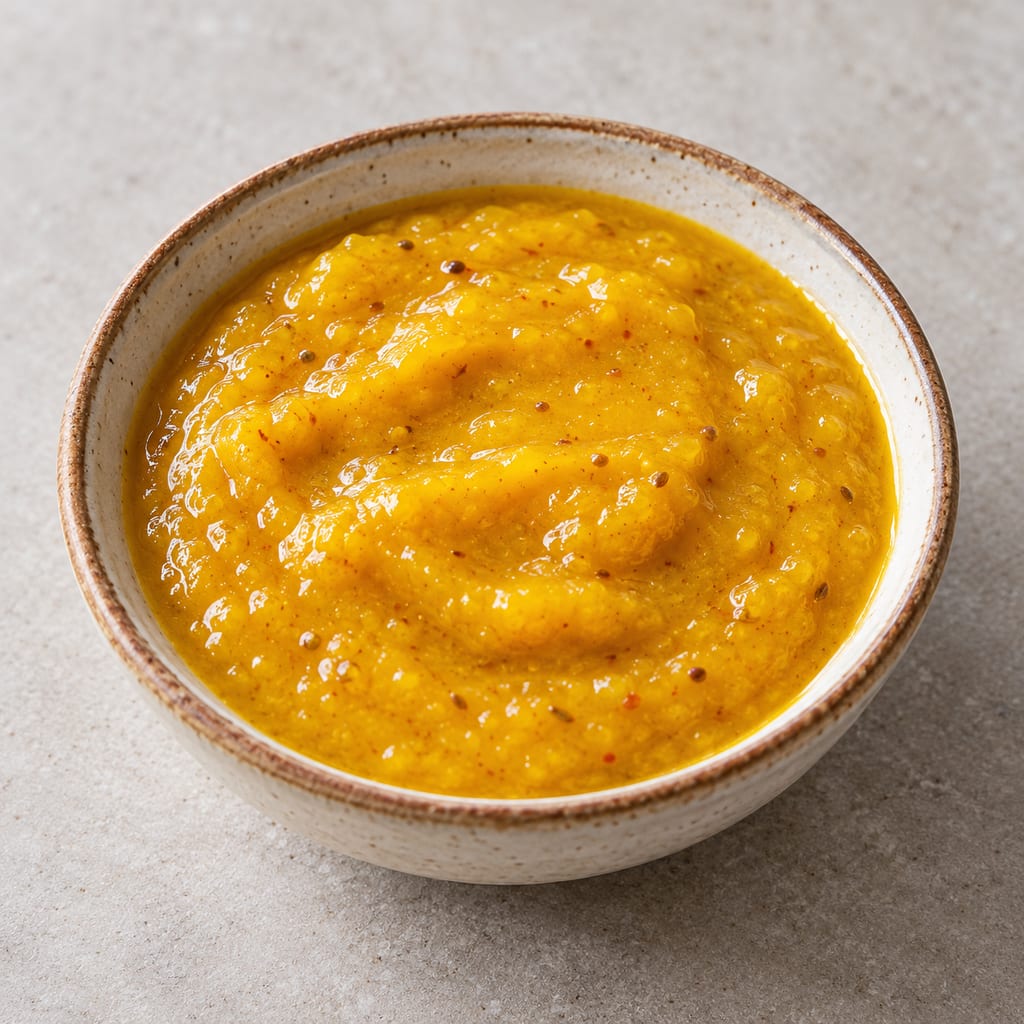
This cooked amba follows a Jewish Food Society recipe that simmers ripe mango with onion, garlic, mustard seed and warm spices into a tangy Middle Eastern condiment.
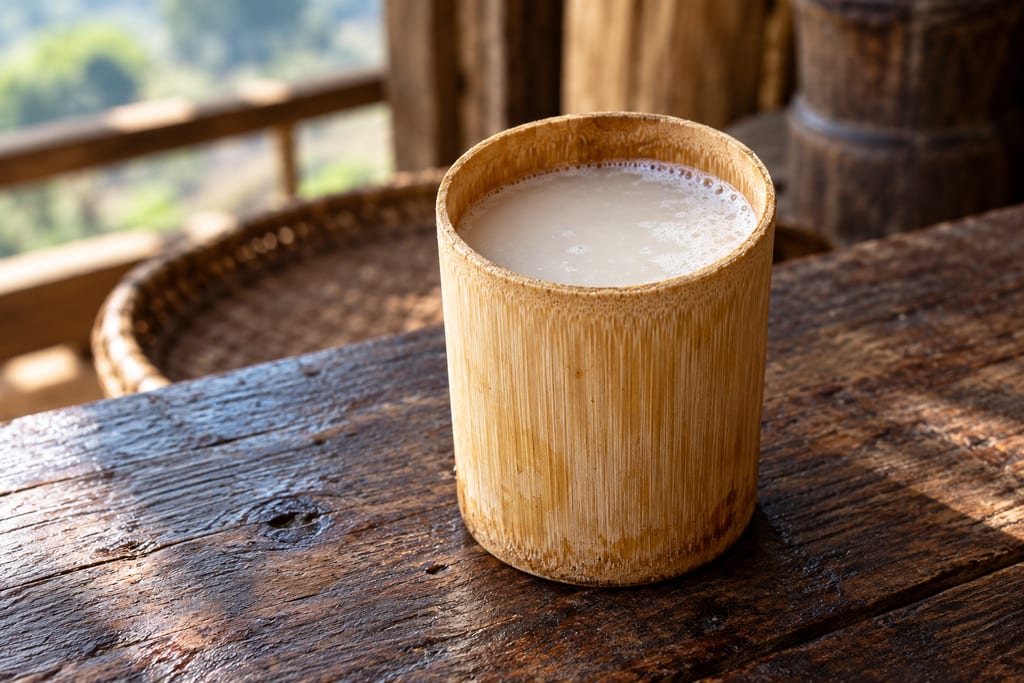
Angami rice beer from Nagaland. A surveyed method mixed cooked rice with piazu, fermented it for about four days in summer or a week in winter, then added water and filtered it. The starter ratio leaves the rice-weight basis unclear.
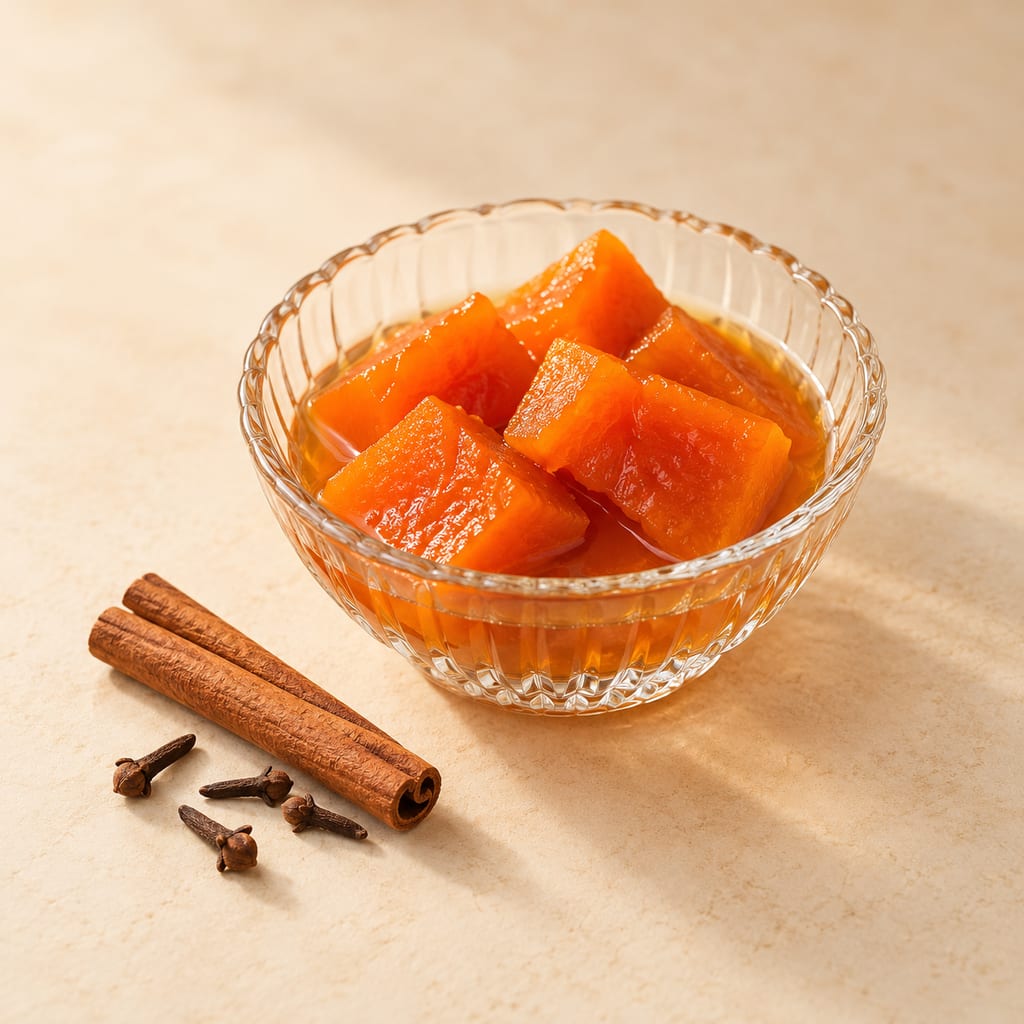
Brazilian doce de abóbora: Freeze for winter; small fresh portion refrigerated up to 48 hours.
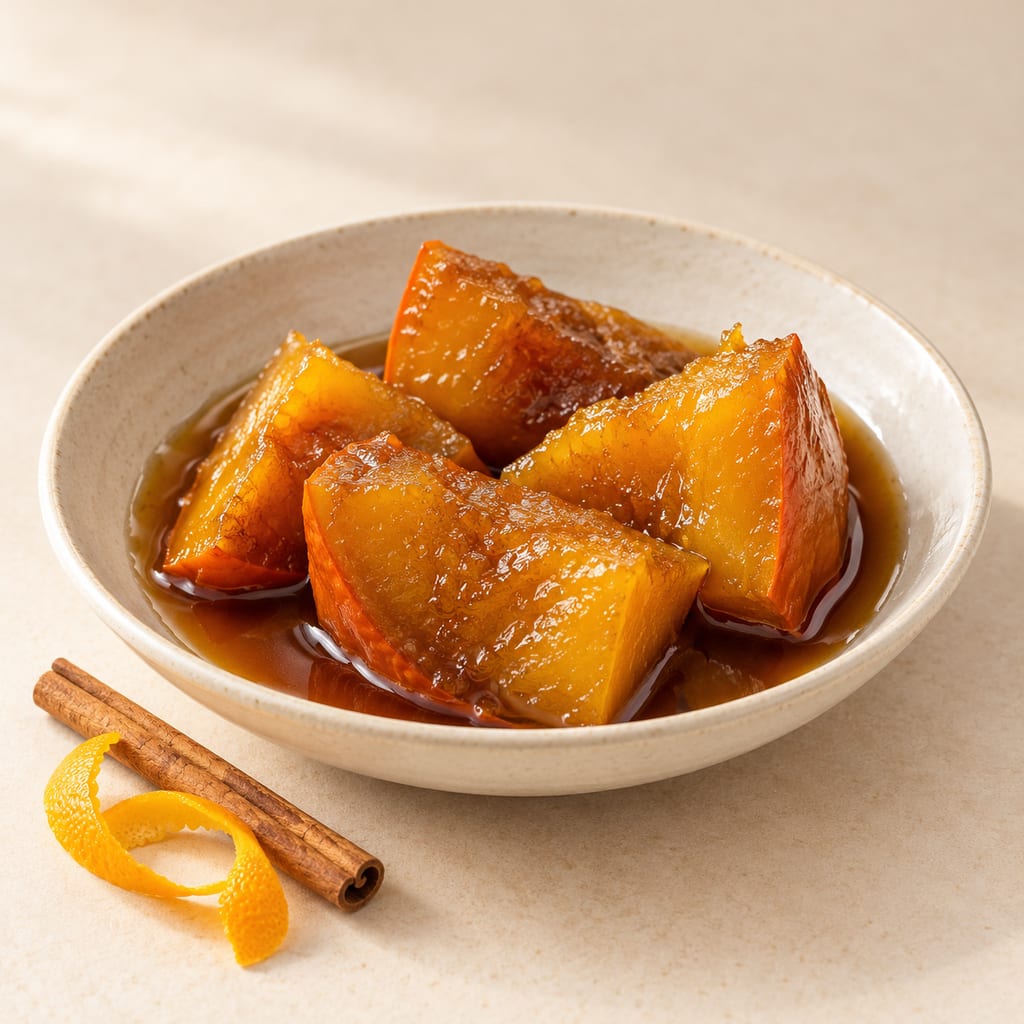
Rind-on pumpkin simmered with piloncillo, orange and cinnamon until glazed. This Mexican sweet keeps refrigerated for up to one week.
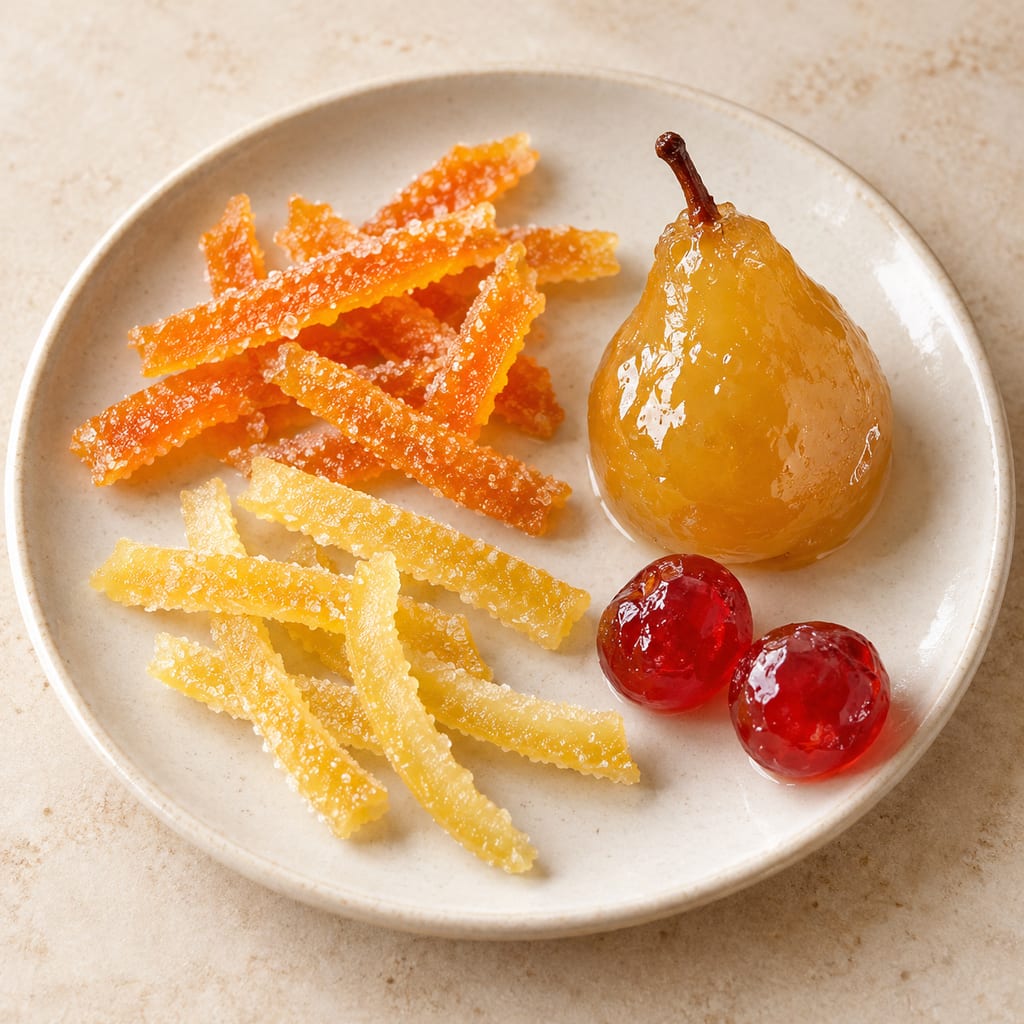
Candied fruit is fruit that has been repeatedly steeped in concentrated sugar syrup, which replaces part of its water with sugar, often followed by drying. It differs from fruit served in a thin syrup.
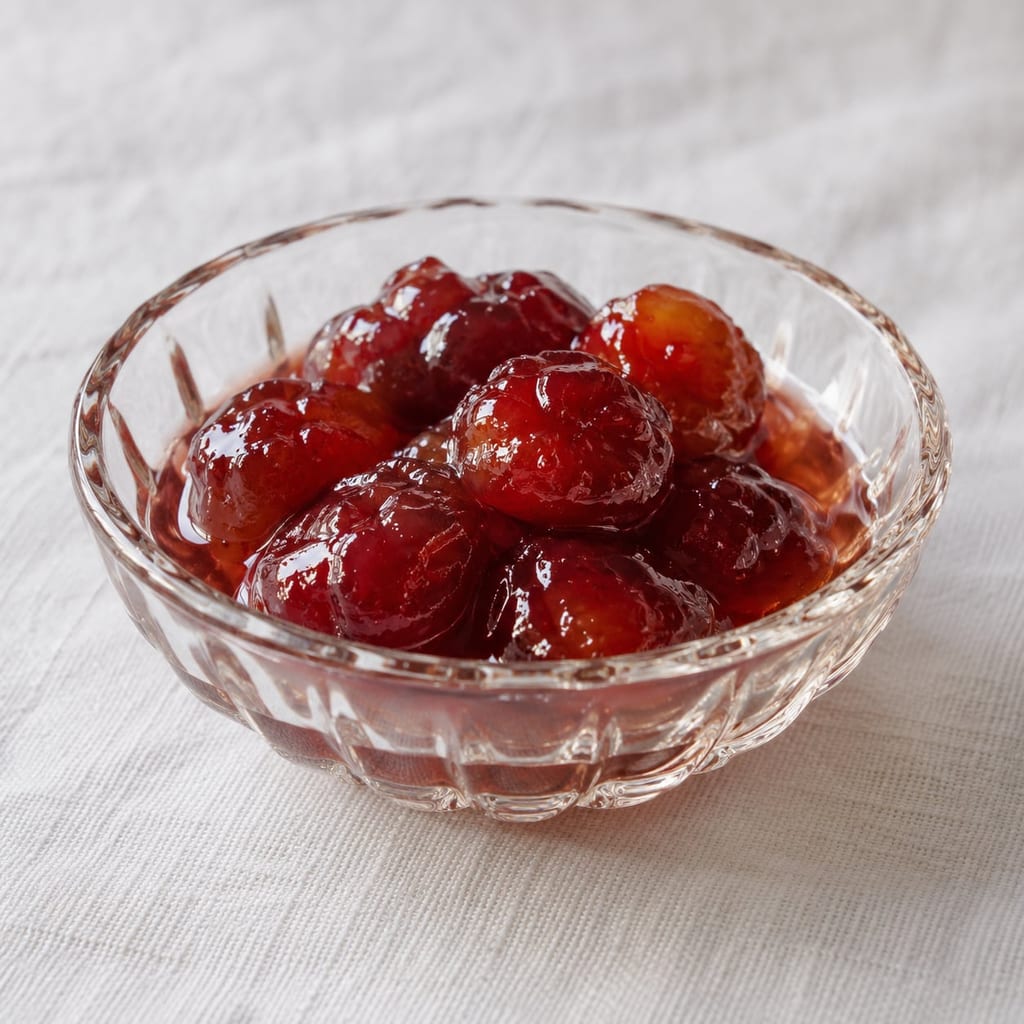
Cypriot cherry glyka made by layering firm pitted cherries with sugar, briefly boiling them, chilling overnight, and boiling again to concentrate the syrup. This version is refrigerated and has no shelf-stable canning process.
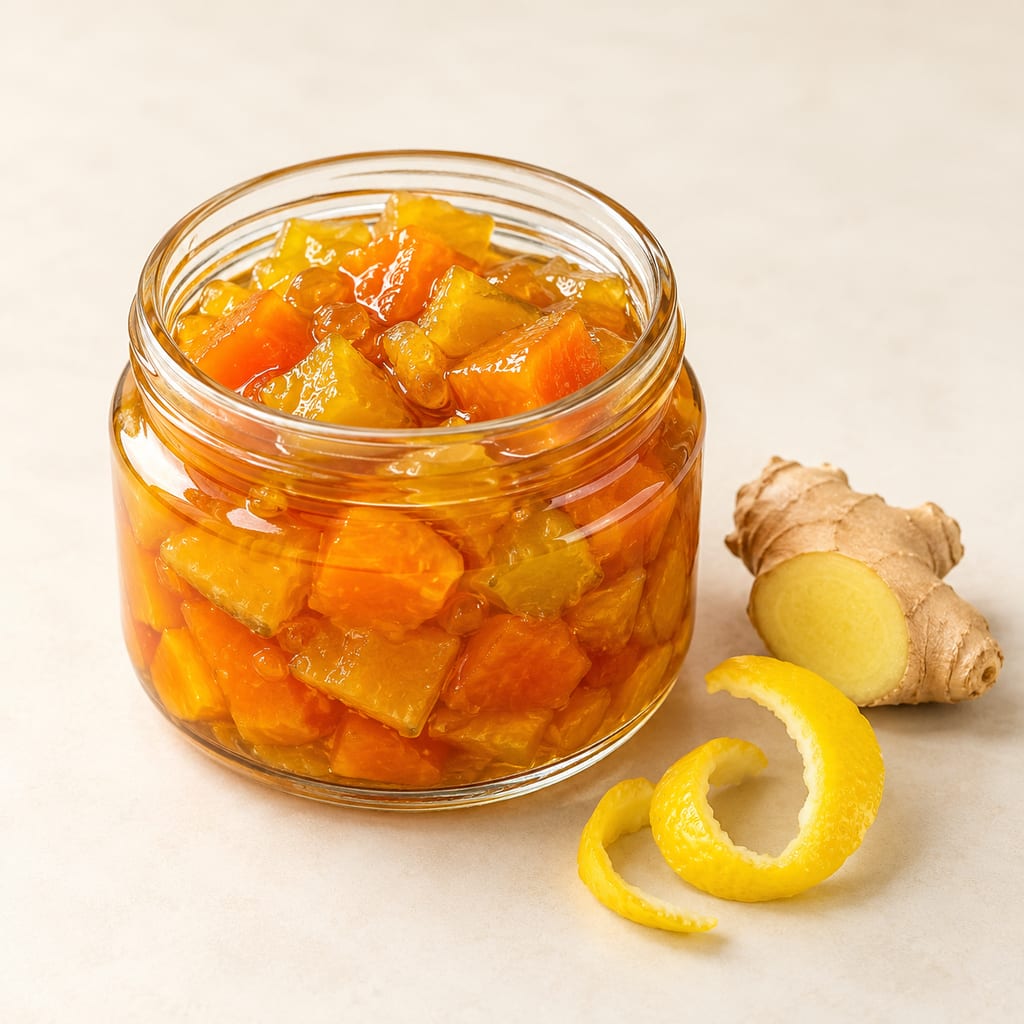
English lemon-and-ginger preserved pumpkin, after an 1861 recipe: Freeze for winter; small fresh portion refrigerated up to 48 hours.
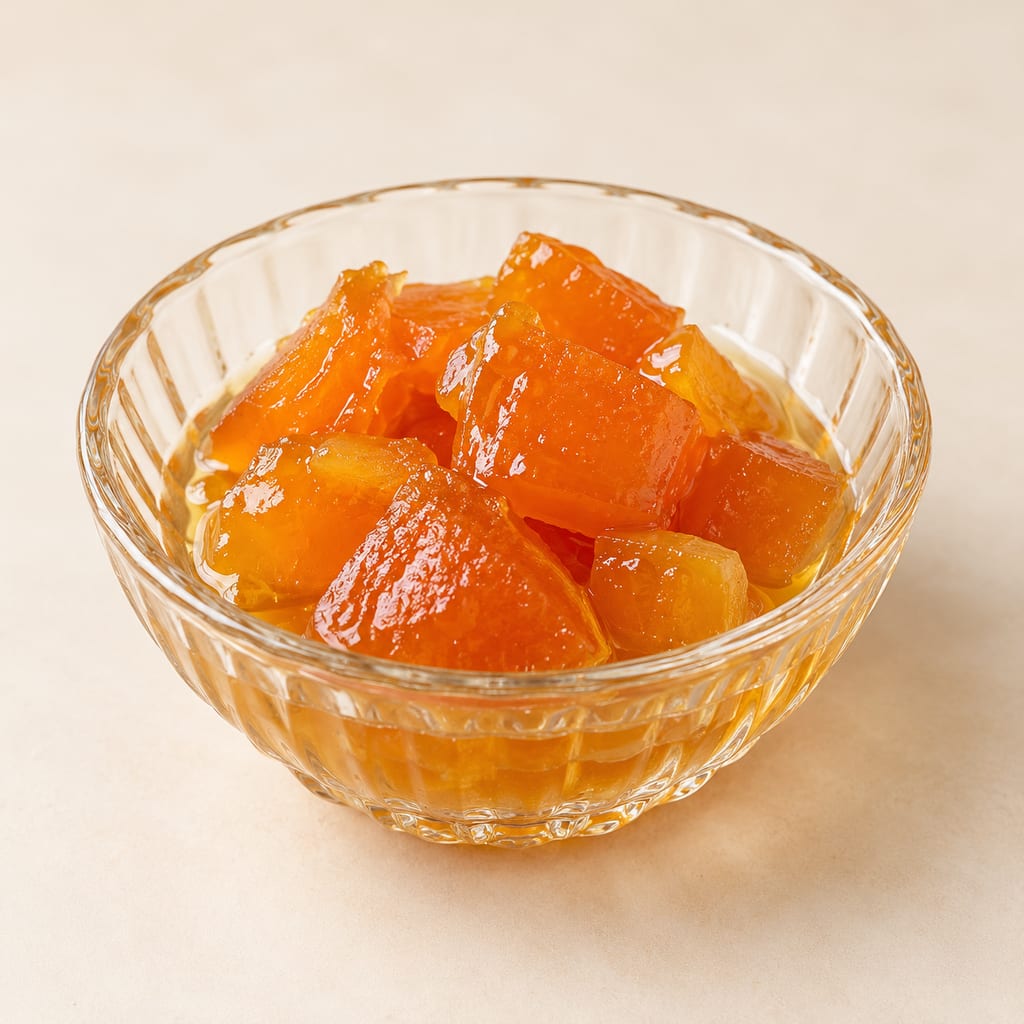
Greek pumpkin spoon sweet, with Cypriot context: Freeze for winter; small fresh portion refrigerated up to 48 hours.
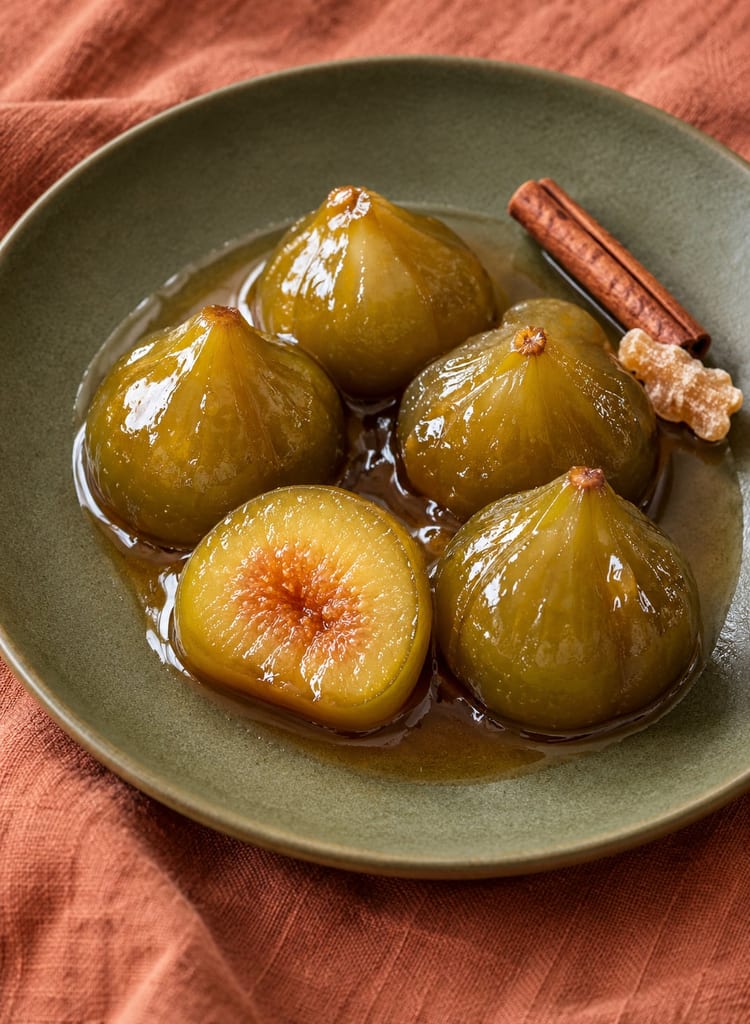
Whole unripe figs are softened and cooked in cinnamon and ginger syrup as a refrigerator-only South African konfyt; this method does not provide a shelf-stable canning process.
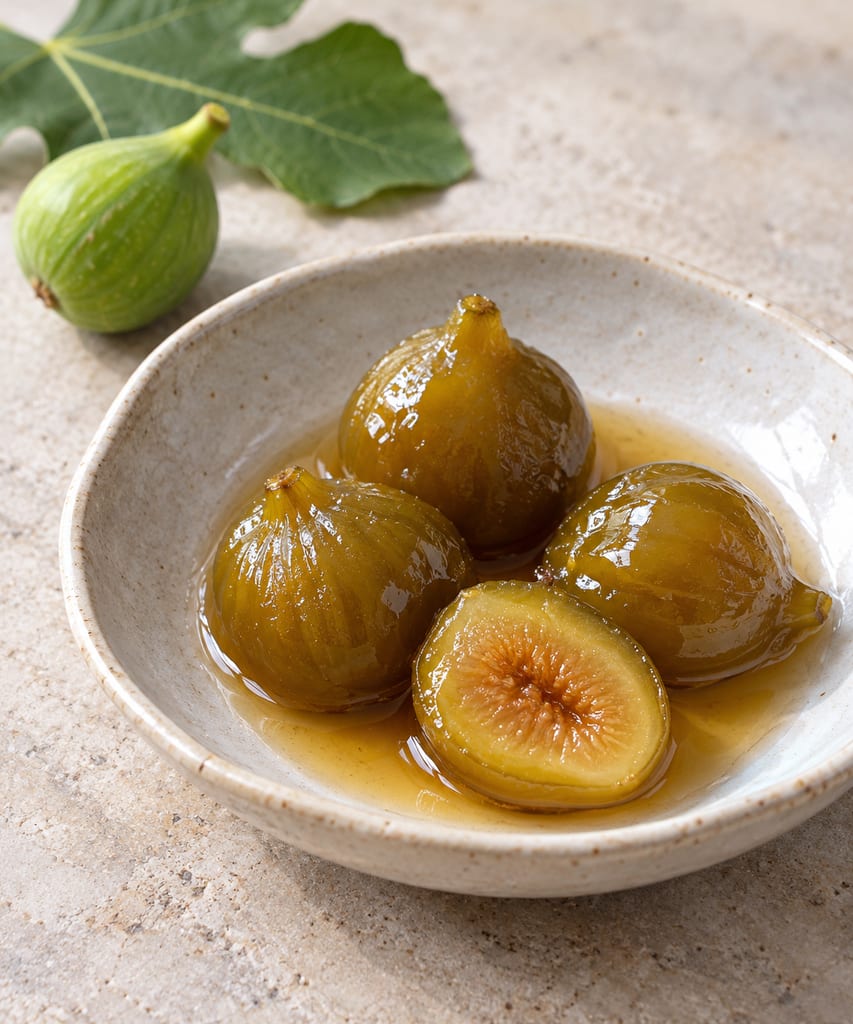
Hard green figs are parboiled and cooked whole in a lemon-sharpened sugar syrup as a refrigerator-only South African konfyt; the method does not establish shelf-stable canning.

Soft, spreadable Calabrian pork sausage made with a great deal of red chilli and fatty pork, stuffed into natural casings, sometimes smoked and matured while staying soft.

A way to add independent temperature logging to an existing food dehydrator without changing its built-in controls or protections. It is a monitoring method, not a rewiring plan.

Pleurotus cystidiosus is the abalone mushroom, a cultivated oyster-type fungus with dark brown caps that grows more slowly and is more demanding than other Pleurotus species.

A dark, balanced vinegar from Emilia-Romagna made by combining cooked or concentrated grape must with wine vinegar, then acetifying and refining it in wood under a protected specification.

A living dairy inoculum that starts controlled cream fermentation, developing acidity and aroma before sour cream or cultured butter is finished.

A small electric incubator holds jars at a selected temperature for yogurt and other documented warm food preparations. Controls, capacity and vessel arrangement vary by model.

Adygean salt is a seasoned table salt associated with Adygea and the wider North Caucasian culinary tradition. Salt is blended with garlic and a variable selection of herbs and spices; the exact mix depends on the named style and maker.

The African Caesar-group mushroom, Amanita masasiensis, is a wild ectomycorrhizal species of central and southern African woodlands, eaten locally. The genus contains deadly poisonous species, so identification needs care.
No community contributions have been published for this entry yet.
Sign in to contribute. Published comments and photos are free to read.
NDTV Food; article by Sarika Rana, recipe credited to Chef Reetu Uday KugajiProcess · Inspiration · History
How To Make Amle Ka Murabba At HomeRecipe section, lines 174–203: ingredients and method; lines 208–218 give chef tips and an unvalidated almost-one-year claim.
The article credits Chef Reetu Uday Kugaji but does not identify this batch's preparation locality.
Cited in: What this murabba preserves; A regional food with an uncertain origin; Why the fruit meets syrup; Reading the sequence as a method; Distinct household and product forms; How it is served; Storage, spoilage and what is not known
District Panna, Government of Madhya PradeshGeography · Context
Amla MurabbaDistrict Panna documents amla murabba as a local sweet-spicy relish; it does not document this record's exact method or preparation location.
Cited in: What this murabba preserves; A regional food with an uncertain origin; How it is served
Nisha MadhulikaVariation · Process · Use
आंवले का मुरब्बा (Amla Murabba Recipe)The Hindi page records a separate household version: two-day water soak, fork pricking, two-day alum-water soak with rinsing, brief boiling, then cooking in syrup and adding green cardamom, pepper, black salt and optional saffron.
The page describes a second way to start the syrup by layering sugar over boiled fruit and letting it stand four to five hours; this is distinct from the NDTV chef's overnight soak and syrup method.
The article claims long room-temperature keeping without measured sugar concentration or a validated process; that shelf-life claim is not adopted.
Cited in: A regional food with an uncertain origin; Reading the sequence as a method; Distinct household and product forms
National Horticulture Board, Government of IndiaGeography · Cultivation · History · Uses
AonlaThe report describes Indian gooseberry as indigenous to the Indian subcontinent and lists cultivation belts in multiple Indian states, including Madhya Pradesh districts such as Panna and Rewa.
It names Kanchan (NA 4), Krishna (NA 5), NA 6, NA 7 and NA 10 as commercially cultivated varieties.
It lists murabba among common aonla fruit products alongside pickles, candy, jelly and jam; its production figures are explicitly dated 1999–2000.
Cited in: The fruit behind the preserve; A regional food with an uncertain origin; Distinct household and product forms; How it is served
Plants (MDPI), 13(5), 574; Pawar et al.Botany · Ingredients · Variation
Recent Insights into the Morphological, Nutritional and Phytochemical Properties of Indian Gooseberry (Phyllanthus emblica) for the Development of Functional FoodsThe review describes fruit forms and measured differences across aonla cultivars, including weight, shape, colour, pulp, juice, acidity, soluble solids, ascorbic acid, starch and pectin.
It reports Chakaiya and Desi as more astringent and NA-7 as less astringent among the compared cultivars; values are cultivar-study results, not universal batch targets.
The paper reviews Phyllanthus emblica and its synonyms, cultivars, fruit composition and maturation.
Cited in: The fruit behind the preserve; Why the fruit meets syrup
D. S. Johar and J. C. Anand, Indian Food Packer 6(12), 1952; CSIR-Central Food Technological Research Institute repository recordPreservation · Safety · History
Nature and prevention of spoilage in amla preservesThe 1952 paper's abstract reports gaseous fermentation, undesirable odours, altered taste and fruit disintegration during storage of amla preserve.
The abstract says the initially observed bacteria were later superseded by yeast and mould in the stored product.
The repository record does not expose the full paper without registration; no unverified additive dose or procedural detail is used.
Cited in: Storage, spoilage and what is not known
University of Minnesota ExtensionFood science · Safety · Storage
Preserving food at home: Fruit spreadsThe extension defines preserves as whole or small pieces of fruit in thick sugar syrup, distinguishing them from jams and jellies.
It explains generally that sugar lowers water activity by binding water and that validated fruit-spread canning guidance should be followed for shelf-stable products.
These general mechanisms are not treated as validation of this amla recipe.
Cited in: What this murabba preserves; Why the fruit meets syrup; Storage, spoilage and what is not known