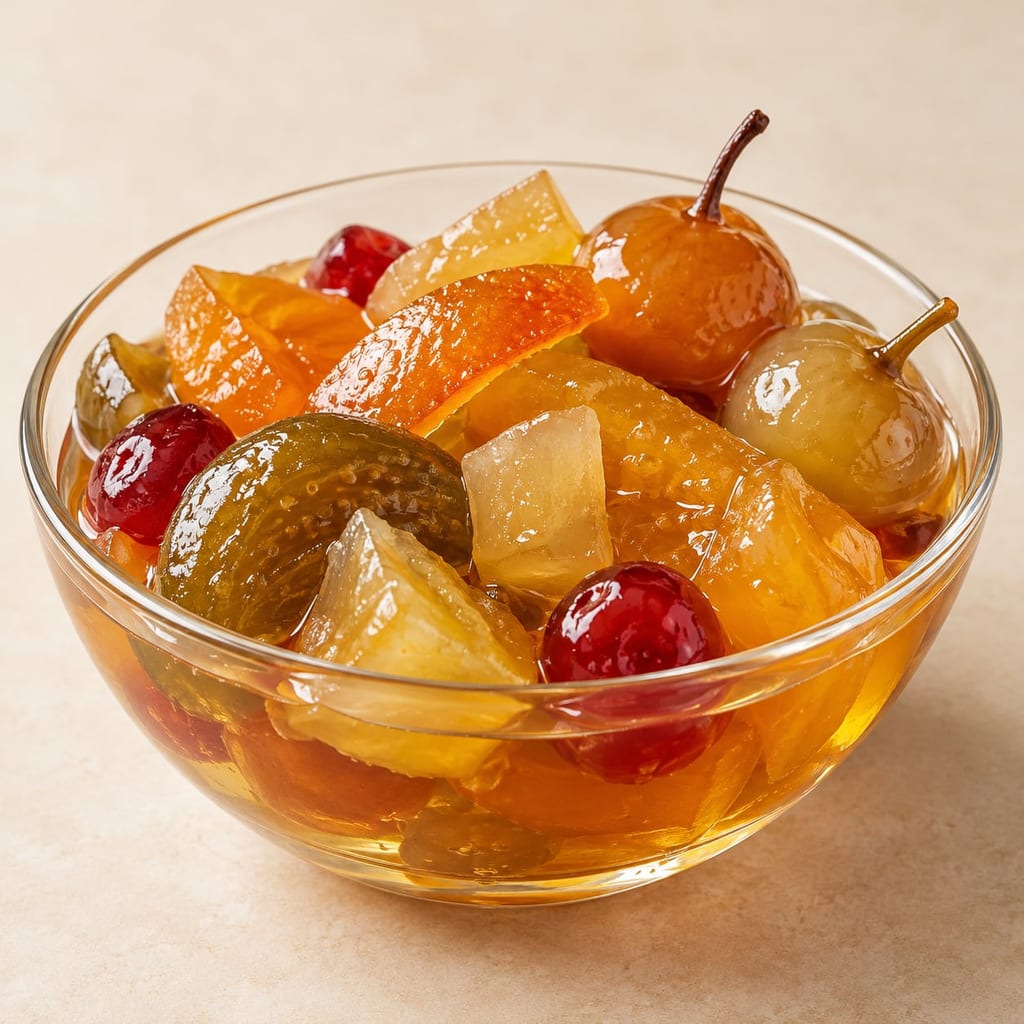
Mostarda di Cremona / Mantova / Voghera
A northern Italian condiment of candied fruit in syrup, flavoured with mustard. Its earliest documented link to Cremona is an 1604 printed recipe, which dates the record, not the invention.
 FermenteaWhere food goes to change
Candied fruit · Glacé fruit · Crystallised fruit · Candied peel
Candied fruit is fruit that has been repeatedly steeped in concentrated sugar syrup, which replaces part of its water with sugar, often followed by drying. It differs from fruit served in a thin syrup.
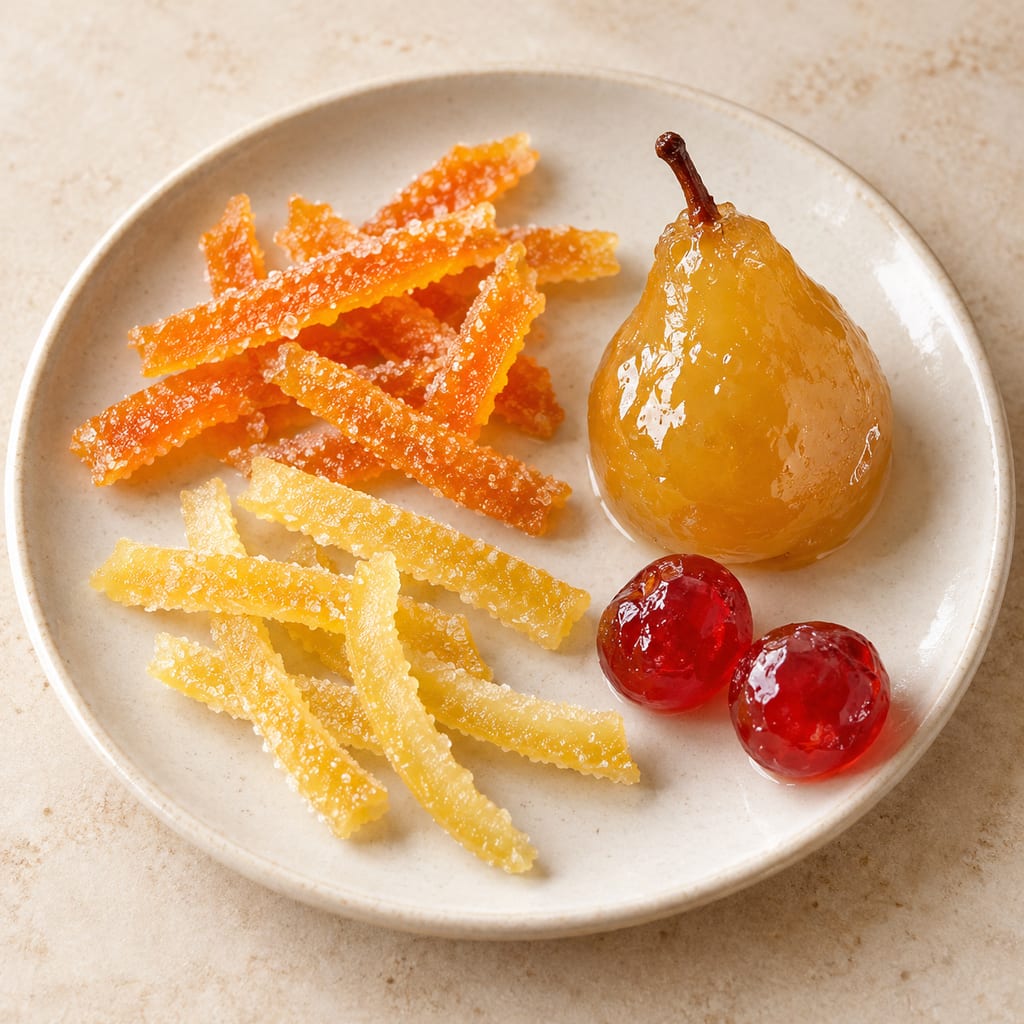
Candied fruit is fruit that has been impregnated with sugar until it keeps in a firm, sweet, usually dried form. Candied peel, glacé fruit and crystallised fruit belong to the same family of methods, which differ mainly in the final form of the fruit.
The method is what separates candied fruit from fruit served in syrup. A thin syrup coats the surface of a fruit, but candying repeatedly exchanges water inside the fruit for sugar, so the fruit itself becomes concentrated.
Each steeping takes some water out of the fruit and leaves sugar in its place. Syrup that is more concentrated than the fruit's own juice draws water out of the fruit, and sugar moves in to take its place. Repeating the steeping with stronger syrup moves more of the water out. The drying at the end lowers the water that remains, and that low level of free water is what keeps the fruit.
The record does not give the concentrations, the number of steepings or the time for each one.
Confectionery of this kind is recorded across Asia, the Middle East and Europe. Candied peel is the best-known form, and preserved whole fruits are the other. The catalogue treats these traditions as separate from simple syrup and from the jam and jelly family, because the fruit is steeped, not cooked into a set mass.
The record gives no shelf life, storage temperature or safety limit. Dried candied fruit has low free water, but its keeping still depends on drying properly and on storage that does not let it take up moisture. A product that has gone sticky, soft, or mouldy should be discarded.
Candied fruit has documented confectionery traditions in Asia, the Middle East and Europe. The catalogue gives no single date for their beginning.
The catalogue names historical confectionery traditions in Asia, the Middle East and Europe, without a locality.
European confectionery is given at region level; the cited household source is from nineteenth-century London.
A northern Italian condiment of candied fruit in syrup, flavoured with mustard. Its earliest documented link to Cremona is an 1604 printed recipe, which dates the record, not the invention.

Adrak murabba preserves young ginger in sugar syrup, a sweet South Asian preparation recorded in Indian cookery and food-processing sources.
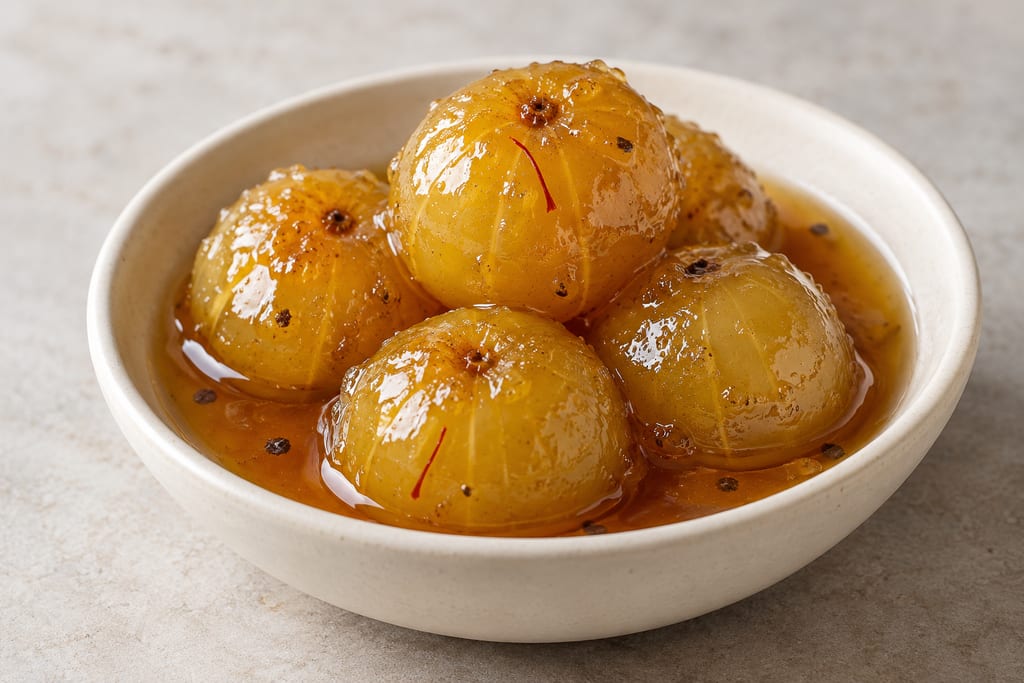
Amla murabba preserves whole Indian gooseberries in a heavy sugar syrup scented with cardamom and sharpened with pepper and black salt. This household method soaks the fruit before cooking.
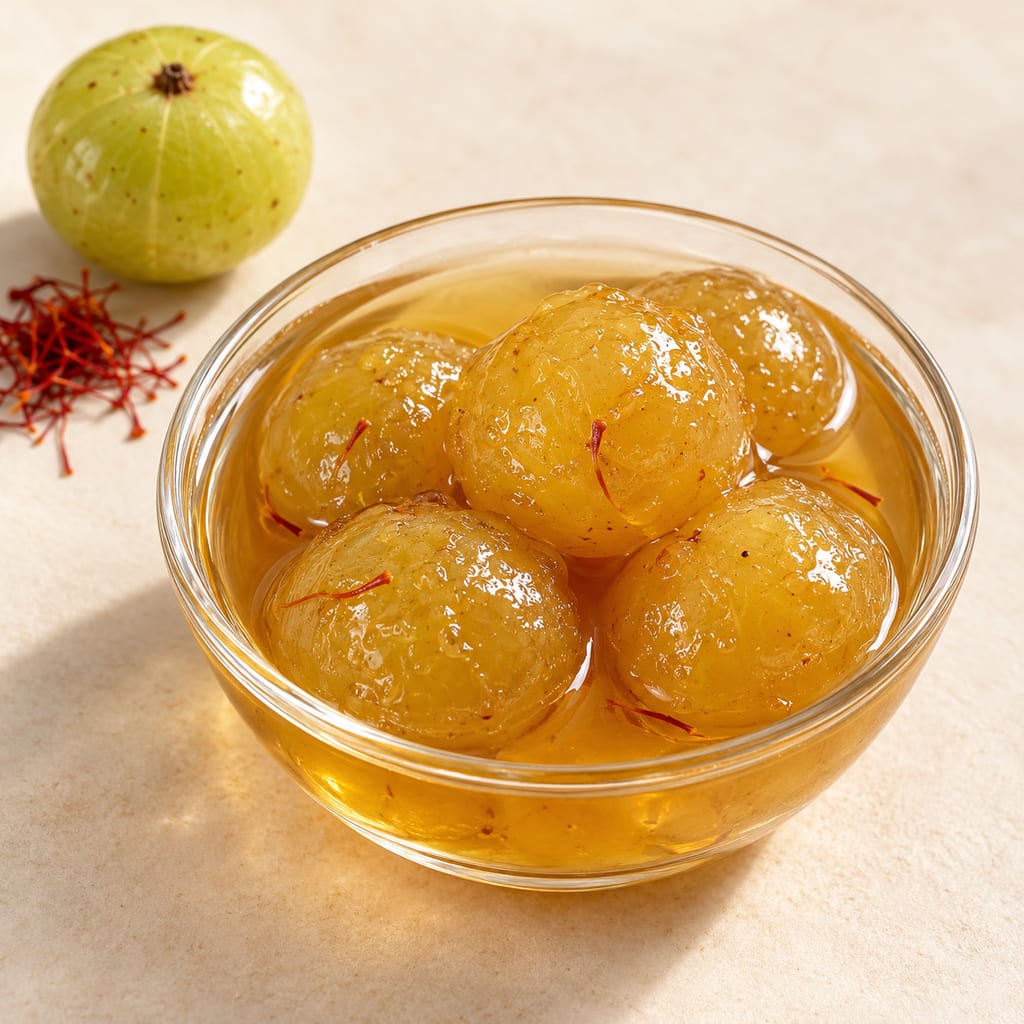
Whole amla simmer in sugar syrup with saffron, black cardamom and pepper in this chef's version of the Indian fruit preserve. The fruit is soaked overnight before cooking.
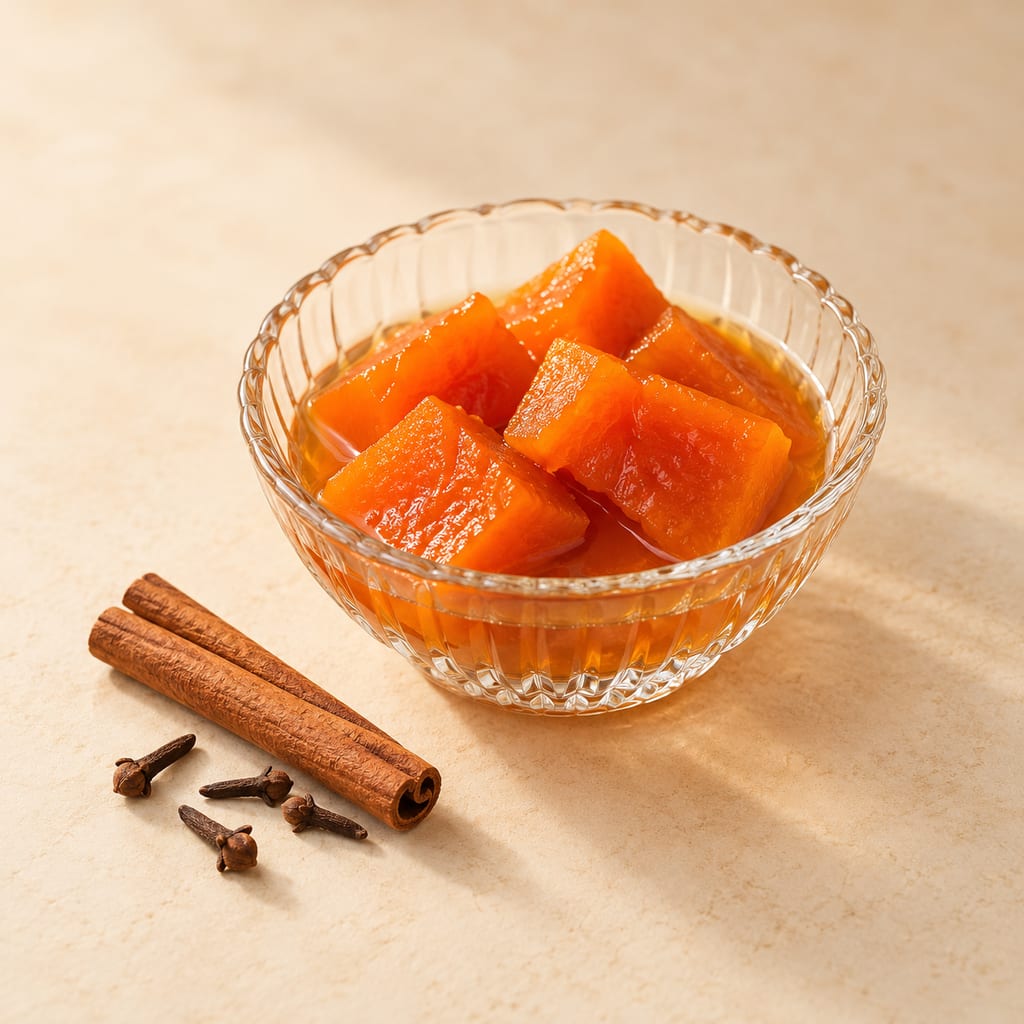
Brazilian doce de abóbora: Freeze for winter; small fresh portion refrigerated up to 48 hours.
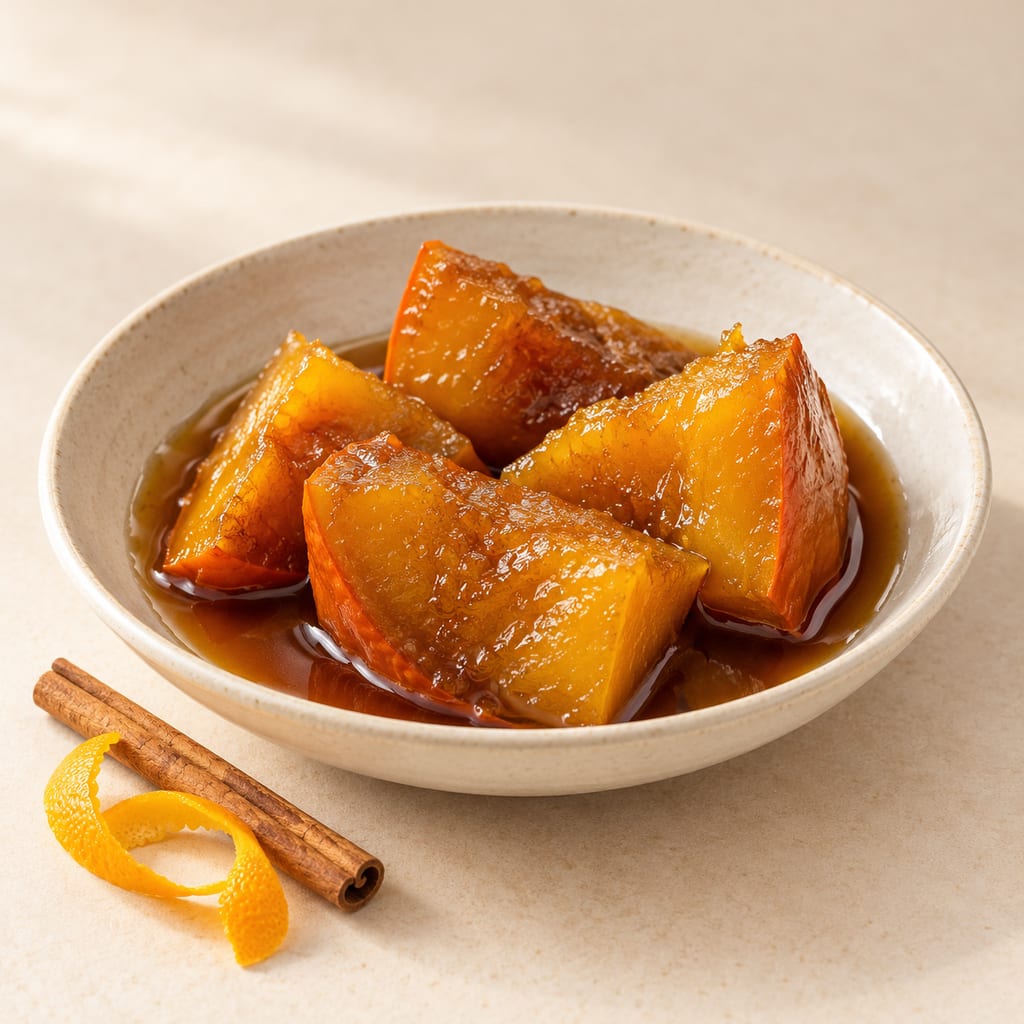
Rind-on pumpkin simmered with piloncillo, orange and cinnamon until glazed. This Mexican sweet keeps refrigerated for up to one week.
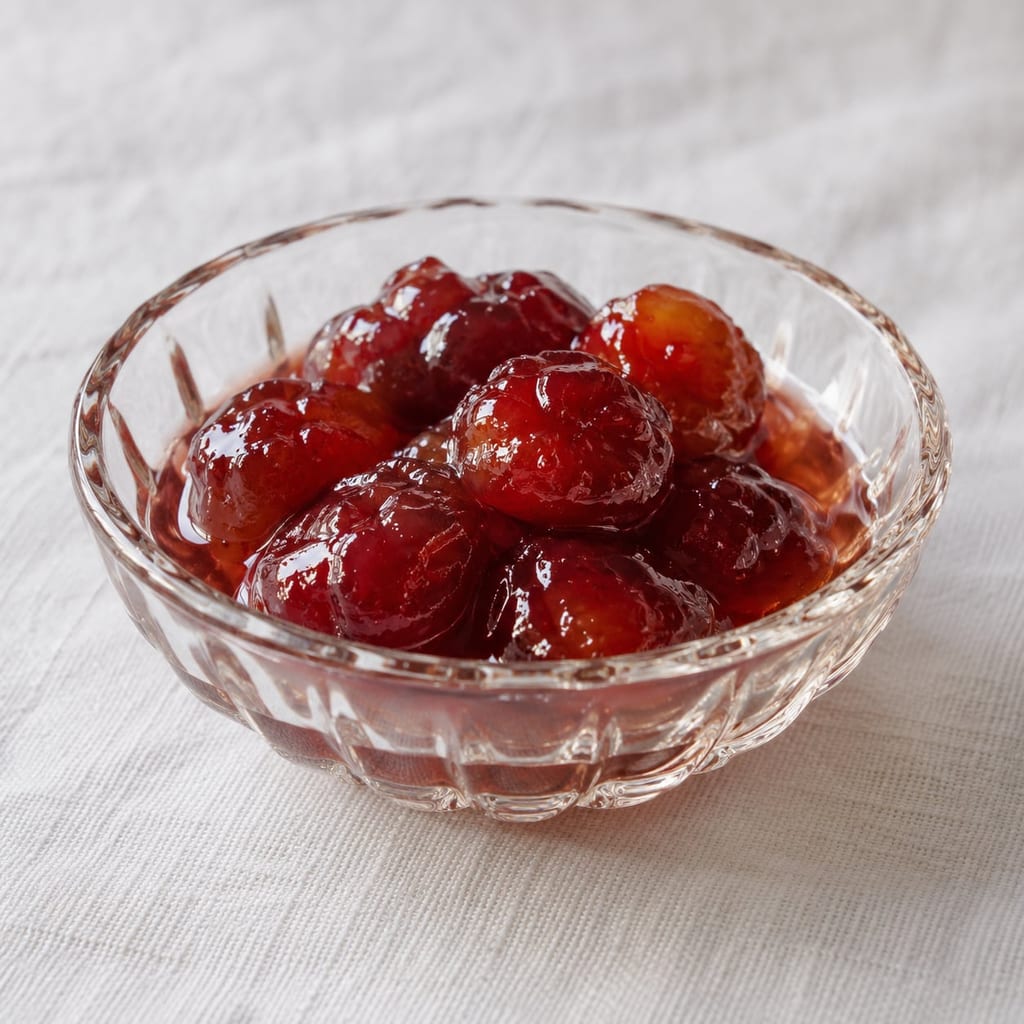
Cypriot cherry glyka made by layering firm pitted cherries with sugar, briefly boiling them, chilling overnight, and boiling again to concentrate the syrup. This version is refrigerated and has no shelf-stable canning process.
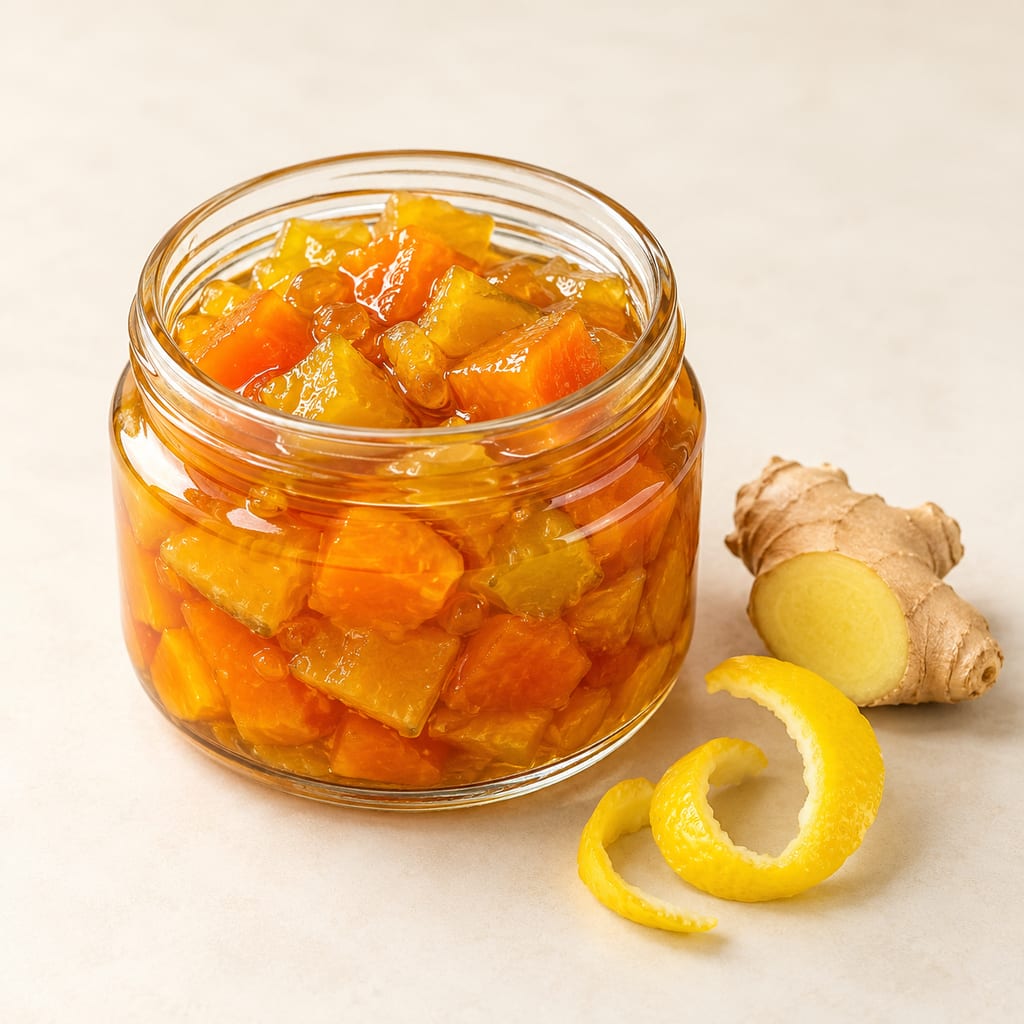
English lemon-and-ginger preserved pumpkin, after an 1861 recipe: Freeze for winter; small fresh portion refrigerated up to 48 hours.
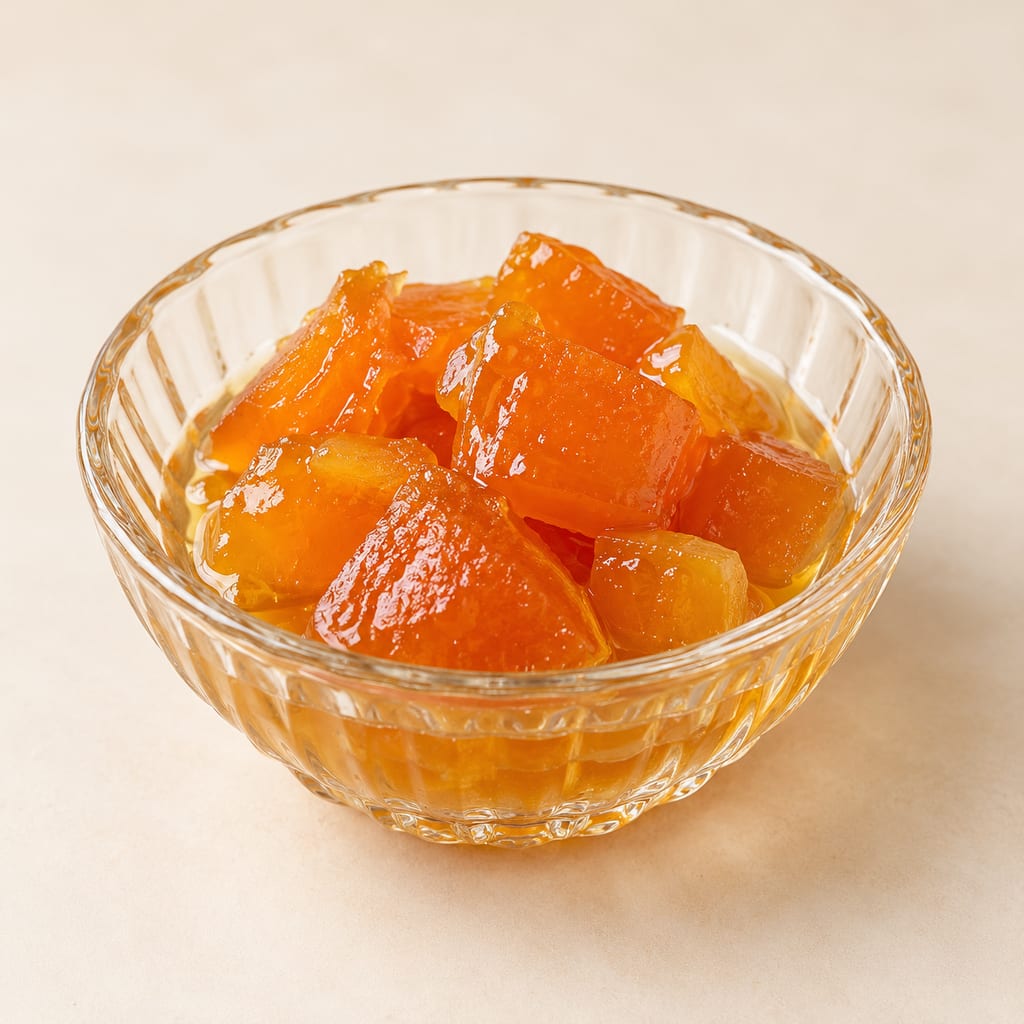
Greek pumpkin spoon sweet, with Cypriot context: Freeze for winter; small fresh portion refrigerated up to 48 hours.
No community contributions have been published for this entry yet.
Sign in to contribute. Published comments and photos are free to read.
Victorian LondonMethod · History
Beeton's household management extract (Victorian London)Repeated contact with concentrated syrup replaces some water within fruit with sugar, often followed by drying.
Candied peel and preserved fruits differ from fruit merely served in a thin sweet syrup.
Cited in: What it is; How the sugar gets in; Historical traditions; Limits of the record