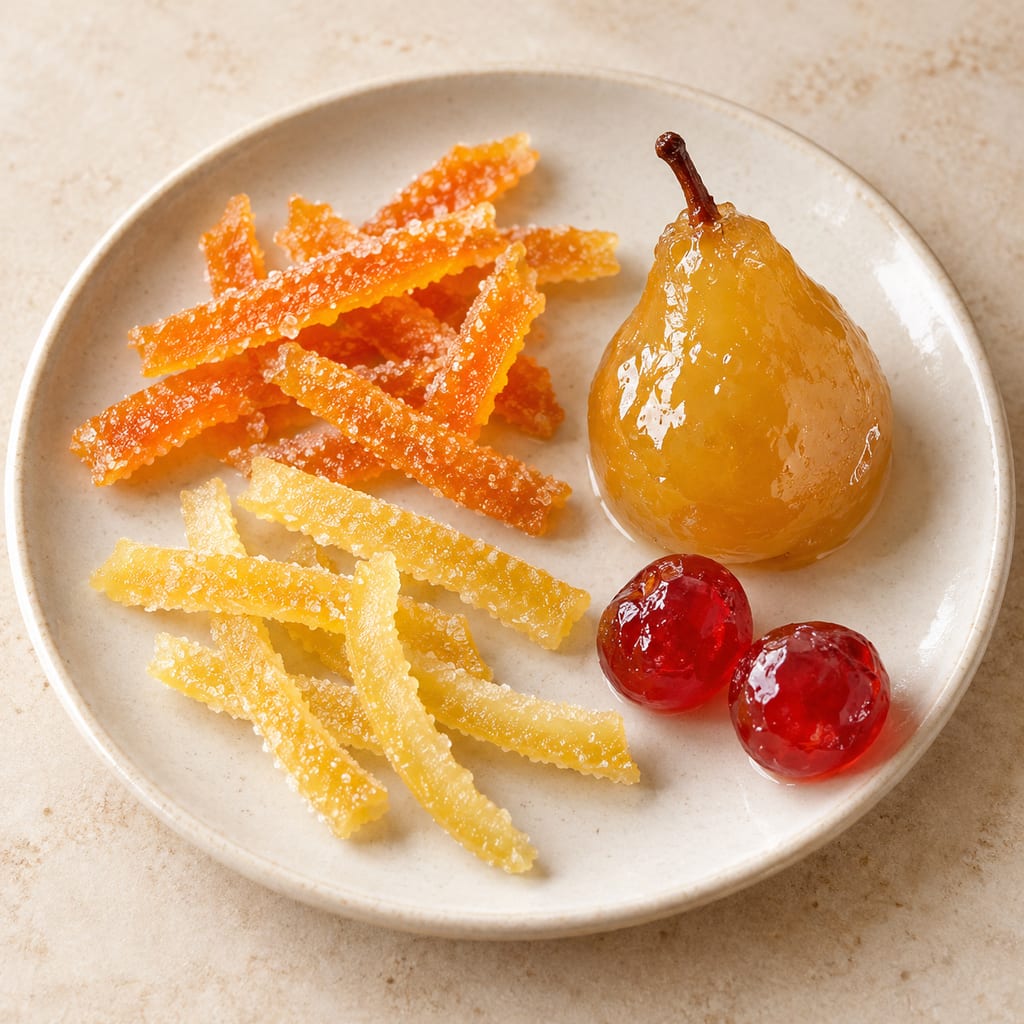
Candied and glacé fruit
Candied fruit is fruit that has been repeatedly steeped in concentrated sugar syrup, which replaces part of its water with sugar, often followed by drying. It differs from fruit served in a thin syrup.
 FermenteaWhere food goes to change
Mostarda · Mostarda di Cremona, Mantova and Voghera · Mostarda di Cremona
A northern Italian condiment of candied fruit in syrup, flavoured with mustard. Its earliest documented link to Cremona is an 1604 printed recipe, which dates the record, not the invention.
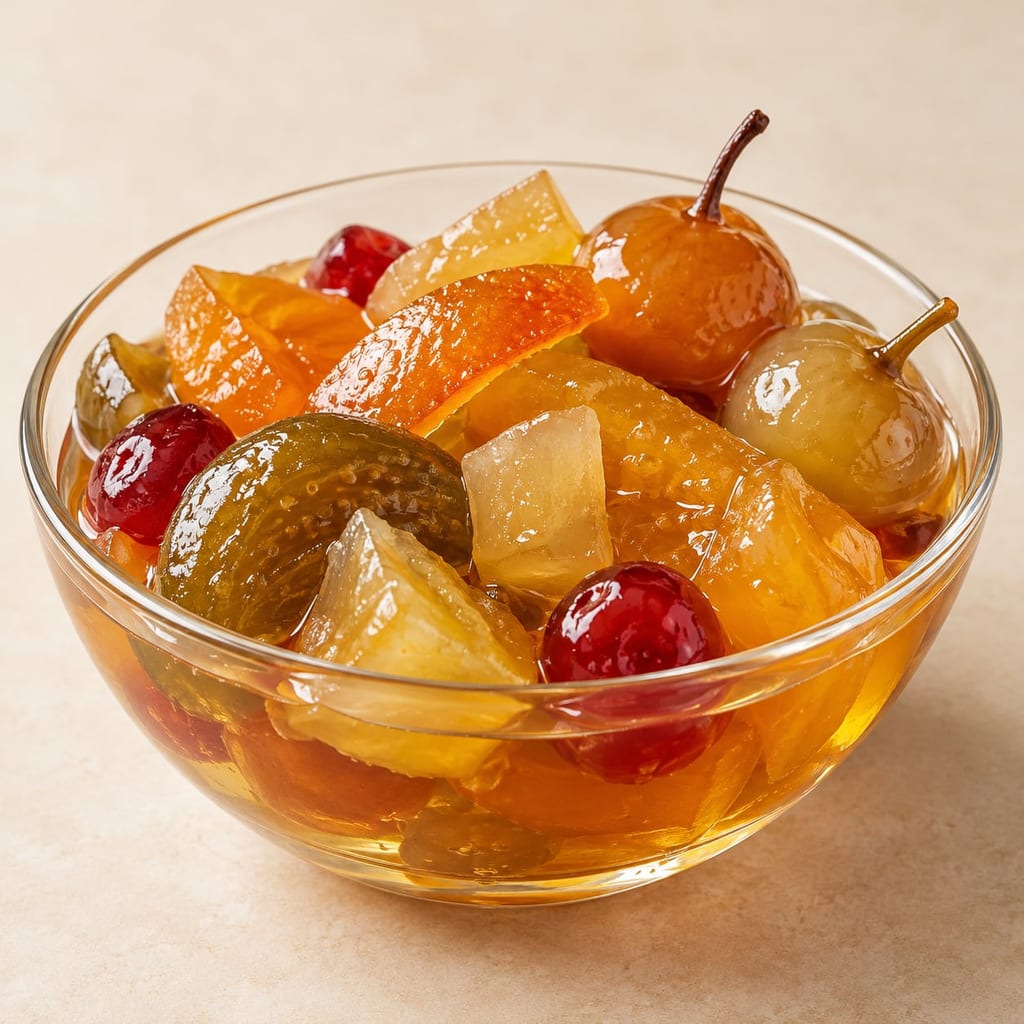
Mostarda is a fruit condiment rather than a table mustard. Fruit is candied slowly in a sugar syrup and then given its heat with mustard essence, which is a strong flavouring and is not dosed by guesswork.
Mostarda di Cremona is one of several regional forms of the condiment, named for Cremona, Mantua and Voghera. Each has its own fruit mix and its own tradition of how the mustard is added.
The 1604 recipe in Ouverture de cousine is the earliest document that ties mostarda to Cremona. Cremona's own notes describe it as close to the modern recipe. Later Cremona records, including a recipe from 1666 and one in a manual of 1884, list fruit and honey or sugar with mustard, and their fruit lists differ.
Accounts do not agree on the exact fruit lists or on where the 1604 text was printed. Most accept the Liege print as the earliest documented link to Cremona.
Slow candying in syrup preserves the fruit by sugar and gives it a glossy, soft texture. The mustard is added after candying so that its heat does not cook away in the syrup. Adding it with care matters because mustard essence is strong.
Modern records do not give quantities or temperatures for the syrup. The stages are the regional method as described in regional sources, not a validated process.
Mostarda is served with boiled meats and cheese. Its sweet and hot balance is the point of the condiment, and its use is the reason the recipe persists in the region.
The earliest documented link to Cremona is a recipe titled Pour faire moutarde de Cremone in Ouverture de cousine by Lancelot de Casteau, printed in Liege in 1604. Municipal notes from Cremona say it is not very different from today's recipe. Later Cremona records include a 1666 recipe and a manual of 1884. The 1604 date is the earliest dated attestation, not the invention date.
No source in this record establishes a place.
Candied fruit is fruit that has been repeatedly steeped in concentrated sugar syrup, which replaces part of its water with sugar, often followed by drying. It differs from fruit served in a thin syrup.

Adrak murabba preserves young ginger in sugar syrup, a sweet South Asian preparation recorded in Indian cookery and food-processing sources.
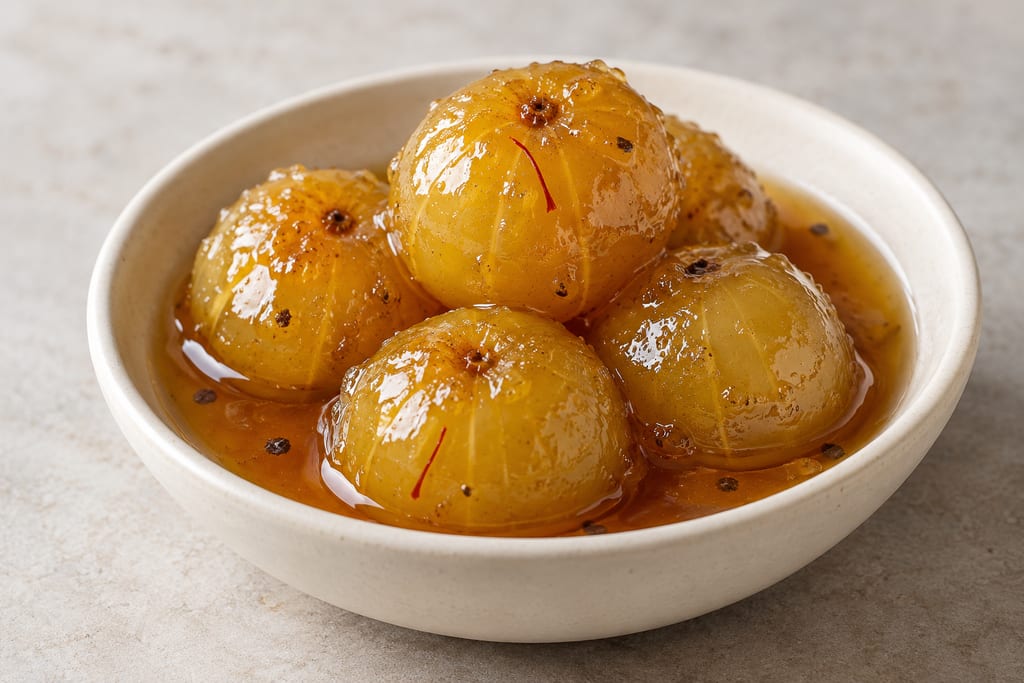
Amla murabba preserves whole Indian gooseberries in a heavy sugar syrup scented with cardamom and sharpened with pepper and black salt. This household method soaks the fruit before cooking.
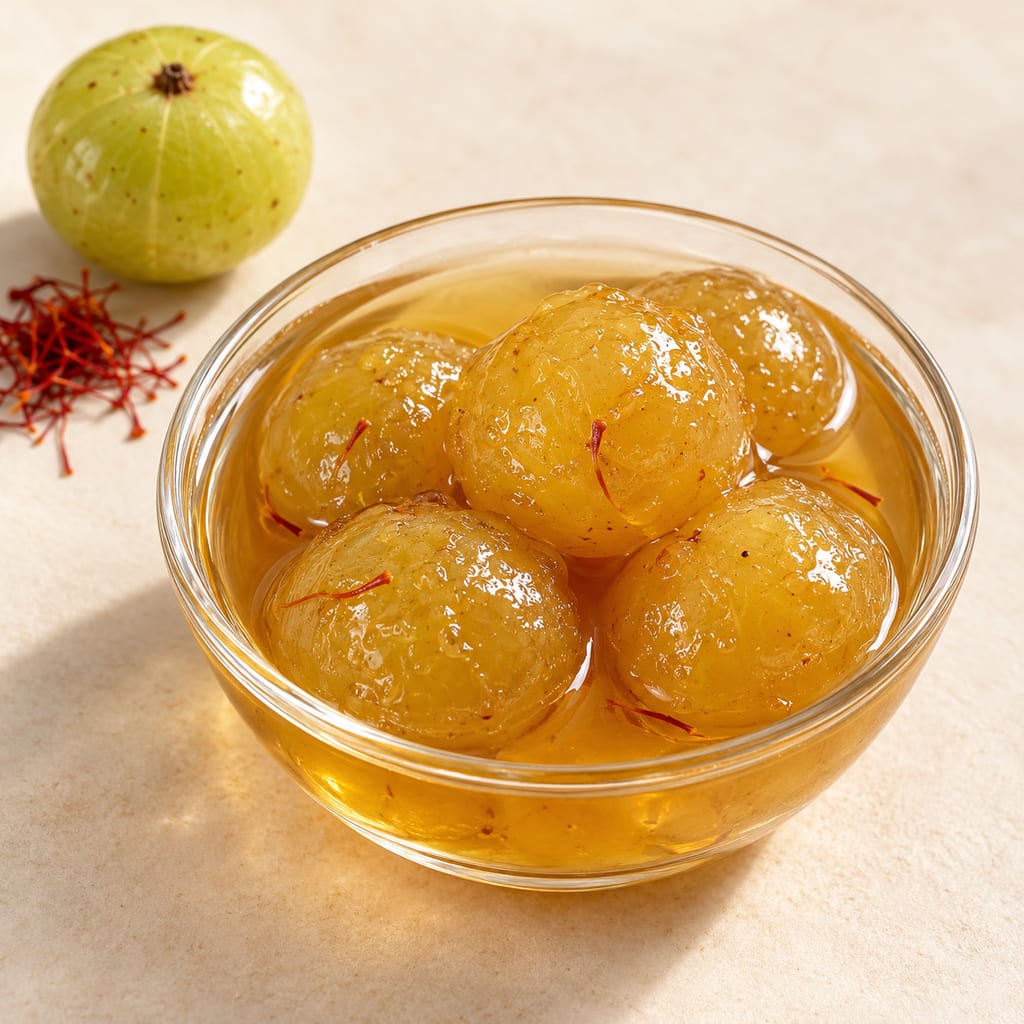
Whole amla simmer in sugar syrup with saffron, black cardamom and pepper in this chef's version of the Indian fruit preserve. The fruit is soaked overnight before cooking.
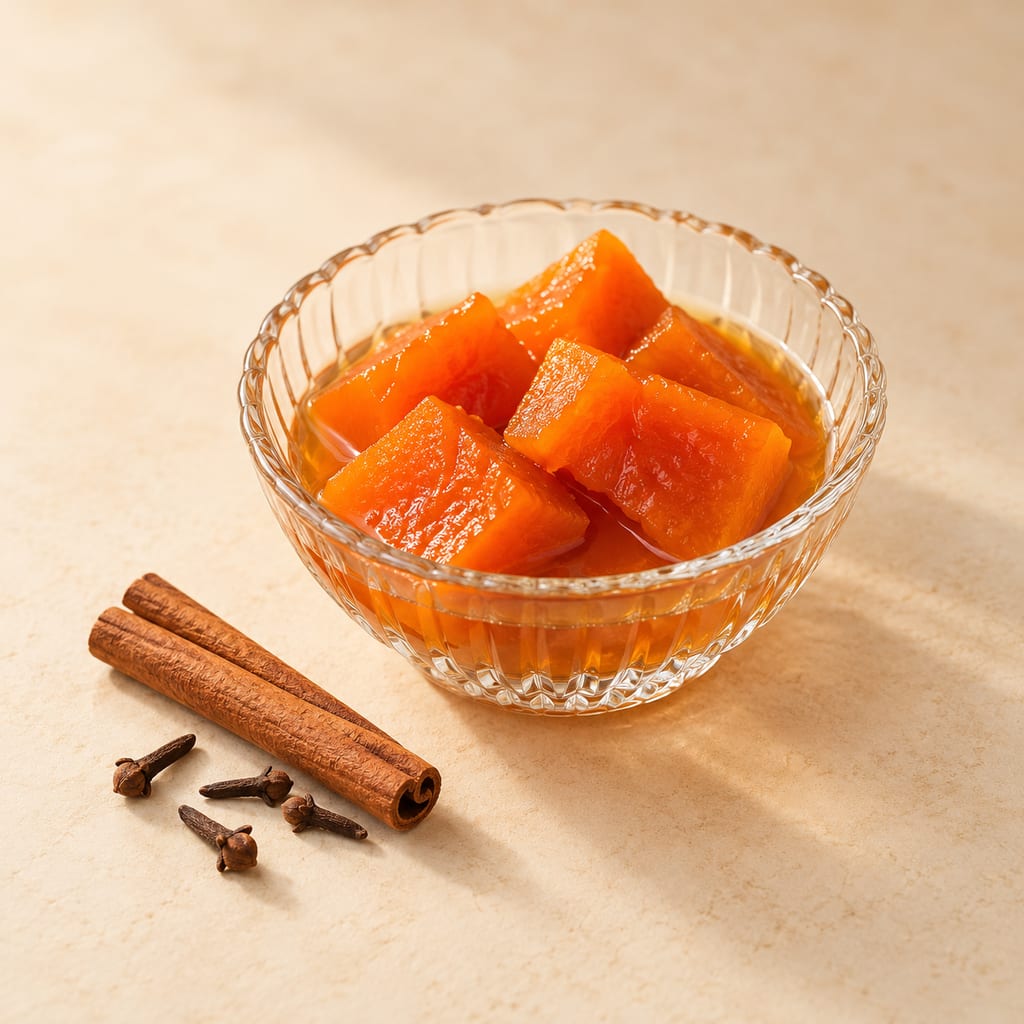
Brazilian doce de abóbora: Freeze for winter; small fresh portion refrigerated up to 48 hours.
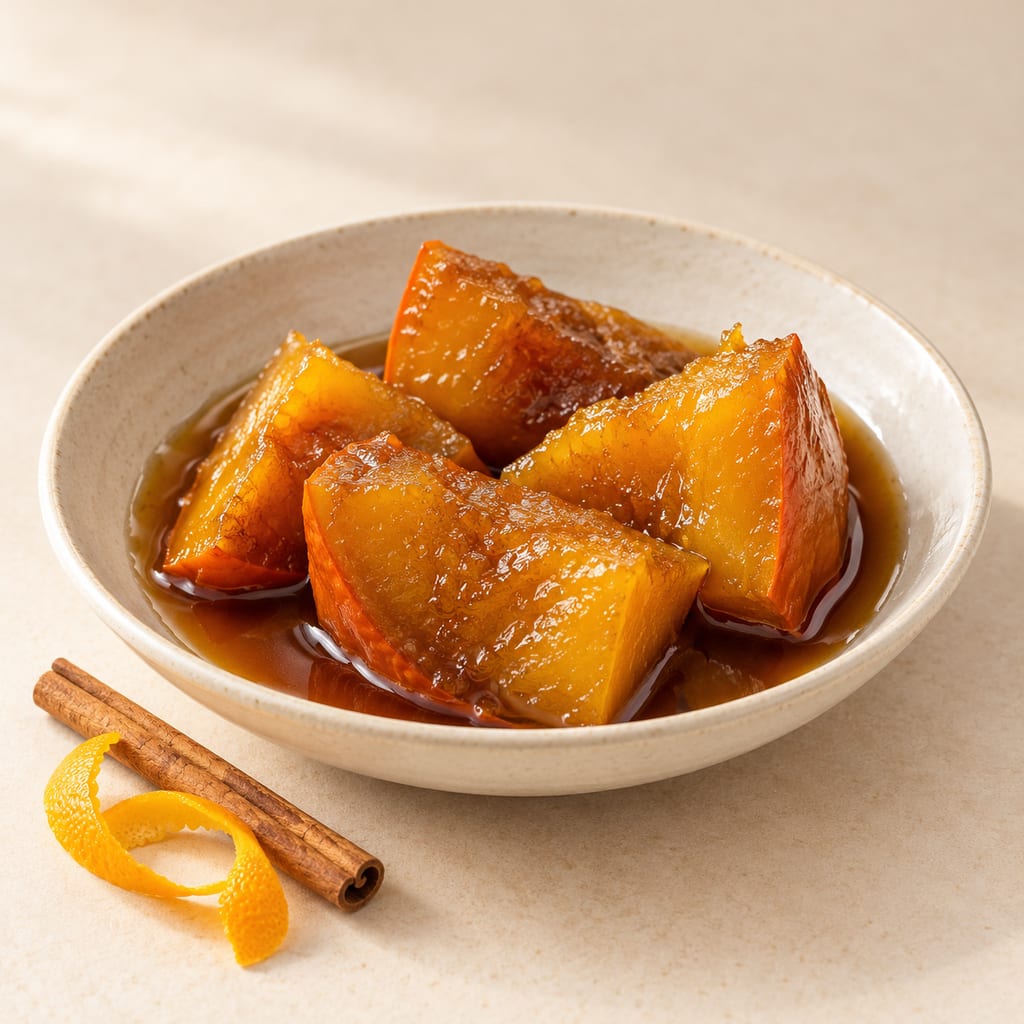
Rind-on pumpkin simmered with piloncillo, orange and cinnamon until glazed. This Mexican sweet keeps refrigerated for up to one week.
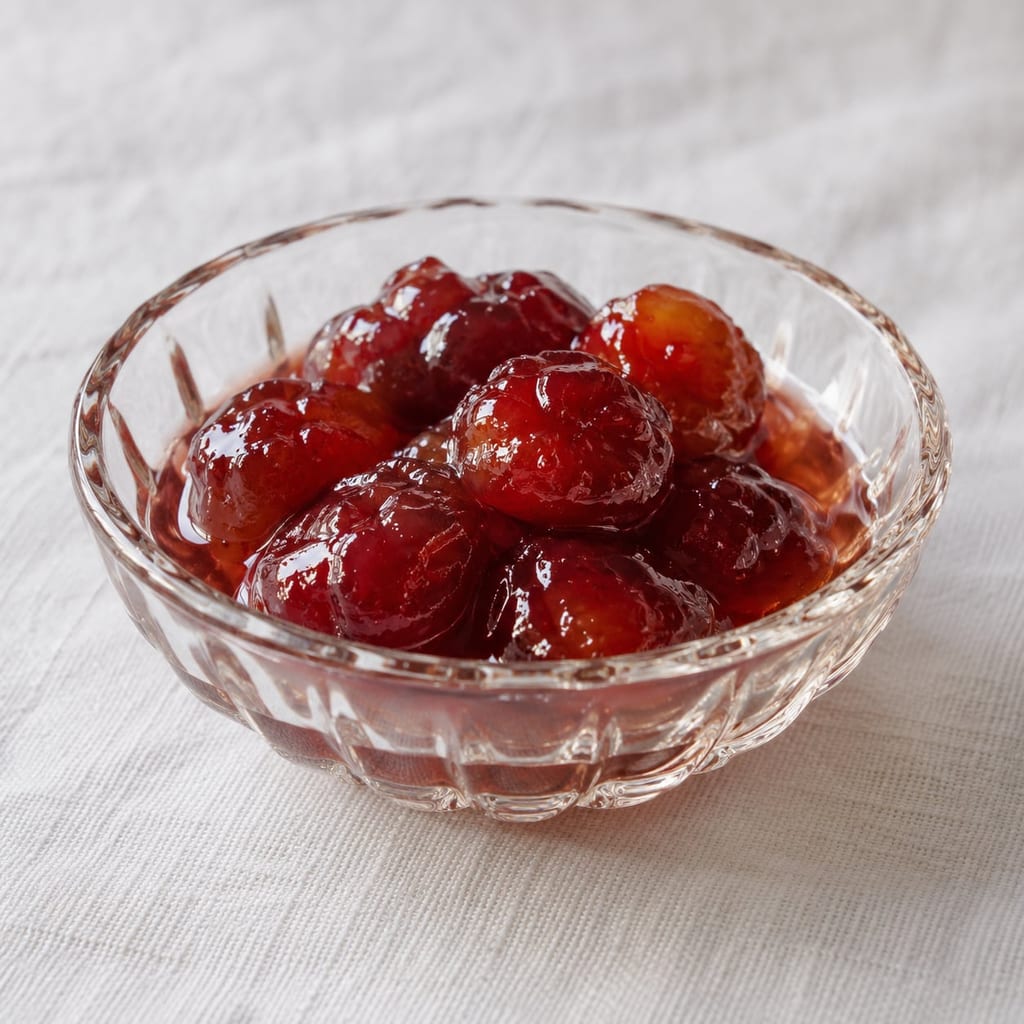
Cypriot cherry glyka made by layering firm pitted cherries with sugar, briefly boiling them, chilling overnight, and boiling again to concentrate the syrup. This version is refrigerated and has no shelf-stable canning process.
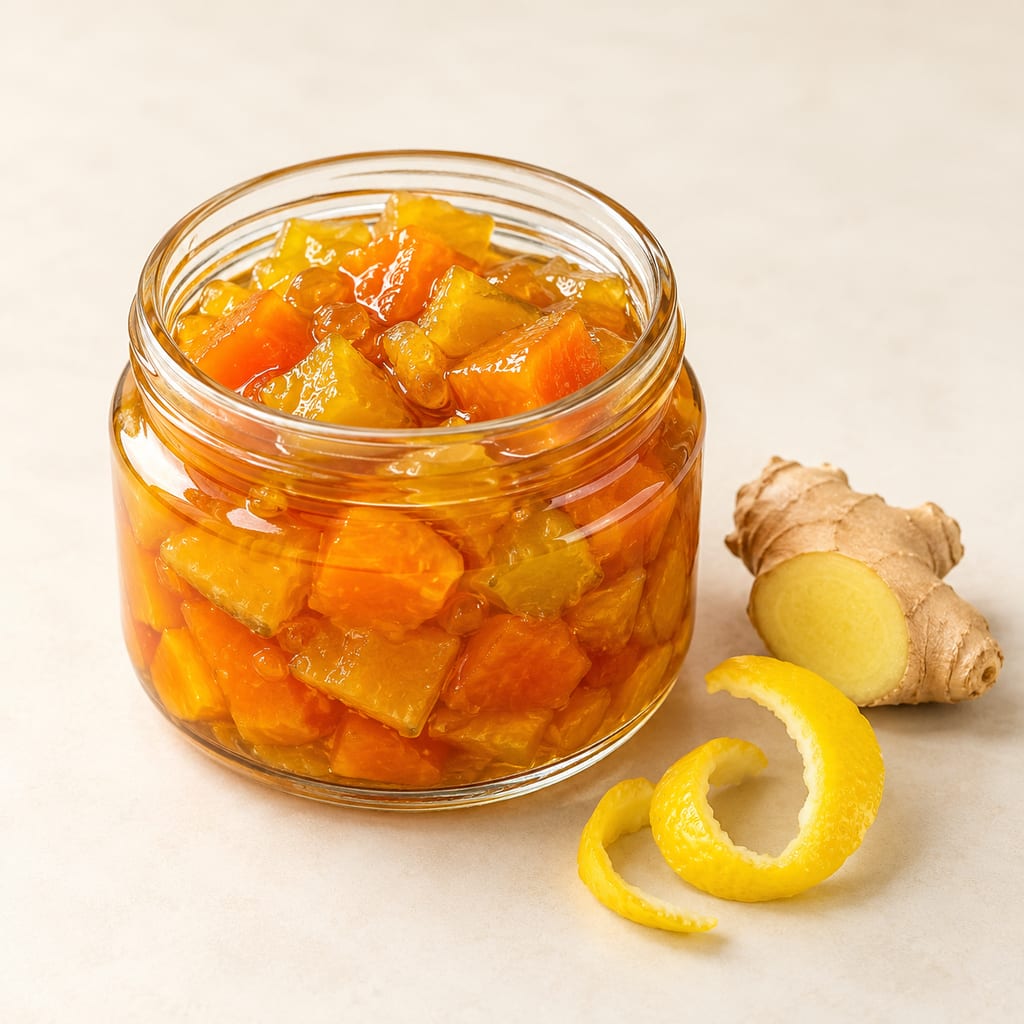
English lemon-and-ginger preserved pumpkin, after an 1861 recipe: Freeze for winter; small fresh portion refrigerated up to 48 hours.
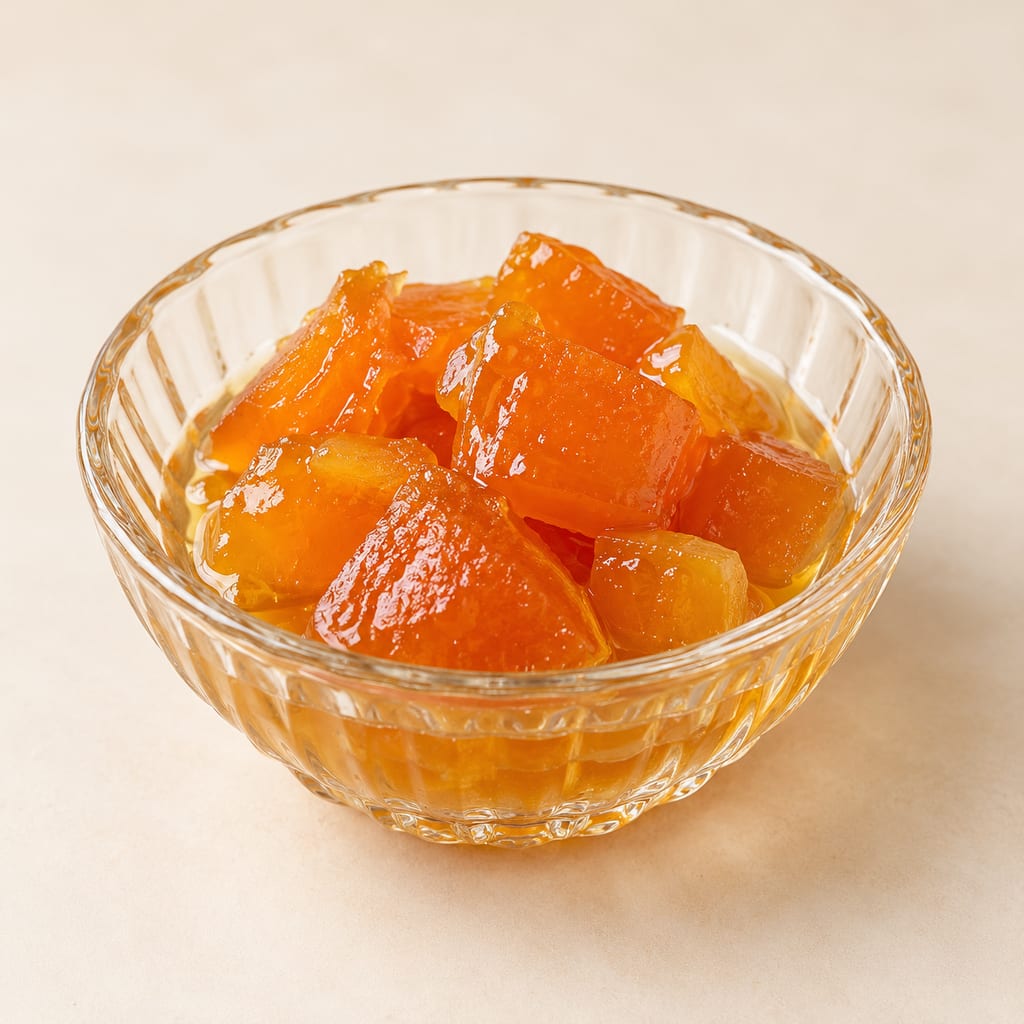
Greek pumpkin spoon sweet, with Cypriot context: Freeze for winter; small fresh portion refrigerated up to 48 hours.

A gelling polysaccharide extracted from red seaweeds, sold as kanten strips or powder; it sets firm at a low concentration and stays solid until about 85 °C.

A Dominican table and seasoning condiment of sour orange juice, mixed with lime and salt and bottled raw; garlic, oregano or a hot pepper may be added for meat or a spicier bottle.

Cicerbita alpina is an alpine perennial whose tender shoots and leaves have been eaten raw or cooked. Sámi milk preparations and modern Carnian dishes are distinct uses, with serious identification and preservation limits.

Japanese skipjack tuna cooked, then repeatedly smoked and dried over a wood fire by the hand-fired tebiyama method into a hard block for shaving into dashi: the first stage of katsuobushi.

A Swedish-style spirit vinegar made by fermenting neutral alcohol with live vinegar bacteria, with a separate guide to commercial ättika strengths.

A yeast-raised wheat ring shaped from a firm dough, briefly boiled and baked. This source-batch formula gives a gently malted crust and a chewy crumb.

A warm dip of garlic, anchovy and olive oil, often enriched with butter, that Piedmont serves over a flame with raw and cooked vegetables and bread.

Bechamel is a white sauce of milk thickened with a butter and flour roux, one of the French mother sauces, and the base from which Mornay and other cheese and cream sauces are made.
No community contributions have been published for this entry yet.
Sign in to contribute. Published comments and photos are free to read.
Comune di CremonaHistory · Method
Disciplinare della Mostarda di CremonaMunicipal notes state that the 1604 recipe is not too different from today's in its ingredients.
The 1604 printed recipe is titled Pour faire moutarde de Cremone in Ouverture de cousine by Lancelot de Casteau, Liege.
Cited in: The Cremona record
ItaloamericanoHistory
La mostardaOverview of mostarda as a fruit and mustard condiment and its Italian regional forms.
Cited in: What mostarda is
The NibbleMethod · Uses
Tip of the day: mostarda, a sweet hot Italian condimentMostarda is a sweet and hot fruit condiment served with boiled meats and cheese.
Cited in: What mostarda is; Why the process has its stages; Eating it