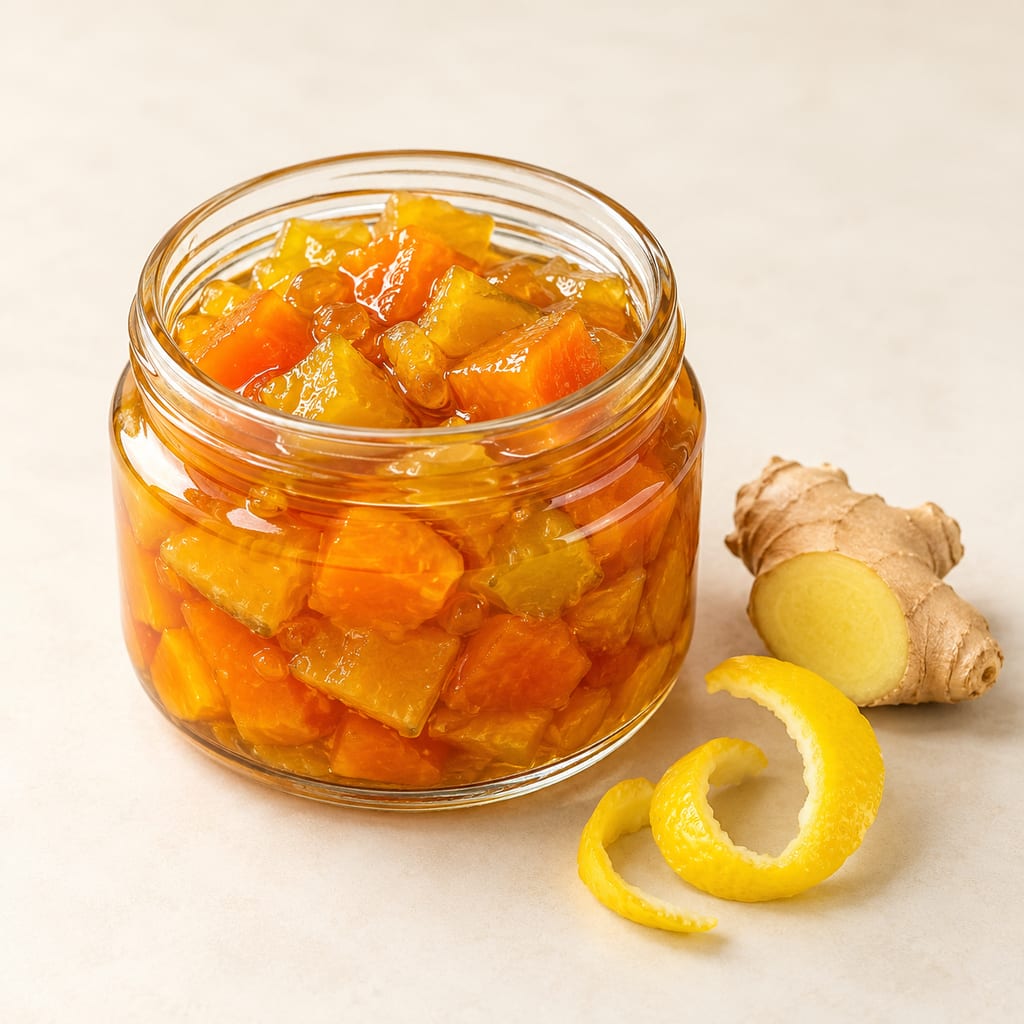
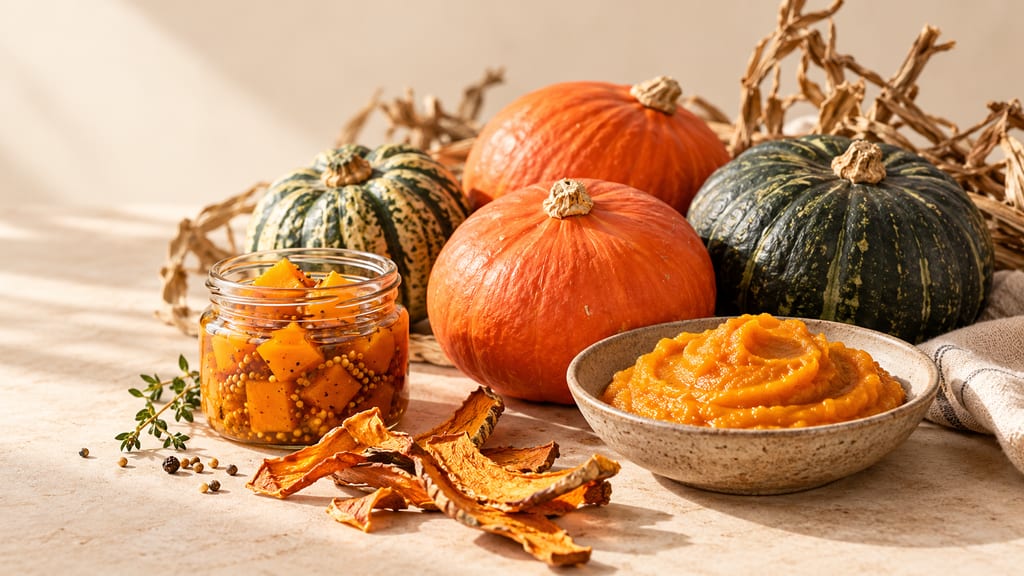
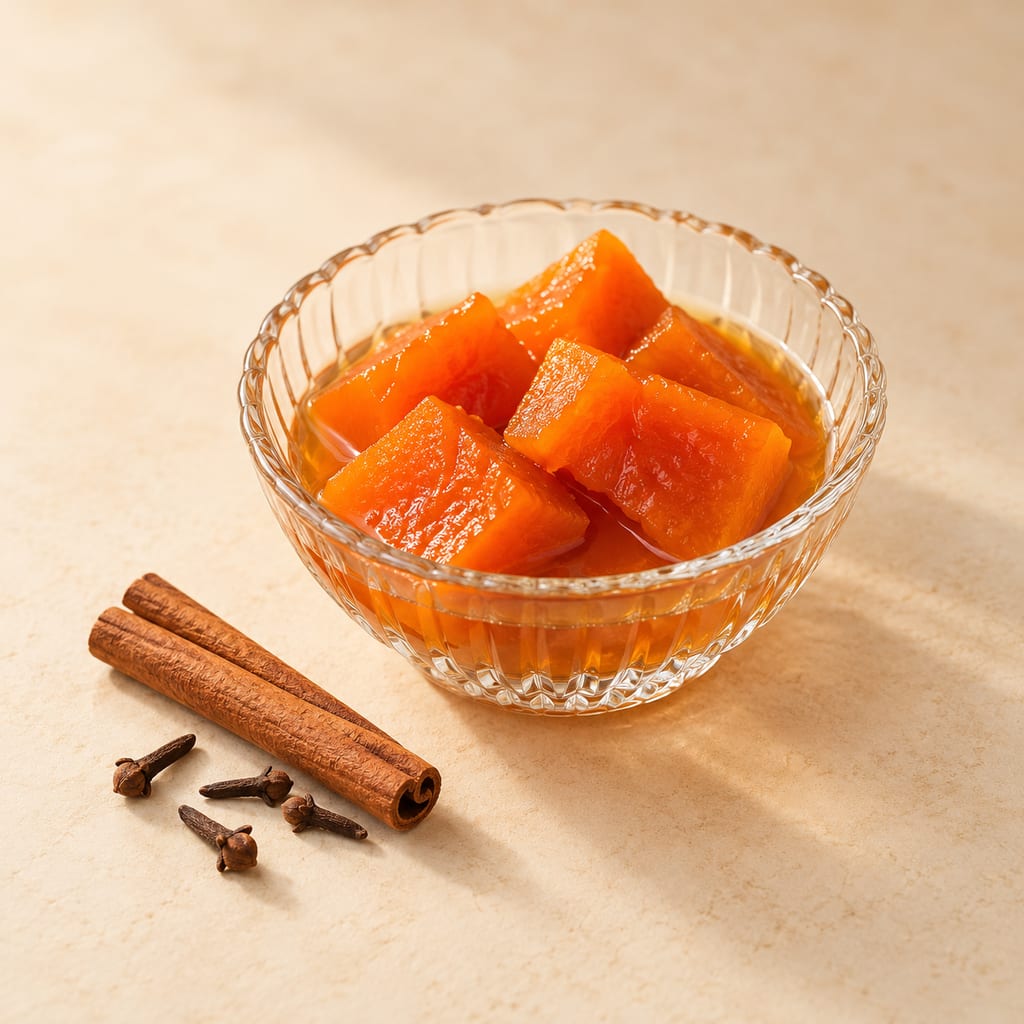
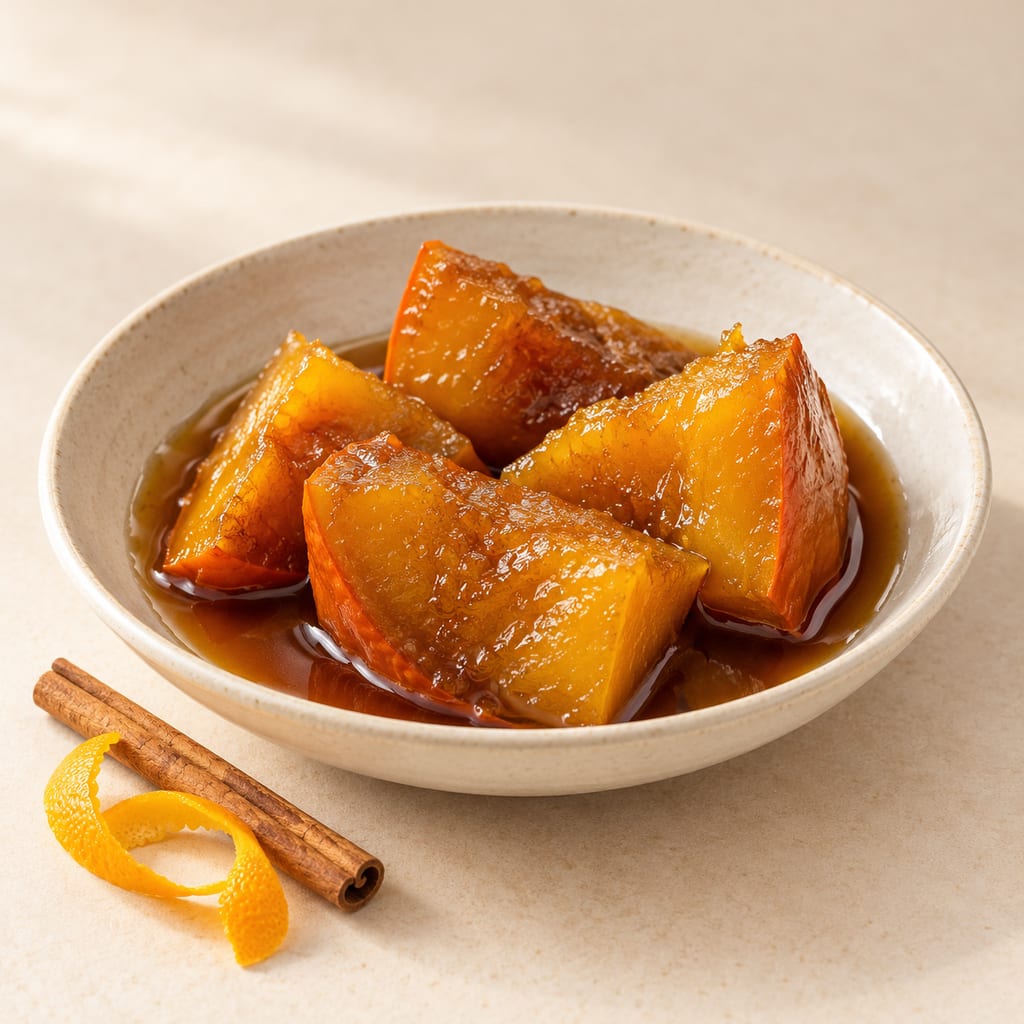
Mrs Beeton's Book of Household Management includes “Preserved Pumpkin” as recipe 1584. It combines pumpkin, an equal weight of sugar, lemon juice, and optional ginger and lemon rind. The author identifies September and October as its season, favouring the later month for ripe fruit. This is firm documentary evidence that pumpkin preserving belonged in a nineteenth-century British household repertoire. It is not evidence that Beeton invented it.
This modern version retains the lemon-ginger syrup and visible pumpkin pieces, but deliberately changes the prolonged standing and storage. It does not reproduce the original instruction to leave the cooked preparation for a week. It is a freezer preserve, with short refrigerated handling during preparation. Its texture will soften somewhat after freezing.
Quantity note: these are rounded modern working quantities inspired by the 1861 proportions, not an exact metrical edition of its pounds, gills and pints. They are not a tested acidification formula. The ginger quantity and piece size below are editorial choices for reproducibility.
Yield: depends on how much water is evaporated; prepare several small freezer containers and weigh the finished batch instead of promising a fixed jar count.
Keep frozen around -18°C. As a practical stock-rotation choice, label the batch to use over the coming three months; this is an editorial planning target, not a measured shelf-life result for this formulation. The high sugar concentration may keep the syrup relatively soft in a domestic freezer. Its softness is not permission to store it warm.
If keeping a small portion freshly made in the refrigerator, use within 48 hours. Thaw frozen portions in the refrigerator and use within 24 hours of full thawing. Those limits deliberately apply FSA handling guidance where this historical recipe has no modern storage validation.
The old method uses repeated syrup handling and long pauses to move sugar into the pieces and concentrate the surrounding liquid. The modern adaptation shortens that schedule and uses cold storage, so it should be described as after Beeton, rather than an exact reconstruction. More elaborate recreations belong in food-history research with contemporary controls, not in a general instruction to bottle pumpkin for the pantry.
Keep the recipe distinct from pumpkin jam: the desired result is pieces held in lemon-and-ginger syrup. If the chosen pumpkin collapses, it remains useful as a sweet freezer preparation, but no longer has the intended preserved-fruit texture.
Cool in small portions and refrigerate within one to two hours at 5°C or below, aiming for 4°C. Use the fresh chilled portion within 48 hours. Freeze winter portions promptly at about −18°C in freezer-rated containers with expansion space. Thaw in the refrigerator and use within 24 hours of complete defrosting. These are conservative handling instructions, not a measured shelf life for this particular preserve. Sugar concentration, a jam-like set and a sealed lid do not establish a home-canning process.
Mrs Beeton's Book of Household Management includes “Preserved Pumpkin” as recipe 1584. It combines pumpkin, an equal weight of sugar, lemon juice, and optional ginger and lemon rind. The author identifies September and October as its season, favouring the later month for ripe fruit. This is firm documentary evidence that pumpkin preserving belonged in a nineteenth-century British household repertoire. It is not evidence that Beeton invented it.
Lemon zestFinely pared yellow zest of one unwaxed lemon.
1 piece
Method
Risks and precautions · Standard risk
Incorrect storage process
Freeze for winter; no cupboard-storage claim
Hazard source
Freeze for winter; no cupboard-storage claim
Control source
Freeze for winter; no cupboard-storage claim
Do not transfer a canning schedule from a different pumpkin preparation.
Cut the prepared flesh into even pieces approximately 2 cm across. Use a firm culinary pumpkin when possible. A watery carving variety can still be used, but the result may be softer and need more reduction.
Mix pumpkin, sugar and lemon juice in a covered, non-reactive bowl. Refrigerate for 12–18 hours. Stir once or twice with a clean spoon so the sugar dissolves into the liquid drawn from the pumpkin. Do not leave the bowl on a warm kitchen counter.
Transfer everything to a wide saucepan. Add water, ginger and zest. Heat gently while stirring until any remaining sugar dissolves, then simmer until the pieces are tender and becoming translucent. Begin checking after 30 minutes; some varieties need 45–60 minutes.
If the pumpkin is tender before the liquid is syrupy, lift out the pieces with a clean slotted spoon. Reduce the syrup briefly, then return the pumpkin and bring back to a simmer. This controls texture; it does not establish shelf stability.
Remove the large pieces of ginger and zest if desired. Divide into small portions. Cool promptly and refrigerate within one to two hours. Freeze the portions intended for winter as soon as cooled, leaving expansion room according to the freezer-container manufacturer.
Cool in small portions and refrigerate within one to two hours at 5°C or below. Use the fresh chilled portion within 48 hours. Freeze winter portions promptly at about −18°C in freezer-rated containers with expansion space. Thaw in the fridge and use within 24 hours of complete defrosting. This is a conservative handling policy, not a measured shelf life for the recipe.
Conditions
Temperature controlRefrigerated
Places
England
Documented preparation · Country evidence
Geographical association of this documented version, not an asserted origin.
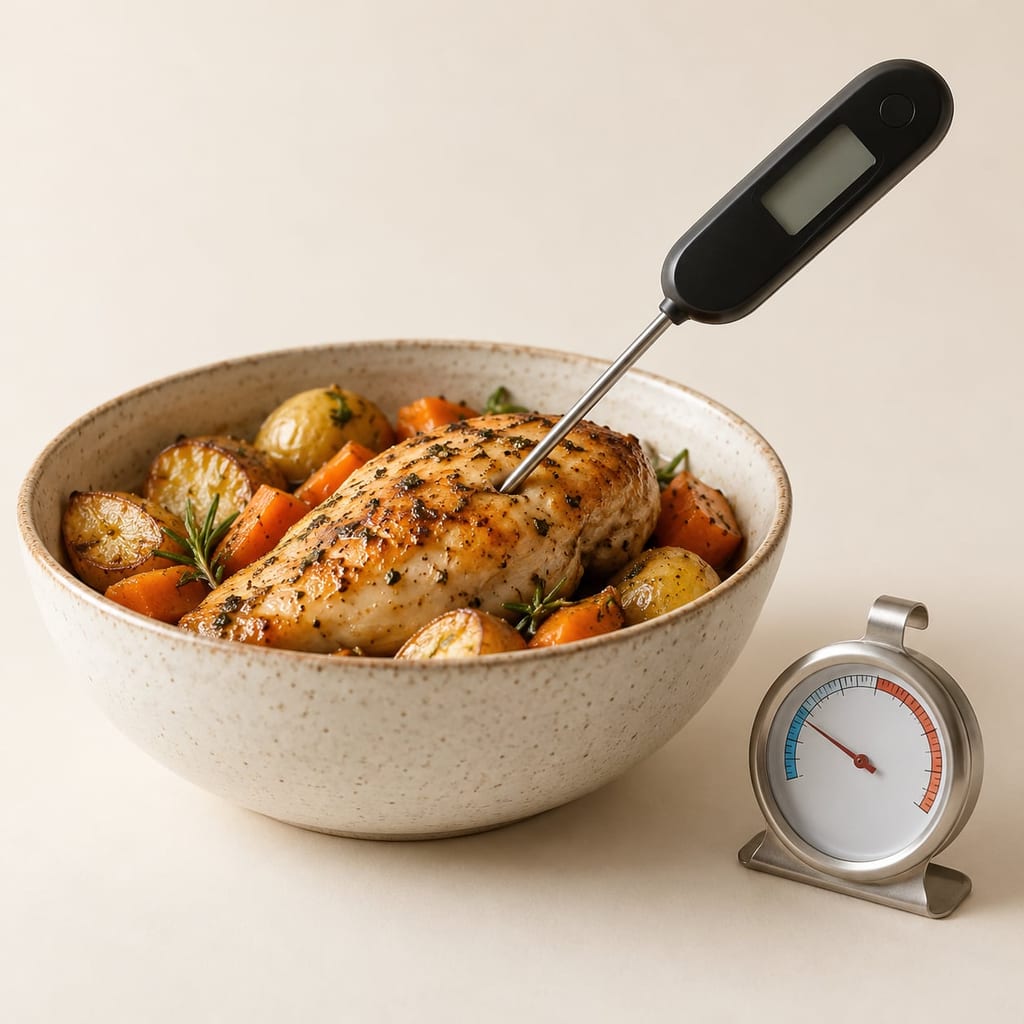
A food probe measures the temperature inside food at the probe tip; a refrigerator thermometer measures the cold storage environment. They answer different questions and cannot establish acidity or validate a preservation process.
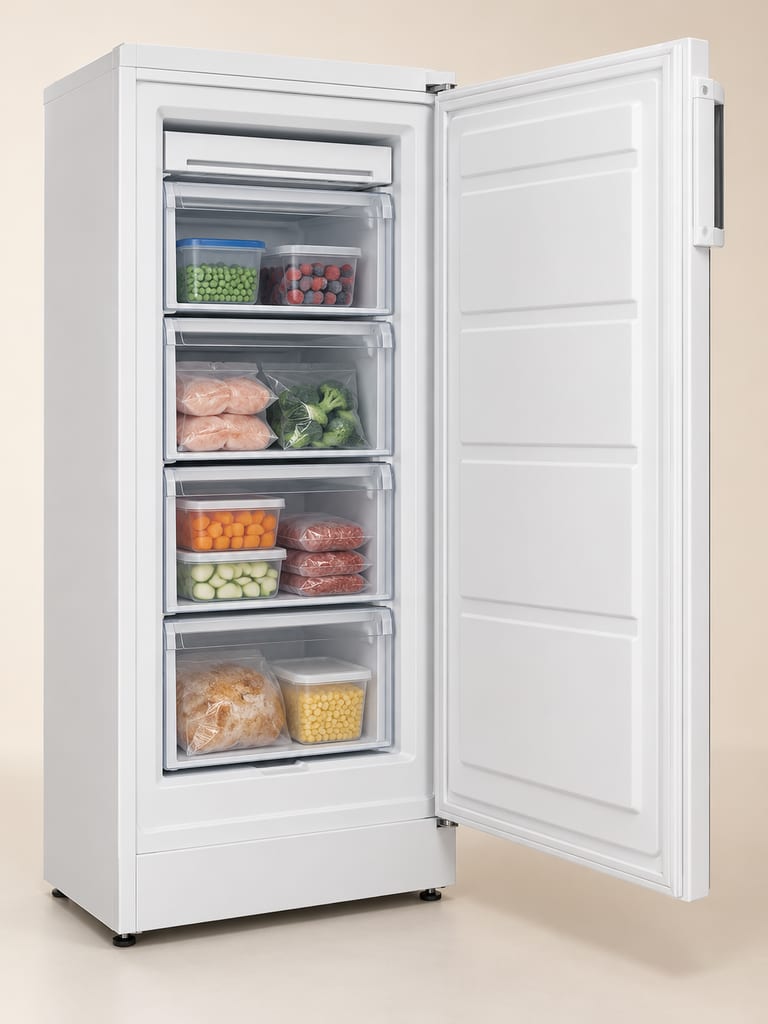
A household freezer holds food in a frozen state for storage and selected texture or separation work; its batch-storage role differs from industrial equipment that freezes individual pieces separately.
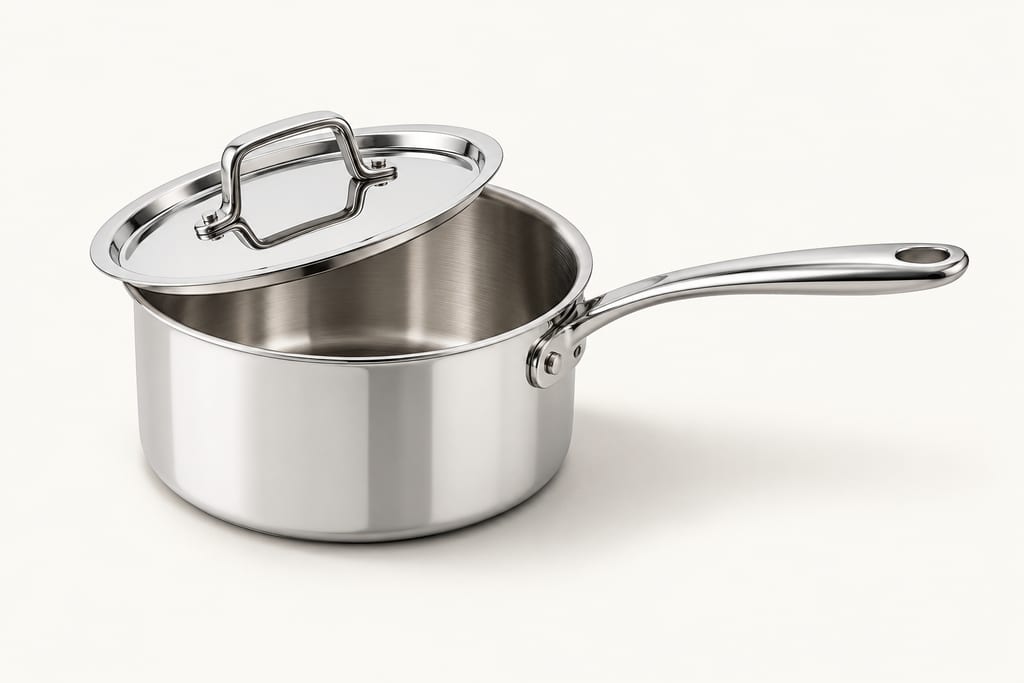
A modern, portable stovetop pan with a stainless-steel cooking surface for sauces and other small simmering jobs. Size, cladding, lid, compatibility and care vary by model.
An ordinary household refrigerator used to store selected fresh produce in vented crates or drawers, at low temperature and at a humidity chosen by the drawer. Not every crop benefits from cold.
A full harvest-to-pantry guide to keeping pumpkins whole, drying and freezing them, and making pickles and sweet preserves around the world—with the exact distinction between tested canning and cold storage.
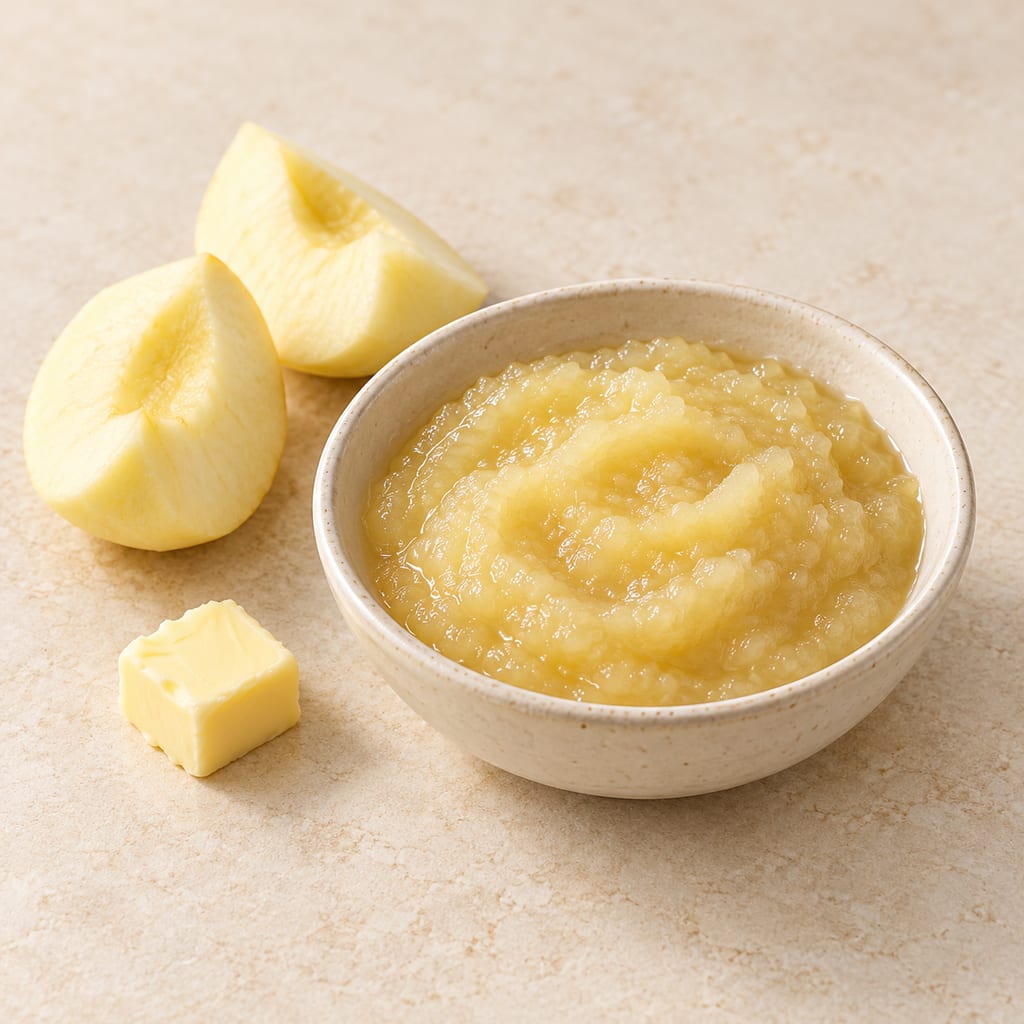
Apple sauce for goose and pork is a plain English accompaniment: cooked apples pulped with water, then sweetened with sugar and finished with a little butter.
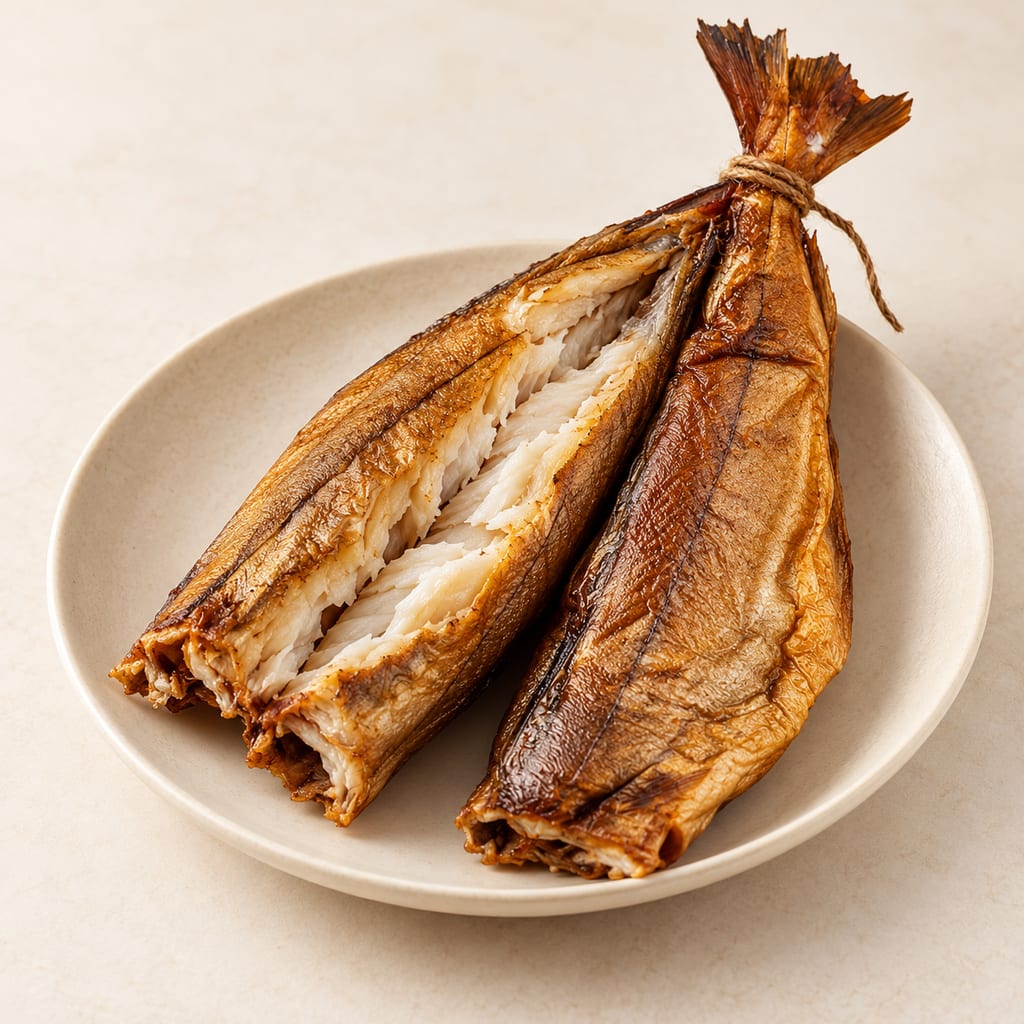
Arbroath smokies are whole haddock dry-salted, paired by the tail and hot-smoked in a protected coastal area. Their recorded history links Auchmithie and Arbroath, though the exact origin is unsettled.
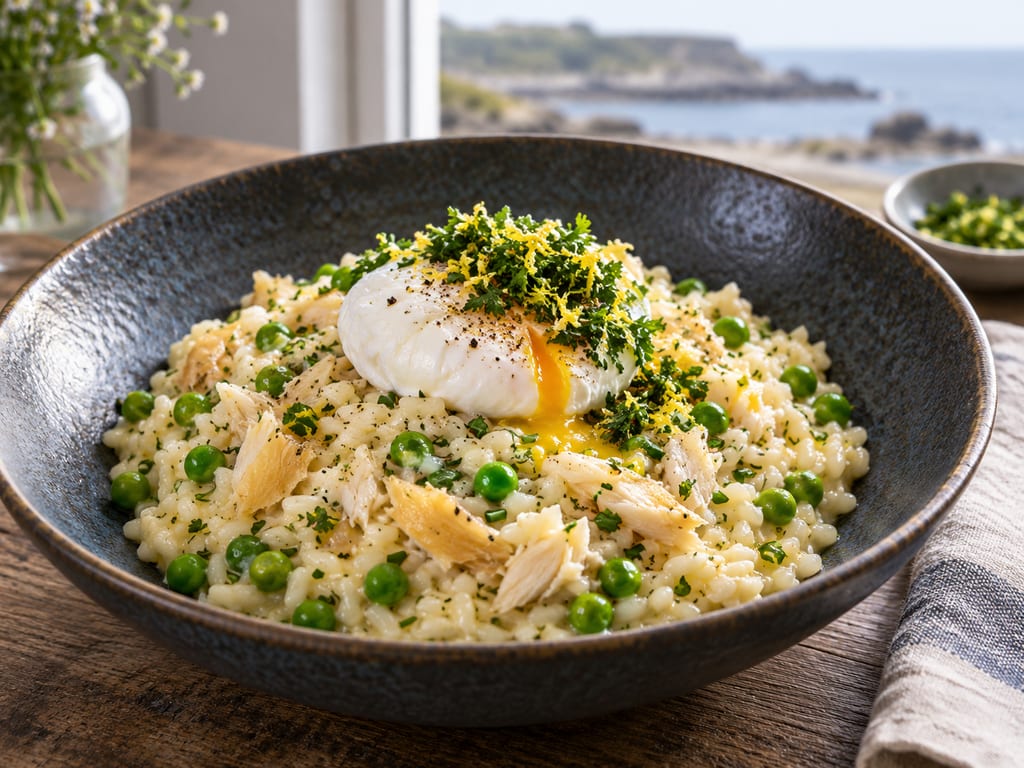
A four-serving risotto published in the 2014 Arbroath Smokie Trail booklet and credited to Hayley Wilkes. It cooks with finished Arbroath smokies; it does not describe smoking fish.
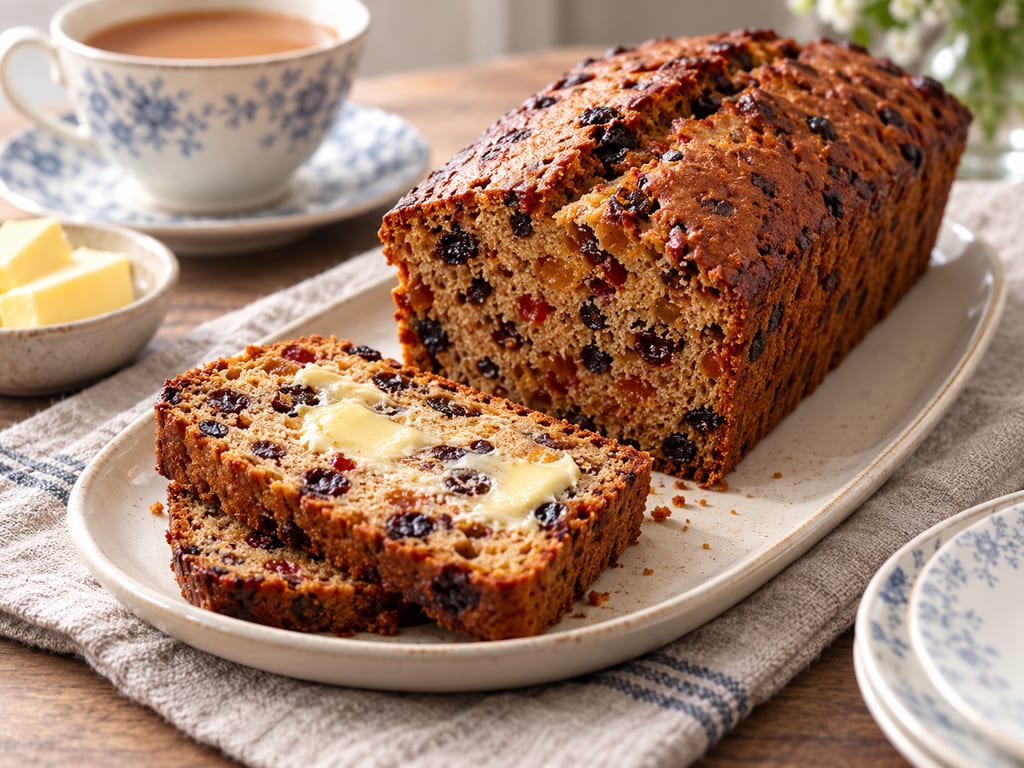
Bara brith is Wales’s speckled fruit loaf, made in both yeasted bread forms and the widely served modern tea-loaf style. This version soaks dried fruit in strong tea before mixing it with self-raising flour, spice, sugar and egg.
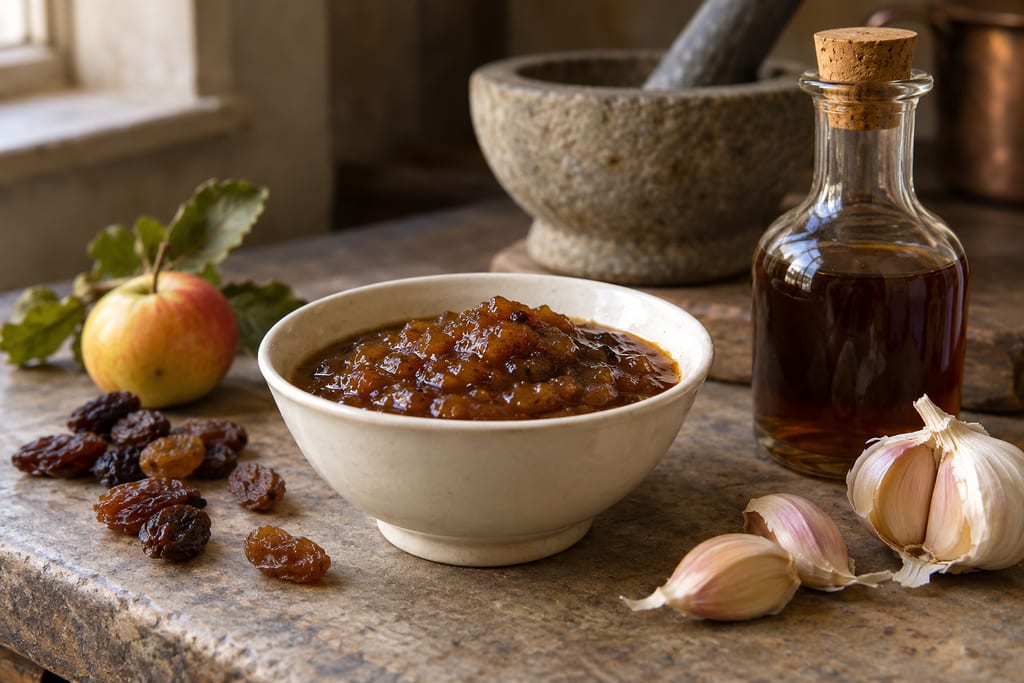
Eliza Acton's Bengal receipt for chetney sauce: stoned raisins and a hard acid fruit pounded with brown sugar, ginger, salt, cayenne and garlic, then thinned with vinegar to the consistence of thick cream.
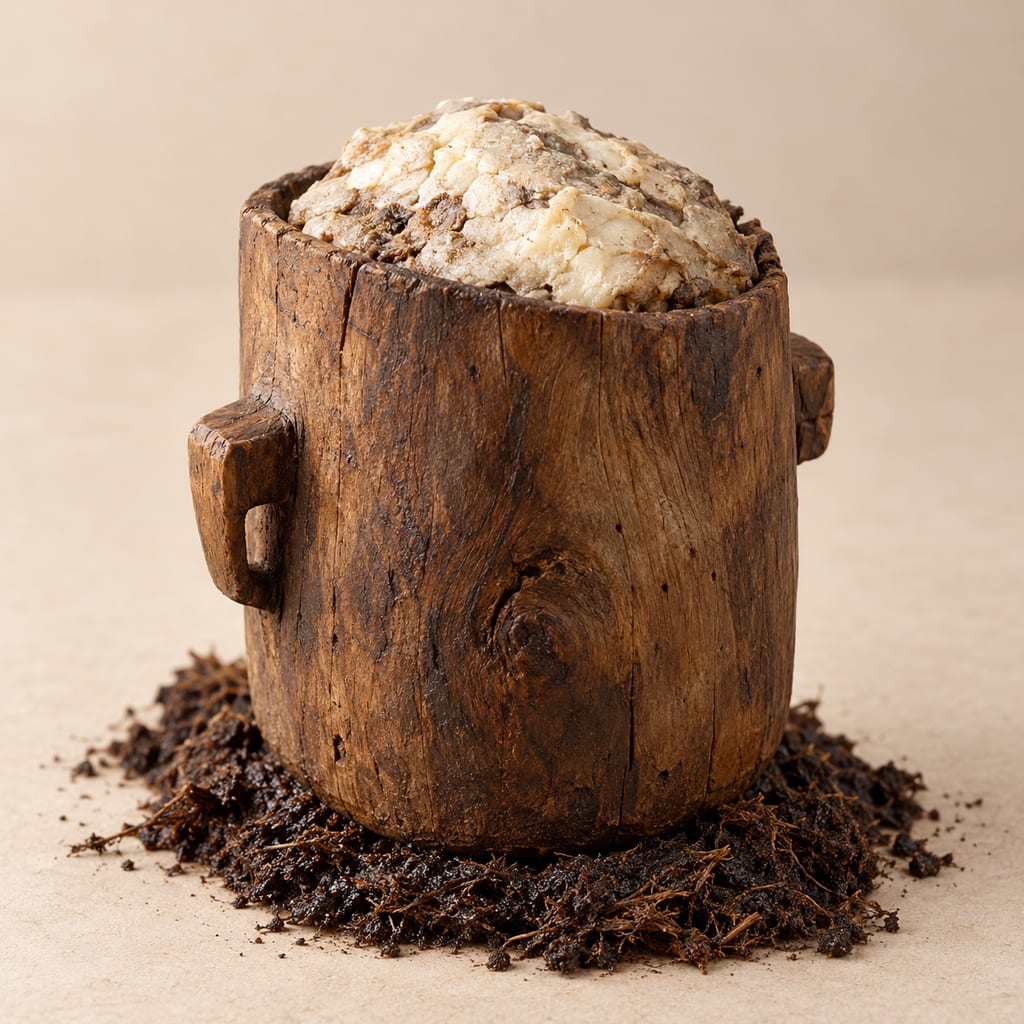
Butter packed into wooden containers and buried in cool, wet peat in Ireland and Scotland, a practice known from finds that may reflect storage, concealment or ritual.
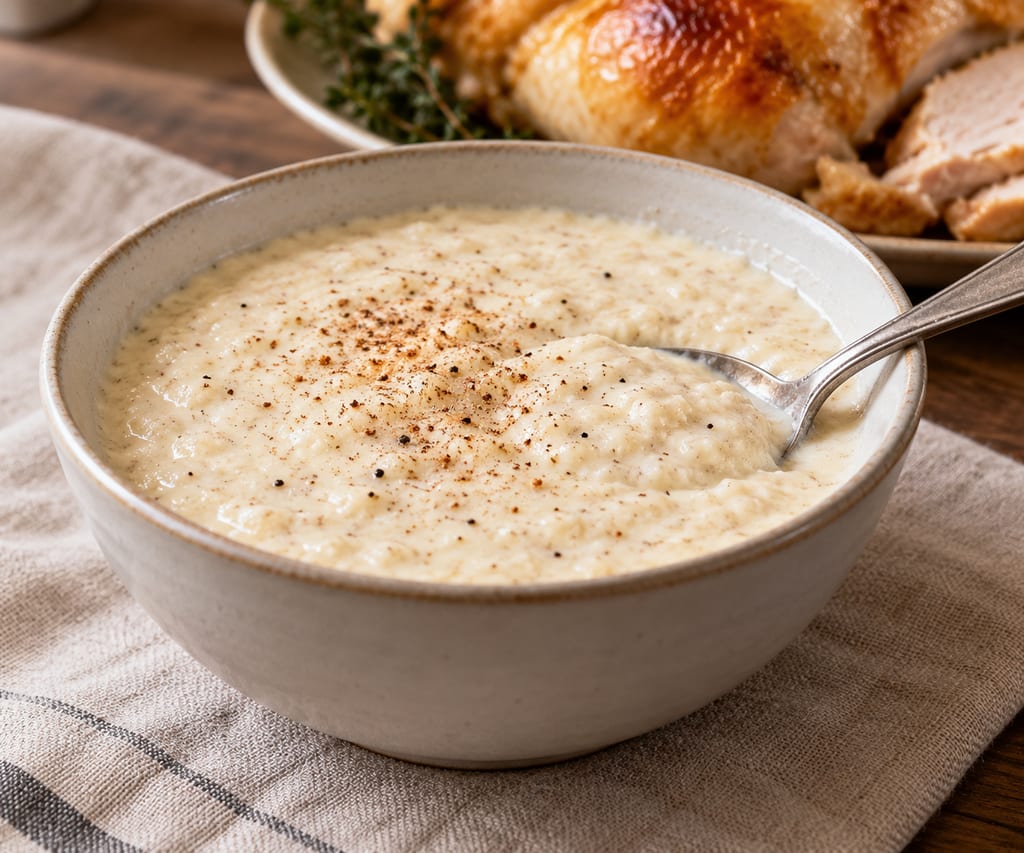
Bread sauce is a British sauce of milk infused with onion, clove and bay, thickened with stale breadcrumbs and finished with butter, served with roast chicken or turkey.
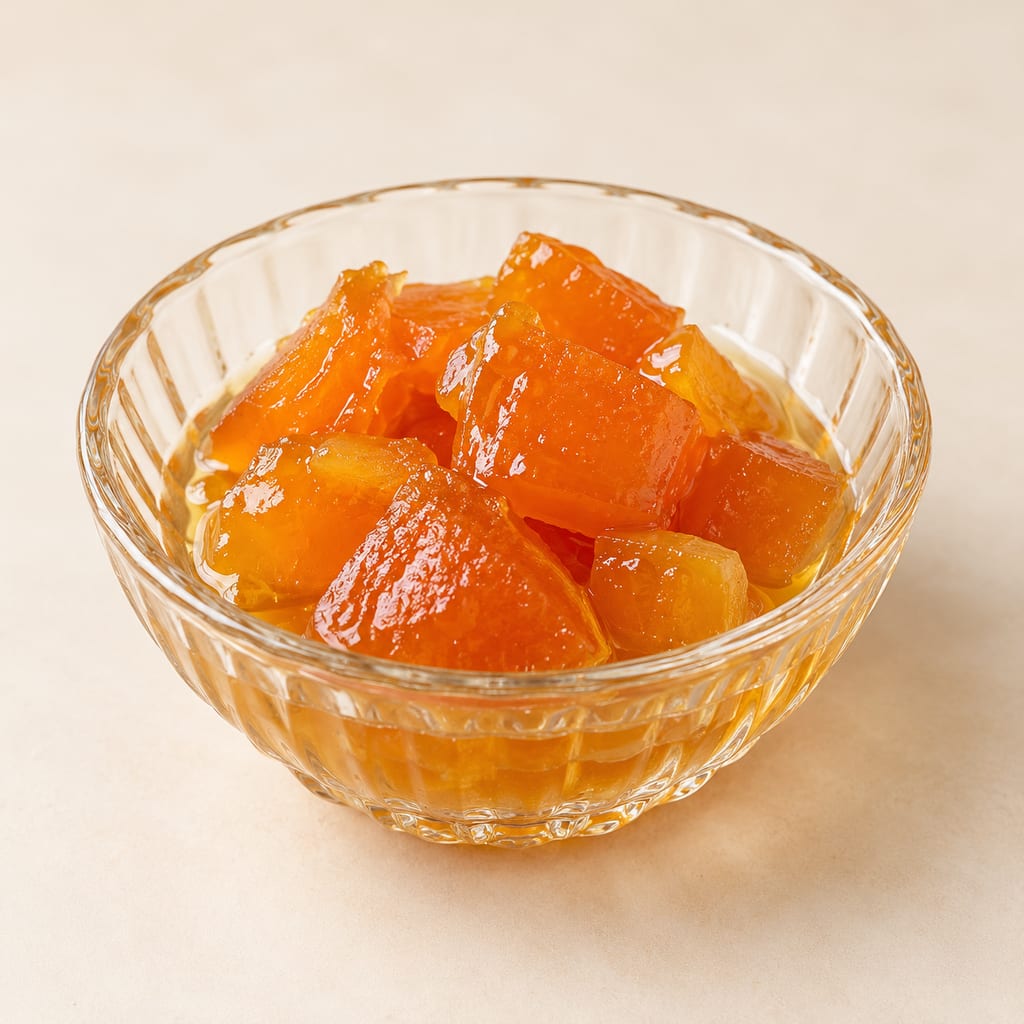
Amla murabba preserves whole Indian gooseberries in a heavy sugar syrup scented with cardamom and sharpened with pepper and black salt. This household method soaks the fruit before cooking.
Whole amla simmer in sugar syrup with saffron, black cardamom and pepper in this chef's version of the Indian fruit preserve. The fruit is soaked overnight before cooking.
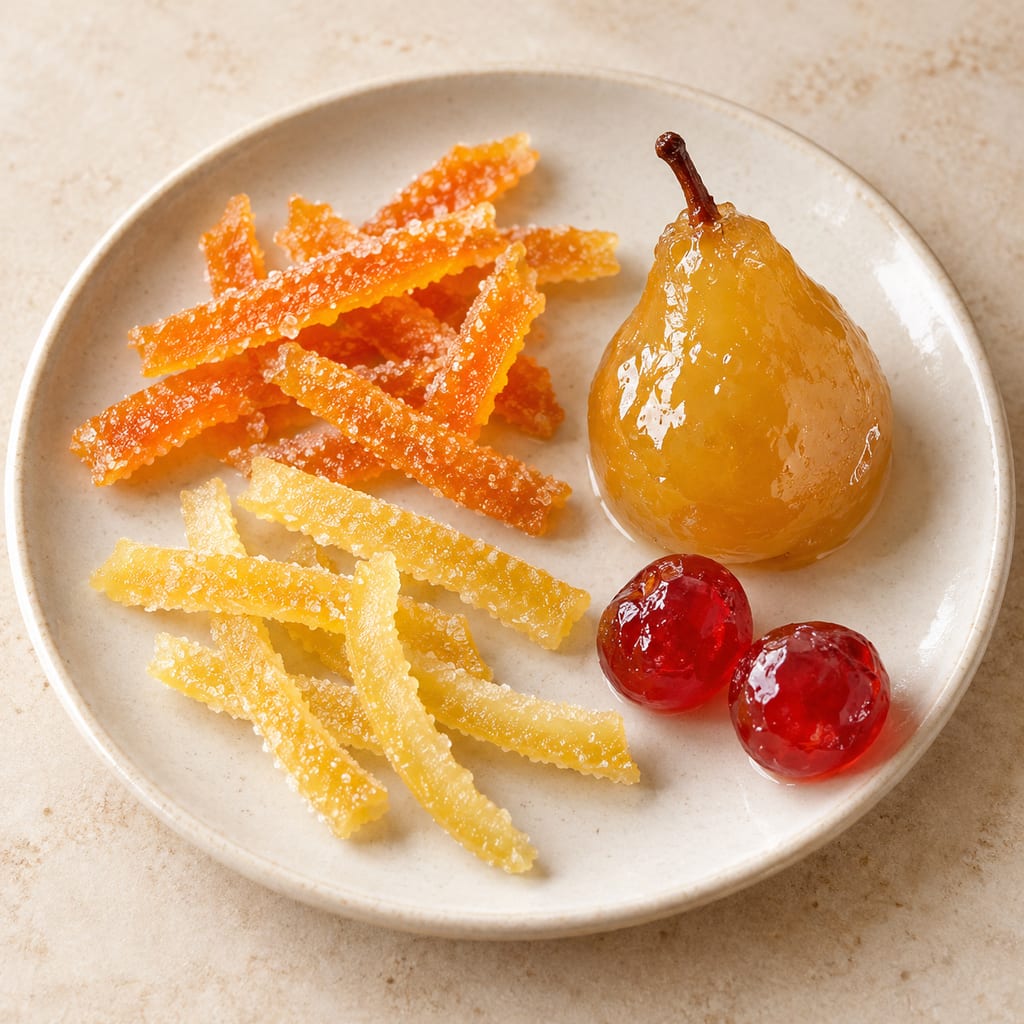
Candied fruit is fruit that has been repeatedly steeped in concentrated sugar syrup, which replaces part of its water with sugar, often followed by drying. It differs from fruit served in a thin syrup.
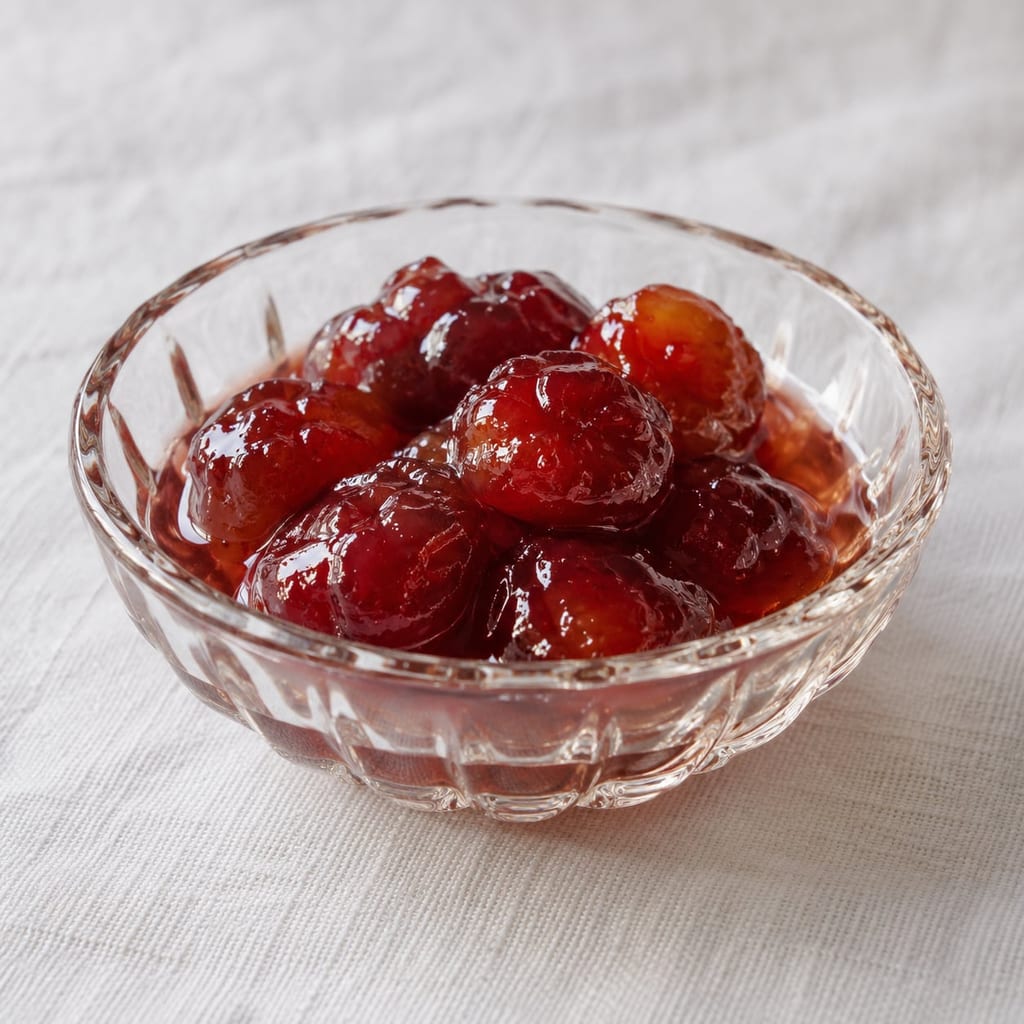
Cypriot cherry glyka made by layering firm pitted cherries with sugar, briefly boiling them, chilling overnight, and boiling again to concentrate the syrup. This version is refrigerated and has no shelf-stable canning process.