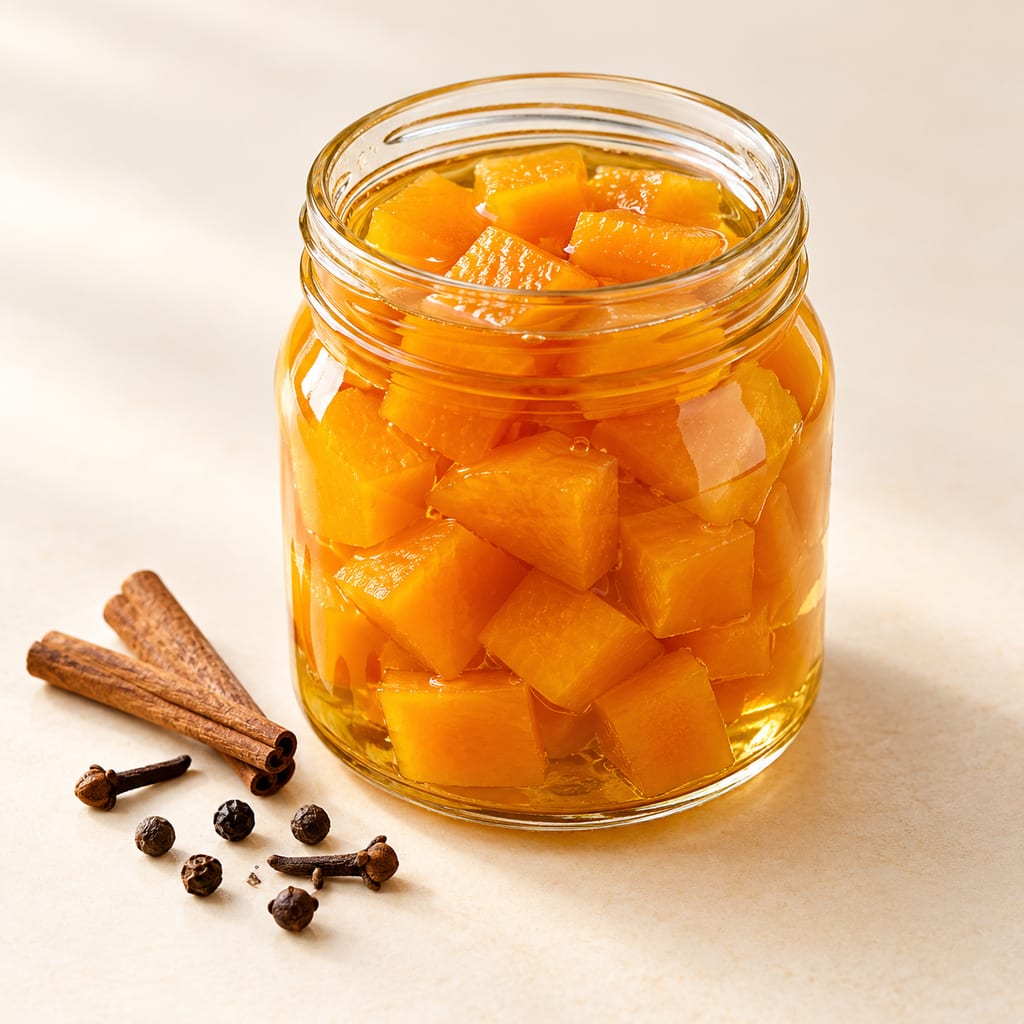
Ball sweet pumpkin pickles
Ball sweet pumpkin pickles: Cupboard: exact published Ball formulation and water-bath process.
 FermenteaWhere food goes to change
Equipment · stovetop-cookware
Stainless-steel saucepan · Heavy stainless saucepan
A modern, portable stovetop pan with a stainless-steel cooking surface for sauces and other small simmering jobs. Size, cladding, lid, compatibility and care vary by model.
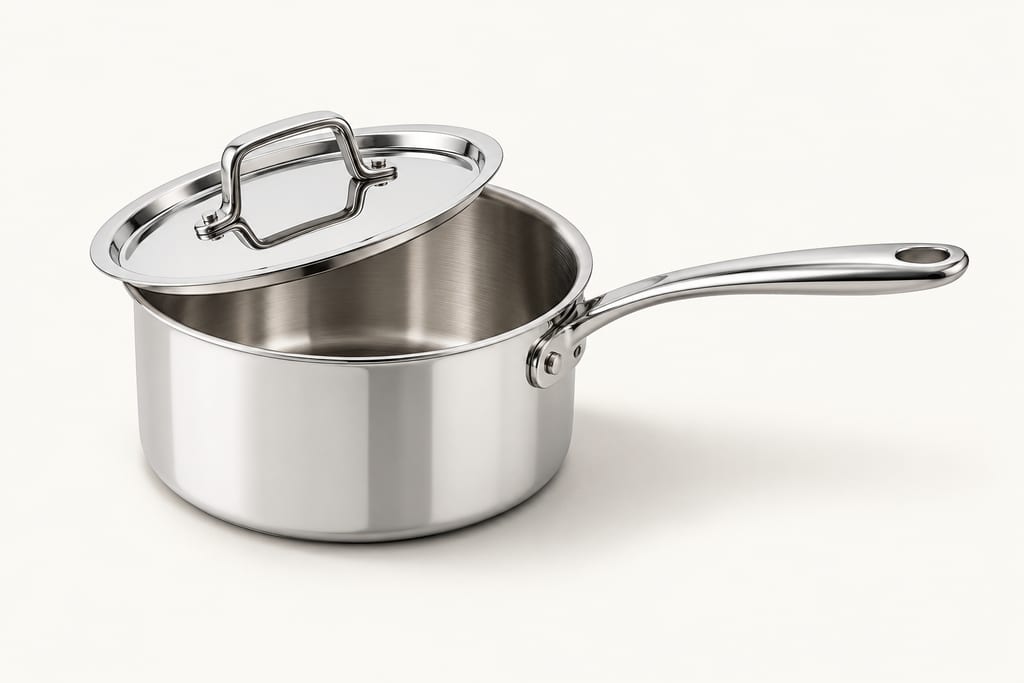
A saucepan is a portable cooking pan with relatively deep sides and one long handle, commonly sold with a fitted lid. It is used on a stove for heating, simmering and stirring liquids or small batches. The name does not specify one capacity, wall thickness or metal construction. In this entry, “heavy” describes the candidate's intended class, not a measured universal weight or gauge.
Current catalogues show how much the details differ. All-Clad lists a two-quart D3 pan whose bonded stainless layers surround an aluminum and aluminum-alloy core; its specification gives a stainless exterior, fitted lid, long riveted handle and compatibility with induction and other stovetops. Made In describes a two-quart five-ply stainless-clad model, made in Italy, while Tramontina's Tempo range uses an impact-bonded aluminum core in the base and an 18/8 stainless cooking surface. These are examples, not a construction standard. A saucepan can have an aluminum core through its base, full-body cladding or a different arrangement; “stainless steel” alone does not say which.
The deeper sides of a saucepan hold liquid while it is stirred and help contain splashes. A lid slows the escape of heat and water vapour when a recipe calls for covering the pan; leaving it off allows more evaporation. For a reduction, a wide, shallow pan exposes more liquid surface and evaporates faster. A saucepan can be deeper than that but still wide enough to stir comfortably. The broad, shallow preserving pan is therefore a related but distinct tool when evaporation rate is the main need.
Clad metal construction is intended to spread heat through the cooking surface. The manufacturers describe different approaches: All-Clad's D3 bonds layers through the body, while Tramontina's Tempo bonds its tri-ply base. These claims describe those models; an unbonded or differently constructed stainless pan will not necessarily heat the same way. Select the shape and size for the batch, and use the burner size and heat source specified by the maker.
Stainless steel is often chosen because it is durable and relatively stable in contact with food, but “nonreactive” is a practical comparison, not a guarantee that every alloy and finish is chemically inert. The Finnish Food Authority notes that stainless steel is relatively stable, while also warning that steel quality varies and that acidic foods can dissolve metals from lower-quality containers. It is sensible to buy a pan identified as suitable for food contact and to check its maker's material and care information, especially when cooking acidic sauces.
Health Canada describes stainless cookware as strong and long-lasting, resistant to rusting and staining, and commonly made with iron, chromium and nickel. Chromium helps form a thin protective surface layer. Nickel sensitivity matters: its guidance is not to use cookware containing nickel if you are allergic to it. Health Canada also recommends adding salt after water reaches a boil to reduce surface pitting. The All-Clad D3 instructions give a related model-specific direction: add salt after liquid boils or food starts cooking.
A sauce recipe may call for a saucepan because its sides hold liquid while the cook heats and stirs it. Fermentea's contemporary UK-label-informed ketchup recipe, for example, calls for a clean saucepan. This is a present-day use example, not evidence that the dish or the pan originated in the United Kingdom. The listed All-Clad 2-quart model and Made In 2-quart model show one common retail size, not a type-wide capacity; Tramontina lists more than one size in its product family. Choose by actual batch size and the headspace needed for stirring, rather than assuming “saucepan” means a fixed volume.
Follow the model's own directions for washing, salt, heat and stovetop compatibility. All-Clad marks its cited D3 as hand-wash only, while Tramontina says its Tempo model is dishwasher-safe and that handwashing maintains its shine. Do not transfer one maker's care instructions to another pan. The recipe link here is a specific example of use; other recipes may call for a broader, shallower preserving pan when rapid evaporation matters.
The consulted manufacturer pages document current models, not the first appearance of the general saucepan form.
Stainless steel is relatively stable, but the Finnish Food Authority cautions that steel quality varies and acidic food may dissolve metals from lower-quality containers.
Hazard sourceHealth Canada notes that stainless steel commonly contains nickel and advises people with nickel allergy not to use cookware containing it.
Hazard sourceChoose cookware intended for food contact and follow the maker's instructions for the specific model and food.
Control sourceHealth Canada advises adding salt after water boils to reduce pitting of stainless-steel cookware; follow the chosen model's own instructions.
Control sourceThe name does not guarantee a particular cladding, capacity, thickness or stove compatibility. Check the specifications for the individual pan; manufacturers describe distinct constructions and compatibility.
Source →Stainless steel should not be treated as chemically inert in every product: lower-quality steel can release metals into acidic food, so suitability depends on the particular food-contact material and its quality.
Source →All-Clad states this model is made in the United States with global components in its Pennsylvania factory; this does not establish the origin of the saucepan type.
The product listing identifies this specific saucepan as made in Italy; this is not a claim that all stainless saucepans are Italian-made.
A published Fermentea ketchup formulation compared with UK product labels calls for a saucepan; this is not evidence of British origin or traditional use.
Ball sweet pumpkin pickles: Cupboard: exact published Ball formulation and water-bath process.
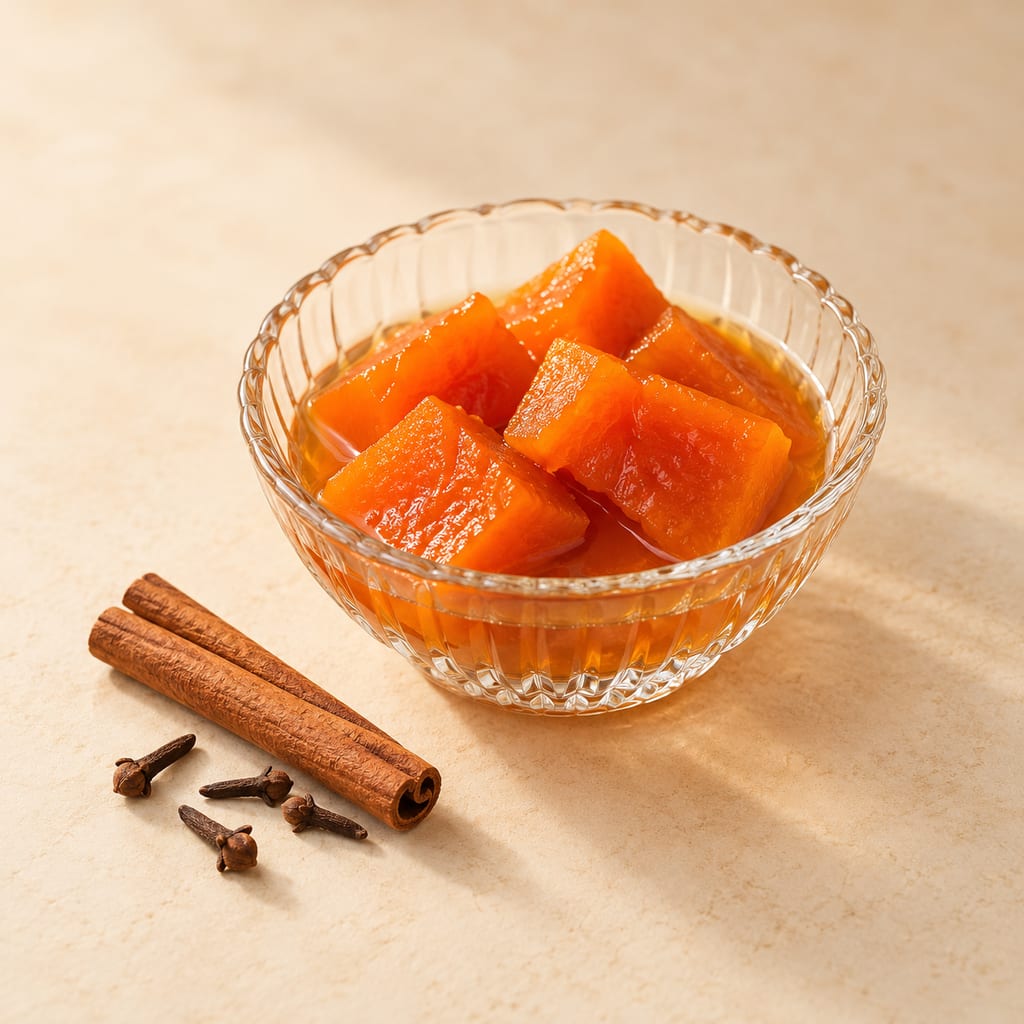
Brazilian doce de abóbora: Freeze for winter; small fresh portion refrigerated up to 48 hours.
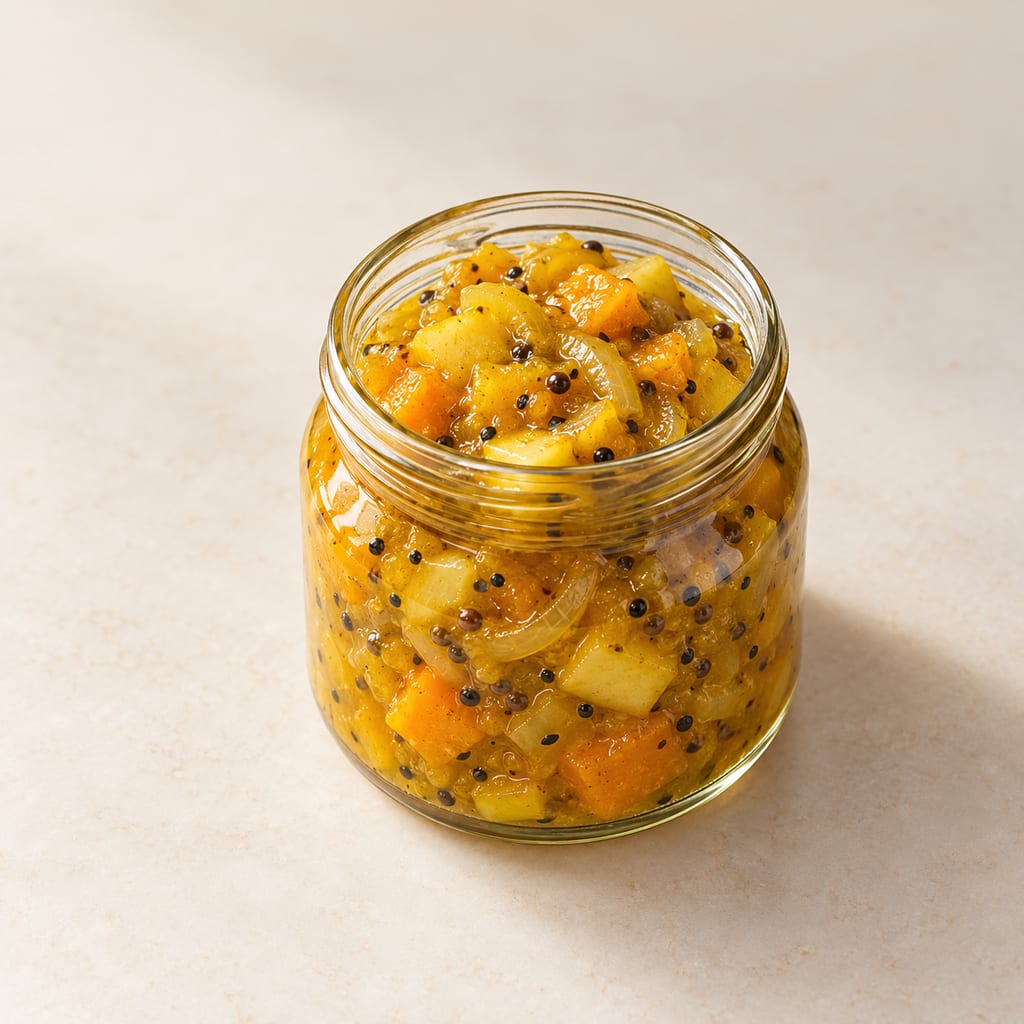
British pumpkin, apple and mustard pickle: Freeze for winter; small fresh portion refrigerated up to 48 hours.
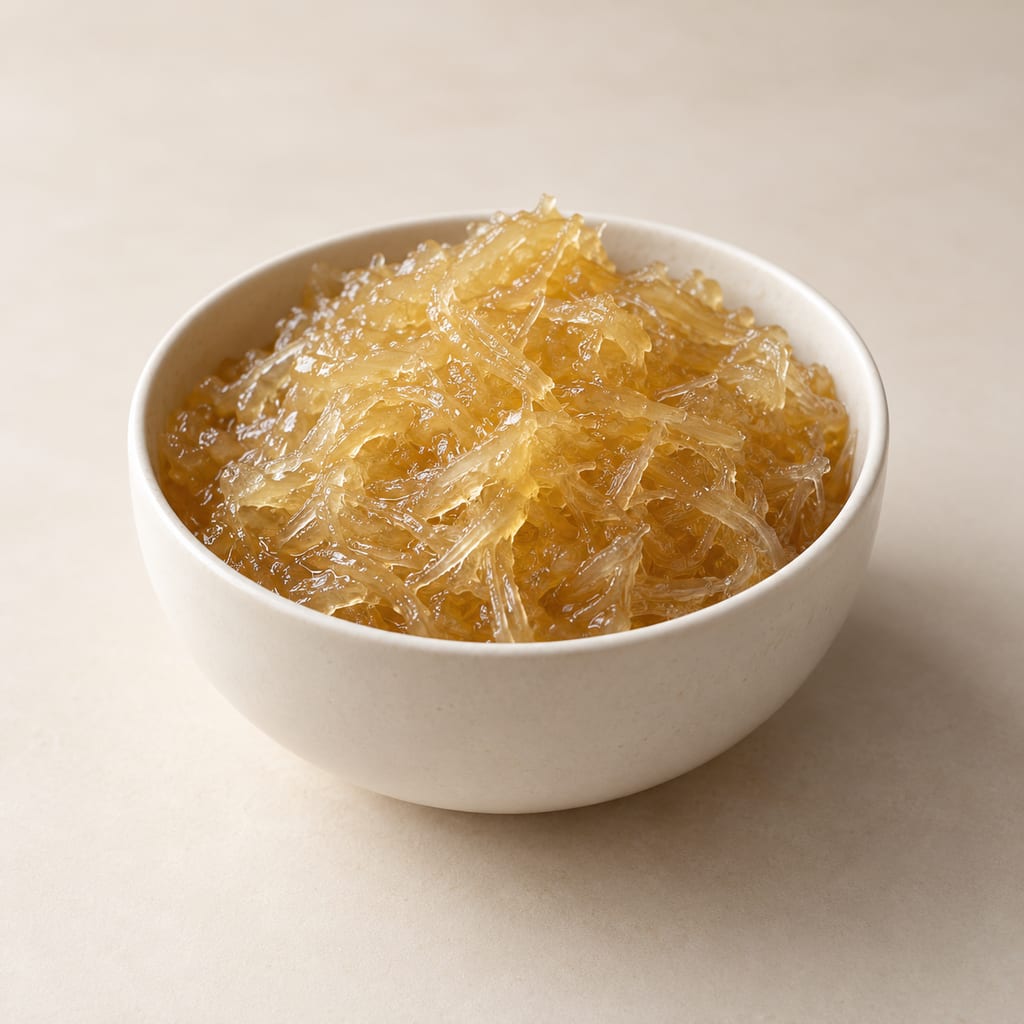
Fine strands of Cucurbita ficifolia cooked in an equal weight of sugar, then portioned for refrigerator or freezer storage. Ordinary orange pumpkin does not give the same fibres.
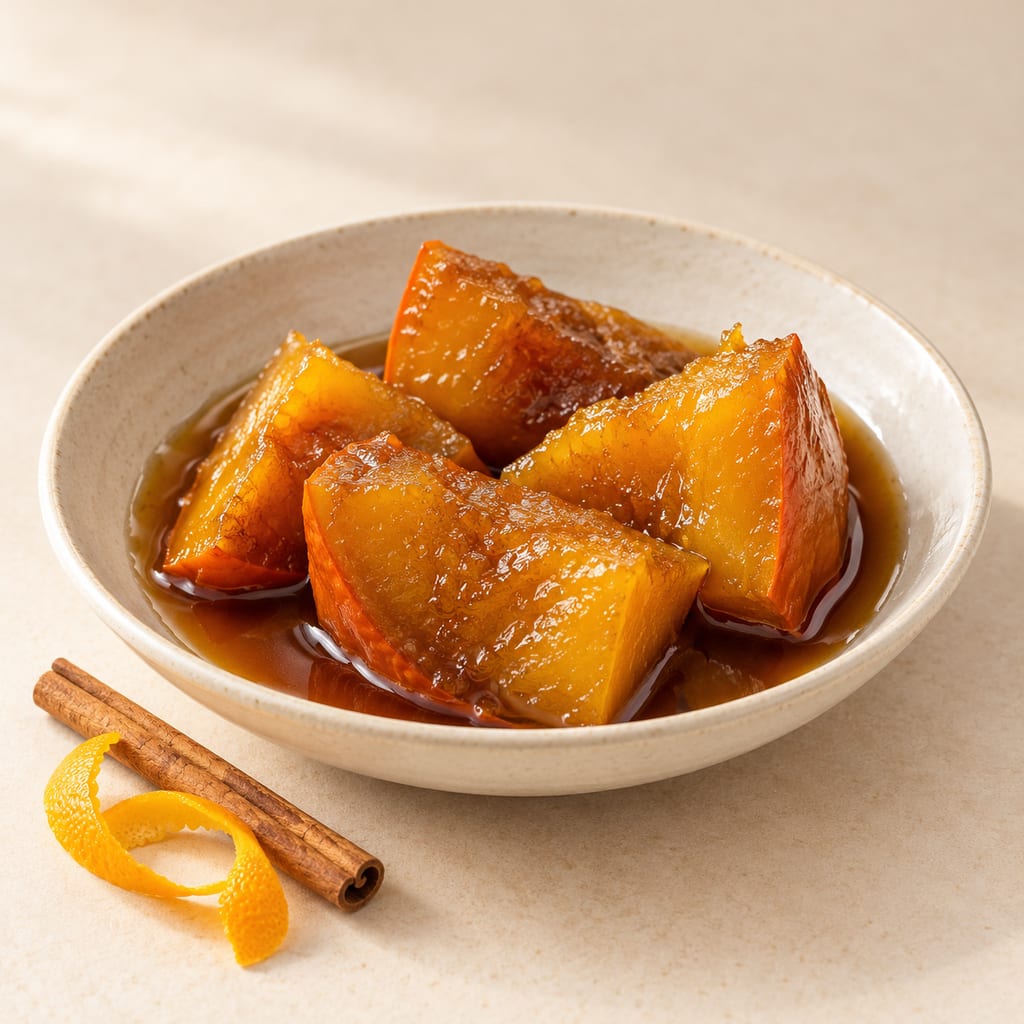
Rind-on pumpkin simmered with piloncillo, orange and cinnamon until glazed. This Mexican sweet keeps refrigerated for up to one week.
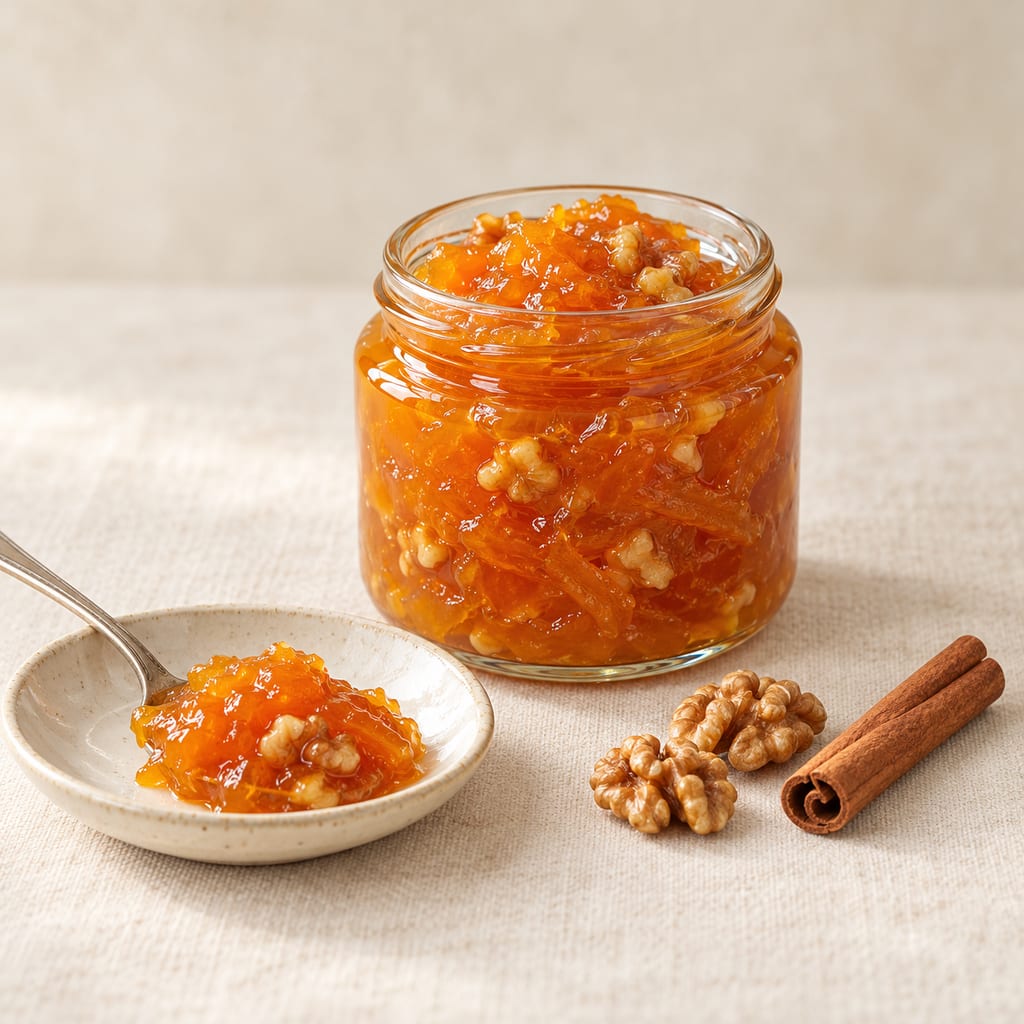
Portuguese pumpkin jam cooked with cinnamon and optional walnuts. A sweet spread to refrigerate or freeze, rather than a home-canned preserve.
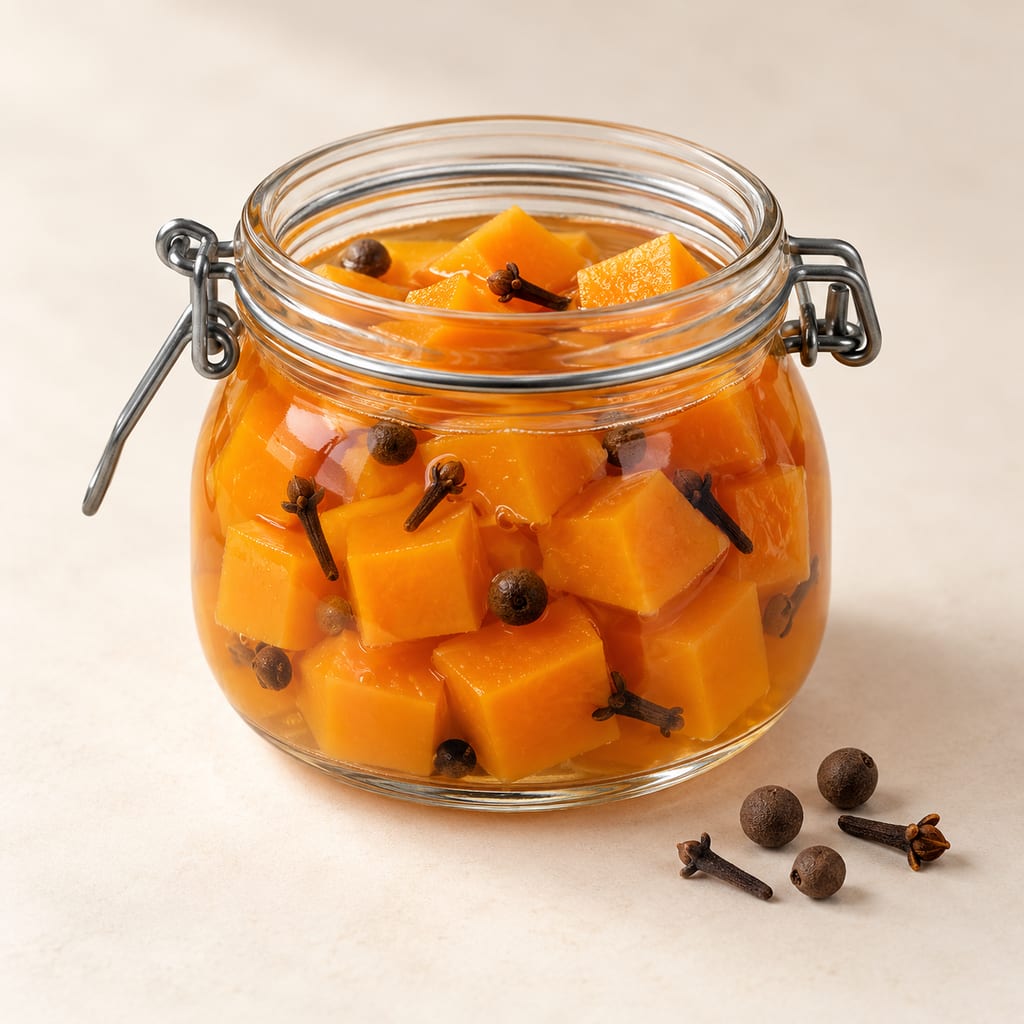
Dynia marynowana: Freeze for winter; small fresh portion refrigerated up to 48 hours.
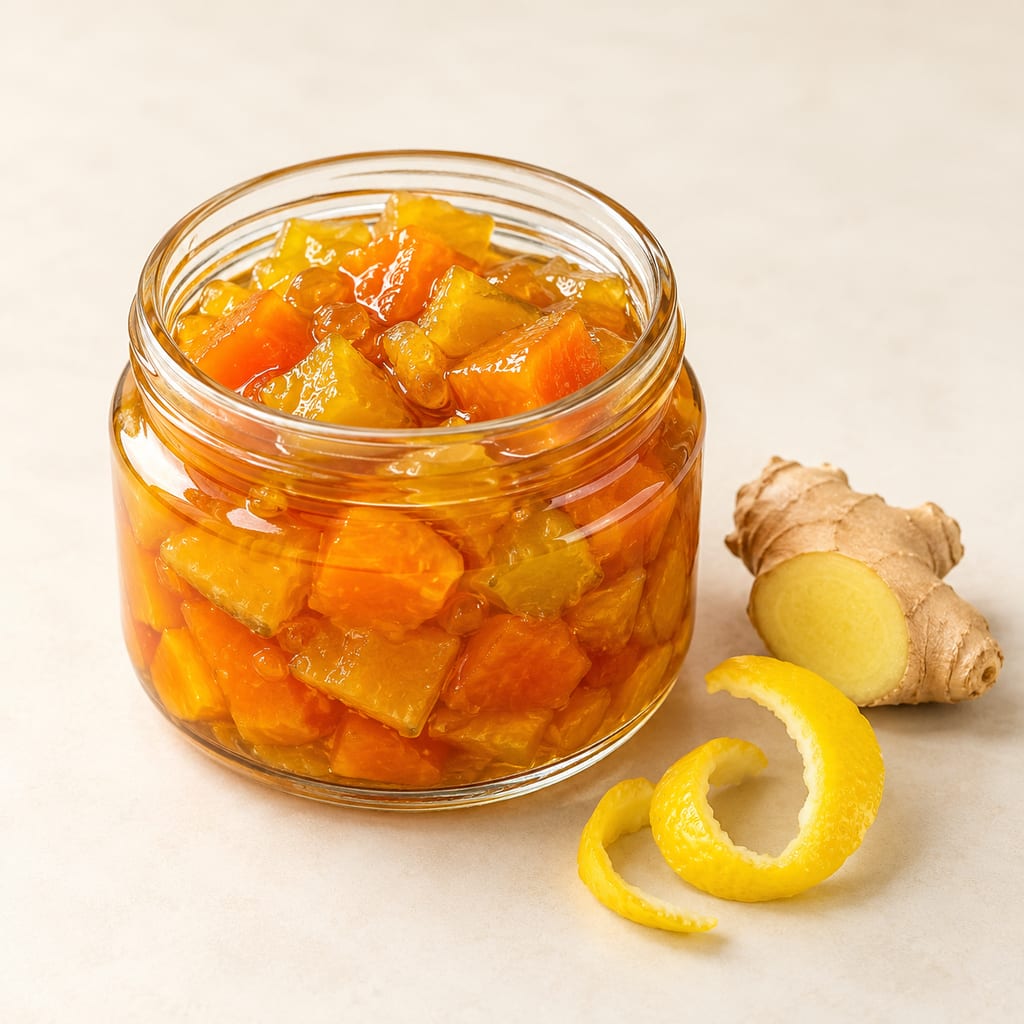
English lemon-and-ginger preserved pumpkin, after an 1861 recipe: Freeze for winter; small fresh portion refrigerated up to 48 hours.
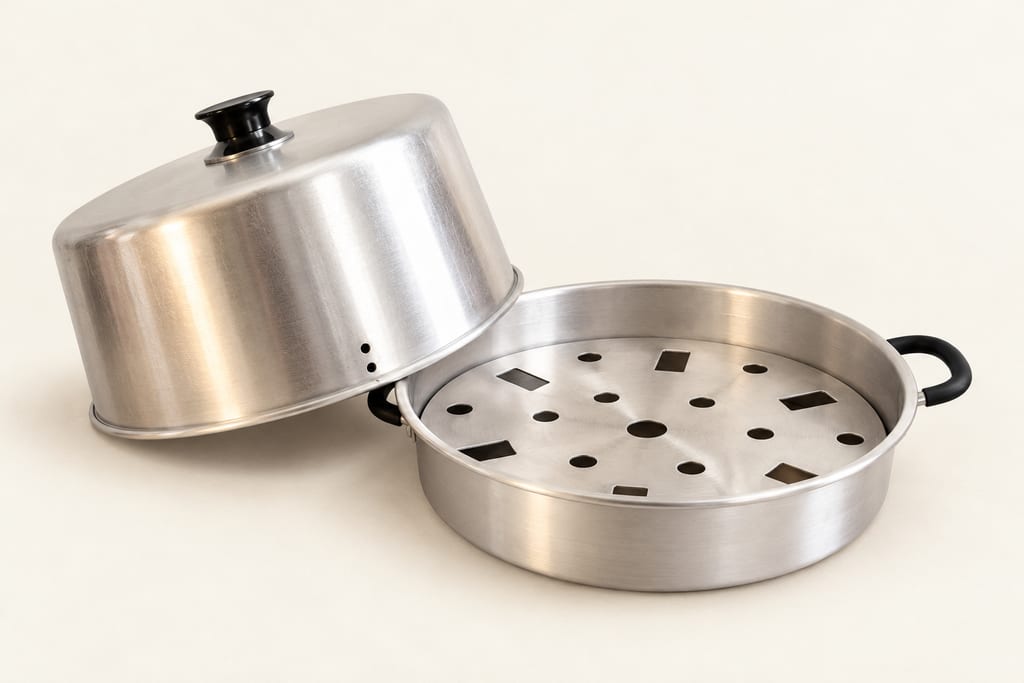
A shallow rack base and tall vented cover process jars in atmospheric steam. NCHFP limits the method to tested high-acid or acidified recipes requiring no more than 45 minutes, including altitude adjustment; this is not pressure canning.
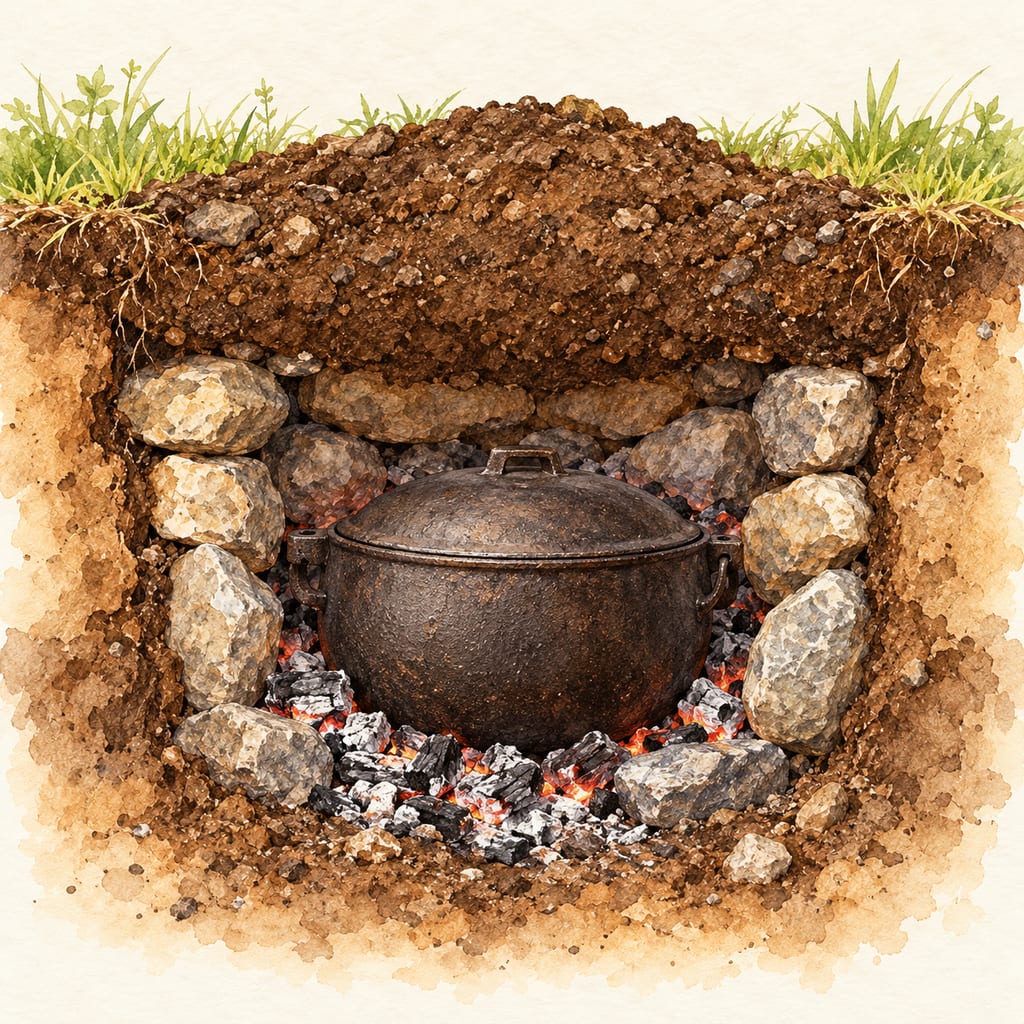
A covered iron vessel used in Maine bean-hole cooking, set into a preheated stone-lined pit and buried for a slow cook.
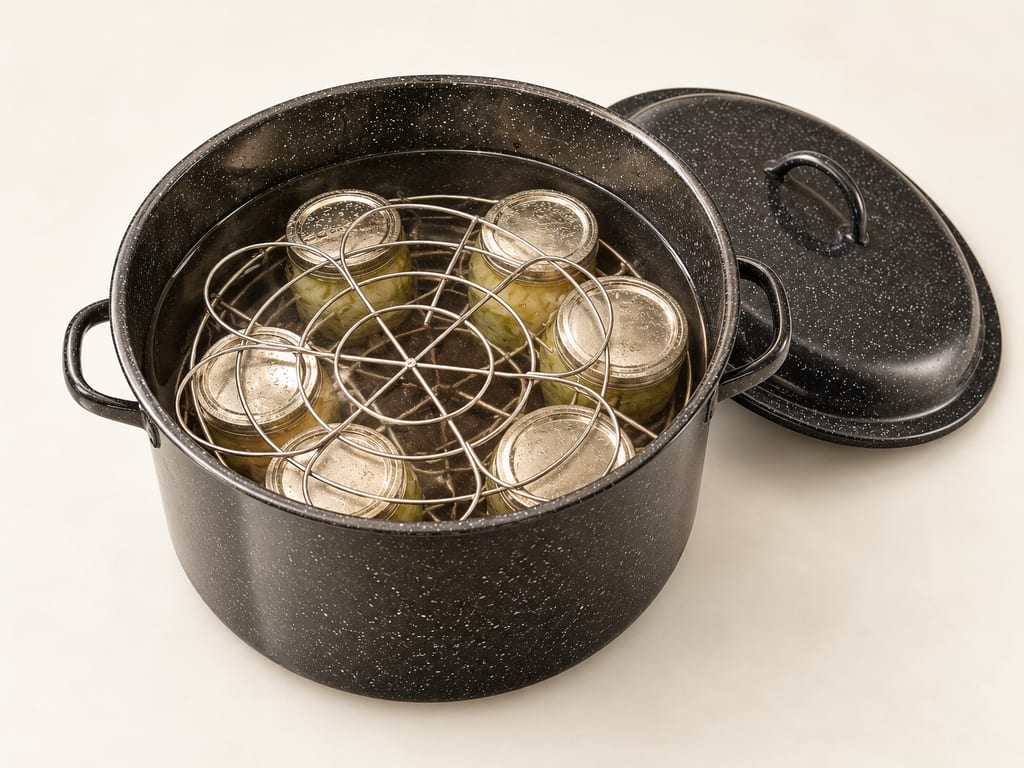
A deep, lidded pot with a removable rack processes jars beneath boiling water. It is intended for foods with tested boiling-water processes; low-acid foods require pressure canning.
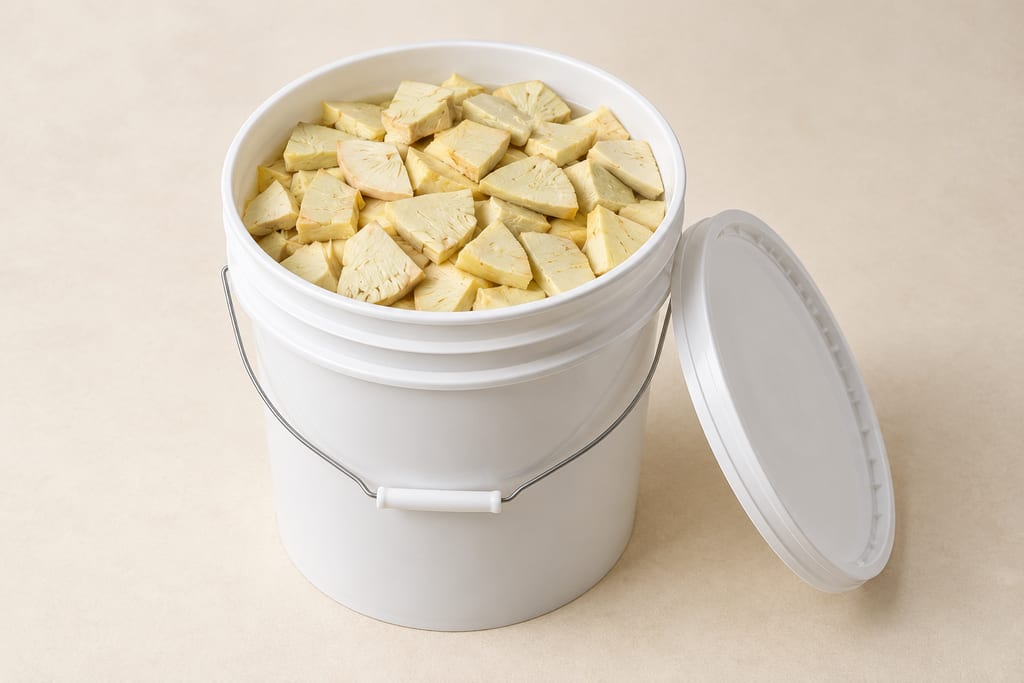
A contemporary household enclosure for preparing mā, fermented breadfruit, documented in Hawai‘i using food-safe buckets, coolers or large sealable bags in place of a pit.
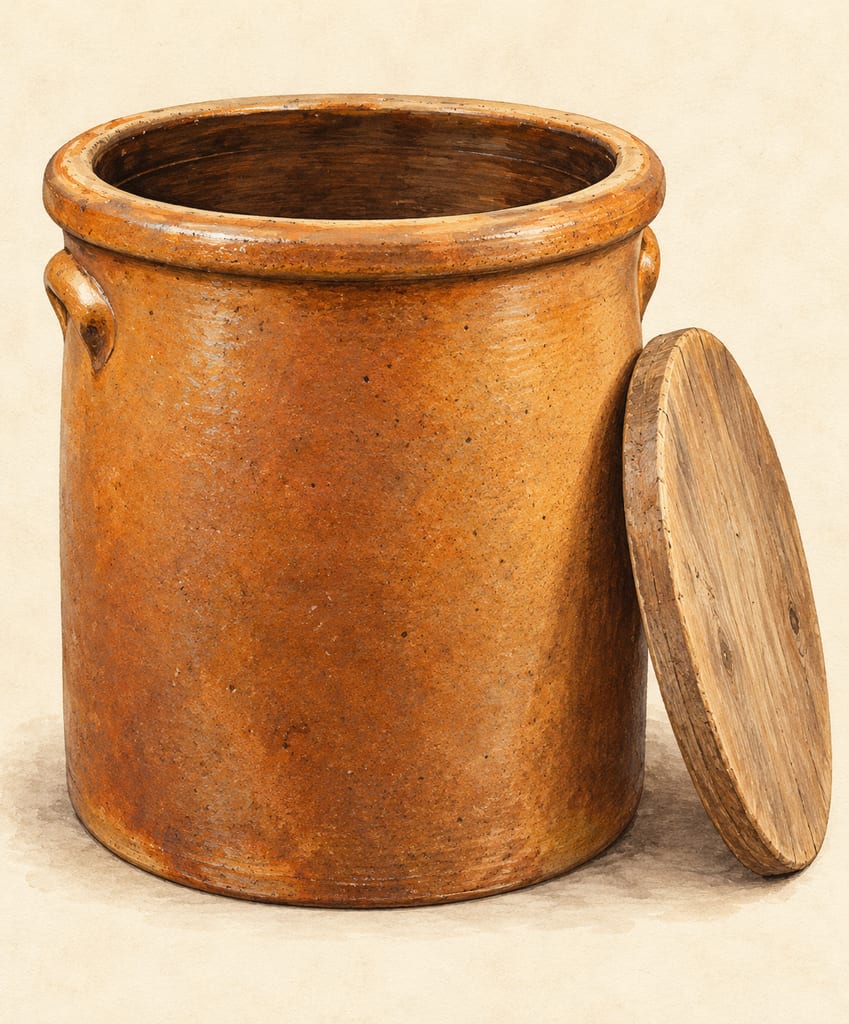
Containers for salt-curing fish and meat range from broad-mouthed stoneware crocks to tubs, cut-down barrels and chests. Their material, depth, cover and ability to retain or drain liquid shape how the food sits in salt or brine.
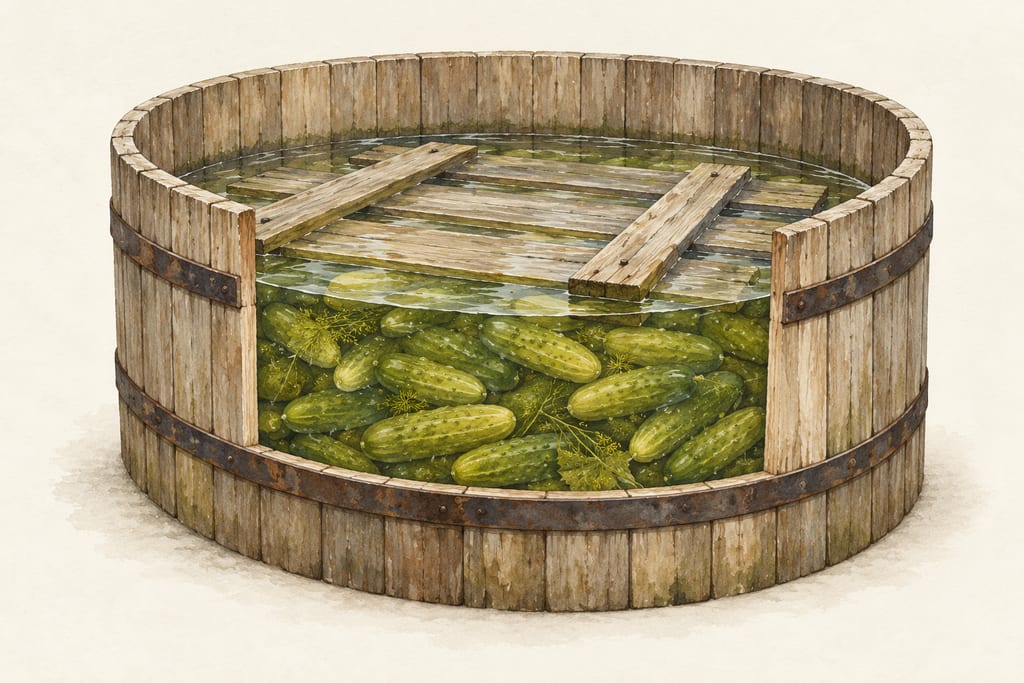
A bulk brining vat holds cucumbers and other vegetables under cover brine for fermentation and storage. North Carolina sources document a mid-century wooden tank yard and later outdoor fiberglass systems.
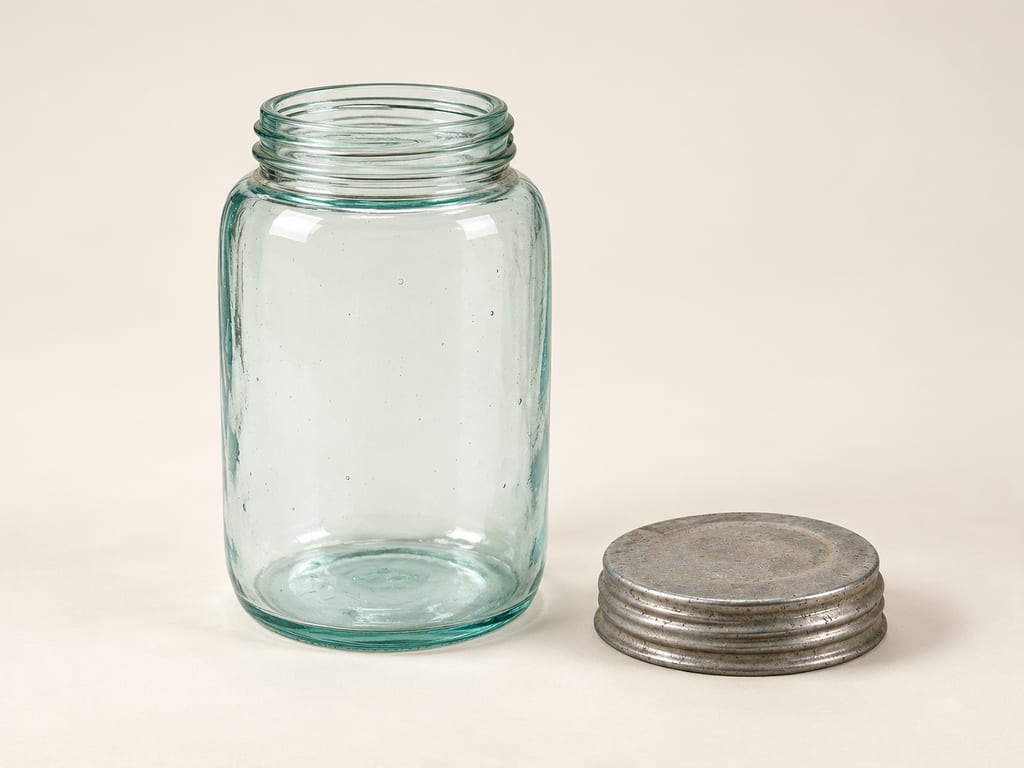
Threaded, heat-processing jars hold food and a fitted lid during a tested canning process; jar size and process belong to the specific recipe.
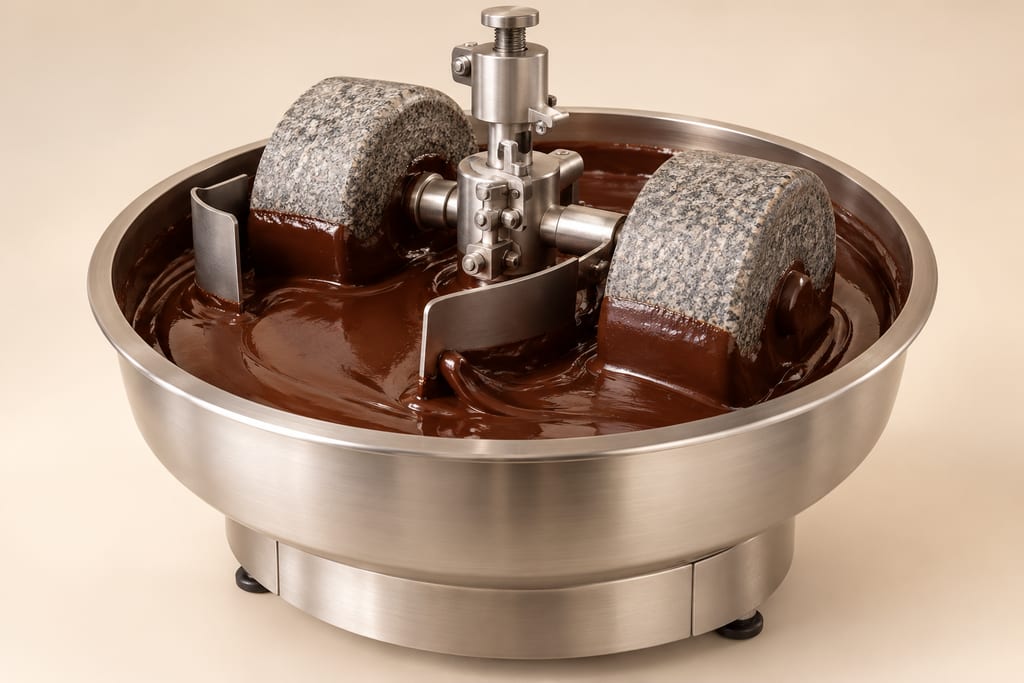
A chocolate refiner or melanger uses powered rotation and stone rollers to refine cocoa mass. Some models also process nut and seed pastes; design, material and operating limits vary.
No community contributions have been published for this entry yet.
Sign in to contribute. Published comments and photos are free to read.
All-CladProduct example · Manufacture · Construction · Care
All-Clad D3 Stainless 2 Quart Sauce Pan with LidThe specific D3 2-quart model has a stainless/aluminum bonded construction, a riveted handle, a lid and flared rim; its listed size, US manufacture, stovetop compatibility and care instructions are model-specific.
Cited in: A modern saucepan, not one fixed design; Why the shape matters; Food contact and the word “nonreactive”; Use, care and scale
Made InProduct example · Manufacture · Construction
Stainless Steel Saucepan | 2 QTThe product listing describes a current 2-quart stainless-clad saucepan, five-ply construction, dimensions and manufacture in Italy; these features belong to that model.
Cited in: A modern saucepan, not one fixed design; Use, care and scale
Tramontina USAProduct example · Construction · Care
Tempo Tri-Ply Base Stainless Steel Covered SaucepanThe Tempo model is described with an 18/8 stainless cooking surface, impact-bonded aluminum core, lid and riveted handle; its compatibility and dishwasher/care statements are model-specific.
Cited in: A modern saucepan, not one fixed design; Why the shape matters; Use, care and scale
Finnish Food AuthorityFood contact material · Safety
Metals and alloys as a food contact materialStainless steel is relatively stable, but steel cookware quality varies and lower-quality steel may release metals into acidic food.
Cited in: Food contact and the word “nonreactive”
Health CanadaSafety · Care
The safe use of cookware and bakewareStainless cookware is strong, long-lasting and resistant to rust and stains; stainless commonly contains iron, chromium and nickel; add salt after water boils to reduce pitting and follow maker instructions.
Cited in: Food contact and the word “nonreactive”
ExploratoriumUse · Pan geometry
Science of Cooking: Ask the Inquisitive Cooks!A wide, shallow pan speeds evaporation in a reduction; a sauce pan can be somewhat deeper while remaining wide enough to stir easily.
Cited in: Why the shape matters; Use, care and scale
FermenteaDocumented use · Internal recipe link
Smooth Heinz-style ketchup, UK-label-informed starting pointThe published contemporary recipe's steps specify a clean saucepan; its UK location describes a product-label comparison, not recipe or equipment origin.
Cited in: Use, care and scale
HeinzRecipe context
Tomato Ketchup 460 gThe Fermentea comparison recipe uses this UK-market label as a modern comparison target; it does not establish a traditional preparation.