Storage for this version: Cool in small portions and refrigerate within one to two hours at 5°C or below (aim for 4°C). Use the fresh chilled portion within 48 hours; freeze the winter portions promptly at about −18°C in freezer-rated containers with expansion space. Thaw in the refrigerator and use within 24 hours of complete defrosting. This is the collection's conservative handling policy, not a laboratory shelf-life result for this preserve.
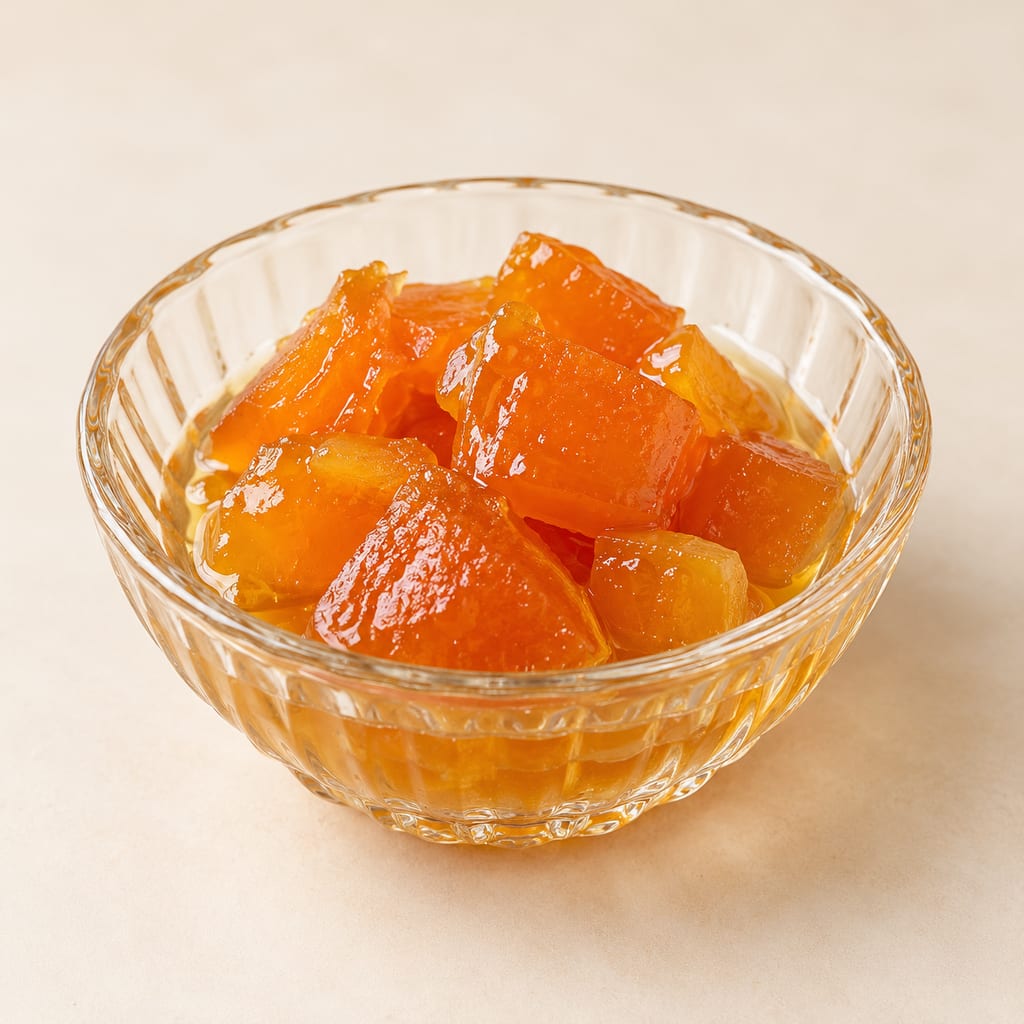
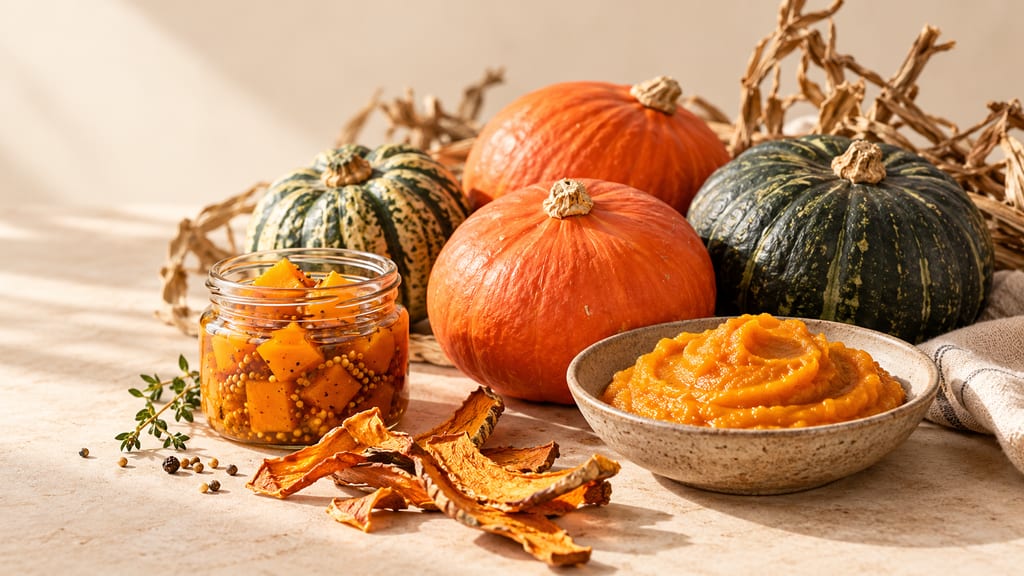
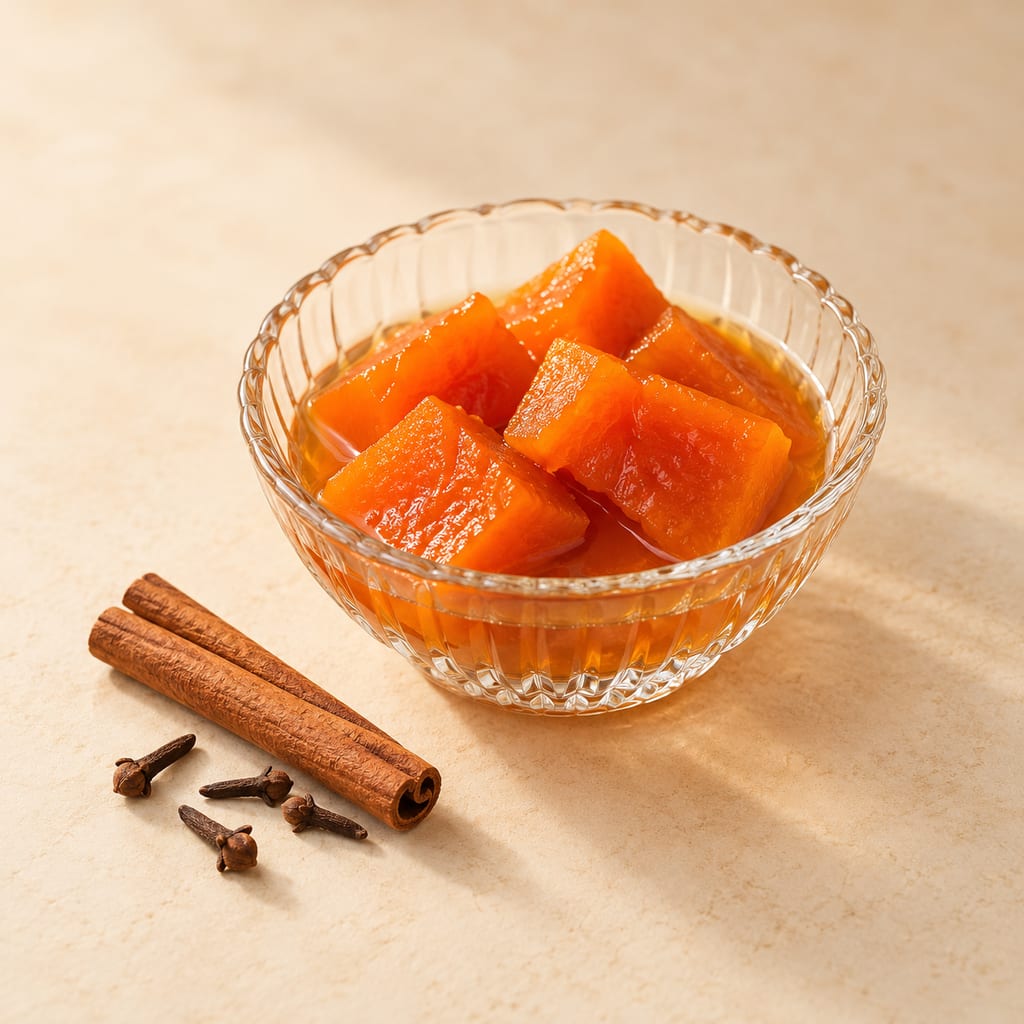
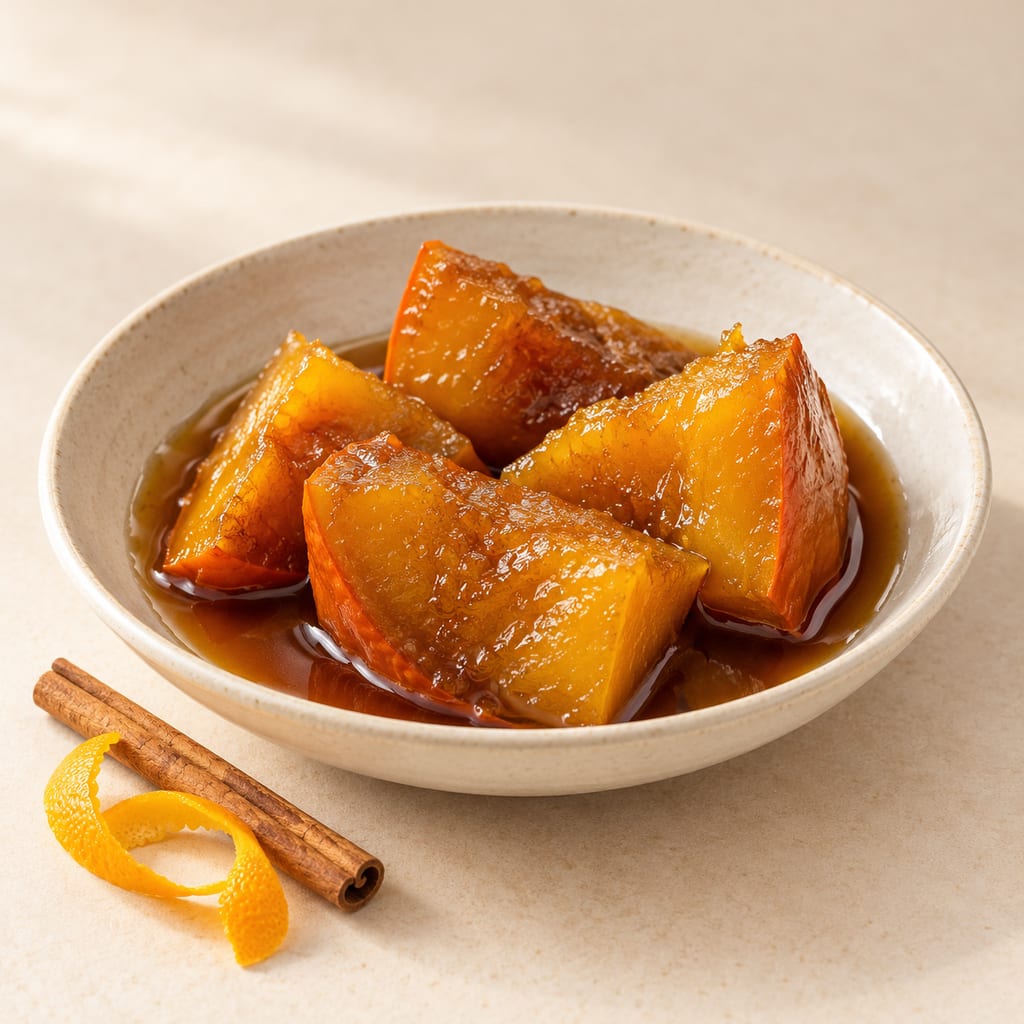
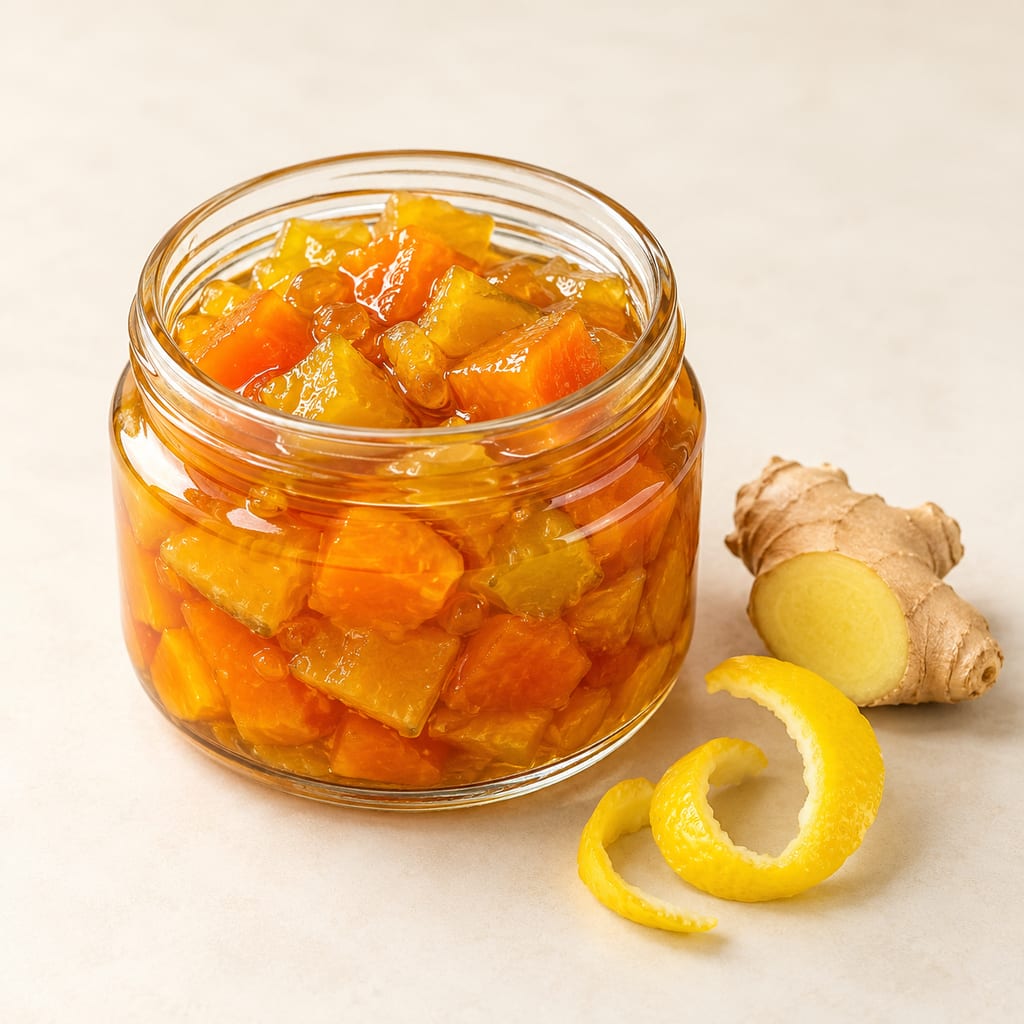
Spoon sweets preserve recognisable pieces of fruit or vegetables in syrup. The Cyprus Food Museum records pumpkin or butternut versions, sometimes cut into curls with a special tool. It also records the wider custom of welcoming guests with a spoon sweet and water. An account of a visit to Cyprus in 1873 describes the hospitality custom; it is evidence for spoon sweets generally, not proof that this particular pumpkin recipe existed in that year.
Traditional pumpkin versions often include lime treatment. A modern Greek recipe explicitly makes the sweet without lime, using a refrigerated lemon-and-citric-acid soak instead. The recipe below follows that practical route, with almonds omitted so the stored batch remains nut-free.
Yield: roughly 600 ml according to the culinary source, before the omission of almonds. Time: one day of refrigerated soaking, followed by cooking and cooling. Equipment: covered bowl, wide saucepan and freezer-rated containers.
The cultural connection is the preservation of distinct pieces in a sweet, aromatic syrup. The Cyprus museum documents both a lemon-water version and a lime-treated version, including the characteristic shaped pieces. The Greek formula used here is a contemporary no-lime interpretation, not a claim that every Greek or Cypriot household uses the same method.
The cold soak and later reduction are process choices for texture and flavour. No claim is made that this lemon/citric-acid quantity produces a validated equilibrium acidity for safe canning. The original Greek page offers a long refrigerated life and oven treatment for jars; neither instruction is adopted here. The final product is frozen for longer keeping.
Choose small freezer portions: a spoon sweet is normally dispensed in modest quantities, so a single large container creates repeated thawing or a long period in the fridge. Keep the pumpkin covered by its syrup when possible, and include some syrup in each portion. If a batch proves too soft to keep attractive cubes, retain it as a sweet pumpkin preserve rather than attempting repeated heating to force firmness.
Food-grade lime and industrial building lime should never be confused. This recipe needs neither. Omitting that step also means the result should not be promised to reproduce the hard, glassy exterior of every traditional lime-treated sweet.
Cool in small portions and refrigerate within one to two hours at 5°C or below, aiming for 4°C. Use the fresh chilled portion within 48 hours. Freeze winter portions promptly at about −18°C in freezer-rated containers with expansion space. Thaw in the refrigerator and use within 24 hours of complete defrosting. These are conservative handling instructions, not a measured shelf life for this particular preserve. Sugar concentration, a jam-like set and a sealed lid do not establish a home-canning process.
Storage for this version: Cool in small portions and refrigerate within one to two hours at 5°C or below (aim for 4°C). Use the fresh chilled portion within 48 hours; freeze the winter portions promptly at about −18°C in freezer-rated containers with expansion space. Thaw in the refrigerator and use within 24 hours of complete defrosting. This is the collection's conservative handling policy, not a laboratory shelf-life result for this preserve.
Freezer for winter; conservative 48-hour refrigerated handling
Hazard source
Freezer for winter; conservative 48-hour refrigerated handling
Control source
Freezer for winter; conservative 48-hour refrigerated handling
Do not transfer a canning schedule from a different pumpkin preparation.
Cut the pumpkin into small, even cubes. Mix the water, lemon juice and citric acid; combine with the pumpkin. Cover and refrigerate for 24 hours.
Put pumpkin and soaking liquid in a wide saucepan. Add sugar, honey and whole spices; warm until the sugar dissolves.
Simmer gently until the pumpkin is tender but retains its shape. The source gives approximately 13–15 minutes for its cubes; check the texture because cultivar and size matter. Move the pan gently instead of stirring vigorously.
If the syrup is still thin, lift out the pumpkin, reduce the liquid separately and return the pieces. Remove the spices.
Divide into small containers and follow the shared chilled/freezer handling rule.
Cool in small portions and refrigerate within one to two hours at 5°C or below. Use the fresh chilled portion within 48 hours. Freeze winter portions promptly at about −18°C in freezer-rated containers with expansion space. Thaw in the fridge and use within 24 hours of complete defrosting. This is a conservative handling policy, not a measured shelf life for the recipe.
Conditions
Temperature controlRefrigerated
Places
Greece
Documented preparation · Country evidence
Geographical association of this documented version, not an asserted origin.
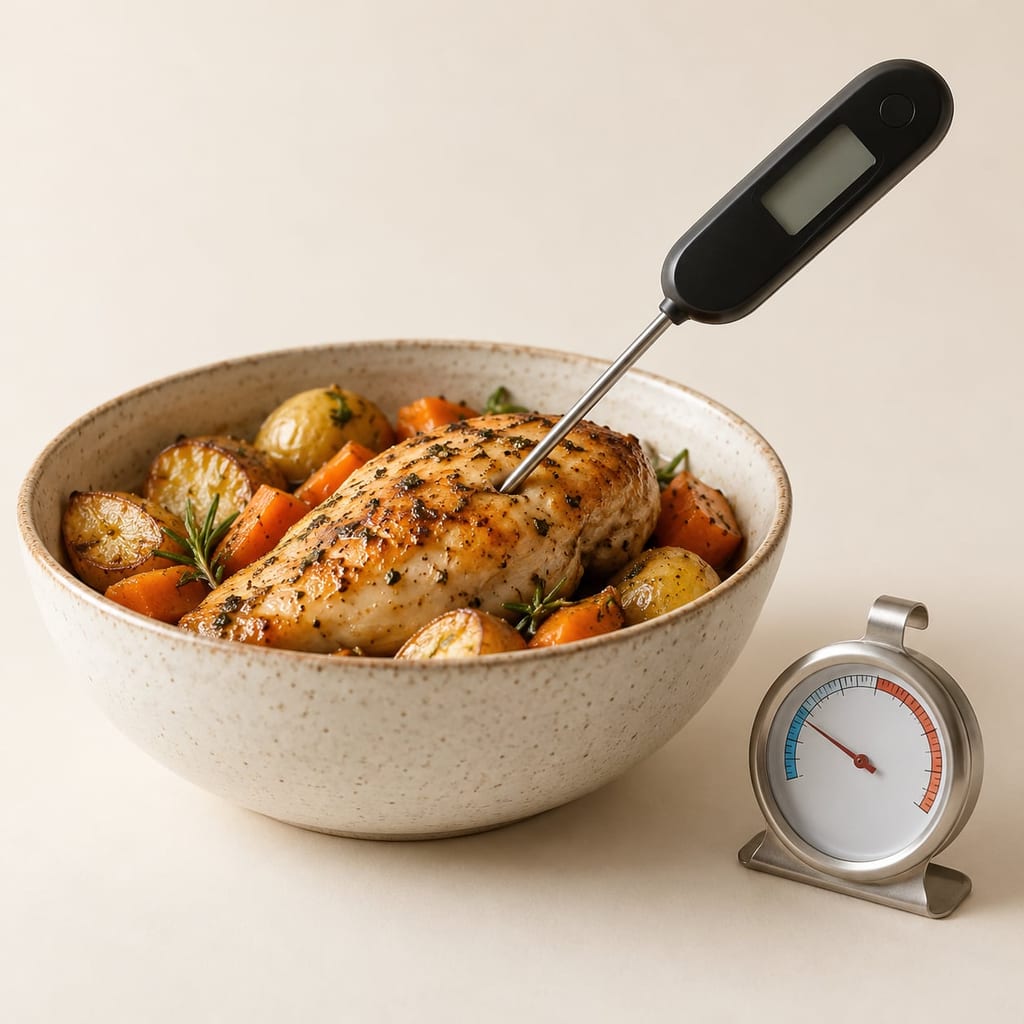
A food probe measures the temperature inside food at the probe tip; a refrigerator thermometer measures the cold storage environment. They answer different questions and cannot establish acidity or validate a preservation process.
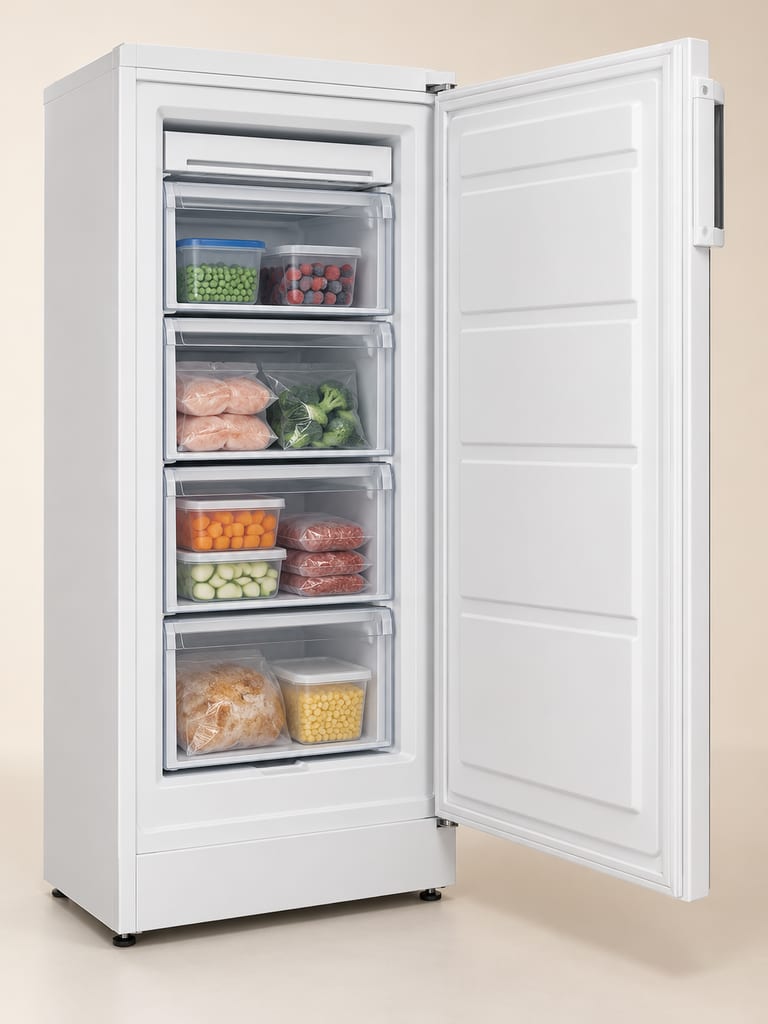
A household freezer holds food in a frozen state for storage and selected texture or separation work; its batch-storage role differs from industrial equipment that freezes individual pieces separately.
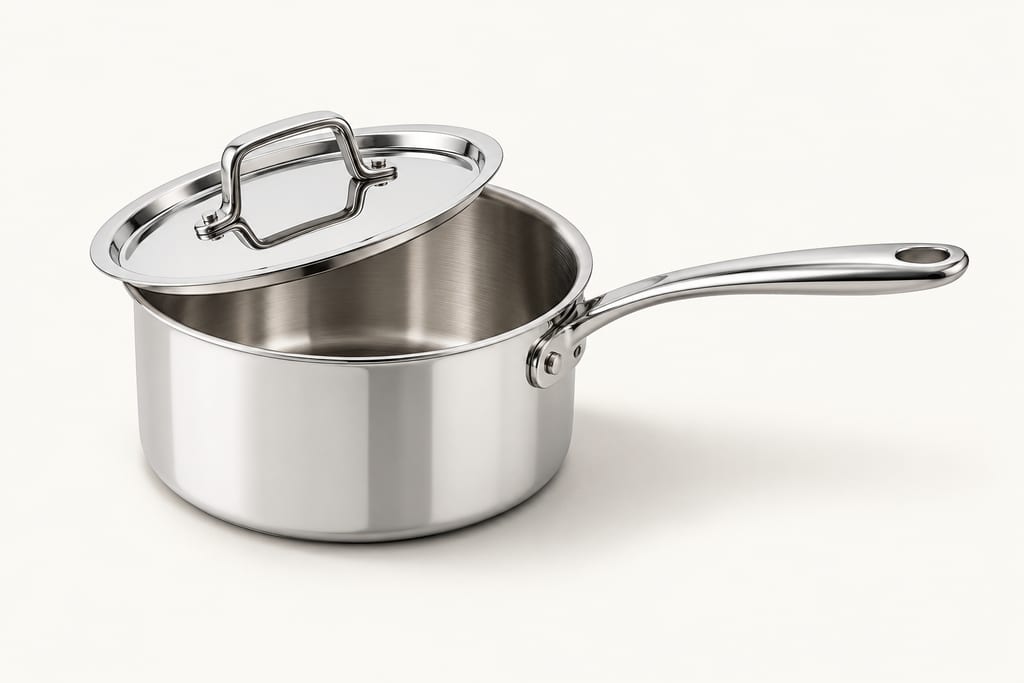
A modern, portable stovetop pan with a stainless-steel cooking surface for sauces and other small simmering jobs. Size, cladding, lid, compatibility and care vary by model.
An ordinary household refrigerator used to store selected fresh produce in vented crates or drawers, at low temperature and at a humidity chosen by the drawer. Not every crop benefits from cold.
A full harvest-to-pantry guide to keeping pumpkins whole, drying and freezing them, and making pickles and sweet preserves around the world—with the exact distinction between tested canning and cold storage.
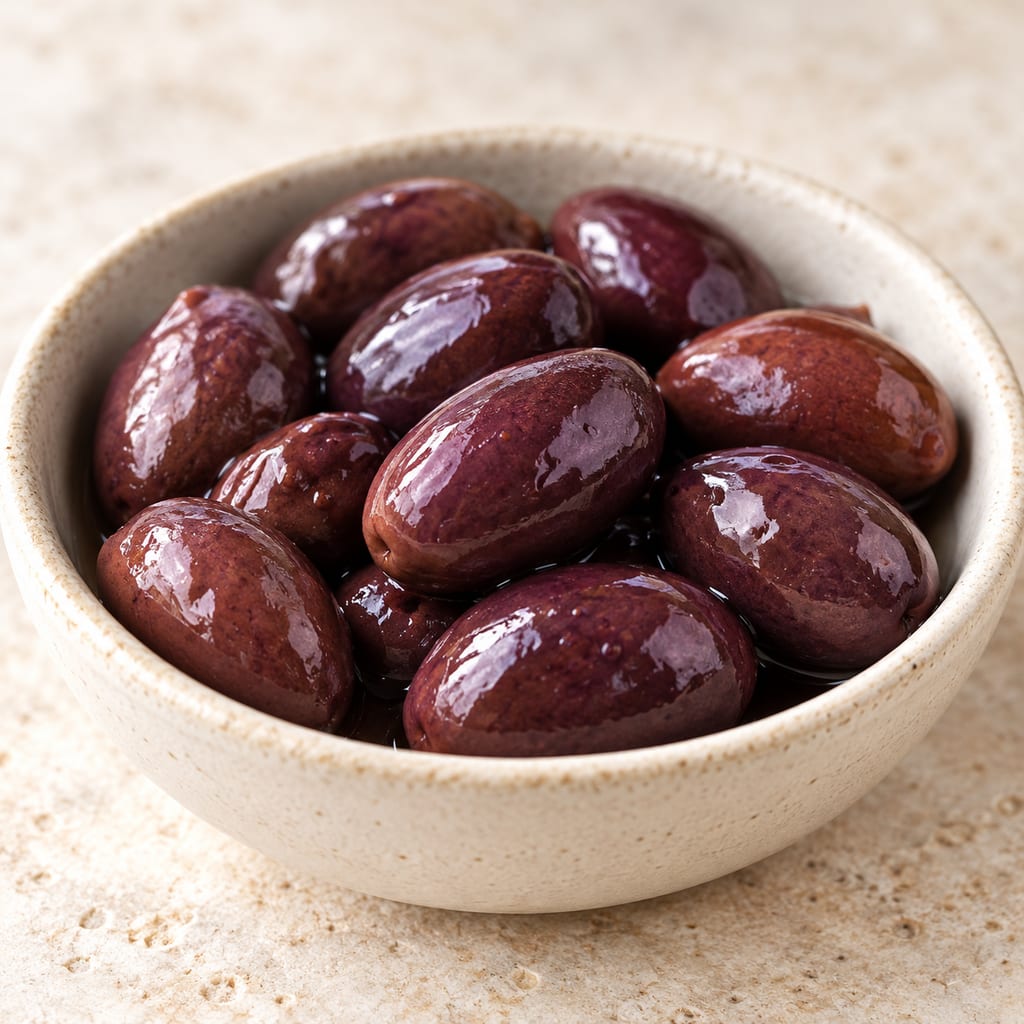
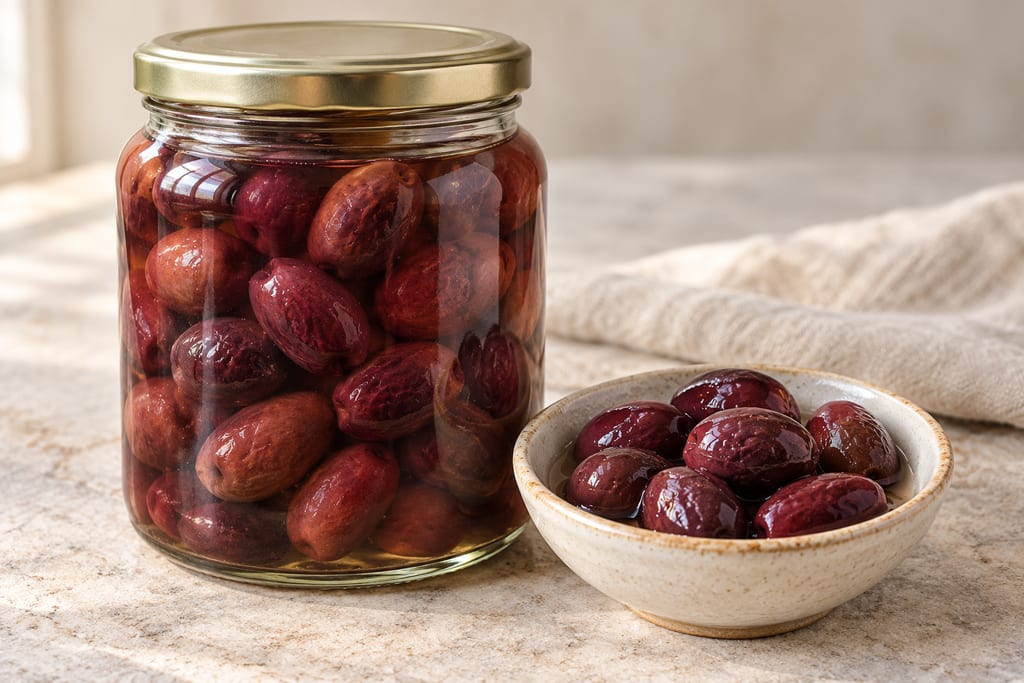
Elia Kalamatas is a Messinia table olive of the Kalamon variety, picked before full ripeness and fermented in brine for six to nine months; it is a PDO product, not a generic black olive.
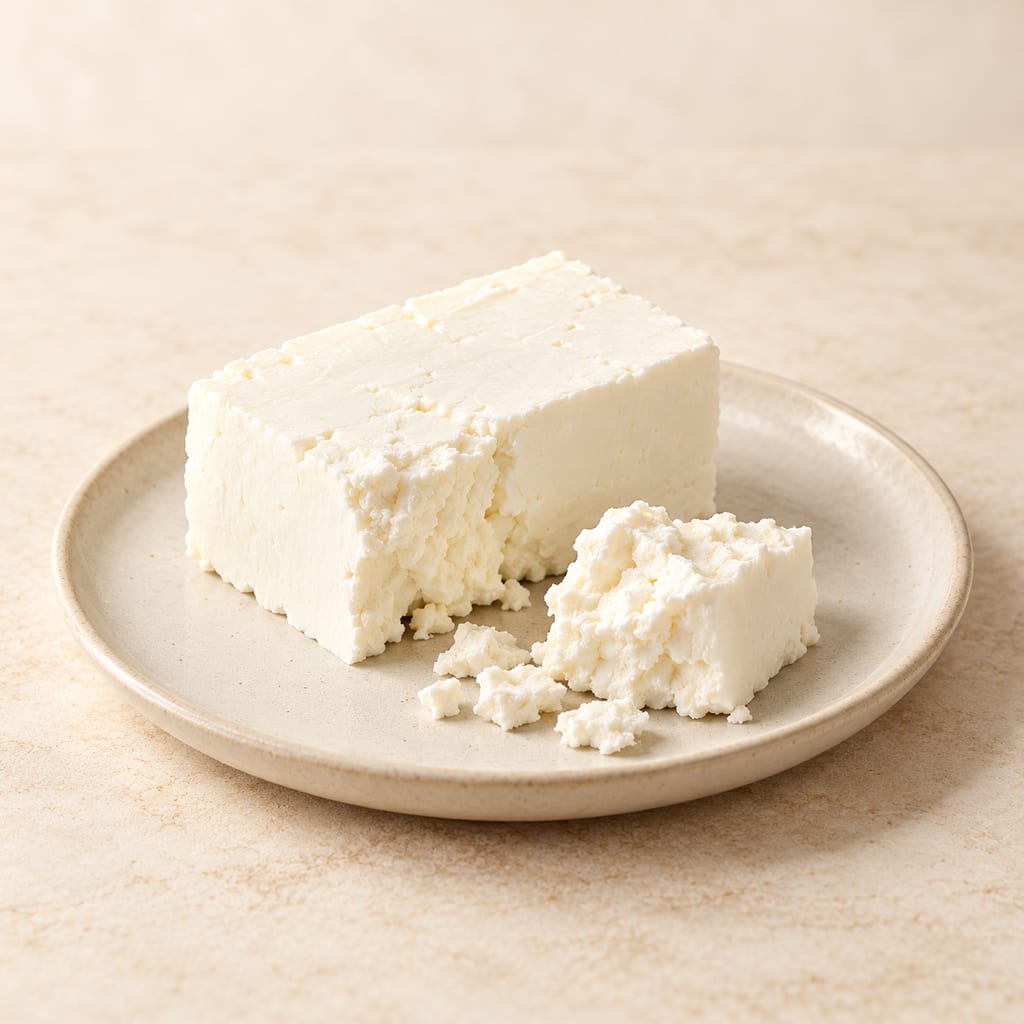
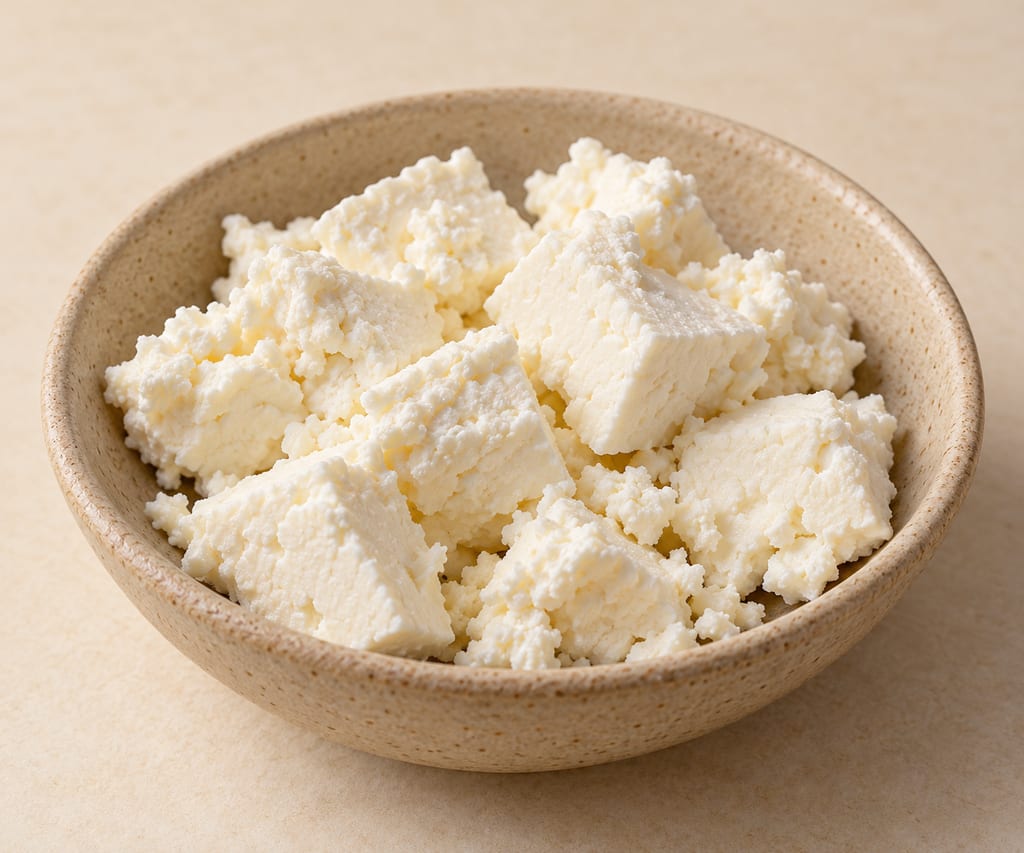
White cheese made with a lactic starter and rennet, drained without pressing, dry-salted and covered in brine. This home adaptation allows whole milk from different dairy animals.
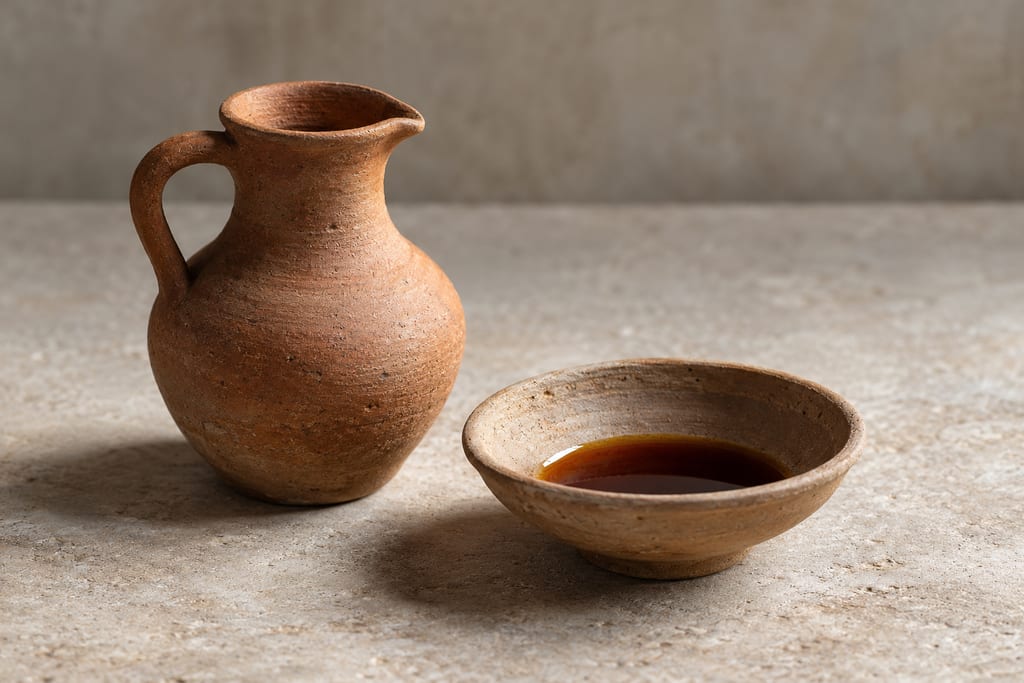
Garum, Greek garos and Latin liquamen, was the fish sauce of the ancient Mediterranean: fish and viscera salted and left in the sun, then drained off as a savoury liquid.
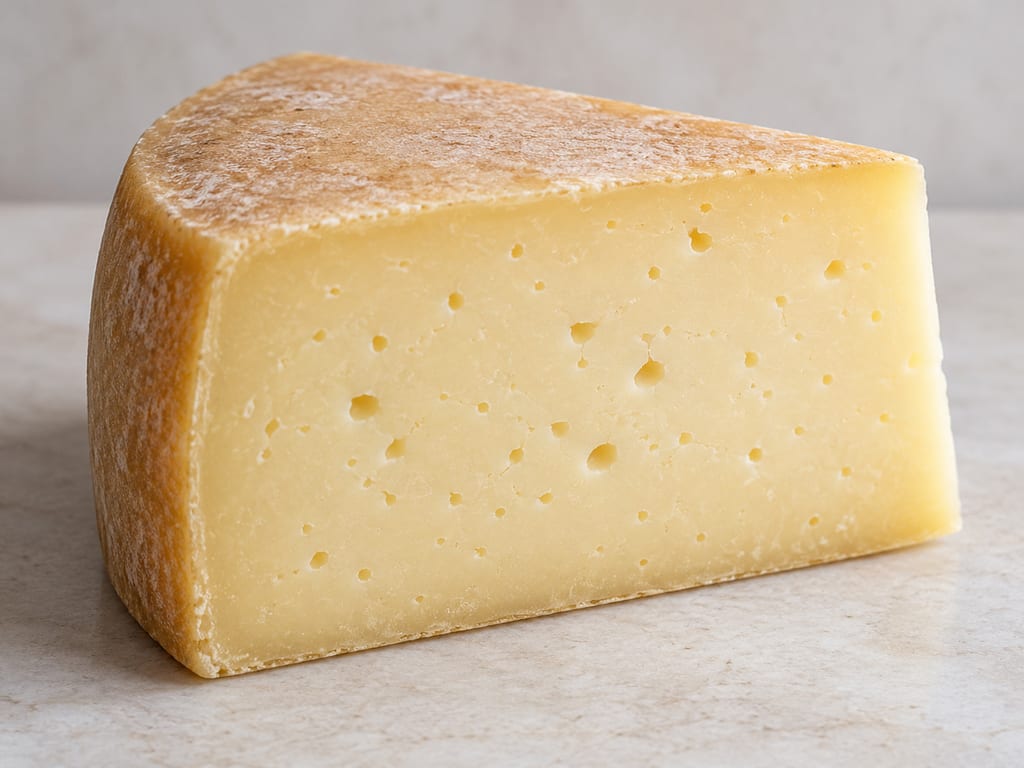
This Cypriot graviera is a hard sheep-milk cheese with a dry rind and round eyes. Its curd is heated, pressed and dry-salted before a long cool ripening.
Ripe olives go straight into brine with no lye and cure for months, mostly by yeasts. The home method here is the University of California two-stage brine.
Greek-style strained yogurt is cultured whole milk drained through cloth to remove whey. This modern Utah home method makes a thick yogurt from a gallon batch.
Amla murabba preserves whole Indian gooseberries in a heavy sugar syrup scented with cardamom and sharpened with pepper and black salt. This household method soaks the fruit before cooking.
Whole amla simmer in sugar syrup with saffron, black cardamom and pepper in this chef's version of the Indian fruit preserve. The fruit is soaked overnight before cooking.
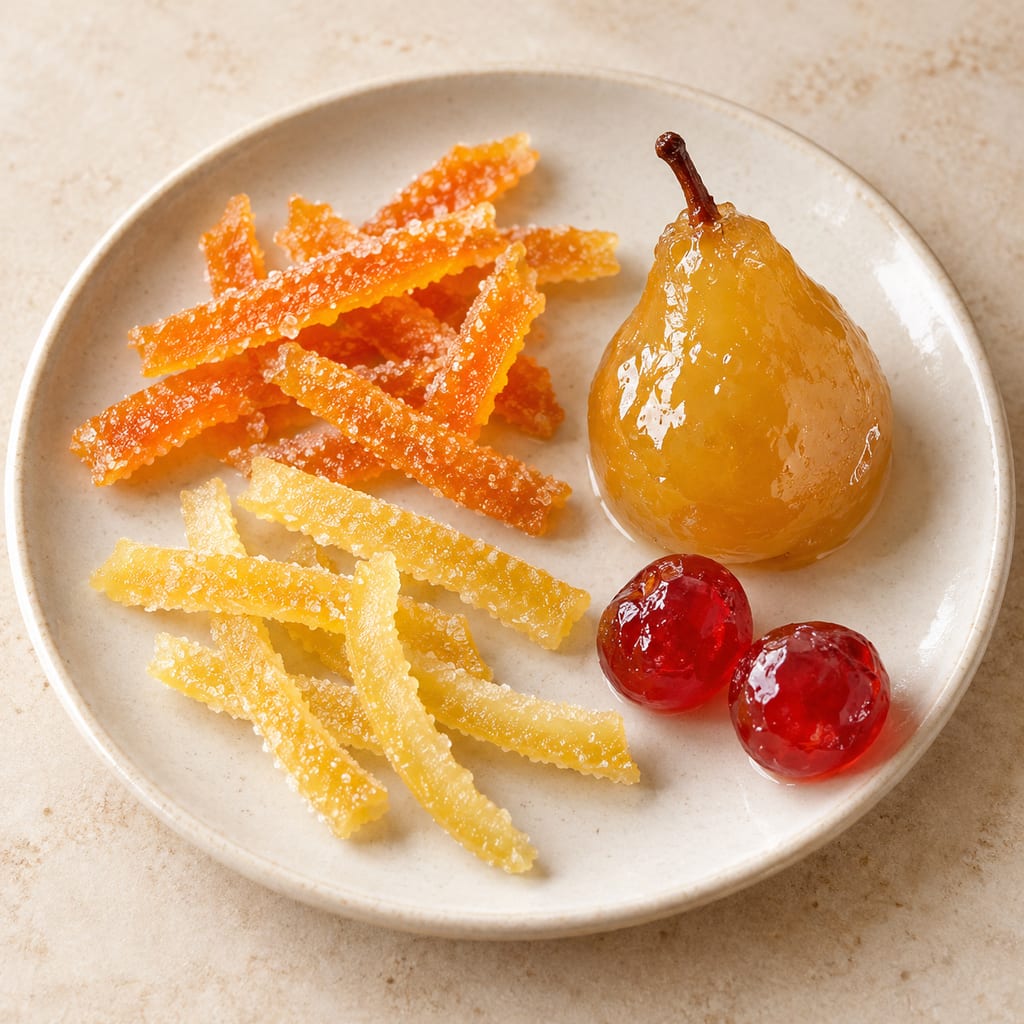
Candied fruit is fruit that has been repeatedly steeped in concentrated sugar syrup, which replaces part of its water with sugar, often followed by drying. It differs from fruit served in a thin syrup.
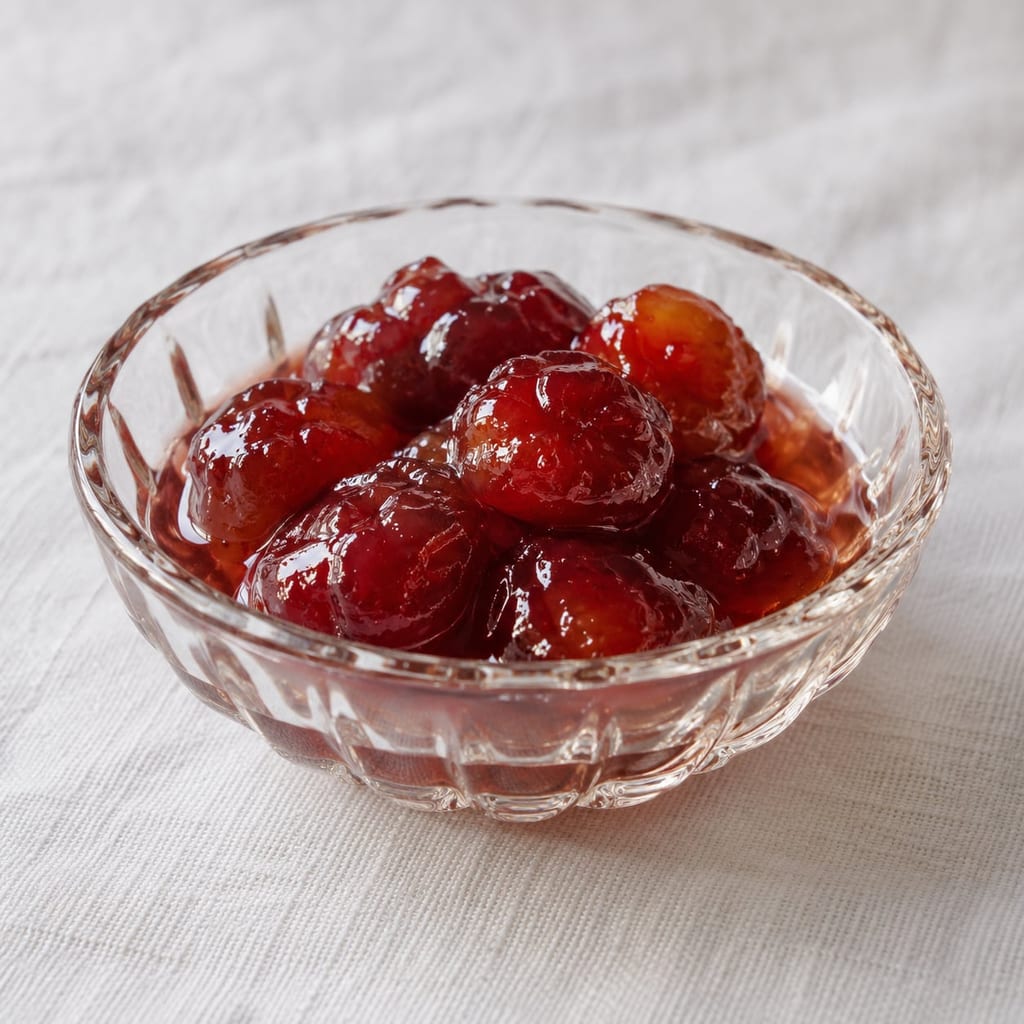
Cypriot cherry glyka made by layering firm pitted cherries with sugar, briefly boiling them, chilling overnight, and boiling again to concentrate the syrup. This version is refrigerated and has no shelf-stable canning process.