
Pasteurized whole milk
Full-fat milk given conventional pasteurization, selected in linked cultured-milk and cheese methods for its composition and treatment.
 FermenteaWhere food goes to change
Modern adaptation
Feta-style cheese
White cheese made with a lactic starter and rennet, drained without pressing, dry-salted and covered in brine. This home adaptation allows whole milk from different dairy animals.
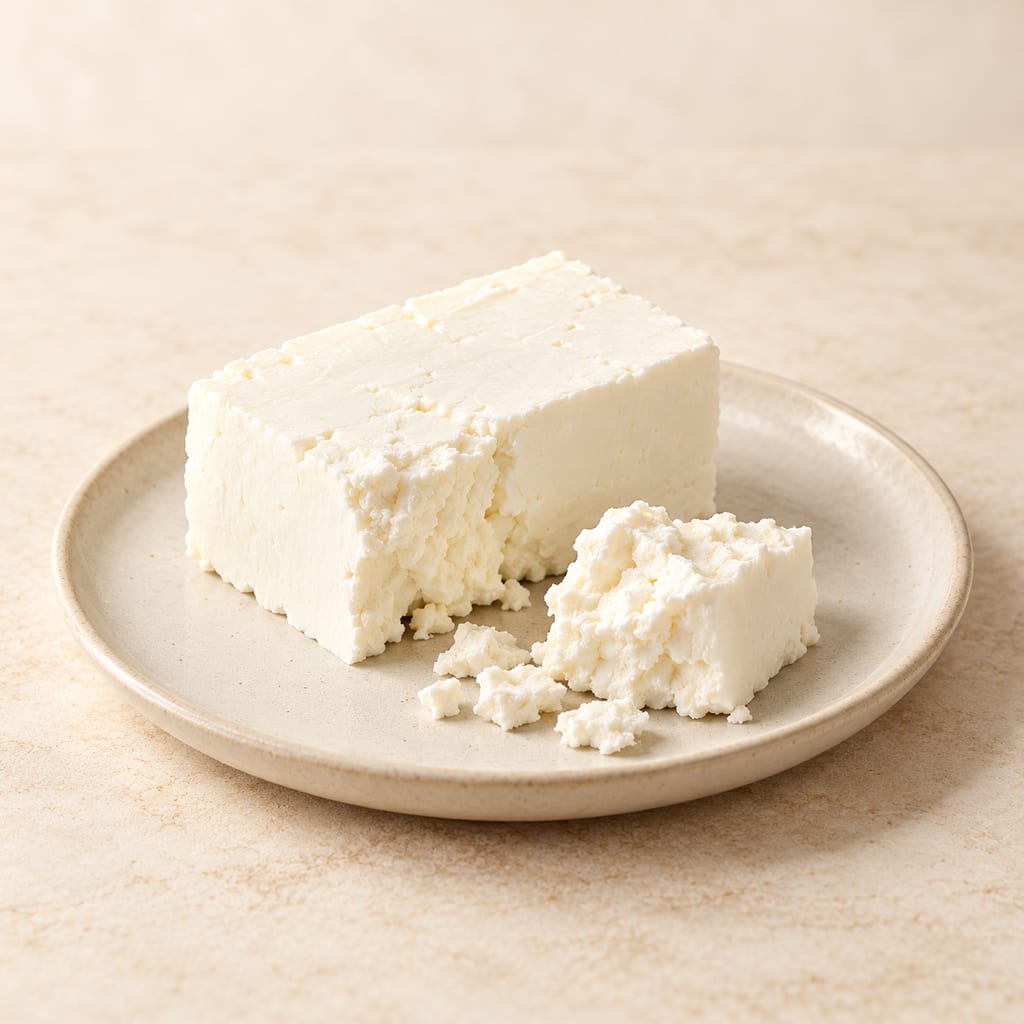
Feta-style brined cheese is a white, mildly acidic, salty cheese whose curd is drained without pressing, cut, salted and held under brine. This record follows a modern home formula built around a commercial Greek-feta starter and pasteurized whole milk. Its soft-firm pieces can be cut cleanly yet break into a lightly crumbly edge. The brine seasons the cheese and keeps the pieces submerged during maturation; the particular balance of tang, salt, moisture and firmness depends on the milk, culture, curd handling and time.
The title matters. In the European Union, Feta is a protected designation tied to Greece, its defined production area, local sheep and goat milk, and a specified method. A home cheese made with cow’s milk, or with milk from outside the protected area, may share a white brined style without being Feta PDO. The recipe therefore says “Feta-style”: it describes the family resemblance, not compliance with the protected name. This distinction also keeps a supplier’s flexible household formula separate from the regional product whose identity it evokes.
The European Commission describes Feta as part of a long Greek cheesemaking history, while distinguishing the modern name from the older record: “feta” is associated with the seventeenth century and with cutting cheese into slices. Ancient literary references to white or stored cheeses help situate dairy preservation in the Mediterranean, but they do not establish that a cheese made then had the same ingredients, cultures, or controlled brining sequence as today’s Feta. A careful history keeps continuity of food practice distinct from an unsupported claim of an unchanged recipe.
The geography of the protected cheese is part of its definition. The current European account connects its production to Greek pastoral conditions and to milk from native sheep and goats; the legal record specifies eligible regions rather than treating every part of Greece as interchangeable. The European Court’s case record documents the debates and legal steps that led to protected status, including the defined production area. Registration in 2002 made the name a regulated designation in the EU. These legal boundaries protect a regional product; they do not imply that other countries lack white cheeses ripened in brine.
Outside that designation, feta-style cheeses have developed in markets where cow’s milk is common and where home cheesemakers use commercial cultures and small-batch equipment. A 1997 EU legal opinion noted that feta-style cheeses were made and consumed beyond the then-European Community, with sheep and goat milk used in some countries and cow’s milk preferred in the United States and New Zealand. That account records the international spread and naming dispute of its period, not a complete current census. The present recipe belongs to that modern adaptation: a supplier formula made accessible with several dairy milks, not a map of traditional Greek practice.
Milk is a water-based mixture of fat droplets, lactose, proteins and minerals. Cheesemaking concentrates much of the casein protein and fat into a curd while whey carries away a large share of the water, lactose and soluble material. The starter culture begins the biological part of this recipe: its lactic-acid bacteria use lactose and produce lactic acid. Acidification changes the milk’s chemistry and helps create the flavour and conditions in which the curd develops. The supplier identifies its commercial culture as containing Lactobacillus bulgaricus, Lactococcus lactis subsp. lactis and Streptococcus thermophilus; that description applies to this product, not to all Feta or Feta-style cheeses.
Rennet supplies a different action. Its milk-coagulating enzyme acts on casein so the proteins form a network that traps fat and water. In this formula, culture is allowed to work before rennet is added. The two-hour culture stage and the later set are not the same operation: one is driven by bacterial acid production, while the other is enzymatic coagulation. General extension guidance describes the curd as a gel that is cut and drained to separate it from whey. A study of pilot-scale Feta likewise treats acidifying starter bacteria, coagulation, cutting, draining, salting and brining as related but distinct steps.
That distinction explains why a recipe cannot be reconstructed from a list of ingredients alone. Starter identity and dose shape the pace and flavour of acidification; rennet amount and setting conditions affect how firmly the protein gel forms. Cutting determines how much whey can escape from the curd surface. Draining without pressure leaves a different moisture balance from pressing. Salt then influences flavour and the environment in which the cheese matures. These are connected controls, but none is a substitute for measuring the process when a validated endpoint is required.
The method begins by warming pasteurized milk to 93–95°F (34–35°C), with optional calcium chloride dissolved separately and added at that point. Temperature affects culture activity and the milk’s behavior during coagulation, but the cited supplier range is specific to its formula. Calcium chloride is described as optional; it is not a replacement for starter or rennet. The culture is sprinkled across the surface, allowed to hydrate briefly, and stirred gently up and down. This disperses the culture while avoiding the vigorous whisking that the instructions caution against.
During the covered two-hour rest, the starter has time to acidify the milk as it cools slowly. Rennet is diluted in water and stirred in gently afterward, then the milk is left covered to form a gel. The source gives a one-hour set and says to allow at least forty minutes before checking; it recommends another short covered wait if the curd does not separate cleanly at the pot wall. This is a source-specific check for the set, not a measure of acidity or food safety. The recipe preserves the supplier’s temperature wording and uncertainty rather than inventing a pH endpoint.
Once set, the curd is cut into large squares and rested before being gently stirred. Cutting opens the gel and exposes more surface from which whey can drain. A short rest allows the cut surfaces to firm before further handling. The instructions then call for gentle stirring for ten to twenty minutes, with a return to the earlier warm range if necessary. The curd is transferred to a draining mold and left unpressed overnight. In traditional Feta production, the European Commission also describes drainage without pressure, followed by cutting and surface salting; the resemblance in this stage does not make the home batch a protected-origin cheese.
The overnight drain removes whey while the unweighted curd retains its own shape and moisture. In the following days, the home formula asks the maker to cut the drained cheese into pieces, weigh it, salt its surface and turn it as moisture collects. The weight-based salt instruction is more precise than a scoop because the curd yield can vary. The source gives a broad 5–8% range of cheese weight, and does not provide one universal salt amount for every batch. This page retains that source range rather than converting it into a fabricated fixed quantity.
Salt is applied in two ways here. First, it is rubbed over the drained pieces at 5–8% of their actual weight, with the cheese held covered and turned while damp patches are salted. Later, a brine is made at 80 g salt per litre of water, enough to keep the cheese fully submerged. Surface salt draws moisture from the curd and seasons it; dissolved salt continues to diffuse through the pieces in brine. The calcium chloride listed for brine is optional and has its own stated ratio. The formula does not provide a brine volume because the vessel and cheese dimensions determine how much liquid is needed.
Brine is not merely a storage liquid. It shapes salt uptake, moisture exchange and the texture of the cheese while it matures. Research on white-brined cheeses describes lactic-acid bacteria as an important part of the microbial community and documents how salt, acidity and ripening conditions influence the organisms present. Those findings explain why a brined cheese changes over time, but they do not validate this exact home formula or its unknown endpoint. A supplier’s 8% brine instruction and a research trial’s 7% brine are formulation-specific values; the numbers should not be averaged into a new recipe.
The supplier describes both a few-day option and three to four weeks of brining, but gives no controlled brine-ripening temperature, measured acidity target or validated storage life for this adaptation. The record therefore makes no claim that elapsed time establishes safety or that this is a shelf-stable preservation method. It specifies pasteurized milk and careful sanitation because fresh curd can be contaminated during handling. New Mexico State University extension guidance discusses pathogens associated with fresh cheese and the importance of clean hands and equipment. If a maker needs a validated preservation process, this flexible home formula does not provide one.
The household source permits cow’s, sheep’s or goat’s dairy milk and recommends whole milk for best results. That flexibility creates a useful home cheese but also produces real differences: milk composition varies by animal and by product, and the curd’s fat, protein and moisture balance influence body and flavour. The European Commission’s protected product uses milk from native Greek sheep and goats and has a required minimum fat content; cow’s milk is not part of that protected identity. A cow’s-milk batch can be feta-style, but it should not be represented as the same regional cheese.
Starter cultures also vary. This recipe names one commercial culture and its own dosing chart. In commercial and scientific accounts of Feta, other lactic acid bacteria may be present, and the microbial community can shift through ripening and storage. The pilot-scale study of functional strains reports trial-specific cultures, processing conditions and measured results; it is evidence about those trials, not a recommendation to substitute its cultures into this home method. A culture is chosen for a particular milk, temperature profile and desired acidification, so its dose is not interchangeable with an unnamed starter.
Regional and commercial cheeses called Feta, feta-style or white brined cheese should not be collapsed into one universal formula. The protected Greek method has a defined region, permitted milk, drainage, salting and ripening rules. Other white brined cheeses, including versions made from cow’s milk or under different national standards, have their own local histories and methods. This entry records one supplier’s modern household adaptation. It does not attempt to absorb Bulgarian sirene or other separately named cheeses into the same recipe.
After brining, feta-style cheese can be cut or crumbled over salads, folded into savory pastries, or served alongside vegetables and bread. Its salt and acidity bring contrast to olive oil, ripe tomatoes, cucumbers, herbs and grains. A firmer piece may hold its shape in a warm dish, while a softer or more mature piece can crumble into sauces and fillings. Those uses are broad culinary practice; they do not imply that every household batch has the composition or storage stability of a commercial cheese.
A clean set and an evenly drained shape are signs that the milk coagulated and the whey escaped in a consistent way, but appearance alone cannot establish safety. A curd that remains too soft may reflect its moisture, handling, coagulation or the milk used; it is not a reliable signal to extend an arbitrary warm rest. Excess liquid on the surface during dry salting is expected by the source’s turning instructions, while a brine that does not cover every piece fails the method’s stated submersion condition. The formula does not provide a pH test, and neither a pleasant aroma nor a salty taste can supply that missing measurement.
This is a small-batch cheese style with a specified milk volume, culture and rennet sequence, a curd-handling path, and surface salting and brining. Its final maturation conditions are incomplete. Its relation to Feta is set out in the historical and scientific accounts of brined cheeses, while cultural identity, process description and food-safety validation are kept separate.
Feta is a Greek white cheese shaped by sheep and goat milk, unpressed drainage, salting and brine ripening. Its name, associated with cutting the cheese into pieces, dates to the seventeenth century. Modern protected Feta has a defined Greek production area and a longer ripening process. This household version borrows the white-brined style while permitting other dairy milks; it does not reproduce the protected product.
Yield 800 g · Scaling: source batch only
Fresh cheese can carry Salmonella, Escherichia coli, Listeria monocytogenes and Staphylococcus aureus.
Hazard sourceUse pasteurized milk, wash hands, clean and sanitize food-contact equipment, and handle and cool curds carefully.
Control sourcePasteurized milk and clean handling are essential for this unpressed cheese: hands, cloths and molds can introduce pathogens after the milk is heated.
Bacillus Bulgaricus Greek Feta starter — Supplier describes Lactobacillus bulgaricus, Lactococcus lactis subsp. lactis and Streptococcus thermophilus; their lactic acid develops during culturing and drainage.
No controlled brine-ripening environment is specified for this household method.
Association of Feta, the cheese style informing this adaptation; this formula does not establish protected-origin compliance.
The supplier does not identify where this particular household formula was developed.
Full-fat milk given conventional pasteurization, selected in linked cultured-milk and cheese methods for its composition and treatment.
A liquid milk-clotting enzyme preparation at the strength assumed by its cheese recipe. Enzyme source and product activity must be identified separately.
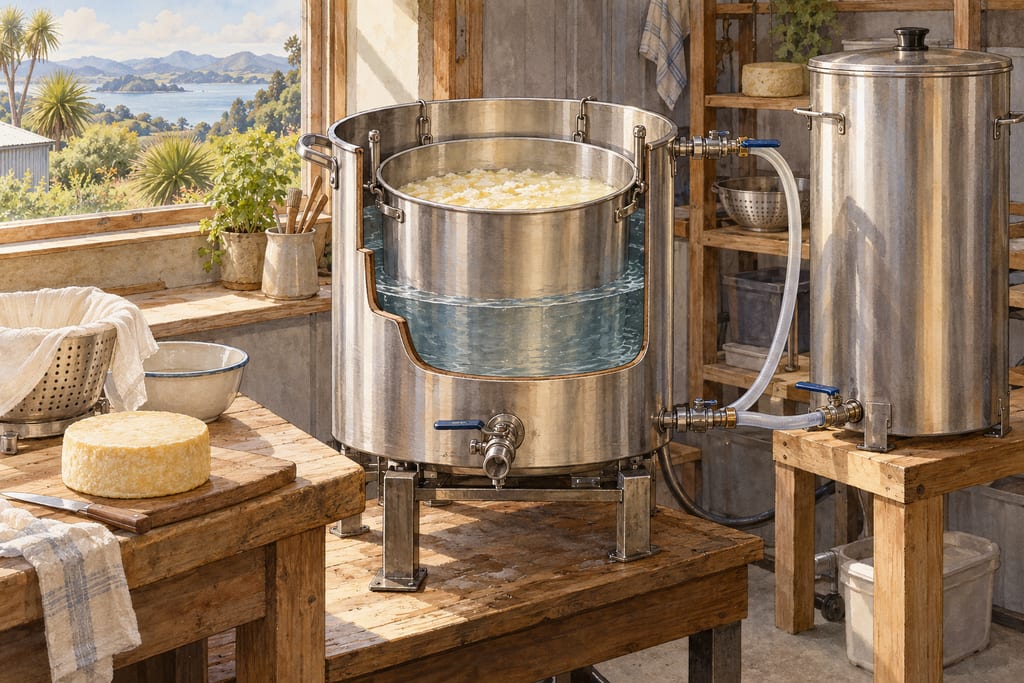
New Zealand home cheesemaker Tony Hamblyn's custom brewery, in which a 50-litre cheese pot hangs in a 70-litre mash tun of circulated hot water; later one tank served purely as hot water.

A separate inner pot holds milk or curd while a larger vessel holds hot water. In a documented cheesemaking setup, the inner pot’s handles rest on the outer vessel’s rim; this differs from a rack or trivet bearing a pot from below.
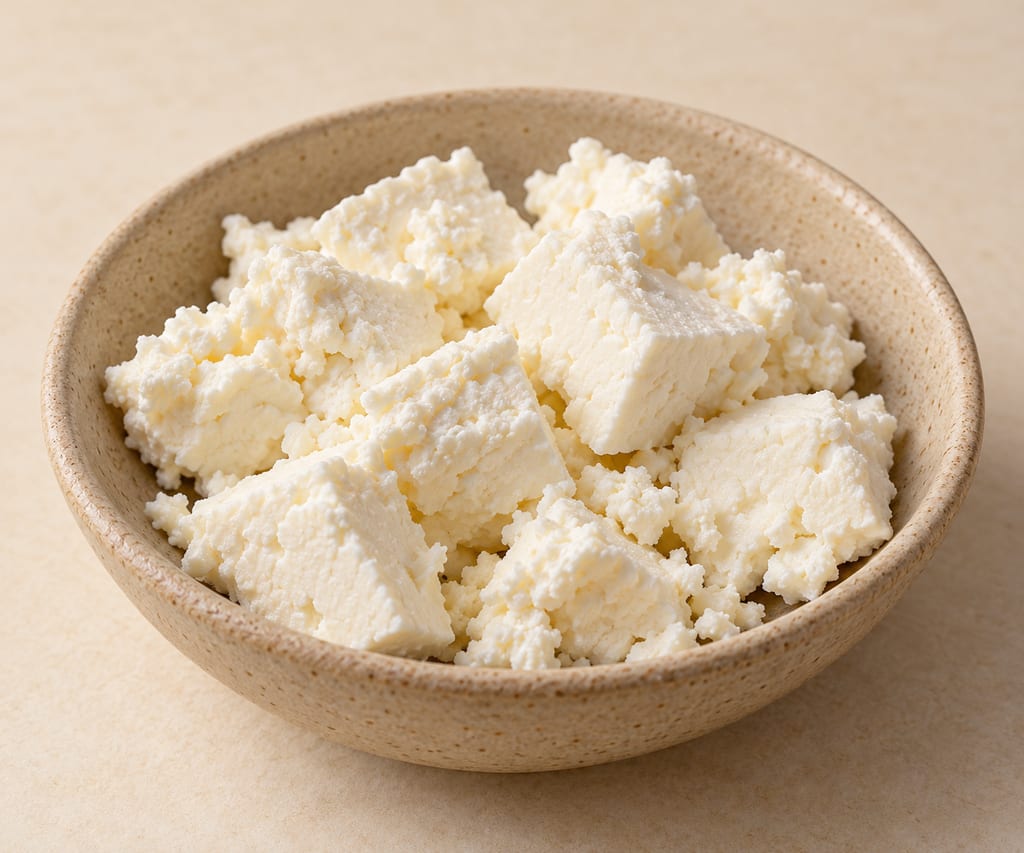
Whole milk set with a mesophilic starter and rennet makes a fresh, crumbly feta-style cheese. Its curds pass through hot salted whey before molding.
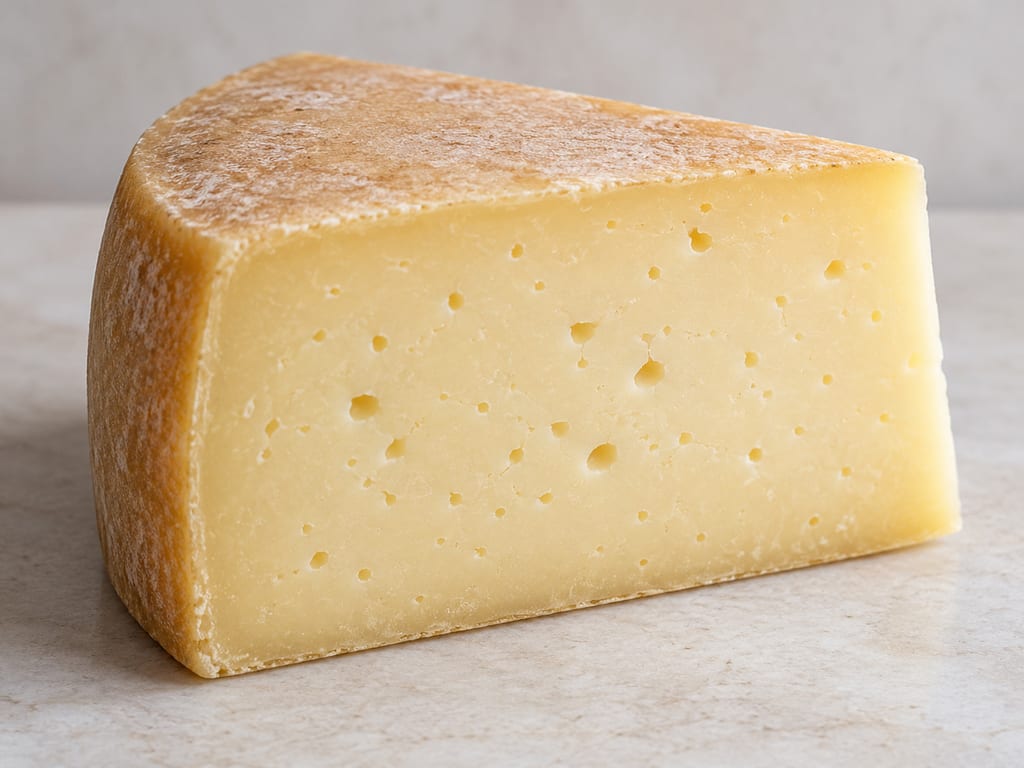
This Cypriot graviera is a hard sheep-milk cheese with a dry rind and round eyes. Its curd is heated, pressed and dry-salted before a long cool ripening.
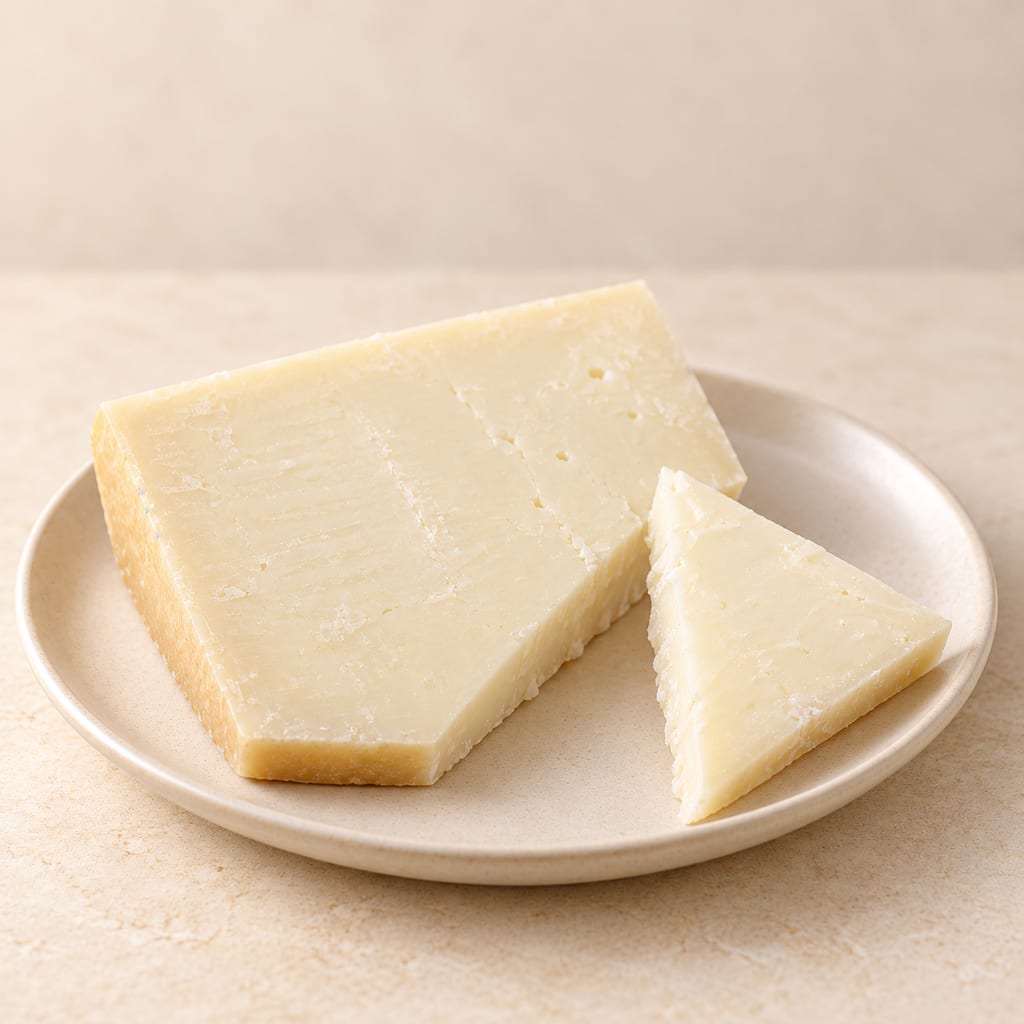
Kefalotyri is a hard sheep-and-goat-milk cheese made in Cyprus as well as Greece. This Cypriot method cooks and presses the curd, then brines, coats and matures the cheese.

A Greek spread of feta cheese and hot chilli, sometimes with roasted peppers, yogurt or oregano, eaten with warm pita as part of a meze.
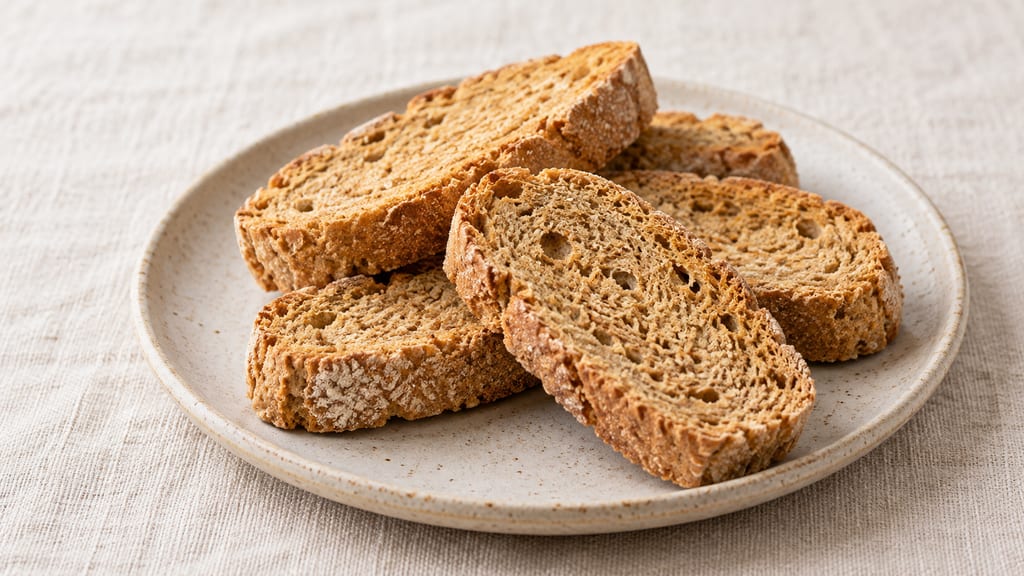
Cretan paximadi is a twice-baked rusk. This barley-wheat version is raised with yeast, baked as a loaf, sliced, and dried slowly until it keeps.
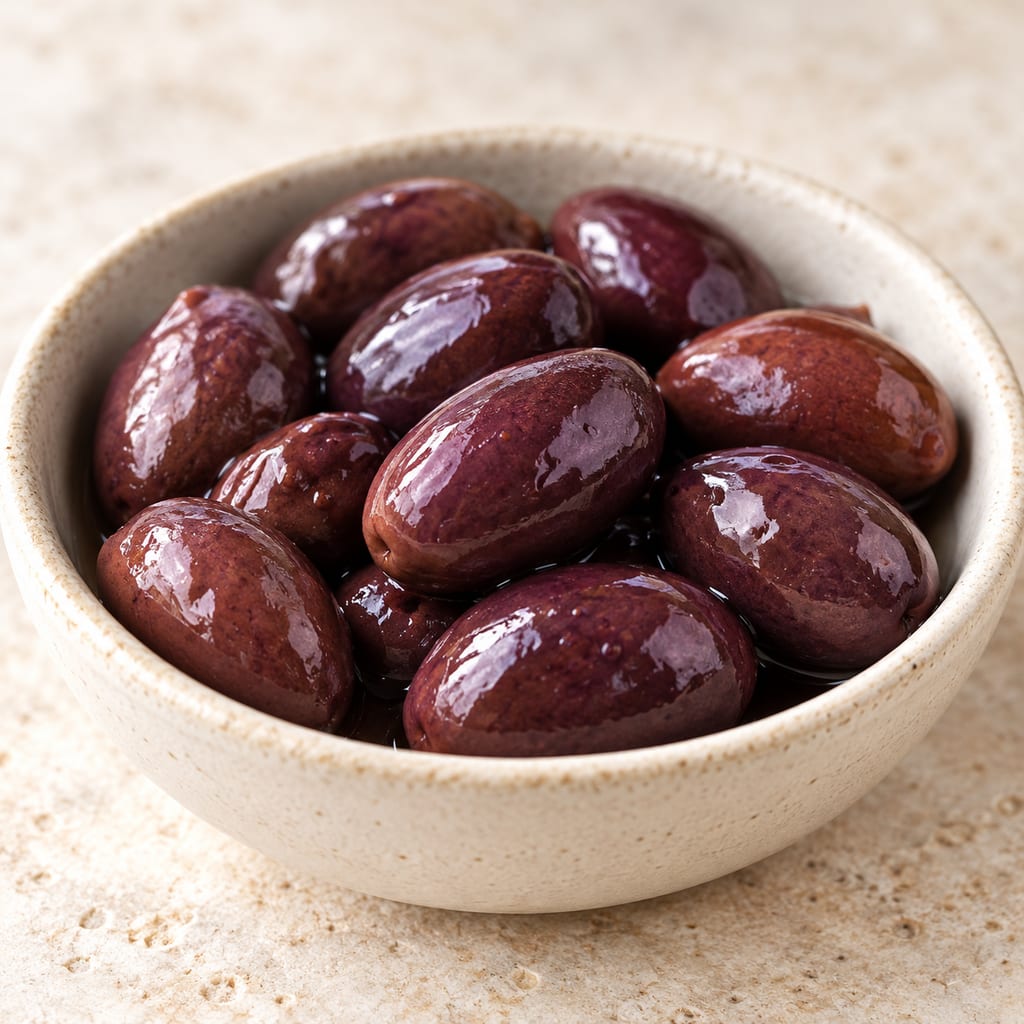
Elia Kalamatas is a Messinia table olive of the Kalamon variety, picked before full ripeness and fermented in brine for six to nine months; it is a PDO product, not a generic black olive.
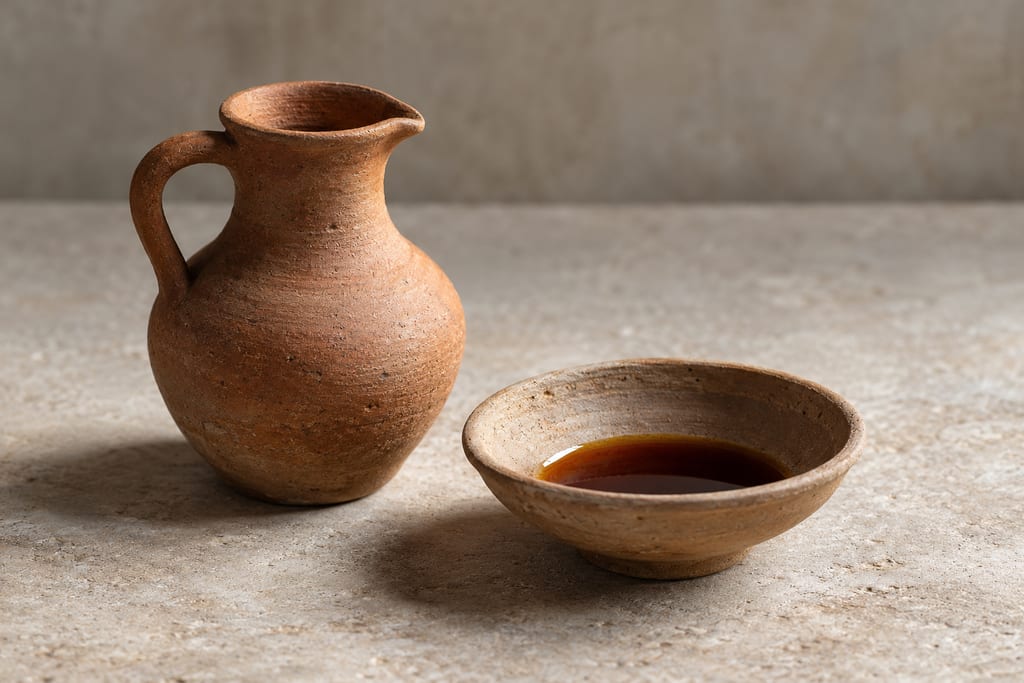
Garum, Greek garos and Latin liquamen, was the fish sauce of the ancient Mediterranean: fish and viscera salted and left in the sun, then drained off as a savoury liquid.
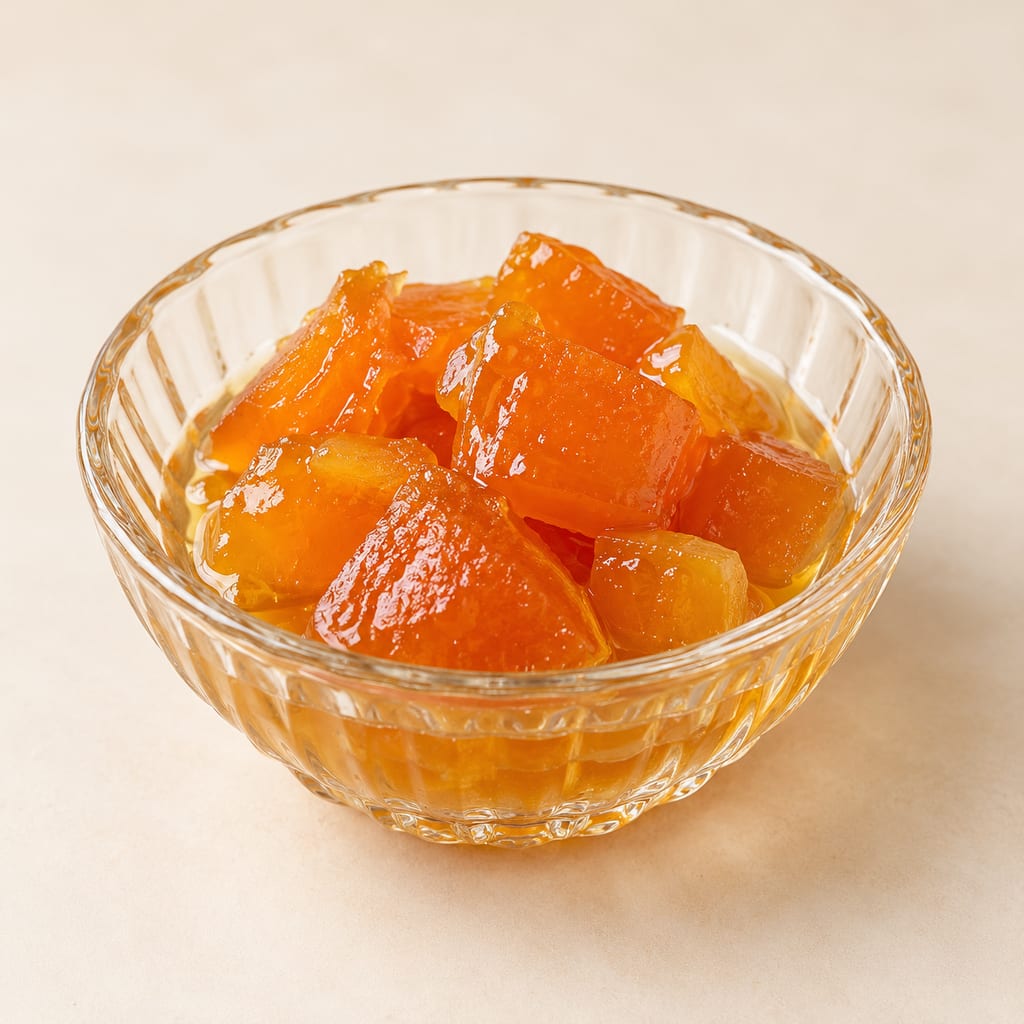
Greek pumpkin spoon sweet, with Cypriot context: Freeze for winter; small fresh portion refrigerated up to 48 hours.
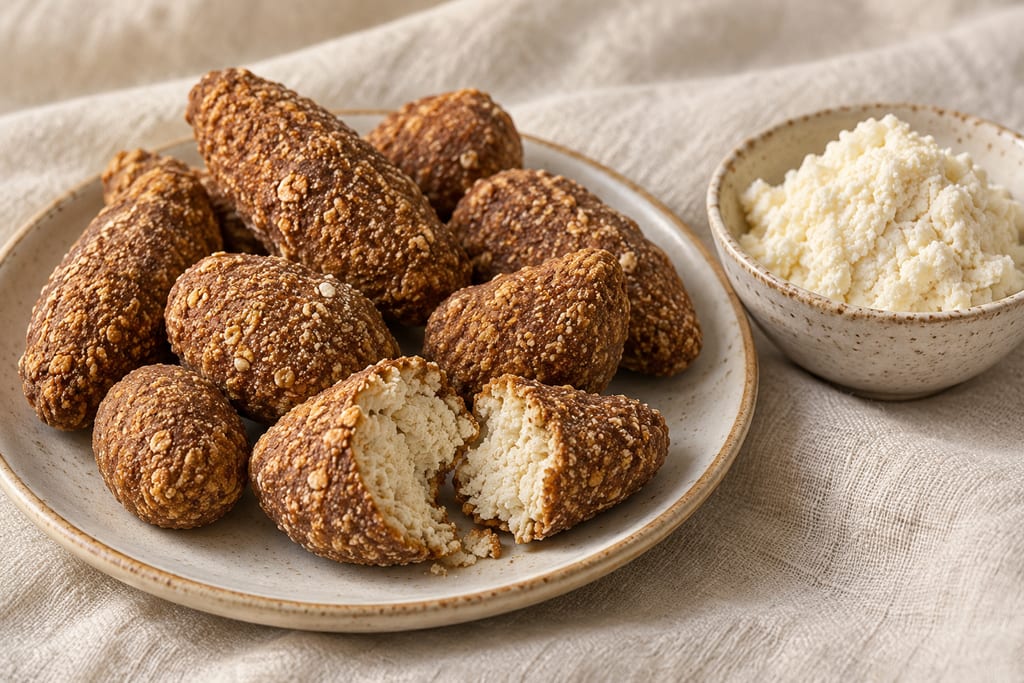
A two-stage Altai dairy preparation: sour chegen is heated into soft aarchi, then portions are drained, pressed and traditionally smoked into firm kurut.

A washed-curd cheese with propionic bacteria, warmed by hot water in two steps and then held in a warm room for weeks so the bacteria can form its holes.

Beyaz peynir is a Turkish white cheese matured in brine. Sheep milk, alone or mixed with other milks, gives a close-textured cheese cut into blocks and packed in cans.
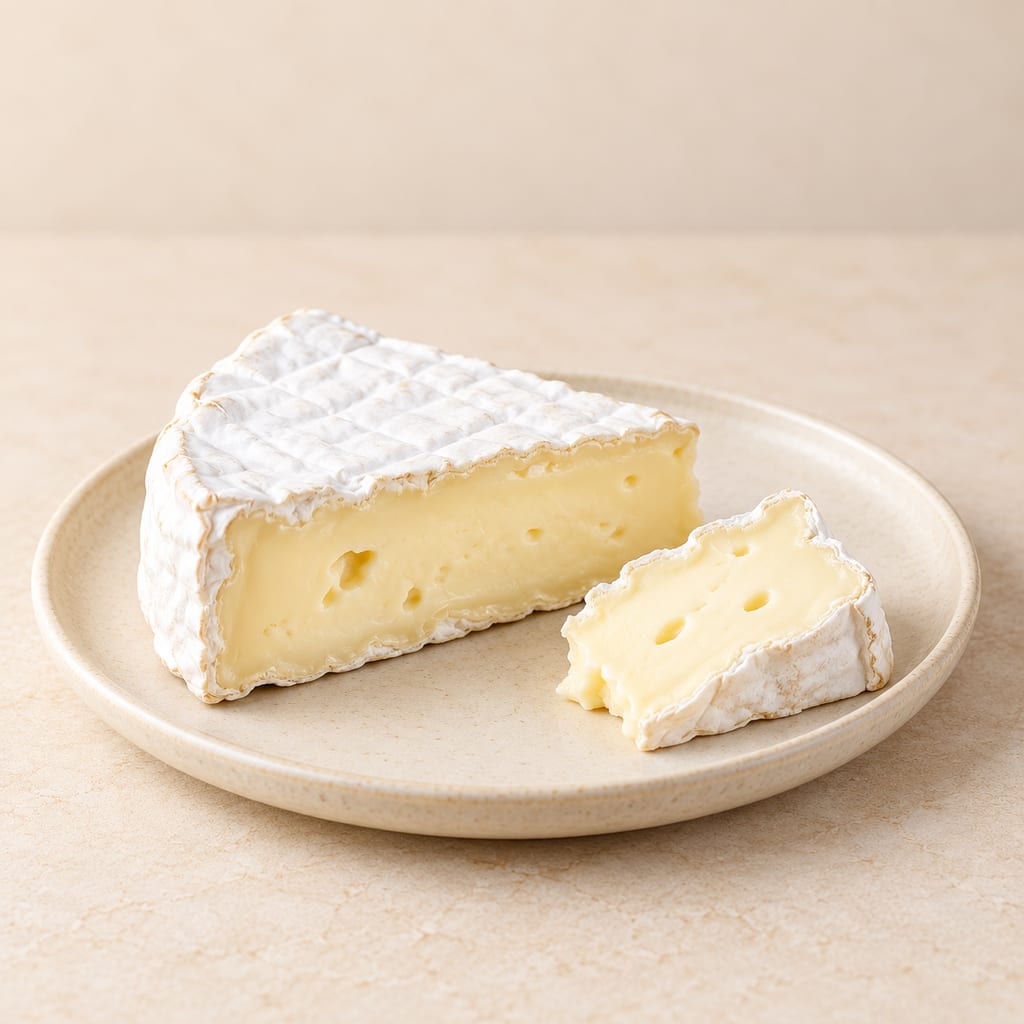
A cream-enriched Brie with a white bloomy rind and a softening center, made from pasteurized milk with lactic and surface cultures.
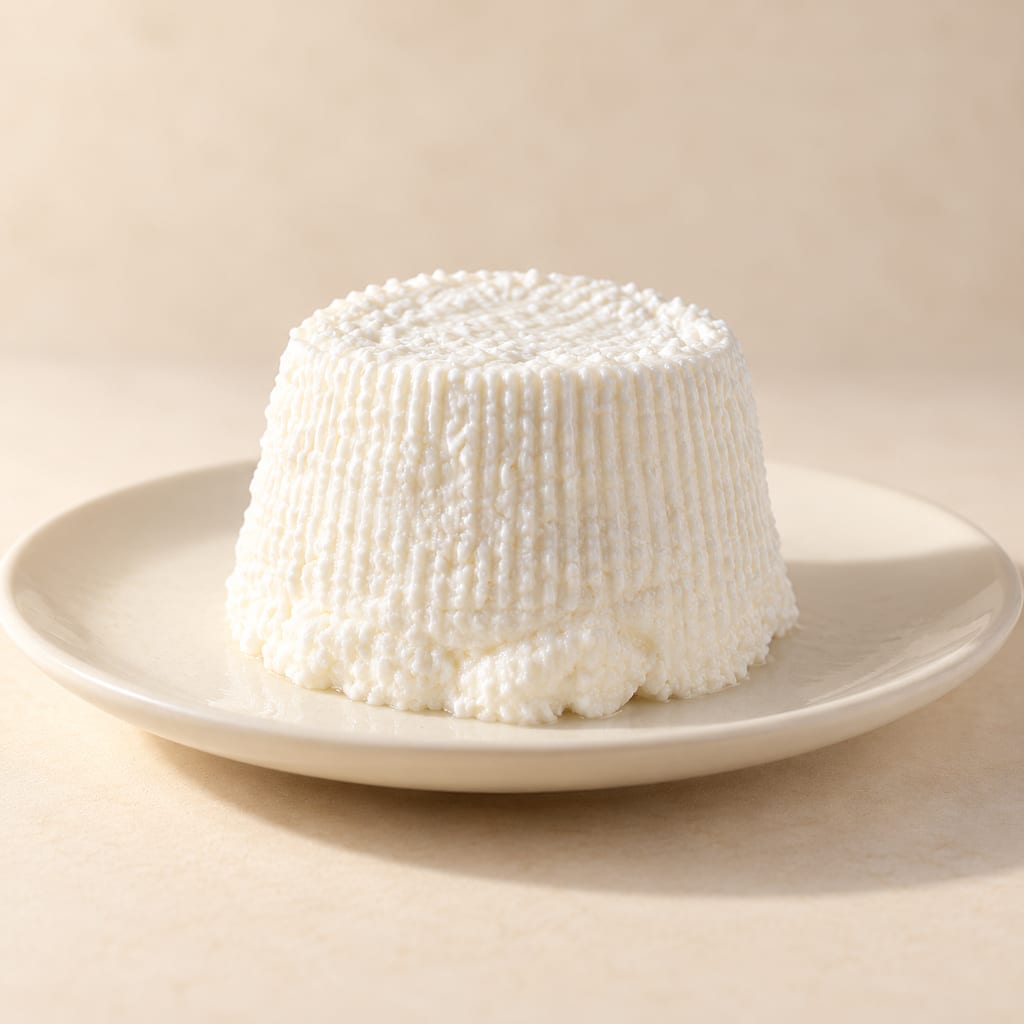
Corsican Brocciu is a whey cheese made by heating sheep's or goat's whey with whole milk and salt, then gently draining the flocculated curds. It is eaten fresh or salted and ripened as Brocciu passu.
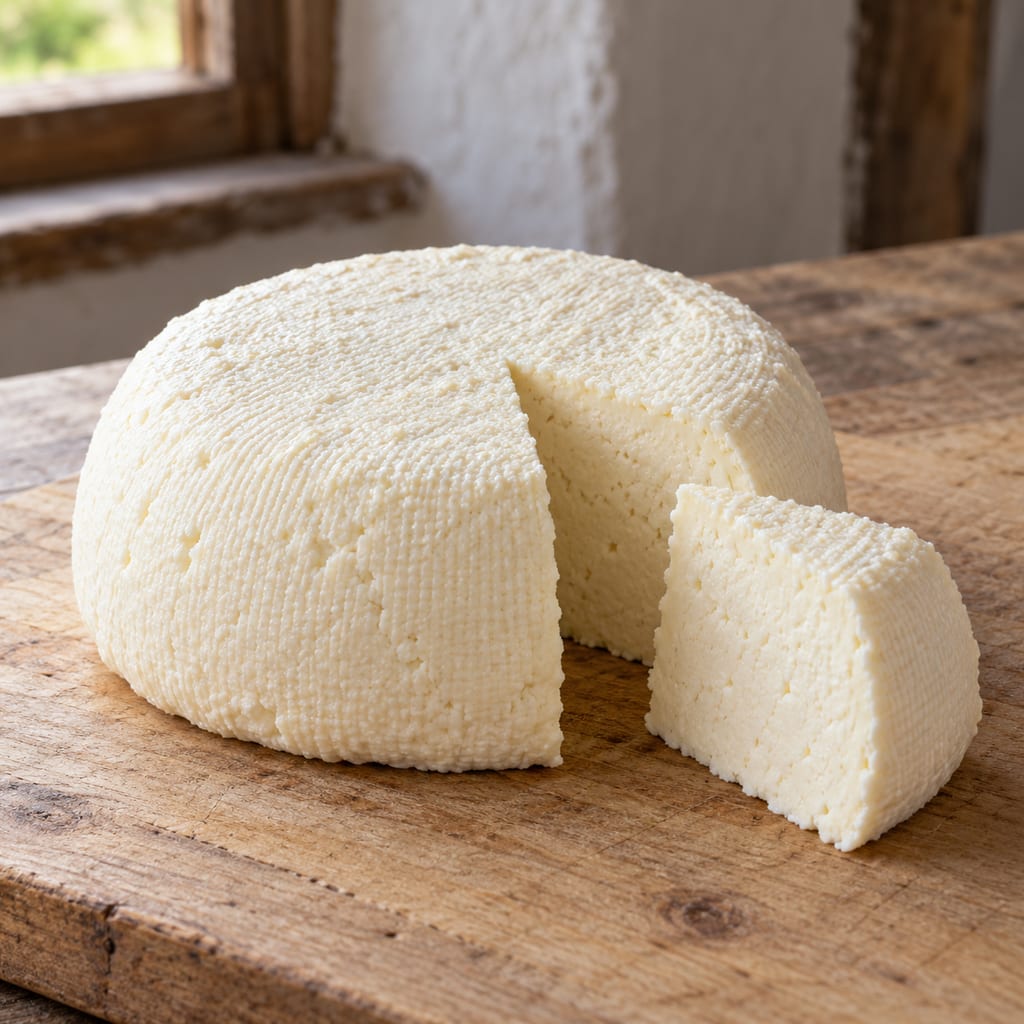
Budz is a traditional Hutsul rennet-set cheese made from sheep, cow or goat milk in the Ukrainian Carpathians, forming a fresh curd that can be eaten, smoked or processed into salted bryndza.
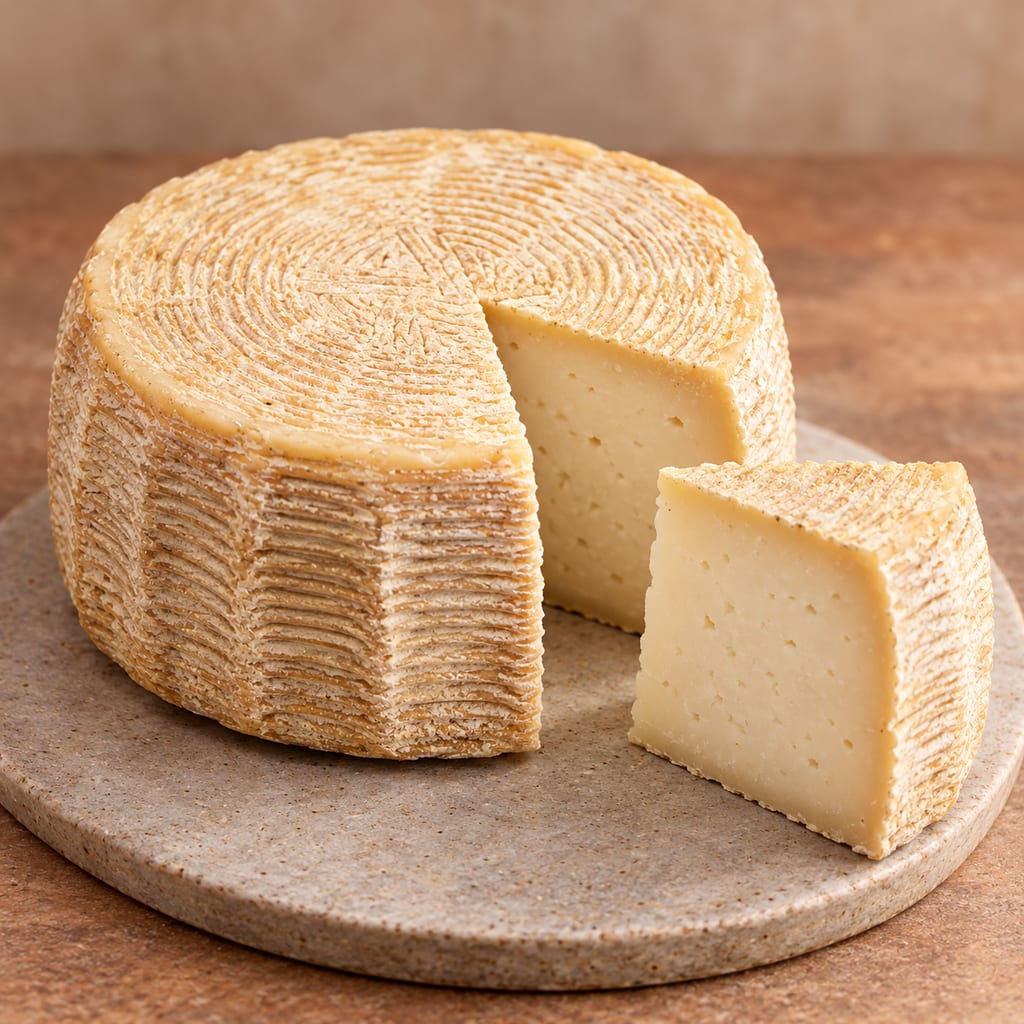
A scalded cheese moulded in baskets and re-cooked in its forms in hot whey, made alongside a ricotta from the same milk, then acidified, brined and aged for months.
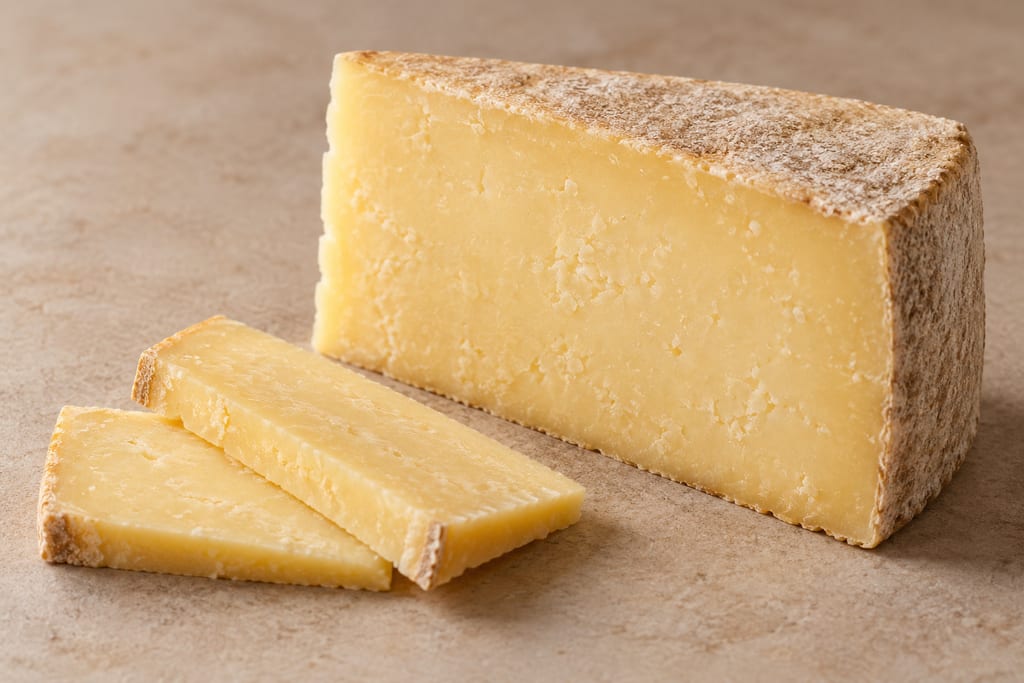
A pressed cheese whose curd is cooked slowly, then cheddared: kept warm in slabs that are turned and stacked for hours before milling, salting and pressing.

A gelling polysaccharide extracted from red seaweeds, sold as kanten strips or powder; it sets firm at a low concentration and stays solid until about 85 °C.

A Dominican table and seasoning condiment of sour orange juice, mixed with lime and salt and bottled raw; garlic, oregano or a hot pepper may be added for meat or a spicier bottle.

Cicerbita alpina is an alpine perennial whose tender shoots and leaves have been eaten raw or cooked. Sámi milk preparations and modern Carnian dishes are distinct uses, with serious identification and preservation limits.

Japanese skipjack tuna cooked, then repeatedly smoked and dried over a wood fire by the hand-fired tebiyama method into a hard block for shaving into dashi: the first stage of katsuobushi.

A Swedish-style spirit vinegar made by fermenting neutral alcohol with live vinegar bacteria, with a separate guide to commercial ättika strengths.

A yeast-raised wheat ring shaped from a firm dough, briefly boiled and baked. This source-batch formula gives a gently malted crust and a chewy crumb.

A warm dip of garlic, anchovy and olive oil, often enriched with butter, that Piedmont serves over a flame with raw and cooked vegetables and bread.

Bechamel is a white sauce of milk thickened with a butter and flour roux, one of the French mother sauces, and the base from which Mornay and other cheese and cream sauces are made.
No community contributions have been published for this entry yet.
Sign in to contribute. Published comments and photos are free to read.
Bacillus BulgaricusProcess
Greek Feta Cheese Making InstructionsPasteurized-milk branch, 4 L yield, starter and rennet doses, curd steps, salt percentage, 8% brine and aging duration.
Cited in: A white cheese in the Feta family; Why the recipe warms, rests, cuts and drains; Salt, brine and the limits of a household method; Different milks, cultures and meanings of ‘Feta’; Serving the cheese and reading the result
Bacillus BulgaricusProcess
How Much Starter To UseStarter chart says 2 g for 4 L and applies to its starter products.
Cited in: How culture and rennet turn milk into curd
New Mexico State UniversitySafety
Making Homemade CheeseRevised February 2022. Fresh-cheese pathogens, equipment and food-contact hygiene, handwashing, curd cooling and handling; general guidance does not validate this specific recipe.
Cited in: How culture and rennet turn milk into curd; Why the recipe warms, rests, cuts and drains; Salt, brine and the limits of a household method; Serving the cheese and reading the result
European Commission, Agriculture and Rural DevelopmentHistory · Identity · Geography
Feta PDOGreek sheep/goat-milk identity, seventeenth-century name, unpressed drainage and distinct protected ripening process.
Cited in: A white cheese in the Feta family; A name, a place and a changing historical record; Why the recipe warms, rests, cuts and drains; Different milks, cultures and meanings of ‘Feta’; Serving the cheese and reading the result
Bacillus BulgaricusCulture identity
Greek Feta StarterCurrent commercial lactic-culture composition.
Cited in: How culture and rennet turn milk into curd
Frontiers in MicrobiologyScience · Process
Application of multi-functional lactic acid bacteria strains in a pilot scale feta cheese productionPilot-scale trials describe lactic acid bacteria as starter and adjunct cultures and report formulation-specific acidification, salting, brining and ripening conditions; trial values are not substituted into this household recipe.
Cited in: How culture and rennet turn milk into curd; Why the recipe warms, rests, cuts and drains; Salt, brine and the limits of a household method; Different milks, cultures and meanings of ‘Feta’
Frontiers in MicrobiologyScience · Safety · Process
Occurrence of Yeasts in White-Brined Cheeses: Methodologies for Identification, Spoilage Potential and Good Manufacturing PracticesReview of yeast diversity, spoilage potential and good manufacturing practices in white-brined cheeses, including Feta; supports discussion of microbial change and handling limits without validating this recipe.
Cited in: Salt, brine and the limits of a household method; Different milks, cultures and meanings of ‘Feta’; Serving the cheese and reading the result
Court of Justice of the European UnionHistory · Geography
Commission v Denmark, Case C-465/02Court record discusses the defined Greek production area and the legal history of Feta’s protected designation.
Cited in: A white cheese in the Feta family; A name, a place and a changing historical record; Different milks, cultures and meanings of ‘Feta’
Court of Justice of the European UnionHistory · Geography
Opinion of Advocate General La Pergola in Case C-317/95Historical legal account describes feta-style production and consumption outside the European Community and earlier Greek rules; used only as a dated record of the naming context.
Cited in: A name, a place and a changing historical record
Department for Environment, Food & Rural AffairsIdentity · Geography
Φέτα / FetaConfirms Feta is registered as a Protected Designation of Origin with Greece as country of origin and records the UK scheme registration date.
Cited in: A name, a place and a changing historical record