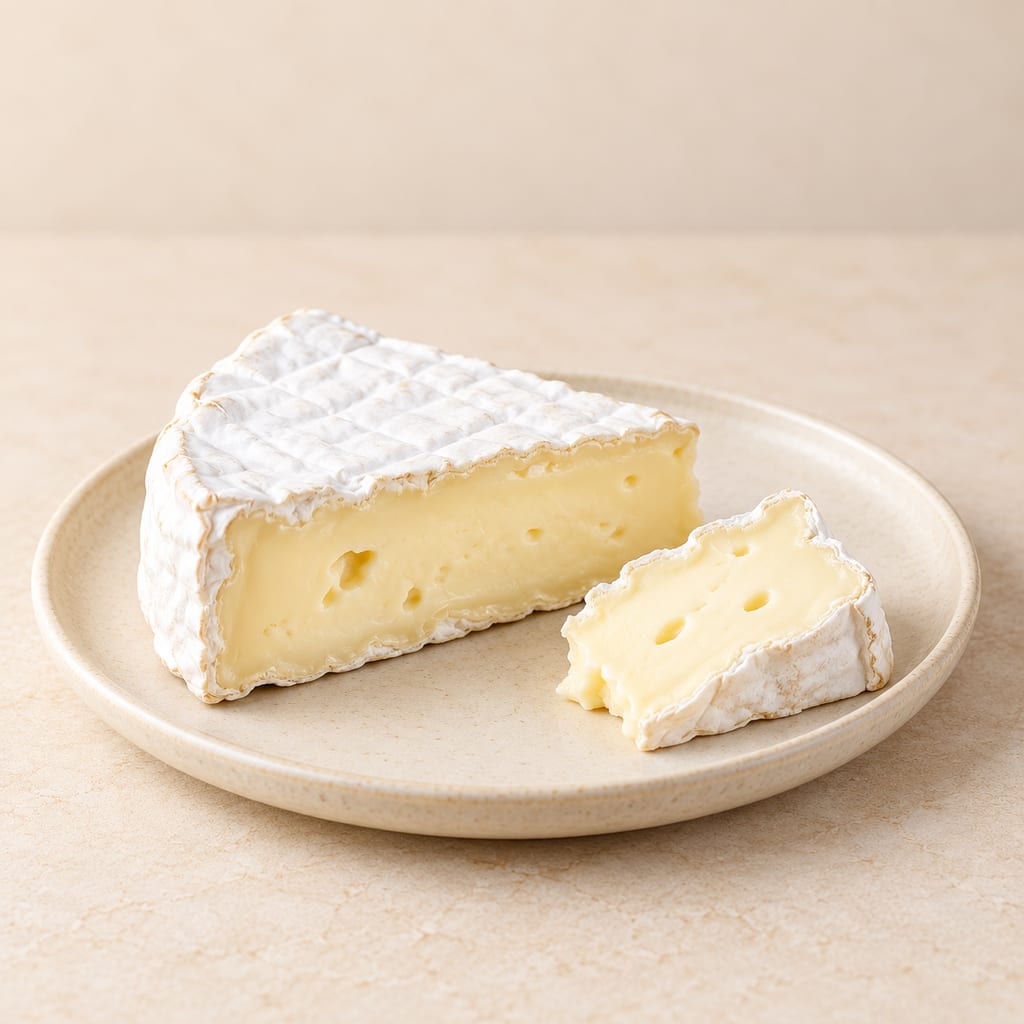
Brie, cream-enriched
A cream-enriched Brie with a white bloomy rind and a softening center, made from pasteurized milk with lactic and surface cultures.
 FermenteaWhere food goes to change
Coagulants
A liquid milk-clotting enzyme preparation at the strength assumed by its cheese recipe. Enzyme source and product activity must be identified separately.
Single-strength liquid rennet is an enzyme preparation used to set milk for cheese. The name combines a physical form with the strength convention assumed by a recipe. It does not, by itself, identify an animal source, a production organism or a particular manufacturer's activity. That distinction matters because a small measured quantity can start the transformation of a whole vat, while an apparently similar bottle can require a different dose.
The liquid form makes it possible to measure a portion and disperse it through milk. Its purpose is to change milk proteins so that they can form a continuous gel. The gel then becomes the material a cheese-maker cuts, drains, molds and sometimes presses or cooks. Rennet therefore sits at a turning point in the make: before it, milk flows as a liquid; after an appropriate set, the maker can handle a connected curd containing fat and whey.
The ingredient has a history much older than the modern bottle. Aristotle's History of Animals discusses milk as material from which whey and curd can be distinguished, and names both fig juice and rennet as ways of curdling it. He associates rennet with the stomach of a suckling animal. This is an ancient observation of a useful transformation, expressed through the natural philosophy of its time. It records knowledge of coagulants without establishing their first discovery or explaining the modern enzyme mechanism.
The juxtaposition of plant material and animal rennet is revealing. Milk clotting was not described as the exclusive work of one source even in that text. Today's market likewise contains coagulants from different sources, although their manufacture and specifications are very different from ancient practice. The continuity is the practical problem of turning milk into a curd; the modern development is the ability to buy a named, prepared product with declared handling and dosing information.
For selection, read the complete product description rather than relying on the word rennet alone. The New England Cheesemaking animal liquid is explicitly single strength and lists veal rennet, salt and water. The same supplier sells a fungal product as double strength plus and a fermentation-produced chymosin as double strength. These examples show why source and strength are separate choices. A recipe's single-strength quantity is not permission to substitute an unidentified liquid by volume.
An appropriate purchase is food-grade, clearly identified and suitable for the chosen cheese method. The exact bottle should provide its source category, strength or activity information, storage directions and date. Dietary requirements may make the source especially important. If the recipe names only the broad single-strength category, the supplier's guidance is needed to connect that category to the preparation in hand. Guessing a conversion from bottle color, drop size or the word liquid does not supply that missing information.
A fermentation-produced chymosin illustrates another distinction. A microorganism is used during manufacture to produce the enzyme, and the resulting product is sold for its milk-clotting activity. That does not make the bottle a dairy starter intended to grow in the cheese. The supplier's chymosin example describes submerged fermentation on a vegetable substrate and lists chymosin, water and salt in the finished preparation. Its production process and its later action in the milk are separate events. By contrast, an animal extract begins with enzyme-bearing tissue. Both may be sold as liquids, yet that shared appearance does not erase their different sources.
Rennet is an enzyme ingredient rather than a living starter culture. It does not perform the lactic fermentation that converts milk sugar to acid. Its principal cheese-making role is enzymatic coagulation, which can occur alongside acidification produced by bacteria. A cheese method may use both systems because they alter the milk in different ways and together influence the curd that later stages receive.
Much of milk's casein exists in dispersed particles called micelles. Their surface properties help keep them apart in the liquid. Chymosin acts on kappa-casein, a component important to that stabilization, releasing a water-compatible portion from the micelle surface. Once the protection has been sufficiently altered, the modified particles can aggregate under suitable conditions. The familiar set is therefore the visible result of molecular changes followed by the formation of a connected protein structure.
The distinction between cleavage and aggregation is useful. Enzyme action begins the destabilization, but the milk's condition helps determine how the altered micelles come together. Acidity, calcium availability, temperature and composition affect the process. A spoonful is consequently not the only control on the set. Two milks receiving the same preparation can behave differently, and the recipe's preceding heat treatment, cooling and culture stages belong to the coagulation system.
The resulting gel contains liquid rather than expelling it all at once. Fat and whey are held within the network as it forms. Rennet does not simply remove water from milk, nor does a firm set mean that cheese is finished. A maker still has to control how that network is broken and how liquid leaves it. This is why coagulation and drainage are separate stages in dairy training manuals.
Cutting creates more exposed surface through which whey can escape. The size and regularity of the pieces influence their subsequent handling, while a fragile curd can lose fine particles if cut roughly. Resting after cutting allows the pieces to firm before more movement. Gentle initial stirring and later treatment belong to the method's management of a changing material, rather than to a universal rule that every cheese should be stirred or cut in the same way.
Heating cut curd can promote further whey expulsion. Pressing, where the cheese method calls for it, brings curd pieces together and contributes another physical means of shaping the cheese. These actions build on the gel that rennet helped create. Their combined effect explains how the same broad enzyme category can participate in a moist soft cheese, a brined white cheese or a firmer cooked curd without giving all of them the same texture.
Acid coagulation follows a different route through the casein system. Changing acidity alters charge and mineral relationships, reducing the stability of the dispersion. Some cheeses rely mainly on acid, while others combine acidification with enzyme action. The names acid-set and rennet-set describe an emphasis within that chemistry, rather than implying that a cultured rennet cheese contains no acid or that every acid cheese is made without any enzyme addition.
The enzyme's influence may also extend into maturation. In Camembert research, early protein breakdown associated with the milk-clotting enzyme can be distinguished from changes associated with later mold protease activity. The curd received by the rind community is already a modified material. That sequence connects the first set with the later development of texture, while leaving the exact balance dependent on the cheese and enzyme preparation rather than the generic word rennet.
The linked recipes demonstrate the range of that initial set. The cream-enriched Brie and Spanish-style blue form curds intended for fungal ripening. Halloumi carries its formed curd into a later hot-whey cooking stage. Greek feta-style cheese and Bulgarian sirene combine coagulation with drainage and brining; the sirene method also uses a light pressing weight. Each method sets the enzyme addition inside its own sequence. Their quantities and endpoints remain attached to those makes, rather than becoming a single category-wide dosing table.
Enzyme source, product formulation and finished-food allergens answer different questions. An animal-derived coagulant is unsuitable for a vegetarian requirement even when it is added in a very small quantity. A microbial or fermentation-produced enzyme has a different production history, but its complete preparation and certification still need to be checked. The strength description supplies none of that information, so dietary decisions require more than the words single strength on a recipe line.
The supplier's animal liquid example marks milk as absent in its own allergen table. That declaration belongs to that product. It cannot establish that every single-strength liquid preparation has the same carriers, processing aids or allergen status. Nor does the declaration remove milk from a cheese made with a dairy substrate. A milk-containing cheese remains a milk-containing food regardless of whether the enzyme bottle separately declares that allergen.
Refrigeration is specified for the animal, fungal and chymosin liquid examples examined. The exact bottle's temperature and expiry directions should govern its storage. A category name does not provide a universal shelf life, and an estimate for one formulation should not be extended to every enzyme solution. The date, preservation system, packaging and handling history all belong to the particular preparation that will enter the milk.
Dilution is another change of condition. The supplier directs its animal liquid to be diluted in cool non-chlorinated water and added immediately, with gentle distribution through the milk. This is a product instruction, not a long-term storage method for diluted enzyme. A measured working portion and the original bottle should therefore be treated as different stages of use. The complete recipe and label determine the actual quantity and mixing sequence.
Hygienic handling matters because a coagulant can introduce unwanted material as well as useful enzyme. The European artisan-dairy guide addresses pathogenic contamination and chemical residues in commercial coagulants. It recommends food-use conformity, following manufacturer directions, clean handling and replacing the lid after decanting. The aim is straightforward: an ingredient intended to start coagulation should not become an additional contamination route into the milk.
The guide also discusses traditional manufacture of animal and plant extracts, but that discussion is not a reason to improvise one for these recipes. Extraction brings its own raw-material, water and handling controls. The linked makes call for a prepared liquid category, so selecting a conforming commercial product keeps the ingredient aligned with the method. A historical account of stomach material or fig juice provides context, not a validated replacement procedure.
Rennet's geographical story is broader than one cheese region. The ancient Greek text attests knowledge of animal and plant coagulants, while modern suppliers distribute prepared enzymes for many cheese traditions. That evidence does not locate a single birthplace for rennet, and it does not date the single-strength liquid format. The modern ingredient's manufacturing origin is likewise unknown until a specific producer and product are selected.
The linked uses have distinct culinary destinations. Brie develops a white ripening surface and a softening paste; Spanish-style blue depends on a different fungal maturation. Halloumi is shaped and cooked before becoming a cheese suited to further heating at the table. The two brined white-cheese methods develop their own texture through acidification, drainage and salt. Rennet is a shared enabling ingredient within those processes, while their differences come from the rest of the make.
Its culinary importance is consequently easy to overlook. The enzyme preparation is not normally the flavor being sought, and its small volume may disappear from view as soon as it is mixed into the vat. What remains is a change in the milk's structure that makes subsequent work possible. A bottle, a measured portion, an undisturbed set and a carefully handled curd are successive stages in turning a liquid dairy ingredient into a shaped food.
Choosing rennet well means connecting those stages. Identify the preparation, follow its storage instructions, match its declared activity to the recipe and retain the recipe's actual coagulation and drainage endpoints. That approach respects both the long history of milk clotting and the practical specificity of modern cheese-making. It allows the ingredient to serve different cheeses without pretending that all coagulants, bottles or methods are interchangeable.
Product-specific; the generic strength/form name does not establish allergen status. Milk-containing cheeses retain milk allergens.
Generic form/strength does not identify a producer or manufacturing country; no origin inferred from a retailer address.
A cream-enriched Brie with a white bloomy rind and a softening center, made from pasteurized milk with lactic and surface cultures.
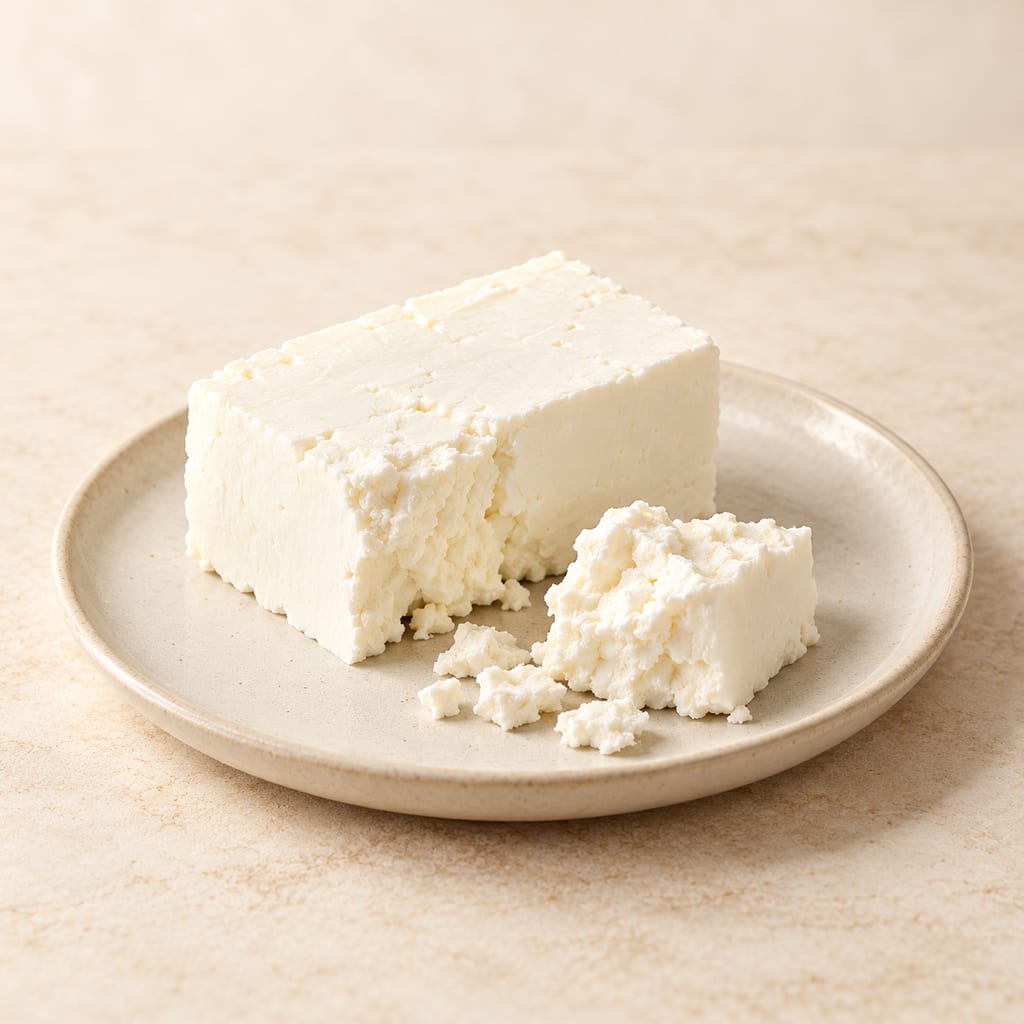
White cheese made with a lactic starter and rennet, drained without pressing, dry-salted and covered in brine. This home adaptation allows whole milk from different dairy animals.
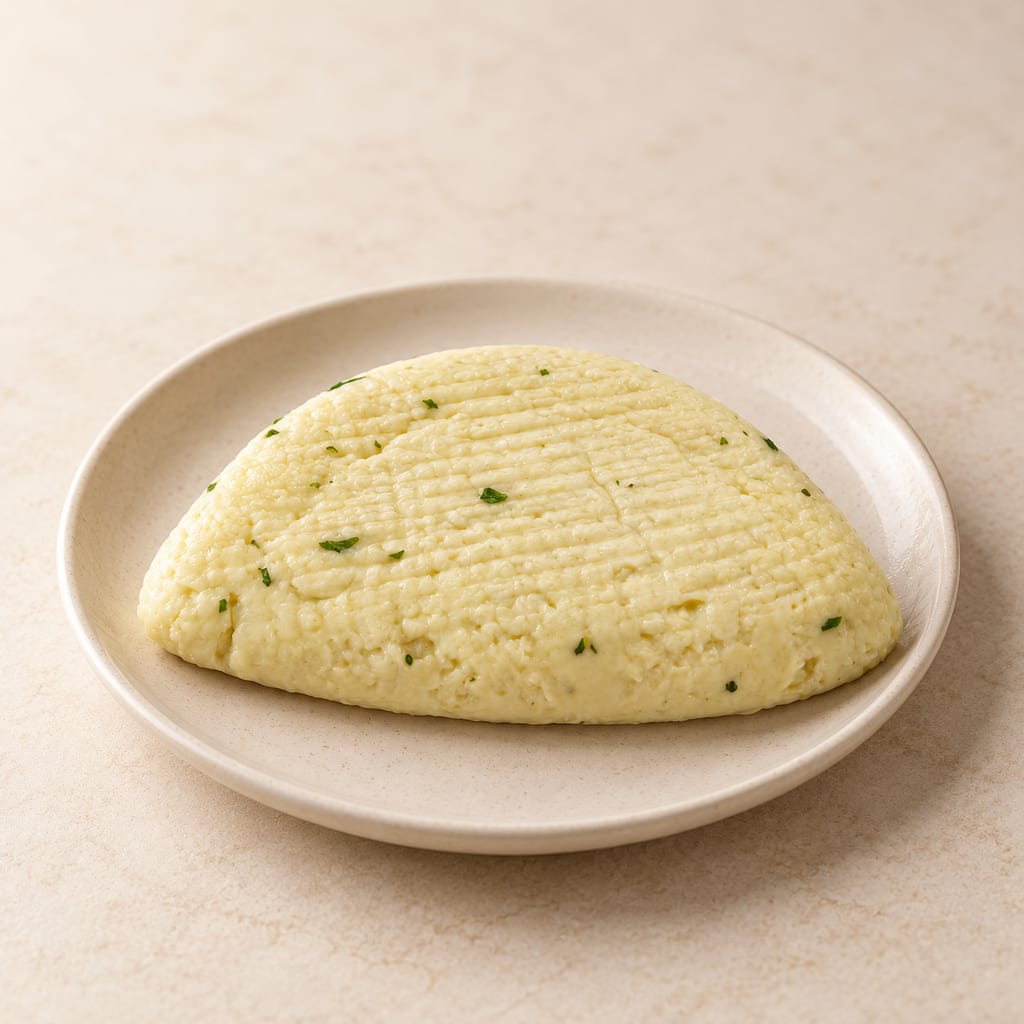
A firm cow-milk cheese cooked in hot whey, salted and folded with optional mint. This fresh halloumi keeps its shape when grilled or pan-fried.
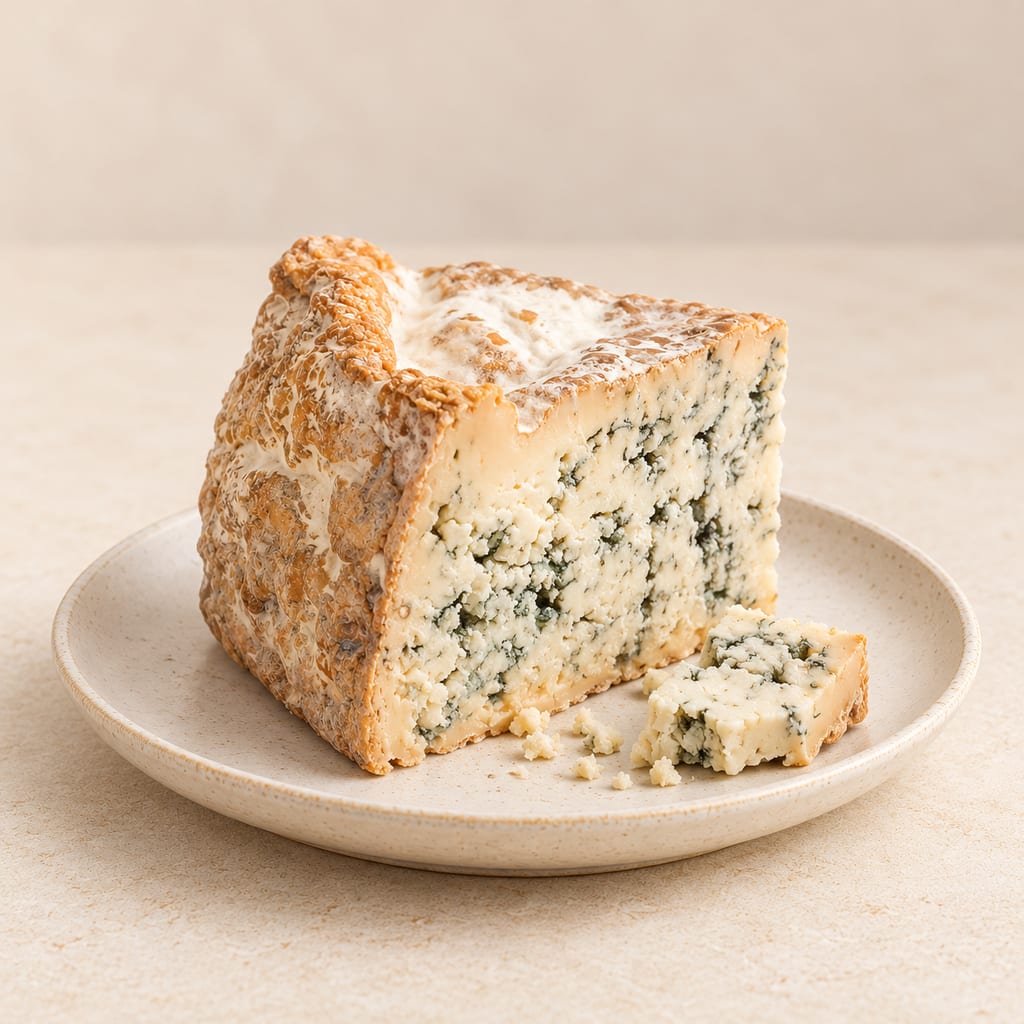
A moist blue cheese inspired by Cantabrian styles, made with pasteurized milk, a lactic starter and Penicillium roqueforti, then ripened in two stages.
No community contributions have been published for this entry yet.
Sign in to contribute. Published comments and photos are free to read.
Internet Classics Archive, MITIdentity · Selection · Science · History · Use
History of Animals, BookIII, parts20–21Aristotle discusses curd and whey, fig juice and animal rennet within ancient natural philosophy.
Cited in: From animal stomachs to a measured enzyme; One clotting step, several cheese traditions
New England Cheesemaking Supply CompanyIdentity · Selection · Science · History · Use
Liquid Animal RennetThe named single-strength veal-rennet product contains rennet, salt and water and has its own allergen and handling declarations.
Cited in: From animal stomachs to a measured enzyme; Choosing and keeping a prepared coagulant
New England Cheesemaking Supply CompanyIdentity · Selection · Science · History · Use
Organic Liquid Vegetable RennetThe named double-strength-plus Rhizomucor miehei product illustrates a distinct fungal coagulant.
Cited in: From animal stomachs to a measured enzyme; Choosing and keeping a prepared coagulant
New England Cheesemaking Supply CompanyIdentity · Selection · Science · History · Use
Liquid Chymosin RennetCHY-MAX is a fermentation-produced chymosin preparation; strength and biological source are separate product properties.
Cited in: From animal stomachs to a measured enzyme; Choosing and keeping a prepared coagulant
Food Science & NutritionIdentity · Selection · Science · History · Use
Extent of κ-casein hydrolysis during renneting of bovine milk: A critical assessment of the analytical and estimation approachesChymosin changes the stabilizing κ-casein layer before aggregation. The review concerns analytical and estimation approaches to hydrolysis.
Cited in: From animal stomachs to a measured enzyme; Turning dispersed milk proteins into curd
FAOIdentity · Selection · Science · History · Use
Small-Scale Dairy Farming Manual, Technology Unit10.3Gel cutting, stirring and cooking affect fines and whey expulsion; coagulation and drainage are distinct operations.
Cited in: From animal stomachs to a measured enzyme; Turning dispersed milk proteins into curd
FACEnetwork; European Commission-hostedIdentity · Selection · Science · History · Use
European Guide for Good Hygiene Practices in the production of artisanal cheese and dairy productsFood-use conformity, contamination control, manufacturer directions and hygienic handling apply to rennet preparations.
Cited in: From animal stomachs to a measured enzyme; Choosing and keeping a prepared coagulant
Nippon Shokuhin Kagaku Kogaku KaishiScience
Proteolysis in Camembert Cheese during RipeningThe experimental study abstract describes surface-to-center proteolysis involving early chymosin activity and later mold enzymes.
Cited in: Turning dispersed milk proteins into curd
New England Cheesemaking Supply CompanyUse
Brie Cheese Making RecipeThe Brie method uses separate MM100, C70 and Penicillium candidum preparations through milk inoculation and rind development.
Cited in: Turning dispersed milk proteins into curd; Choosing and keeping a prepared coagulant; One clotting step, several cheese traditions
New England Cheesemaking Supply CompanyIdentity · Selection · Science · History · Use
A Spanish BlueThe Spanish-style blue method forms a rennet gel before mold ripening.
Cited in: Turning dispersed milk proteins into curd; One clotting step, several cheese traditions
New England Cheesemaking Supply CompanyIdentity · Selection · Science · History · Use
Halloumi Cheese Making RecipeThe Halloumi method uses single-strength rennet before draining, shaping and hot-whey cooking.
Cited in: Turning dispersed milk proteins into curd; One clotting step, several cheese traditions
Bacillus BulgaricusIdentity · Selection · Science · History · Use
Greek Feta Cheese Making InstructionsThe Feta method distinguishes purchased single-strength rennet from supplier Types A and M; curd drains without pressing weight before salting and brining.
Cited in: Turning dispersed milk proteins into curd; Choosing and keeping a prepared coagulant; One clotting step, several cheese traditions
Bacillus BulgaricusIdentity · Selection · Science · History · Use
Bulgarian Sirene Making InstructionsSirene-making instructions that distinguish purchased single-strength rennet from supplier Types A and M, and describe drainage, light weighting and brining.
Cited in: Turning dispersed milk proteins into curd; Choosing and keeping a prepared coagulant; One clotting step, several cheese traditions