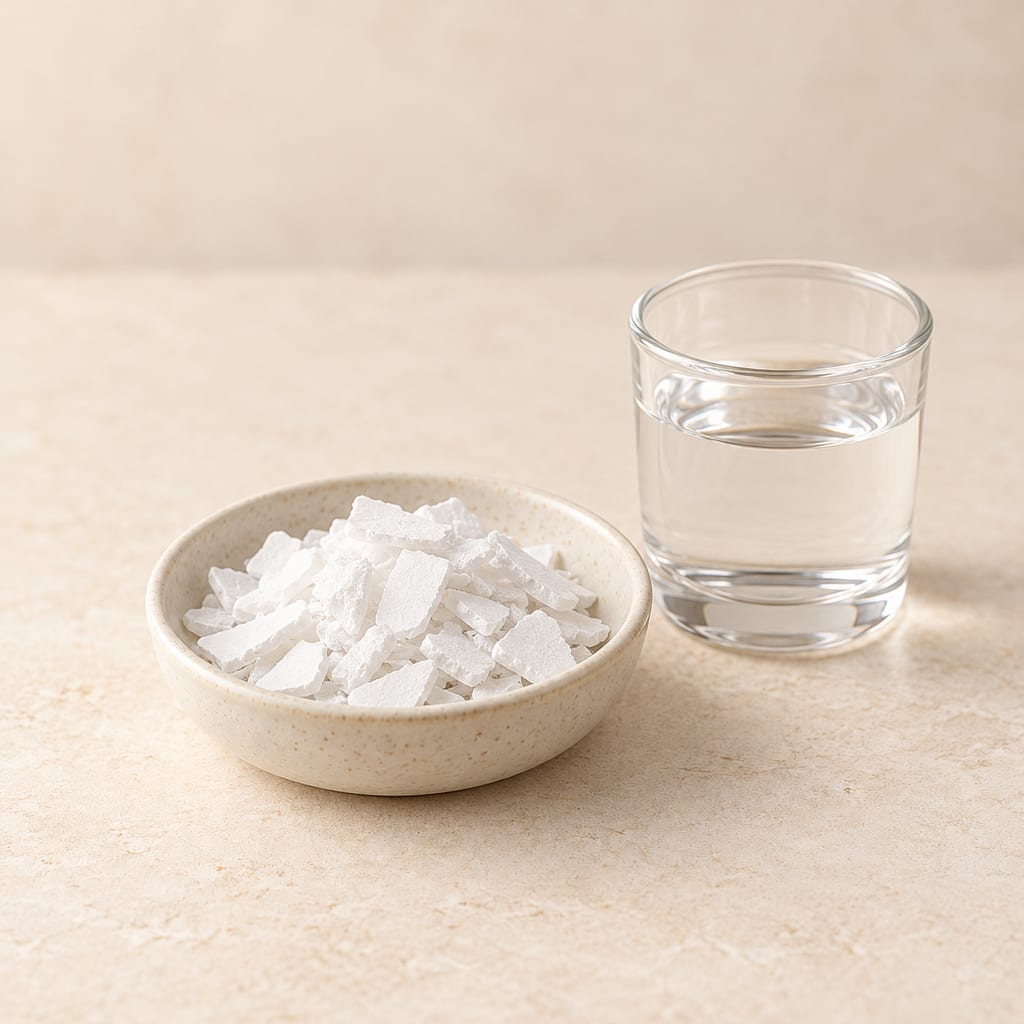
Calcium chloride
A soluble calcium salt used to support cheese curd formation, balance cheese brines, reinforce some plant tissues and adjust brewing water.
 FermenteaWhere food goes to change
Modern adaptation
Spanish blue
A moist blue cheese inspired by Cantabrian styles, made with pasteurized milk, a lactic starter and Penicillium roqueforti, then ripened in two stages.
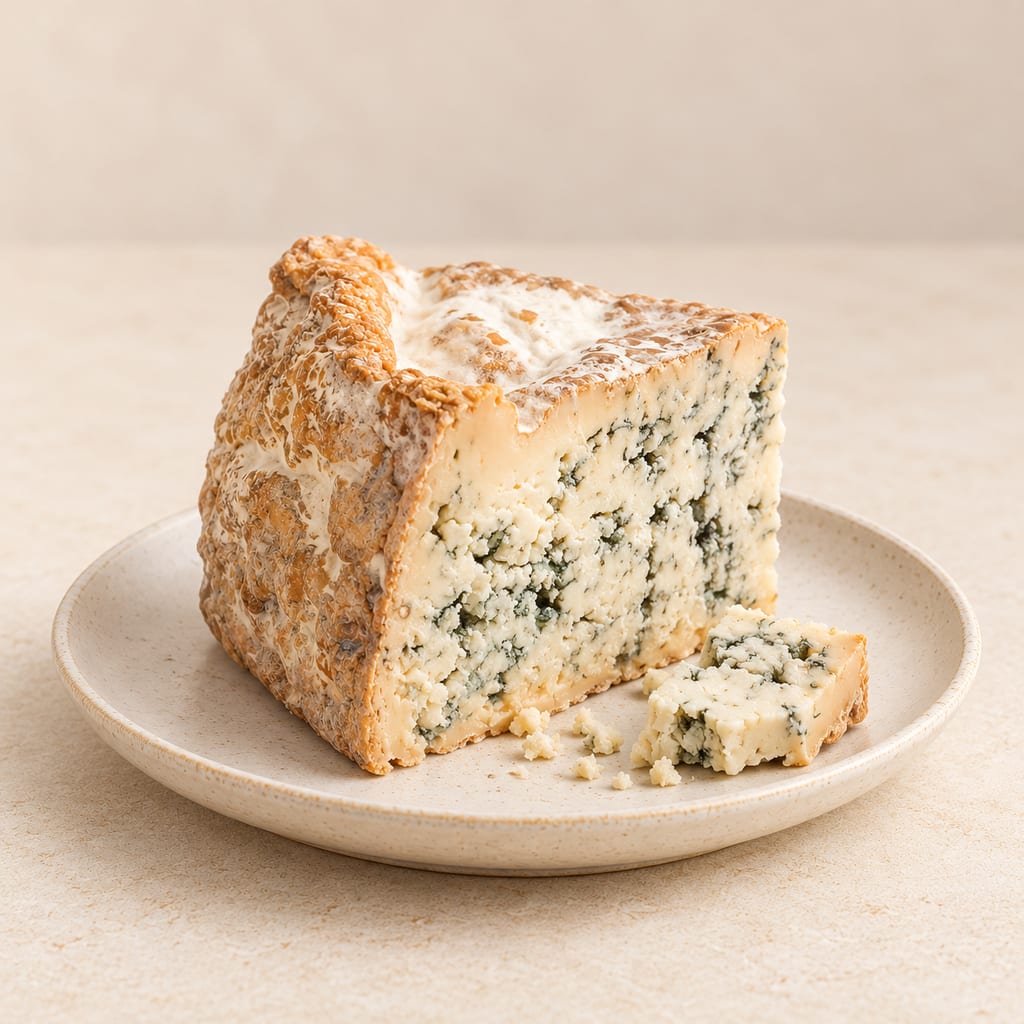
Spanish-style blue cheese here names a particular home cheesemaking adaptation: a moist blue-veined cheese made with pasteurized milk, a lactic starter, rennet and Penicillium roqueforti, then aged first in a cooler and later in a colder wrapping stage. The source recipe explicitly connects its inspiration to Picón Bejes-Tresviso of Cantabria, but the household batch is not that protected cheese. It uses a managed aging space instead of the region's natural caves, and its milk species are not specified. The difference is important: a style can borrow a broad shape and technique while a named regional cheese remains tied to its own place, rules and producers.
The expected cheese is softening and aromatic rather than firm and mild. Blue-green lines and patches develop through internal openings; the paste becomes softer as it matures. The recipe describes a sometimes red-orange outer surface in its higher-moisture cheese and notes that longer maturation strengthens the flavor. The page's own method has a first 21-day phase followed by two to five months wrapped at cooler temperatures. Those are instructions for this adaptation, not universal specifications for Spanish blue cheeses.
Blue cheese is defined by more than visible color. A starter helps turn milk lactose into lactic acid, the rennet forms a curd, and the blue mold grows in the cheese's oxygen-accessible spaces during ripening. Enzymes from P. roqueforti break down proteins and fats, making flavor compounds and changing texture. A blue wheel is therefore built by coordinating curd moisture, salt, air, temperature and time. This recipe's hand-draining and no-weight forming are aimed at leaving pores between curds; its later piercing gives oxygen routes into the interior.
Liébana and the wider Picos de Europa are not simply a scenic backdrop. Mountain pastures, dispersed settlements and cool caves created a setting for a varied local cheese tradition. A Cantabria tourism account describes cheese production in Liébana as documented by the tenth century and names Picón Bejes-Tresviso among its best-known protected products. That regional evidence supports a long history of cheesemaking in the district; it does not prove that the specific blue-veined style has a tenth-century date. The oldest evidence for a regional craft and the first attestation of one named cheese are different historical claims.
Picón Bejes-Tresviso takes its name from two villages in Cantabria's Liébana area. Its protected specification and local oversight distinguish the named product from a generic blue cheese made elsewhere. The Spanish Ministry of Agriculture's registry lists the specification as in force from 21 June 1996. The maker's source describes a regional cheese matured in caves, while the protected designation document sets the conditions that apply to the official name. This home recipe is inspired by that tradition, but it does not claim the designation, reproduce its cave environment or satisfy its production specification.
Other Spanish blue cheeses are related without being interchangeable. Cabrales is associated with Asturias and has its own PDO; the current European product document describes a blue-veined cheese made from raw whole cow's milk, with sheep or goat milk permitted in the blends, and maturation lasting at least two months, mostly in caves. Valdeón is another distinct protected cheese from León. Their differences in milk, geography and maturation are part of their identities. They may share P. roqueforti and a blue-veined interior, but a recipe for one should not be substituted for another's protected method.
The cheesemaking supplier's own historical narrative makes broader claims about a fourteenth-century origin and later events. The official documents and regional evidence used here do not establish those details for this exact cheese, so they are not repeated as settled history. The safer historical account is specific: Liébana has a long recorded cheese tradition; Picón Bejes-Tresviso has a protected regional identity documented in current specifications; this three-gallon home method is a modern U.S. adaptation published by an American supplier.
The ingredient list starts with three gallons of pasteurized milk that is not ultra-pasteurized. Milk supplies water, lactose, protein and fat; its species and composition influence the body and flavor of the finished cheese. Because the source leaves the species unspecified, this page does not silently turn the formula into cow, sheep or goat cheese. A study of 1,272 goat milks found that variation in fat, protein and casein related to coagulation and curd-firming measures. That is evidence about goat milk, not a result that can be transferred numerically to every milk in this recipe, but it helps explain why the same clock and temperature may yield different curds.
MA4002 is the named lactic starter. Its bacteria consume lactose and make lactic acid; the acid and associated changes help prepare the milk for a stable set and shape the conditions that later microbes encounter. The source calls for only a small dose, then a quiet 90-minute period before rennet. This slower start preserves the recipe's intended acid trajectory. Penicillium roqueforti is a separate ripening mold added at the beginning. It is not a substitute for the starter, and the intended blue growth is inside the cheese rather than a general instruction to accept any surface mold.
Rennet then acts on casein proteins to form a gel that traps fat and water. The recipe leaves the milk quiet for another 90 minutes so the curd can firm before cutting. The vertical cut, short rest, horizontal cut and second rest create smaller particles while allowing their surfaces to firm. Cutting controls the amount and rate of whey that can leave the curd; too much handling or heat would make the curds dry too quickly for the moist body this style needs. The source's 80°F (26.7°C) target is therefore tied to this make rather than an all-purpose blue-cheese temperature.
Calcium chloride is listed for pasteurized milk, and cheese salt is added later by weight. The salt quantity is approximately three percent of cheese weight, divided into three applications after the mold is filled. Salt seasons the cheese and influences moisture movement and microbial activity; it is not a substitute for sanitation or a validated safety treatment. Water is only the carrier used to hydrate the powdered blue mold. Keeping each ingredient's role distinct makes the method easier to understand and avoids treating the mold, starter and enzyme as interchangeable 'cultures'.
After the short stirring stage, the recipe moves the curds to a draining surface and separates them gently by hand. This choice is central to the final structure. The curd must lose some free whey so the pieces keep their shape, but it must remain moist enough to soften during aging. If curds are pressed together too tightly, the spaces between them close and the interior becomes less open. The supplier's instruction to avoid a press weight is not cosmetic: the eventual mold needs pathways where the blue mold can grow.
The whey draining study describes syneresis, the contraction of the casein network that expels liquid, as a progressive process. As the curd rearranges and firms, the resistance to flow increases, so drainage slows. Gravity and the curd's own structure do much of the work here. The recipe's hand separation offers a way to preserve loose pieces while whey runs away, but the supplier acknowledges that judging the ideal moisture by feel takes practice. A novice should not treat a fixed drain time as a guarantee that every milk has reached the same structure.
The mold is filled without pressing and held first at 70–75°F until the cheese can hold its form. It then moves to a cooler, humid room for salting and stabilization, with frequent turns. Salt is applied in three passes over days two and three, with further turning through day four. Dividing it gives each surface time to absorb salt before another face is treated. The source allows the stabilization period to extend when surface moisture remains, but gives no validated safety endpoint based on appearance. The step is a texture and process instruction, not a visual safety test.
Temperature and humidity stages serve separate purposes. Forming helps the young cheese shed some whey and set its shape; cooler aging slows the process while allowing the blue culture to develop; colder wrapped maturation continues the change while reducing surface drying. Humidity matters because a cheese that dries too quickly will not ripen like the intended moist paste. Regular turning evens contact with the aging environment and limits unwanted pooling. These managed conditions imitate some functions of caves, but a refrigerator or ripening cabinet is not the same ecological system as a Cantabrian cave.
The recipe waits until blue growth is visible at the surface, around day eleven in the cited make, before piercing both faces. A stainless-steel skewer opens channels into the body; holes are spaced across the faces and penetrate partway through from both sides. These channels supply oxygen to internal spaces that would otherwise be less accessible. The goal is not to create a decorative pattern but to support the mold's growth within the curd. P. roqueforti is an aerobic ripening mold, and the pores made during draining and the pathways made by piercing work together.
As it grows, the mold changes both fat and protein. Lipases split milk-fat triglycerides and release fatty acids; some are converted into methyl ketones and related volatile compounds associated with blue-cheese aroma. Proteases break down casein into smaller peptides and amino acids, softening the body and adding flavor. A microbiology review explains why blue veins become visible in aerated spaces and how enzymes shape flavor and texture. The color is only one sign of a larger ripening process: blue streaks do not report acidity, water activity or safety.
The recipe's initial 21-day stage is followed by wiping the slippery surface with cool water and a soft brush or cloth, then wrapping the cheese in parchment-backed cheese foil. It continues at 42–43°F (5.6–6.1°C) and 90% relative humidity for another two to five months. The supplier gives a total aging estimate of about six months. The wrapped stage is part of this particular formula and should not be generalized to Spanish PDOs, which have their own conditions and oversight.
Long aging introduces more process variables than the recipe's first day: air exchange, surface moisture, turning, salt uptake, rind development and the behavior of a particular mold strain. The cited method uses specific purchased starter and mold products; it does not establish a universal control plan. Its general sanitation note warns about pathogens introduced through handling, but it is not a process validation for months of ripening. A reader should follow food-safety guidance and the supplier's complete conditions rather than infer safety from blue color, smell or a softening paste.
Picón Bejes-Tresviso, Cabrales and Valdeón are useful comparisons because they show how one broad technique can produce distinct regional cheeses. Their geography, registered names and product rules are not interchangeable. Picón Bejes-Tresviso belongs to Cantabria's Liébana and Bejes-Tresviso area; Cabrales is a separate Asturian PDO; Valdeón is protected in León. Each may develop blue veining, but their milk, forms and ripening instructions come from their own specifications. This home cheese borrows an inspiration and a broad blue-cheese profile, not legal identity or regional provenance.
Within blue cheeses generally, the species and strain of P. roqueforti matter. Research comparing strains found differences in the proportion of blue color and in volatile compounds associated with flavor and aroma. This helps explain why two cheeses with the same mold species may not taste identical. A separate source on MA4002 describes the starter's strains, but it does not specify the final microbial community after months of aging. The recipe should therefore be described by its actual ingredients and steps, not by a claim that it reproduces the microbial ecology of a traditional cave cheese.
The recipe's source also offers another important distinction: the household version uses pasteurized milk, while some protected Spanish products require raw milk. That difference affects both identity and process. The source deliberately calls this an adaptation, and the structured record leaves the species unspecified. A home cheesemaker cannot convert it to Picón Bejes-Tresviso by changing one ingredient or adding cave-like humidity. Named PDO cheeses are the result of a whole production system, not a single mold or region-inspired name.
A mature blue cheese can be served in small portions on a cheese board, crumbled over warm vegetables or stirred into a sauce where its salt and piquancy can season a larger dish. Regional accounts from Liébana also describe Picón in local dishes such as endive preparations, potatoes and cheesecake; those examples belong to the regional cheese, not necessarily to this American home make. For this adaptation, the safest serving advice is to taste it in a small amount first: blue-ripened cheeses can vary sharply in salt, pungency and softness.
Blue-green veins, larger openings and a softening body are part of the target form described by the source recipe. The exact pattern varies with curd separation, air channels, mold strain and aging conditions. An uneven distribution is not automatically a defect, just as a strong aroma does not prove that the process was successful. The source's seasonal description of an orange-red rind is linked to its high-moisture cheese and surface microbes; that is a description, not a general safety rule. A person cannot identify unwanted contamination or establish safe maturation by sight or smell alone.
Storage and ripening limits should stay tied to the method that gives them. The recipe calls for controlled temperatures, humidity, turning, air exchange and a final wrapping stage; it does not provide a validated shelf-life statement for the finished home cheese. The pathogen source supports careful sanitation and pasteurized milk but does not validate this long-ripened process. Keep the cheese under the stated controlled conditions while it matures, use clean equipment, and do not treat the written timings as a substitute for a validated cheesemaking process.
The blue cheeses of Cantabria mature in the limestone caves of Liébana and Peñarrubia. Picón Bejes-Tresviso takes its name from two villages with a strong cheesemaking tradition; its open curd holds blue-green veining.
This pasteurized-milk preparation adapts that style to a managed aging space. Draining without press weight preserves openings for Penicillium roqueforti, while a separate cool ripening stage develops the soft body and blue flavor.
Yield 3 lb cheese · Scaling: source batch only
Salmonella, pathogenic Escherichia coli, Listeria monocytogenes and Staphylococcus aureus are associated with fresh cheese and can be introduced through handling.
Hazard sourceUse the pasteurized-milk formulation. Wash hands and clean and sanitize equipment, food-contact surfaces and draining cloths to limit contamination during curd handling.
Control sourceContaminated hands, equipment and food-contact surfaces can introduce pathogens; clean and sanitize them before handling the curd.
MA4002 — Lactic starter containing Lactococcus lactis subsp. lactis, Lactococcus cremoris subsp. cremoris, Lactococcus lactis subsp. lactis biovar. diacetilactis and Streptococcus salivarius subsp. thermophilus.
Penicillium roqueforti — Blue mold added to the milk; air gaps and piercing support its development.
Initial aging is at 80% RH; final foil-wrapped aging is at 90% RH.
The preparation is inspired by the region's blue cheese; it is a modern adaptation.
The household method is documented by New England Cheesemaking Supply Company.
A soluble calcium salt used to support cheese curd formation, balance cheese brines, reinforce some plant tissues and adjust brewing water.
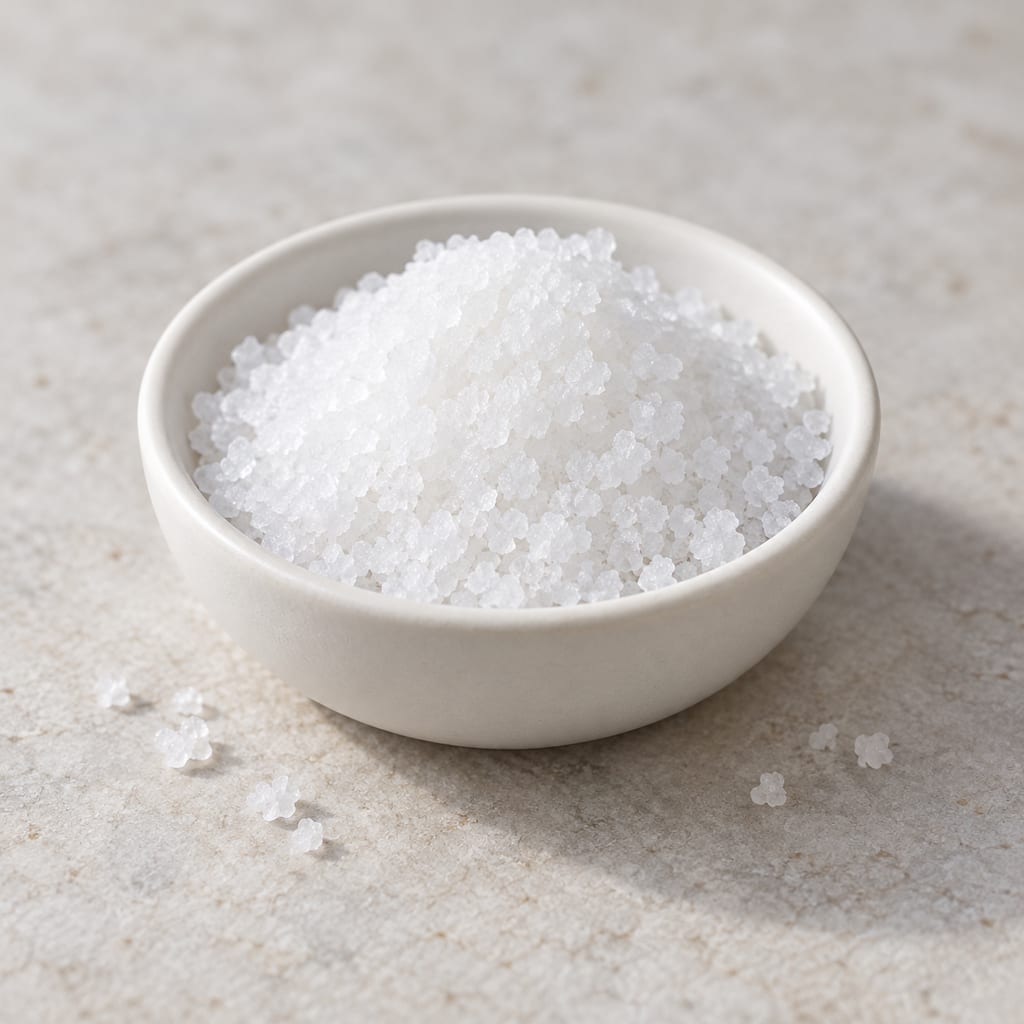
Food-grade sodium chloride selected for cheesemaking seasons curd and changes its moisture, microbial environment and rind; grain and application must suit the particular cheese.
MA4002 is a mixed dairy starter with mesophilic predominance. In the linked Spanish-style blue cheese it acidifies milk separately from rennet and blue mold; the manufacturer names four bacterial components and a milk-derived nutrient.
A selected fungal culture for blue cheese. Growth in air spaces and enzymes acting on casein and fat help develop the marbled paste and characteristic aroma.
A liquid milk-clotting enzyme preparation at the strength assumed by its cheese recipe. Enzyme source and product activity must be identified separately.

Water carries dissolved ingredients, transfers heat and forms the liquid environment of many ferments; its minerals and treatment influence how it behaves.
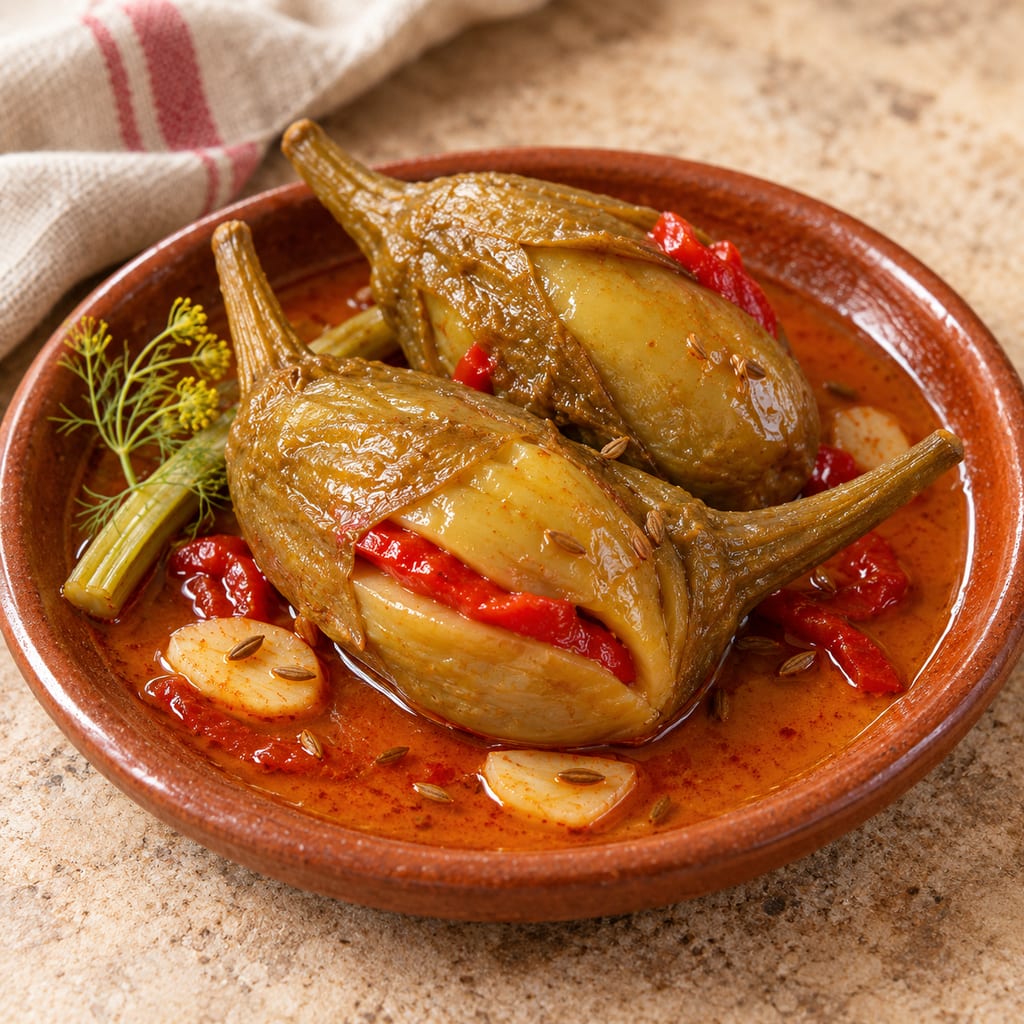
A protected aubergine preserve from Ciudad Real in Spain: tender fruit of the local Dealmagro variety, cooked briefly and then fermented in a vinegared, paprika-seasoned dressing.
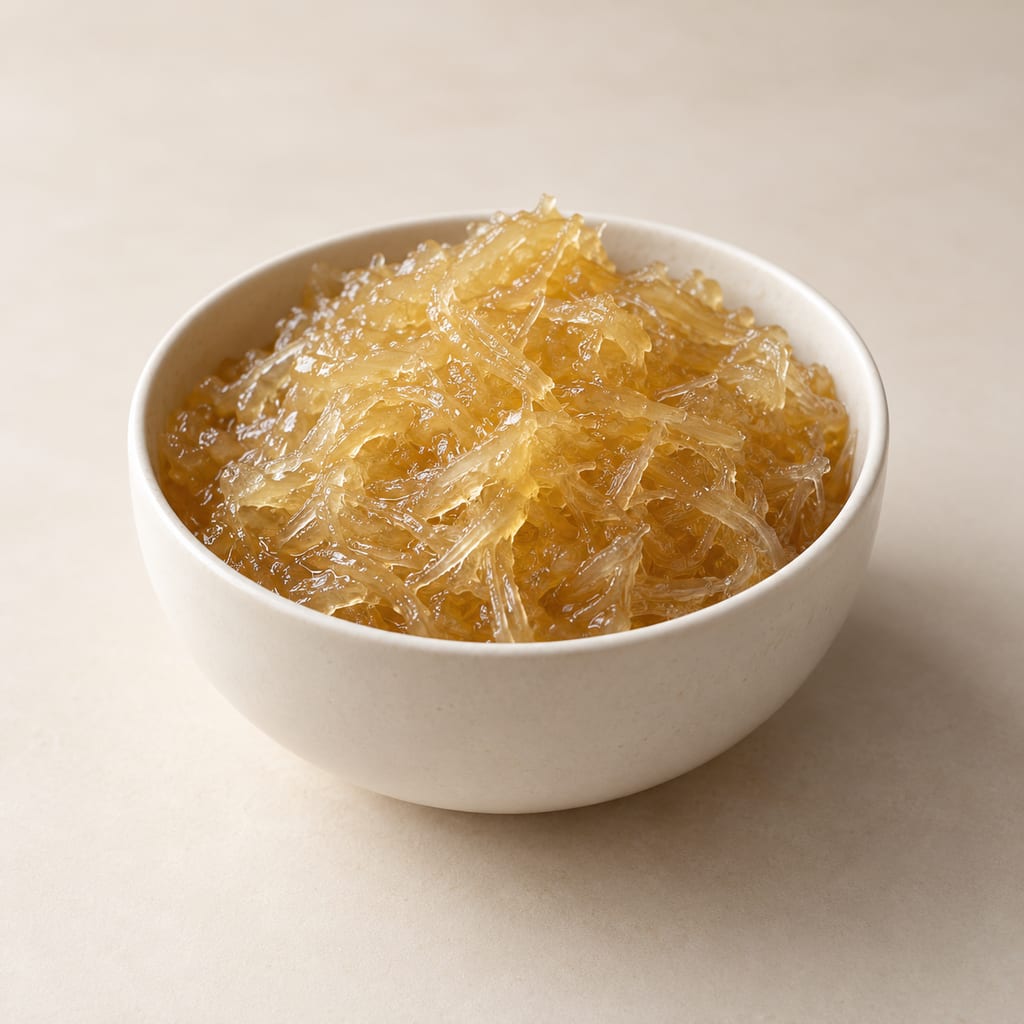
Fine strands of Cucurbita ficifolia cooked in an equal weight of sugar, then portioned for refrigerator or freezer storage. Ordinary orange pumpkin does not give the same fibres.
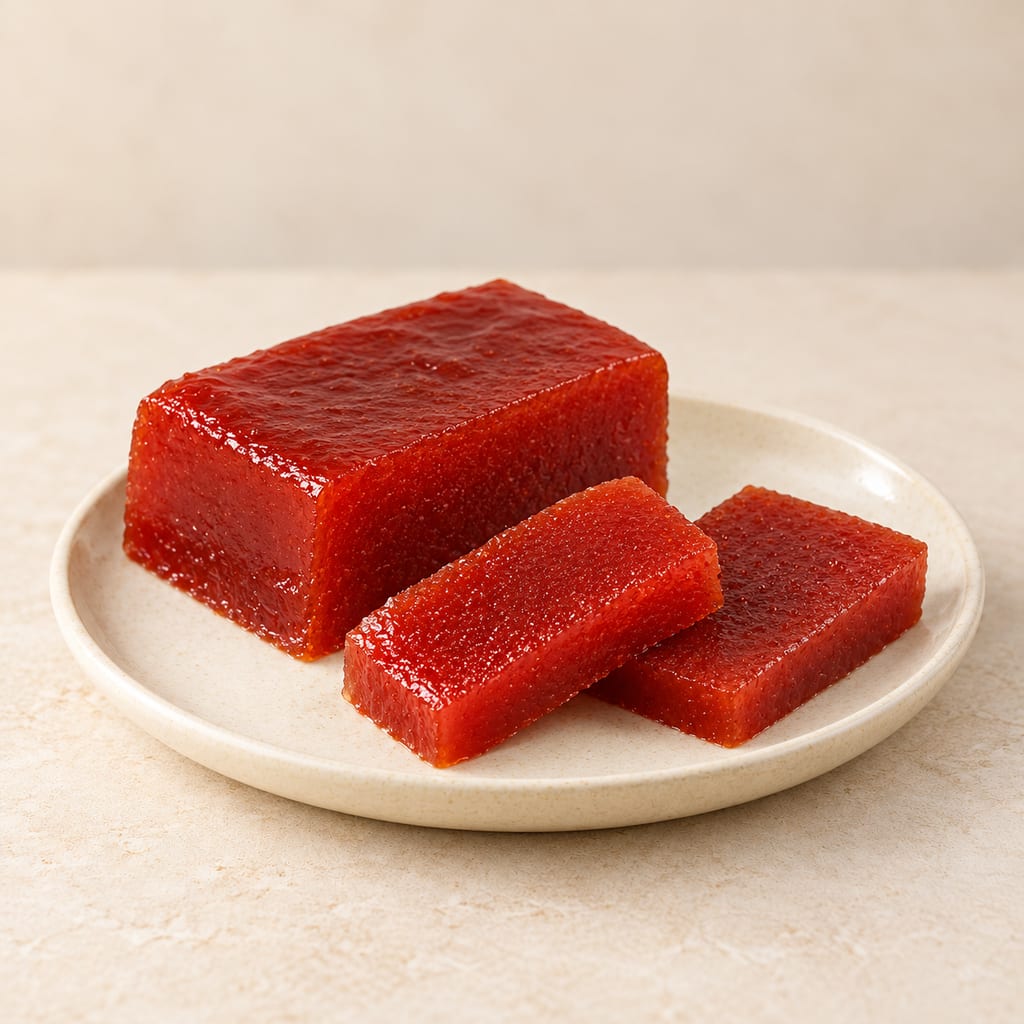
Dulce de membrillo is quince cooked with sugar into a firm paste for slicing. This family method softens the fruit in a pressure cooker, then blends it and leaves it to set.
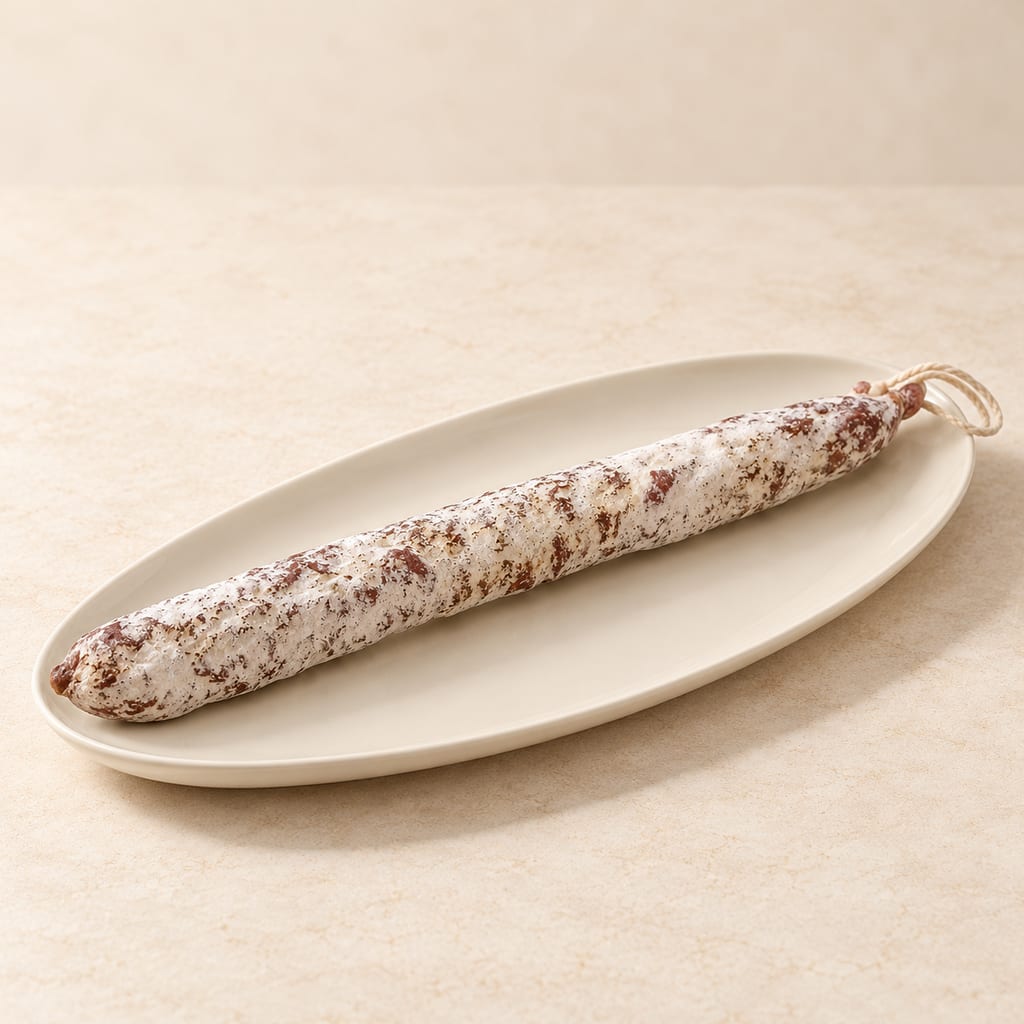
A documentary account of a modern starter-cultured Fuet formula and its place in Catalan sausage culture. The cited raw-pork process lacks matched safety validation, so this page does not present it as a household recipe.
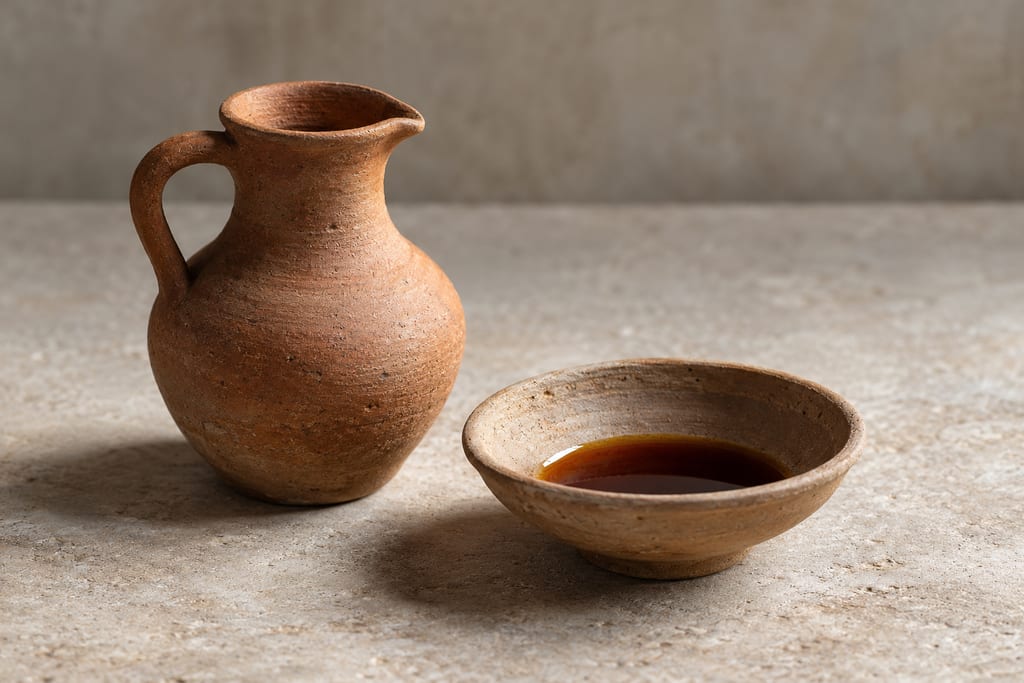
Garum, Greek garos and Latin liquamen, was the fish sauce of the ancient Mediterranean: fish and viscera salted and left in the sun, then drained off as a savoury liquid.
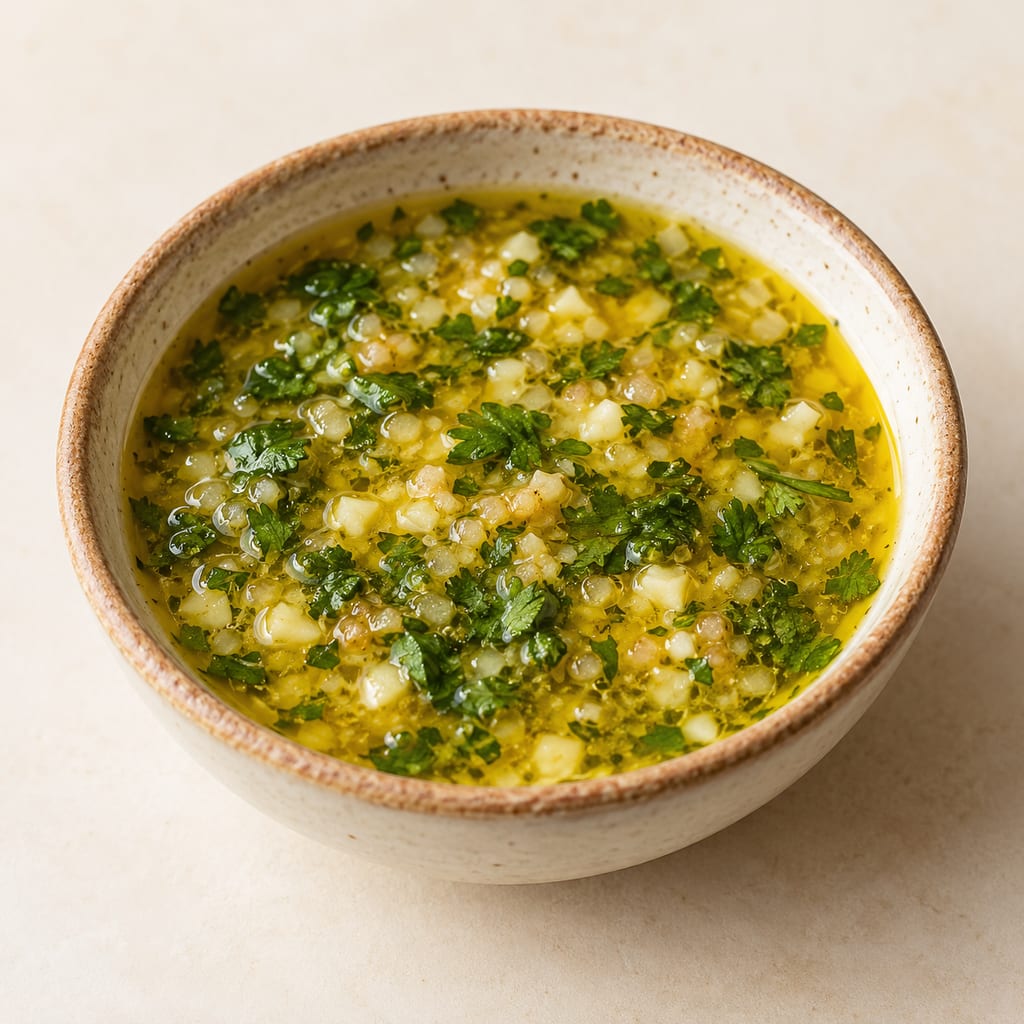
Mojo criollo is a Cuban sauce of garlic and sour orange juice with oil and herbs, used to marinate roast pork and as a dip.
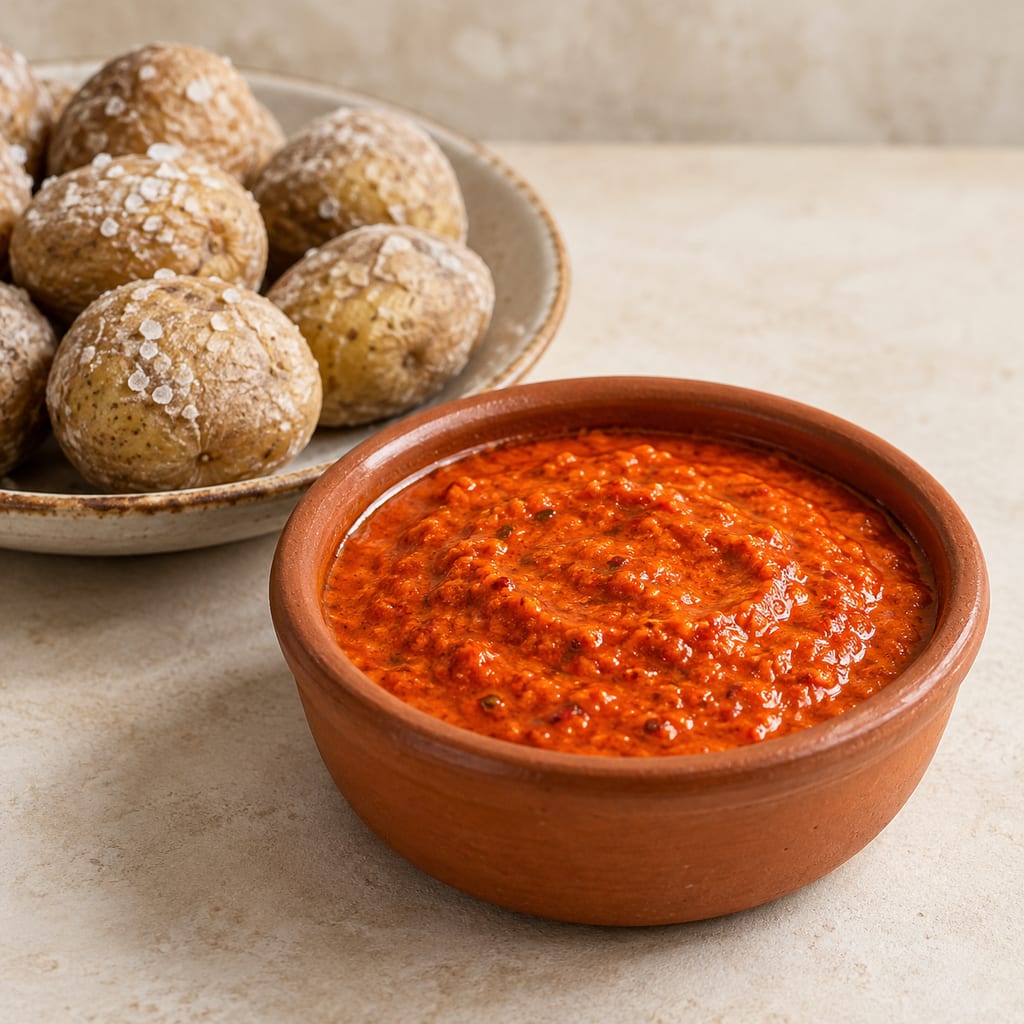
A red sauce of garlic, dried or fresh red pepper, paprika and cumin in olive oil and vinegar, served with salt-cooked potatoes across the Canary Islands.
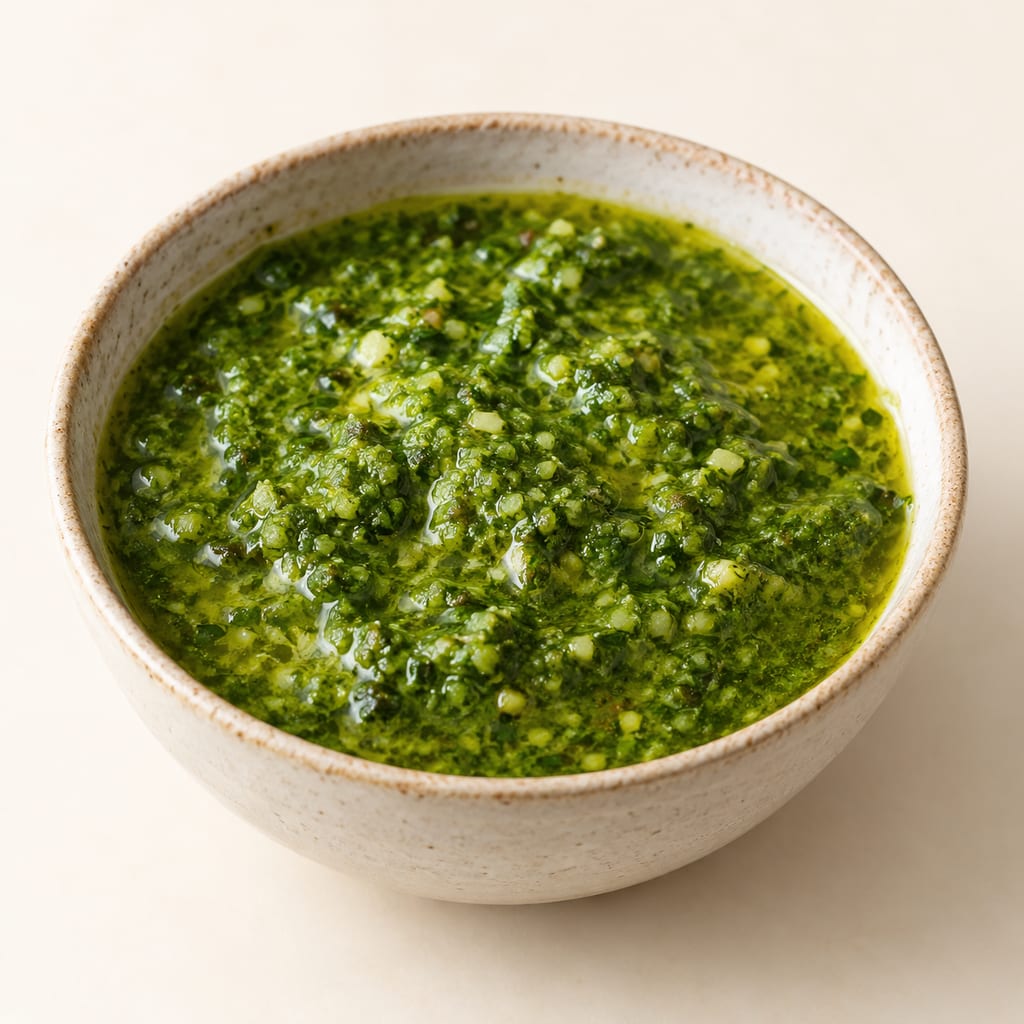
A green sauce of garlic, cumin, green chilli and fresh coriander or parsley in olive oil and vinegar, traditionally served with fish in the Canary Islands.
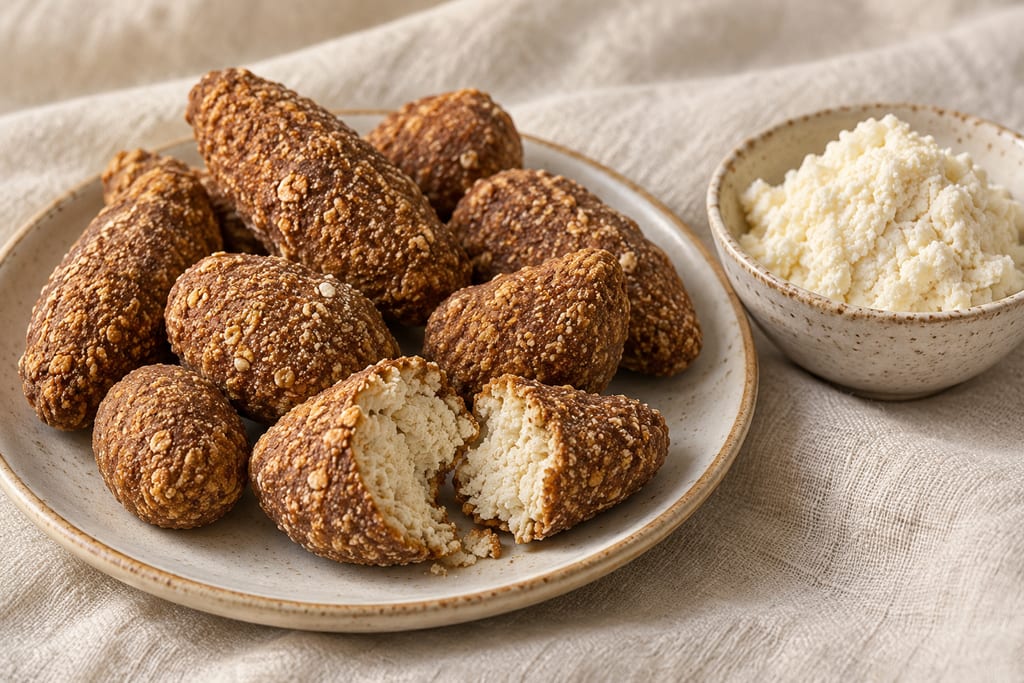
A two-stage Altai dairy preparation: sour chegen is heated into soft aarchi, then portions are drained, pressed and traditionally smoked into firm kurut.
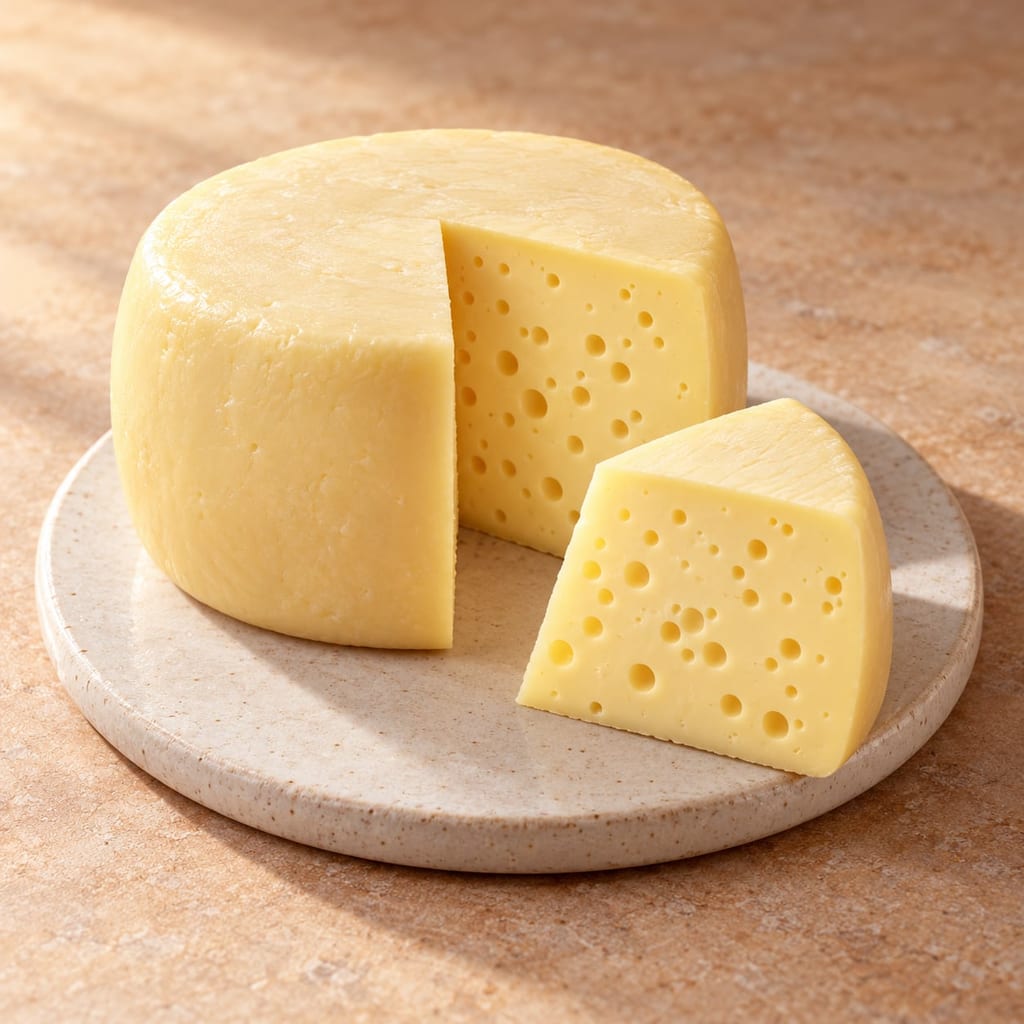
A washed-curd cheese with propionic bacteria, warmed by hot water in two steps and then held in a warm room for weeks so the bacteria can form its holes.
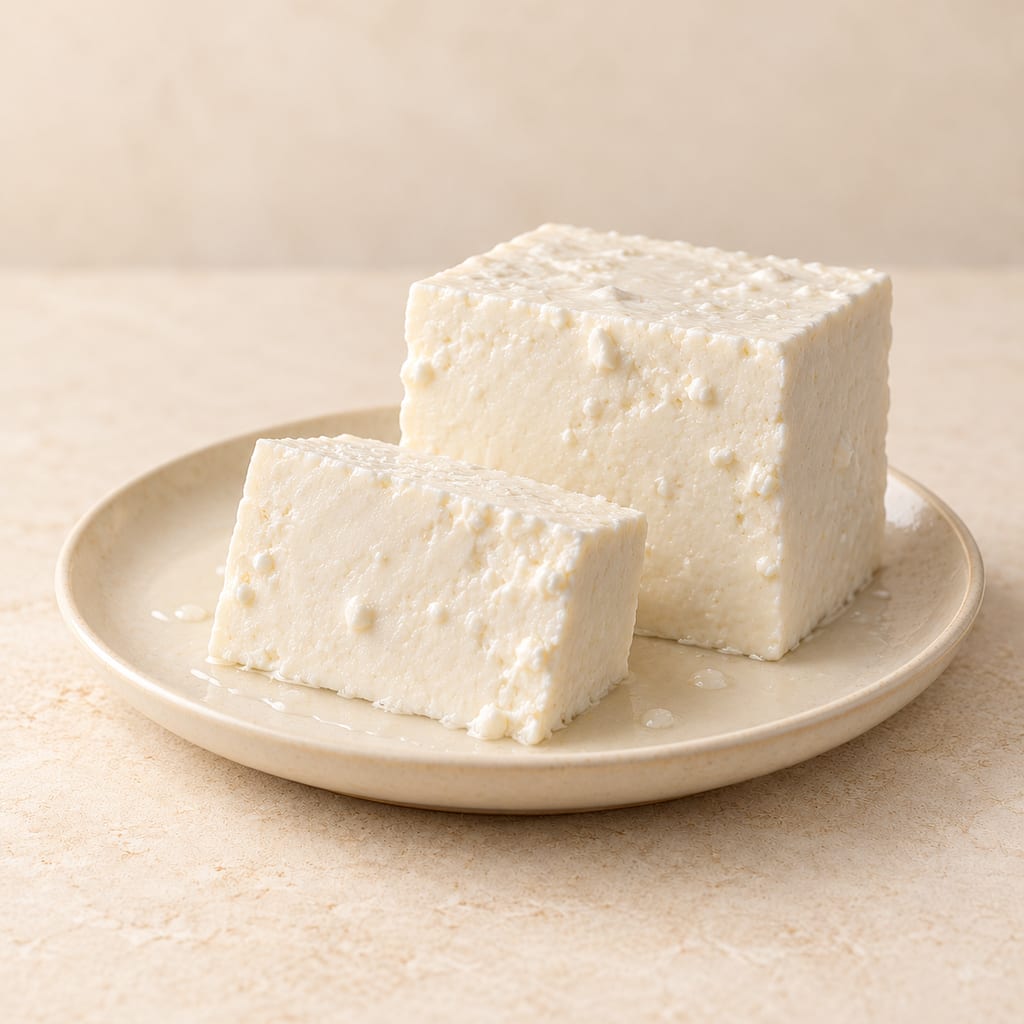
Beyaz peynir is a Turkish white cheese matured in brine. Sheep milk, alone or mixed with other milks, gives a close-textured cheese cut into blocks and packed in cans.
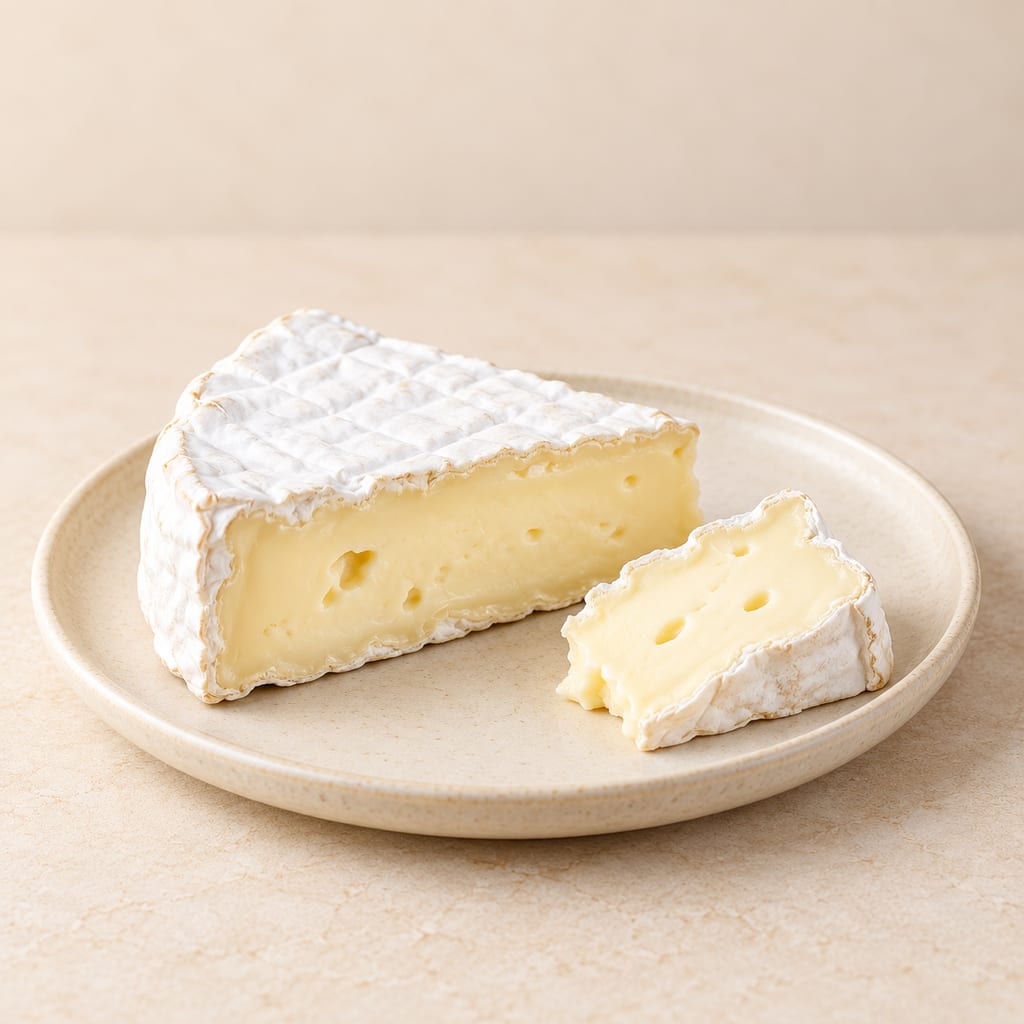
A cream-enriched Brie with a white bloomy rind and a softening center, made from pasteurized milk with lactic and surface cultures.
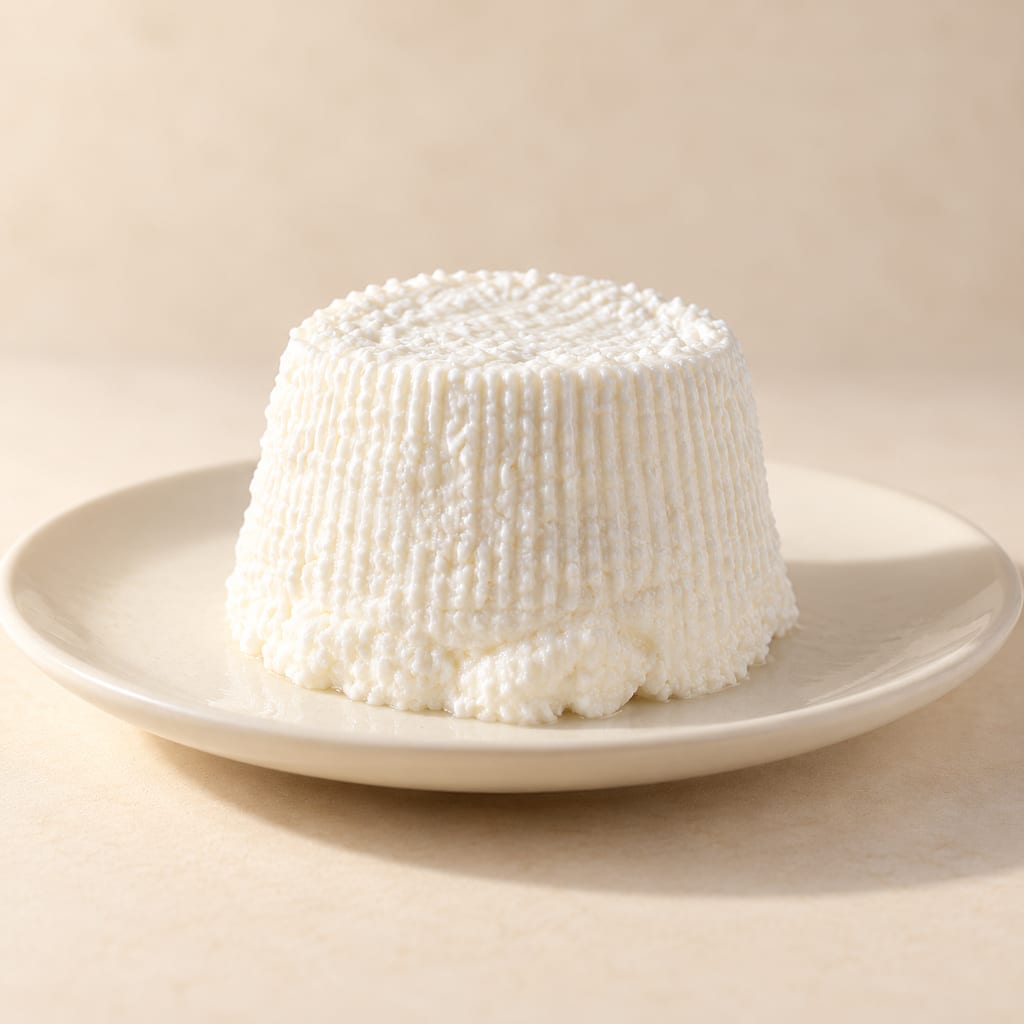
Corsican Brocciu is a whey cheese made by heating sheep's or goat's whey with whole milk and salt, then gently draining the flocculated curds. It is eaten fresh or salted and ripened as Brocciu passu.
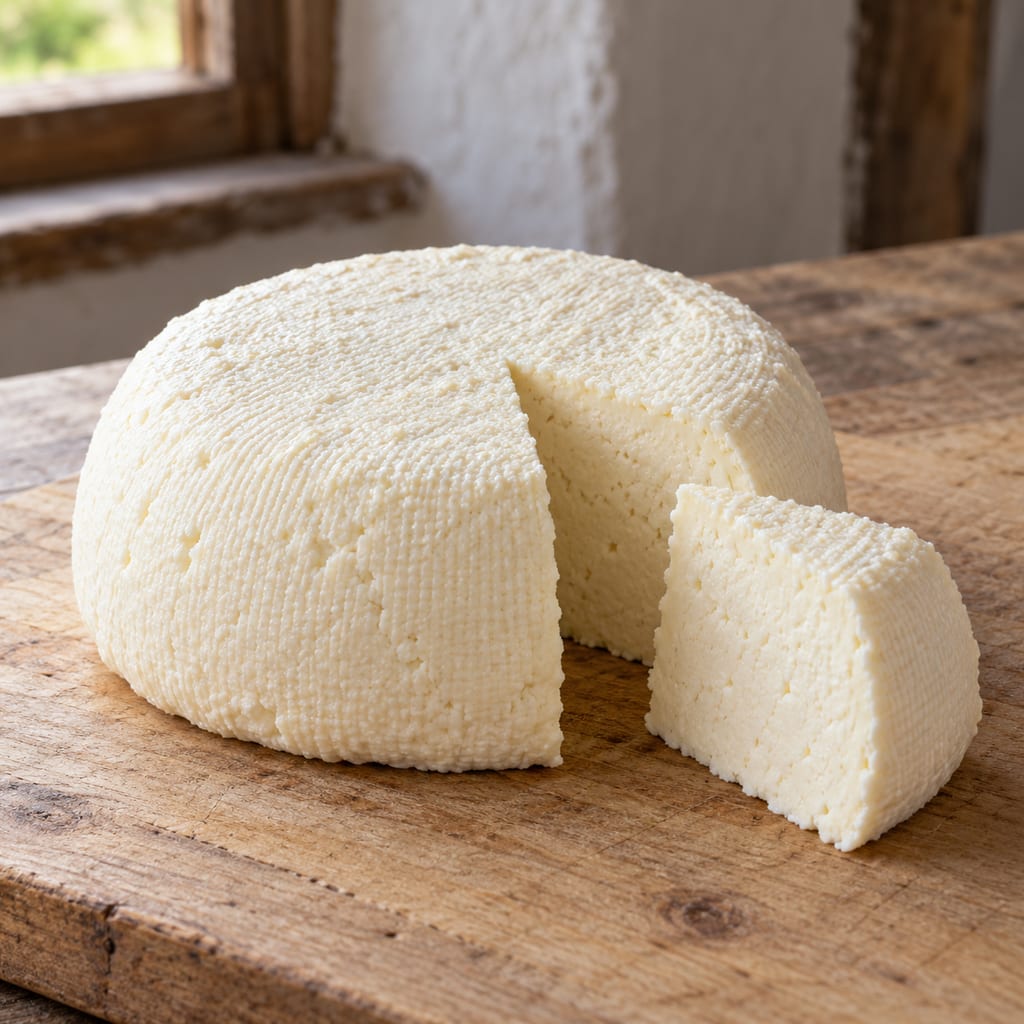
Budz is a traditional Hutsul rennet-set cheese made from sheep, cow or goat milk in the Ukrainian Carpathians, forming a fresh curd that can be eaten, smoked or processed into salted bryndza.
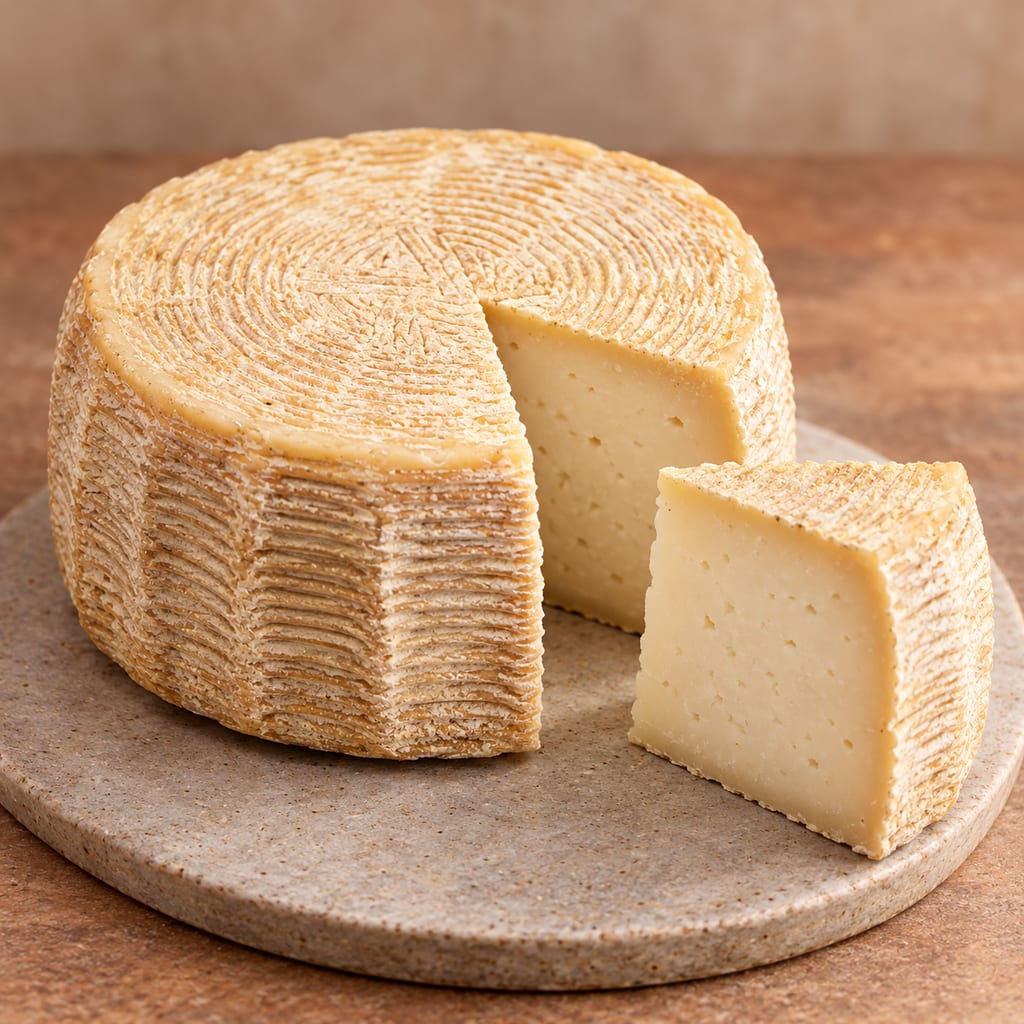
A scalded cheese moulded in baskets and re-cooked in its forms in hot whey, made alongside a ricotta from the same milk, then acidified, brined and aged for months.
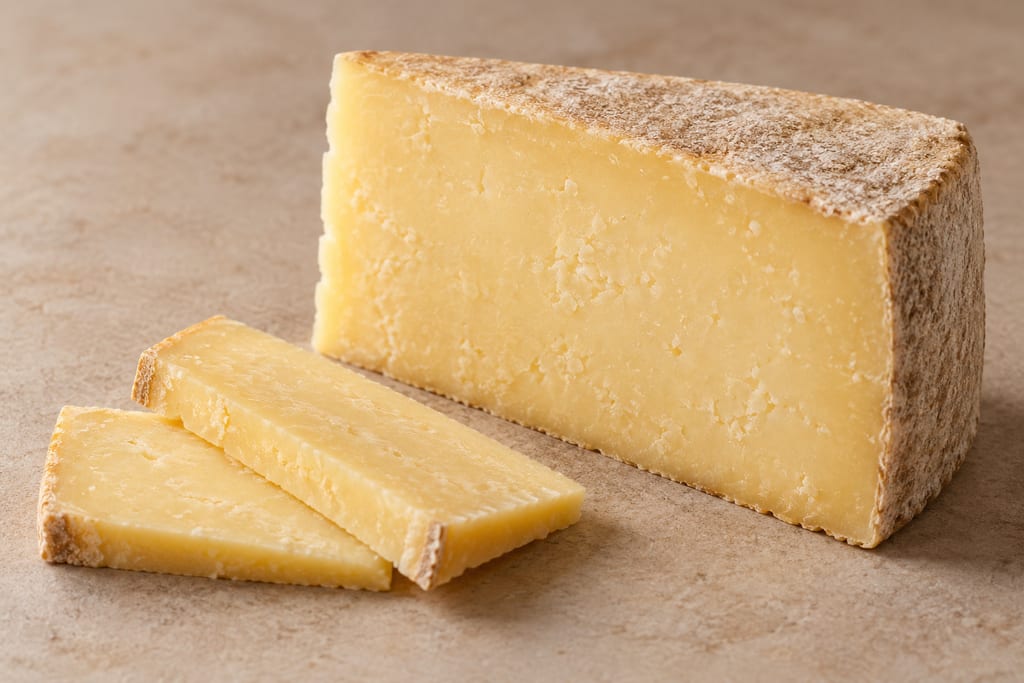
A pressed cheese whose curd is cooked slowly, then cheddared: kept warm in slabs that are turned and stacked for hours before milling, salting and pressing.
No community contributions have been published for this entry yet.
Sign in to contribute. Published comments and photos are free to read.
New England Cheesemaking Supply CompanyProcess
Blue Cheese Recipe (A Spanish Blue)Three-gallon formula and stated yield; culture, mold and rennet doses; 80°F (27°C) culture and curd work; vertical/horizontal cut and rest sequence; hand draining; no-weight forming; twice-daily turning and three-part salting; day-4 stabilization (possibly 8–10 days); 21-day initial aging; piercing both sides after blue appears around day 11; final 42–43°F (6–6°C)/90% RH aging for two to five months with foil wrap.
Cited in: A modern make inspired by Cantabrian blue cheese; Cantabria's cheese landscape and the protected Picón; Milk, cultures and the first curd; Why the curd is handled without a press; Piercing, blue growth and ripening chemistry; Serving and reading the cheese
New Mexico State UniversitySafety
Making Homemade CheeseFresh-cheese pathogen context; no safety validation.
Cited in: Piercing, blue growth and ripening chemistry; Serving and reading the cheese
Oficina de Calidad Alimentaria de CantabriaHistory · Geography
Pliego de condiciones: Picón Bejes-TresvisoCantabrian cave-aged blue-cheese context and protected regional identity; not the method used by this adaptation.
Cited in: Cantabria's cheese landscape and the protected Picón; Related styles and different outcomes
IFF / DaniscoIngredient identity
CHOOZIT MA 4002 LYO 25 DCU — Product DescriptionNamed bacterial composition of MA4002; product sheet valid from March 31, 2022.
Cited in: Milk, cultures and the first curd
Journal of FungiScience · Technique
Secondary Metabolites Produced by the Blue-Cheese Ripening Mold Penicillium roqueforti; Biosynthesis and Regulation MechanismsBlue veining develops in aerated cavities; P. roqueforti's proteolytic and lipolytic activity contributes to flavor; Spanish blue-cheese varieties are distinct regional products and not interchangeable methods.
Cited in: A modern make inspired by Cantabrian blue cheese; Milk, cultures and the first curd; Piercing, blue growth and ripening chemistry; Related styles and different outcomes
Spanish Ministry of Agriculture, Fisheries and FoodHistory · Geography
Picón Bejés-Tresviso DOP/IGP detailOfficial registry lists the Picón Bejés-Tresviso specification as in force from 21 June 1996 and names ODECA and the PDO council as competent bodies.
Cited in: Cantabria's cheese landscape and the protected Picón
Cantabria TourismHistory · Geography · Use
Picos de Europa: cheeses of LiébanaRegional overview describes Liébana's documented cheese tradition by the tenth century, the distinctiveness of its local cheeses, and Picón Bejes-Tresviso as a protected regional cheese. The early date is for the region's cheese tradition, not this exact blue cheese.
Cited in: Cantabria's cheese landscape and the protected Picón; Serving and reading the cheese
Microbiology SpectrumScience · Technique
The Basics of CheesemakingBlue cheese requires cool, humid conditions and regular turning; piercing and internal air spaces support the blue mold; P. roqueforti lipases and proteases contribute flavor and texture.
Cited in: A modern make inspired by Cantabrian blue cheese; Why the curd is handled without a press; Piercing, blue growth and ripening chemistry
Official Journal of the European UnionRegional variation · Identity
Publication of the communication of an approved standard amendment to the product specification for Cabrales PDOCurrent Cabrales PDO specification describes a blue-veined cheese made from raw whole milk; cow milk is required and sheep/goat milk may be blended, with at least two months maturation mostly in caves.
Cited in: Cantabria's cheese landscape and the protected Picón; Related styles and different outcomes
Journal of Dairy ScienceScience
Effect of composition on coagulation, curd firming, and syneresis of goat milkA study of 1,272 goat milk samples examined relationships between fat, protein and casein composition and coagulation and curd-firming measures.
Cited in: Milk, cultures and the first curd
Journal of Food EngineeringScience · Technique
Whey draining of goat milk cheese: A model study using frontal filtrationThe study describes casein network formation and whey expulsion through syneresis and gravity drainage, which slows as resistance increases.
Cited in: Why the curd is handled without a press
International Journal of Food MicrobiologyScience · Variation
Strong effect of Penicillium roqueforti populations on volatile and metabolic compounds responsible for aromas, flavor and texture in blue cheesesExperimental blue cheeses made with different P. roqueforti strains varied in blue area and in aroma-related volatile compounds.
Cited in: Related styles and different outcomes