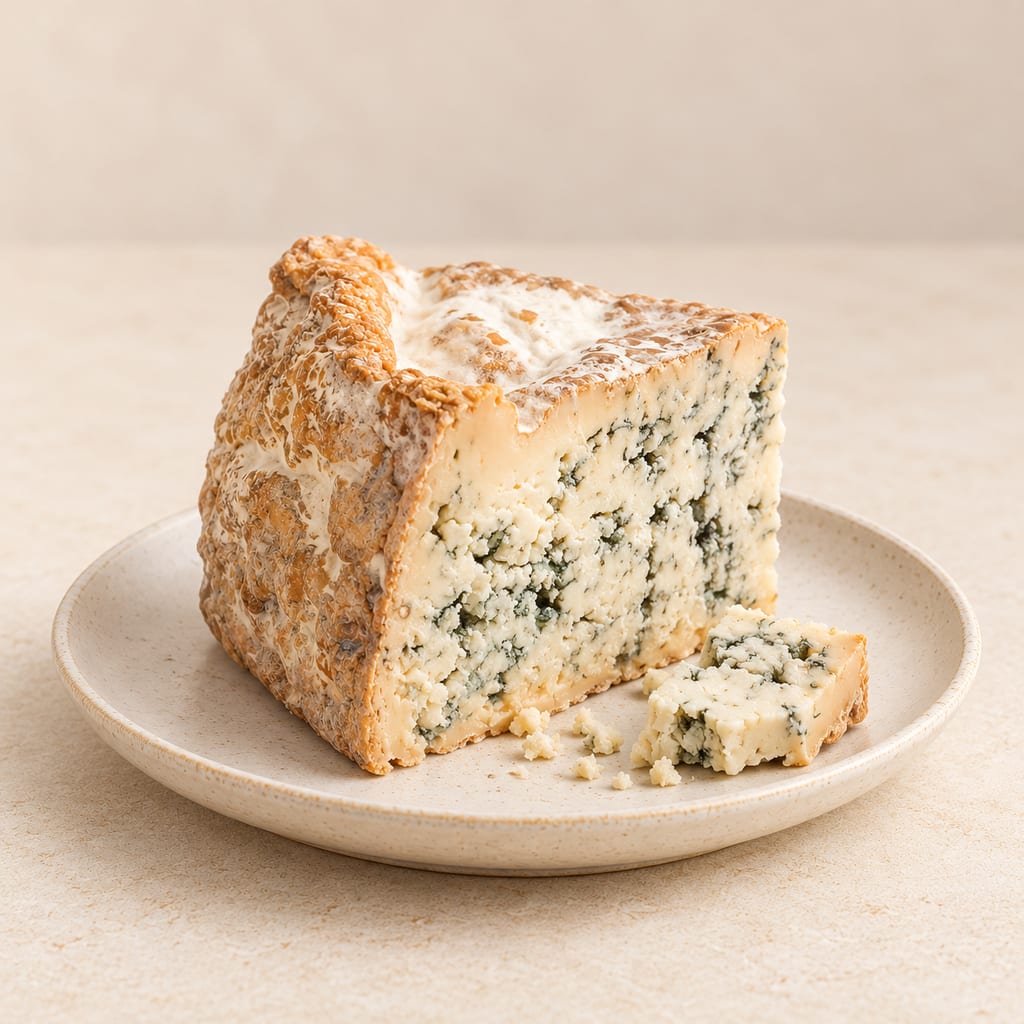
Spanish-style blue cheese
A moist blue cheese inspired by Cantabrian styles, made with pasteurized milk, a lactic starter and Penicillium roqueforti, then ripened in two stages.
 FermenteaWhere food goes to change
Cultures
MA4002 is a mixed dairy starter with mesophilic predominance. In the linked Spanish-style blue cheese it acidifies milk separately from rennet and blue mold; the manufacturer names four bacterial components and a milk-derived nutrient.
MA4002 is a freeze-dried starter culture: a measured blend of lactic acid bacteria added directly to milk for cheesemaking and other cultured dairy products. The name belongs to a defined commercial product, not to a generic family of mesophilic starters. Its role is to begin and steer acid development in milk; it is distinct from rennet, which sets the milk, and from the blue mold that veins a blue cheese.
For a long time, a cheesemaker's starter was not a labelled packet. Cheese makers relied on lactic bacteria naturally present in milk and in the dairy environment. Such communities were selected indirectly: a cheesemaker repeated conditions that yielded a useful result. The outcome depended on the animals, milk, season, handling and local microbial environment. That way of working could produce a recognizable local cheese, but it offered no fixed list of bacteria printed on a sachet.
Modern starter cultures make some of that selection explicit. A supplier propagates chosen bacteria, concentrates them, dries them for storage, and sells a culture designed to inoculate milk. This changes the cheesemaker's starting point. Instead of relying on whichever lactic bacteria happen to be present, the maker adds a defined mixture intended to acidify predictably and contribute to a chosen style. The culture does not replace the craft around it: milk quality, temperature, curd handling, drainage, salt, humidity, air and time still shape the cheese.
The MA4002 product is made by IFF under its CHOOZIT name, and its country of origin is France. The current product sheet dates from 2022; it does not date the first formulation of the blend.
One useful comparison is the Cantabrian blue-cheese tradition invoked by a modern recipe that uses MA4002. The protected Picón Bejes-Tresviso has a defined production area in Cantabria and its own specification for milk, make, cave maturation and marking. The specification recounts cheese in a 962 land exchange, references to cheese in a 1354 inventory, a 1845 description mentioning Bejes cheese, and 1911 writing that compares the Tresviso-Bejes blue cheese with Roquefort. It describes seasonal pastoral production and cave-borne Penicillium arriving without deliberate seeding. Those records establish a regional tradition. They do not show that MA4002 was used in the past, or that a modern US home recipe is the protected cheese.
The linked recipe is a modern adaptation inspired by northern Spanish blue cheeses. It uses pasteurized milk, a commercial starter and added Penicillium roqueforti. The protected regional cheese has a different specification and history; the adaptation should not be confused with an origin-protected product.
The blend has four listed components: Lactococcus lactis subsp. lactis; Lactococcus cremoris subsp. cremoris (formerly Lactococcus lactis subsp. cremoris); Lactococcus lactis subsp. lactis biovar. diacetilactis; and Streptococcus salivarius subsp. thermophilus (formerly Streptococcus thermophilus). One entry is a biovar of the first named subspecies, so the list is not four unrelated species. In dry form, the product is a free-flowing white-to-brown powder; its color can vary between batches.
MA4002 is a farmhouse culture with mesophilic predominance. “Mesophilic” means its main activity is associated with moderate temperatures rather than the hotter conditions favored by strongly thermophilic cheese starters. The blend also includes the S. thermophilus component, but that presence does not change the description of the product's overall predominance. It is a mixed culture, not a single strain.
The 25 DCU product is described as fast-acidifying and robust against bacteriophages, viruses that infect bacteria and can interrupt a starter's performance. It is also associated with flavor production through citrate metabolism. These descriptions set expectations for a culture, not guarantees that every batch will behave identically.
Milk supplies lactose, a sugar that lactic acid bacteria ferment. The resulting lactic acid lowers the milk's pH and changes the environment in which milk proteins and the curd behave. In many cheeses, acid development influences how the curd firms and releases whey. The culture therefore helps set the course for the make, but it does not perform every transformation. Rennet acts on casein proteins to form a gel; cutting the gel, draining whey, salting and aging each do different work.
Citrate metabolism is one reason dairy cultures can shape aroma. Research on citrate-using lactococci describes pathways through pyruvate toward compounds such as diacetyl and acetoin. Diacetyl can have a buttery aroma in dairy foods; carbon dioxide may also arise through some pathways. The pathways and amounts vary with the organism and conditions. That general science helps explain how citrate metabolism may contribute to flavor, but it does not predict a particular aroma or gas formation in every MA4002 cheese.
In the Spanish-style blue cheese recipe, MA4002 is one of several distinct inputs. The recipe calls for 3 gallons of pasteurized milk, 1/8 teaspoon of MA4002, 1/16 teaspoon of Penicillium roqueforti, rennet, cheese salt and calcium chloride. The 25 DCU product's recommended ranges are given in DCU, with no teaspoon conversion. The recipe's 1/8 teaspoon measure belongs to its own batch and product context; it is not a universal dose for every MA4002 pack or milk volume.
The starter and mold have different jobs. MA4002's lactic bacteria support acid development in the milk and curd. The separately added P. roqueforti grows through openings and pierced channels as the cheese ripens, producing the blue-green veining characteristic of the recipe's intended style. Piercing provides access for oxygen inside the cheese; the bacteria do not make the blue mold, and the mold does not replace the lactic starter. Rennet sets the milk into curd; calcium chloride is included in this recipe for its pasteurized milk; salt is applied later to the formed cheese.
The home method shows how a culture is only one part of a longer sequence. Milk is warmed to 80°F (26.7°C), inoculated with culture and mold, then left for 90 minutes before rennet is added. After another set, the curd is cut, rested, stirred gently and drained by hand. It is molded without press weight, turned during forming, and salted in three applications beginning at least 24 hours after filling. The recipe's structure aims to retain moisture and openings rather than press the curd into a dense block. The starter begins the biological acidification; time, temperature, drainage and handling determine what kind of body it enters.
The recipe then separates early and late aging. The first 21 days are at 52–53°F (11.1–11.7°C) and 80% relative humidity with turning and daily fresh-air exchange. The maker pierces both faces after blue development appears. After about three weeks, the surface is wiped, the cheese is wrapped, and it continues at 42–43°F (5.6–6.1°C) and 90% humidity for two to five months.
The Cantabrian protected cheese offers a striking contrast. Its specification describes a loose curd that leaves openings for mold, then maturation in natural limestone caves at 5–10°C and 85–95% humidity for at least two months. It says Penicillium spores carried by cave air colonize the cheese, unlike the commercial mold addition in the US recipe. It also describes a former maple-leaf wrapper used to cover the sticky rind for transport, later replaced under food-safety rules by gold-coloured food-grade foil. The atmosphere and materials of that regional make are part of its identity; they are not interchangeable instructions for the adapted recipe.
In the protected cheese, the DOP account links Penicillium to more than color: it consumes lactic acid and releases enzymes that act on proteins and fats, helping shape the blue cheese's aroma. Those changes happen during ripening and belong to the mold's work, not to MA4002. Separating the bacterial starter from the ripening mold makes the recipe easier to understand: one begins the acidifying fermentation in milk, while the other transforms the cheese as it ages.
For the 25 DCU format, the suggested inoculation ranges are 5–10 DCU per 100 litres of vat milk for soft and semi-hard cheese, and 2.5–5 DCU per 100 litres for quark-style products and sour cream. They are guidelines; a process may call for supplemental culture depending on its technology and desired result. In a standardized test, one 25 DCU sachet in 250 litres of reconstituted milk at 30°C produces a pH change of 0.9 within six hours or less. The 5 DCU sheet expresses the same test concentration as one 5 DCU sachet in 50 litres. These test conditions characterize the two package sizes, not the Spanish-style blue-cheese recipe and not a teaspoon conversion.
For the 25 DCU format, storage is 18 months from production at or below 4°C. A carton contains 50 sachets made from polyethylene, aluminium and polyester, with product name, pack size, batch number and shelf life on each. The instructions call for adding the whole sachet to pasteurized mix and stirring at low speed for about 15–30 minutes to avoid foam and air. The corresponding 5 DCU sheet also states 18 months at or below 4°C and the same laminate. Each detail belongs to its named size; the small-batch recipe's teaspoon amount is a separate, recipe-specific measure.
Milk, including lactose, is listed as a fermentation nutrient in the product's allergen declaration. The other named allergens are marked absent as added components, with labelling rules left to local requirements. The culture is not dairy-free merely because it is a dry powder. In the cheese kitchen, starter activity is only one part of a process: a culture specification does not validate a finished cheese. An extension guide identifies pathogens associated with fresh cheese and recommends sanitation of hands, equipment and food-contact surfaces; it does not validate the months-long blue-cheese method described here. Follow the recipe's pasteurized-milk formulation and do not treat smell, taste or appearance as evidence of safety.
MA4002 makes sense where a cheesemaker wants a defined lactic starter with mesophilic predominance and a documented combination of acidification and citrate-related flavor potential. Suggested uses include soft and semi-hard cheese, quark-style products and sour cream. “Mesophilic” describes a broad temperature preference, not an exact blend or dose; a generic starter or MT1 cannot be presumed equivalent. The culture must fit the product style, milk and process temperature.
The manufacturer's different use cases show why a culture is described by its activity as well as by a cheese name. In sour cream and quark-style products, acidification helps shape tang and texture. In the linked blue cheese, that early bacterial work precedes a separate mold-ripening phase.
“Mesophilic culture” names a broad category, while MA4002 identifies a specific commercial blend. MT1 is another named culture; the MA4002 documents provide no basis to assume identical composition or dosage. A different product needs its own formulation and directions, rather than a dose inferred from the MA4002 name.
In the blue cheese recipe, MA4002 supports the bacterial fermentation that precedes curd handling and ripening. The mold creates the blue veins, rennet forms the set, and time and environment shape the finished cheese. The modern make draws on a regional tradition whose protected version has its own history, ingredients, caves and controls. A sachet can make one part of a complex process more repeatable, but it does not carry the whole identity of a cheese.
milk
The manufacturer identifies France as product origin for its 25 DCU format; this does not locate the linked home recipe or its purchased lot.
A moist blue cheese inspired by Cantabrian styles, made with pasteurized milk, a lactic starter and Penicillium roqueforti, then ripened in two stages.
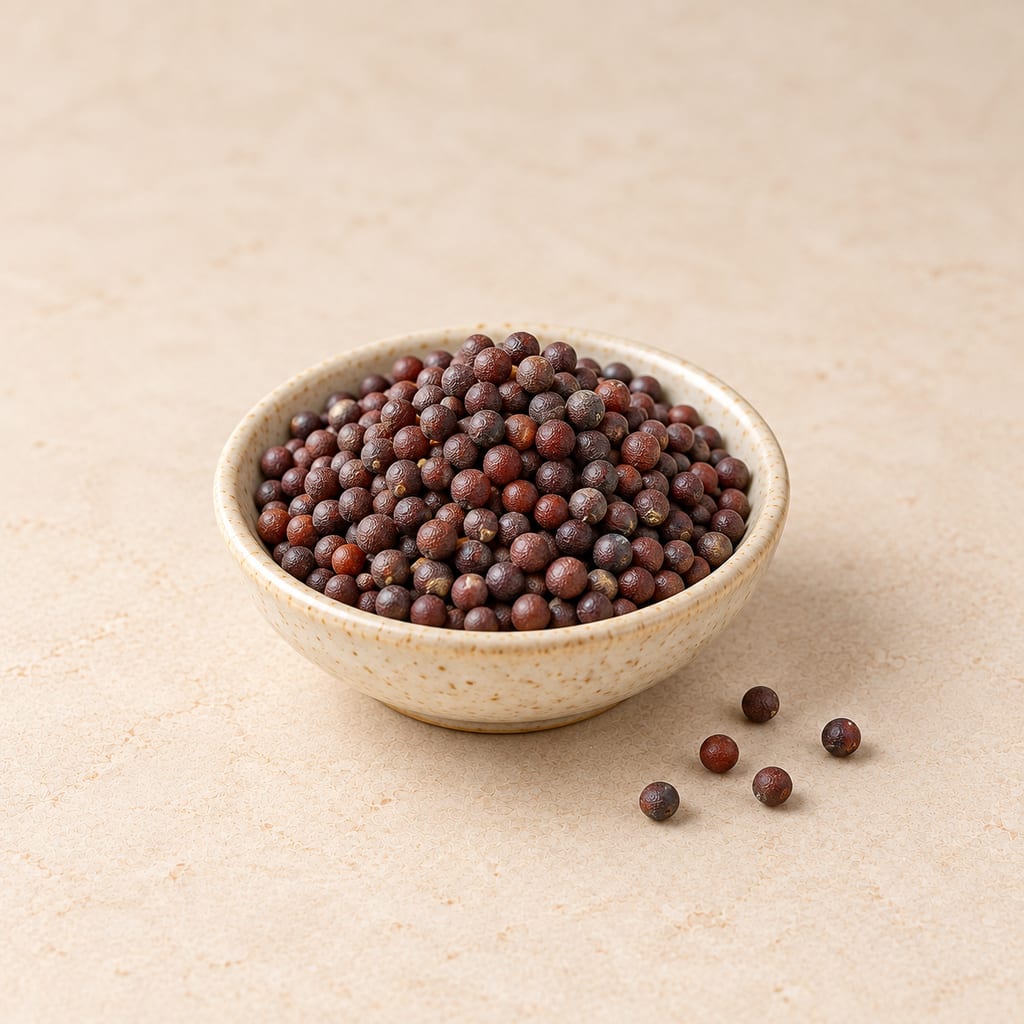
Black mustard seed is the small, dark, very pungent seed of Brassica nigra, the hottest of the three mustards. It gives its bite through sinigrin, which turns into allyl isothiocyanate when the crushed seed meets water.
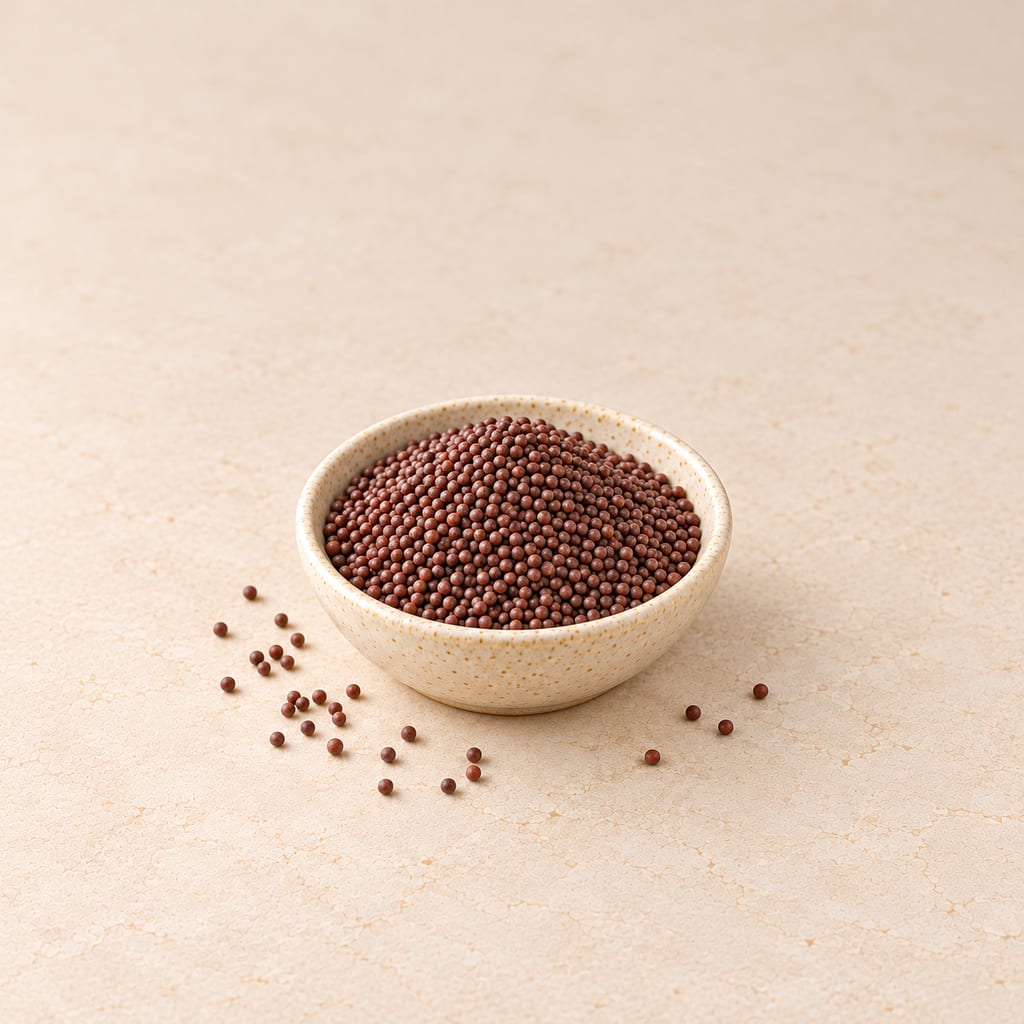
Brown or oriental mustard seed comes from Brassica juncea, a hybrid of black mustard and turnip rape. It is the hot, easily harvested seed behind Dijon, spicy brown mustards and much of the mustard oil of the Indian subcontinent.
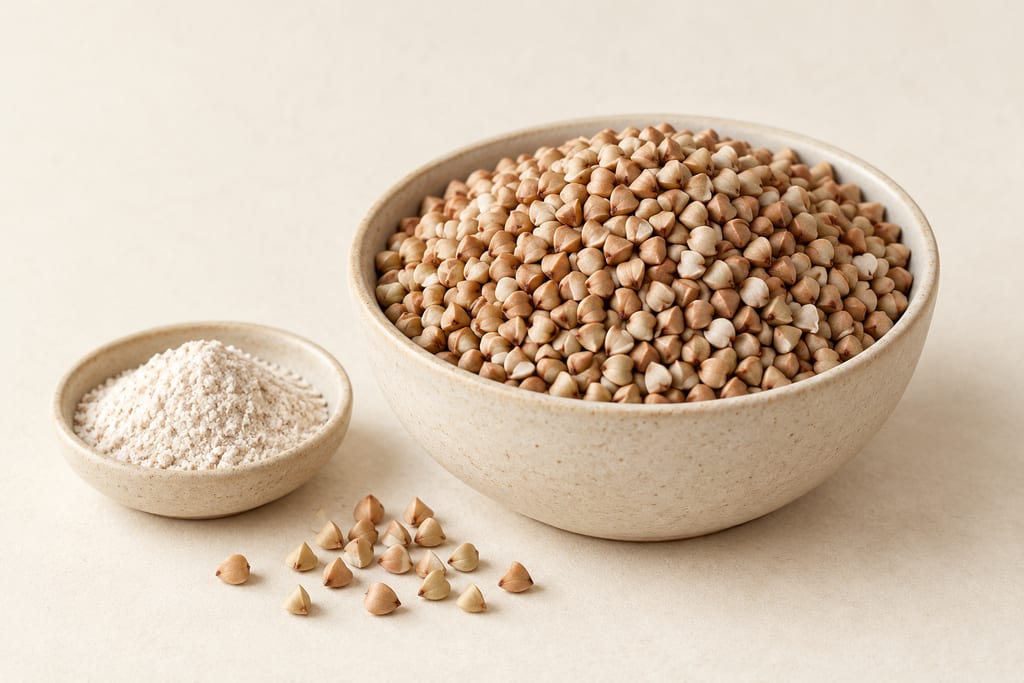
Buckwheat is a triangular-seeded flowering plant whose whole groats and flour cross regional food traditions, from porridge and pancakes to modern sourdough and gluten-free bread.
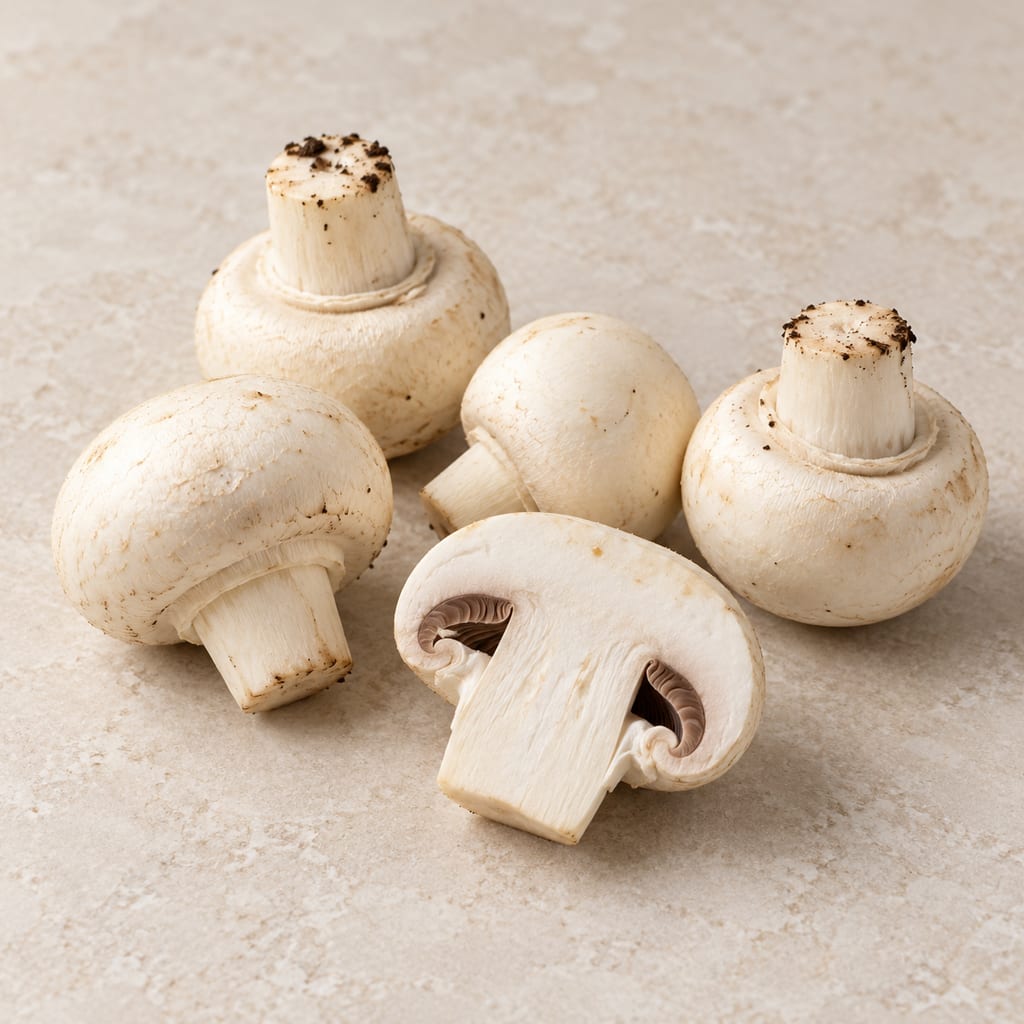
A cultivated form of Agaricus bisporus sold young as a button and at more mature stages as cremini or portobello, used fresh or preserved in everyday cooking.
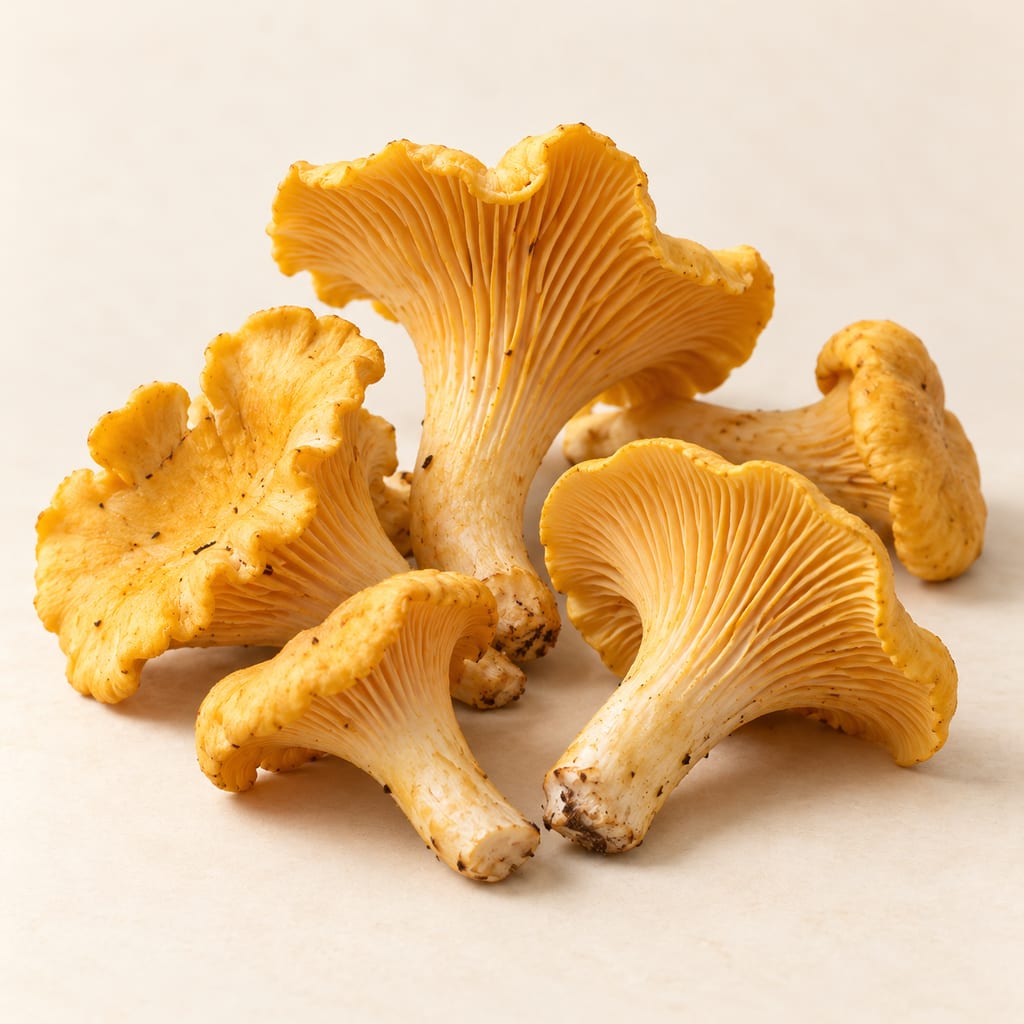
Chanterelles are wild, tree-associated edible mushrooms, particularly the European golden chanterelle Cantharellus cibarius, prized for their firm flesh, fruity aroma and use fresh, frozen, dried or pickled.

Chicken eggs supply proteins and yolk fats that set and emulsify. Atlas breads use them in enriched doughs, surface washes and a sourdough pancake batter mixed after fermentation.
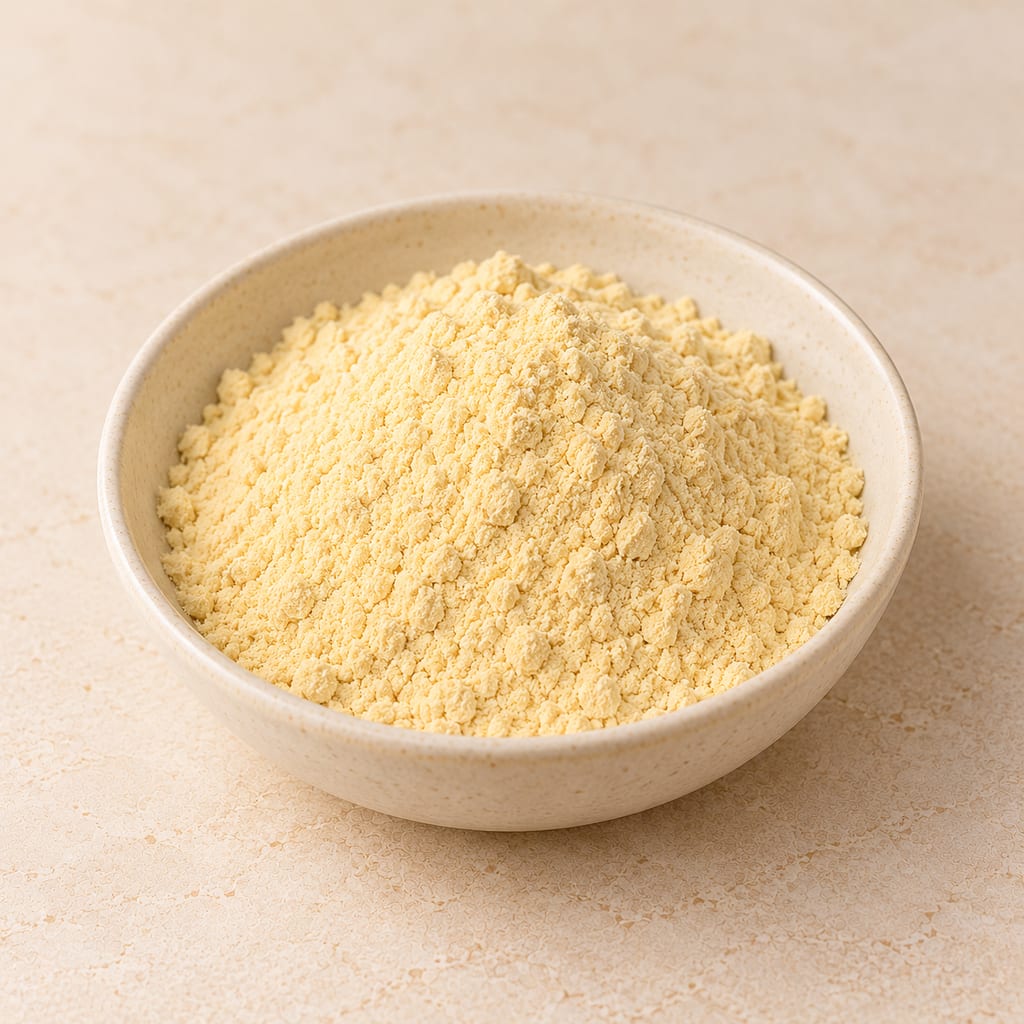
Chickpea flour is milled Cicer arietinum, used as besan in many Indian dishes and as the base of breads such as socca and farinata.
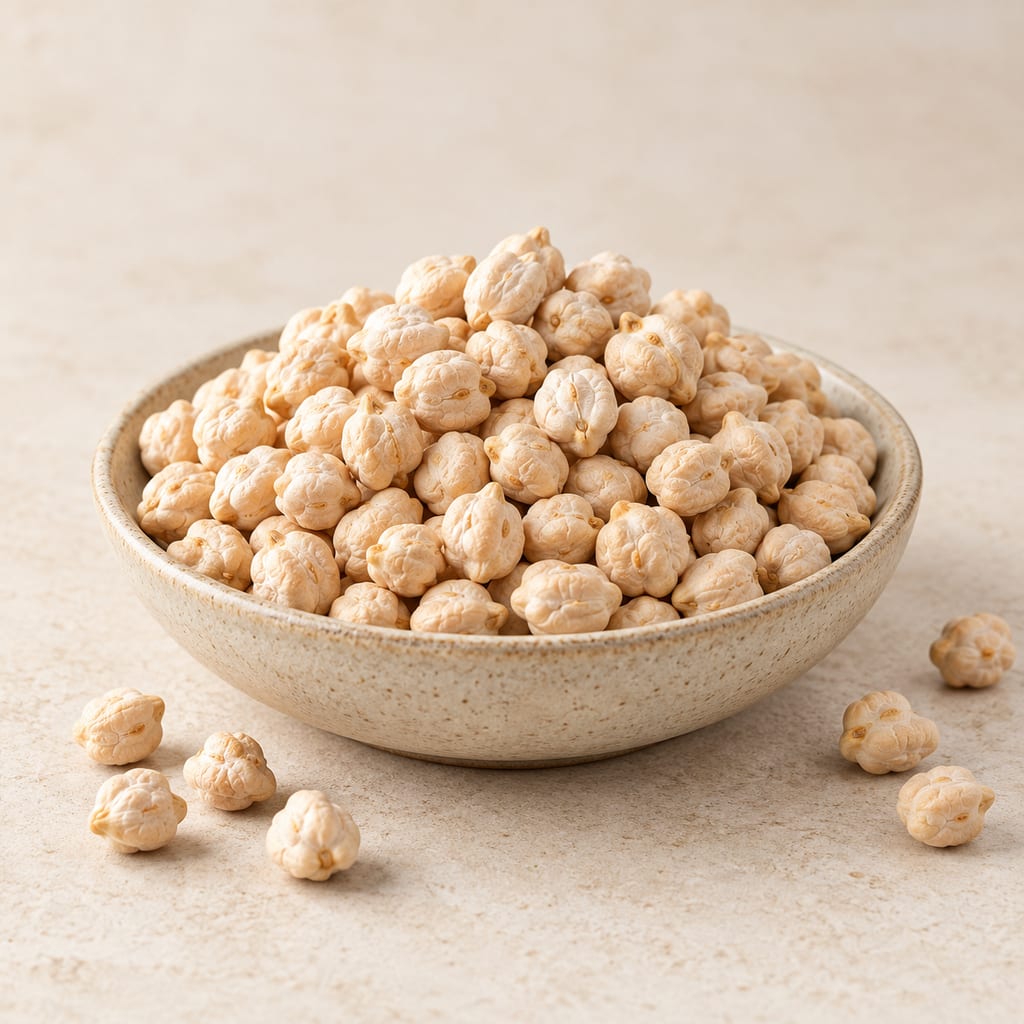
Chickpeas (Cicer arietinum) are dry pulses eaten whole or milled into flour, which gives socca, farinata and other breads a dense, nutty batter or dough.
No community contributions have been published for this entry yet.
Sign in to contribute. Published comments and photos are free to read.
IFF/DaniscoIngredient context · Process
CHOOZIT MA 4002 LYO 25 DCU: Product Description PD 206519-13.0ENThe 31 March 2022 sheet identifies the culture's bacterial components, mesophilic predominance, dose ranges, performance test, milk nutrient, storage and 25 DCU packaging.
Cited in: A defined dairy starter; From village starters to a named blend; What is in the culture; The culture is not the blue mold; Using the 25 DCU format; Where MA4002 belongs
IFF/DaniscoIngredient context · Process
CHOOZIT MA 4002 LYO 5 DCU: Product Description PD 206696-12.7ENManufacturer's 5 DCU product sheet, hosted by a cheesemaking retailer, gives the corresponding 5 DCU test volume, storage and pack information; it is not a recipe teaspoon conversion.
Cited in: Using the 25 DCU format
New England Cheesemaking Supply CompanyIngredient context · Process
Blue Cheese Recipe (A Spanish Blue)Jim Wallace's modern recipe uses 1/8 teaspoon MA4002 and separately adds blue mold and rennet to 3 gallons of milk, with its own heating and aging schedule.
Cited in: A defined dairy starter; From village starters to a named blend; The culture is not the blue mold; Using the 25 DCU format; Where MA4002 belongs
New Mexico State University Cooperative Extension ServiceIngredient context · Process
Making Homemade Cheese, Guide E-216The extension guide, revised February 2022, distinguishes starters, rennet and sanitation in home cheesemaking; it does not validate the linked long-aged blue-cheese process.
Cited in: From village starters to a named blend; What is in the culture; Using the 25 DCU format
AIMS MicrobiologyIngredient context · Process
Lactic acid bacteria as starter cultures: An update in their metabolism and geneticsReview explains lactic acid bacteria's lactose fermentation and acidification roles in cultured dairy; it does not measure this MA4002 batch.
Cited in: What is in the culture
Applied and Environmental MicrobiologyIngredient context · Process
Lactococcus lactis as a Cell Factory for High-Level Diacetyl ProductionThe study describes citrate-related pathways toward diacetyl and acetoin in engineered lactococci; it is not a measured aroma result for MA4002 cheese.
Cited in: What is in the culture
Oficina de Calidad Alimentaria de CantabriaIngredient context · Process
Pliego de Condiciones de la DOP Picón Bejes-TresvisoThe protected cheese specification gives its Cantabrian production area, cave ripening conditions, traditional accounts and airborne Penicillium; it does not establish MA4002 as traditional.
Cited in: From village starters to a named blend; The culture is not the blue mold; Where MA4002 belongs