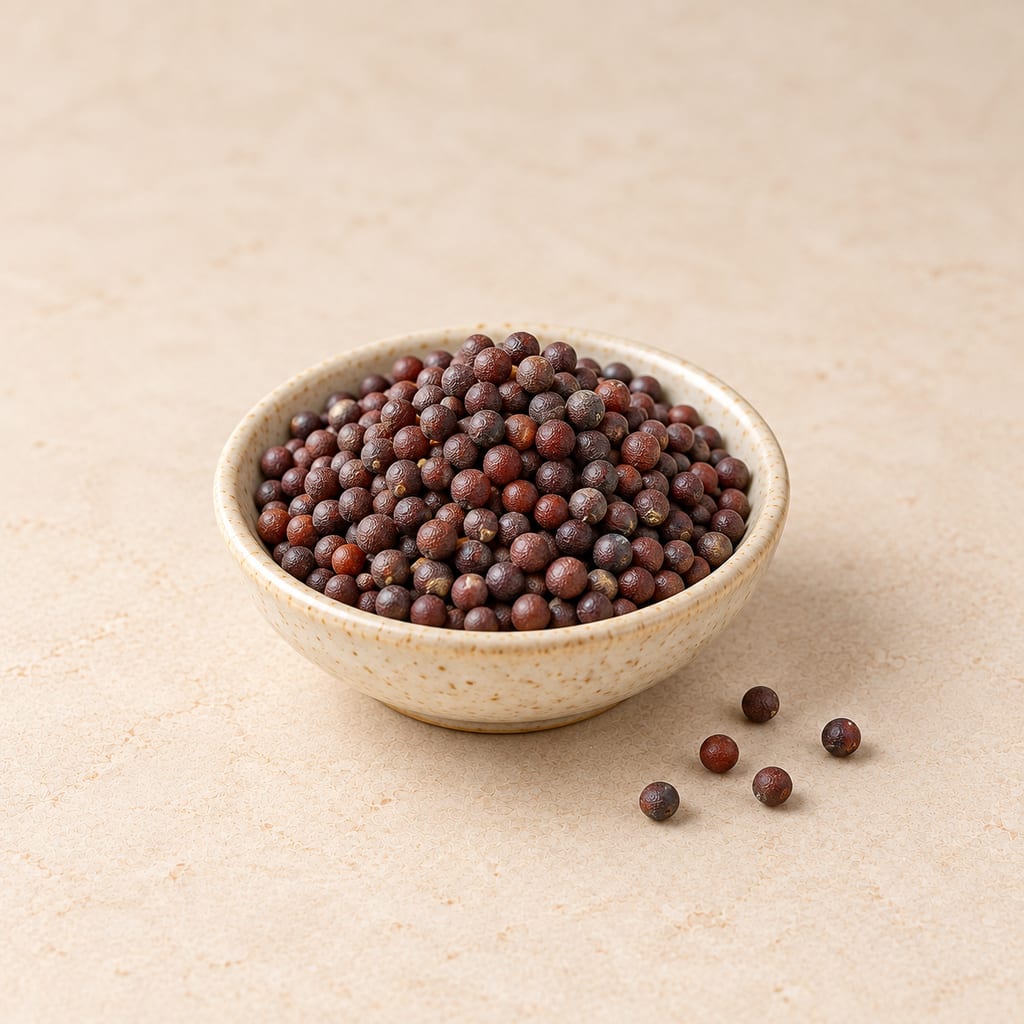
Black mustard seed
Black mustard seed is the small, dark, very pungent seed of Brassica nigra, the hottest of the three mustards. It gives its bite through sinigrin, which turns into allyl isothiocyanate when the crushed seed meets water.
 FermenteaWhere food goes to change
Spices and aromatics
Brown or oriental mustard seed comes from Brassica juncea, a hybrid of black mustard and turnip rape. It is the hot, easily harvested seed behind Dijon, spicy brown mustards and much of the mustard oil of the Indian subcontinent.
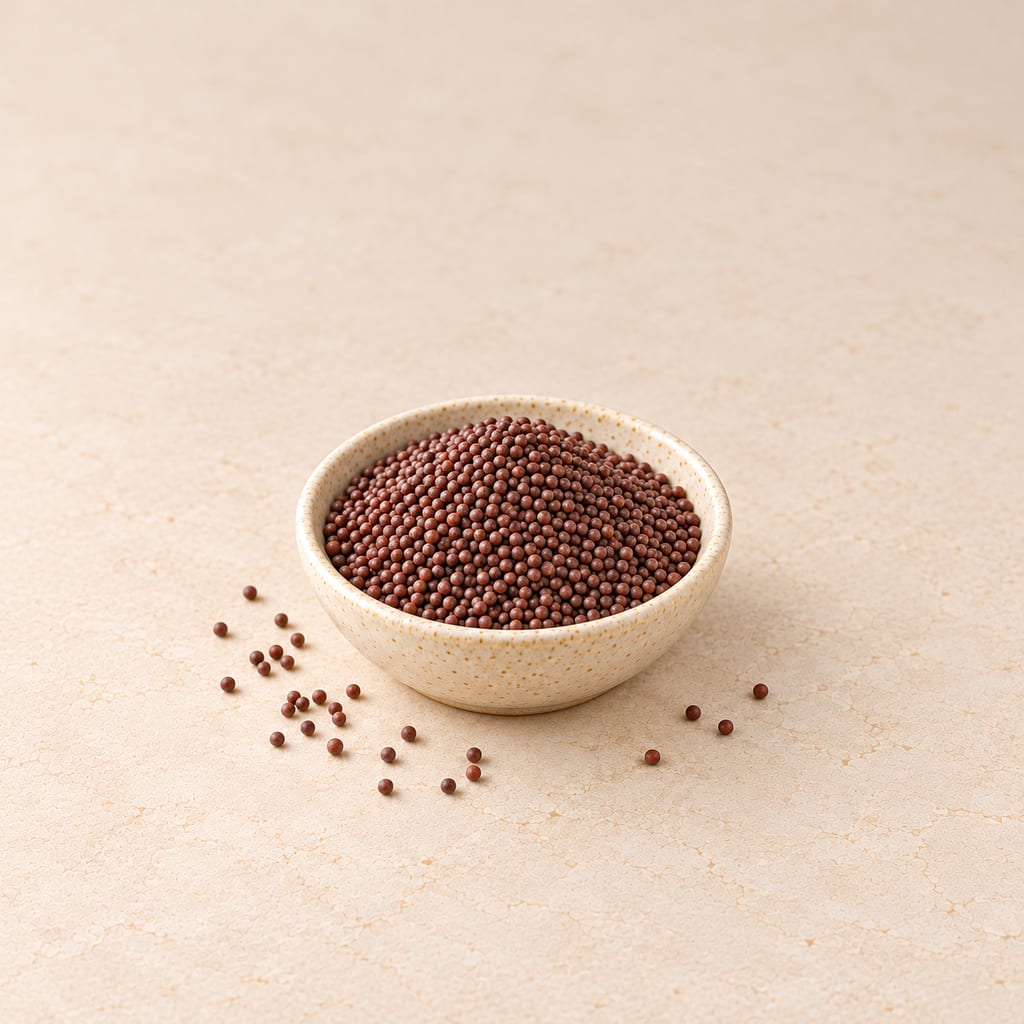
Brown mustard, oriental mustard, Indian mustard and Chinese mustard are names for Brassica juncea (L.) Czern. and Coss., an annual plant of the cabbage family. It is one species with many faces. In North America and Europe it is grown mainly for seed to make condiment. In the Indian subcontinent it is grown for oil. In China and Japan the plant is a leaf and root vegetable, and vegetable, root and oilseed forms of it exist, together with a canola-quality line developed for low erucic acid and glucosinolate content. This page covers the seed.
Genetically Brassica juncea is a natural hybrid of two older species: black mustard, Brassica nigra, and turnip rape, Brassica rapa. It is one of the three tetraploid crops in the triangle of U, with 36 chromosomes against 16 for black mustard and 20 for turnip rape. One account says it took its fast growth from the turnip rape parent and its mustard oil from the black mustard parent. The plants are shorter than black mustard and the seeds larger, though the seed is smaller than that of yellow mustard: crop guides count about 200,000 brown or oriental seeds to the pound against about 100,000 for yellow.
The seed is rich in oil and protein. An analysed sample of Indian mustard seed contained 28 g carbohydrate, 26 g protein and 12 g dietary fibre per 100 g. In North Dakota trials brown and oriental varieties averaged about 35% oil, against about 24% for yellow varieties, and the oil is the reason the seed is crushed as well as ground.
Brown mustard is pungent, though less than black. Its main glucosinolate in many seeds is sinigrin, which breaks down into allyl isothiocyanate when crushed seed meets water. Lietzow's review states that on hydrolysis sinigrin yields up to 1.4% allyl isothiocyanate, the volatile oil responsible for the pungent taste. In oil-free seed meal from four brown mustard cultivars, volatile isothiocyanates came to 116.9 to 145.9 micromoles per gram, against 5.4 to 6.9 of the thiocyanate ion. The chemistry is the same as in black mustard, but the quantities vary by cultivar.
They vary a good deal. Reported glucosinolate totals for brown mustard seed range from 15.7 to 127.6 micromoles per gram dry weight in one study, 94.4 to 169.2 per gram fresh weight in another and 68 to 153 in a third. Sinigrin ranged from none to 145.5 micromoles per gram across the cultivars studied, and in several of them another glucosinolate, gluconapin, was present in large amounts, up to about 110 micromoles per gram. A brown mustard seed is therefore not guaranteed to be a sinigrin seed, and the heat of one lot can differ from the next.
Brown mustard also has the most active myrosinase of the three mustards, at 2.75 units per millilitre in one comparison, against 1.50 for black and 0.63 for white mustard. Where the enzyme is lively, the heat arrives quickly once the seed is crushed with water. At neutral pH the main products are isothiocyanates; under acid conditions, with ferrous ions or with specifier proteins, nitriles form instead. Heating the seed or the paste denatures the enzyme and preserves most of the glucosinolates. A review of mustard processing reports that controlled heating at 60 to 80 degrees Celsius for 5 to 15 minutes modulates myrosinase activity and strikes a balance between keeping the flavour and keeping the result acceptable to the palate, since allyl isothiocyanate is volatile and irritates the mucous membranes.
Europe is the main market for brown mustard, according to the Agricultural Marketing Resource Center, which names Dijon as the example, and the Asia-Pacific region buys brown mustard for spicy cooking oil and condiments. Lietzow's review describes traditional Dijon mustard as made from black or brown seed blended with wine, vinegar or verjuice and seasonings. In North America the brown seed has a smaller place: North Dakota extension guidance gives it limited use in hot, spicy table mustards and other seasonings, and oriental mustard is used primarily in Chinese mustards and as an ingredient in mayonnaise, salad dressings and barbecue sauces. Some spice-blending houses prefer oriental mustard for its hot, pungent flavour.
Brown mustard is the oil mustard of South Asia. The review says mustard seed oil is valued for its nutty and pungent flavour and a high smoke point of 250 degrees Celsius, especially in eastern and north-western India. The oil of the three commercial mustards is high in erucic acid, over 30% of the fatty acids, although breeding has produced canola-quality Brassica juncea with little or none and a few countries grow low-erucic genotypes. Erucic acid is not well oxidised in the body, and mustard seed and table mustard are among the larger sources in the European diet. The US Food and Drug Administration bars expressed mustard oil from use as a vegetable oil, noting it may contain 20 to 40% erucic acid, and the European Union limit for erucic acid in oils is 5%, a level most mustard oil samples tested in Germany exceeded; in India and Pakistan mustard oil is still widely used for cooking.
The seed itself can be sold whole, ground, as mustard flour from peeled seed, or as pressed cake. Whole seeds have almost no smell until they are broken. Prepared mustard is usually a mixture of ground seed, flour or cake with a liquid, and the review notes that the intake of whole, unprocessed seeds as a seasoning is different from the intake of processed seeds.
The United States harvested 176,900 acres of mustard in 2024, producing 102 million pounds worth $45.9 million at an average yield of 577 pounds per acre, according to the Agricultural Marketing Resource Center. Idaho, Montana, North Dakota, Oregon and Washington grow most of it, and Canada, Mexico and Thailand are the largest export markets, while imports, mainly from Canada and India, are rising. These figures cover all types of mustard together. Older crop guidance adds that France was the largest per-person consumer, at 1.5 pounds a year, and bought about 70% of the Canadian crop.
The press cake and the green plant have uses too. Seed meal of oriental mustard, Brassica juncea, has been used as a broad-spectrum pesticide against nematodes, insects and fungi, and green mustard dug into the soil may act as a biofumigant through the breakdown products of its glucosinolates. They are the same compounds that heat the mouth, working on the crop's enemies.
Brown and oriental mustard are cool-season crops for short growing seasons. Crop guides give them 90 to 95 days to mature, against 80 to 90 days for yellow mustard. Seedlings tolerate mild frost, and hot, dry weather during flowering lowers yield. The seed germinates in soil as cold as 40 degrees Fahrenheit. The crop likes fertile, well-drained loam near neutral pH and is usually grown under contract, with a buyer fixed before planting.
Harvest is the hard part. Brown and oriental pods shatter easily, so the crop is swathed after general leaf drop, when about 75% of the seed has reached its mature colour, rather than combined standing. Seed is combined at 12 to 15% moisture and dried; it is stored at 10% moisture or less according to one guide, or 9% or less according to another. Drying air should stay below 150 degrees Fahrenheit and the seed below 120. The seed cracks easily when handled, and cracked seed counts as dockage. Weed seed is a particular problem: wild mustard can be separated mechanically from large-seeded yellow mustard but not from brown or oriental seed, so a clean field matters.
North Dakota trials gave brown and oriental varieties average yields of 1,453 to 1,570 pounds per acre. Older Upper Midwest guidance quoted grower yields of 1,000 to 1,100 pounds per acre for brown and oriental types and 800 to 900 for yellow. Canada is one of the largest producers, and Alberta, Manitoba and Saskatchewan grow a large share of the world's crop.
The leaves of Brassica juncea are a far larger ingredient in fermentation than its seed. A recent review describes them as superior substrates for lactic acid fermentation in traditional foods such as sauerkraut and kimchi, because they are rich in chlorophyll, carotene, ascorbic acid and minerals; the fermented leaf mustards of South-East Asia have their own pages on this site. The seed's part is smaller and more particular: it is a flavouring, and in some products a protective one.
Sinigrin hydrolyses to the same allyl isothiocyanate as in black mustard, and that compound is toxic to microbes and moulds. In a cherry-packaging study with black mustard seed, 100 mg of ground seed gave rot control comparable to a fungicide over 28 days, and the effect depended on dose. The studies of brown mustard seed in food are fewer. The review reports that mustard seed powder in meat products delayed lipid oxidation, that white mustard powder scored best on sensory evaluation against black and brown, and that in fermented sausage the seeds improved storage stability by promoting phenolic acids, lowering redox potential and raising antioxidant activity. A study of nitrite-free organic fermented sausage found that mustard seed with acid whey lowered pH during fermentation and kept lipid oxidation over 90 days of vacuum storage about as low as in a cured control; its abstract names no species. The review also reports that fermenting mustard seed with a multi-species starter raised its polyunsaturated fatty acids 3.2-fold over the raw seed.
These results show direction, not recipes. They do not give a quantity of brown mustard seed for a pickle or a salami, and they do not make the seed a preservative on its own.
Mustard is a recognised allergen. The 2S albumin Bra j 1 is the major allergen of brown mustard, and it is closely related to Sin a 1 of white mustard, so someone allergic to one is likely to react to the other. Heat does not remove the allergenic proteins, and they resist digestion, so cooking and making table mustard do not lower the allergenic potential. Some people with mustard allergy are also sensitised to mugwort pollen and to certain fruits, nuts, peanuts and legumes.
Glucosinolate breakdown also makes the thiocyanate ion, a competitive inhibitor of iodide uptake into the thyroid, and the review notes that the effect appears only on iodine-deficient diets. Goitrin, formed from progoitrin, acts differently and is a potent inhibitor of thyroid peroxidase in animals. The review evaluates the toxic and antinutritional effects of the breakdown products as mainly observed in animals and at high doses. EFSA set an acceptable daily intake for allyl isothiocyanate of 20 micrograms per kilogram of body weight. At an assumed 1 g of mustard a day with 1,000 mg of allyl isothiocyanate per kilogram of mustard, an adult stays below the limit, but products documented at up to 15,000 mg per kilogram could exceed it for children or lighter people.
The sources read do not date the first cultivation of Brassica juncea or say where it arose, and the Roman mustard they describe is not tied to a species. The yield and price figures in the Upper Midwest guide are decades old, and the glucosinolate ranges come from separate studies of different cultivars, so they are not directly comparable. Seed colour is not a reliable way to separate brown from black mustard or from wild mustard, and no source gives a shelf life for the whole seed.
mustard
Brassica juncea seed is grown mainly for oil here; the page does not claim the species originated in the region.
Dijon mustard is made from brown or black seed; Europe is the main market for brown mustard. The seed is not claimed to be grown in Dijon.
Canada is one of the largest mustard producers; the sources do not separate brown from other mustard in its output.
The sources read do not establish where Brassica juncea arose or was first cultivated as a seed crop.
Black mustard seed is the small, dark, very pungent seed of Brassica nigra, the hottest of the three mustards. It gives its bite through sinigrin, which turns into allyl isothiocyanate when the crushed seed meets water.
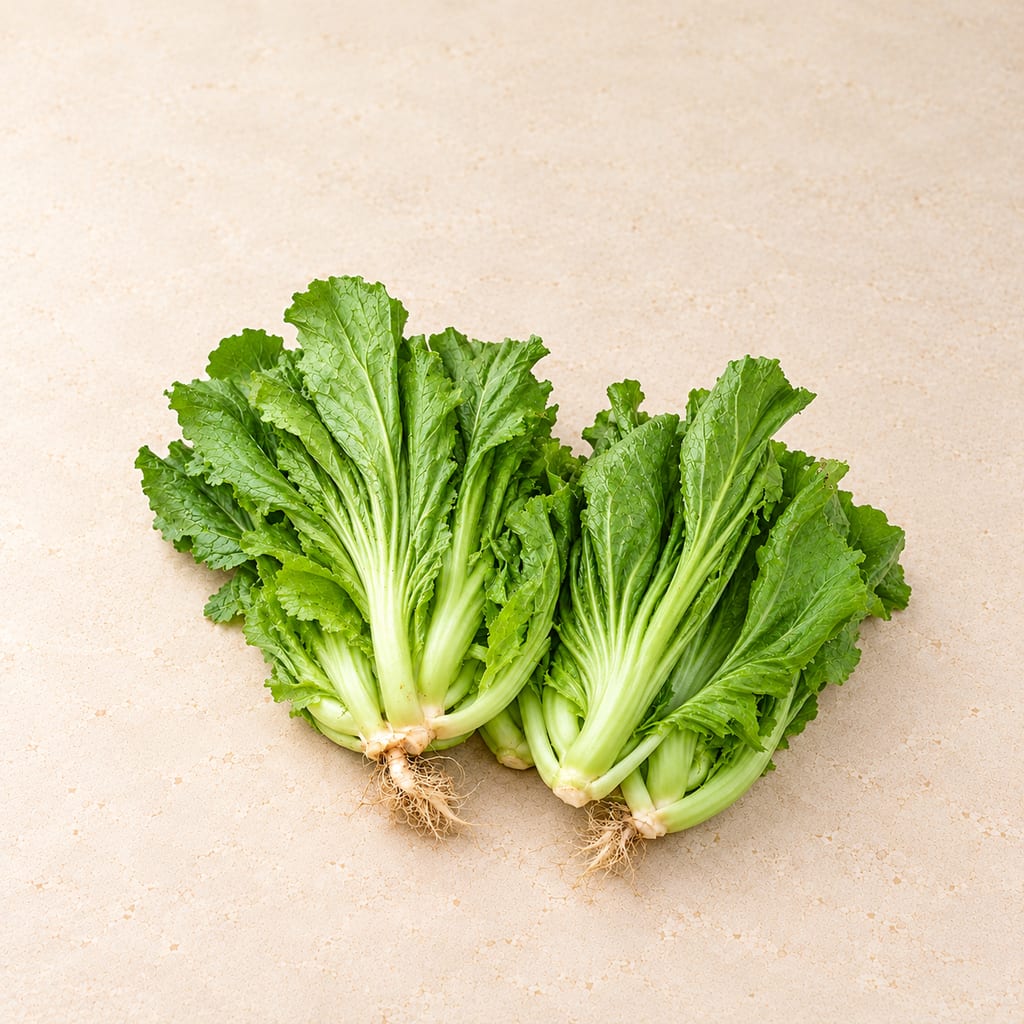
The leaves of Brassica juncea, a hardy cool-season crop with a sharp, sulfurous bite, eaten fresh and cooked and fermented across Asia as pickled greens, kimchi and gundruk.
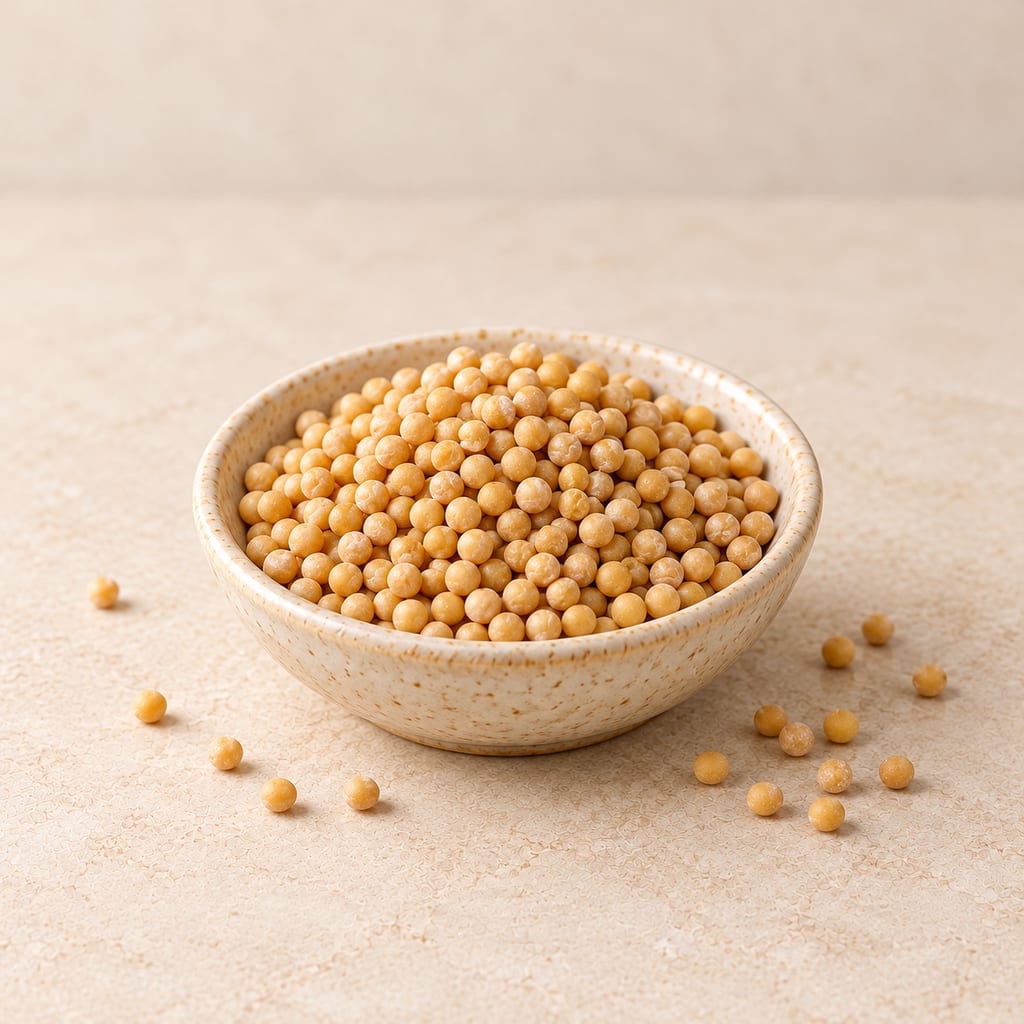
White or yellow mustard seed comes from Sinapis alba, the mildest of the three mustards and the one behind American yellow mustard. Its pale seed is also prized by sausage makers and picklers.
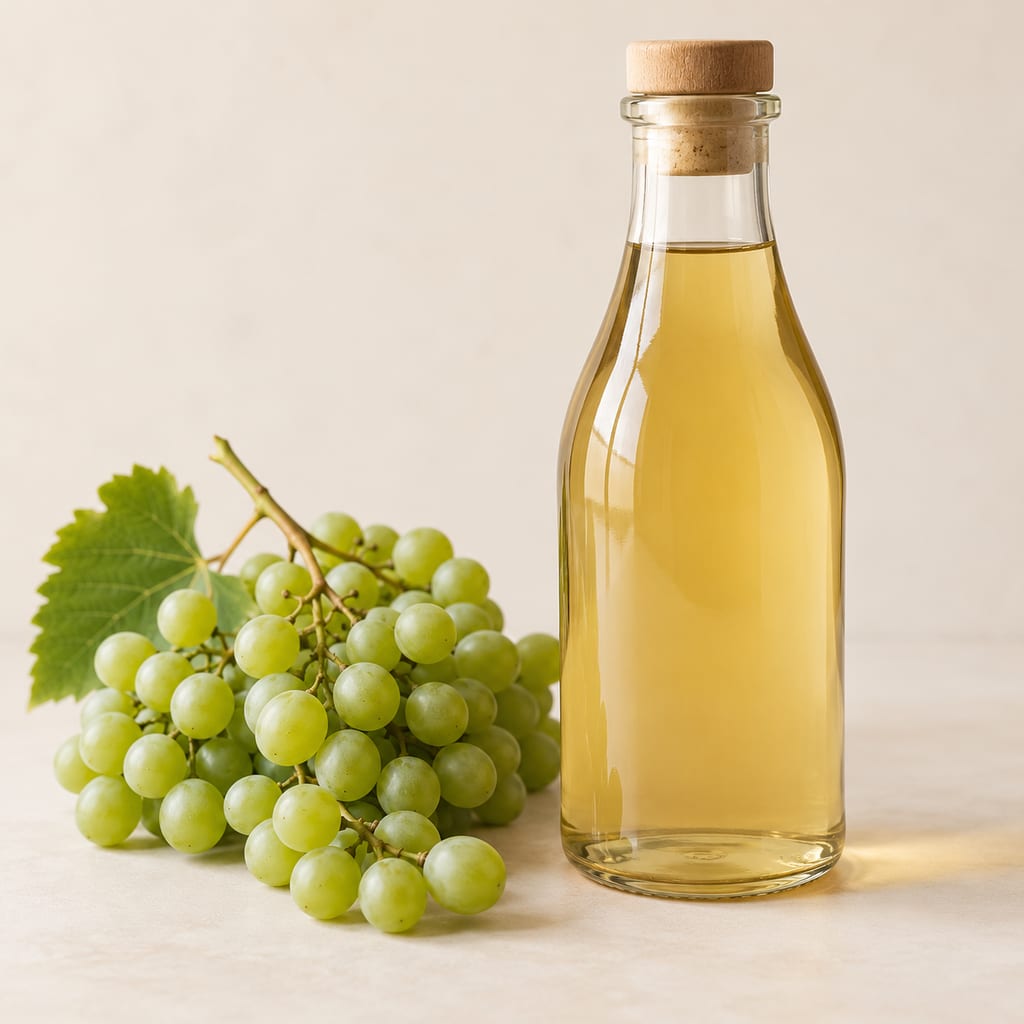
Verjuice is the sharp juice pressed from unripe grapes, and sometimes from crab apples or other sour fruit. Medieval cooks used it where later kitchens reached for vinegar or lemon.
No community contributions have been published for this entry yet.
Sign in to contribute. Published comments and photos are free to read.
Foods (MDPI), J. Lietzow, German Federal Institute for Risk Assessment, 2021Identity · Chemistry · Safety · History
Biologically Active Compounds in Mustard Seeds: A Toxicological PerspectiveTaxonomy and relationships of white, brown and black mustard; U triangle; seed colour, size and relative pungency; sinalbin and sinigrin; myrosinase hydrolysis and its products by pH; glucosinolate contents by species; Dijon and German blends; harvesting difficulty of black mustard; allergens Sin a 1 and Bra j 1; erucic acid; bisphenol F in white-mustard products
Cited in: A hybrid with many names; The pungency and where it comes from; From Dijon to mustard oil; Markets and by-products; In pickles, sausages and ferments; Allergy, thyroid and other cautions; Notes and open questions
Frontiers in Nutrition, Hu and Yan, 2025Chemistry · Processing
Comprehensive advances in phytochemical components, bioactive functionality, and processing applications of mustard (Brassica juncea)Seed composition of black, brown and yellow mustard; myrosinase activity by species (B. juncea 2.75 U/mL, B. nigra 1.50, S. alba 0.63) and thermal stability; mustard seed in meat and fermented sausage studies; leaves as substrates for lactic fermentation
Cited in: A hybrid with many names; The pungency and where it comes from; In pickles, sausages and ferments
Purdue University NewCROP, from University of Wisconsin and University of Minnesota extensionHistory · Agronomy
Mustard (Alternative Field Crops Manual)Mustard native to temperate Europe and among the first domesticated crops; Greeks and Romans used sinapis as paste and powder; the name mustard dates from about 1300 and mustum; yellow mustard about 90% of Upper Midwest production; seeds per pound; maturity; harvest; storage moisture; yellow mustard flour as emulsifier and stabilizer in sausage
Cited in: Markets and by-products; A crop for short summers; Notes and open questions
North Dakota State University ExtensionAgronomy · Use
Tame Mustard Production (A935)Yellow mustard is the main type in North Dakota; oil about 24% in yellow and about 35% in brown and oriental varieties; seed size; yellow mustard used in meat packing for flavour and emulsification; oriental in Chinese mustards, mayonnaise, dressings and barbecue sauces; seed stored at 9% moisture or less
Cited in: A hybrid with many names; From Dijon to mustard oil; A crop for short summers
Agricultural Marketing Resource CenterMarket
MustardYellow mustard the mildest and lowest in oil; brown and oriental used for hot table mustard, oil and spices; Europe the main market for brown mustard such as Dijon, North America for yellow; largest producers Nepal, Russia and Canada
Cited in: From Dijon to mustard oil; Markets and by-products; A crop for short summers
Pliny the ElderHistory
Natural History, Book XIX, section 170 (Latin text)Sinapi described as the sharpest in taste and fiery in effect, most healthful, needing no cultivation and hard to remove once sown because fallen seed turns green at once
Journal of the Science of Food and Agriculture, Karwowska, Wojciak and Dolatowski, 2015Science · Fermentation
The influence of acid whey and mustard seed on lipid oxidation of organic fermented sausage without nitriteNative and autoclaved mustard seed with acid whey in nitrite-free organic fermented sausage lowered pH during fermentation and kept lipid oxidation over 90 days of vacuum storage similar to a cured control; mustard species not stated in the abstract
Cited in: In pickles, sausages and ferments
Foods (MDPI), Calvo and colleagues, 2026Science · Preservation
Postharvest Application of Black Mustard (Brassica nigra) Seed Derivatives in Sweet Cherry Packaging for Rot ControlDefatted ground black mustard seed releases allyl isothiocyanate in humid air through myrosinase acting on sinigrin; 50-150 mg of seed stopped growth of three moulds in vitro; 100 mg gave rot control comparable to a fungicide over 28 days; 50 mg cut infected cherries 43% at day 13 but not by day 17
Cited in: In pickles, sausages and ferments