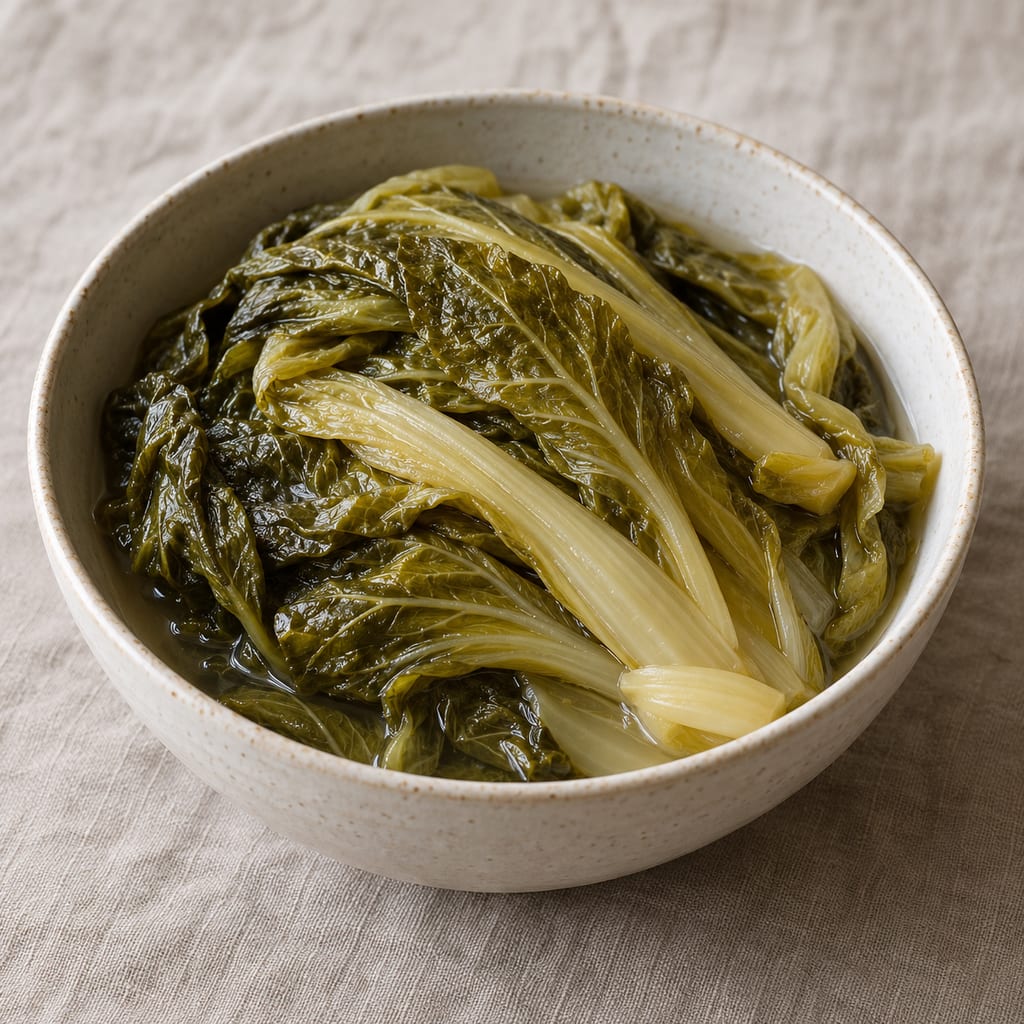
Burong mustasa (Filipino fermented mustard greens)
Wilted flat mustard leaves ferment with rice water and salt as a Filipino appetizer and cooking ingredient.
 FermenteaWhere food goes to change
Substrates
The leaves of Brassica juncea, a hardy cool-season crop with a sharp, sulfurous bite, eaten fresh and cooked and fermented across Asia as pickled greens, kimchi and gundruk.
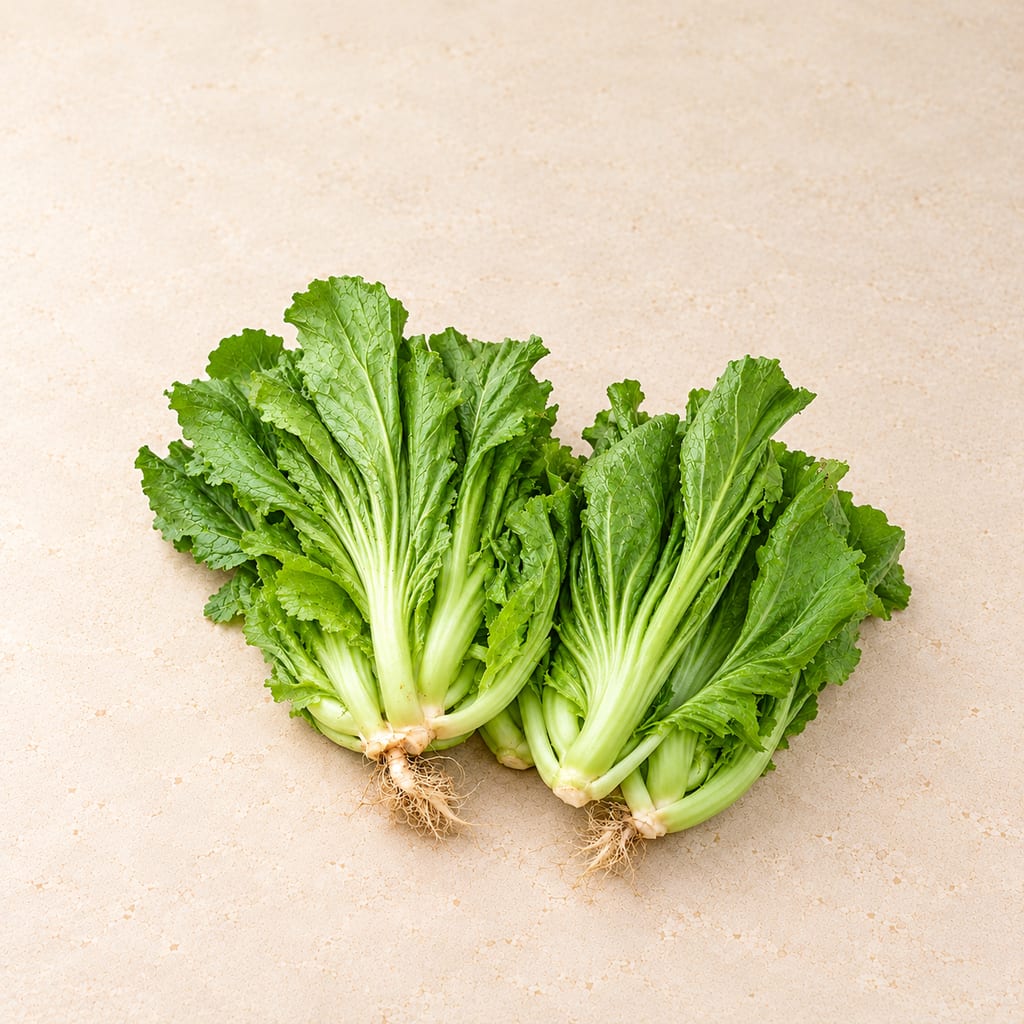
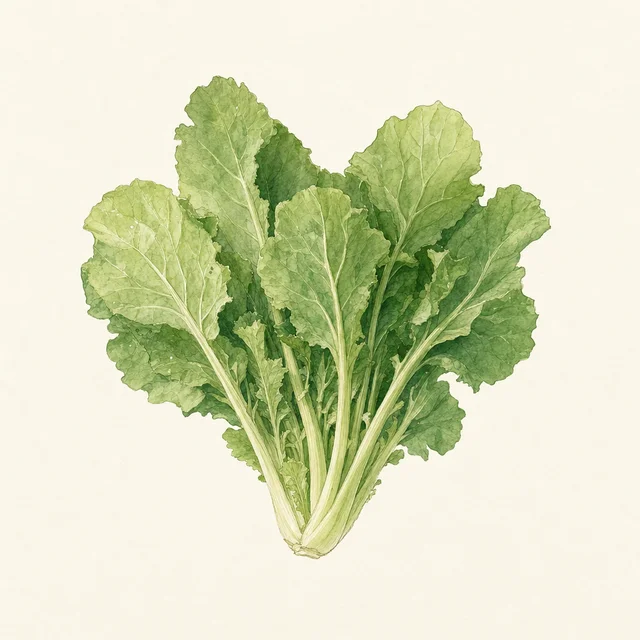
Mustard greens are the leaves of Brassica juncea, an annual or biennial plant of the cabbage family that grows to about a metre when it is left to flower. The lower leaves are stalked, green and lobed or frilled at the edge; the upper leaves are narrower and have no stalk. The same species is known in English as Indian mustard, brown mustard, Chinese mustard and leaf mustard, and it supplies more than greens: depending on the type grown, the harvest is a leaf, a swollen stem, a thickened root or a seed. "Mustard greens" means the leaf types, grown for foliage rather than for oil or for the condiment pressed and ground from the seed.
The flavour is the reason to grow them. Raw leaves and stems have a sharp, clean pungency with a fragrant, slightly sweet edge, and the sting is the same kind of heat that makes mustard seed hot. Growers and cooks select for it or against it. Korean markets separate a milder green type, suited to fresh salads and to kimchi, from a thin-leaved reddish type used mainly as a seasoning in the winter kimchi-making season. Young leaves go into salads; older leaves and stems are cooked as a potherb, often with ham or salt pork, in soups and stews, or canned or frozen.
Cultivated forms of the species fall into four groups. Leaf mustards (subspecies integrifolia) are the greens: the Korean gat (갓), the Japanese takana (高菜), and the snow, curled, horned and head mustards. Oilseed mustard (subspecies juncea), known as rai or raya in India, is grown for its seed. Root mustard (napiformis) is a thickened-root type. The fourth group, tsatsai, includes the multi-shoot mustards and the big-stem mustards used for pickles; the Chinese swollen-stem mustard (variety tumida), the raw material of zha cai, is a stem mustard of this kind. In Chinese the species is jiecai (芥菜). American growers know named leaf cultivars such as Florida Broadleaf and Southern Curled Giant.
Fermenters use other names. Thai cooks say pak-kaat-khieo for mustard greens and pak-kwaang-tung for the Chinese mustard fermented with them; the salted product is kiam chai in Thai and kiam chaye in Malay usage, and sayur asin in Indonesia. In South China the salted, sun-dried and rice-watered leaf is hum choy. Korea knows the fermented leaf as gat kimchi, and Nepal as the leaf ingredient of gundruk.
Three relatives are easy to mix up with it. Brassica rapa and Brassica nigra are its two parent species, and B. rapa includes the turnip and the field mustard. White or yellow mustard, Sinapis alba, belongs to a different genus and is a separate allergen source and the origin of the pale seed used in yellow mustard condiments. The seed of B. juncea itself is covered on the brown or oriental mustard seed page.
Mustard is one of the oldest plants people took into cultivation: the seed is named as a condiment in Sanskrit and Sumerian texts dating as far back as 3000 BC. The plant itself is a hybrid. Brassica juncea carries two sets of chromosomes, 36 in all, one set from Brassica rapa (20 chromosomes) and one from Brassica nigra (16). A comparison of the genomes of 480 accessions from 38 countries points to a single origin in West Asia, where both parents grow side by side, and dates the hybridisation to roughly 8,000 to 14,000 years ago. The question is not closed. Vavilov placed the primary centre in Central Asia, around Afghanistan, with secondary centres in Asia Minor, central and western China and eastern India, and whether the species arose once or several times has been argued for decades.
What followed was a series of separate domestications over the last 500 to 5,000 years. Seed mustard was taken into cultivation near Central Asia and travelled east along the steppe route and through the Hexi corridor into Tibet. A second line went from southern Afghanistan into the Indian subcontinent, where it became Indian oilseed mustard, a development that archaeological excavation supports. Root mustard split from wild mustard an estimated 2,500 to 5,120 years ago and is thought to have been domesticated in Mongolia and north-eastern China.
The greens are a story of travel east. Indian mustard carried eastward gave rise to a broad-leaved type, var. rugosa, probably around 300 BC. Broad-leaved mustards reached south-western China, where they were grown as vegetables and for oil before the sixth century AD. The swollen-stem mustard came much later, selected from broad-leaved mustard in the Sichuan Basin in the eighteenth century. A local chronicle of 1786 records a green vegetable with buds and bolts that was salted and called Wuxiang zhacai, evidence that it was already being processed commercially at Fuling, in what is now Chongqing. The crop is a species re-invented in each place it reached: roots in the north-east, stems in Sichuan, leaves across southern China and South-East Asia.
Mustard greens are a hardy cool-season vegetable. They grow well at monthly average temperatures of 15 to 18 °C, do best with warm days and cool nights, and cope fairly well with drought. The species tolerates annual rainfall of 500 to 4,200 mm and a soil pH between 4.3 and 8.3, though it prefers 5.5 to 6.8 and a sandy loam. Seed is sown in drills 30 to 45 cm apart and the seedlings are thinned to about 15 cm. Sowings are made in very early spring and again in autumn, and repeated every 10 to 14 days to keep a supply going. From sowing to cutting takes only 40 to 60 days.
Leaf yields of about 12 tonnes per hectare are reported. The greens are cut at ground level while young, with leaves of 15 to 30 cm preferred, and cooled to near 0 °C. Because the crop belongs to the cabbage family, it should not follow another brassica in the rotation and is best grown once every three to four years on the same ground to hold diseases back.
The season shapes the food. In Nepal, gundruk is made from the first broad-leaved mustard, radish and cauliflower leaves cut in October and November, and the country is estimated to make around 2,000 tonnes of gundruk a year, mostly at household level. In Korea the production period for gat runs from September to December, with the peak in October; the main growing areas named are Goyang, Namyangju, Yeosu and Gimhae.
The pungency of the leaf is chemistry that the plant keeps in reserve. Mustard stores glucosinolates, sulfur-containing compounds, in its cells and keeps the enzyme myrosinase in separate compartments. When a leaf is cut, chewed, shredded or crushed, the two meet and the enzyme splits the glucosinolate into a sharp-tasting product. In B. juncea the principal glucosinolate is sinigrin. Across potherb mustard varieties it made up 81.55 to 97.27 per cent of the total, and its breakdown favoured isothiocyanate, the hot and volatile product, over the nitrile alternative. The total of aliphatic glucosinolates differed more than threefold between two varieties, from 25.38 to 91.07 micromoles per gram, which is why two mustards of the same type can differ so much in heat.
Heat acts on the same enzyme. Brief blanching in hot water switches myrosinase on and makes a leaf more pungent and brighter in colour, and controlled heating at 60 to 80 °C for 5 to 15 minutes is described as a way to modulate its activity and keep flavour. Eating the leaf raw gives the sharpest bite.
Nutritionally the leaf is light but dense. Per 100 grams it holds about 92 grams of water, 2.4 grams of protein, 1 gram of fibre, 160 milligrams of calcium, 2.7 milligrams of iron and 297 milligrams of potassium, for about 24 kilocalories. Vitamin C is reported between 73 and 135 milligrams per 100 grams, and calcium as high as 193 milligrams in raw gat; the spread reflects variety, season and method of analysis rather than a disagreement about the plant.
Mustard greens are among the most widely fermented leaves in Asia, and the chemistry follows the familiar sequence of a lactic fermentation. Salt draws water from the leaf and sets the conditions: a brine of 4 to 8 per cent sodium chloride by weight is typical of spontaneous leaf-mustard fermentation, which runs for 10 to 15 days at ambient temperature. The organisms come on the leaf itself. Early on, Enterococcus, Leuconostoc and other lactic acid cocci use up the remaining oxygen and produce acid and carbon dioxide, which lowers the pH and suppresses much of the competing flora. Facultative lactic acid bacteria take over, and in the late stage homofermentative lactobacilli such as Lactobacillus plantarum dominate, leaving a community far less diverse than the one that began the batch.
The community varies by place. A survey of 881 lactic acid bacteria isolates from 21 samples of the Vietnamese fermented mustard green dưa muối found Lactobacillus fermentum at 56.6 per cent, L. pentosus at 24.4 per cent and L. plantarum at 17.1 per cent, with Pediococcus pentosaceus at 1.0 per cent and L. brevis at 0.5 per cent. Thai pak-kaat-dorng has been reported to contain L. brevis, L. plantarum, Pediococcus cerevisiae and the yeasts Debaryomyces and Pichia, while newer work on Thai phak-gard-dong describes Weissella, whose bacteriocins may help the product keep. Sichuan pickles are dominated by Weissella and Lactobacillus.
The flavour is built during the fermentation. Glucosinolates and isothiocyanates fall as it proceeds, so the pungency of allyl isothiocyanate fades. Microbial proteases release free amino acids, and glutamic and aspartic acid climb in the first few days, adding the savoury quality of well-fermented mustard. Esters accumulate, especially when salted mustard receives a second fermentation: studies of that step report ester content rising from about 31 to 38 per cent while acid falls. The colour changes from green to yellow-brown, and the best texture is crisp.
Fermentation also generates things that taste and smell do not reveal. Nitrite rises early in a mustard ferment, peaking in one 15-day sample around day four before falling away, and biogenic amines such as tyramine, histamine, putrescine and cadaverine accumulate as amino acids are decarboxylated. Both are measured in the laboratory. A pleasant smell, a sour taste or active bubbling is not evidence that either is within a safe range.
Thailand has two documented methods. In the first, mustard greens are washed, wilted in the sun for a day, kneaded the next day with 8 to 10 per cent salt by weight and about 2 per cent boiled rice, packed down and sealed for 5 to 10 days; this salty product keeps for about a year. The second soaks the wilted greens in an earthenware jar under a brine of salt, palm sugar and rice-wash water, closes the jar and sets it in sunlight for 3 to 5 days. It is sour, slightly salty and sweet, and keeps for one to two months. Another Thai variant salts and packs the leaves for 12 hours, drains them and ferments them for three to five days at room temperature in a 3 per cent sugar solution.
In Nepal, gundruk uses no salt at all. The leaves are wilted for a day or two, shredded, packed into an earthenware pot, covered with warm water at about 30 °C and kept warm, in the sun by day and by a fire at night, for five to seven days. Pediococcus and Lactobacillus dominate; the pH falls slowly to about 4.0 and lactic acid reaches about 1 per cent by day six. A mild sourness marks the end, and the leaves are then dried on mats in the sun. Drying costs carotenoids: the traditional process loses about 90 per cent of them. The dried leaf is a side dish and an appetiser, and an important mineral source in the off-season, when the diet is mostly starchy tubers and maize.
South China makes hum choy by salting leaves, drying them in the sun and sealing them in earthenware pots with rice water for about four days; the product keeps for up to two months if the seal stays intact. In Korea, gat kimchi pairs the bitter leaf with red pepper powder and generous salted seafood, is associated with the Jeolla region, and tastes best once well soured. In China more broadly, the stem rather than the leaf is the great pickle crop: zha cai is traditionally made with 14 to 15 per cent salt, and China’s annual output of fermented mustard plant is put at 5.2 million tonnes. In Japan, takana is pickled and used for rice balls.
For salads and kimchi, the Korean advice is to choose thin, tender stems with the fine hairs on the leaf still intact and a distinct aroma, green types for fresh dishes and the thin-leaved reddish type for seasoning pastes. At home, wrap the greens in paper or a kitchen towel with a light mist of water, stand them stem-end down and keep them in the refrigerator. No fresh storage time in days is established for the leaf, so none is given here.
Wilting is part of the preparation for fermentation. The Thai and Nepalese methods both leave the washed leaves in the sun for a day or two before salting or shredding, which reduces water and bulk before the brine goes on. Judge a finished ferment by crispness and by colour: a good one is bright and glossy yellow to yellow-green, and a yellowish-brown product is also traditional. Some off-flavours appear during the fermentation and fade as it finishes.
Mustard is a recognised allergen source, and the catalogued allergen of Brassica juncea is Bra j 1, a 2S albumin. Allergy to mustard seed is the best-documented form, and it is not established whether a person who reacts to the seed will also react to the leaves. The leaf is a good source of vitamin C and calcium. Salt content is the main dietary consideration for the salted ferments.
Fresh mustard greens are eaten raw in Korea, in wraps and salads, or blanched and served with boiled pork, folded into rice wraps or lightly seasoned as namul. In Punjab they become sarson da saag, a winter dish of leaves cooked in oil or ghee with garlic, ginger and chilli and served with maize flatbread. Nepalese cooking uses them widely in the mountains, and Gorkha communities in Darjeeling, Sikkim and Nepal cook them with pork or goat. In Taiwan the greens are eaten at New Year as a symbol of longevity, and in Southeast Asia they are stewed with tamarind in asam gai choy. In the American South and in African cooking, they are a long-simmered green, cooked with ham or salt pork.
The seed completes the picture. Ground, it makes mustard; pressed, it makes an edible oil valued on the Indian subcontinent for its nutty aroma, pungency and high smoke point, although it is high in erucic acid. The ferments covered on this site start from the leaf: brined and dry-salted mustard greens, gundruk and the Thai, Indonesian and Vietnamese salted mustards.
The origin of the species remains debated between West Asia and Central Asia, and the dates for the hybridisation are estimates from genome comparisons. The microbial lists for Thai ferments differ between older culture-based identifications and newer sequencing studies, and no fresh-storage time for the leaf is established.
Mustard (Brassica juncea allergen Bra j 1); allergy documented mainly for the seed
Genome comparisons place the single origin of the species here; the primary centre has also been placed in Central Asia.
Indian mustard was domesticated here; sarson da saag is a Punjab winter dish.
Leaf mustard travelled here; stem mustard was selected in the Sichuan Basin.
Mustard leaves are the base of gundruk, mostly made in households.
Documented salted and rice-wash ferments of mustard greens; no locality is claimed.
Gat kimchi is associated with Jeolla; the main gat growing areas named are Goyang, Namyangju, Yeosu and Gimhae.
Dua muoi is made from B. juncea leaves in the northern plains.
Wilted flat mustard leaves ferment with rice water and salt as a Filipino appetizer and cooking ingredient.
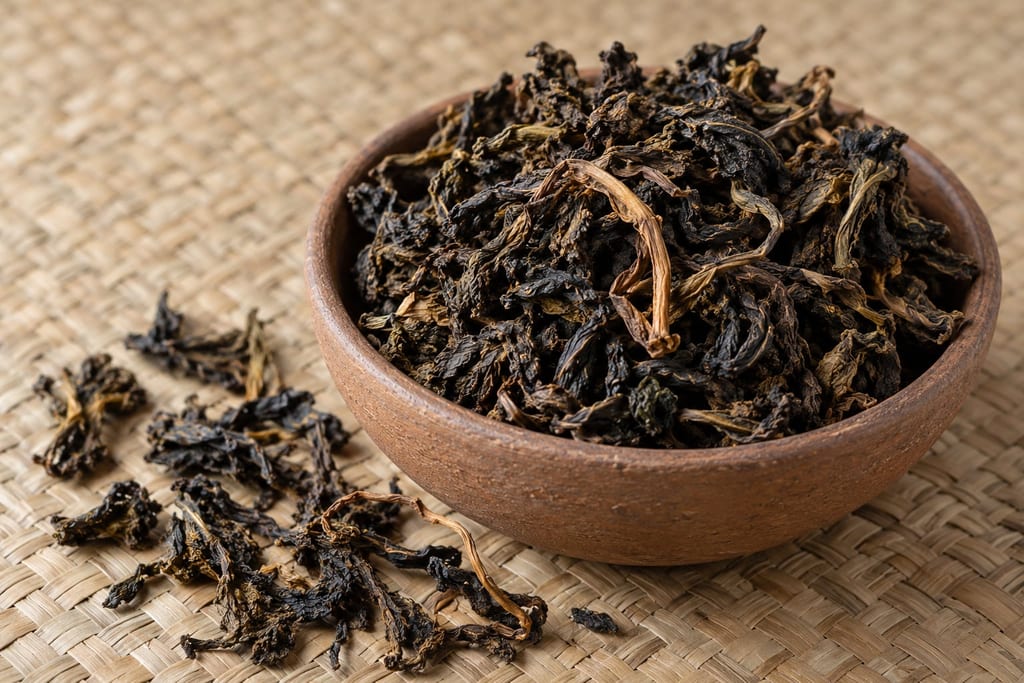
Mustard leaves wilted, bruised and packed tight into an earthenware vessel to sour without salt, then sun-dried into dark tangled pieces that carry Himalayan meals through the year.
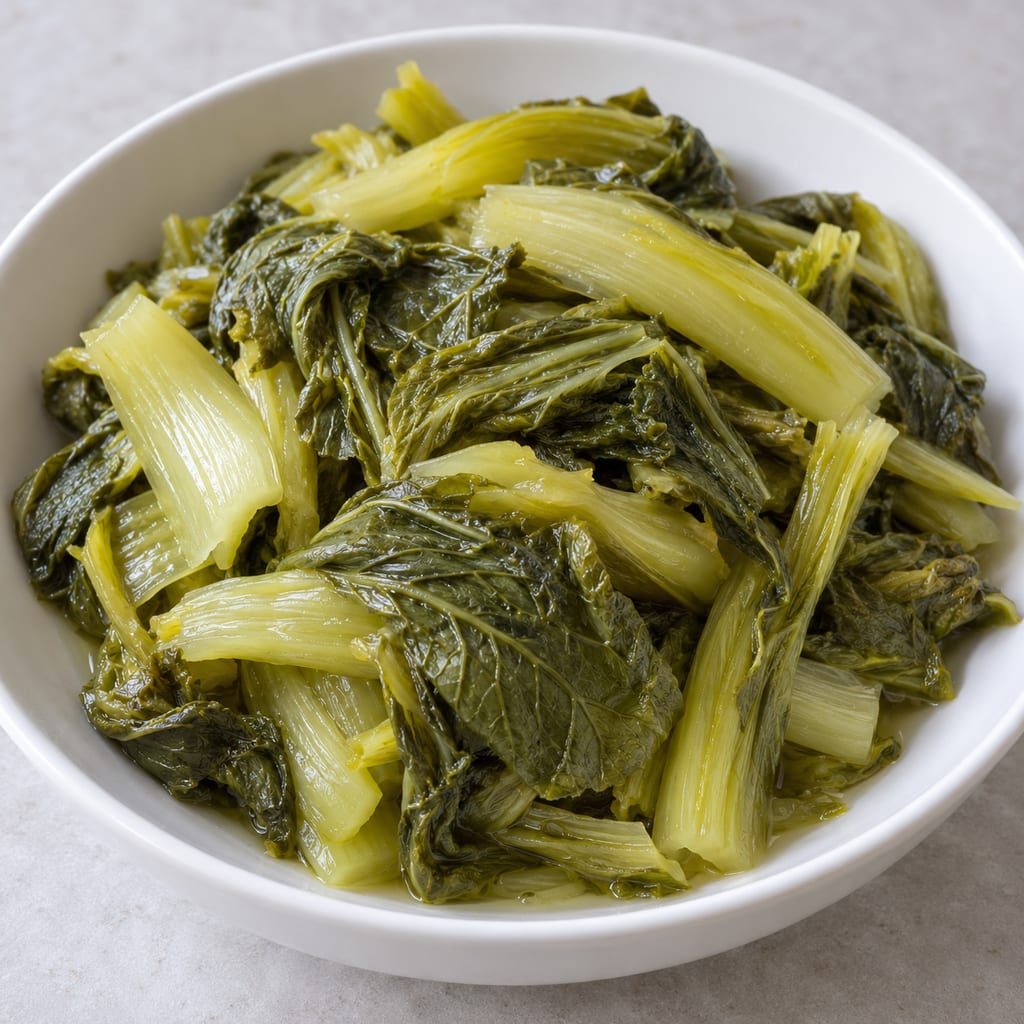
Pak-gard-dong is a Thai mustard-green pickle salted first and drained, then fermented with sugar added to the drained greens.
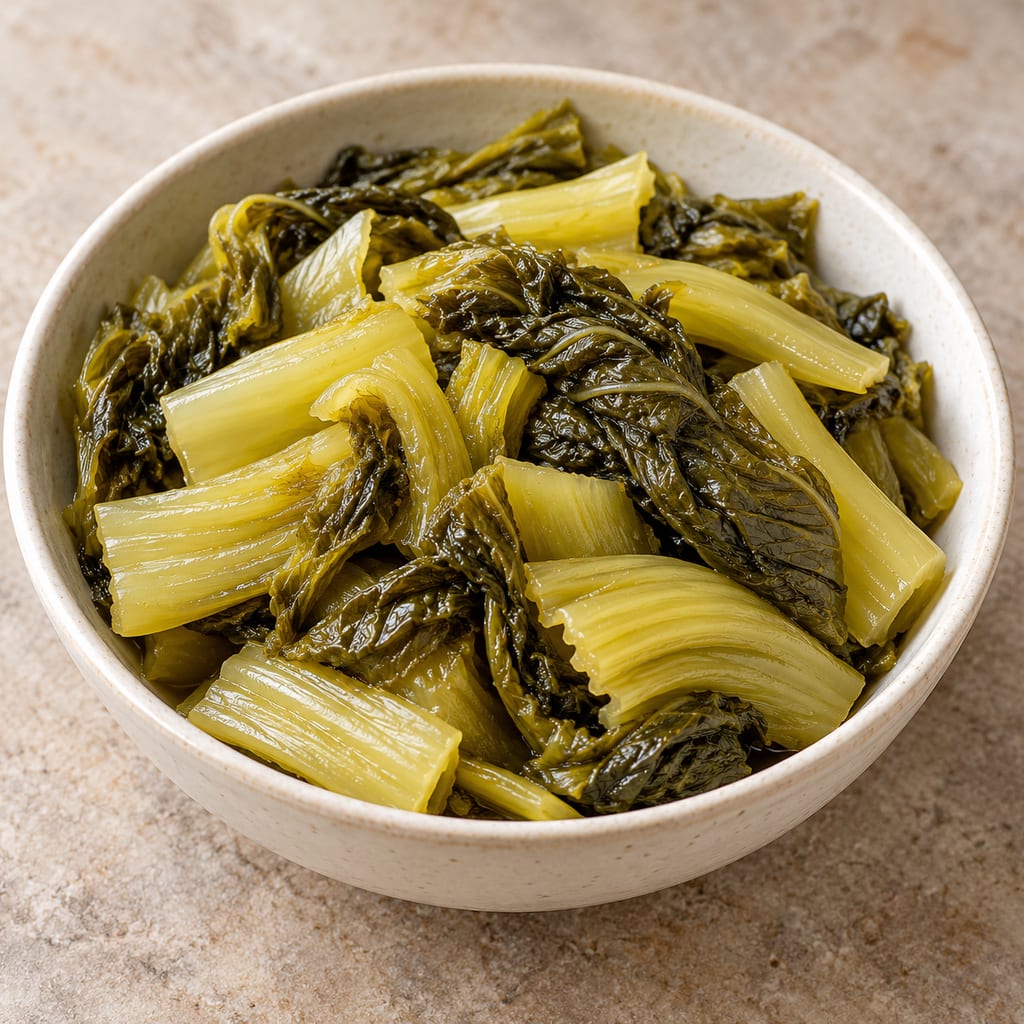
Pak-kaat-dorng is a Thai fermented mustard-green pickle, prepared here by dry-salting and kneading the wilted greens with cooked rice.
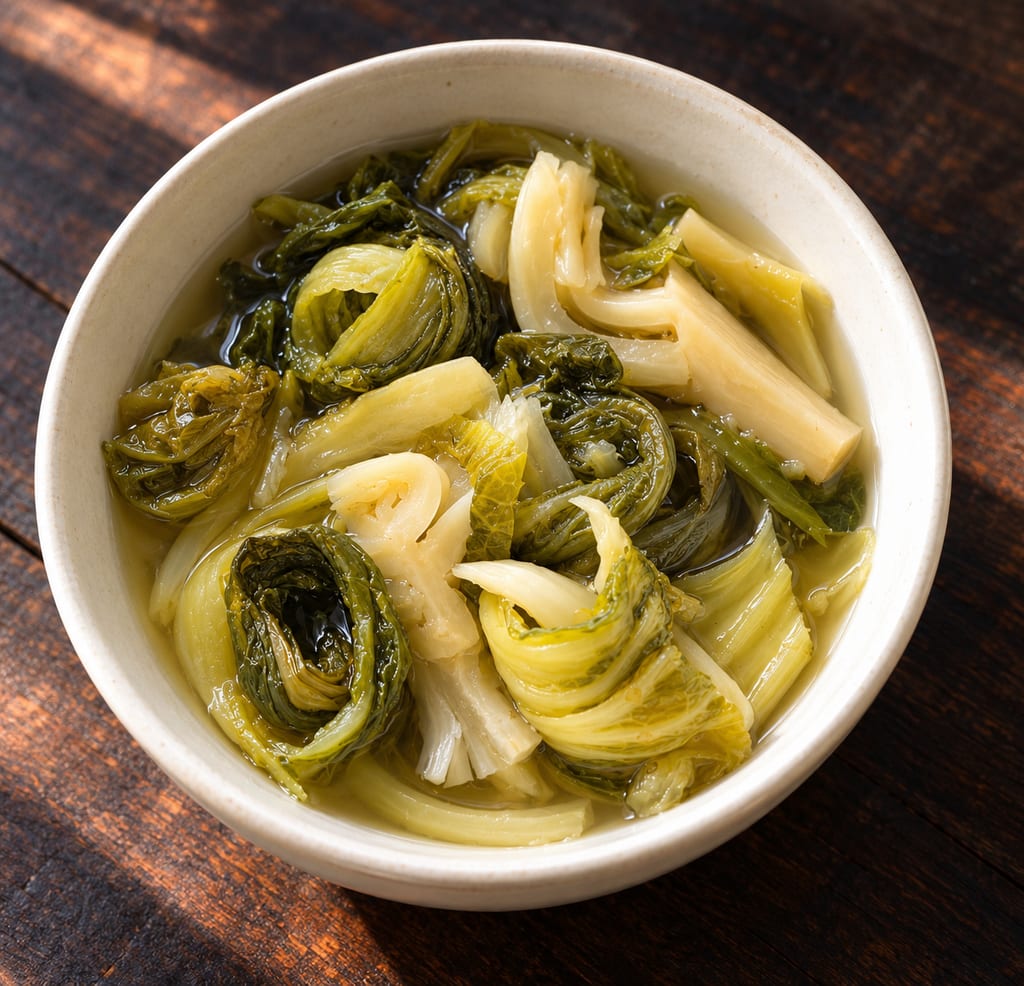
Thai sweet mustard greens wilted in sun, packed in earthenware under a salt and palm-sugar brine with rice-wash water, then sunned three to five days.
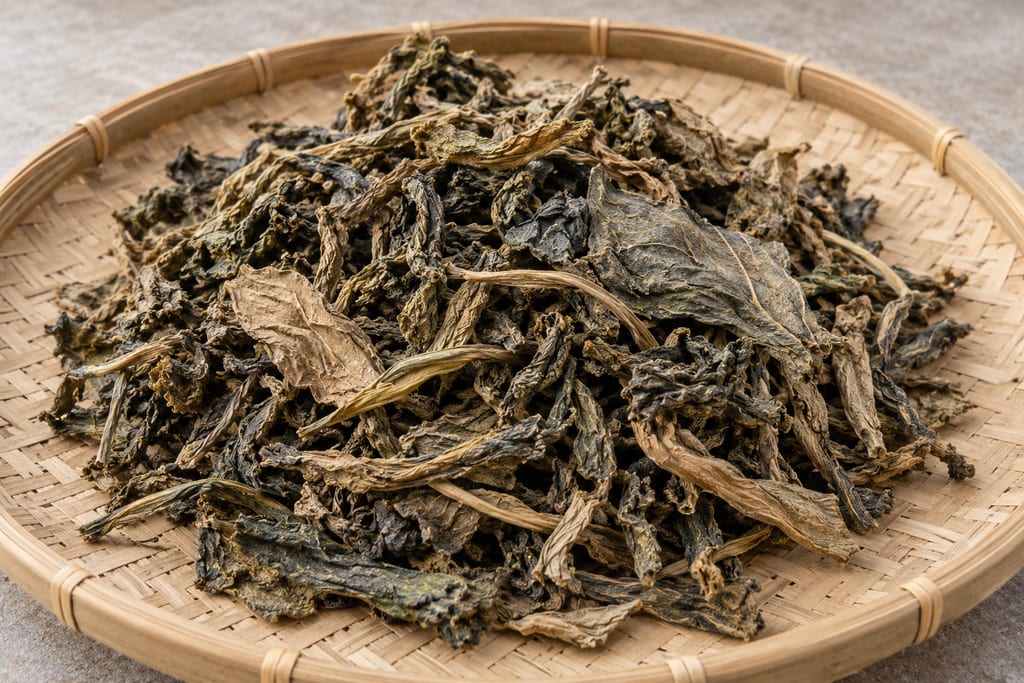
Wilted and shredded Brassica rapa rayo-sag leaves, packed under warm water in earthenware, fermented five to seven days, then sun-dried as Nepali gundruk.
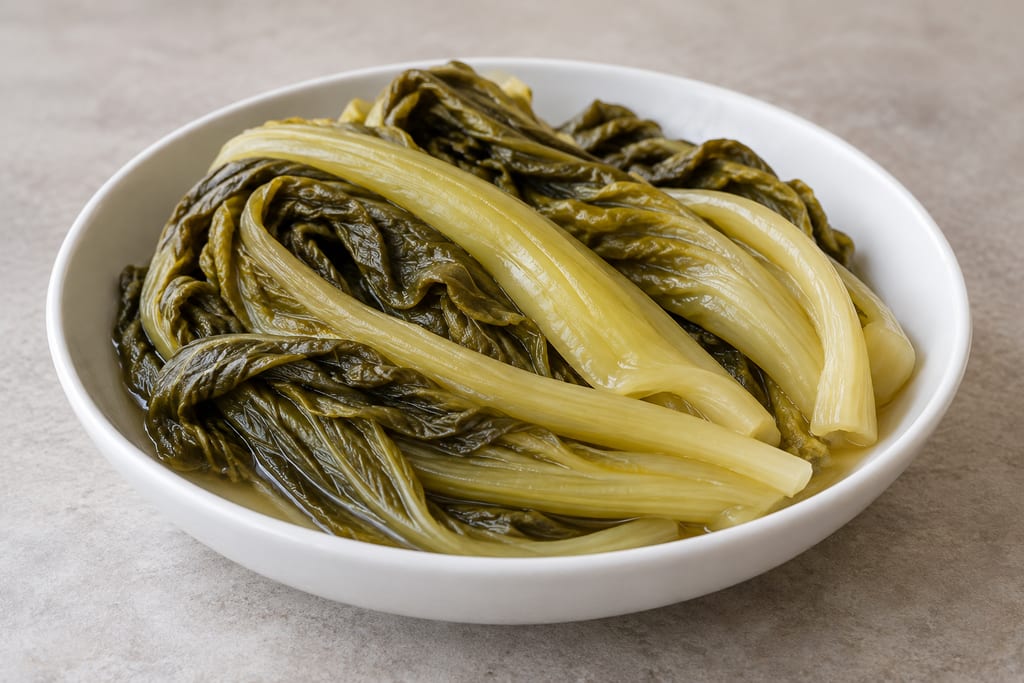
Indonesian salted mustard cabbage, wilted, rubbed with 2.5 to 5% salt by weight, and fermented covered in boiled-rice liquid.
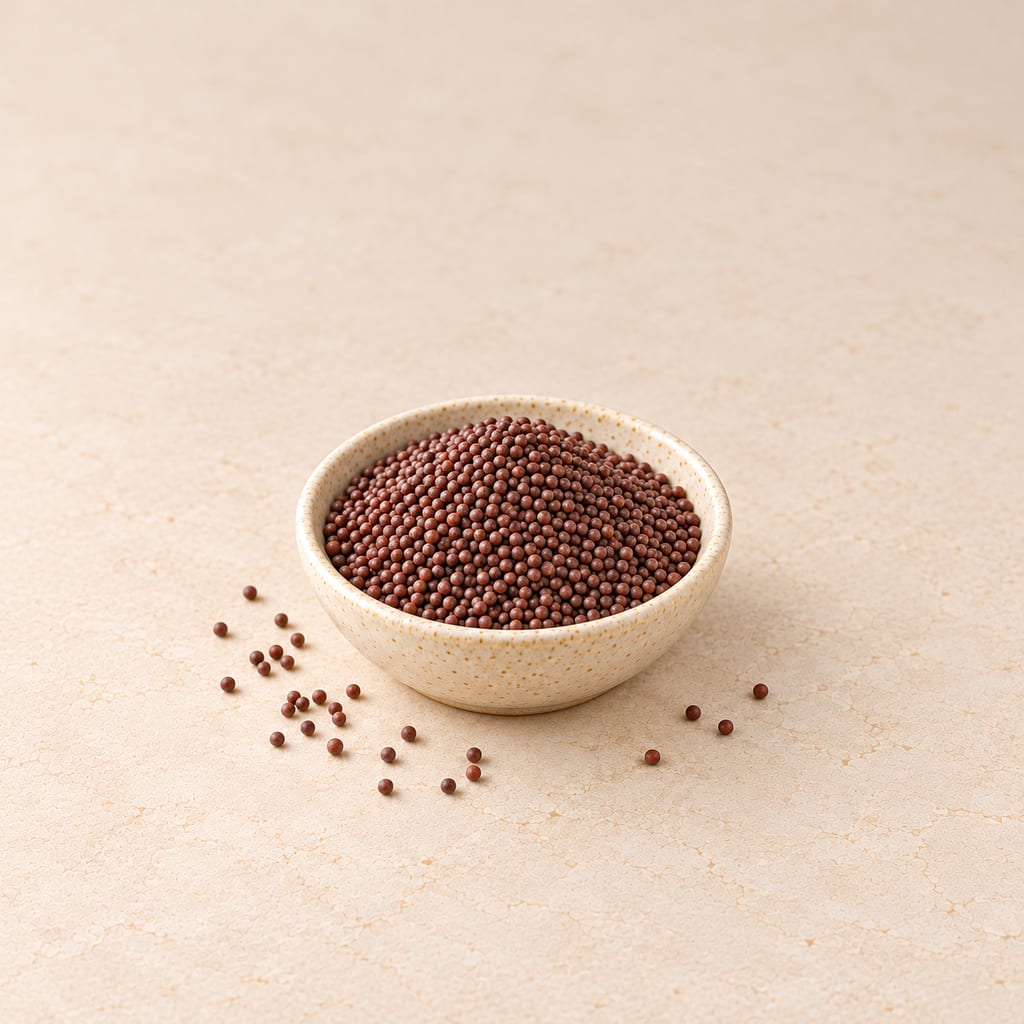
Brown or oriental mustard seed comes from Brassica juncea, a hybrid of black mustard and turnip rape. It is the hot, easily harvested seed behind Dijon, spicy brown mustards and much of the mustard oil of the Indian subcontinent.
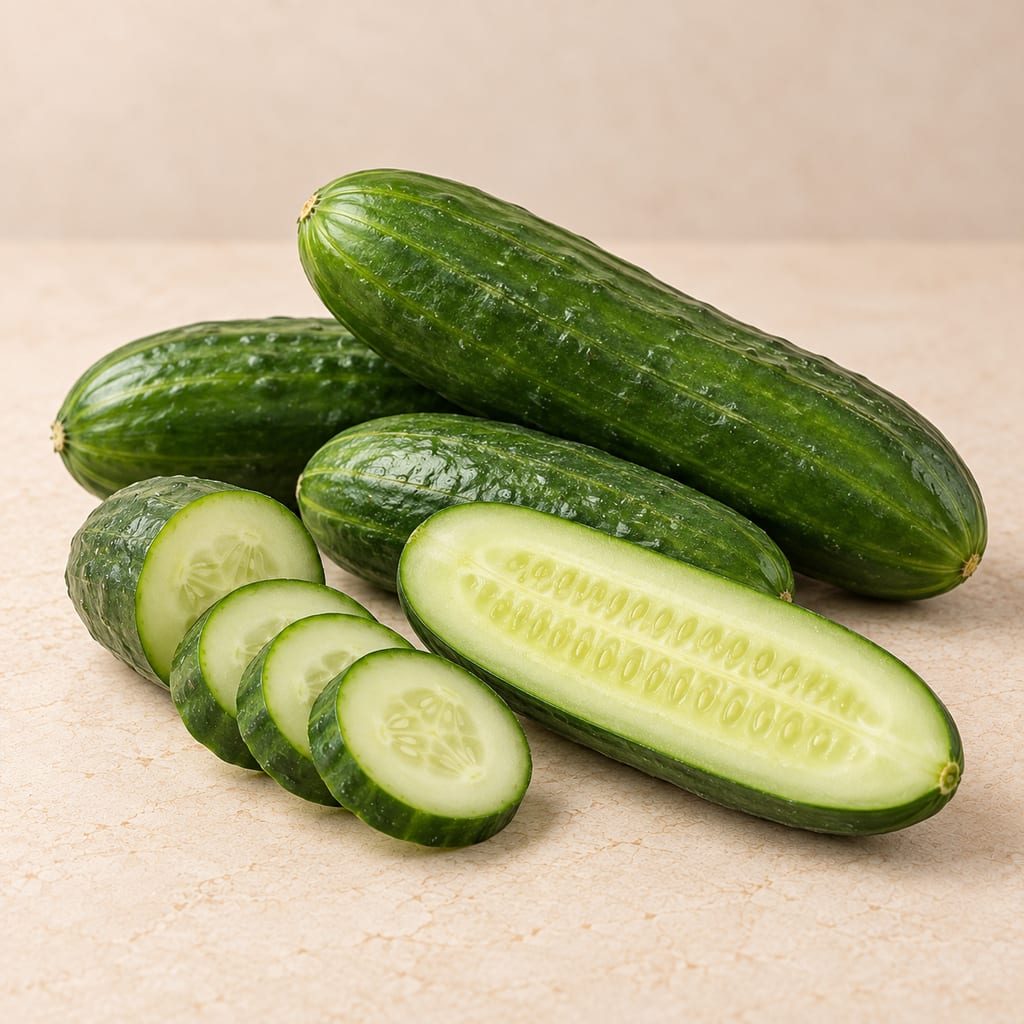
Cucumber is the watery fruit of Cucumis sativus, domesticated in India, and the classic raw material of brine pickles from New York dills to Nepali khalpi and Korean oi-sobagi.
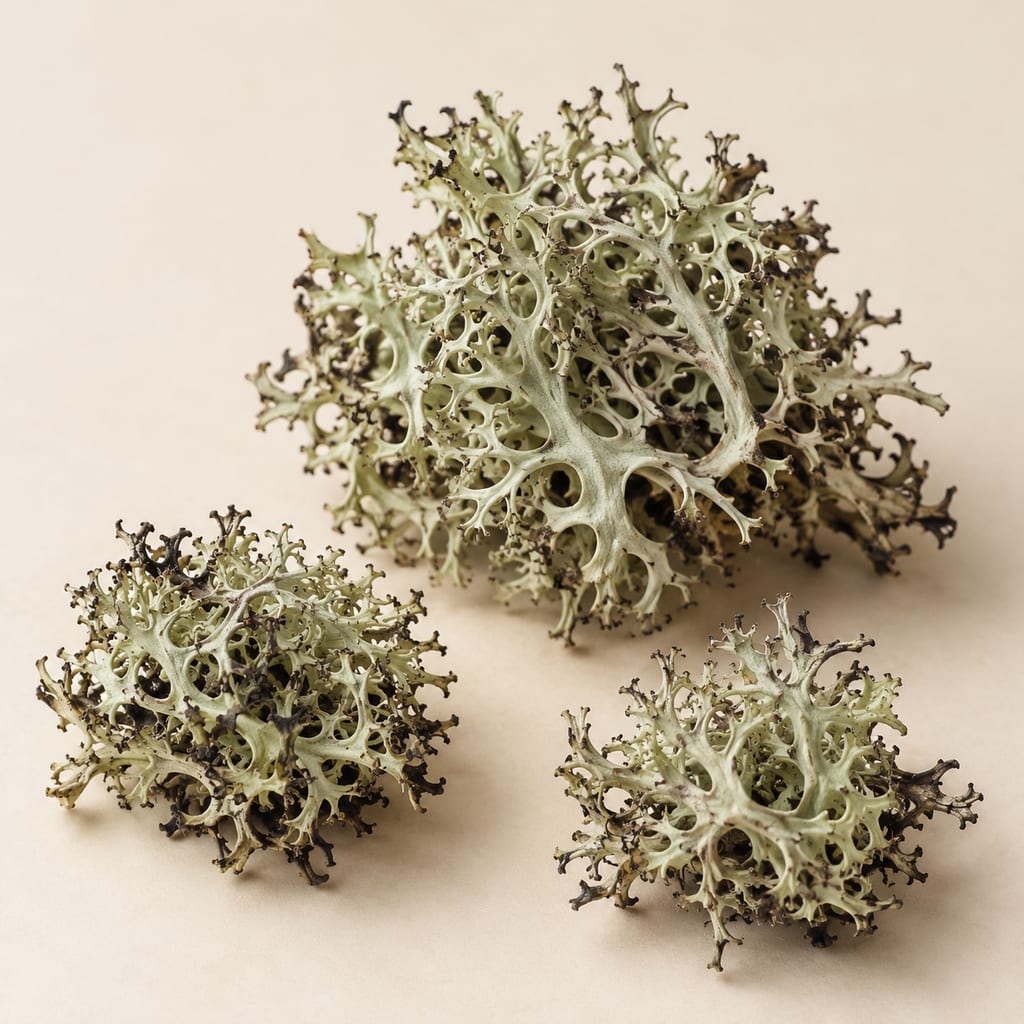
Everniastrum cirrhatum, a tree-dwelling lichen of the Nepal Himalaya, gathered wild and used in soups, pickles and sausages by the Limbu and Rai communities of the north-east hills.
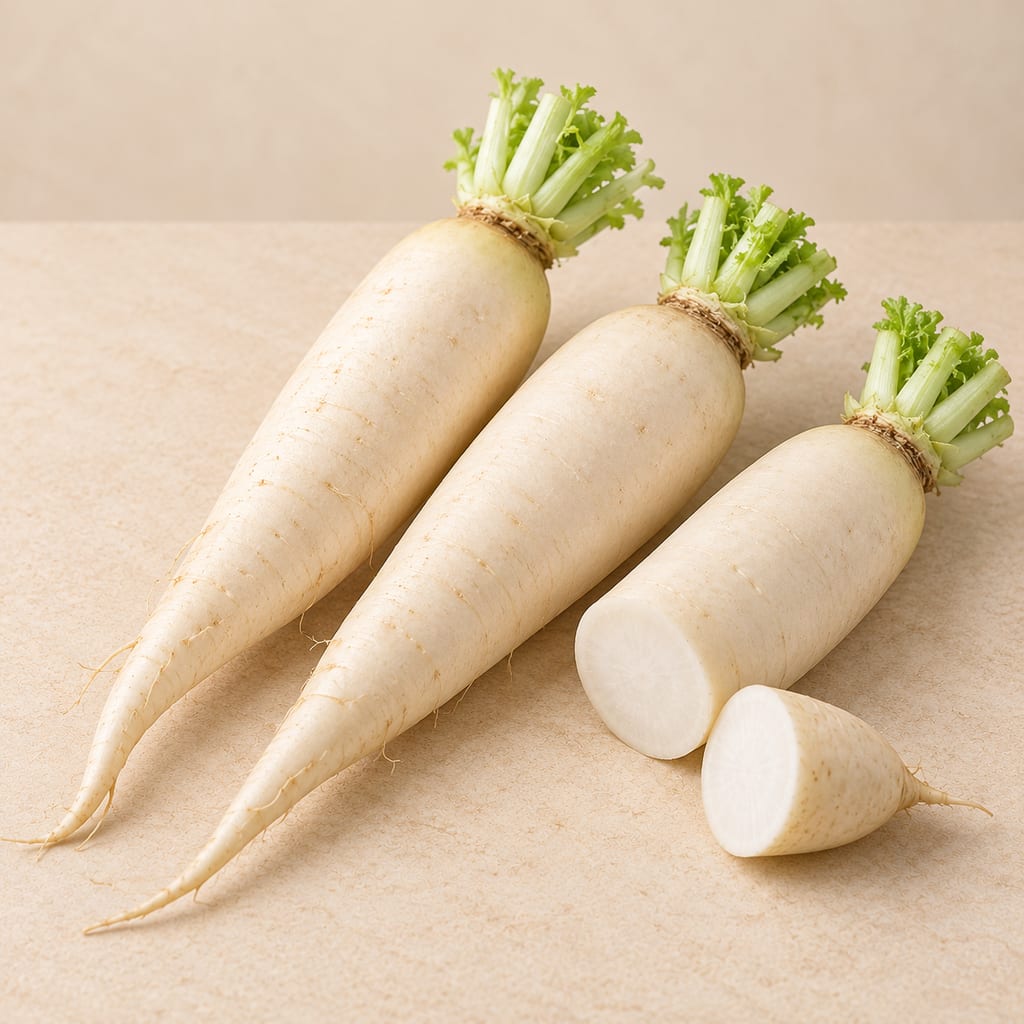
Radish and daikon are the crisp, peppery roots, leaves and seed pods of Raphanus sativus, fermented as kimchi, takuan and sinki and eaten raw across Asia and Europe.
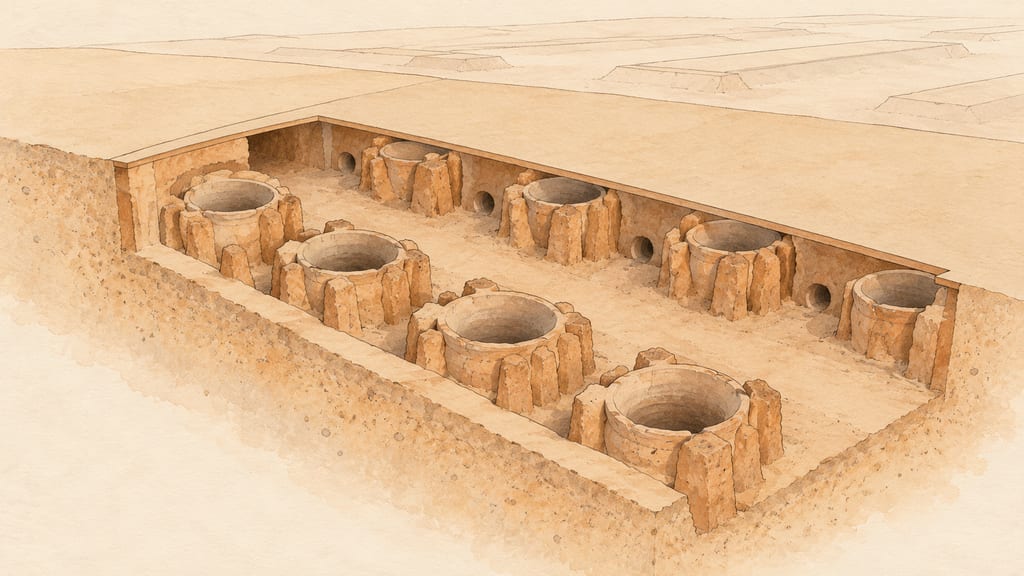
At North Abydos in Egypt, a fixed early Dynastic brewery comprised parallel semi-subterranean installations with rows of ceramic mash vats; excavation reports revise their number, scale and estimated batch capacity.
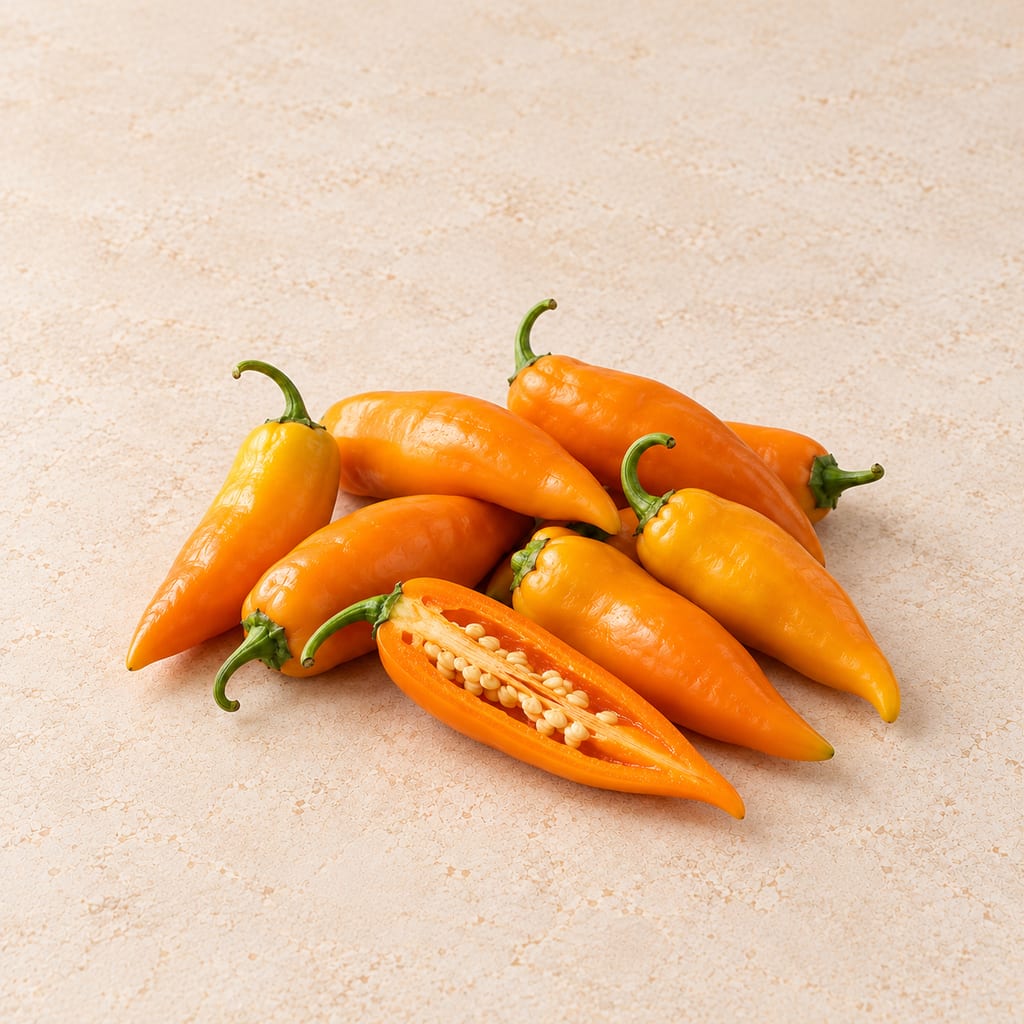
Ají amarillo is the orange-yellow Peruvian chilli cultivar group of Capsicum baccatum, used to colour and season huancaína sauce and ají de gallina. Published heat estimates do not establish one range for the named cultivar.

Toasted almonds are whole sweet almond kernels dry-roasted until golden to brown. Heat replaces their marzipan note with a roasted, nutty one; they thicken and flavour romesco.

Kodiak salmon, halibut and cod cut as seg'aq and hung on an initaq rack to become tamuuq, with kac'amaasaq and kupcuunaq named as different results.
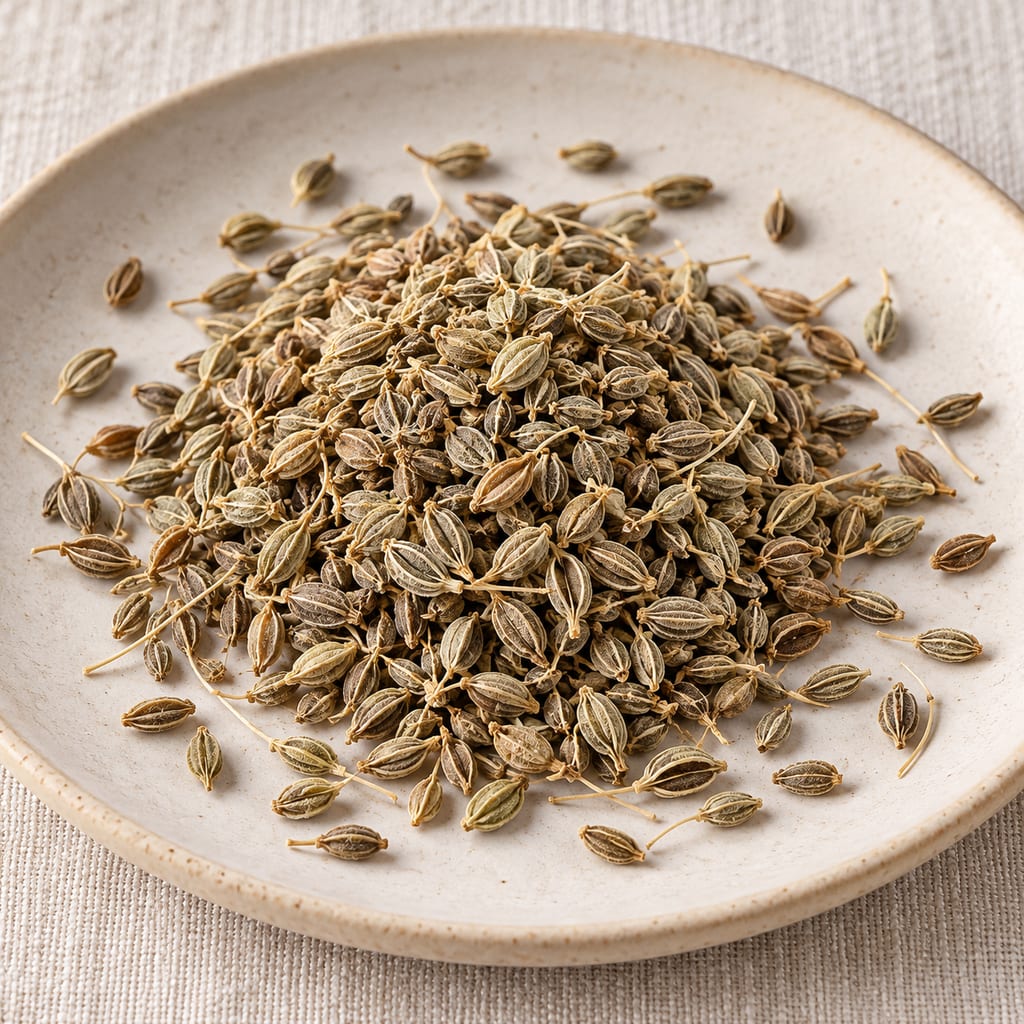
Aniseed is the dried ripe fruit of Pimpinella anisum, an aromatic Apiaceae spice commonly called a seed. It adds a sweet, warm aroma to breads such as Moroccan krachel and South African mosbolletjies, and is distinct from star anise.
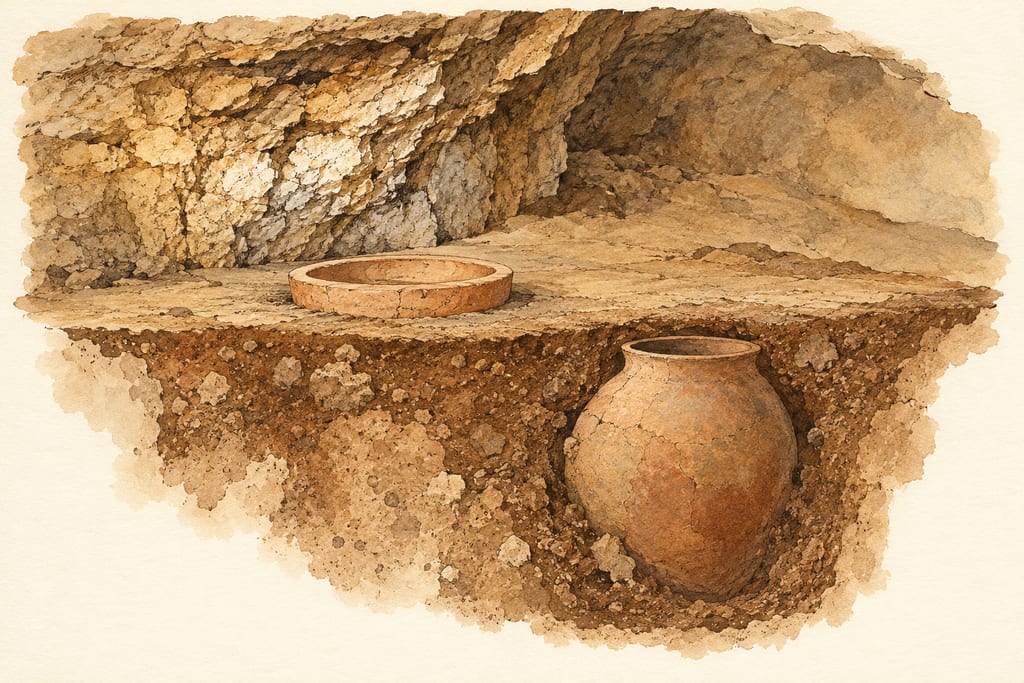
A fixed Late Chalcolithic installation in Areni-1 cave combined a shallow clay pressing basin with a large jar set into the cave floor and storage vessels nearby.

Ripe avocado flesh is the soft, buttery, fat-rich pulp of Persea americana, eaten raw. It is low in acid, so it is a fresh ingredient that needs care in chilled dishes.
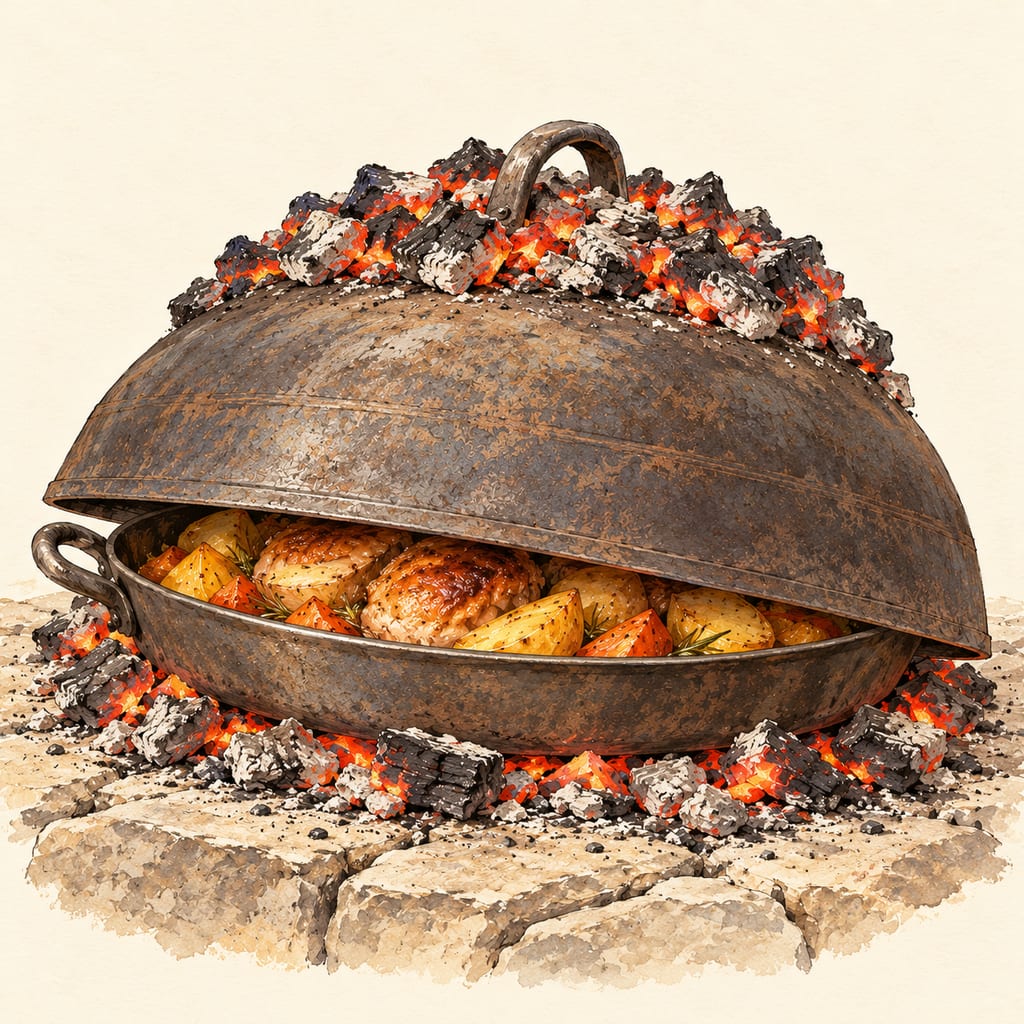
A portable dome and pan used over a hearth, with embers on the lid and heat from below. Regional peka and saç forms share this principle while differing in materials, pan shape and how the food is cooked.
No community contributions have been published for this entry yet.
Sign in to contribute. Published comments and photos are free to read.
Nature GeneticsHistory · Botany
Genomic insights into the origin, domestication and diversification of Brassica junceaB. juncea is an allotetraploid (2n=36) from B. rapa and B. nigra
single origin in West Asia about 8,000 to 14,000 years ago from 480 accessions in 38 countries
Vavilov placed the primary centre in Central Asia
root mustard diverged 2,500 to 5,120 years ago
broad-leaf mustard (var. rugosa) around 300 BC; in south-western China before the sixth century AD
stem mustard derived in the Sichuan Basin in the eighteenth century
mustard named as a condiment in Sanskrit and Sumerian texts from about 3000 BC
Cited in: From West Asia to the pickle jar; Notes
Horticulture ResearchHistory · Botany
Population genomic insights into the domestication of Brassica juncea var. tumidafour cultivated types: oilseed, root, leaf and stem mustard
1786 local chronicle record of salted Wuxiang zhacai at Fuling, Chongqing
tumida is concentrated in southern China
Cited in: Names and kinds; From West Asia to the pickle jar
Frontiers in MicrobiologyFermentation · Safety
Recent advances on fermentation of mustard plant (Brassica juncea L.): microbial community, fermentation processing and sensorial quality: a reviewspontaneous leaf-mustard fermentation in 4 to 8 per cent salt brine for 10 to 15 days
microbial succession from Enterococcus and Leuconostoc to Lactobacillus
Vietnamese dua muoi isolates: L. fermentum 56.6 per cent, L. pentosus 24.4, L. plantarum 17.1, P. pentosaceus 1.0, L. brevis 0.5
Weissella and bacteriocins in Thai phak-gard-dong
glucosinolates and isothiocyanates decrease; glutamic and aspartic acid rise in days 1 to 3
nitrite peak around day 4 in a 15-day sample; biogenic amines accumulate
annual Chinese output of fermented mustard 5.2 million tonnes
Cited in: What it does in a ferment; Salted, soured and sun-dried: regional ferments; Choosing, storing and handling; Notes
Japan International Research Center for Agricultural Sciences (JIRCAS)Method · Fermentation
Pak-kaat-dorngThai dry-salted method with 8 to 10 per cent salt and 2 per cent rice, 5 to 10 days, keeps about a year
sun-fermented rice-wash and palm-sugar brine, 3 to 5 days, keeps 1 to 2 months
organisms reported: L. brevis, L. plantarum, Pediococcus cerevisiae, Debaryomyces, Pichia
names pak-kaat-khieo and pak-kwaang-tung
Cited in: Names and kinds; What it does in a ferment; Salted, soured and sun-dried: regional ferments
Food and Agriculture Organization of the United NationsMethod · Fermentation
Fermented Fruits and Vegetables: Global Perspective, Chapter 6gundruk from mustard, radish and cauliflower leaves, 5 to 7 days, pH 4.0, about 1 per cent lactic acid
about 2,000 tonnes a year in Nepal; about 90 per cent carotenoid loss in drying
hum choy, pak-gard-dong and sayur asin descriptions
Cited in: Names and kinds; A cool-season crop; What it does in a ferment; Salted, soured and sun-dried: regional ferments; Choosing, storing and handling
Purdue University, NewCROP (Duke, Handbook of Energy Crops)Cultivation · Nutrition
Brassica juncea (L.) Czern.: Indian mustard, leaf mustardclimate, soil, sowing, spacing and harvest guidance
composition per 100 g of leaf
leaves cooked with ham or salt pork
Cited in: A leaf with a bite; A cool-season crop; Where the heat comes from; Choosing, storing and handling; At the table
Plants (MDPI)Chemistry
Integrative Analyses of Metabolites and Transcriptome Reveal the Metabolic Pattern of Glucosinolates in Potherb Mustard (Brassica juncea var. multiceps)sinigrin 81.55 to 97.27 per cent of glucosinolates
hydrolysis favours isothiocyanate over nitrile
aliphatic glucosinolates 25.38 to 91.07 micromoles per gram in two varieties
Cited in: Where the heat comes from
Frontiers in NutritionChemistry · Uses
Comprehensive advances in phytochemical components, bioactive functionality, and processing applications of mustard (Brassica juncea (L.) Czern.): a reviewsinigrin is the major glucosinolate of B. juncea seed
heating at 60 to 80 C for 5 to 15 minutes modulates myrosinase
zha cai made with 14 to 15 per cent salt
cultivars Florida Broadleaf and Southern Curled Giant
seed oil edible, high in erucic acid
Cited in: Names and kinds; Where the heat comes from; Salted, soured and sun-dried: regional ferments; At the table
FoodNuri, Korea Rural Economic InstituteVarieties · Uses · Nutrition
Seasonal food: leaf mustard (갓)Dolsan gat is mild; eolcheong gat is a seasoning type
production period September to December, peak October; main areas
selection and storage advice; blanching and myrosinase
nutrition per 100 g raw
uses in kimchi, namul, wraps and with boiled pork
Cited in: A leaf with a bite; Names and kinds; A cool-season crop; Where the heat comes from; Salted, soured and sun-dried: regional ferments; Choosing, storing and handling; At the table
Korea Tourism Organization (VisitKorea)Uses
Leaf Mustard Kimchi (갓김치 / Gatkimchi)gat kimchi is eaten in Jeolla-do
crisp, bitter, with red pepper powder and salted seafood; flavour deepens as it ripens
Cited in: Salted, soured and sun-dried: regional ferments
WikipediaUses
Brassica junceafour cultivar groups and their leaf types
regional uses of the leaves in South Asia, East Asia, Southeast Asia, the American South and Africa
Cited in: A leaf with a bite; Names and kinds; Salted, soured and sun-dried: regional ferments; At the table
WikipediaUses
Sarson da saagmustard leaves cooked in oil or ghee with garlic, ginger and chilli; served with maize flatbread; winter dish of Punjab
Cited in: At the table
Allergologie SelectAllergens
Allergens from plant-based food allergen sources and their clinical and diagnostic relevanceBra j 1, a 2S albumin, is the catalogued allergen of Brassica juncea
Sinapis alba (yellow mustard) is a separate allergen source
Cited in: Names and kinds; Choosing, storing and handling