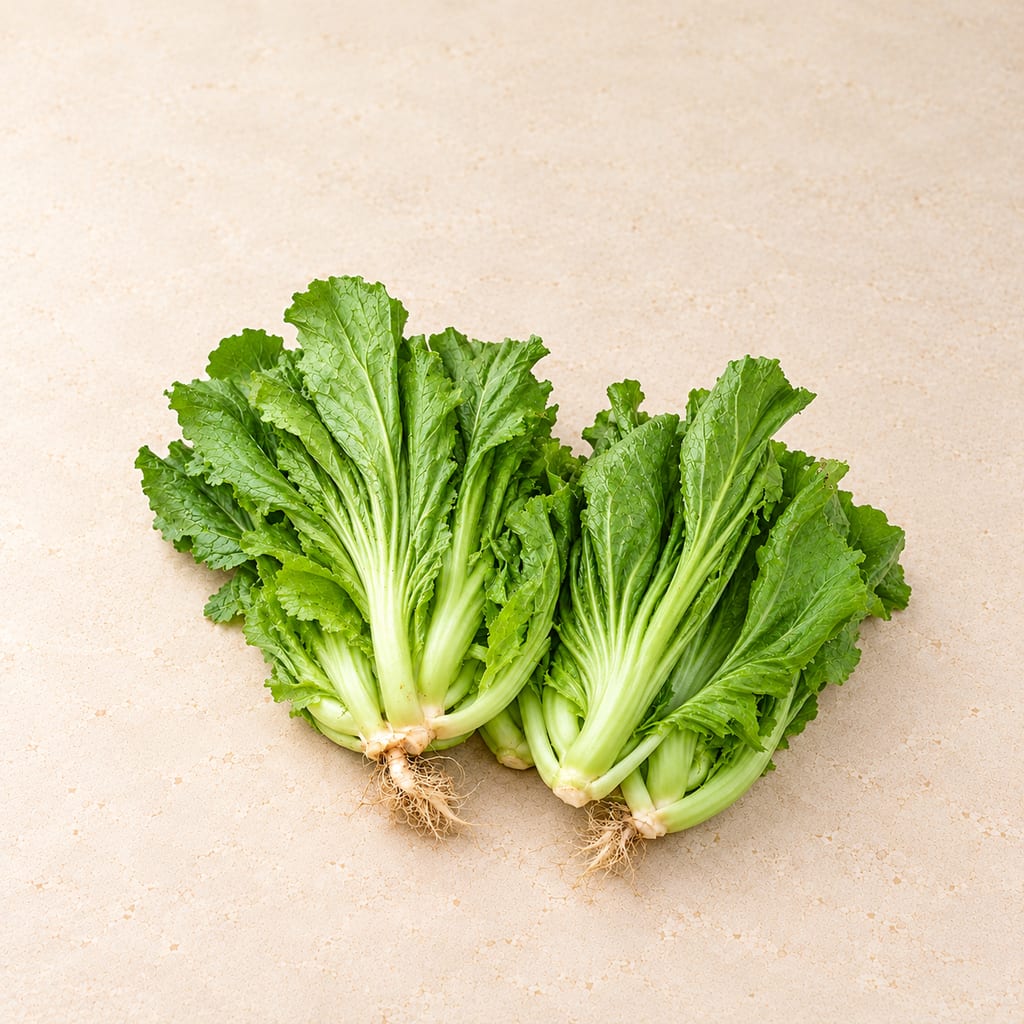
Mustard greens
The leaves of Brassica juncea, a hardy cool-season crop with a sharp, sulfurous bite, eaten fresh and cooked and fermented across Asia as pickled greens, kimchi and gundruk.
 FermenteaWhere food goes to change
Traditional method
Mustard greens
Pak-gard-dong is a Thai mustard-green pickle salted first and drained, then fermented with sugar added to the drained greens.
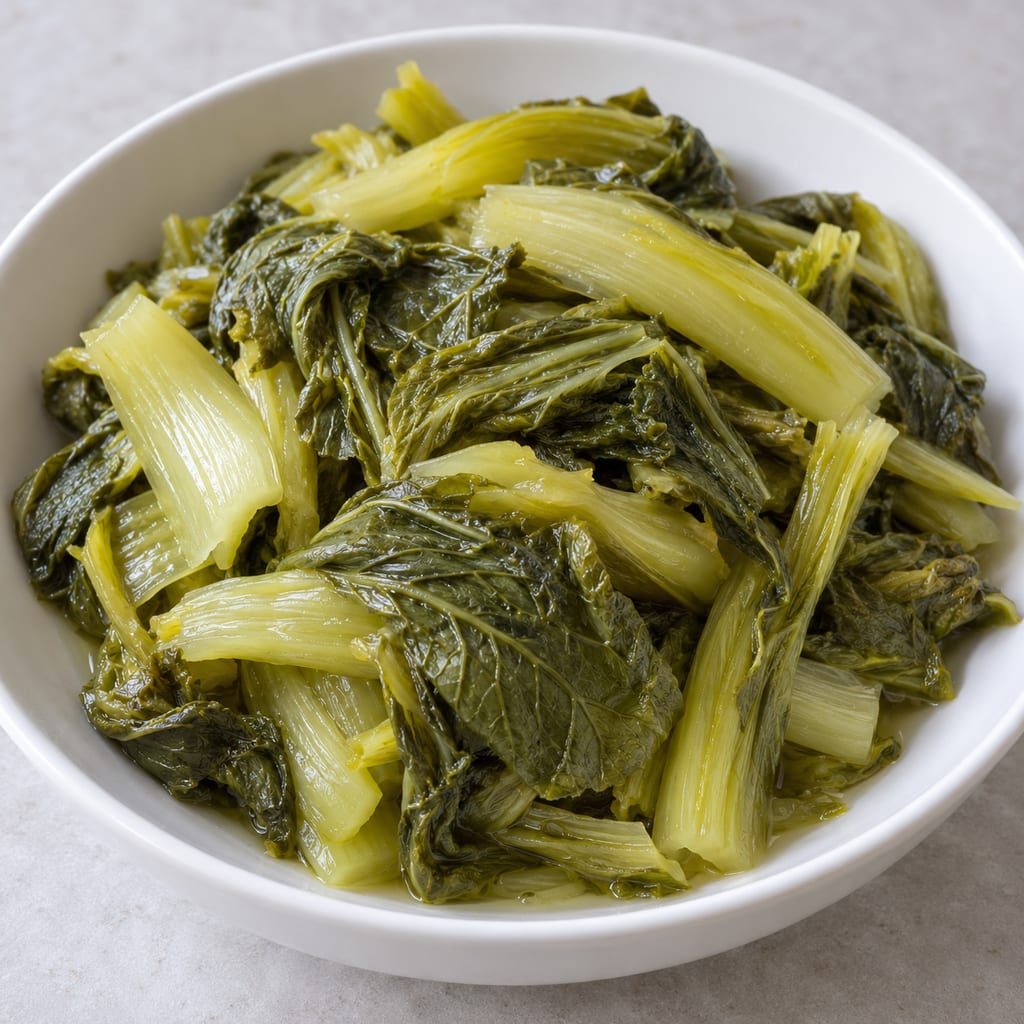
This record describes a third documented preparation, distinguished by the order in which salt and sugar are added.
The method begins with washed, wilted mustard leaves.
Salt equal to 2.5% of the wilted vegetable weight is mixed into the leaves. They are packed and held for 12 hours.
The resulting salty liquid is removed.
Sugar equal to 3% of the wilted vegetable weight is then added, and the vegetables undergo further fermentation for 3–5 days at room temperature.
The final result is a fermented mustard vegetable with a sour, salty character.
Unlike the high-salt version in record veg-0015, this process removes the first liquid rather than retaining the full salt addition in a densely packed vegetable mass.
Unlike the sweet rice-wash version in record veg-0016, it does not require a large added brine or a cup of palm sugar.
It is a distinct traditional process with its own salt treatment, microbial conditions and flavor development.
Pak-gard-dong is included in scientific surveys of traditional Thai fermented foods.
The particular salt-then-sugar method was described in earlier Thai food research attributed to Boon-Long in 1986 and summarized in Fermented Foods and Beverages of the World, published in 2010.
The scientific literature also identifies earlier microbiological work by Mingmuang in 1974.
These dates document research and publication, not invention of the product.
The recipe is part of Thailand's wider preserved-mustard tradition, which has connections with similar foods across mainland Southeast Asia.
The precise historical relationship between the three preparation methods in this collection is unknown.
There is no secure basis for saying the dry-salted, rice-wash or salt-then-sugar method developed first.
What can be established is that all three were recognized in technical descriptions of traditional Thai vegetable processing.
This method's distinctive feature is its explicit separation of the preliminary salting stage from the later sugar-assisted fermentation.
Vegetable — Black mustard leaves
Salt — 2.5% of wilted vegetable weight
Preliminary salting — 12 hours
Sugar — 3% of wilted vegetable weight
Main fermentation — 3–5 days
Temperature — Room temperature; no numerical value given
Added water — None specified
Finished yield — Not specified
Shelf life — Not validated by this recipe description
Black mustard leaves — As required; no fixed batch weight
Salt — 2.5% of wilted vegetable weight
Sugar — 3% of wilted vegetable weight
The recorded method does not specify the type of sugar.
It also does not give a recipe-specific amount of water.
A separate account of pak-sian-dong, a different Thai fermented vegetable, mentions raw cane or palm sugar. That preference must not be transferred automatically to pak-gard-dong.
The correct ingredient listing here is simply sugar.
The published description refers to black mustard leaves.
The broader preserved-mustard family includes plants identified as Brassica juncea.
Mustard varieties differ in leaf size, petiole thickness, moisture content and pungency.
The preparation should use the edible mustard leaves intended by the regional technique rather than assuming any vaguely similar brassica will behave identically.
Leaves with extensive decay or damage are unsuitable.
Stems and leaves may require different handling because thick tissue loses water more slowly than thin leaf blades.
The original process does not specify whether large stalks are split, chopped or retained intact.
That uncertainty should be preserved.
The first addition is calculated from wilted vegetable weight.
This detail matters because wilting reduces mass by removing water.
If the same salt percentage were calculated from fresh vegetable weight, the actual amount added after wilting might differ significantly.
The salt draws liquid from plant tissues.
It also changes the microbial environment.
At a moderate concentration, salt can favor salt-tolerant lactic acid bacteria over some competitors.
The first stage is therefore both a physical conditioning treatment and the beginning of microbiological selection.
The 12-hour holding period allows water and dissolved compounds to move out of the leaves.
The salty liquid is then removed.
This discarded liquid contains an unknown portion of the original salt addition.
The finished product cannot be assigned a final salt percentage of 2.5% without measurement.
The method adds sugar only after the preliminary salty liquid has been removed.
That means the first stage principally conditions the vegetable and redistributes salt.
The second stage introduces additional fermentable carbohydrate.
Lactic acid bacteria can metabolize available sugars into lactic acid.
As acid accumulates, sourness develops.
The sequence differs from recipes in which all sugar and salt are added together at the beginning.
It may affect which microorganisms proliferate and how rapidly acid forms, although the precise effect is not quantified in the source.
The original description does not provide a comparative experiment showing that the two-stage method is microbiologically superior.
It should be understood as a documented traditional procedure, not an experimentally proven optimal schedule.
Use a clean washing container, a suitable surface for wilting, a scale capable of weighing ingredients and a clean food-grade fermentation vessel.
The recorded method does not specify a particular vessel volume or shape.
Because the ingredients are given as percentages, accurate weighing is important.
Use a safe cover or fermentation arrangement that limits contamination while allowing gas pressure to be managed.
1. Select the leaves.
Remove defective or deteriorated mustard leaves.
The original procedure refers specifically to black mustard leaves.
Do not include obviously decayed plant material.
2. Wash thoroughly.
Clean the leaves to remove soil and grit.
Drain excess water.
The recorded method does not give a specific number of rinses.
3. Wilt in sunlight.
Spread the leaves in the sun until they become wilted.
The exact wilting duration is not stated in the summarized method.
No target moisture content or percentage weight reduction is provided.
4. Weigh the wilted vegetables.
The salt and sugar percentages are expressed against the wilted weight.
Record that weight before calculating the additions.
This avoids confusing fresh-vegetable and wilted-vegetable mass.
5. Add the salt.
Use salt equal to 2.5% of the wilted leaf weight.
Distribute it across the leaves, including folds and thick sections.
The recorded method does not describe a separate added-brine solution.
6. Pack and rest.
Place the salted vegetables into a suitable container.
Hold for 12 hours.
During this stage, salt draws out vegetable moisture.
7. Remove the salty liquid.
Drain off the liquid released during the preliminary stage.
The recorded method does not specify squeezing pressure, rinsing or washing after this stage.
Do not add an unrecorded rinse step and present it as part of the historic method.
8. Add sugar.
Mix sugar equal to 3% of the original wilted vegetable weight into the drained mustard.
Distribute it as evenly as possible.
The method does not give a sugar type or the concentration of dissolved sugar after mixing.
9. Ferment.
Return the vegetables to their container and ferment at room temperature for 3–5 days.
No numerical room temperature is given.
The historical description also lacks a validated final acidity or microbial safety endpoint.
10. Assess and use.
The intended result is fermented mustard greens with characteristic sourness.
Do not infer shelf stability solely from the passage of three to five days.
Use suitable food-safety controls and storage conditions.
Lactic acid bacteria are central to the process.
The technical literature identifies Pediococcus pentosaceus, Lactobacillus brevis and Lactobacillus plantarum as important organisms associated with this Thai mustard fermentation.
These organisms have different metabolic properties.
Pediococcus pentosaceus can produce lactic acid from available carbohydrates.
Lactobacillus brevis, now generally classified as Levilactobacillus brevis, is heterofermentative and may produce additional metabolites alongside lactic acid.
Lactobacillus plantarum, now commonly Lactiplantibacillus plantarum, can grow in a range of vegetable-fermentation environments.
The exact microbial order is not established for every household batch.
The process probably begins with the organisms present on the leaves and in the handling environment, rather than a deliberately added pure starter.
As the chemical environment changes, organisms that tolerate the available salt and acidity can become more competitive.
Acid production may inhibit some unwanted microbes, but this effect depends on how quickly sufficient acidity develops.
Mustard greens contain glucosinolates and the enzyme myrosinase.
When plant tissue is damaged, enzyme and substrate can interact, generating compounds associated with pungent mustard aroma.
Wilting, salting and fermentation can alter these compounds.
Some may diffuse into the liquid released during the preliminary salt treatment.
Others may undergo chemical or microbial transformations.
These processes help explain why fermented mustard greens taste different from freshly cooked leaves.
Salt also changes texture by affecting water distribution.
As the leaves become less turgid, they can be packed more closely.
During fermentation, organic acids develop and vegetable pigments may become less vivid.
The finished product is therefore altered by a sequence of physical, chemical and microbial processes.
Discarding the salty liquid removes more than water.
It can remove some salt, soluble sugars, bitter compounds and other small molecules.
This changes the substrate available during the later fermentation.
The effect may be desirable for flavor, especially where the original mustard leaves are strongly bitter.
However, the exact concentration of each removed compound has not been measured in the cited process.
The technique should not be represented as a validated method for removing any particular toxin or antinutrient.
It is a distinctive stage of the recorded preparation.
The wider Thai family includes several methods.
The dry-salted JIRCAS version adds 8–10% salt and a small amount of cooked rice, then ferments for 5–10 days.
The sweeter JIRCAS version uses salt, palm sugar and rice-wash water, fermenting for 3–5 days.
This salt-then-sugar process uses 2.5% salt, a 12-hour preliminary rest and 3% sugar.
The different percentages and liquid-management stages produce substantially different starting conditions.
These are not small seasoning substitutions.
The name pak-gard-dong therefore describes a family of preserved mustard greens rather than a single uniform manufacturing standard.
The resulting greens can be served with rice or used as a cooking ingredient.
Thai preserved mustard greens appear in soups, noodle dishes and meals containing braised pork.
They provide sourness and a preserved vegetable character.
Chopped preserved greens can also be cooked with egg.
The actual amount to use in a dish depends on the finished product's salt and acidity.
Because the original process does not specify a final salt concentration, cooks should not assume that all pak-gard-dong products season a dish identically.
A particularly salty product may require washing before cooking, while a less salty sour version may contribute more acidity.
The expected outcome is wilted, preserved mustard leaves that develop a characteristic sour flavor.
The vegetables should remain recognizable rather than decompose into a slimy mass.
Some color change from bright green is normal during processing.
However, the recorded method does not provide a validated sensory acceptance scale.
Fuzzy mold, abnormal decomposition odors, visible infestation or unexpected heavy slime indicate problems.
A sour smell alone is not proof of microbiological safety.
Likewise, a correctly weighed salt addition does not guarantee that acidification will proceed at the same rate in every vessel.
The original technical description provides salt percentage, sugar percentage, the preliminary resting time and fermentation duration.
It does not provide a final pH, microbial challenge study, temperature range, water activity or validated storage time.
The general pH 4.60 threshold used in produce-fermentation safety guidance cannot be assumed to have been reached without measurement.
A modern commercial process requires controls for vegetable washing, salt distribution, fermentation temperature, acidity and packaging.
Because some of the salty liquid is drained away, calculating the final salt concentration requires more information than the original ingredient percentages.
This should remain a historically documented method until its operating conditions have been validated for the intended production setting.
An academic process description supplies the sequence and the salt and sugar ratios recorded here.
Scaling: source batch only
Poor brine coverage or inadequate acidity monitoring can allow spoilage; recipe-specific validated limits are not established.
Hazard sourceUse clean food-grade equipment, keep produce submerged and monitor acidity; no universal endpoint is supplied for this recipe.
Control sourceThe source supports this broad area and no precise location.
The leaves of Brassica juncea, a hardy cool-season crop with a sharp, sulfurous bite, eaten fresh and cooked and fermented across Asia as pickled greens, kimchi and gundruk.
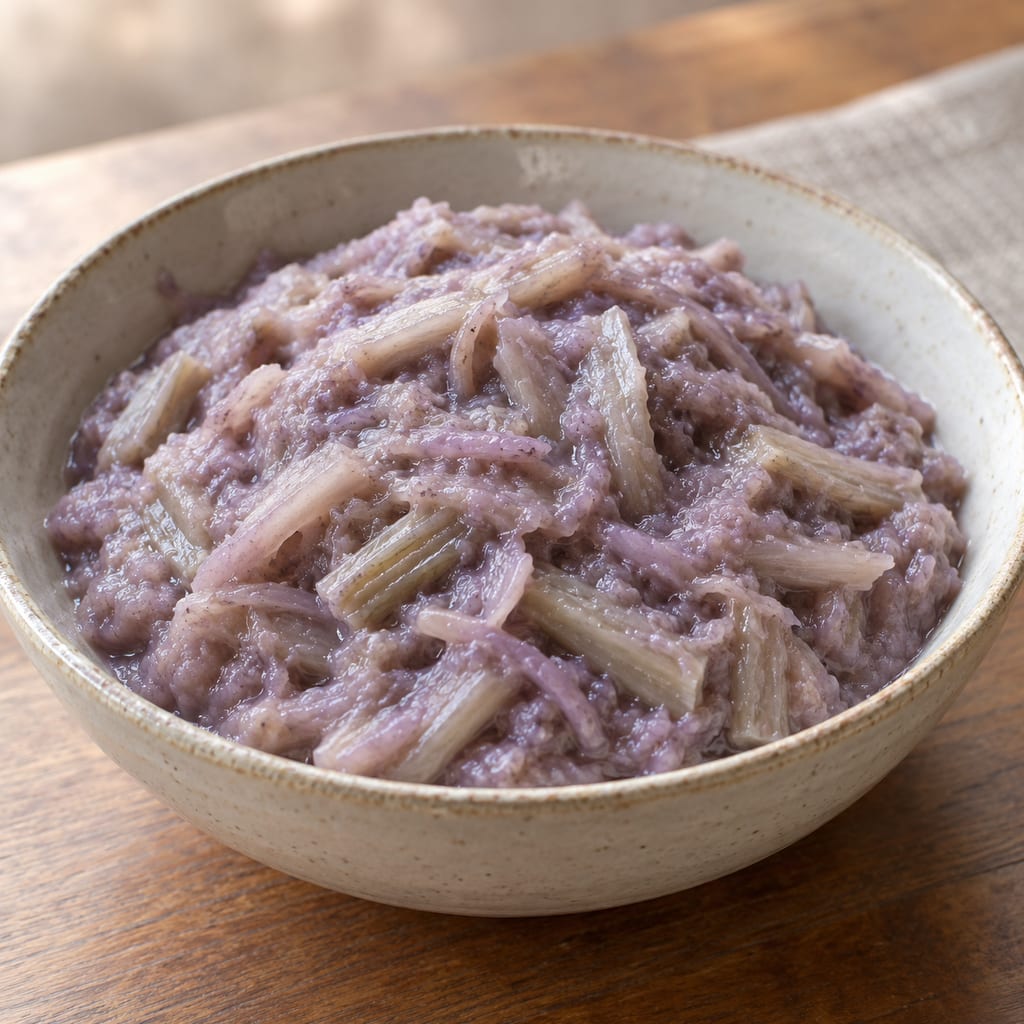
Thai pickle of young taro leaf stalks, salted, kneaded and held in rice-washing water in an earthen jar at room temperature. JIRCAS records it as a home-level product with no validated endpoint.
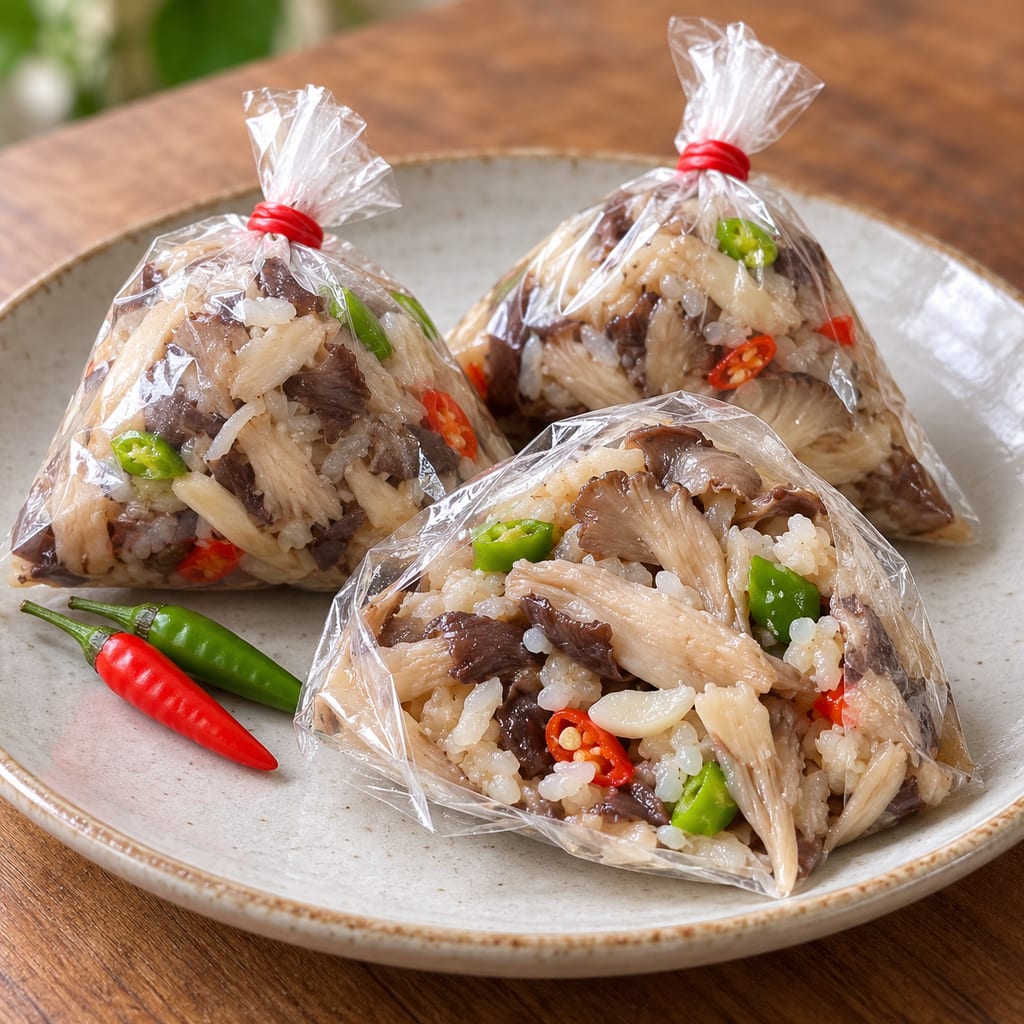
A Thai sour mushroom preparation: shredded steamed oyster mushrooms, cooked rice, garlic and salt packed into small parcels and soured by lactic acid bacteria over a few days.
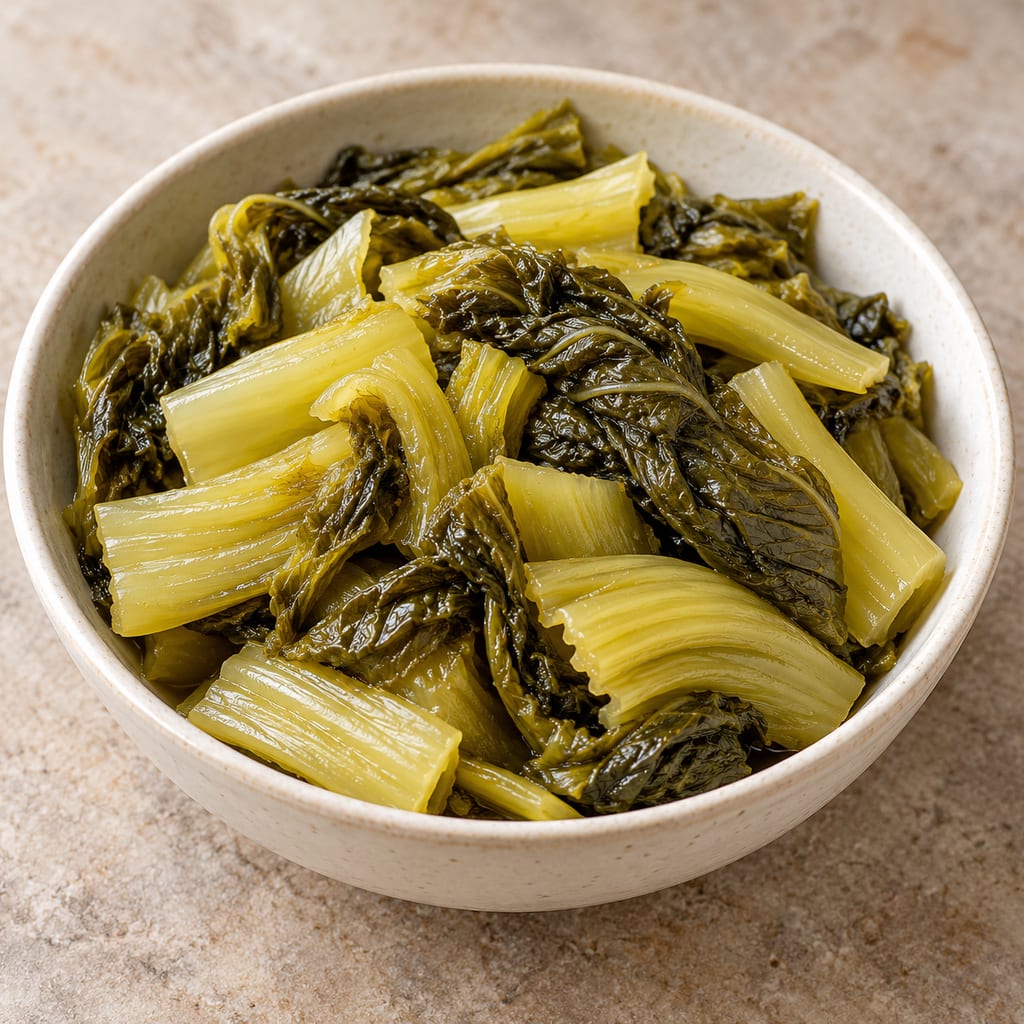
Pak-kaat-dorng is a Thai fermented mustard-green pickle, prepared here by dry-salting and kneading the wilted greens with cooked rice.
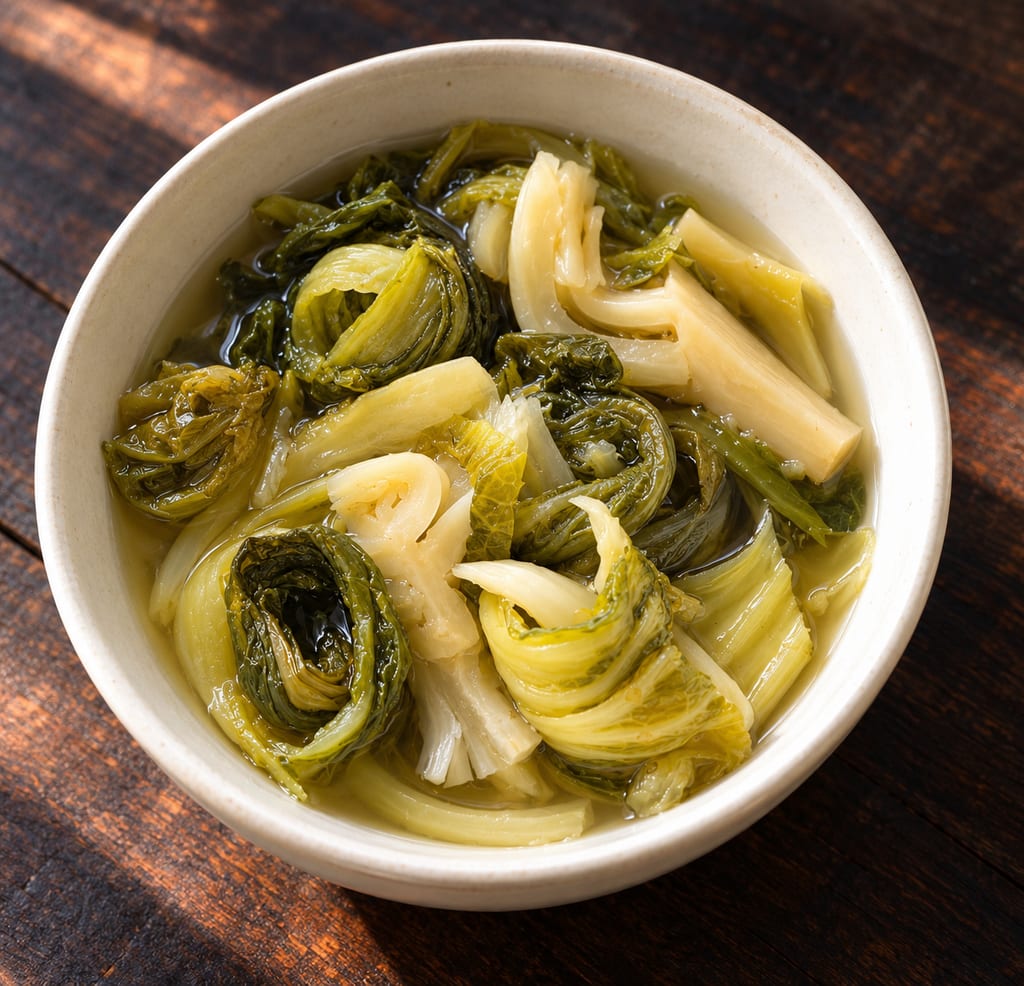
Thai sweet mustard greens wilted in sun, packed in earthenware under a salt and palm-sugar brine with rice-wash water, then sunned three to five days.
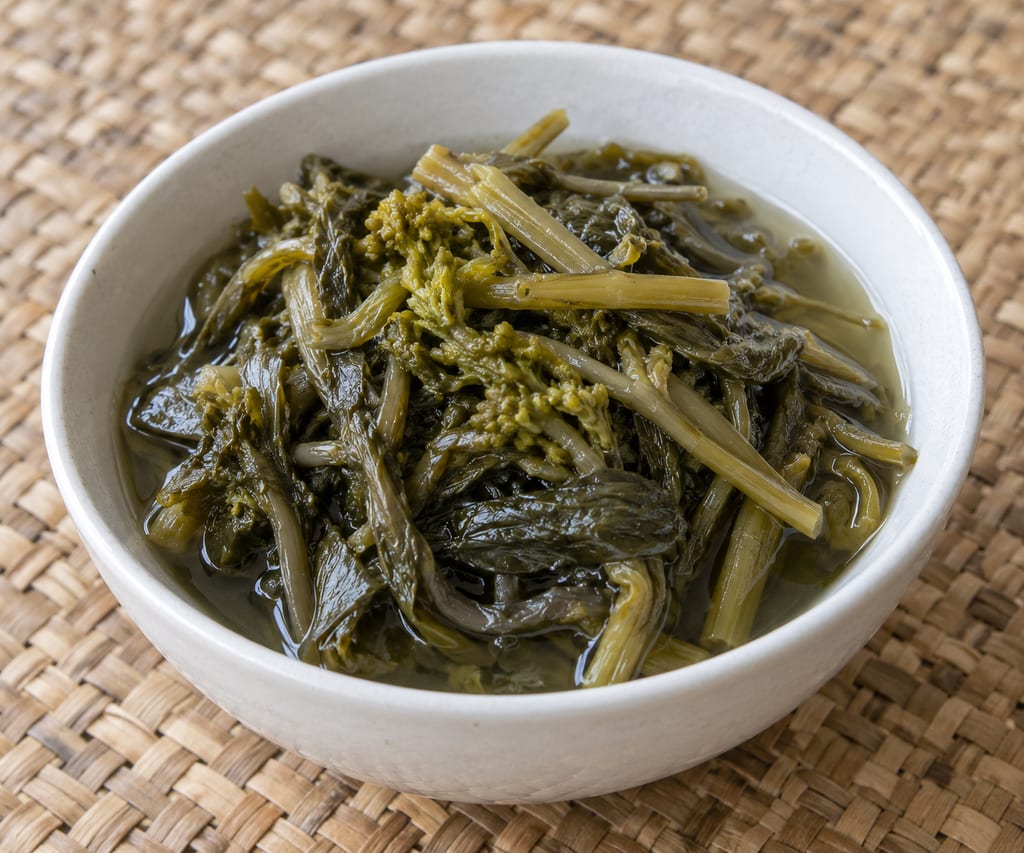
Young spider-flower greens packed with salt and cooked rice and left to sour for a few days; a Thai leafy-vegetable ferment eaten as a sharp side dish.
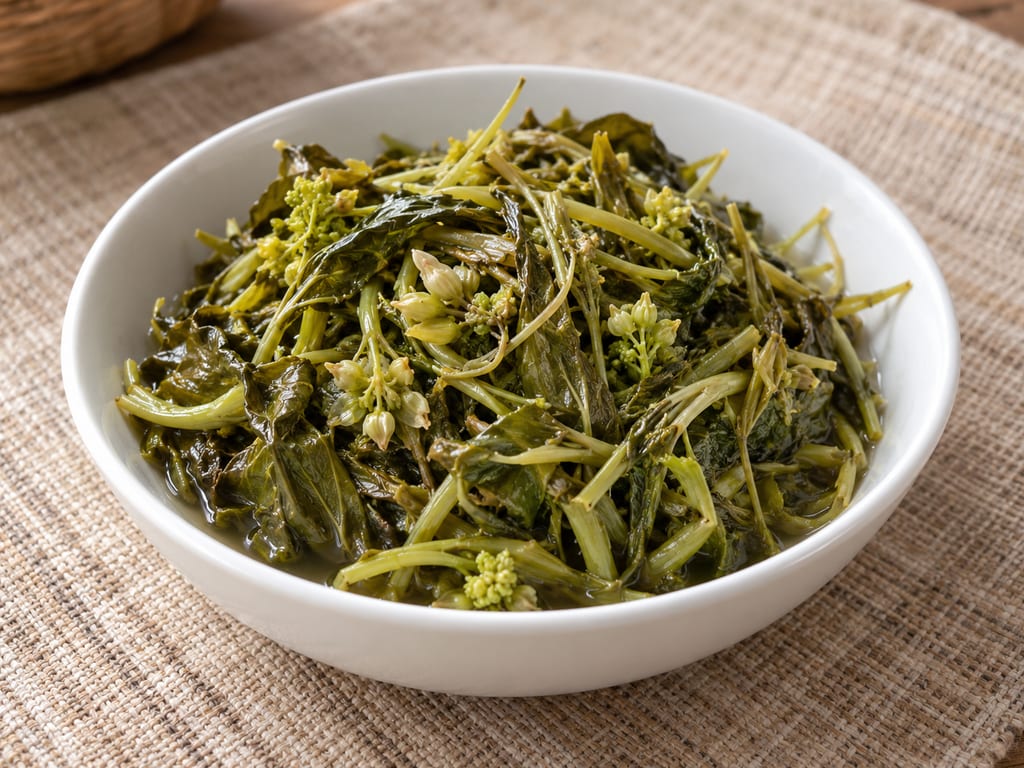
Phak sian dong is a Thai pickle of spider-plant tips and flowers (Cleome gynandra), salted and packed with cooked rice. Northeastern Thai and Lao Khrang accounts give different methods.
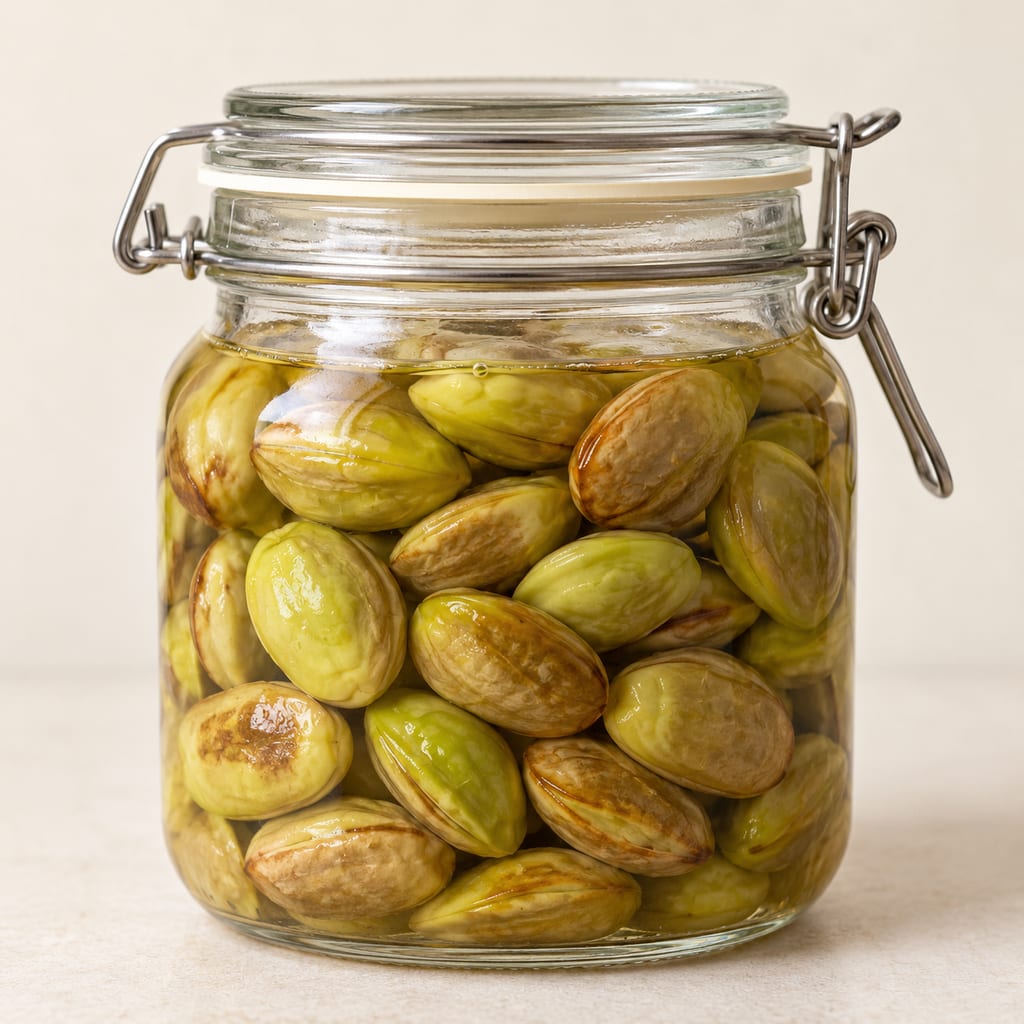
Thai pickle of stink bean seeds, Parkia speciosa, with the testa left on, held in a 10 percent salt brine in a glass jar in shade. JIRCAS records a three to four day ferment and a separate seven day flavour note.
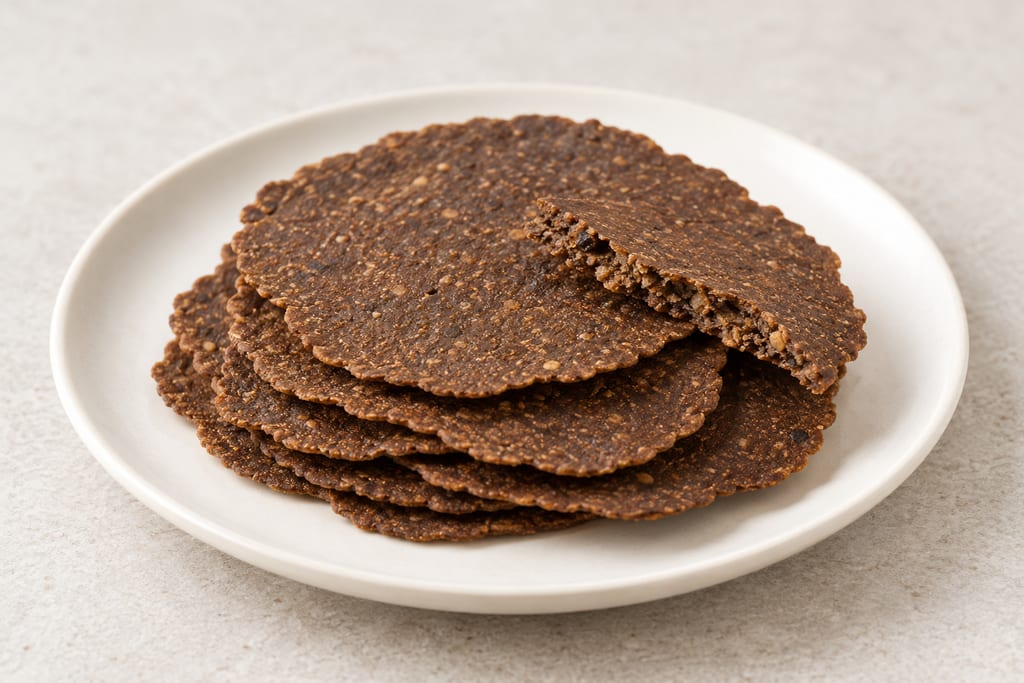
Black soybeans cooked, inoculated with a named Bacillus subtilis culture and fermented warm and humid into northern Thailand's thua nao, then optionally dried into thin discs.
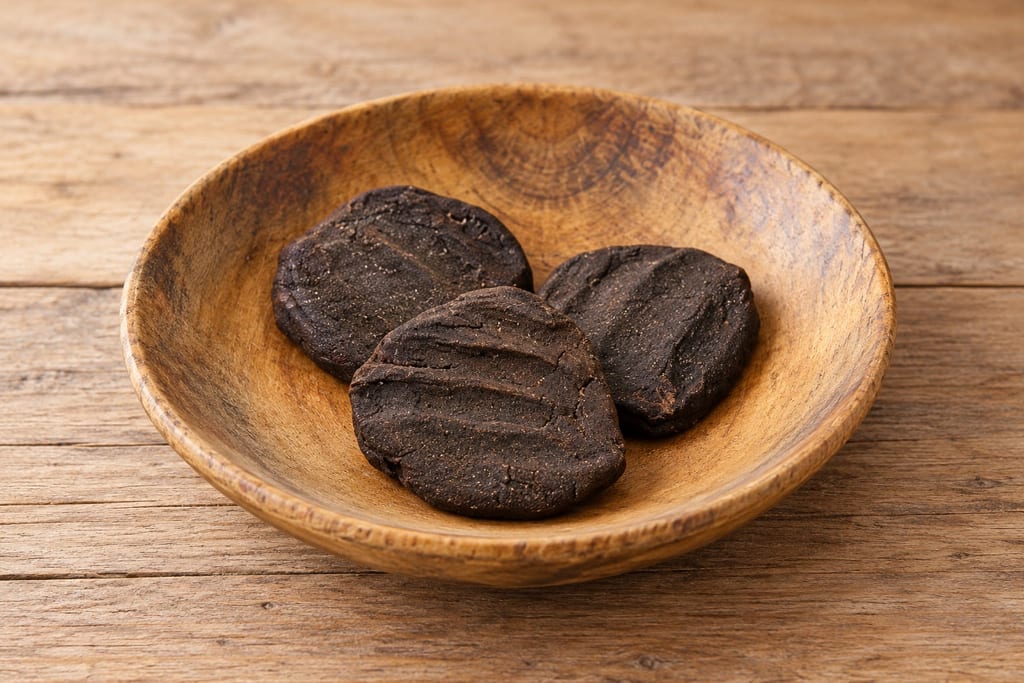
Dried cakes of pounded taro leaves from the Ao Naga in Nagaland, yellowed in a bag, then dried by hot ash or sun and used to flavour meat dishes.
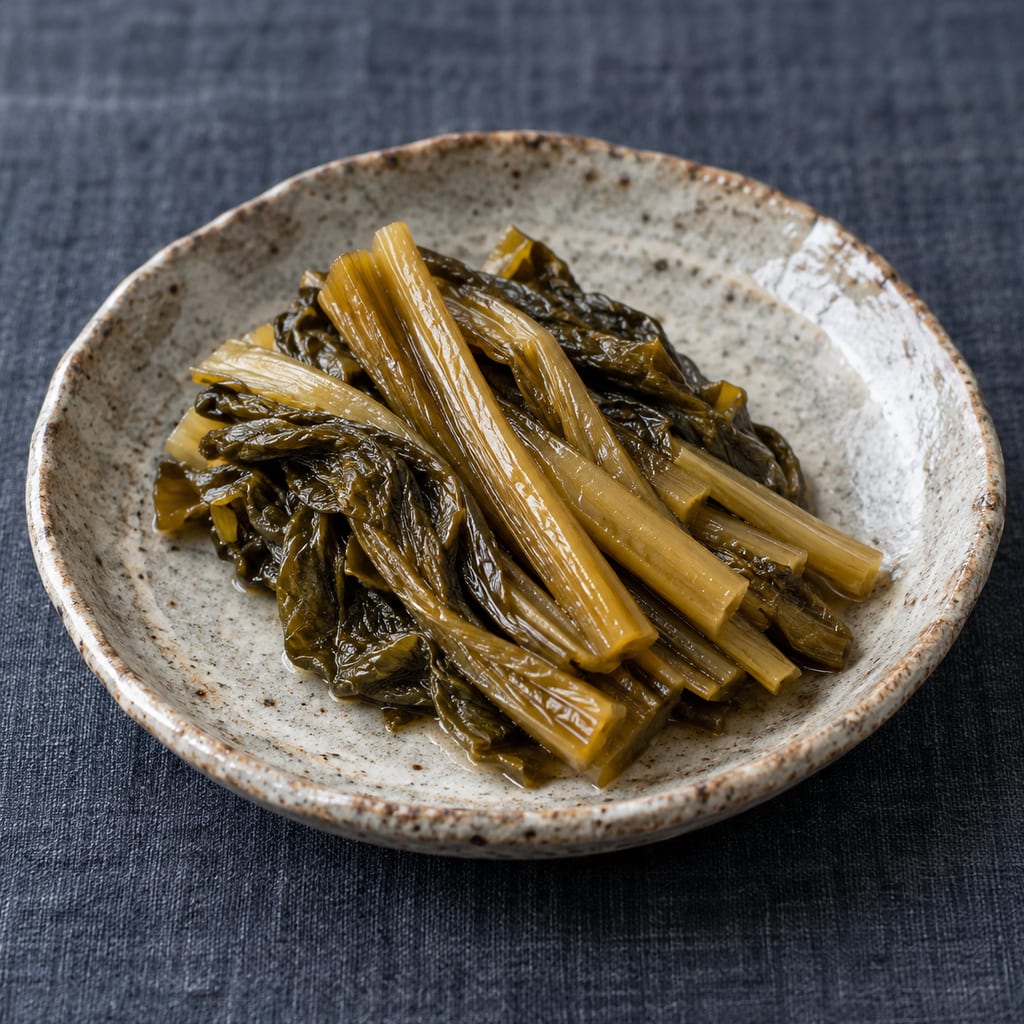
Takana mustard greens from Aso in Kumamoto are salted and pressed into a fresh spring pickle, or aged into a sour furuzuke that is fried and mixed into takana rice.
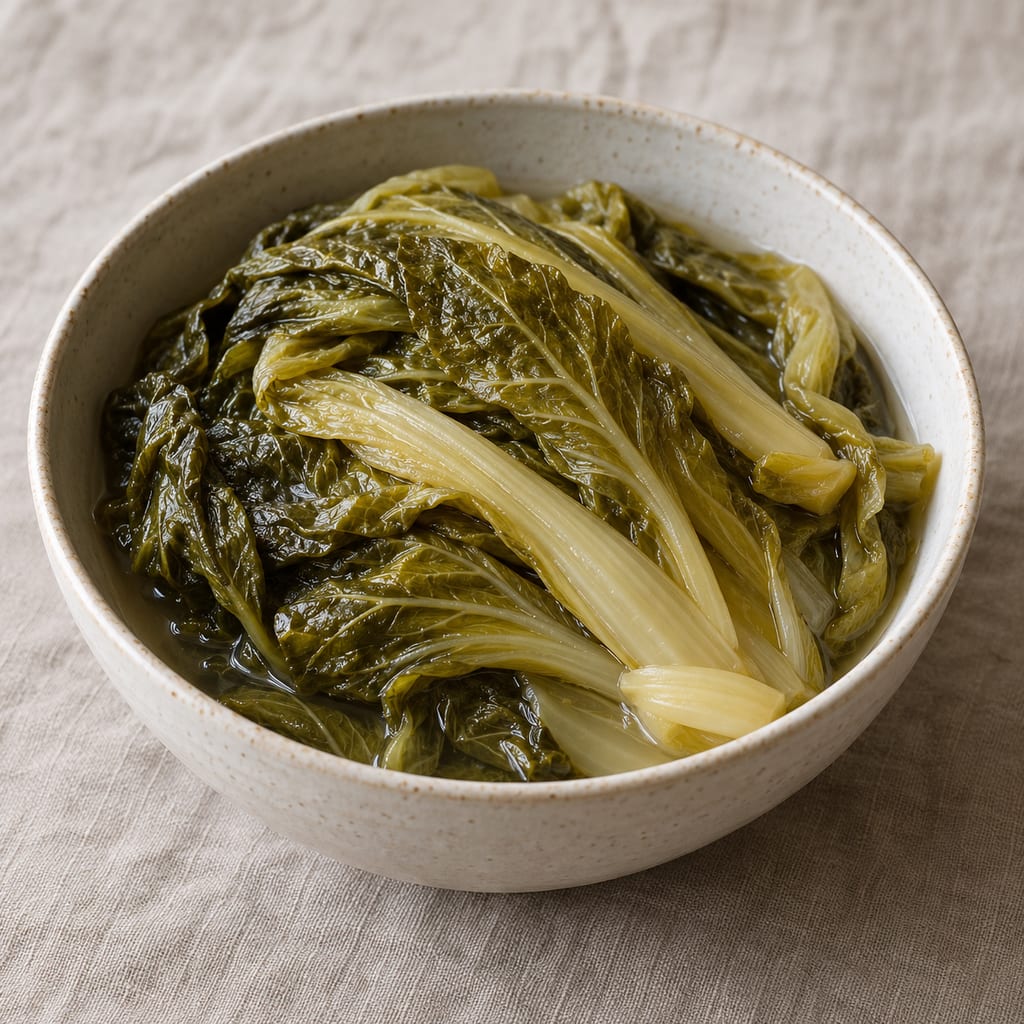
Wilted flat mustard leaves ferment with rice water and salt as a Filipino appetizer and cooking ingredient.
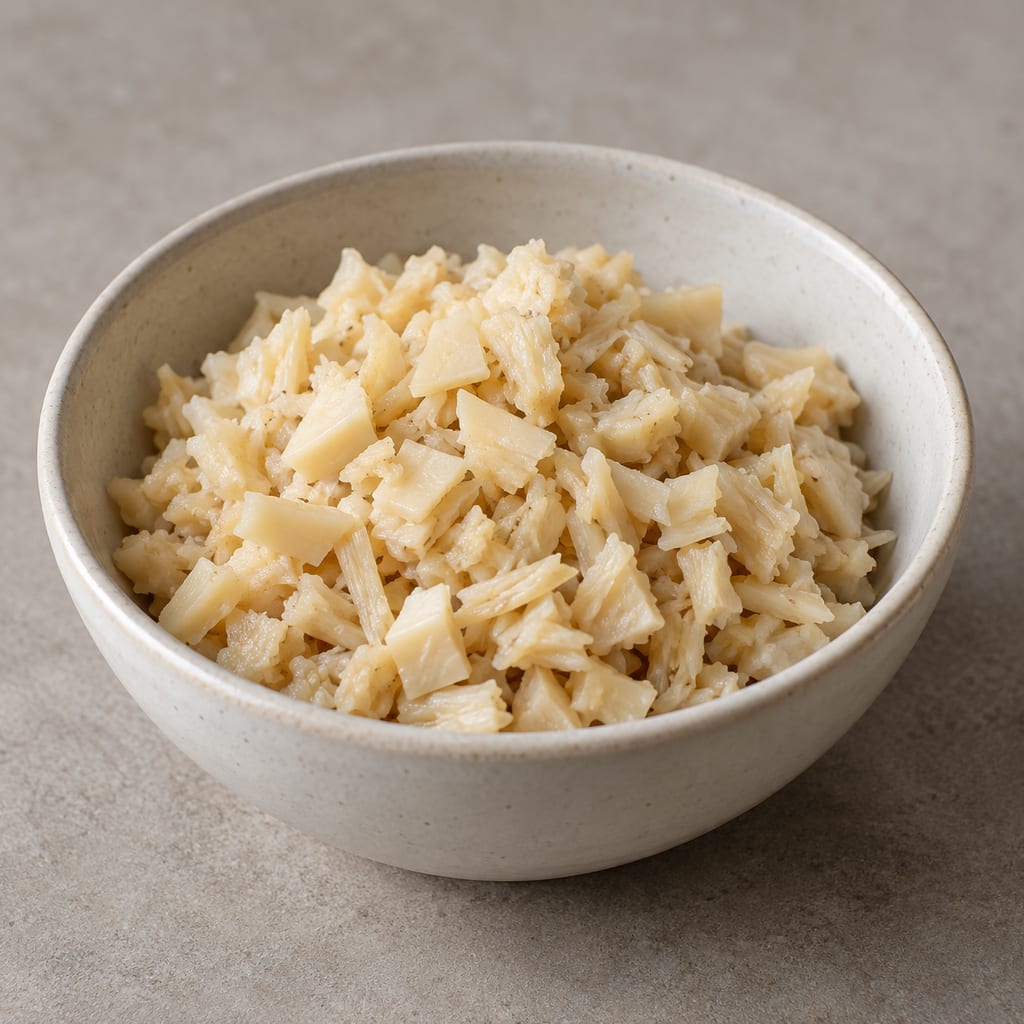
Finely chopped young bamboo shoots packed in leaf-lined baskets, sealed in a forest pit and weighted for one to three months, from Arunachal Pradesh.

Pit-fermented bamboo shoots from Arunachal Pradesh, cut smaller and sun-dried for five to ten days, used in curries.
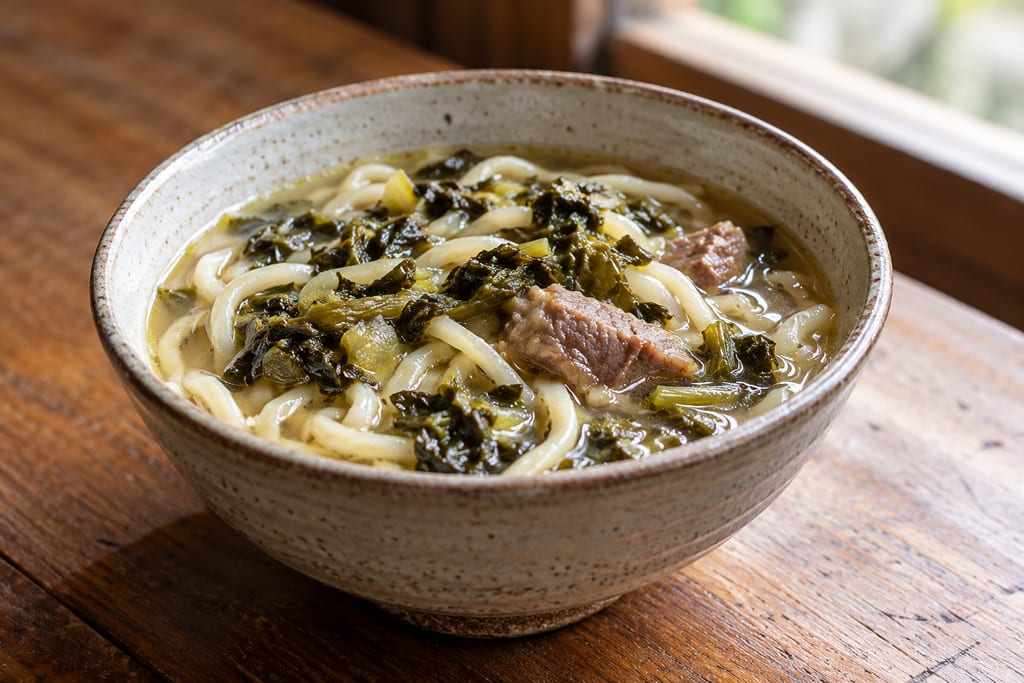
Goyang is a Sherpa fermented wild leafy food of the Darjeeling hills and Sikkim. Rainy-season magane-saag leaves are packed in a bamboo basket, held at room temperature for about a month, then eaten fresh or dried and used in soup.
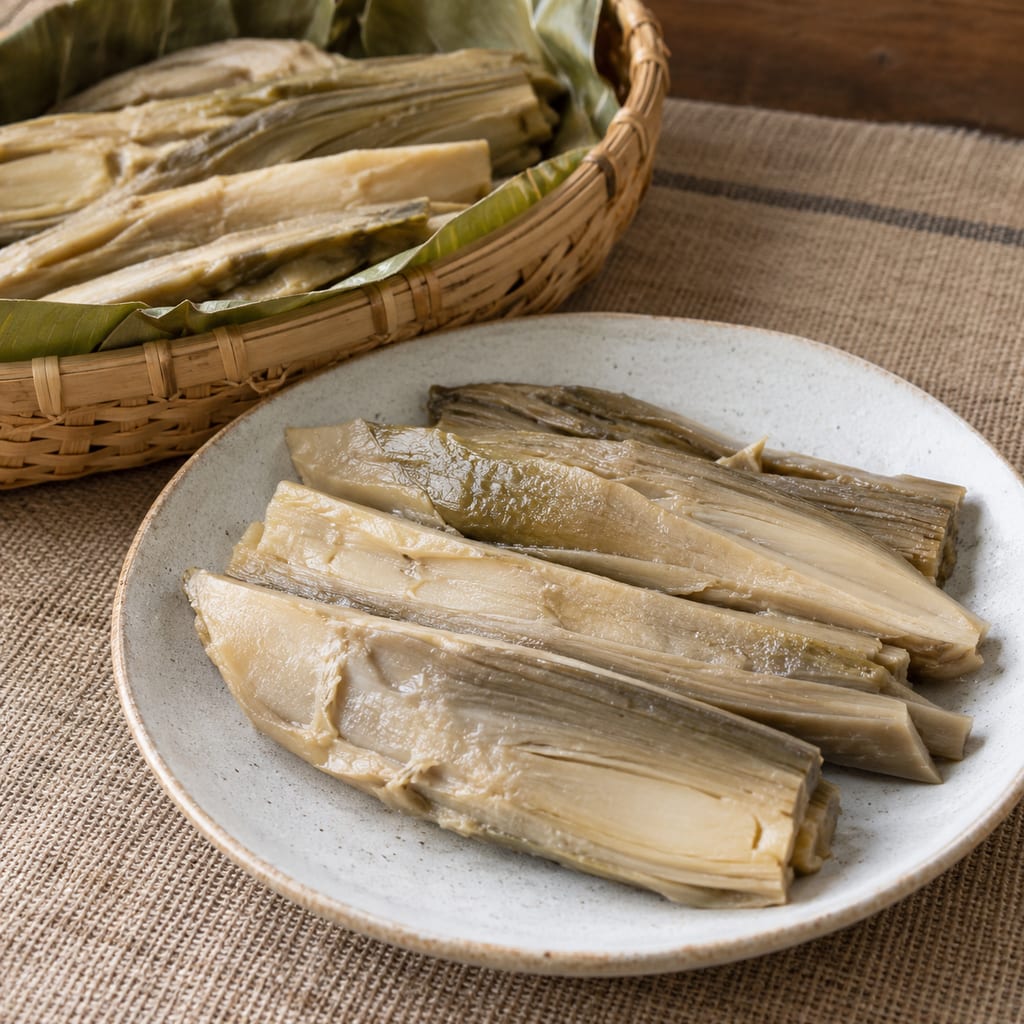
Upper tender bamboo-shoot tips, split or flattened, pit-fermented one to three months in Arunachal Pradesh and eaten in curries.
The original Polish barszcz: young hogweed leaves soured in warm water for a few days, then boiled into soup with egg, butter, cream or millet. Recorded from 1595, with warnings about the sap and lookalikes.
No community contributions have been published for this entry yet.
Sign in to contribute. Published comments and photos are free to read.
Academic volumeInspiration
Plant-Based Fermented Foods and Beverages of AsiaThe chapter describes pak-gard-dong from black mustard: wilt leaves in sunlight, add 2.5% salt, pack for 12 hours, drain, add 3% sugar and ferment at room temperature for 3–5 days.
Cited in: A mustard ferment built around two stages; History and source tradition; Recipe overview; Ingredients; Choosing the mustard greens; Salt and its role; Why the sugar comes later; Equipment; Method; How the microbial succession develops; Biochemical changes in mustard greens; Why removing the first liquid is significant; Regional comparison; Culinary use; Signs of successful processing; Safety and storage
University of Minnesota ExtensionSafety
Preserving food at home: FermentationProduce fermentation equipment, acidity monitoring and submersion controls.
Cited in: A mustard ferment built around two stages; Recipe overview; Ingredients; Equipment; Method; Signs of successful processing; Safety and storage
fenix.isa.ulisboa.ptReference
Fermented Foods and Beverages of the WorldTamang and Kailasapathy, eds. (2010)., section 5.2.10, p. 172. Original review of the salt-then-sugar method and associated microorganisms. fenix.isa.ulisboa.pt
Cited in: A mustard ferment built around two stages; History and source tradition; Recipe overview; Ingredients; Equipment; Method; Signs of successful processing; Safety and storage
JIRCASReference
JIRCAS — Pak-kaat-dorngRelated regional methods. JIRCAS
Cited in: A mustard ferment built around two stages; Recipe overview; Ingredients; Equipment; Method; Signs of successful processing; Safety and storage
Journal of Ethnic FoodsReference
Journal of Ethnic Foods — Fermented Foods of Southeast AsiaRegional comparison. Springer Nature Link
Cited in: Why the sugar comes later; Why removing the first liquid is significant
National Center for Home Food PreservationReference
National Center for Home Food Preservation — General Information on FermentingFood-safety principles. National Center for Home Food Preservation
Cited in: A mustard ferment built around two stages; Recipe overview; Ingredients; Equipment; Method; Signs of successful processing; Safety and storage