
Luk niang dong
A cultural account of luk niang dong, a Thai djenkol-bean pickle associated with southern Thailand. Not a recipe or eating recommendation: sources do not establish that pickling controls djenkolism.
 FermenteaWhere food goes to change
สะตอดอง · Sa-tor-dorng · Stink bean pickle · Sataw dong
Thai pickle of stink bean seeds, Parkia speciosa, with the testa left on, held in a 10 percent salt brine in a glass jar in shade. JIRCAS records a three to four day ferment and a separate seven day flavour note.
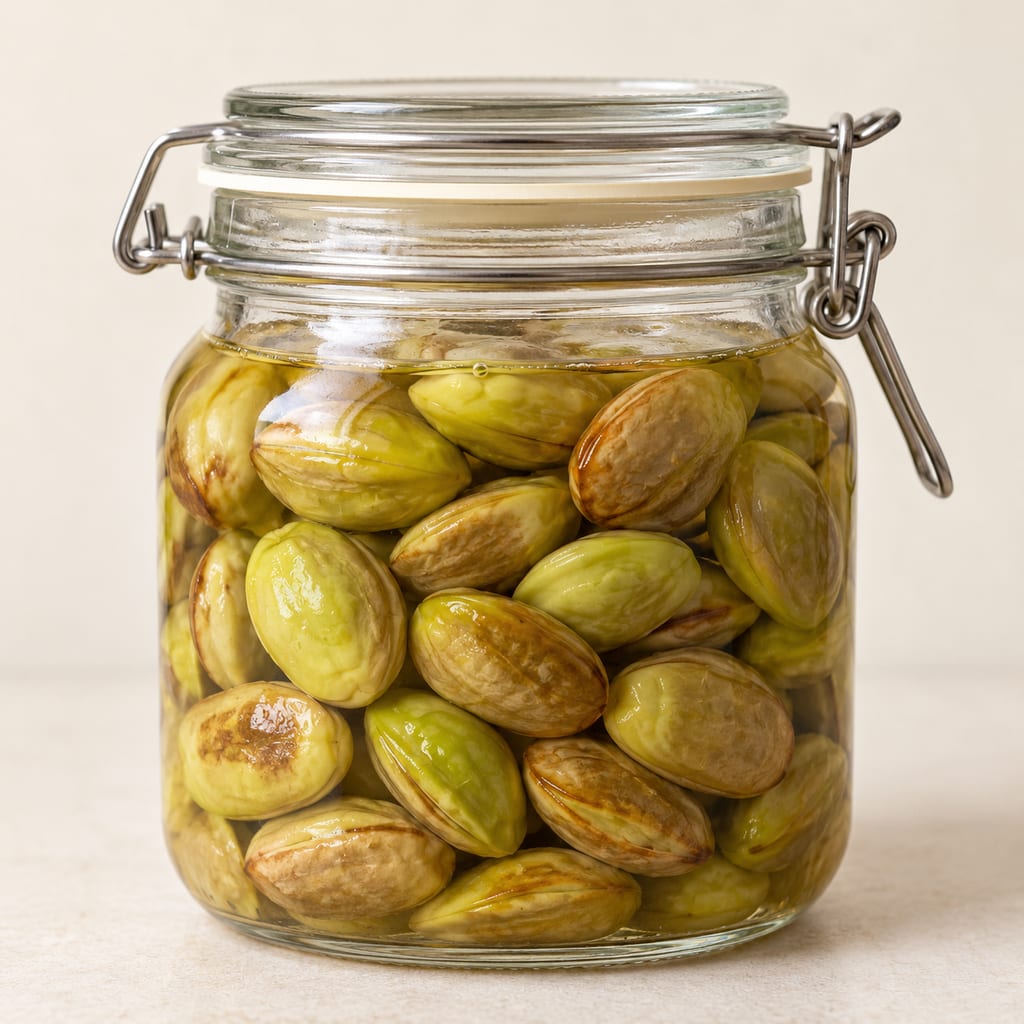
Sato dong (สะตอดอง) is a Thai brine ferment of the seeds of the stink bean, Parkia speciosa. The seeds are eaten with the testa, the seed coat, removed, usually with nam prik, the chilli paste dip. The JIRCAS Thailand food database lists it as brine-pickled sator seed.
Sato is central to southern Thai cooking. A Prince of Songkla University profile distinguishes sato khao from sato dan, but the JIRCAS entry does not say which cultivar or form its pickle uses.
The JIRCAS record rests on a 1995 compilation and was later revised. These dates document the database record, not the origin of the food. The university profile reports that pods form in the rainy season and take a little over three months to mature. That describes the plant, not a dated pickle calendar.
No dated first attestation for the pickle was located.
The JIRCAS direct method blanches pods for a few minutes without softening the seeds, shells them with the testa intact, and washes away mucilage. The seeds are drained and covered with 10 percent weight-by-volume salt solution in a closed glass jar kept in shade. The entry gives three to four days of fermentation, and separately notes that flavour is preferred at about seven days, after which sourness increases. These are not reconciled into one endpoint.
A Thai-language newspaper column attributes a different household method to a named cook in Surat Thani province. That method uses sato dan, salts the shelled seeds overnight, holds them in water for one or two days, and then sours them separately in clear rice-wash water with a little sugar and salt for five to seven days. A Thai food-story article gives a qualitative variant in the same range. The columnist describes bubbles and added salt as cues, which are not validated endpoints. These accounts should not be combined into one recipe.
The JIRCAS entry lists Lactobacillus plantarum, a Lactobacillus species and a Pichia species, citing the 1995 Thai fermented foods reference. A 2018 study abstract describes two experimental 15-day fermentations of the seeds, one spontaneous and one inoculated with L. plantarum. It reports L. plantarum and L. sanfranciscensis as dominant in its tested samples. Its full methods were not retrieved in this inspection, and its pH observation belongs to an inoculated research batch. Neither result defines a household culture or a safety threshold.
The JIRCAS direct brine is described as a home-industry method, and its 10 percent concentration is specific. Seed mass, brine volume, shade temperature, a measurable endpoint, jar capacity, cleaning and storage conditions are not given. The household accounts give sequence and approximate stage lengths, but leave produce, salt and water amounts, temperatures and storage unspecified. Everything here remains research-only and is not an executable recipe.
The equipment is a pot for brief blanching, bowls for cooling and washing, and a covered glass jar. No specialized apparatus or do-it-yourself chamber is supported. Five to seven days of souring and a storage life of about 15 days are not safety endpoints, and no product-specific safety validation was found.
Sato dong is distinct from sato (Thai rice drink) and from lam phueak dong, a taro-stalk ferment. The brined pickled plum veg-0067 is only a broad comparison.
The JIRCAS entry is based on a 1995 Kasetsart University compilation. The Prince of Songkla University profile describes stink bean as a southern Thai plant with two named cultivated forms. Neither source dates the pickle's origin.
Scaling: source batch only
The source gives no validated endpoint, no measured monitoring and no conditions for its 15-day storage statement.
Hazard sourceAn experimental fermentation abstract reports microbial and acidification results in a laboratory setting. Those results cannot be applied as a household safety limit.
Hazard sourceKeep the seeds fully under the brine. The source does not state this control in these words.
Control sourceThis is a research outline, not a tested household recipe.
Smell, taste or appearance do not establish safety.
The JIRCAS entry places the product in Thailand. A Prince of Songkla University library profile describes the plant as a southern Thai plant. Neither source dates the product's origin.
A cultural account of luk niang dong, a Thai djenkol-bean pickle associated with southern Thailand. Not a recipe or eating recommendation: sources do not establish that pickling controls djenkolism.
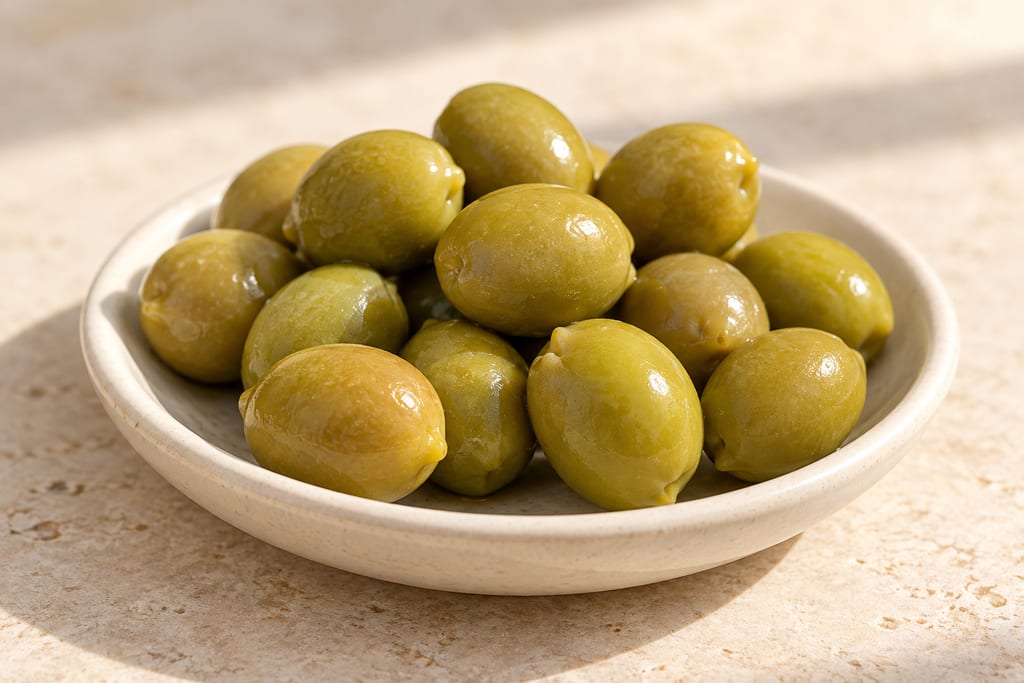
A Portuguese table-olive product from the Negrinha cultivar in northeastern Portugal, sold in three commercial styles, two of them brined fermentations and one oxidised to black.
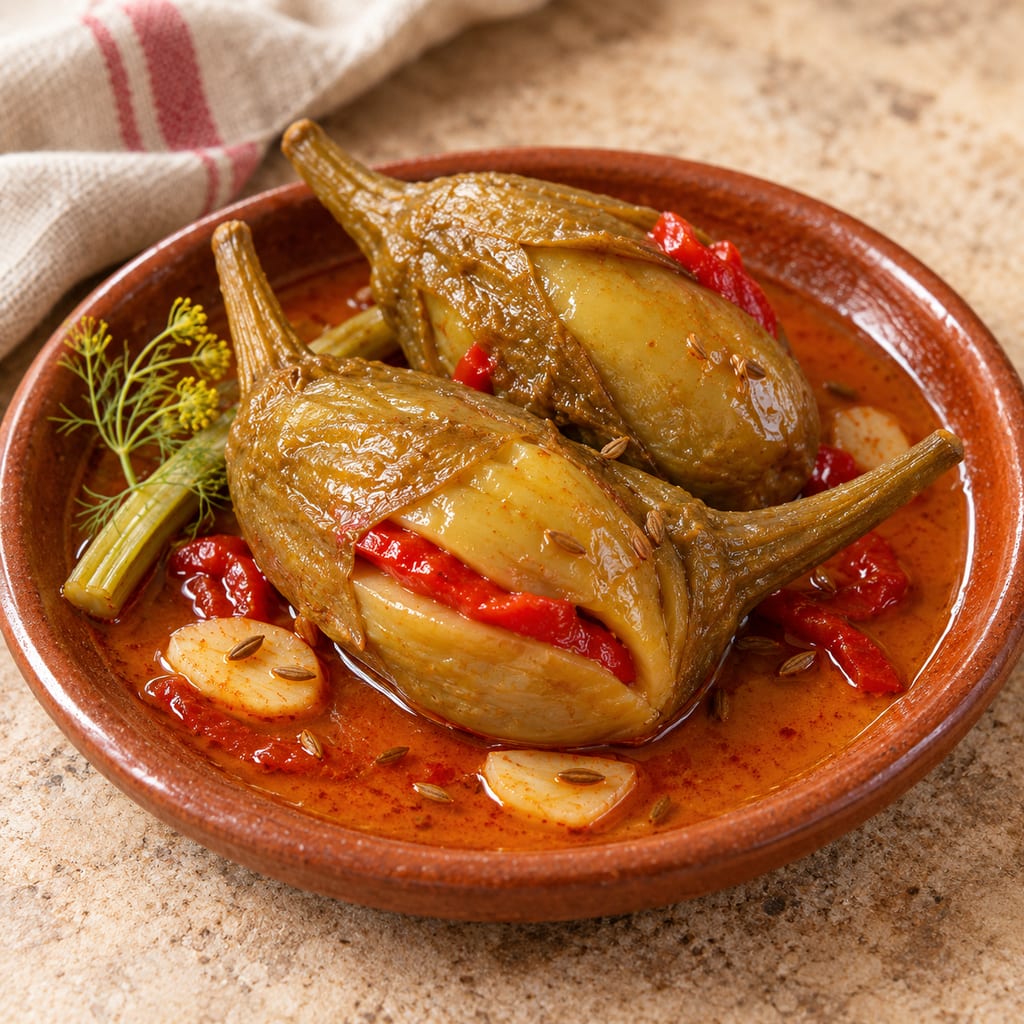
A protected aubergine preserve from Ciudad Real in Spain: tender fruit of the local Dealmagro variety, cooked briefly and then fermented in a vinegared, paprika-seasoned dressing.
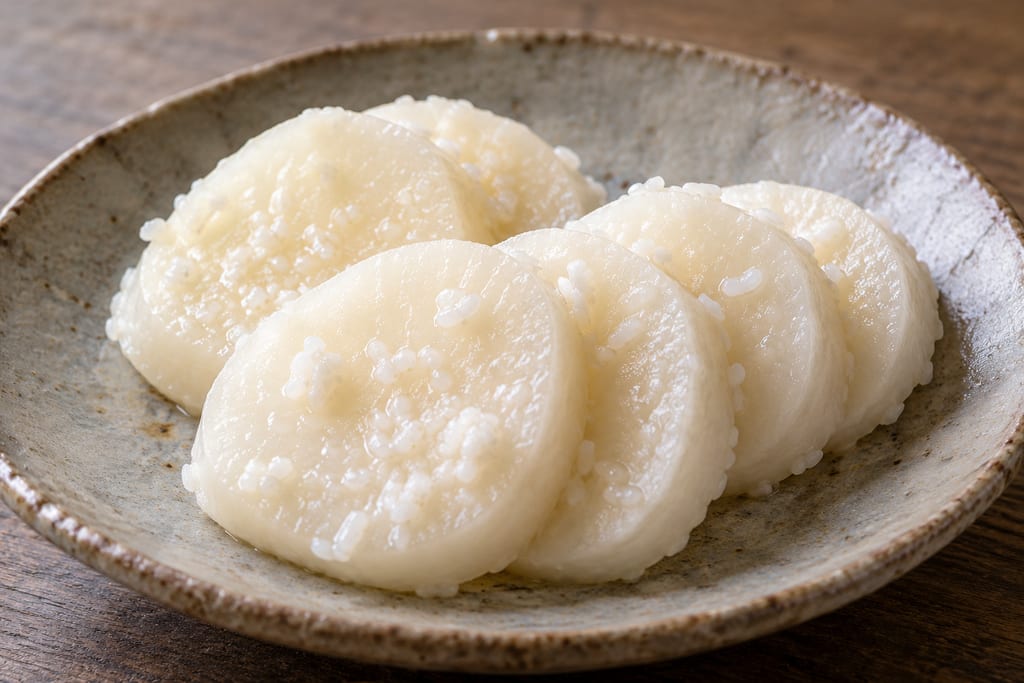
A sweet, crisp Japanese daikon pickle from Tokyo's Nihonbashi district, made by salting fresh radish and dressing it in rice koji, sugar or koji amazake without the heavy drying used for takuan.
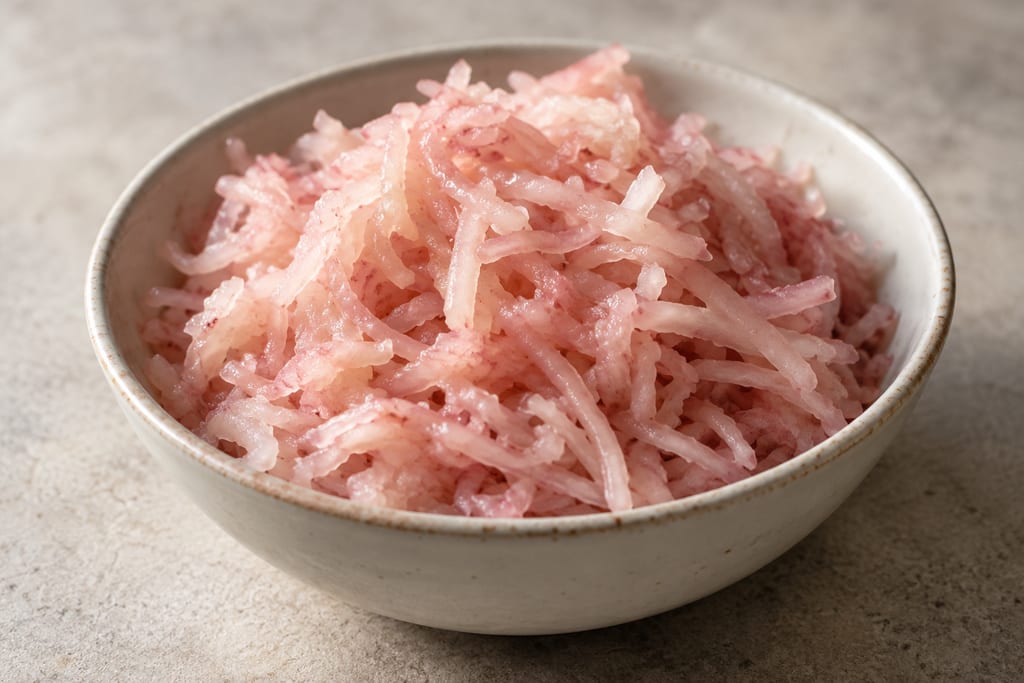
Source-specific Brovada DOP producer method for Friuli Venezia Giulia turnips and red-grape marc. This records a regulated producer process; it is not a validated home-scale recipe.
An industrial fermentation patio places factory-made fiberglass-reinforced polyester olive tanks below floor level, with drainage and transfer infrastructure arranged around the buried vessels.
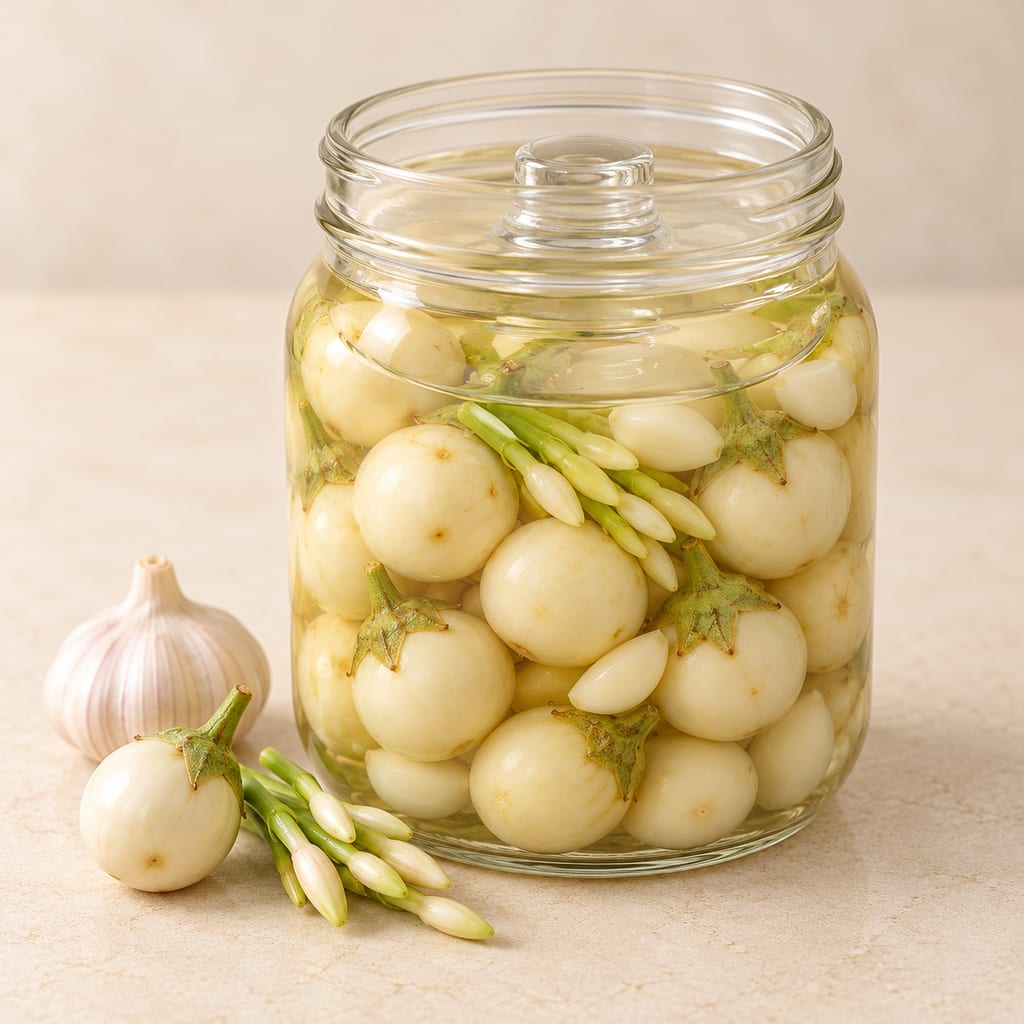
Vietnamese salted and fermented small eggplant, dried on the day of purchase, then held submerged in warm salty water with garlic and galingale flower for a week or longer.
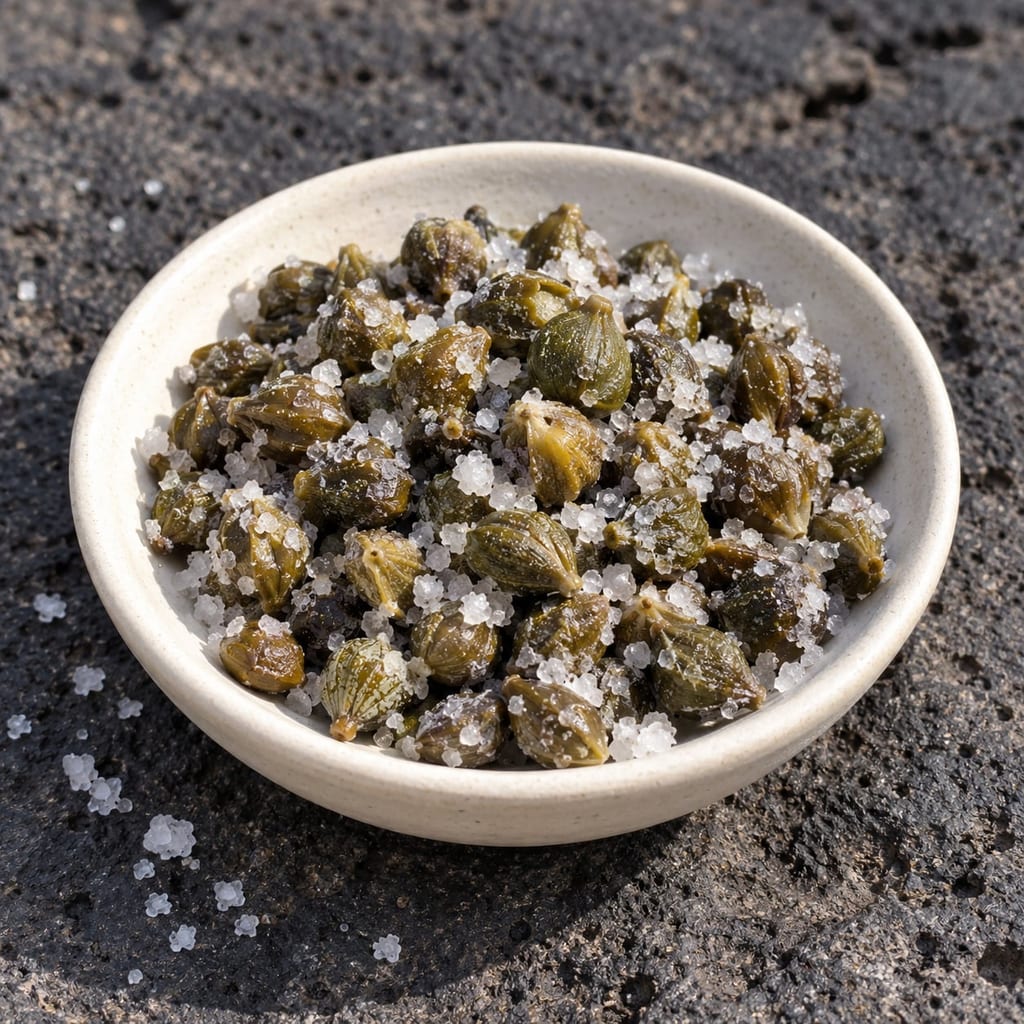
A protected Sicilian product: unopened caper buds from the island of Pantelleria, dry-salted with sea salt in a two-stage process that encourages lactic fermentation.
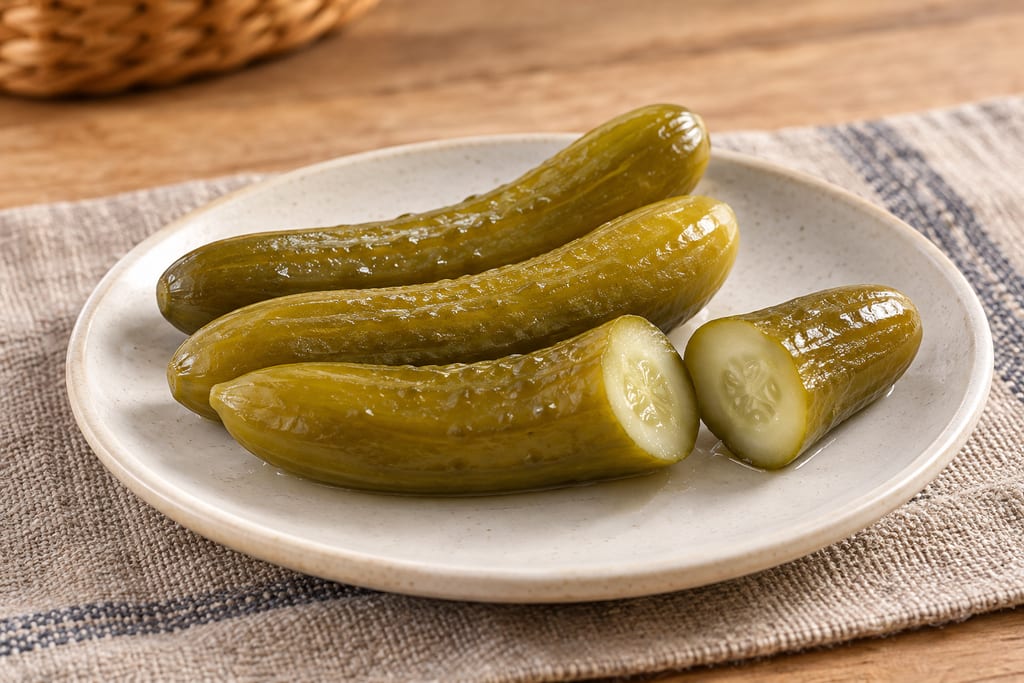
Çubuk turşusu is a registered pickle from Çubuk district in Ankara. Its cucumber variant is sold as Salatalık Turşusu, and a commercial specification sets its brine and room-temperature period.
No community contributions have been published for this entry yet.
Sign in to contribute. Published comments and photos are free to read.
JIRCAS (Japan International Research Center for Agricultural Sciences), based on the Kasetsart University Institute of Food Research and Product Development 1995 compilationMethod · Identity · Uses · Safety
Sa-tor-dorng, Database of Fermented Foods of ThailandStink bean seeds, blanched pods, shelled with testa intact, washed and drained.
10 percent w/v salt solution in a glass jar, shade, three to four days; a separate seven-day flavour note; 15-day storage life without conditions.
Cited in: What it is; Origin and dating; Methods as recorded; Microbes and fermentation; Home feasibility and limits; Related products
PubMedSafety
Microbiota dynamics and volatilome profile during stink bean fermentation (Sataw-Dong) with Lactobacillus plantarum KJ03 as a starter cultureAbstract reports two experimental 15-day fermentations, spontaneous and inoculated. It is not a household method.
Cited in: What it is; Origin and dating; Methods as recorded; Microbes and fermentation; Home feasibility and limits; Related products
Prince of Songkla University, southern information libraryIdentity · History
Sato (Bitter bean)Regional botanical and culinary description of stink bean as a southern Thai plant, with two named cultivated forms.
Cited in: What it is; Origin and dating; Methods as recorded; Microbes and fermentation; Home feasibility and limits; Related products
Japan International Research Center for Agricultural SciencesHistory
Database of Fermented Foods of Thailand (No. 1216)The database is based on the 1995 Kasetsart compilation, online since FY2015, partly revised in 2024.
Cited in: What it is; Origin and dating; Methods as recorded; Microbes and fermentation; Home feasibility and limits; Related products