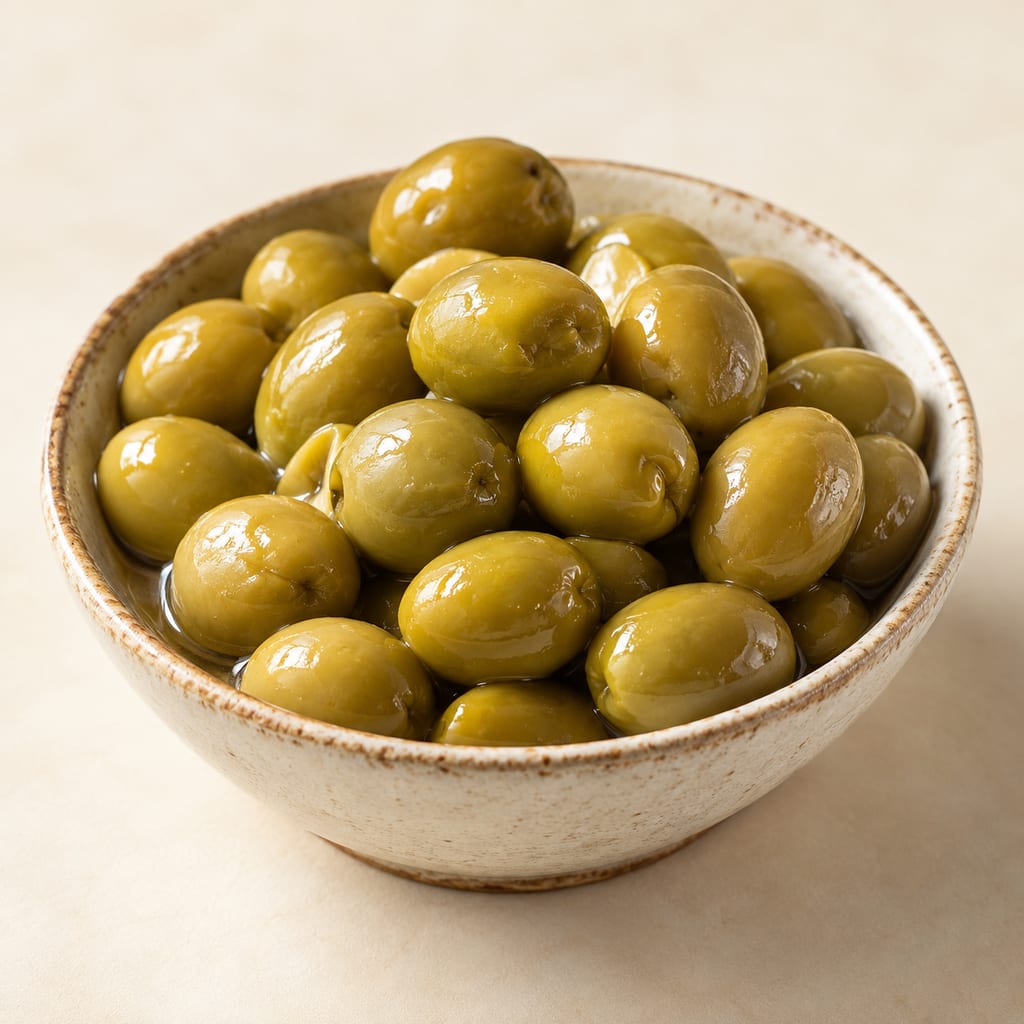
Spanish-style green olives
Spanish-style green olives, or Sevillian green olives, are green fruit treated with lye, rinsed, then fermented in brine for two to six months. The household batch here is a UC ANR method.
 FermenteaWhere food goes to change
Traditional method
Berenjenas de Almagro · Dealmagro aubergine · Solanum melongena var. Dealmagro
A protected aubergine preserve from Ciudad Real in Spain: tender fruit of the local Dealmagro variety, cooked briefly and then fermented in a vinegared, paprika-seasoned dressing.
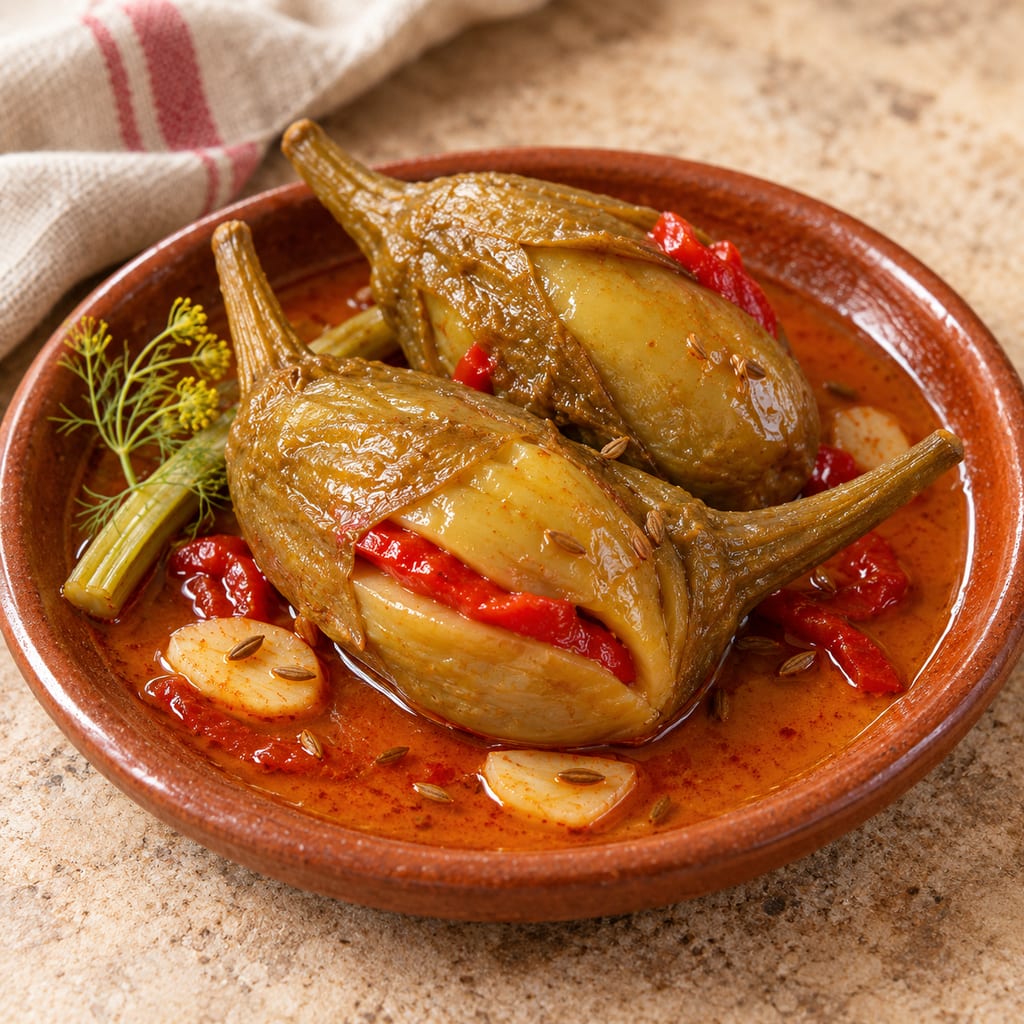
Berenjena de Almagro is a protected preserve of aubergine fruit from the Dealmagro variety, grown and processed in a defined group of seven municipalities in Ciudad Real, Spain. The fruit is cooked briefly, then fermented in a dressing of vinegar, oil and spices. The result is a soft, seasoned aubergine with a sharp, paprika-and-garlic flavour.
The 1995 regulation set the protected designation, and the 2012 specification now defines the rules. The specification's historical section is useful but attributed. It quotes a 1513 passage about aubergines in general, reports a local tradition of Arab origin without naming its scholars, and describes early twentieth-century household preparation in glazed earthenware pots by people skilled in seasoning.
None of these statements dates this exact named preserve. The sources support the modern protected product and its local preparation, not a medieval origin.
Picking runs from July into about November, every three or four days. The fruit is cooked for 5 to 20 minutes and then put into large fermentation vessels with the aliño, a dressing of vinegar, vegetable oil, salt, cumin, garlic, paprika and water. The mixture ferments for 4 to 15 days before it is packed in authorised containers such as cans or glass jars.
This is a hybrid process. Vinegar is an ingredient of the dressing, and fermentation is a separate, named stage. The sources do not say how much of the acidity comes from the added vinegar and how much from fermentation, and they name no starter culture.
The specification lists aliñadas (dressed whole fruit), stuffed fruit, fruit stuffed with a pepper paste, cogollos and chopped presentations. The 1995 regulation describes a stuffed form with a piece of pepper and a fennel stalk. These are forms of the product, not separate fermentation methods. The specification describes it as a first course or traditional aperitif.
The sources do not give a household batch, a container, a fermentation temperature, an endpoint test or a storage period. The specification's product pH below 4.5 is a controlled production characteristic and not a home safety test. A home method would need a validated process, which the sources do not provide, and qualified review before it is written as a recipe.
The 2012 specification quotes a 1513 passage about aubergines in general, attributes a local Arab-origin tradition to unnamed local scholars, and recounts household preparation in glazed earthenware pots in the early twentieth century. These are attributed heritage statements. They do not establish a medieval origin for this named preserve.
Scaling: source batch only
Cooked aubergine in a vinegared dressing is a product whose safety depends on controls the sources do not give for a home batch.
Hazard sourceUse a validated process and authorised packing before storing a batch.
Control sourceThe specification lists a product pH below 4.5 as a final characteristic. That is a controlled product description and is not a home endpoint. Appearance, smell and taste cannot establish that the product is safe.
Seven municipalities defined by the specification; production, processing and packing must take place in the area.
Spanish-style green olives, or Sevillian green olives, are green fruit treated with lye, rinsed, then fermented in brine for two to six months. The household batch here is a UC ANR method.
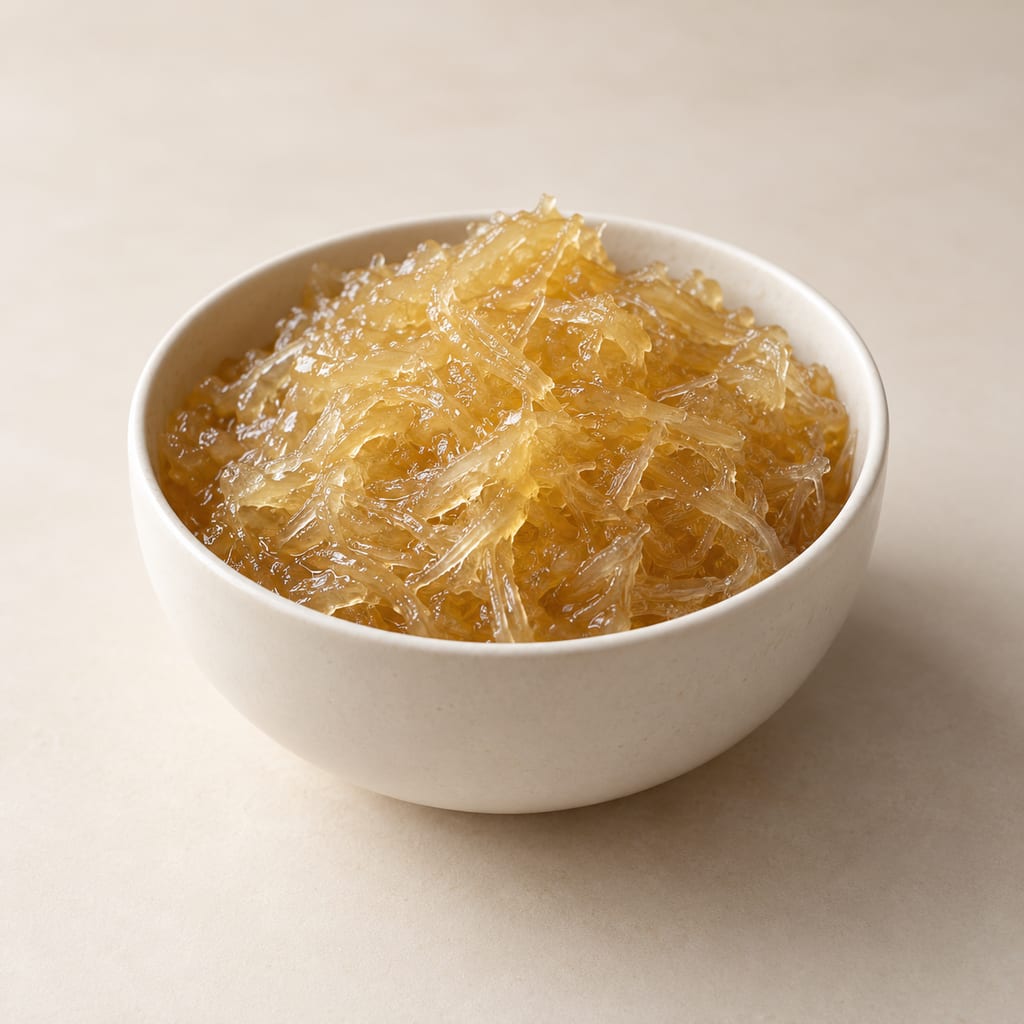
Fine strands of Cucurbita ficifolia cooked in an equal weight of sugar, then portioned for refrigerator or freezer storage. Ordinary orange pumpkin does not give the same fibres.
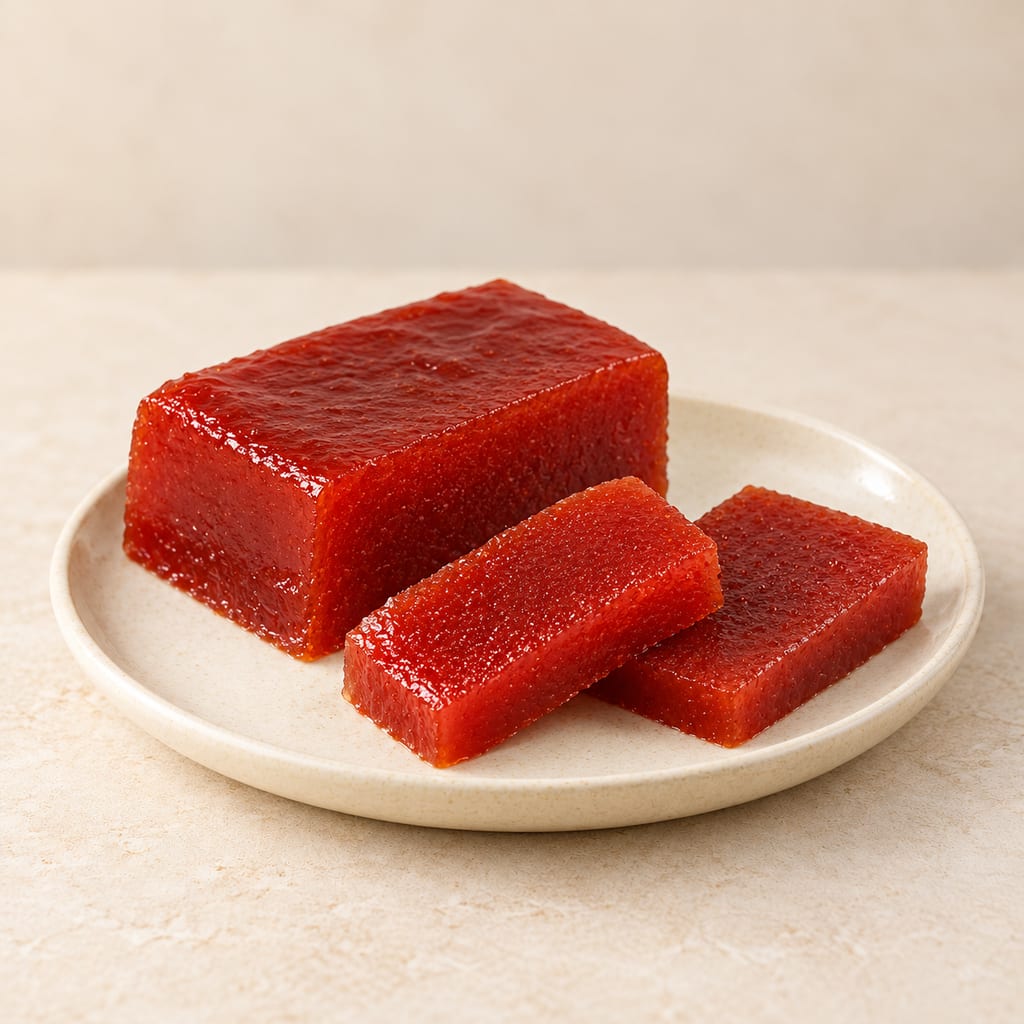
Dulce de membrillo is quince cooked with sugar into a firm paste for slicing. This family method softens the fruit in a pressure cooker, then blends it and leaves it to set.
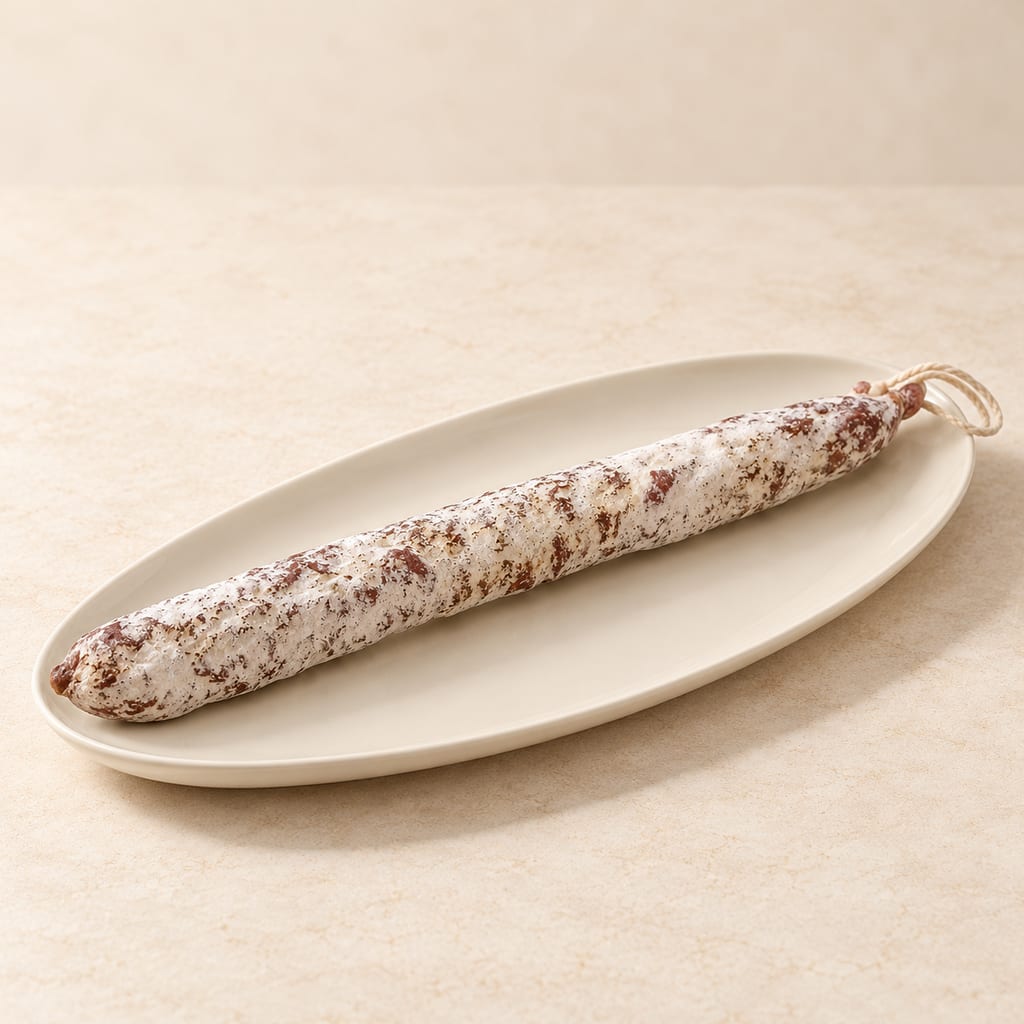
A documentary account of a modern starter-cultured Fuet formula and its place in Catalan sausage culture. The cited raw-pork process lacks matched safety validation, so this page does not present it as a household recipe.
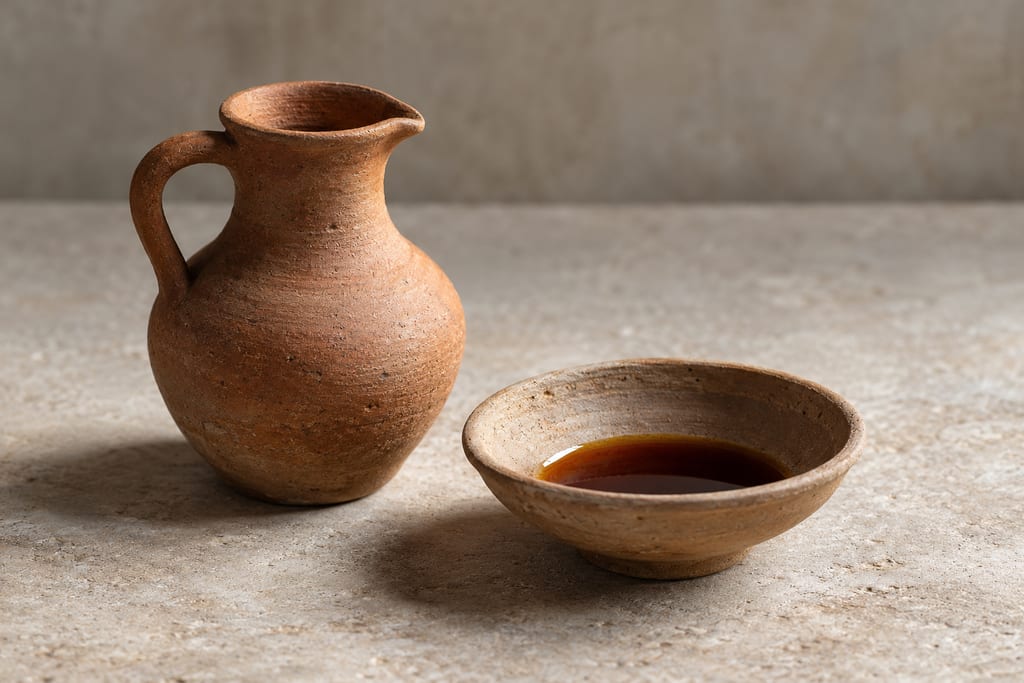
Garum, Greek garos and Latin liquamen, was the fish sauce of the ancient Mediterranean: fish and viscera salted and left in the sun, then drained off as a savoury liquid.
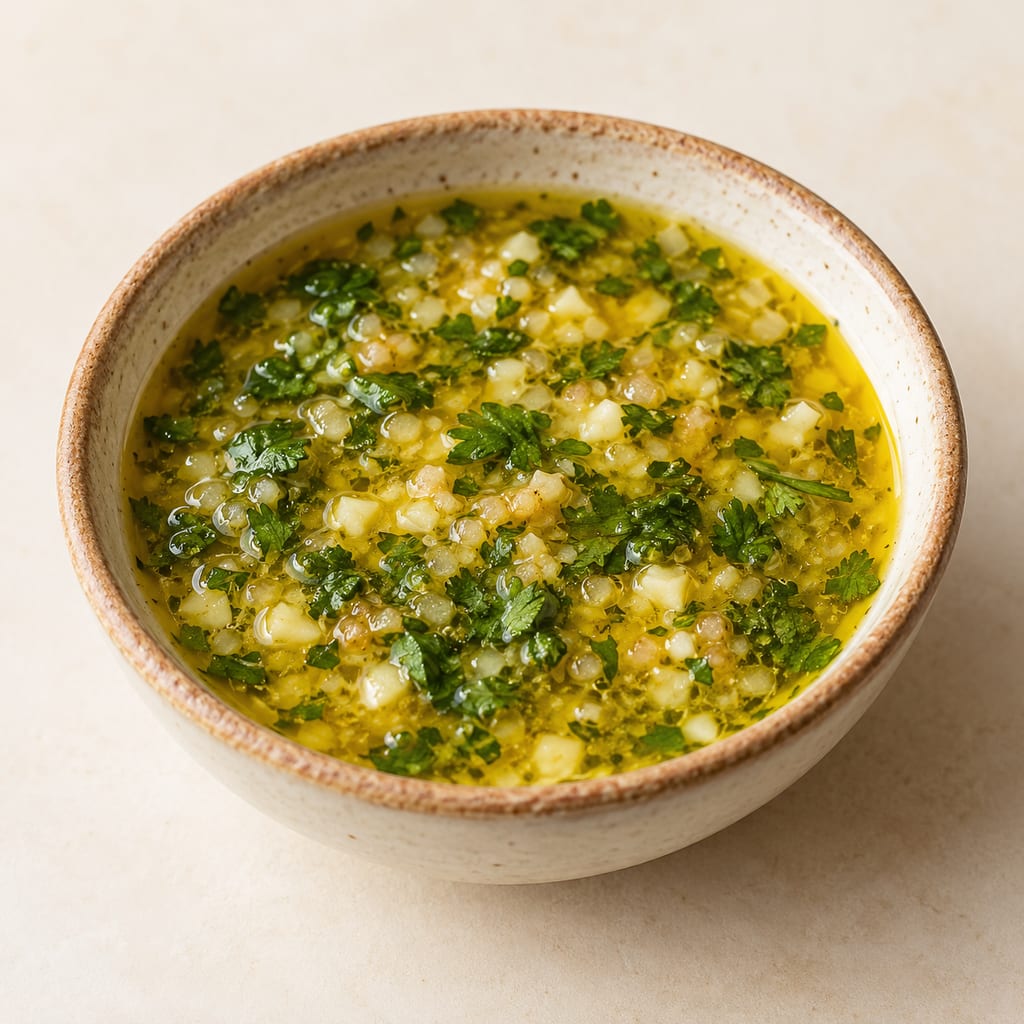
Mojo criollo is a Cuban sauce of garlic and sour orange juice with oil and herbs, used to marinate roast pork and as a dip.
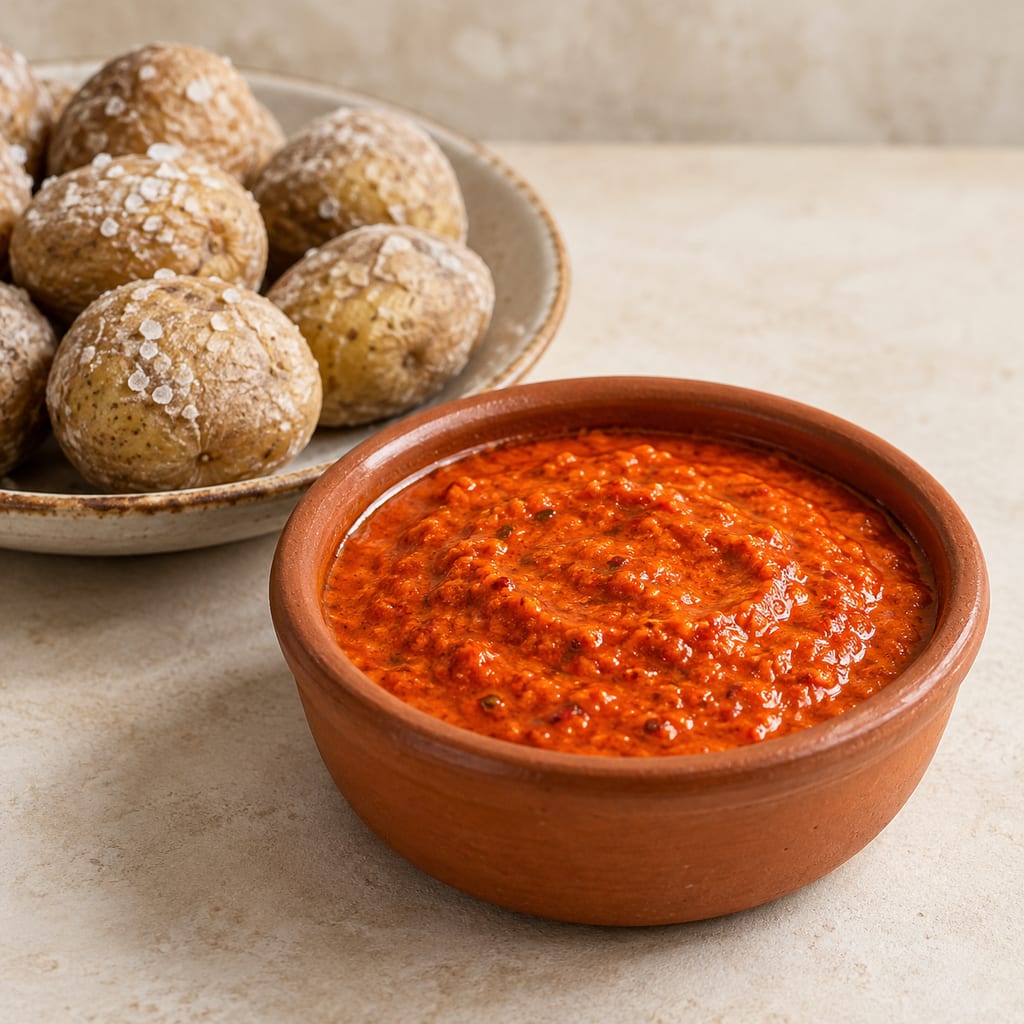
A red sauce of garlic, dried or fresh red pepper, paprika and cumin in olive oil and vinegar, served with salt-cooked potatoes across the Canary Islands.
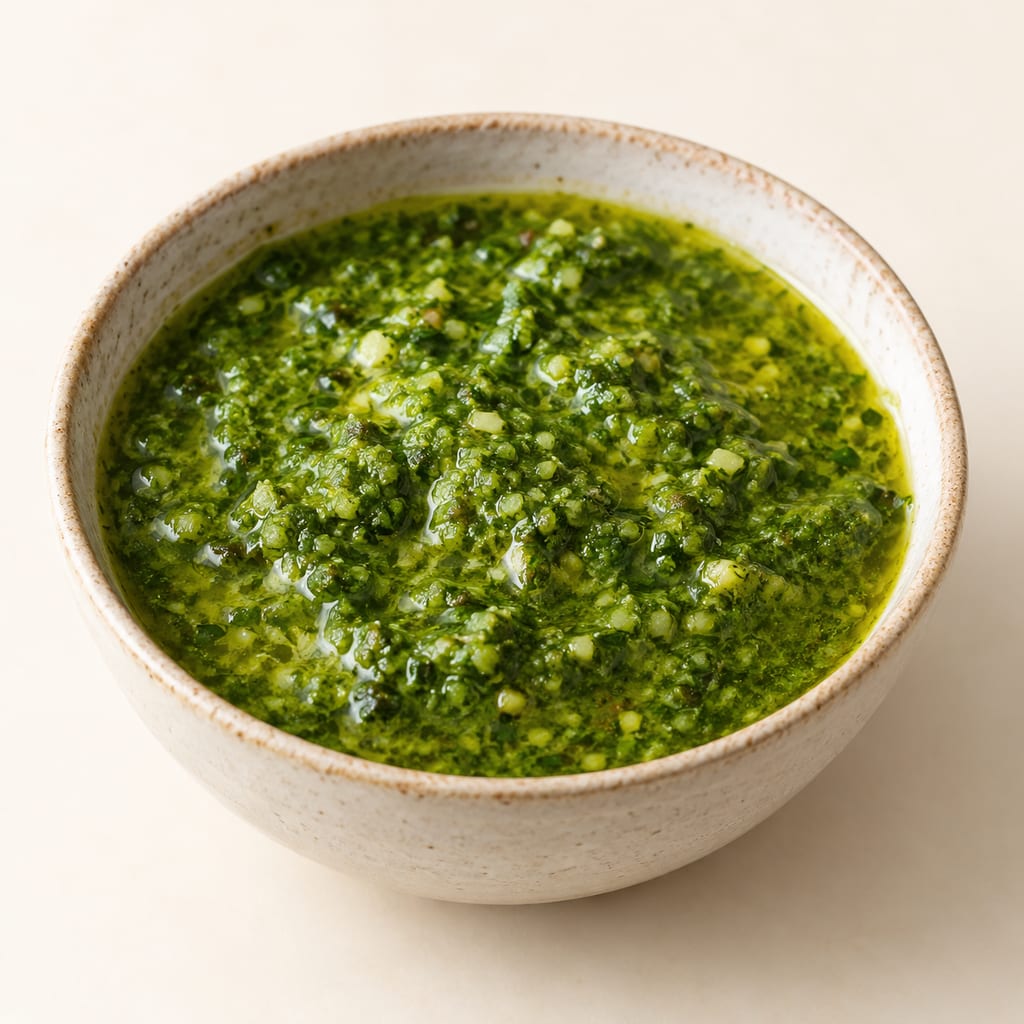
A green sauce of garlic, cumin, green chilli and fresh coriander or parsley in olive oil and vinegar, traditionally served with fish in the Canary Islands.
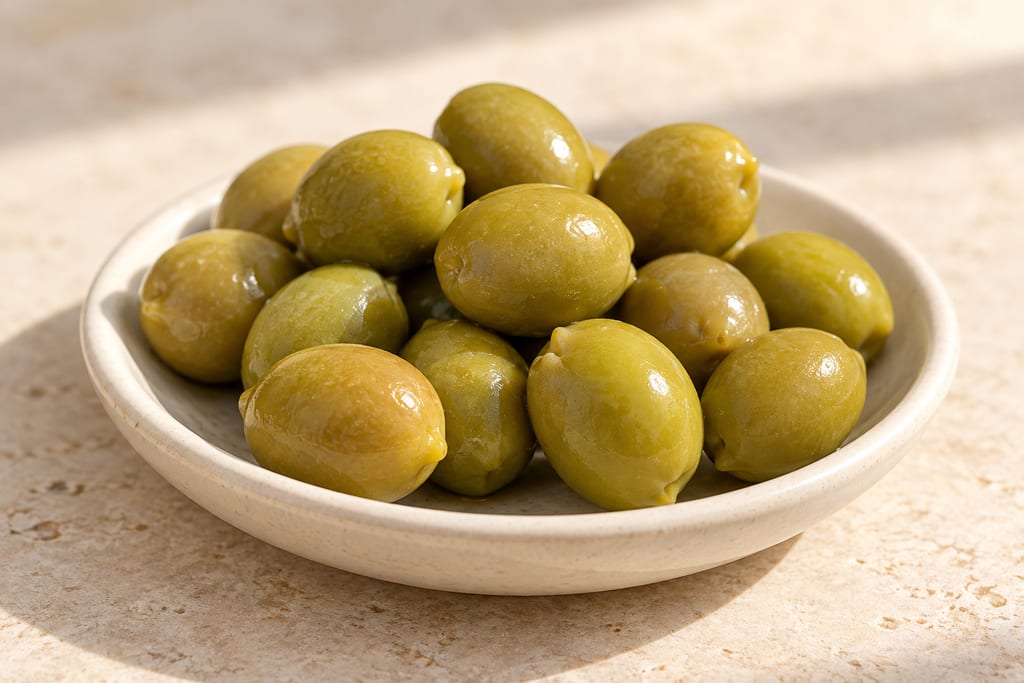
A Portuguese table-olive product from the Negrinha cultivar in northeastern Portugal, sold in three commercial styles, two of them brined fermentations and one oxidised to black.
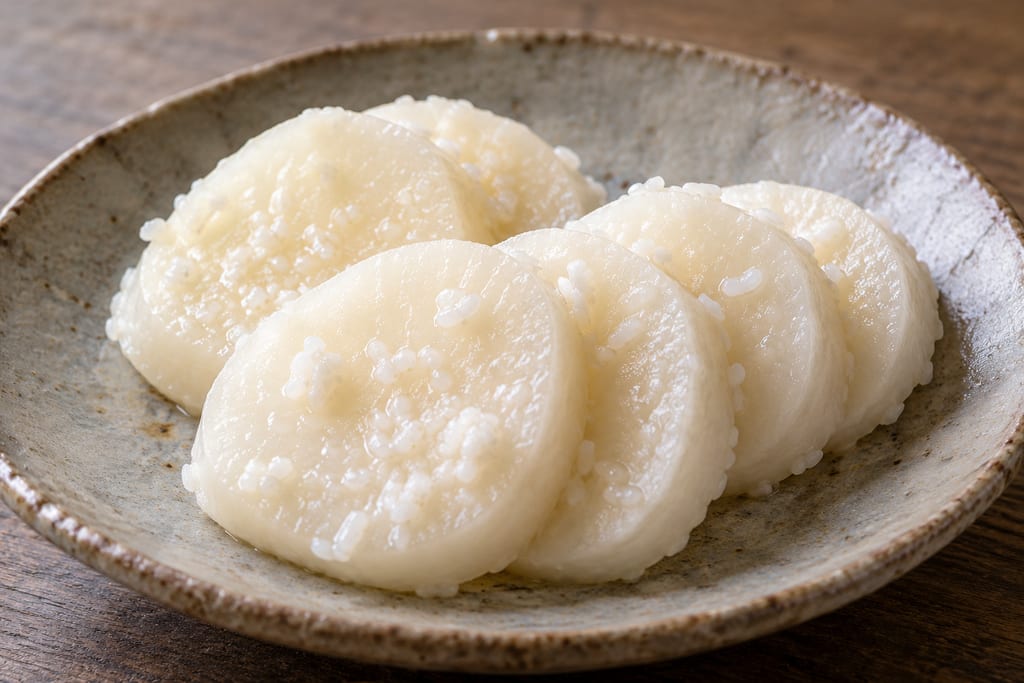
A sweet, crisp Japanese daikon pickle from Tokyo's Nihonbashi district, made by salting fresh radish and dressing it in rice koji, sugar or koji amazake without the heavy drying used for takuan.
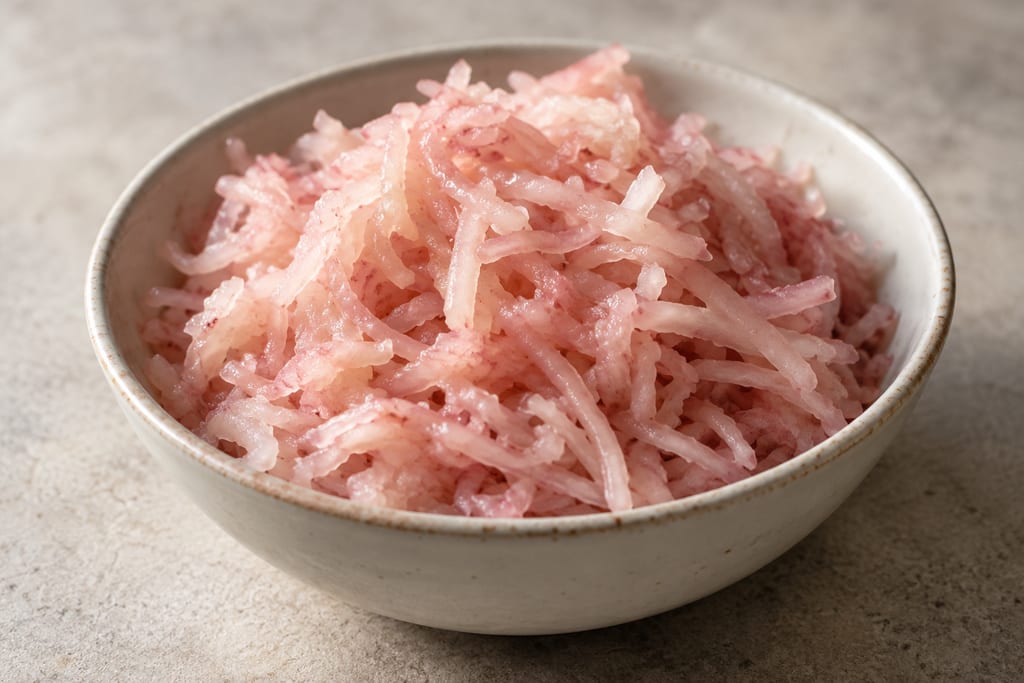
Source-specific Brovada DOP producer method for Friuli Venezia Giulia turnips and red-grape marc. This records a regulated producer process; it is not a validated home-scale recipe.
An industrial fermentation patio places factory-made fiberglass-reinforced polyester olive tanks below floor level, with drainage and transfer infrastructure arranged around the buried vessels.
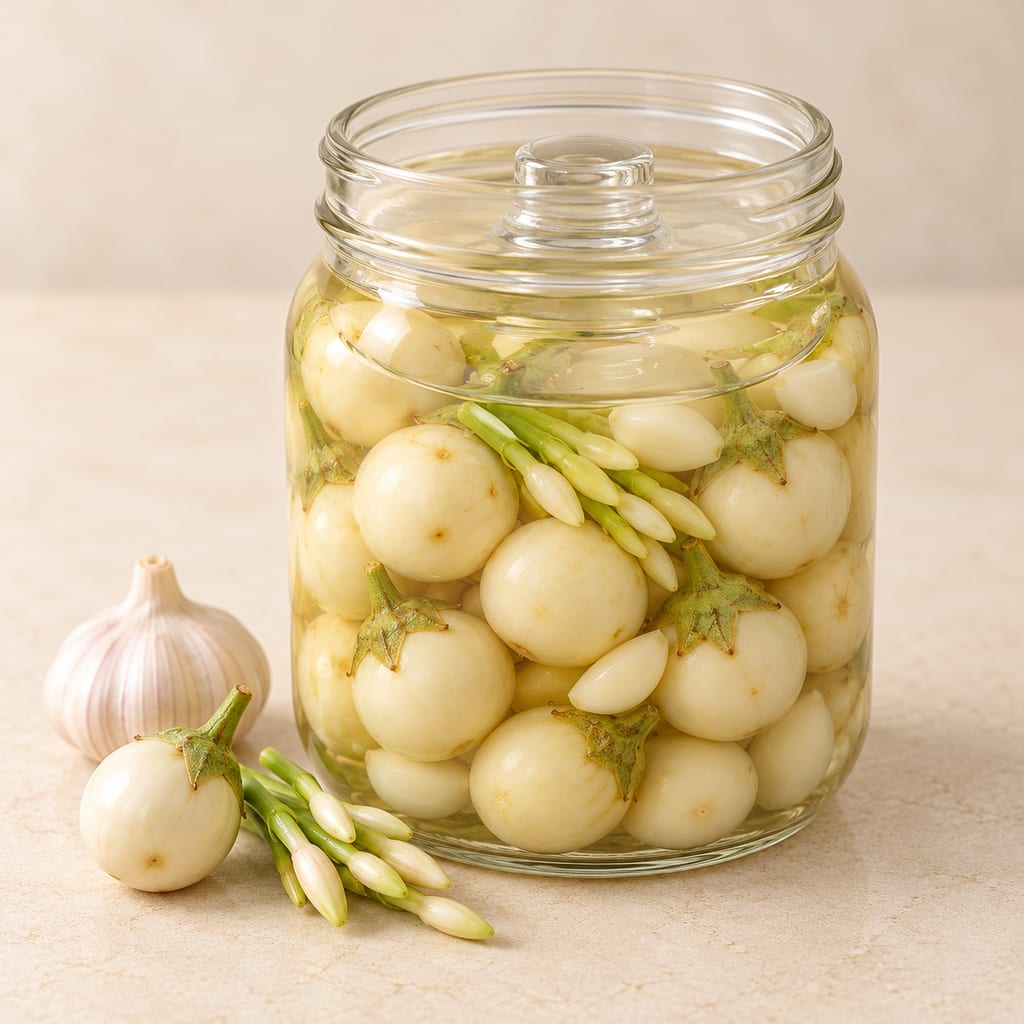
Vietnamese salted and fermented small eggplant, dried on the day of purchase, then held submerged in warm salty water with garlic and galingale flower for a week or longer.
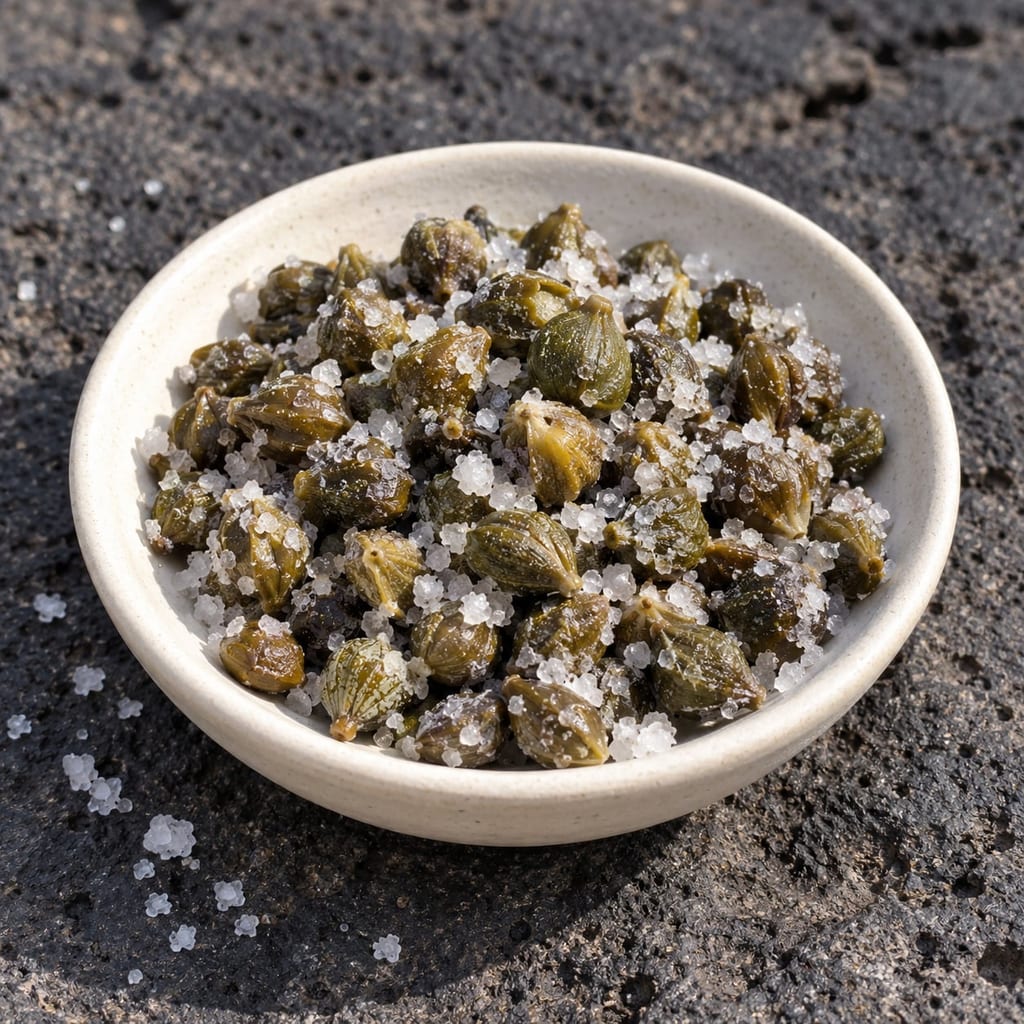
A protected Sicilian product: unopened caper buds from the island of Pantelleria, dry-salted with sea salt in a two-stage process that encourages lactic fermentation.
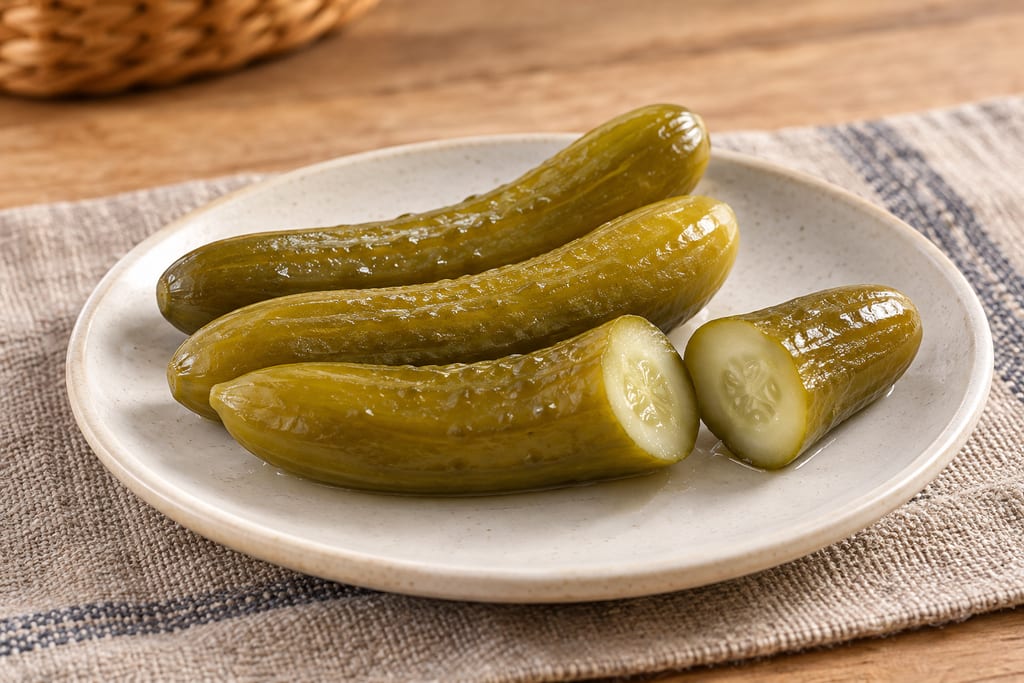
Çubuk turşusu is a registered pickle from Çubuk district in Ankara. Its cucumber variant is sold as Salatalık Turşusu, and a commercial specification sets its brine and room-temperature period.
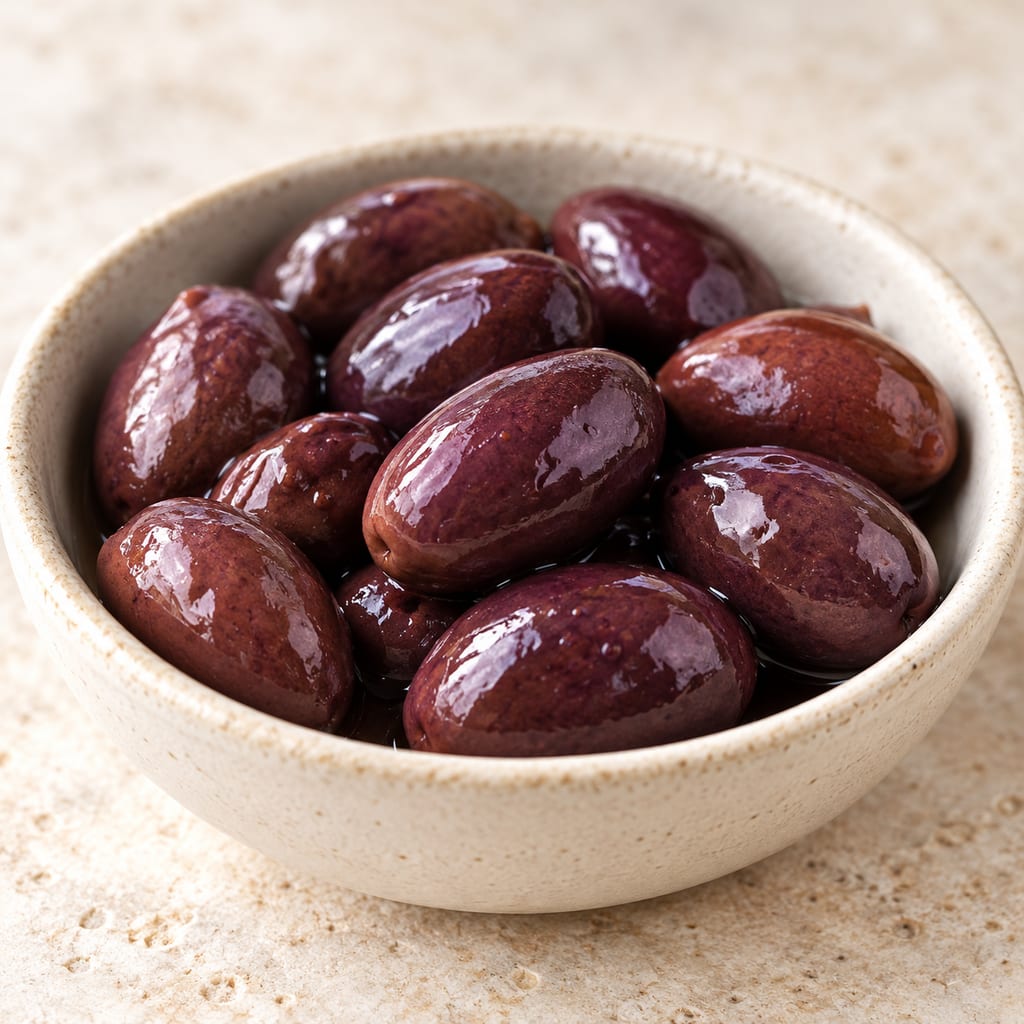
Elia Kalamatas is a Messinia table olive of the Kalamon variety, picked before full ripeness and fermented in brine for six to nine months; it is a PDO product, not a generic black olive.
No community contributions have been published for this entry yet.
Sign in to contribute. Published comments and photos are free to read.
Ministerio de Agricultura, Pesca y Alimentación (MAPA)Method · History · Safety
Pliego de condiciones: Berenjena de AlmagroSeven-municipality production area in Ciudad Real.
Harvest from July to about November, picking every three or four days.
Cooking for 5 to 20 minutes, then fermentation in large vessels for 4 to 15 days.
Aliño of vinegar, vegetable oil, salt, cumin, garlic, paprika and water.
Product pH below 4.5 as a final characteristic.
Boletín Oficial del Estado (BOE)Method
Regulation of the Denominación de Origen Protegida Berenjena de AlmagroNames a fermentation stage and a vinegar-containing seasoning.
Describes a stuffed form with a pepper piece and fennel stalk.