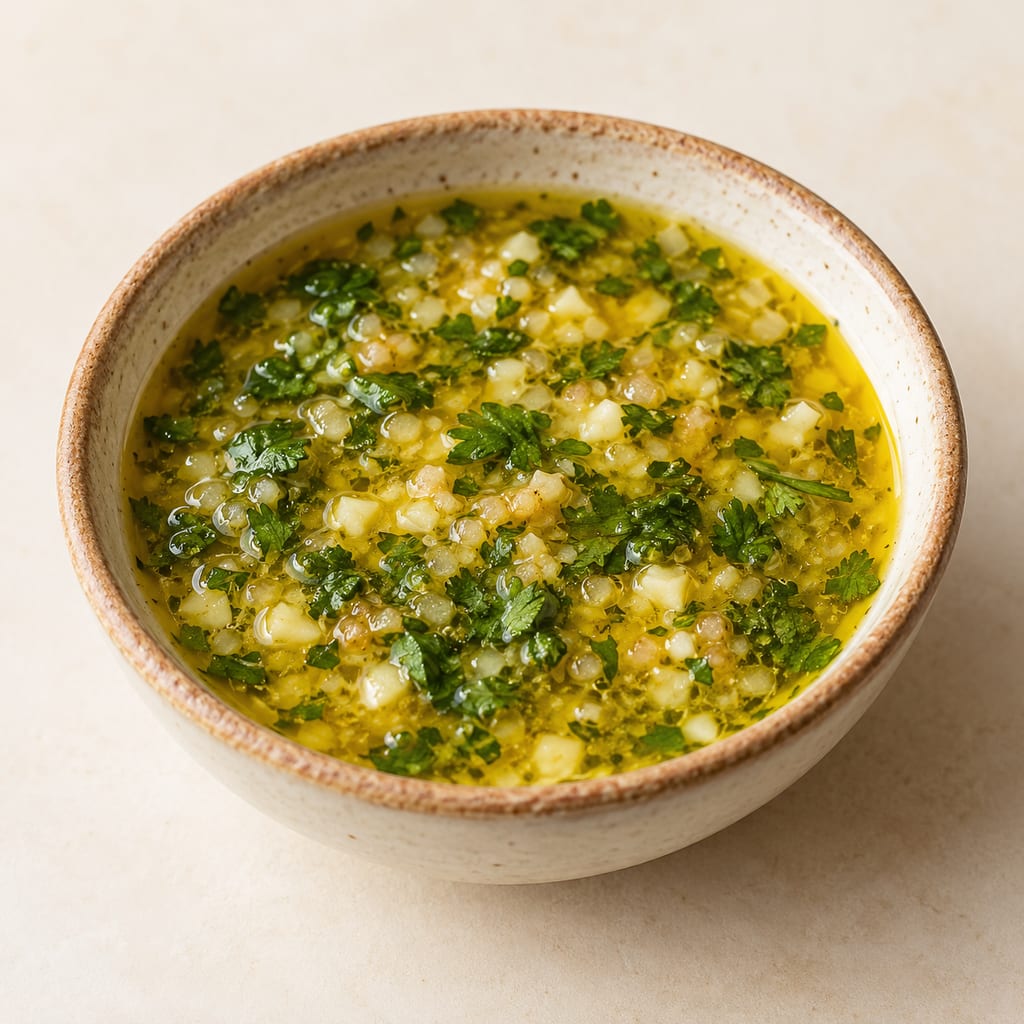
Mojo criollo (Cuban citrus-garlic sauce)
Mojo criollo is a Cuban sauce of garlic and sour orange juice with oil and herbs, used to marinate roast pork and as a dip.
 FermenteaWhere food goes to change
Green mojo · Canarian green mojo · Mojo de cilantro · Mojo de perejil
A green sauce of garlic, cumin, green chilli and fresh coriander or parsley in olive oil and vinegar, traditionally served with fish in the Canary Islands.
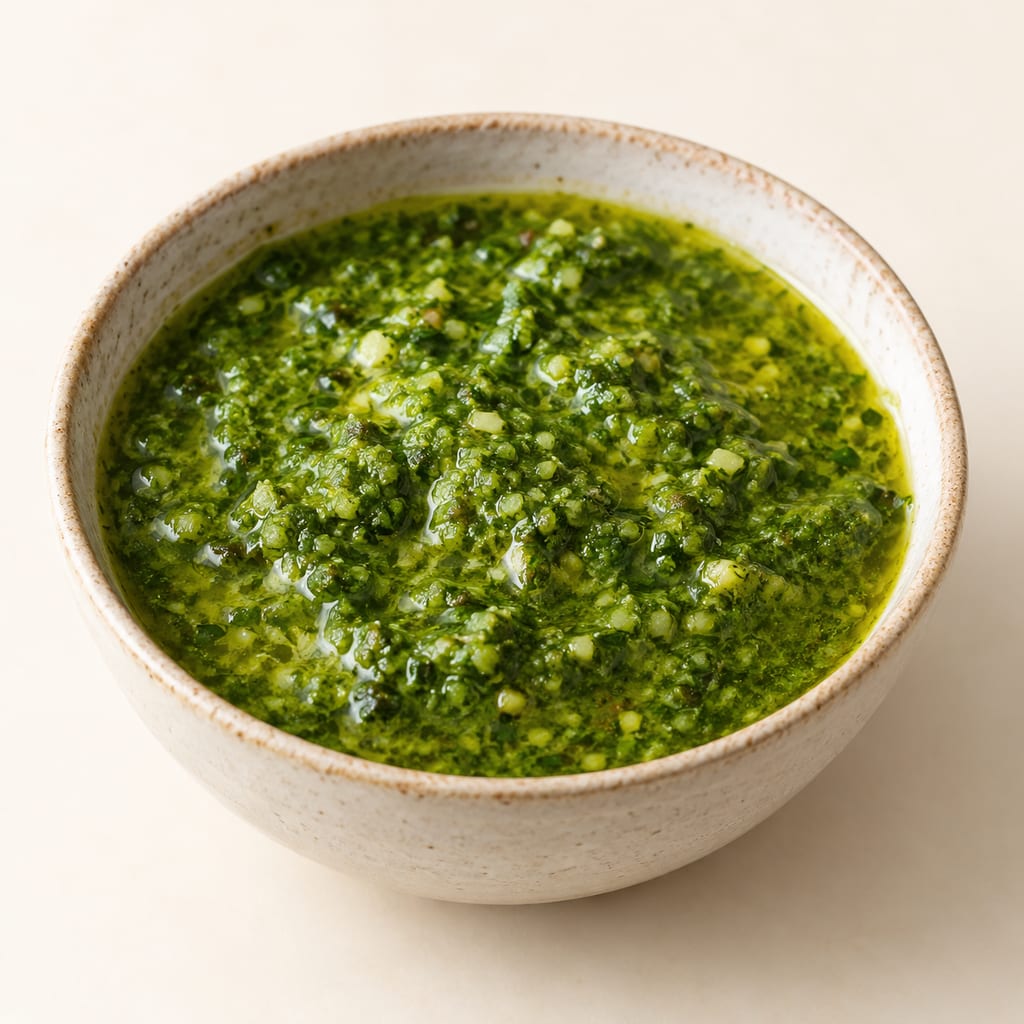
Mojo verde is the green sauce of the Canary Islands. It is made the way mojo rojo is made, by pounding garlic, chilli and cumin to a paste and then loosening it with vinegar and oil, but the colour and flavour come from fresh herbs. Its character is fresh and green rather than smoky or sweet, and the sauce is sharp from the vinegar and grassy from the herb.
The sources offer two herb versions: coriander, called mojo de cilantro, and parsley, called mojo de perejil. Several sources also describe green mojo as traditionally served with fish, which separates it from the red sauce's pairing with meat.
The name mojo is traced by most sources to the Portuguese molho, meaning sauce. The green sauce is also compared with the Mediterranean salsa verde. Gran Canaria Info describes it as clearly a variant of that sauce, and calls the green Canarian mojo a development from a Near Eastern original that the author thinks reached Europe with Roman legionaries. The cited article gives no date and no source for this, so it is recorded as a claim.
Documented Canarian use of the sauce is firmer than its beginnings. The sources agree that it is a local preparation, but none dates the first green mojo.
Coriander or parsley supplies the colour and the fresh green flavour. Coriander gives the sauce its most recognisable note; parsley gives a milder version. Cumin supplies the earthy base that both green and red mojo share. Garlic and chilli give pungency, and the cited recipe uses green chillies where the red sauce uses red ones.
Vinegar is the sharp element. The cited recipe uses red wine vinegar, and the Gran Canaria red mojo recipe on the same site uses the same vinegar. Olive oil binds the paste.
The method is entirely in a mortar. Cumin and coarse salt are ground first, because the salt helps break the seeds down into a fine powder. The chopped garlic and chillies follow and are pounded to a fine paste. The herbs are added last and pounded until they are reduced to a paste,. Vinegar and oil are stirred in at the end rather than pounded, so the sauce stays bright and loose.
Mojo verde is traditionally served with fish, according to the Gran Canaria source, and it is served with the same salt-boiled potatoes, papas arrugadas, as the red sauce. The Wikipedia entry notes that the red and green sauces can be used interchangeably with the potatoes. The green sauce is spooned over the potatoes and eaten with the skins on.
The sources give no shelf life for mojo verde. The Wikipedia entry says the herb versions contain water, should be refrigerated and should be used within two days, but marks that statement as needing a citation. Garlic and herbs in oil are a recognised botulism concern when they are left warm or at room temperature, and the sources here establish no safe holding time.
No dated source for the green sauce, no quantified yield for the cited recipe, and no verified keeping time were found. A Canarian food-history source on the green sauce and a tested storage study would be the next research steps.
Mojo verde is documented as a Canarian sauce, the green counterpart of mojo rojo. Its method is the same garlic and oil base, with fresh coriander or parsley in place of paprika. One Gran Canaria source calls it a variant of the Mediterranean salsa verde and says the original recipe is thought to have reached Europe from the Near East with Roman legionaries. That claim carries no date and is not established.
Scaling: source batch only
Fresh herbs and garlic in oil are a botulism concern if the mixture is kept warm or at room temperature. The sources here set no safe holding time for this sauce.
Hazard sourceRefrigerated storage
Control sourceKeep refrigerated. Do not hold garlic and herbs in oil at room temperature.
Documented as a Canarian sauce with a traditional pairing with fish. Coriander and parsley versions are both described.
Mojo criollo is a Cuban sauce of garlic and sour orange juice with oil and herbs, used to marinate roast pork and as a dip.
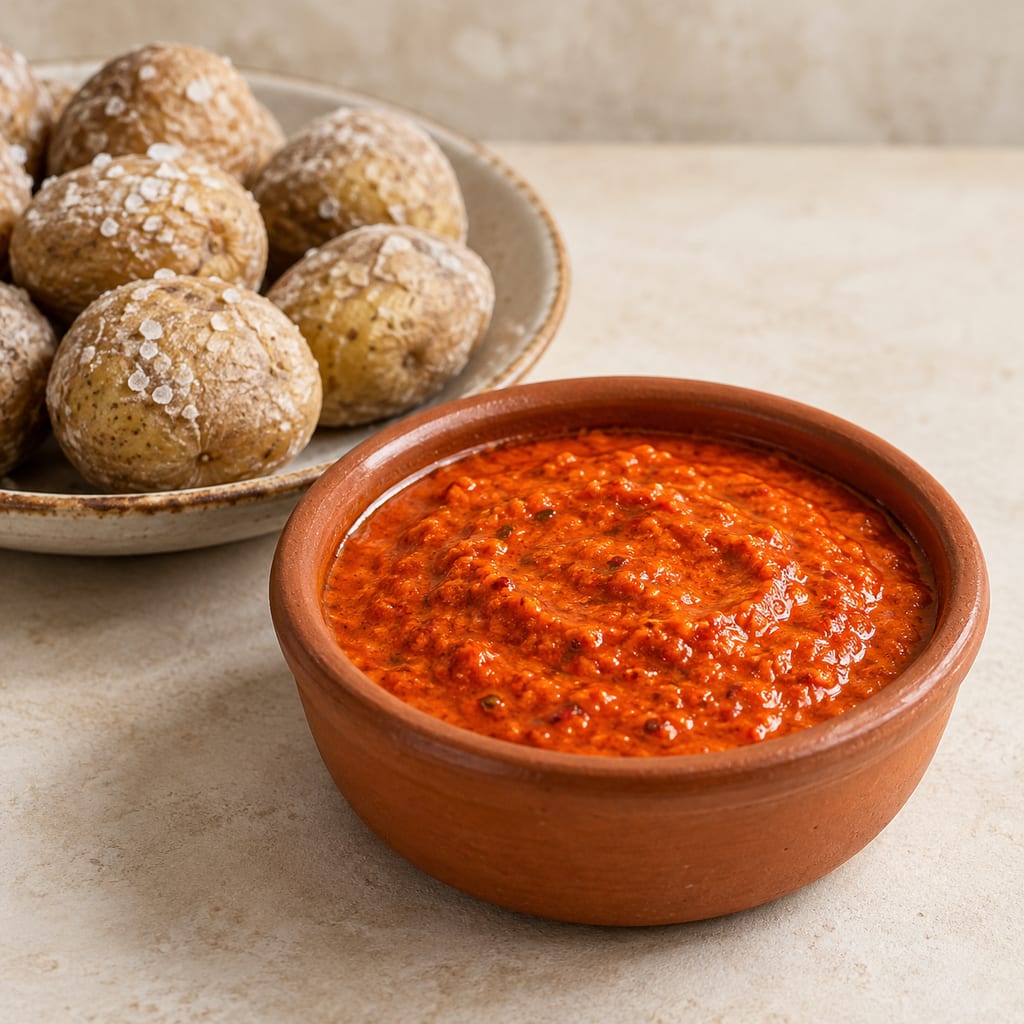
A red sauce of garlic, dried or fresh red pepper, paprika and cumin in olive oil and vinegar, served with salt-cooked potatoes across the Canary Islands.
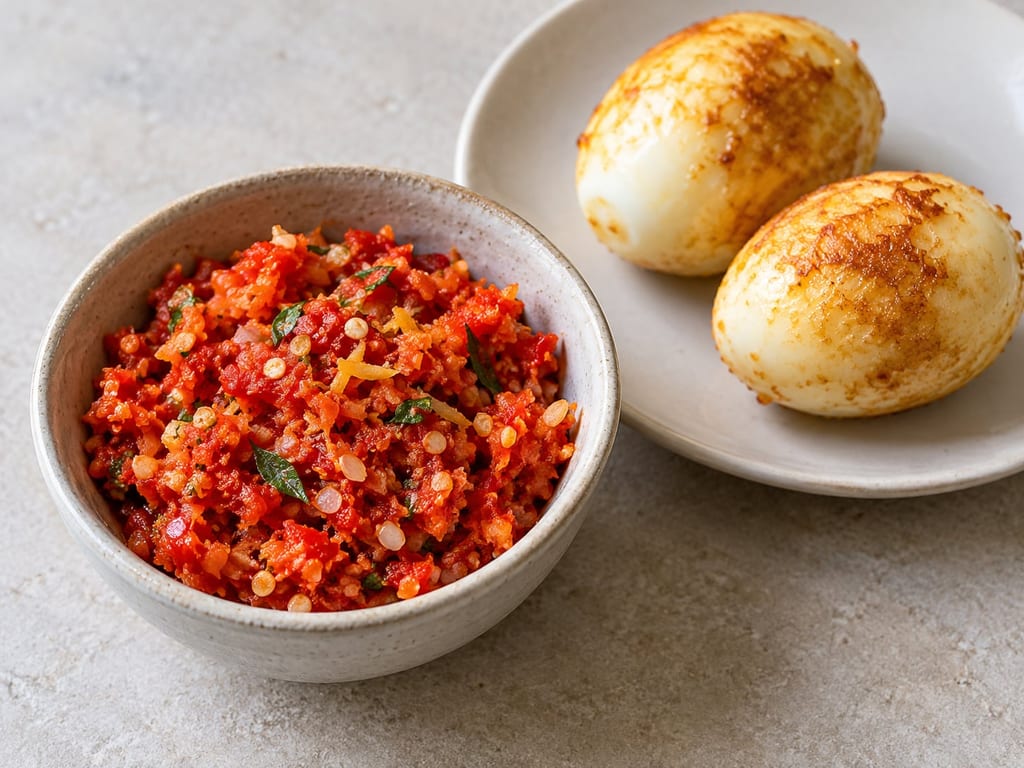
Ai-manas is described as a very hot chilli paste served with Timorese meals. One published version blends fresh chillies, shallots, garlic, Thai basil, ginger, lemon and salt, and serves it with eggs. Sources do not establish a standard formula, precise birthplace or earliest date.
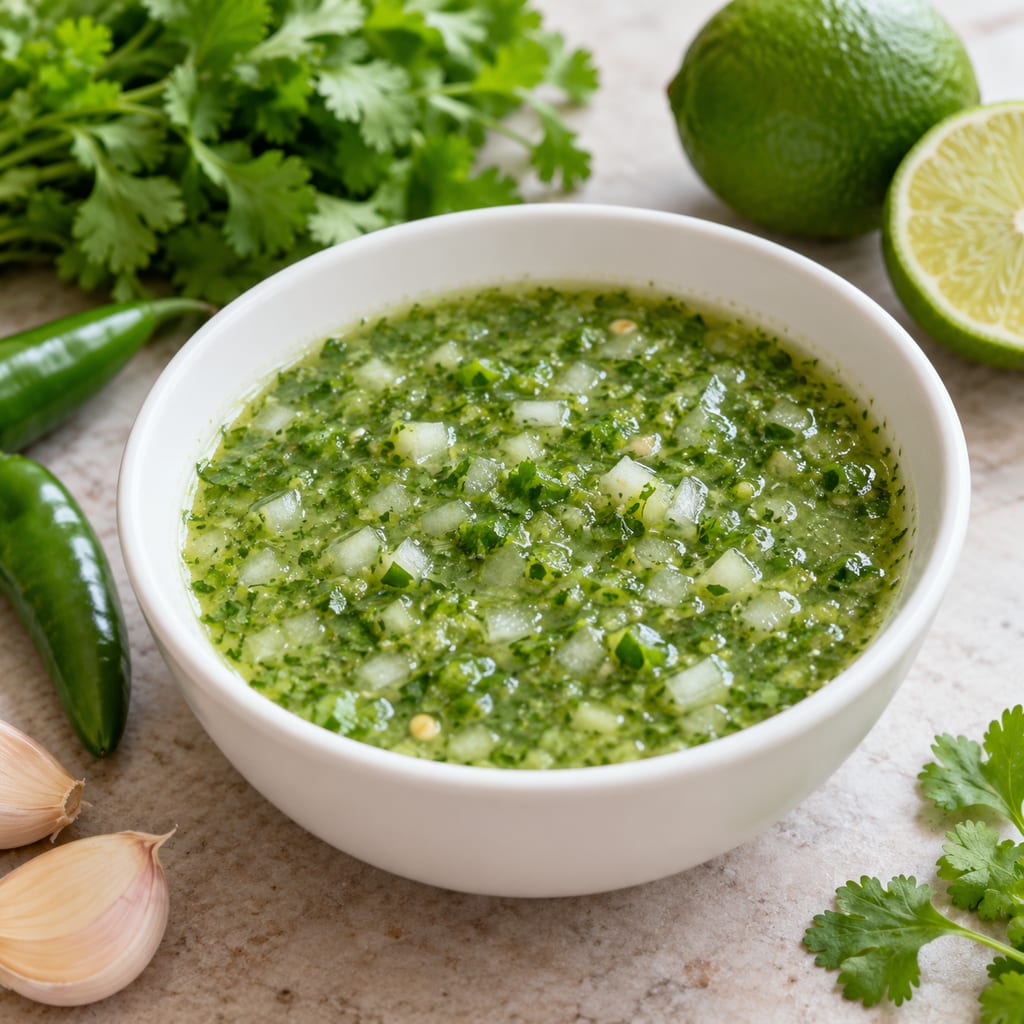
A fresh, uncooked Ecuadorian table sauce of hot pepper, cilantro, garlic and lime, served with most everyday dishes.
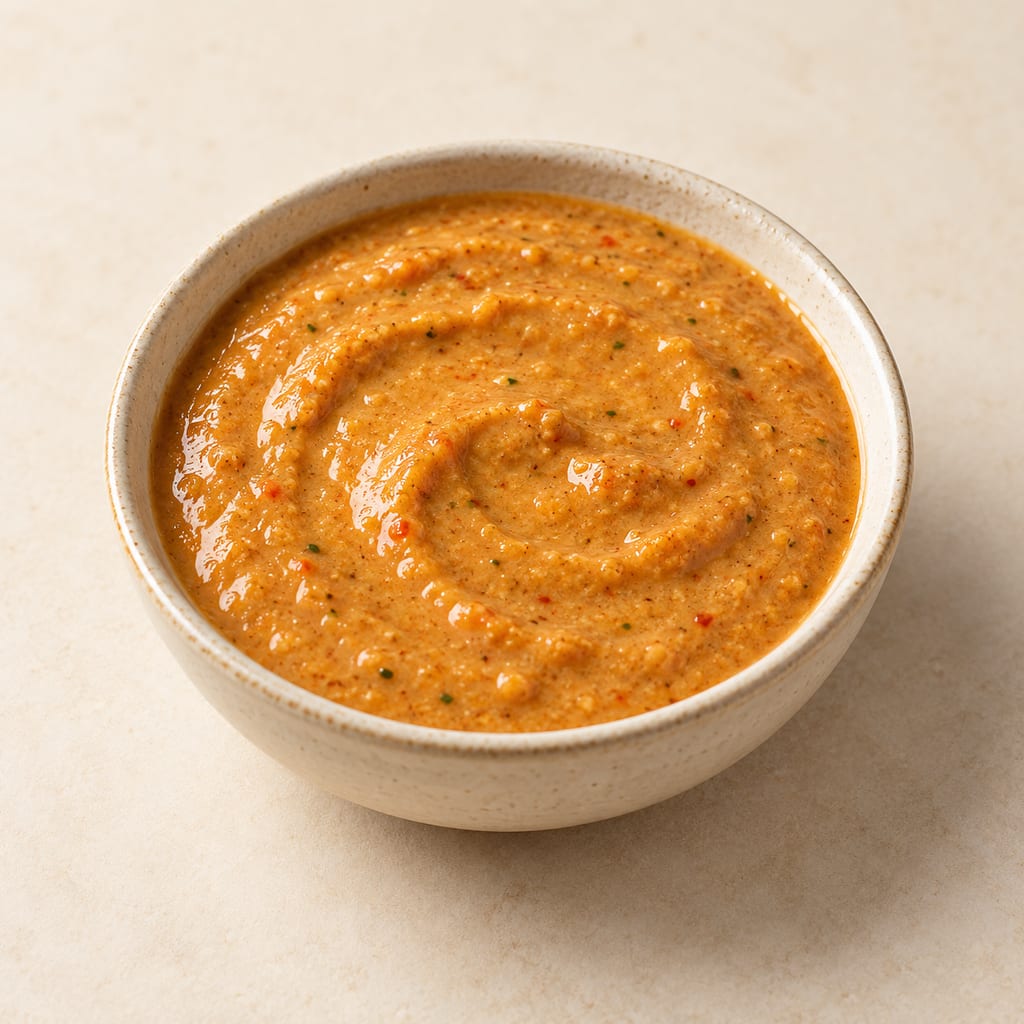
A spicy peanut hot sauce from the Popayán and Cauca region of Colombia, traditionally served with pipián empanadas and tamales.
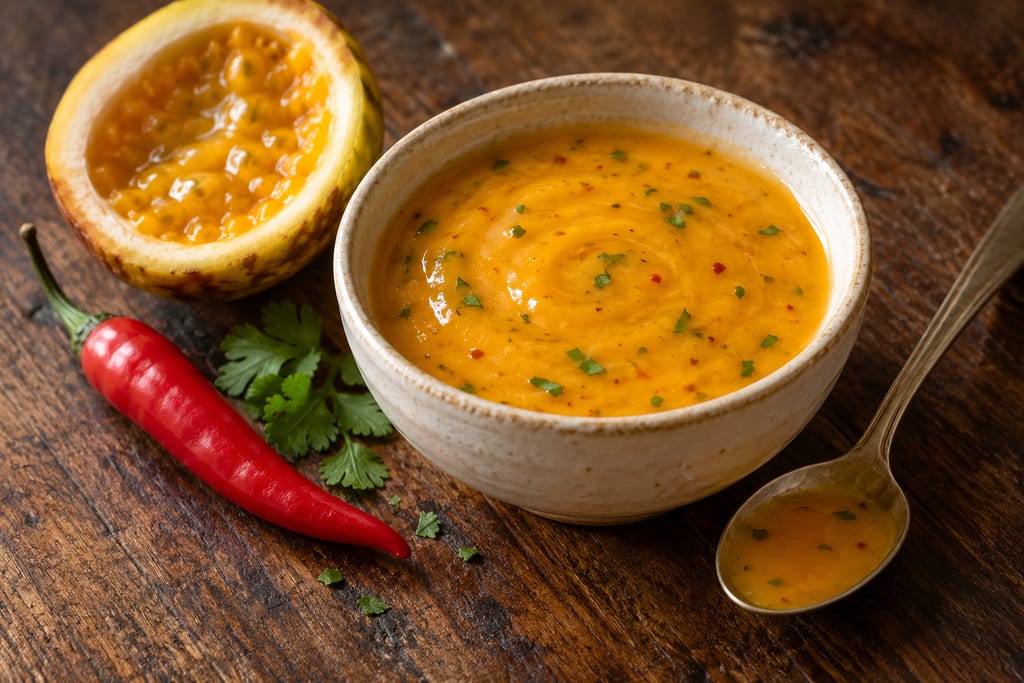
A contemporary Ecuadorian hot sauce that pairs passion fruit juice with boiled chile peppers, oil and lime.
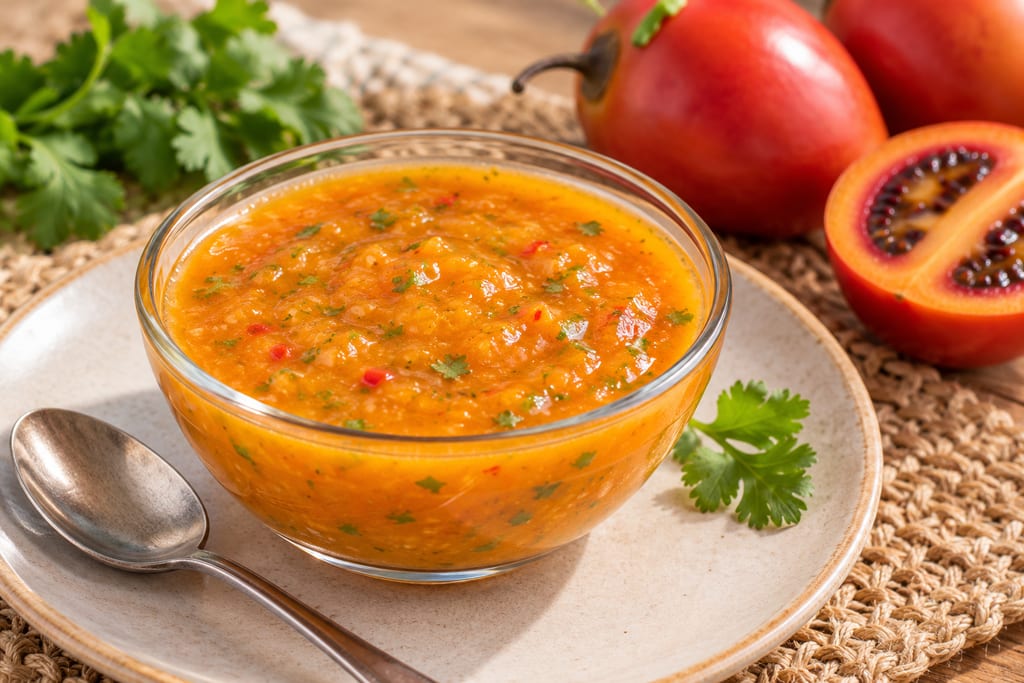
An Ecuadorian hot sauce built on tamarillo, a tart fruit that gives a sharper, fleshier base than ordinary tomato salsa.
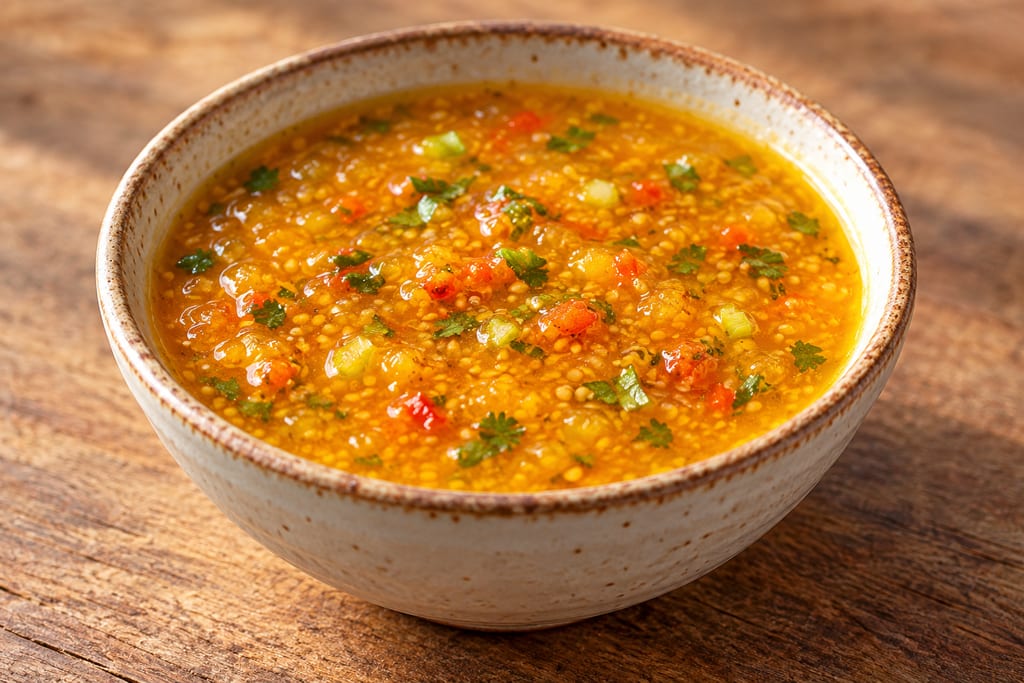
A sweet, tart and spicy Colombian sauce of uchuva, the yellow physalis fruit, with hot pepper, scallion, cilantro and lime.
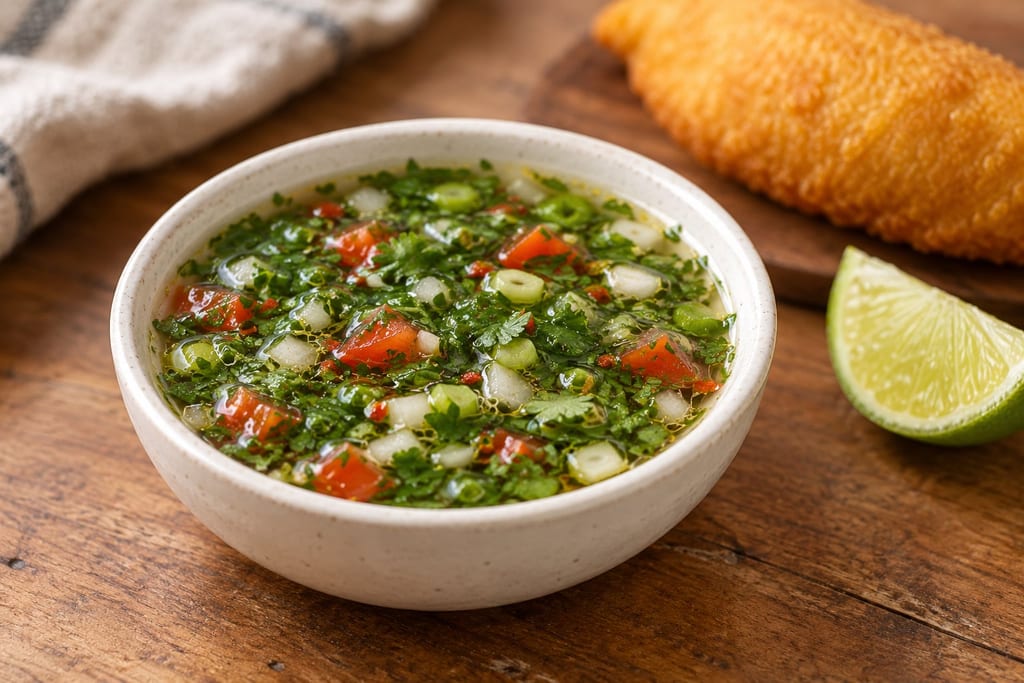
A fresh Colombian table condiment of chopped herbs, scallion and tomato in a vinegar and chile base, served beside fried and filled dishes.
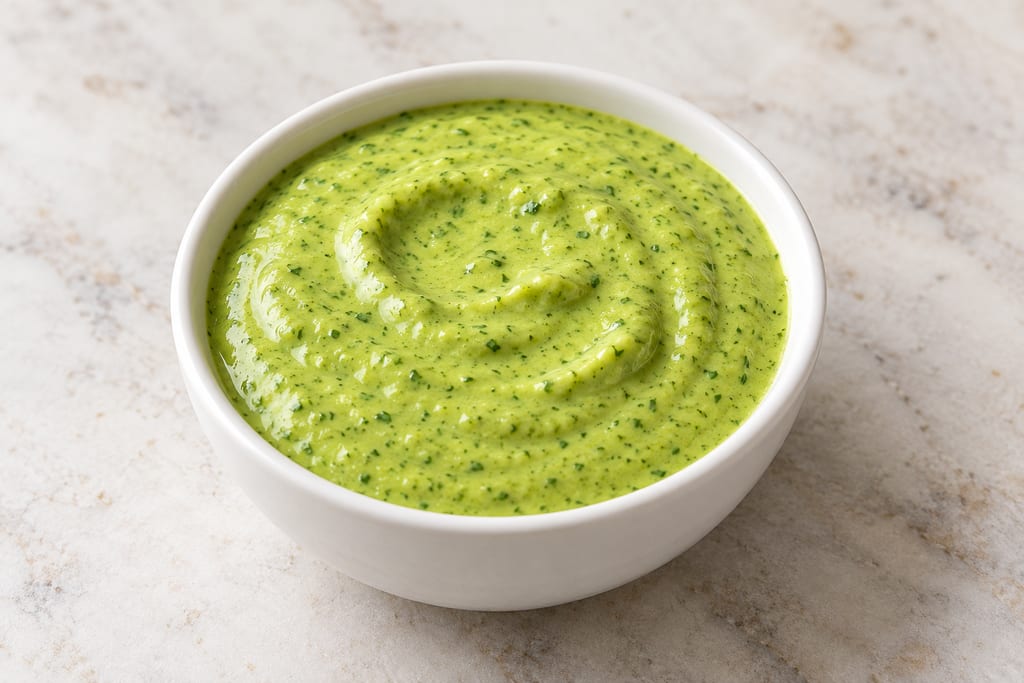
Ají verde is a Peruvian green sauce of coriander, chilli, onion and garlic in a mayonnaise or cheese base. It is best known through Peruvian restaurant cooking abroad.
No community contributions have been published for this entry yet.
Sign in to contribute. Published comments and photos are free to read.
WikipediaHistory · Method · Storage
Mojo (sauce)Green mojo made with green pepper, commonly served with fish; coriander and parsley versions exist
Coriander and parsley mojos are said to need refrigeration (tagged as needing a citation)
Cited in: Overview; Name and origin; Ingredients and their roles; Serving; Storage and safety; Unknowns
Gran Canaria InfoHistory
The history and origins of Canary Islands mojo sauceGreen mojo flavoured with fresh coriander, served traditionally with fish
Green mojo called a variant of salsa verde with an undated Near Eastern origin claim
Cited in: Overview; Name and origin; Serving
Stefan GourmetMethod
Papas Arrugadas con Mojos Recipe (Canarian Potatoes)Quantities and method for mojo verde with coriander or parsley
Quantities and method for mojo rojo, which uses the same method
Cited in: Ingredients and their roles; Method