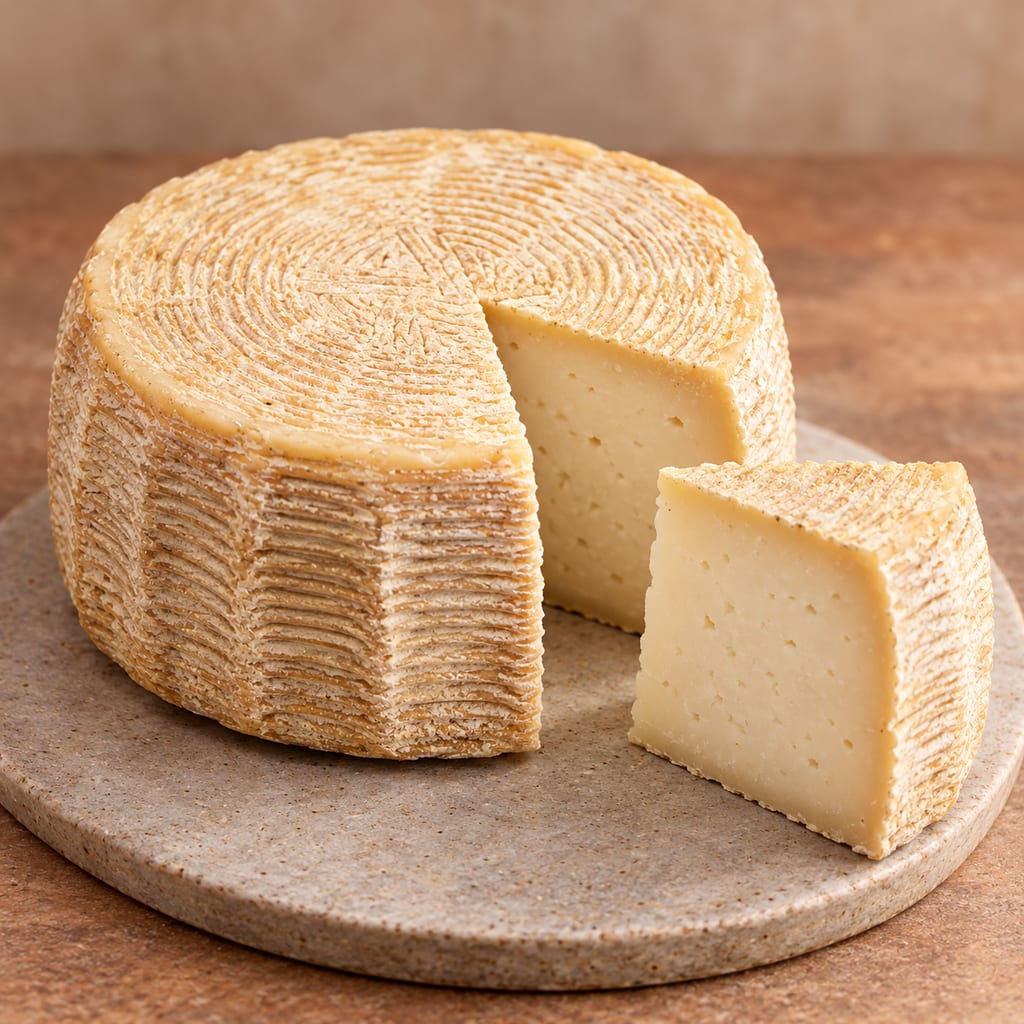
Canestrato-style basket cheese
A scalded cheese moulded in baskets and re-cooked in its forms in hot whey, made alongside a ricotta from the same milk, then acidified, brined and aged for months.
 FermenteaWhere food goes to change
Traditional method
Pantelleria caper · Cappero di Pantelleria IGP · chiappéro · chiappáro
A protected Sicilian product: unopened caper buds from the island of Pantelleria, dry-salted with sea salt in a two-stage process that encourages lactic fermentation.
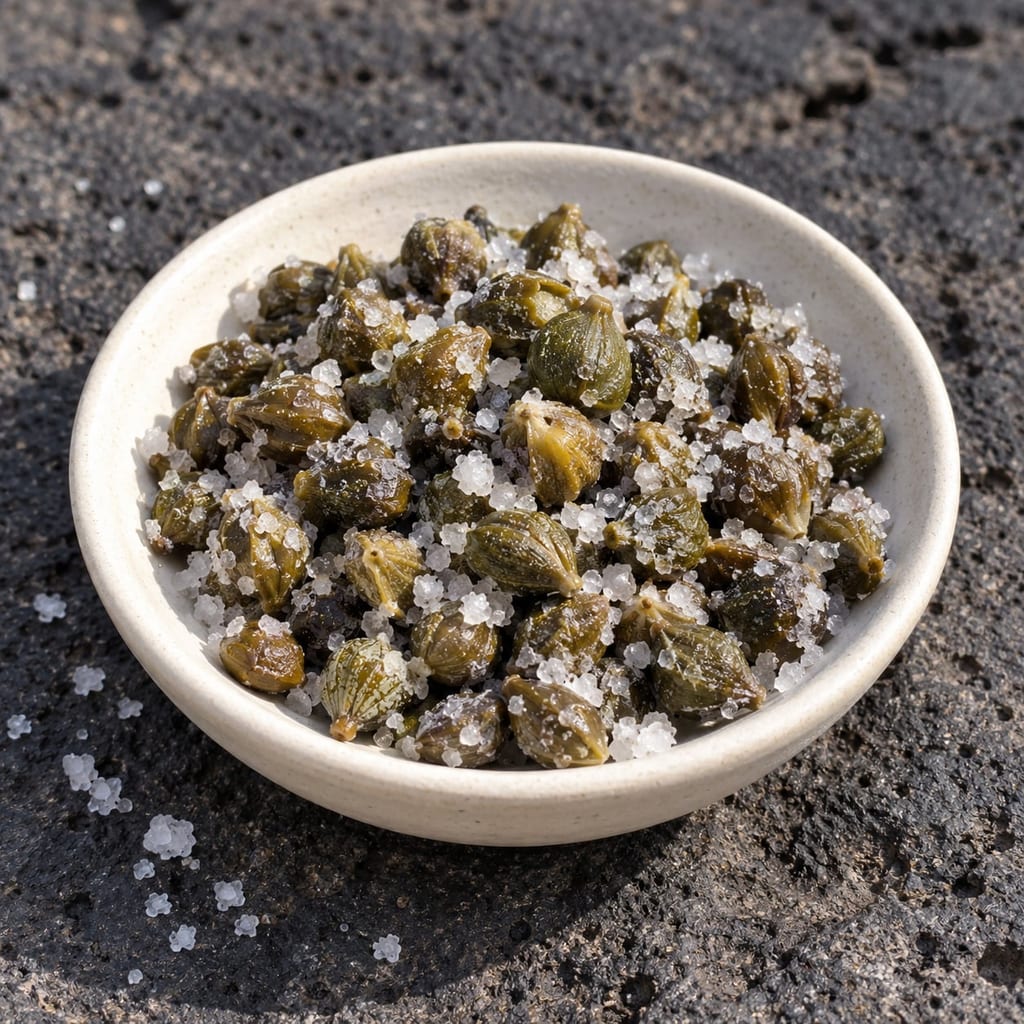
Cappero di Pantelleria is the unopened flower bud of the caper plant, Capparis spinosa, grown on the island of Pantelleria between Sicily and Tunisia. It is a protected product: the name is registered, and the production rules say which bud, which cultivar and which salting process may carry it.
The buds are salted rather than pickled in vinegar. The salt draws out the liquid from the buds, and the mixture is managed so that lactic fermentation is favoured during the first stage. Pantelleria buds are sold as a salted, drained product that is used in small amounts for its sharp aroma.
The island's name for the product appears in local forms, chiappéro and chiappáro, recorded by the national park. The harvest is hand work spread over the summer and autumn. The current specification gives a window from 1 May to 31 October, while the park describes flowering and harvest between late May and September. The two may describe different things, and the specification's window is the one that governs the protected product.
A 1855 account, quoted in the 2010 European Commission publication on the specification, describes buds collected in July and August, sorted and pressed in brine or vinegar. That is the earliest dated record of collection and sale that the sources give. The dry-salt method of the present specification cannot be traced to that account, and the sources do not say when it took its current form.
The first stage uses 30–40% sea salt by bud mass, mixed through the buds for about 8–10 days. Mixing keeps the salt in contact with the buds and favours lactic fermentation. The vegetation liquid that the salt draws out is then removed, and a second addition of 20–25% of the drained mass is made.
The specification does not state how long the second stage lasts, and neither source reports microbial counts or acidity measurements. The process is a commercial specification, not a household formula, so it should not be read as a validated method for a home batch.
The national park lists local pestos, fish sauces, pâtés and antipasti. The buds are often added near the end of cooking so that their aroma is warmed rather than lost. Used this way the caper gives a sharp, salty note, and a little goes a long way.
No source gives a household batch size, container, temperature, endpoint or storage period. Appearance, aroma and taste do not establish that the buds are safe, and the salt in the product is not a safety control by itself. A home method would need a current specification, a validated process and qualified review before it is written as a recipe.
A 1855 account, quoted in the European Commission's 2010 publication on the specification, describes buds collected in July and August, sorted and pressed in brine or vinegar. That original text was not checked directly, so the 1855 account is a dated lead rather than a verified primary source. The protected name was registered in 1996 and the specification was amended in 2010. The dry-salt method in the current specification is a production description and cannot be traced back to 1855.
Scaling: source batch only
Salted vegetable material held without a stated endpoint or storage limit can spoil; the sources give no household control values.
Hazard sourceFollow a validated process before making a home batch.
Control sourceThe production description is a protected commercial specification, not a household formula. Appearance, aroma and taste cannot establish that the buds are safe to eat.
The protected production area is the whole island; the specification defines a protected product, not every caper grown in Sicily.
A scalded cheese moulded in baskets and re-cooked in its forms in hot whey, made alongside a ricotta from the same milk, then acidified, brined and aged for months.

Shaped dough dried thoroughly into a portable staple that keeps far longer than fresh dough, in Mediterranean and Asian food systems.
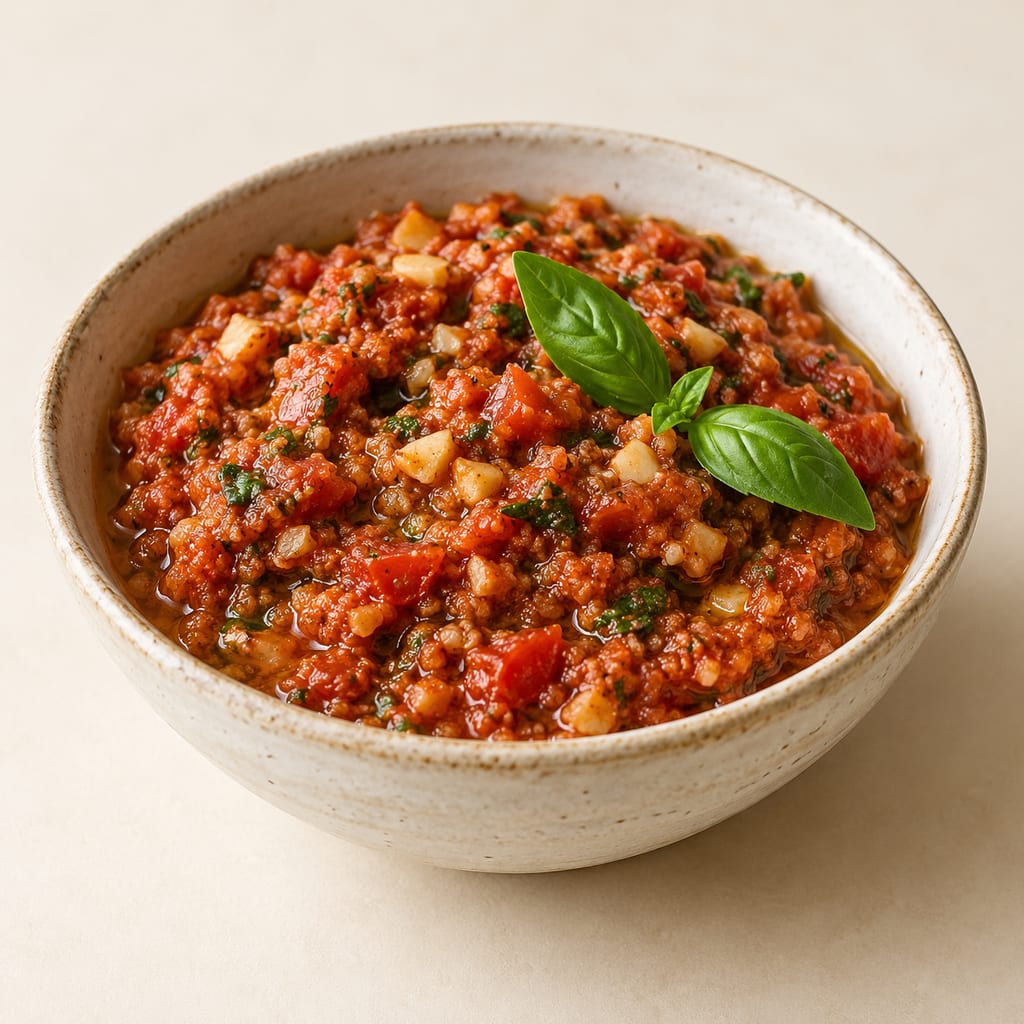
Pesto alla trapanese is a Sicilian sauce of fresh tomato and almonds pounded with basil, a red counterpart to Genoese pesto.
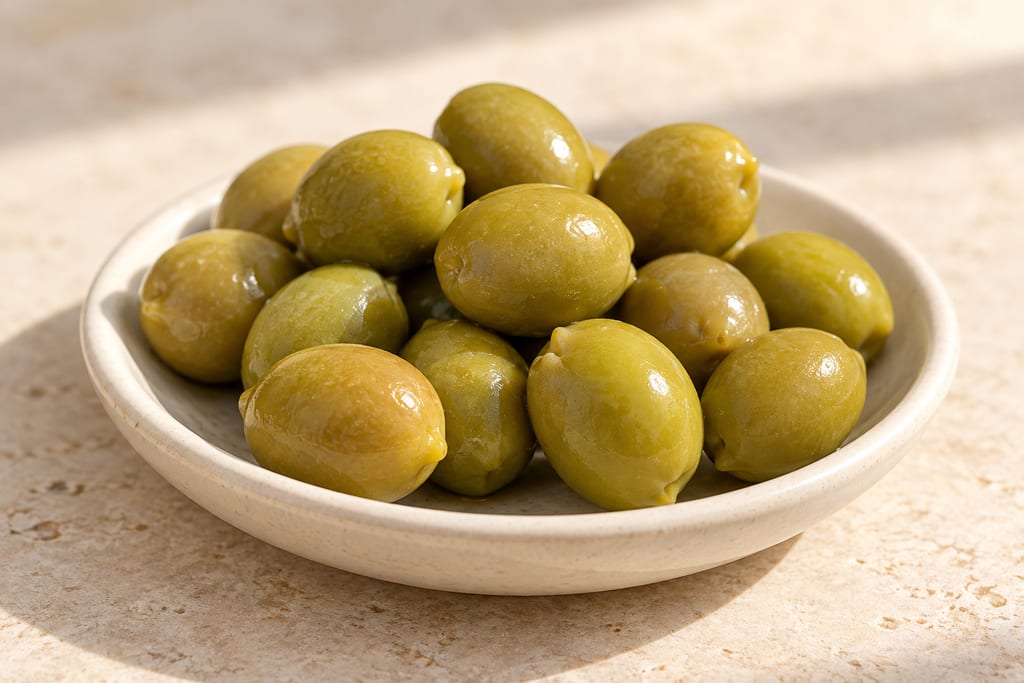
A Portuguese table-olive product from the Negrinha cultivar in northeastern Portugal, sold in three commercial styles, two of them brined fermentations and one oxidised to black.
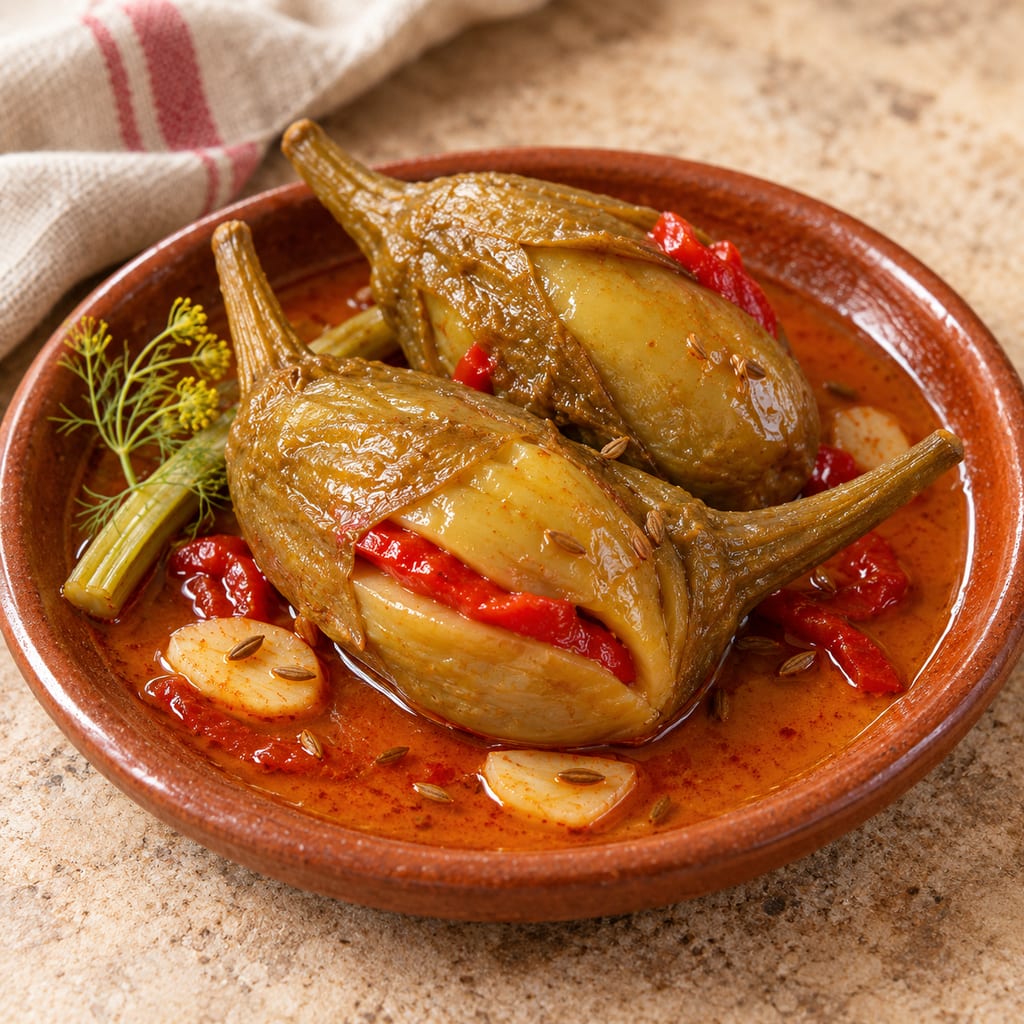
A protected aubergine preserve from Ciudad Real in Spain: tender fruit of the local Dealmagro variety, cooked briefly and then fermented in a vinegared, paprika-seasoned dressing.
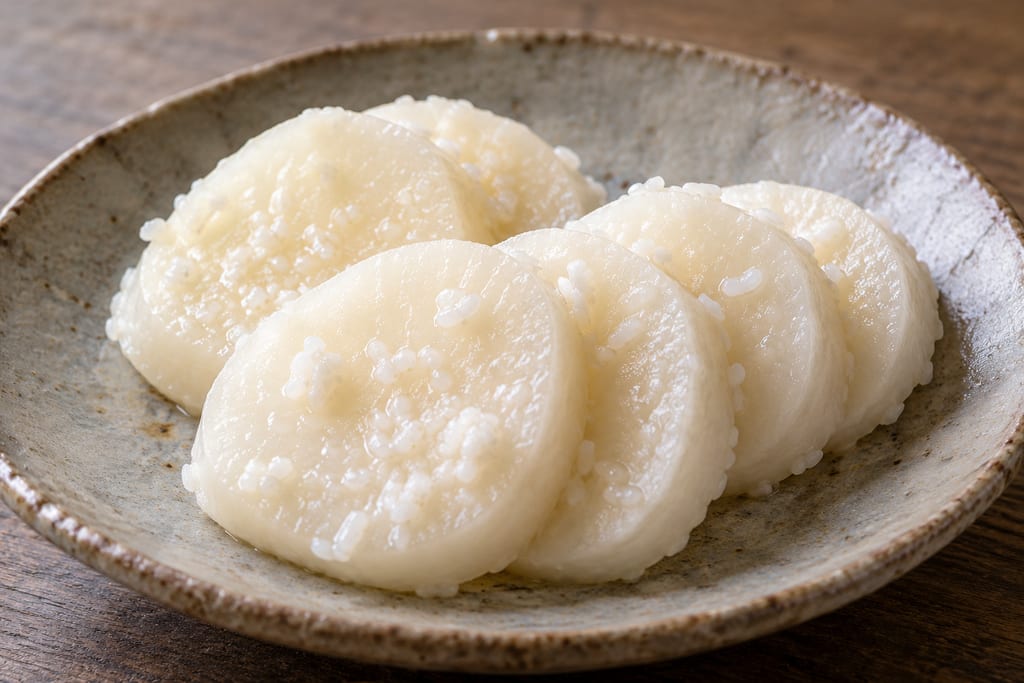
A sweet, crisp Japanese daikon pickle from Tokyo's Nihonbashi district, made by salting fresh radish and dressing it in rice koji, sugar or koji amazake without the heavy drying used for takuan.
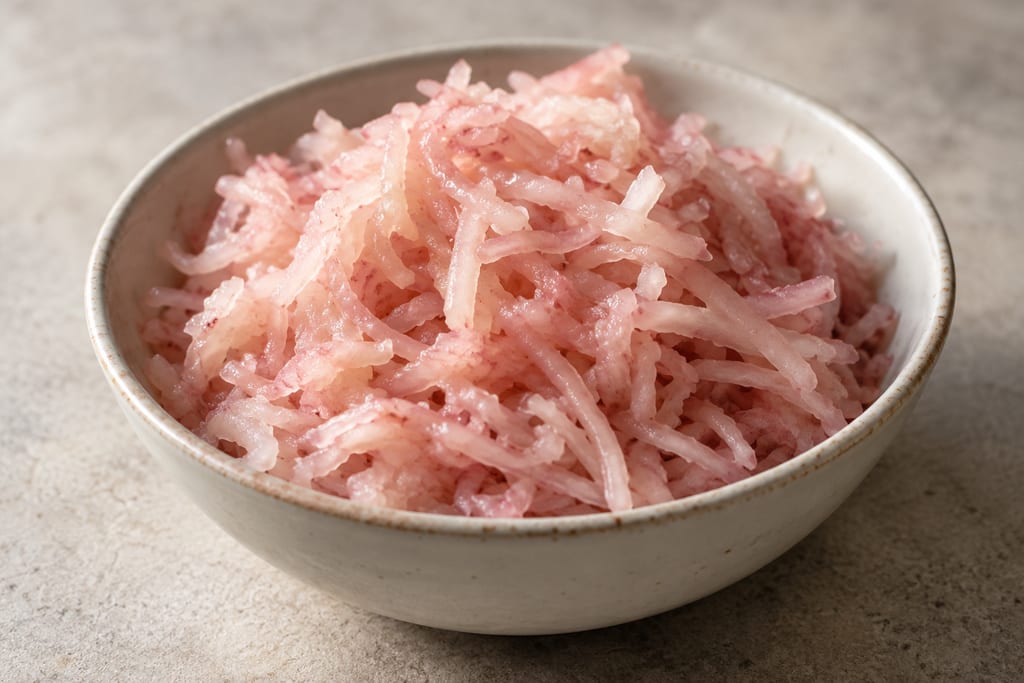
Source-specific Brovada DOP producer method for Friuli Venezia Giulia turnips and red-grape marc. This records a regulated producer process; it is not a validated home-scale recipe.
An industrial fermentation patio places factory-made fiberglass-reinforced polyester olive tanks below floor level, with drainage and transfer infrastructure arranged around the buried vessels.
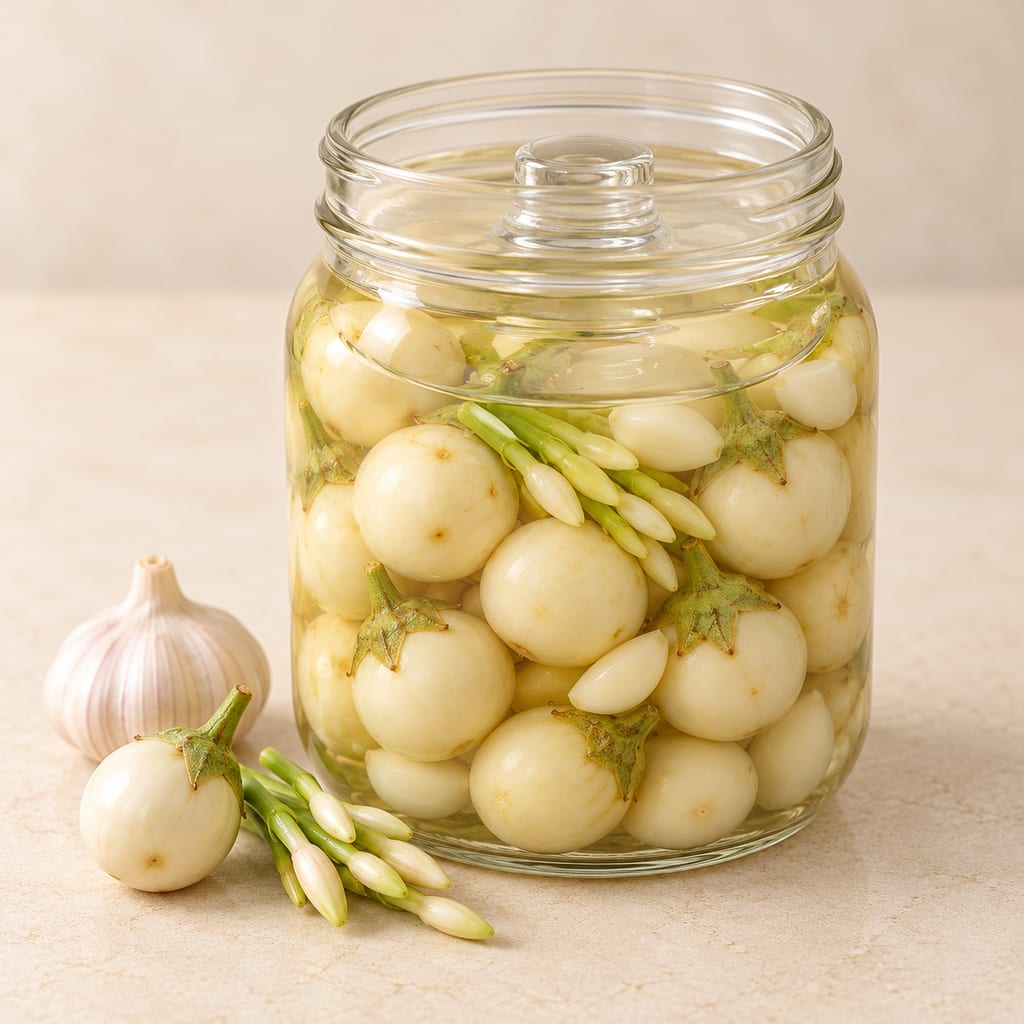
Vietnamese salted and fermented small eggplant, dried on the day of purchase, then held submerged in warm salty water with garlic and galingale flower for a week or longer.
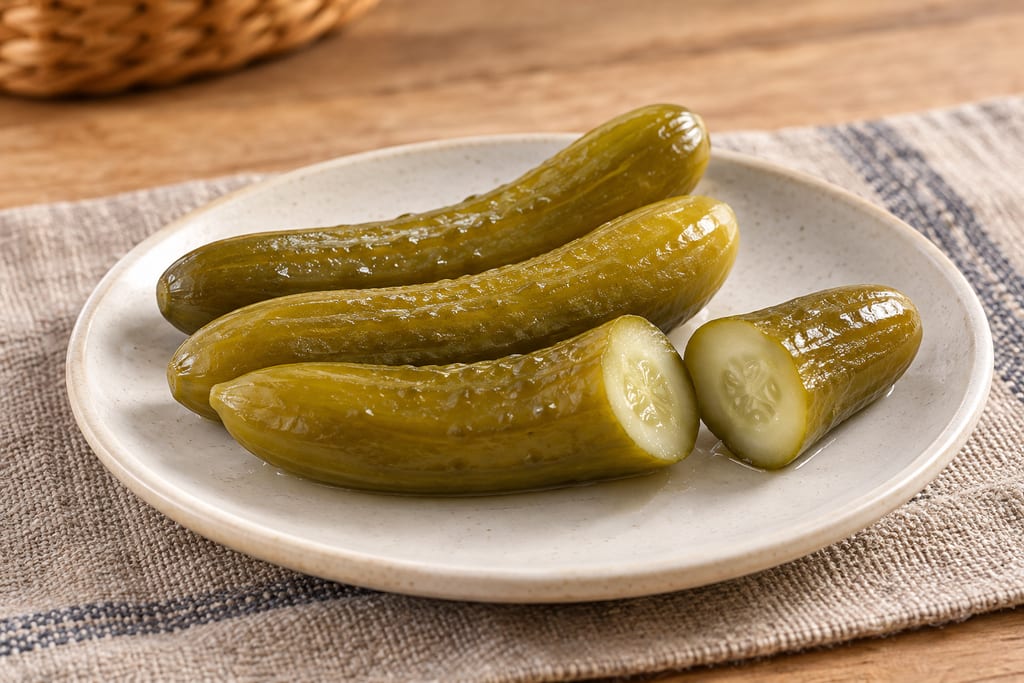
Çubuk turşusu is a registered pickle from Çubuk district in Ankara. Its cucumber variant is sold as Salatalık Turşusu, and a commercial specification sets its brine and room-temperature period.
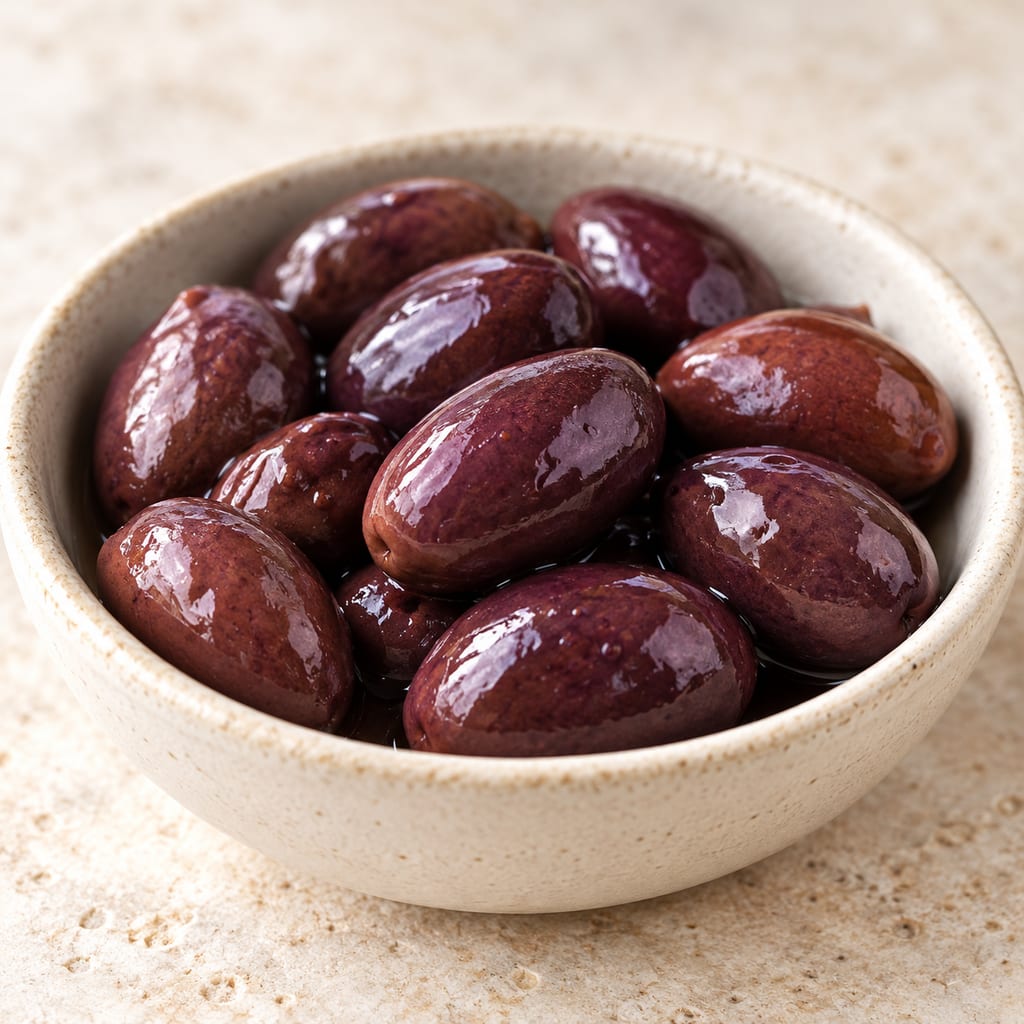
Elia Kalamatas is a Messinia table olive of the Kalamon variety, picked before full ripeness and fermented in brine for six to nine months; it is a PDO product, not a generic black olive.

A Cap-Pelé boucanière is an Acadian herring-smoking building. The documented Willie Niles example is a one-storey wood-frame structure with a ridge smoke vent and interior bays for hanging fish-bearing cannes.

Achcharu is a family of Sri Lankan vinegar pickles made with mixed vegetables or seasonal fruit and a piquant spice dressing. This version is a quick, refrigerated, non-fermented mixed-vegetable pickle.

The acocote is a long, hollowed and dried gourd used to draw aguamiel from a mature maguey. It is a harvesting tool: the sap is transferred to a separate vessel before it ferments into pulque.

Adrak murabba preserves young ginger in sugar syrup, a sweet South Asian preparation recorded in Indian cookery and food-processing sources.

Parkia biglobosa seeds are fermented into regional West African seasonings, including nététou, iru, dawadawa and soumbala. The yellow fruit pulp is a separate food, and names and methods vary by place.

Japanese reddish-brown vinegar from sake lees matured about three years, turned to vinegar by acetic bacteria; the vinegar of Handa and Edomae sushi rice.

A refined common-wheat flour blended for a broad range of baking; its protein and behavior vary with wheat, milling and market.

The almond mushroom, Agaricus subrufescens, was cultivated in eastern North America in the 1800s, lost its market, and returned as a cultivated mushroom from Brazil, where it is grown under several names.
No community contributions have been published for this entry yet.
Sign in to contribute. Published comments and photos are free to read.
Ministero dell'Agricoltura, della Sovranità Alimentare e delle Foreste (MASAF)Method · History · Safety
Disciplinare di produzione Cappero di Pantelleria IGPThe production area is the entire island of Pantelleria in Trapani.
Staggered hand harvest from 1 May to 31 October.
First dry-salting stage of about 8–10 days with 30–40% sea salt by bud mass, mixed to favour lactic fermentation.
Second addition of 20–25% of the mass after the vegetation liquid is drained.
Ente Parco Nazionale di PantelleriaHistory · Uses
Cappero di PantelleriaLocal forms chiappéro and chiappáro.
Flowering and harvest described between late May and September.
Use in local pestos, fish sauces, pâtés and antipasti, added late in cooking.