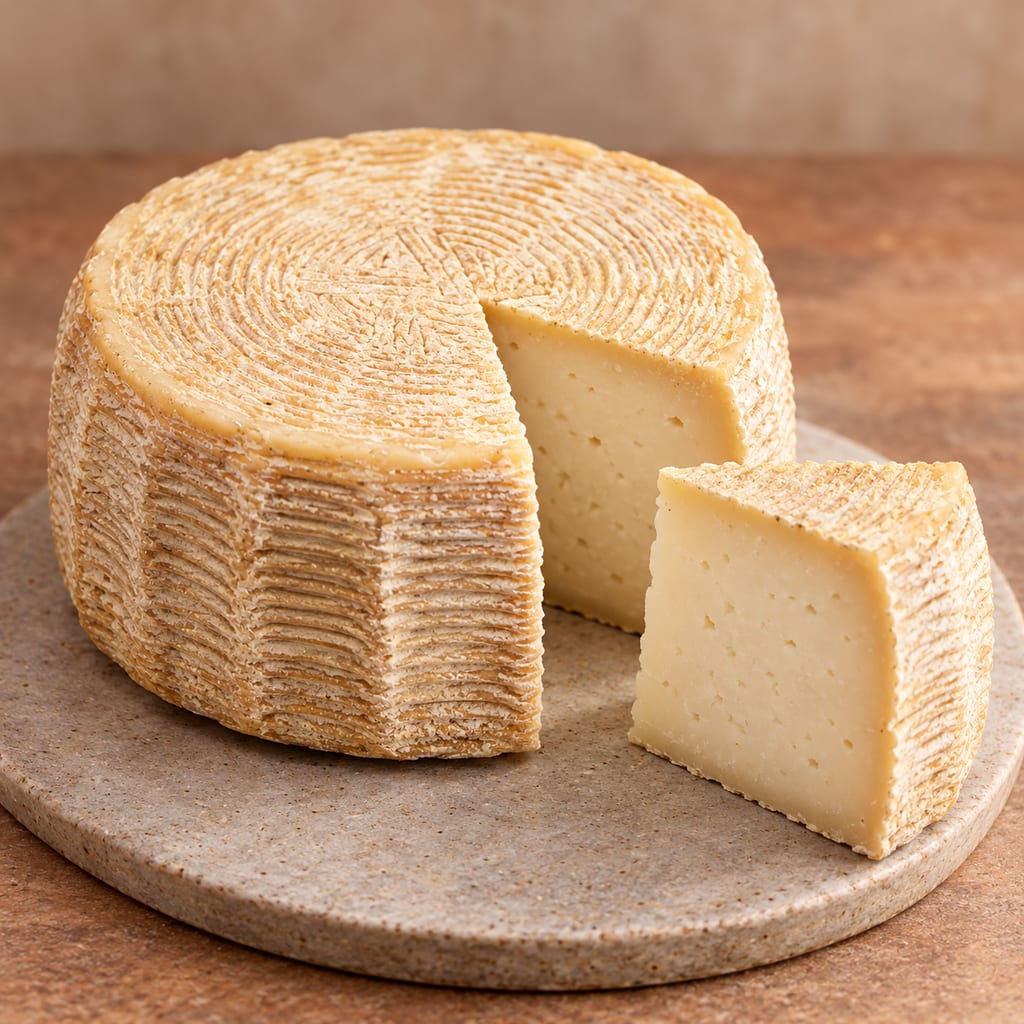
Canestrato-style basket cheese
A scalded cheese moulded in baskets and re-cooked in its forms in hot whey, made alongside a ricotta from the same milk, then acidified, brined and aged for months.
 FermenteaWhere food goes to change
dried pasta · dry noodles · dried pasta and noodles
Shaped dough dried thoroughly into a portable staple that keeps far longer than fresh dough, in Mediterranean and Asian food systems.

Fresh dough spoils quickly. Shaping it and then drying it thoroughly turns it into a staple that can be carried and stored, which is the preservation purpose behind dried pasta and noodles.
The catalogue treats the two as one drying principle with regional forms: Mediterranean pasta and Asian noodles.
The catalogue uses Al-Idrisi's account of Sicilian pasta production and export in 1154 as a medieval anchor. The account shows dried pasta made and traded at scale in that period.
It does not establish a single origin for dried pasta worldwide, and the catalogue is careful not to claim one.
The dough must be dried thoroughly. A partly dried strand keeps for a shorter time than a fully dry one, and the sources tie the keeping to the dryness reached rather than to a fixed period.
The catalogue gives no drying times, temperatures or humidity. Storage should keep the dry product away from moisture.
The catalogue does not state dough formulas, shapes or a shelf life for dried pasta and noodles. Asian noodle types differ in their ingredients, and this page does not describe them.
Dried pasta and noodles are a preservation form of shaped dough, made so thoroughly dry that they keep much longer than fresh dough. Mediterranean and Asian food systems both developed them.
Scaling: source batch only
Al-Idrisi's account of Sicilian pasta production and export in 1154; the catalogue does not establish a single origin.
A scalded cheese moulded in baskets and re-cooked in its forms in hot whey, made alongside a ricotta from the same milk, then acidified, brined and aged for months.
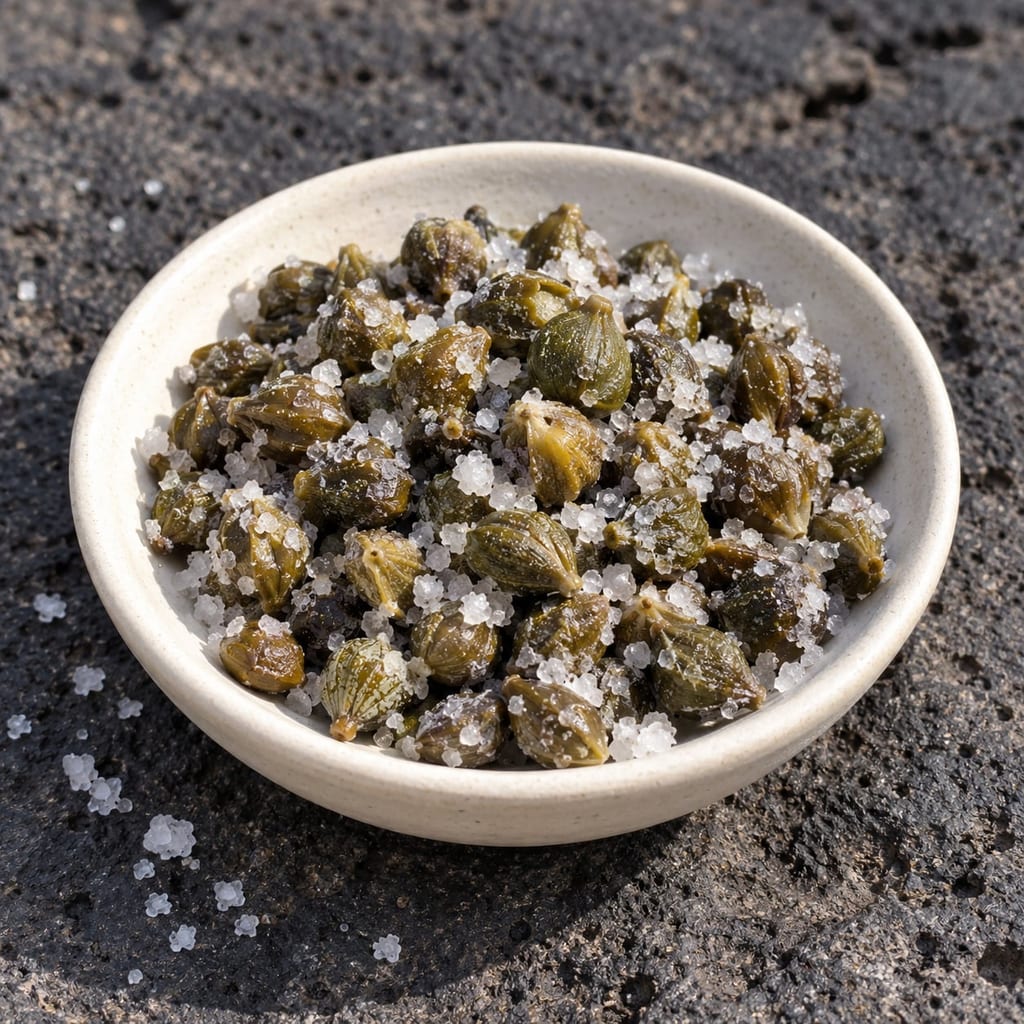
A protected Sicilian product: unopened caper buds from the island of Pantelleria, dry-salted with sea salt in a two-stage process that encourages lactic fermentation.
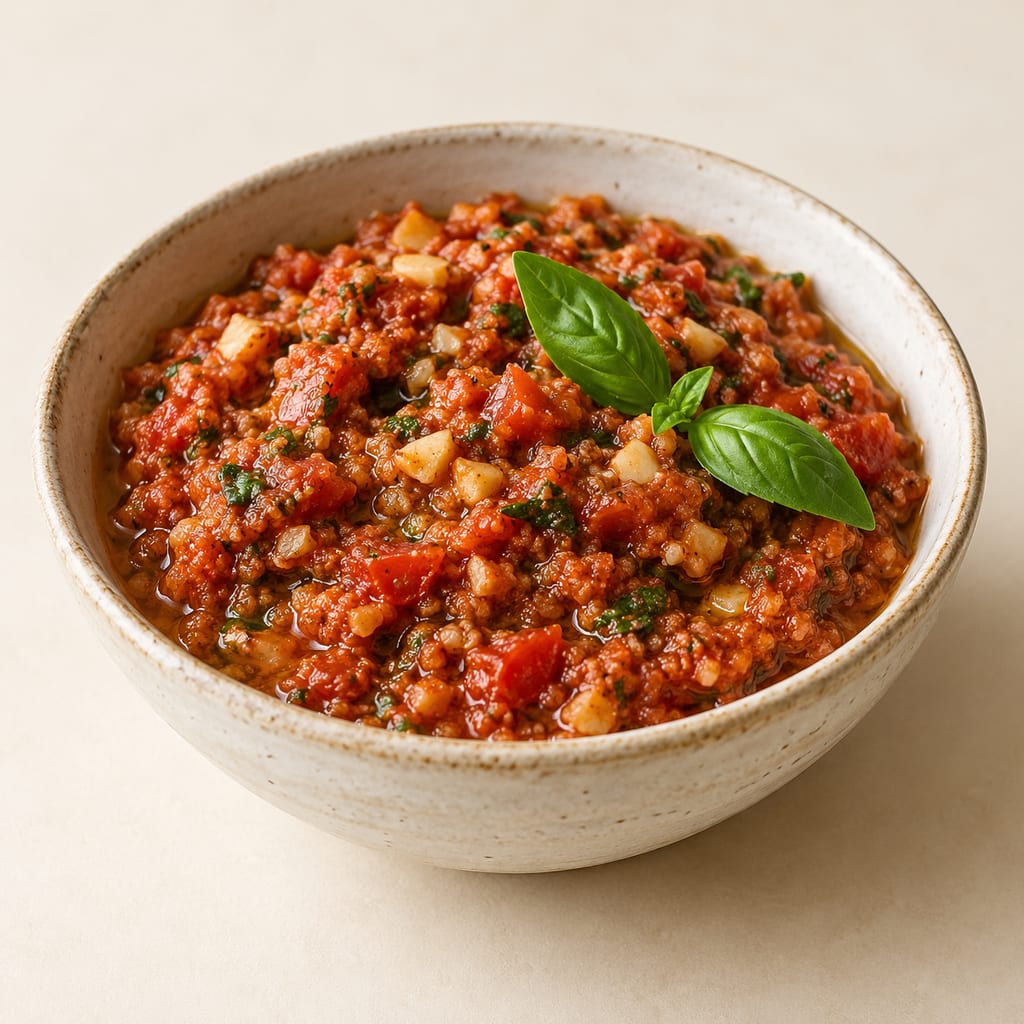
Pesto alla trapanese is a Sicilian sauce of fresh tomato and almonds pounded with basil, a red counterpart to Genoese pesto.

Protected Italian vinegar made only from cooked grape must, fermented and aged in a battery of wooden barrels for at least 12 years: sweet, sharp and syrupy.

Airag is Mongolia’s fermented mare’s-milk drink, traditionally churned with saved starter in a reusable cowhide khokhuur.

Appam, or hoppers, are South Indian and Sri Lankan rice pancakes made from a fermented coconut-and-rice batter and cooked in a curved pan to a crisp lacy rim and a soft, spongy centre.
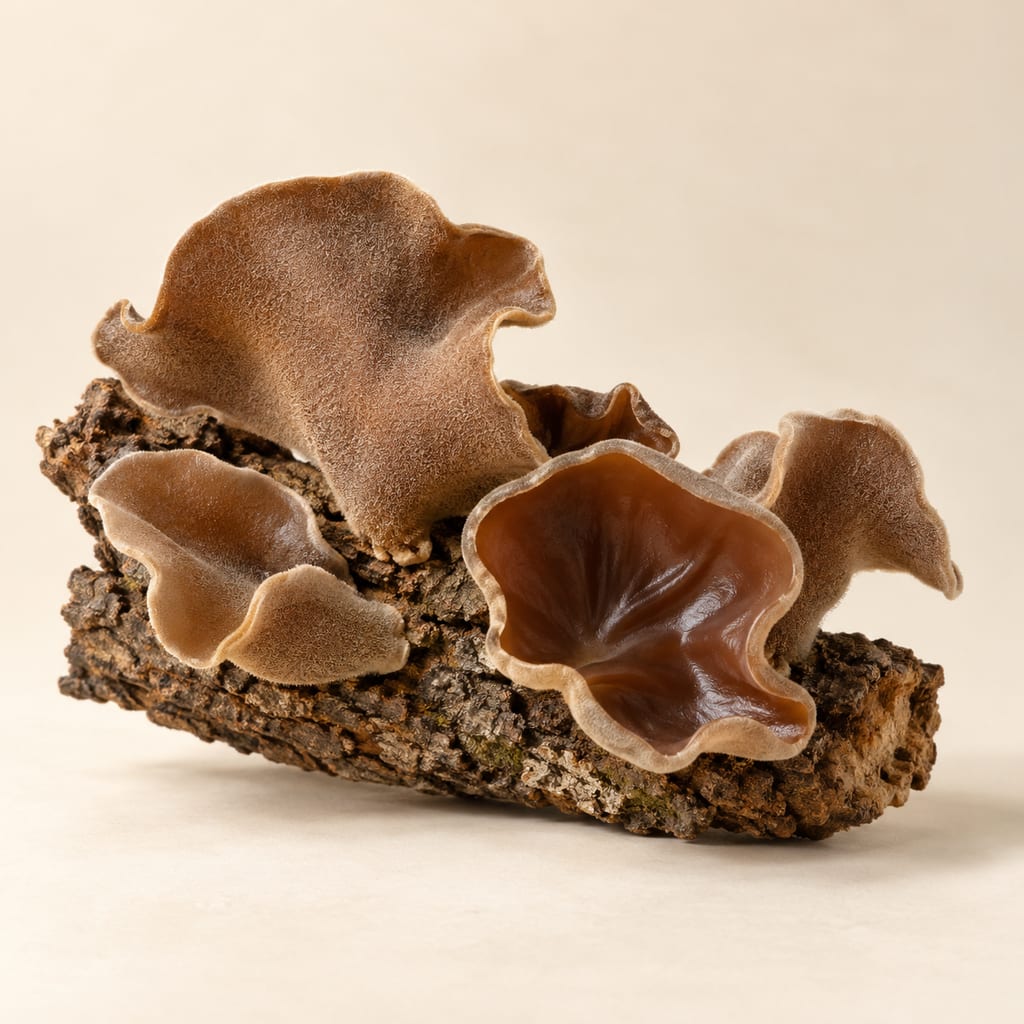
Auricularia tremellosa is a wood ear fungus of the genus that supplies most dried wood ear sold in China; its own food record is thin, and the culinary practice described here comes from the closely related wood ear species.

Ayran is Turkey’s cold, savoury yogurt drink: plain yogurt is loosened with water and lightly salted, then whisked smooth or aerated into a soft cap of foam.
A thin stone griddle used over an open hearth. Norwegian archaeology documents the established tradition from the early Middle Ages; a Viking-period origin is only a cautious suggestion linked to Shetland.

Crushed or milled barley cooked in water until the starch softens and the mixture thickens, the plainest way a northern household turned stored grain into a meal, here with apple and hazelnut.

Black carrot is the anthocyanin-pigmented Eastern carrot (Daucus carota var. atrorubens), the purple root that preceded orange types and still colours kanji and şalgam.
No community contributions have been published for this entry yet.
Sign in to contribute. Published comments and photos are free to read.
Museo Italiano della PastaHistory
Cronologia (Museo Italiano della Pasta, Pasta Museum history)Al-Idrisi's account of Sicilian pasta production and export in 1154
Cited in: Dough made to keep; Sicily in 1154; Drying to hardness; What the record does not settle