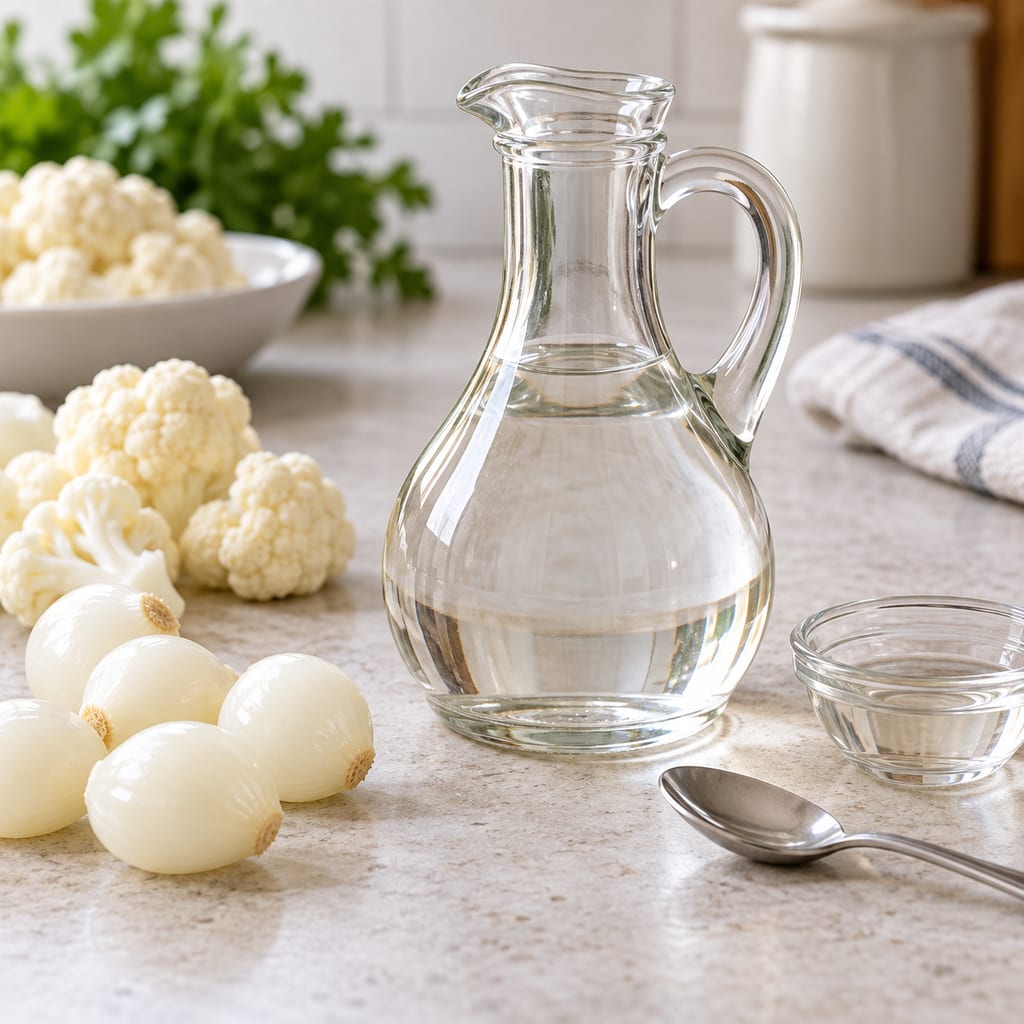
Spirit / distilled white vinegar
A clear, sharp vinegar made by acetifying alcohol. Its restrained color and aroma suit pickles, sauces and dressings where darker or more aromatic vinegars would change the result.
 FermenteaWhere food goes to change
Modern adaptation
A scalded cheese moulded in baskets and re-cooked in its forms in hot whey, made alongside a ricotta from the same milk, then acidified, brined and aged for months.
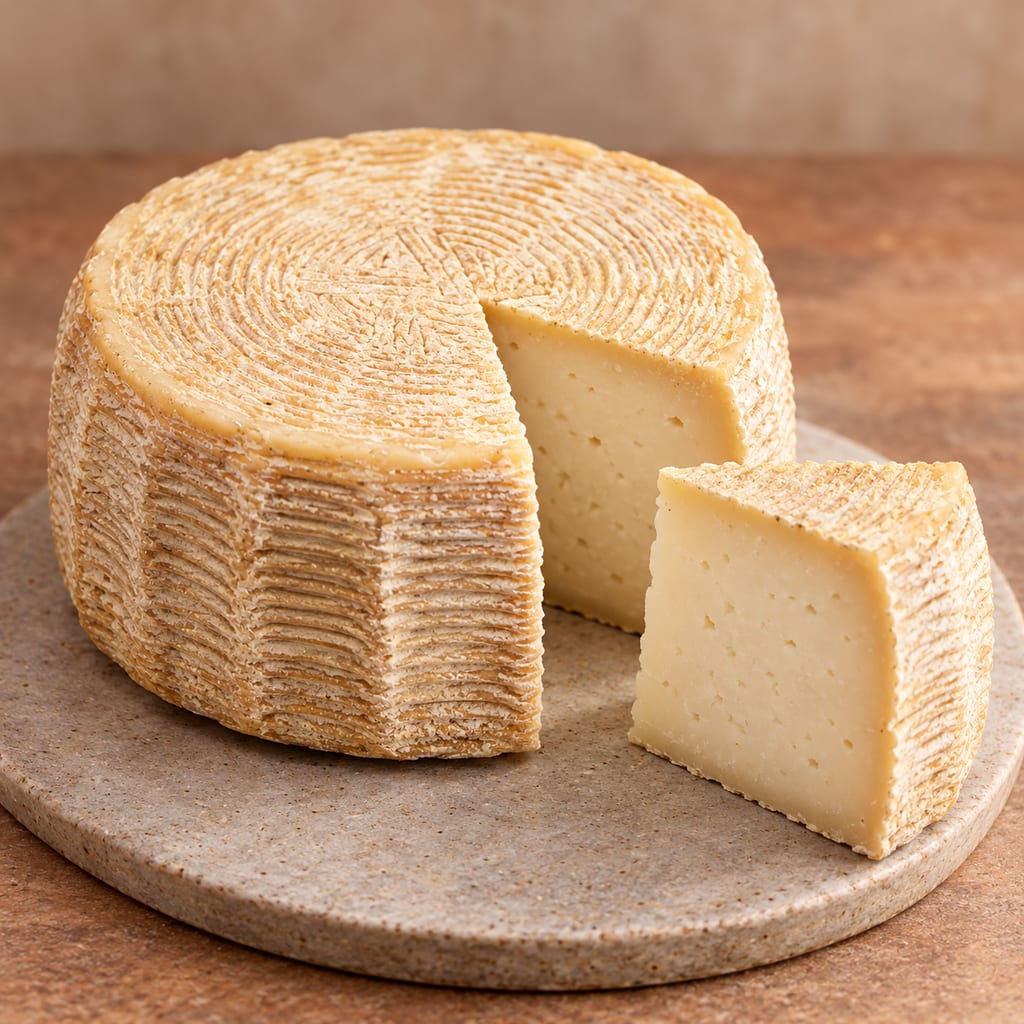
Canestrato is a family of Italian hard cheeses, and the name is regional: several producing areas use it for a cheese made in a basket mould. The recipe published by New England Cheesemaking Supply names Sicily and the basket-cheese tradition, and gives a home method for a cow's milk cheese that is moulded in reed or wicker baskets, pressed by hand and weighted, then aged. Because the basket gives the cheese its rounded shape and ridged rind, the form is part of the product rather than an afterthought.
The same batch also yields a ricotta. Part of the whey is taken off before the curd is moulded, and the rest of the whey is heated to about 185°F (85°C), where fine flecks of whey protein appear at 170-175°F. The ricotta is collected after it rests, so one milk batch gives two cheeses. The publisher gives no dated history for the method.
The milk is warmed to 90°F (32-33°C) and the mesophilic and thermophilic cultures are sprinkled on the surface, rehydrated, and stirred in. The cultures make acid during the rest and build the flavour that the cheese keeps through ageing. A rennet dose sets the milk in 35-40 minutes; a clean break shows the curd is ready to cut.
The curd is cut into pieces about the size of corn or barley for a cheese that will be aged, and rice to wheat size for a longer-aged, drier one. The cut curd is then scalded slowly over 30 minutes, to 114-116°F (45-47°C) for a young cheese or 120-122°F (49-50°C) for a longer one. The scald expels whey and firms the curd, so the higher temperature gives a drier cheese. The curd is stirred for 30 minutes and held at the final temperature for another 30 minutes before it settles.
The thermophilic culture works very slowly, if at all, above 115°F, and its main acid range is 98-115°F. That is why the cheese is acidified at a moderate to warm room temperature for 24 to 48 hours after moulding, and not held hot.
The warmed baskets are filled with firm hand pressure, weighted with 3-6 lb for the first hours, and turned after 10-15 minutes. The formed cheeses are then reheated in their baskets, either in hot whey that starts at 150-160°F and cools over 60-90 minutes, or in water held at 150°F. The reheating is a falling-temperature soak, not a held bath, and it firms the formed cheese in its mould.
After acidification the cheeses are brined: 1 gallon of water with 2.25 lb of salt, 1 tablespoon of calcium chloride and 1 teaspoon of white vinegar, at 50-55°F (10-13°C), for 24 hours, or 48 hours for one large cheese. Calcium chloride and vinegar are part of the printed brine, and the brine is cooled before the cheese goes in. The cheese is then aged at 54-58°F (12-14°C) and 80% moisture for 4 to 12 months.
The milk must be pasteurised. The Penn State bulletin says ultra-pasteurised and UHT milk do not form a curd for home cheesemaking, and it does not recommend raw milk, so the recipe starts from ordinary pasteurised cow's milk. No cheese-specific safety limit for the acidification step is given, and none is stated here.
An all-in-one brewing kettle can hold the milk in a nested inner pot and supply hot water or whey for the reheating. This route is an untested adaptation: nobody has published a trial of it, and the temperatures in the steps describe the food, so a probe in the curd or whey is the control, not the bath setting. The documented method uses a pot in a sink of warm water or on a stove.
The page gives two yields that disagree: a header yield of one pound, and text describing two 1-1.5 lb cheeses and about half a pound of ricotta. The culture amounts are printed for 6 gallons, while the page advises at least 2 gallons of milk, so the base milk volume for the stated yield is not confirmed. The basket size and material are not given beyond reed or wicker. The acidity reached after the 24-48 hour acidification is not stated in the text read.
The publisher names a Sicilian canestrato tradition and an original Italian basket cheese without a dated source. No period of attestation is recorded here.
Scaling: source batch only
Use pasteurised milk; Penn State says ultra-pasteurised and UHT milk interfere with curd formation and should not be used, and does not recommend raw milk for home cheesemaking.
Control sourceUse pasteurised milk. The Penn State extension bulletin cited here says ultra-pasteurised and UHT milk do not form a curd for home cheesemaking and does not recommend raw milk.
Hot whey at 150-185°F (66-85°C) and the forms in it scald; handle the baskets and the pot with care.
The all-in-one brewer route in the sections is an untested adaptation. No trial of it has been published, and the source method was written for a pot on a stove or in a sink of warm water.
Named on the recipe page; association only, and 'style' because canestrato names are regional products.
A clear, sharp vinegar made by acetifying alcohol. Its restrained color and aroma suit pickles, sauces and dressings where darker or more aromatic vinegars would change the result.
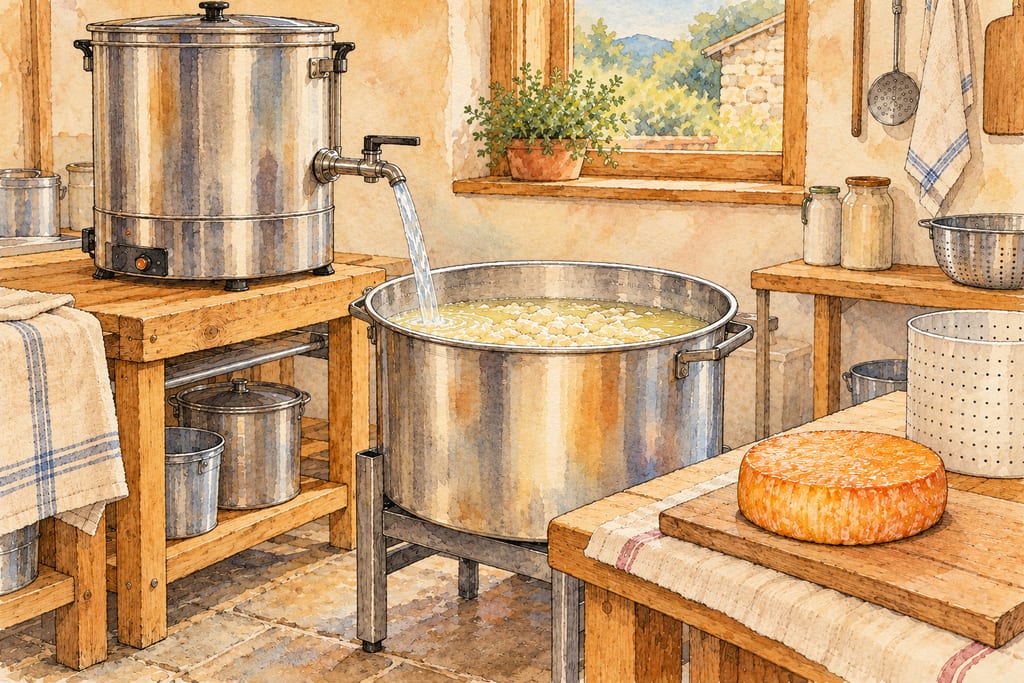
The brewer holds clean water at a set temperature for washed-curd cheeses and other hot-water jobs, beside a separate cheese pot, instead of heating milk directly.
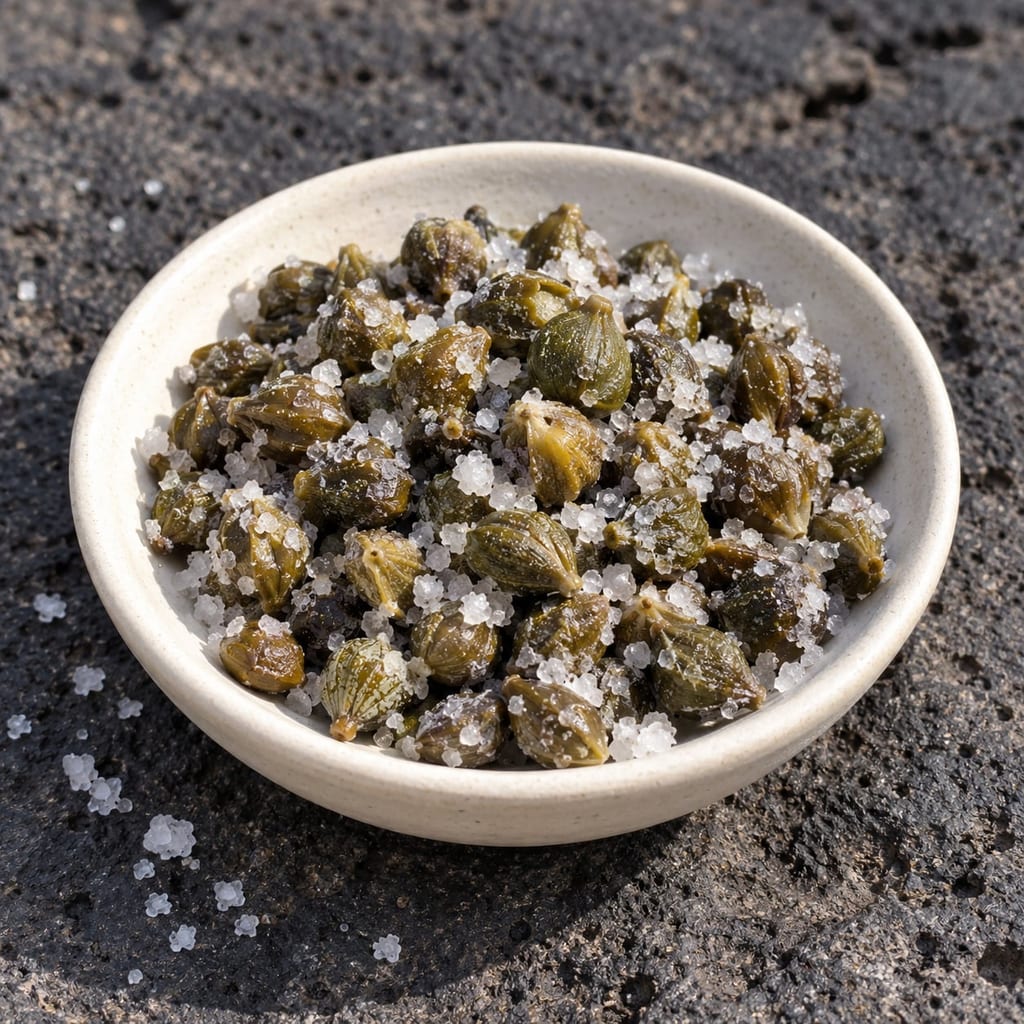
A protected Sicilian product: unopened caper buds from the island of Pantelleria, dry-salted with sea salt in a two-stage process that encourages lactic fermentation.

Shaped dough dried thoroughly into a portable staple that keeps far longer than fresh dough, in Mediterranean and Asian food systems.
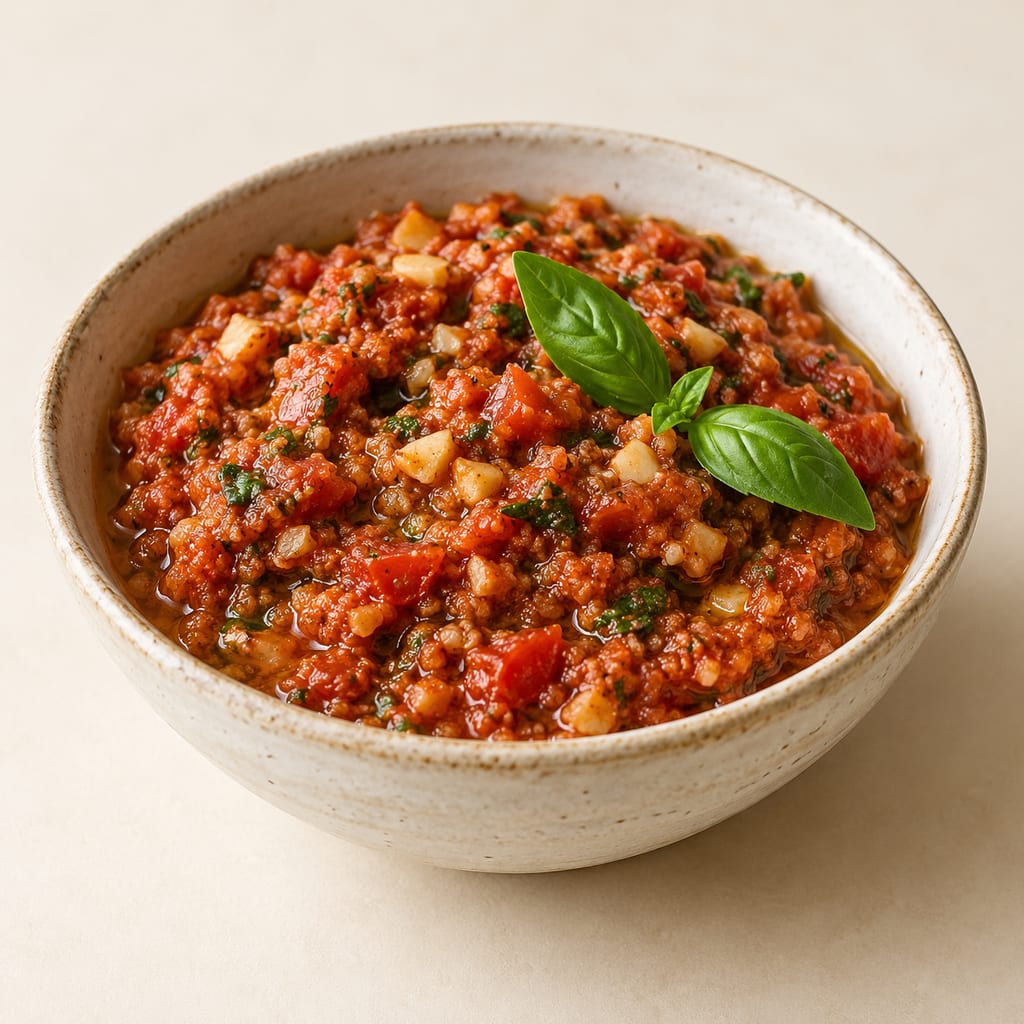
Pesto alla trapanese is a Sicilian sauce of fresh tomato and almonds pounded with basil, a red counterpart to Genoese pesto.
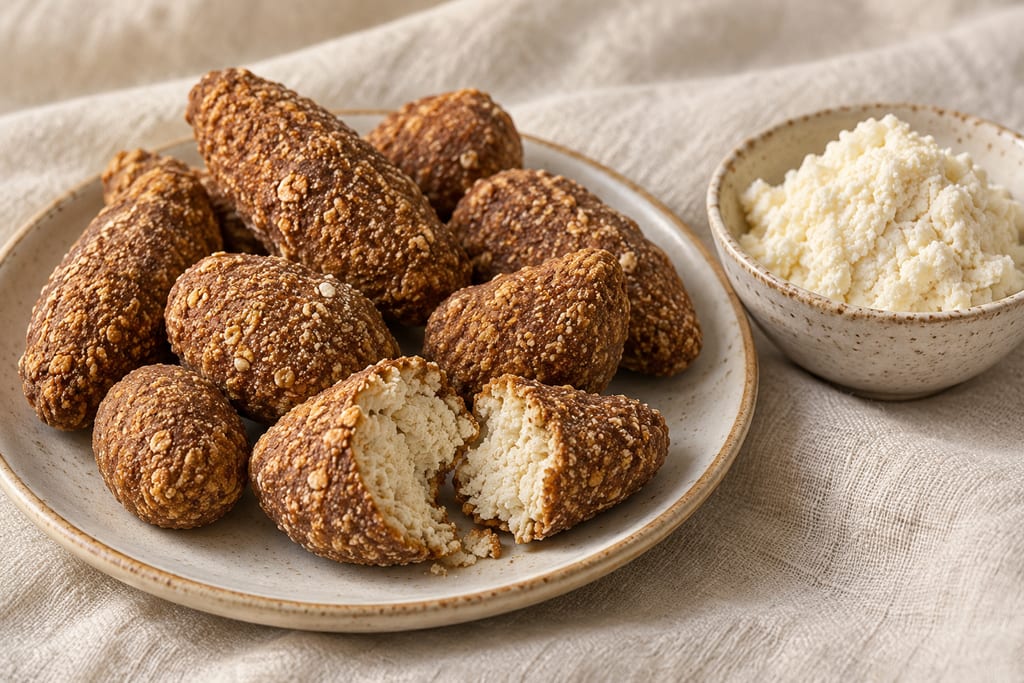
A two-stage Altai dairy preparation: sour chegen is heated into soft aarchi, then portions are drained, pressed and traditionally smoked into firm kurut.
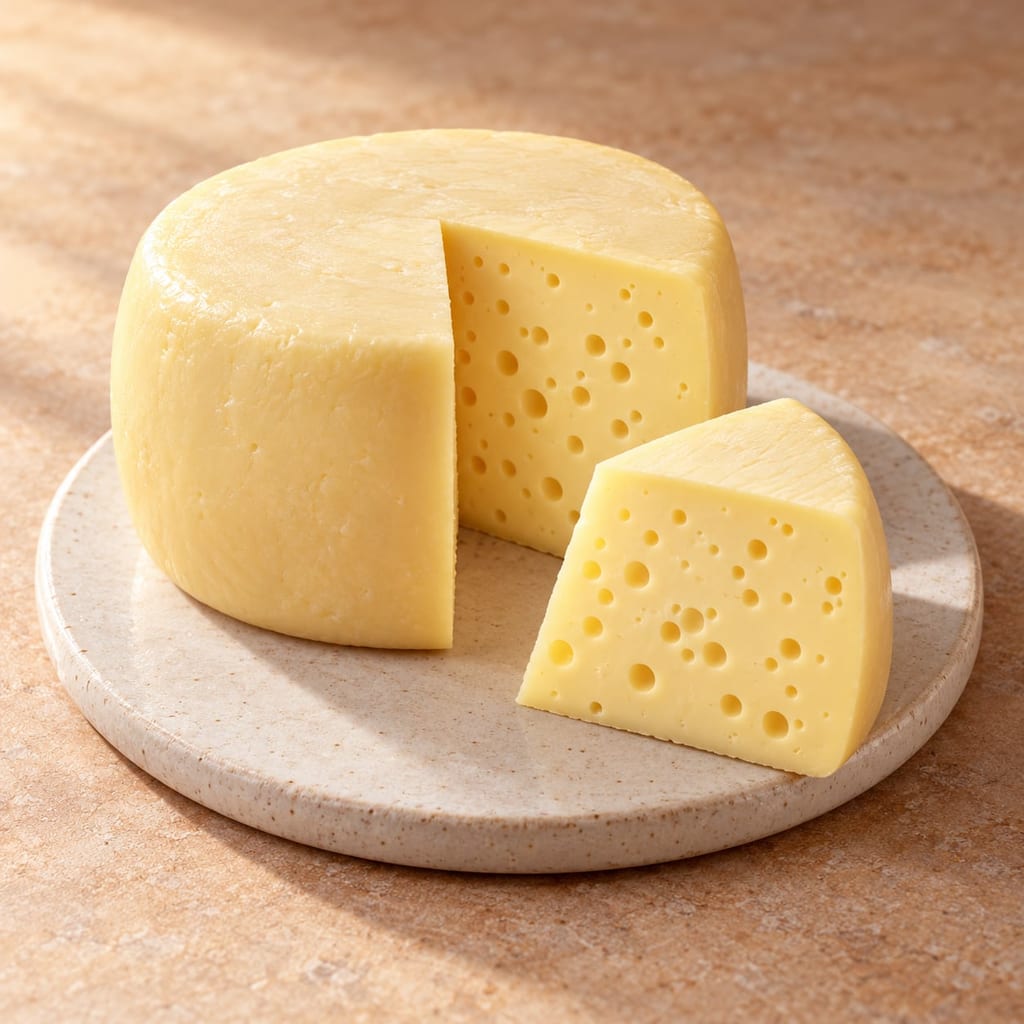
A washed-curd cheese with propionic bacteria, warmed by hot water in two steps and then held in a warm room for weeks so the bacteria can form its holes.

Beyaz peynir is a Turkish white cheese matured in brine. Sheep milk, alone or mixed with other milks, gives a close-textured cheese cut into blocks and packed in cans.
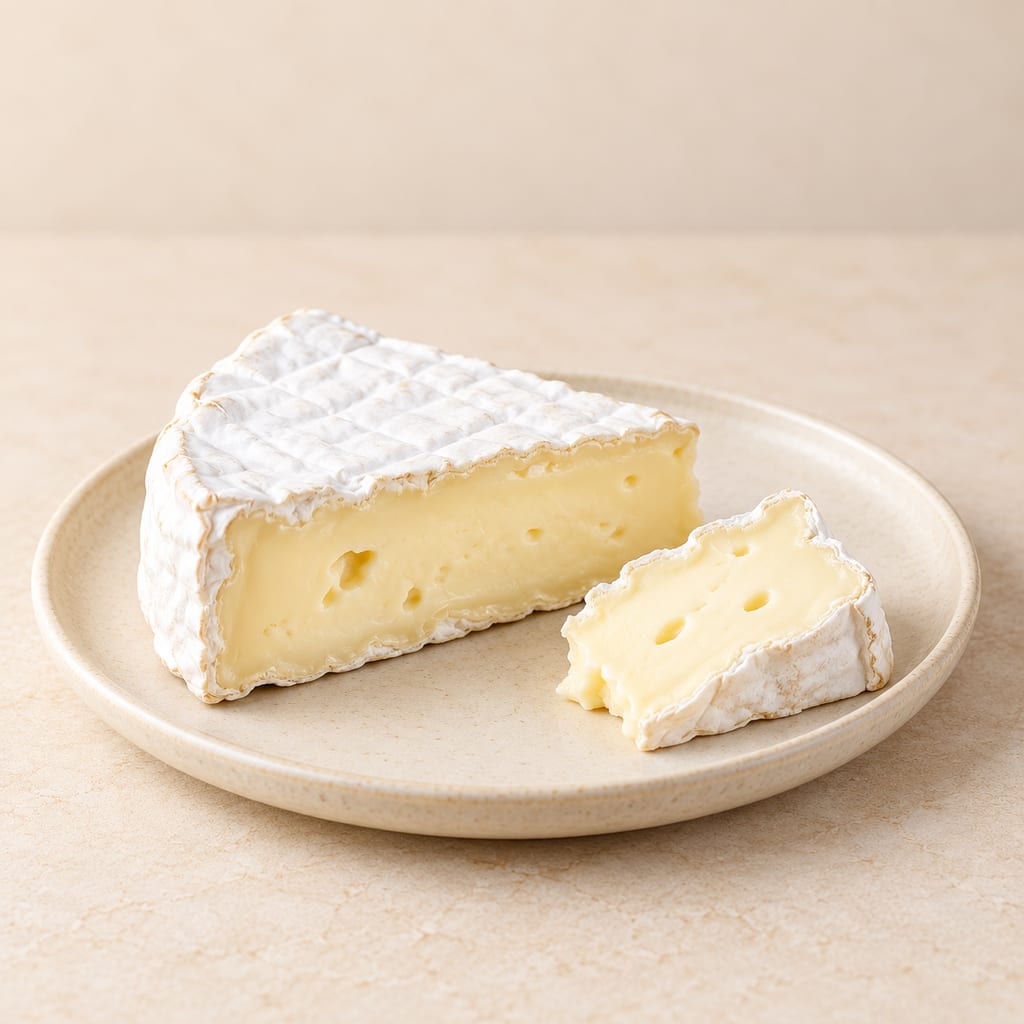
A cream-enriched Brie with a white bloomy rind and a softening center, made from pasteurized milk with lactic and surface cultures.
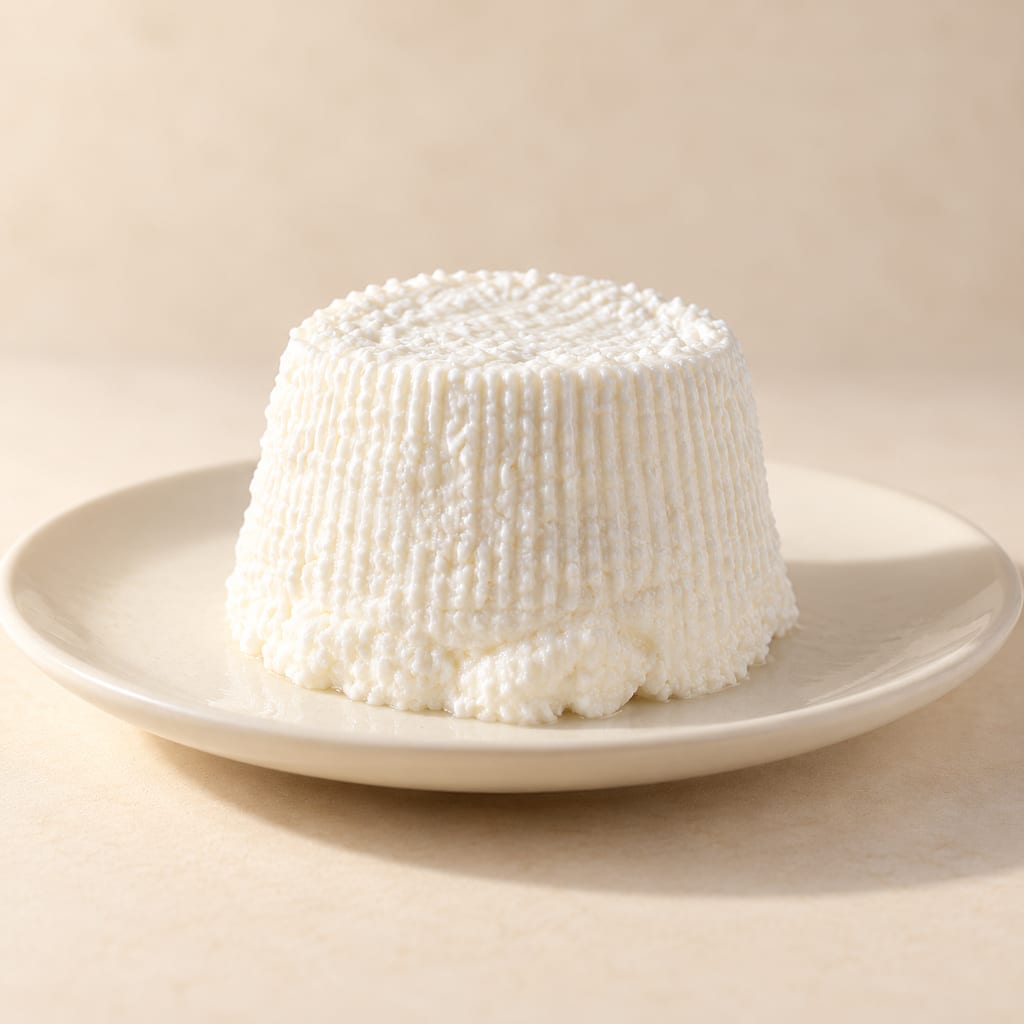
Corsican Brocciu is a whey cheese made by heating sheep's or goat's whey with whole milk and salt, then gently draining the flocculated curds. It is eaten fresh or salted and ripened as Brocciu passu.
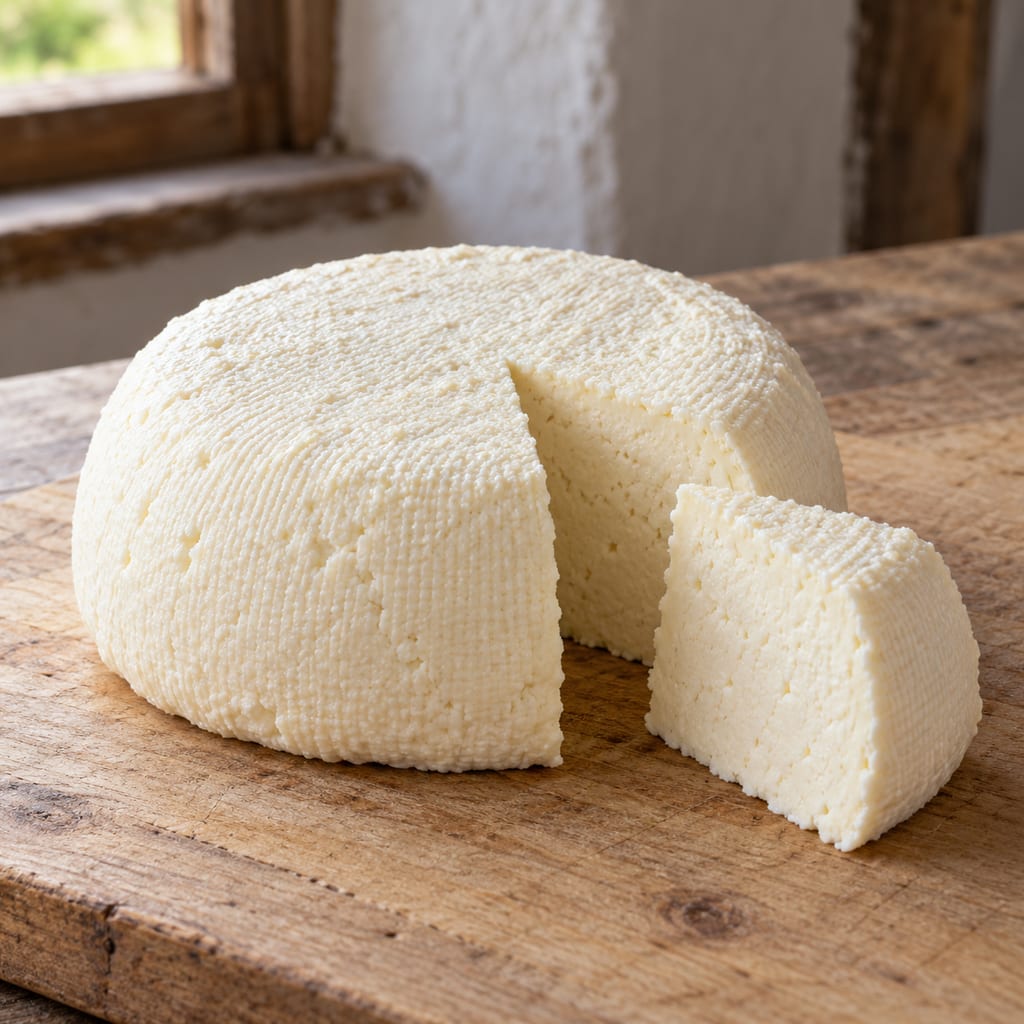
Budz is a traditional Hutsul rennet-set cheese made from sheep, cow or goat milk in the Ukrainian Carpathians, forming a fresh curd that can be eaten, smoked or processed into salted bryndza.
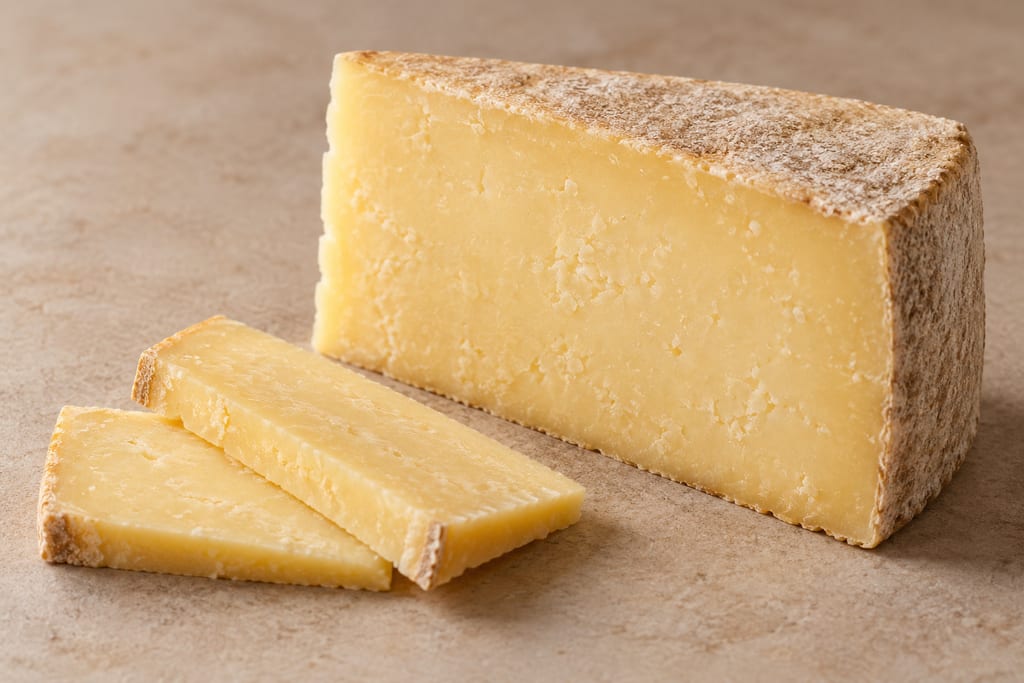
A pressed cheese whose curd is cooked slowly, then cheddared: kept warm in slabs that are turned and stacked for hours before milling, salting and pressing.
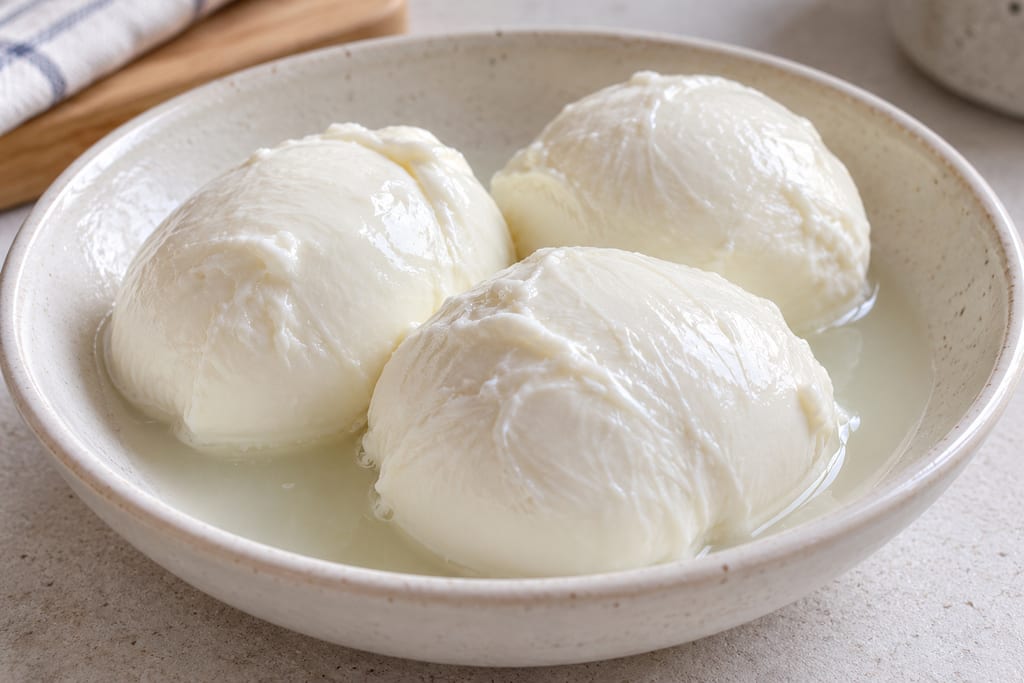
A quick fresh batch uses low-temperature-pasteurized whole milk, citric acid and rennet; the curd is warmed, drained and stretched in hot whey.
No community contributions have been published for this entry yet.
Sign in to contribute. Published comments and photos are free to read.
New England Cheesemaking Supply Company (author Jim Wallace)Method
Canestrato Italian Basket Cheese Recipeculture and rennet amounts for 6 gallons, scald temperatures, ricotta, reheating in whey or water, acidification, brine, ageing
Cited in: A basket cheese from the Sicilian canestrato tradition; How the curd is set, scalded and held; Moulding, reheating and brining; Milk, safety and the brewer adaptation; Open questions
Penn State ExtensionSafety
Home Cheesemaking (Penn State Extension, ART-4803, Kerry E. Kaylegian, 2019; copy hosted by UC ANR)pasteurised milk suitable; UP/UHT unsuitable; raw milk not recommended
Cited in: Milk, safety and the brewer adaptation