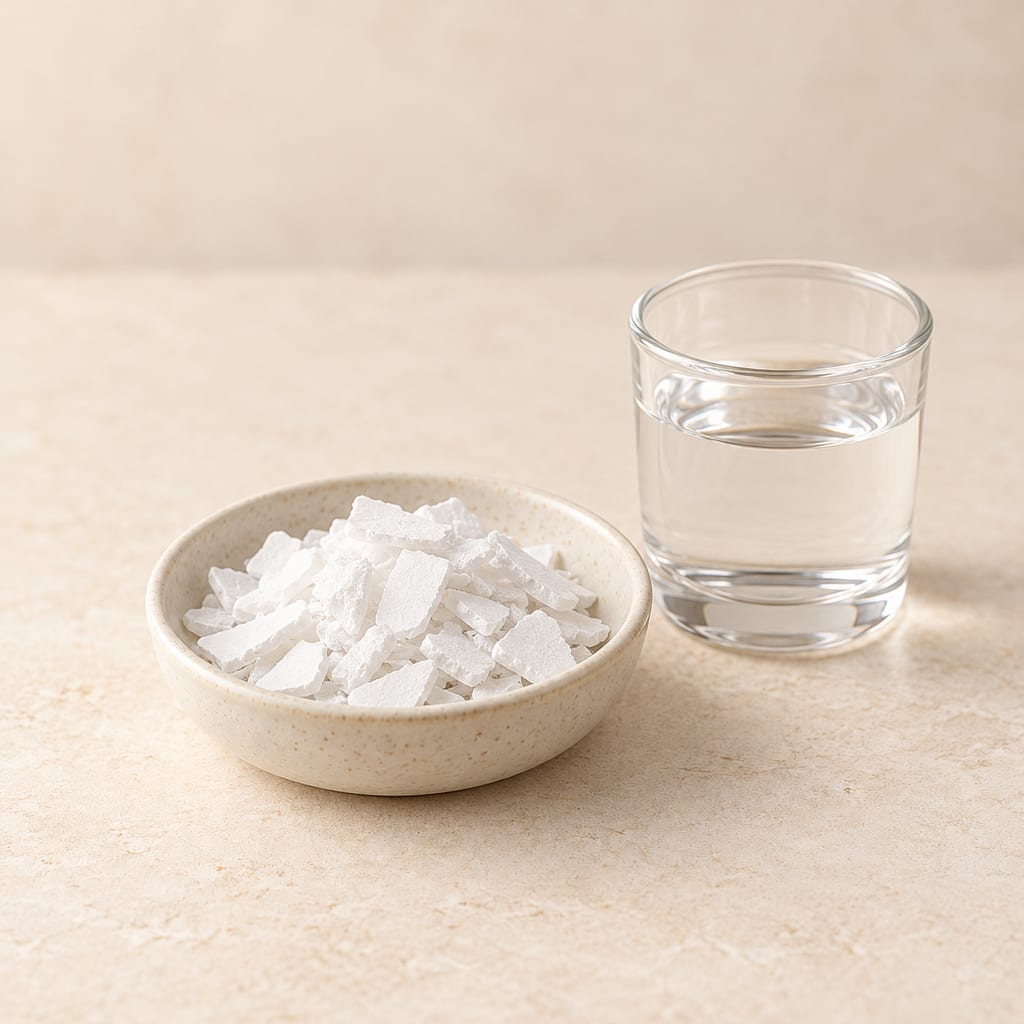
Calcium chloride
A soluble calcium salt used to support cheese curd formation, balance cheese brines, reinforce some plant tissues and adjust brewing water.
 FermenteaWhere food goes to change
Traditional method
Beyaz Peyneri · Salamura Peyneri · Teneke Peyneri · Edirne Peyneri
Beyaz peynir is a Turkish white cheese matured in brine. Sheep milk, alone or mixed with other milks, gives a close-textured cheese cut into blocks and packed in cans.
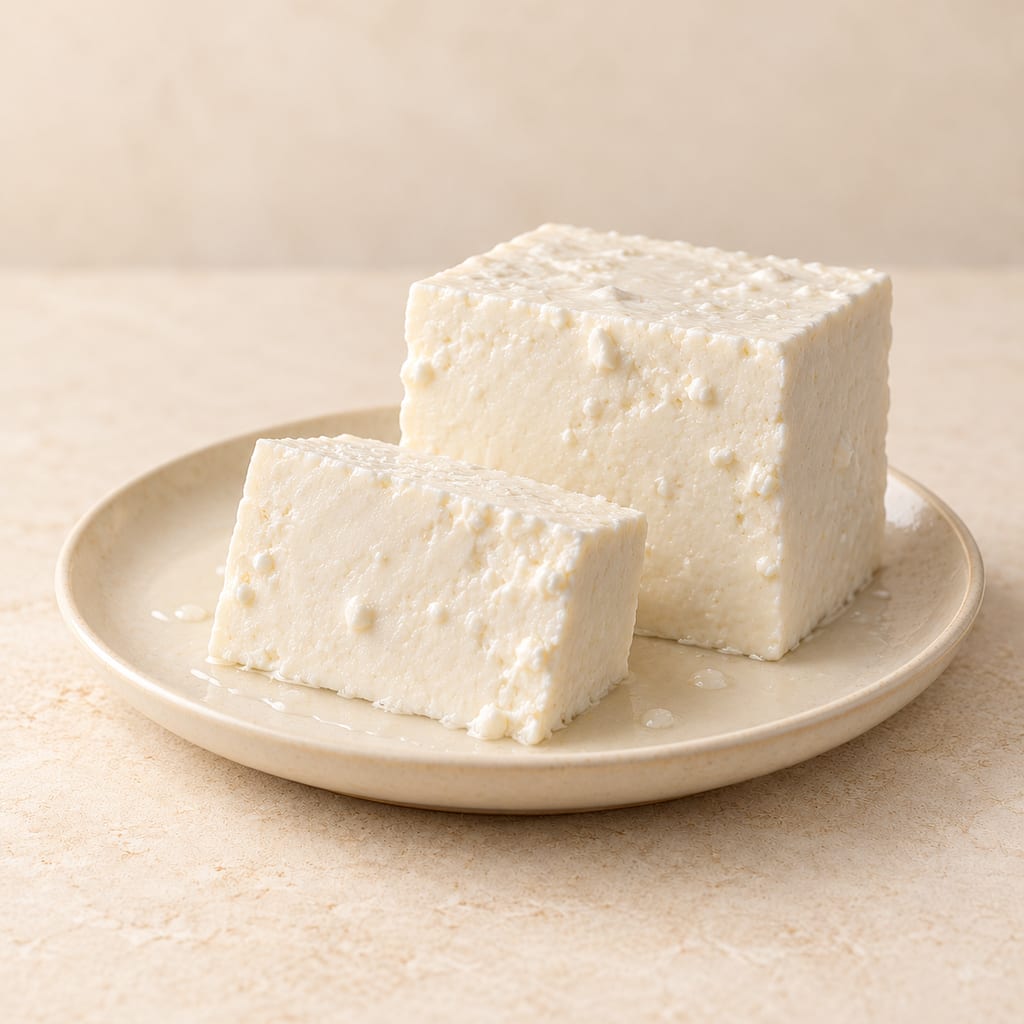
Beyaz peynir means “white cheese,” a broad Turkish cheese family shaped by curd, salt and brine. In the documented version here, sheep milk is the starting point; goat, cow or buffalo milk may be blended in. The finished cheese is pale, smooth and close-textured, without the large open eyes associated with some other cheeses. A wet, thin surface gives way to a compact body that can be cut into pieces and kept in brine. The method recorded here yields a cheese in the semi-hard range, though milk composition, drainage, salting and maturation all affect firmness.
The name also appears as salamura peyniri, or brined cheese, and teneke peyniri, referring to the tin container used for maturation. Edirne peynir is another name attached to this family in the technical record, but names do not guarantee a single formula across makers or provinces. A label may identify a local style, milk species or fat class; those terms are more useful than treating “white cheese” as a promise of one texture or salt level.
Turkey’s 2015 cheese communiqué placed commonly produced white cheese within a national framework for composition and labeling. It also addressed declarations for milk type and maturation, and specified temperature control for cheese held, transported or offered for sale. Those rules describe commercial categories and handling; they do not turn every traditional product into an identical recipe. The name covers many related practices, while the recipe below follows one particular technical account.
The history of beyaz peynir is not pinned to a securely dated first recipe in the material used for this account. The older technical inventory records Turkey as both the area of origin and production, but leaves its origin and history unknown. That gap matters: a widespread cheese can have a long place in food culture without a surviving document that establishes when its current method began. No medieval or ancient recipe should be retrofitted to this product on the basis of resemblance alone.
What can be dated is part of its modern public life. In 2015, the Turkish Food Codex introduced a cheese communiqué that grouped widely produced cheeses, including white cheese, into fat classes and set labeling provisions. The regulation recognized that named regional cheeses may have their own registered methods, provided production still meets national hygiene, microbiological and additive requirements. This formal framework sits alongside local dairying and household knowledge; it is not the origin story of the food.
Brining and maturation connect the cheese to practical dairy work: milk becomes a curd that can be drained, portioned, salted and stored in liquid. Such steps make the product transportable and create a recognizable flavor and texture, but they do not prove a single historical path. The method's evidence is an undated Turkish origin and a later written technical description.
Beyaz peynir is made across Turkey, but regional names often point to a more bounded milk supply and process. The technical entry places this family at country scale rather than assigning it a single town. It allows sheep milk alone or mixed with goat, cow or buffalo milk. That flexibility is a defining difference between a broad cheese family and a protected local style, whose rules can specify exact origins and proportions.
Ezine peyniri shows how precise a local identity can become. The Turkish traditional cheese inventory associates it with Çanakkale and records a spring production season, a mixture of cow, sheep and goat milk, rennet setting, cut curd, pressing, brining and cold maturation. Its European protected designation document sets a defined production area and a prescribed seasonal milk blend, with at least eight months in brine. These details make Ezine a related but distinct product; the present recipe’s 120–180 days of maturation are not a substitute for the Ezine specification.
Malkara beyaz peyniri offers another local comparison. Its inventory entry places production in Tekirdağ and describes a cow-milk cheese made through pasteurization, rennet coagulation, curd pressing, brining and six months in a closed tin. It differs from the sheep-milk basis and shorter maturation recorded here. Malkara’s official entry names breakfast and meze as uses, while its process description attributes ripening to mixed environmental microorganisms. That account belongs to Malkara’s own method, not a claim about the starter or flora in every beyaz peynir.
These distinctions are useful at the counter and in the recipe. A place name can carry controlled requirements for milk, salting and maturation; a general family name leaves room for local and commercial variation. The names Edirne, Ezine and Malkara should be treated as evidence of specific regional practices, not interchangeable labels for one universal cheese.
Milk supplies the proteins and fat that become the solid cheese, along with lactose and water that mostly leave in the whey. The recipe begins with 100 kilograms of sheep milk as its working basis, and the technical description says other milks may be mixed in. It does not give a fixed blend for every maker. Sheep, goat, cow and buffalo milk differ in composition, and a change in species changes the starting material rather than simply exchanging one liquid for another. The recipe therefore keeps the chosen milk visible instead of silently turning the batch into a standardized blend.
The method may include a lactic starter after heat treatment. Lactic bacteria convert some milk sugar into acid; as acidity develops, it influences curd behavior and later flavor. The technical account does not name a strain, culture blend or dose, so this is not a starter formula that can be reproduced by selecting any particular commercial culture. Nor does the account establish that every regional or commercial beyaz peynir uses a starter. If omitted, the process is a different documented choice, not proof that fermentation is absent from all stages.
Rennet performs another job: it destabilizes casein, the main milk protein, so the proteins form a gel that traps fat and water. This enzyme-driven coagulation is distinct from bacterial acidification. When the gel is cut, whey can escape from the new surfaces. The 2-centimetre pieces and settling period set up drainage; they are not decorative shaping. Natural draining and bulk pressing then remove more whey until the curd reaches the point described by the method as the end of syneresis, the continued release of liquid from the curd network.
Those operations explain why cheese texture is a sequence of decisions. Milk composition affects the curd; coagulation forms it; cutting and drainage reduce moisture; pressing makes the mass more compact; brining changes its salt and water balance. A change in any one stage can alter the result, so the complete 100-kilogram method should not be casually reduced to “curdle milk and leave it in salt water.”
The recorded heat treatment is a range: 60–75°C for up to 15 minutes. It is followed, if used, by calcium chloride and lactic starter, then a 15-minute maturation of the milk before rennet. These are the conditions recorded for this product, not a complete home-pasteurization schedule: the time that belongs to each temperature in the range is not given, and no calcium-chloride dose is stated. The stated process scale is 100 kilograms of milk. Anyone making cheese should use a validated food-safety process and suitable equipment rather than treating an incomplete range as a household safety guarantee.
Rennet is dosed at 20–25 millilitres per 100 kilograms of milk, and coagulation takes 1.5–2.5 hours. The wide time window reflects the method’s reported interval, not permission to substitute smell or appearance for process control. Once the curd has formed, it is cut into pieces about 2 centimetres across and allowed to settle for up to 30 minutes. The curd is then transferred to cloth, drains naturally and is pressed in bulk until whey release ends. Because no pressing load or duration is supplied, neither should be invented.
The pressed cheese is cut to suitable portions and put into a 14–16 percent salt brine for 4–6 hours. The source gives a salt concentration and time but not brine volume or a household batch size. These omissions make scaling uncertain: the same percentage does not describe how much brine surrounds the cheese or how the vessel is managed. The pieces are then packed in tins with 12–14 percent brine and held at 2–5°C for 120–180 days. The staged salting gives salt time to move into the curd while water moves outward, and maturation lets the cheese’s flavor and texture continue to change.
That combination of heat, curd handling, brining and months of cold storage is a production method, not a quick fresh-cheese recipe. Its missing details are real limits on reproducing it. A finished product should not be assumed safe because it looks clean, tastes salty or has aged for the listed number of days.
Brine is both a seasoning medium and a physical environment around the cheese. Salt enters the curd while water leaves it; the rate depends on the cheese’s dimensions, surface area, brine strength, temperature and time. The method records two brine stages with different stated concentrations, then a cold maturation. It does not supply piece dimensions, brine volume or an analytical endpoint for the finished cheese. Those gaps mean the published concentrations should be read as recorded process values, not as a complete control plan for a different batch.
During maturation, residual enzymes and microorganisms change milk proteins and fat, creating compounds that contribute to aroma and taste. The exact community depends on the milk, starter choice, equipment and maturation environment. The general cheese science explains why culture and enzyme choice matter, but it does not identify the organisms in this particular cheese. The recipe therefore does not claim that one species makes a named flavor or that every can develops in exactly the same way.
Food safety requires more than a long wait. Milk and curd can be contaminated before or after heat treatment, and handling can introduce hazards again. New Mexico State University’s home-cheesemaking guidance describes the roles of milk, cultures, rennet and sanitation, but it does not validate this traditional 100-kilogram recipe or its maturation profile. The Turkish cheese communiqué requires commercial cheeses to be maintained below 10°C during storage, transport and sale, while the product-specific method gives 2–5°C for maturation. Keep these scopes distinct. Use pasteurized milk and clean, sanitized food-contact equipment; for production, follow a validated process and applicable rules. The listed aging period is not itself a safety test.
Cheese is a familiar part of the Turkish breakfast table, commonly served with bread, olives, eggs and other foods. The Ministry of Culture and Tourism describes cheese among the general breakfast foods; the Culture Portal notes that Ezine cheese can also appear in baked goods and salads. These are broad practices and regional examples, rather than a claim that this exact technical batch has one required accompaniment. Malkara’s inventory identifies its white cheese for breakfast and meze, a useful local comparison for how brined cheeses move between a morning spread and small shared dishes.
A close-textured white cheese is easy to slice, crumble or break into pieces, but salt and firmness vary by product. If serving a particularly salty cheese, the amount of other salt in the dish matters; the recipe itself does not give a desalting instruction, so rinsing or soaking should not be presented as a universal rule. A maker’s label and the condition of the brine are better guides to the specific cheese than a generic name alone. For a regional product, look for its place and specification, not just the word “white.”
At the table, the appeal lies in contrast: a compact, milky piece beside bread, vegetables, olives or a pastry filling. In a salad or cooked filling, the cheese contributes salt and fat as well as protein, so it behaves differently from a fresh unsalted curd. It can be served as part of a larger spread or used in a dish where a firm brined cheese is wanted, but a recipe should account for its own salt and moisture rather than treating all cheeses as equivalent.
The method is valuable because it preserves a technical sequence and measurable process details: milk basis, rennet dosage, curd size, brine concentrations, time windows and maturation temperature. It also leaves meaningful blanks. There is no exact milk blend, calcium-chloride amount, starter identity or dose, pressing weight, brine volume, finished yield in the recipe’s structured field, or validated storage duration after opening. A reader should not fill those spaces with guessed numbers. The separate yield estimate in the technical account is 28–30 kilograms per 100 kilograms of milk, but it does not replace a source-defined household batch.
Regional comparisons show why the omissions cannot be solved by importing another cheese’s details. Ezine has a protected seasonal milk blend and longer maturation; Malkara uses cow milk and its own pressing and brining schedule. Both are close relatives in a larger family, yet their rules and process choices belong to their own names. Keeping those methods separate makes the recipe more accurate and helps readers understand what “beyaz peynir” can mean across makers.
Finally, this account is not a claim that cheese making is fermentation alone. Bacterial acidification, rennet coagulation, drainage, pressing, salt movement and maturation each do different work. The result comes from their order and the milk they act on. That is why preserving the source’s method and its uncertainties is more useful than supplying a falsely complete formula.
Beyaz peynir belongs to Turkey’s brine-ripened cheeses. It is also known as Salamura Peyneri, Teneke Peyneri and Edirne Peyneri. Its close body has no eyeholes, and the pieces mature in brine inside tin cans.
Scaling: source batch only
Fresh cheeses can carry Salmonella, pathogenic E. coli, Listeria monocytogenes, or Staphylococcus aureus; handling after heating can reintroduce contamination.
Hazard sourceUse pasteurized or heat-treated milk, sanitize equipment, prevent post-process contamination, and refrigerate promptly.
Control sourceFresh-cheese pathogens include Salmonella spp., Escherichia coli, Listeria monocytogenes and Staphylococcus aureus. Wash hands, clean and sanitize equipment and food-contact surfaces, and prevent contamination during curd handling and cooling.
Raw milk can carry pathogens; use pasteurized milk for home cheesemaking.
Lactic starter — Optional addition after pasteurization; dose and organisms are not named.
Source does not specify maturation humidity.
FAO records Turkey as origin and production area; this entry uses its documented method without inferring a specific locality.
A soluble calcium salt used to support cheese curd formation, balance cheese brines, reinforce some plant tissues and adjust brewing water.
An unspecified dairy starter supplies lactic acid bacteria to guide milk acidification. The documented Beyaz peynir method names no organism, commercial blend or physical form.
A liquid milk-coagulating enzyme preparation whose source, activity and formulation vary, used to form curd for cheesemaking.

Food-grade sodium chloride seasons food and changes water movement in brines and cures; crystal size and the recipe's measurement method matter.
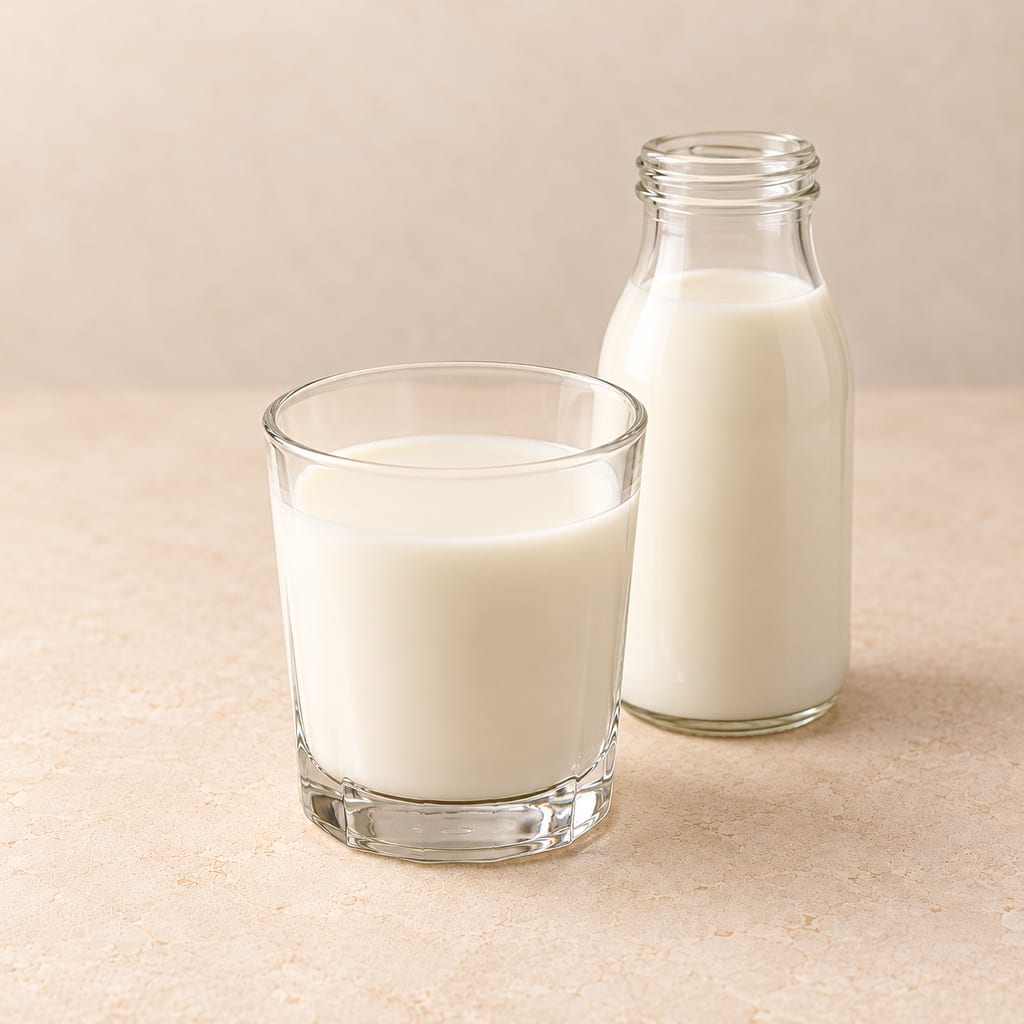
Milk from a ewe, used in cheese and cultured dairy foods. Its protein, fat and solids vary with the animal and season; it contains lactose and milk allergens.
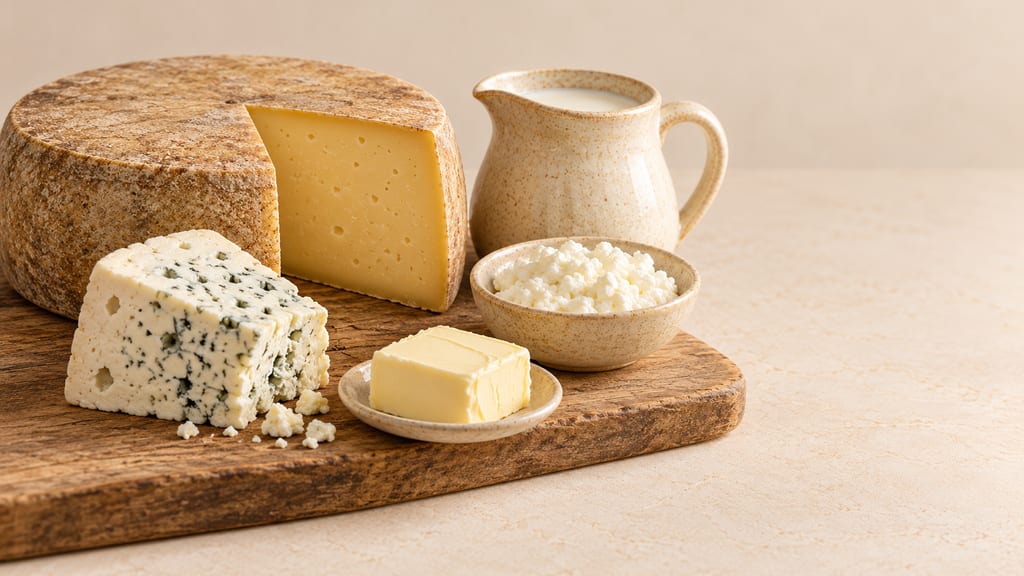
Follow milk into cheese, cultured drinks, butter, dried curds and sweets: a journey through the animals, seasons and household decisions behind the world's dairy foods.
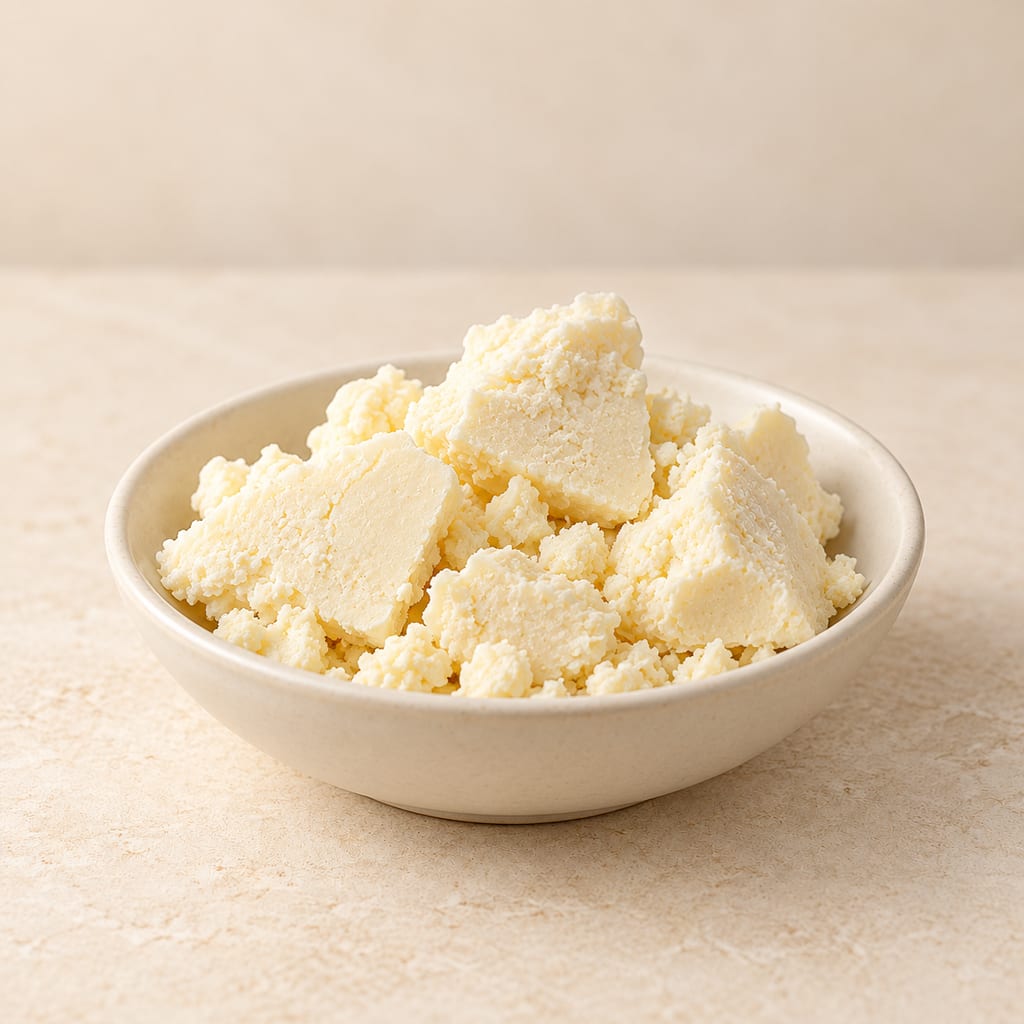
Tulum peyniri is a Turkish cheese traditionally packed into animal-skin bags to mature. This sheep-milk method adds a thermophilic yogurt culture before renneting, draining and dry salting.
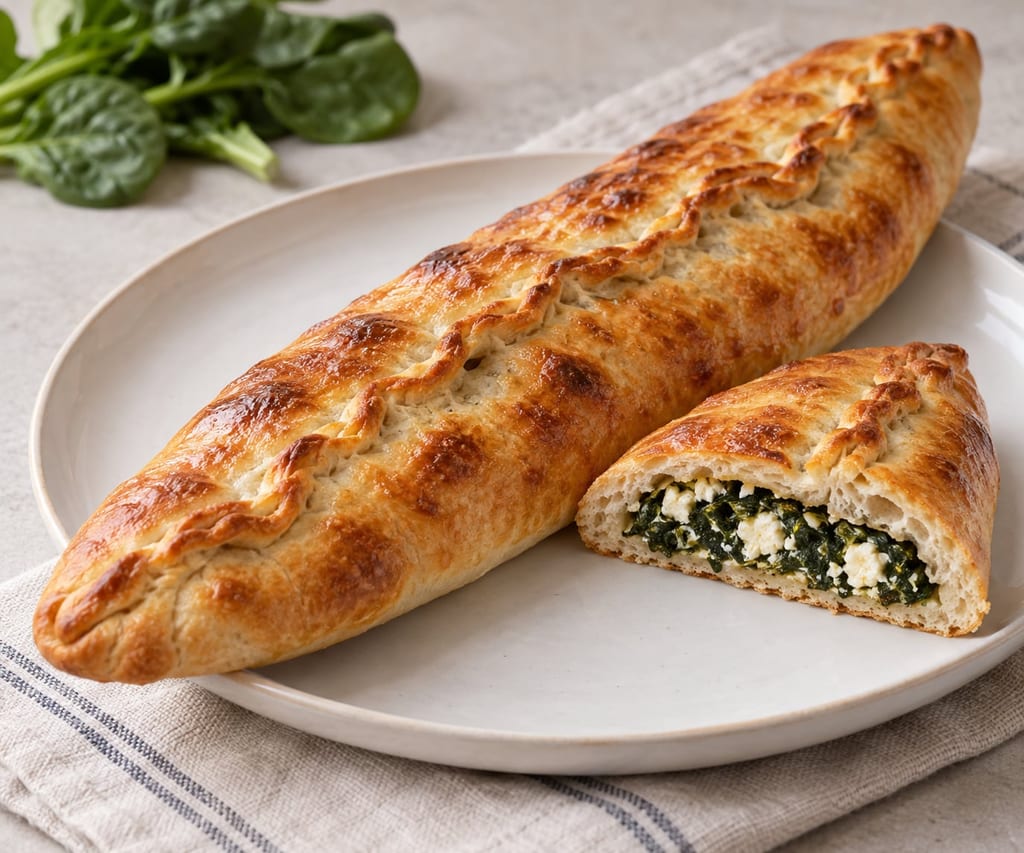
Turkish home-style yeast dough is shaped into closed boats around spinach and cheese, then baked hot until the crust is golden.
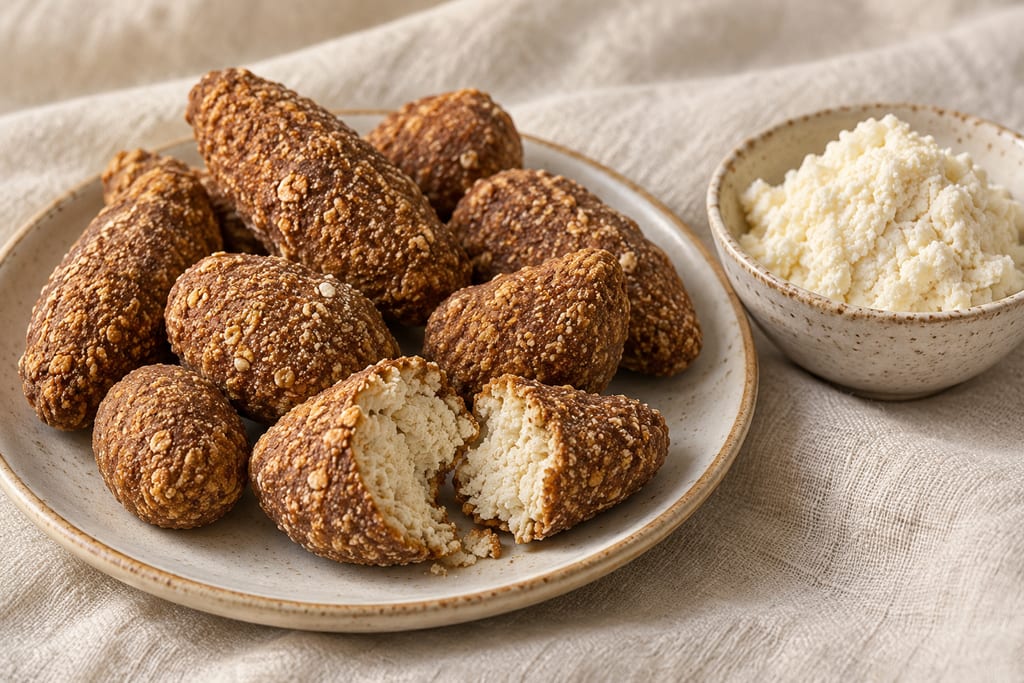
A two-stage Altai dairy preparation: sour chegen is heated into soft aarchi, then portions are drained, pressed and traditionally smoked into firm kurut.
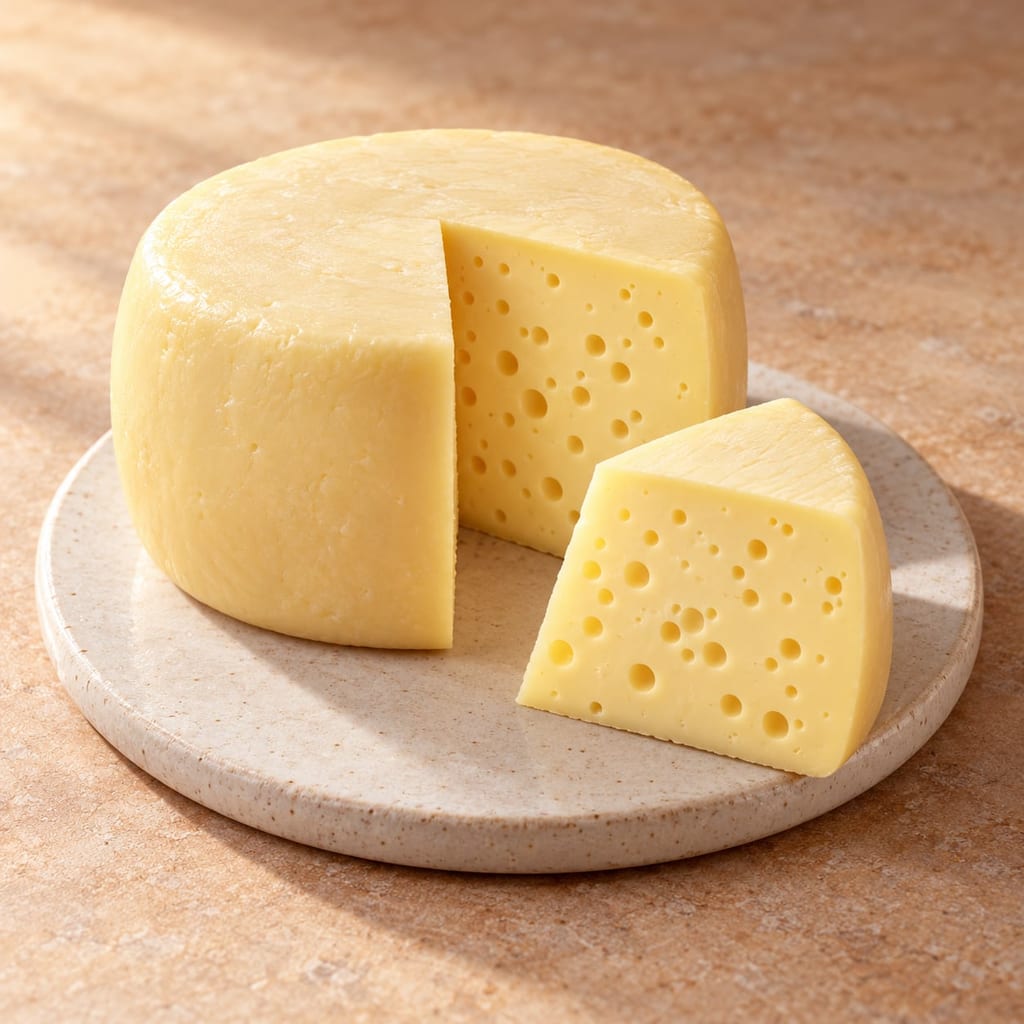
A washed-curd cheese with propionic bacteria, warmed by hot water in two steps and then held in a warm room for weeks so the bacteria can form its holes.
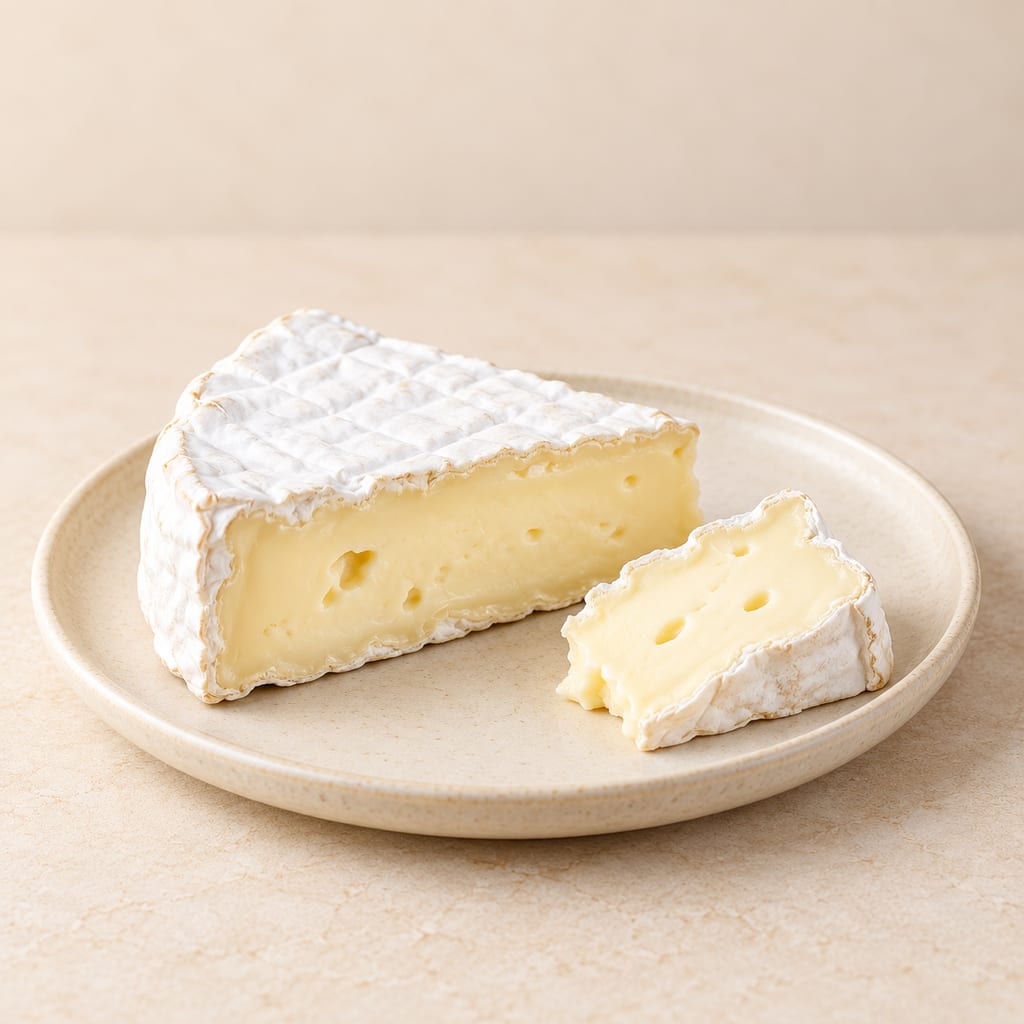
A cream-enriched Brie with a white bloomy rind and a softening center, made from pasteurized milk with lactic and surface cultures.
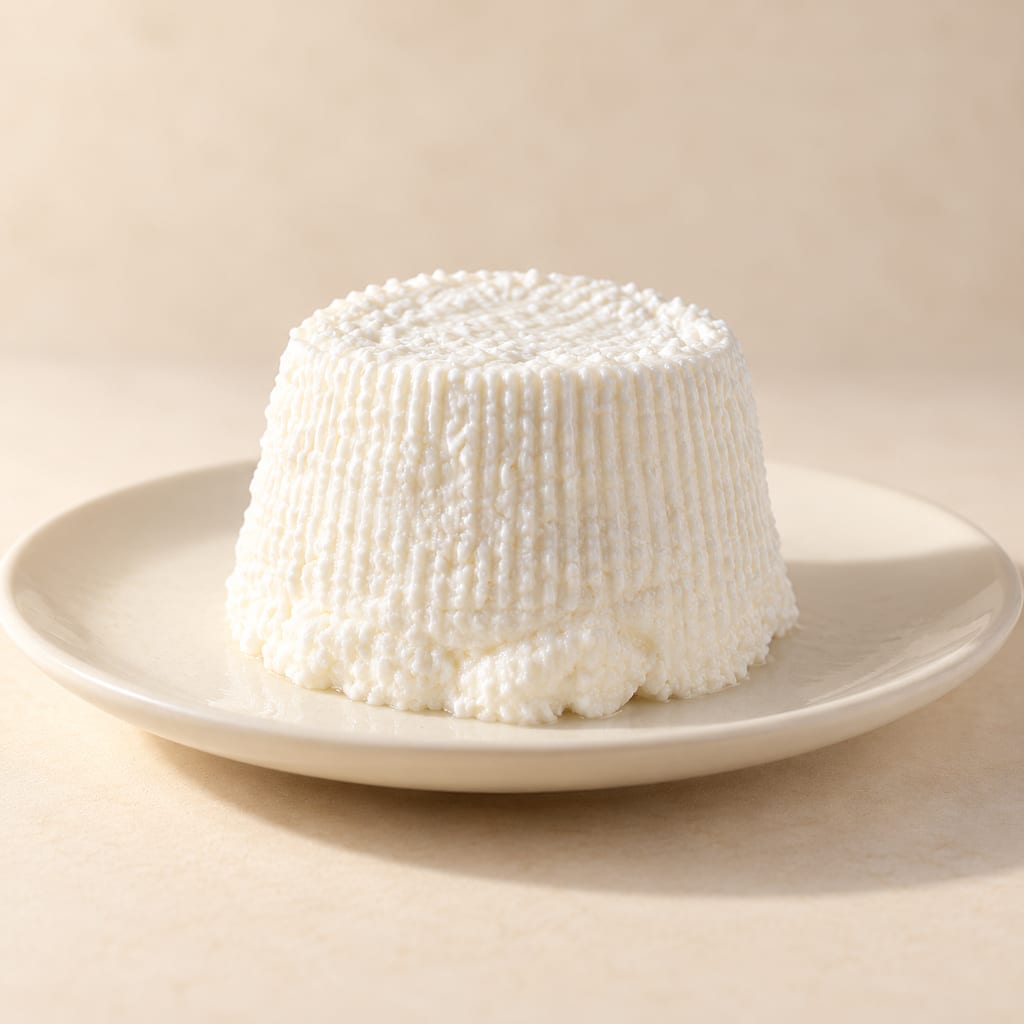
Corsican Brocciu is a whey cheese made by heating sheep's or goat's whey with whole milk and salt, then gently draining the flocculated curds. It is eaten fresh or salted and ripened as Brocciu passu.
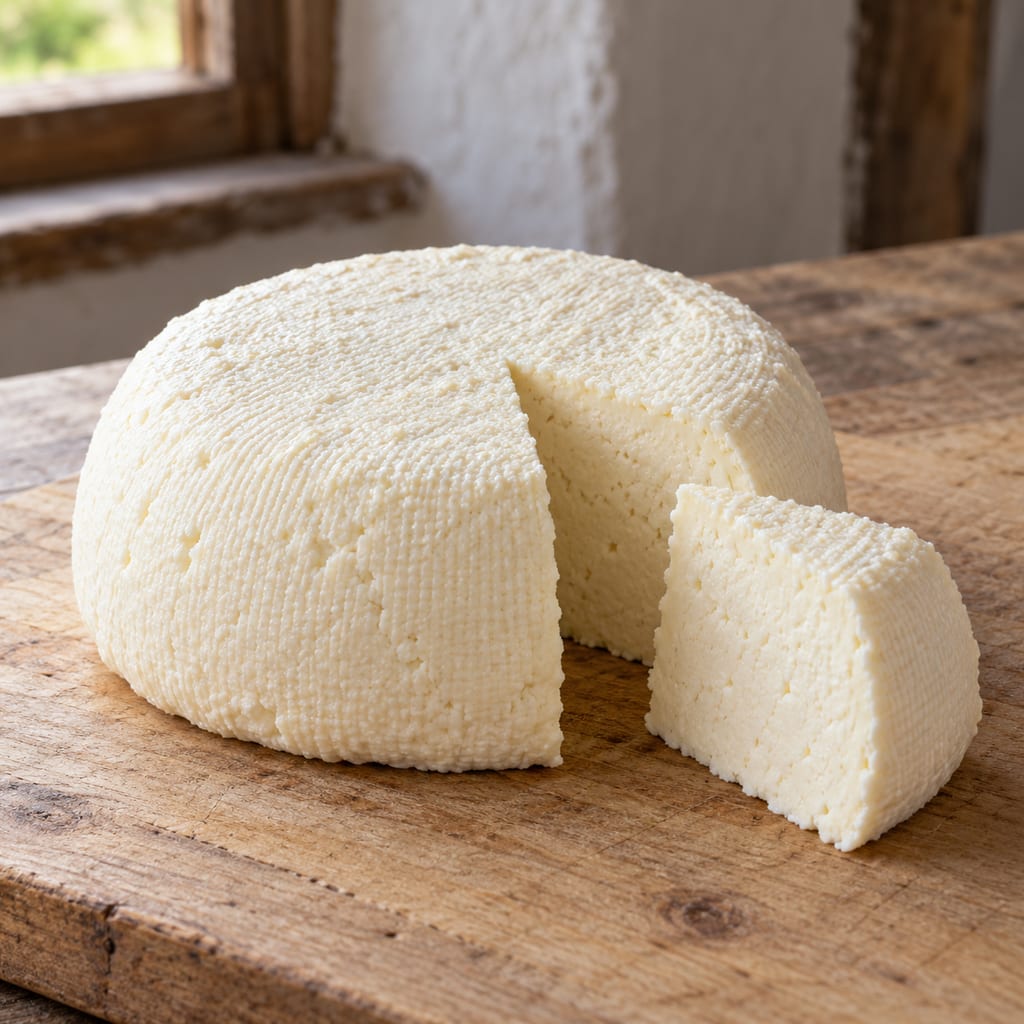
Budz is a traditional Hutsul rennet-set cheese made from sheep, cow or goat milk in the Ukrainian Carpathians, forming a fresh curd that can be eaten, smoked or processed into salted bryndza.
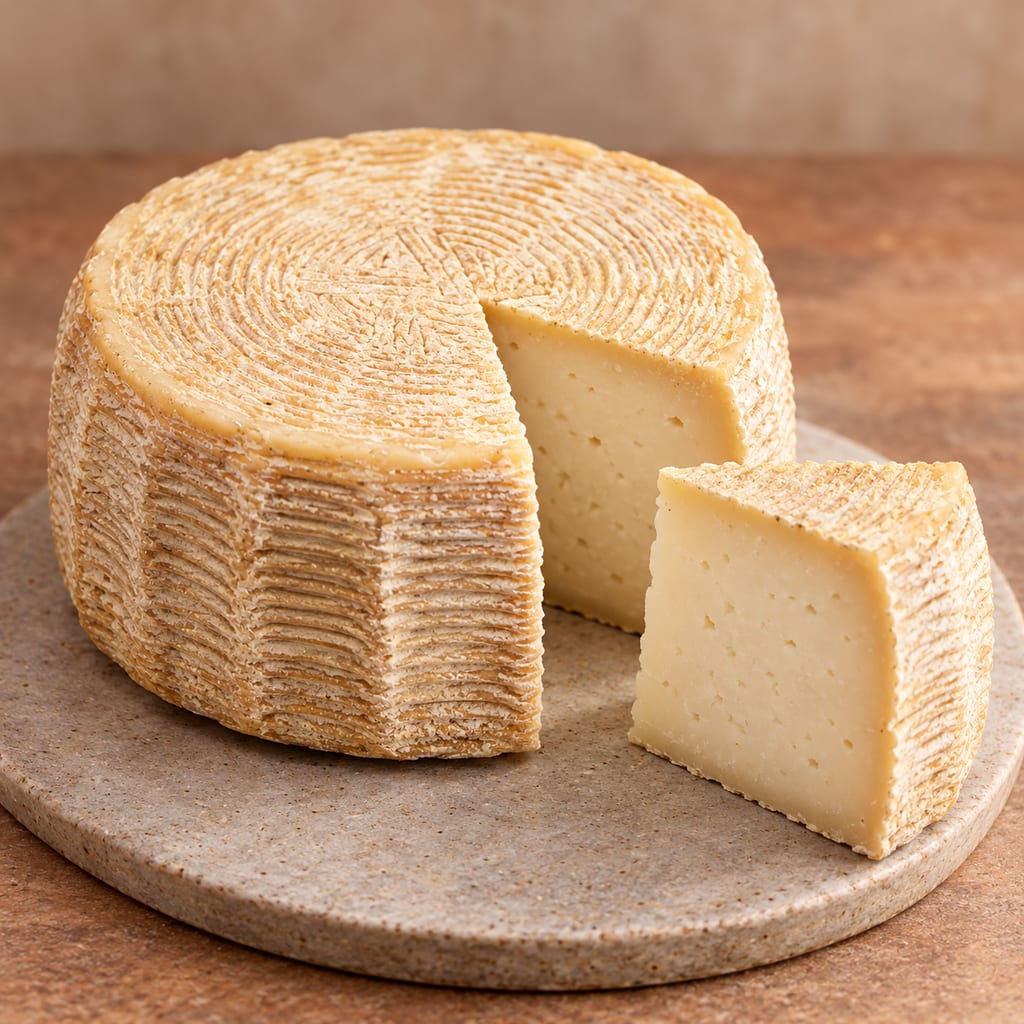
A scalded cheese moulded in baskets and re-cooked in its forms in hot whey, made alongside a ricotta from the same milk, then acidified, brined and aged for months.
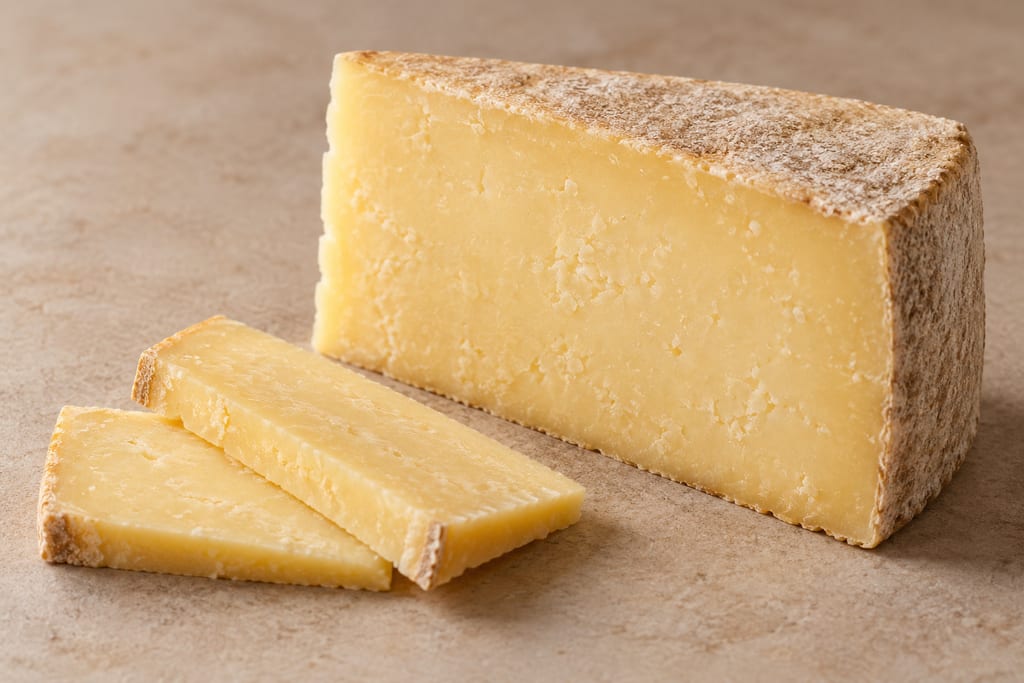
A pressed cheese whose curd is cooked slowly, then cheddared: kept warm in slabs that are turned and stacked for hours before milling, salting and pressing.
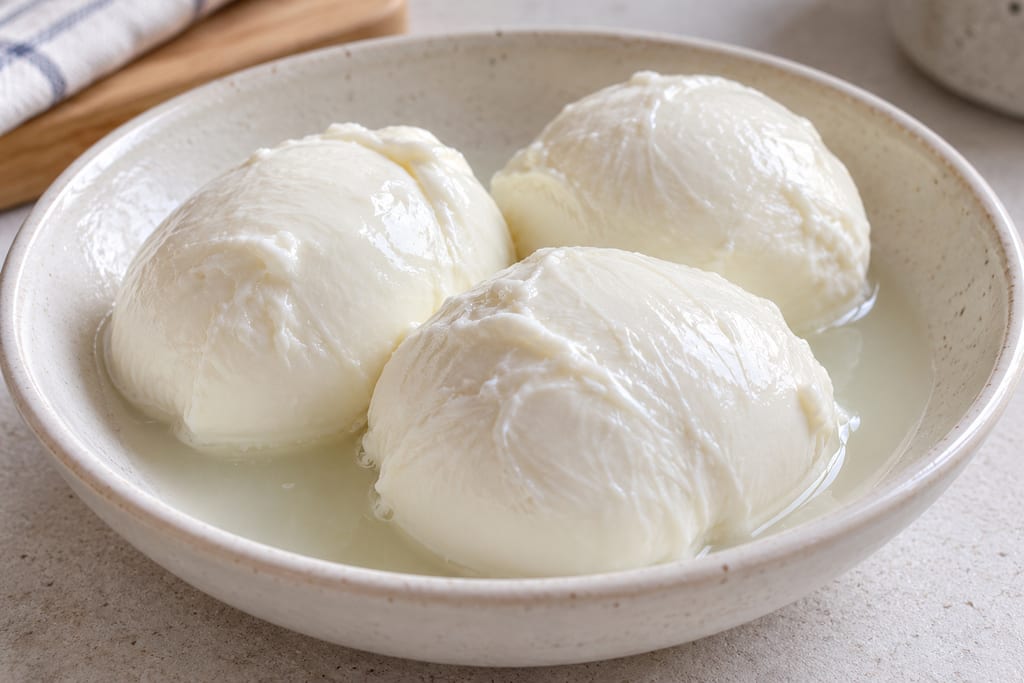
A quick fresh batch uses low-temperature-pasteurized whole milk, citric acid and rennet; the curd is warmed, drained and stretched in hot whey.
No community contributions have been published for this entry yet.
Sign in to contribute. Published comments and photos are free to read.
FAOProcess
The technology of traditional milk products in developing countriesBeyaz Peyneri source names/aliases, milk species, heat-treatment option, rennet dose, curd handling, brining ranges, maturation time/temperature, and average yield.
Cited in: A brined cheese family, not one fixed formula; What is known about its history; Turkey’s regional cheeses and the limits of a name; Milk, curd and the work of the culture; Reading the recorded method stage by stage; Brine, maturation and food safety; What this recipe does and does not establish
New Mexico State University ExtensionSafety
Making Homemade CheeseCheese pathogen hazard context; not validation of the FAO process.
Cited in: Milk, curd and the work of the culture; Reading the recorded method stage by stage; Brine, maturation and food safety
Republic of Türkiye Ministry of Agriculture and Forestry, General Directorate of Food and ControlStandards · History · Handling
Peynir Tebliği BilgilendirmeThe Turkish cheese communiqué entered into force in 2015 and treats white cheese as a nationally common type.
The regulation classifies cheese fat by fat in dry matter and addresses labeling, raw-milk cheese maturation, salt, moisture, hygiene, and storage below 10°C.
Cited in: A brined cheese family, not one fixed formula; What is known about its history; Brine, maturation and food safety; What this recipe does and does not establish
Türkiye Traditional Cheese InventoryGeography · Variant · Method · Sensory
Ezine PeyniriThe national inventory describes Ezine as a full-fat brined cheese associated with Çanakkale/Ezine and reports a seasonal production period.
It gives a local process with milk heat treatment, rennet coagulation, cut curd drainage and pressing, brining, sealed tins, and cold maturation for at least eight months.
It records the listed texture and a mild fatty/rich taste distinction; Ezine is a place-specific comparison, not the general recipe here.
Cited in: Turkey’s regional cheeses and the limits of a name; What this recipe does and does not establish
Official Journal of the European Union, EUR-LexGeography · Variant
Publication of an application for registration of the name ‘Ezine Peyniri’The PDO product has a prescribed seasonal mixture of sheep, goat and cow milks from a defined Çanakkale area and matures in brine for at least eight months.
The specification describes Ezine's milk sourcing, sea salt, color, texture, aroma and taste; these details identify a protected regional product distinct from generic beyaz peynir.
Cited in: Turkey’s regional cheeses and the limits of a name; What this recipe does and does not establish
Republic of Türkiye Ministry of Culture and Tourism, Culture PortalUse · Regional variation
Türkiye'nin PeynirleriThe official cultural portal places cheese centrally on the Turkish breakfast table and describes Ezine as a regional cheese also used in flour-based foods and salads.
The page distinguishes Turkey's regional cheese types and methods rather than treating every white or brined cheese as one uniform recipe.
Cited in: Serving and recognizing the cheese
Türkiye Traditional Cheese InventoryRegional variation · Method · Use
Malkara Beyaz PeyniriThe inventory describes a distinct Malkara white cheese from Tekirdağ made from cow's milk and matured in tins for six months; it is not the 100 kg sheep-milk recipe recorded here.
It identifies Malkara white cheese as a breakfast and meze food and documents a different pasteurization, pressing and brining sequence.
Cited in: Turkey’s regional cheeses and the limits of a name; Serving and recognizing the cheese; What this recipe does and does not establish
Republic of Türkiye Ministry of Culture and TourismUse · Culture
Food and Beverages Eaten at MealsThe ministry's account names cheese among common foods at Turkish breakfast, alongside bread, olives, eggs and jam.
The page describes breakfast as a meal whose accompanying foods vary by region.
Cited in: Serving and recognizing the cheese