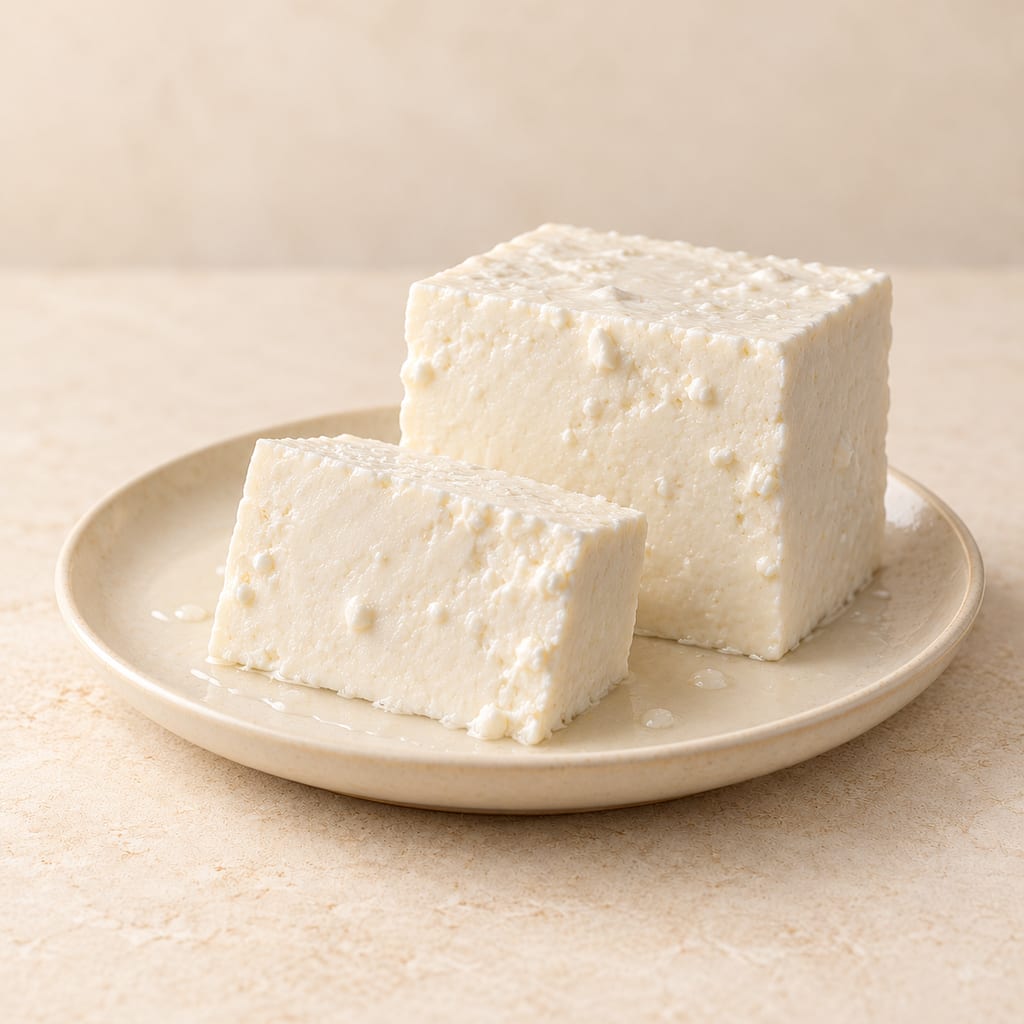
Beyaz peynir
Beyaz peynir is a Turkish white cheese matured in brine. Sheep milk, alone or mixed with other milks, gives a close-textured cheese cut into blocks and packed in cans.
 FermenteaWhere food goes to change
Coagulants
A liquid milk-coagulating enzyme preparation whose source, activity and formulation vary, used to form curd for cheesemaking.
Liquid rennet is a milk-coagulating enzyme preparation supplied in a liquid form. A small addition can help transform a vat of milk into a curd that can be cut, drained and worked into cheese. The liquid form describes how the preparation is supplied; it does not identify one universal enzyme, strength or source.
The name connects a very old cheesemaking practice with modern enzyme manufacture. Animal extracts, fungal coagulants and fermentation-produced chymosin can all enter the wider trade in milk-clotting preparations. Their origins and compositions differ, even when a cheesemaker measures each as a liquid addition.
Rennet is also different from the starter culture beside it on an ingredient list. A starter contains organisms whose growth changes the milk. Rennet supplies enzymes that act on proteins. Many cheeses depend on both activities, but they are not two names for the same ingredient or the same transformation.
James Dinwiddie kept a note on rennet for cheese in 1793. It describes salting and drying a calf's stomach, then using a piece in water before adding the resulting preparation to milk. The note also names pigeon stomach and artichoke flowers as alternatives intended to produce a similar effect.
This places the coagulant among materials that could be prepared and kept for another day's dairy work. The stomach was a source of milk-clotting activity, while the infusion moved that activity into a liquid that could be added to the milk. The preparation was part of the cheesemaker's supply, rather than a cheese in its own right.
The alternatives also reveal a practical search for materials that made milk set. They do not mean that every animal or plant preparation had the same enzyme composition or strength. Nor does the old note establish one origin for cheese or rennet. It is a dated example of someone recording how to obtain and use a coagulant, with the ingredients and assumptions of that period.
An animal rennet extract begins with stomach tissue containing milk-clotting enzymes. The United States' definition describes aqueous extracts from the fourth stomachs, or abomasa, of calves, kids or lambs, and distinguishes extracts from adult animals. That definition concerns specified commercial preparations in one jurisdiction, rather than every product sold under a similar name worldwide.
Chymosin is an important milk-clotting enzyme in these preparations, but an extract need not contain chymosin alone. A specific liquid animal product sold by Home Fermenter lists chymosin and pepsin, together with sodium chloride. Its composition belongs to that product. Another bottle's enzyme balance or carrier cannot be reconstructed from the words liquid rennet.
Colour is similarly limited as a guide. The regulated animal preparations can range from clear amber to dark brown, while an individual supplier can describe a lighter liquid. Appearance can help describe what has been supplied, but it cannot establish the enzyme activity, animal source or suitability for a particular cheese formula.
Microbial coagulants broaden the choice beyond stomach extracts. Browin, for example, identifies Rhizomucor miehei as the source of one liquid microbial rennet. Its ingredient declaration also includes sodium chloride and sodium benzoate. The manufacturer describes the product as free from ingredients of animal origin.
Those details demonstrate what a named preparation can tell the cheesemaker: the enzyme source, additional ingredients and a manufacturer's dietary declaration. They do not turn all microbial coagulants into the same formulation. A different fungal enzyme, concentration or carrier needs its own description.
The production organism and the material entering the cheese vat should also be distinguished. An enzyme preparation obtained from a fungus is not an instruction to grow that fungus in the milk as a cheese starter. The product is supplied for its milk-clotting activity. Its place in the method is defined by that activity and the directions for the particular preparation.
Fermentation-produced chymosin takes a different route again. Microorganisms are used to produce the enzyme, which is then recovered and formulated. The fermentation belongs to the manufacture of the coagulant. It does not make the finished preparation a living starter that will perform the same fermentation in a cheese vat.
The United States' definition identifies chymosin preparations made through several specified production organisms, including bacterial, yeast and mould systems. It describes recovery and processing of the enzyme rather than the use of an untreated growing culture as rennet.
This distinction separates the biological source of an enzyme sequence, the organism used to produce it and the final preparation bought by the cheesemaker. They are related pieces of information, but they answer different questions. A product can contain an enzyme associated with an animal while being manufactured through microbial fermentation. Its actual process, formulation and declarations matter more than a guess based on a single familiar word.
Microbial manufacture includes work after the organism has produced the protein. In one specified bacterial route, prochymosin is recovered as an insoluble aggregate, separated from residual cellular material and converted to chymosin through further treatment. In another specified route, a yeast secretes prochymosin into the fermentation broth, from which the enzyme preparation is made.
The contrast shows that fermentation-produced does not describe a single untouched liquid. Production, recovery, activation and formulation are stages between the growing organism and the coagulant supplied for food use. The organism's nutrient medium is not automatically the ingredient list on the finished bottle.
These are descriptions of controlled enzyme manufacture, not household directions for preparing rennet. They explain why knowing the production organism and knowing the final liquid's composition are separate tasks. The recovered enzyme's activity, the preparation's carriers and the manufacturer's declarations still need to be read at the product level.
The small rennet addition starts a change in the milk's own proteins. It does not thicken the vat by adding enough material to make a paste. Instead, the enzyme acts on casein particles already dispersed throughout the milk, allowing those particles to join into a network.
The particles are called micelles. Kappa-casein helps stabilize their surfaces, and chymosin cuts a particular bond in that protein. In bovine kappa-casein, the cut lies between phenylalanine and methionine at positions 105 and 106. Releasing the terminal part changes the surface that had helped keep the particles apart. The sequence around the bond also affects enzyme action; this is a selective reaction rather than indiscriminate destruction of the milk's proteins.
The visible result is a gel that holds water and fat. A pot that began as a pourable liquid can become a mass ready for cutting. Diluting and mixing the rennet, as directed by the particular preparation and cheese method, brings the coagulant into the milk before that network is left to develop. Mixing the addition and later cutting the set curd are separate stages, with different purposes.
An active coagulant still needs milk capable of forming the intended gel. Cutting kappa-casein begins the change, but calcium-ion activity and the mineral material associated with casein particles also influence how those particles aggregate. The curd belongs to a system of milk proteins and minerals, not to the rennet bottle alone.
That distinction helps when comparing the linked cheeses. Beyaz peynir and Kaşar begin with their specified milks and prepare them for coagulation within different sequences of heating, culturing or resting. The same name on the coagulant line does not make those milks or their setting conditions identical. The condition of the milk at the moment of addition is part of each method.
A weak set therefore cannot be diagnosed by counting drops alone. Calcium-binding materials can interfere with gel formation, while changing the mineral balance can change the result. The supporting work established this in defined skim-milk systems. It explains why milk condition belongs in the diagnosis, alongside rennet activity and the method's conditions, rather than supplying an extra calcium dose to add whenever a curd disappoints.
Volume measures the liquid poured out; enzyme activity describes what that liquid can do. Two preparations can occupy the same spoon yet deliver different milk-clotting activity. Read the preparation's strength and the recipe's description together before deciding what its measure means.
Even closely related chymosins have differences that affect their action on milk. Bovine and camel chymosin share a broad protein structure, but differ in surface charge and in the region that accommodates their substrate. Attached sugar groups and terminal amino-acid sequences can also affect measured activity. A familiar enzyme name does not make every formulation perform identically.
The practical comparison is therefore between specified preparations, rather than between colours or bottle sizes. The animal and fungal products described here identify their source and formulation; their own directions provide the working measure. Historical methods can be less explicit. The linked cheese accounts record liquid rennet in both mass and volume units, so grams must remain grams and millilitres remain millilitres. Where activity is unstated, that missing specification should remain visible instead of being replaced with an invented conversion or a standard number of drops.
In Daani, the milk's natural flora acidifies the milk before coagulation, which is obtained only partly through rennet. In Tulum, yogurt culture is introduced alongside the later liquid rennet addition. These sequences show why starter and coagulant both belong on a cheese ingredient list: microbial growth changes the milk while the enzyme helps it set.
The order gives the additions their context. A starter needs the conditions specified for the organisms and the cheese. Rennet encounters the milk after the preceding work has already affected it. Moving the coagulant to another stage would change that relationship, even if its quantity were written the same way.
Beyaz peynir, Kaşar and Kefalotyri carry their own combinations of coagulation and curd handling. Their accounts should be read as separate methods, with their milk forms, measurements and sequences intact. The shared liquid ingredient connects them without making them one recipe. It also does not locate the rennet's manufacture: the country associated with a cheese describes where that preparation is documented, rather than where its coagulant was necessarily produced.
The gel produced during cheesemaking retains water and fat within its protein network. Cutting it creates curd pieces, and subsequent handling allows whey to leave. The finished cheese therefore depends on work done after the milk first sets, as well as on the conditions that produced the gel.
A soft mass that can be cut is not yet the texture of every finished cheese. Draining, heating, pressing and salting can produce different structures and moisture contents. Rennet makes an important contribution without determining all of those later outcomes by itself.
This is why a cheesemaking method can devote so much attention to the curd after a small rennet addition. The cook has moved from forming a network to controlling how that network is divided and drained. The enzyme's role and the cheesemaker's mechanical work meet in the same material, but they remain distinct parts of the process.
A useful product description identifies the enzyme source, activity and ingredients, then gives its own dilution, dose and storage directions. A supplier may express activity in a standardized unit while a recipe gives a volume or mass. Both pieces of information belong to understanding the preparation used; neither should be silently replaced by a universal number of drops.
The two named product examples also have different formulations. One animal preparation lists no preservative; the fungal product lists sodium benzoate. Both give directions for keeping the opened or stored liquid refrigerated and sealed. Those declarations support following the particular label, rather than inventing one shelf life for all liquid rennets.
The same care applies to dietary and allergen information. Animal source, production route and carrier ingredients are product questions. The generic ingredient name alone does not settle them. Use the actual preparation's declaration, and retain the recipe's milk specification and handling controls: forming a curd is the purpose of the coagulant, not evidence that the complete cheese process has controlled its hazards.
Enzyme source, carriers and product-specific allergen information depend on the preparation.
The manufacture and supply origins of liquid rennet in the linked cheese methods are not identified. Countries of cheese production do not establish the coagulant’s origin.
Beyaz peynir is a Turkish white cheese matured in brine. Sheep milk, alone or mixed with other milks, gives a close-textured cheese cut into blocks and packed in cans.
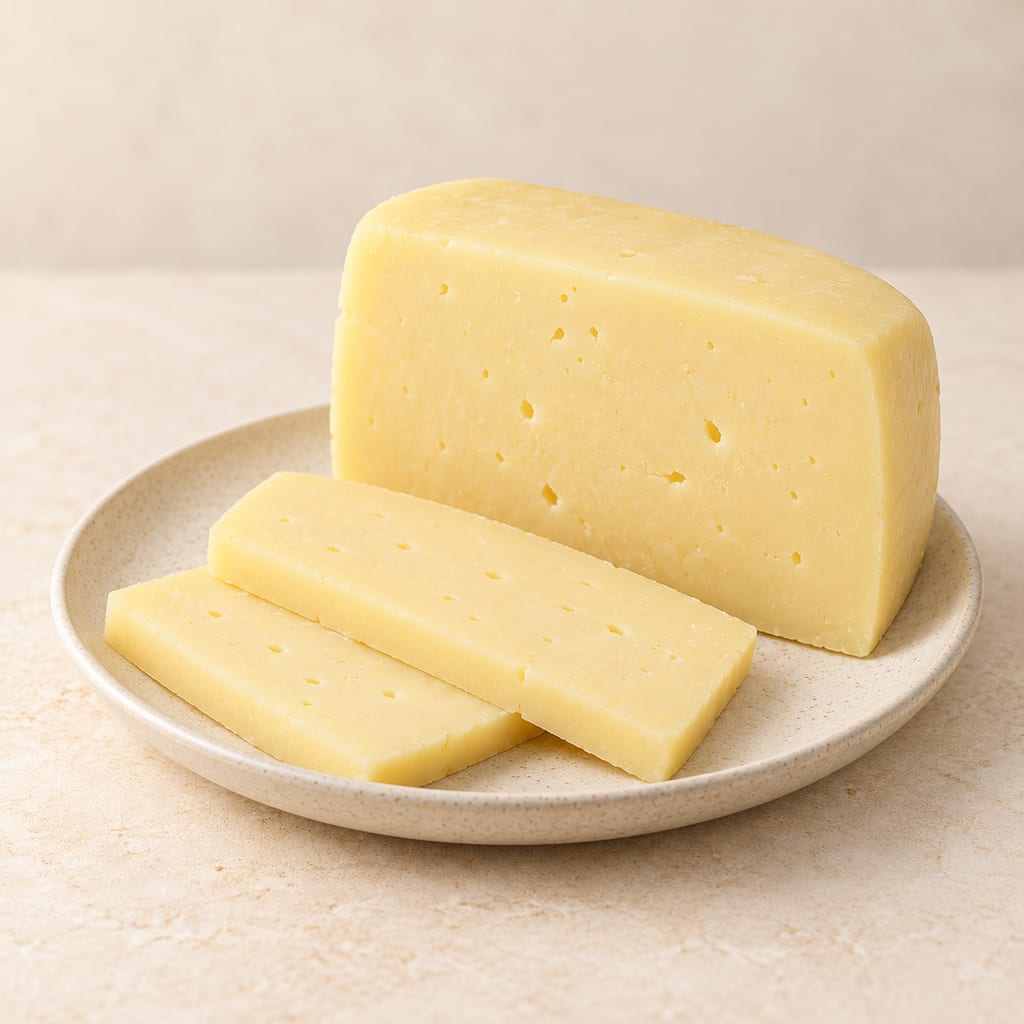
Kaşar peyniri is a Turkish stretched-curd cheese. This entry documents a traditional raw-milk process described by the FAO and its regional history; it is not a home cheesemaking recipe.
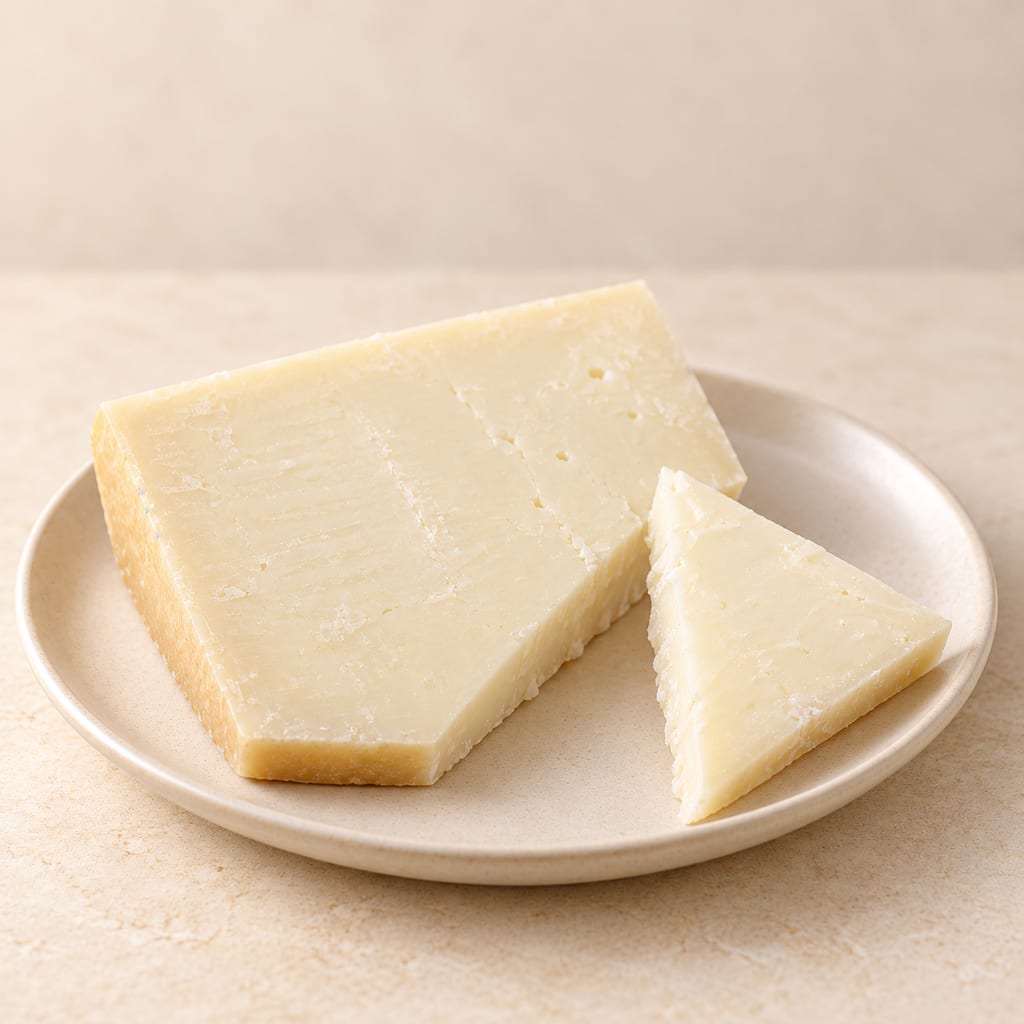
Kefalotyri is a hard sheep-and-goat-milk cheese made in Cyprus as well as Greece. This Cypriot method cooks and presses the curd, then brines, coats and matures the cheese.
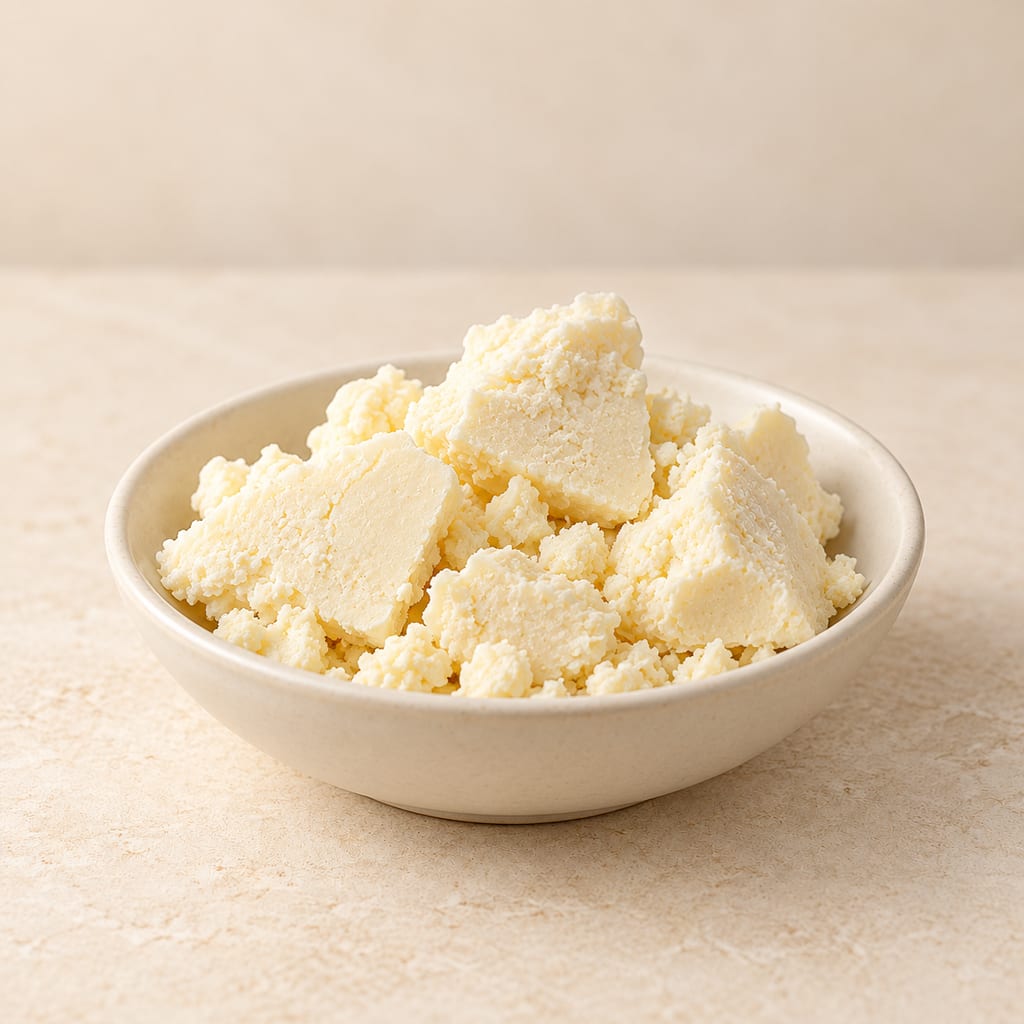
Tulum peyniri is a Turkish cheese traditionally packed into animal-skin bags to mature. This sheep-milk method adds a thermophilic yogurt culture before renneting, draining and dry salting.
No community contributions have been published for this entry yet.
Sign in to contribute. Published comments and photos are free to read.
New Mexico State University
Making Homemade Cheese, Guide E-216Coagulating enzyme versus bacterial culture, curd network and later cutting, draining, heating, pressing and salting. These operations do not establish safety by curd formation.
Cited in: The liquid that helps milk set; From a spoonful to a whole vat; Setting is the beginning of curd handling
Early Modern Maritime Recipes; Dalhousie University Archives and Special Collections, MS-2-726
Rennet for CheeseManuscript transcription describes salted and dried calf stomach infused in water, and names pigeon stomach and artichoke flowers as alternatives. A dated note, not first origin or current preparation advice.
Cited in: A stomach extract in a household note
Office of the Federal Register / Food and Drug Administration
21 CFR 184.1685: Rennet (animal-derived) and chymosin preparation (fermentation-derived)US definition of animal extracts and specified fermentation-produced chymosin routes, enzyme recovery and activation. Jurisdiction-specific identity description, not a universal product specification or legal advice.
Cited in: The liquid that helps milk set; Animal rennet carries more information than its colour; Fermentation can manufacture the enzyme; Recovering an enzyme is part of making the preparation
Home Fermenter
Liquid Animal RennetOne product lists chymosin, pepsin and sodium chloride, a light clear liquid, no preservative and sealed refrigerated storage. Product-specific comparison; no dose or shelf-life recommendation transferred.
Cited in: Animal rennet carries more information than its colour; Match the bottle's activity to the method; Read the bottle as well as the recipe
Browin
Liquid microbial rennet strong, 30 ml, symbol 411209One product names Rhizomucor miehei, sodium chloride and sodium benzoate, a manufacturer vegetarian declaration, and sealed refrigerated storage after opening. Not all microbial formulations.
Cited in: A fungal coagulant is another kind of preparation; Match the bottle's activity to the method; Read the bottle as well as the recipe
Biochimica et Biophysica Acta 438(1),265–272
Peptide substrates for chymosin (rennin). Kinetic studies with peptides of different chain length including parts of the sequence 101–112 of bovine k-caseinChymosin-sensitive Phe105–Met106 bond and model-peptide evidence that surrounding sequence affects enzyme action.
Cited in: From a spoonful to a whole vat
Journal of Dairy Science 84(7),1569–1575
Effects of mineral salts and calcium chelating agents on the gelation of renneted skim milkDefined skim-milk experiments linked gelation to calcium-ion activity, micellar mineral material and casein; no experimental dose or repair procedure generalized.
Cited in: The milk must build the network
Acta Crystallographica D 69,901–913
Camel and bovine chymosin: the relationship between their structures and cheese-making propertiesEnzyme cleavage mechanism, recovered chymosin preparations produced in Aspergillus niger, structural/charge differences and variant-dependent activity; scoped to the studied enzymes.
Cited in: Fermentation can manufacture the enzyme; From a spoonful to a whole vat; Match the bottle's activity to the method
Food and Agriculture Organization of the United Nations
The technology of traditional milk products in developing countries, traditional cheese methodsDifferent methods combine rennet with microbial acidification or starters. Daani, Tulum, Beyaz peynir, Kaşar and Kefalotyri uses; individual quantities/units retained on recipes, not category-wide instructions.
Cited in: The milk must build the network; Match the bottle's activity to the method; Starter and coagulant meet in the same milk