Liquid rennet
A liquid milk-coagulating enzyme preparation whose source, activity and formulation vary, used to form curd for cheesemaking.
 FermenteaWhere food goes to change
Traditional method
Tulum peyniri
Tulum peyniri is a Turkish cheese traditionally packed into animal-skin bags to mature. This sheep-milk method adds a thermophilic yogurt culture before renneting, draining and dry salting.
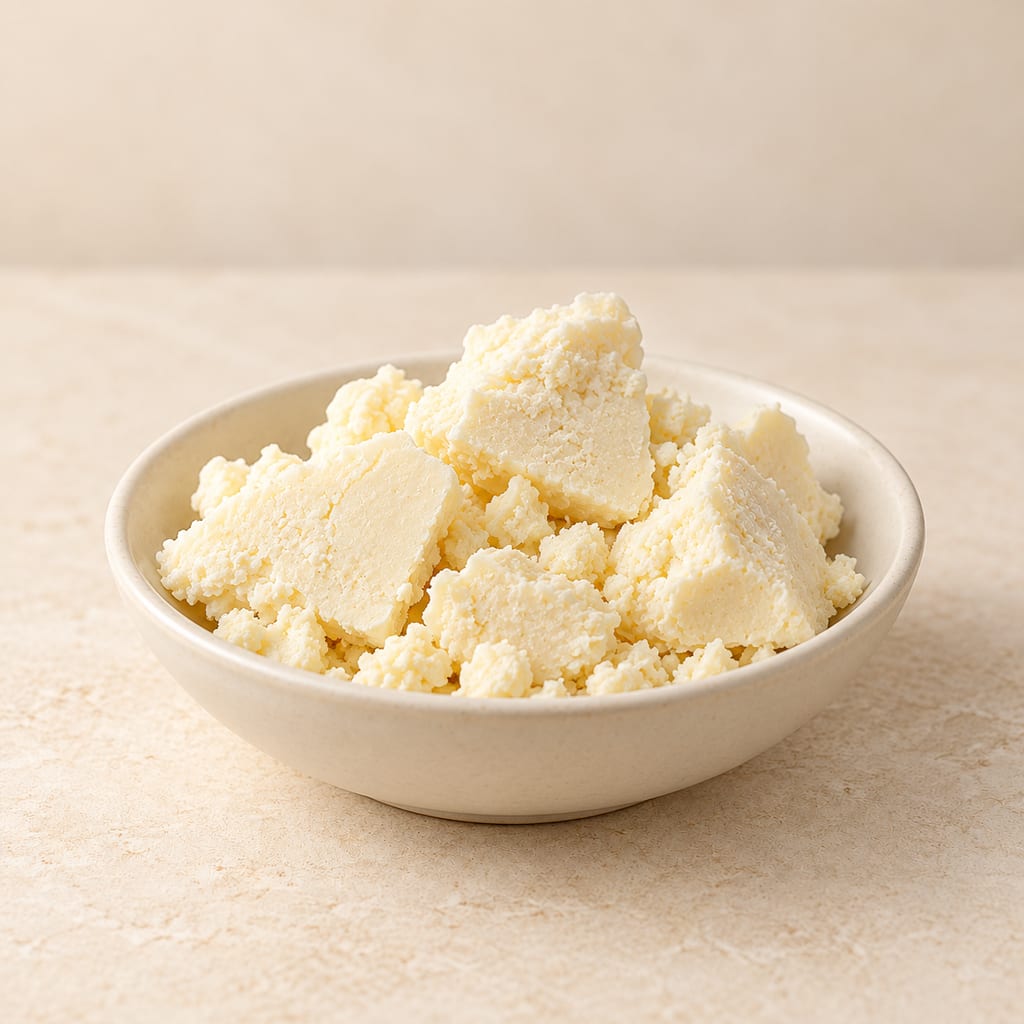
Tulum peyniri takes its name from the skin bag in which the cheese matures. It belongs to a varied Turkish tradition: milk, curd treatment, salting, packaging and ripening differ between regions. Skin bags have increasingly given way to drums and tins where their preparation is difficult. The yogurt-cultured method here uses goatskin for a cold maturation.
Scaling: source batch only
Fresh cheeses can carry Salmonella, pathogenic E. coli, Listeria monocytogenes, or Staphylococcus aureus; handling after heating can reintroduce contamination.
Hazard sourceAnimal-skin packaging must be free of zoonotic infection and must not contaminate the cheese with heavy metals or foreign matter.
Hazard sourceUse pasteurized milk for home cheesemaking, sanitize contact surfaces and equipment, wash hands and handle and cool curds hygienically.
Control sourceUse a clean, dry skin free of zoonotic infection and contaminants.
Control sourceRaw milk can carry pathogens; use pasteurized milk for home cheesemaking. Wash hands, sanitize equipment and contact surfaces, and prevent contamination during curd handling and cooling.
Skin bags can introduce contamination. Use skins free of zoonotic infection, clean and dry, and prepared so that heavy metals and foreign matter cannot contaminate the cheese.
Thermophilic yogurt culture — Starter added at the reported 1% rate; source does not identify species or strains.
Anaerobic maturation in a goatskin bag at 6–8°C for 90–120 days; humidity is not stated.
FAO reports Turkey as production area and origin unknown; no locality is inferred.
A liquid milk-coagulating enzyme preparation whose source, activity and formulation vary, used to form curd for cheesemaking.
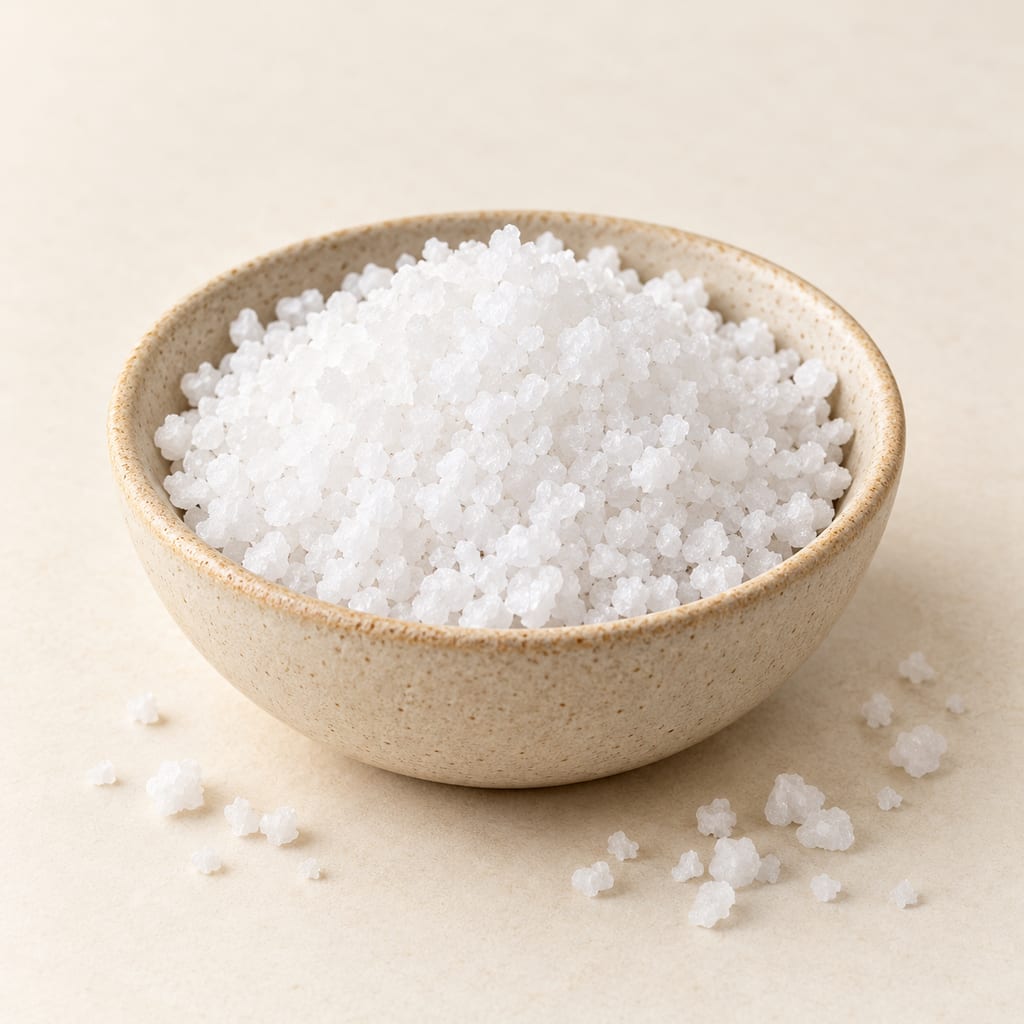
Food-grade sodium chloride seasons food and changes water movement in brines and cures; crystal size and the recipe's measurement method matter.
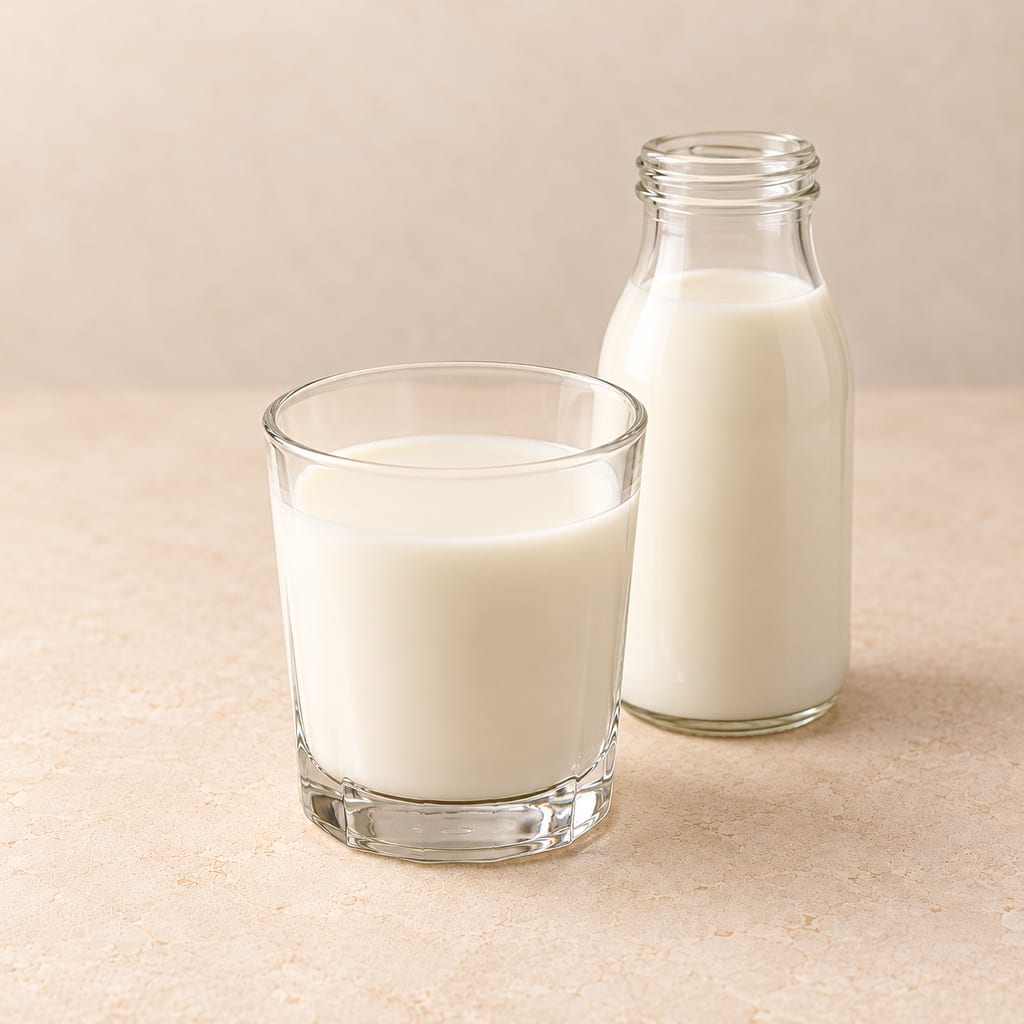
Milk from a ewe, used in cheese and cultured dairy foods. Its protein, fat and solids vary with the animal and season; it contains lactose and milk allergens.
A living starter for warm milk fermentation, supplied as a concentrated culture or maintained in milk. Yoghurt cultures also have documented cheese applications.
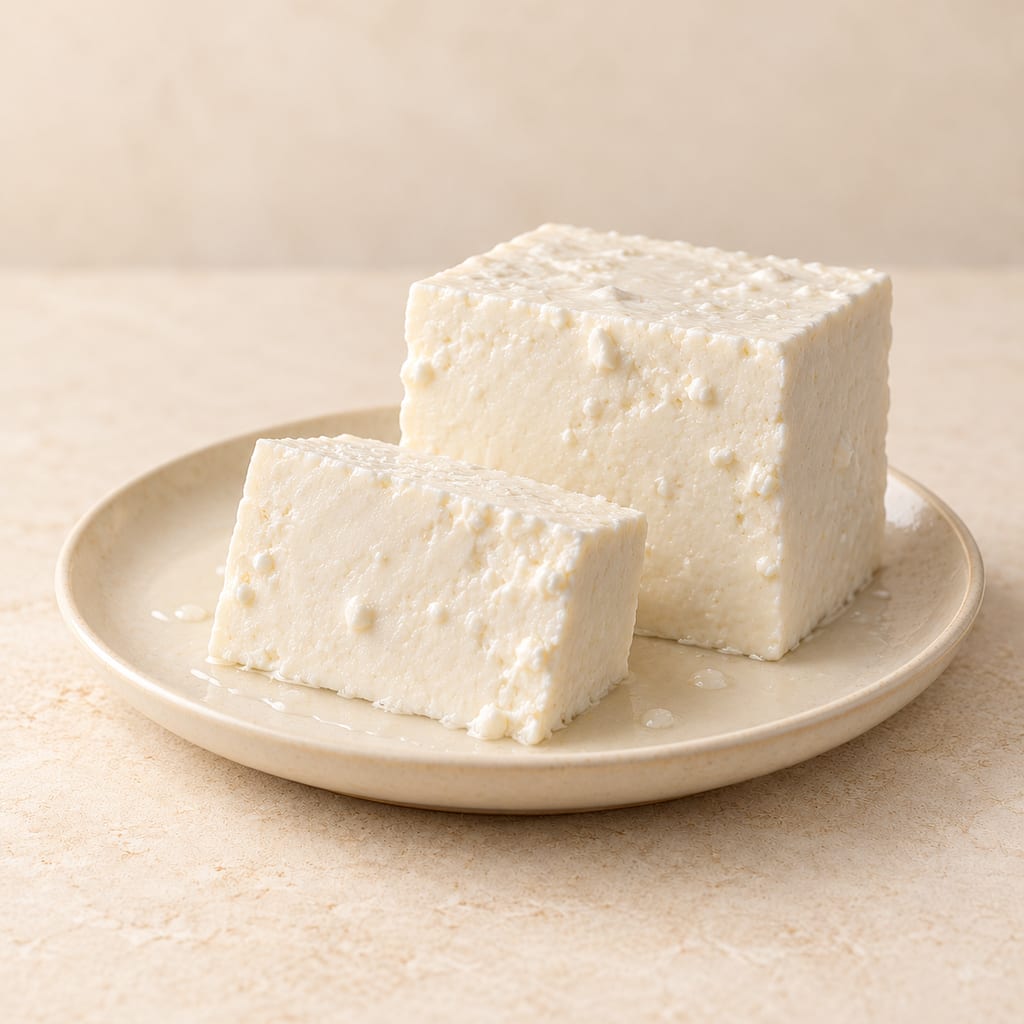
Beyaz peynir is a Turkish white cheese matured in brine. Sheep milk, alone or mixed with other milks, gives a close-textured cheese cut into blocks and packed in cans.
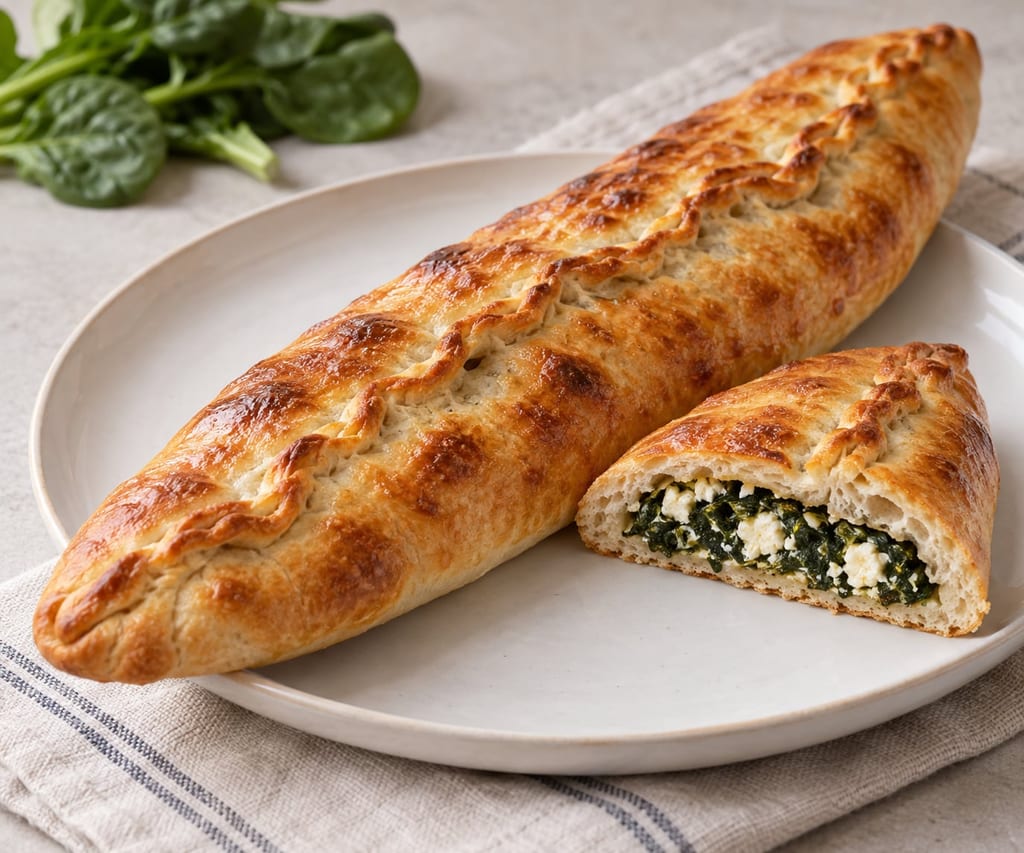
Turkish home-style yeast dough is shaped into closed boats around spinach and cheese, then baked hot until the crust is golden.
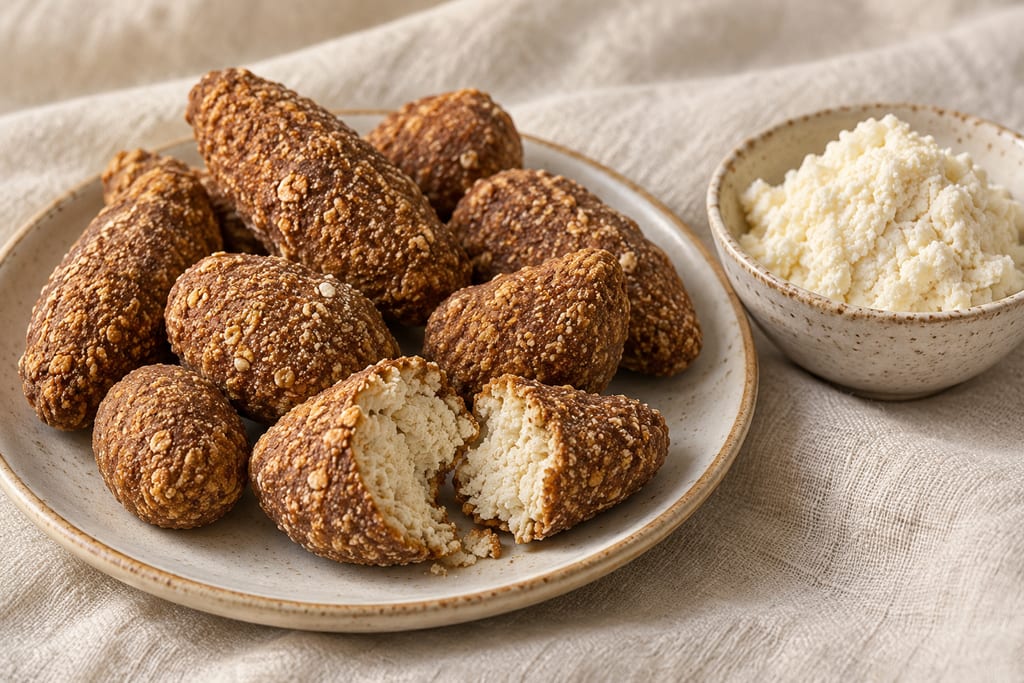
A two-stage Altai dairy preparation: sour chegen is heated into soft aarchi, then portions are drained, pressed and traditionally smoked into firm kurut.
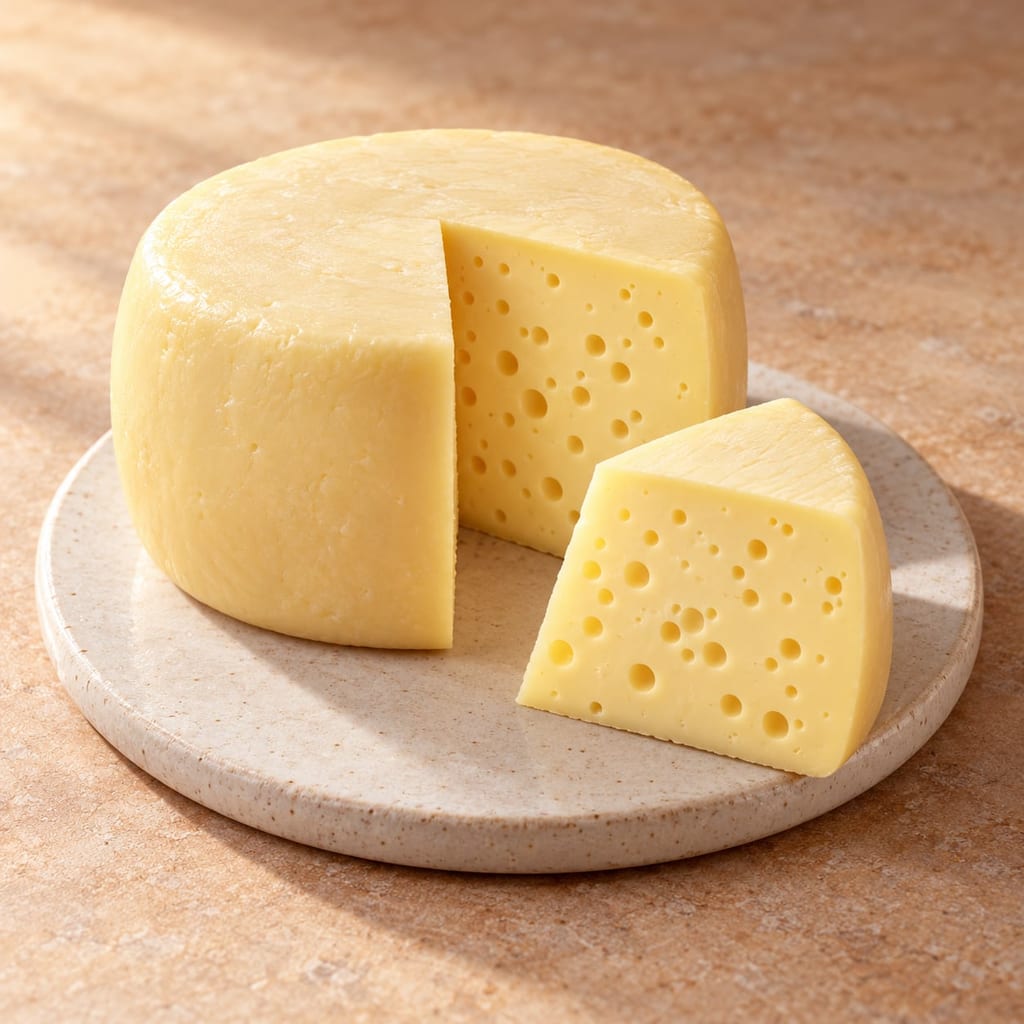
A washed-curd cheese with propionic bacteria, warmed by hot water in two steps and then held in a warm room for weeks so the bacteria can form its holes.
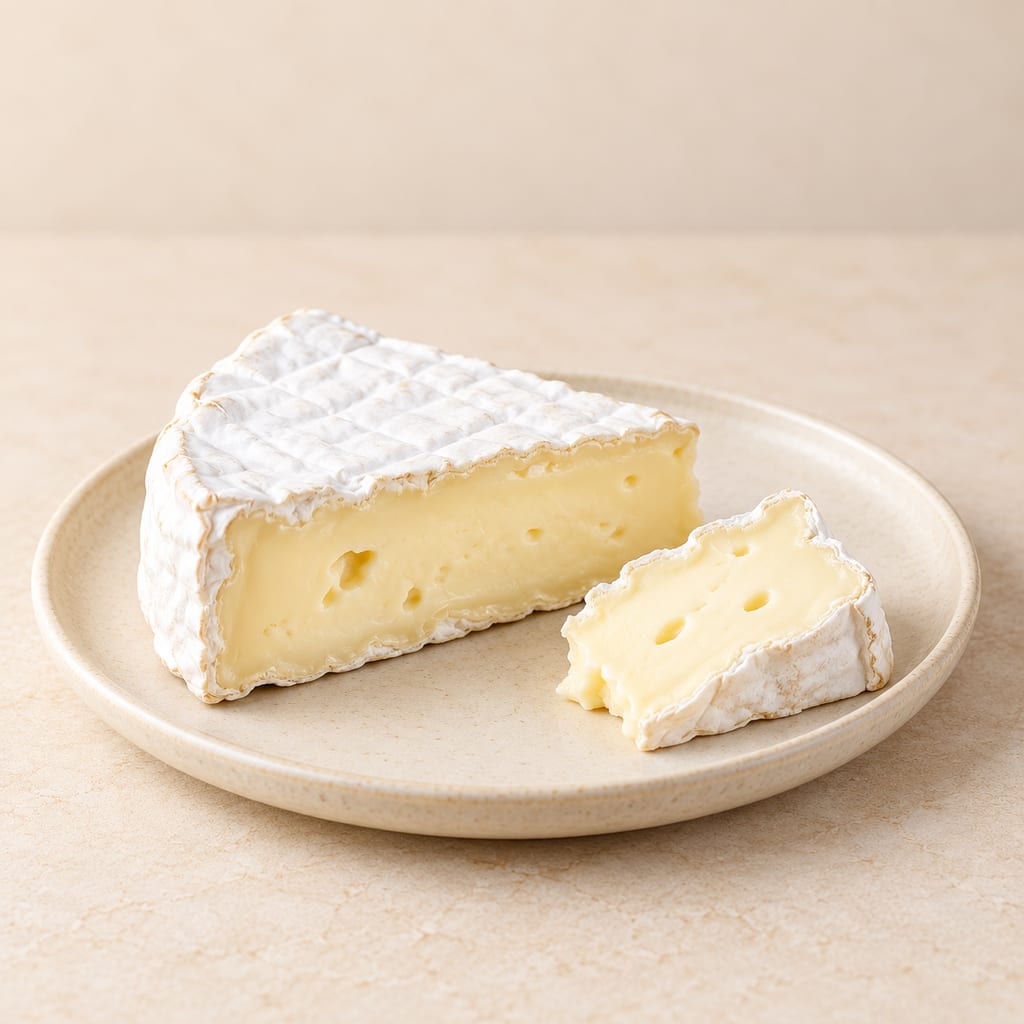
A cream-enriched Brie with a white bloomy rind and a softening center, made from pasteurized milk with lactic and surface cultures.
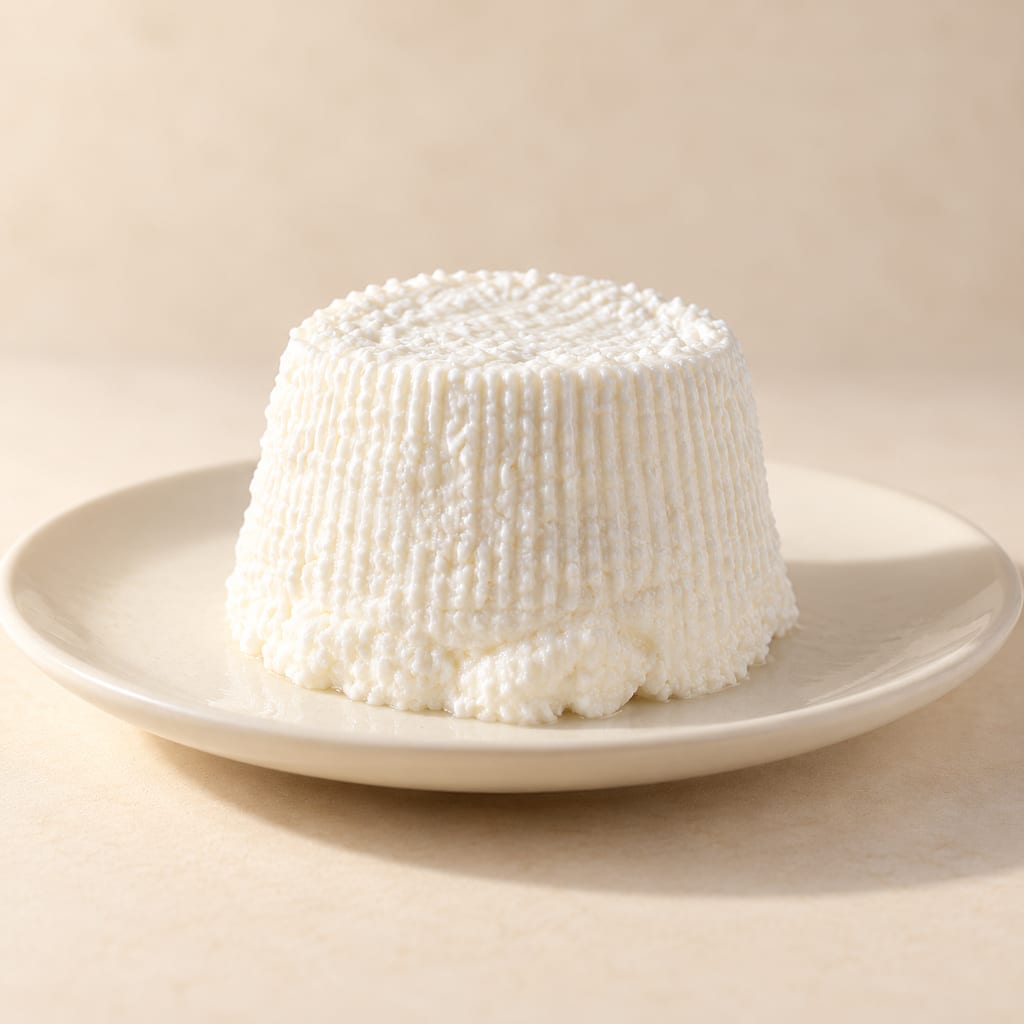
Corsican Brocciu is a whey cheese made by heating sheep's or goat's whey with whole milk and salt, then gently draining the flocculated curds. It is eaten fresh or salted and ripened as Brocciu passu.
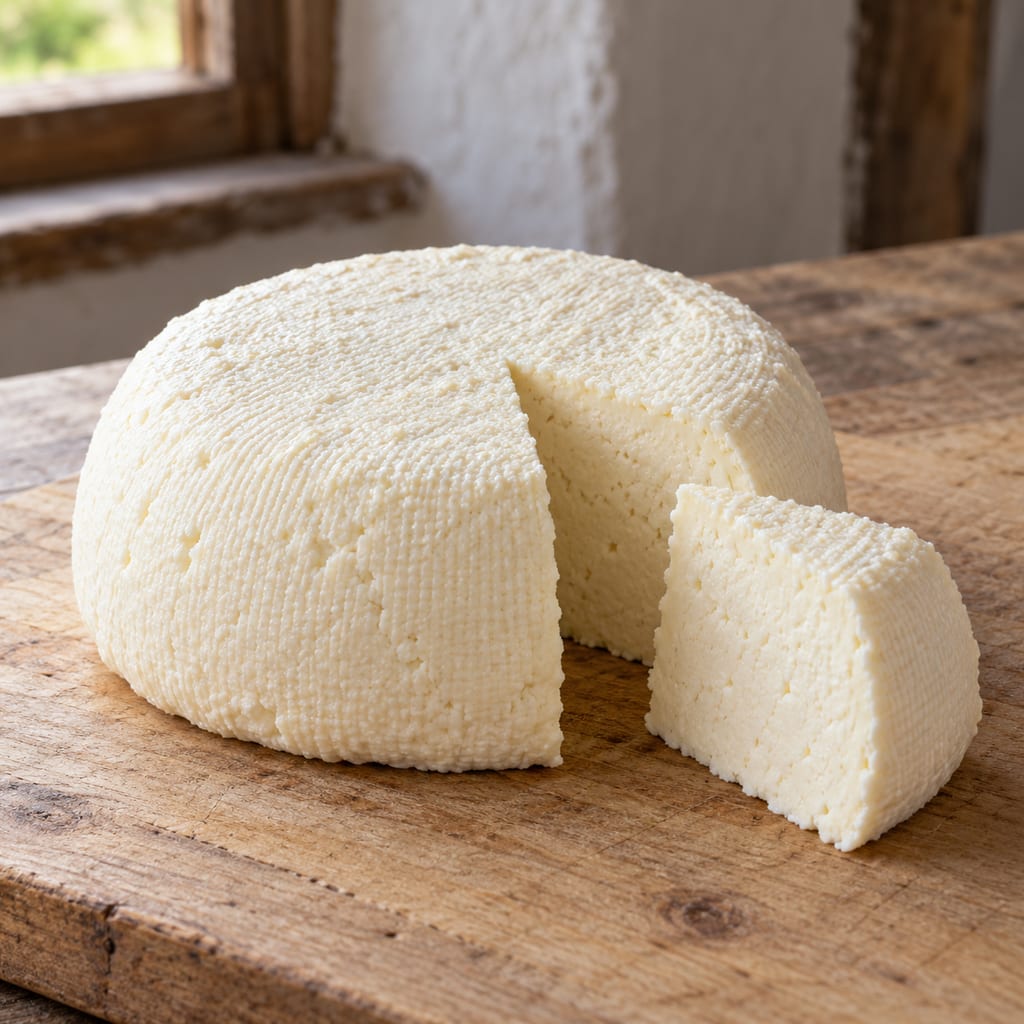
Budz is a traditional Hutsul rennet-set cheese made from sheep, cow or goat milk in the Ukrainian Carpathians, forming a fresh curd that can be eaten, smoked or processed into salted bryndza.
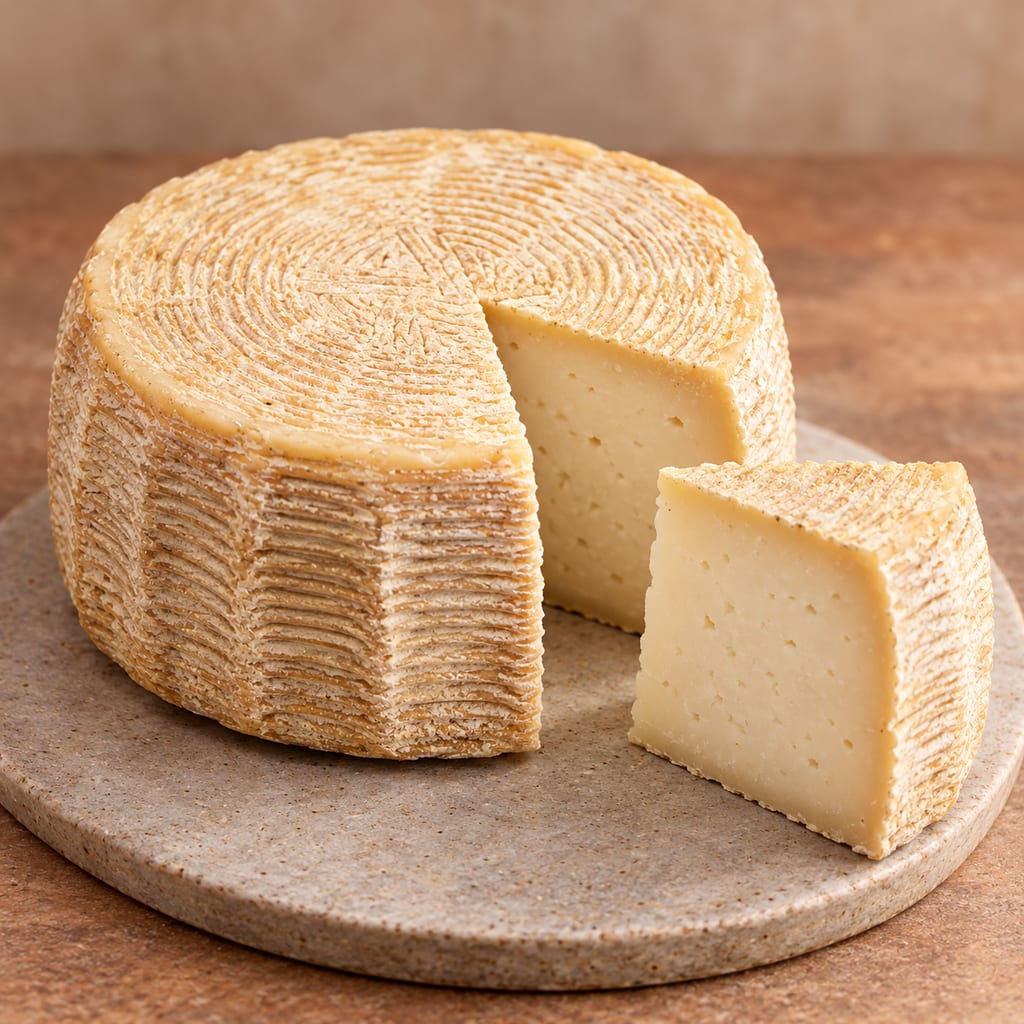
A scalded cheese moulded in baskets and re-cooked in its forms in hot whey, made alongside a ricotta from the same milk, then acidified, brined and aged for months.
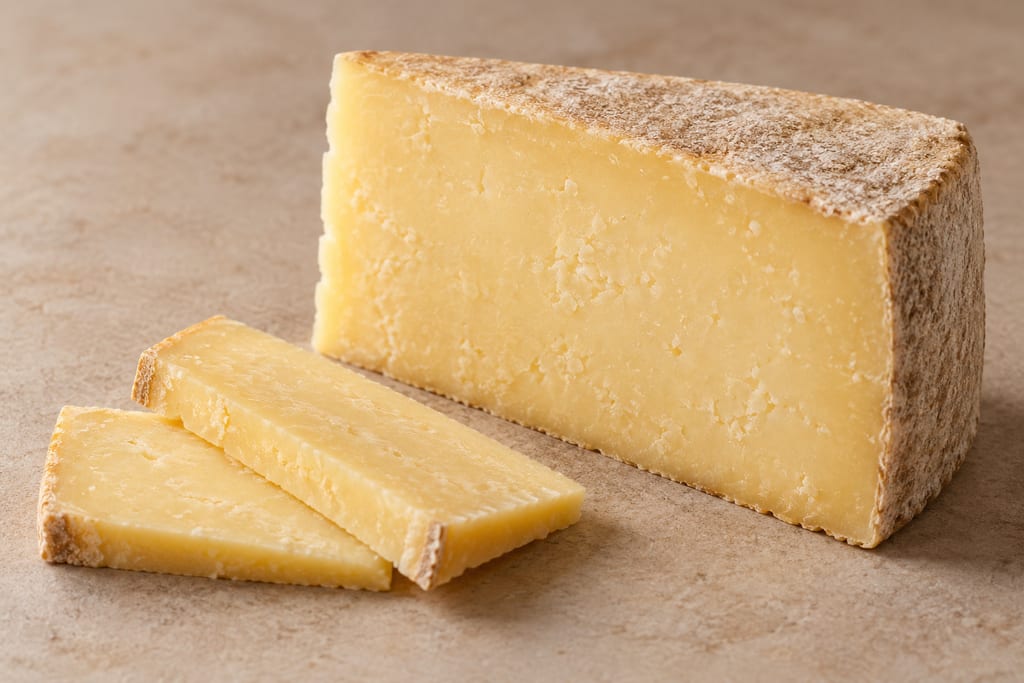
A pressed cheese whose curd is cooked slowly, then cheddared: kept warm in slabs that are turned and stacked for hours before milling, salting and pressing.
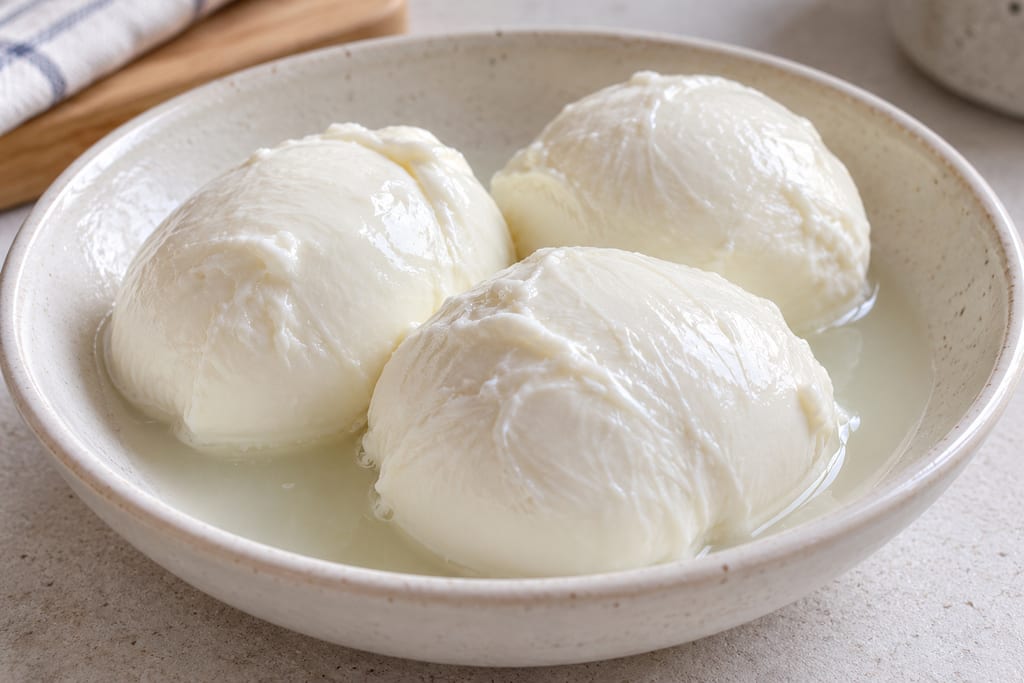
A quick fresh batch uses low-temperature-pasteurized whole milk, citric acid and rennet; the curd is warmed, drained and stretched in hot whey.
No community contributions have been published for this entry yet.
Sign in to contribute. Published comments and photos are free to read.
FAOProcess
The technology of traditional milk products in developing countriesTulum peyniri source states unknown origin, Turkish production, milk species, 1% starter, rennet dose and setting conditions, curd treatment, source salt range, rumen packing and ripening.
New Mexico State University ExtensionSafety
Making Homemade CheeseRaw-milk pathogen and handling context; not validation of the Tulum method.
Tarım ve Orman DergisiHistory · Identity
Ülkemize özel bir değer: Tulum peyniriInterview with Ayşe Gürsoy: skin-bag name, regional variation, traditional skin packaging and its replacement by other materials.
Tarım ve Orman DergisiSafety
Yayladan gelen lezzet tulum peyniriTulum skins should be clean, dry, free of zoonotic infection and unable to contaminate cheese with heavy metals or foreign matter.