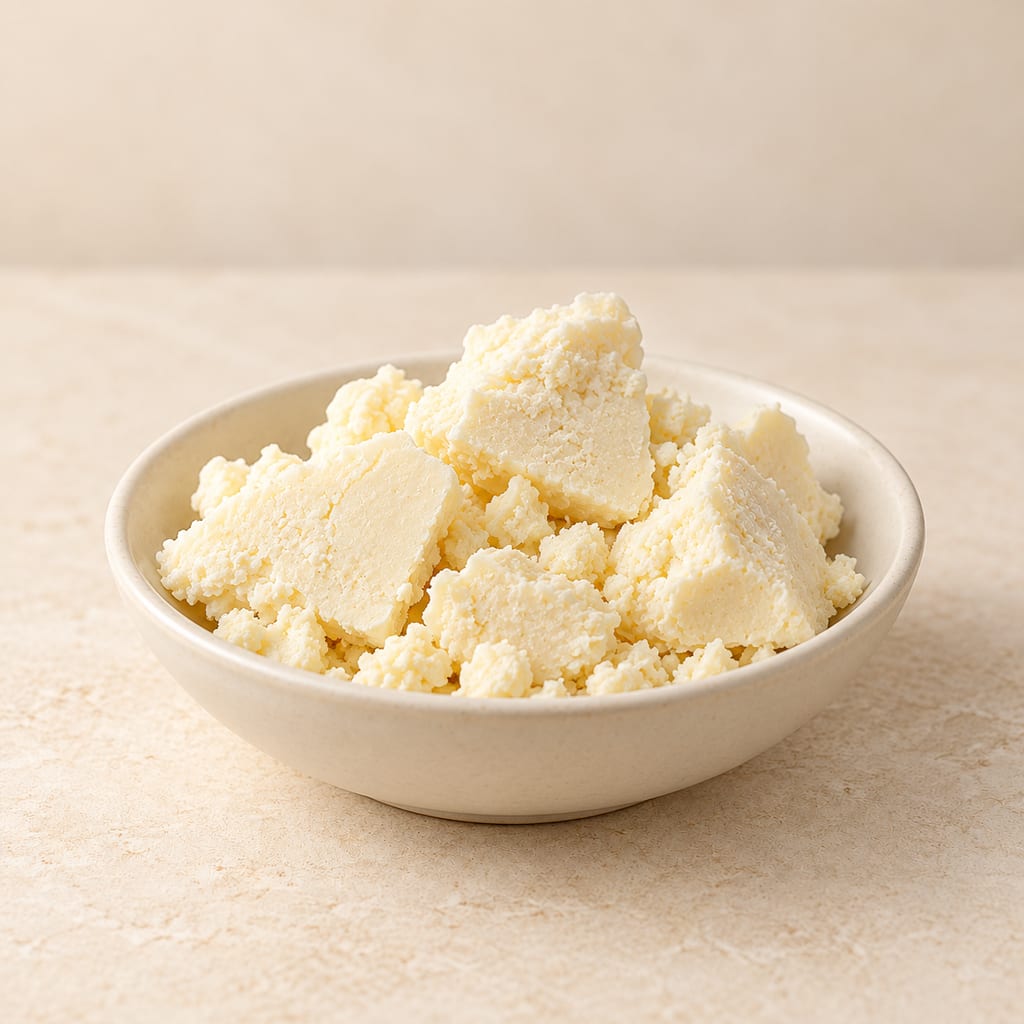
Tulum peyniri, yogurt-cultured method
Tulum peyniri is a Turkish cheese traditionally packed into animal-skin bags to mature. This sheep-milk method adds a thermophilic yogurt culture before renneting, draining and dry salting.
 FermenteaWhere food goes to change
Cultures
A living starter for warm milk fermentation, supplied as a concentrated culture or maintained in milk. Yoghurt cultures also have documented cheese applications.
Thermophilic yoghurt culture is a living inoculum used to begin a milk fermentation. It can arrive as a concentrated commercial preparation or be maintained in a dairy medium. The ingredient introduces organisms into another batch; the yoghurt or cheese made with it is a separate food.
Thermophilic describes a preference for comparatively warm fermentation conditions. It distinguishes this culture family from mesophilic starters used for other dairy products. It does not identify a brand, a single strain, an exact dose or a temperature suitable for every application. Those details belong to the particular culture and the food being made.
This distinction matters when a cheese recipe names yoghurt culture as an ingredient. The starter may begin its work in milk that will later be set with rennet, cut and drained. Its job is then part of a cheesemaking sequence, rather than simply turning the whole vat into yoghurt for eating.
In 1905, Stamen Grigorov described Bulgarian kissélo-mléko and the household use of a little previously fermented milk to start another batch. The carried-over starter was called podkvassa. This practice joined one day’s milk to the next through a living culture, with the household maintaining continuity by inoculation.
His experiments separated three organisms from the sour milk. He called them bacille A, microcoque B and streptobacille C, describing their appearance and behaviour with the laboratory methods available to him. Each could acidify milk, but their activity differed. Milk fermented separately with the isolates developed different degrees of sourness over time.
He also tested whether acid itself could account for coagulation. Adding lactic acid to milk produced a set, supporting his conclusion that the isolated organisms coagulated milk through acidification. The distinction mattered: microorganisms could change the protein system by producing acid rather than supplying an enzyme equivalent to rennet.
Finally, Grigorov combined cultures of the three isolates in milk. He reported a sour milk matching the appearance, consistency and taste of the household product made with podkvassa. The mixed inoculation connected the food’s familiar qualities with the activity of several microorganisms rather than one visually identifiable organism.
These observations belong to a particular historical investigation of Bulgarian sour milk. The lettered isolates cannot be assigned present-day species or strain identities simply from their shapes and reported behaviour. The study records a household practice and an experimental approach to its microbial community; it does not establish the composition of every later yoghurt starter or a single invention place for all fermented milk.
The household procedure Grigorov described began with heated whole milk that was allowed to cool before inoculation. The maker then insulated the vessel to slow its loss of heat. Maintaining warmth was part of cultivating the starter, rather than a decorative detail of serving the food.
He described a compact white set with little visible whey while it remained intact. This connects the culture’s acid production with a recognizable food structure: the undisturbed gel held liquid that later handling could release. Season affected how quickly the household preparation set, even within the practice he was observing.
The account helps explain why a starter cannot be understood apart from its vessel, milk and temperature history. Carrying forward fermented milk supplied organisms; preparing and insulating the next milk created their growing environment. Those are historical observations of a complete household technique, not a replacement for a present-day product’s instructions. The starter’s continuity depended on both the material transferred and what happened to it after transfer.
A conventional defined yoghurt culture combines Streptococcus thermophilus with Lactobacillus delbrueckii subsp. bulgaricus. Their association is more than two organisms using the same sugar. Milk supplies abundant protein, yet relatively little of the small nitrogen-containing material needed for rapid bacterial growth is immediately available.
Proteolysis breaks casein into smaller peptides and amino acids. The lactobacillus can make such material available to its companion. In the other direction, the streptococcus can supply compounds that support the lactobacillus’s metabolism. The partners therefore alter one another’s surroundings as they grow in milk.
Work with S. thermophilus CNRZ1066 and L. bulgaricus ATCC BAA-365 supports a model involving formic and folic acids supplied by the streptococcus and amino-acid release through lactobacillus proteolysis. Their cooperation was still constrained by particular nutrient demands. A mixed culture can improve growth without removing every limitation in its milk environment.
A species name leaves room for substantial differences between strains. One Streptococcus thermophilus strain may possess a useful casein-breaking enzyme that another lacks. Its contribution to a mixed starter then depends partly on what its lactobacillus companion can already provide.
The cell-envelope protease PrtS illustrates this. In comparisons involving S. thermophilus KLDS SM and KLDS3.1012 with L. bulgaricus L7 and L12, the presence of PrtS helped explain differences in growth, acid production and behaviour during cold storage. The results depended on the combination, including the proteolytic strength of the accompanying lactobacillus.
For a dairy maker, this gives substance to the choice between cultures bearing the same two species names. A formulation selected for one acidification pattern need not behave like another. Substitution changes a biological partnership, not merely a line on the ingredient list. Product-specific instructions and the intended dairy preparation remain necessary even when the familiar species pair appears on both labels.
As the bacteria use lactose, lactic acid accumulates and the milk’s pH falls. Casein particles respond by aggregating into a network. The liquid acquires the soft gel structure recognized in yoghurt. The culture provides the biological acidification; the milk supplies the material that becomes the gel.
Texture also reflects what happened before and after inoculation. Milk heat treatment and composition affect the protein system, while stirring breaks a set gel into a different physical form. A firm-set pot, a stirred yoghurt and a drinkable product can therefore share a culture family while receiving different treatment.
Concentration creates another distinction. Removing liquid produces a denser fermented dairy food without making the starter itself a new organism. Culture selection, milk preparation, fermentation and later handling work together. Explaining only the bacteria would leave out the physical steps that determine how the food sits on a spoon or pours from a vessel.
Yoghurt’s tartness comes with volatile compounds that give it a recognizable aroma. Acetaldehyde is an important contributor, alongside other carbonyl compounds. Its production can vary among strains, so equal-looking acidity does not imply an identical aroma profile.
One pathway in Streptococcus thermophilus connects the amino acid threonine with glycine and acetaldehyde through an enzyme that also participates in serine metabolism. Experiments disrupting the gene glyA removed acetaldehyde formation in the tested mutants; increasing its expression increased production under the experimental conditions. This links a characteristic food aroma to specific bacterial enzyme activity.
It does not turn a laboratory intervention into a household ingredient suggestion. The useful lesson for choosing a starter is that flavour formation depends on biological capabilities as well as the milk and fermentation conditions. A culture selected for rapid acidification and another selected for aroma need not offer the same balance of properties.
Some yoghurt bacteria produce extracellular polysaccharides, long sugar-based molecules outside their cells. These can contribute to the viscous character of cultured milk. They are a different contribution from the acid-driven casein network, even though both become part of the texture perceived in the finished food.
In the CNRZ1066 and ATCC BAA-365 pairing, mixed cultivation increased expression of genes associated with these polymers, and the researchers also measured more polymer in the mixed culture than in either individual culture. The increase was smaller than the increase in total bacterial biomass. Culture interaction therefore changed several aspects of growth at once rather than simply scaling every product in proportion.
A documented Turkish Tulum method names thermophilic culture, with yoghurt in parentheses, as its starter. The milk is sheep milk alone or a mixture with goat or buffalo milk. Rennet then coagulates the milk, after which the curd is cut, heated and drained before breaking, dry salting and packing for ripening.
That sequence gives the starter a place alongside an enzymatic set and extensive curd handling. It does not identify a commercial packet or establish that a particular modern two-species blend was used. The source leaves its exact starter species, strain balance and preparation unrecorded.
The Turkish association belongs to this documented cheese use. The account explicitly leaves Tulum’s precise origin and history unknown. Neither the cheese’s production country nor the word thermophilic establishes where its starter organisms originated. The method also describes untreated milk and later ripening; those historical process details do not establish a complete current pathogen-control plan.
Dairy starters are supplied in frozen concentrates and freeze-dried forms as well as being propagated in milk. Concentrated direct-inoculation products enter the working milk without the separate mother-culture stage. The choice changes where the preparatory cultivation takes place and how the dairy measures its inoculum.
Current commercial offerings distinguish cultures intended for stirred yoghurt, drinkable yoghurt and some cheeses. A supplier may offer different rotations within a line and sachets sized for a particular milk volume. These are selected formulations with their own instructions, rather than a universal powder that can be measured identically for every food.
An active liquid starter is different again. Its volume includes milk and the population grown within it. A concentrated packet cannot be converted into a liquid starter dose by comparing their volumes. Use the format specified for the actual method, with the manufacturer’s instructions for that product.
Maintaining a mother culture involves repeated growth and transfer. Clean equipment, the right milk, temperature control and timely handling all affect the organisms that survive and multiply. Keeping a culture is therefore an ongoing dairy operation, rather than storage of an inert seasoning.
Contaminating yeasts or moulds can interfere with starter production. Bacteriophages, viruses that infect bacteria, can also disrupt susceptible cultures. In commercial practice, culture management includes attention to these biological problems alongside cleaning and inoculation. A failed acidification may reflect several different causes rather than an automatically correctable shortage of starter.
For a purchased preparation, read the actual label or technical sheet for storage, opening, dose and direct-addition instructions. The broad name thermophilic yoghurt culture does not supply its carrier, allergen declaration or storage life. Milk used to maintain a liquid culture is itself a milk ingredient; a commercial powder’s composition must be checked product by product.
Choose the culture for the food and its documented process. Fermentation temperature affects growth, while milk treatment and later curd work affect what that growth produces. Rennet and starter remain different ingredients even when the same vat needs both.
Dairy handling must also control contamination and follow the required cooking and cooling sequence. The starter’s ability to acidify milk does not replace those tasks. A culture is useful because it introduces selected living activity into a prepared material; the complete yoghurt or cheese method must still explain how that activity fits with the rest of the food’s production.
Carrier and allergen composition depend on the product. A culture maintained in milk contains milk.
Thermophilic culture (yoghurt) is used in the documented Tulum method; this does not establish starter origin.
The Tulum account gives no exact starter identity or geographic origin.
Tulum peyniri is a Turkish cheese traditionally packed into animal-skin bags to mature. This sheep-milk method adds a thermophilic yogurt culture before renneting, draining and dry salting.

Black carrot is the anthocyanin-pigmented Eastern carrot (Daucus carota var. atrorubens), the purple root that preceded orange types and still colours kanji and şalgam.
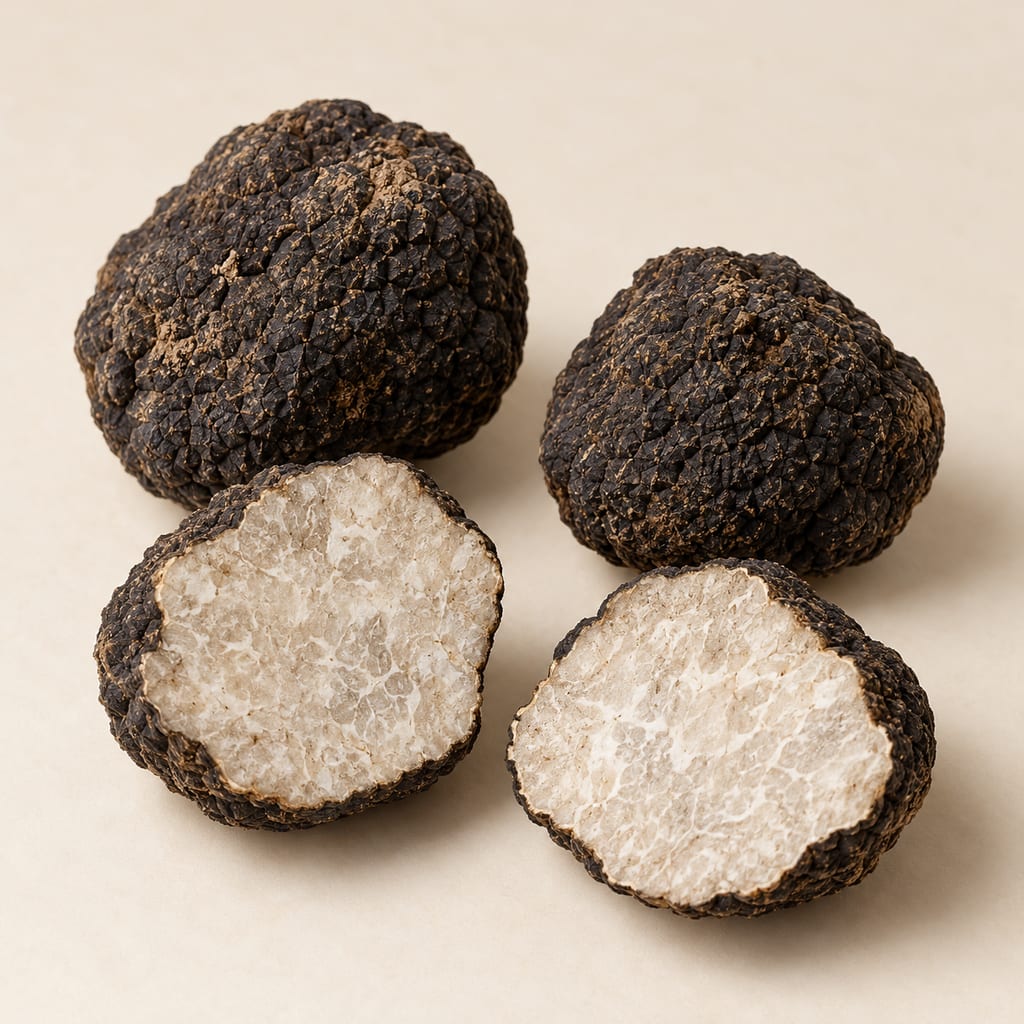
The black desert truffle, catalogued as Picoa juniperi, is a subterranean fungus gathered wild in arid and semi-arid lands. Eastern Anatolian households eat it, usually fried with eggs.
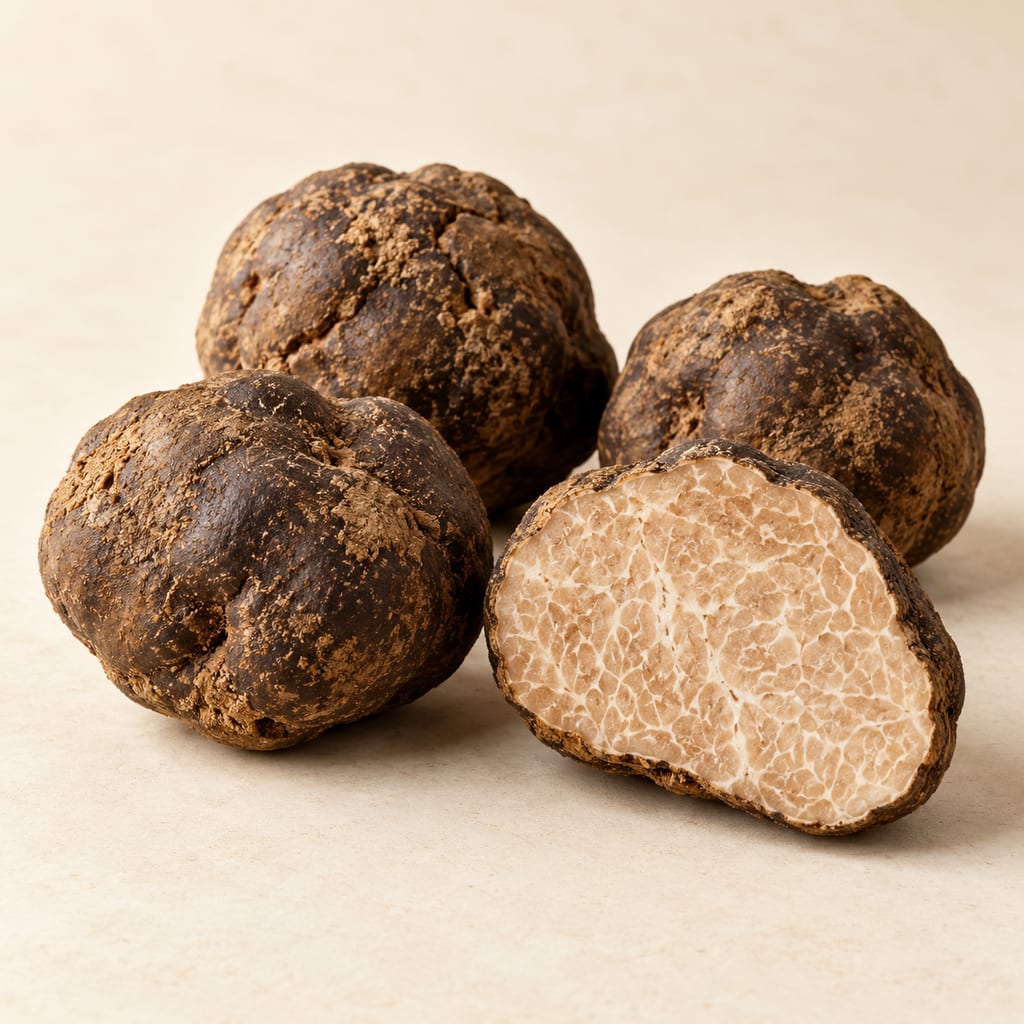
The brown desert truffle, Terfezia boudieri, is an underground fungus of arid soils around the eastern Mediterranean and North Africa, gathered and sold in Turkey and eaten fried with eggs.
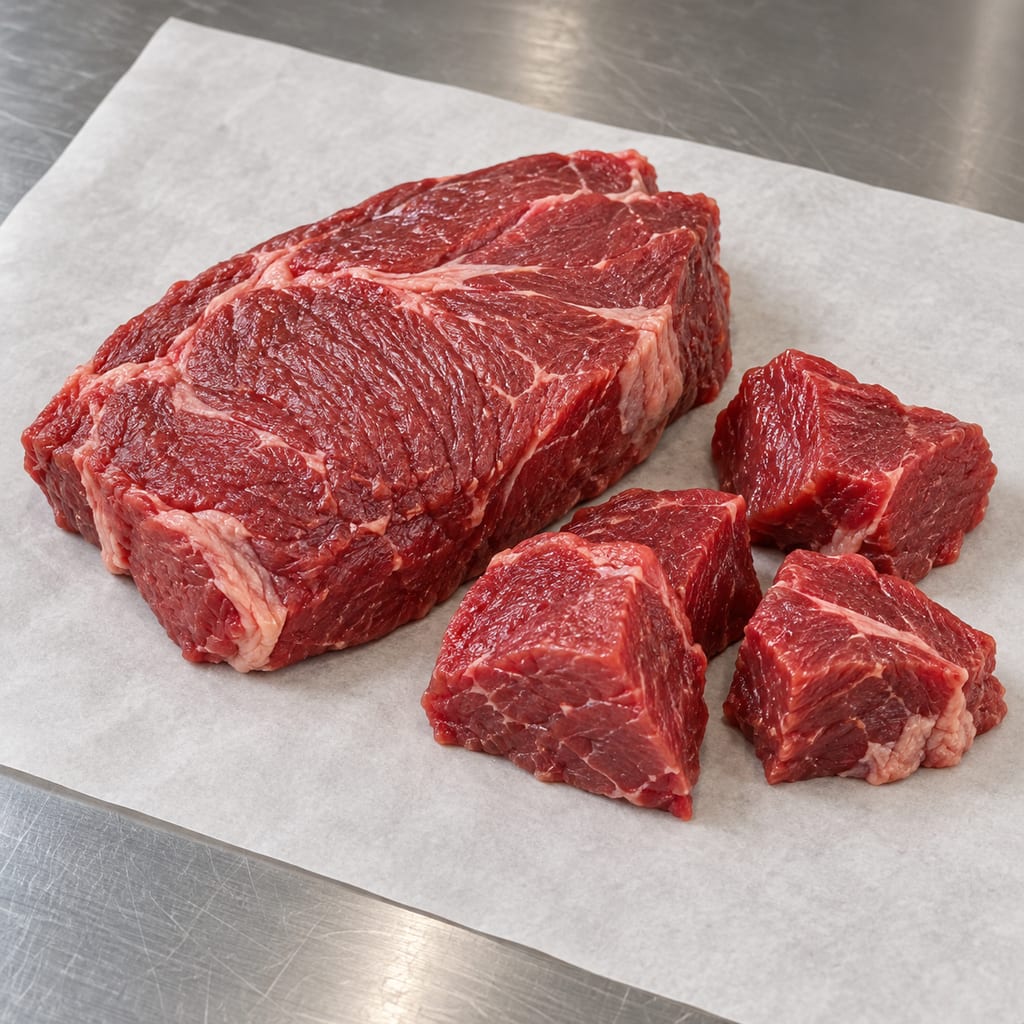
Water-buffalo meat, often called carabeef, is the flesh of Bubalus bubalis; its colour, texture and fat vary with animal, cut and production system. “Buffalo” can also mean bison or African buffalo in other contexts.
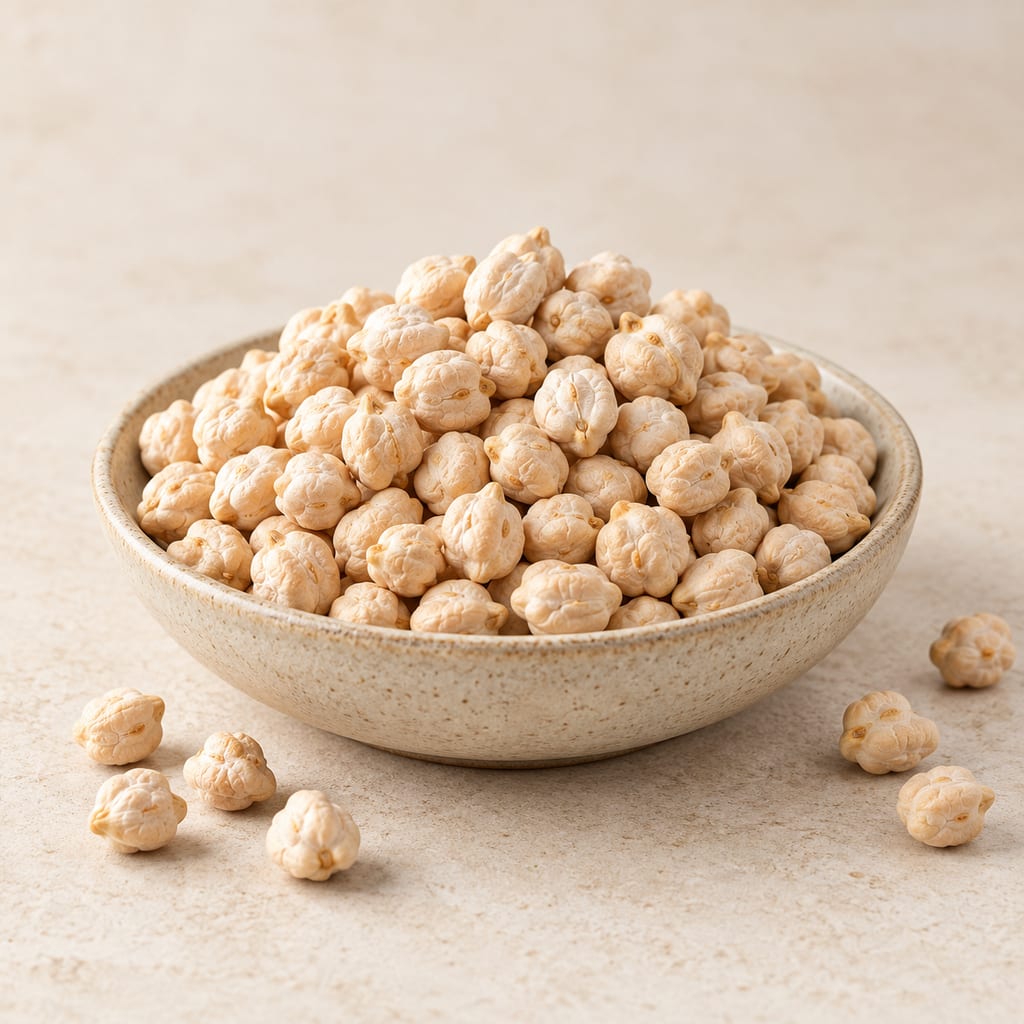
Chickpeas (Cicer arietinum) are dry pulses eaten whole or milled into flour, which gives socca, farinata and other breads a dense, nutty batter or dough.
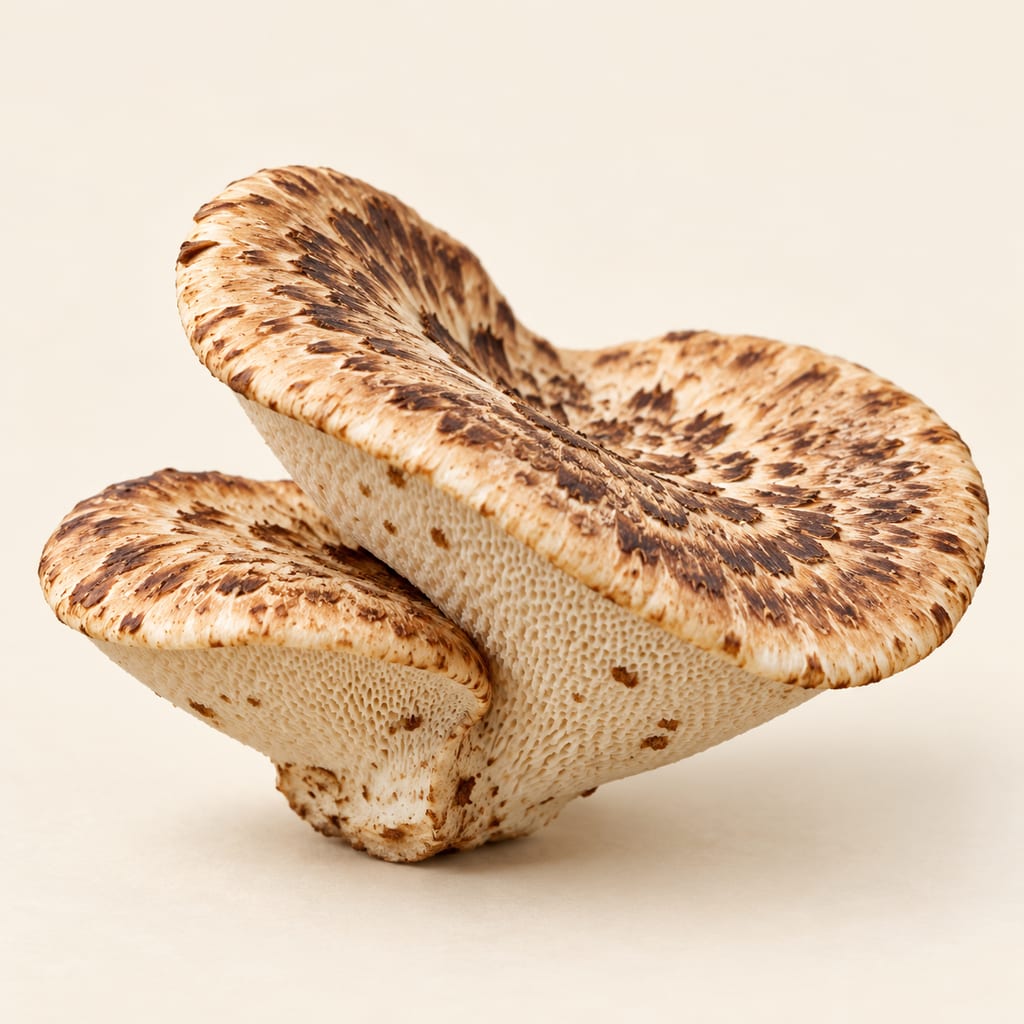
Dryad’s saddle is a wild hardwood polypore whose young tender margins are cooked in some regional food traditions; mature brackets quickly become tough.
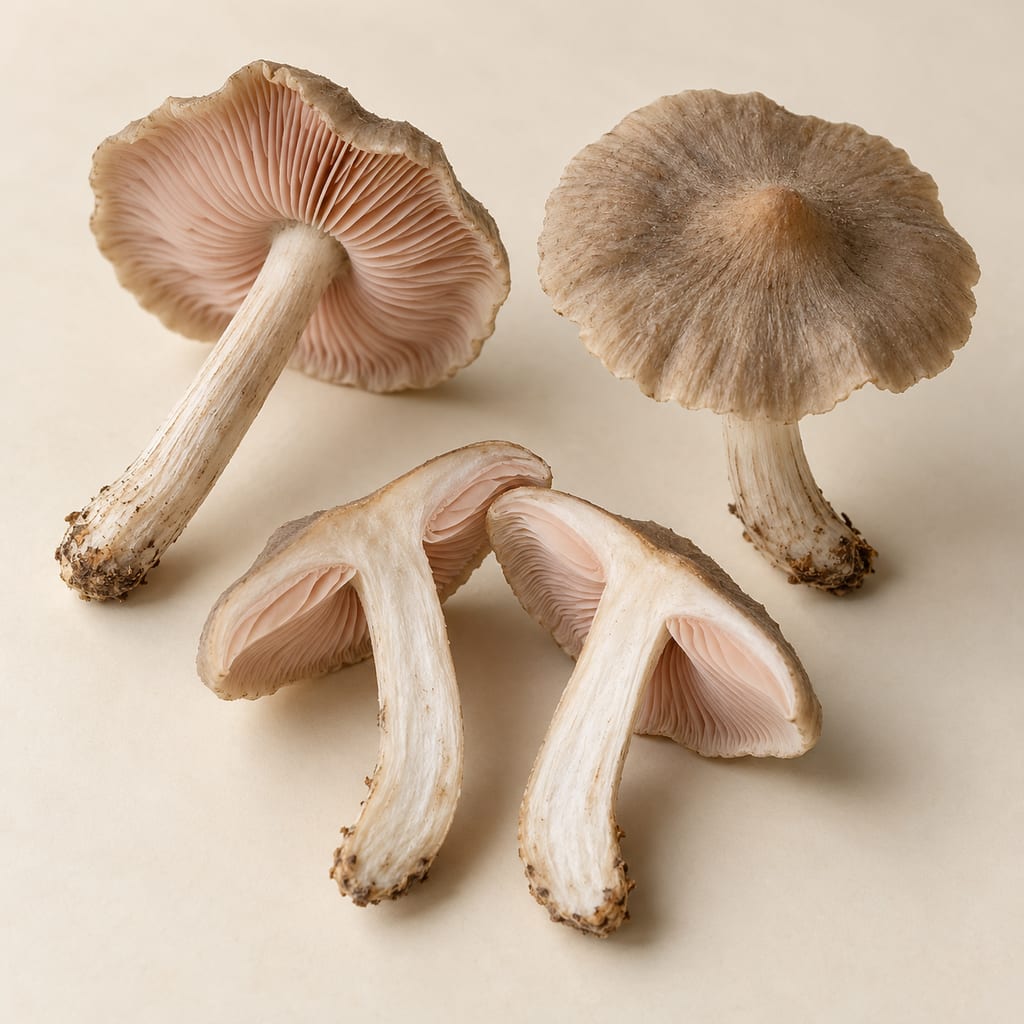
A spring pink-spored mushroom associated with Rosaceae. European food use is documented, alongside a Turkish poisoning report and unresolved species-complex records in Mexico.

Milk is the fluid produced by dairy animals. Its species, fat level, heat treatment and handling shape the way it can be drunk, cultured or turned into curd.
No community contributions have been published for this entry yet.
Sign in to contribute. Published comments and photos are free to read.
Tetra Pak, Dairy Processing Handbook
Fermented Milk ProductsLactose-to-lactic-acid conversion; acidity causes casein aggregation and protein network; handling/composition affect fermented-milk texture; mesophilic versus yoghurt culture context. Numeric industrial processes and speculative first-origin narrative omitted.
Cited in: A living starter for warm milk fermentation; Acid reorganizes the milk
Tetra Pak, Dairy Processing Handbook
Cultures and Starter ManufactureBulk versus concentrated direct-inoculation cultures, cultivation and propagation stages, contamination and balance of organisms affected by conditions. No industrial doses or temperatures prescribed.
Cited in: Commercial concentration changes the work before inoculation; Keeping a culture requires its own conditions
New Mexico State University Cooperative Extension
Making Homemade Cheese, Guide E-216Distinct starter/rennet roles, curd/whey separation and later handling; clean surfaces, appropriate cooking, cooling and contamination control. Its numerical home pasteurization and rennet equivalence claims not adopted.
Cited in: Select the starter within a complete dairy method
Food and Agriculture Organization of the United Nations
Small-Scale Dairy Farming Manual, Volume 1, Technology Unit 10.1: Starter CulturesThe starter-culture chapter explains milk souring, liquid, frozen and freeze-dried formats, pure and mixed cultures, preferred growth temperatures, propagation hygiene and packet-specific directions.
Cited in: A living starter for warm milk fermentation; Keeping a culture requires its own conditions; Select the starter within a complete dairy method
Revue médicale de la Suisse romande, 25(10); archival transcription by Bibliothèque russe et slave
Étude sur un lait fermenté comestible: Le « Kissélo-mléko » de BulgarieGrigorov’s French account describes household podkvassa carryover, heated and cooled milk, an insulated vessel, compact set and little whey. Lettered isolates produced different acidities; mixed inoculation resembled the household product. The historical isolates are not assigned modern species names.
Cited in: A Bulgarian household practice entered the laboratory; Warmth was part of the household technique
Applied and Environmental Microbiology
Mixed-Culture Transcriptome Analysis Reveals the Molecular Basis of Mixed-Culture Growth in Streptococcus thermophilus and Lactobacillus bulgaricusThe study of CNRZ1066 and ATCC BAA-365 examines proteolysis, formic and folic acid exchange and remaining nutrient limitations in the paired culture. It reports EPS gene expression and measured EPS. It does not establish a universal texture response or identify the Tulum starter.
Cited in: Two familiar species can support each other; A starter also helps build texture
International Journal of Molecular Sciences
Technological and Genomic Analysis of Roles of the Cell-Envelope Protease PrtS in Yoghurt Starter DevelopmentThe KLDS SM/KLDS3.1012 and L7/L12 comparisons report strain- and proteolysis-dependent differences in growth, acidification and cold storage. They do not establish a universal culture dose, process or texture outcome.
Cited in: Two familiar species can support each other; The strain changes the partnership
Applied and Environmental Microbiology
Metabolic Engineering of Acetaldehyde Production by Streptococcus thermophilusUnder the tested conditions, glyA disruption and overexpression support the SHMT/threonine-aldolase pathway for acetaldehyde formation. Strain differences matter; this experiment does not identify every yoghurt starter’s behaviour or support household supplementation.
Cited in: Aroma is another metabolic result; A starter also helps build texture
Food and Agriculture Organization of the United Nations
The technology of traditional milk products in developing countries, entry 4.24: Tulum PeyniriThe Tulum entry documents production in Turkey and describes sheep milk or mixtures involving goat or buffalo milk, a thermophilic yoghurt starter, rennet and curd handling. It leaves the origin history and exact starter brand, organisms and physical format unknown.
Cited in: A thermophilic starter in Tulum cheesemaking
Anbras
Yogurt culturesThe supplier describes two yoghurt species, freeze-dried direct-inoculation formats, application-specific products and rotations, sachets sized for milk volume and label-specific frozen storage. These descriptions do not establish the composition, carrier or allergens of every thermophilic culture.
Cited in: Commercial concentration changes the work before inoculation