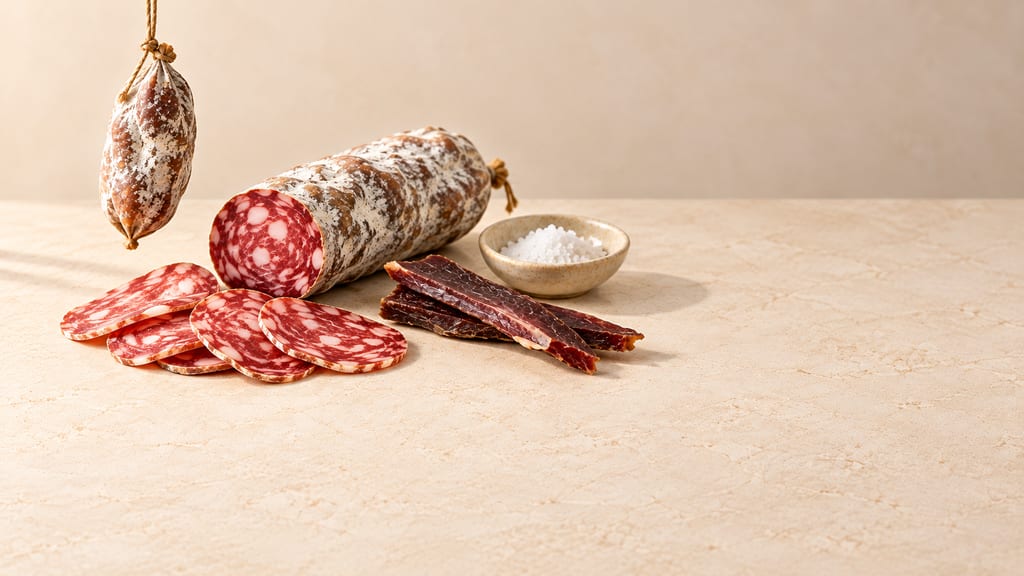
Fermented meat around the world
Dry salami, sour pork with rice, matured sheep and aged blubber follow different paths from animal to food. Their stories connect microbes with climate, slaughter, migration and the meals people share.
 FermenteaWhere food goes to change
Water-buffalo meat, often called carabeef, is the flesh of Bubalus bubalis; its colour, texture and fat vary with animal, cut and production system. “Buffalo” can also mean bison or African buffalo in other contexts.
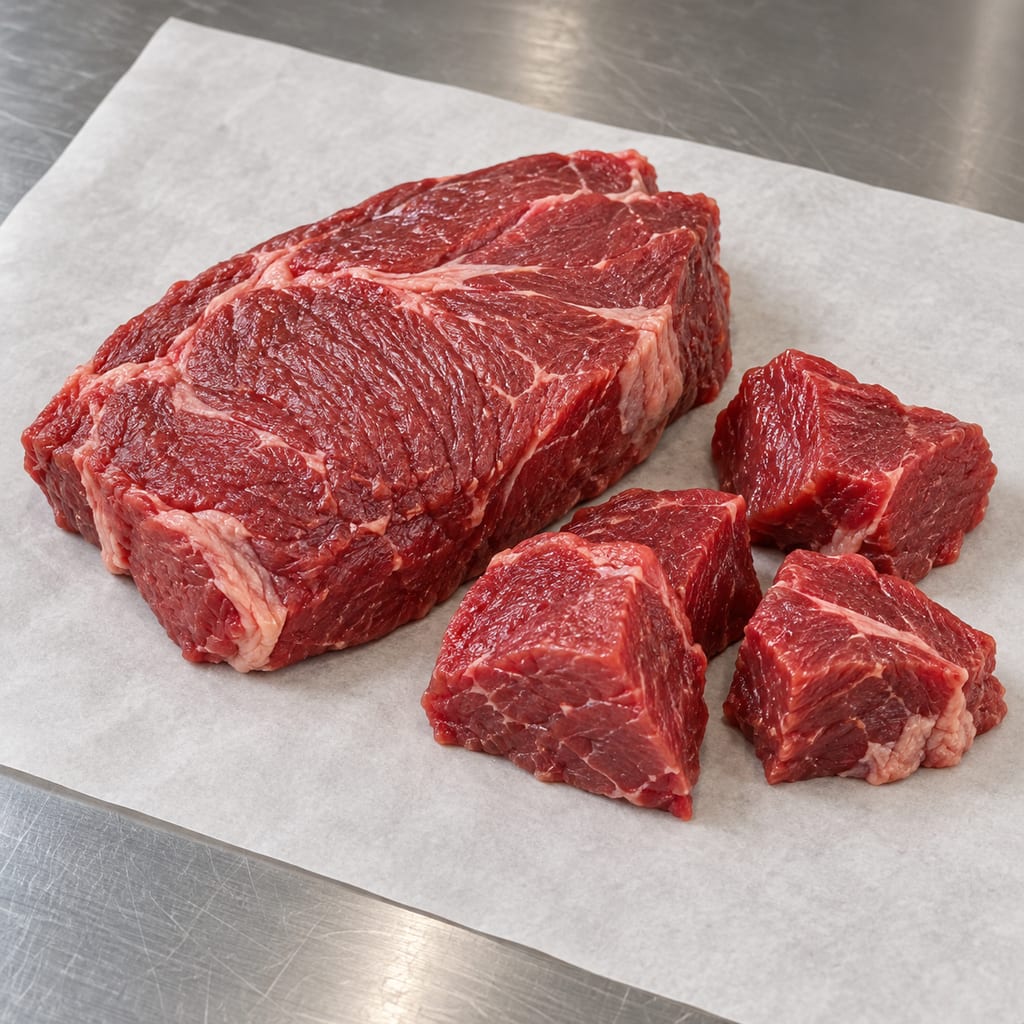
This page is about meat from the domestic water buffalo, Bubalus bubalis. In food writing it is often called carabeef, a blend of “cattle” and “beef.” In some countries, especially where water buffalo are familiar livestock, sellers may simply label it buffalo. Codex commodity nomenclature exposes the ambiguity: under one broad “buffalo meat” heading it lists water buffalo, African buffalo and both American and European bison. The animal’s scientific name and the seller’s country therefore matter. American bison, Bison bison, is not water buffalo, and neither is African buffalo meat.
The water buffalo species includes several breeds and production types. Reviews often distinguish river buffalo, such as Murrah and Mediterranean populations, from swamp buffalo, including the carabao. These names describe animal populations, not guaranteed meat grades. The meat in a shop reflects the animal’s age, sex, breed or cross, feed, activity, cut and post-slaughter handling. A label that says only “buffalo” may leave the species unresolved; ask the supplier when the distinction affects a recipe, sourcing decision or dietary need.
Water-buffalo meat is sold fresh or frozen, as bone-in or boneless cuts, minced meat, steaks and diced meat. It may be lean or carry visible fat and connective tissue depending on the cut and trimming. The 2026 Latin American review summarizes studies that report darker or redder lean and lighter fat than indicine-influenced beef in some comparisons, alongside variation in tenderness, water-holding and composition. That summary is not a universal rule: the review combines 25 studies from several countries and production systems, with different animals and methods.
Carabeef is not a single standardized ingredient whose colour, fatness or tenderness can be read from the name. A very lean working-animal cut will behave differently from a younger animal’s tenderer cut, while an individual steak may differ from mince made from several muscles. The review finds reported quality traits broadly comparable with beef under some management and slaughter comparisons, but differences between studies caution against claims that buffalo is always leaner, tougher, healthier or more tender. Choose a cut for its intended use and ask about species, cut and trimming.
Water buffalo are raised across South and Southeast Asia and in parts of Europe, the Middle East and Latin America. The food record is not a single route outward from one birthplace. Animals serve different combinations of roles across farming systems, including milk, work and meat, and the source review describes varied extensive and intensive systems in Latin America. In regions where buffalo have been used for dairy or draught work, meat may also enter food systems when animals are culled or slaughtered; this should not be generalized to every farm or country.
Two documented fermented preparations show how far apart meat’s culinary uses can be. In Pampanga in the Philippines, pindang damulag is a traditional fermented carabeef preparation studied by researchers at the University of the Philippines Los Baños. In Afyonkarahisar, Türkiye, Anatolian buffalo meat is part of the protected specification for Afyon Sucuğu, a sausage that combines buffalo and beef with tallow and seasonings. These are distinct products in different food cultures, not evidence for one shared buffalo-meat tradition.
Afyon Sucuğu is a named fermented sausage associated with Afyonkarahisar. The European Union specification describes minced Anatolian buffalo meat mixed with beef and tallow, salt, spices and permitted additives, then packed into dried sheep small intestine or collagen casing. Its cross-section is described as mosaic-like. The registered product sets proportions for its ingredients, so the specification should be read as a product standard, not as a recipe for any sausage made with buffalo.
The Turkish Ministry of Culture and Tourism account describes meat being trimmed of tendons, fascia, vessels and lymph nodes, rested, minced, mixed with fat and seasonings, stuffed and allowed to sweat before drying. It notes that heat treatment may be applied under the Turkish food-code regulation. The national geographical-indication record dates its registration to 2005, while the EU publication appeared in 2025. These milestones document recognition and a regional product; they do not date the origin of buffalo meat eating or prove how all household sucuk was made.
In pindang damulag, buffalo meat is sliced and mixed with curing ingredients before being held under low-oxygen conditions. In the 2020 natural-fermentation study, researchers tracked the meat over a defined experimental period. They measured microbial populations and physical and chemical properties, including acidity, soluble solids and organic acids. As fermentation progressed, acidity and pH changed; lactic acid was prominent, with acetic and citric acids also measured. An isolate related to Enterococcus faecium showed proteolytic activity in a laboratory test, while isolates related to Weissella paramesenteroides were also reported.
That evidence helps explain why a fermented meat can acquire a sour profile and why protein-related changes may affect texture. It does not mean that one organism alone defines the food or that an acidity reading guarantees safety. A second study examined added starter cultures and reported different sensory and microbial results for its tested formulations. These laboratory studies illuminate selected batches and methods. They are not interchangeable with a controlled commercial process, nor do they provide a complete, general household safety protocol.
The supplied fermented-meat atlas records buffalo alongside beef or pork in some versions of mum (หม่ำ), a northeastern Thai stuffed fermented meat. The species is therefore one possible local raw material, not an obligatory ingredient in every mum. Research on the sausage examines how raw materials affect product properties; it does not make buffalo meat and beef interchangeable in all versions or establish a single household formula.
The same atlas describes belutak in Brunei as salted chopped beef or buffalo meat packed into cattle or buffalo intestine, with maturation, drying and later cooking all contributing to the product. A 1999 University of Brunei Darussalam thesis studied the traditional product and fermentation-associated bacteria. Later household and commercial practices vary. Because this is a secondary local thesis record and methods change, the account supports the named use of buffalo meat, not a universal specification or an exact historical origin.
Start with the intended dish. For a quick-cooked steak, a supplier’s information about cut, ageing and tenderness is more useful than a blanket species comparison. For mince or a preparation that will be mixed and fermented, the formulation must be one documented for the particular product and process; substituting buffalo for beef can change fat, moisture and texture. Some culturally specific products name water buffalo as a defining ingredient, as in Afyon Sucuğu and pindang damulag.
Buy from a supplier who can identify the species and keep the meat under the required cold-chain conditions. Keep raw meat and its juices away from ready-to-eat food, store it in a container that cannot drip, wash hands and utensils after handling, refrigerate promptly, and use an appropriate food thermometer when cooking. USDA FSIS gives general household handling advice for raw foods; its guidance does not validate fermented buffalo meat or any particular cure. Follow current local requirements and a validated recipe for fermented or cured products.
Buffalo meat supplies muscle proteins, fat in varying amounts, connective tissue, water and minerals to a preparation. In a sausage, its finely minced meat forms much of the structure, while added tallow or other fat affects richness and the cut surface. In a sliced preparation such as pindang damulag, the intact muscle pieces remain visible. During the studied fermentation, microbes changed sugars and other available substrates into organic acids and contributed to the measurable shifts in the product. Salting, drying, heating or cooking are separate operations that may accompany fermentation, depending on the product.
No single value describes buffalo meat in fermentation: species, animal, muscle, fat trim, grind, salt, sugar, starter or natural flora, oxygen exposure, time and temperature all shape the result. Nor can a finished product be judged safe by smell, sourness, colour, visible bubbles or a single pH. The available product studies and geographical specifications describe specific processes, not a common safe formula. This page gives no fermentation parameters because they depend on the exact product, and the sources here do not establish one general process for raw buffalo meat.
The PGI specification names Anatolian buffalo meat in Afyon Sucuğu; this is a product-production association, not an origin claim for water buffalo meat.
Pindang damulag is documented as a traditional Pampanga carabeef ferment; this row does not claim the meat species originated here.
The supplied fermented-meat atlas and study describe buffalo among possible meats in mum; local formulas vary.
Dry salami, sour pork with rice, matured sheep and aged blubber follow different paths from animal to food. Their stories connect microbes with climate, slaughter, migration and the meals people share.
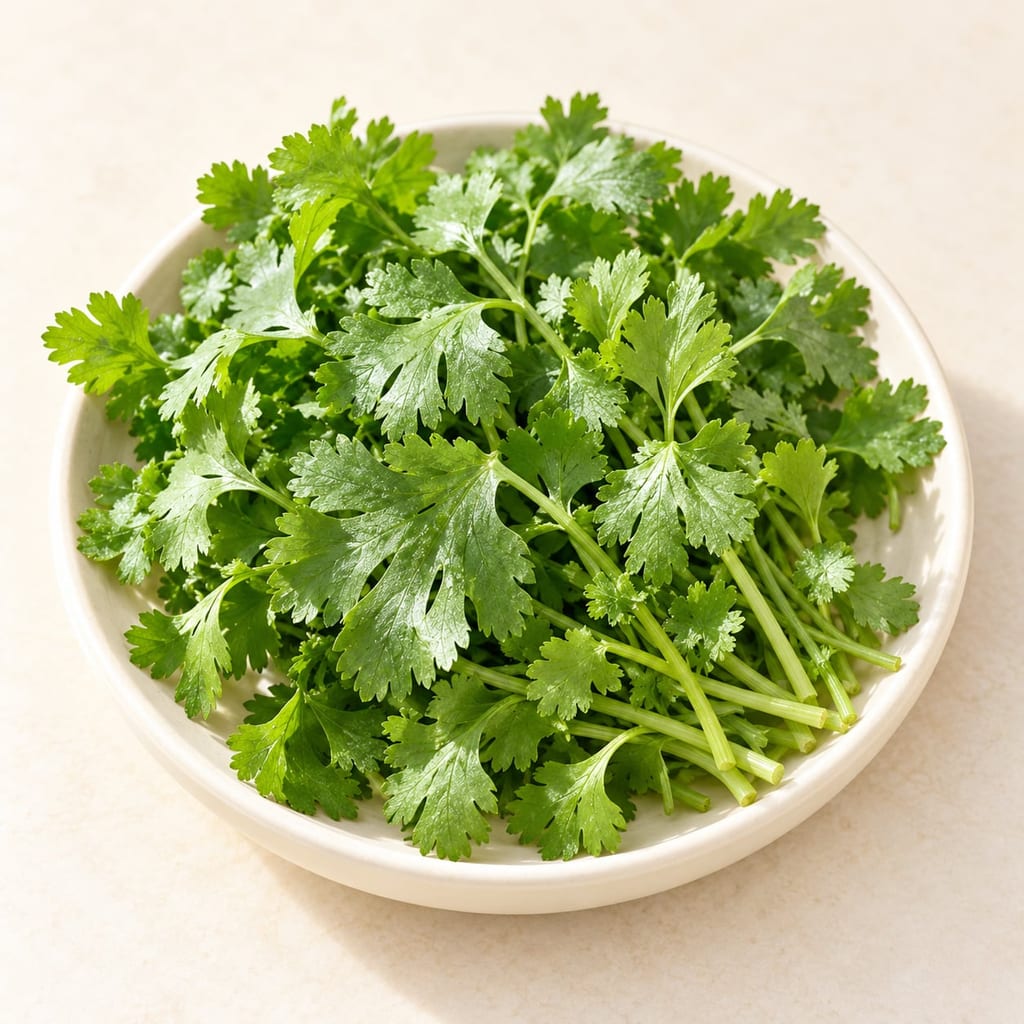
Cilantro is the fresh leafy herb of Coriandrum sativum, the same annual plant that produces coriander spice. Its green, aromatic leaves and fine stems bring a vivid herbal note to foods such as sai krok Isan.
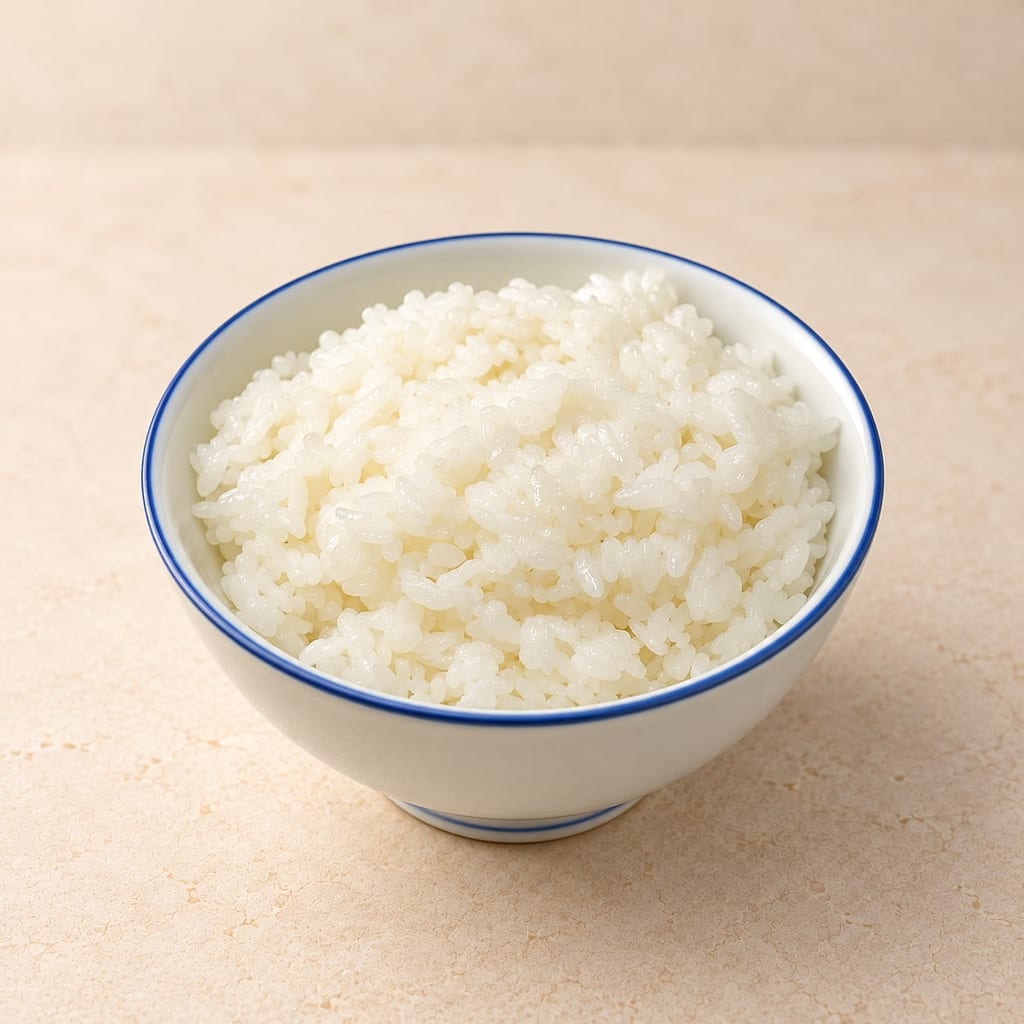
Cooked rice is rice grain heated in water until its starch gelatinizes; in Thai sour sausage it feeds the bacteria that acidify the meat.
No community contributions have been published for this entry yet.
Sign in to contribute. Published comments and photos are free to read.
Codex Alimentarius Commission, FAO and WHOIdentity
Codex classification of meat commodities, MM 0810Codex lists water buffalo as Bubalus bubalis and separately lists American and European bison under the broad commodity label buffalo meat; the scientific name distinguishes the intended ingredient.
Cited in: Water buffalo, not a single meaning of “buffalo”
Official Journal of the European UnionIdentity · Geography · Documented preparation
Publication of an application for registration of Afyon SucuğuDefines Afyon Sucuğu as a fermented product made from minced Anatolian buffalo meat, beef and tallow with spices and salt, stuffed into dried ovine small intestine or collagen casing.
Says the product may receive heat treatment as an additional food-safety measure; this is a product specification detail, not a validated home process.
Places protected production steps within Afyonkarahisar.
Cited in: A livestock species with a wide food geography; Afyon Sucuğu: a regional sausage specification; What this ingredient can and cannot tell a fermenter
Kültür Portalı, Republic of Türkiye Ministry of Culture and TourismDocumented preparation · Geography
Afyon SucuğuDescribes trimming and resting meat, mixing with internal fat, spices and specified additives, stuffing, sweating, drying and possible heat treatment under the Turkish food-code regulation.
Identifies the regional mark with Afyon.
Cited in: Afyon Sucuğu: a regional sausage specification
Food Research / University of the Philippines Los BañosIdentity · Fermentation · Documented use · Geography
Microbial load, physico-chemical properties, and organic acid profile of a naturally fermented carabeef, Pindang damulag, as affected by fermentation timeIdentifies pindang damulag as fermented carabeef, a traditional food from Pampanga, Philippines.
Study measures microbial groups, pH, titratable acidity, soluble solids and organic acids in its experimental batch; it does not validate a home safety process.
Reports lactic acid bacteria and isolates homologous to Enterococcus faecium and Weissella paramesenteroides, with proteolytic activity reported for one isolate.
Cited in: A livestock species with a wide food geography; Pindang damulag and the science of fermentation; What this ingredient can and cannot tell a fermenter
Archivos Latinoamericanos de Producción AnimalIdentity · Selection · Composition · Geography
Water buffalo (Bubalus bubalis) meat produced in Latin America II: Literature review on technological traits and nutrient compositionReviews 25 studies of water-buffalo meat in Brazil, Venezuela, Argentina, Costa Rica and Cuba across varied animals and management systems.
Compares reported meat traits with indicine-influenced beef; variability across studies means no single composition or sensory profile is universal.
Cited in: Water buffalo, not a single meaning of “buffalo”; Appearance, texture and variation; A livestock species with a wide food geography; Choosing and handling carabeef; What this ingredient can and cannot tell a fermenter
Chiang Mai University Journal of Natural SciencesDocumented preparation · Fermentation
Application of a Plackett-Burman Design for Screening Raw Materials Mainly Affecting the Properties of Mum (Thai Fermented Sausage)Experimental work examines raw materials affecting mum, a Thai fermented sausage; the supplied atlas records buffalo as one meat option in some mum formulations.
The findings concern particular formulations and do not define a universal buffalo-meat or safety standard.
Cited in: Mum and belutak: named traditions, not generic recipes
Food Research / University of the Philippines Los BañosFermentation · Documented preparation
Effect of adjunct inoculation of Lactobacillus plantarum BS and Pediococcus acidilactici 3G3 on the microbiological, physicochemical and sensory properties of fermented carabeef (Pindang damulag)Experimental study of starter-inoculated carabeef pindang damulag; acid-forming bacteria predominated in tested samples.
Sensory and microbial findings describe studied products and conditions, not a safety guarantee.
Cited in: Pindang damulag and the science of fermentation
Turkish Patent and Trademark OfficeGeography · History
Afyon Sucuğu geographical indication recordRecords application on 31 December 2003 and registration on 2 August 2005 under number 74, with Afyonkarahisar as the province.
This is a product registration history, not an origin date or place for water-buffalo meat.
Cited in: Afyon Sucuğu: a regional sausage specification
USDA Food Safety and Inspection ServiceHandling
How do I keep my foods safe to eat?Advises keeping raw meat and its juices away from ready-to-eat foods, washing hands and surfaces, prompt refrigeration and cooking with a food thermometer.
General handling guidance is not a validation of any buffalo-meat fermentation.
Cited in: Choosing and handling carabeef
Universiti Brunei DarussalamDocumented preparation · Fermentation · Geography
Studies of Belutak and Budu Kupang — Traditional Fermented Products of Brunei DarussalamThe supplied Fermented Meat World Atlas cites this 1999 thesis as original local research on traditional belutak and its materials and fermentation-associated microorganisms.
It supports the existence of buffalo-meat belutak, not a universal method, validated home process or exact origin date.
Cited in: Mum and belutak: named traditions, not generic recipes