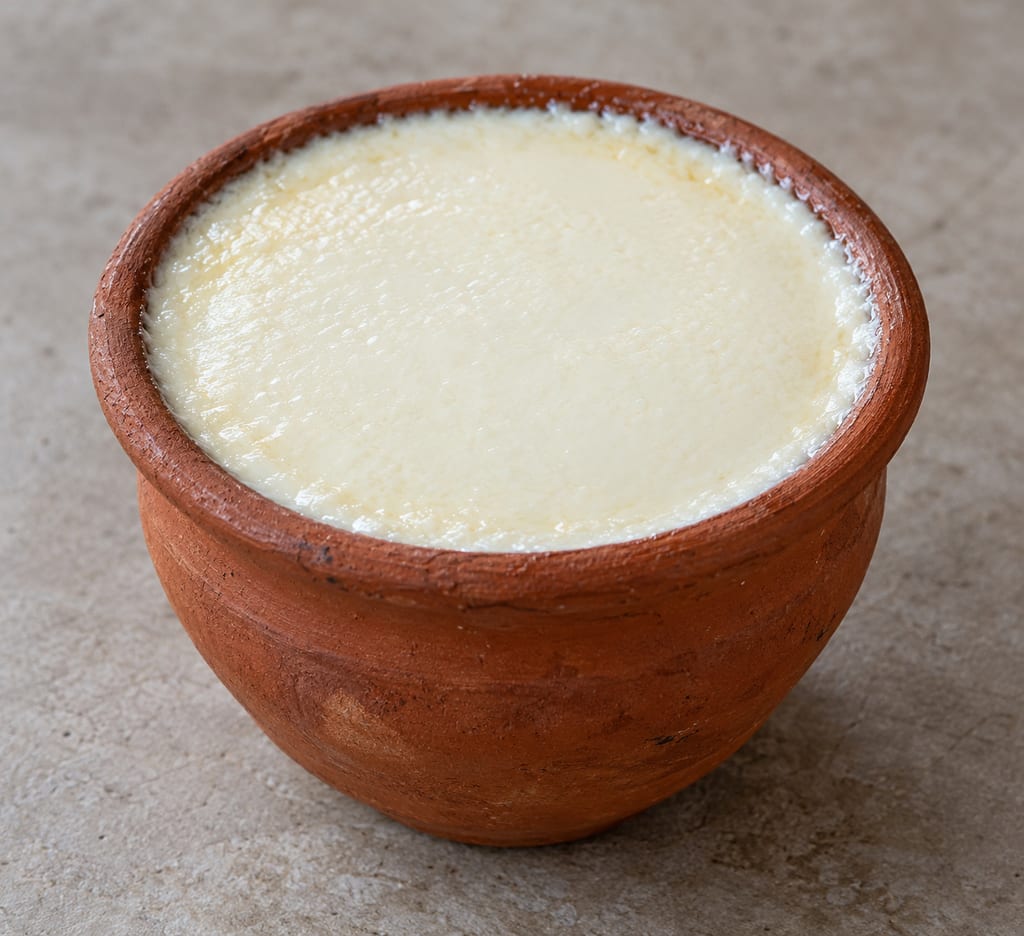
Juju dhau
Juju dhau is a rich Newar cultured milk associated with Bhaktapur, Nepal. A local account describes buffalo milk concentrated by boiling, inoculated with previous-day curd and set in earthen pots.
 FermenteaWhere food goes to change
सुकुटी · Sukuti meat · Nepali dried meat · Sakhekya
Sukuti is Nepali dried meat, most often buffalo, cut into thin strips, seasoned with spices, dried over smoke or in the sun, and later fried or roasted before eating.
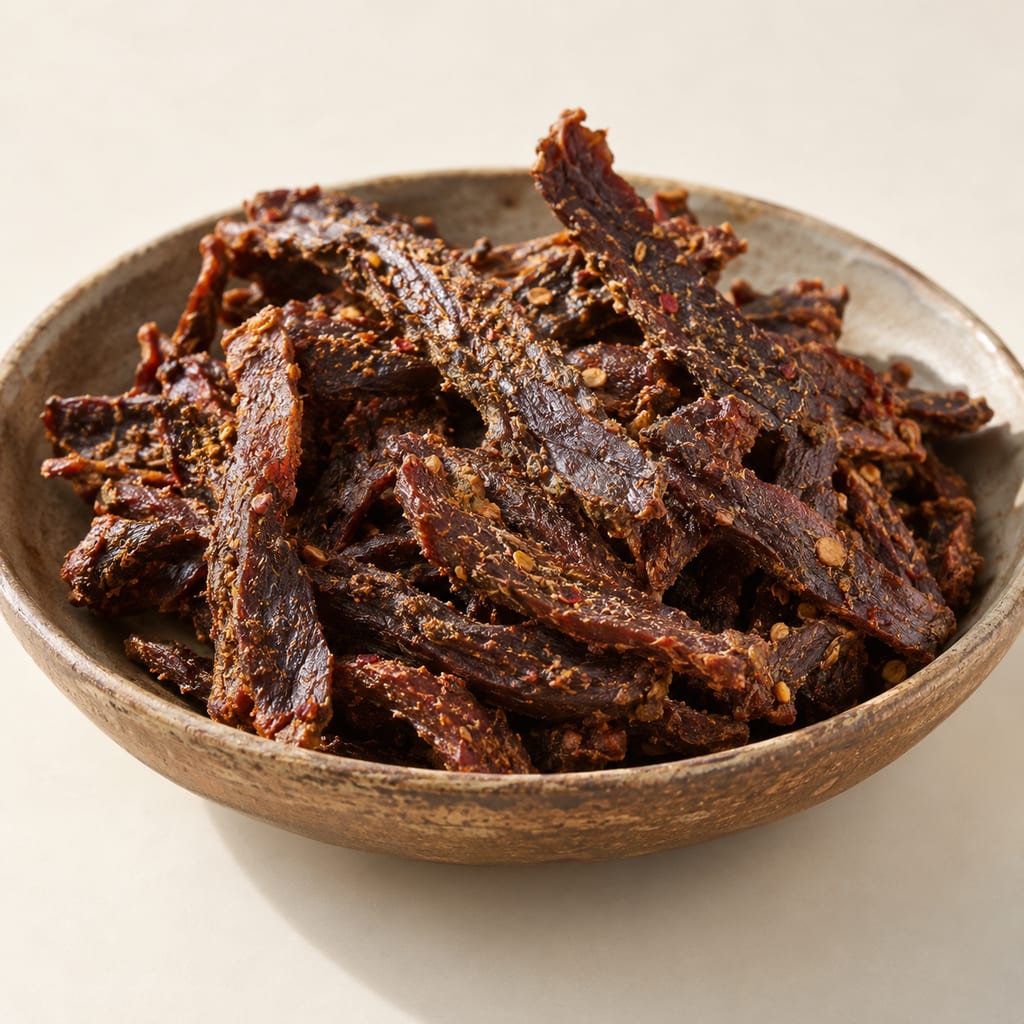
Sukuti is a dried meat from Nepal, most often made from buffalo. Goat and lamb are also used, and pork is named in one study of Nepalese meat products. The product is a set of thin, spiced strips dried until they are firm and can be kept for a long time. It is rarely eaten straight from the drying stage. Cooks fry it, roast it or pound it with spices, and serve it as a snack or side dish with drinks.
The name is Nepali. The Limbu people call the product sakhekya in their own language. The product is also eaten in the Himalayan regions of India and Tibet, so it belongs to a wider Himalayan food culture rather than to one town or valley.
Sukuti was a practical way to keep meat when it could not be kept fresh. Households in the hills had no refrigeration. A large animal could not be eaten in a day or two, so part was cooked at once and the rest was cut and dried. The dried meat was eaten through lean months, and it was useful in the hard winters, when food supplies were short.
The link to animal sacrifice follows the same logic. A buffalo offered during a Hindu temple sacrifice is cooked that day and the remainder is dried, so nothing from the animal is wasted. Sukuti is therefore a non-perishable protein made after a slaughter, and that role is the core of its history. No date is recorded for when the practice began.
Buffalo meat is cut into thin strips, and the fat is removed with care. Fat left on the strips dries and can turn rancid, which spoils flavour and is treated as a defect. The cut matters for drying: thin strips lose moisture quickly and dry evenly, while thick pieces hold water in the middle and take much longer. No strip dimensions are recorded for the traditional product.
A laboratory study of chicken sukuti conditioned the meat at 4 C for 24 hours before cooking, so the meat was chilled before it was dried. That study is a controlled trial, not a record of the household process, and it is the only quantified step in the material.
The usual seasoning is salt, cumin, pepper, chilli powder and turmeric. Some cooks add a ginger and garlic paste, which gives a stronger flavour and helps keep insects away from the drying meat. The coating goes on before the strips hang or lie in the sun, so the salt and spices dry into the meat.
The traditional method hangs the seasoned strips from the roof above a cooking fire. Smoke from the chulho, the hearth, adds flavour and dries the meat slowly. The strips may also be spread on a clean cloth in the sun, and the two steps can follow one another. The strips are dried until they are sufficiently dry; no measured end point, weight loss or water activity figure is recorded.
The laboratory study dried chicken on trays at 80, 100 and 120 C after the 4 C conditioning step, and 100 C scored best sensorially. Those figures describe one oven-dried experiment. They do not establish a household temperature, and they do not validate the hanging or sun-drying method for buffalo meat.
Dried sukuti is rarely served as it is. The two common ways of cooking it are deep frying and roasting. In frying, the spices are browned in oil, pounded into a blend, mixed with the meat and fried. In roasting, the strips are cooked over a fire or in a pan until they warm through and take on colour. Some cooks fry the meat with onion, tomato, garlic and chilli, a version recorded in the same material.
Sukuti can also be simmered in a curry with chilli, garlic and onion. It may be rehydrated in gravy, but it is usually eaten dry or fried. Its strong, dry flavour suits drinks, which is why it is often served as an appetiser alongside alcohol.
The product varies with the animal and the household. Buffalo is the most common meat, and goat and lamb follow. Pork is named in the Nepalese veterinary study, and other meats are recorded in the wider region. The coating varies as well: some cooks use salt, cumin and chilli alone, while others add turmeric, ginger and garlic. No single standard recipe is recorded.
The links to sacrifice and to winter keeping are the thread that ties the variants together.
Sukuti is a dried meat, and dried meat keeps only while it stays dry. No measured moisture or water activity for a finished strip is recorded, and no validated process with critical limits exists in the material. A dry, hard strip with a smoky smell is not proof that the meat is safe. Smell cannot show that spoilage organisms are absent.
Fat is the first thing to watch. Fat left on the strips can turn rancid in drying, which spoils flavour and can be a hazard in its own right. Removing the fat is the traditional control and should be kept. Storage matters as well: a dried product left in a humid or warm place can spoil, and no storage limit is recorded.
Sukuti kept meat through hard winters, when refrigeration was not available. Wikipedia links it to Hindu temple animal sacrifice, in which a buffalo is offered and the part not cooked that day is dried for later. The same logic applies in the hills: the meat was dried so a household could keep protein after a slaughter. No first use is dated.
Scaling: source batch only
Traditional drying and smoking are described, but no validated critical limit for moisture, water activity or temperature is recorded for buffalo sukuti.
Hazard sourceFat left on the strips can turn rancid when dried, which is the stated reason for removing it.
Hazard sourceDo not treat the traditional description as a validated safe process.
Smell, colour and texture do not establish that dried meat is safe.
Dried meat stored in a warm or humid place can spoil; no storage limit is recorded.
The product is placed at country level; no single village or inventor is recorded.
The product is also eaten in these areas; the practice there is not described in detail.
Juju dhau is a rich Newar cultured milk associated with Bhaktapur, Nepal. A local account describes buffalo milk concentrated by boiling, inoculated with previous-day curd and set in earthen pots.
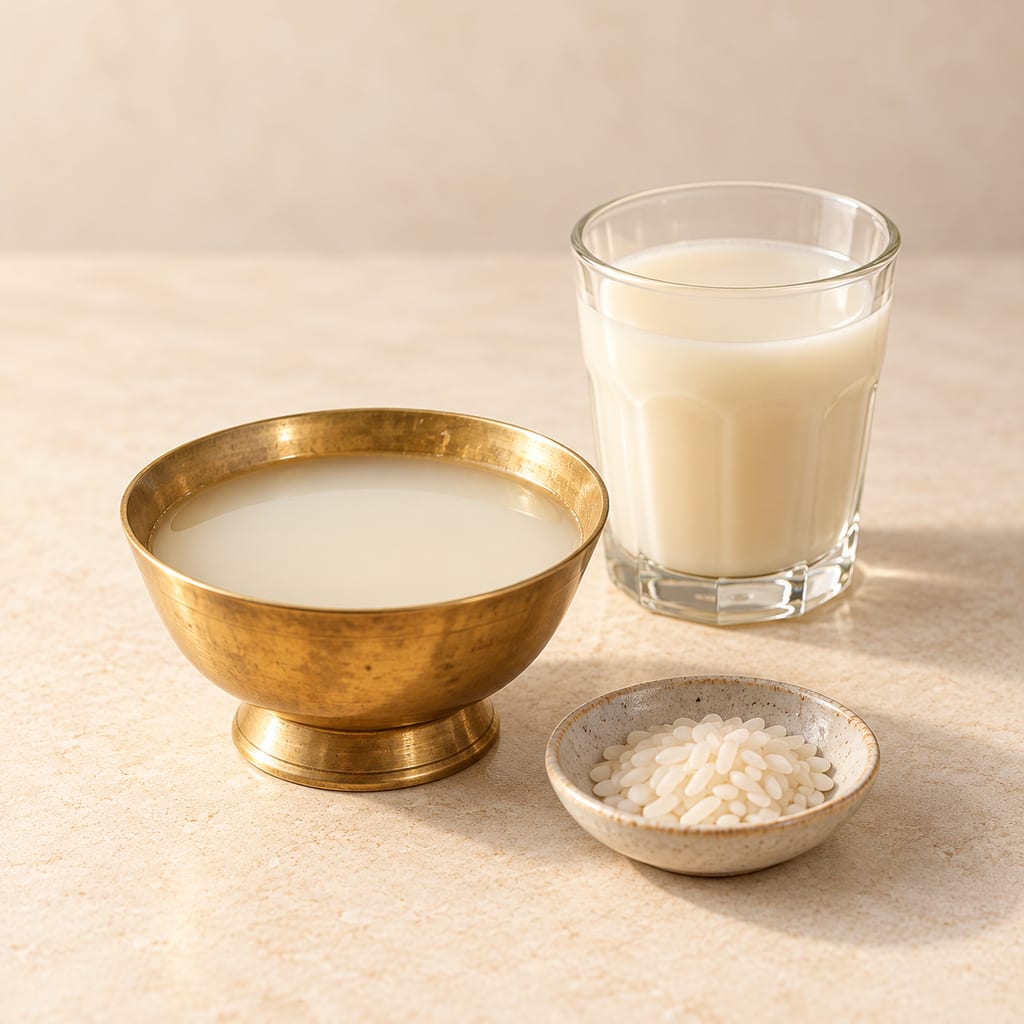
A Kathmandu rice beer in which a marcha starter saccharifies and ferments cooked white rice, the mash later thinned with water for drinking.
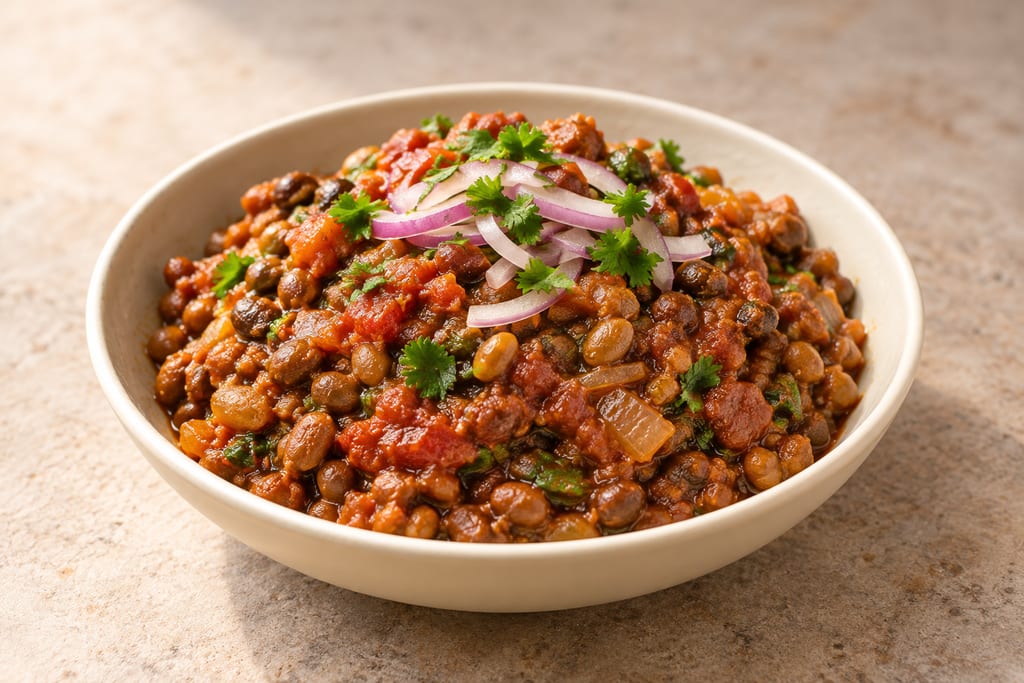
Kinema ra golbheda ko achar combines already-fermented soybean kinema with tomatoes, onion, garlic and spices, finished with sesame powder and fresh garnish, and is eaten with rice or toast.
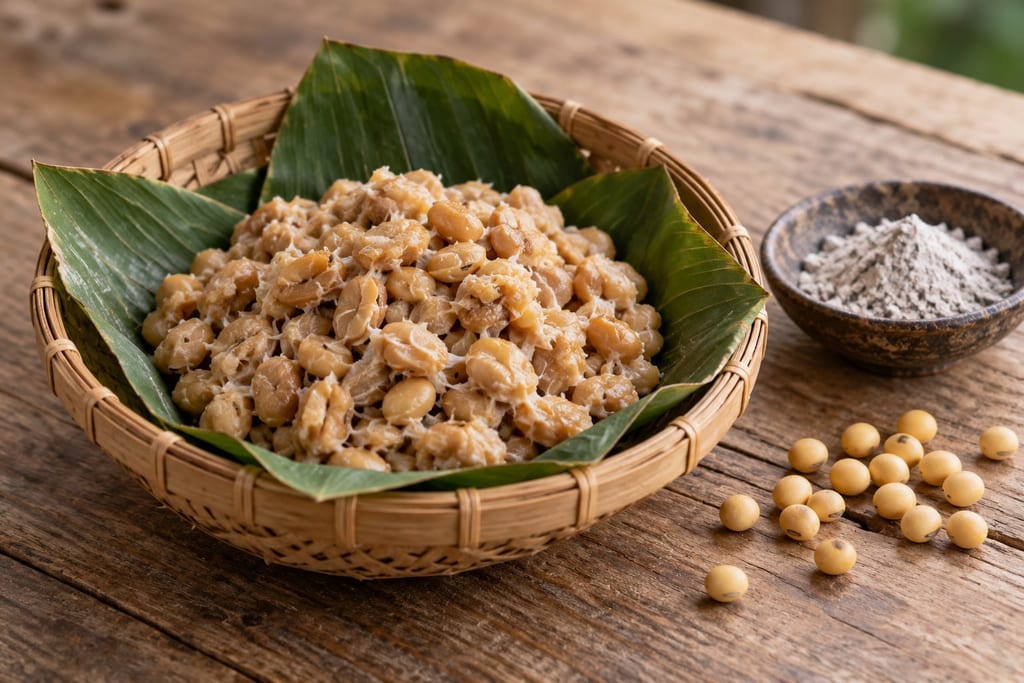
A sticky fermented soybean food of the eastern Himalaya, made here with a measured addition of firewood ash as an alkaline aid to the bacteria that drive it.
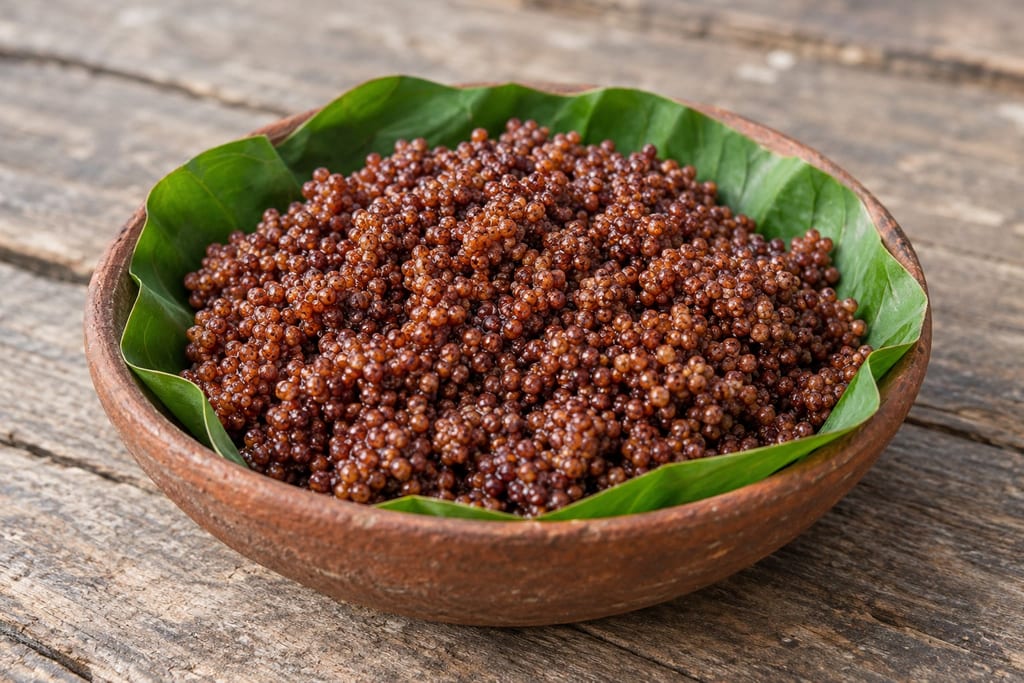
Finger millet fermented with marcha in surveyed Darjeeling and Sikkim communities. Tongba is the later warm-water extraction from the fermented grain. The cited accounts do not establish a complete or validated home batch.
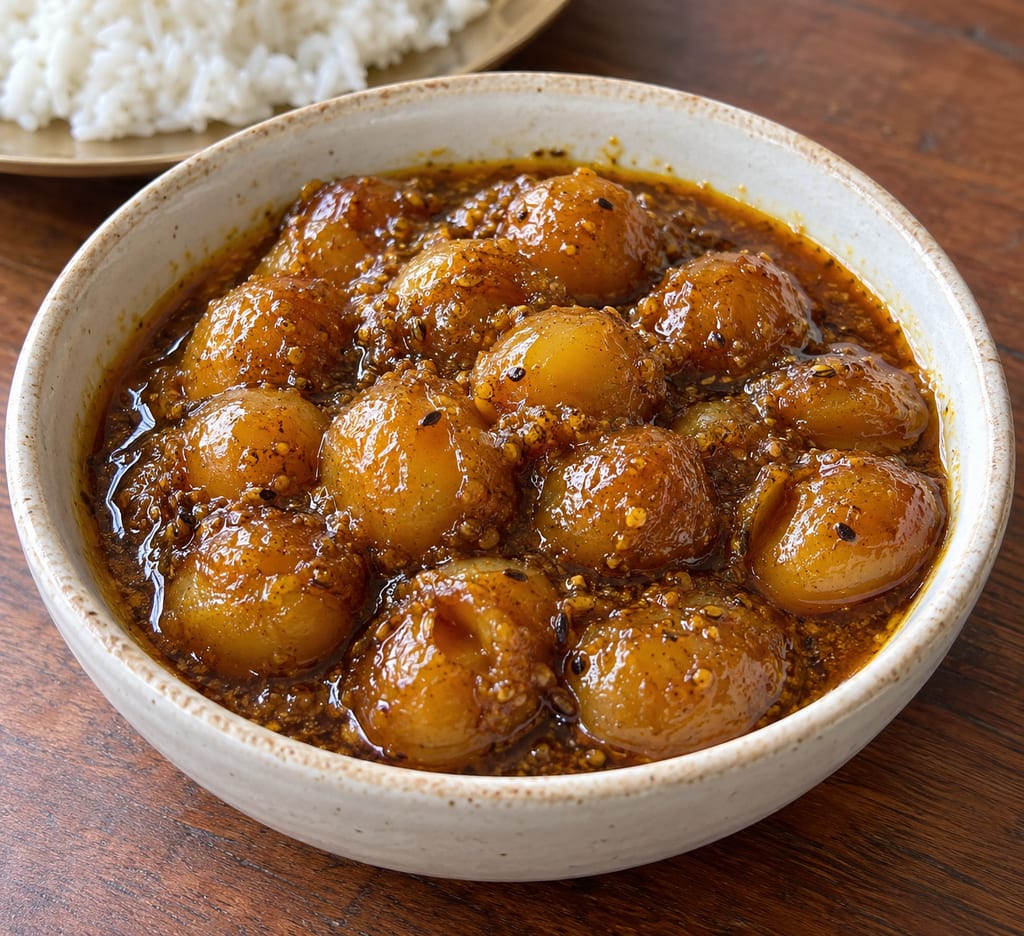
Ripe Nepali lapsi is boiled, peeled and cooked with mustard oil, salt, sugar and roasted spices to make a sweet-sour achar served alongside a meal.
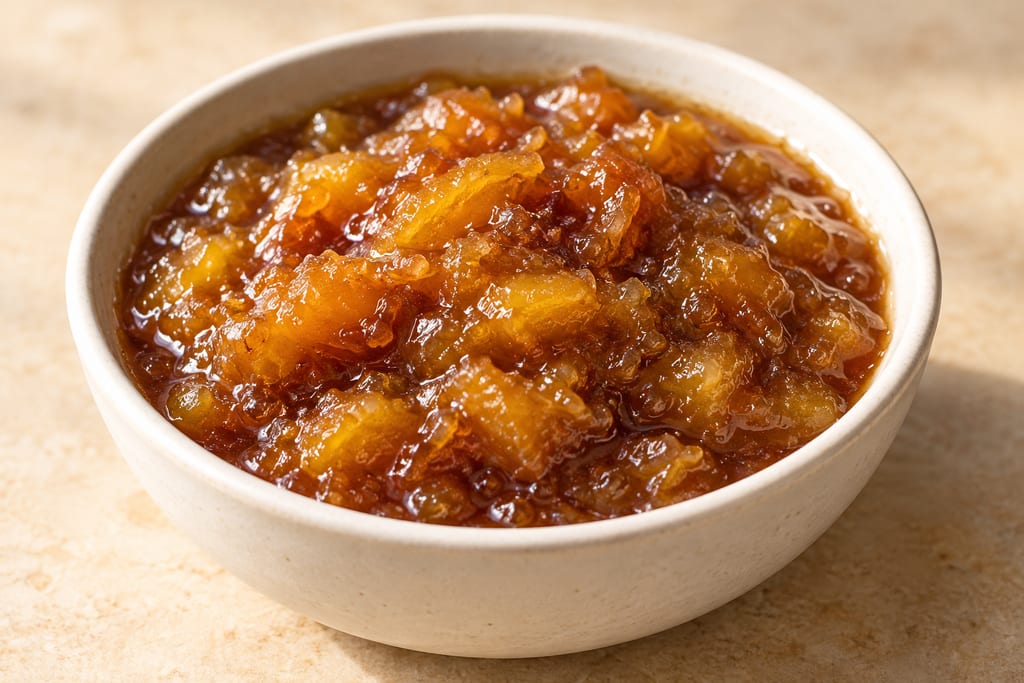
A Suryabinayak municipal recipe cooks ripe lapsi pulp in sugar syrup with cloves, cardamom, cinnamon, sukumel and ginger juice to make a sweet Nepali achar.

An ethnographic record of marcha (murcha), a dry starter cake used in Eastern Himalayan cereal fermentations. This page documents source-specific community knowledge and is not a recipe for making or storing starter.
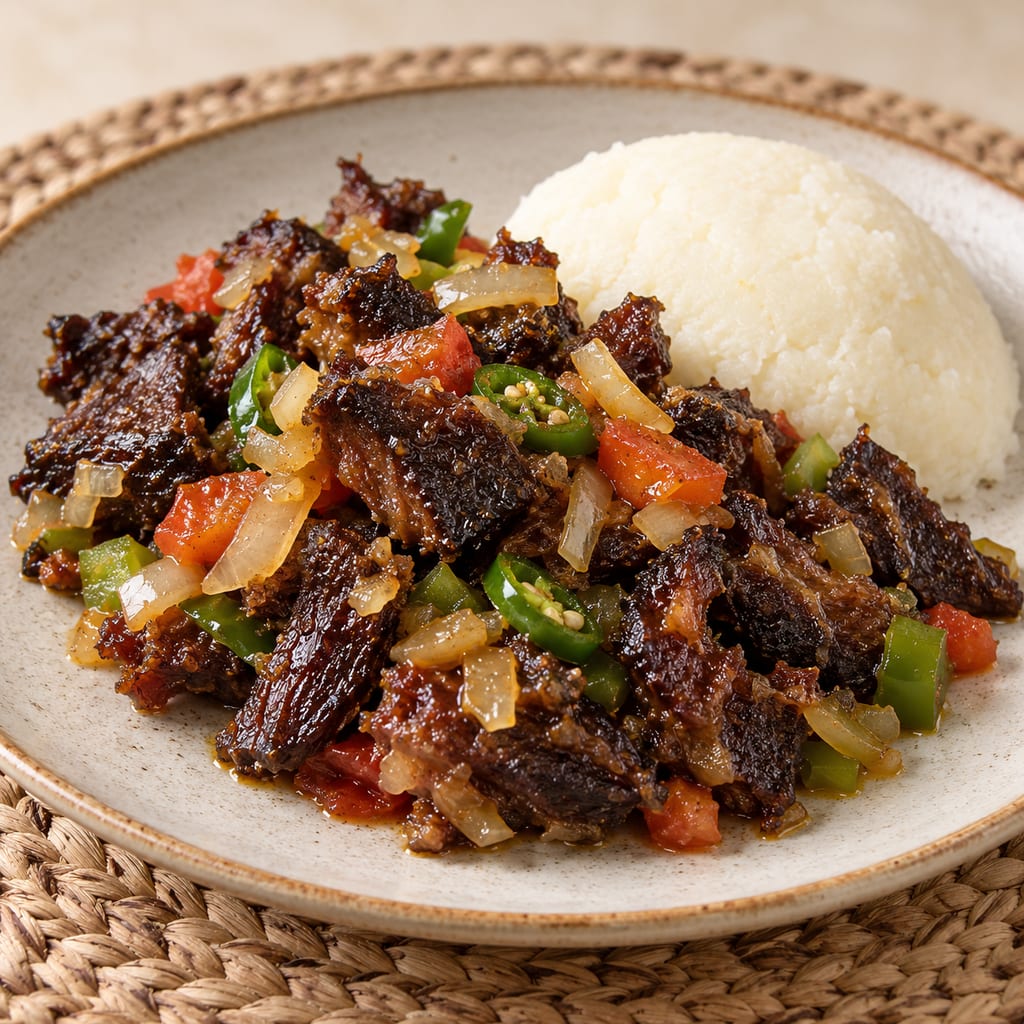
Alina Magano Johannes’s Oondhingu is a family dish from Onyaanya, Oshikoto, in northern Namibia: softened dried beef fried with vegetables and served with pap.
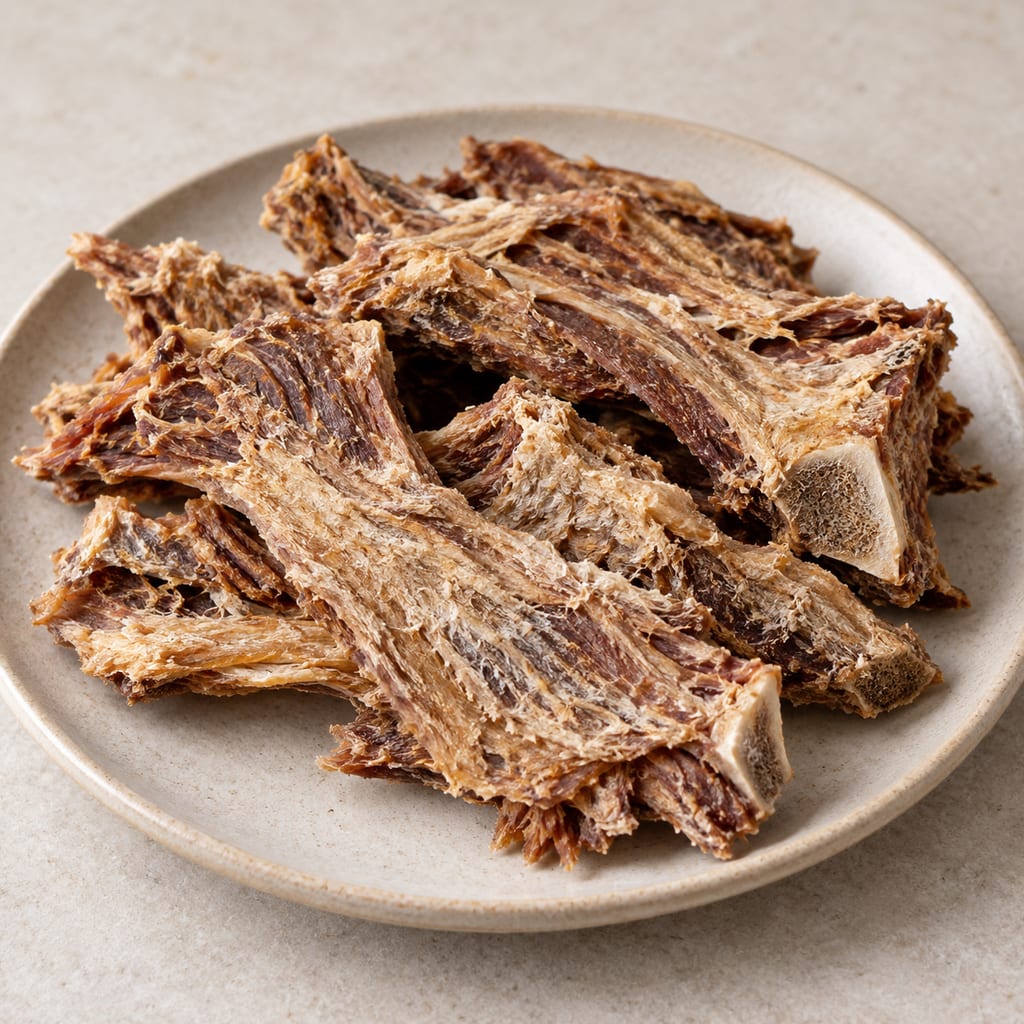
Alpaca charqui is Andean dried meat, made from camelid meat exposed to hot sun by day and frost by night at high altitude, the ancestor of the modern word jerky.
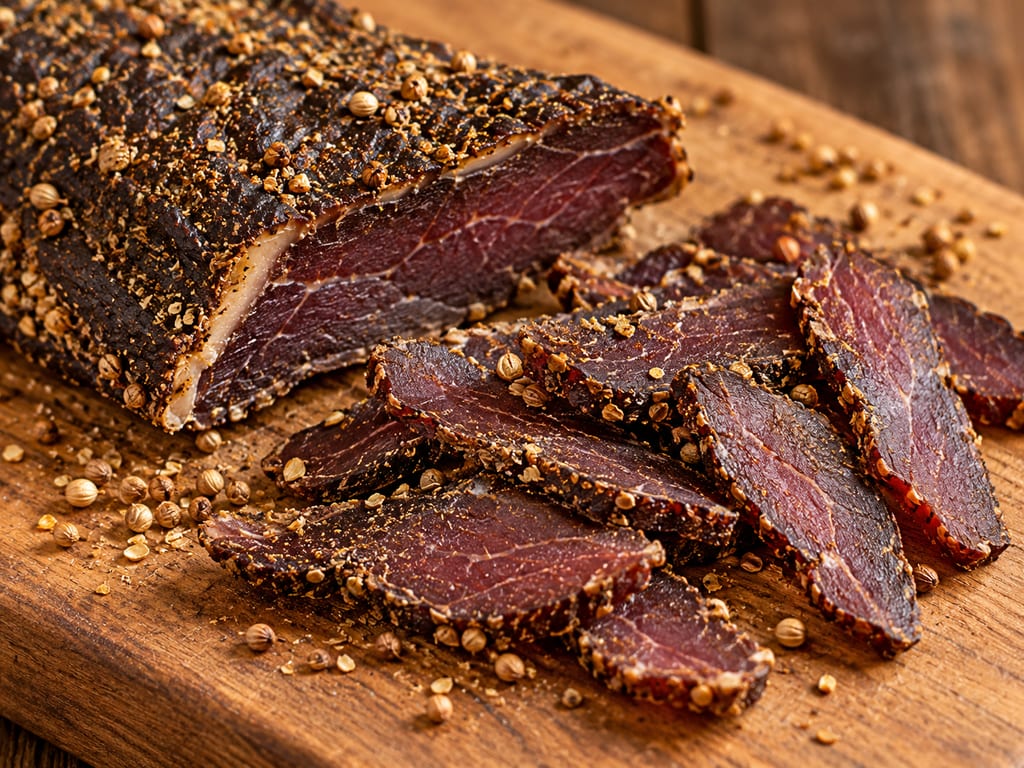
Strips of whole-muscle beef or game seasoned with salt, vinegar, roasted coriander and pepper and air-dried without cooking, sold anywhere from soft and moist to hard and very salty.
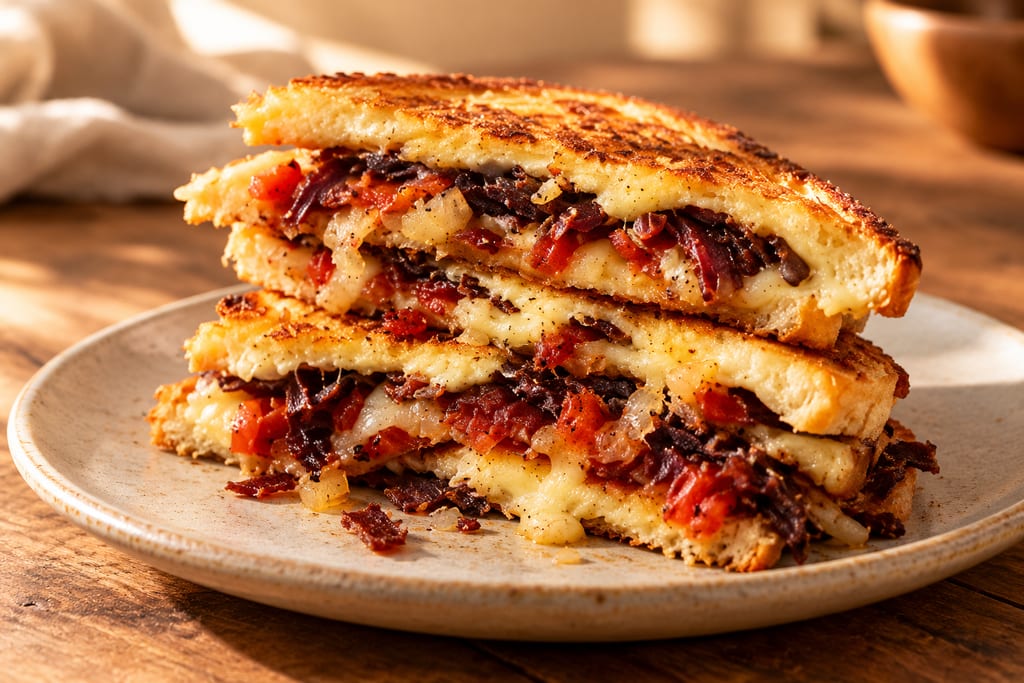
Chopped biltong, sweet onion, cream cheese and Cheddar fill bread toasted in a hinged grid over gentle coals, then finished with biltong dust.
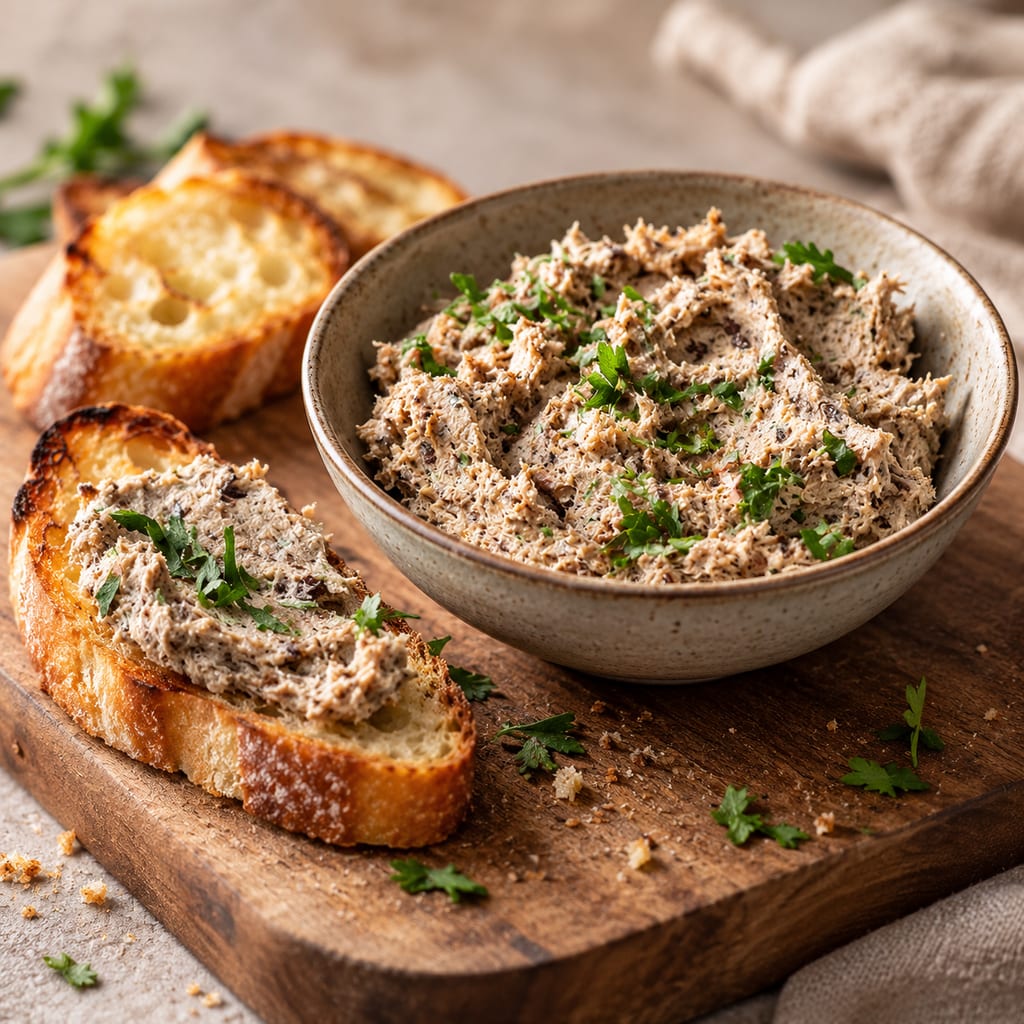
A cold biltong spread with sour cream, mayonnaise, mustard, lemon and herbs; serve it with crackers, crostini or bread.
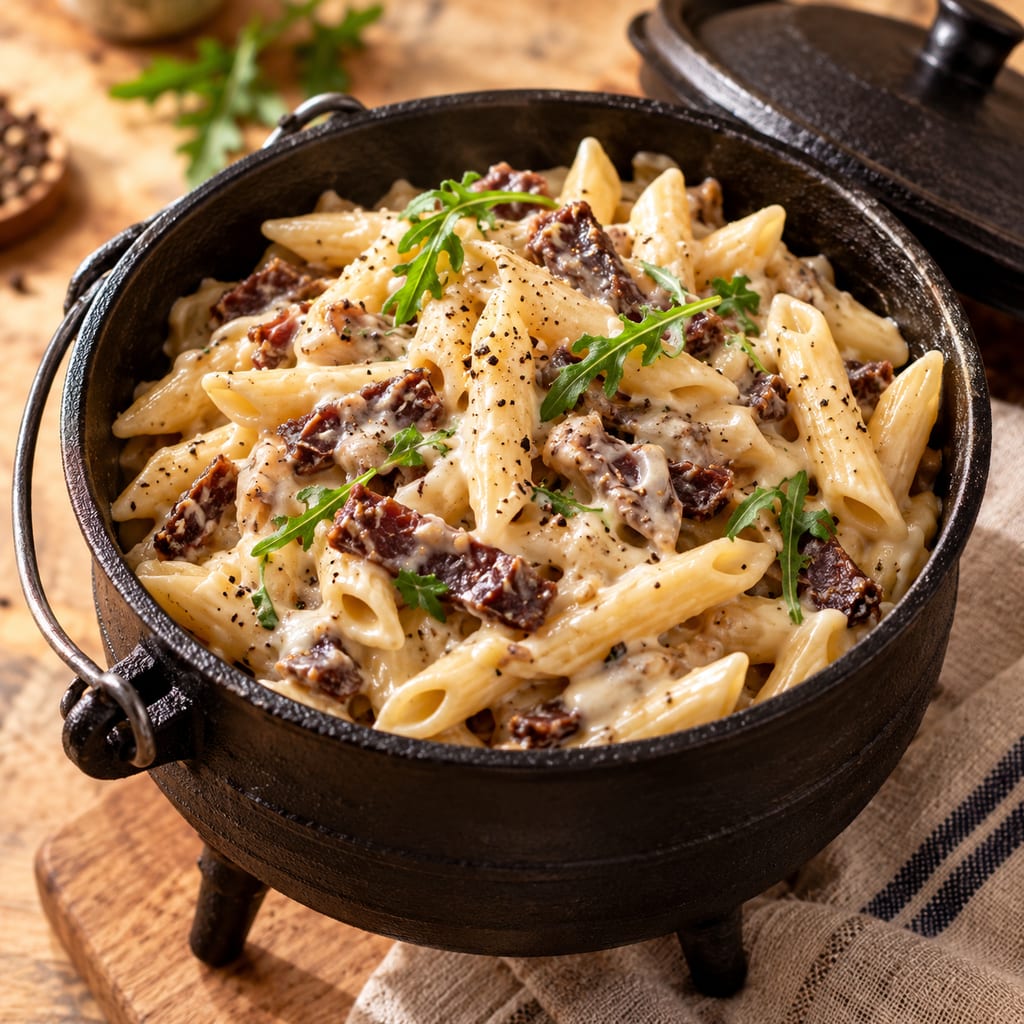
Biltong, bacon and vegetables simmer in tomato-herb stock, then join cooked pasta, milk, cream and Cheddar in this outdoor potjie.
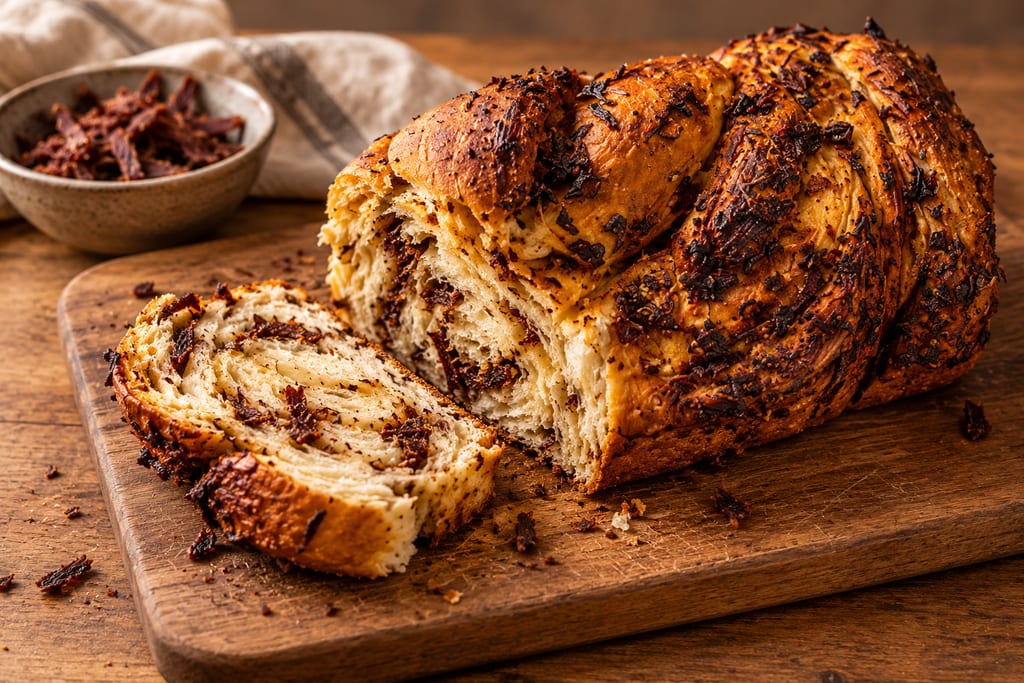
Yeasted bread wrapped around biltong, tomato pesto, Cheddar and feta, split lengthwise into a braid and baked; served with chilli-biltong butter.
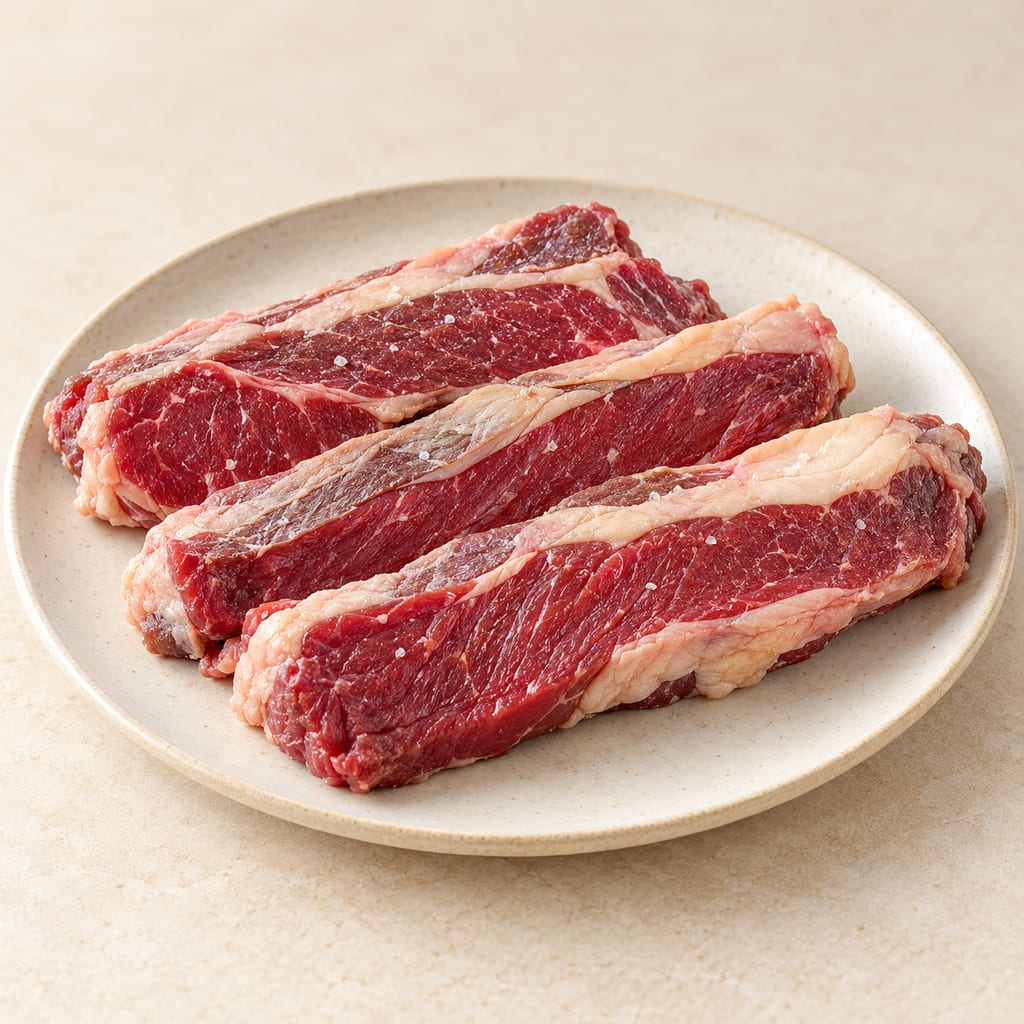
Beef given limited salt and partial surface drying, a short-keeping Brazilian meat that is much less durable than fully dried charque and is treated as a cold-chain product.
No community contributions have been published for this entry yet.
Sign in to contribute. Published comments and photos are free to read.
WikipediaHistory · Method · Uses
SukutiUsually buffalo, with goat or lamb also used
Strips hung over chulho smoke, then dried on a cloth in the sun
Fat removed; spices salt, cumin, pepper, chilli, turmeric, ginger and garlic
Fried or roasted before eating; pounded with browned spices; simmered in curry
Buffalo offered at Hindu temple sacrifice and the rest dried; winter preservation
Cited in: What sukuti is; Why it was made; Cutting and preparing the meat; Seasoning, drying and smoking; Cooking before eating; Variants and regional use; Reading the result and its risks
Nepalese Veterinary JournalMethod · Temperature
Nirmal (2011), Nepalese Veterinary Journal 30, pp. 147-153Sukuti described as dried meat, commonly buffalo, goat or pork
Laboratory chicken study: conditioned 24 h at 4 C, cooked to 69-71 C internal, tray-dried at 80, 100 and 120 C; 100 C scored best sensorially
Cited in: What sukuti is; Cutting and preparing the meat; Seasoning, drying and smoking; Variants and regional use; Reading the result and its risks