Fermented meat around the world
Dry salami, sour pork with rice, matured sheep and aged blubber follow different paths from animal to food. Their stories connect microbes with climate, slaughter, migration and the meals people share.
 FermenteaWhere food goes to change
Substrates
Goat meat is the edible flesh of domestic goats, traded as many cuts and forms whose character depends on the animal, the herd system and local butchery.
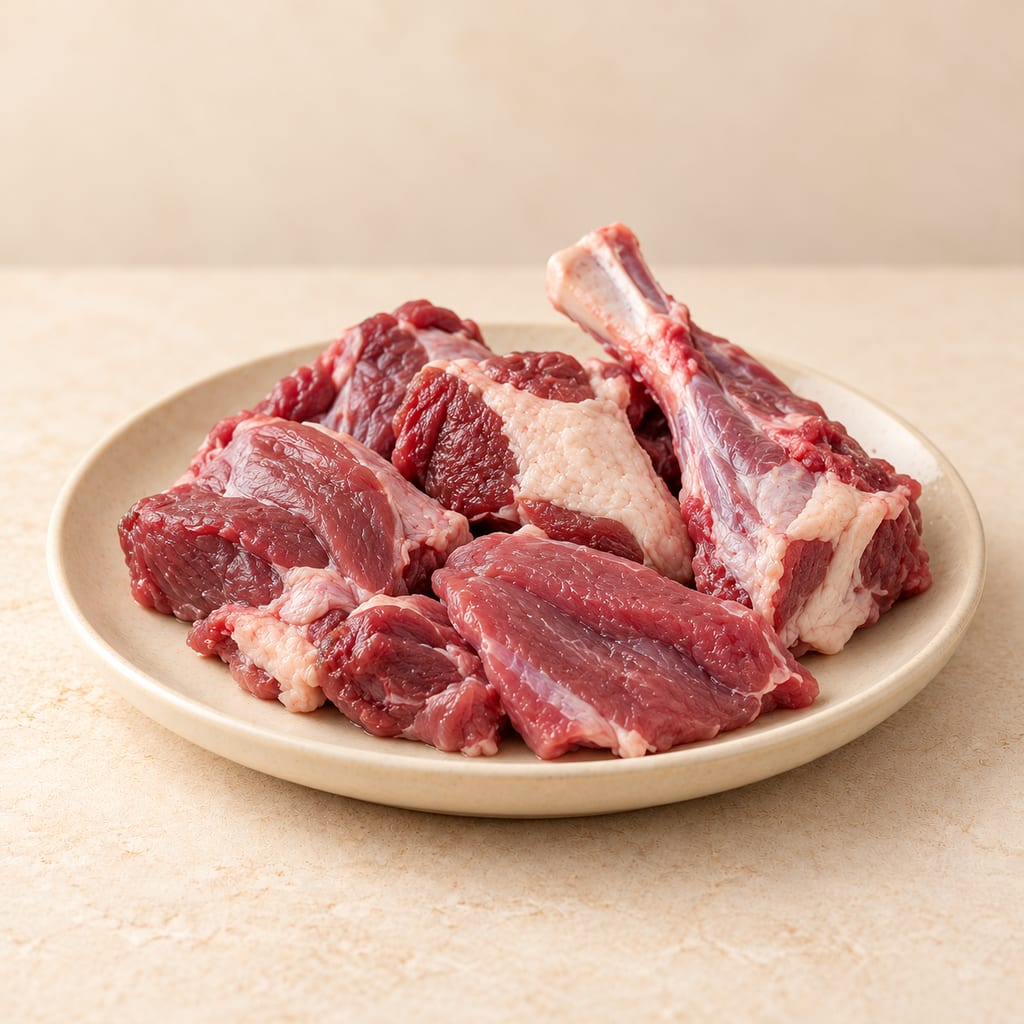
Goat meat is the edible flesh of the domestic goat, Capra aegagrus hircus. Indian food standards use chevon for the edible portion of domestic goats and distinguish fresh, chilled and frozen products. English-language sources also use kid meat for young animals; Webb’s review uses cobrito for small-carcass goat meat in several markets. These names mark trade and food traditions, but they do not supply one international age, cut or grading rule. Ask for the species and cut when a local label could mean something else.
Retail goat may be sold as a whole or divided carcass, as bone-in or boneless sections, or as minced meat. A carcass includes muscle, fat, bone and connective tissue. Edible organs and other offal may be sold with the muscle cuts, but they are distinct tissues and should be named separately when a source or recipe calls for them. Skin, hair and bones belong to the animal and its wider use; they are not interchangeable with muscle meat.
There is no single appearance or fat level that identifies every goat cut. Webb describes goat meat as often darker red and coarser in texture than sheep meat, with flavour and aroma that vary by animal age, fatness, body location, sex, diet and cooking. Those are tendencies across research, not a freshness test or a promise about one package. Breed, production system, trimming and the selected muscle all affect what reaches the counter.
Goats are among the early domestic livestock of Southwest Asia, but the history of the animal does not tell us when people first ate goat meat. Archaeological research in the Zagros highlands of western Iran has used age and sex patterns in goat bones, direct radiocarbon dates and, in later work, ancient genomes to examine the transition from hunting to herd management. The evidence identifies early management at particular sites and dates; it does not establish a single moment when goat meat became food, or a birthplace for the ingredient.
Zeder and Hesse interpreted selective harvesting of younger male goats in the western Iranian highlands as evidence of initial domestication around ten thousand calibrated years ago. A later study combined archaeozoology and genomic data from Ganj Dareh and Tepe Abdul Hosein in the Zagros, finding evidence of goat management by about 8200 BCE and detectable changes in goat form later. These studies address animal management and domestication. They do not establish the first meal, a continuous food tradition, or the origin of modern goat-meat markets.
Goats now live in varied farming systems around the world. The Food and Agriculture Organization describes the domestic goat as a browsing ruminant kept for meat, milk, hides and hair. It notes smallholder mixed farming and pastoralist herds, alongside specialized dairy systems. A herd may serve several purposes at once, so a meat animal can also be part of a household’s livelihood, working landscape and stock of saleable assets. The proportions depend on the place and household; no one production pattern describes all goat meat.
Goats browse a varied plant diet and are raised in environments ranging from mixed smallholdings to pastoral systems. Breed and mature frame size differ widely. Webb’s review compares dwarf, small and large-framed animals and explains that slaughter size depends on breed type, feed and water availability, production conditions, and local customs. Those factors help explain why two carcasses carrying the same species name can differ greatly in weight, proportions and fat cover.
Age, sex, body weight, breed and diet affect carcass fat and composition. Goat carcasses are often relatively lean, but lean does not mean fat-free: fat distribution differs by animal and cut. Low subcutaneous fat can leave a carcass more vulnerable to moisture loss during commercial chilling, while pre-slaughter handling and transport can affect the changes by which muscle becomes meat. Webb reviews these as processing and meat-quality concerns. They are reasons commercial carcasses vary, not household fermentation controls.
Webb’s review compares Boer, Savanna and Angora goats and reports different moisture, protein, fat and ash values. Those figures belong to named populations and study conditions; they are not a universal composition table for goat meat. A nutrition figure should be read with its breed, cut and lean-to-fat basis in view.
Market age also follows the production and sales system. Webb reports that mature animals feature in some formal markets while younger animals appear in some small-scale and subsistence trade; the review also describes small-carcass meat called cobrito in Mediterranean countries, Latin America and western India. These examples should not be turned into a universal rule about kid meat or a standard carcass weight. A buyer’s idea of an appropriate age or size reflects local demand, available breeds and the way the animal was raised.
A study of smallholders on Socotra, an island of Yemen, shows how husbandry responds to a specific landscape and calendar. Its 154 interviews, conducted during rainy and dry seasons, describe free-ranging goats, seasonal feeding and watering, and herd uses that include meat and other products. The study links those practices to local ecology and livelihood. Its findings explain one island’s system; they should not be used as a template for goat farming elsewhere.
A butcher’s cut names a section of an animal, not a uniform piece shared by every country. Webb reports that loin, back and hind-leg cuts are especially sought in some Western markets, while breast cuts have been preferred in some African and Asian studies. One survey of 367 goat-meat consumers in four Sierra Leone cities found breast, leg and shoulder among the cuts respondents preferred. A separate study in four Tanzanian districts found strong interest in hind leg, foreleg and loin. The difference is a useful reminder that cut preferences belong to particular markets and samples.
Anatomy helps explain why cooking instructions often differ by cut. The FAO meat-cutting guide describes leg muscles, which do more locomotion, as generally less tender and more flavourful than back muscles. Connective tissue and the animal’s age also influence texture. USDA consumer guidance suggests braising or stewing less-tender goat cuts, while young goat meat may suit preparations commonly used for lamb. These are cooking options for particular cuts, not a recipe for every animal or an instruction to ferment the meat.
Some carcass systems remove the head; others retain or sell it, and the offal may be consumed or marketed separately. Webb notes that substantial parts of the goat carcass are used in some settings, which makes yield comparisons depend on how the carcass was dressed and which tissues were counted. The Tanzania dissertation records preferences for lungs and other non-carcass parts alongside cuts of muscle. These tissues have different names, textures and preparation needs. An ingredient entry that calls for goat muscle does not automatically include liver, lungs, intestine, head or bone.
Goat meat has no single worldwide role. FAO describes goats as widely distributed livestock, while Webb’s review contrasts countries where goat is a major meat source with Western markets where it is less common. The same review records seasonal demand in some European and United States markets. Such broad comparisons describe the literature available to the author in 2014; they do not measure every country, later migration or current buying pattern. The local evidence is more useful when read at its actual scale.
In Sierra Leone, a 2023 consumer-preference study interviewed 367 people in four cities. Respondents named flavour and taste among reasons for liking goat meat; price mattered in their purchases, and breast, leg and shoulder appeared among their preferred cuts. The study is evidence about those surveyed consumers and cities, not a national menu or a rule about what all Sierra Leoneans eat. It also shows why a retailer’s cut selection can reflect demand as well as anatomy.
A 2016 Sokoine University dissertation examined four Small East African goat strains and consumer preferences in Bahi, Kwimba, Ngorongoro and Same districts in Tanzania. In that sample, respondents valued hind-leg and foreleg cuts and also reported interest in offal. The carcass study found measurable differences among the sampled strains in carcass weight and in the proportions of muscle, bone and fat across cuts. Those results help explain why breed and local butchery matter; they are not a universal nutrient table for goat meat.
On Socotra, goat keeping extends beyond selling meat. A 2025 study of 154 households found that respondents kept goats for livelihood and cultural reasons, with meat used for household sustenance, guests, weddings and market sale. The authors also describe goats as financial and social assets within the island’s pastoral life. This account documents the respondents and the study’s field period, not every community in Yemen. Read together, the three studies show different relations between meat, household income, special occasions and everyday consumption without reducing them to one global custom.
Goat meat also appears in accounts of preserved and fermented foods, but an ingredient mention is not a process. H. A. Dirar’s account of Sudanese fermented-food heritage names Beirta as goat meat or offal held with milk and salt. The supplied Fermented Meat Around the World atlas records the pickling mechanism as uncertain. Together, the sources support the ingredient association and its Sudanese context, but they do not supply a reproducible method or identify enough controls to describe a safe home ferment.
Other entries in the atlas concern different animal tissues and preparations, including fat-filled intestine, offal, bones and gazelle rumen. Those accounts should remain distinct rather than being combined into a generic goat-meat ferment. Goat muscle, organ meat, intestinal tissue and bone differ in structure and handling. A reference to salt or milk alone does not establish the organisms involved, whether acidification occurred, how a product was preserved, or whether the preparation was safe. This page therefore explains the historical note without turning it into instructions.
Species, cut and storage state answer different questions. A chevon label identifies goat under the Indian standard; it does not identify age, breed, diet or a particular cut. Labels such as fresh, chilled or frozen describe product form, not how long the meat remains safe after purchase. Ask the seller when a label leaves those details unclear and follow current food-safety advice for the product and jurisdiction.
Goat meat is raw animal food and can carry foodborne hazards. USDA’s consumer guidance distinguishes ground goat from whole cuts when it discusses cooking and recommends different treatment for less-tender cuts. That guidance is for ordinary cooking; it does not validate fermentation. Handle raw meat using current local authority advice and keep raw foods from contaminating ready-to-eat foods. Colour, aroma, taste, bubbling or a home measurement cannot prove that raw or fermented meat is safe.
The historical Beirta note does not specify an established salt ratio, organism, acidity, temperature, fermentation time, water-activity target or storage limit. This entry supplies none. It is a source-backed account of goat meat as an ingredient and its documented uses, not a curing formula. Any future preparation would need its own complete, independently validated process and food-safety evidence before it could be presented as a home recipe.
No cited source establishes where goat meat as an ingredient was first eaten or a single geographic origin; goat domestication evidence concerns the animal, not the first meal.
Dirar's account, cited by the supplied atlas, documents goat meat or offal with milk and salt for Beirta; it does not establish a single origin for goat meat, and its pickling mechanism remains uncertain.
Dry salami, sour pork with rice, matured sheep and aged blubber follow different paths from animal to food. Their stories connect microbes with climate, slaughter, migration and the meals people share.
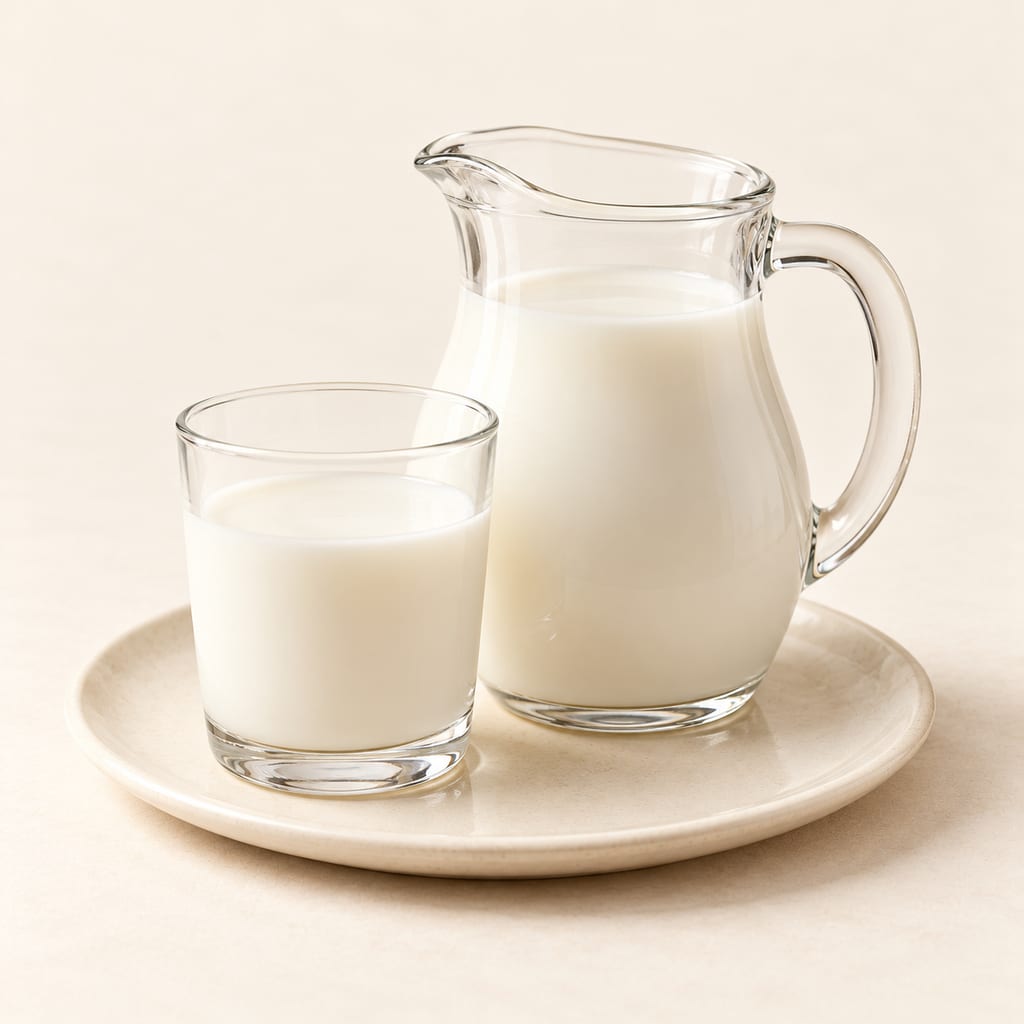
Camel milk from one- and two-humped camels supplies fresh drinks, fermented milks and specialised cheeses across pastoral food systems in Africa and Asia.
No community contributions have been published for this entry yet.
Sign in to contribute. Published comments and photos are free to read.
Food Safety and Standards Authority of India; reproduced by FAOLEXTerminology · Product forms
Food Safety and Standards (Food Products Standards and Food Additives) Regulations, 2011Defines chevon as the edible portion of domestic goats and distinguishes fresh, chilled and frozen goat meat.
Cited in: What the name covers; Choosing and handling goat meat
Animal FrontiersProduction · Husbandry · Geography · Cuts · Carcass quality · Culinary context
Goat meat production, composition, and qualityEarly goat domestication is discussed as animal history, not evidence for a first goat-meat dish.
Breed, age, sex, feed, water, management, slaughter system and pre-slaughter handling affect carcass and meat characteristics.
The review describes market differences in age, carcass size, cut preferences and seasonality, and compares composition across named goat types.
Cited in: What the name covers; Herd, animal and carcass; From muscle to cuts; Markets, households and occasions
Food and Agriculture Organization of the United NationsAnatomy · Cuts · Culinary context
Meat cutting and utilization of meat cutsCarcasses contain muscle, fat, bone and connective tissue; tenderness, flavour and juiciness vary by muscle, animal age and body location; leg muscles are generally less tender and more flavourful than back muscles.
Cited in: From muscle to cuts
USDA Food Safety and Inspection ServiceFood safety · Culinary context
How do you cook goat meat?The consumer page gives separate safe-cooking guidance for ground goat and whole goat cuts, describes goat meat as lean, and suggests moist cooking for less-tender cuts; it does not validate fermentation.
Cited in: What the name covers; From muscle to cuts; Choosing and handling goat meat
National Research CouncilHistory · Geography · Fermentation context
Sudan's Fermented Food HeritageThe supplied atlas cites Dirar's account for Beirta, described as goat meat or offal held with milk and salt, while the pickling mechanism remains uncertain.
Cited in: Goat meat in the historical fermentation record; Choosing and handling goat meat
Food and Agriculture Organization of the United NationsHusbandry · Geography
GoatsDomestic goats are widely distributed and kept for meat, milk, hides and hair; they browse varied plant diets and are raised in smallholder mixed systems, pastoralist herds and specialized dairy systems.
Cited in: An animal history, not a meat birthplace; Herd, animal and carcass; Markets, households and occasions
ScienceArchaeology · History · Geography
The initial domestication of goats (Capra hircus) in the Zagros mountains 10,000 years agoThe study uses age and sex profiles in goat remains and direct radiocarbon dates from the highlands of western Iran to examine early goat management; it concerns animal domestication, not the first consumption of goat meat.
Cited in: An animal history, not a meat birthplace
Proceedings of the National Academy of SciencesArchaeology · History · Geography
Herded and hunted goat genomes from the dawn of domestication in the Zagros MountainsAncient genome and archaeozoological analyses of Ganj Dareh and Tepe Abdul Hosein report evidence of goat management in the Zagros by about 8200 BCE and morphological change later; the findings trace animal husbandry, not first goat-meat consumption.
Cited in: An animal history, not a meat birthplace
Tropical Animal Health and ProductionHusbandry · History · Geography · Social use
Socioeconomic importance of the semi-feral goat population for smallholders on the island of Socotra (Yemen)A 154-household Socotra survey describes goat husbandry and reports meat use for household sustenance, social events and market sale; the study is specific to Socotra and its field period.
Cited in: Herd, animal and carcass; Markets, households and occasions
Asian Journal of Research in Animal and Veterinary SciencesGeography · Consumer use · Cuts
Consumer Preference for Goat Meat in Sierra LeoneA 2023 questionnaire study of 367 goat-meat consumers in four Sierra Leone cities reports flavour and taste as reasons for preference and breast, leg and shoulder among cuts respondents selected.
Cited in: From muscle to cuts; Markets, households and occasions
Sokoine University of AgricultureGeography · Consumer use · Cuts · Carcass composition
Consumer preferences and meat characteristics of four indigenous goat strains raised in traditional livestock production system in selected areas of TanzaniaA 2016 master's dissertation surveys preferences in Bahi, Kwimba, Ngorongoro and Same and compares four Small East African goat strains; reported cut preferences and carcass composition are specific to those samples.
Cited in: From muscle to cuts; Markets, households and occasions
USDA Food Safety and Inspection ServiceFood safety · Handling
What is Cross-Contamination?Raw meat and juices can transfer harmful bacteria to cooked or ready-to-eat foods, produce, utensils and surfaces when food is handled improperly.
Cited in: Choosing and handling goat meat