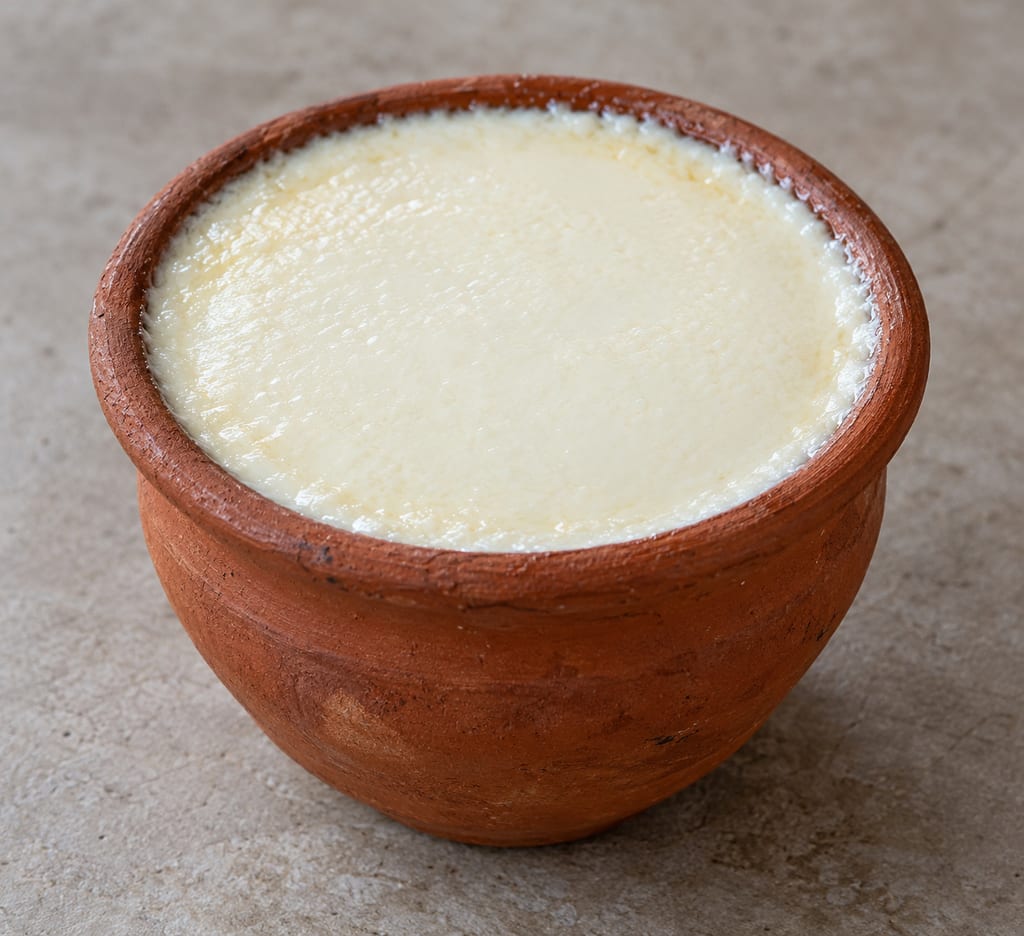
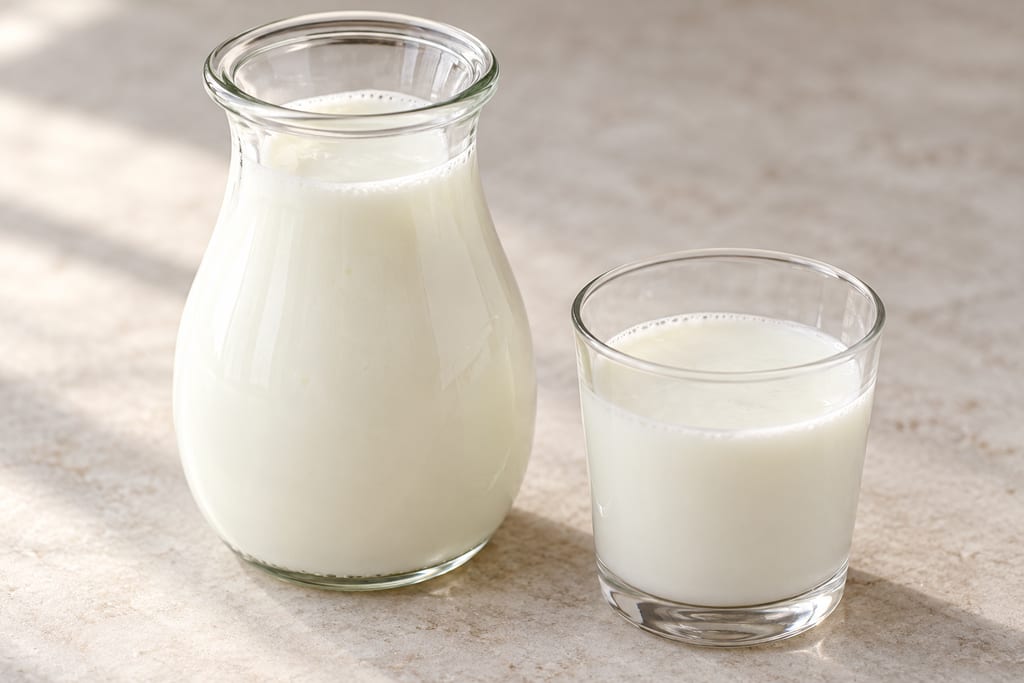
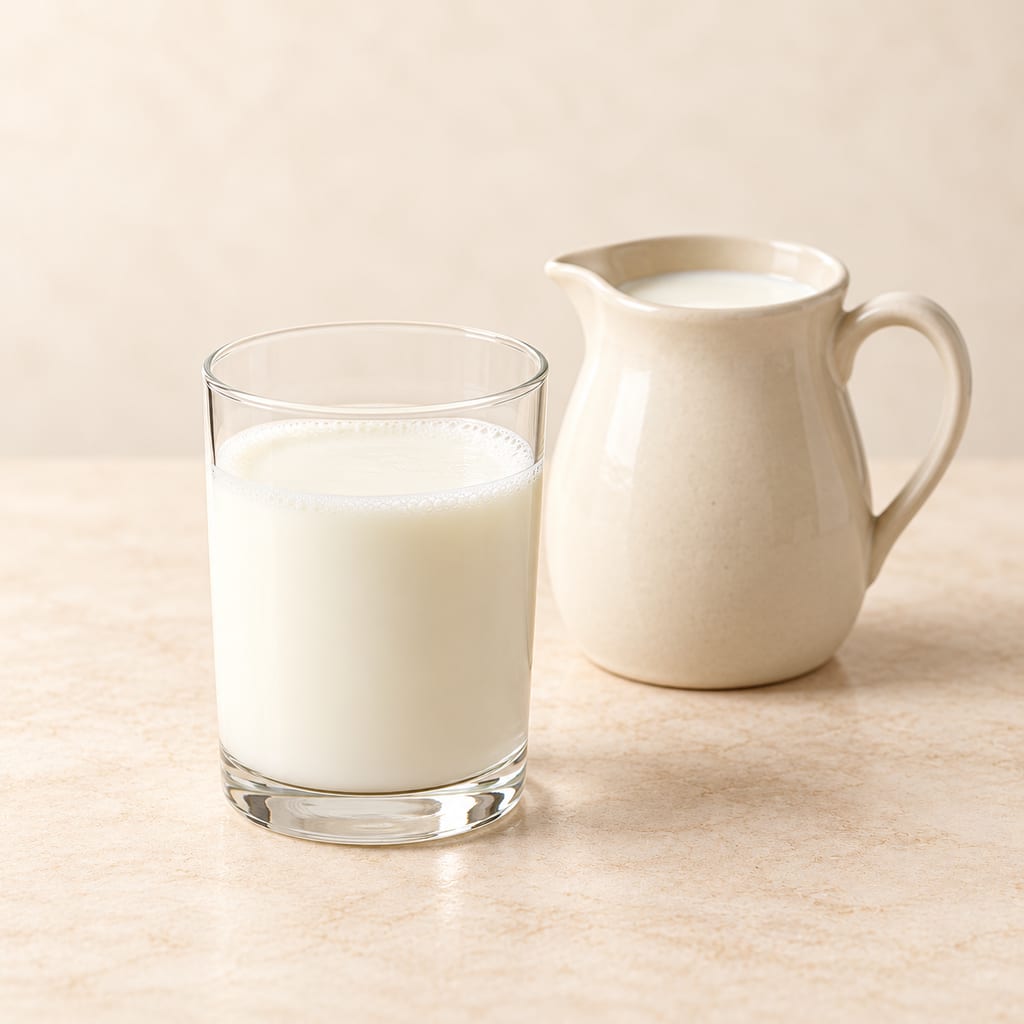
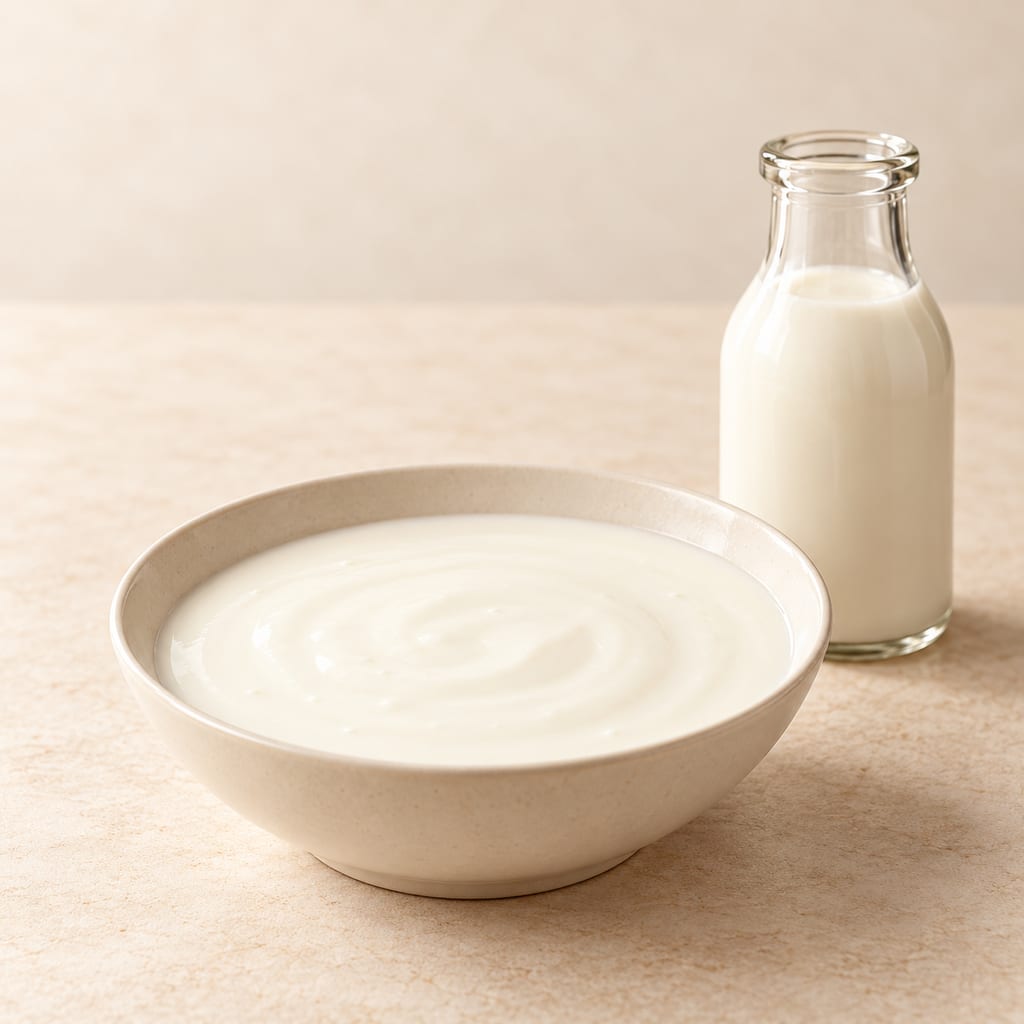
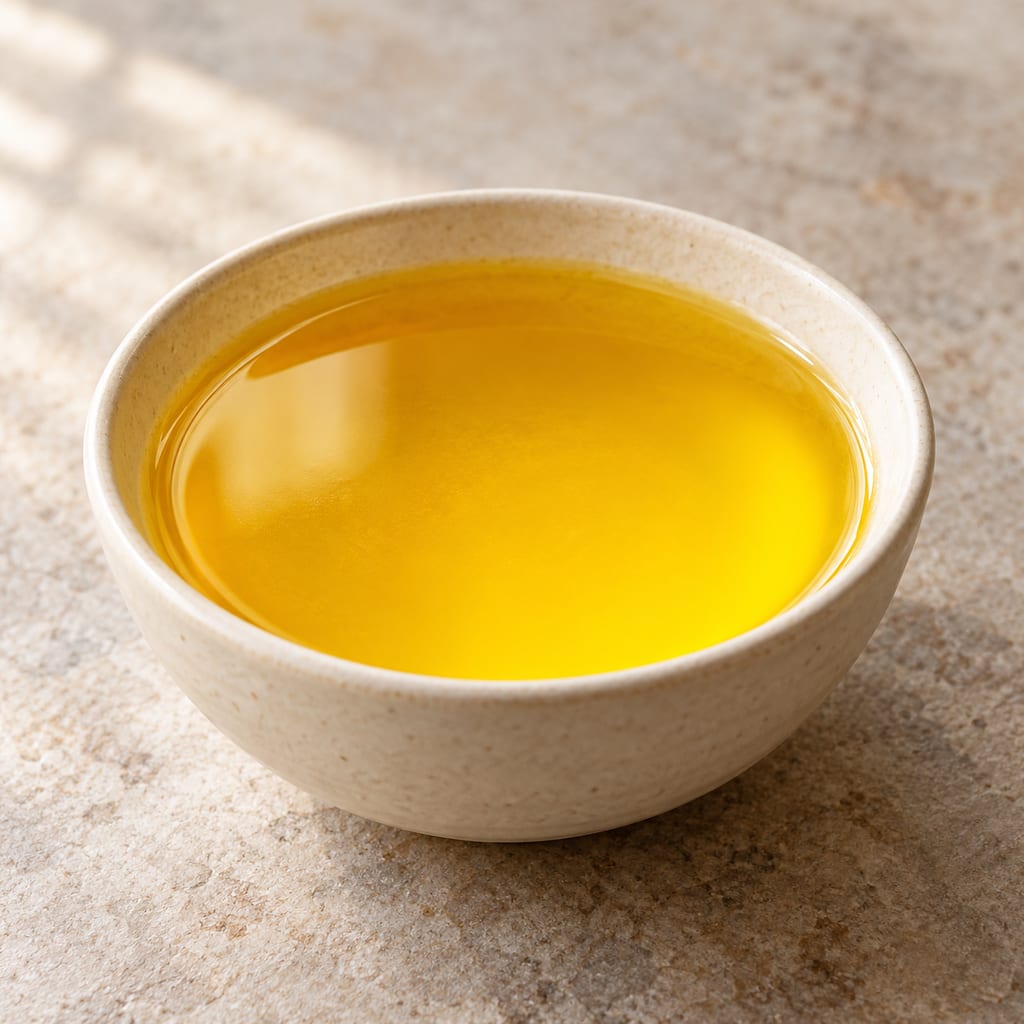
Juju dhau is a rich Newar cultured milk associated with Bhaktapur, Nepal. A local account describes buffalo milk concentrated by boiling, inoculated with previous-day curd and set in earthen pots.
Juju dhau, also written juju dhau and जुजुधौ, is a rich set dahi associated with Bhaktapur and Newar food culture in Nepal's Kathmandu Valley. The name is often glossed as “king of curds.” The local product is shaped by its milk, concentrated body, maintained starter and the earthen pot in which it sets.
The local account identifies buffalo milk as characteristic of Juju dhau. It describes a dense curd with a surface layer of cream or fat and a thicker set beneath. This is not a drained cheese: the milk is cultured and allowed to set in its serving pot. Plain and sweetened forms are both documented: the local account describes a plain pot-set process, while a 2019 report records one separate sweetened commercial route.
Local accounts place Juju dhau in Bhaktapur's Newar community and describe dahi as more than an everyday dessert. It appears at feasts and festivals, including Mha Puja and Tihar, and is offered as a sign of welcome, celebration and good fortune. The food's familiar pot therefore belongs both to dairy commerce and to a ceremonial table.
Bhaktapur.com repeats a story that the city's curd won a contest in the Malla period. That story is part of local heritage writing, not a securely dated record of when Juju dhau began. A 2019 newspaper profile followed two brothers who maintained a family business and its daily starter culture; the account describes continuing practice, not the invention of the product or a universal recipe.
The Bhaktapur preparation begins by straining milk if it contains visible plant debris. Makers heat it in a broad pan while stirring, then continue cooking after it boils until it thickens. The local account says the volume commonly falls by about 35–40 percent. That figure describes its practice; it is not a specified yield or a laboratory endpoint.
The thickened milk is transferred into cleaned, warmed earthen pots. A bed of rice husks holds the pots steady and insulates them. Pouring the hot milk from above is described as a way to form a foamy surface. The source also mentions optional dried aromatics, but does not give amounts; they are not required in the core method.
After cooling to 40–45°C, the milk receives starter taken from the previous day's dahi. The local account says makers may dilute the starter with water to a pourable consistency, and gives about one teaspoon per litre, sometimes two in colder weather. These are source-specific quantities. They do not define a universal starter dose or compensate for a different milk, vessel or room.
The local method places the pots in rice husks and covers them with an earthen lid and thick jute or cotton insulation. The account describes a set after three to four hours. It does not report a measured temperature through that period, a final pH or an objective release test. The reported time should be read as an observation from one local account, not a safety limit.
The account says earthenware is preferred in Bhaktapur and describes other vessel choices in different Nepal regions. The material and shape affect how the pot handles warmth and moisture, but the page does not provide a controlled comparison. Juju dhau should not be reduced to a generic yoghurt method with every local vessel treated as interchangeable.
The Kathmandu Post profile describes one producer family's modern commercial routine, not the same formula as the plain Bhaktapur account above. That family sometimes combined buffalo milk with a little cow milk, added sugar, simmered the mixture for about an hour and set it in clay bowls over rice husks. The report records a particular business and its preferences; it does not supply a sugar quantity or show that all Juju dhau is sweetened.
That report also describes the family's inherited daily culture and larger output for festivals. It is useful evidence for continuing production, but its batch scale and sweetened process should not be blended into the source-specific plain method.
Lactic acid bacteria use lactose in milk and produce lactic acid. As acidity rises, milk proteins form a gel that holds water and fat, giving set dahi its body. The local account describes this change in general terms but says the organisms specific to Bhaktapur Juju dhau have not been fully investigated. It lists common yoghurt bacteria as examples; those names are not a verified starter composition for every pot of Juju dhau.
The previous day's curd carries a living culture into the new milk. Repeated use can maintain a local starter, but its microbial makeup and activity can change. The available account does not specify a species, strain, measured inoculum activity or method for testing a starter.
The traditional account reports boiling and concentrating the milk but gives no validated time-temperature treatment. It also leaves the temperature during setting, final acidity and contamination controls unmeasured. A thick set or pleasant smell does not prove the food is free of pathogens.
For a home adaptation, CDC advises choosing pasteurized milk and refrigerating perishable dairy at 40°F or colder. The local source says Juju dhau is usually made to be eaten fresh and does not establish a safe shelf life. Refrigeration can change texture and sourness, but that sensory change is not a reason to leave the curd at room temperature.
Juju dhau is a Newar cultured milk associated with Bhaktapur and the Kathmandu Valley. Local accounts describe it as a ceremonial and festive food, including at Mha Puja and Tihar, and document its continuing production and sale. A popular royal contest story is not a dated origin record.
Ingredients
Scaling: source batch only
Buffalo milkThe local account identifies buffalo milk as characteristic of Juju dhau. It does not specify whether the milk is raw or pasteurized.
Amount not stated
No complete batch volume is given. The source reports reducing the starting volume during boiling; that is a local process description, not a yield specification.
Previous-day dahi starterThe curd from the previous day's batch is thinned with water when needed before inoculation.
Amount not stated
The local account gives about 1 teaspoon per litre of milk, and says some makers use 2 teaspoons in colder weather. These are reported local quantities, not validated inoculum or safety limits.
Water (optional)Use only as needed to thin the previous-day curd into a pourable starter.
Amount not stated
The local account gives no amount.
Method
Risks and precautions · Elevated risk
Milkborne pathogens
If the starting milk is unpasteurized, it can carry pathogens including Campylobacter, E. coli, Listeria and Salmonella. The local account's boil-and-concentrate description does not document a validated time-temperature treatment.
Hazard source
Unverified fermentation and storage conditions
The local accounts do not establish a finished pH, a measured setting temperature, product-specific cold-storage duration or a shelf life. A set texture or sour flavor is not evidence that the batch is safe.
Hazard source
For a home adaptation, choose pasteurized milk; the local account does not establish a validated household milk treatment.
Control source
Refrigerate the finished dahi at 40°F (4.4°C) or colder.
Control source
The local account's boiling and concentration process is not a validated pasteurization schedule. CDC recommends pasteurized milk to reduce the risk from milkborne pathogens; use it for a home adaptation.
The reported 3–4 hour set, 40–45°C starter addition temperature, and 35–40% volume reduction describe local practice, not a validated safety process.
The local account says Juju dhau is usually eaten fresh but gives no safe storage duration. Refrigerate promptly; do not infer a shelf life from the set or aroma.
Milk is an allergen. The local sources do not identify a product-specific final acidity endpoint or pathogen test.
Strain the milk through clean cloth or a fine strainer to remove visible straw or grass, as the Bhaktapur account describes.
Heat the milk in a broad, heavy pan, stirring continuously until it boils. Lower the heat and continue stirring until the milk thickens. The account says makers commonly reduce the starting volume by about 35–40%; it gives no fixed batch size or measured endpoint.
Clean the earthen setting pots and dry or warm them before use. Place them in a bed of rice husks so they can stand without rocking; the account describes the husks as part of the insulation.
Pour the hot, concentrated milk into the pots. The local account describes pouring from a height to form a surface froth. Any aromatics are optional local additions, not part of the core plain preparation.
When the milk has cooled to 40–45°C, stir in the previous day's dahi starter. The account describes thinning the starter with water, using about 1 teaspoon per litre of milk and sometimes 2 teaspoons in colder weather; it does not give a complete batch formula. Add the remaining milk if the pot was not filled at first, then cover it.
Insulate the covered pots with a thick jute sack or cotton blanket over the rice-husk bed. The local account reports a set after about 3–4 hours. It does not report the temperature through the setting period or a measured acidity endpoint. Once set, refrigerate promptly for home service; this cooling advice is general food-safety guidance, not a step measured in the traditional account.
Conditions
Fermentation3–4 h
Places
Bhaktapur
Traditional preparation · Locality evidence
A documented Bhaktapur/Newar preparation and regional specialty, not a claim that all Nepali dahi follows this process.
Water buffalo milk comes from Bubalus bubalis and appears in regional dairy traditions across Asia and beyond. Its richer average fat and casein profile affects processing, while composition and raw-milk risk depend on the actual supply.
Follow milk into cheese, cultured drinks, butter, dried curds and sweets: a journey through the animals, seasons and household decisions behind the world's dairy foods.
High-fat cream scalded below boiling for at least an hour until a thick crust forms, then cooled hard so the crust sets and the cream beneath thickens.
Crème fraîche is cream soured by lactic cultures into a thick, mild topping. It suits fruit and desserts as well as soups, sauces and other savoury dishes.
Cultured butter is churned from cream soured with lactic cultures. Its lightly tart flavour comes from the cultured cream, which separates into butter grains and buttermilk.
Filmjölk is a Swedish cultured milk with mild acidity and a spoonable body. This recurring batch uses filmjölk from the previous batch to culture fresh milk.
Butter heated until most water leaves and the milk solids separate, giving a fat that keeps far longer than butter. Rendering applies the same heat to animal tissue to make lard and tallow.
Community
No community contributions have been published for this entry yet.
Share what you made
Sign in to contribute. Published comments and photos are free to read.
Cited in: A set curd from Bhaktapur; A food of Newar gatherings; Milk reduction, starter and the set; Earthen pots and warm setting; What fermentation changes; Safety, cooling and storage
Accessed 2026-10-29
The Kathmandu PostHistory · Culture · Method variation
The supplied cheesemaking atlas cites this handbook for Juju dhau's preparation category: Bhaktapur/Newar curd, buffalo milk, concentration before culturing, with plain and sweet forms. These details are kept separate from the specific method in the local Bhaktapur account.