
Active sour-cream starter
A living dairy inoculum that starts controlled cream fermentation, developing acidity and aroma before sour cream or cultured butter is finished.
 FermenteaWhere food goes to change
Modern adaptation
Beurre de culture
Cultured butter is churned from cream soured with lactic cultures. Its lightly tart flavour comes from the cultured cream, which separates into butter grains and buttermilk.
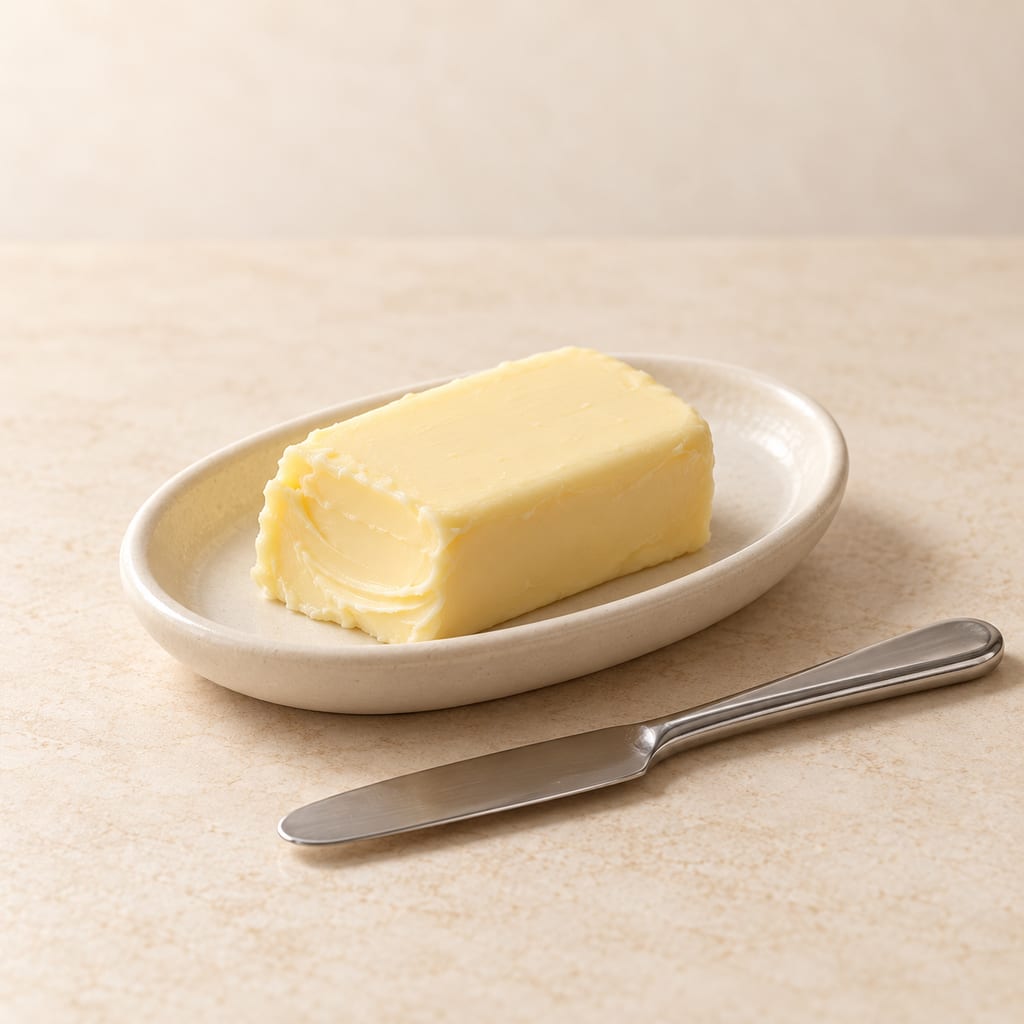
Cultured butter begins with cream that has been deliberately soured by a starter culture. The cream thickens and develops acidity and aroma before it enters the churn. Churning then gathers its fat into butter and releases buttermilk. The distinction matters: fermentation changes the cream, while mechanical work makes the butter. Sweet-cream butter takes the second path without the preceding cultured-cream stage.
The finished food carries some of the character developed in that first stage. Its acidity and aromatic character distinguish it from butter churned from uncultured cream. The category has no single fixed flavour. Cream, culture and processing can all differ between makers.
At the table, that difference can be apparent without elaborate preparation: the butter itself supplies fermented-cream character alongside milk fat and, in a salted version, salt. In cooking, its flavour becomes one component among the other ingredients. The word “cultured” describes a process; it does not guarantee a particular fat content, colour, keeping time or performance in every pastry. Those depend on the butter actually made or purchased.
Vilhelm Storch's butter-making patent records a problem familiar to dairies: cream ripened, but did not always ripen in the same way. His specification describes different microbial populations producing different flavours, with results varying between districts and even between batches at one dairy. A desirable aromatic butter might be followed by a bitter or oily one. The practical objective was reproducibility.
Storch's proposed sequence combined heating, cooling and inoculation with selected flavour-producing bacteria before ripening and churning. The patent, issued in 1893, is evidence of a deliberate effort to control an existing sour-cream butter process. It does not date the invention of butter or the first use of sour cream. Nor do the organisms drawn and named in its period terminology identify the starter used in this modern household recipe.
Read in that light, the document marks an important change in attention. The cream's previous handling and microbial inheritance were being treated as things a dairy could investigate and manage, rather than simply accept. Its historical claims about removing harmful bacteria belong to that period and should not be read as a current safety protocol. The lasting idea illustrated here is selected inoculation in place of an unpredictable microbial starting point.
Lactic acid bacteria can use milk sugar to produce lactic acid. The resulting sourness is one part of cultured cream's character. Aroma involves other compounds as well. Some dairy cultures can use citrate and produce compounds including diacetyl, associated with buttery aroma. “The cream has become more acidic” and “the cream has developed a particular aroma” therefore describe related changes, not identical measurements of one thing.
This helps explain why a starter culture is more specific than the instruction to let cream go sour. Different organisms and conditions can produce different flavour outcomes. Storch's interest in selected cultures arose from just that variability. The active sour-cream starter in this household preparation supplies the culture; its species and strains are unspecified.
The culture works in cream whose fat and other components already have their own qualities. It changes that starting material through acid and aroma production. Different culture choices can give two creams different characters before either reaches the churn, and the subsequent butter carries that variation into the finished food.
Cream is an emulsion: fat globules are dispersed in a watery phase, each with a surface layer that helps keep it separate. It can look uniformly white and liquid while containing many individual globules. Butter-making depends on changing that organisation. The fat must come together, and much of the watery liquid must separate. Choosing cream is therefore a structural decision as well as a choice of flavour or richness.
Homogenization deliberately makes milk-fat globules smaller and changes their surfaces. This treatment is useful in many dairy products because it changes their stability and texture. It should not be confused with pasteurization, which is a heat treatment. A cream can have undergone one, both or neither, so a label needs to be read for the property the method actually requires.
This household butter method requires pasteurized, non-homogenized cream. Homogenized cream can suit a smooth, spoonable sour cream, but that is a different physical aim from separating fat into butter grains. The practical recipe draws its culturing stage from a sour-cream procedure while retaining the butter method's cream specification. Those requirements remain distinct: a cream chosen to thicken smoothly is not automatically the cream chosen to churn.
Milk fat is a mixture whose components do not all melt and crystallize together. At a given temperature, some can be solid while some remain liquid. Cooling history changes that balance and the organisation of crystals within the globules. This is a physical kind of ripening, distinct from the biological ripening carried out by the starter culture. Both can occur before churning, but they affect different properties.
The balance helps determine how the fat behaves under agitation. Churning is not simply an attempt to beat any cream until it gives up. A suitable combination of solid and liquid fat helps grains form, while an unsuitable temperature can slow the process or increase fat loss into the buttermilk. The starting temperature for churning belongs to that practical concern. It is not an incubation temperature to use throughout the entire recipe.
Solid-fat structure also helps explain spreadability. More crystallized fat generally gives a firmer butter, though the arrangement of that fat matters as well as its amount. Butter taken from cold storage and butter allowed to soften can feel very different without having undergone another fermentation. Industrial descriptions discuss carefully managed cooling and working to achieve a chosen texture. Their schedules illustrate the importance of processing history; they are not extra stages to insert into the household recipe without evidence.
Agitation brings globules into repeated contact and disrupts their stabilizing surfaces. Fat begins to aggregate and partly coalesce. Butter grains become visible, and buttermilk separates around them. This change is called phase inversion: cream's fat-in-water arrangement becomes butter's water-in-fat arrangement. The continuous material is now largely fat, with small droplets of water dispersed through it.
“Partly” is useful here. Butter is not a block of pure oil produced by stripping away every trace of the original structure. Scientific descriptions show remaining globules and membrane fragments alongside the continuous fat. The composition and physical arrangement both contribute to its behaviour. Buttermilk is also a real separated portion of the starting cream, rather than water created by fermentation or added by the churn.
The visible grains explain the next operations. Draining removes the free buttermilk; washing removes further liquid associated with the grains; working brings the grains together into a coherent mass and distributes the remaining moisture. These are distinct from the starter's biological activity. The dramatic appearance of grains is a useful process cue, but it cannot reveal whether pathogens are present. A successful physical separation says that butter has formed, not that all handling and storage questions have been answered.
Freshly drained grains need working to become a uniform butter. Kneading brings them into contact, removes more buttermilk and distributes residual droplets through the fat. Commercial butter science pays close attention to those droplets because their size and distribution affect quality and spoilage. A home maker cannot inspect that microscopic structure by judging a smooth surface, but can understand why working is more than giving the butter an attractive shape.
Salt is incorporated into the finished butter rather than used to make the cream ferment. Its amount in the Canadian method is expressed against the mass of butter produced. That basis is important: a measure tied to the starting cream would ignore how much buttermilk was removed and how much butter was actually recovered. Salted and unsalted butter also behave differently as ingredients because one contributes seasoning before the cook adds anything else.
Texture continues to reflect temperature and handling after the churn is emptied. Working a fat that is too soft and handling one that is very cold are different physical situations. These relationships explain why crumbly, greasy or slow-churning batches can have different causes. Heating and working change the fat structure; more of either is not automatically a repair.
Not every butter with an acidified, cultured flavour begins with the same sequence. In the NIZO process, sweet cream is churned first; acidification and flavour are introduced into the butter afterwards. NIZO describes the sweet buttermilk obtained along the way as a useful coproduct. The order of operations changes both the butter-making route and the character of that accompanying dairy stream.
That is a meaningful comparison with butter churned from biologically ripened cream. The flavour can be approached through different processes, while the word on a shop label may not explain the complete production history. Calling both simply “cream left to ferment, then churned” would erase the distinction. Equally, the comparison does not establish that one route is always better. It explains why flavour alone cannot reconstruct how a butter was made.
Current cultured-cream makers also make different choices within that route. The Estate Dairy describes a long culture-setting stage, batch churning and hand salting; Vermont Creamery describes overnight cream fermentation. These are producer-specific practices, not competing universal definitions of the food. They show that culturing can be a deliberate production choice in contemporary dairies, while the Canadian method offers a separate household-scale example. Its Canadian publication documents that method, without claiming Canada as cultured butter's birthplace.
A modern household article describes a batch of its own: cream is cultured first, then churned, washed and worked, with the article's own choice of culture, mixer and tools. A South Dakota experiment-station bulletin on the manufacture and sale of cultured butter takes another approach, according to its repository abstract: a milk culture is added directly while the butter is being worked, instead of fermenting the cream beforehand. The abstract reports consumer tests in Brookings and Sioux Falls. Only the abstract could be read, so that route is recorded without a method.
The science of choosing cultures also has a Danish chapter. A University of Copenhagen history places late nineteenth-century work on pure lactic-acid cultures for sour cream at the Royal Veterinary and Agricultural University, crediting the laboratory researcher Storch with investigating which bacteria soured cream and Fjord with carrying the findings to dairies. The same account ties consistent butter-making to Denmark's export economy. That explains the local importance of cultures in Danish dairying. It does not make Denmark, or any one researcher, the origin of cultured butter.
Butter contributes both flavour and physical function to food. On bread or in a sandwich it is an ingredient the eater can encounter directly. In a sauce it distributes flavour and gives body and mouthfeel. In pastry its fat structure becomes part of how the dough behaves. A cultured butter adds its fermented-cream character to those roles, but that does not mean every dish benefits from the same intensity of acidity or aroma.
Sauces, pastries and breads use butter in different ways, with the solid and liquid fractions of its fat affecting its baking behaviour. These are uses of butter generally, rather than traditions exclusive to cultured butter. The distinction is practical. Choosing a butter for a recipe involves its salt, water and fat characteristics as well as whether the cream was cultured. A claim that all cultured butter automatically makes superior pastry would conceal those variables.
Producer examples give the comparison a concrete setting. The Estate Dairy supplies cultured butter both in table-size rolls and in unsalted plaques intended for pastry kitchens. NIZO points to Dutch syrup waffles made with butter from its process. One food category can therefore serve visibly different purposes: a flavourful spread, a prepared kitchen ingredient, or part of a baked product. Understanding how the butter was made helps the cook choose deliberately without turning one regional product into a rule for every kitchen.
Keep the finished butter refrigerated or frozen. This cultured preparation has a poorer keeping quality than its sweet-cream counterpart, without a specified shelf life for the batch. There is no tested home-canning process for butter; use freezing for longer storage.
Quality faults also have several possible causes. Dairy science distinguishes oxidation from fat breakdown by enzymes; both can produce unwanted flavours through different routes. A slow churn can instead be a physical temperature or cream-selection problem. Use the required pasteurized cream and cleaned, sanitized equipment throughout culturing and handling. The practical value of understanding the process is knowing which questions fermentation answers and which still belong to ingredient quality, handling and storage.
Cultured butter grew from the practice of souring cream before churning. Controlled lactic starters replaced reliance on cream souring by itself in this Canadian home-dairy method. Churning joins the fat into butter grains and leaves buttermilk behind. In Quebec French it is called beurre de culture, distinguishing it from butter made from uncultured cream.
Scaling: source batch only
Cream and finished butter can be contaminated by unsanitized equipment. Spontaneous cream souring can produce an undesirable fermentation.
Hazard sourceA closed jar or churn can retain released gas while the cream is agitated.
Hazard sourceUse pasteurized cream and active starter, with cleaned and sanitized containers and utensils.
Control sourceLoosen the top every few minutes during churning; refrigerate or freeze the packed butter.
Control sourceDo not leave raw cream to sour for this method; use pasteurized cream and active culture.
Gas can collect in the closed churn or jar; loosen its lid every few minutes while churning. Keep the finished butter refrigerated or frozen.
Active sour-cream starter — Lactic starter acidifies cream before churning; the manual does not identify species or strains.
A Canadian home-dairy method; not a unique origin claim.
A living dairy inoculum that starts controlled cream fermentation, developing acidity and aroma before sour cream or cultured butter is finished.
Heat-treated dairy cream whose fat globules have not been mechanically homogenized, retaining a form used for churning cultured and sweet-cream butter.
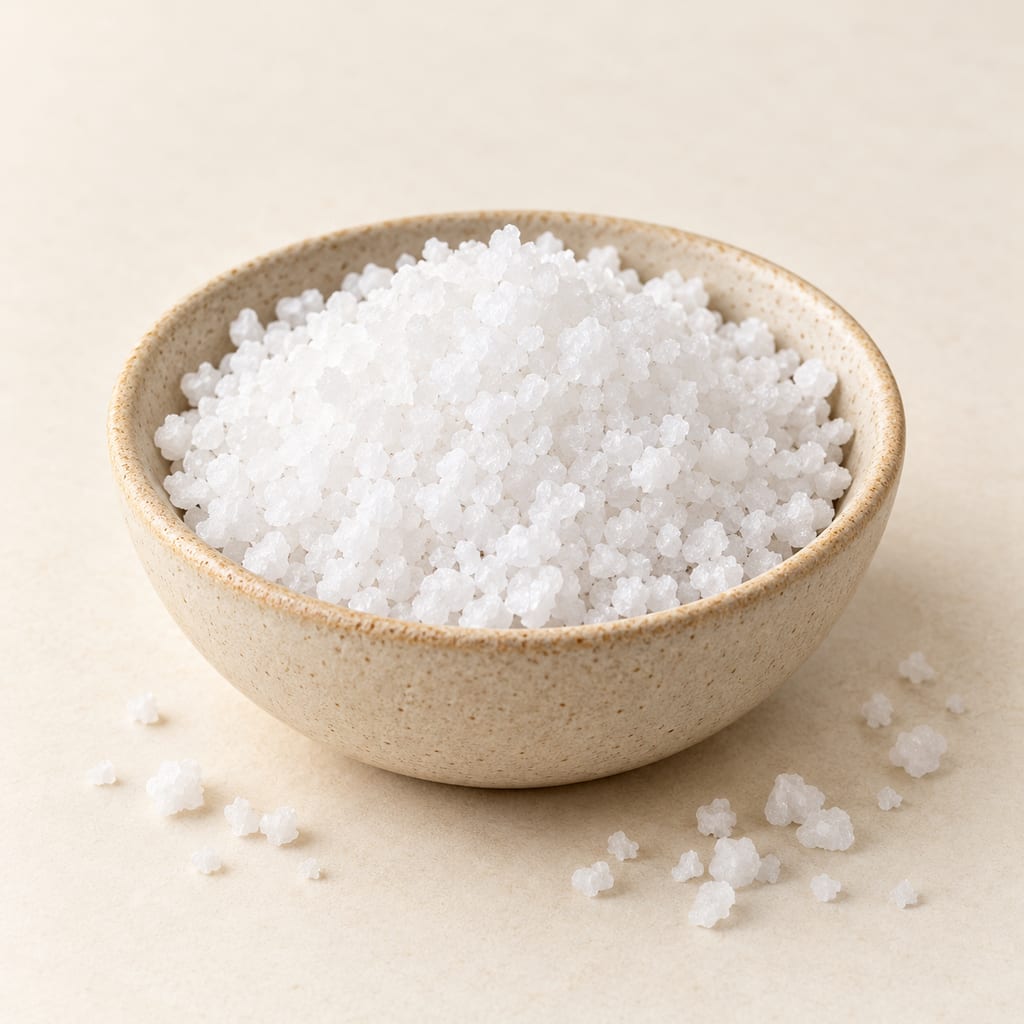
Food-grade sodium chloride seasons food and changes water movement in brines and cures; crystal size and the recipe's measurement method matter.
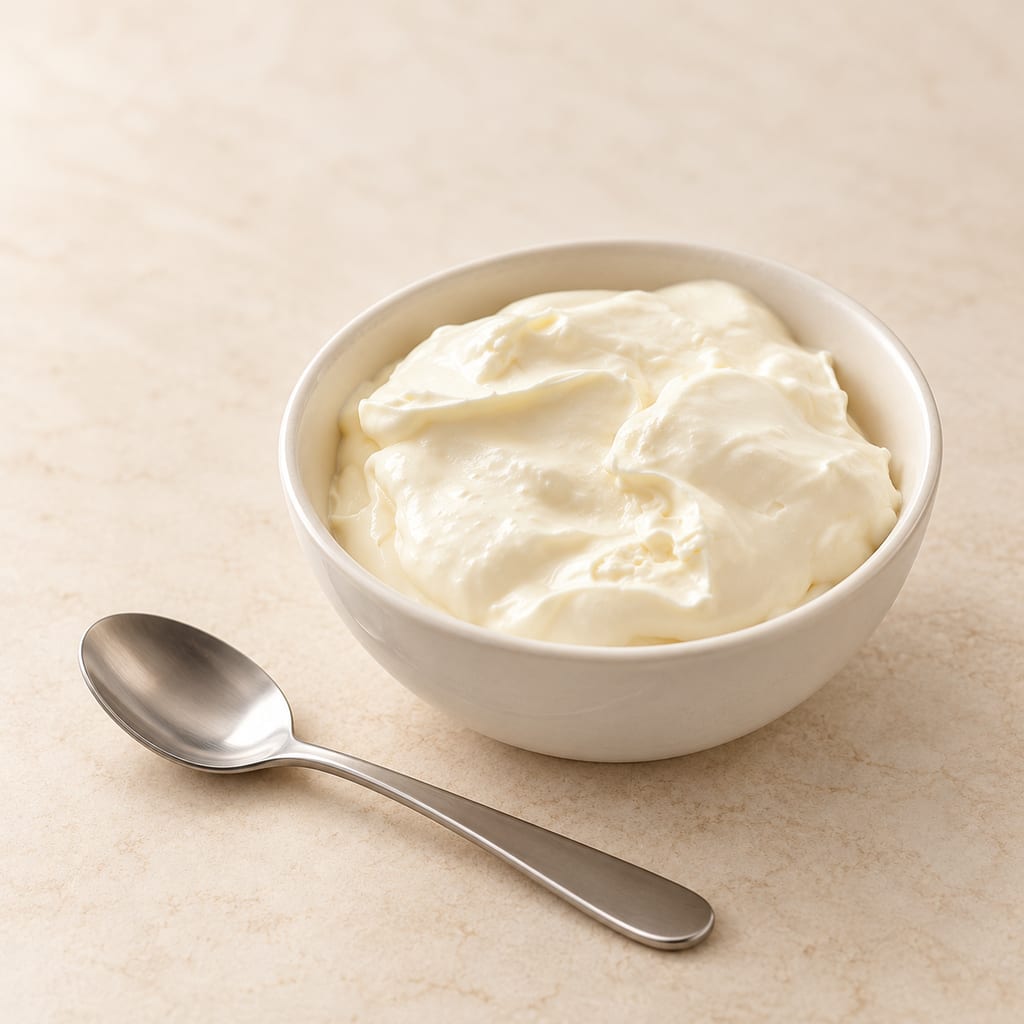
Sour cream is light cream thickened and soured by a lactic starter. This Canadian method uses homogenized cream and lets the gel form in its storage container.

Water carries dissolved ingredients, transfers heat and forms the liquid environment of many ferments; its minerals and treatment influence how it behaves.
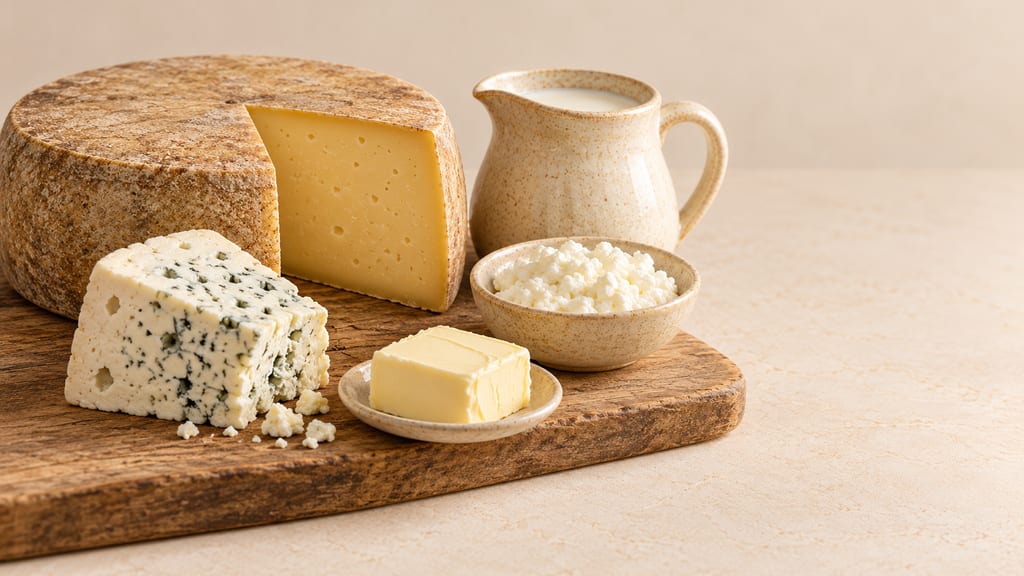
Follow milk into cheese, cultured drinks, butter, dried curds and sweets: a journey through the animals, seasons and household decisions behind the world's dairy foods.
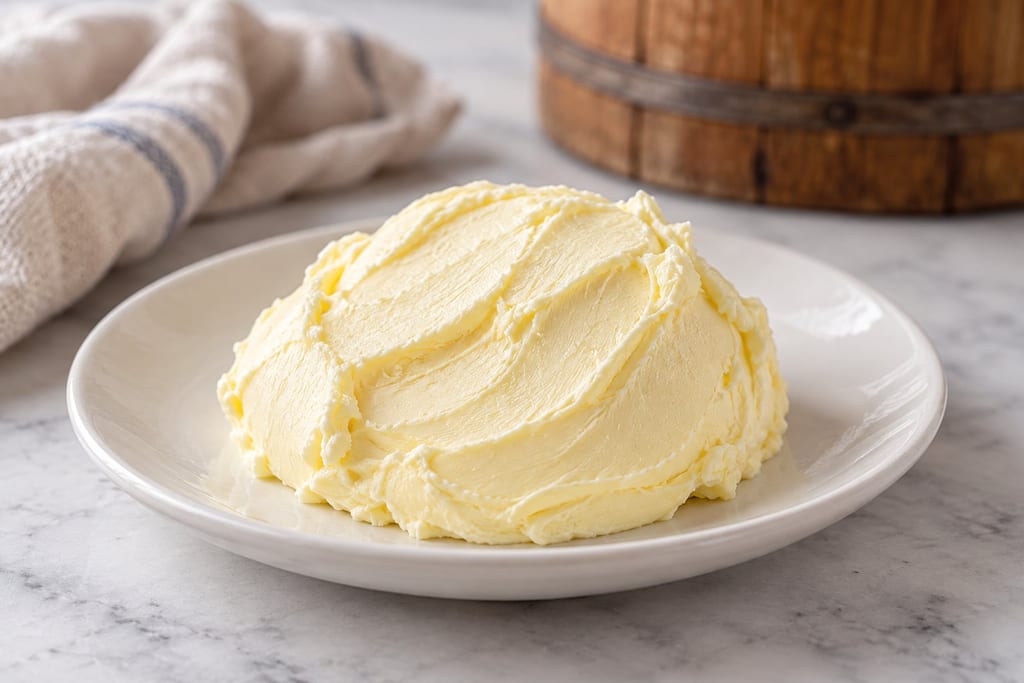
Sweet-cream butter is made by churning unsoured cream until its butterfat globules join, then draining, washing, salting and packing the butter.
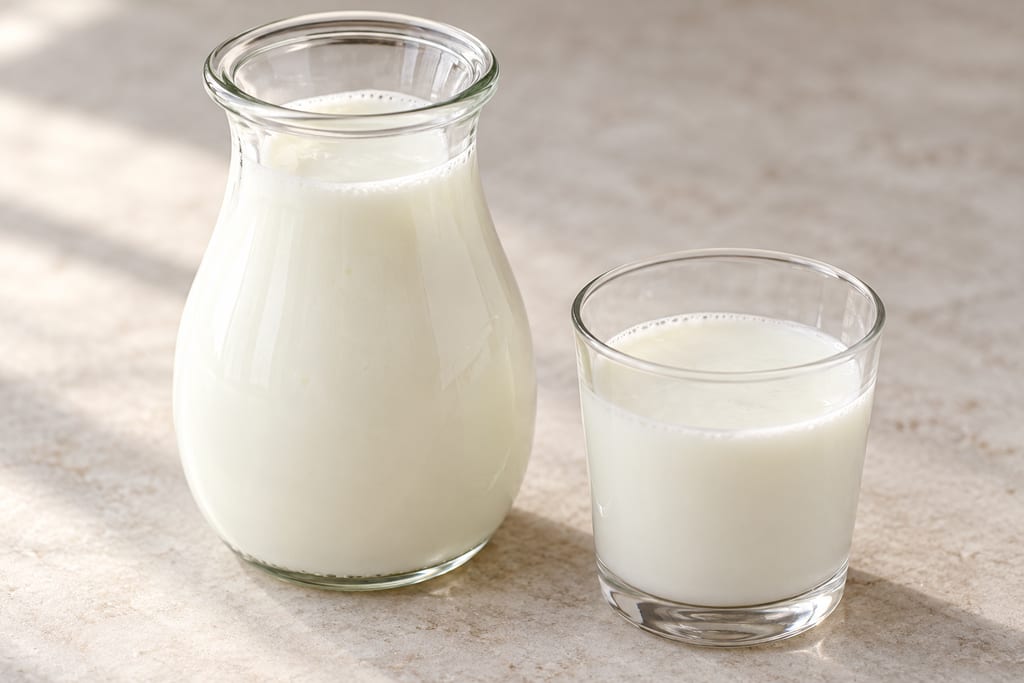
Cultured buttermilk is skim milk soured with a lactic starter into a tangy drink. This Canadian home method sets the milk without churning cream.
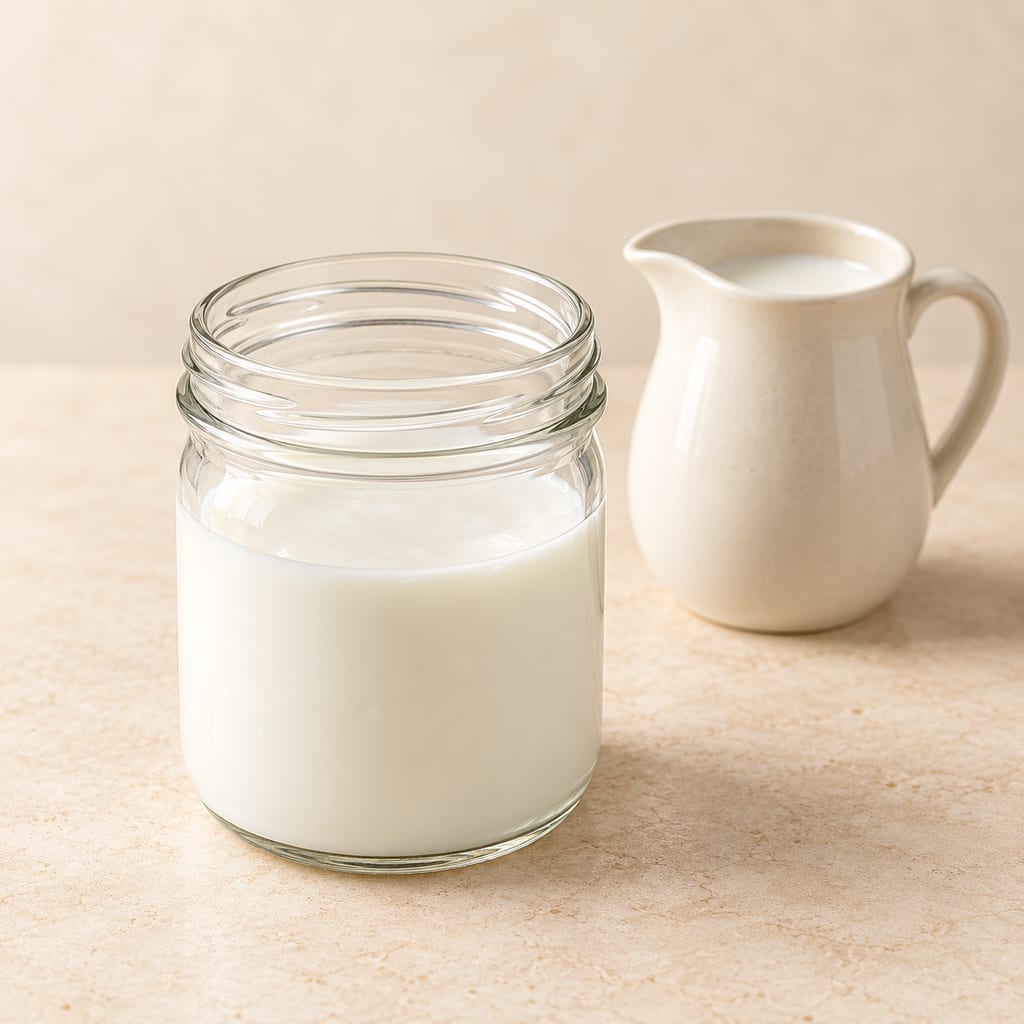
Set yogurt keeps the milk’s cultured gel intact in its final container. This Canadian home method follows the same heating and inoculation as stirred yogurt, without the final stirring.
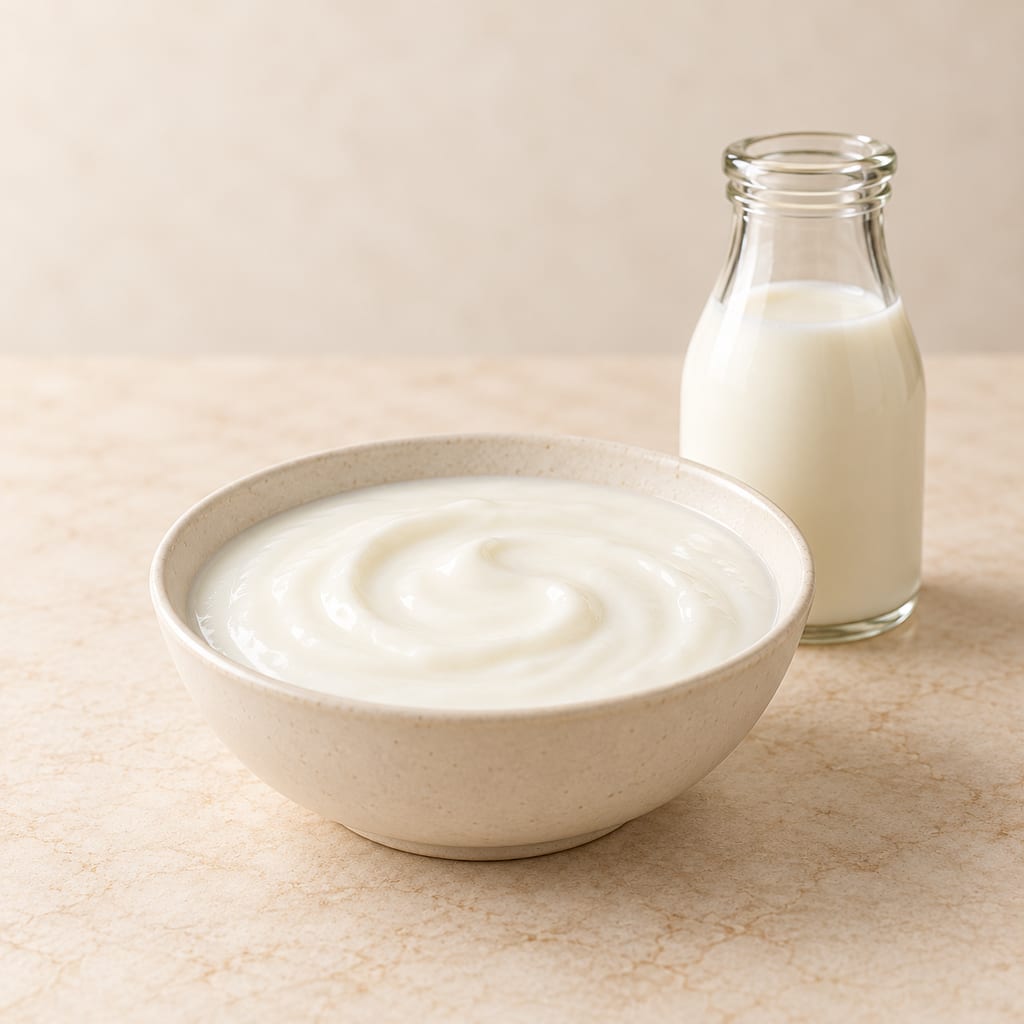
This plain yogurt is heated, cultured warm and stirred smooth after chilling. A Canadian home method uses fresh plain yogurt to start the lactic fermentation.
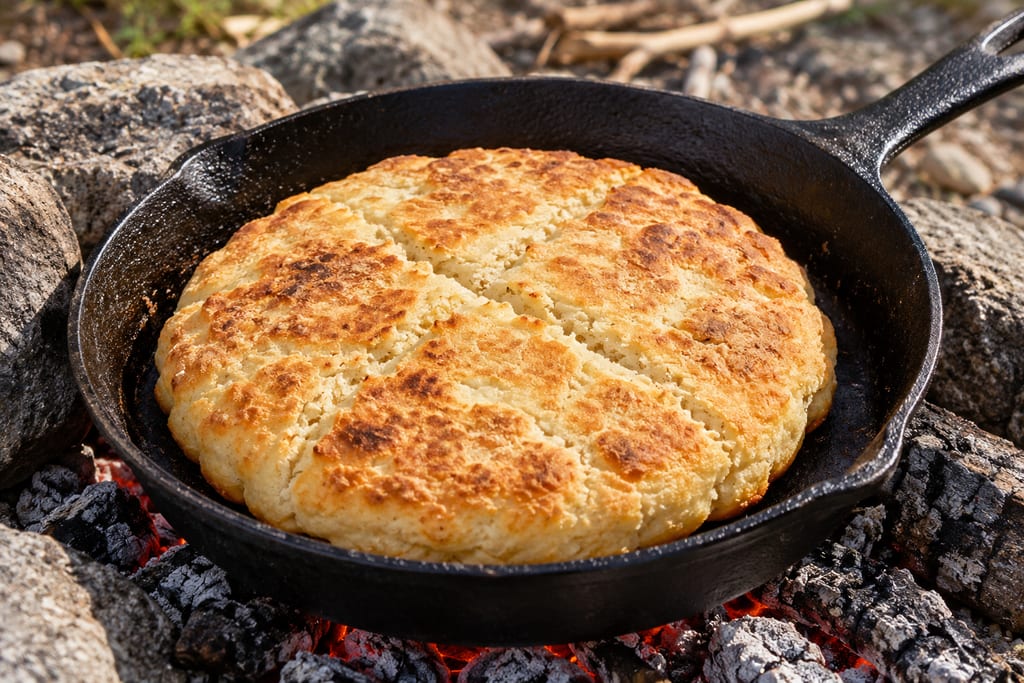
This flour, baking-powder and oil dough is Parks Canada’s contemporary Métis-interpreter version prepared at Rocky Mountain House; its specific recipe origin is unknown.
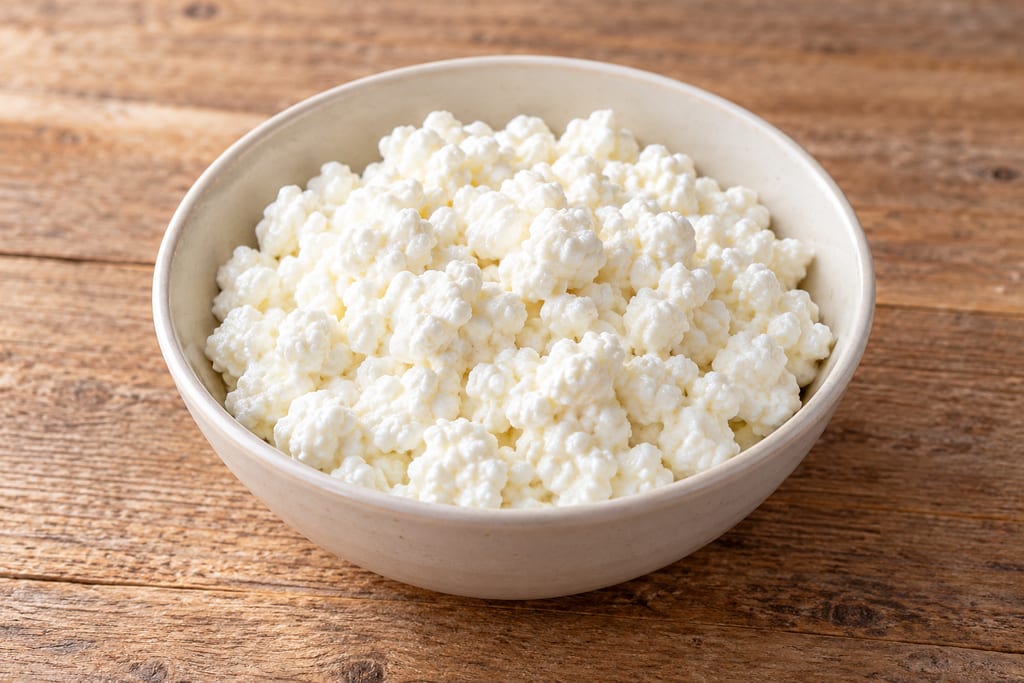
Skim milk is cultured slowly, cut into curds, warmed and drained to make fresh cottage cheese. Cold-water washing softens its flavour before cream and salt are added.
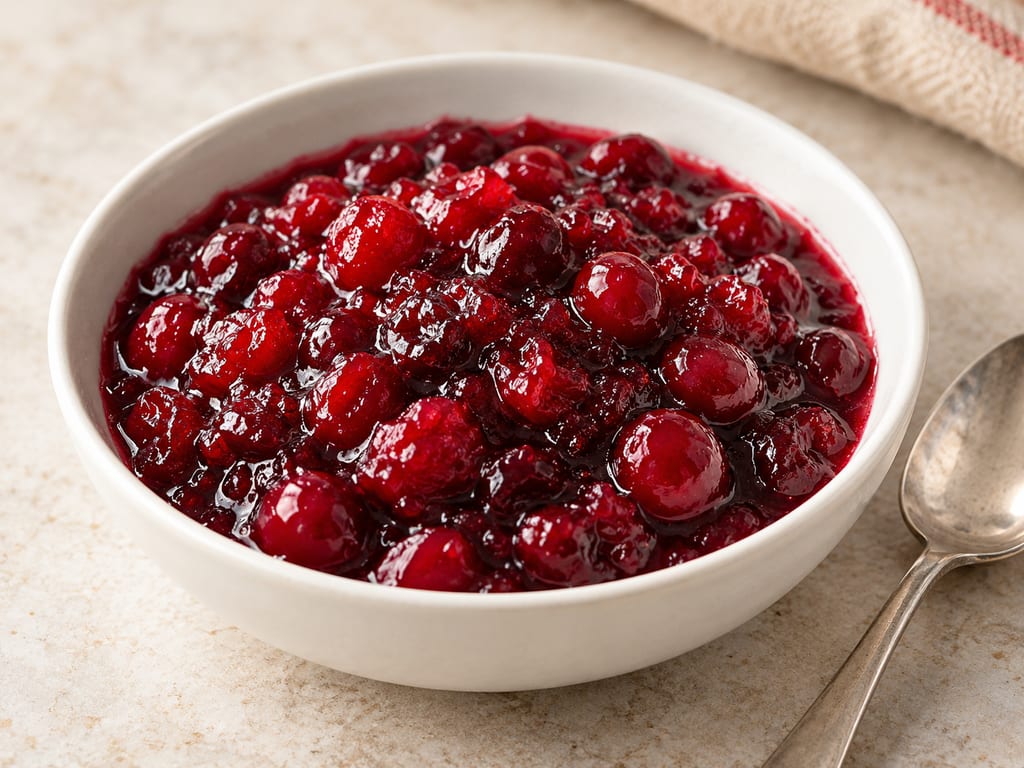
Cranberry sauce is a sauce of cranberries cooked in sugar syrup until the berries burst and thicken, served with roast turkey, pork, chicken and ham.
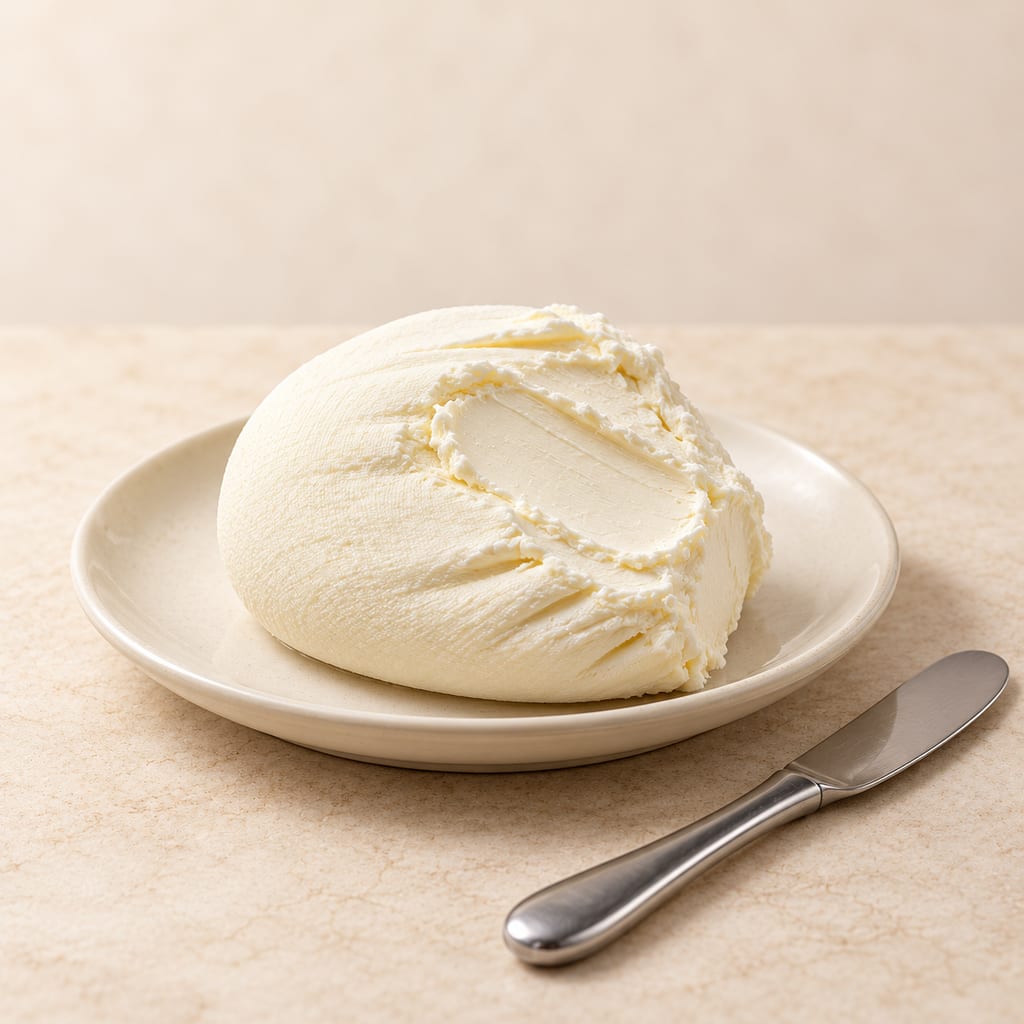
A fresh cultured-cream spread, set gently and drained in muslin in the refrigerator. This home method uses light cream and a small amount of cultured buttermilk.
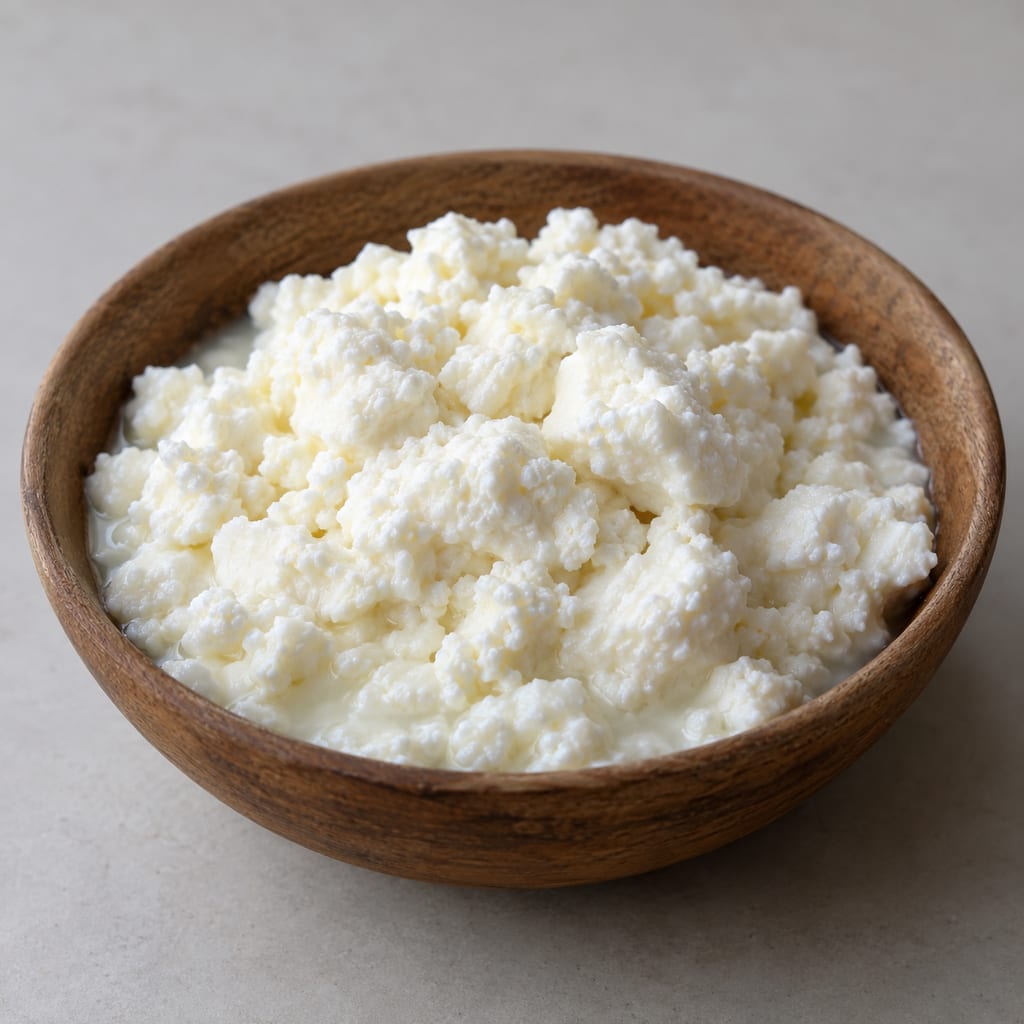
Aarts is a soft Mongolian curd made by draining boiled fermented yogurt; it remains wet, unlike aaruul, which is dried.
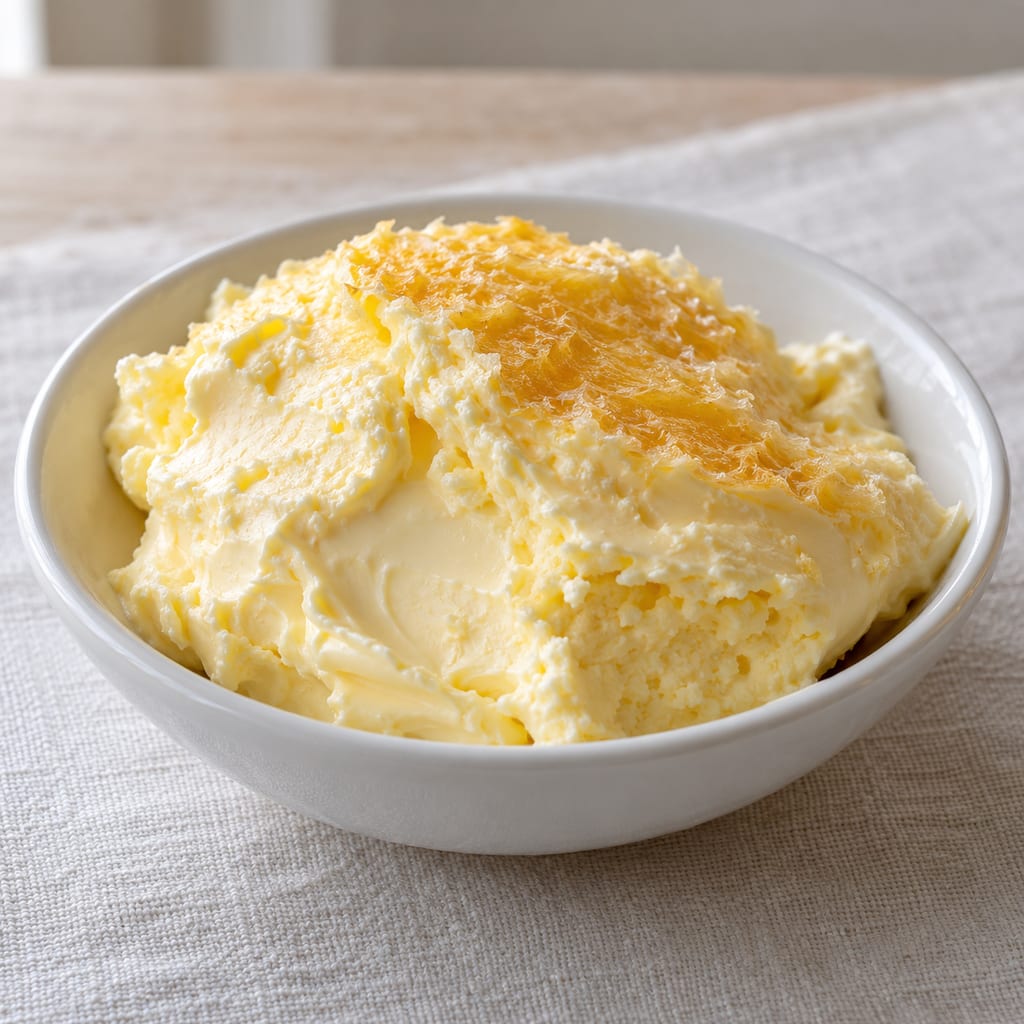
High-fat cream scalded below boiling for at least an hour until a thick crust forms, then cooled hard so the crust sets and the cream beneath thickens.
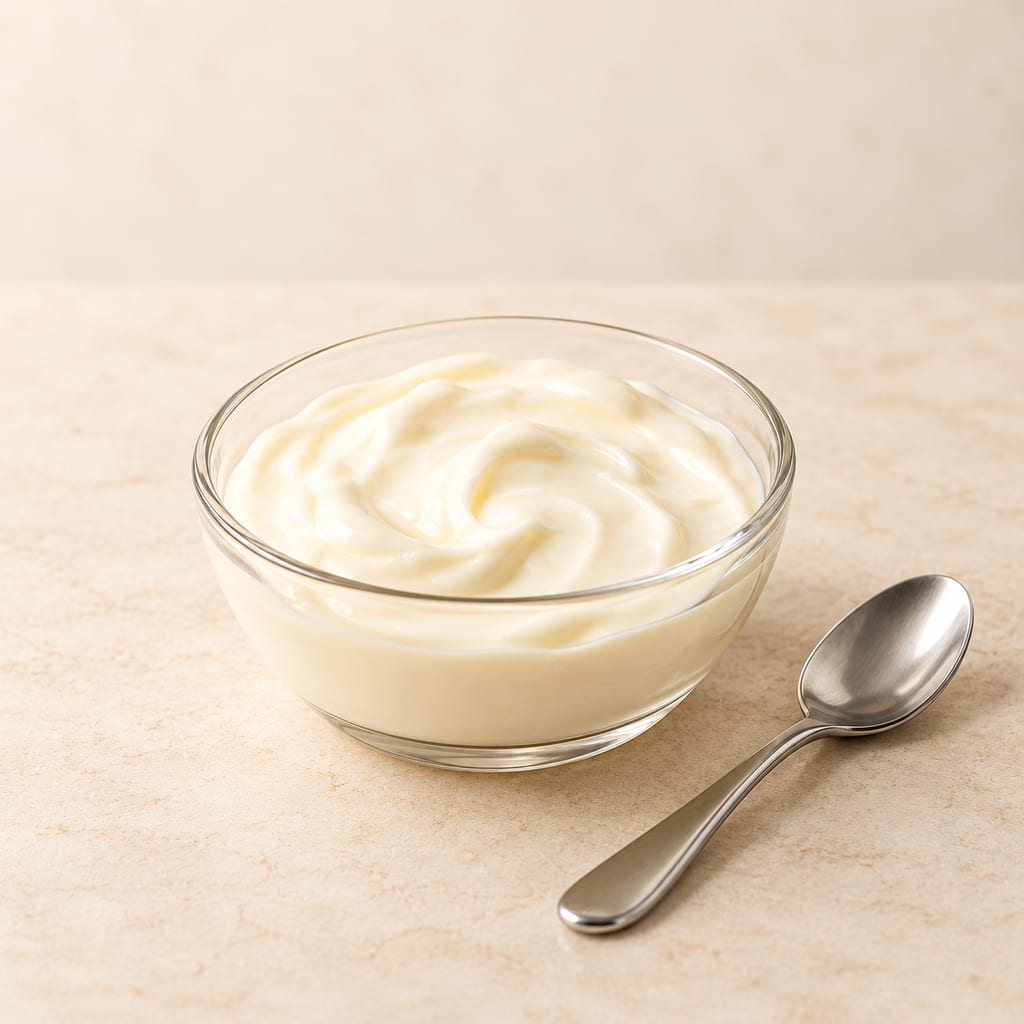
Crème fraîche is cream soured by lactic cultures into a thick, mild topping. It suits fruit and desserts as well as soups, sauces and other savoury dishes.
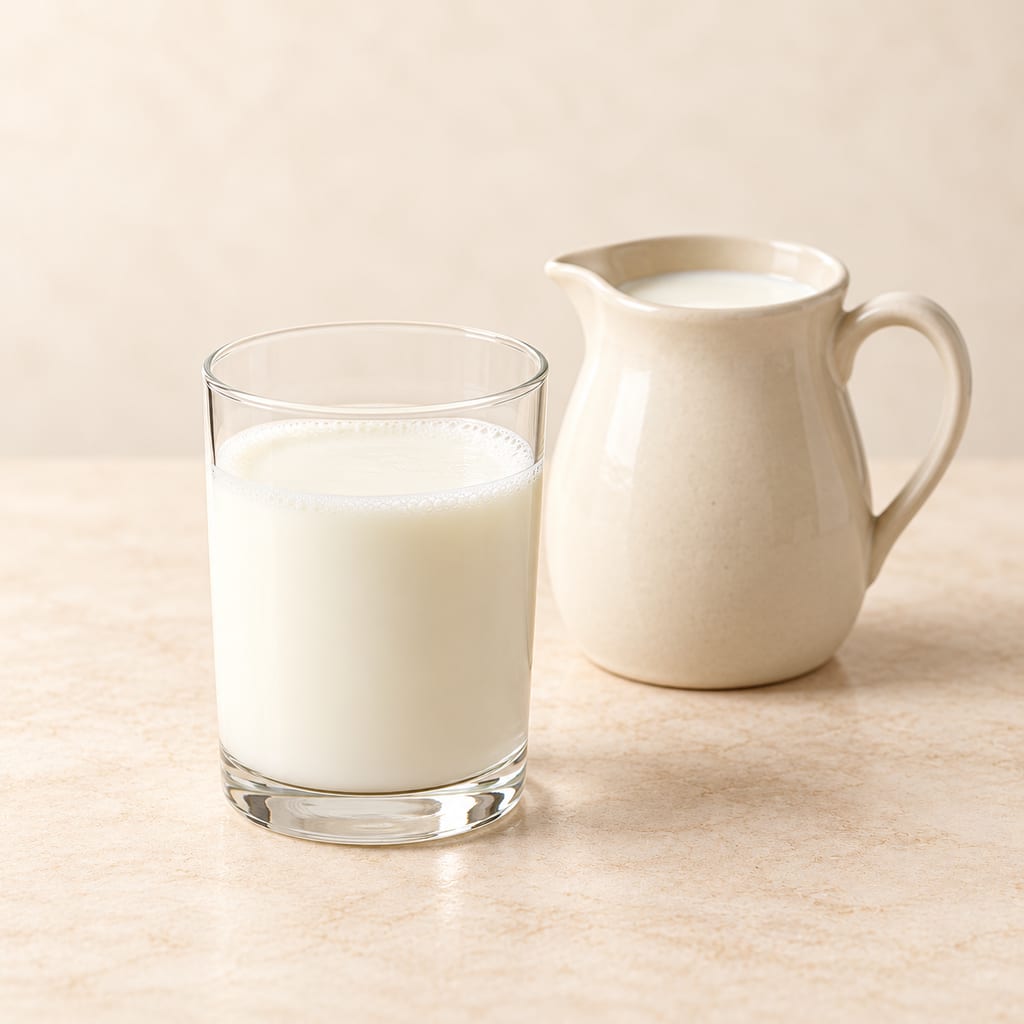
Milk thickened with a packet of buttermilk culture makes a tangy drink and a baking ingredient. This warm-incubated version uses whole milk.
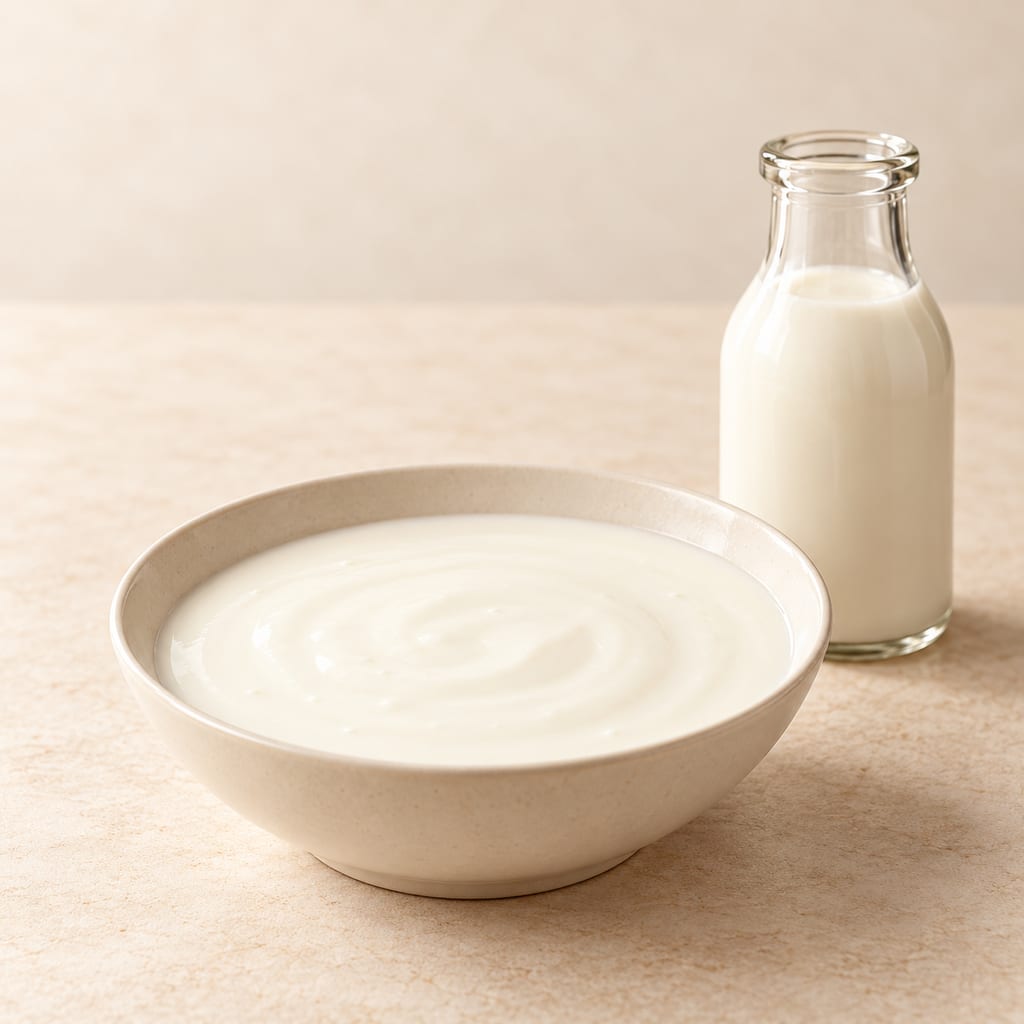
Filmjölk is a Swedish cultured milk with mild acidity and a spoonable body. This recurring batch uses filmjölk from the previous batch to culture fresh milk.
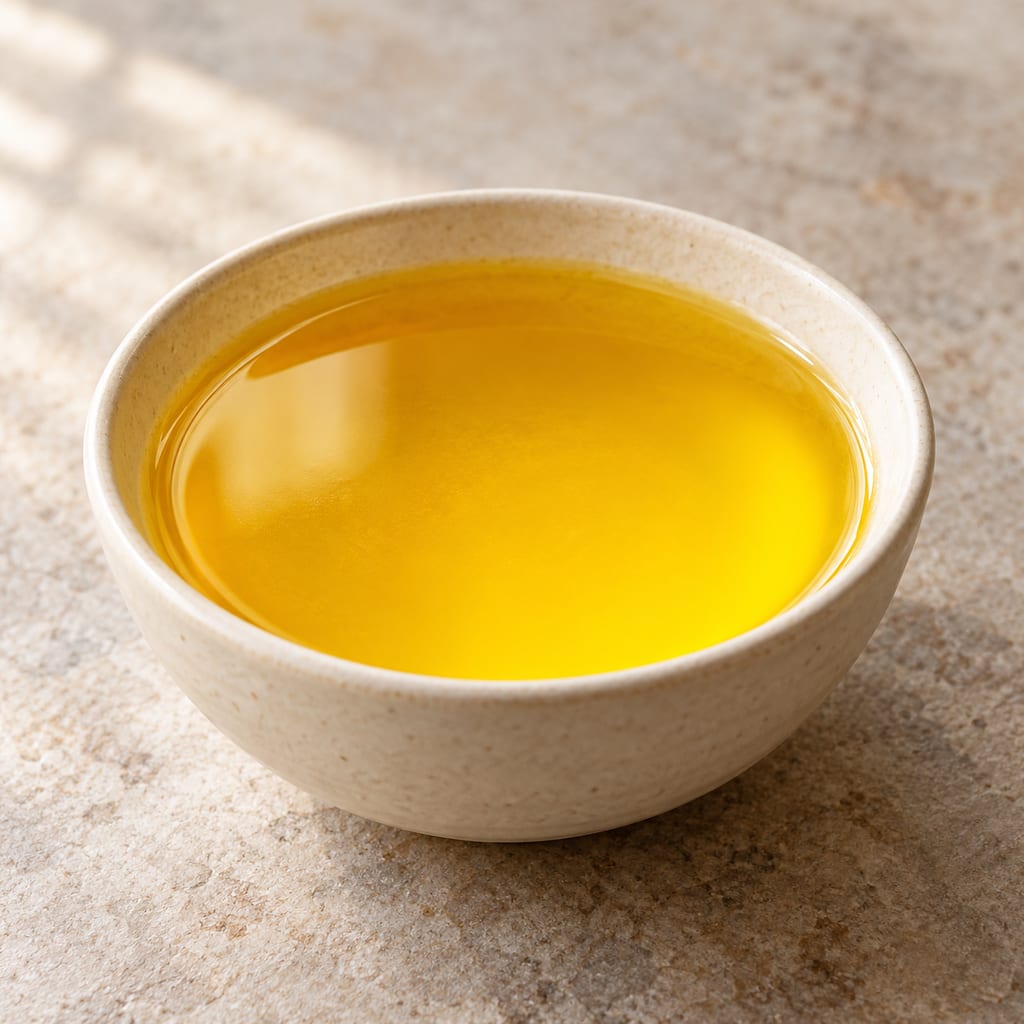
Butter heated until most water leaves and the milk solids separate, giving a fat that keeps far longer than butter. Rendering applies the same heat to animal tissue to make lard and tallow.
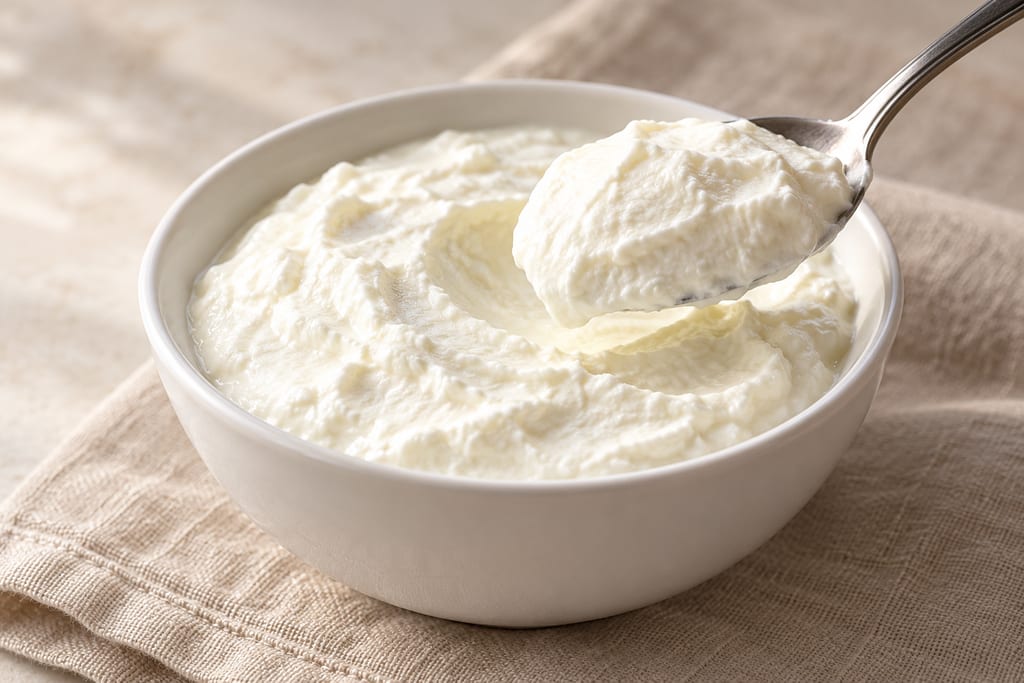
Greek-style strained yogurt is cultured whole milk drained through cloth to remove whey. This modern Utah home method makes a thick yogurt from a gallon batch.
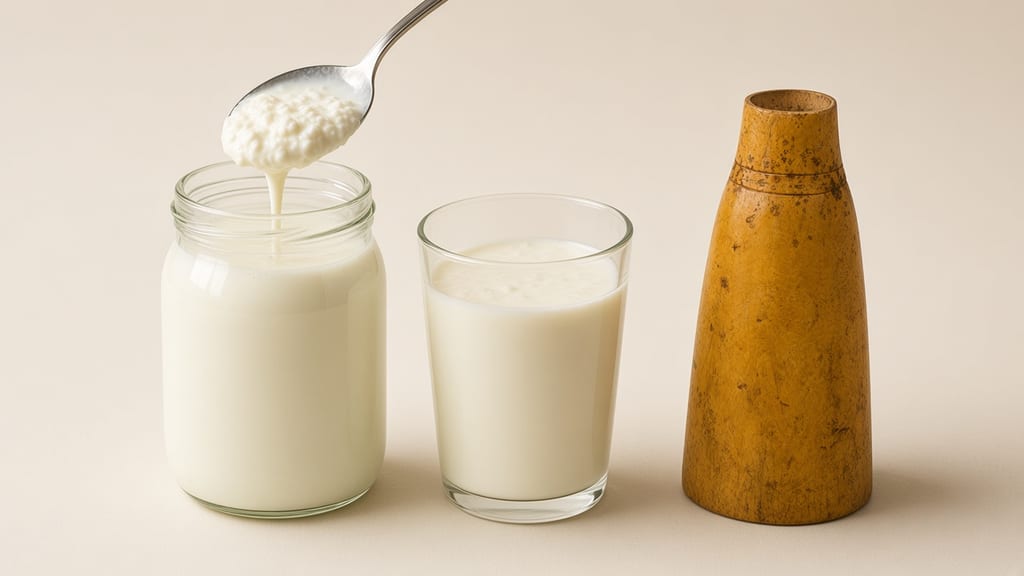
Ikivuguto is Rwanda's thick soured milk. This home version sets pasteurised whole milk with cultured buttermilk overnight at about 21 °C, then chills it for a mild, spoonable drink.
No community contributions have been published for this entry yet.
Sign in to contribute. Published comments and photos are free to read.
Agriculture CanadaInspiration · Process
Home-made dairy products, Publication 1669Butter instructions on pp4–6 cross-reference sour-cream culturing on p11; pp3–4 cover sanitation and pasteurisation. Cream specifications and the culturing ratio come from separate sections, and no butter yield is stated. Copyright1978, reprinted1981.
Cited in: The flavour begins before the butter; Cream has a structure worth preserving; Working and salting shape the finished butter; Keeping quality without a sensory safety test
Office québécois de la langue françaiseNames · Identity
beurre de cultureThe2010 terminology entry defines beurre de culture as slightly acid butter churned from cream acidified with lactic bacteria.
Vermont CreameryIdentity
Sea Salt Cultured ButterThe producer describes culturing before churning and the resulting flavour in its own butter.
Cited in: The flavour begins before the butter; Acid and aroma are related, but different; Cultured cream and cultured flavour take different routes
United States Patent Office / Google PatentsHistory
Method of Making Butter, US495381AThe historical patent describes variable cream souring, selected flavour-producing starter and a heat, cool, inoculate, ripen and churn sequence. Historical claims are distinct from current safety guidance.
Cited in: A nineteenth-century attempt to make souring predictable; Acid and aroma are related, but different
Center for Dairy Research, University of Wisconsin–MadisonProcess
Butter Science 101: Basic Lipid Chemistry and Butter StructureCulturing, crystallisation, churning and working sections explain acid and aroma formation, solid and liquid fat, emulsion reversal and quality faults.
Cited in: Acid and aroma are related, but different; Cooling prepares the fat for churning; Churning reverses the emulsion; Working and salting shape the finished butter; Keeping quality without a sensory safety test
Dairy Science & Technology / Springer NatureProcess
Organization of lipids in milks, infant milk formulas and various dairy products: role of technological processes and potential impactsMicrostructure sections and Fig7 explain residual globules, serum pockets, emulsion reversal, globule membranes and the effect of homogenisation.
Cited in: Cream has a structure worth preserving; Churning reverses the emulsion
Agroscope, Swiss ConfederationProcess
Butter Product TechnologyButter-production sections describe emulsion reversal, working, water-droplet distribution, fat structure and batch versus continuous production.
Cited in: Cooling prepares the fat for churning; Churning reverses the emulsion; Working and salting shape the finished butter
NIZOProcess
NIZO butter processThe NIZO process churns sweet cream before acid and flavour addition, retaining a sweet-buttermilk coproduct. It is a distinct production route.
Cited in: Cultured cream and cultured flavour take different routes; Eating with the flavour and cooking with the structure
The Estate DairyIdentity
Cultured ButterThe producer describes its cultured, batch-churned and hand-salted butter and its table-roll and pastry-plaque forms.
Cited in: Cultured cream and cultured flavour take different routes; Eating with the flavour and cooking with the structure
Canadian Dairy CommissionProcess
ButterCulinary-use and functional-property sections describe butter’s flavour and physical roles in cooking and baking.
Cited in: Eating with the flavour and cooking with the structure
Penn State ExtensionSafety
Canning and Freezing Questions and AnswersThe butter-canning answer states that no tested home-canning process is available and identifies freezing as an alternative.
Cited in: Keeping quality without a sensory safety test
Culture: The Word on CheeseProcess
DIY Cultured ButterA household batch in which cream is cultured before it is churned, washed and worked, with its own culture choices, mixer and tools.
Cited in: Other household batches and Danish culture research
South Dakota Agricultural Experiment StationProcess
Manufacture and Sale of Cultured Butter, Research Bulletin 492The repository abstract describes adding a milk culture directly while the butter is worked instead of fermenting the cream first, and reports consumer tests in Brookings and Sioux Falls. Only the abstract was read.
Cited in: Other household batches and Danish culture research
University of Copenhagen Department of Food ScienceHistory
UCPH FOOD - a part of the food science history in DenmarkLate nineteenth-century work on pure lactic-acid cultures for sour cream at the Royal Veterinary and Agricultural University, with Storch investigating the bacteria and Fjord carrying the findings to dairies; consistent butter-making in Denmark's export economy.
Cited in: Other household batches and Danish culture research