Pasteurized light cream
Liquid pasteurized cream used for cultured fresh cheese, with a fat grade whose meaning differs between markets.
 FermenteaWhere food goes to change
Modern method
A fresh cultured-cream spread, set gently and drained in muslin in the refrigerator. This home method uses light cream and a small amount of cultured buttermilk.
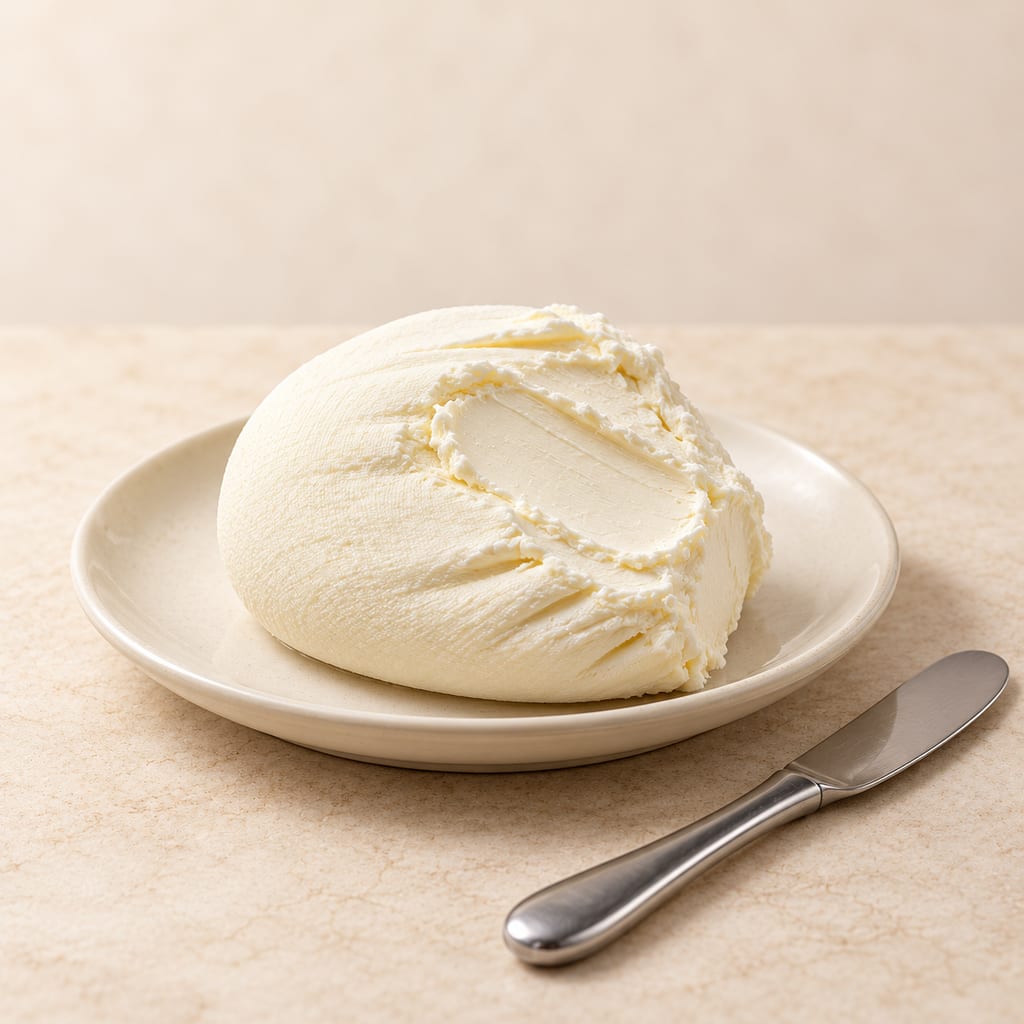
Cream cheese is a fresh, unripened cheese with a smooth, pliable body and a delicate flavour. Its colour can run from off-white to pale yellow. It belongs on a slice of bread as readily as in a dip or a baking mixture, but those familiar uses can conceal how much variation sits beneath the name.
The home preparation here starts with light cream and fresh cultured buttermilk. The cream sets, the curd is gently broken, and whey drains through muslin in the refrigerator. What remains is a fresh cultured spread. There is no ripening period, rind or deliberate stretching, and the formula adds neither rennet nor a stabilizer.
That simple make gives cream cheese a useful place between a cultured liquid and a drained cheese. Culturing changes the milk proteins and acidity; draining then changes the balance between curd and liquid. These are separate operations, and both shape the result. A thickened cream is not yet the same product as the spread that remains after its whey has drained.
A Fairfax-Spencer family receipt book contains an entry titled To Make a Creame Chees. George Mason University Libraries catalogues it within the date range 1694–1795. The range belongs to the catalogue record; it does not identify an exact year for the recipe.
The household process is recognizably a cheesemaking task, although it differs from the cultured-light-cream spread. Milk and cream are brought together, a curd forms, and it is gathered in cloth so that whey can leave. The curd then moves into a cheese form and is pressed gently. Salting follows, along with care using fresh rushes or nettles and repeated wiping and changing of the greens.
Its cloth, cheese form, weights and fresh greens make the work tangible. This cheese was handled repeatedly as liquid drained away and its surface was cared for. The curd was shaped and pressed before that care began; the present fresh spread drains suspended in a bag.
Other household receipts show how flexible the name remained. Jacqueline Harrison Smith’s 1908 edition of Famous Old Receipts includes a pressed milk-and-cream preparation attributed to Westover, Virginia, in 1787. That earlier date is the later compiler’s attribution. The preparation uses rennet and belongs to a different route to curd formation.
The same collection includes a cream-based cheese associated with Dr. Horace Howard Furness’s Pennsylvania household. It relies on standing cream, then draining it in cloth with a plate and weight. Together, these receipts show several ways that household cooks turned cream or milk and cream into a cheese. They should be read as distinct preparations, not fitted into one supposedly unchanged ancestral recipe.
Agriculture Canada included the present cultured-cream spread in its 1978 Home-made dairy products, reprinted in 1981. Its setting is a home kitchen using pasteurized dairy and an added culture. The make begins with a litre of light cream and a small amount of cultured buttermilk, then uses controlled warmth followed by refrigerated drainage.
The choice of buttermilk gives this version a particular starting culture. The booklet also offers fresh sour cream or cheese starter as alternatives. Those choices belong to one household formula; they do not establish that every product sold as buttermilk, sour cream or starter has the same activity or composition. Here the selected ingredient is fresh cultured buttermilk.
The method breaks the set cream gently and suspends it in muslin, allowing liquid to leave under its own weight. The curd remains in the refrigerator while draining. The kitchen needs a container for setting, a thermometer, muslin and a bowl to catch whey, together with a way of suspending the bag inside the refrigerator. The change from warm setting to cold draining gives this small make its practical rhythm.
The shared name connects these preparations historically, while their operations distinguish them in practice. Milk-to-cream balance, the route to coagulation and the removal of whey all help determine what sort of cheese reaches the table.
The starter’s bacteria produce lactic acid from milk sugar. As the environment becomes more acidic, casein particles change their interactions and associate into a network. That network holds liquid and fat, giving the cream a set structure instead of leaving it as a freely flowing mixture.
Acidification also changes the mineral environment around the casein. Milk proteins respond to acidity, temperature and their surrounding salts; gel formation is consequently more involved than simply making cream taste sour. The structure that develops during setting is the material that will later be broken and drained.
Acidity can therefore influence more than sourness. It affects the protein structure from which the final spread is made. The household instruction follows the formation of a firm curd, a useful observation of texture. The method then deliberately breaks that structure so that liquid can be removed.
The cultured buttermilk supplies the starting organisms, together with the small amount of dairy liquid carrying them. It is doing a different job from simply adding more cream. The cream provides the main substance of the batch; the starter initiates the acidification that makes the later curd possible.
Cream carries fat globules within an aqueous phase containing milk proteins, lactose and dissolved substances. Its fat is important to richness, while the protein network contributes the structure that makes a drained spread possible. Describing the process only as thickening fat would miss the role of the milk proteins.
Culturing cream also differs from churning it into butter. Churning agitates cream until fat globules gather into butter grains and separate from the remaining liquid. Draining cultured cream retains a curd while liquid leaves through cloth. Both begin with cream, and cream can be cultured before churning, but the mechanical transformations produce different foods.
In controlled model cream-cheese experiments, changing acidity altered the microscopic arrangement of protein and fat and the firmness of the finished cheese. Protein hydration and aggregation contributed to the differences. Texture was a property of the whole structure, rather than a direct reading of fat content alone.
Compared with the highest-pH formulation, the lower-pH formulations had denser protein structures and firmer cheese. Firmness did not differ significantly among those lower-pH formulations. At the highest pH, protein swelling was associated with larger structures and softer cheese. The researchers controlled the final moisture content while comparing acidity, which helped distinguish the effect of protein organization from a simple difference in how much liquid remained.
The experimental cheeses were also heated, separated and made with stabilizers. They demonstrate a texture-making route in which composition, acidity and further processing interact. The home make uses a simpler path: set the cream, break the curd gently and drain it cold.
After the cream has set, stirring breaks up the curd so that it can be transferred into the muslin. This differs from cutting the firm, regular cubes used in some rennet cheeses. The instruction calls for gentle handling because the desired result is a drained fresh spread, not a collection of hard grains.
The cloth supports the curd while whey moves into a bowl below it. Gravity is doing practical work here. The assembly needs enough space for the bag to hang and for the liquid to collect separately, all within the refrigerator. Equipment that seems modest on the counter must still fit the cold-draining stage of the make.
The method has two draining phases. When the dripping slows, the curd is stirred and the bag is hung again overnight. This second handling keeps the cook involved after the initial transfer. A bag that has slowed to a slight drip is stirred and reset, rather than simply being put away as finished cheese.
Drainage changes how much liquid remains with the curd, while culturing has already established an acid gel. A cream can consequently set and still need further draining to become a spread. The whey collected below the bag is part of the starting cream that will not be in the finished cheese.
Commercial cream cheese may follow a more elaborate route to its final texture. The United States standard describes a soft, uncured cheese made with pasteurized dairy and specifies finished composition, including minimum milkfat and maximum moisture. It also describes operations such as warming, working, chilling and homogenizing the curd.
These operations can change the structure after the original gel forms. In industrial and experimental production, heating, shearing and separating the curd are part of producing a particular consistency. Stabilizers may also be included in manufactured products. The cloth-drained household spread does not contain those added ingredients or undergo that sequence.
The distinction becomes useful in cooking. A block, a tub and a homemade drained spread can all be called cream cheese while having different moisture and processing histories. Their firmness and the way liquid is held within them are practical properties when they are beaten into another mixture or used as a filling. A recipe’s particular product choice can therefore matter as much as the shared name on the label.
Manufacturing can include working the drained curd, adjusting moisture and blending other permitted ingredients. The final texture is deliberately developed after the first milk gel has formed. That helps explain why a smooth commercial product is more than a large-scale version of a bag hanging over a bowl.
Cream cheese has uses beyond a modern tub or a sweet dessert. Smith’s early twentieth-century collection includes “Daffodil Sandwiches,” in which thin-cut bread surrounds lettuce, cream cheese and mayonnaise. The bread is cut with a cake cutter and given a small hole in the centre. The cheese appears as part of a carefully shaped savoury food, alongside the collection’s other household dishes.
The sandwich was contributed by Mrs. Mary C. B. Alexander of Philadelphia. Its carefully cut bread places cream cheese among foods prepared with attention to presentation as well as to making the cheese itself. Here the cheese accompanies lettuce and mayonnaise in a savoury sandwich, rather than appearing as a dessert ingredient.
In Quebec French, fromage à la crème is the preferred equivalent of cream cheese. Its familiar contemporary uses include spreading on toasted bagels, serving as a base for dips and baking. The term connects the food to current North American everyday eating and names a smooth, malleable, unripened cheese.
For this home version, “spread” is the most precise established use. The curd has been set and drained, but not shaped into a ripened cheese with a separate rind. It can be understood through the same everyday action that makes cream cheese familiar: taking a soft dairy food and spreading it over another food’s surface.
Pasteurized cream and clean equipment are the starting controls, followed by refrigeration during drainage and storage. Sanitation still matters after pasteurization: cloth, utensils, containers and hands can reintroduce contamination. The refrigerator stage is part of the practical method, not a serving preference.
Use the finished cheese within a few days, as the home method directs. Keep it refrigerated after draining.
The Fairfax-Spencer transcript includes an illegible ingredient and ambiguous quantity wording; the catalogue gives a range rather than an exact recipe date. Smith’s 1787 label is a later attribution. The current home make supplies no measured cream composition, culture species, acidity endpoint, yield, refrigerator temperature or exact storage duration. It has not established the commercial composition or baking behaviour of a manufactured block or tub.
A Fairfax-Spencer family receipt book includes a milk-and-cream cheese drained in cloth, gently pressed and salted; its catalogue dates the entry within 1694–1795. Agriculture Canada later included this simpler cultured-light-cream spread in its 1978 home-dairy guide, reprinted in 1981. The older pressed cheese and this refrigerated fresh spread are different preparations.
Scaling: source batch only
Milk, cream and finished cultured dairy can be contaminated by unsanitized equipment.
Hazard sourceUse pasteurized dairy and cleaned, sanitized equipment; refrigerate the finished product.
Control sourceUse pasteurized cream and sanitized tools and containers. Drain the curd in the refrigerator, keep the finished cheese refrigerated and use it within a few days.
Fresh cultured buttermilk — Starter for the cream. Species and strains are not identified for this preparation.
Drain in the refrigerator, with an overnight stage after stirring.
Canadian home-dairy preparation, not a claim that cream cheese originated in Canada.
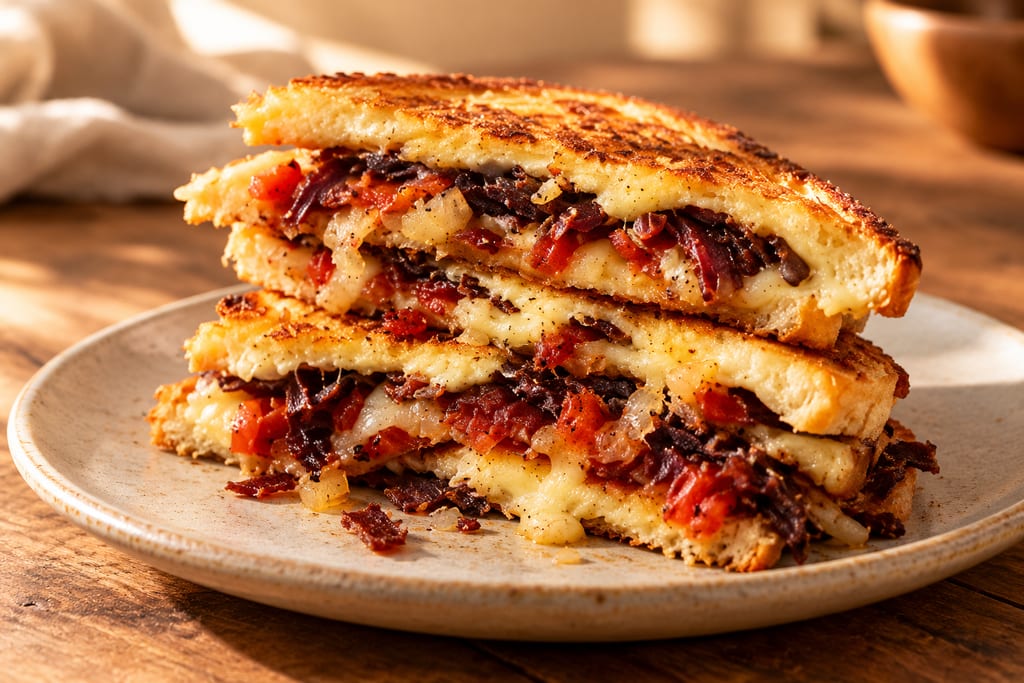
Chopped biltong, sweet onion, cream cheese and Cheddar fill bread toasted in a hinged grid over gentle coals, then finished with biltong dust.
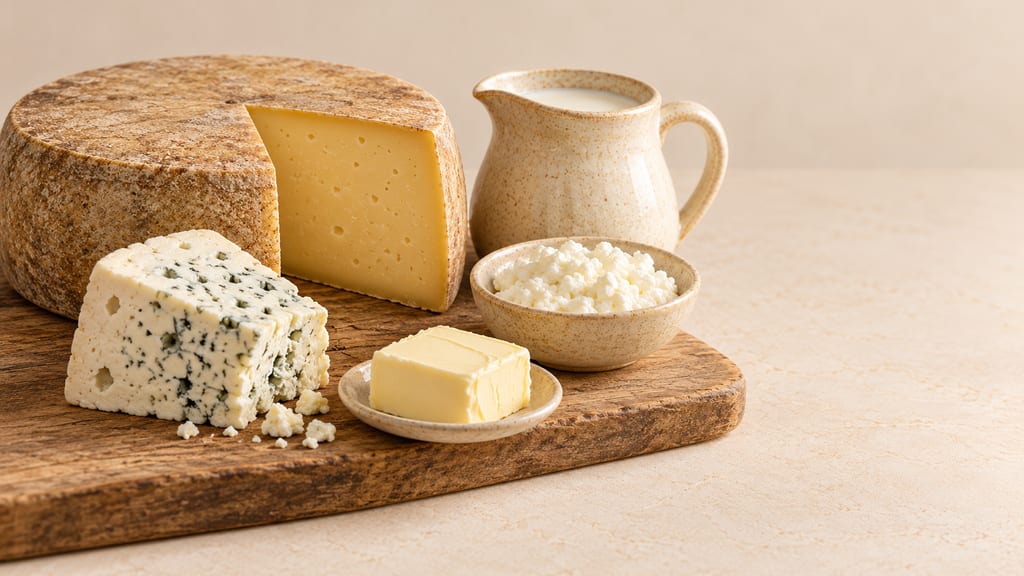
Follow milk into cheese, cultured drinks, butter, dried curds and sweets: a journey through the animals, seasons and household decisions behind the world's dairy foods.
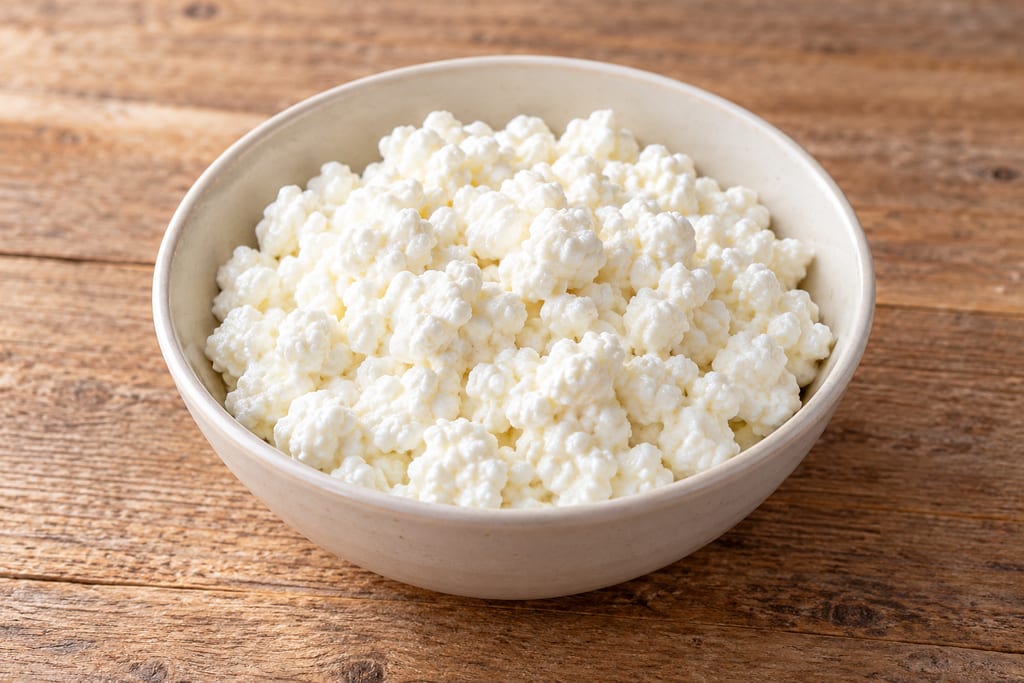
Skim milk is cultured slowly, cut into curds, warmed and drained to make fresh cottage cheese. Cold-water washing softens its flavour before cream and salt are added.
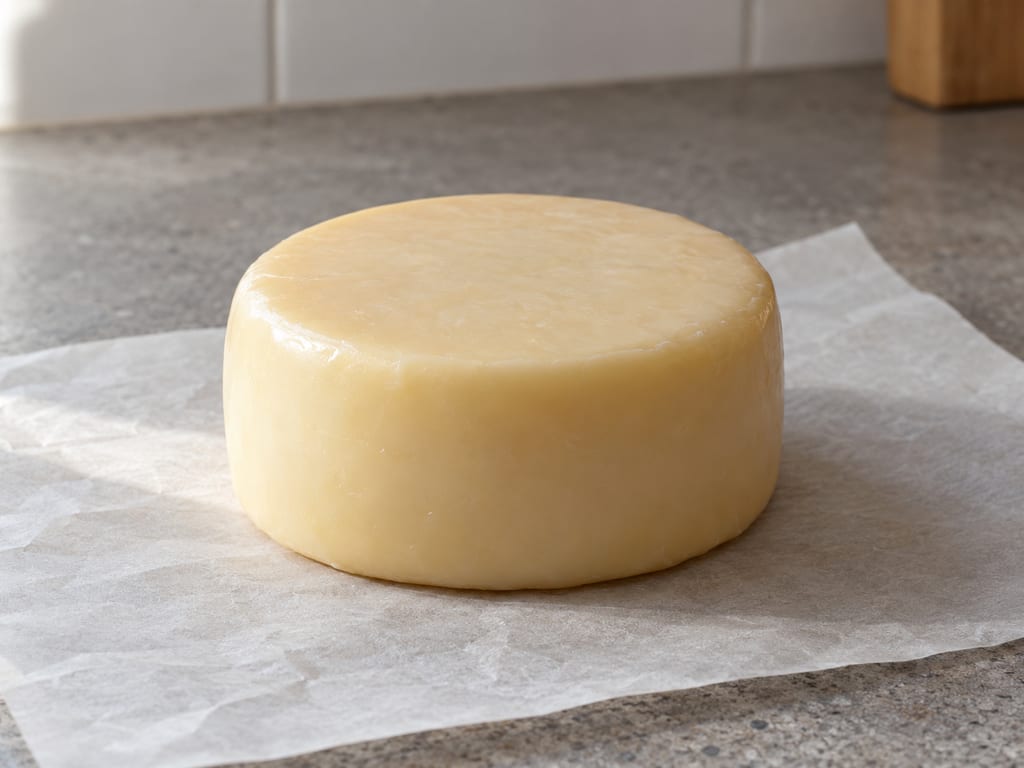
A mild whole-milk cheese set with starter and rennet, drained in a mould, dry-salted and ripened. This small-batch method appeared in Canadian home-dairy guidance.
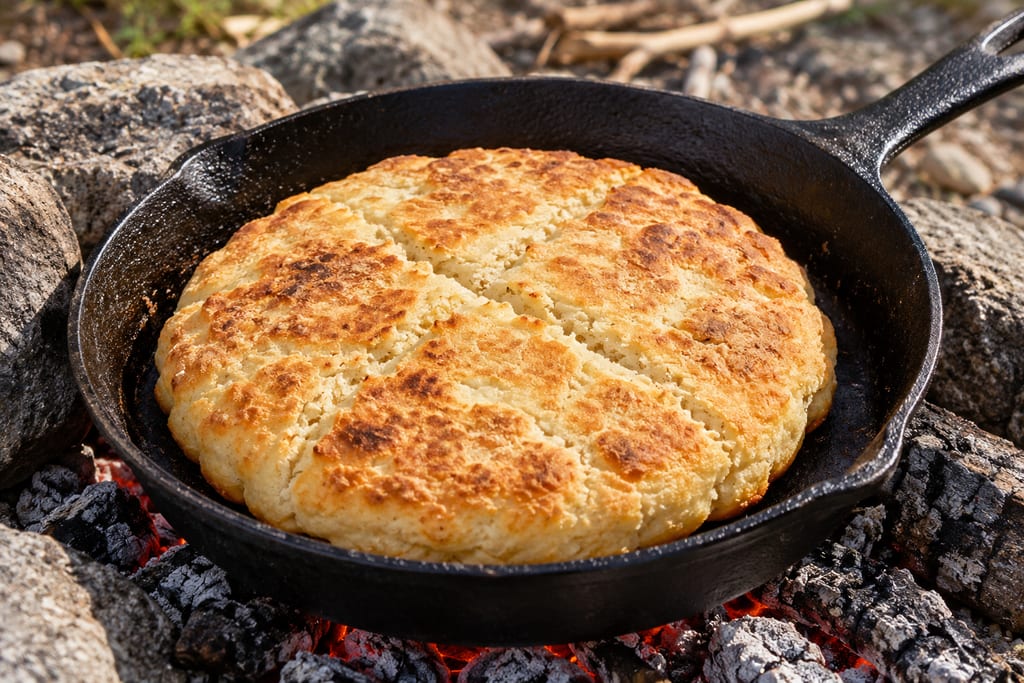
This flour, baking-powder and oil dough is Parks Canada’s contemporary Métis-interpreter version prepared at Rocky Mountain House; its specific recipe origin is unknown.
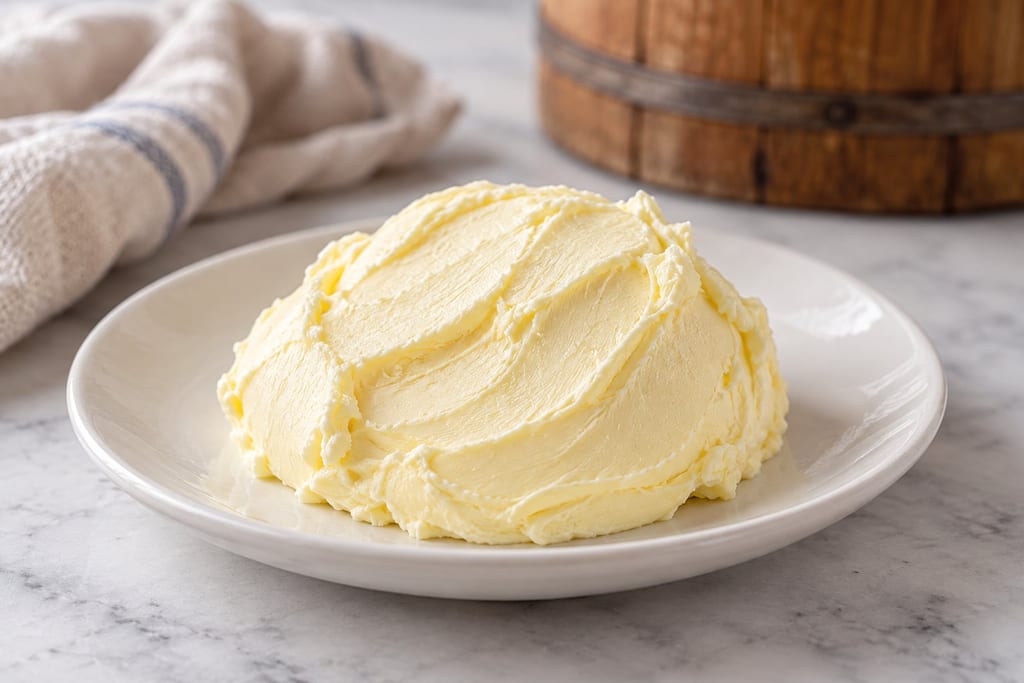
Sweet-cream butter is made by churning unsoured cream until its butterfat globules join, then draining, washing, salting and packing the butter.
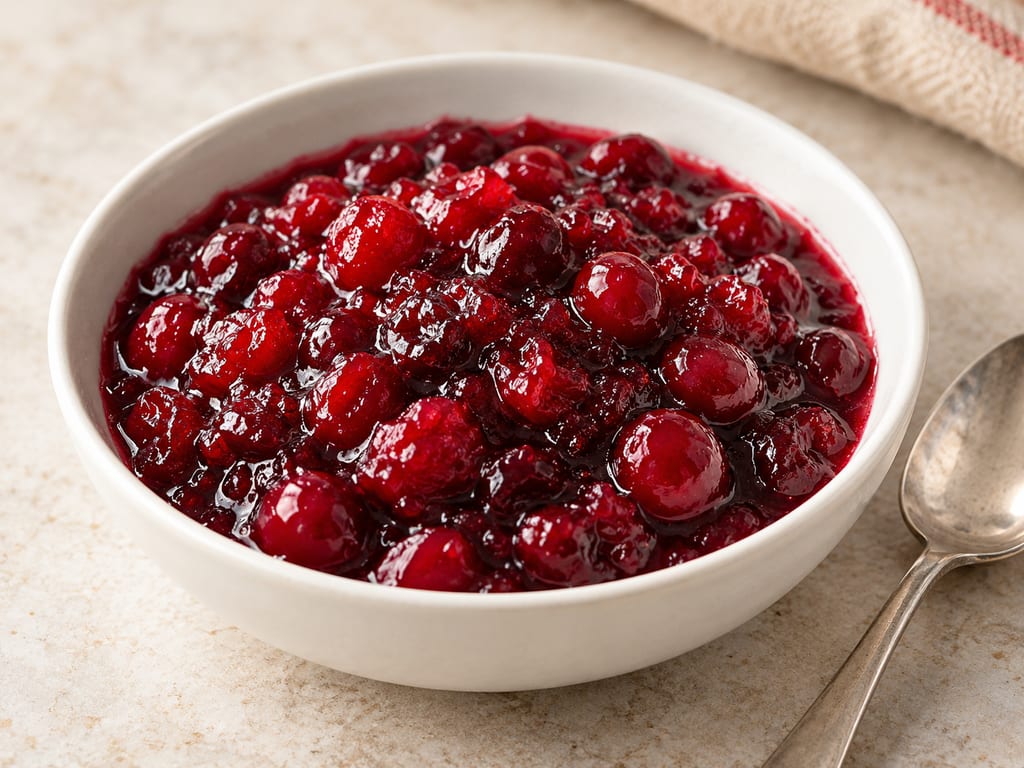
Cranberry sauce is a sauce of cranberries cooked in sugar syrup until the berries burst and thicken, served with roast turkey, pork, chicken and ham.
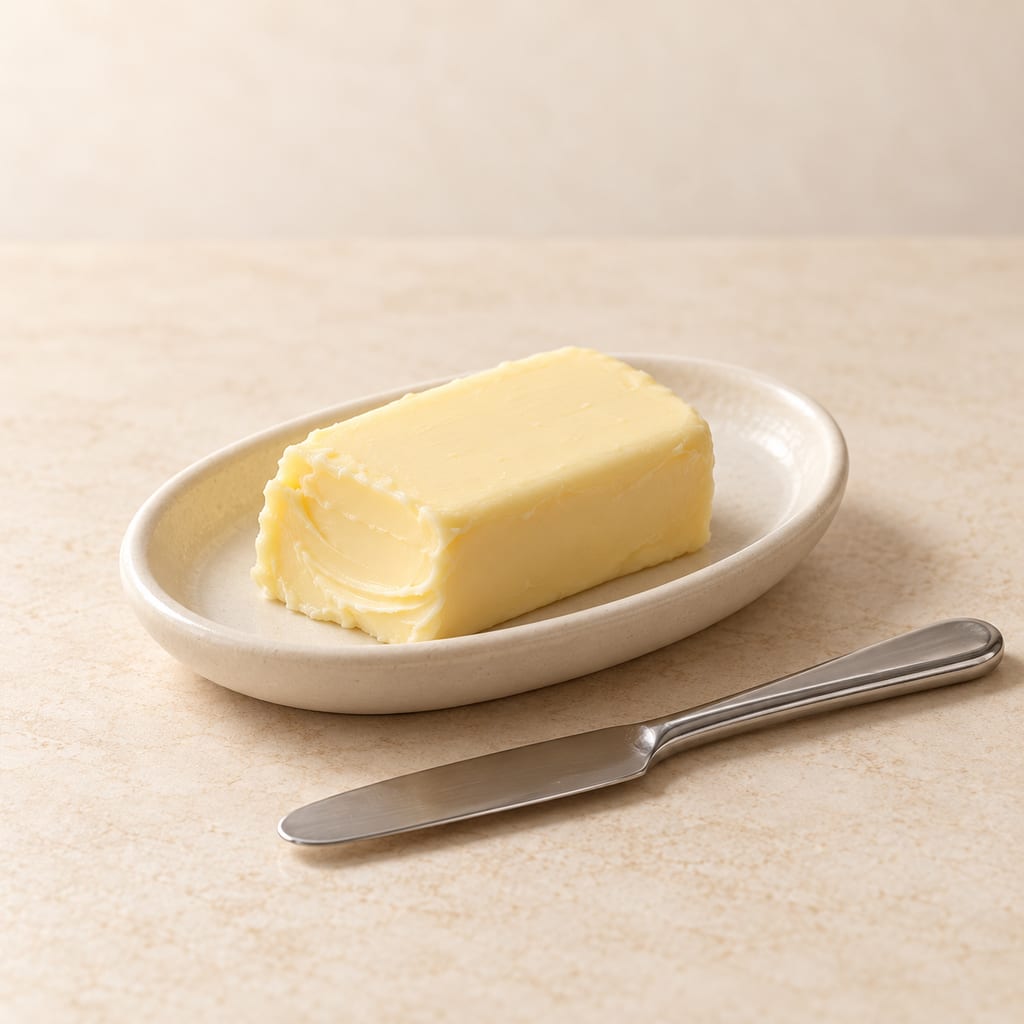
Cultured butter is churned from cream soured with lactic cultures. Its lightly tart flavour comes from the cultured cream, which separates into butter grains and buttermilk.
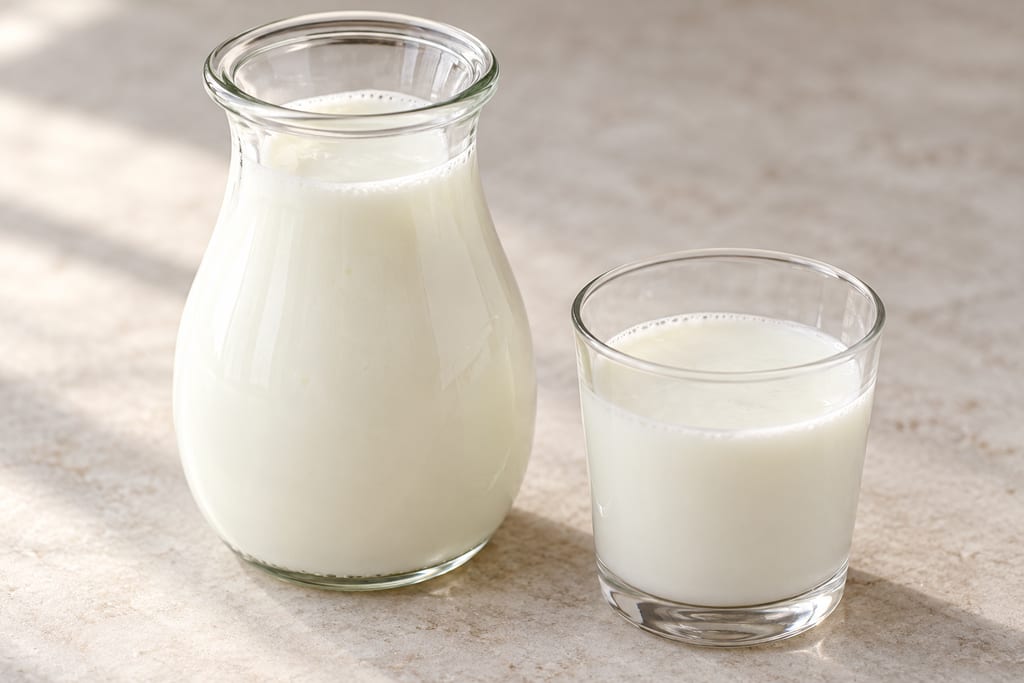
Cultured buttermilk is skim milk soured with a lactic starter into a tangy drink. This Canadian home method sets the milk without churning cream.
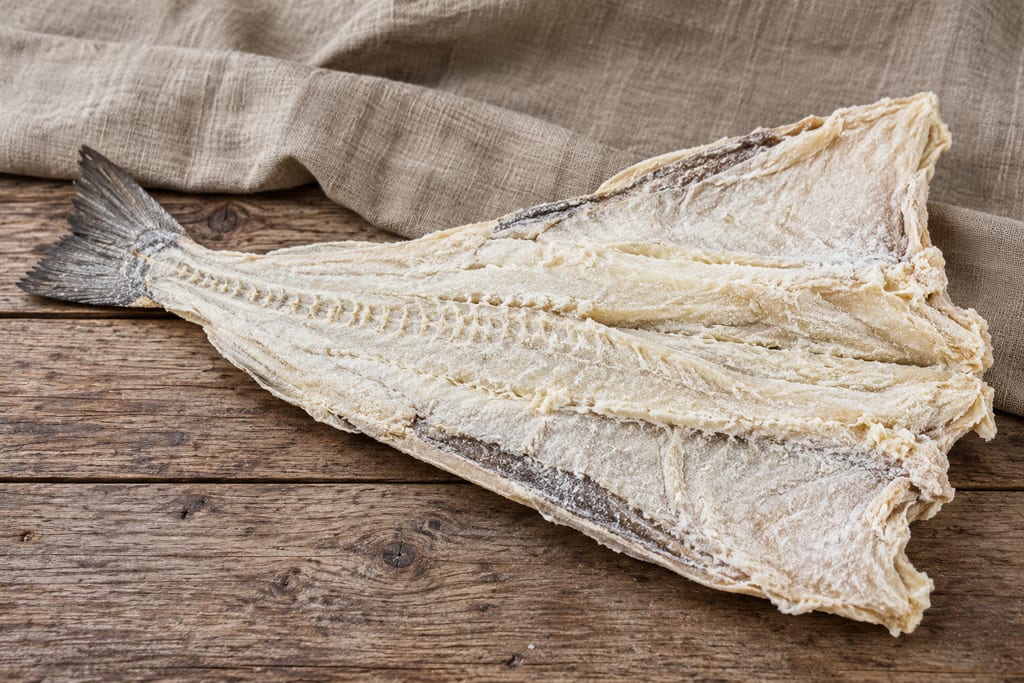
Cod split, salted and dried on flakes until hard, a long-keeping fish that must be desalted and rehydrated before use; the salting and the extensive drying together make it portable where light salting or partial drying does not.
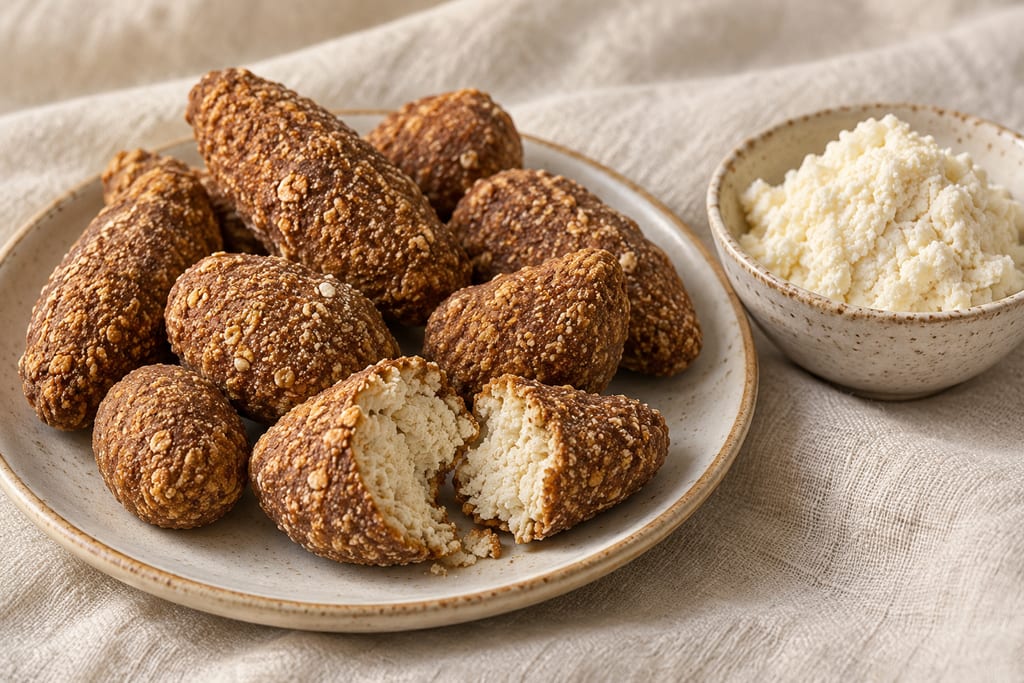
A two-stage Altai dairy preparation: sour chegen is heated into soft aarchi, then portions are drained, pressed and traditionally smoked into firm kurut.

A washed-curd cheese with propionic bacteria, warmed by hot water in two steps and then held in a warm room for weeks so the bacteria can form its holes.
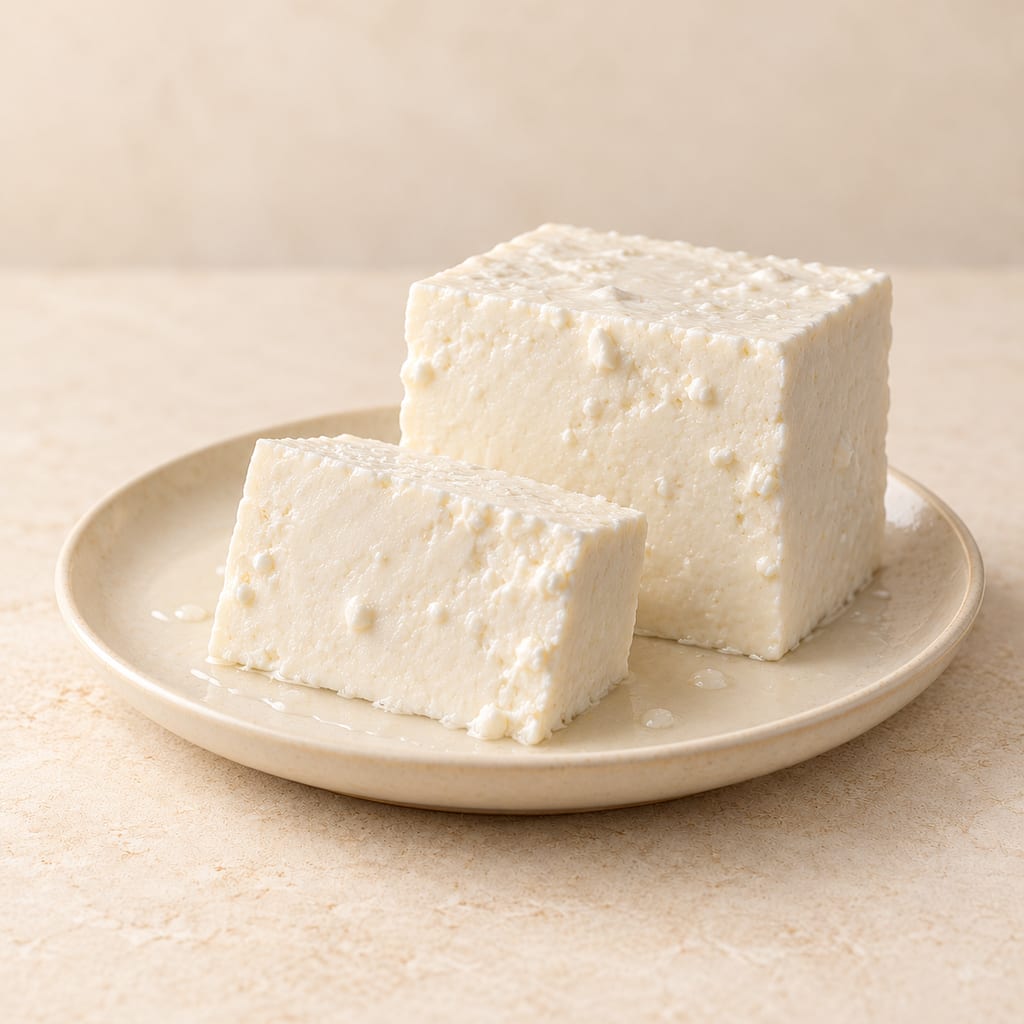
Beyaz peynir is a Turkish white cheese matured in brine. Sheep milk, alone or mixed with other milks, gives a close-textured cheese cut into blocks and packed in cans.
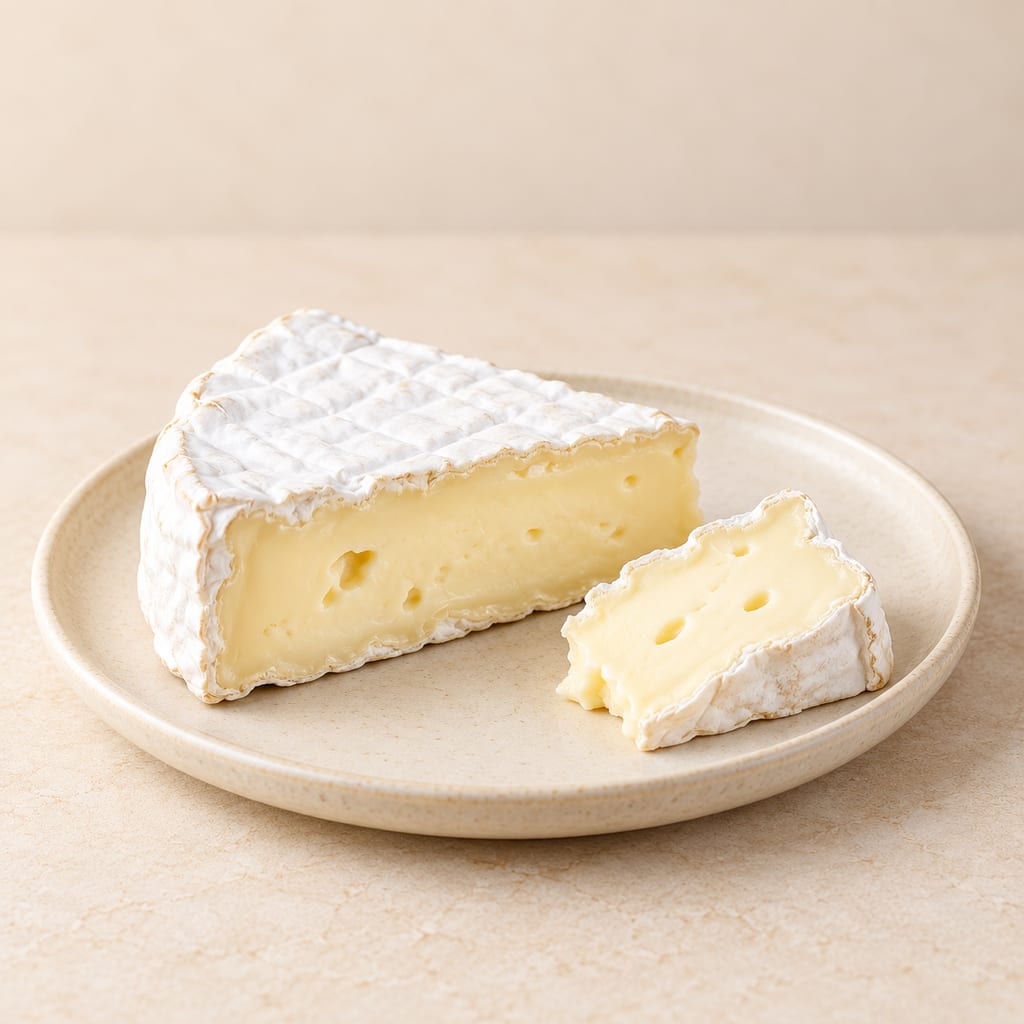
A cream-enriched Brie with a white bloomy rind and a softening center, made from pasteurized milk with lactic and surface cultures.
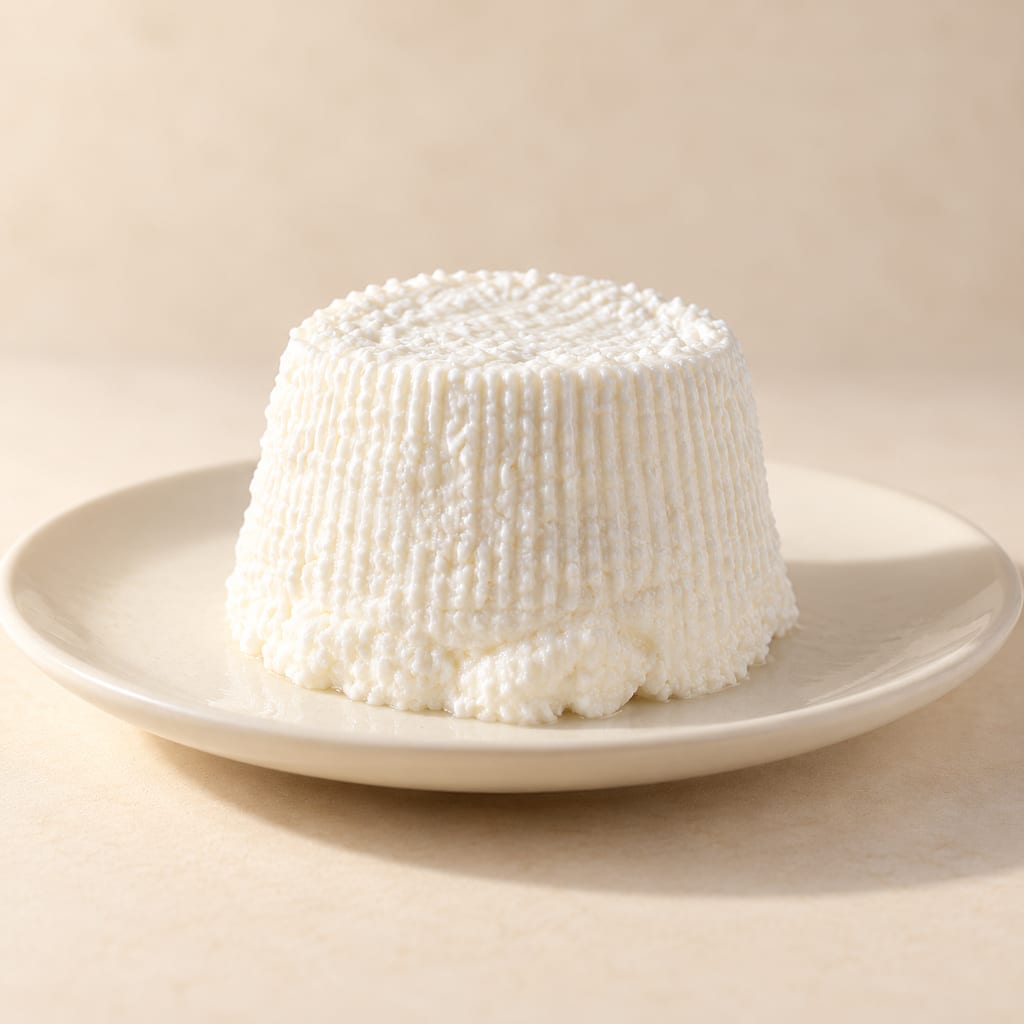
Corsican Brocciu is a whey cheese made by heating sheep's or goat's whey with whole milk and salt, then gently draining the flocculated curds. It is eaten fresh or salted and ripened as Brocciu passu.
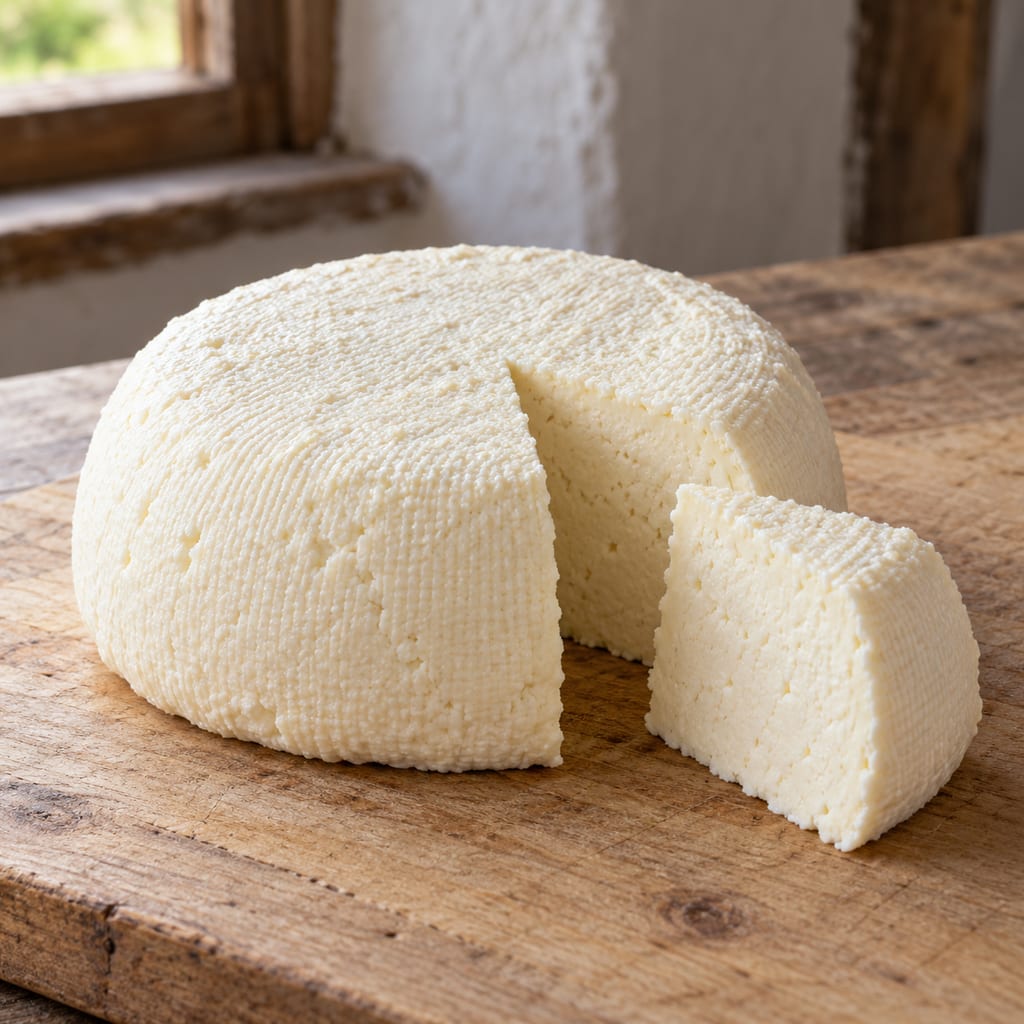
Budz is a traditional Hutsul rennet-set cheese made from sheep, cow or goat milk in the Ukrainian Carpathians, forming a fresh curd that can be eaten, smoked or processed into salted bryndza.
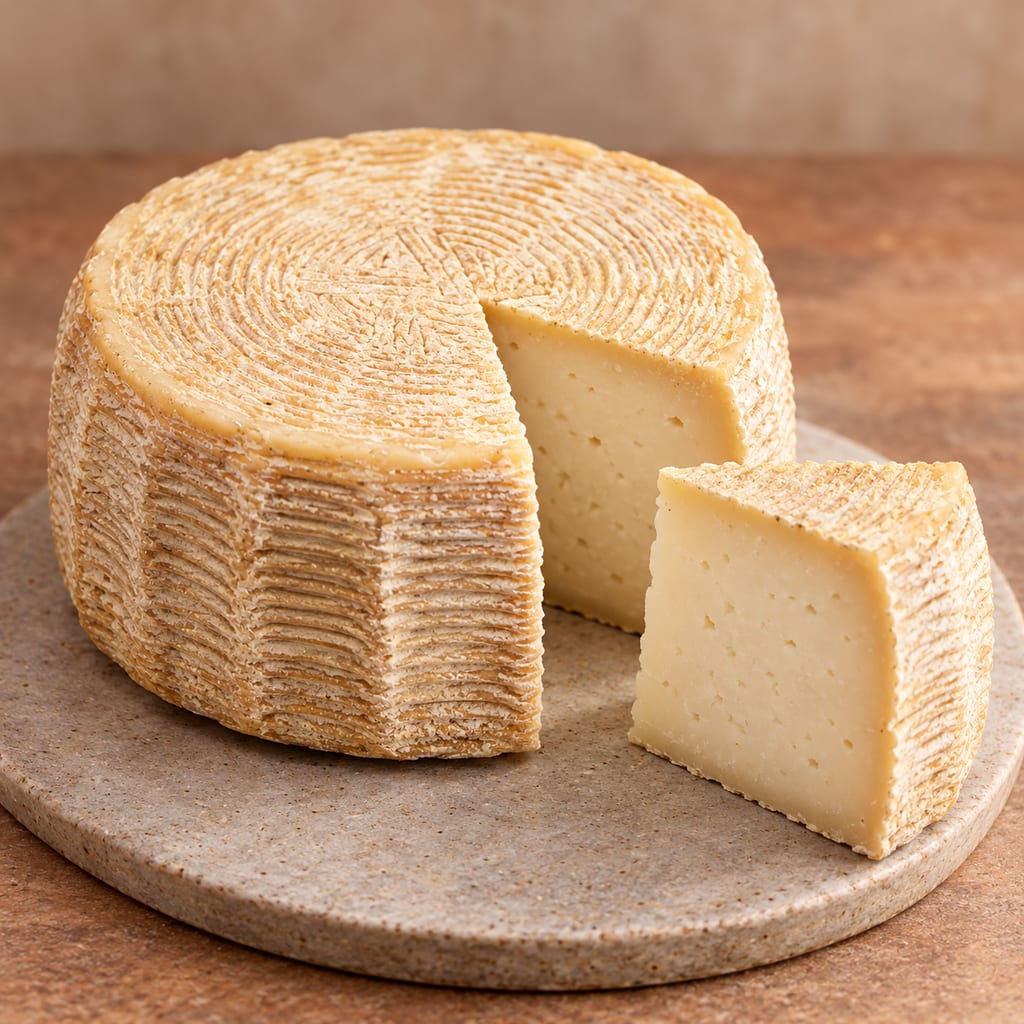
A scalded cheese moulded in baskets and re-cooked in its forms in hot whey, made alongside a ricotta from the same milk, then acidified, brined and aged for months.
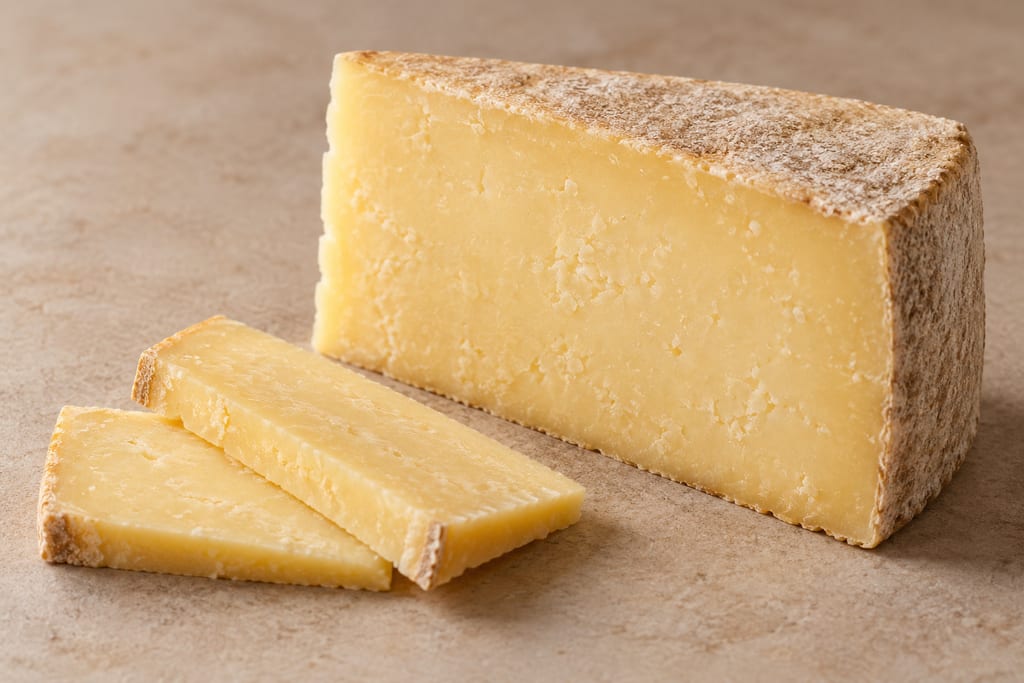
A pressed cheese whose curd is cooked slowly, then cheddared: kept warm in slabs that are turned and stacked for hours before milling, salting and pressing.

A gelling polysaccharide extracted from red seaweeds, sold as kanten strips or powder; it sets firm at a low concentration and stays solid until about 85 °C.

A Dominican table and seasoning condiment of sour orange juice, mixed with lime and salt and bottled raw; garlic, oregano or a hot pepper may be added for meat or a spicier bottle.

Cicerbita alpina is an alpine perennial whose tender shoots and leaves have been eaten raw or cooked. Sámi milk preparations and modern Carnian dishes are distinct uses, with serious identification and preservation limits.

Japanese skipjack tuna cooked, then repeatedly smoked and dried over a wood fire by the hand-fired tebiyama method into a hard block for shaving into dashi: the first stage of katsuobushi.

A Swedish-style spirit vinegar made by fermenting neutral alcohol with live vinegar bacteria, with a separate guide to commercial ättika strengths.

A yeast-raised wheat ring shaped from a firm dough, briefly boiled and baked. This source-batch formula gives a gently malted crust and a chewy crumb.

A warm dip of garlic, anchovy and olive oil, often enriched with butter, that Piedmont serves over a flame with raw and cooked vegetables and bread.

Bechamel is a white sauce of milk thickened with a butter and flour roux, one of the French mother sauces, and the base from which Mornay and other cheese and cream sauces are made.
No community contributions have been published for this entry yet.
Sign in to contribute. Published comments and photos are free to read.
Agriculture CanadaInspiration · Process
Home-made dairy products, Publication 1669Home-dairy context and hygiene guidance; complete cheese method and handling in the 1978 booklet, reprinted 1981.
Cited in: A fresh cheese built around cream; A modern home method with a different make; What the culture changes; Cream contains more than fat; The purpose of a gentle break and a slow drain; Sandwiches and other ways of eating it; Handling a fresh cultured spread; Notes on the preparations
George Mason University LibrariesHistory
To Make a Creame Chees [cream cheese]Catalogue date range 1694/1795, recipe title and transcript of the earlier milk-and-cream cheese; not the modern light-cream formula.
Cited in: The older cheeses behind the name; Notes on the preparations
Cheese in the cityImage reference
Homemade cream cheesePhotograph of finished cultured cream cheese on muslin; a separate milk-and-cream formula. No quantities or process conditions transferred.
Office québécois de la langue française, Grand dictionnaire terminologiqueContext
fromage à la crèmeUnripened smooth malleable cheese, colour/flavour, Quebec French term, bagels, dips and baking.
Cited in: A fresh cheese built around cream; Sandwiches and other ways of eating it
Tetra PakContext
Dairy Processing Handbook: The chemistry of milkMilk constituents, protein network, acidity and minerals, fat globules, cream/butter transformation.
Cited in: A fresh cheese built around cream; What the culture changes; Cream contains more than fat
John C. Winston Company; second authorized editionContext
Famous Old ReceiptsDistinct pressed rennet and cream-drained receipts; Daffodil Sandwiches bread cutting, lettuce, cream cheese, mayonnaise and contributor.
Cited in: The older cheeses behind the name; Sandwiches and other ways of eating it; Notes on the preparations
Food Chemistry 332, 127327; accepted manuscript held by University of MelbourneContext
The effect of pH on the fat and protein within cream cheese and their influence on textural and rheological propertiesAcidity, protein hydration, aggregation and fat-protein arrangement affect firmness; higher-pH cheeses softer; lower-pH gels denser.
Cited in: Cream contains more than fat; Why a commercial block can behave differently
United States Code of Federal Regulations, via Cornell Legal Information InstituteContext
21 CFR § 133.133 — Cream cheeseSoft uncured pasteurized-dairy product, composition standard, warming/working/chilling/homogenization and permitted ingredients.
Cited in: Why a commercial block can behave differently; Notes on the preparations