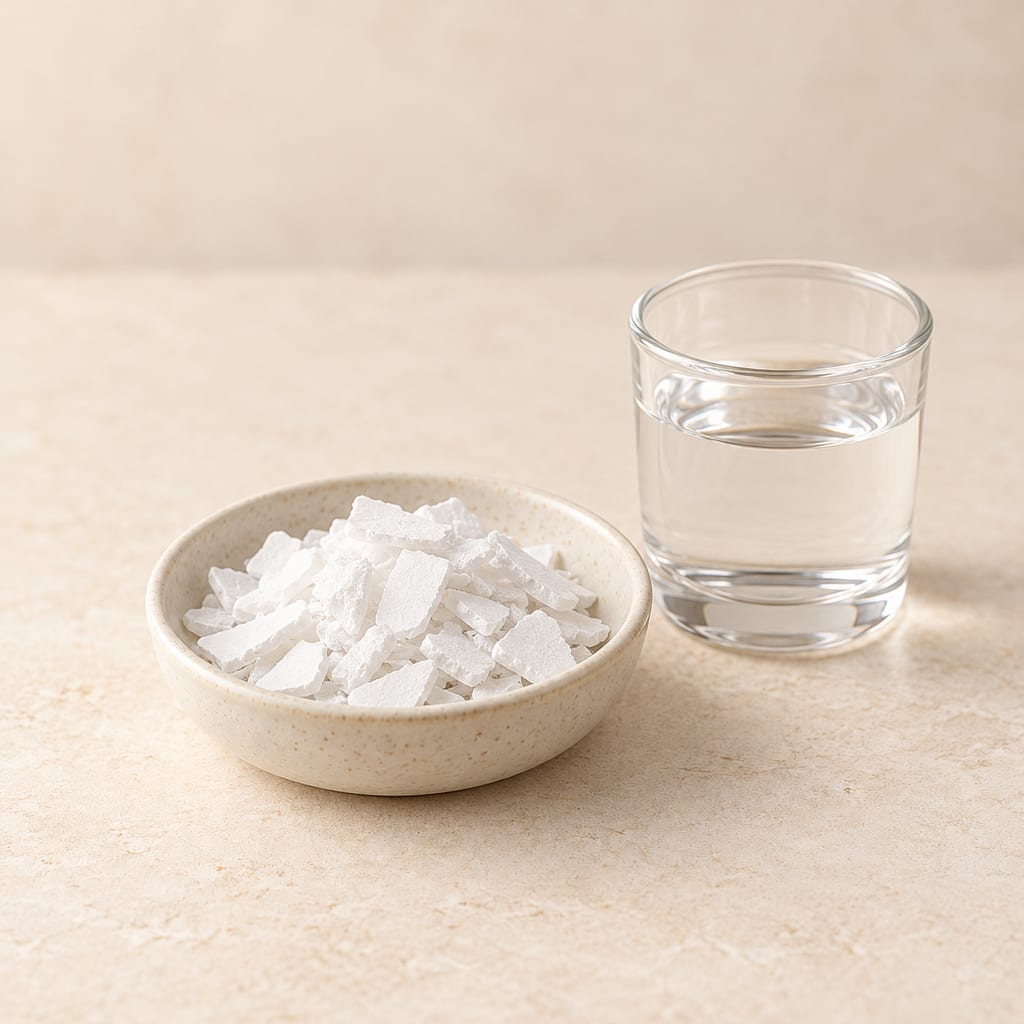
Calcium chloride
A soluble calcium salt used to support cheese curd formation, balance cheese brines, reinforce some plant tissues and adjust brewing water.
 FermenteaWhere food goes to change
Modern adaptation
Brie
A cream-enriched Brie with a white bloomy rind and a softening center, made from pasteurized milk with lactic and surface cultures.
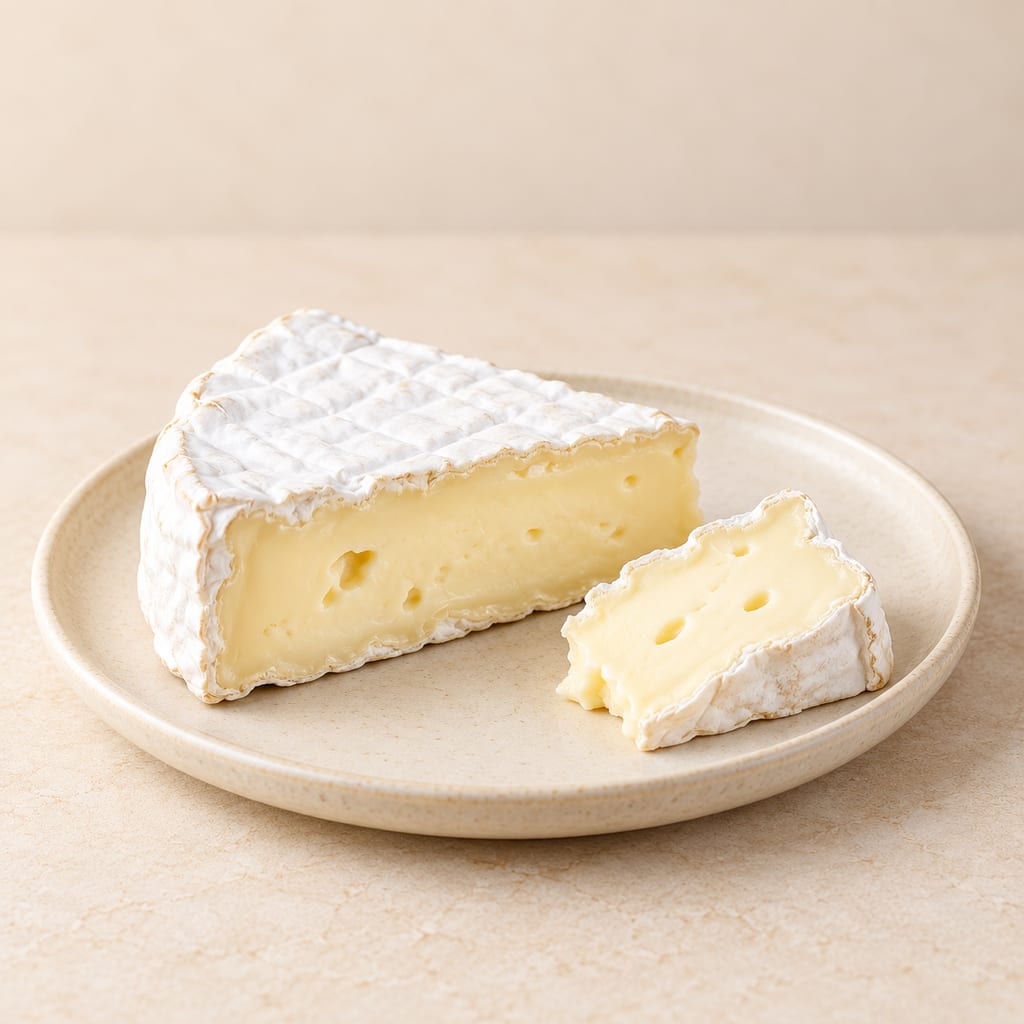
Brie is a soft cow’s-milk cheese whose defining contrast is between a pale, supple paste and a thin, white bloom on the rind. It is usually made as a broad, relatively flat round, then cut into wedges; a cream-enriched wheel follows that familiar shape but has more milk fat in its make because cream is added to the milk. The particular recipe here is a modern home adaptation, not a specification for Brie de Meaux or Brie de Melun. “Brie” names both a historic cheese family and a region east of Paris, so the word on a label does not by itself establish an appellation or a single traditional method.
Brie is easily confused with Camembert because both are soft-ripened, white-rinded cheeses. The recipe guide distinguishes Brie as generally wider and flatter than Camembert, which is usually smaller and taller; it also treats cream enrichment as a feature of some Bries, not as a defining feature of Camembert. Those are broad distinctions, not rules that make every wheel identifiable by shape alone. Cream-enriched Bries sold today vary in size, richness, milk treatment and ripening practice. The recipe’s own ingredients and stages are the useful definition of this particular cheese.
The Brie district lies in the Paris basin, east of Paris. France’s agriculture ministry describes many regional Bries, including those associated with Meaux, Melun, Montereau, Nangis and Provins, with differing diameters and affinage. Brie de Meaux and Brie de Melun alone hold the French AOC and European AOP protections, granted in 1992. Their specifications and identities are narrower than the general word “Brie”: the cream-enriched recipe here should not be presented as either protected cheese.
The ministry repeats the familiar account that Charlemagne greatly appreciated Brie, but that does not give a securely documented beginning for the present-day cheeses. A historic reputation, a region’s long association with a food and a dated record of a particular name are different kinds of evidence. The household recipe page places Brie near Paris in the early medieval period, while the ministry’s summary chiefly documents the modern protected names and the region. The safest account is therefore regional continuity without claiming that this precise cream-enriched formula is ancient.
Brie’s size and affinage developed in a landscape where villages and dairy producers made distinct cheeses and where cheese markets moved them beyond their immediate production areas. The ministry’s comparison captures how local styles remain legible: Brie de Meaux is a larger wheel with a paler straw-yellow paste and a fruitier, milder profile, while Brie de Melun is smaller, more deeply coloured and stronger, with woodland notes. Their minimum maturation periods also differ. These contrasts describe protected regional cheeses; they are context for the family, not alternate instructions for this recipe.
Milk supplies water, lactose, fat, proteins and dissolved minerals. In this recipe, heavy cream replaces part of the milk volume: two gallons of milk minus eight ounces are paired with eight ounces of cream. The original measure does not specify whether those ounces are weight or fluid measure, so the recipe retains the ambiguity rather than silently converting it. The maker’s stated yield is two pounds of cheese.
Milk fat is carried in droplets dispersed through the liquid. When rennet coagulates casein, the forming curd traps some fat and water along with the protein network. Adding cream raises the fat in the vat relative to using milk alone, so the finished cheese is richer; it does not change the basic sequence of acidification, rennet coagulation, drainage, salting and surface ripening. The recipe’s stated result is mild, buttery and creamy, while the final softness also depends on moisture retained in the curd and the degree of ripening.
The formula uses pasteurized milk that is not ultra-pasteurized. The recipe specifically calls for calcium chloride with pasteurized milk and warns against ultra-pasteurized milk for this make. It gives no quantitative explanation or corrective dose beyond the stated quarter teaspoon. The calcium chloride is not a starter and does not acidify milk: it is an ingredient the recipe uses in its pasteurized-milk curd-setting approach. The line between a formulation choice and a general rule matters; the source does not establish that all pasteurized milks behave identically.
MM100 is the milk-phase starter in this formula. Its lactic acid bacteria use lactose, the milk sugar, and produce lactic acid. The first hour at 90°F gives that culture time to begin acidification before the curd is moved into forms. The rate of acid production helps establish the cheese’s starting acidity and mineral balance, which in turn shapes the curd and the community able to grow during ripening. The cultures sprinkled over the milk are allowed to rehydrate before stirring so that dry powder disperses rather than remaining in clumps.
Rennet then coagulates the milk proteins into a continuous curd. The recipe leaves that curd undisturbed for a long set, rather than cutting it into cubes; the maker’s stated reason is to retain more moisture in the final cheese. Thin layers are lifted into the wide forms, where gravity and time drain whey from the curd. Whey carries away much of the lactose and water. The curd’s moisture, its acidity and the later salt application all affect the environment in which the rind develops.
The recipe names Geotrichum candidum C70 and Penicillium candidum as surface cultures. It describes Geotrichum as establishing before the visible white Penicillium coat. Their activity is part of a changing surface ecosystem rather than a decorative moulding step: studies of mould-ripened cheeses report consumption of lactic acid, rising surface pH, ammonia production from amino-acid metabolism and proteolysis as ripening proceeds. Proteolysis means enzymes break cheese proteins into smaller peptides and amino acids. These changes soften the paste from the rind inward and help produce the characteristic ripe aroma and texture.
That general science should not be mistaken for a prediction that every wheel will ripen on the same calendar. The research studies controlled Camembert-type cheeses or other Brie wheels, while this household formula uses its own culture doses, wheel geometry, temperature and humidity. Its day ranges are practical observations reported by the recipe author, not universal biological deadlines. The recipe’s description of a white coat by days 10–15 and about two months overall belongs to this make and its stated conditions.
Heating the milk and cream slowly to 90°F gives the culture a suitable starting condition in the recipe. Holding the inoculated vat for an hour lets acidification begin while the forms, mats and draining area are cleaned and prepared. That preparation has a practical purpose: once the curd is ready, it will be handled repeatedly, and the source asks that contact surfaces and equipment be clean and sanitized before they touch it.
The long rennet set creates a moist curd that can be lifted in thin layers instead of cut into small grains. Cutting increases the exposed surface and encourages whey release; this method avoids that early loss and leaves the curd to settle in the forms. The first turn follows soon after filling, then the rounds are turned every few hours as draining continues. Boards support the delicate forms while the mats let whey escape. The recipe gives 14–20 hours as a normal drain, ending when whey release slows; it does not give a measured moisture endpoint.
Salt is divided between the two wheels and applied to both faces and the sides. The six-hour interval lets the first application absorb before the second face is salted. Salt seasons the cheese and influences moisture movement and the surface environment where ripening organisms establish. Medium-grain cheese salt is specified; fine or iodized salt is excluded by the recipe. Its exact quantity is four teaspoons for the two rounds.
Drying and rind development are distinct operations. The wheels first dry at 58–64°F and 55–65% relative humidity until there is no free surface moisture, usually one or two days in this formula. The lower humidity helps dry the surface before the cheese enters the much more humid ripening space. A fan is suggested only when humidity prevents drying. For bloom development, the source then specifies 52–54°F and 90–94% relative humidity, space between cheeses, fresh air, daily turning and replacement of wet or moldy mats. This is an equipment-dependent aging method, not room-temperature storage.
Once the white bloom has developed, the source offers two finishes: continue aging the cheese unwrapped on mats, or dry both surfaces for about two hours, wrap in two-ply cheese paper and move it to 42°F. The open and wrapped routes differ in how moisture and gases move around the cheese, so they should remain alternatives rather than be combined. No exact final maturity date is specified. The recipe gives about two months as an overall aging estimate, while its final stage remains condition-dependent.
The cream-enriched make here is one modern adaptation within a broad family. Cream may be added in commercial double- or triple-cream cheeses, but those labels do not provide a universal recipe or a single legal formula in every market. Current makers illustrate the range: some sell a double-cream wheel, while others make triple-cream Brie with added cream and describe a buttery paste under a bloomy rind. Cowgirl Creamery’s Brie de Luxe, for example, is a washed-curd triple cream from Sonoma County. It is a related modern product, not a variant of this exact household batch.
The protected Brie de Meaux and Brie de Melun are more sharply defined. Their sizes, maturation and sensory profiles differ, and they are tied to AOP specifications. Adding cream to the milk in this recipe does not turn it into a protected Brie, nor does a white rind alone establish regional identity. A cheese can share the bloomy-rind family while carrying a different milk treatment, culture set, make and place.
Small-form options in the household source also change the make: it says the batch can be halved for two small Camembert forms or one smaller Brie form, and it describes cutting the curd into one-inch cubes for the small-form version. That is a method variation supplied by the author, not merely a change in presentation. Smaller curd pieces drain differently from uncut thin layers, so the source-specific option should not be folded into the large-wheel directions as if both behaved identically.
At the table, the cheese is meant to be read as a whole wheel: rind, just-under-rind paste and center do not necessarily soften at the same rate. The source’s flavor notes for Brie include butter, milk, mushroom, nuts and subtle fruit, while its texture changes as ripening moves inward. A wedge makes that gradient visible. Bread, fruit preserves, berries or nuts are contemporary accompaniments used by cream-enriched Brie makers; they frame the richness without belonging in the cheese vat.
Brie also sits naturally on a cheese board. The French ministry places it among the region’s familiar table cheeses and distinguishes the milder, fruitier Meaux profile from Melun’s stronger woodland character. These are useful comparisons when tasting, but the cream-enriched home wheel is not guaranteed to share either protected cheese’s precise flavor. Its own milk, drainage, salt, cultures and aging conditions set its character.
Keep the finished cheese refrigerated, following the source’s wrapped-aging instruction if that route is chosen; the recipe itself does not supply a validated post-opening shelf life. The French ministry relays health authorities’ advice that young children, pregnant people and immunocompromised people avoid raw-milk cheese. This recipe uses pasteurized milk, but the general sanitation controls still matter during handling. The New Mexico State University guidance identifies pathogens associated with fresh-cheese handling and supports cleaning and sanitizing food-contact equipment; it does not validate the later bloomy-rind aging conditions of this particular Brie.
Changes in appearance should be interpreted in context. The process calls for a white bloom and a paste that softens as it ripens, but appearance, smell and taste alone do not establish safety. The method uses dedicated forms, draining mats, controlled temperature and humidity, and regular turns; without those conditions, the source does not establish that the same timeline or outcome will follow. The recipe is best treated as a fixed, equipment-led batch rather than scaled by guesswork.
Brie takes its name from the district east of Paris and belongs to the soft cow's-milk cheeses with a bloomy rind. Different Bries developed around towns in the Paris basin, including Meaux and Melun.
This cream-enriched preparation uses pasteurized milk and commercial cultures. Its lactic starter develops the curd, while Geotrichum candidum and Penicillium candidum shape the rind as ripening moves from the surface toward the center.
Yield 2 lb cheese · Scaling: source batch only
Salmonella, pathogenic Escherichia coli, Listeria monocytogenes and Staphylococcus aureus are associated with fresh cheese and can be introduced through handling.
Hazard sourceUse the pasteurized-milk formulation. Wash hands and clean and sanitize equipment, food-contact surfaces and draining cloths to limit contamination during curd handling.
Control sourceContaminated hands, equipment and food-contact surfaces can introduce pathogens; clean and sanitize them before handling the curd.
MM100 — Mesophilic starter containing Lactococcus lactis subsp. lactis, Lactococcus lactis subsp. cremoris and Lactococcus lactis subsp. lactis biovar. diacetylactis.
Penicillium candidum — Named commercial white-rind mold.
Geotrichum candidum C70 — Named surface culture active before the white Penicillium coat.
Bloom development uses 90–94% RH; drying before aging uses 55–65% RH.
Regional association of Brie; the preparation here is a modern cream-enriched adaptation.
Publication context of the household formula.
A soluble calcium salt used to support cheese curd formation, balance cheese brines, reinforce some plant tissues and adjust brewing water.
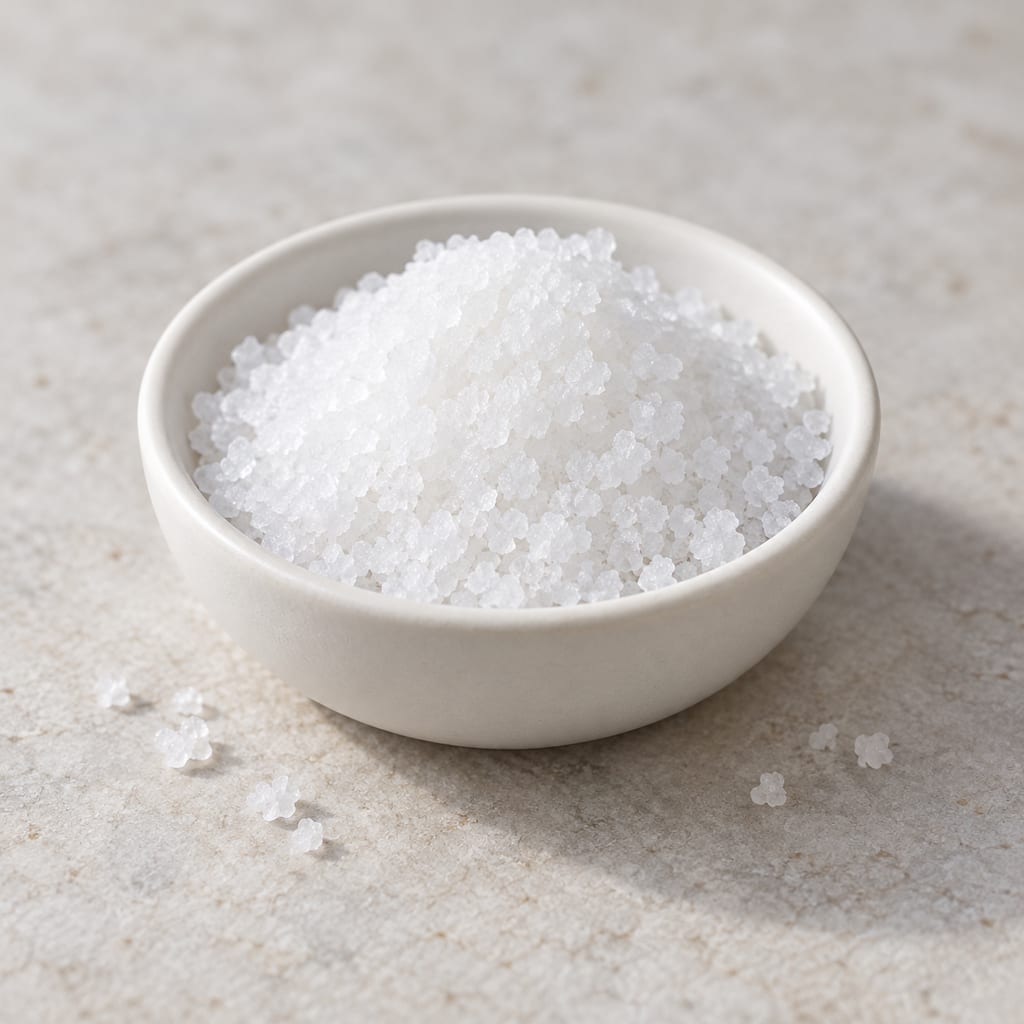
Food-grade sodium chloride selected for cheesemaking seasons curd and changes its moisture, microbial environment and rind; grain and application must suit the particular cheese.
A named fungal ripening culture in the cream-enriched Brie method. Geotrichum participates in the changing chemistry and community of the cheese surface.
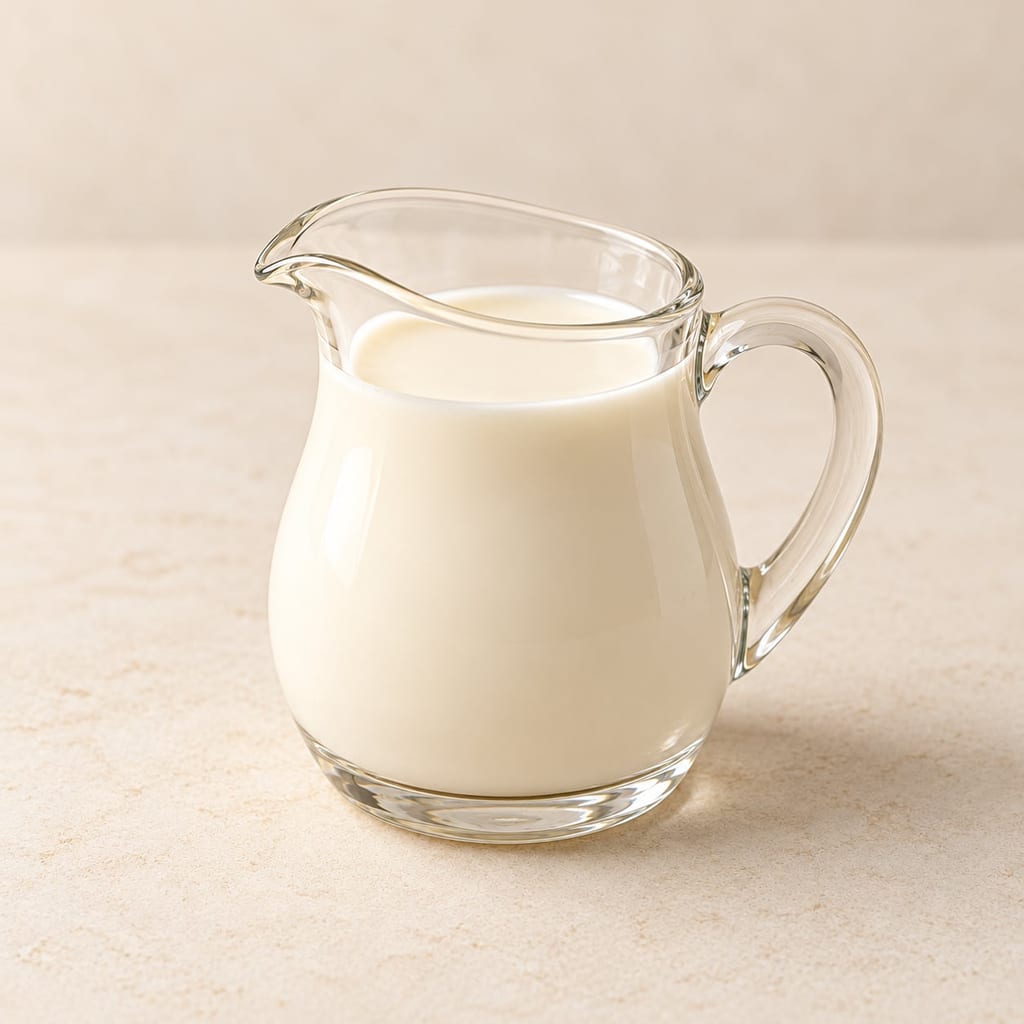
A fat-rich liquid separated from milk, used to enrich cheese and sauces, form whipped foams and supply fat for cultured cream and butter.
MM100 is a concentrated mesophilic dairy starter. Its selected lactococcal blend acidifies milk and contributes to the aromatic character of several cheese and cultured-cream makes.
A selected fungal culture for white, bloomy cheese rinds. Its growth and enzymes help change the acidity, texture and aroma of soft-ripened cheese.
A liquid milk-clotting enzyme preparation at the strength assumed by its cheese recipe. Enzyme source and product activity must be identified separately.
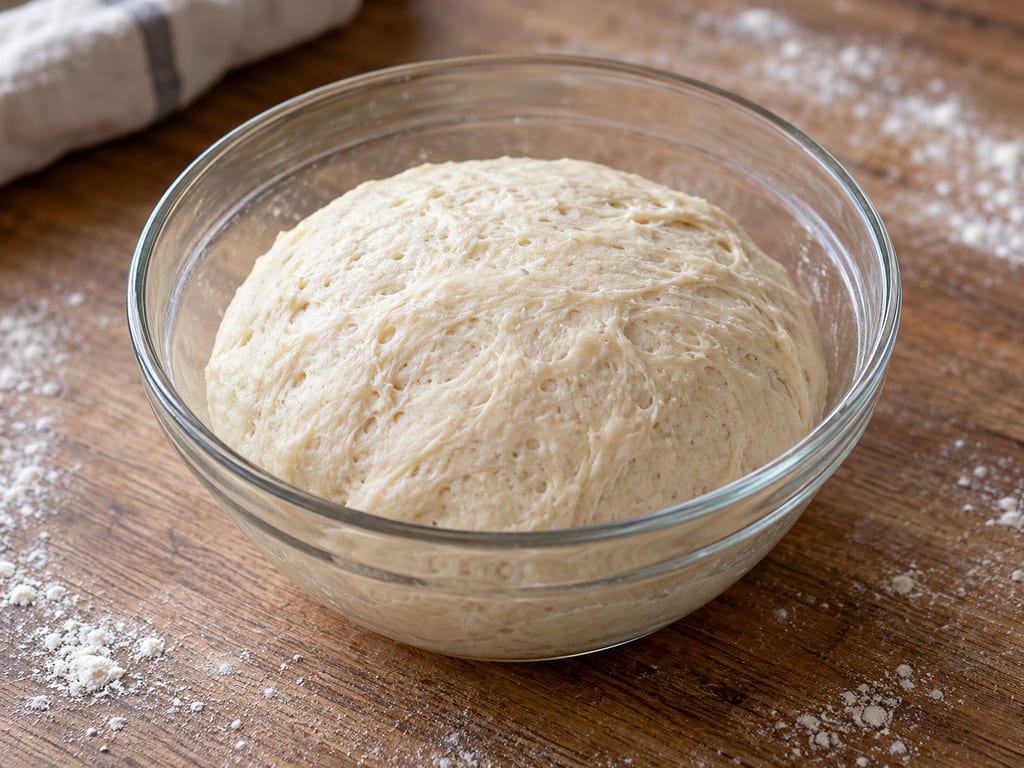
Pâte fermentée is a bread preferment made from salted, yeasted dough set aside to ferment and mixed into a later batch, carrying developed dough and fermentation products with it.
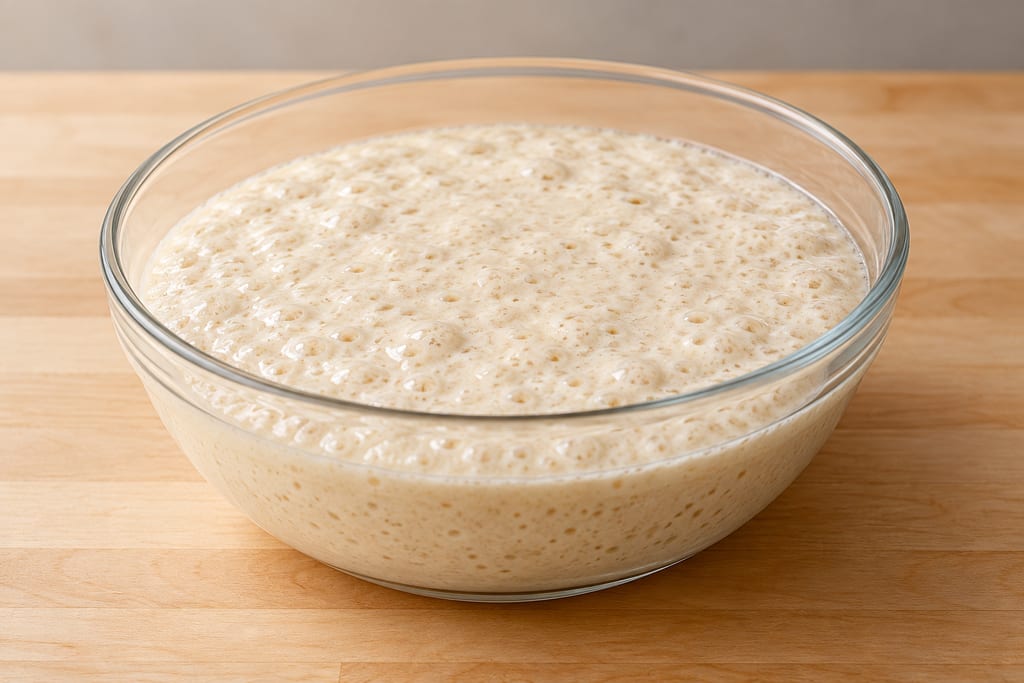
Poolish is a loose, unsalted bread preferment of roughly equal weights of wheat flour and water with a pinch of baker's yeast, left to ripen before it goes into the final dough.
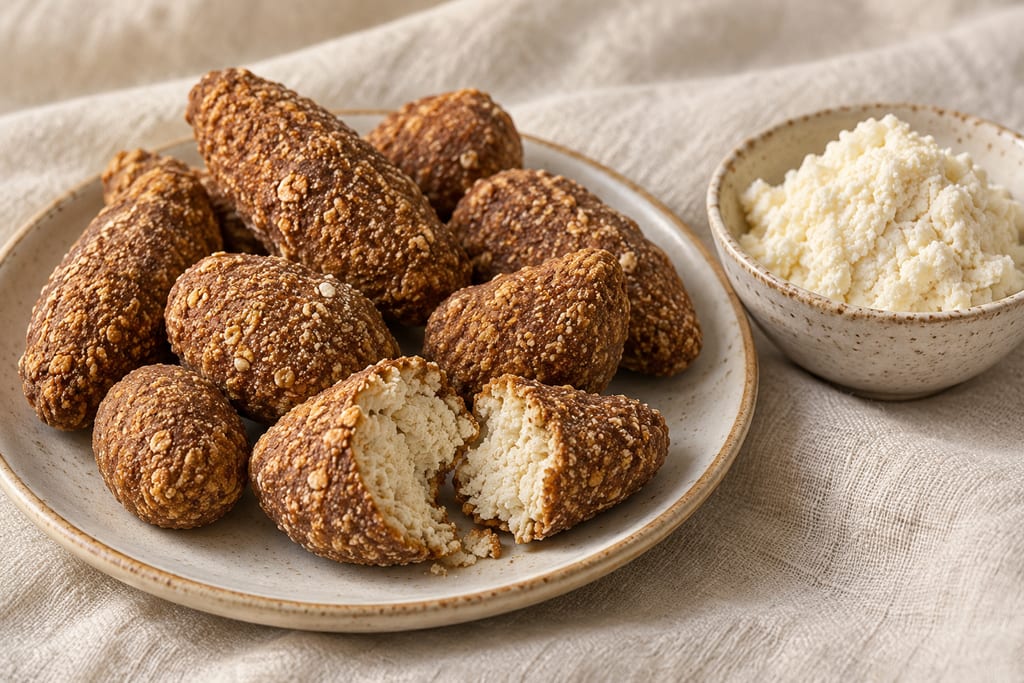
A two-stage Altai dairy preparation: sour chegen is heated into soft aarchi, then portions are drained, pressed and traditionally smoked into firm kurut.
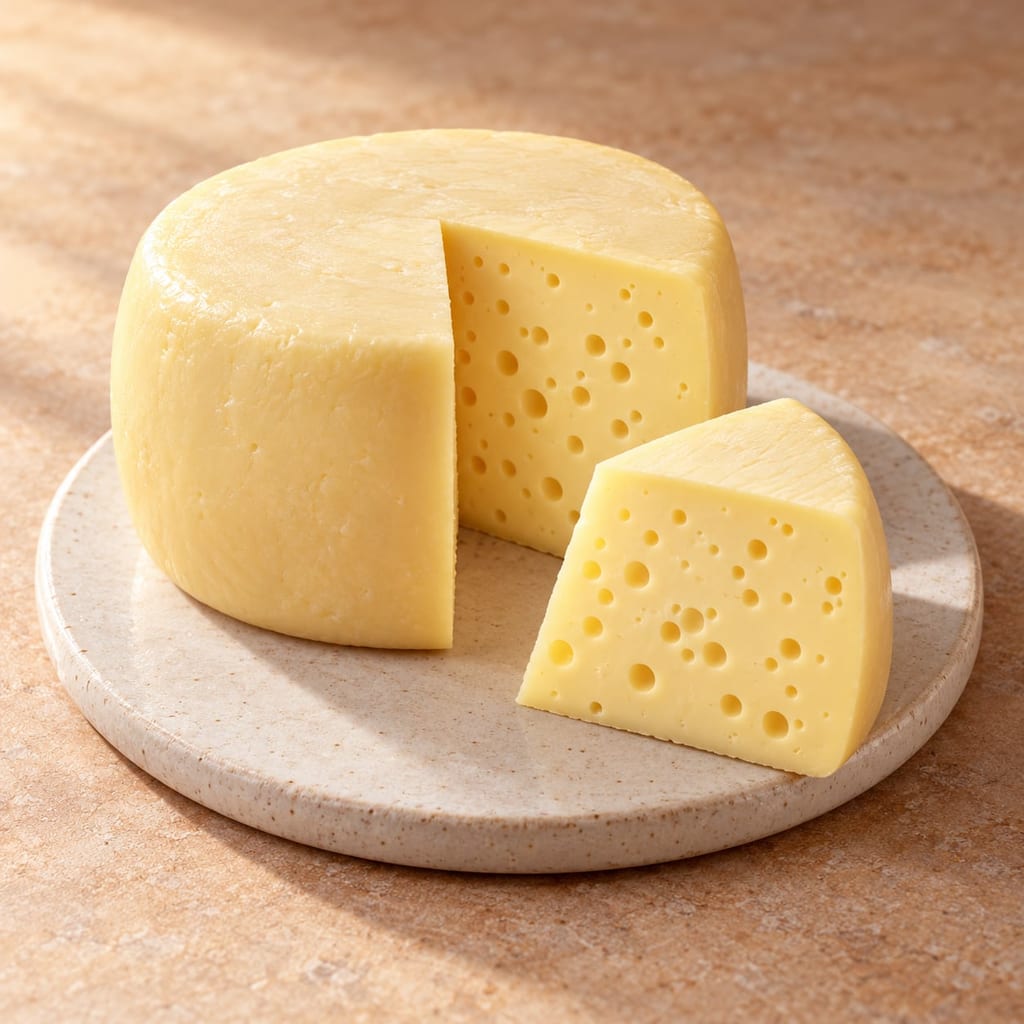
A washed-curd cheese with propionic bacteria, warmed by hot water in two steps and then held in a warm room for weeks so the bacteria can form its holes.
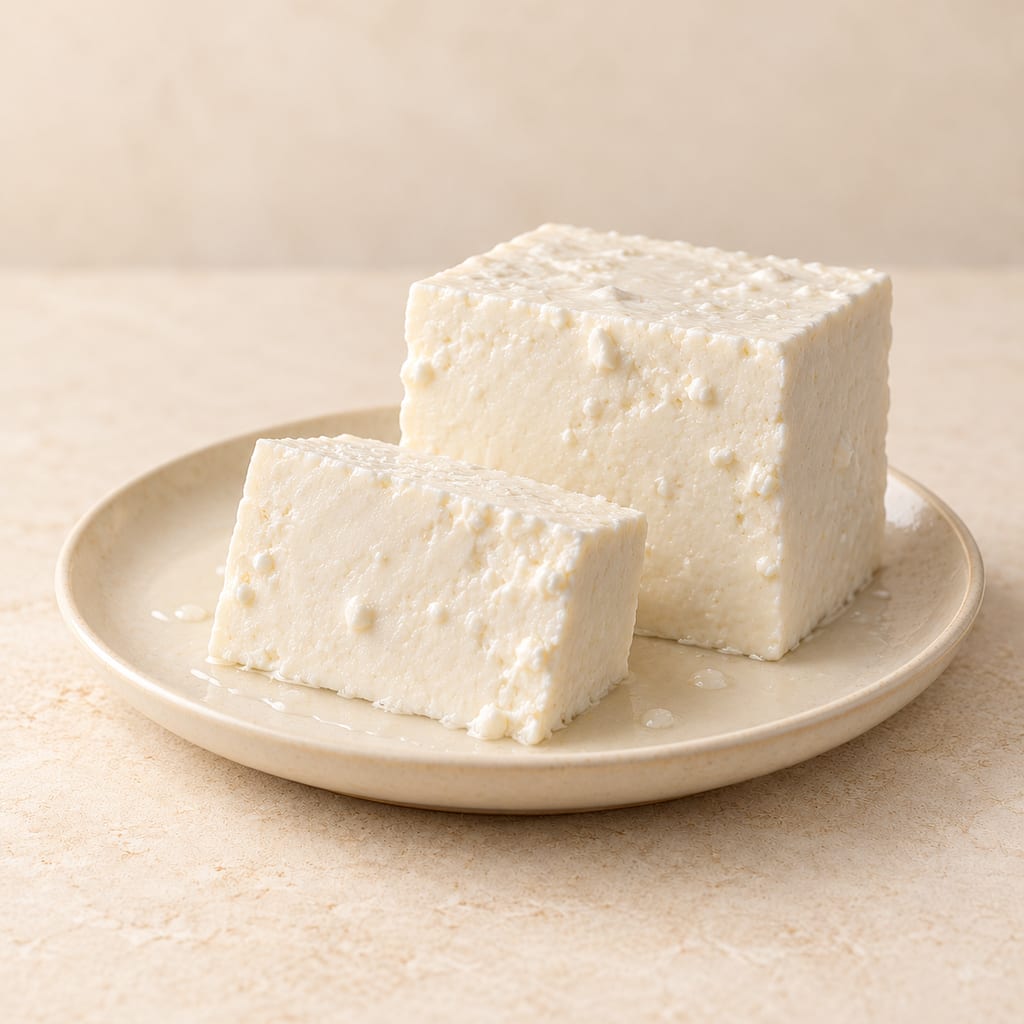
Beyaz peynir is a Turkish white cheese matured in brine. Sheep milk, alone or mixed with other milks, gives a close-textured cheese cut into blocks and packed in cans.
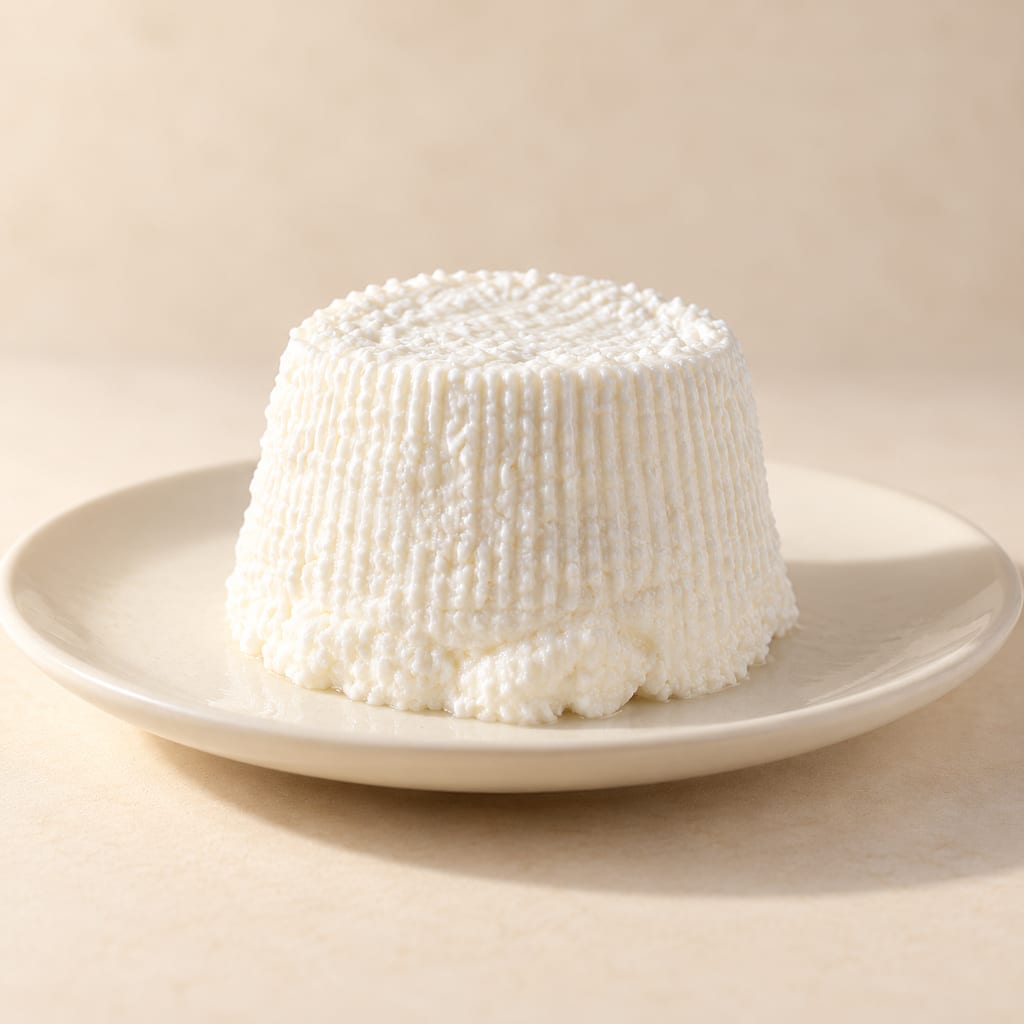
Corsican Brocciu is a whey cheese made by heating sheep's or goat's whey with whole milk and salt, then gently draining the flocculated curds. It is eaten fresh or salted and ripened as Brocciu passu.
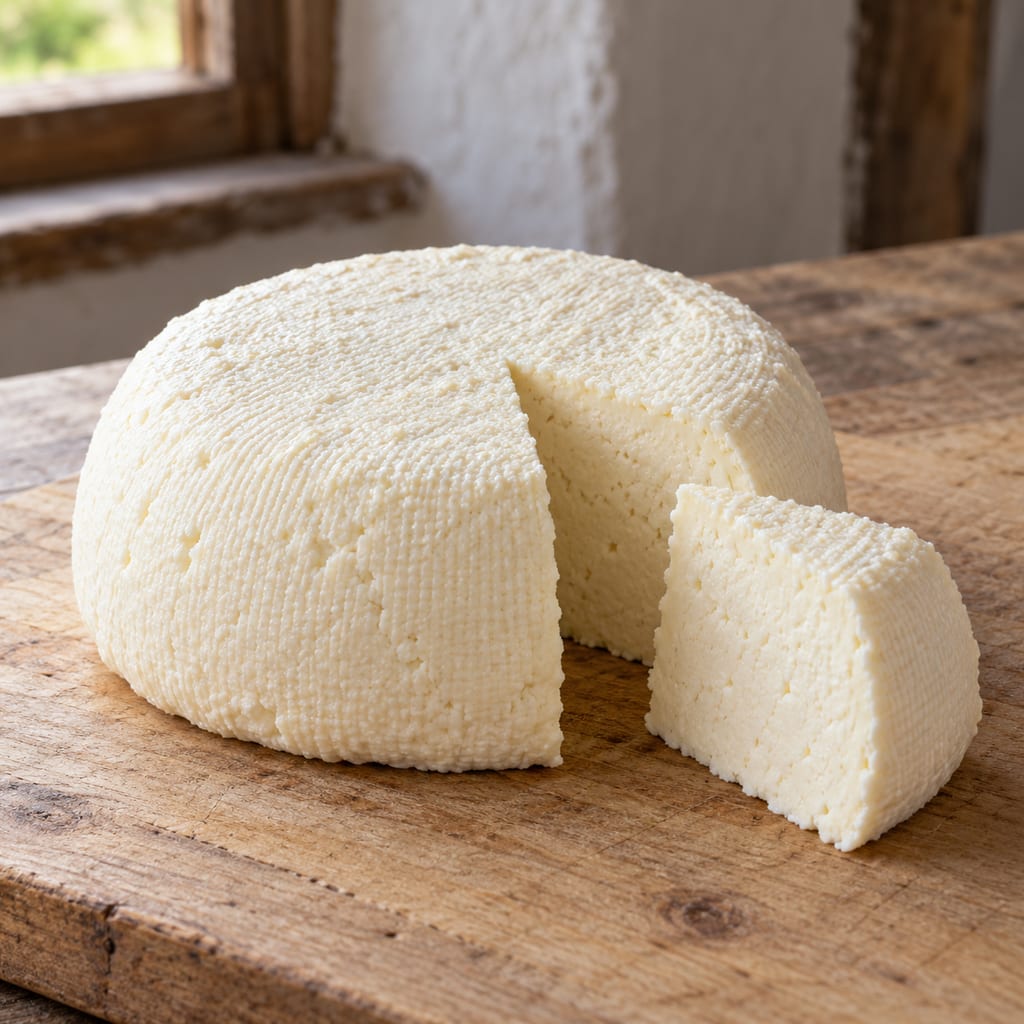
Budz is a traditional Hutsul rennet-set cheese made from sheep, cow or goat milk in the Ukrainian Carpathians, forming a fresh curd that can be eaten, smoked or processed into salted bryndza.
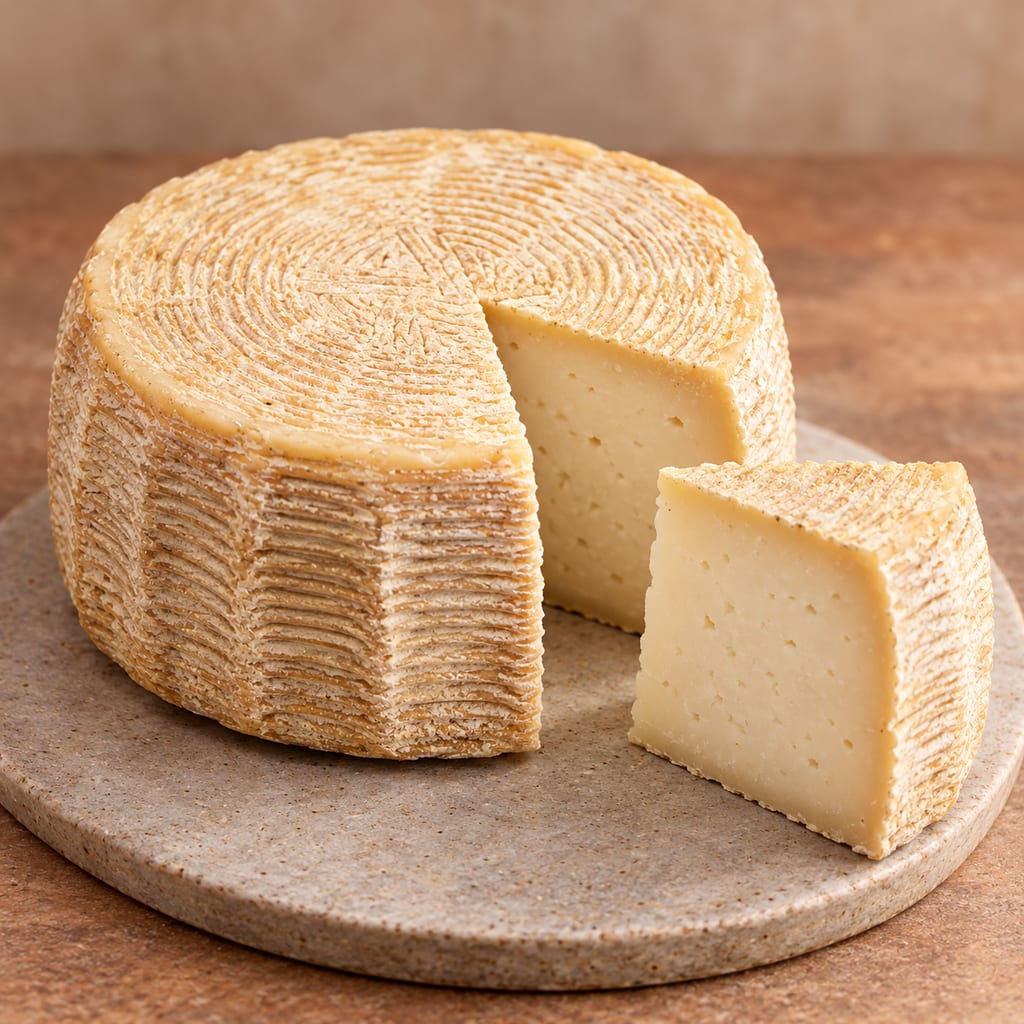
A scalded cheese moulded in baskets and re-cooked in its forms in hot whey, made alongside a ricotta from the same milk, then acidified, brined and aged for months.
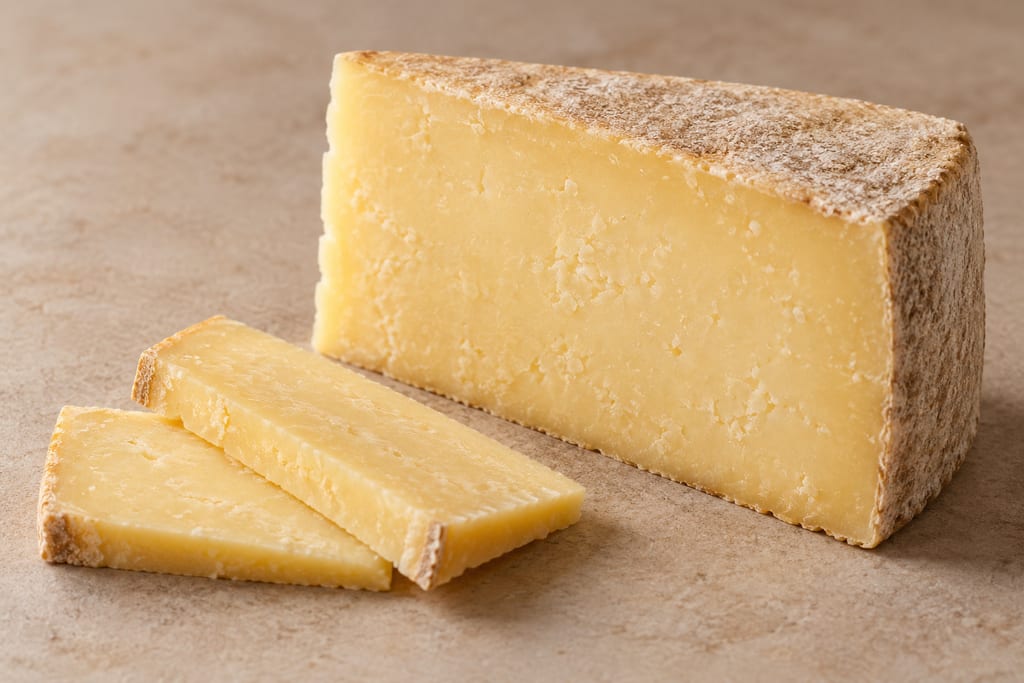
A pressed cheese whose curd is cooked slowly, then cheddared: kept warm in slabs that are turned and stacked for hours before milling, salting and pressing.
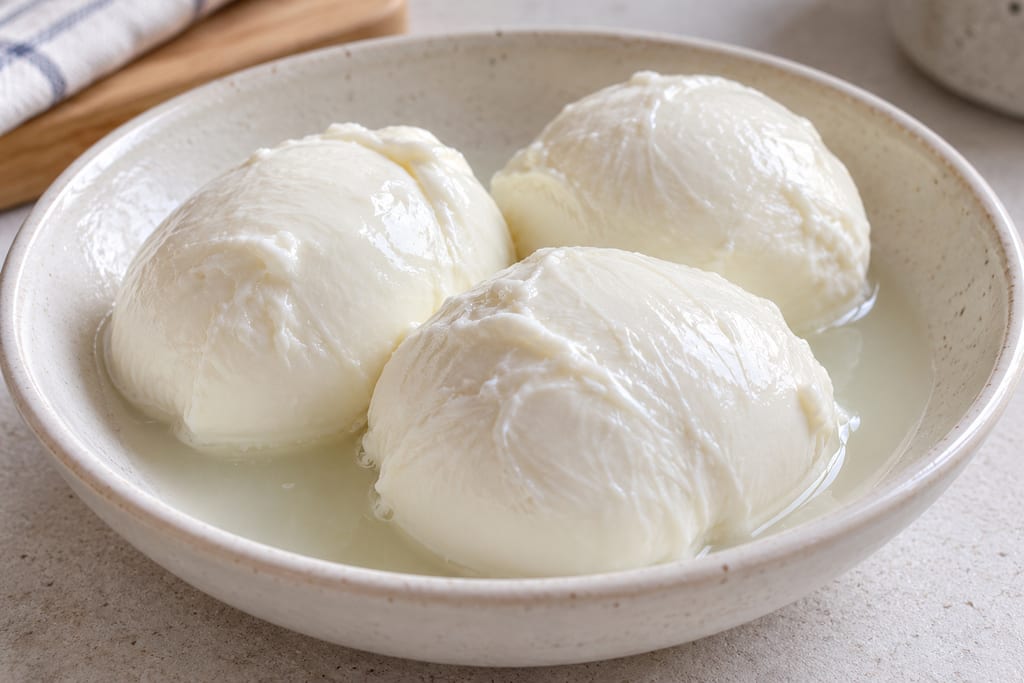
A quick fresh batch uses low-temperature-pasteurized whole milk, citric acid and rennet; the curd is warmed, drained and stretched in hot whey.
No community contributions have been published for this entry yet.
Sign in to contribute. Published comments and photos are free to read.
New England Cheesemaking Supply CompanyProcess
Brie Cheese Making RecipeTwo-pound stated yield; pasteurized milk and cream formula; named culture doses; heat, inoculation and rennet stages; curd transfer and drainage; divided salting; separate surface-drying, bloom-development and final-aging stages.
Cited in: Brie belongs to a place, and to a wider family; A regional name with distinct local cheeses; What the added cream changes; Acidification, coagulation and the white rind; Why the make has separate stages; Brie variations and what their differences mean; Serving, storage and reading the result
New Mexico State UniversitySafety
Making Homemade CheeseFresh-cheese pathogen context; not validation of this bloomy-rind recipe.
Cited in: Why the make has separate stages; Serving, storage and reading the result
Ministère de l'AgricultureHistory · Geography
Le Brie de Meaux et le Brie de Melun, les deux fromages AOP de la région parisienneBrie takes its name from its region; soft cow's-milk bloomy-rind cheeses of the Paris basin.
Cited in: Brie belongs to a place, and to a wider family; A regional name with distinct local cheeses; Brie variations and what their differences mean; Serving, storage and reading the result
New England Cheesemaking Supply CompanyIngredient identity
MM 100 Mesophilic Starter CultureNamed Lactococcus composition of MM100.
Microbiology Spectrum / American Society for MicrobiologyScience · Process
The Basics of CheesemakingLactic acid bacteria ferment lactose to lactic acid; acidification establishes initial cheese chemistry and influences microbial selection. Rennet coagulation, syneresis and curd moisture shape the cheese; surface ripening involves distinct aerobic microbial processes.
Cited in: What the added cream changes; Acidification, coagulation and the white rind; Why the make has separate stages
Journal of Dairy Research / Cambridge University PressScience · Ripening
Controlled production of Camembert-type cheeses. Part I: Microbiological and physicochemical evolutionsIn controlled Camembert-type model cheeses, K. lactis, G. candidum and P. camemberti populations tracked substrate use and physicochemical changes; lactose became negligible by day 10, lactate changed with fungal flora, ammonia and pH shifted, and G. candidum and P. camemberti had major effects on proteolysis. Findings are general evidence about the studied model, not exact predictions for this recipe.
Cited in: Acidification, coagulation and the white rind
Cowgirl CreameryModern variation · Use
Brie de LuxeCowgirl describes Brie de Luxe as a triple-cream bloomy-rind washed-curd cheese made with pasteurized cow's milk and cream in Sonoma County, with suggested accompaniments. This is a modern related example, not this recipe's process.
Cited in: Brie variations and what their differences mean; Serving, storage and reading the result