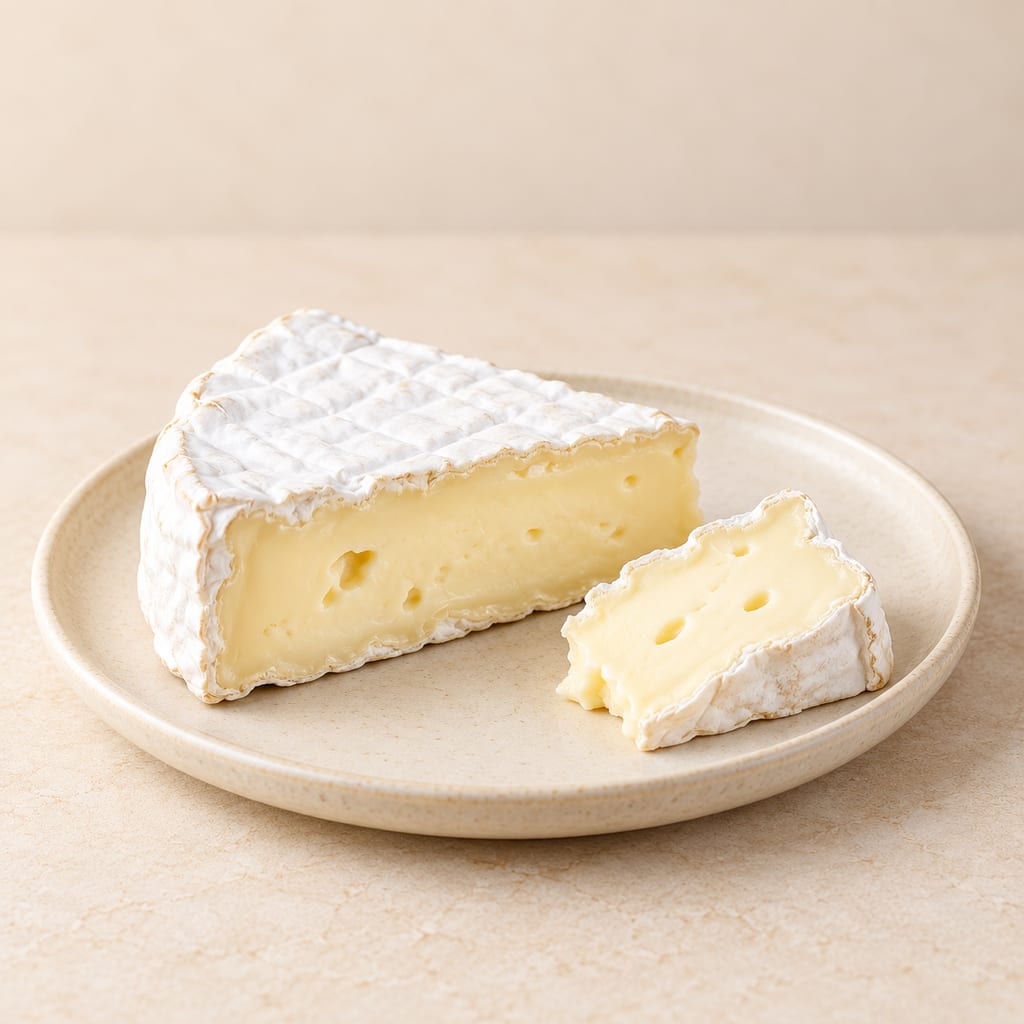
Brie, cream-enriched
A cream-enriched Brie with a white bloomy rind and a softening center, made from pasteurized milk with lactic and surface cultures.
 FermenteaWhere food goes to change
Cultures
MM100 is a concentrated mesophilic dairy starter. Its selected lactococcal blend acidifies milk and contributes to the aromatic character of several cheese and cultured-cream makes.
MM100 is a concentrated dairy starter: a small quantity of dried bacteria intended to begin changes in a much larger quantity of milk. Its useful work happens after the powder meets the milk, when the organisms resume activity and alter its acidity and aroma. It belongs to a different ingredient category from rennet, which supplies a milk-clotting enzyme, and from the surface fungi that develop a bloomy cheese rind. In a Brie make, these ingredients work together while performing different jobs.
The direct-vat format changes the organization of cheese-making. The maker introduces a prepared culture into the vat instead of first growing a separate bulk starter. The supplier takes responsibility for producing and concentrating the inoculum, while the cheese-maker still chooses milk, measures the ingredient, manages the vat and follows acid development. A dried sachet therefore connects microbiological production with everyday dairy work. Its compact appearance conceals a selected population whose condition matters throughout the make.
Understanding starter populations has its own history. In 1976, J. D. Efstathiou and L. L. McKay investigated lactose fermentation and proteinase activity in bacteria then called Streptococcus lactis. Their experiments linked changes in those useful dairy traits with differences in plasmids, small genetic elements carried by the cells. The work concerned particular experimental strains, but helped make a broader point tangible: an organism's name and its ability to perform a dairy task are related pieces of information, rather than identical ones. Choosing and maintaining a culture requires attention to its functional properties.
In 2020, Marie-Aurore Caillaud and colleagues examined a commercial MM100 starter using digital droplet PCR. They distinguished lactis, cremoris and diacetylactis populations and followed their balance during milk fermentation. That investigation brings the ingredient into view as a small ecosystem. It is sold as a blend, but its components encounter changing conditions as acid accumulates and milk nutrients are used. The powder is the starting population; the cheese-making process is the environment into which that population is placed.
Selection begins with the exact product name and formulation. A code identifies a commercial ingredient, not a generic permission to substitute any mesophilic starter. Different packets can have different activity units, sizes and instructions. The maker should match the culture named by the chosen method and read the accompanying storage and dosing information. In particular, a teaspoon measurement in a home recipe and a commercial activity unit describe different things; they do not provide a conversion merely because both appear on MM100-related pages.
The Danisco CHOOZIT MM100 declaration names Lactococcus lactis subsp. lactis, Lactococcus lactis subsp. cremoris and Lactococcus lactis subsp. lactis biovar diacetylactis. These are the population names printed for the blend. Subspecies and biovar labels add information below the species name, but they still do not identify every strain inside a commercial culture. The distinction matters because dairy bacteria can differ in acid production, aroma-related metabolism and their response to the working environment.
The label describes MM100 as an aromatic, acidifying mesophilic culture. Mesophilic places it among starters used in comparatively moderate-temperature dairy processes, rather than identifying a heat-loving yogurt culture. Acidifying describes a central task in milk; aromatic describes the ingredient's intended contribution to sensory development. These terms help explain why a cheese-maker might choose the blend. The actual outcome still emerges through the milk, culture amount, temperature, drainage and ripening sequence used in the cheese.
The diacetylactis name points toward an important branch of dairy microbiology. Some lactococci can use citrate and form compounds associated with buttery aromas. Having that population in a blend makes the culture different from a starter selected only around acidification. It also makes the blend more interesting than a simple list of bacteria. Several metabolic activities can coexist in the same milk, drawing on different substrates and responding differently as acidity changes.
MM100's proprietary strain identities and starting proportions are not publicly specified in the documents used here. The 2020 laboratory investigation explicitly treated those proportions as something to measure. It found that the relative populations changed with the experimental temperature and acidity. Those results describe the tested fermented-milk system. They explain why a population blend deserves attention without assigning the same measured trajectory to a Brie vat or treating laboratory isolates from other papers as the organisms inside every packet.
The similarly named MM101 should retain its own identity. A numbering resemblance does not establish identical strains, activity or application instructions. Product selection is best understood through the exact declaration and the manufacturer's intended use, rather than through an assumption that neighboring catalogue numbers are interchangeable. This is especially useful when a recipe names one blend and a shop offers several related mesophilic cultures.
Milk sugar supplies a route from bacterial growth to changing cheese chemistry. Lactose contains glucose and galactose components. In studied lactococci, a transport system brings lactose into the cell while chemically activating it; subsequent enzymes divide and process its components through metabolic pathways. The glucose part enters glycolysis, while the galactose component can enter a tagatose-phosphate pathway. Energy generation and fermentation then connect nutrient use to the production of lactic acid.
That molecular sequence explains a familiar practical observation: inoculated milk becomes more acidic as the starter works. The culture is using a substrate already present in the milk. It does not need to be regarded as a sour flavoring dissolved into the vat. Acid appears through biological activity, so time, temperature and the condition of the organisms influence the developing environment. A starter quantity sets the initial input; the subsequent milk transformation takes place over the course of the make.
Acidification also reaches beyond taste. Milk proteins and minerals form a system whose behavior changes with acidity. In a rennet cheese, enzyme action helps casein form a gel, while acid development changes the mineral conditions of that gel. Cutting and drainage then remove whey from a material that is continuing to change. The culture's early work therefore participates in the curd that reaches the mold, rather than ending when rennet is added. Fermentation and coagulation are connected operations with different causes.
Citrate provides another metabolic route. In citrate-utilizing lactococci, the compound must first cross the cell membrane. A transporter called CitP performs that uptake in well-studied diacetylactis strains. Citrate lyase then helps convert citrate into oxaloacetate and acetate; oxaloacetate can be converted to pyruvate. Further reactions can lead toward diacetyl and acetoin, compounds associated with the buttery side of fermented dairy flavor. The pathway joins transport, enzyme activity and the chemical conditions inside the cell.
Experiments with the named strain FM03-V1 showed that citrate availability, acidity and nutrient limitation affected citrate utilization and acetoin formation. This is a useful example of mechanism being conditional. The same substrate can meet different cellular activity as the environment changes. It also explains why the word aromatic is not a numerical guarantee of flavor intensity: a product's sensory development depends on the organisms and the make in which their metabolism occurs. FM03-V1 is an experimental strain, not a disclosed MM100 component.
Acid production and aroma production can therefore be followed as different questions. One concerns the changing acidity of the milk; another concerns substrates and products associated with flavor. Measuring pH gives information about the first, while it does not identify every aroma compound or the balance of every population. A cheese-maker can use the distinction to understand why two cultures with broadly similar acidifying roles may still be selected for different cheeses.
In the linked cream-enriched Brie, MM100 enters the milk with the separately measured rind cultures before rennet. The warm culture stage allows the starter to begin its milk-phase work. Penicillium candidum and Geotrichum candidum belong to the later rind ecology; they are separate ingredients rather than hidden parts of the MM100 blend. Keeping these roles distinct makes the sequence easier to understand: the lactic starter helps prepare the curd environment, rennet sets the milk, and the surface community develops through the cheese's later handling and maturation.
Dried culture is still a biological ingredient whose working condition can change during storage. Cold, dry handling helps preserve the intended product state. The current retail MM100 listing calls for freezer storage. A Danisco technical sheet for its particular commercial format specifies cold storage and a sealed equilibration period before opening a frozen sachet. The practical point is to follow the instructions supplied with the actual pack, including its batch identification and expiry, rather than borrowing a shelf life from another package size or version.
Powder condition is part of that handling. The manufacturer directs users to check that the product remains powder and to discard a sachet that has become a solid mass. Opening, measuring and promptly returning the remaining material to its specified storage conditions belong to the use of a concentrated ingredient. A packet's small size makes it convenient, but also means that portioning and storage deserve the same care as its first addition to milk.
Bacteriophages introduce a different concern from moisture or warmth. These viruses infect bacteria and can interfere with dairy acidification. The MM100 manufacturer gives cleaning and disinfection advice and warns against returning finished material toward the beginning of a production line, where phages could be propagated. The purpose is to manage a biological route through the dairy, alongside maintaining the culture itself. It is not a reason to improvise a household starter-rotation program from an industrial catalogue.
Allergen declarations require the exact package as well. The manufacturer's technical information records milk, including lactose, as a fermentation nutrient used during culture production, while the current retailer's MM100 table marks milk absent. Manufacturing nutrients, the dried preparation and the cheese made with it are different stages of the food chain. These declarations should be retained at their stated scope. A milk-free claim for every packet would go beyond them, and a Brie made from milk and cream remains a milk-containing food regardless of the culture declaration.
MM100 is associated with modern dairy culture production and distribution rather than a single traditional cheese region. A manufacturer's address, a retailer's location and the place where a cheese is made answer different geographical questions. The culture can travel as a concentrated ingredient; the milk and the finished cheese retain their own places and processes. Its role is consequently best explained through documented applications and product identity, rather than through an invented birthplace for the code.
Its documented application range includes soft and fresh cheeses, semi-hard and blue cheeses, cultured cream, butter and quark-type products. Those foods share useful microbial activities while organizing them differently. In cultured cream, the culture acts in a fat-rich dairy base. In a cheese, its activity meets curd formation, whey removal and salting. In a bloomy-rind cheese, it works alongside a separately established surface community. The same broad culture type can thus participate in several dairy technologies without making their complete methods equivalent.
The site's linked cream-enriched Brie provides a concrete use: a measured mesophilic blend helps establish the milk's acidifying population before the curd is formed and drained. The culture becomes part of the cheese through that work, rather than remaining a distinct tasting ingredient sprinkled onto the finished food. Understanding MM100 means following this change from dry inoculum to an active population within milk, and then seeing how its early activity joins the subsequent stages of cheese-making.
Milk/lactose used during manufacturer culture production; current package allergen declaration governs.
Country of origin printed on the supplier's pictured MM100 LYO 50 DCU sachet, material 50435; a product sourcing association, not a strain-isolation site or birthplace.
Commercial dairy culture with no supported single birthplace or documented strain-isolation location in the consulted product information.
A cream-enriched Brie with a white bloomy rind and a softening center, made from pasteurized milk with lactic and surface cultures.
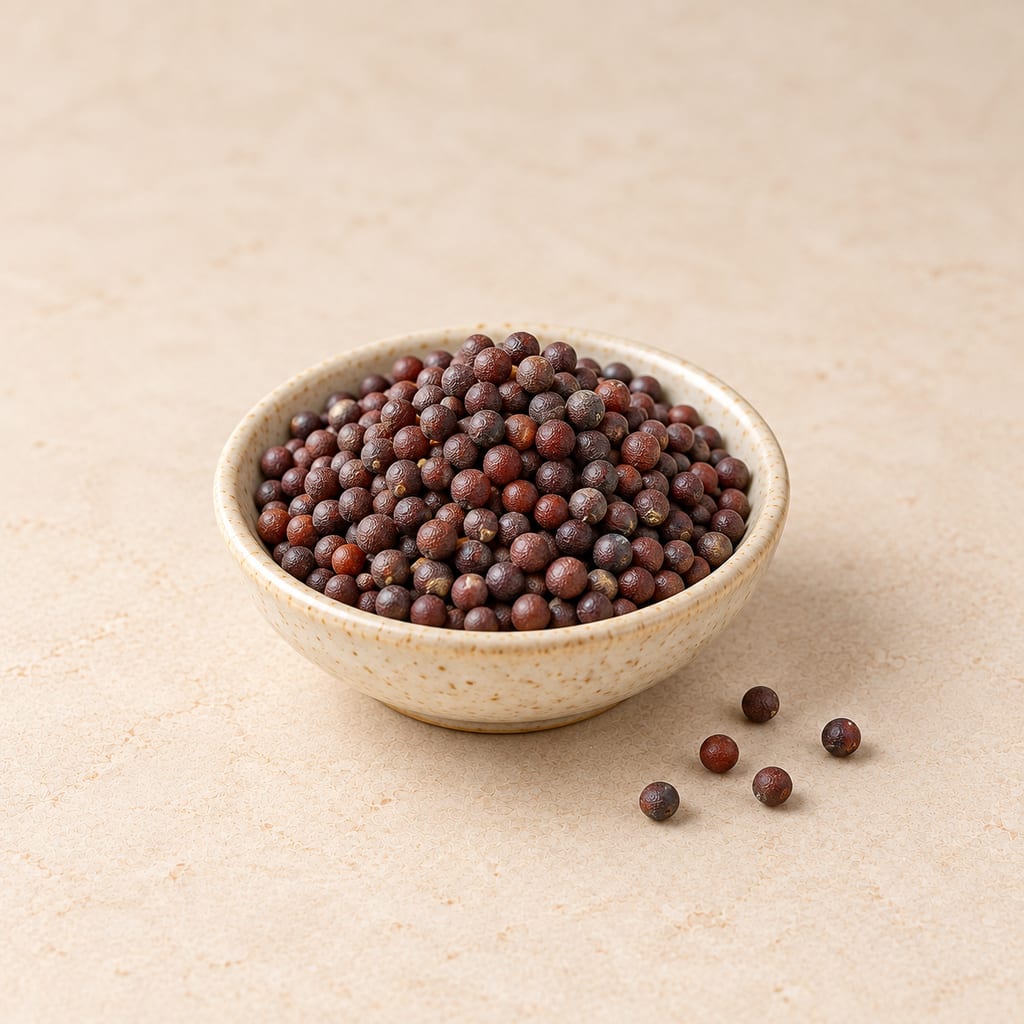
Black mustard seed is the small, dark, very pungent seed of Brassica nigra, the hottest of the three mustards. It gives its bite through sinigrin, which turns into allyl isothiocyanate when the crushed seed meets water.
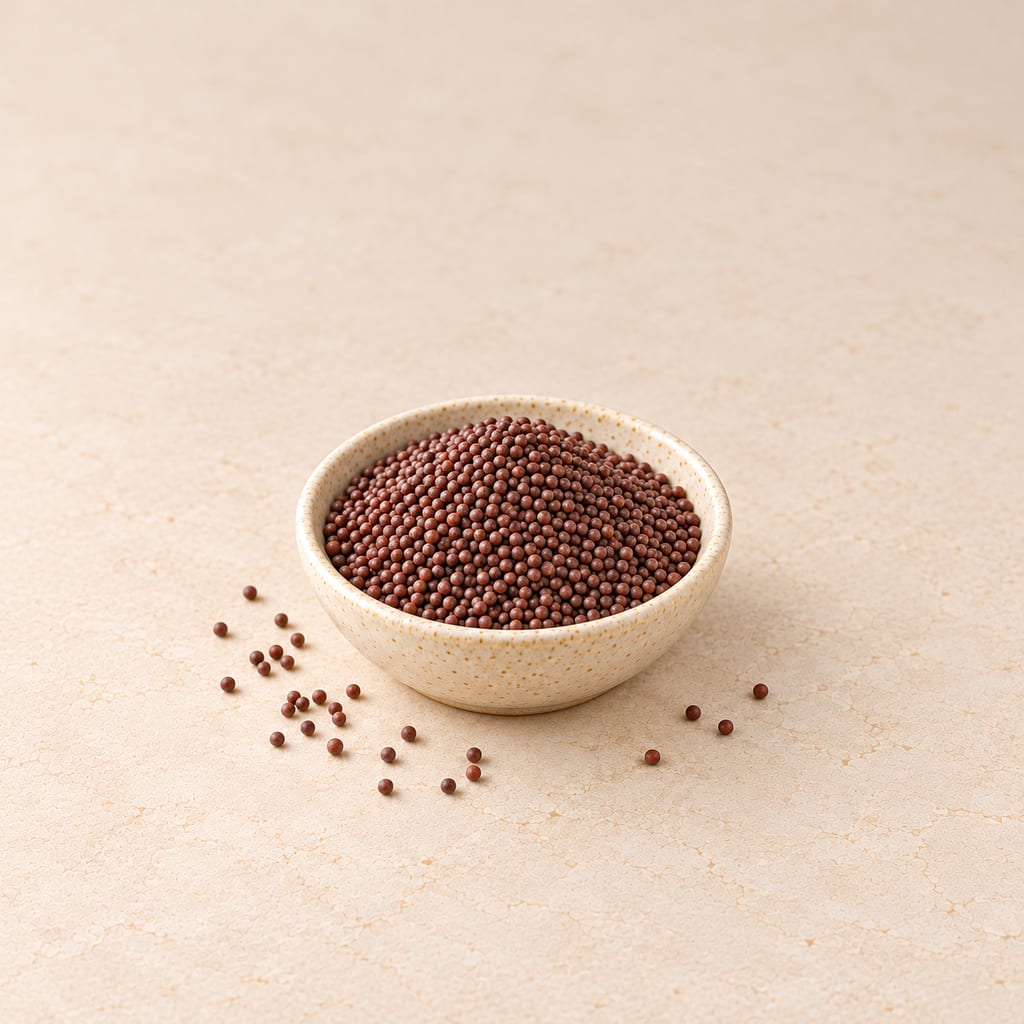
Brown or oriental mustard seed comes from Brassica juncea, a hybrid of black mustard and turnip rape. It is the hot, easily harvested seed behind Dijon, spicy brown mustards and much of the mustard oil of the Indian subcontinent.
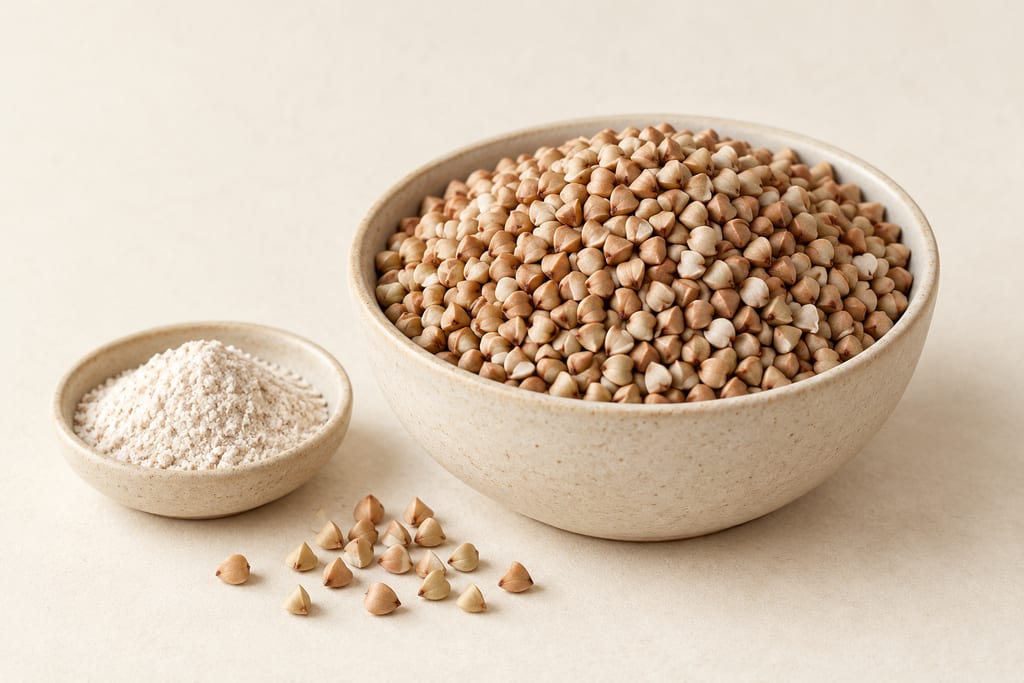
Buckwheat is a triangular-seeded flowering plant whose whole groats and flour cross regional food traditions, from porridge and pancakes to modern sourdough and gluten-free bread.
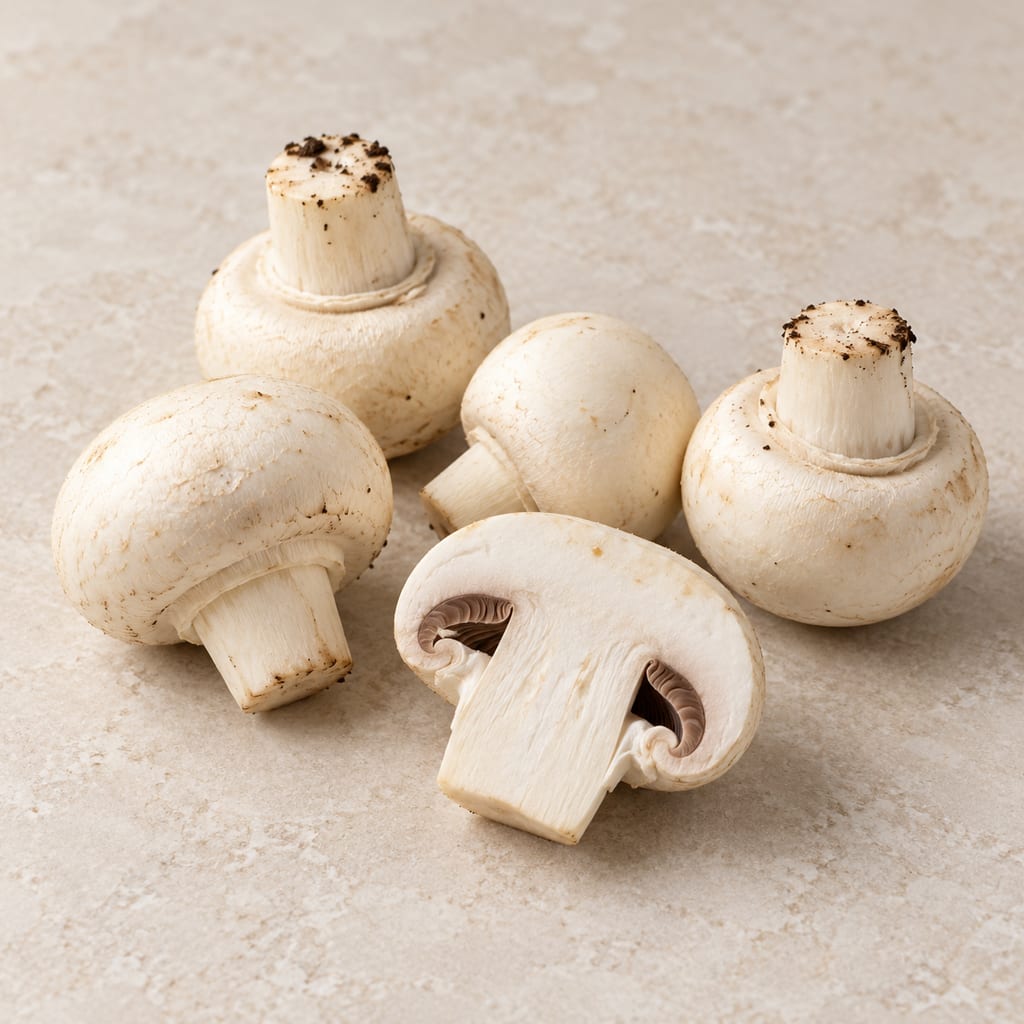
A cultivated form of Agaricus bisporus sold young as a button and at more mature stages as cremini or portobello, used fresh or preserved in everyday cooking.
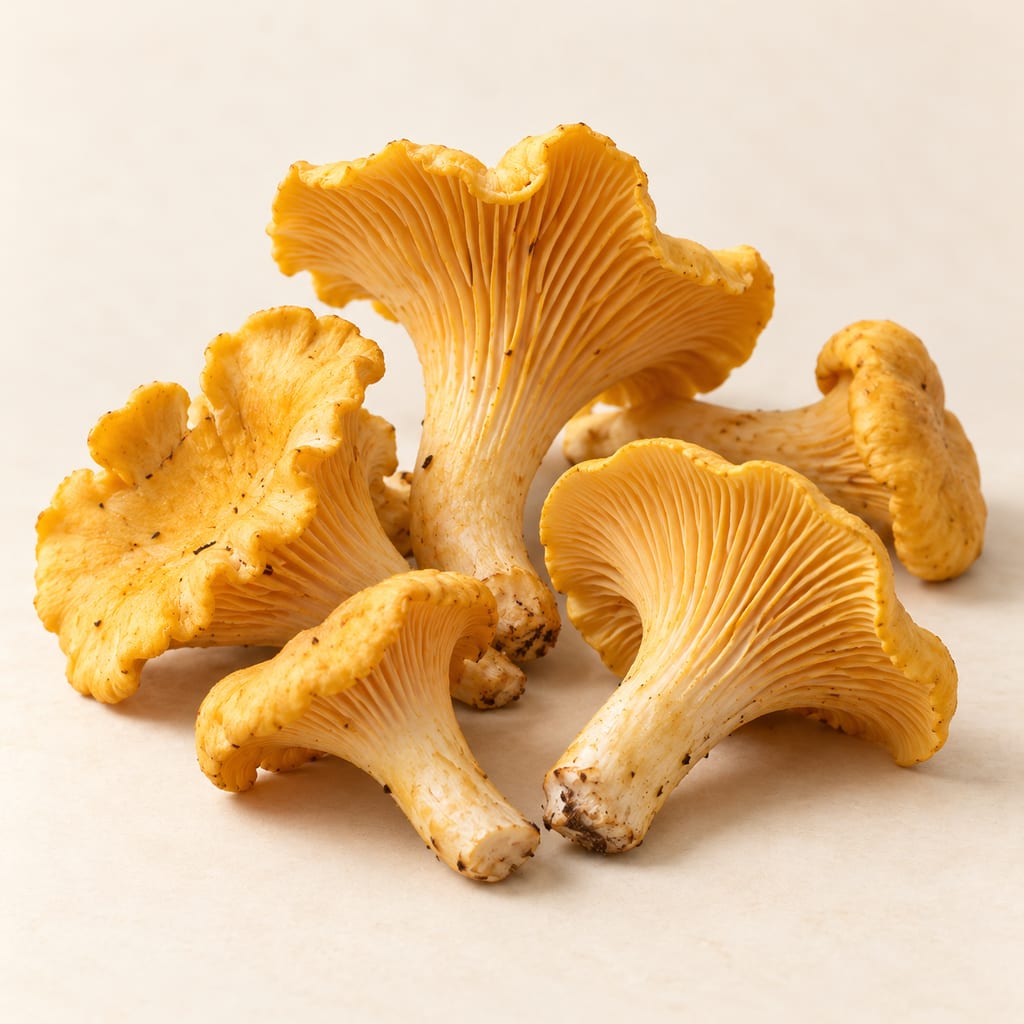
Chanterelles are wild, tree-associated edible mushrooms, particularly the European golden chanterelle Cantharellus cibarius, prized for their firm flesh, fruity aroma and use fresh, frozen, dried or pickled.

Chicken eggs supply proteins and yolk fats that set and emulsify. Atlas breads use them in enriched doughs, surface washes and a sourdough pancake batter mixed after fermentation.
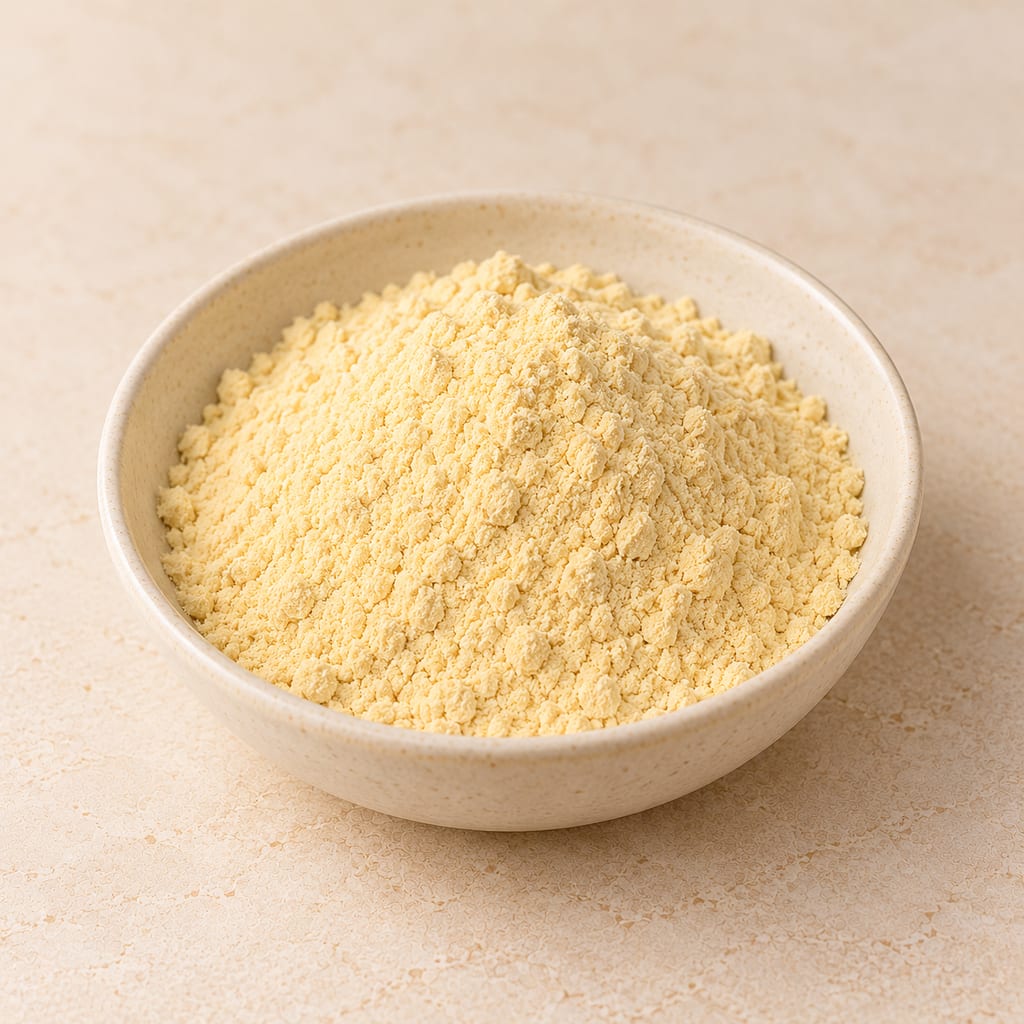
Chickpea flour is milled Cicer arietinum, used as besan in many Indian dishes and as the base of breads such as socca and farinata.
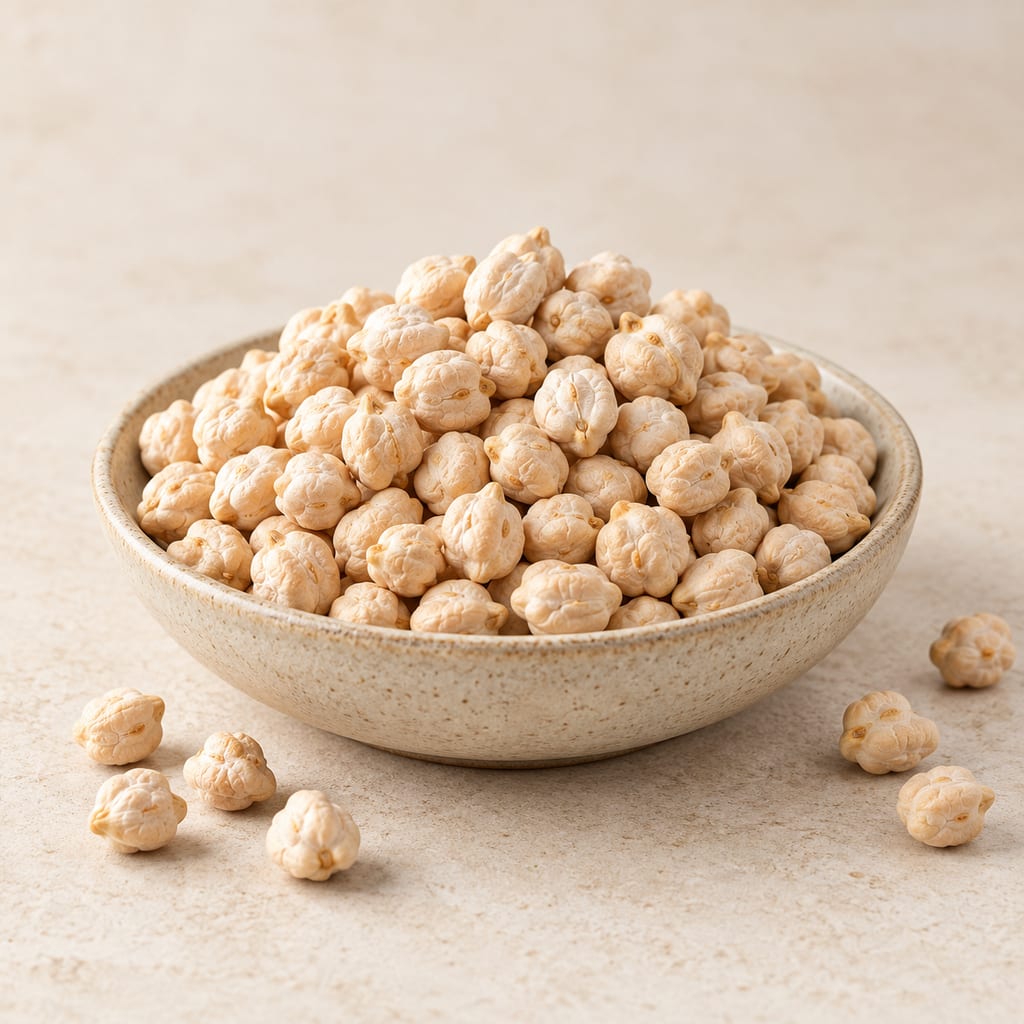
Chickpeas (Cicer arietinum) are dry pulses eaten whole or milled into flour, which gives socca, farinata and other breads a dense, nutty batter or dough.

Soft, spreadable Calabrian pork sausage made with a great deal of red chilli and fatty pork, stuffed into natural casings, sometimes smoked and matured while staying soft.

A way to add independent temperature logging to an existing food dehydrator without changing its built-in controls or protections. It is a monitoring method, not a rewiring plan.

Pleurotus cystidiosus is the abalone mushroom, a cultivated oyster-type fungus with dark brown caps that grows more slowly and is more demanding than other Pleurotus species.

A dark, balanced vinegar from Emilia-Romagna made by combining cooked or concentrated grape must with wine vinegar, then acetifying and refining it in wood under a protected specification.

A living dairy inoculum that starts controlled cream fermentation, developing acidity and aroma before sour cream or cultured butter is finished.

A small electric incubator holds jars at a selected temperature for yogurt and other documented warm food preparations. Controls, capacity and vessel arrangement vary by model.

Adygean salt is a seasoned table salt associated with Adygea and the wider North Caucasian culinary tradition. Salt is blended with garlic and a variable selection of herbs and spices; the exact mix depends on the named style and maker.

The African Caesar-group mushroom, Amanita masasiensis, is a wild ectomycorrhizal species of central and southern African woodlands, eaten locally. The genus contains deadly poisonous species, so identification needs care.
No community contributions have been published for this entry yet.
Sign in to contribute. Published comments and photos are free to read.
Danisco CulturesIdentity · Production · Handling · Allergens
CHOOZIT MM 100 LYO 125 DCU — PD 205517-4.1ENThe undated manufacturer sheet for material 50437 describes three microbial populations, direct-vat use, cold/dry handling, phage controls and milk/lactose fermentation nutrients.
Cited in: A dried starter becomes a dairy population; The lactococci in MM100; Milk sugar, citrate and changing curd; Keeping a concentrated starter active; MM100 in the dairy and the cheese vat
Frontiers in MicrobiologyIdentity · History · Science
Precise Populations’ Description in Dairy Ecosystems Using Digital Droplet PCR: The Case of L. lactis Group in StartersThe 2020 MM100 material 50434 experiment concerns population behavior in defined fermented-milk conditions; starting proportions are undisclosed.
Cited in: A dried starter becomes a dairy population; The lactococci in MM100; Milk sugar, citrate and changing curd; MM100 in the dairy and the cheese vat
Applied and Environmental MicrobiologyHistory · Science
Plasmids in Streptococcus lactis: evidence that lactose metabolism and proteinase activity are plasmid linkedThe 1976 study abstract concerns named experimental strains and plasmid-associated lactose and proteinase traits.
Cited in: A dried starter becomes a dairy population
Applied and Environmental MicrobiologyScience
Towards Enhanced Galactose Utilization by Lactococcus lactisThe molecular study explains lactococcal lactose transport, glucose and galactose processing and the tagatose-phosphate pathway; its experimental strain is engineered NZ 9000.
Cited in: The lactococci in MM100; Milk sugar, citrate and changing curd
Microbial BiotechnologyScience
Citrate, low pH and amino acid limitation induce citrate utilization in Lactococcus lactis biovar diacetylactisFM03-V1 research describes CitP uptake, citrate metabolism and responses to acidity, nutrients and citrate.
Cited in: The lactococci in MM100; Milk sugar, citrate and changing curd
Microbiology SpectrumScience
The Basics of CheesemakingMilk acidification, mineral balance, casein coagulation and whey drainage interact during cheese-making.
Cited in: Milk sugar, citrate and changing curd
New England Cheesemaking Supply CompanyIdentity · Selection · Handling · Allergens
MM 100 Mesophilic Starter CultureThe retailer gives blend, freezer-storage and milk-negative allergen declarations. The pictured LYO50DCU material 50435 sachet states French origin and conceals the powder; the manufacturer's fermentation-nutrient statement has a different product scope.
Cited in: A dried starter becomes a dairy population; The lactococci in MM100; Keeping a concentrated starter active; MM100 in the dairy and the cheese vat
New England Cheesemaking Supply CompanyUse
Brie Cheese Making RecipeThe Brie method uses MM100 in the milk phase alongside separate Penicillium candidum and Geotrichum candidum preparations.
Cited in: A dried starter becomes a dairy population; Milk sugar, citrate and changing curd; Keeping a concentrated starter active; MM100 in the dairy and the cheese vat