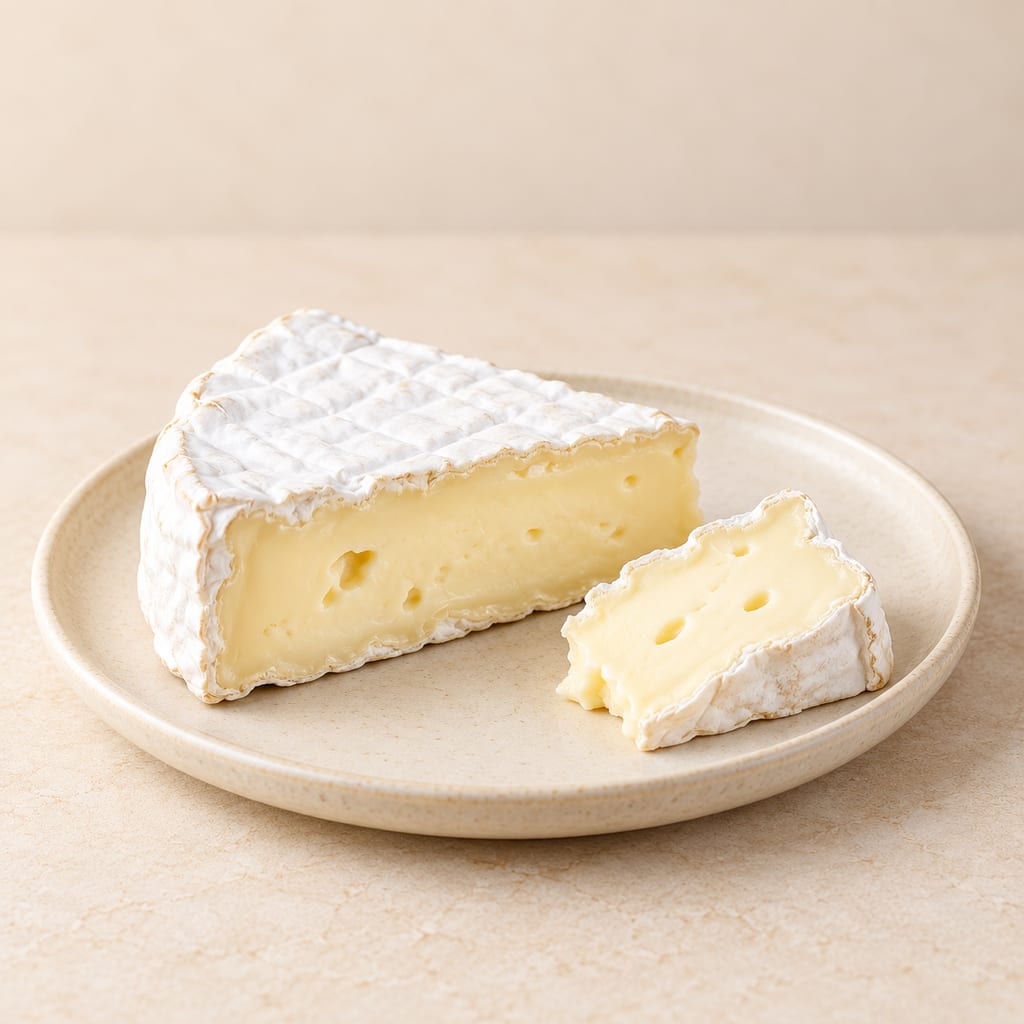
Brie, cream-enriched
A cream-enriched Brie with a white bloomy rind and a softening center, made from pasteurized milk with lactic and surface cultures.
 FermenteaWhere food goes to change
Cultures
A named fungal ripening culture in the cream-enriched Brie method. Geotrichum participates in the changing chemistry and community of the cheese surface.
Geotrichum candidum C70 culture is the named ripening ingredient in the linked cream-enriched Brie. It introduces a selected fungus into a cheese-making system that also contains lactic bacteria and Penicillium. The powder is a concentrated biological input, while the rind is the growing community that develops later. Understanding the difference helps explain why a small addition early in the make can influence a much larger surface during maturation.
The C70 designation belongs to the recipe's commercial vocabulary. The supplier now presents a Geotrichum product as GEO17, but the primary documentation examined does not establish a manufacturer-confirmed identity between that current product and the recipe's C70. The ingredient therefore retains its original name. Current GEO17 documentation can illustrate the kinds of information available for a prepared culture, but its performance, carriers, storage life and dose cannot automatically be assigned to the earlier designation.
This distinction is useful when shopping. Species, commercial product, concentration and application describe different aspects of a culture. A packet bearing the correct species can still differ from the preparation expected by a recipe. A direct-vat culture is intended to enter the milk; a culture used in a surface spray has a different preparation and handling sequence. The complete cheese method and the exact product instructions need to agree before a dose is chosen.
Geotrichum has a broader dairy history than any sachet code. It occurs among the organisms associated with traditional surface-ripened cheeses, where cheese-makers' handling creates conditions that favor particular communities. Milk, curd, the dairy environment and an established rind can all form part of that ecological setting. Modern selected cultures make one part of this relationship an intentional ingredient, allowing a maker to introduce a chosen preparation instead of relying entirely on the organisms encountered during production.
A French field study published in 2001 examined isolates from traditional cheese-making settings and found substantial diversity, including within individual regions. The organisms did not fall into simple regional groups. This offers a more interesting picture than a single universal cheese fungus: dairy practices and local populations can combine in many ways. It also explains why a species name alone is an incomplete prediction of a commercial culture's behavior.
Geotrichum candidum is a fungus with a distinctive growing form. Its hyphae are divided by cross-walls and can break into arthroconidia, giving it a connection between filamentous growth and a yeast-like appearance. Describing it simply as a yeast can obscure that structure; treating it as identical to Penicillium would obscure a different organism altogether. On cheese, the two may participate in the same rind while retaining their own biology.
Names in older scientific literature can complicate identification. Fungal taxonomy formerly used different names for sexual and asexual states, and Geotrichum has been discussed alongside Galactomyces and Dipodascus. A modern revision applies the principle that one fungus should have one name and retains Geotrichum within the revised classification. An older name in a paper is consequently a clue to its historical taxonomy, rather than evidence that the culture packet contains an additional organism.
The genus name Geotrichum and its type species G. candidum trace to Link in 1809. That is a nomenclatural date: it records scientific naming, not the invention of a cheese or the beginning of a culture trade. The useful historical story is the later connection between an organism already present in dairy environments and deliberate selection for particular cheese-making purposes. The launch date and strain accession of the recipe's C70 preparation remain undocumented in the primary materials examined.
Commercial preparations add carriers and preservation technology to the biological identity. IFF's GEO17 sheet, for example, describes a freeze-dried Geotrichum candidum preparation containing dextrose. Drying makes the culture a material that can be packed, stored and dosed, while the organism becomes active under suitable conditions in the food. The carrier, the viable fungus and the declared culture activity are different components of what a maker is buying.
Strain differences matter because a species encompasses biological variation. Studies of dairy isolates have distinguished yeast-like, filamentous and intermediate colony forms, as well as differences in carbon assimilation. Those findings support selection as a meaningful part of culture production. They do not reveal the undisclosed strain identity of C70 or establish that it shares every property reported for a research isolate. The ingredient's name identifies its intended organism and commercial designation, while leaving that finer identity open.
The linked Brie begins by preparing an acidic milk and curd environment with a lactic starter. That earlier fermentation produces lactate, which can become a nutrient for organisms associated with the rind. As its surface growth develops, Geotrichum encounters curd already altered by other microbes and by coagulation, drainage and salting. Its role is therefore connected to the stages before it: the surface community inherits both nutrients and environmental conditions from the make.
In Camembert-type cheese research, fungal gene expression has connected Geotrichum and Penicillium activity with carbohydrate, organic-acid, protein and lipid metabolism. The fungi are doing more than forming a visible covering. They take up and transform compounds within the cheese environment, release enzymes and respond to changing conditions. A rind can be understood as an active interface between the food's interior and its surroundings, with biological processes concentrated near an exposed surface.
Lactate utilization helps explain a central change in that interface. When surface organisms consume acid-derived substrates, the surface can become less acidic than the young curd beneath it. Amino-acid metabolism and ammonia production also contribute to the developing chemical environment. These processes can make conditions more favorable for other members of a ripening community. The result is succession: organisms influence the habitat that later growth encounters, rather than each microbe acting independently in an unchanged food.
Proteins provide another set of substrates. Proteases break larger proteins into peptides, and peptidases act on smaller fragments. Such changes can alter the structural network and the pool of compounds available for further metabolism. The relationship between enzyme activity and texture is why ripening concerns the paste as well as the surface. A rind may remain visibly thin while the material beneath it changes substantially during maturation.
Fat breakdown contributes to the same network of transformations. Lipases release fatty acids, some of which can contribute directly to aroma or enter later metabolic pathways. Protein-derived amino acids likewise supply material for subsequent reactions. Flavor therefore arises through connected steps, with the products of one process becoming the starting materials of another. Geotrichum's contribution is best understood within this community and substrate context, rather than as one fixed flavor added by a powder.
A controlled Camembert-type model followed microbial growth alongside changes in acidity, lactate, ammonia and protein breakdown. Its results linked surface activity with differences between rind and core, and proposed inward ammonia diffusion as part of the explanation. Because several organisms were present, that experiment describes a cheese system rather than an isolated C70 effect. It helps explain how a surface community can influence the interior without requiring the fungus itself to grow throughout the whole cheese.
The physical surface also matters. Moisture, salt and access to air influence which organisms can grow and how the rind develops. Turning a cheese changes which face is exposed and supports the handling sequence specified by the make. These operations are not decoration added after fermentation; they help create the environment in which ripening proceeds. A culture's presence is only one part of that environment, so adding it cannot replace the method's drainage, salting and maturation conditions.
Geotrichum and Penicillium can consequently be complementary ingredients without being interchangeable. The linked Brie names them separately and uses them alongside MM100. The lactic starter establishes the milk-phase fermentation, while the fungi participate in the later rind community. Replacing one with another because both are associated with white surfaces would discard the distinction the recipe makes. Their individual doses and the make's handling instructions remain part of the complete recipe.
Prepared cultures need their own ingredient and allergen information. The current supplier GEO17 page marks milk as present, while the IFF GEO17 technical sheet examined marks milk and lactose as absent. Those statements conflict, and the additional uncertainty about C70's relationship to GEO17 prevents either from becoming a reliable blanket declaration for this ingredient. The current exact package and its manufacturer paperwork need to settle a consumer-facing milk-free claim for the material actually supplied.
The finished cheese presents a separate question. The linked Brie contains milk and cream, so its dairy allergen context remains even if a culture preparation were confirmed free of milk ingredients. Culture carriers, the milk substrate and the final food are related but distinct sources of information. Reading them separately avoids the mistaken conclusion that a change of starter or ripening culture changes the underlying identity of a milk cheese.
Dry culture handling should preserve the supplied preparation's intended condition. Product instructions distinguish storage before opening from the handling of a measured portion and from the keeping of a rehydrated liquid. A closed sachet, an opened repackaged container and an atomizer solution are different materials in practice. A period stated for one format cannot establish the keeping quality of another, particularly when the original commercial preparation has not been firmly identified.
The supplier's current GEO17 directions offer both milk addition and an alternative spray, while the manufacturer sheet specifies its own reactivation and storage conditions. The linked Brie uses its C70 powder in the milk and provides that method's rehydration stage. There is no need to introduce a separate atomizer procedure into this recipe. Following the actual make keeps the role of the ingredient connected to the way it was documented, while product-specific questions remain with the exact packet chosen.
France is a documented setting for research on Geotrichum in traditional cheese-making, rather than a demonstrated birthplace of the species or every prepared culture. The French field collection connected the organism with multiple cheeses and dairy environments, and found variation that crossed regional boundaries. Geography therefore describes both a cultural context and places where particular organisms were sampled. It does not turn a species into the exclusive property of one named cheese region.
Commercial production has another geography. The GEO17 manufacturer sheet identifies France for that particular preparation. That fact belongs to the product documentation and should remain separate from the unknown manufacturing provenance of the recipe's C70. A culture can be manufactured, distributed and used in different places, while the cheese being made has yet another cultural identity. Keeping those facts distinct gives the ingredient a useful map without inventing an origin story.
The immediate culinary use documented here is the cream-enriched Brie. Geotrichum participates in the rind community through which a freshly formed dairy curd becomes a surface-ripened cheese. Its value at the table is expressed through the combined development of rind, paste and aroma, rather than through eating the culture powder itself. The ingredient connects selected microbial life with ordinary cheese-making actions: inoculating milk, setting and draining curd, salting, turning and allowing the surface to mature under the recipe's specified conditions.
Exact C70 preparation unresolved. Current GEO17 retailer marks milk present; manufacturer GEO17 sheet marks milk absent. Confirm the actual supplied package before an allergen-free claim.
Documented field sampling in traditional cheese-making, not a species birthplace or verified C70 manufacturing origin.
A cream-enriched Brie with a white bloomy rind and a softening center, made from pasteurized milk with lactic and surface cultures.
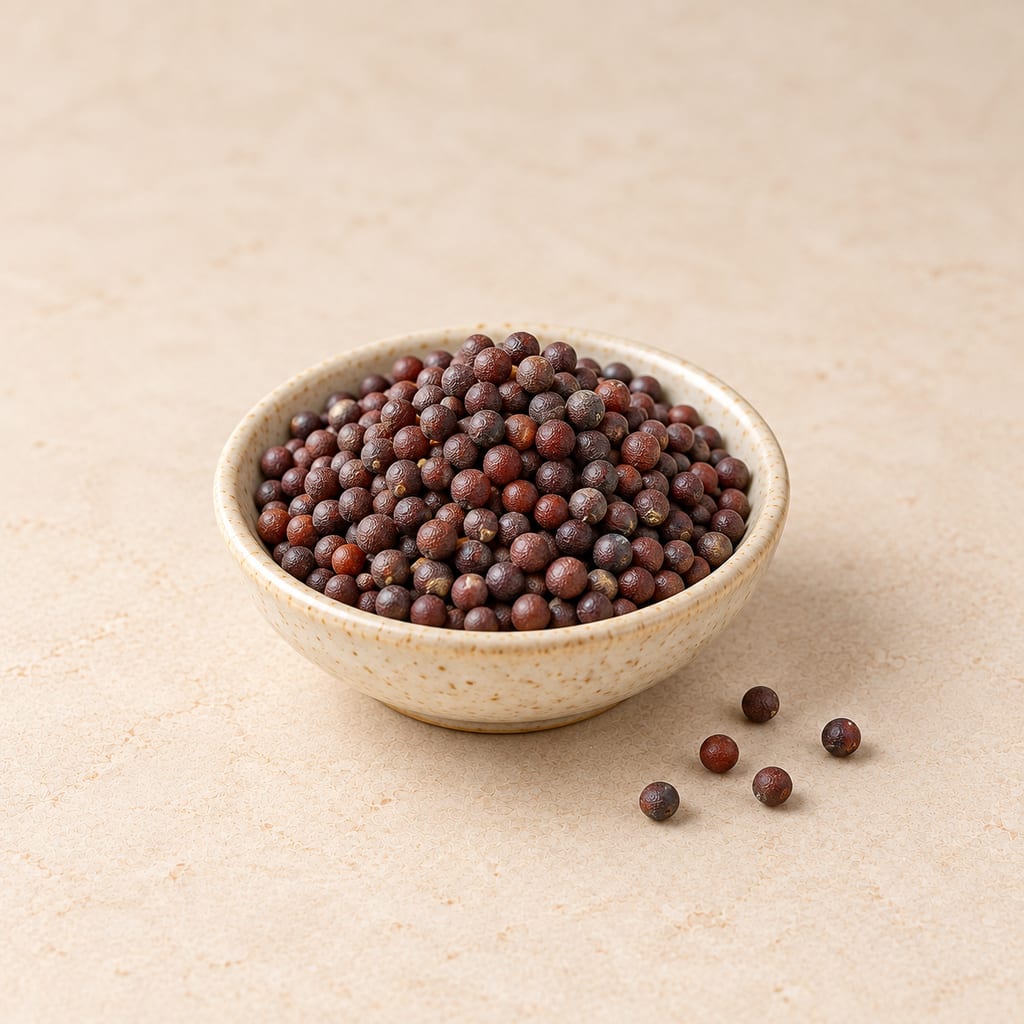
Black mustard seed is the small, dark, very pungent seed of Brassica nigra, the hottest of the three mustards. It gives its bite through sinigrin, which turns into allyl isothiocyanate when the crushed seed meets water.
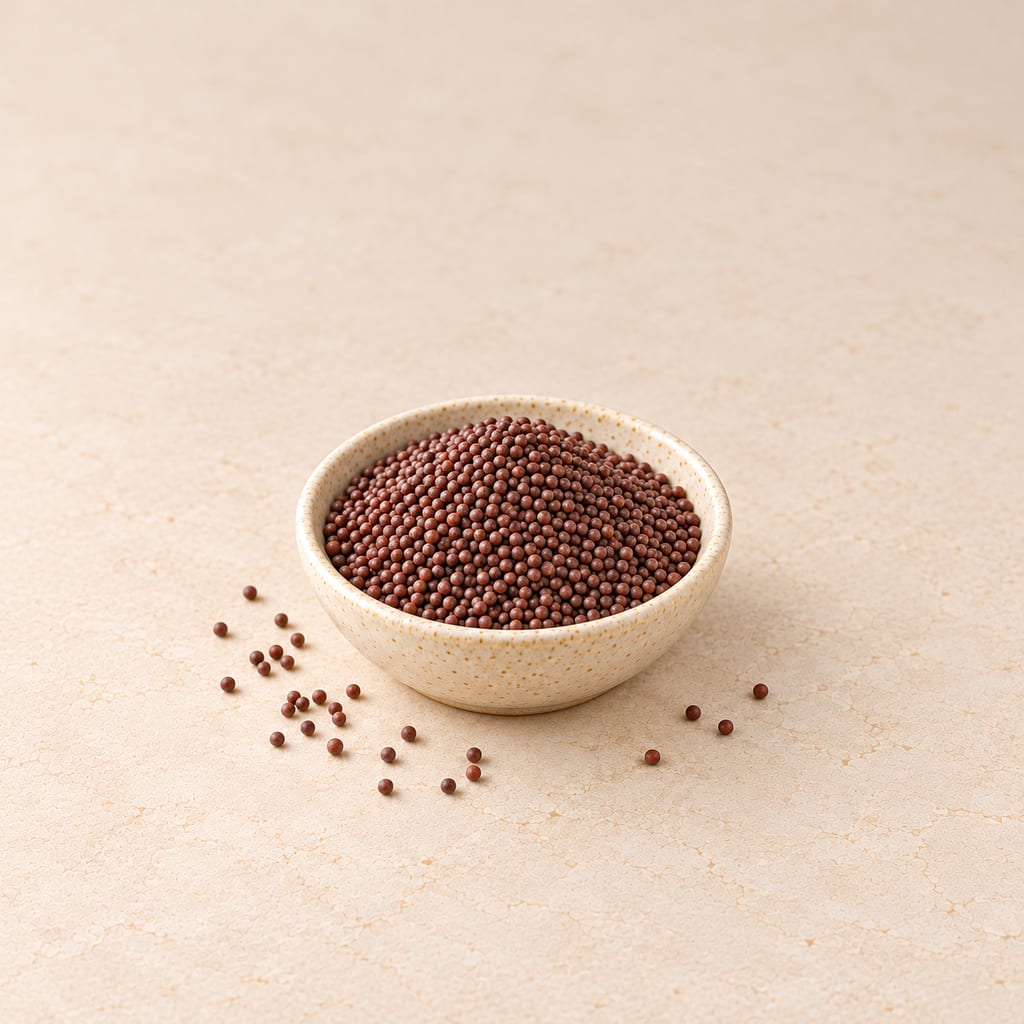
Brown or oriental mustard seed comes from Brassica juncea, a hybrid of black mustard and turnip rape. It is the hot, easily harvested seed behind Dijon, spicy brown mustards and much of the mustard oil of the Indian subcontinent.
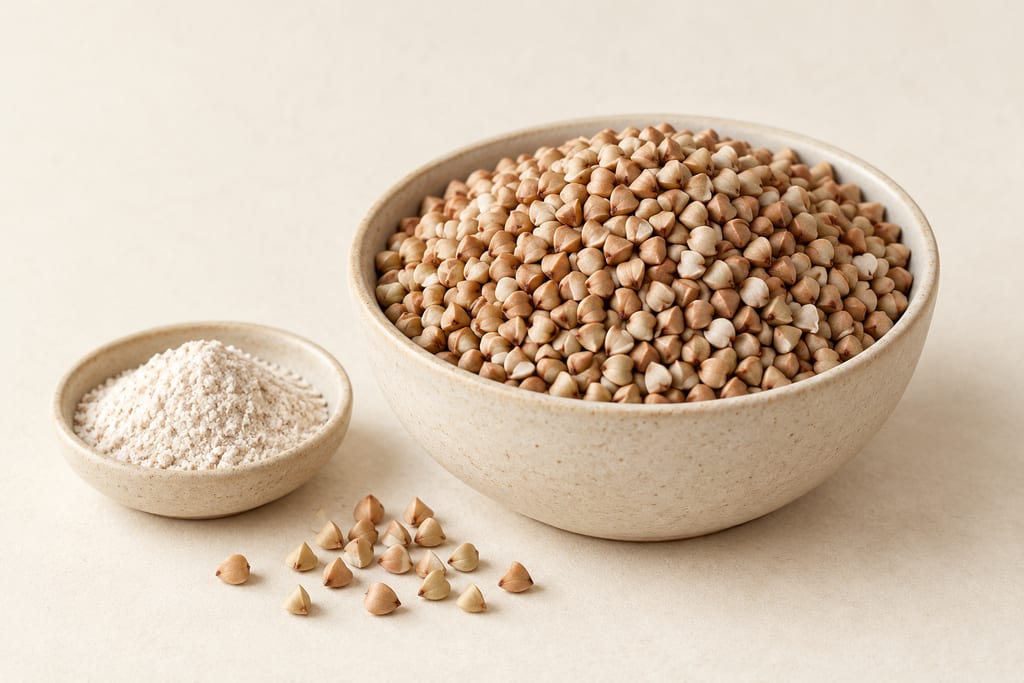
Buckwheat is a triangular-seeded flowering plant whose whole groats and flour cross regional food traditions, from porridge and pancakes to modern sourdough and gluten-free bread.
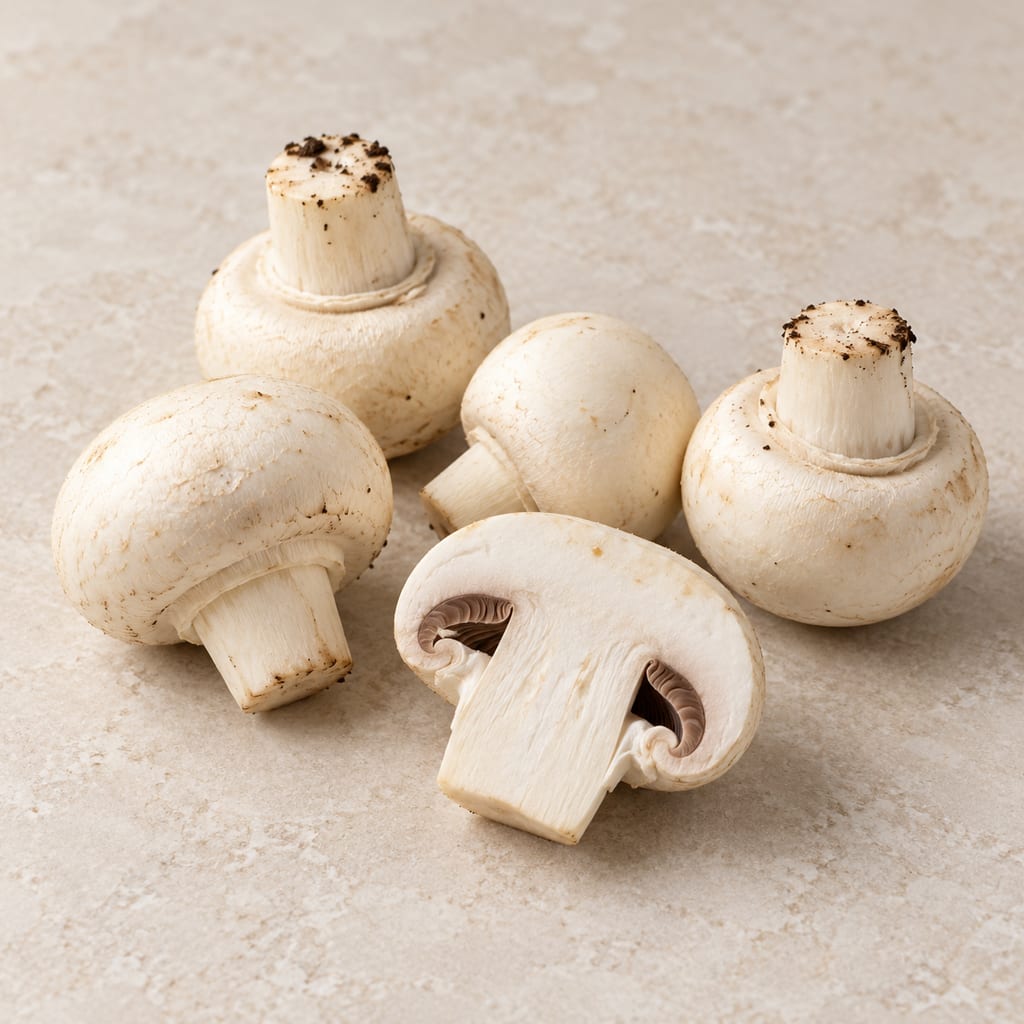
A cultivated form of Agaricus bisporus sold young as a button and at more mature stages as cremini or portobello, used fresh or preserved in everyday cooking.
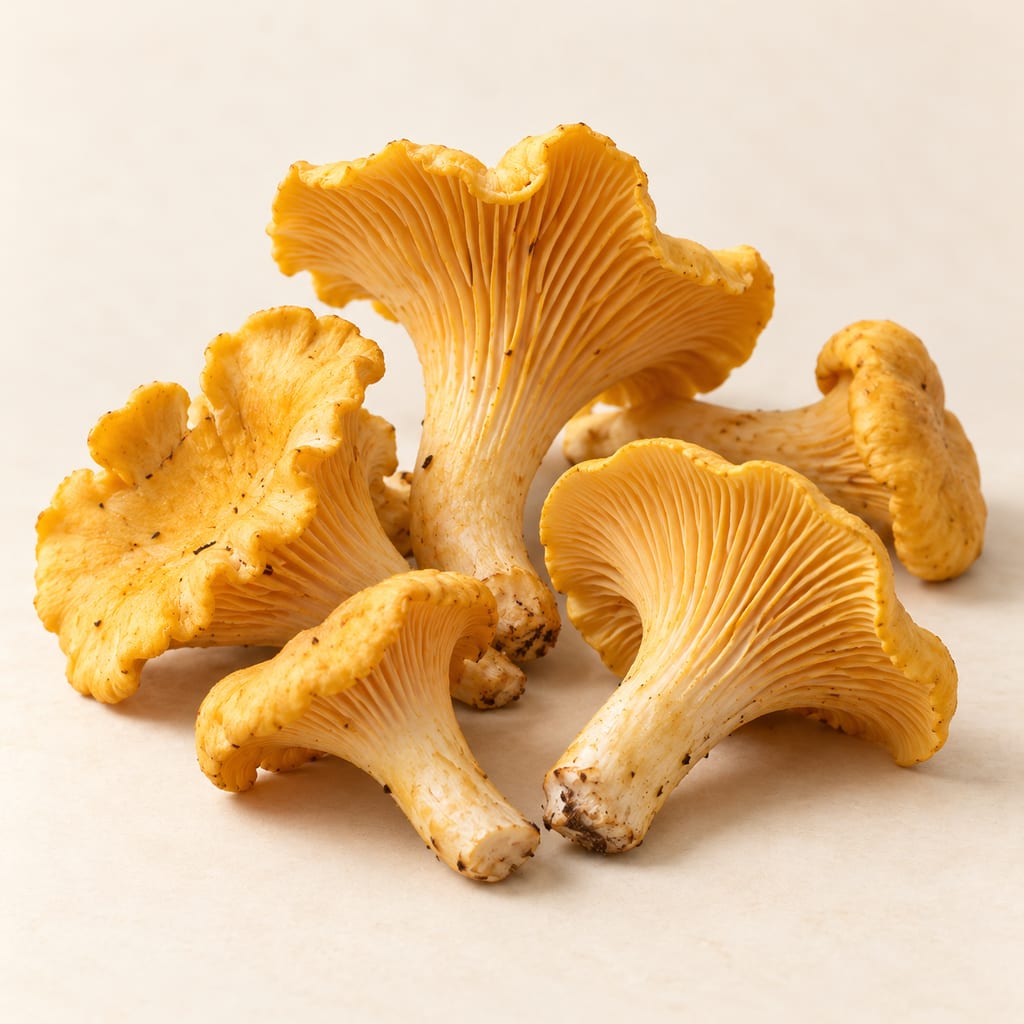
Chanterelles are wild, tree-associated edible mushrooms, particularly the European golden chanterelle Cantharellus cibarius, prized for their firm flesh, fruity aroma and use fresh, frozen, dried or pickled.

Chicken eggs supply proteins and yolk fats that set and emulsify. Atlas breads use them in enriched doughs, surface washes and a sourdough pancake batter mixed after fermentation.
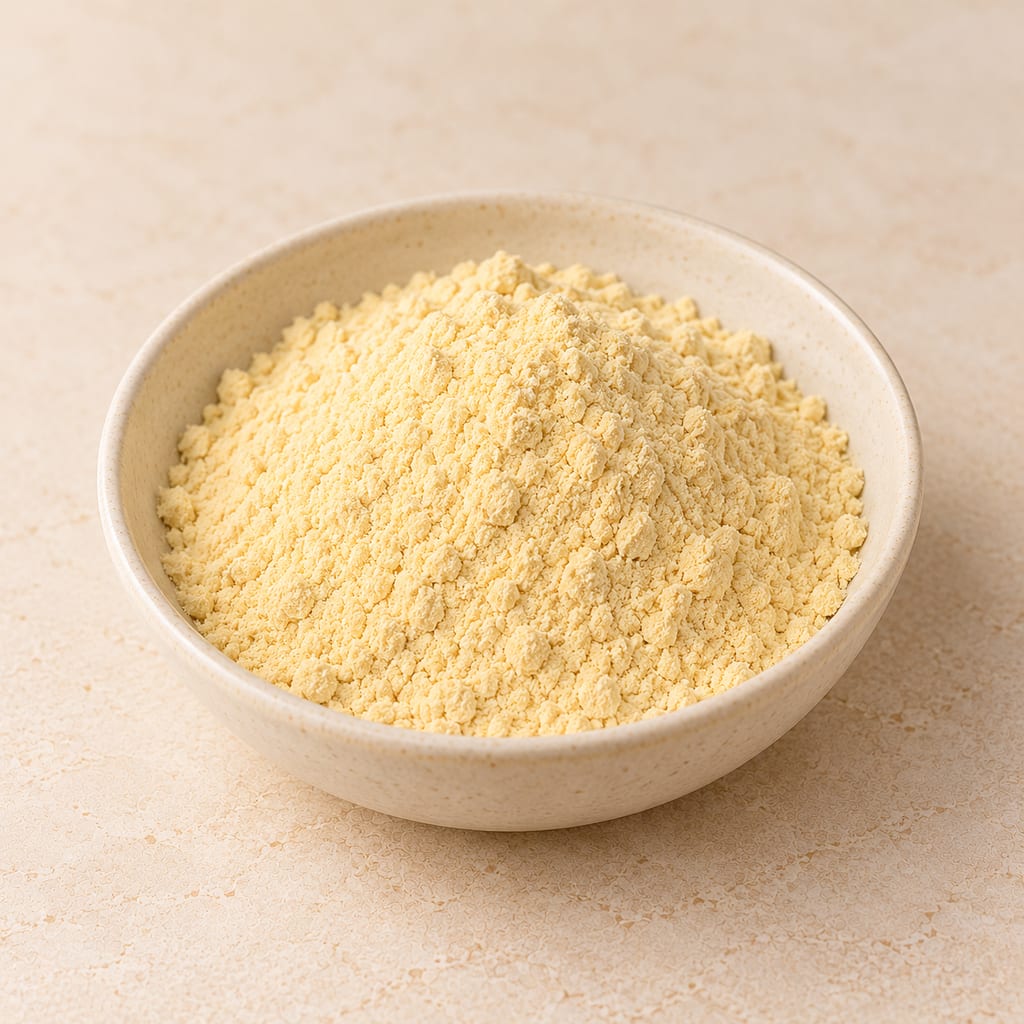
Chickpea flour is milled Cicer arietinum, used as besan in many Indian dishes and as the base of breads such as socca and farinata.
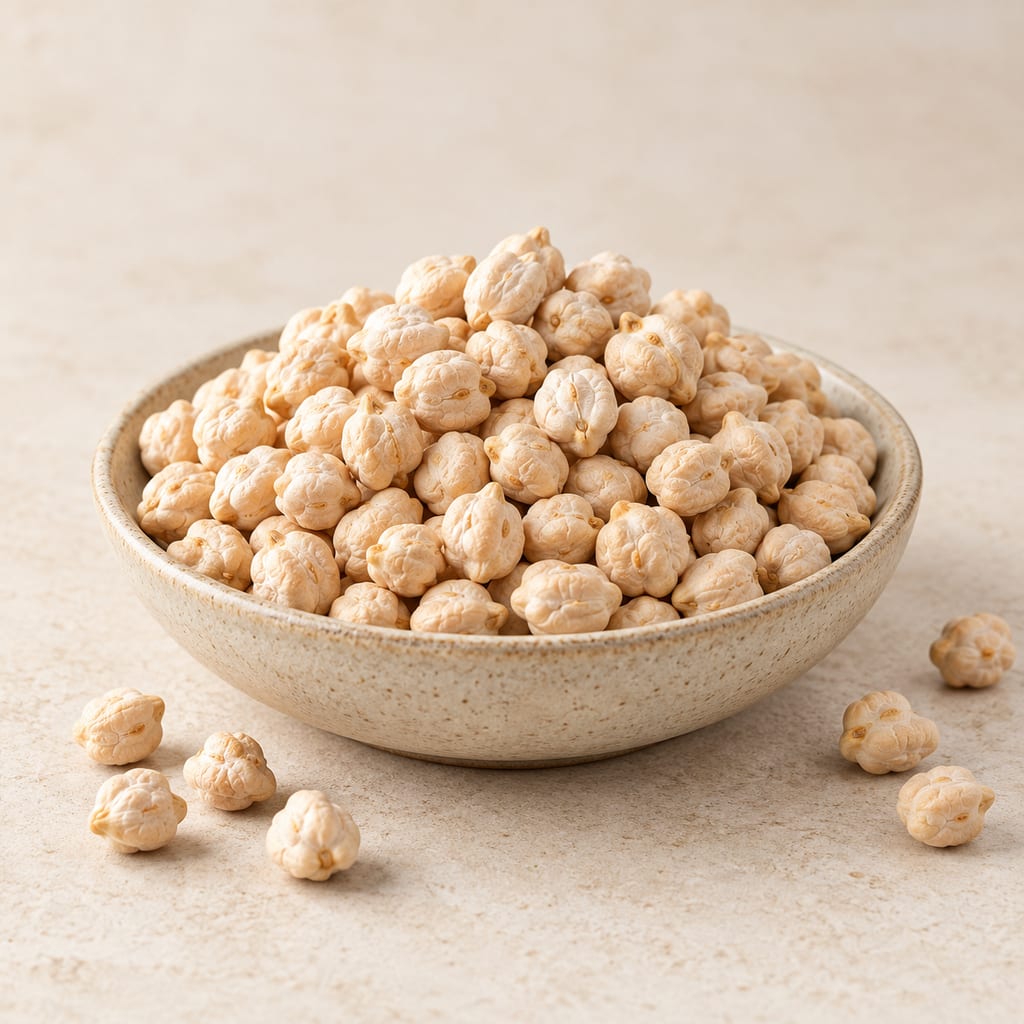
Chickpeas (Cicer arietinum) are dry pulses eaten whole or milled into flour, which gives socca, farinata and other breads a dense, nutty batter or dough.
No community contributions have been published for this entry yet.
Sign in to contribute. Published comments and photos are free to read.
MycologyIdentity · History · Science · Handling
Taxonomic revision of Geotrichum and Magnusiomyces, with the descriptions of five new Geotrichum species from ChinaThe taxonomic revision discusses Geotrichum Link 1809 and modern one-fungus-one-name nomenclature.
Cited in: Geotrichum’s changing names and growing forms
Applied and Environmental MicrobiologyIdentity · History · Science · Handling
Diversity of Geotrichum candidum Strains Isolated from Traditional Cheesemaking Fabrications in FranceThe 2001 field study examines strain diversity, morphology and carbon assimilation among its collected isolates.
Cited in: A recipe code within an older rind community; Geotrichum’s changing names and growing forms; Lactate, enzymes and the developing rind; French dairy communities and the Brie make
Journal of Dairy ResearchScience
Controlled production of Camembert-type cheeses. PartI: Microbiological and physicochemical evolutionsThe study abstract concerns rind/core acidity, lactate, ammonia, proteolysis and proposed inward ammonia diffusion in a mixed-culture model.
Cited in: Lactate, enzymes and the developing rind
BMC GenomicsScience
Metatranscriptome analysis of fungal strains Penicillium camemberti and Geotrichum candidum reveal cheese matrix breakdown and potential development of sensory properties of ripened Camembert-type cheeseThe industrial Canadian mixed-culture experiment examines fungal expression associated with carbohydrate, organic-acid, lipid and protein metabolism and stress.
Cited in: Lactate, enzymes and the developing rind
New England Cheesemaking Supply CompanyUse
Brie Cheese Making RecipeThe Brie method uses separate MM100, C70 and Penicillium candidum preparations through inoculation and rind development.
Cited in: A recipe code within an older rind community; Lactate, enzymes and the developing rind; The unresolved C70 label and keeping the culture; French dairy communities and the Brie make
IFFIdentity · History · Science · Handling
CHOOZIT GEO17 LYO10D Product DescriptionThe 2024 manufacturer sheet describes a freeze-dried Geotrichum candidum product with dextrose, French origin, handling directions and a milk-negative allergen table; its relationship to legacy C70 is unresolved.
Cited in: A recipe code within an older rind community; Geotrichum’s changing names and growing forms; The unresolved C70 label and keeping the culture; French dairy communities and the Brie make
New England Cheesemaking Supply CompanyIdentity · History · Science · Handling
Geotrichum Candidum (GEO17)The retailer's GEO17 listing gives freezer storage, milk and spray applications and a milk-positive allergen table. Its allergen declaration conflicts with the manufacturer sheet.
Cited in: A recipe code within an older rind community; Geotrichum’s changing names and growing forms; The unresolved C70 label and keeping the culture