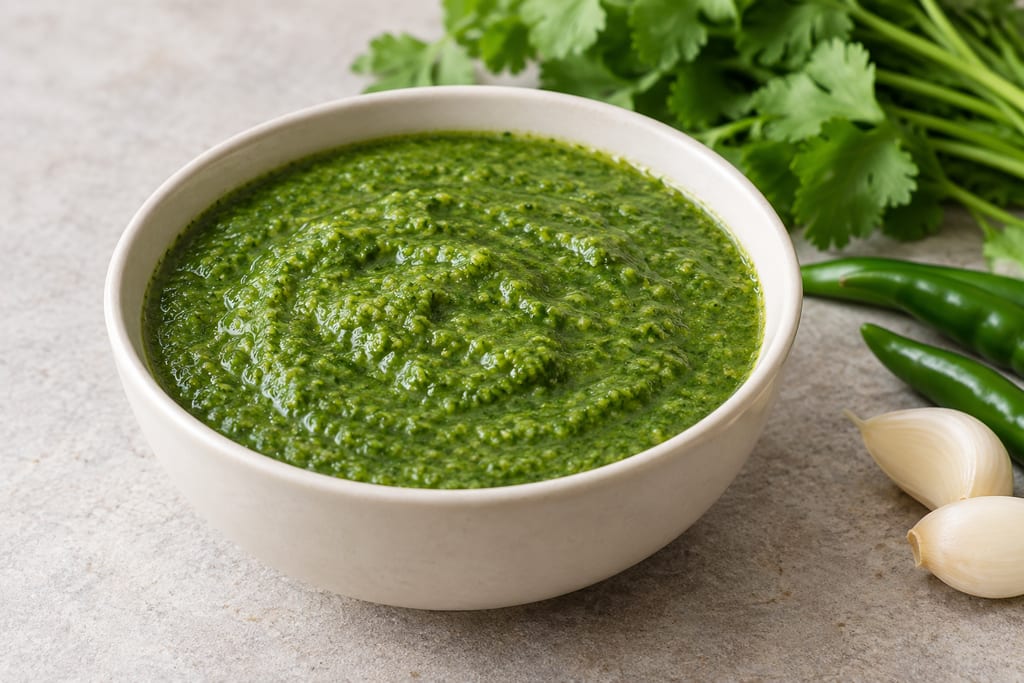
Afghan chutney (chatney)
Afghan coriander chatni is a sharp, hot herb sauce with garlic and vinegar. A 2008 Afghanistan manual records green or red pepper and optional walnut; heat and household versions vary.
 FermenteaWhere food goes to change
Cranberry jam
Cranberry sauce is a sauce of cranberries cooked in sugar syrup until the berries burst and thicken, served with roast turkey, pork, chicken and ham.
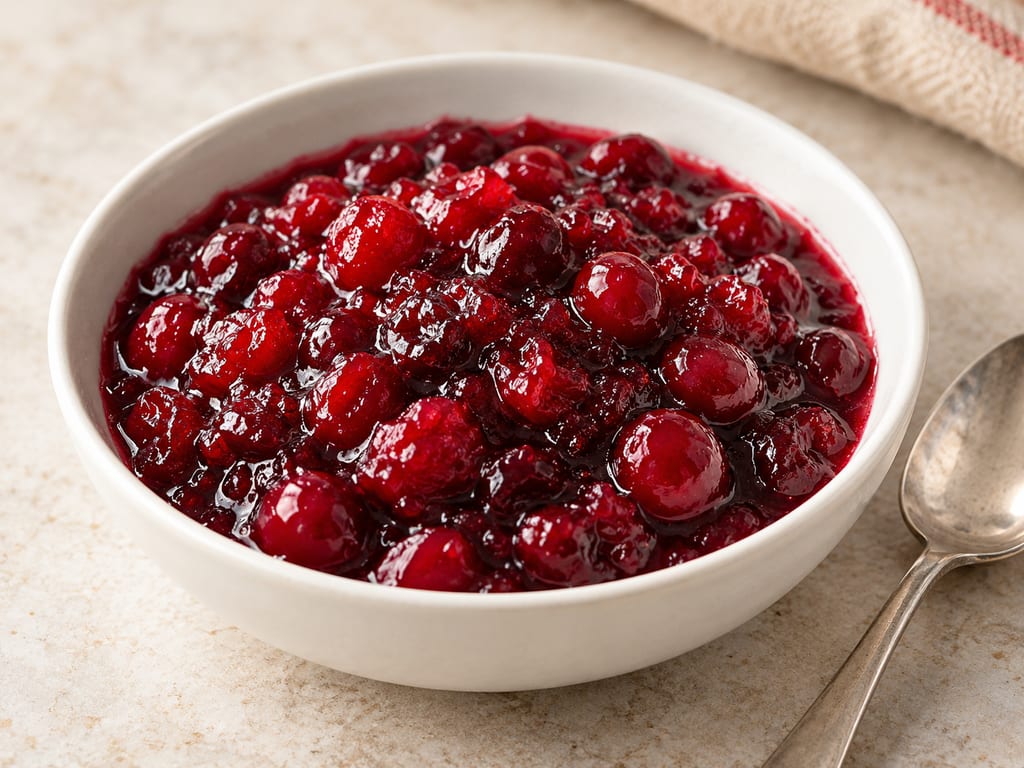
Cranberry sauce is a cooked sauce of cranberries, sweetened and set into a glossy, spoonable relish. Its tartness is the point. It cuts through rich, fatty meat, and that is why it is served with roast turkey in North America, and with turkey, pork, chicken and ham more widely. Outside the holiday tables it is rarely served.
The method is simple. Sugar and water make a syrup, the berries go in, and the pan boils until the berries burst and the mixture thickens. The most basic version is only cranberries and sugar, and the sweetness is adjusted to taste rather than fixed by a measure.
Indigenous peoples of North America used cranberries long before European settlement. In 1606 the Mi'kmaq introduced the fruit to French settlers at Port-Royal in Nova Scotia. The settlers would probably have sweetened it with maple sugar. A dinner date with turkey is a later and better documented record.
Amelia Simmons's American Cookery, first published in 1796, is the first known American cookbook and the first printed recipe for the sauce as a companion to turkey. The popular story of cranberry sauce at the first Thanksgiving in 1621 is not supported. Plimoth Plantation's account suggests cranberries may have gone into stuffing, but probably not as a sauce, because sugar was scarce.
Cranberry sauce moved from the kitchen to the shop in the twentieth century. Marcus Urann, the founder of the cooperative that became Ocean Spray, first offered a commercial cranberry sauce to American consumers in 1912 in Hanson, Massachusetts. Canned sauce reached the market in 1941 and let the sauce sell year round.
The canned form comes in two main types. A loose sauce keeps the berries whole in a syrup, and a jellied sauce sets as a smooth log that can be slid out of the can and sliced. Both forms are commercial adaptations, and their recipes are not the same as the home sauce described above.
Taste differs by country. Europe usually prefers a slightly sour sauce, and North America a sweeter one. The difference is recorded, though the claim about North American sweetness still needs a citation. Cooks who follow a recipe from either side of the Atlantic should expect that the sugar will be adjusted to taste rather than fixed by the method.
Cranberries were eaten by Indigenous peoples in North America, and the Mi'kmaq introduced them to French settlers at Port-Royal, Nova Scotia, in 1606. The earliest printed recipe is in Amelia Simmons's American Cookery (1796), where the sauce accompanies turkey.
The sauce is first recorded as a companion to turkey in Amelia Simmons's American Cookery of 1796. Its use at the Thanksgiving meal is a documented custom, not a precise recipe history.
The article names Canada with the United Kingdom as a country that serves the sauce at Christmas dinner.
Served with the Christmas dinner, as the article records; no date is given for its adoption.
Afghan coriander chatni is a sharp, hot herb sauce with garlic and vinegar. A 2008 Afghanistan manual records green or red pepper and optional walnut; heat and household versions vary.
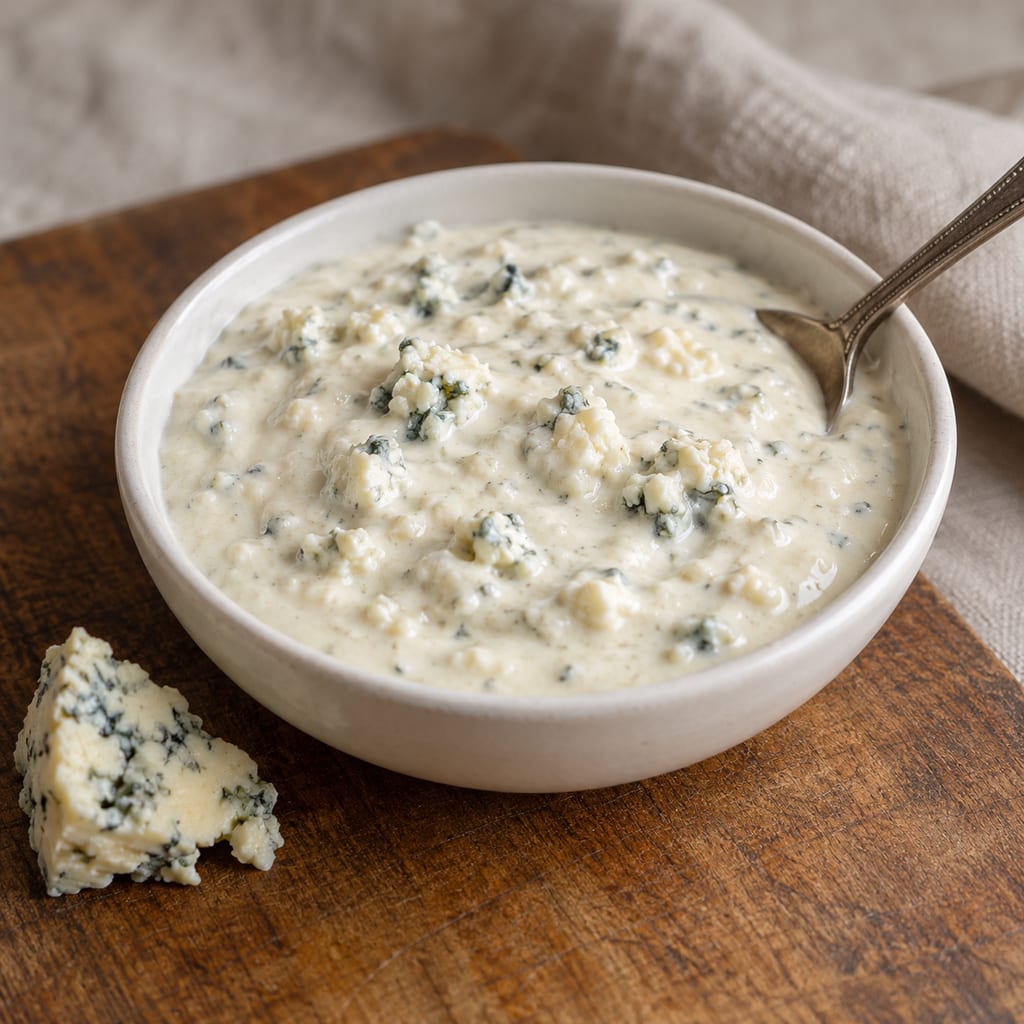
Blue cheese dressing is a creamy dressing built on crumbled blue cheese mashed into buttermilk, with sour cream, mayonnaise, vinegar and seasoning, and kept cold for up to two weeks.
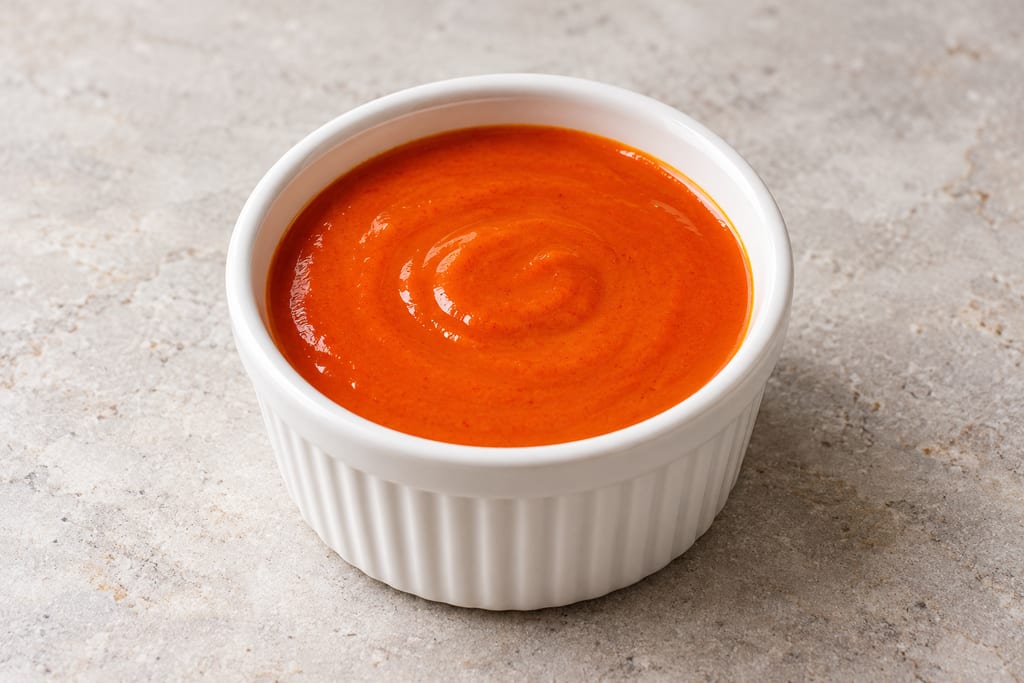
A warm, buttery cayenne sauce made by melting butter into a hot pepper sauce, first tossed onto fried chicken wings in Buffalo, New York.
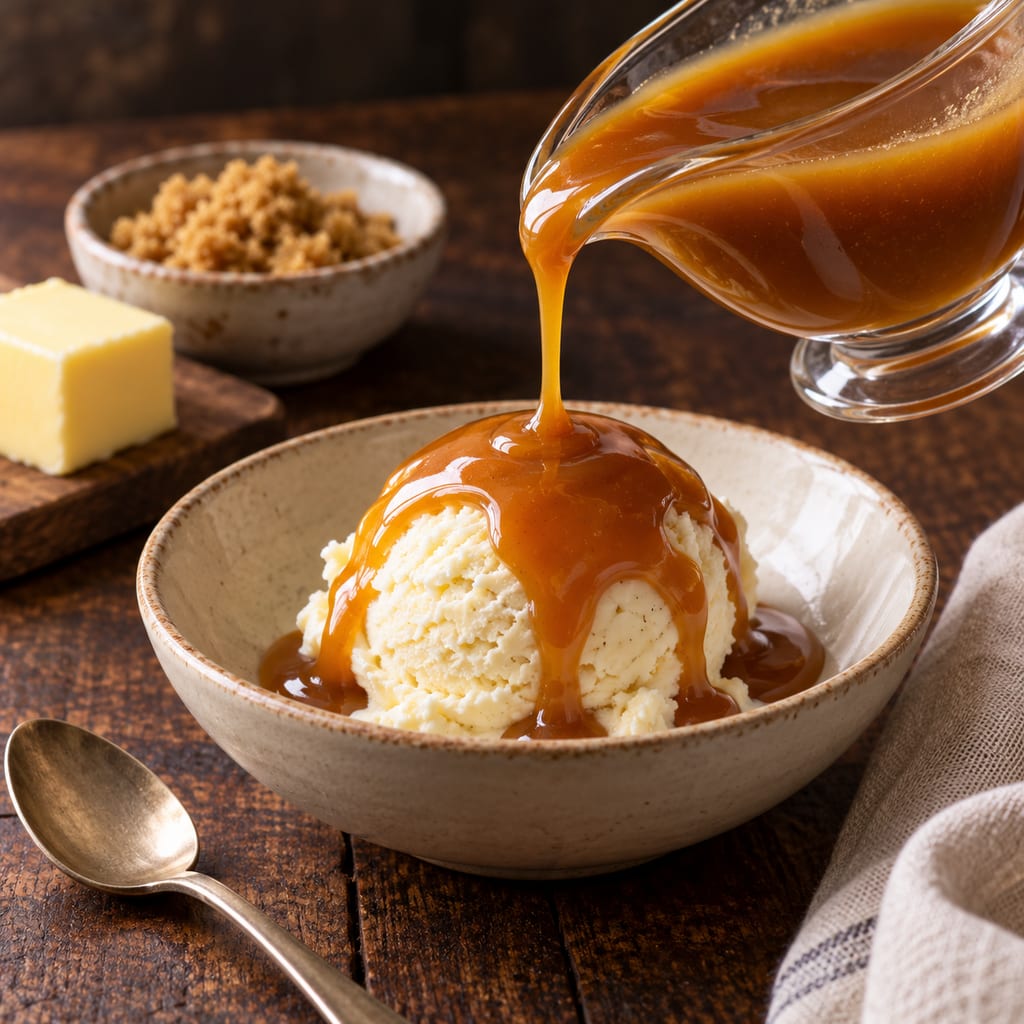
A pourable dessert sauce of brown sugar, butter and cream, with a little corn syrup and salt. It is the sauce form of the butterscotch confection and is made without water, unlike caramel.
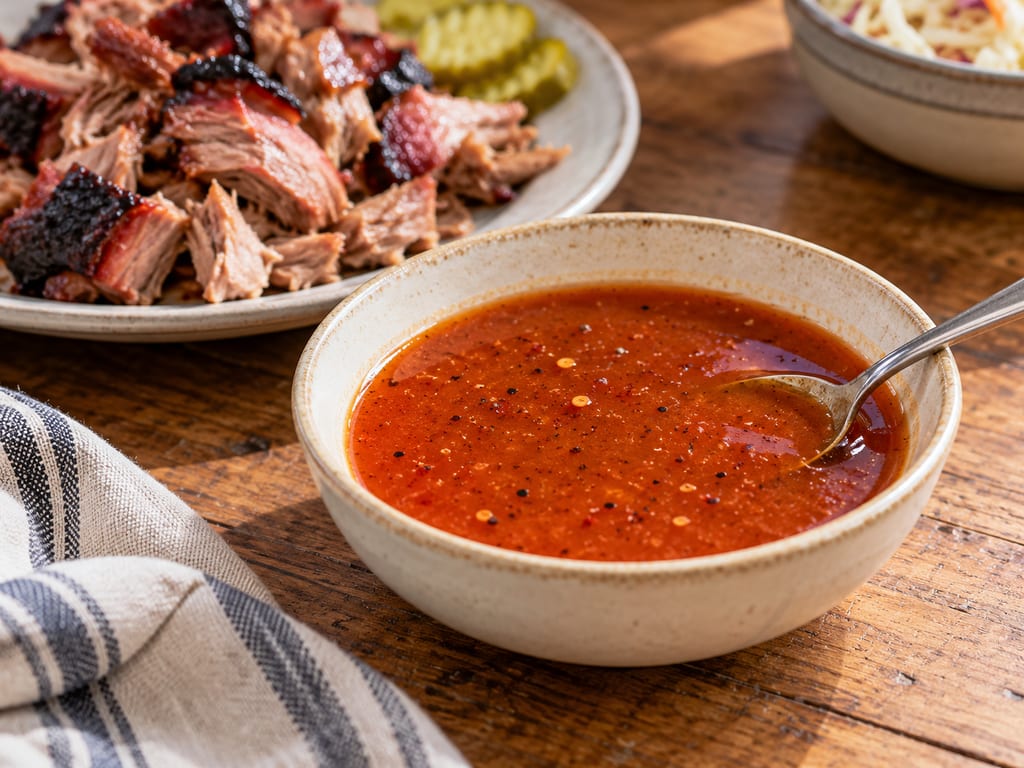
Light tomato barbecue sauce is a thin, sharp South Carolina sauce: a vinegar and pepper base with a small amount of ketchup, sitting between the clear vinegar sauce and the sweeter tomato sauces.
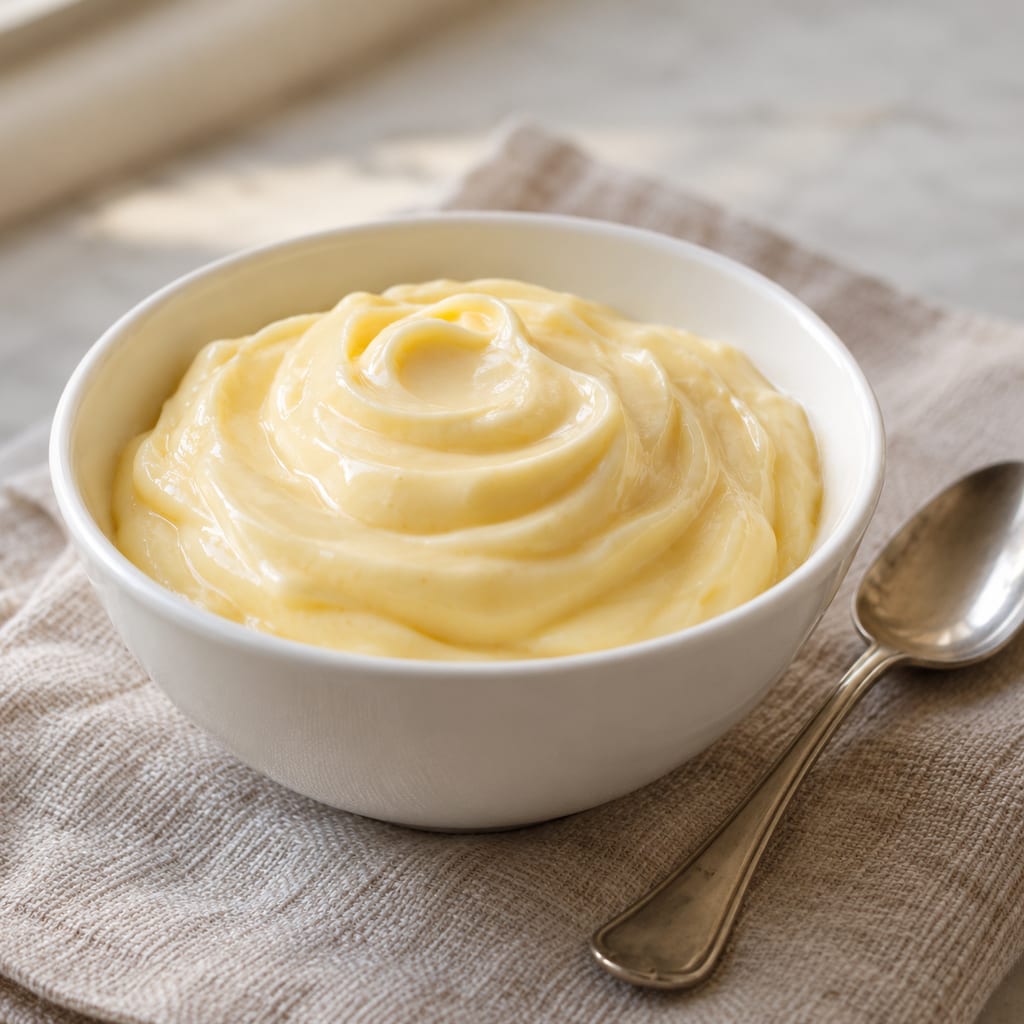
A cooked-yolk mayonnaise documented in the University of Tennessee Extension’s 2007 Egg University Handbook. The egg mixture is heated before oil is emulsified into it.
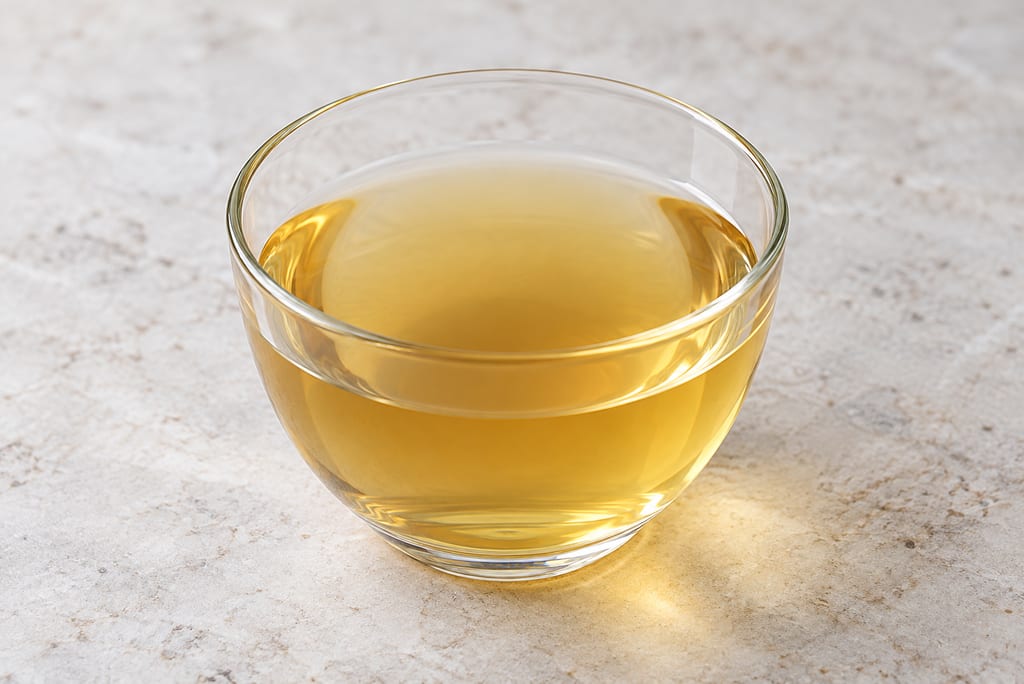
A liquid set with a little gelatin, frozen solid, then thawed through cloth in the refrigerator so that clear liquid drips out and the cloudy gel stays behind.
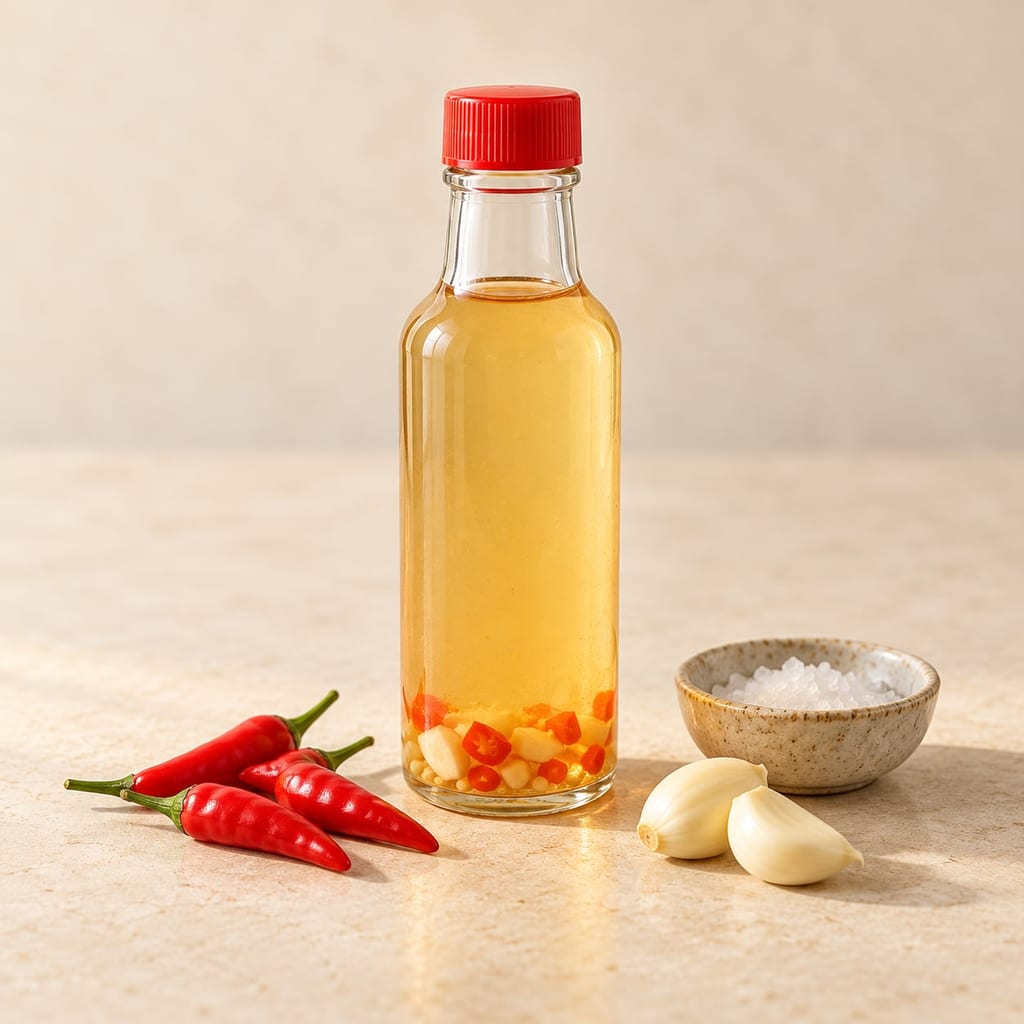
Hawaiian chili pepper water, or wai nīoi, is a thin condiment of small chillies steeped in salted water with vinegar and garlic. Hawaiian families use it as a table hot sauce.
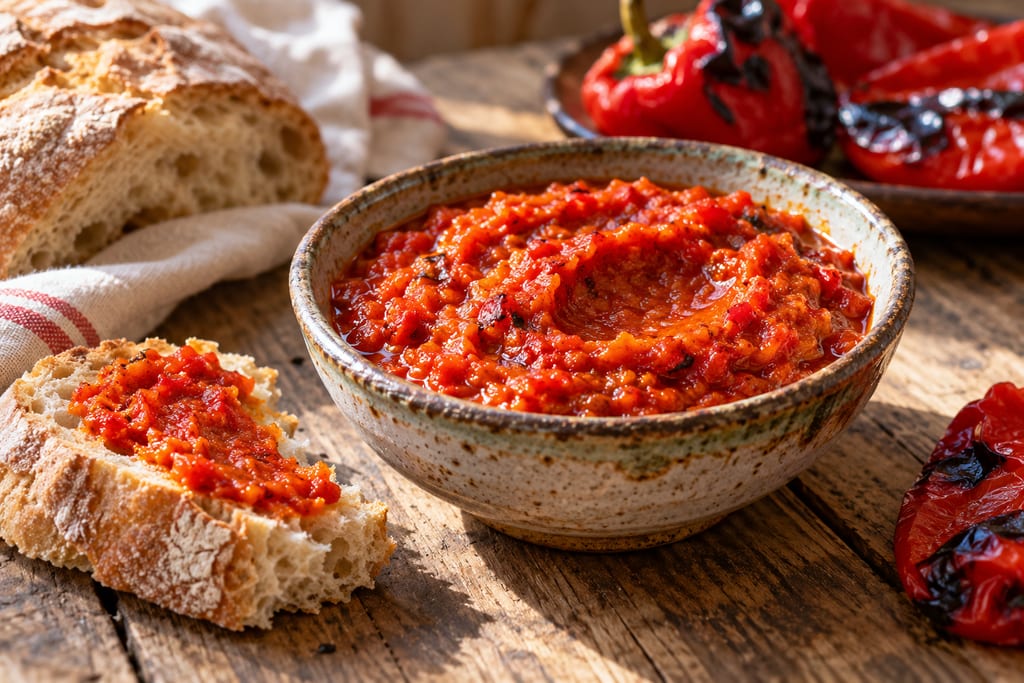
Ajvar is a cooked Balkan pepper preserve built around roasted red peppers, peeled, drained, ground and slowly fried with oil and seasoning. Leskovac’s protected version is a pepper specialty; regional versions vary.
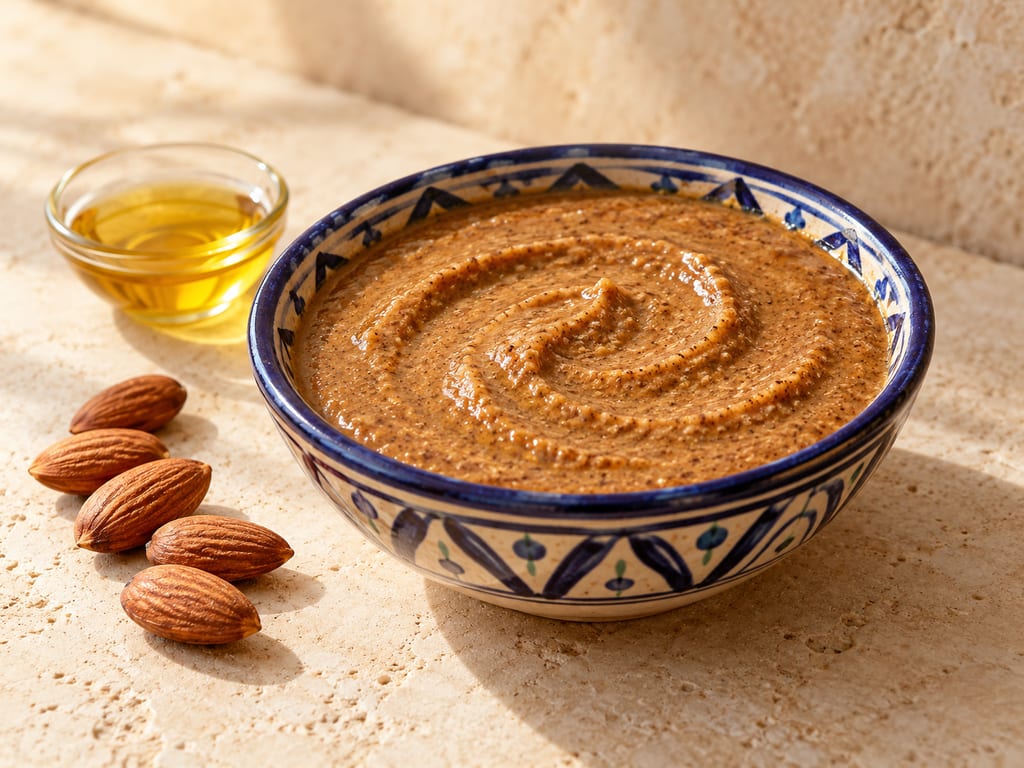
Amlou is a nutty, lightly sweet Moroccan spread of roasted almonds, culinary argan oil and honey. The almonds are ground first, then loosened with oil and sweetened; the balance can range from a thick spread to a dip.
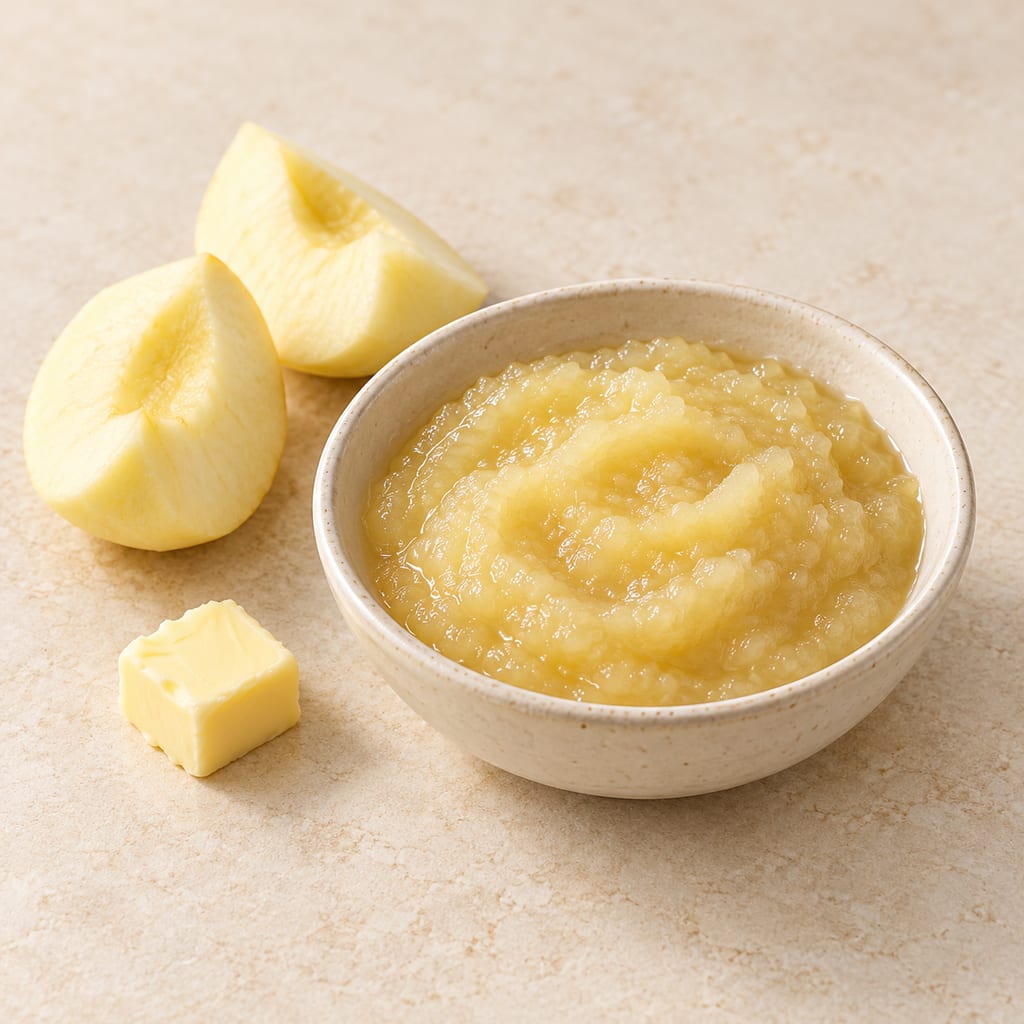
Apple sauce for goose and pork is a plain English accompaniment: cooked apples pulped with water, then sweetened with sugar and finished with a little butter.

A warm dip of garlic, anchovy and olive oil, often enriched with butter, that Piedmont serves over a flame with raw and cooked vegetables and bread.
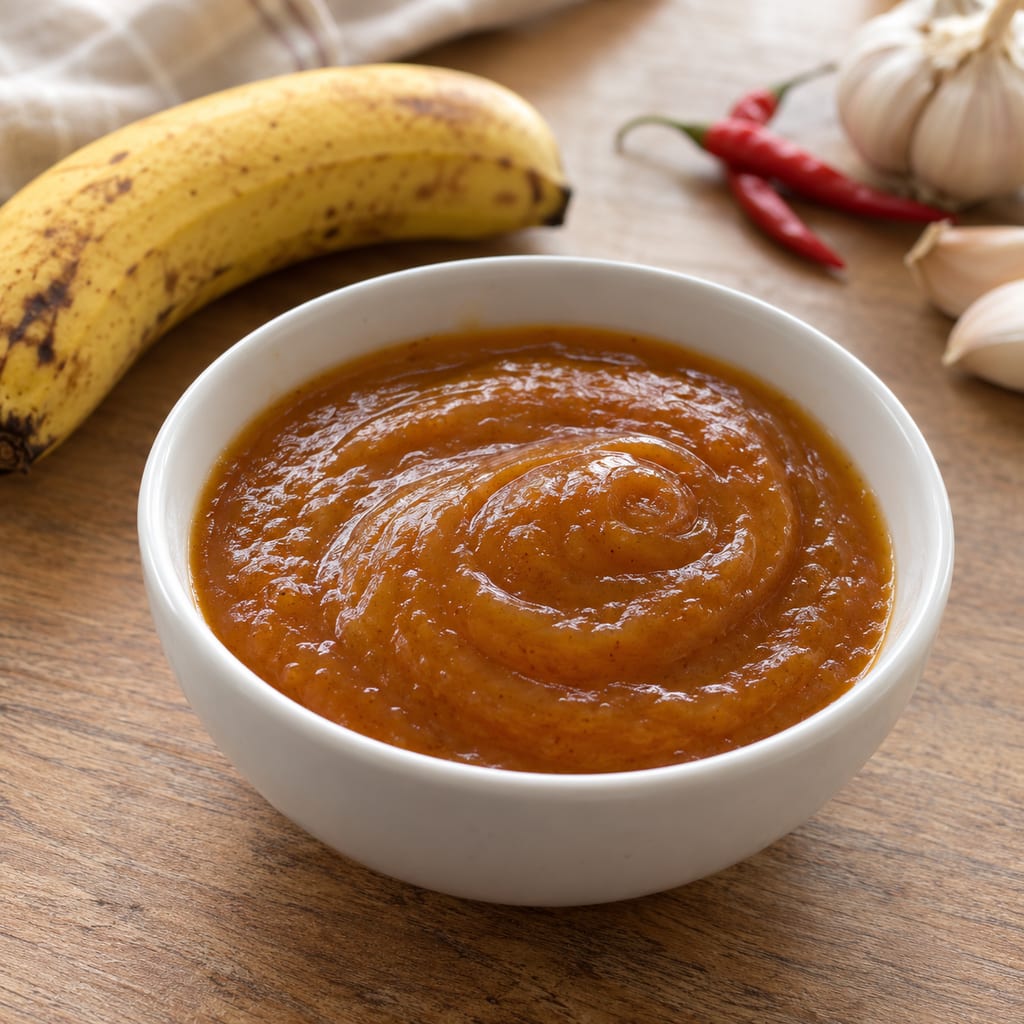
A sweet-hot table sauce of ripe banana simmered with vinegar, sugar, onion, garlic and fresh chilli, in the manner of Philippine banana ketchup. An untested development batch of about 500 g.
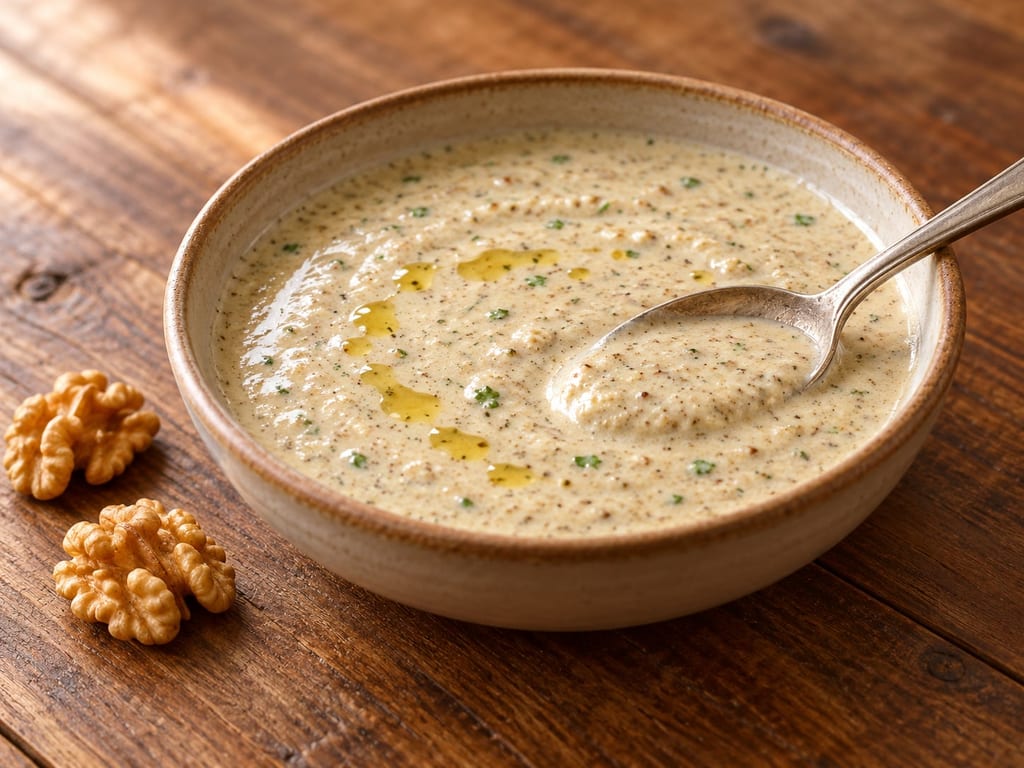
A Georgian walnut sauce of ground walnuts, garlic, vinegar and spices, thinned with water or broth. It is served with poultry, vegetables and bread, and is the sauce of the dish satsivi.
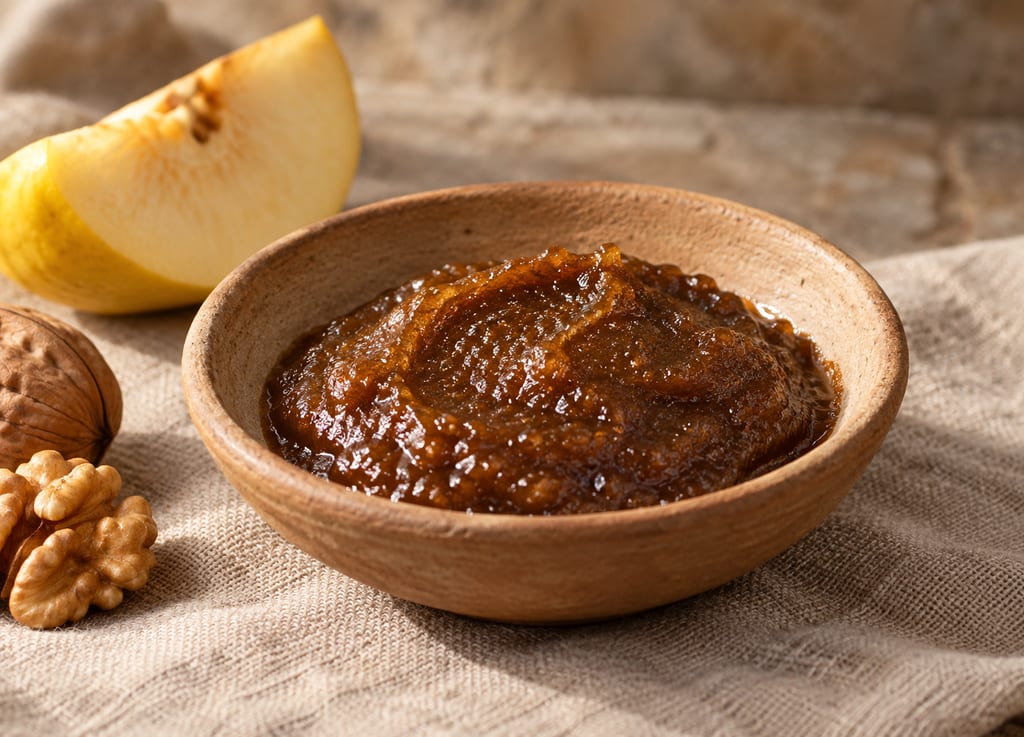
Byzantine murrī is a cooked imitation of murrī from the medieval Arabic repertoire, made from scorched honey, toasted bread, walnuts, quince, carob and spices rather than from a long grain fermentation.

Caribbean browning is a dark liquid of deeply caramelised sugar, used in small amounts for colour and a smoky, bitter-sweet flavour in stews and black cake.

A gelling polysaccharide extracted from red seaweeds, sold as kanten strips or powder; it sets firm at a low concentration and stays solid until about 85 °C.

A Dominican table and seasoning condiment of sour orange juice, mixed with lime and salt and bottled raw; garlic, oregano or a hot pepper may be added for meat or a spicier bottle.

Cicerbita alpina is an alpine perennial whose tender shoots and leaves have been eaten raw or cooked. Sámi milk preparations and modern Carnian dishes are distinct uses, with serious identification and preservation limits.

Japanese skipjack tuna cooked, then repeatedly smoked and dried over a wood fire by the hand-fired tebiyama method into a hard block for shaving into dashi: the first stage of katsuobushi.

A Swedish-style spirit vinegar made by fermenting neutral alcohol with live vinegar bacteria, with a separate guide to commercial ättika strengths.

A yeast-raised wheat ring shaped from a firm dough, briefly boiled and baked. This source-batch formula gives a gently malted crust and a chewy crumb.

Bechamel is a white sauce of milk thickened with a butter and flour roux, one of the French mother sauces, and the base from which Mornay and other cheese and cream sauces are made.
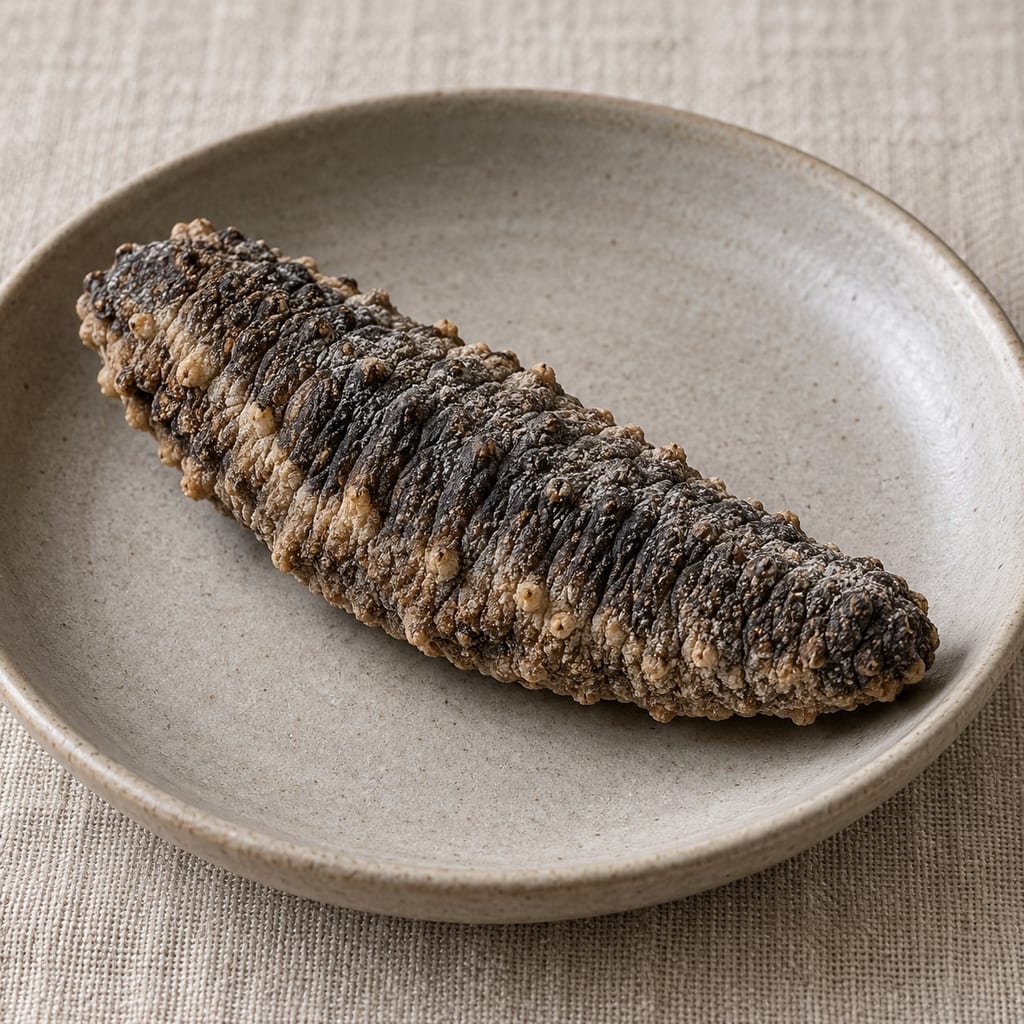
Sea cucumber cleaned, boiled and dried, sometimes with smoke, into a long-keeping trade product; Makassan processing in Arnhem Land is documented from at least the eighteenth century.
No community contributions have been published for this entry yet.
Sign in to contribute. Published comments and photos are free to read.
WikipediaHistory · Method · Variants
Cranberry sauceAmelia Simmons's American Cookery (1796) is the first recorded mention of the sauce as a turkey companion.
Basic method: cranberries boiled in sugar water until the berries pop and the mixture thickens; variations with orange, ginger, maple syrup, port, cinnamon, almonds.
Served at Thanksgiving in North America and at Christmas in the United Kingdom and Canada.
Commercial canned sauce: Marcus Urann and the cooperative that became Ocean Spray; canned sauce on the market in 1941.
Europe: generally slightly sour; North America: more heavily sweetened (the article flags this claim as needing a citation).