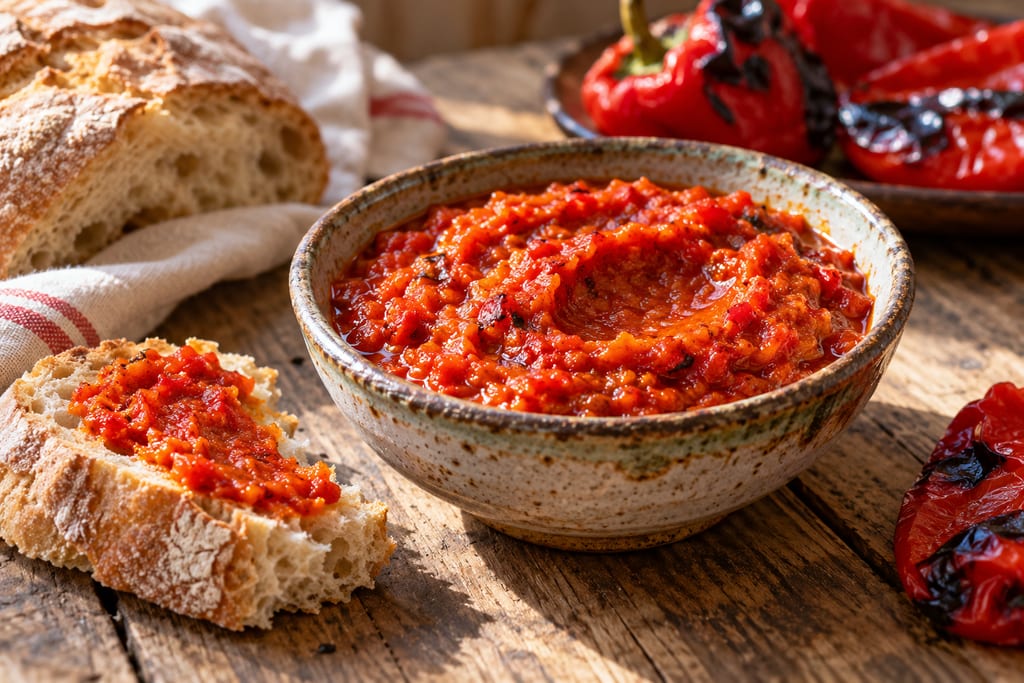
Ajvar
Ajvar is a cooked Balkan pepper preserve built around roasted red peppers, peeled, drained, ground and slowly fried with oil and seasoning. Leskovac’s protected version is a pepper specialty; regional versions vary.
 FermenteaWhere food goes to change
murrī · Byzantine murri
Byzantine murrī is a cooked imitation of murrī from the medieval Arabic repertoire, made from scorched honey, toasted bread, walnuts, quince, carob and spices rather than from a long grain fermentation.
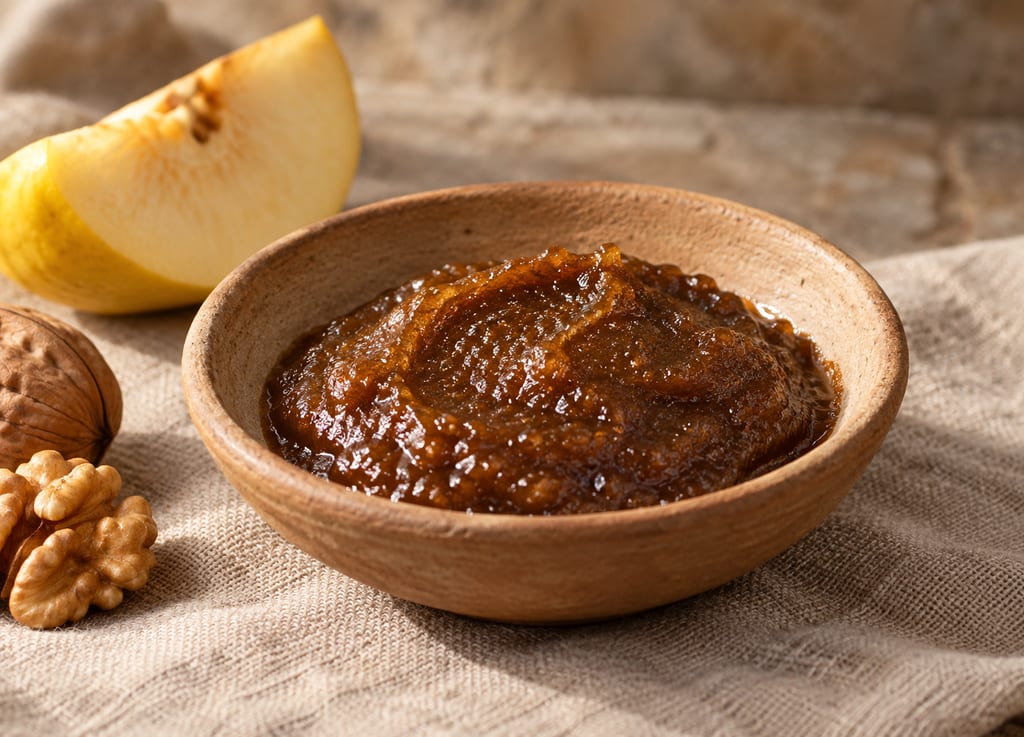
Byzantine murrī is a dark, very salty paste that the medieval Arabic recipe repertoire records under this name. It is not made the way the grain murrī is. Grain murrī relies on a mould-developed starter that breaks down over a long maturation. Byzantine murrī builds its dark, concentrated flavour in the pan, by scorching honey and boiling its ingredients together, then straining the result.
The difference matters for a reader. The cooked form shows that medieval cooks could reproduce some of what a long-matured seasoning gives a dish by cooking, rather than waiting for fermentation to do the work.
The recipe combines honey with toasted bread, walnuts, quince, carob and a mixture of spices. The modern adaptation lists anise, fennel, nigella seed, celery seed and saffron, and salt. The medieval text is more expansive, with a very large amount of water and specific quantities for the walnuts and quince.
Honey is taken to a deep caramel by repeated boiling. The toasted bread stands in for the spoiled bread of the grain murrī, and the walnuts and quince add body and sweetness.
Boil the honey repeatedly until it darkens and caramelises. Grind the seeds and walnuts and combine them with the honey, the toasted bread, the quince, the carob and salt. Add water, boil the mixture and strain it. The finished paste is dark, fragrant and very salty, and the adaptation advises using it sparingly.
The medieval quantities are not a usable scale: they name very large amounts of water and walnuts, and the modern adaptation is a home version. The sources give no shelf life, no storage limit and no date of origin. Whether the recipe travelled from Byzantium to the Arabic world or the other way is not established.
A medieval Arabic recipe translated under the name Byzantine murrī combines honey, toasted bread, walnuts, quince, carob and spices, then boils and strains them. It shows that medieval cooks had methods for approximating the effects of a fermented seasoning by cooking. The name does not establish where the recipe originated.
Scaling: source batch only
Use the finished paste sparingly; the adaptation describes it as very salty.
The name alone does not establish where the recipe originated; the sources give no place of origin.
Ajvar is a cooked Balkan pepper preserve built around roasted red peppers, peeled, drained, ground and slowly fried with oil and seasoning. Leskovac’s protected version is a pepper specialty; regional versions vary.
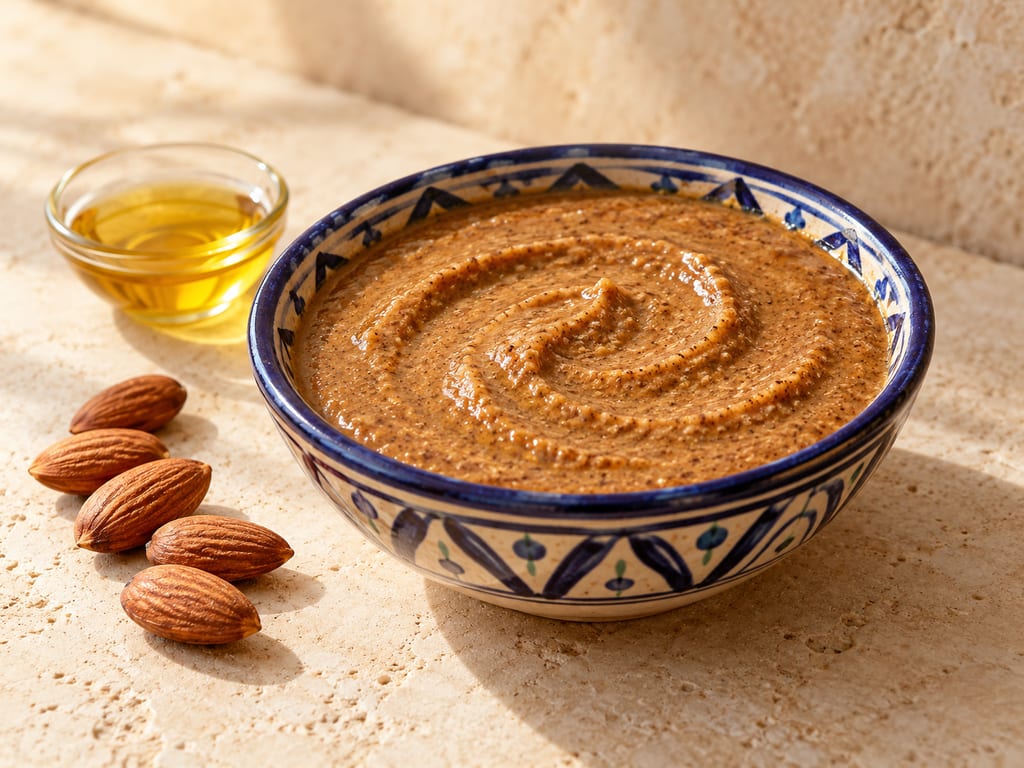
Amlou is a nutty, lightly sweet Moroccan spread of roasted almonds, culinary argan oil and honey. The almonds are ground first, then loosened with oil and sweetened; the balance can range from a thick spread to a dip.
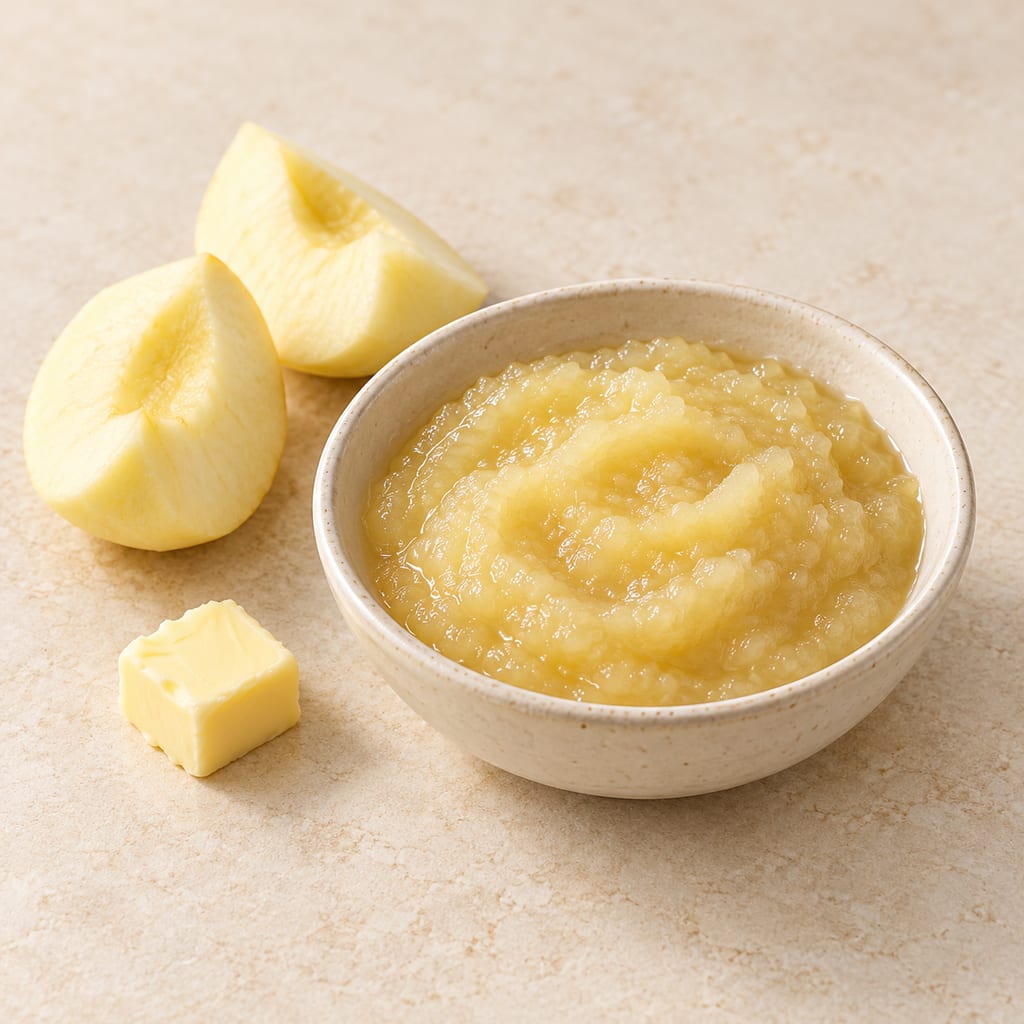
Apple sauce for goose and pork is a plain English accompaniment: cooked apples pulped with water, then sweetened with sugar and finished with a little butter.

A warm dip of garlic, anchovy and olive oil, often enriched with butter, that Piedmont serves over a flame with raw and cooked vegetables and bread.
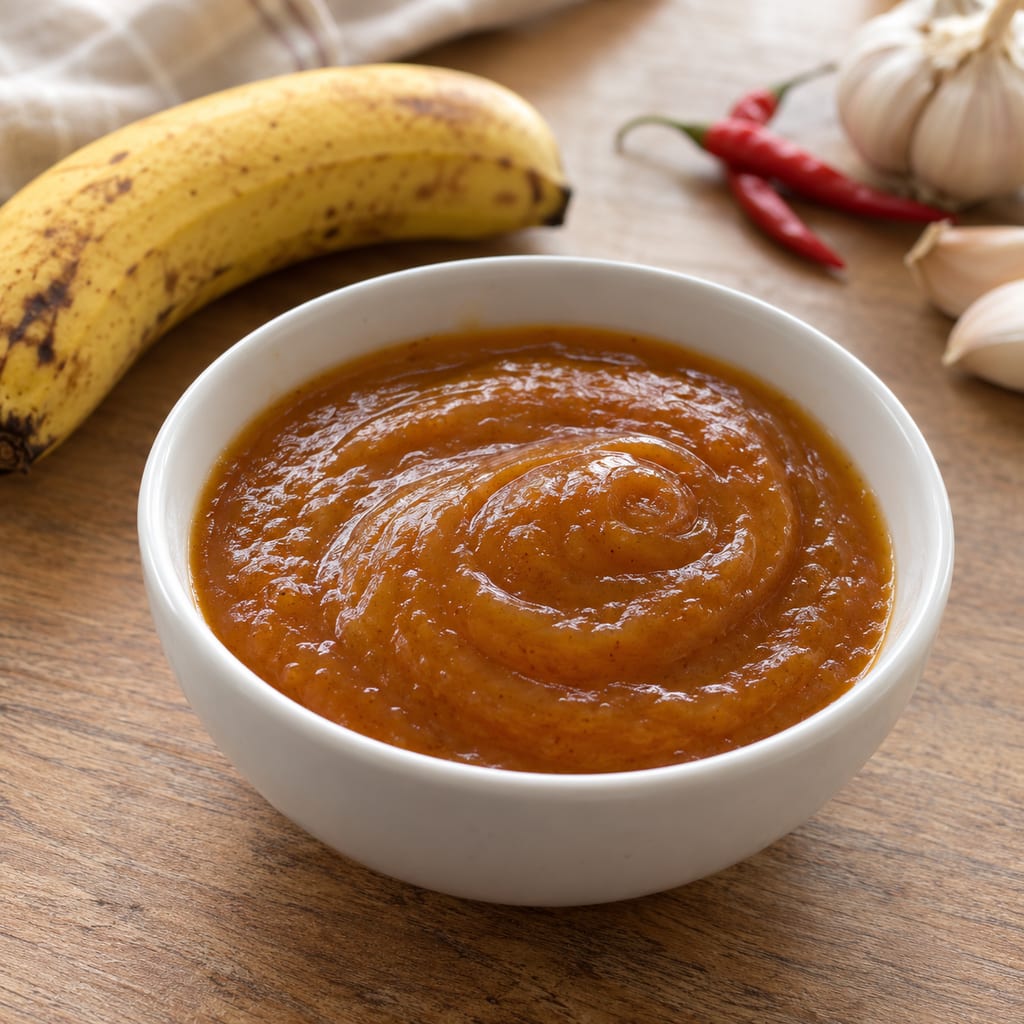
A sweet-hot table sauce of ripe banana simmered with vinegar, sugar, onion, garlic and fresh chilli, in the manner of Philippine banana ketchup. An untested development batch of about 500 g.
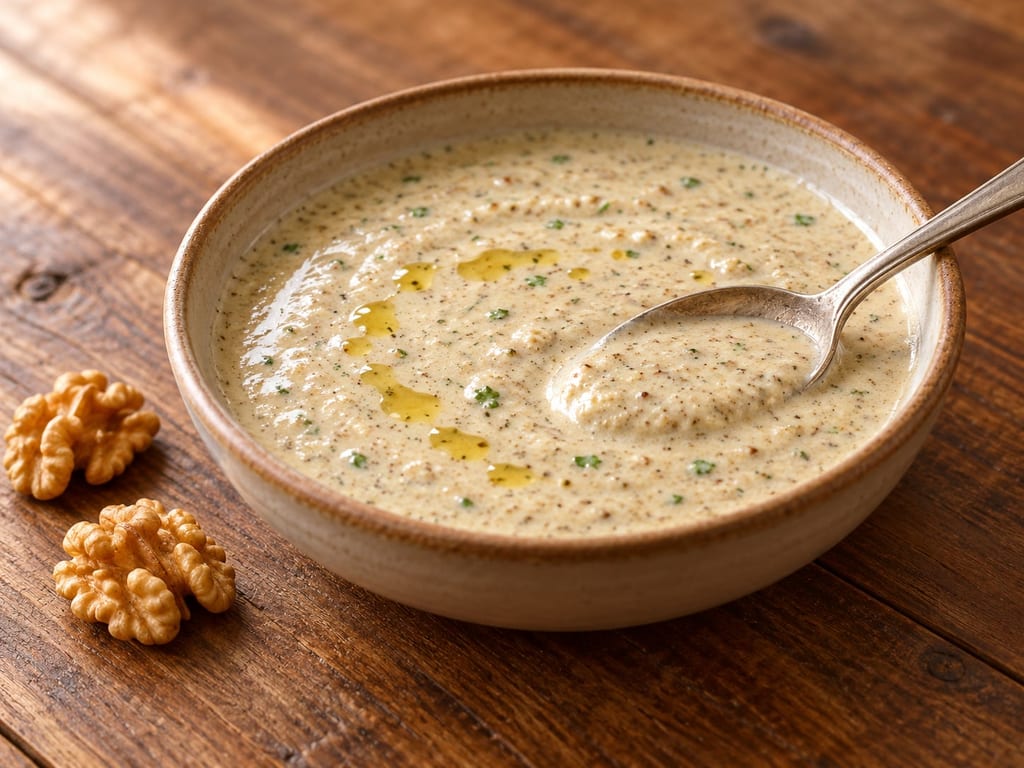
A Georgian walnut sauce of ground walnuts, garlic, vinegar and spices, thinned with water or broth. It is served with poultry, vegetables and bread, and is the sauce of the dish satsivi.
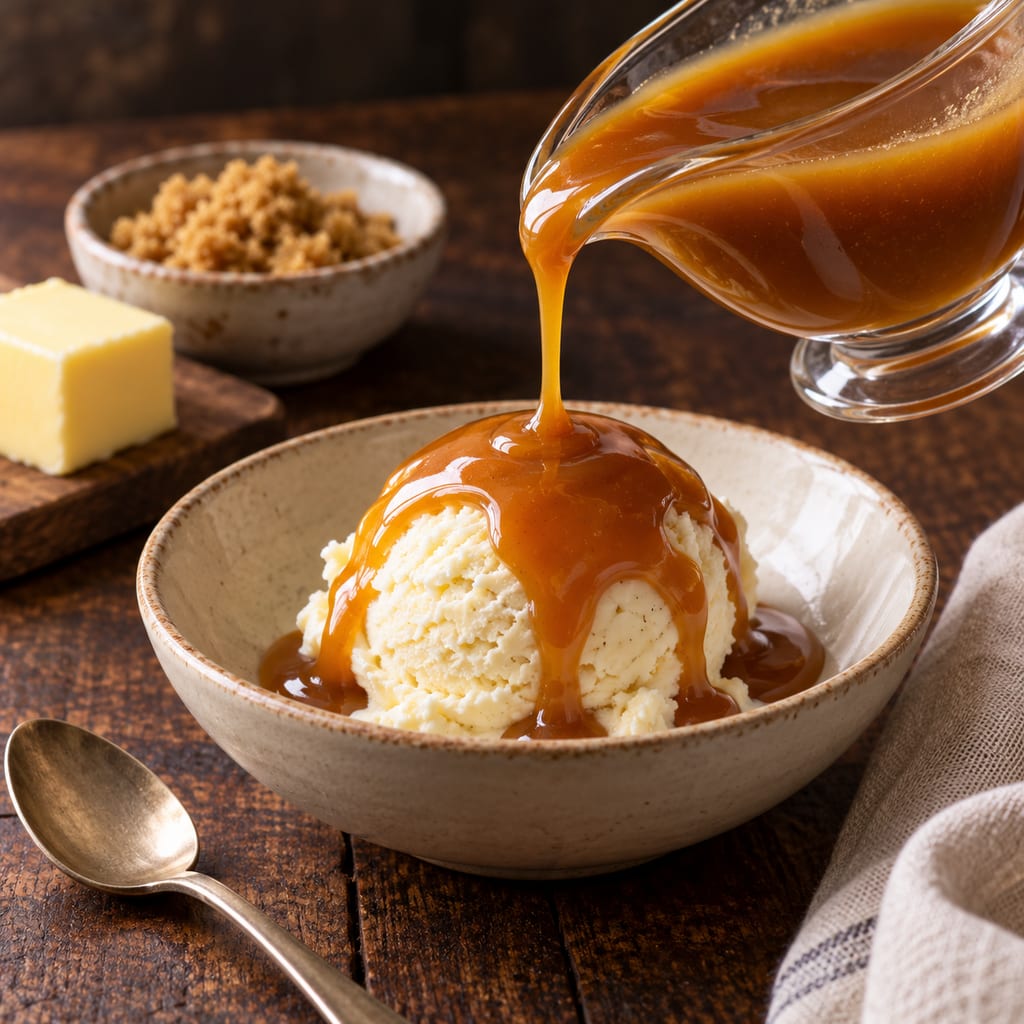
A pourable dessert sauce of brown sugar, butter and cream, with a little corn syrup and salt. It is the sauce form of the butterscotch confection and is made without water, unlike caramel.
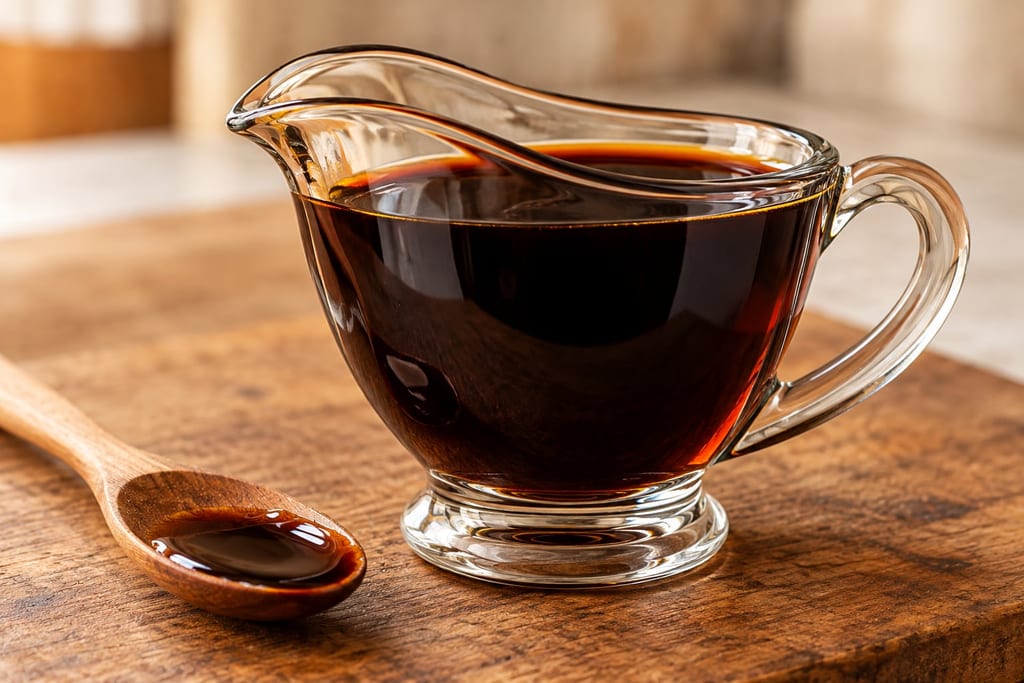
Caribbean browning is a dark liquid of deeply caramelised sugar, used in small amounts for colour and a smoky, bitter-sweet flavour in stews and black cake.
No community contributions have been published for this entry yet.
Sign in to contribute. Published comments and photos are free to read.
History · Method
Recipes introduction (Cariadoc translation of medieval Arabic cookery)A recipe translated under the name Byzantine murrī combines scorched honey, toasted bread, walnuts, quince, carob, spices and salt, then boils and strains.
Cited in: A cooked murrī; What goes into it; Method; Notes
CoquinariaMethod
MurriModern adaptation: honey brought to the boil repeatedly until dark; seeds and walnuts ground and combined with the honey; finished paste dark, fragrant and very salty.
Cited in: A cooked murrī; What goes into it; Method