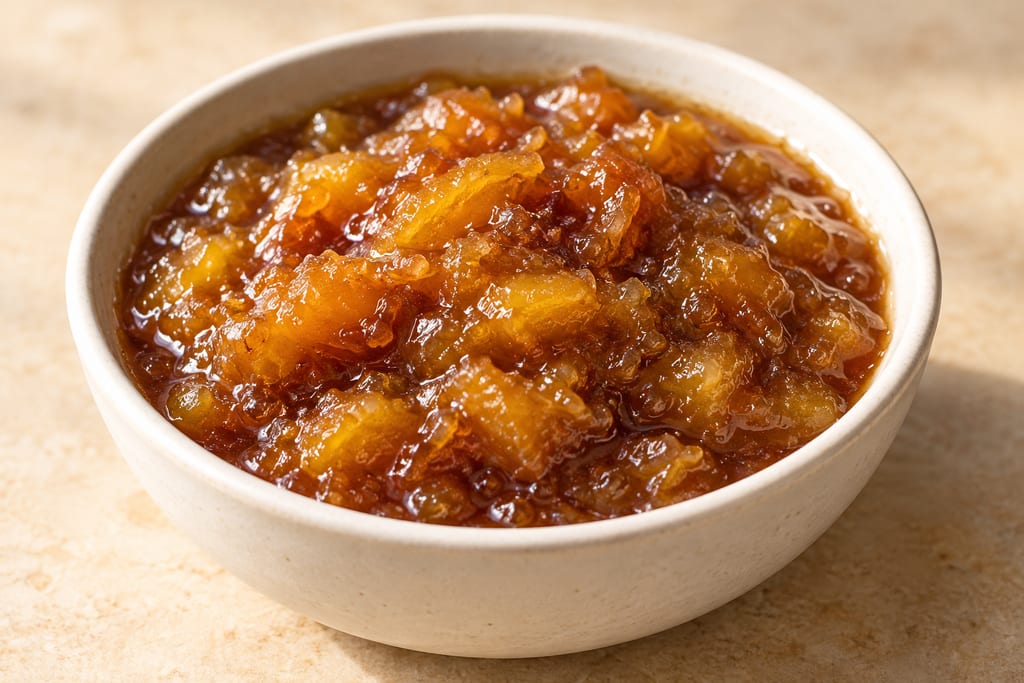
Lapsi ko achar, Suryabinayak pulp method
A Suryabinayak municipal recipe cooks ripe lapsi pulp in sugar syrup with cloves, cardamom, cinnamon, sukumel and ginger juice to make a sweet Nepali achar.
 FermenteaWhere food goes to change
Spices and aromatics
Cinnamon is the dried inner bark of Cinnamomum trees, rolled into quills or ground; Ceylon cinnamon comes from C. verum of Sri Lanka and cassia from related species.
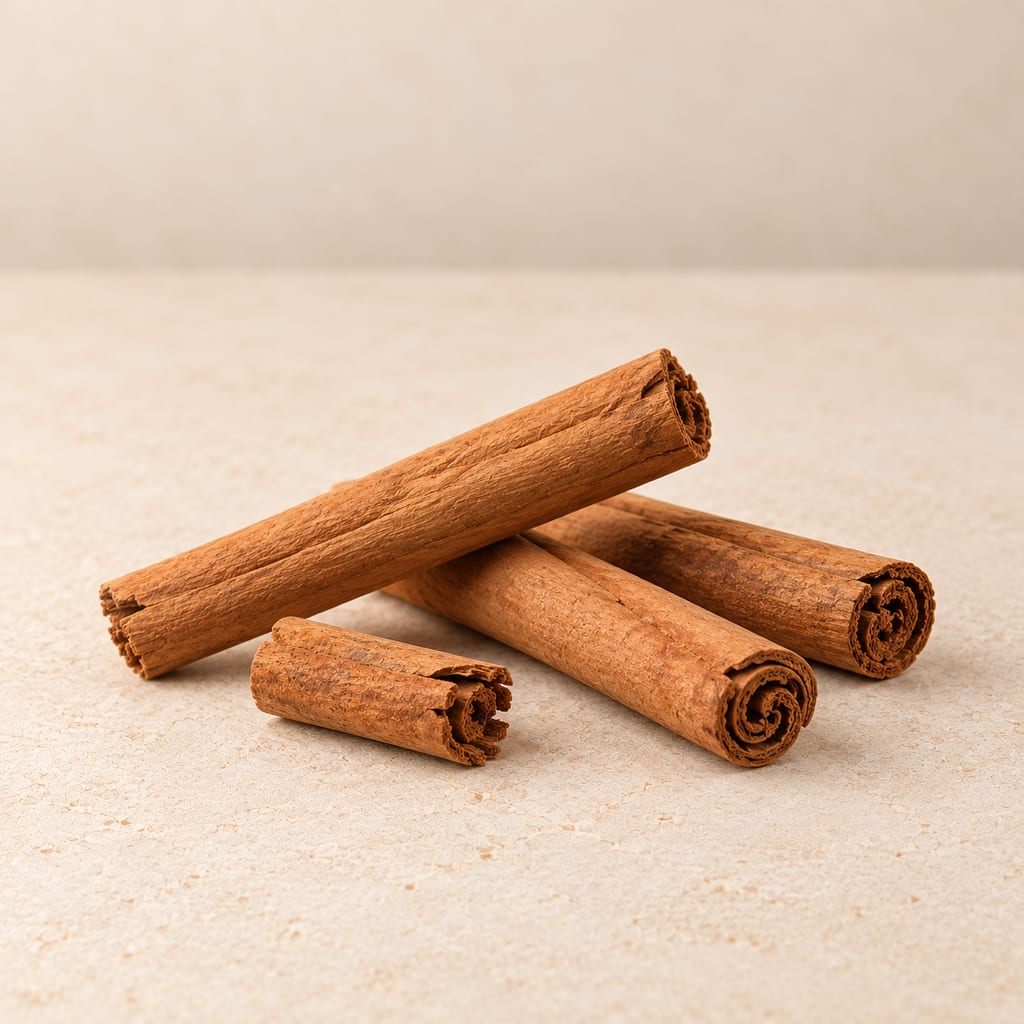
Cinnamon is the dried inner bark of evergreen trees of the genus Cinnamomum, in the laurel family, Lauraceae. It is sold as quills, which are rolls of thin bark, as broken pieces and chips, and as a powder, and its warm, sweet fragrance comes from an oil in the bark. The tree that gives the spice its best reputation is Cinnamomum verum, the Ceylon cinnamon, a species native to Sri Lanka. In the United States the dried bark is listed under several trade names, among them Ceylon, Chinese, Saigon and Padang or Batavia cinnamon, and the species behind them are different.
That is the first thing to know about the jar on the shelf. The same word covers different barks, and a label that says only cinnamon does not tell you which one is inside.
Cinnamomum verum is the cinnamon of Sri Lanka. C. zeylanicum is a synonym and the name under which the bark is still listed in US trade definitions. Wild populations are recorded in south-west India, western Sri Lanka and the Tenasserim Hills of Myanmar, and the species is cultivated elsewhere. The thin, finely layered quills of this species are what the trade calls Ceylon cinnamon.
Cassia is the commercial name for several related barks, often associated with China, Indonesia and Vietnam. It is generally described as thicker, harder and more pungent than the delicate quills of Ceylon cinnamon, though these are tendencies, not tests that identify a species. The two differ in a way that matters to health, taken up below.
Local names add a layer. In Nepal the word dalchini is used for the bark of another tree, Cinnamomum tamala, which the forest-products literature calls Nepalese cinnamon. Its leaf is tejpat, or sinkauli, a bay-leaf-like aromatic used whole in cooking. A government crop table lists C. zeylanicum as dalchini and C. tamala separately under cinnamon and bay-leaf names. A Nepali recipe that calls for dalchini therefore may mean any of these barks, and tejpat is a different ingredient.
Greek and Roman writers knew cinnamon and cassia as costly aromatics and repeated stories about distant lands and dangerous harvests. Those stories helped hide the commercial sources, and the old names cannot be mapped confidently onto modern species. The earliest date for cinnamon as a spice remains uncertain.
The best-documented trade is that of Ceylon in the sixteenth century. Around 1500 cinnamon grew chiefly in the wet zone of southwest Sri Lanka, under the king of Kotte. It went by ship to Aden and Hormuz and to ports in Gujarat, Bengal and the Coromandel coast, and other consignments crossed the Malabar coast at Calicut. Cinnamon was one commodity among several, not the single purpose of a trade route, and the evidence for a Crown monopoly before the Portuguese arrived is not conclusive, even though the king controlled substantial supplies.
Portuguese merchants entered that economy in the sixteenth century and Dutch control followed in the seventeenth. Until then cinnamon was gathered from wild stands. Dutch cultivation experiments at Colombo between 1765 and 1785 began the plantations; the change from wild to cultivated stands is dated about 1770, with cultivation in the Seychelles beginning in 1771 and in Java in 1825. The dates differ because cultivation can mean experiments, plantations or sustained commercial production.
Left alone, Cinnamomum verum is an evergreen tree up to 18 m tall with a low-branching trunk up to 60 cm across and strongly aromatic bark about 10 mm thick. The leaves are opposite, 5 to 25 cm long, shiny dark green, with three or five prominent veins; the small pale yellow flowers have a foetid smell; the fruit is a one-seeded berry 1 to 2 cm long, black when ripe. The seed holds about 30 per cent fixed oil, used in India to make candles, and the timber is weak, warps and splits, and is good only for low-grade board. On plantations the tree is never allowed to grow like that.
It wants a wet, warm, low-lying climate: annual rain of 2,000 to 2,500 mm well spread through the year and an average temperature near 27 °C. Fine sandy and lateritic gravelly soils are best in Sri Lanka and India, and loams are preferred in the Seychelles and Madagascar. The tree is sensitive to salt, and waterlogged or marshy ground gives a bitter product. Fresh seed germinates in 20 to 25 days and loses viability quickly, and growers also propagate by cuttings and by dividing old stools. The first crop, three to four years after planting by one count, yields 50 to 120 kg of quills per hectare and later crops 175 to 250 kg. A plantation can stay productive for 15 to 45 years, though shoot numbers decline after 10 to 12 years. Sri Lanka grows the largest quantity of the best-quality bark, mainly as quills; in 1998 it produced 12,000 tonnes from 24,000 hectares, the Seychelles produced 600 tonnes, and annual exports were about 6,000 tonnes.
Ceylon cinnamon is made from inner bark, the living tissue under the rough outer layers of a shoot. The tree is perennial, but the crop is grown as a coppiced bush: stems are cut back so that many young shoots grow from the stool, the base of the plant. The first harvest comes two to three years after planting, and the stool is then cut repeatedly: first coppicing is after two years, cut to 10 to 15 cm, with four to six shoots kept on each stool, and shoots are cut at 2 to 3 m tall and 1.2 to 5 cm across. Central shoots are cut low and outer shoots higher, to encourage new growth on the outside of the clump.
Harvest is timed to bark separation. In Sri Lanka cutting is done in the wet season, when the cambium is active and the bark lifts readily from the wood, with peaks in May and June and in October and November. Shoots are picked when their new leaves have turned green, and the right moment varies with the agroecological zone. The thick first bark is lower quality than the thin bark of later cuts.
At the peeling shed the leaves and side branches are stripped off. The outer skin is scraped away, the stem is rubbed to loosen the bark, and a knife lifts thin strips of inner bark. The strips are layered into long hollow cylinders, with smaller pieces packed inside larger ones, compound quills about a metre long, and dried in the shade to a yellowish brown. Sulphur bleaching is sometimes used, and grinding usually takes place in the consuming countries. Grades run from unscraped and scraped bark through compound and simple quills to quillings, featherings and chips, and quills are graded by diameter, the number of sticks to the kilogram and surface defects known as foxing. Smaller scraps become quillings, featherings, chips or ground spice, so powder is milled bark, though its species and grade are harder to recognise. Some processors wrap the freshly peeled strips overnight to allow a slight fermentation that helps to loosen the outer bark; it is a step in making the quill and does not make cinnamon a fermented food.
The warmth of cinnamon begins in the aromatic oil of the bark, released when a quill is broken, scraped or ground. Cinnamaldehyde gives the recognisable cinnamon note, and a sweet, woody or peppery impression belongs to the whole mixture of compounds in the bark of a given tree. Volatile-oil and aldehyde content are among the quality measures for cinnamon. Whole pieces give up their scent slowly as hot liquid reaches the curled layers; powder exposes far more surface at once and spreads quickly through syrup or batter. That is why a teaspoon of powder and a length of quill are not equal measures: the grind, the species and the strength of the bark all change how much flavour reaches the food, and a quill is lifted out when it has done its work while powder stays.
One tree gives three different oils. Bark oil, distilled from 0.5 to 2 per cent of the bark's weight, is 50 to 75 per cent cinnamaldehyde and 5 to 18 per cent eugenol. Leaf oil is mostly eugenol, 70 to 95 per cent, and is a source of eugenol for the flavour and perfume industries. Root bark gives an oil that is about 60 per cent camphor and is made only when a plantation is uprooted for replanting. The spice in the jar is the stem bark.
Coumarin separates the barks in a practical way. Cassia cinnamon generally contains much more coumarin than Ceylon cinnamon, which has little. In sensitive people relatively small amounts of coumarin can cause reversible liver effects, and moderation is advised with cassia. European maximum levels apply to some cinnamon-containing foods but not to cinnamon sold as a spice. For anyone who eats cinnamon in quantity, the species matters.
Whole bark tells you more than powder: Ceylon-type quills are thin and layered, and cassia-type pieces are thicker and harder, though appearance alone does not prove the species or the purity. Where the distinction matters, buy from a supplier who names the species and origin. Product labels sometimes omit the species and the plant part, which makes the identity of a product unclear. Powder is convenient and distributes evenly but is harder to inspect once milled. Cinnamon is a flavouring, not a medicine: research on it is hard to interpret because products differ, and the evidence does not support cinnamon as a treatment for disease. Ceylon bark contains only a trace of coumarin.
Spices lose potency instead of spoiling. Ground cinnamon is usually put at two to three years and whole cinnamon at four to five. The fresh test is a strong aroma, a potent flavour and a vibrant colour. Cinnamon is sold as quills, pieces, powder, extract, essential oil and oleoresin. These are related products but not equivalent measures; extracts are concentrated and behave differently from dried bark.
The bark is sold whole or ground for home cooking and for flavouring bakery products, sauces, pickles, puddings, drinks and confectionery, and it is also used in perfumes, pharmaceuticals and incense. In European cooking cinnamon is familiar in seasonal bakes, puddings, fruit preserves and hot drinks, but that is one tradition among many. It is also used in savoury dishes, sauces, pickles and spice blends in many regional cuisines. A piece of bark can be added whole to rice or a braise and lifted out before serving, while powder spreads through the mixture and stays in every bite.
In Nepal's Suryabinayak municipality, a cooked fruit condiment, lapsi ko achar, is made by simmering ripe lapsi pulp in sugar syrup with cloves, cardamom, cinnamon (dalchini) and sukumel. The cinnamon cooks with the fruit and syrup, where its aroma meets the sourness of the fruit and the sweetness of the syrup.
Cinnamon in its rolled whole-bark form has a page of its own, cinnamon sticks.
Native range of Cinnamomum verum and centre of the documented Ceylon cinnamon trade; not the origin of every cinnamon sold.
Wild populations of C. verum recorded alongside western Sri Lanka.
Early cultivation outside Sri Lanka; dates for the start of planting.
Municipal recipe for lapsi ko achar, which names cinnamon (dalchini); not an ingredient-origin claim.
A Suryabinayak municipal recipe cooks ripe lapsi pulp in sugar syrup with cloves, cardamom, cinnamon, sukumel and ginger juice to make a sweet Nepali achar.
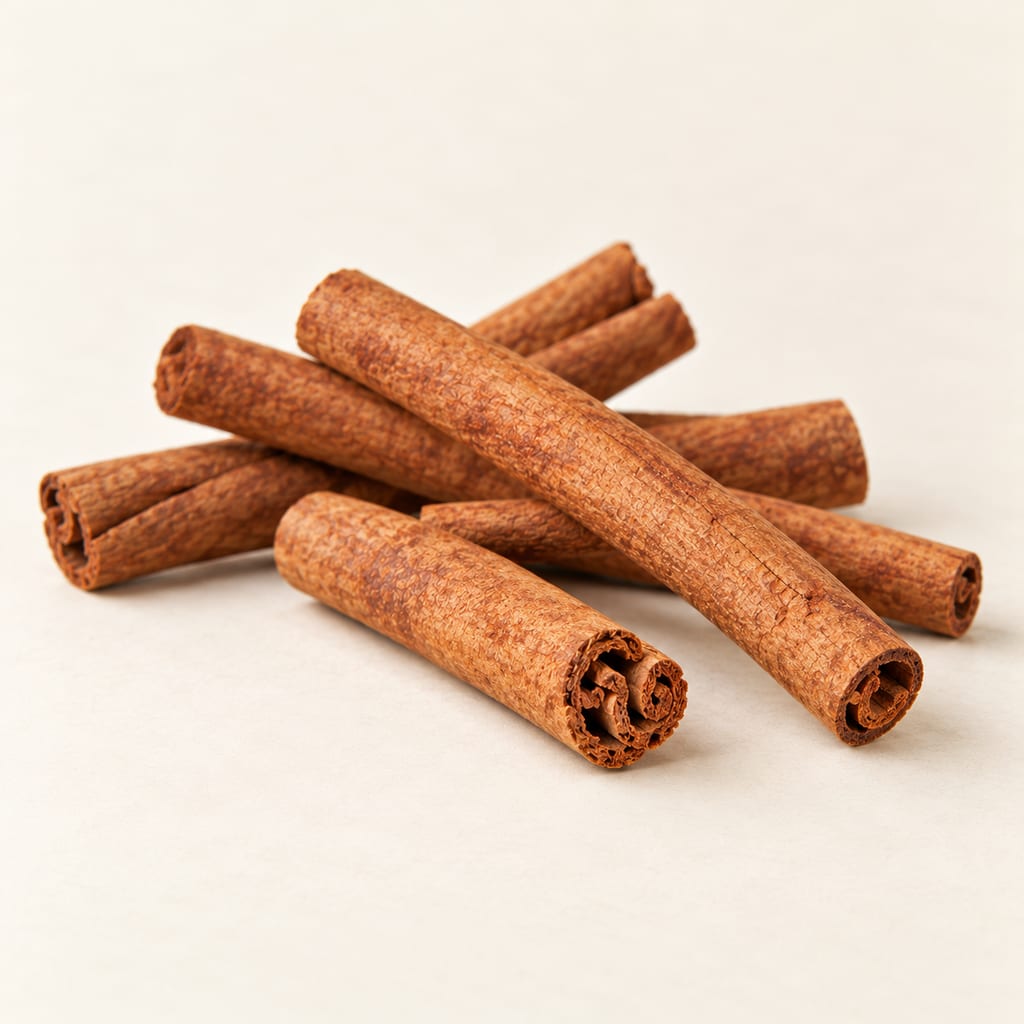
Cinnamon sticks are dried inner bark curled or layered into quills. The common name covers several Cinnamomum species; whole bark perfumes food and drink.
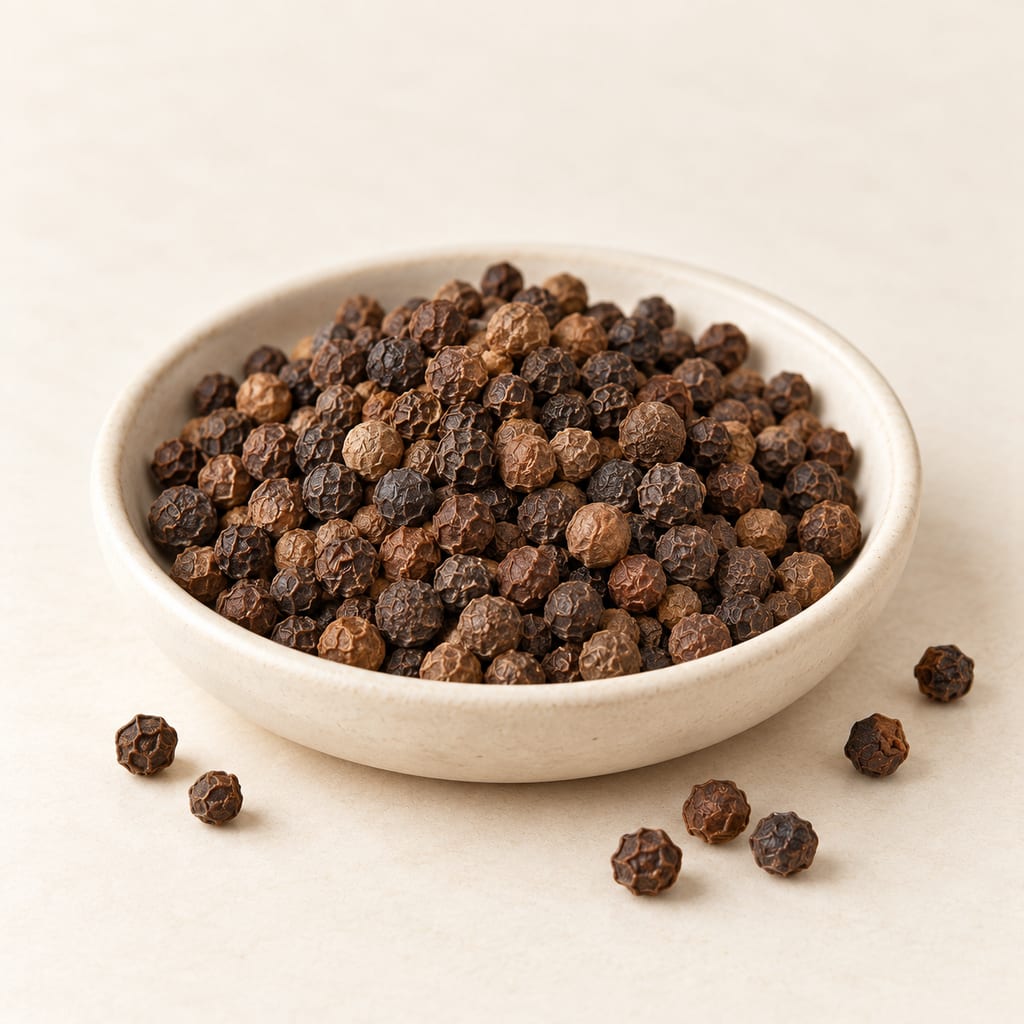
Black peppercorns are dried fruits of Piper nigrum, valued for piperine pungency and volatile aroma; whole peppercorns season Peter Kuruvita's lime pickle.
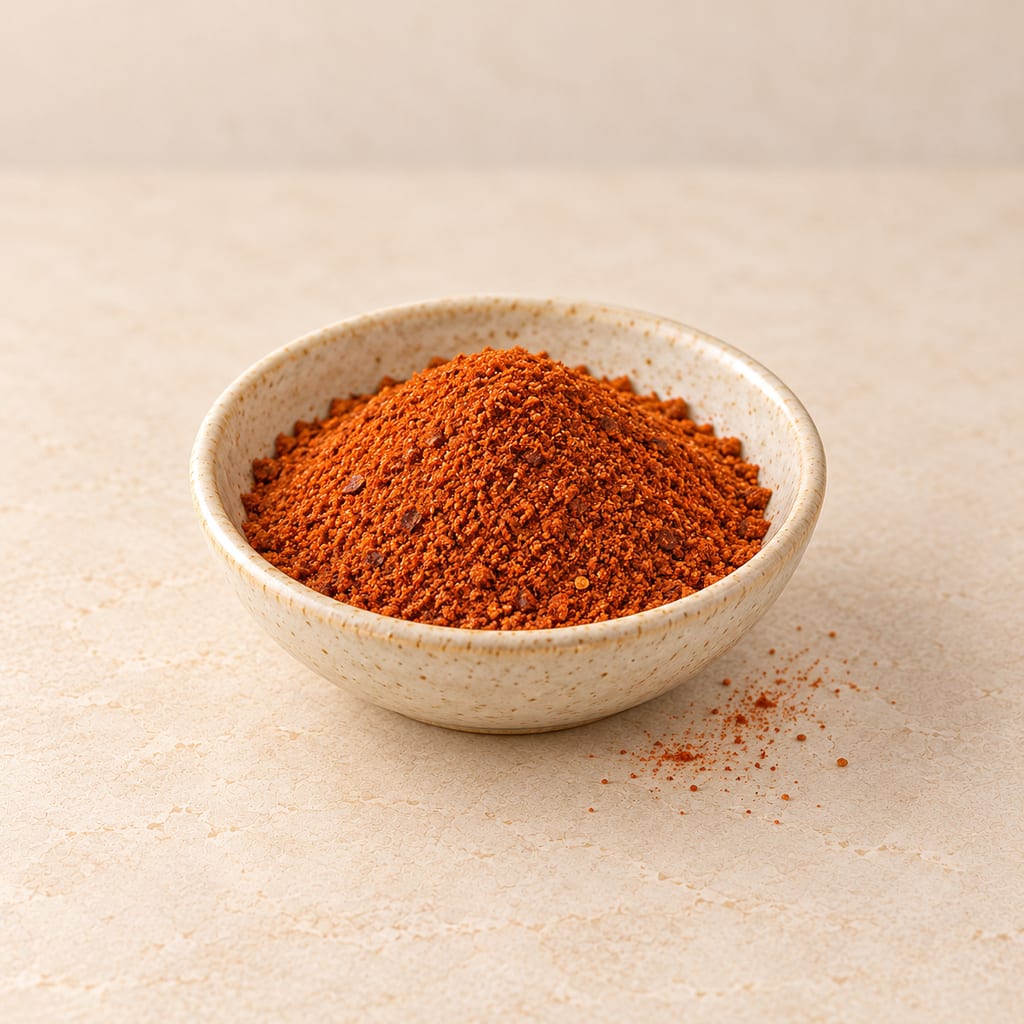
Chilli powder is dried chilli fruit ground fine, sold either as plain ground chillies or, in the United States, as a seasoning blend with salt, garlic and cumin.
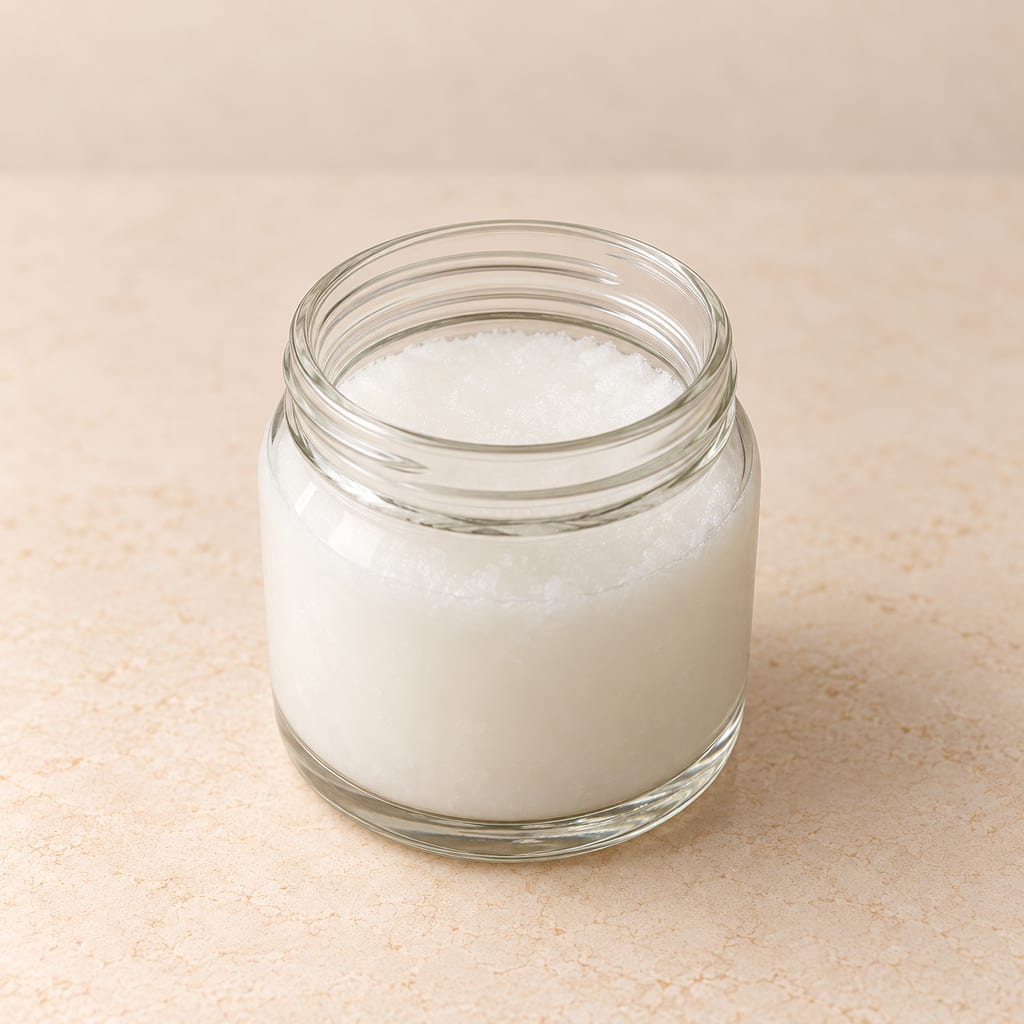
Fat pressed or separated from the kernel of a mature coconut: solid below about 25 °C, mostly saturated and half lauric acid, sold virgin, refined or hydrogenated.
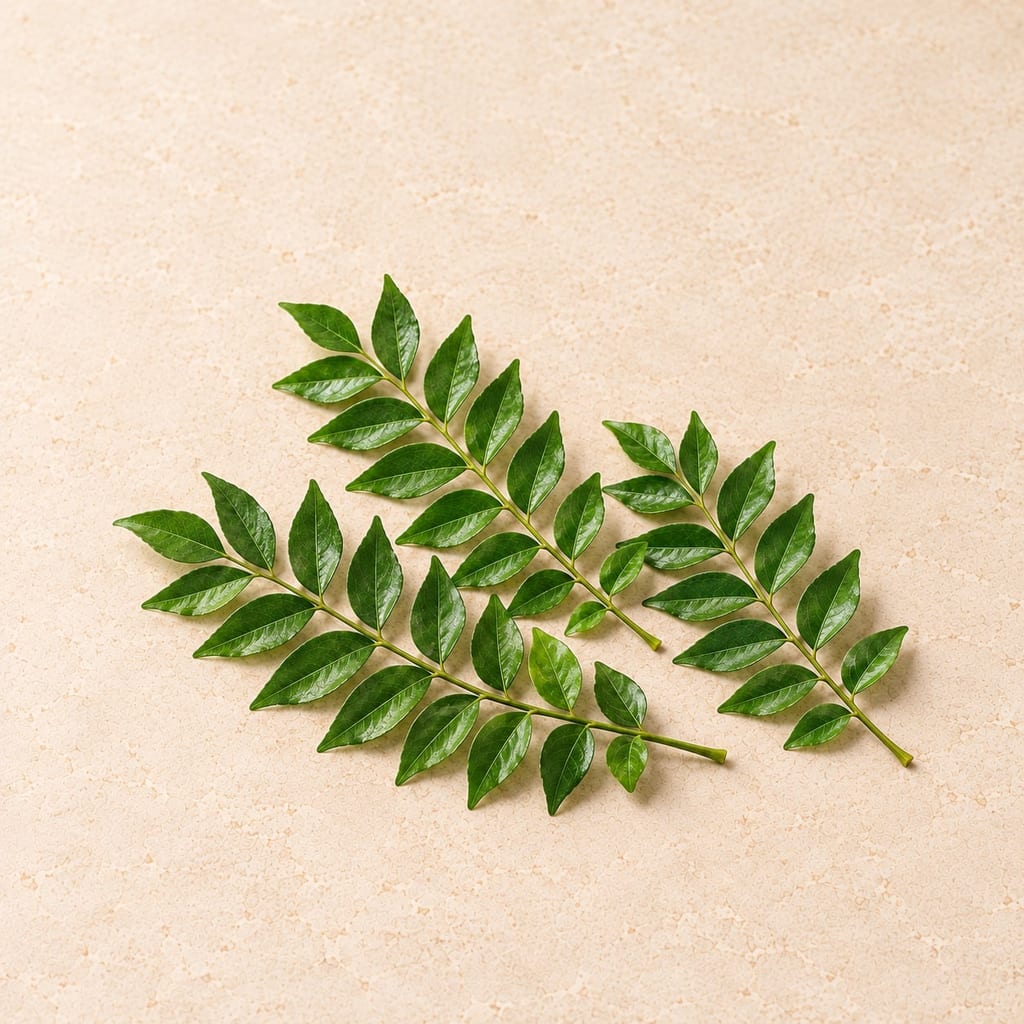
Curry leaves are the glossy compound leaves of the curry tree, Bergera koenigii, used fresh across southern India and Sri Lanka. Fried in hot oil they give a citrusy, nutty, faintly smoky note.
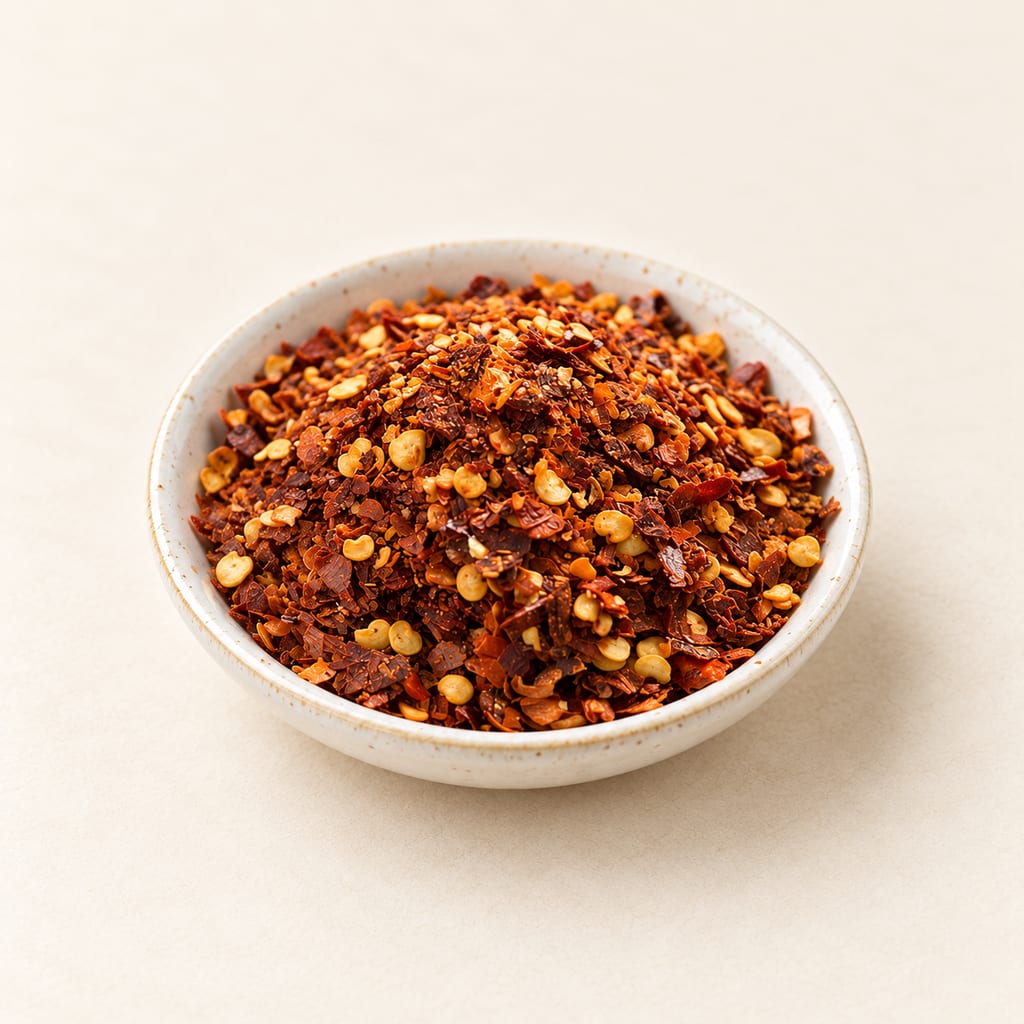
Dried chilli flakes are broken dried Capsicum fruit used for dispersed heat, colour and flavour; Peter Kuruvita's lime pickle includes one teaspoon.
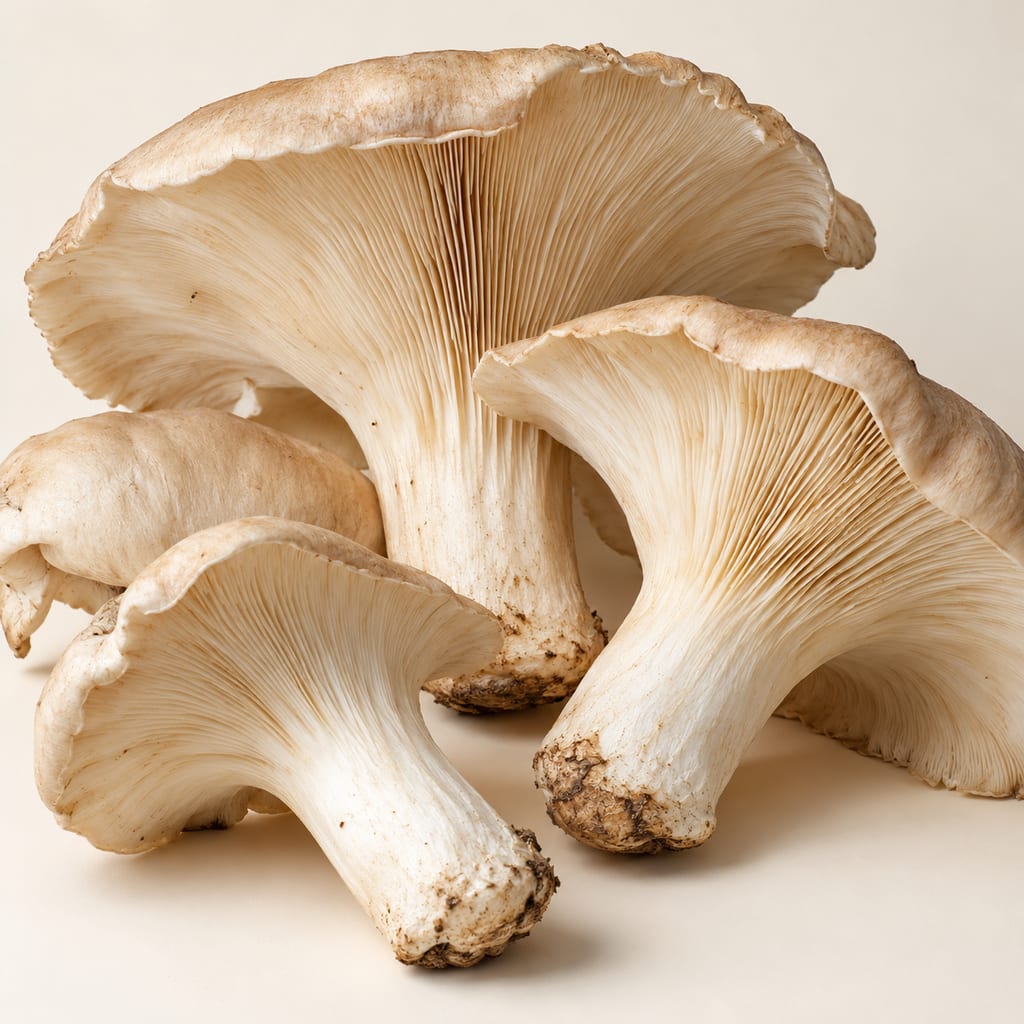
The giant oyster, Pleurotus giganteus, is a large tropical wild mushroom that was once named Lentinus giganteus and is now placed in the oyster genus, eaten in Thailand and Sri Lanka and only recently grown on purpose.
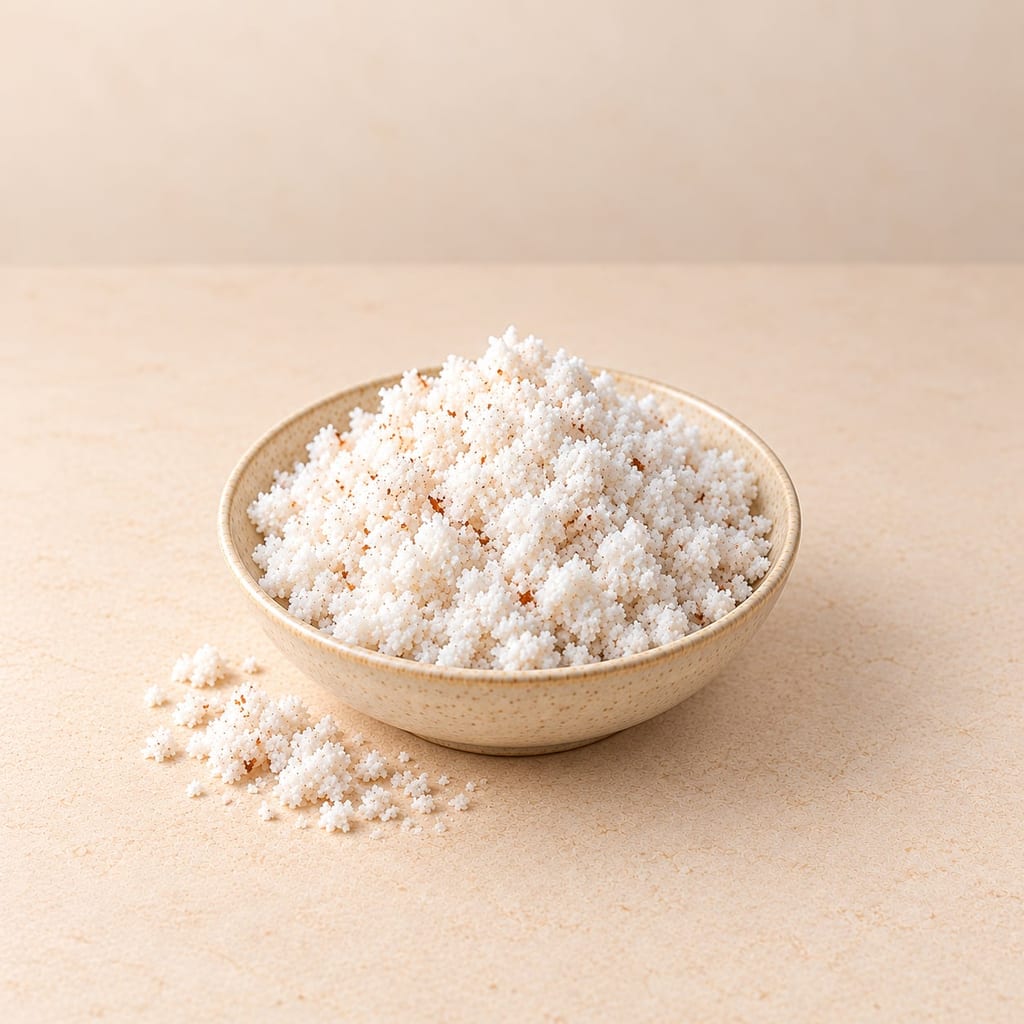
The shredded white kernel of a mature coconut, used fresh or thawed from frozen in sambols and chutneys; its lauric-acid fat is rich and the moist meat is perishable.
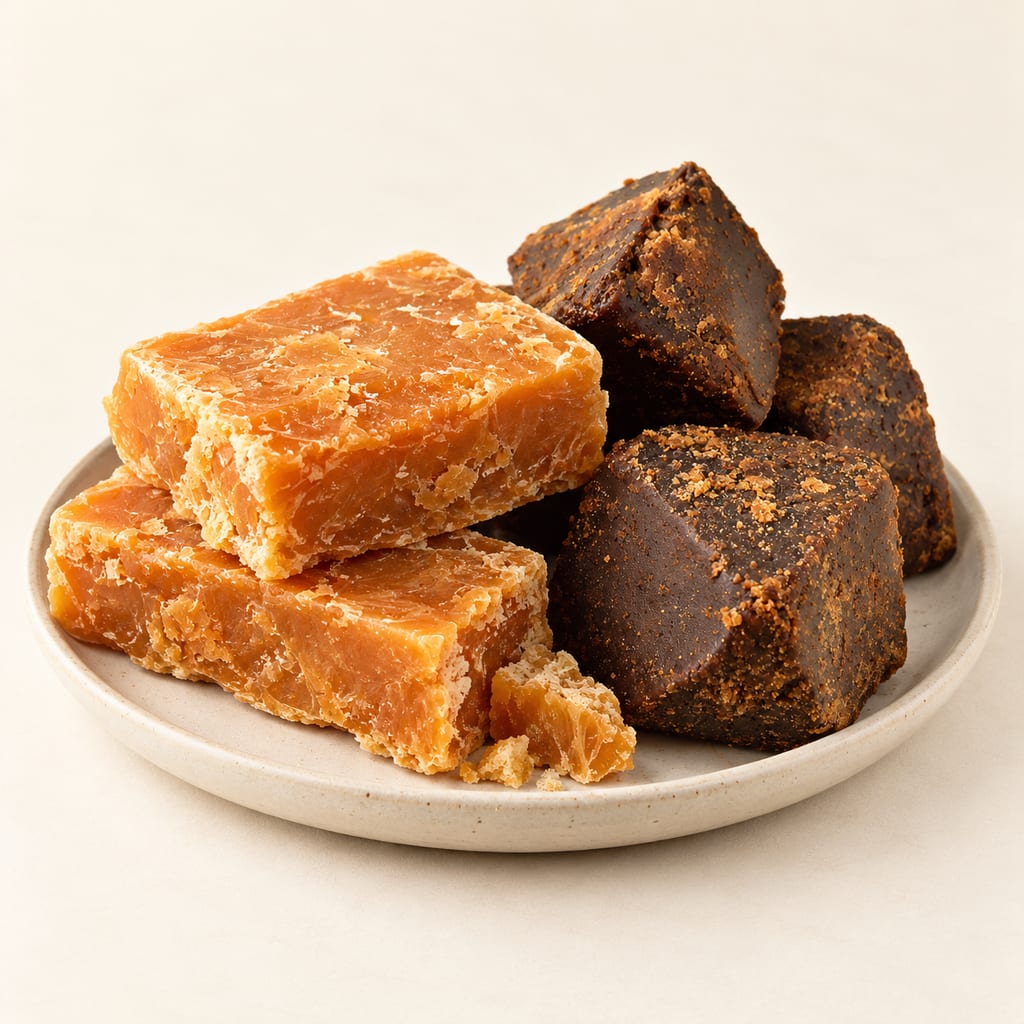
Jaggery is a family of concentrated, non-centrifugal sweeteners made from cane juice or palm sap. Plant source and form shape its flavour and use.
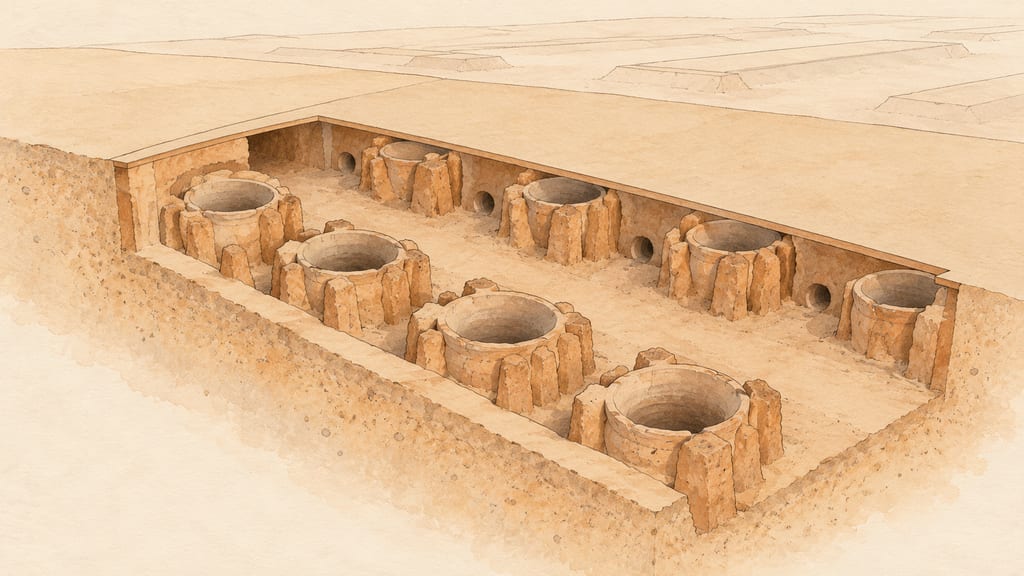
At North Abydos in Egypt, a fixed early Dynastic brewery comprised parallel semi-subterranean installations with rows of ceramic mash vats; excavation reports revise their number, scale and estimated batch capacity.
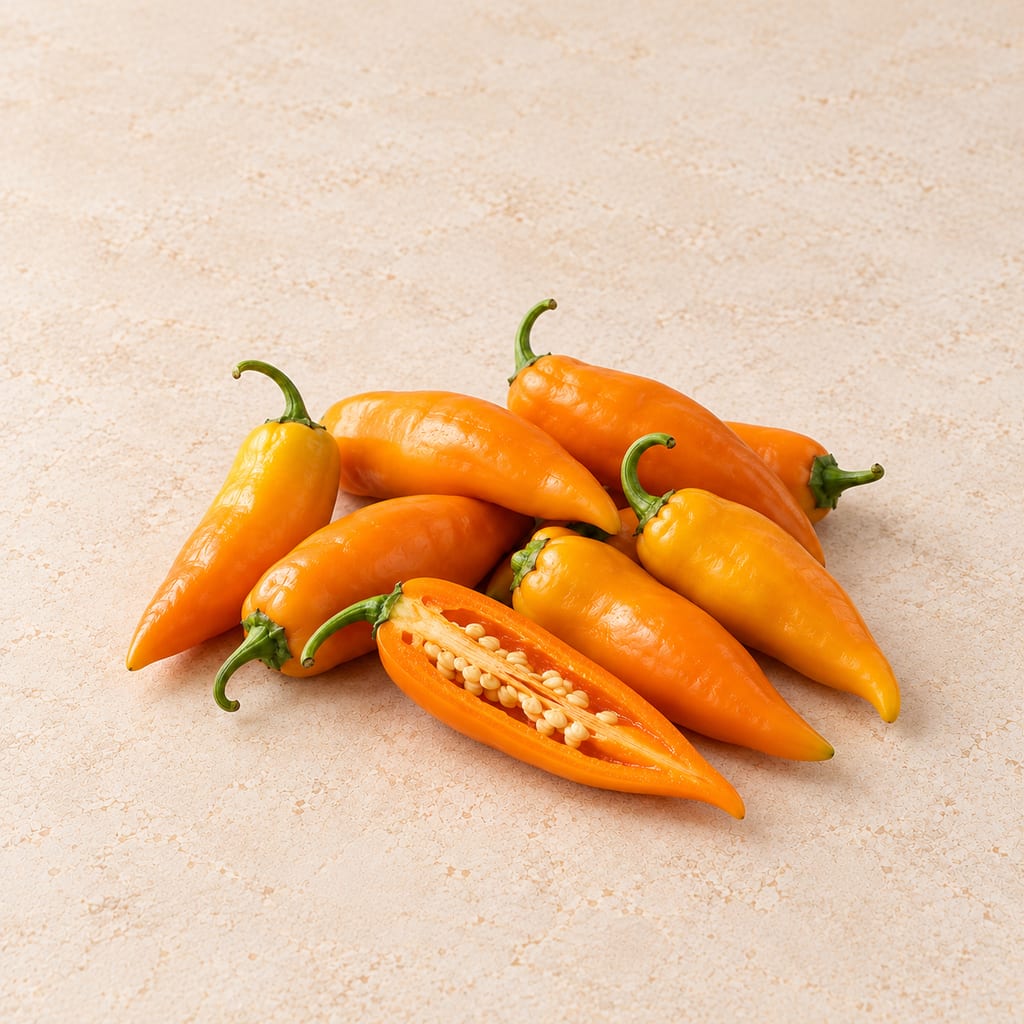
Ají amarillo is the orange-yellow Peruvian chilli cultivar group of Capsicum baccatum, used to colour and season huancaína sauce and ají de gallina. Published heat estimates do not establish one range for the named cultivar.

Toasted almonds are whole sweet almond kernels dry-roasted until golden to brown. Heat replaces their marzipan note with a roasted, nutty one; they thicken and flavour romesco.

Kodiak salmon, halibut and cod cut as seg'aq and hung on an initaq rack to become tamuuq, with kac'amaasaq and kupcuunaq named as different results.
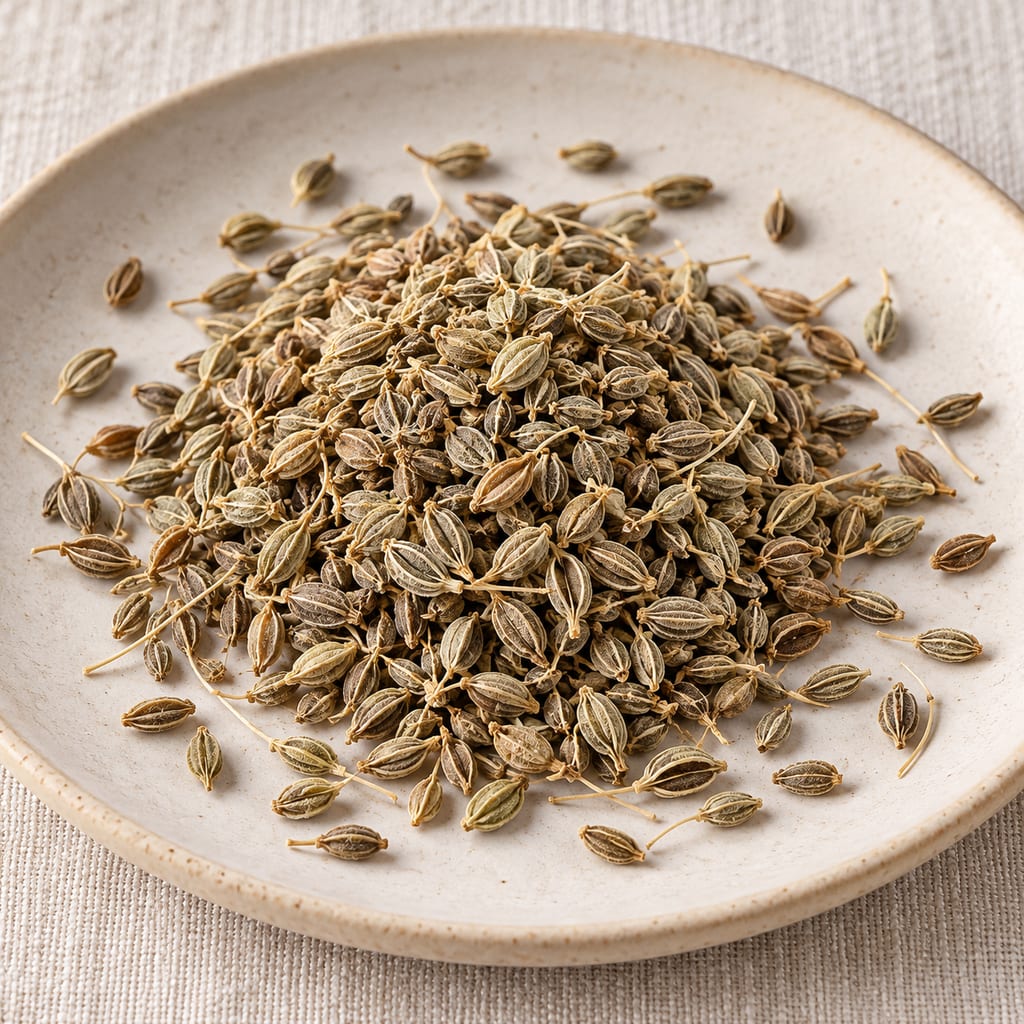
Aniseed is the dried ripe fruit of Pimpinella anisum, an aromatic Apiaceae spice commonly called a seed. It adds a sweet, warm aroma to breads such as Moroccan krachel and South African mosbolletjies, and is distinct from star anise.
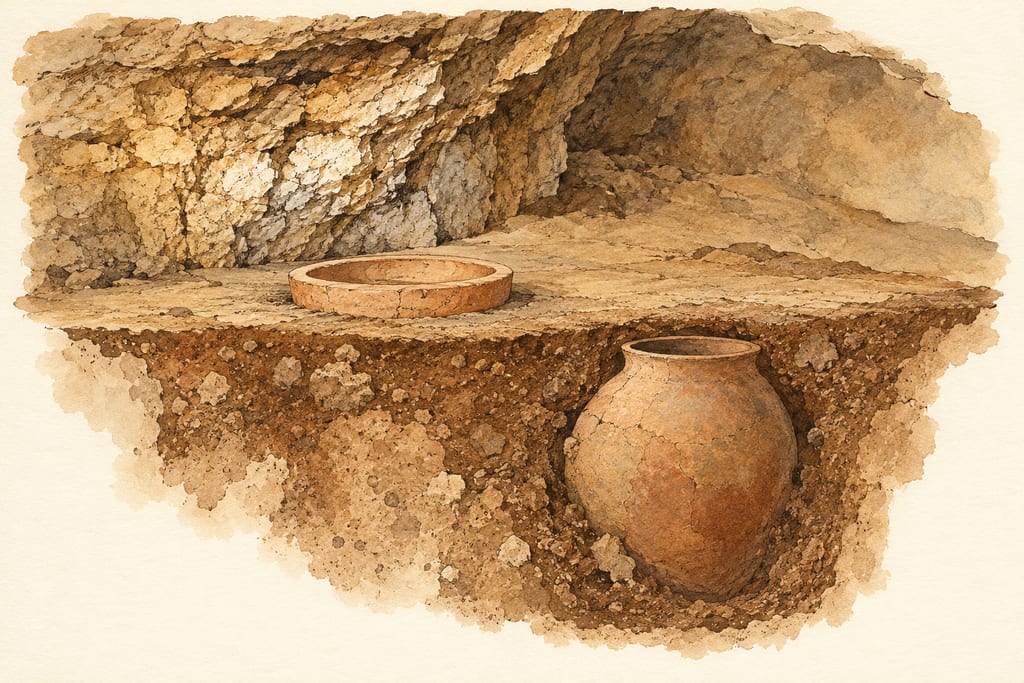
A fixed Late Chalcolithic installation in Areni-1 cave combined a shallow clay pressing basin with a large jar set into the cave floor and storage vessels nearby.

Ripe avocado flesh is the soft, buttery, fat-rich pulp of Persea americana, eaten raw. It is low in acid, so it is a fresh ingredient that needs care in chilled dishes.
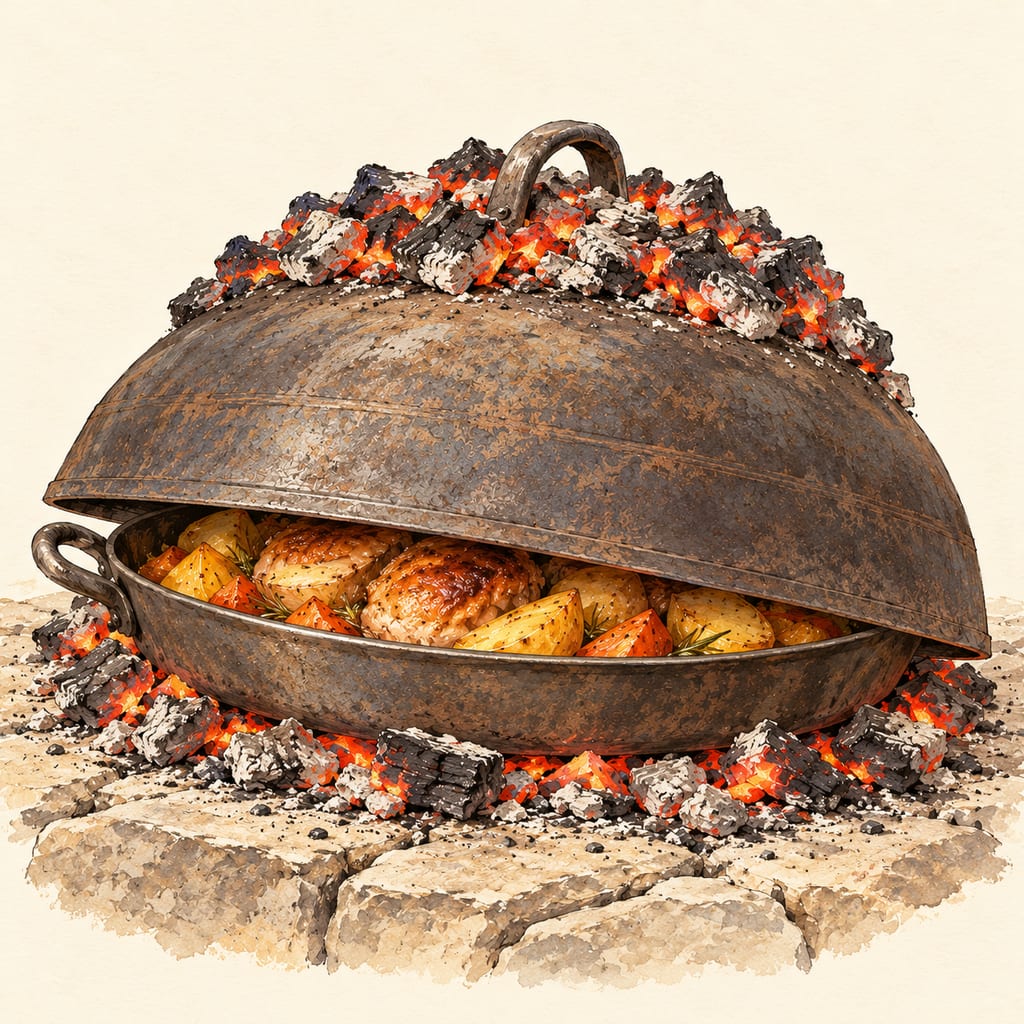
A portable dome and pan used over a hearth, with embers on the lid and heat from below. Regional peka and saç forms share this principle while differing in materials, pan shape and how the food is cooked.
No community contributions have been published for this entry yet.
Sign in to contribute. Published comments and photos are free to read.
Suryabinayak Municipality Agriculture Knowledge CenterUse
लप्सीThe municipal lapsi pickle lists cinnamon (dalchini) with cloves, cardamom and sukumel in a four-spice line, cooked with ripe lapsi pulp and sugar syrup.
Cited in: In sweet and savoury cooking
Royal Botanic Gardens, Kew, Plants of the World OnlineIdentity
Cinnamomum verum J.PreslCinnamomum verum is the accepted name, family Lauraceae, native to Sri Lanka; C. zeylanicum is a synonym.
Cited in: The bark of a laurel; True cinnamon, cassia and the names between them
U.S. Food and Drug AdministrationIdentity · Quality
Compliance Policy Guide Sec. 525.750: Spices - DefinitionsCinnamon is the dried bark of several Cinnamomum species traded as C. zeylanicum (Ceylon), C. cassia (Chinese), C. loureirii (Saigon) and C. burmanni (Padang or Batavia); cinnamaldehyde gives the characteristic odour; volatile oil is a quality measure.
Cited in: The bark of a laurel; True cinnamon, cassia and the names between them; Why bark smells the way it does; Choosing and keeping cinnamon
PROSEA Foundation (Flach and Siemonsma, 1999)Identity · Method · History
Cinnamomum verum J.S. PreslWild populations in south-west India, western Sri Lanka and the Tenasserim Hills of Myanmar; coppiced bush; harvest in the wet season when bark separates, in Sri Lanka peaking in May to June and October to November; thin later bark is better than the first thick bark; some processors wrap peeled strips overnight for slight fermentation to loosen the outer bark; shift from wild stands to cultivation about 1770, Seychelles 1771, Java 1825.
Cited in: True cinnamon, cassia and the names between them; A spice that built empires; The tree and where it grows; From shoot to quill; Why bark smells the way it does; In sweet and savoury cooking
Ceylon Historical and Social Studies Publication BoardHistory
Trade in Ceylon Cinnamon in the Sixteenth CenturyAround 1500 cinnamon grew chiefly in the wet zone of Ceylon under the king of Kotte; it was shipped to Aden, Hormuz and ports in Gujarat, Bengal and the Coromandel coast, and across the Malabar coast at Calicut; evidence of a Crown monopoly before the Portuguese is not conclusive; ancient references to cinnamon do not always identify the plant.
Cited in: A spice that built empires
Department of Cinnamon Development, Government of Sri LankaHistory
HistoryCinnamon was collected from the wild before Dutch cultivation experiments in Colombo between 1765 and 1785, followed by plantations.
Cited in: A spice that built empires
Department of Cinnamon Development, Government of Sri LankaMethod
Post Harvest TechnologyFirst harvest two to three years after planting; shoots picked when new leaves have turned green, timing varying by agroecological zone; scraping, rubbing to loosen, peeling with a knife, layering strips into quills and shade drying; grading by quill diameter and by defects such as foxing; quillings, featherings and chips are lower grades.
Cited in: From shoot to quill
German Federal Institute for Risk Assessment (BfR)Safety
FAQ on coumarin in cinnamon and other foodsCassia cinnamon generally contains much more coumarin than Ceylon cinnamon; coumarin can cause reversible liver effects in sensitive people at relatively small amounts; moderation is advised for cassia.
Cited in: Why bark smells the way it does
Royal Botanic Gardens, KewMethod · Use
Cinnamon - Cinnamomum verumBark harvest and quill production; use in sweet and savoury cooking and in regional dishes.
Cited in: The bark of a laurel; From shoot to quill; In sweet and savoury cooking
International Centre for Integrated Mountain Development (ICIMOD)Identity
Non-Timber Forest Products of Nepal: Cinnamomum tamalaIn Nepal Cinnamomum tamala is called Nepalese cinnamon: its leaf is tejpat or sinkauli and its bark dalchini.
Cited in: True cinnamon, cassia and the names between them
Government of NepalIdentity
Proceedings of a National Workshop on Working Crop Groups, KathmanduA crop table lists Cinnamomum zeylanicum as dalchini and C. tamala separately under cinnamon and bay-leaf names.
Cited in: True cinnamon, cassia and the names between them
National Center for Complementary and Integrative Health (NIH)Safety
Cinnamon: Usefulness and SafetyLabels may omit the species and plant part, which makes product identity unclear; evidence does not support cinnamon as a treatment for disease.
Cited in: Choosing and keeping cinnamon
Iowa State University Extension and OutreachStorage
Herbs and Spices Have an Expiration DateSpices lose flavour and potency rather than spoil; ground cinnamon about 2 to 3 years, whole cinnamon about 4 to 5 years; fresh test: strong aroma, potent flavour, vibrant colour.
Cited in: Choosing and keeping cinnamon