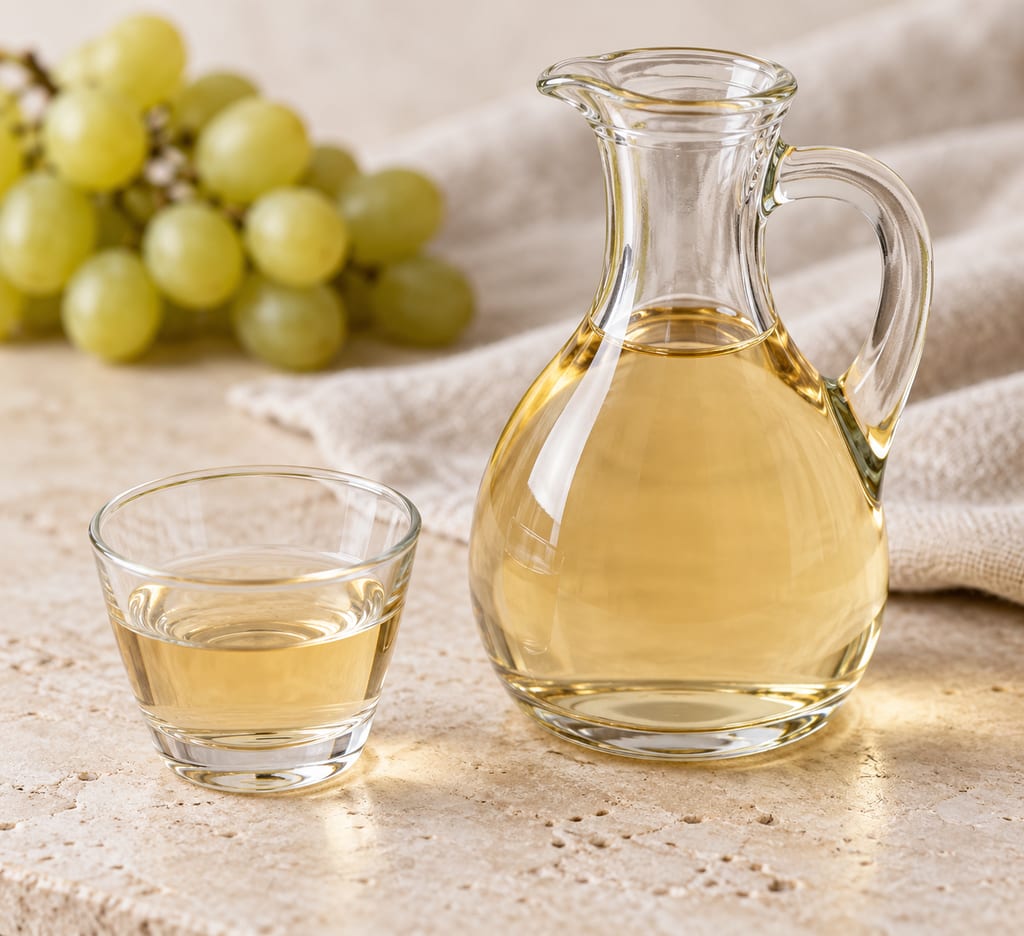
White-wine vinegar
White-wine vinegar is made when acetic acid bacteria oxidise the alcohol in finished white grape wine, yielding a pale, wine-derived souring condiment for dressings, sauces and cooking.
 FermenteaWhere food goes to change
Modern method
Pumpkin simmered with 5% vinegar, sugar, cinnamon, cardamom and cloves, then chilled. A sweet-sour pickle for the refrigerator.
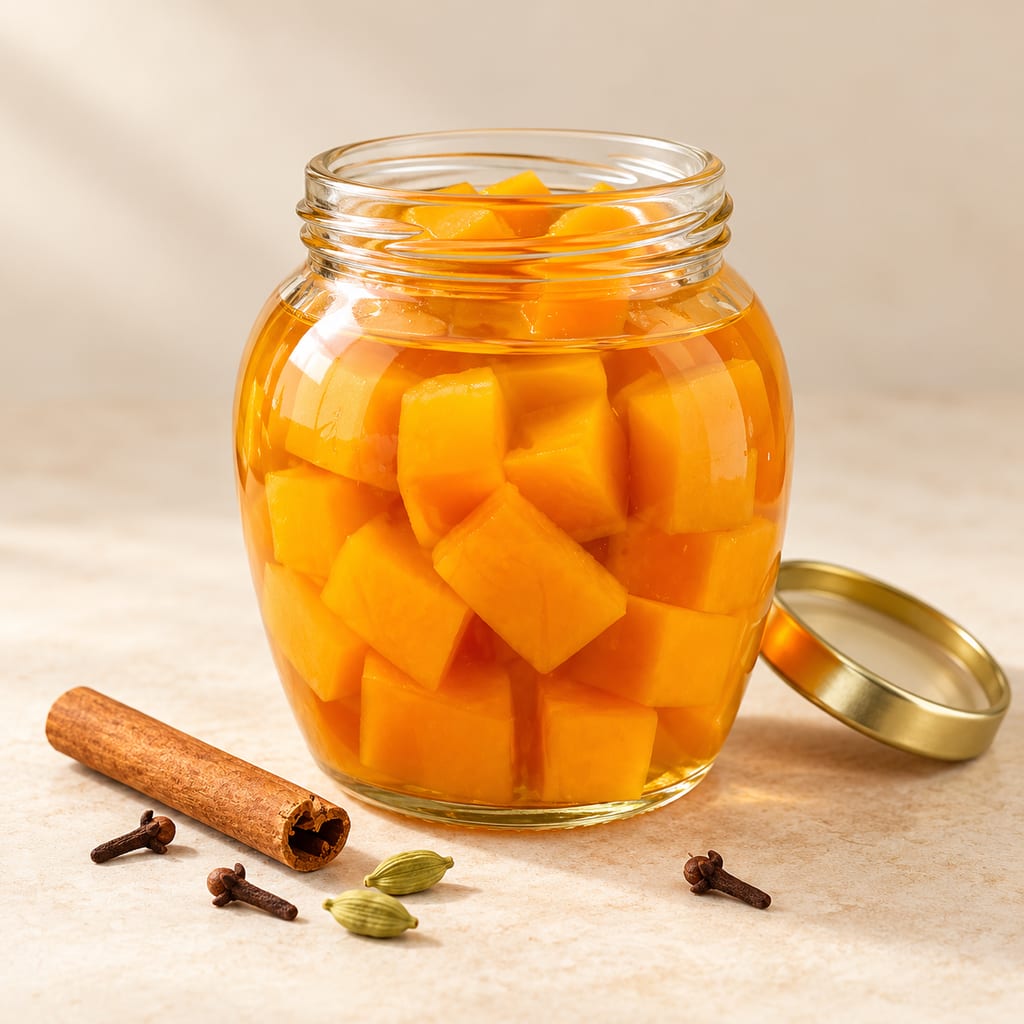
Pumpkin pickles sit alongside meat dishes and festive meals in northern European kitchens. Estonian family accounts place yellow pumpkin pieces beside Christmas black pudding. The formula here is a modern version with ordinary 5% vinegar and cardamom, rather than the concentrated vinegar in some Estonian recipes.
Keep the measured batch together: 500 g pumpkin, 500 ml water and 150 ml vinegar labelled 5% acidity. Whole spices flavor the liquid, and simmering controls the tenderness of the pieces. The optional cold soak takes place in the refrigerator.
A hot-filled jar remains a refrigerator pickle. Keep it cold during flavor development and after serving. This recipe is not a basis for water-bath canning. Use the general cooked-leftover limit of 3–4 days here rather than claiming a tested long refrigerator life.
The sourness comes from measured vinegar added at the start. There is no room-temperature fermentation stage, starter culture or waiting period for bacteria to create the acid. The two or three days of cold resting are for flavor. Do not move the jar to the counter to accelerate that rest.
Using a vinegar bottle labelled with its acidity makes the ingredient clear. Homemade vinegar with an unknown strength is not an equivalent measured input. Even the specified vinegar does not turn this into a tested canning recipe: formulation, processing and storage are separate questions. Make a batch for near-term eating, and keep the liquid and pieces refrigerated together.
The storage instruction belongs to this formulation. Ball’s sweet pumpkin pickles and Bernardin’s pumpkin–pineapple compote have their own published boiling-water processes, with specified ingredient proportions, piece sizes, jars and processing schedules. Those recipes do not provide a canning method for this preparation. Keep this version chilled or frozen as directed.
A modern refrigerator-pickle formula connected to the sweet-sour pumpkin tradition documented in Estonian Christmas cooking.
Scaling: source batch only
Keep refrigerated at all times; hot filling does not make pumpkin pickles shelf-stable.
Hazard sourceKeep refrigerated at all times; hot filling does not make pumpkin pickles shelf-stable.
Control sourceKeep refrigerated at all times; hot filling does not make pumpkin pickles shelf-stable.
The selected method does not establish its geographical origin.
White-wine vinegar is made when acetic acid bacteria oxidise the alcohol in finished white grape wine, yielding a pale, wine-derived souring condiment for dressings, sauces and cooking.
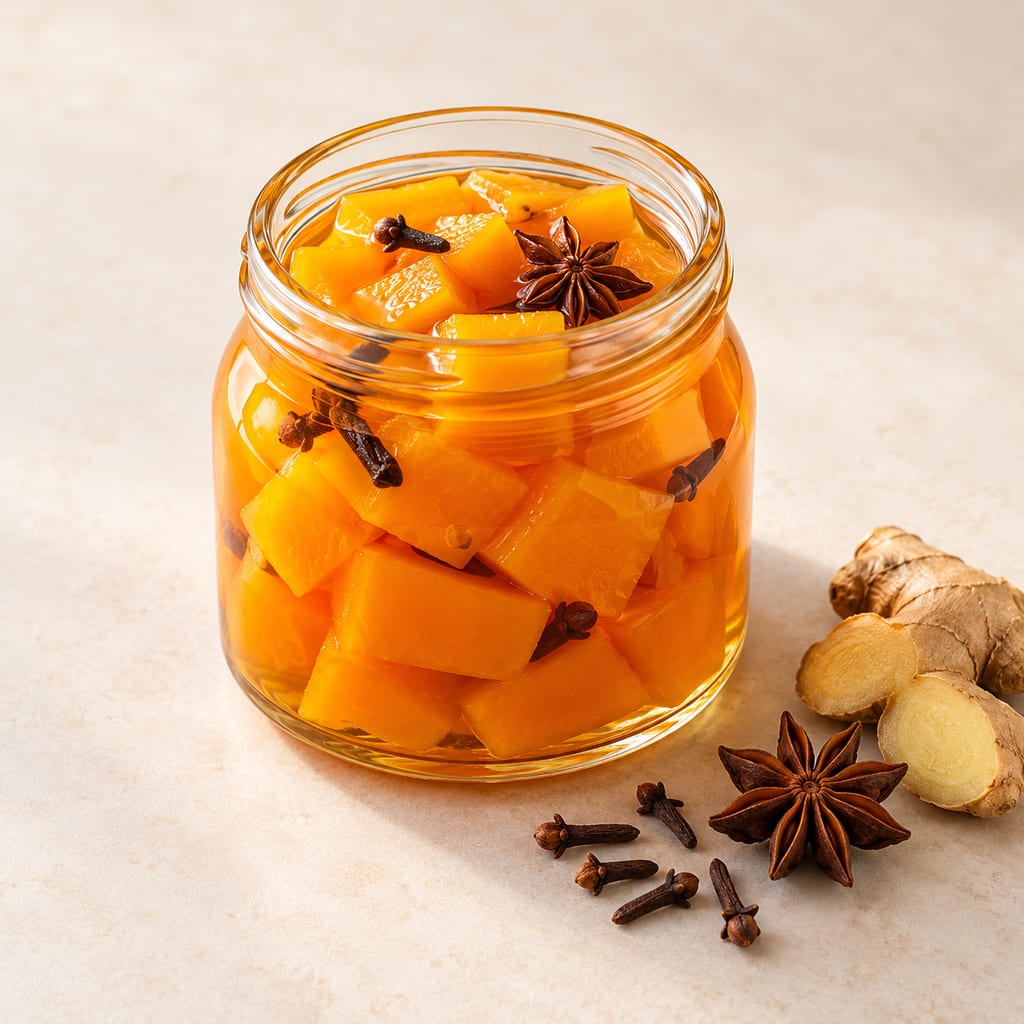
Marineeritud kõrvits: Freeze for winter; small fresh portion refrigerated up to 48 hours.
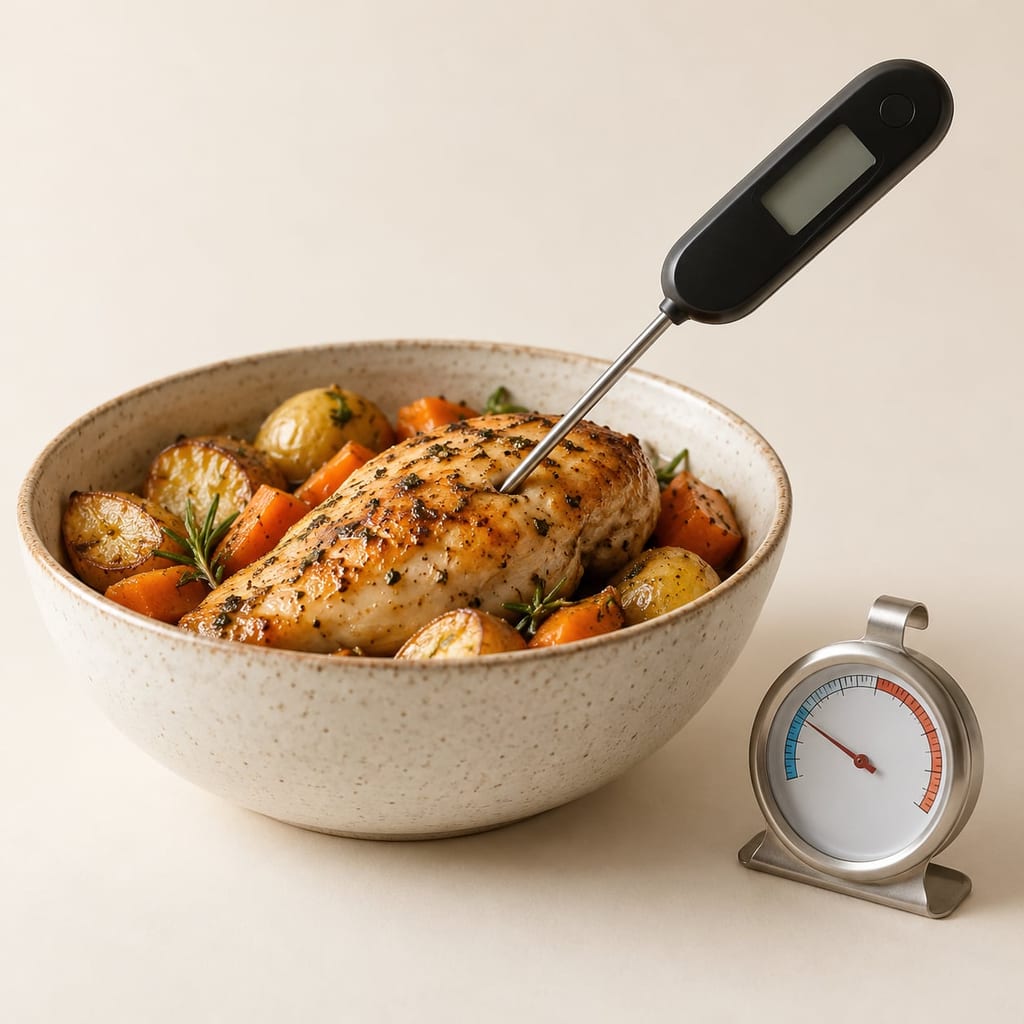
A food probe measures the temperature inside food at the probe tip; a refrigerator thermometer measures the cold storage environment. They answer different questions and cannot establish acidity or validate a preservation process.
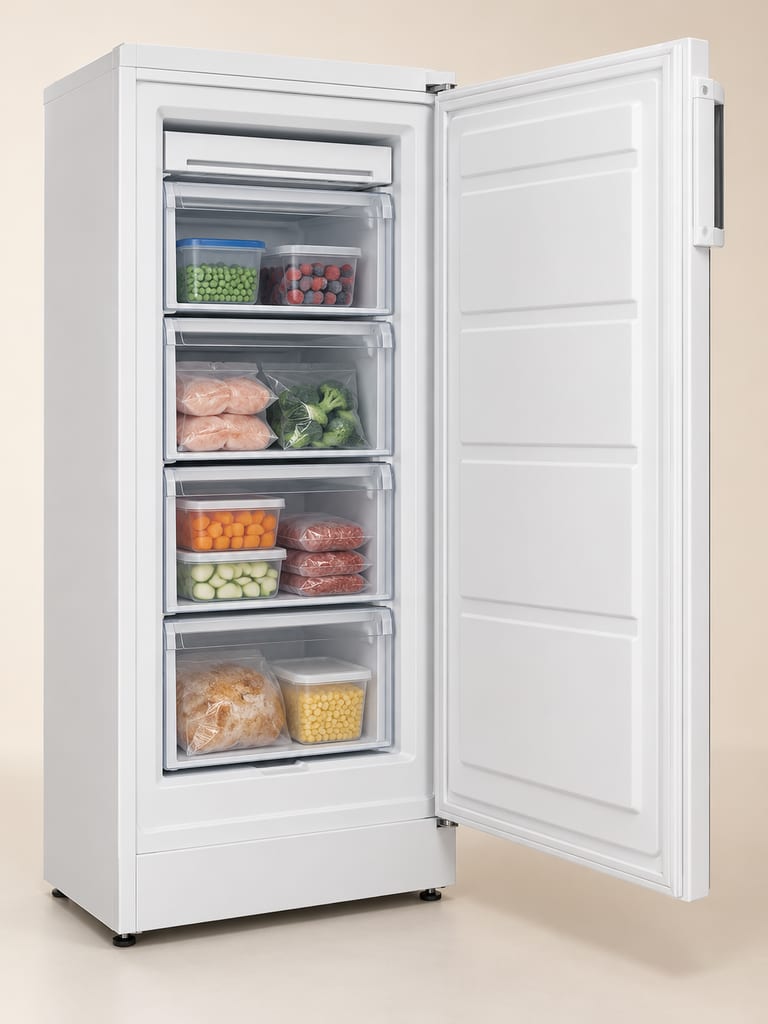
A household freezer holds food in a frozen state for storage and selected texture or separation work; its batch-storage role differs from industrial equipment that freezes individual pieces separately.
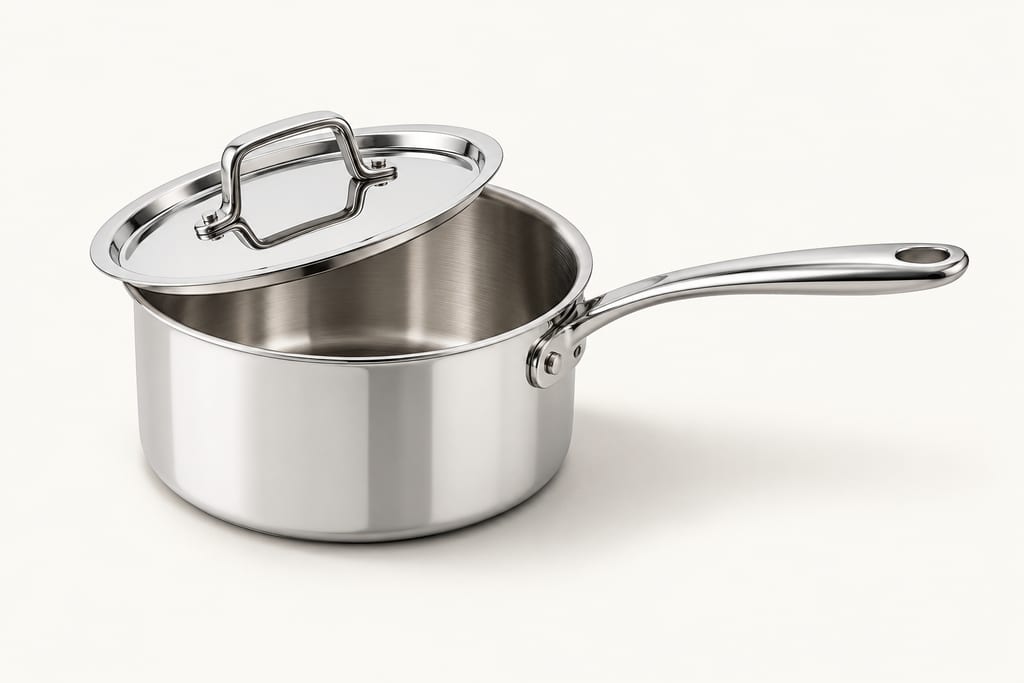
A modern, portable stovetop pan with a stainless-steel cooking surface for sauces and other small simmering jobs. Size, cladding, lid, compatibility and care vary by model.
An ordinary household refrigerator used to store selected fresh produce in vented crates or drawers, at low temperature and at a humidity chosen by the drawer. Not every crop benefits from cold.
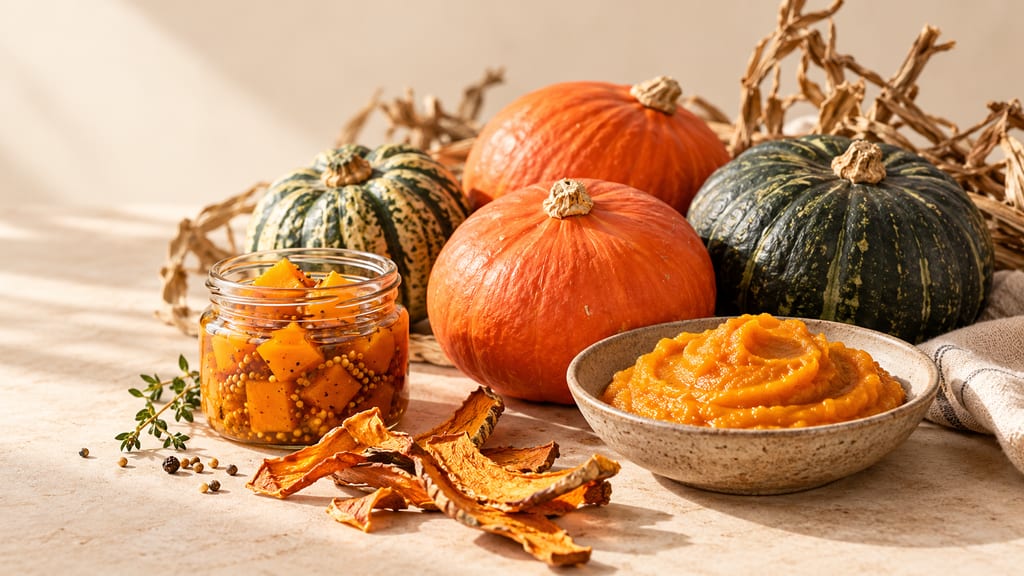
A full harvest-to-pantry guide to keeping pumpkins whole, drying and freezing them, and making pickles and sweet preserves around the world—with the exact distinction between tested canning and cold storage.
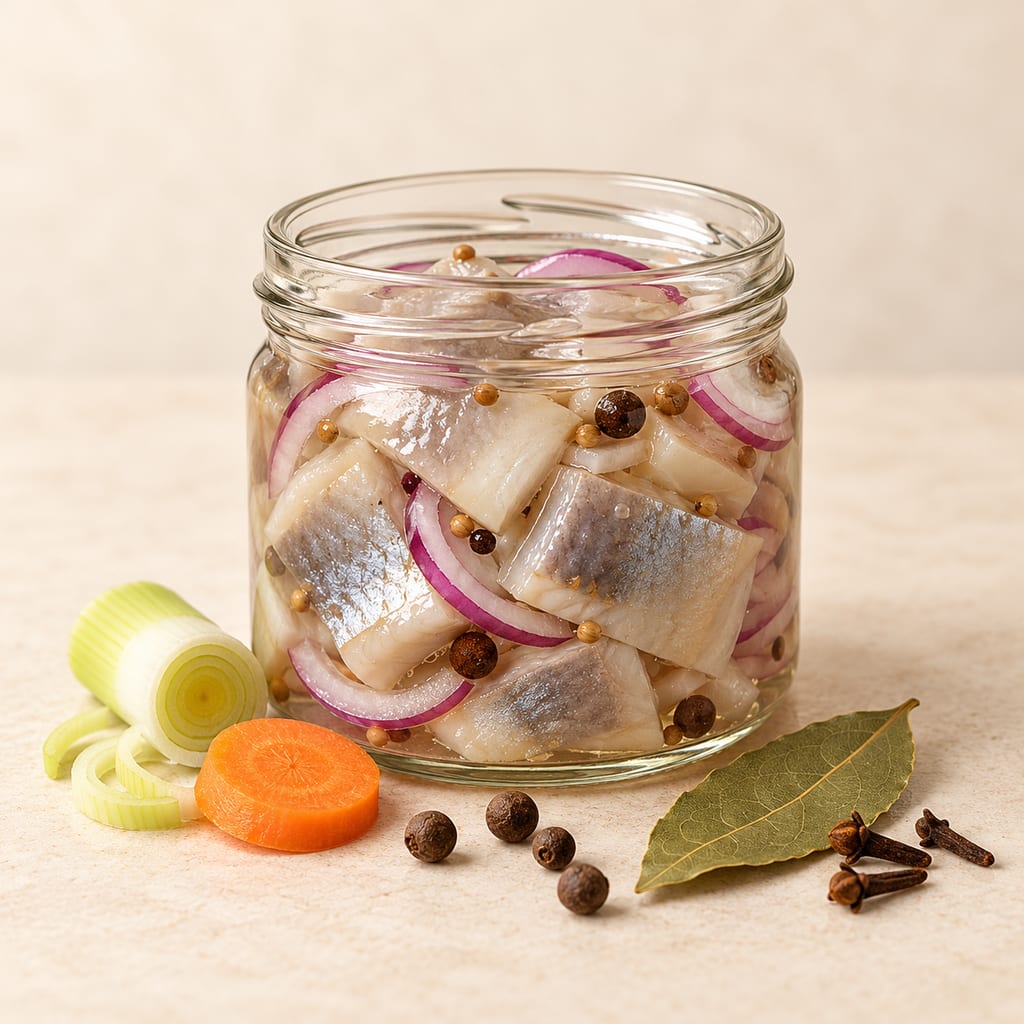
A Swedish ready-to-dress herring preparation: add the classic sliced aromatics and spices to already prepared herring, then serve or chill for fuller flavour.

Achcharu is a family of Sri Lankan vinegar pickles made with mixed vegetables or seasonal fruit and a piquant spice dressing. This version is a quick, refrigerated, non-fermented mixed-vegetable pickle.
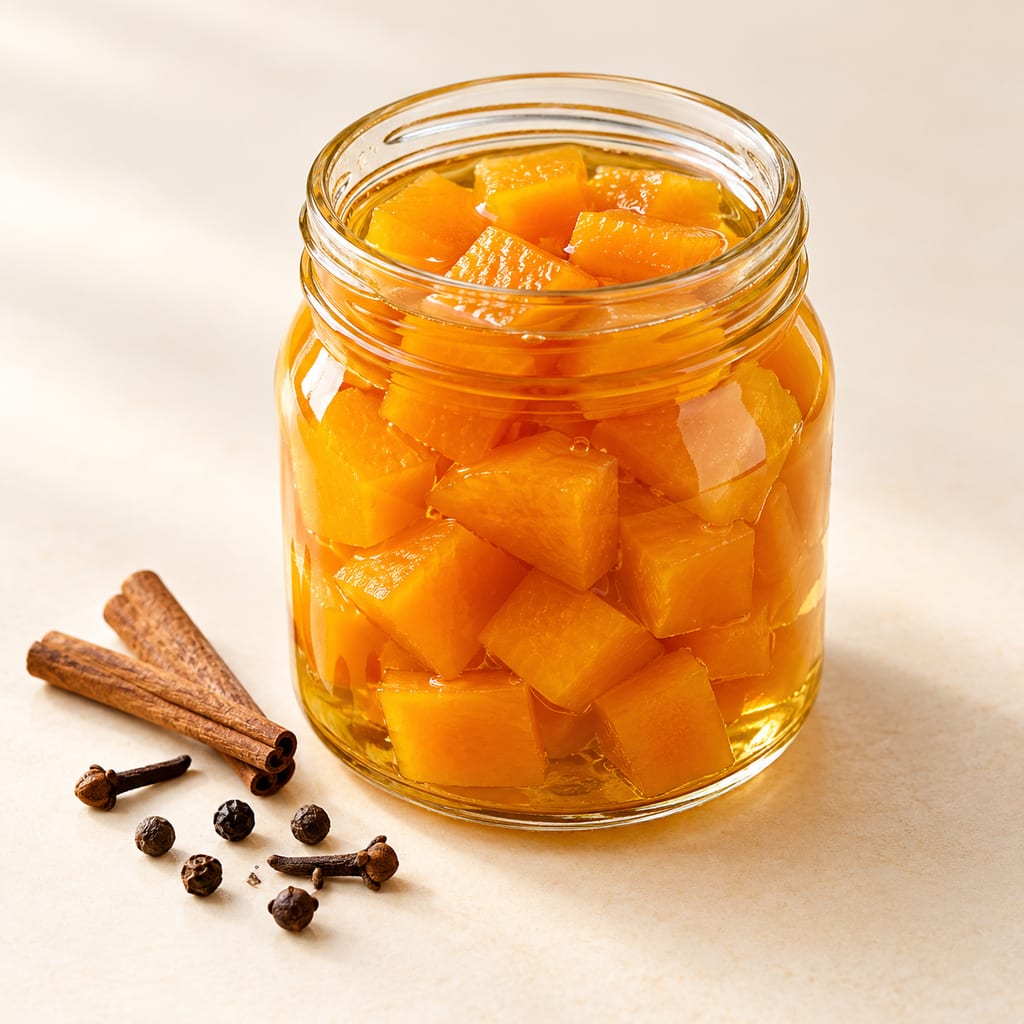
Ball sweet pumpkin pickles: Cupboard: exact published Ball formulation and water-bath process.
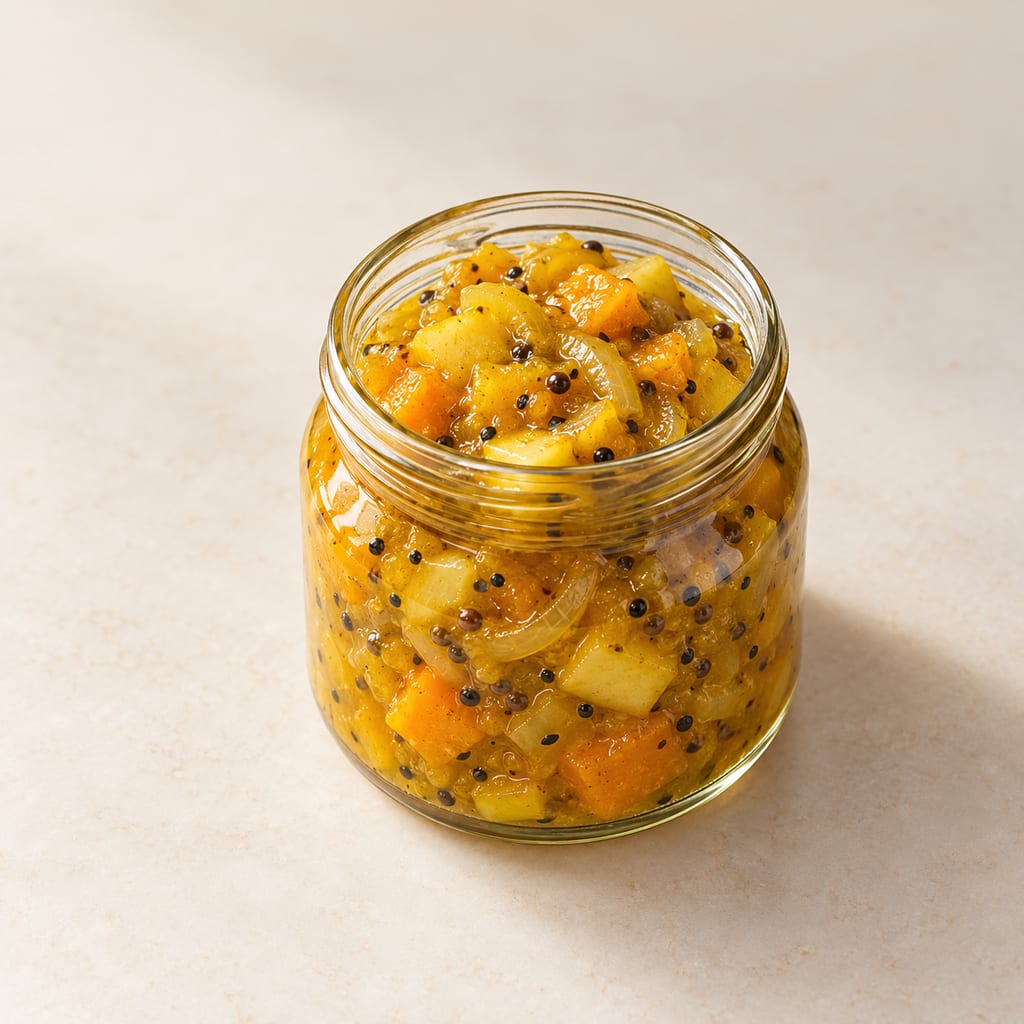
British pumpkin, apple and mustard pickle: Freeze for winter; small fresh portion refrigerated up to 48 hours.
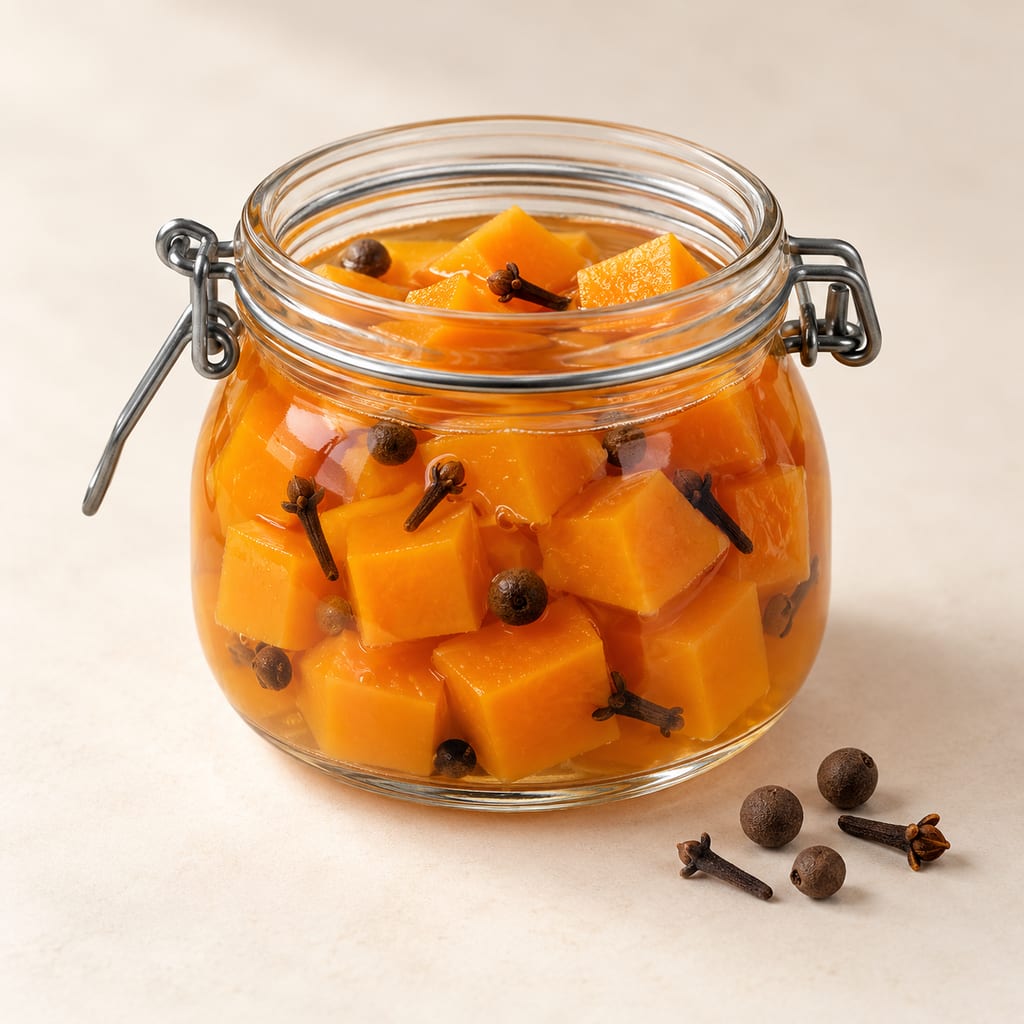
Dynia marynowana: Freeze for winter; small fresh portion refrigerated up to 48 hours.
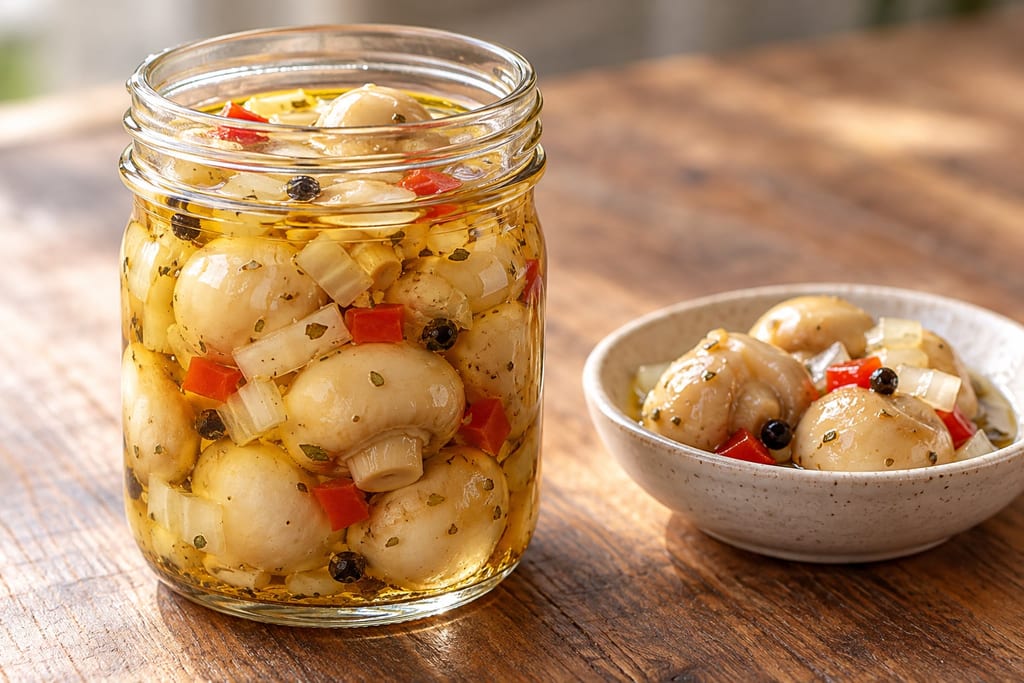
Small edible mushrooms are briefly cooked and packed in a seasoned vinegar marinade, a sweet-sour preserve served cold in Poland and neighbouring cuisines.

Fried or cooked food covered in a vinegar-based preparation, the heat and the externally supplied acid working together; a family of methods whose early form is a Roman instruction for treating fried fish with hot vinegar.
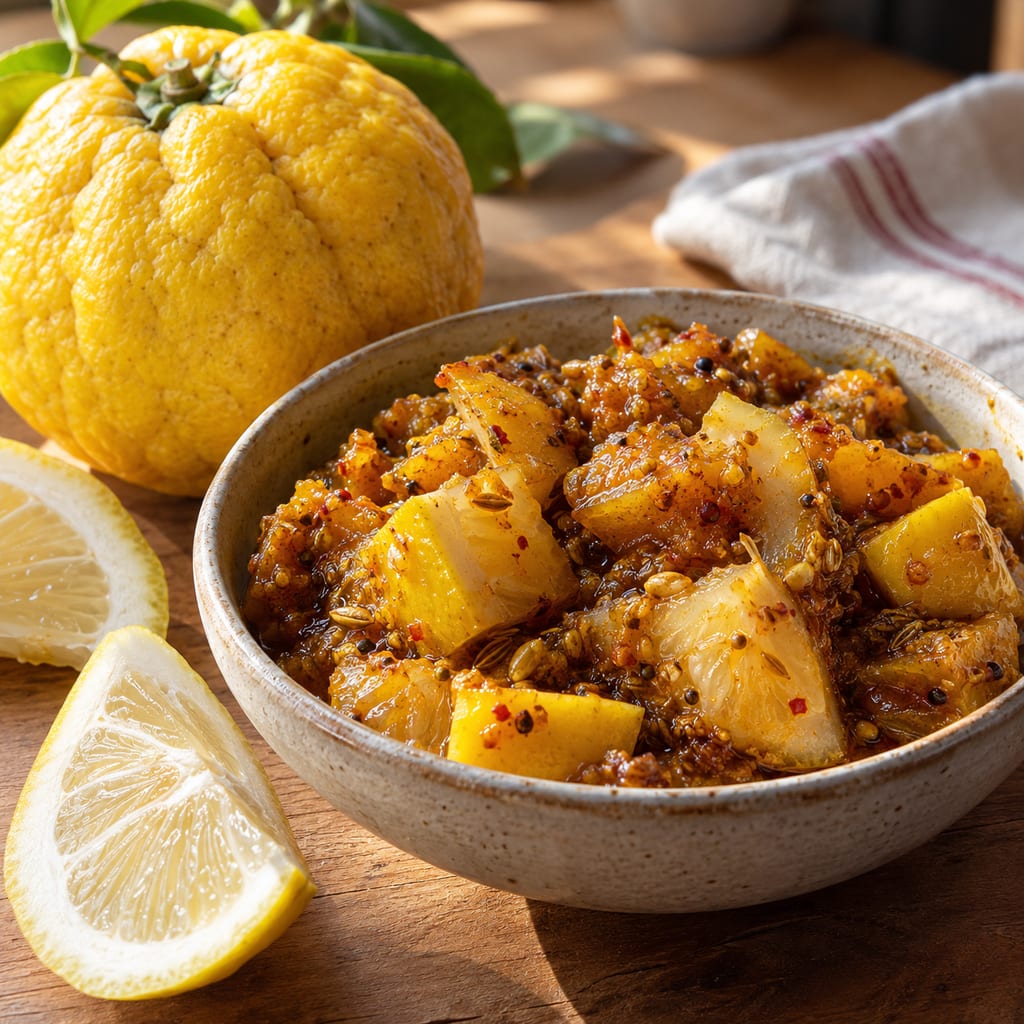
Ripe Himalayan galgal is boiled, sun-dried and cooked with mustard oil, spices and jaggery before a further rest in a ceramic jar.
No community contributions have been published for this entry yet.
Sign in to contribute. Published comments and photos are free to read.
Happy Foods Tube / JuliaMethod
Pickled PumpkinMetric formulation, 5% vinegar, simmering, refrigerated flavor development. No canning claim adopted.
Cited in: Sweet-sour pumpkin at the table; Keep one formulation; Acid added rather than fermented
Nami-Nami / PilleMethod · Safety
Estonian Christmas Recipes: Pickled PumpkinEstonian Christmas use; one-kilogram batch with 30% vinegar, spices and sugar; translucent endpoint.
Cited in: Sweet-sour pumpkin at the table
University of California Master Food Preserver ProgramMethod · Safety
PumpkinsPumpkin is low acid; no tested home-canning process for purée, butter or pumpkin pickles. Steam blanch thin strips for three minutes; dry until brittle.
Cited in: The refrigerator is part of the method; Acid added rather than fermented
USDA Food Safety and Inspection ServiceSafety
How do I handle leftovers safely?General cooked-leftover rule: refrigerate promptly in shallow containers, use within 3–4 days or freeze; not a pumpkin-specific shelf-life validation.
Cited in: Acid added rather than fermented
US Food and Drug AdministrationSafety
Are You Storing Food Safely?Cold storage temperatures; freezing suppresses growth rather than killing most bacteria; prompt refrigeration.
www.bernardin.caMethod · Context · Handling
Bernardin: Pumpkin Pineapple Autumn Glory CompoteDocumented preparation, regional context or preservation handling, with the limits stated in the text.
Cited in: Choosing the right preservation route
ucanr.eduMethod · Context · Handling
UC Master Food Preservers: Sweet Pickled Pumpkin, 2020, from Ball Complete Book of Home Preserving p301Documented preparation, regional context or preservation handling, with the limits stated in the text.
Cited in: Choosing the right preservation route
