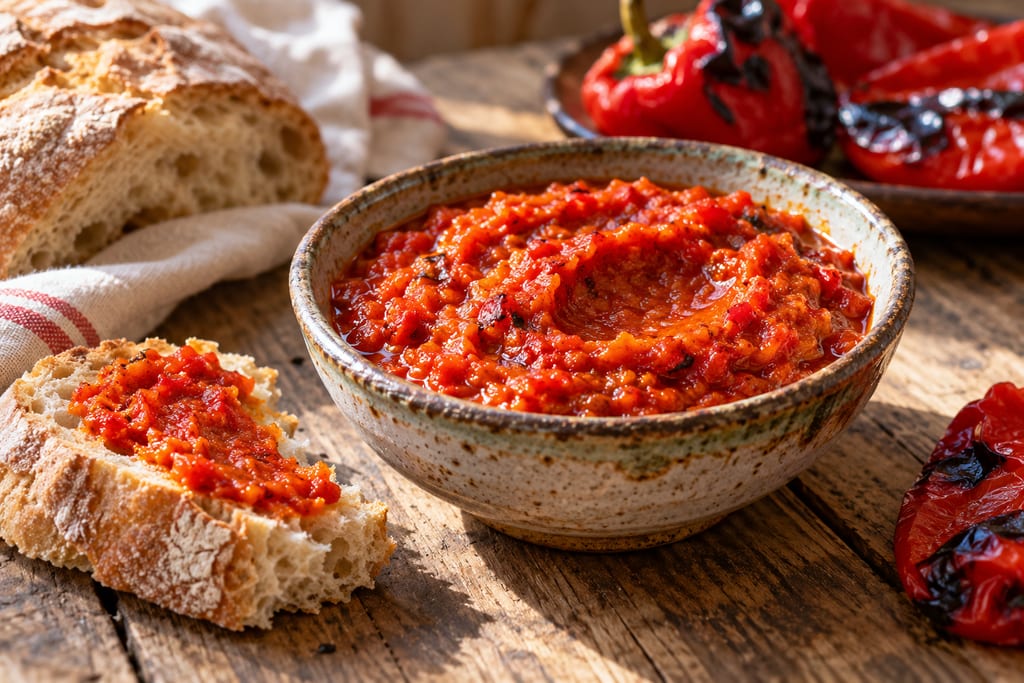
Ajvar
Ajvar is a cooked Balkan pepper preserve built around roasted red peppers, peeled, drained, ground and slowly fried with oil and seasoning. Leskovac’s protected version is a pepper specialty; regional versions vary.
 FermenteaWhere food goes to change
Sawce Camelyne · Sawce Camelyne · Sawse camelyn · Cameline sauce
A medieval English sauce of pounded dried currants, nut kernels, bread crusts and warm spices, tempered with vinegar. It is an unfermented sauce from The Forme of Cury, not a preserving recipe.
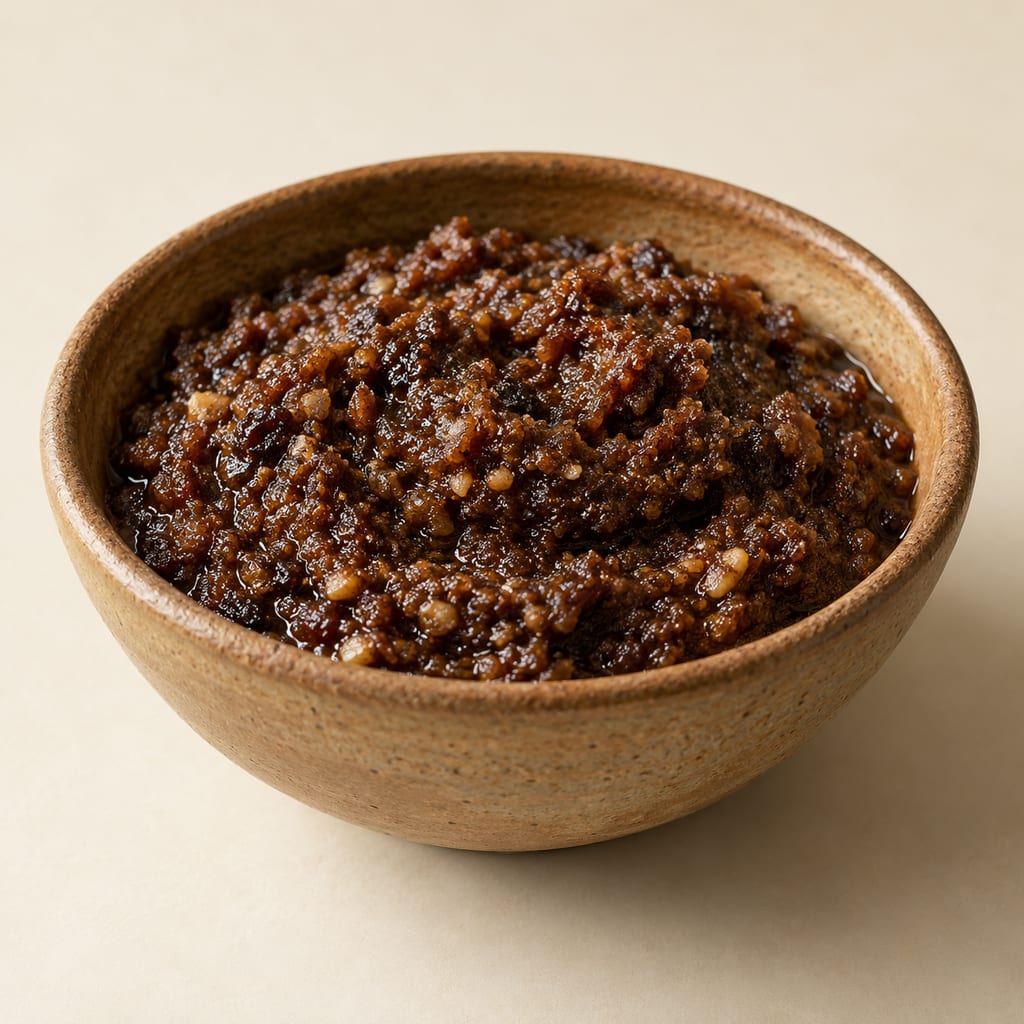
Cameline sauce, in the form The Forme of Cury gives it, is a cold, pounded paste rather than a cooked sauce. Dried currants, nut kernels and bread crusts are ground together with warm spices and salt, then loosened with vinegar and served.
The name is the medieval form the manuscript uses. Its spelling varies between the English manuscript and later editions, and the same name is used for different sauces in other medieval collections, so the Forme of Cury text describes one preparation and does not stand for all of them.
The Forme of Cury gathers many sauces for roast and boiled meat, poultry and fish. Its neighbouring entries include green, white and dark sauces made with herbs, almonds, bread, blood and liver. Read beside them, the cameline sauce shows the same pattern: bread or nuts thicken the paste, vinegar sharpens it and spices give it its character.
The collection is a court and household manuscript, not a recipe for sale. The sauce is a dish component, served with the meat it accompanies, and the manuscript gives no separate instruction for keeping it.
The dried currants supply sweetness and body. Nut kernels and bread crusts make the paste thick enough to hold its shape, and bread absorbs the vinegar so that its sharpness is spread through the mixture.
Ginger, cloves and cinnamon are the spice group the source names. Their proportions are not given, so any measure set today is a modern decision, not a reading of the record.
The manuscript gives no quantities, no temperatures and no holding time. Modern cooks who redraw the recipe must choose these themselves, and their versions differ. This page records the ingredient list and method as the source gives them.
The sauce is a historical dish component. It is not a validated preserving process and no safety claim is made for it. The vinegar in it does not establish a shelf life.
The sauce is recorded in The Forme of Cury, an English recipe collection compiled about 1390 and attributed to the master cooks of King Richard II. The manuscript is a dated attestation of the recipe, not an invention date.
No source in this record establishes a place.
Ajvar is a cooked Balkan pepper preserve built around roasted red peppers, peeled, drained, ground and slowly fried with oil and seasoning. Leskovac’s protected version is a pepper specialty; regional versions vary.
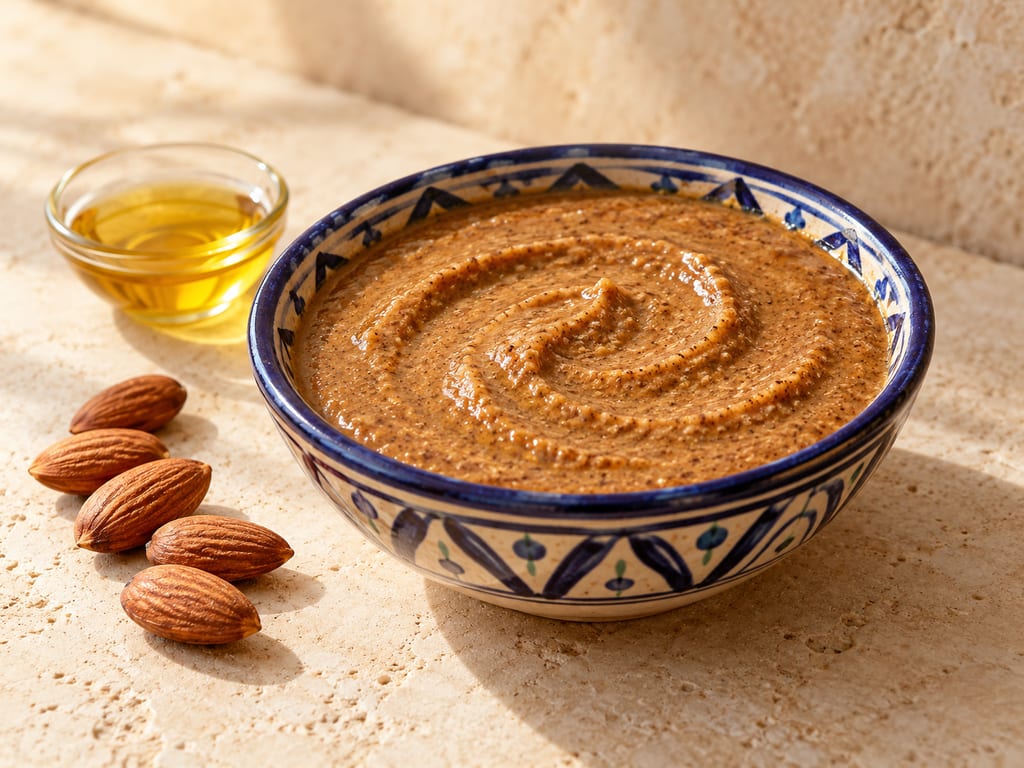
Amlou is a nutty, lightly sweet Moroccan spread of roasted almonds, culinary argan oil and honey. The almonds are ground first, then loosened with oil and sweetened; the balance can range from a thick spread to a dip.
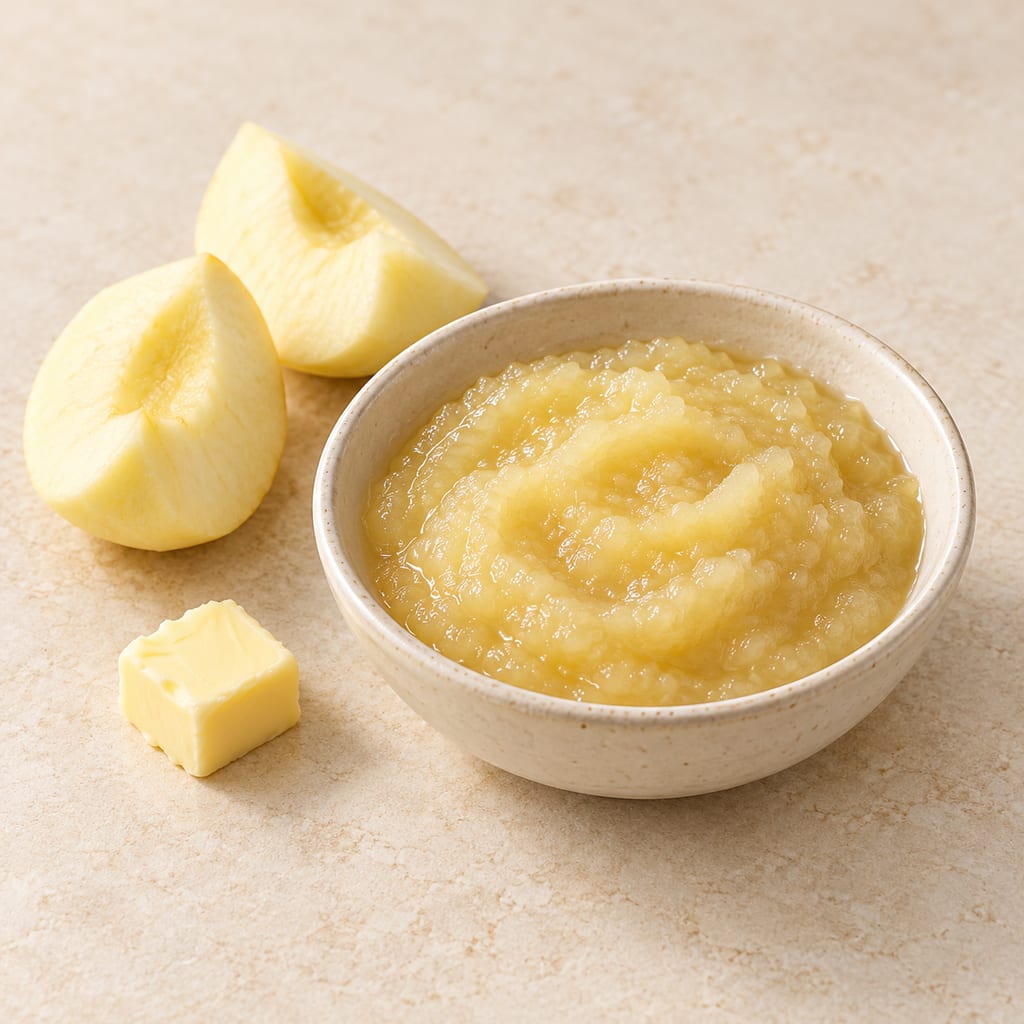
Apple sauce for goose and pork is a plain English accompaniment: cooked apples pulped with water, then sweetened with sugar and finished with a little butter.

A warm dip of garlic, anchovy and olive oil, often enriched with butter, that Piedmont serves over a flame with raw and cooked vegetables and bread.
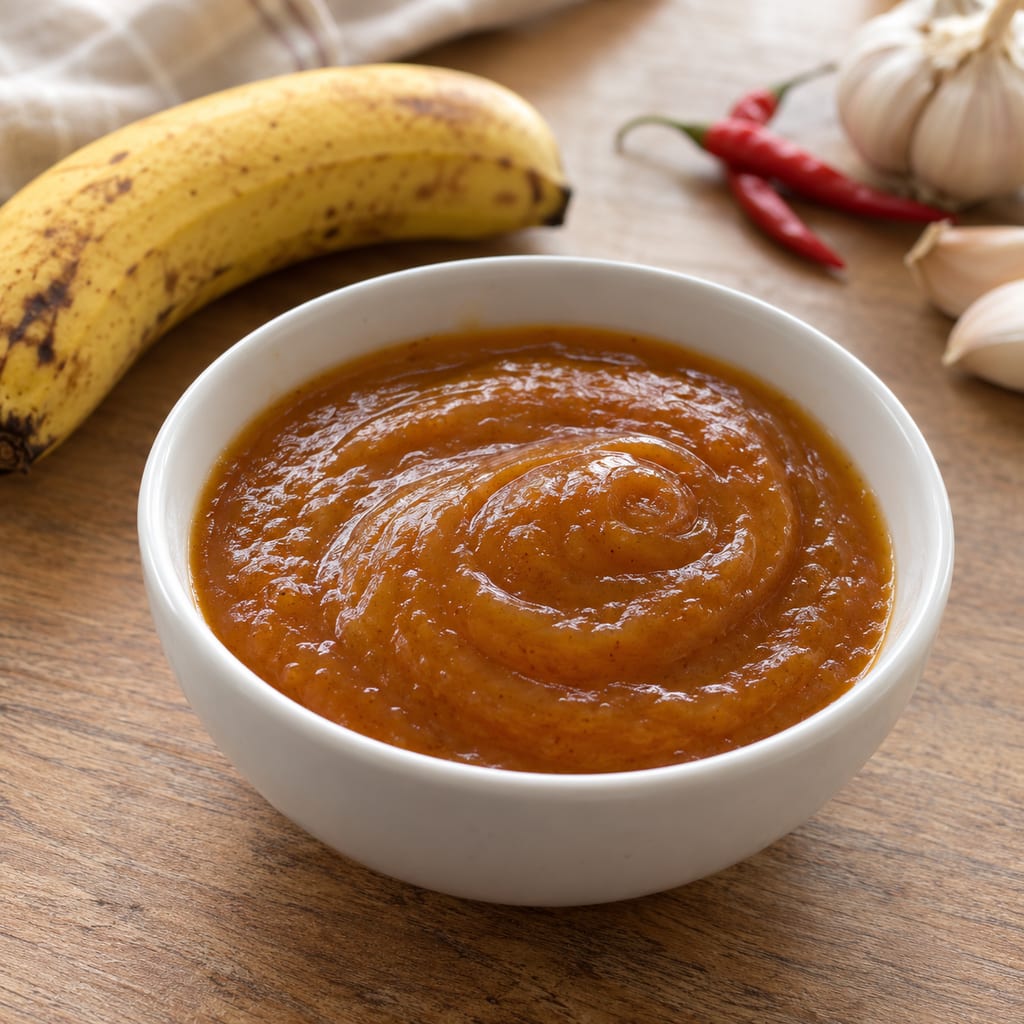
A sweet-hot table sauce of ripe banana simmered with vinegar, sugar, onion, garlic and fresh chilli, in the manner of Philippine banana ketchup. An untested development batch of about 500 g.
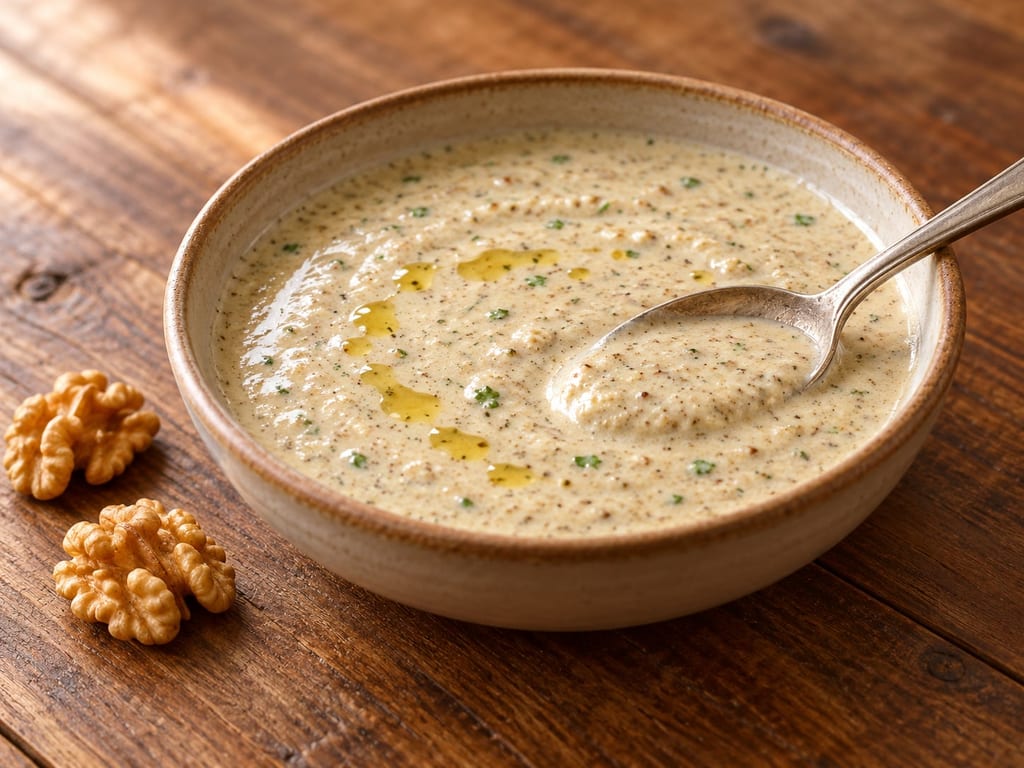
A Georgian walnut sauce of ground walnuts, garlic, vinegar and spices, thinned with water or broth. It is served with poultry, vegetables and bread, and is the sauce of the dish satsivi.
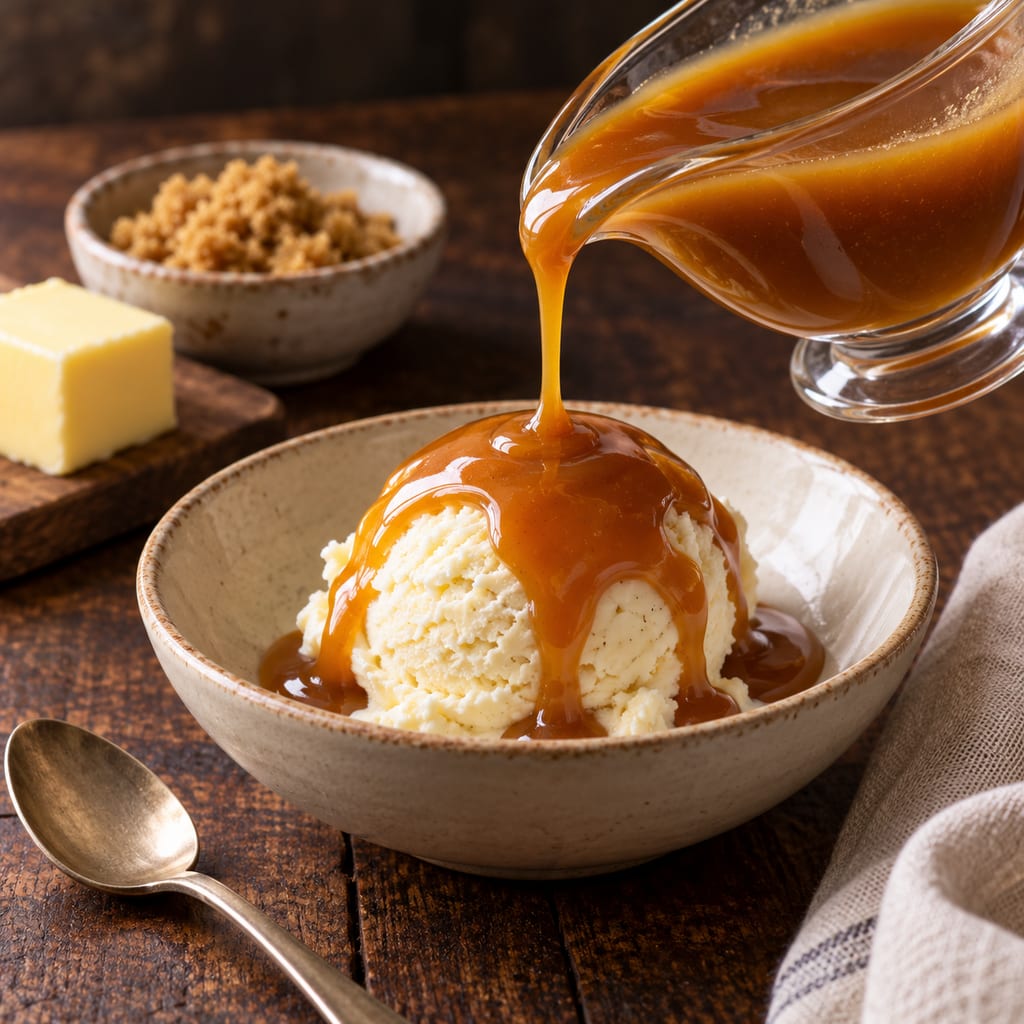
A pourable dessert sauce of brown sugar, butter and cream, with a little corn syrup and salt. It is the sauce form of the butterscotch confection and is made without water, unlike caramel.
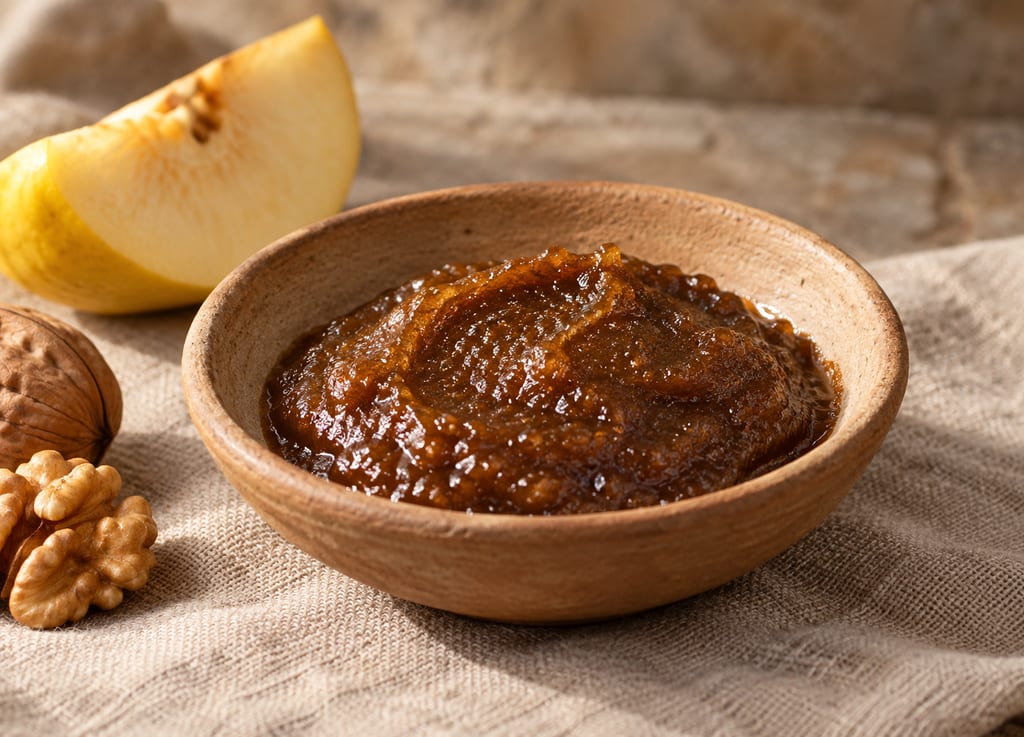
Byzantine murrī is a cooked imitation of murrī from the medieval Arabic repertoire, made from scorched honey, toasted bread, walnuts, quince, carob and spices rather than from a long grain fermentation.

Protected Italian vinegar made only from cooked grape must, fermented and aged in a battery of wooden barrels for at least 12 years: sweet, sharp and syrupy.

Airag is Mongolia’s fermented mare’s-milk drink, traditionally churned with saved starter in a reusable cowhide khokhuur.

Appam, or hoppers, are South Indian and Sri Lankan rice pancakes made from a fermented coconut-and-rice batter and cooked in a curved pan to a crisp lacy rim and a soft, spongy centre.

Auricularia tremellosa is a wood ear fungus of the genus that supplies most dried wood ear sold in China; its own food record is thin, and the culinary practice described here comes from the closely related wood ear species.

Ayran is Turkey’s cold, savoury yogurt drink: plain yogurt is loosened with water and lightly salted, then whisked smooth or aerated into a soft cap of foam.
A thin stone griddle used over an open hearth. Norwegian archaeology documents the established tradition from the early Middle Ages; a Viking-period origin is only a cautious suggestion linked to Shetland.

Crushed or milled barley cooked in water until the starch softens and the mixture thickens, the plainest way a northern household turned stored grain into a meal, here with apple and hazelnut.

Black carrot is the anthocyanin-pigmented Eastern carrot (Daucus carota var. atrorubens), the purple root that preceded orange types and still colours kanji and şalgam.
No community contributions have been published for this entry yet.
Sign in to contribute. Published comments and photos are free to read.
Project GutenbergHistory · Method
The Forme of Cury: A Roll of Ancient English Cookery Compiled, about A.D. 1390The recipe is titled Sawce Camelyne (XX.VII.IIII in the edition's numbering).
Raisins of corance, nut kernels, bread crusts, ginger, cloves and cinnamon flour are pounded together, salted and tempered with vinegar.
The collection is attributed to the master cooks of King Richard II and dated about 1390.
Cited in: What the sauce was; Its place in the collection; Why the ingredients matter; Reading the record