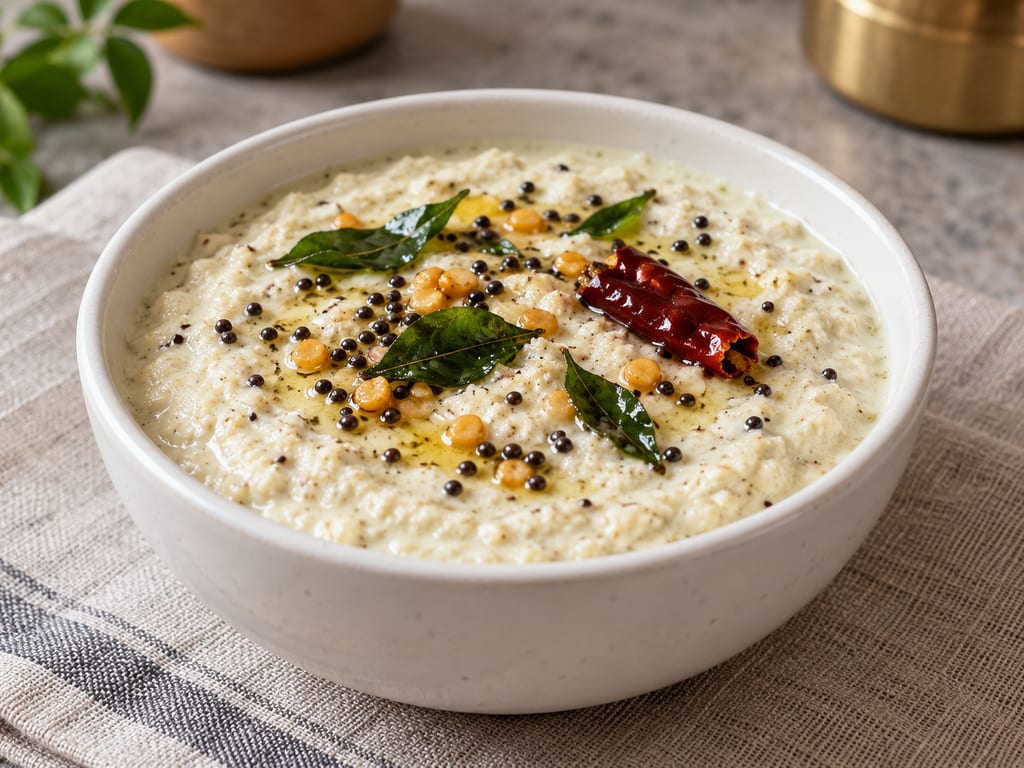
Coconut chutney
A coconut chutney whose ground base is finished with a separate oil tempering of mustard, urad dal, curry leaves and spices; the author pairs it with South Indian breakfast foods and snacks.
 FermenteaWhere food goes to change
Spices and aromatics
Curry leaves are the glossy compound leaves of the curry tree, Bergera koenigii, used fresh across southern India and Sri Lanka. Fried in hot oil they give a citrusy, nutty, faintly smoky note.
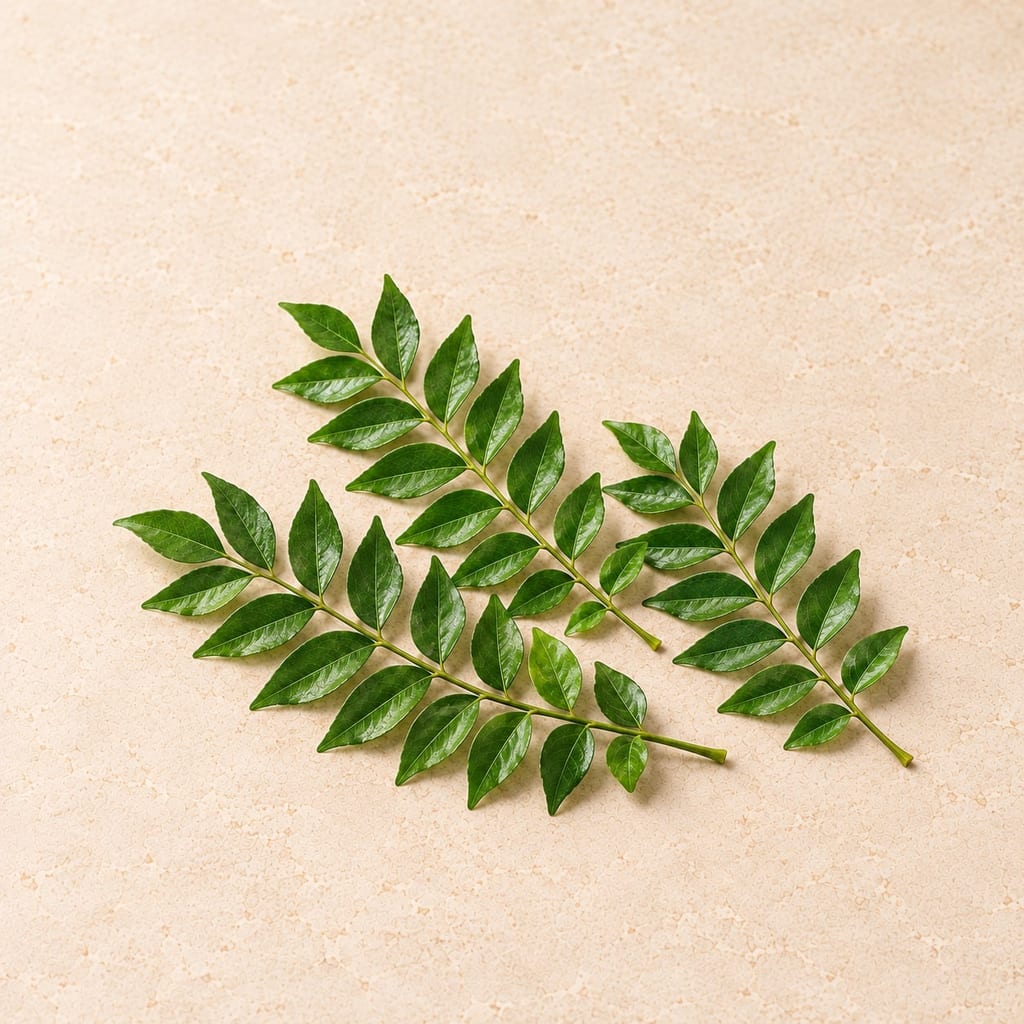
Curry leaves come from Bergera koenigii, long known as Murraya koenigii, a small tropical tree of the citrus family, Rutaceae. Linnaeus described it in 1767. The tree is usually 4 to 6 metres tall and can reach 8 to 10 in good conditions. Each leaf is pinnate, a central stalk carrying 11 to 21 narrow, glossy leaflets, and it is the whole leaf that goes into the pan. The tree has small, fragrant white flowers and small black fruits, each holding one large seed.
The name causes confusion in English. "Curry" comes from the Tamil kari, and the leaf is named for the dishes it flavours; it is a fresh leaf, not a spice blend. In other languages the plant has names of its own: karuveppilai in Tamil, kariveppu in Malayalam, meetha neem, "sweet neem", in Hindi, and karapincha in Sinhala.
The leaf is mild, aromatic and slightly bitter when raw. Its character comes out in hot fat, where it turns citrusy, nutty and faintly smoky, and that change is why it is cooked, not chewed fresh from the twig.
The curry tree is native to the Indian subcontinent, southern China and mainland South-East Asia; a Sri Lankan review gives India, Sri Lanka and Bangladesh. It has long been carried further. It is now found in the Andaman and Nicobar Islands, Java, Sumatra and the Maldives, and in Queensland, Australia, it has escaped and is counted as an environmental weed. Cooks in Sri Lanka, Indonesia, Myanmar, Singapore and Malaysia use it in local dishes. Plantations for leaf exist in India, Australia and on Spain's Costa del Sol.
The leaf appears in writing early. Tamil literature of the first to fourth centuries CE records its use, and a press report describes a Sangam-period poem, from the Pattuppāṭṭu anthology, in which a woman sets a meal before a guest that includes pomegranate seeds tossed in butter with pepper and curry leaves, alongside rice and a baby mango pickle. A Coimbatore chef has reconstructed the dish. A leaf now thought of as a seasoning for lentils and chutneys was already being cooked in fat in a text of the first centuries CE.
It is also used in Ayurvedic and Siddha medicine. There is no high-quality clinical evidence for the claims made for it, and this page treats it as a food.
Fresh curry leaves hold essential oil that is dominated by monoterpenes. In a sample from Kanyakumari, Tamil Nadu, 33 compounds made up 97.6 per cent of the oil. The largest was linalool at 32.8 per cent, followed by elemol at 7.4 per cent, geranyl acetate at 6.2, myrcene at 6.1, allo-ocimene at 5.0, alpha-terpinene at 4.9, beta-ocimene at 3.7 and neryl acetate at 3.5. Oxygenated monoterpenes together were 72 per cent.
That is one sample, and the oil changes with origin. A food science paper cites other work in which the aroma-active compounds are alpha-pinene, sabinene and beta-pinene, alongside linalool and a sulfur compound, 1-phenylethanethiol, whose sulfury, burnt odour is strong enough to stand out even in small amounts. The leaf also contains carbazole alkaloids, notably mahanimbine and girinimbine, and cinnamaldehyde, together with carotenoids, calcium and iron.
Curry leaves are almost always cooked in fat. The leaves are fried in oil with mustard seeds and onions, usually at the start of the dish and sometimes at the end. In the South Indian method of tempering, the cook heats oil, adds mustard seeds until they pop, then curry leaves and green chillies, and fries the leaves for about a minute before the rest of the ingredients go in. Frying releases the leaf's flavour and aroma into the fat, and the fat then carries them through the dish.
The leaf is used whole or chopped. It is a basic seasoning of rasam, a thin spiced broth, and of kadhi, a yoghurt-based dish, and it is dry-roasted into spice mixes such as sambar masala. It is also added to chutneys and salads. Household practice varies. One cook remembers her grandmother sautéing ten to twelve leaves in ghee and pouring the mixture over a meat curry; the Coimbatore chef who rebuilt the Sangam dish made the pomegranate poriyal, a dry stir-fried dish, with black pepper, shallots, green chillies and grated coconut; and another cook recalls a hair oil made by heating coconut oil with curry leaves and henna leaves, cooling it and straining it. In each case the leaf is warmed in fat first and the fat is then put to use.
Curry leaves are not themselves fermented, and their role in fermented food is as a seasoning added around it. South Indian breakfasts are built on fermented batters of rice and black gram, which become idli and dosa, and the accompaniments, coconut chutney with a tempering of mustard seed, chilli and curry leaf and the yoghurt dishes, carry the leaf. The leaf is added in the hot-oil tempering, not to the batter itself.
Two studies bear on how the leaf behaves with microbes. In a Sri Lankan trial, dried curry leaf powder at 0.15, 0.2 and 0.25 per cent by weight was added to cream cheese, and the cheese was kept for ten days at 4 °C. The powder did not change the pH, the titratable acidity or the whey separation; the pH fell from about 5.05 to 4.57 over storage in every sample, and acidity rose with it. Counts of aerobic bacteria, coliforms, yeasts and moulds were not significantly different from the control, and the yeast and mould counts rose with time in all of them. Taste panels scored the 0.2 per cent cheese highest for colour, aroma, flavour, texture and overall acceptability, and total phenolic content rose with the dose, from about 71 to 196 milligrams of gallic acid equivalent per 100 grams. So the leaf, used at a seasoning level, flavoured a soft dairy product without changing its acidity or its microbial counts, and without protecting it from the growth of yeasts and moulds either.
The second finding is of a different kind. Researchers at an Indian university sterilised the surface of curry leaves and recovered six bacteria from inside the tissue; one of them, identified by 16S rRNA sequencing as Lactococcus lactis, inhibited several disease-causing bacteria in the laboratory and survived simulated stomach acid. The result shows that lactic acid bacteria live inside the leaf, as they do inside many plants. It does not show that the leaf starts a ferment when it is added to one, and the authors' interest was in probiotics, not in food fermentation.
Most of what has been measured about curry leaves comes from pharmacology and food science papers, and little of it concerns fermentation. Two findings matter to a cook. First, the leaf is rich in antioxidants. One survey of green leafy vegetables found the highest total antioxidant activity in Murraya koenigii, at 2,691 micromoles of ascorbic acid equivalent per gram of sample. In a trial on ground and precooked goat meat, leaf powder at 0.2 per cent by weight was an effective inhibitor of the oxidation products that form in meat during storage. That is an antioxidant effect on meat fat, shown in a laboratory trial, and it is not a claim about how the leaf behaves in a pan.
Second, extracts and oil inhibit microbes in culture. Methanol and ethanol extracts of the leaf, and the essential oil, all showed antifungal activity against test fungi, with methanol extract the strongest and the oil moderate, and the Tamil Nadu leaf oil was reported to act against bacteria and fungi as well. These are results in laboratory dishes. In the cream cheese trial the powder did not slow the growth of yeasts and moulds over ten days in the refrigerator in any significant way, which is the relevant result for a cook: at the dose of a seasoning the leaf does not preserve food, and it should not be counted on to keep a ferment or a chutney safe.
The leaves are described in the food science literature as a source of protein, dietary fibre, iron, calcium and beta-carotene, though a seasoning portion of a few leaves supplies little of any of them.
Choose bright green, fresh leaves, as with any produce, and strip them from the stems, since recipes call for individual leaves. Wash, pat dry and wrap them in a paper towel inside an airtight container in the refrigerator; they stay good for more than two weeks if blackened leaves are picked out and the towel is changed when wet. Leaves can also go into a bag in the freezer, where they may change colour but keep their taste and can be used straight from frozen. A home-dried leaf, air-dried for two to three days, keeps two to three months in an airtight container.
Fresh is preferred. The sources disagree on how much drying costs: one reference says dried leaves are much weaker in aroma and flavour, while a phytochemical paper says the leaves retain their flavour after drying. The truth probably depends on how the leaf is dried and how old it is, and a cook who uses dry leaf should smell it first.
Curry leaf also travels beyond tempering. The cream cheese paper cites a consumer study of curry-leaf breads, seasoned potatoes and cooked rice, in which 58 per cent of the panel said that both taste and health benefits would decide whether they ate more of such foods, 22 per cent that health claims would, and 20 per cent that the taste alone was acceptable.
The fruit pulp is edible, but the seed may be toxic and is not eaten.
The curry tree wants well-drained soil that stays moist, full sun or partial shade and shelter from wind, and it grows better at temperatures of at least 18 °C. It is raised from fresh, ripe seeds with the skin peeled off, or from stem cuttings. The sources read say nothing about its frost tolerance.
A Sri Lankan review treats two relatives in the citrus family, Micromelum minutum and Clausena indica, as further kinds of curry leaf alongside Murraya koenigii. Micromelum minutum is used as a flavouring in southern Thailand and elsewhere in Asia, and its leaf oil is rich in sesquiterpenes such as germacrene, delta-elemene and beta-caryophyllene. The fruits of Clausena indica are used for their aroma in Vietnamese and South Indian cooking, and its leaf oil from South India was active against Bacillus cereus, Salmonella Typhi and Proteus vulgaris in tests. All three are used in folk medicine, and the three have somewhat common leaf and fruit forms. Which plant a market bunch is can depend on the country, and this page applies to Bergera koenigii only. The date of the Sangam poem is not fixed more closely than the first to fourth centuries CE given for Tamil literature. How the leaf changes in hot oil is not described in the sources read, and the oil compositions quoted here are single samples.
The native range, with southern China and mainland South-East Asia in a general reference.
The Tamil literary record; the word curry comes from Tamil kari.
Karapincha in Sinhala; used in local dishes and studied in cream cheese.
Used in local dishes after the plant spread from India.
Introduced; regarded as an environmental weed there, and grown commercially in Australia.
A coconut chutney whose ground base is finished with a separate oil tempering of mustard, urad dal, curry leaves and spices; the author pairs it with South Indian breakfast foods and snacks.
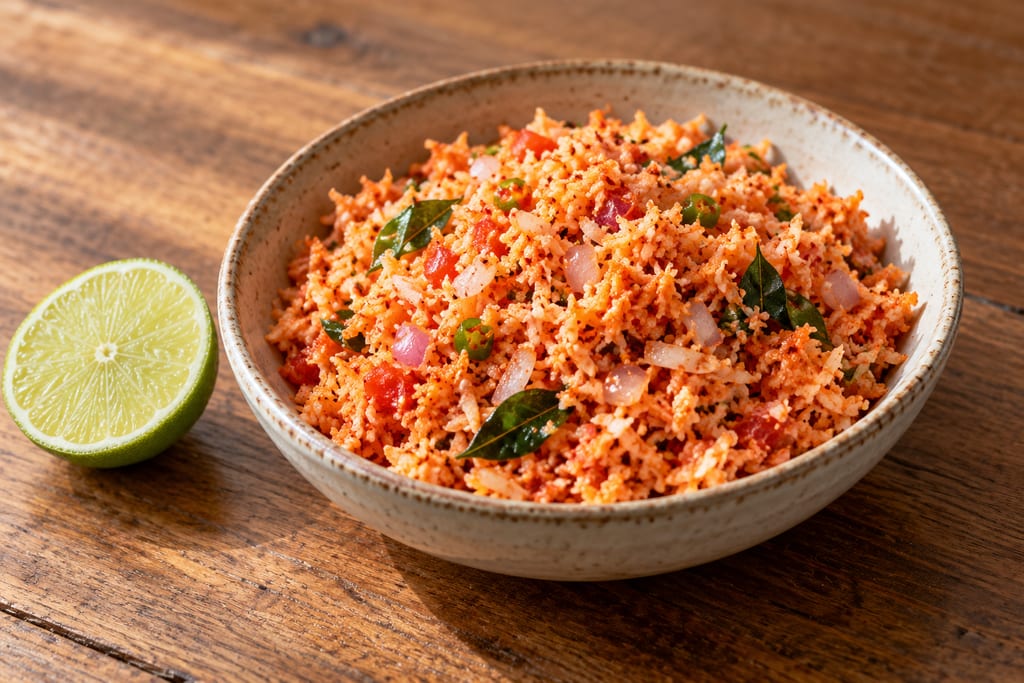
A Sri Lankan coconut relish made from grated coconut, aromatics, chilli, lime and optional Maldive fish; a seasoned paste is folded through the coconut by hand.
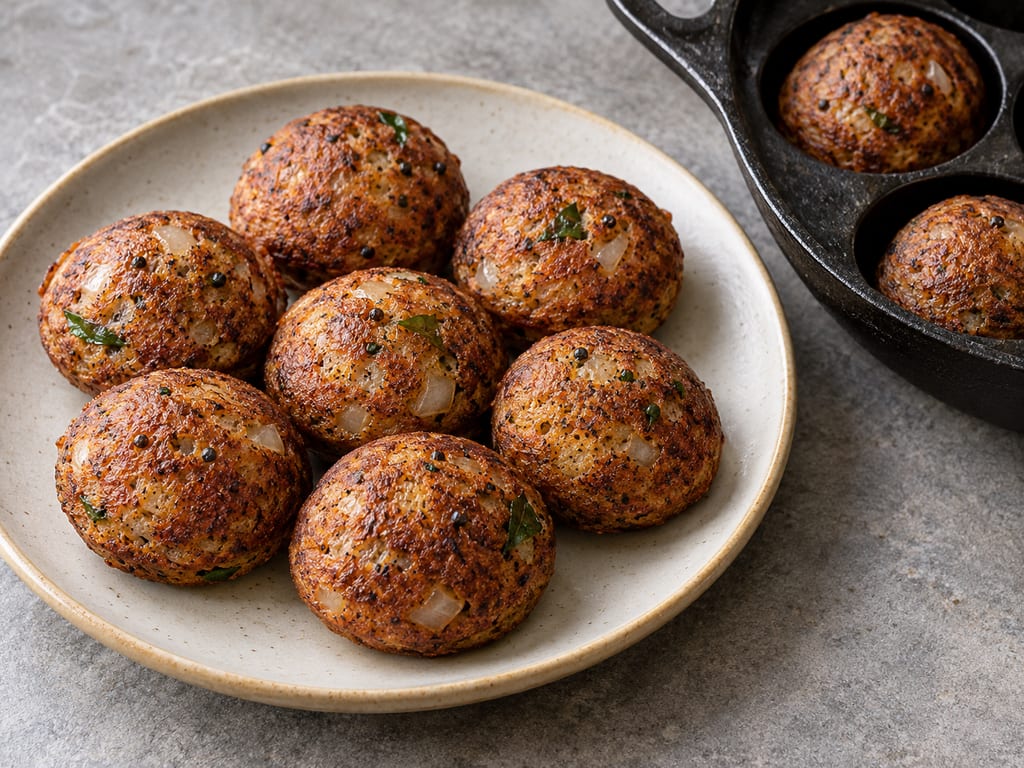
Ragi paniyaram uses fermented ragi, urad and idli-rava batter mixed with spiced onion and cooked in an oiled mould.
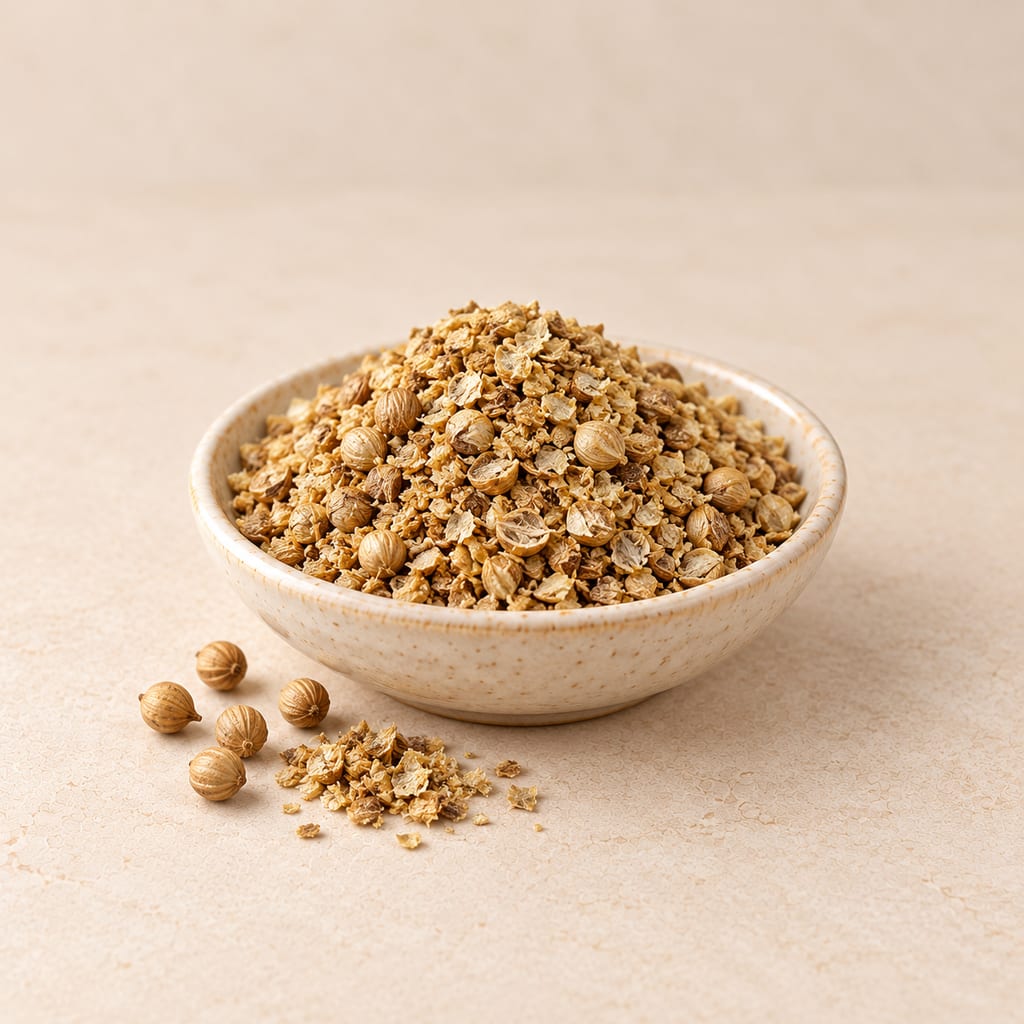
Crushed coriander seed is the ripe, dried fruit of Coriandrum sativum broken into coarse aromatic pieces for curries, sauces and meat seasonings.
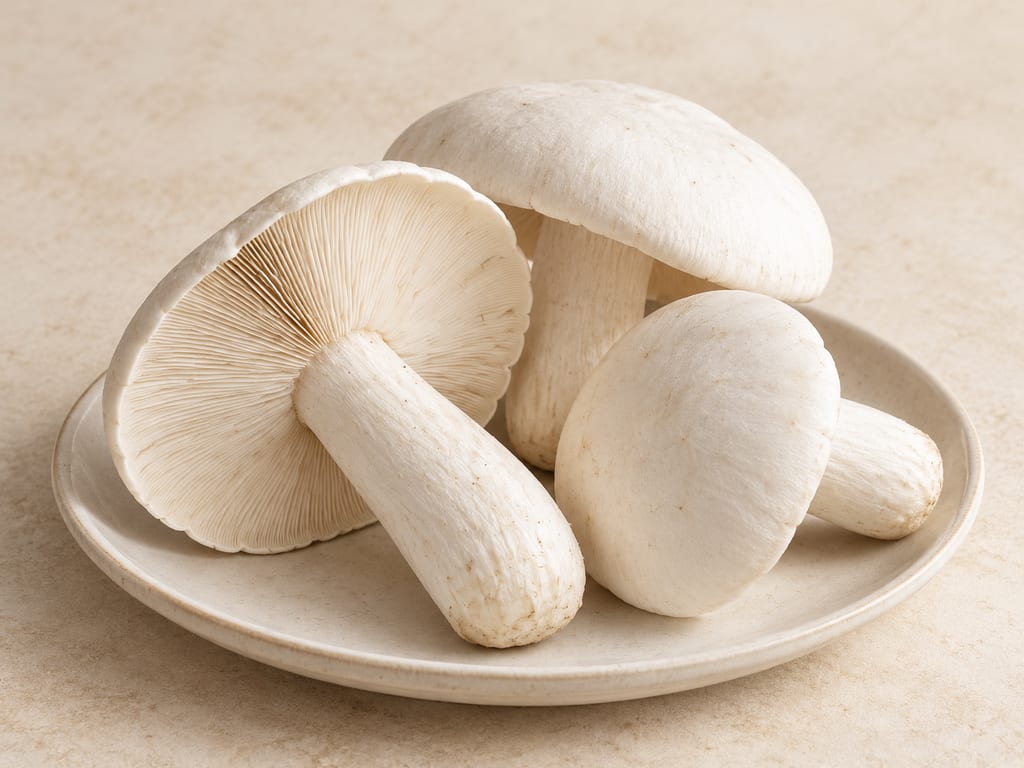
The milky mushroom is a warm-climate cultivated edible, historically named Calocybe indica and now listed by Species Fungorum as Macrocybe indica. Indian cultivation research centres on straw substrates and a separate casing layer.

At North Abydos in Egypt, a fixed early Dynastic brewery comprised parallel semi-subterranean installations with rows of ceramic mash vats; excavation reports revise their number, scale and estimated batch capacity.

Ají amarillo is the orange-yellow Peruvian chilli cultivar group of Capsicum baccatum, used to colour and season huancaína sauce and ají de gallina. Published heat estimates do not establish one range for the named cultivar.

Toasted almonds are whole sweet almond kernels dry-roasted until golden to brown. Heat replaces their marzipan note with a roasted, nutty one; they thicken and flavour romesco.

Kodiak salmon, halibut and cod cut as seg'aq and hung on an initaq rack to become tamuuq, with kac'amaasaq and kupcuunaq named as different results.

Aniseed is the dried ripe fruit of Pimpinella anisum, an aromatic Apiaceae spice commonly called a seed. It adds a sweet, warm aroma to breads such as Moroccan krachel and South African mosbolletjies, and is distinct from star anise.

A fixed Late Chalcolithic installation in Areni-1 cave combined a shallow clay pressing basin with a large jar set into the cave floor and storage vessels nearby.

Ripe avocado flesh is the soft, buttery, fat-rich pulp of Persea americana, eaten raw. It is low in acid, so it is a fresh ingredient that needs care in chilled dishes.

A portable dome and pan used over a hearth, with embers on the lid and heat from below. Regional peka and saç forms share this principle while differing in materials, pan shape and how the food is cooked.
No community contributions have been published for this entry yet.
Sign in to contribute. Published comments and photos are free to read.
WikipediaIdentity · History · Cultivation · Secondary
Curry treeName, family, Linnaeus 1767, description, native and introduced range, Tamil literature of the first to fourth centuries CE, culinary uses, fresh preferred to dried, cultivation, alkaloids, seeds possibly toxic, plantations.
Cited in: The leaf, and why it is not curry powder; Where it comes from and how it spread; What gives it its smell; How it is cooked: the tempering; Choosing, keeping and using; Growing the tree
Evidence-Based Complementary and Alternative Medicine, 2021 (Abeysinghe and colleagues)Identity · Range
Nutritive Importance and Therapeutics Uses of Three Different Varieties (Murraya koenigii, Micromelum minutum, and Clausena indica) of Curry Leaves: An Updated ReviewNative to Sri Lanka, Bangladesh and India; karapincha in Sinhala; three kinds of curry leaf in Rutaceae; used for centuries as an aroma.
Cited in: The leaf, and why it is not curry powder; Where it comes from and how it spread; What the laboratory says about its keeping qualities; Related leaves and open points
Avicenna Journal of Phytomedicine, 2014 (Rajendran, Pallaiyan and Selvaraj)Chemistry
Chemical composition, antibacterial and antioxidant profile of essential oil from Murraya koenigii (L.) leavesLeaf oil from Kanyakumari, Tamil Nadu: 33 compounds, 97.56 per cent; linalool 32.83 per cent, elemol, geranyl acetate, myrcene and others; oxygenated monoterpenes 72.15 per cent; the leaves retain flavour after drying.
Cited in: What gives it its smell; What the laboratory says about its keeping qualities; Choosing, keeping and using
Food Science and Nutrition, 2021 (Weragama and colleagues)Fermentation · Chemistry
The physicochemical, microbiological, and organoleptic properties and antioxidant activities of cream cheeses fortified with dried curry leaves powderPowder at 0.15, 0.2 and 0.25 per cent in cream cheese for ten days at 4 C; no effect on pH, acidity or syneresis; microbial counts not different; sensory best at 0.2 per cent; phenolics rose; aroma-active compounds and 1-phenylethanethiol.
Cited in: What gives it its smell; Curry leaves and fermented food; What the laboratory says about its keeping qualities
Scientific Reports, 2024 (Shivani and Sathiavelu)Microbiology
Probiotic evaluation, adherence capability and safety assessment of Lactococcus lactis strain isolated from an important herb Murraya koenigiiSix endophytic bacteria isolated from surface-sterilised curry leaves; one, Lactococcus lactis MKL8, showed antibacterial activity and survived simulated gastric juice.
Cited in: Curry leaves and fermented food
The News MinuteHistory · Culinary · Secondary
Sangam-era recipes, martinis: many uses of the humble curry leafPerumpanatruppadai poem mentions curry leaves in a pomegranate dish with butter and pepper; spread to Sri Lanka, Indonesia, Myanmar, Singapore and Malaysia.
Cited in: Where it comes from and how it spread
Piping Pot CurryStorage · Method · Secondary
Curry leaves: how to use and storeChoosing; refrigerator storage over two weeks; freezing; air-drying two to three days and two to three months keeping; frying a minute in oil with mustard seeds and chillies; added to chutneys and salads.
Cited in: How it is cooked: the tempering; Curry leaves and fermented food; Choosing, keeping and using