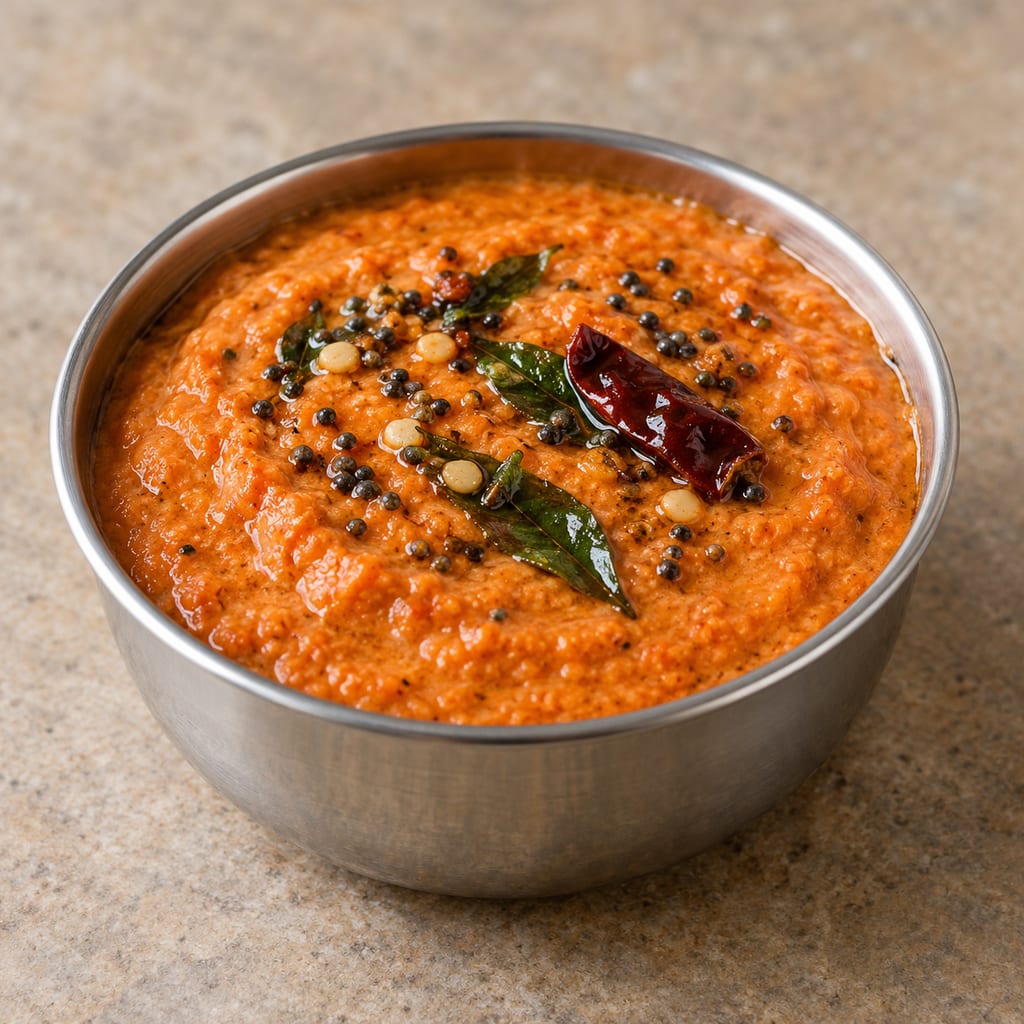
Onion-tomato chutney (South Indian cooked and tempered)
A South Indian chutney of onion and tomato cooked soft with chillies, ginger, tamarind and coconut, cooled, blended and finished with a mustard and curry-leaf tempering, for idli and dosa.
 FermenteaWhere food goes to change
Modern adaptation
Podi · Pudi · Gunpowder podi · Milagai podi · Chutney podi
A South Indian dry chutney powder has many regional and household forms. This record follows one published gunpowder podi recipe, served with ghee or gingelly oil; it is not a single standard formula.
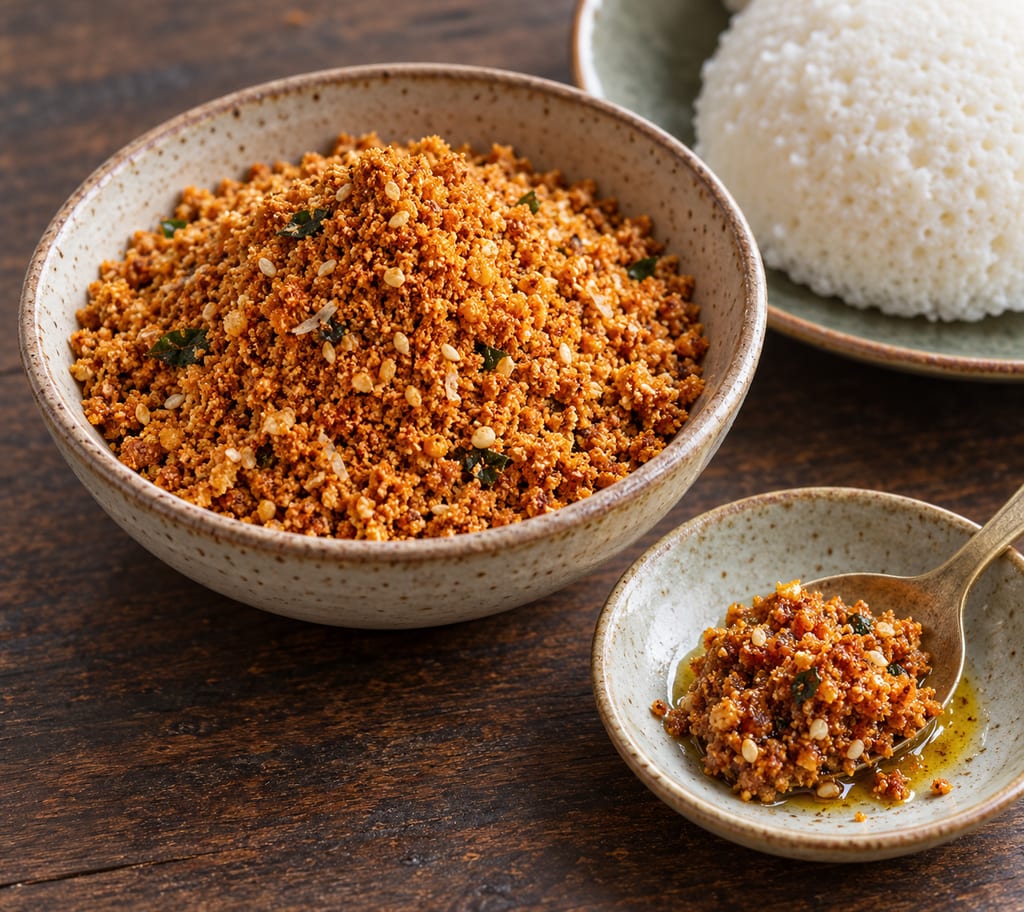
Podi means powder, but the word does not name one fixed recipe. SBS Food describes South Indian podi made with lentils, curry leaves, coconut and sesame, seasoned with chillies or black pepper. It notes different forms across southern states. Food52 also records the spelling pudi in Karnataka and podi in Andhra Pradesh and Tamil Nadu. These broad accounts show a family of spice powders rather than a single canonical blend.
One version called gunpowder podi combines lentils, dried chillies, curry leaves, coconut and spice. In Bhavna Kalra’s published recipe, sesame seeds or peanuts provide a nutty base. It is mixed at the table with ghee or gingelly oil and eaten with rice or idli. The dry powder and the moistened serving portion are different forms; the source does not give one universal storage rule for every kind of podi.
The SBS recipe makes about 500 mL. It calls for sesame seeds or peanuts, oil, dried red chillies, curry leaves, chana dal, urad dal, dried coconut, asafoetida, turmeric and salt. The source roasts or fries the ingredients in stages, cools them and grinds them together. This record follows that one published formula and preserves the alternative between sesame and peanuts; other podi blends use different ingredients and proportions.
Staged roasting gives each ingredient its own time in the pan. The recipe directs the cook to roast the seeds or peanuts, fry the chillies and curry leaves, brown the two dals, and toast coconut with asafoetida and turmeric. The chillies bring heat; toasted seeds or peanuts, browned lentils and coconut contribute roasted, savoury and nutty notes. These descriptions refer to the ingredients and stages in this recipe, not a formal sensory test.
The source calls the finished grind a coarse paste, while the dish is introduced as a dry powder for serving with oil. Keep the distinction clear: it is one published version with a small amount of oil in its roasting stages, and it is commonly mixed further with ghee or gingelly oil at serving. Its name does not establish a single texture for every podi.
SBS Food and Food52 report that podi appears in Tamil Sangam literature and that the Vijayanagar dynasty is credited with popularizing it. Neither account identifies the specific passage or gives a primary text citation for this recipe. They support a cautious note that writers associate podi with long-standing South Indian food traditions, but they do not establish the earliest attestation of this gunpowder formula. Its first date remains unknown.
Podi is prepared across South India in regional forms, including those associated with Andhra Pradesh, Tamil Nadu and Karnataka. This recipe is therefore associated with South India at a broad regional level. No evidence here assigns its specific proportions to a particular village, household lineage or exact birthplace.
The source offers sesame seeds or peanuts as alternatives. Both are major food allergens under U.S. FDA guidance, so the chosen ingredient should be named clearly. The FDA recommends that people with food allergies read labels and avoid the foods that trigger their allergy. If ghee is used when mixing a serving portion, that serving contains milk; if gingelly oil is used, it contains sesame.
The SBS page advises refrigerating the finished podi and suggests different keeping periods depending on whether coconut is included. It provides no test results or process validation for those periods. This record reports the page's advice without treating it as a verified shelf life. The sources do not establish validated storage controls for this particular batch.
SBS Food and Food52 describe podi as a South Indian condiment with many forms. Their accounts attribute early references to Tamil Sangam literature and popularization to the Vijayanagar dynasty, but do not identify a specific passage or establish this formula's first attestation.
Yield 500 mL · Scaling: source batch only
The published recipe uses either peanuts or sesame seeds. FDA lists both peanuts and sesame among major food allergens.
Hazard sourceIdentify the selected seed or nut in the ingredient list and avoid serving it to someone with an allergy to that ingredient.
Control sourceThis recipe contains either sesame or peanuts, depending on the alternative chosen.
The source gives refrigerated storage advice but no validation for its stated keeping times.
The sources describe podi across South India and note differences among regional styles. This single published formula is not assigned to a precise birthplace or treated as a universal recipe.
A South Indian chutney of onion and tomato cooked soft with chillies, ginger, tamarind and coconut, cooled, blended and finished with a mustard and curry-leaf tempering, for idli and dosa.
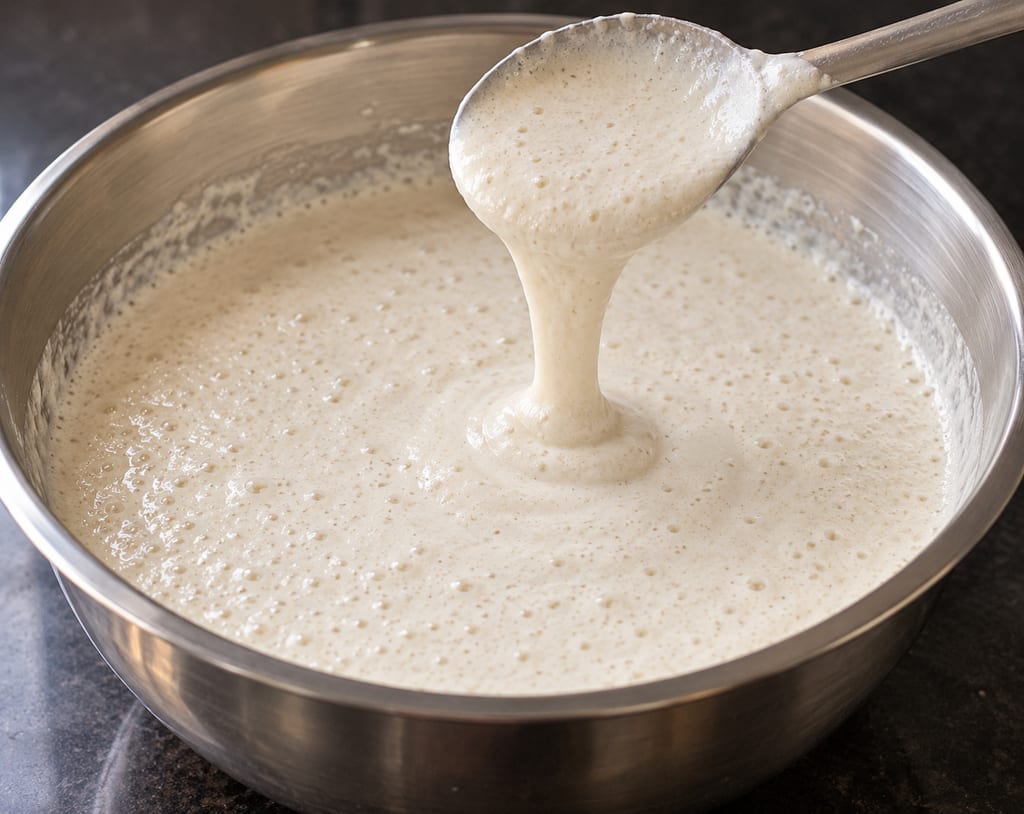
A naturally fermented South Indian rice-and-urad batter, ground fine and spread thin on a hot griddle. Fermentation lightens the batter and develops its gentle tang.
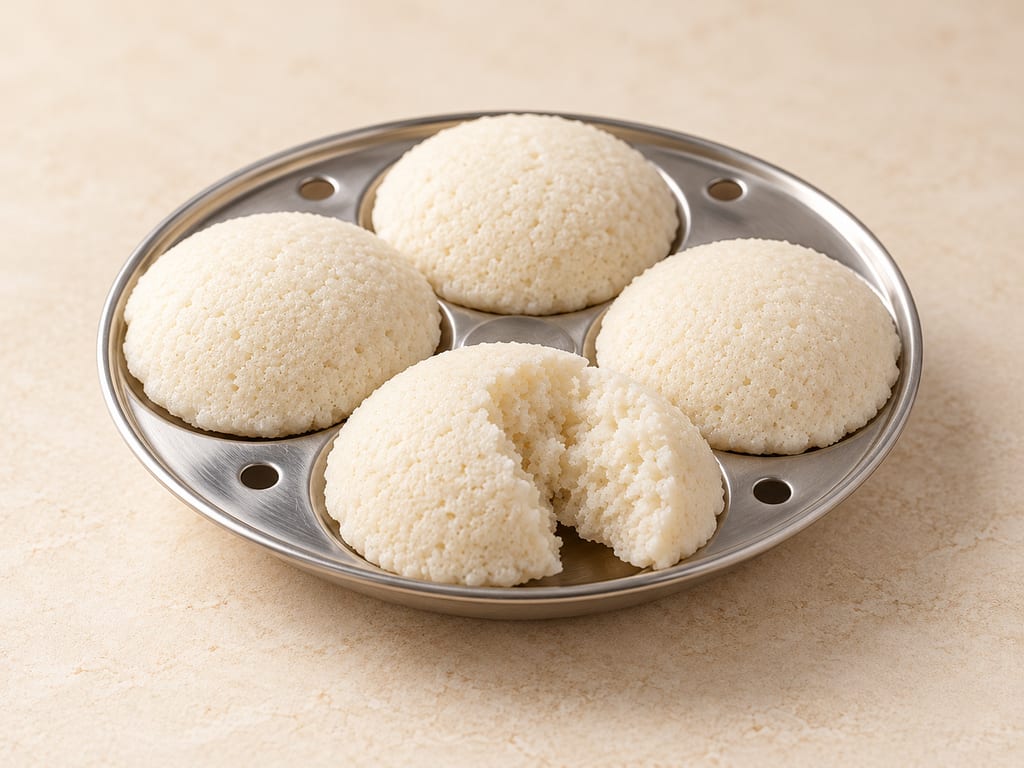
Rice and black gram are soaked separately, ground, salted and fermented into a thick batter for idli. The batter is portioned into moulds and steamed into soft savoury cakes.
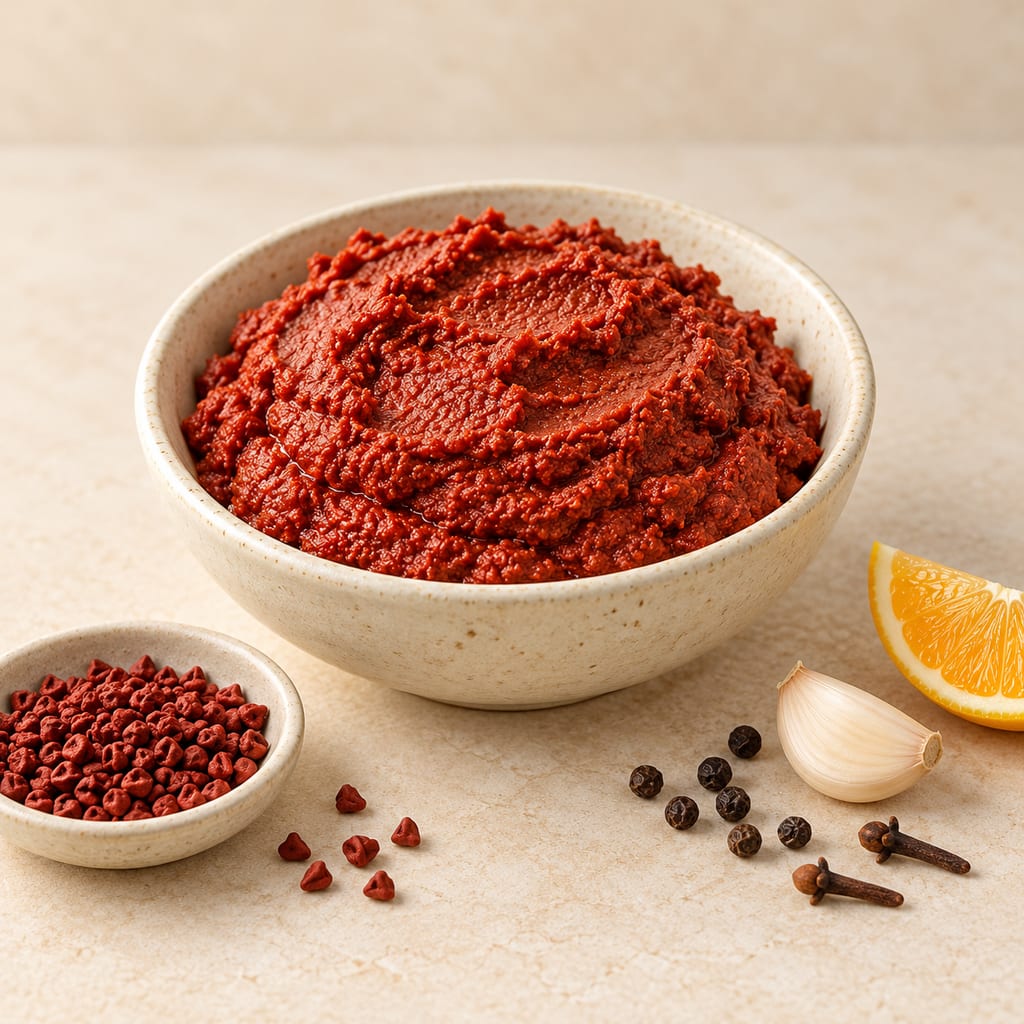
A Yucatecan recado rojo is a brick-red seasoning paste built on annatto seed, garlic and sour orange. This measured home version shows one route into a much wider family of market and household recados.
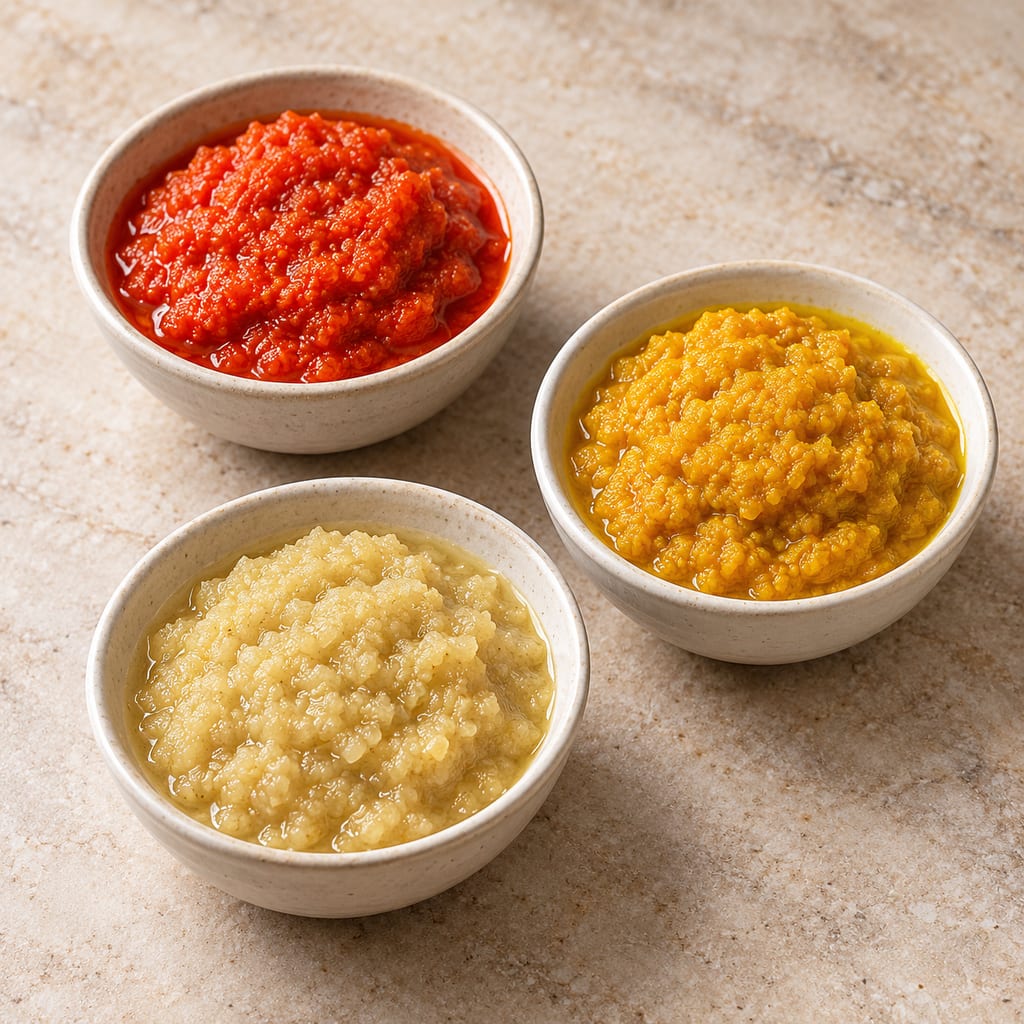
Bumbu dasar are the ground spice bases of Indonesian cooking: a white paste of shallot, garlic and salt, with chile added for red and turmeric for yellow, cooked into dishes.
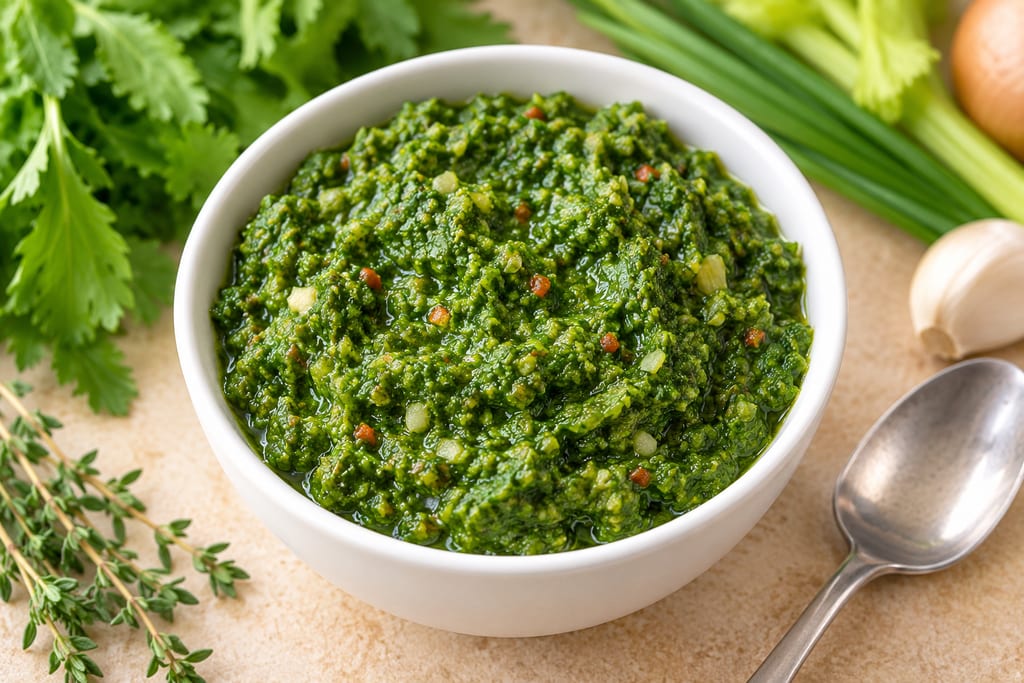
A fresh herb and aromatic paste of chadon beni (culantro), thyme, chives, celery, onion, garlic and peppers, blended with vinegar and water and used as the base for Trinidadian cooking.
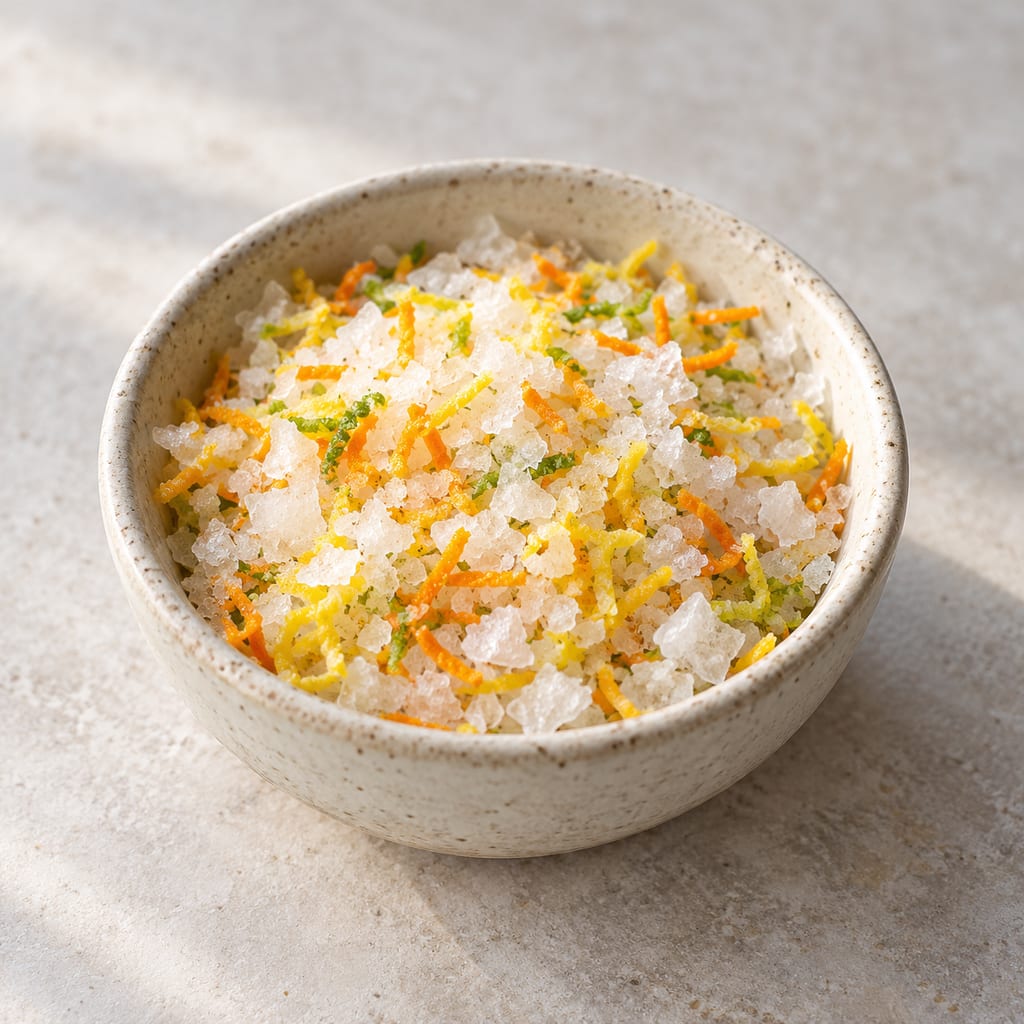
Citrus zest is rubbed into coarse or flake salt and dried on a tray. This peel-based seasoning preserves the chosen citrus aroma without adding juice.
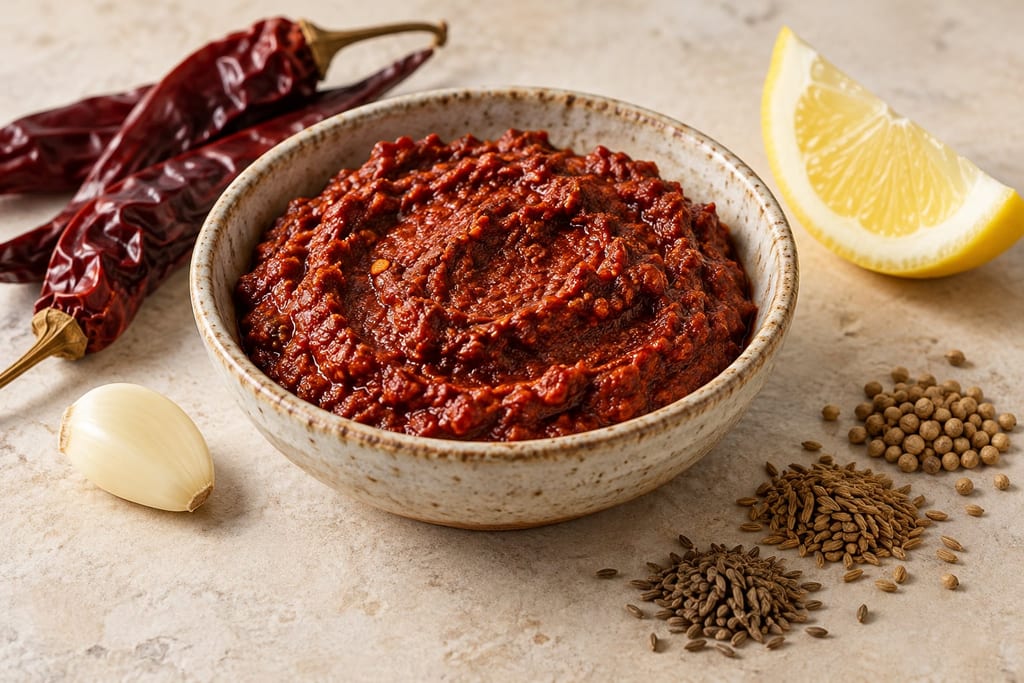
A fresh chilli paste made from rehydrated dried red peppers, garlic, olive oil, lemon and warm spices; this small-batch formula adapts the harissa family rather than reproducing a tested Tunisian method.
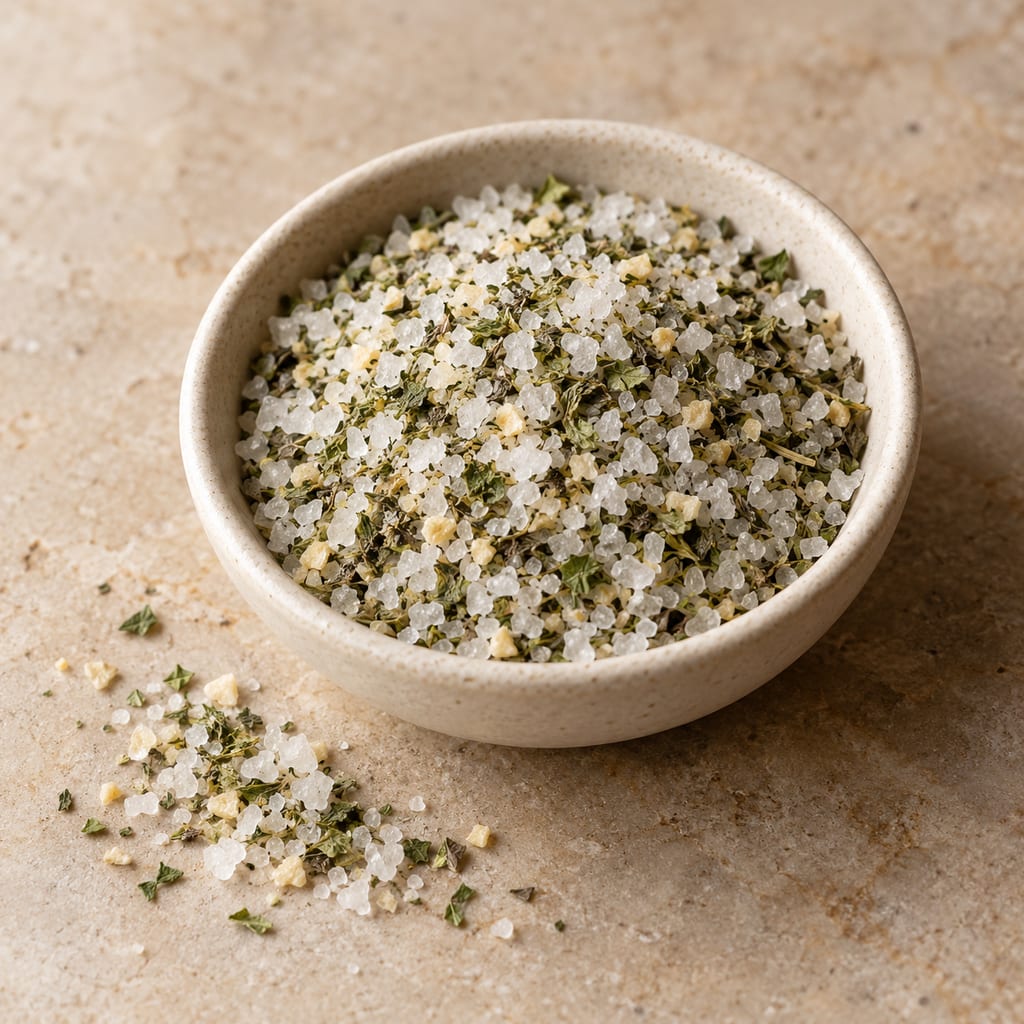
Fresh garlic and pungent herbs are chopped with kosher salt, then dried in the warmth of a switched-off oven. The blend keeps the selected herbs together in one seasoning.
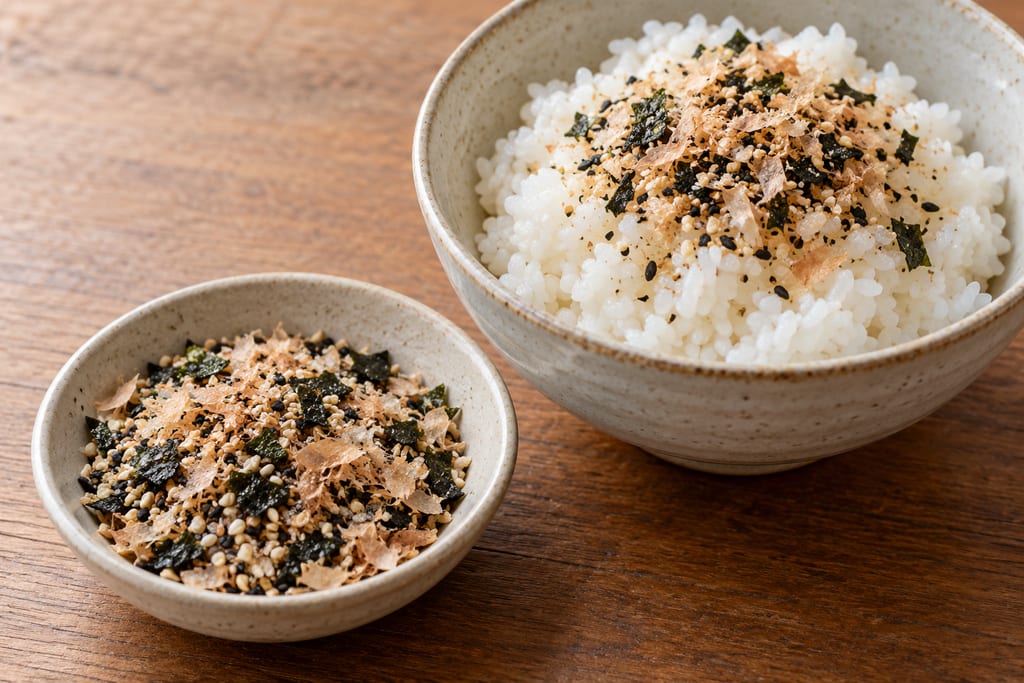
A dry Japanese rice seasoning of sesame, bonito, nori, sugar and salt. This documented home blend is one specific formula within a varied category with several early product histories.
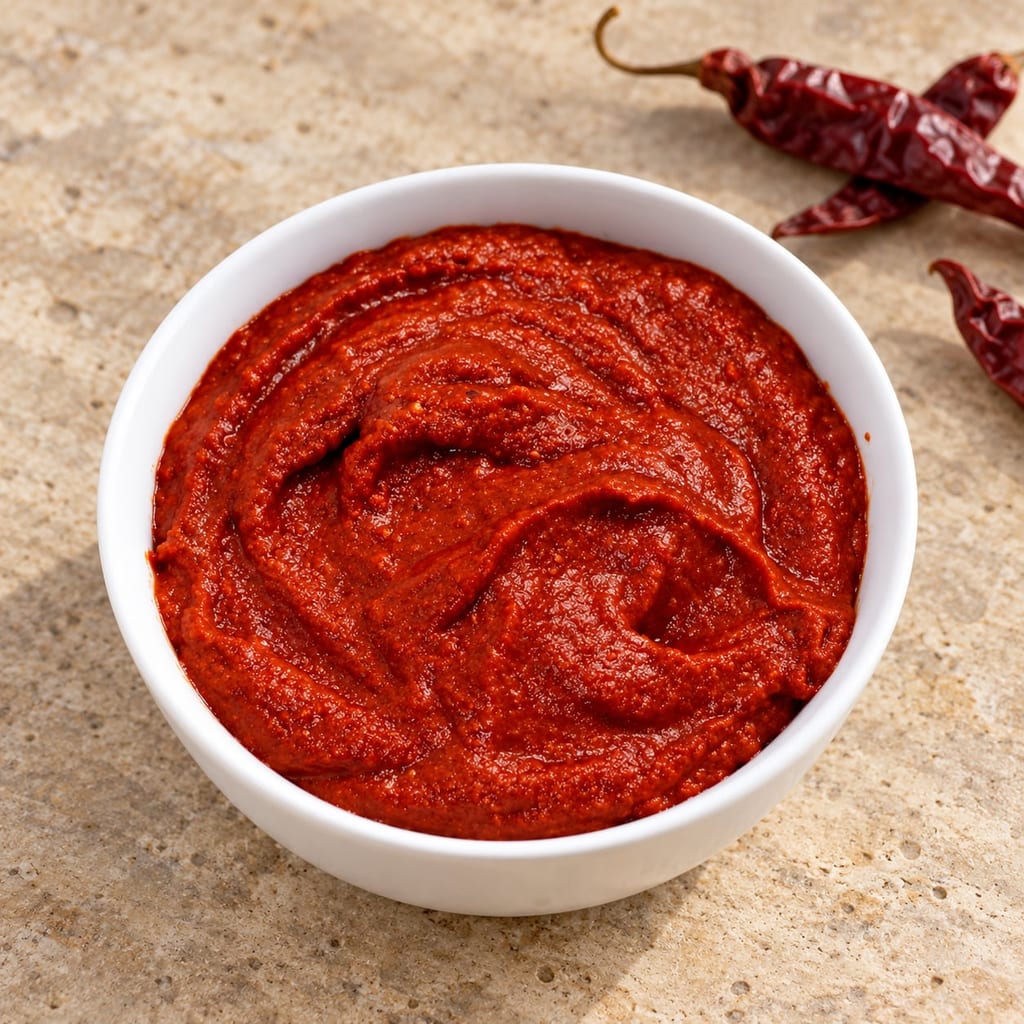
Recheado is a red Goan spice paste of Kashmiri chillies, garlic and spices ground in vinegar, best known as the stuffing for fried fish such as mackerel.
No community contributions have been published for this entry yet.
Sign in to contribute. Published comments and photos are free to read.
SBS FoodMethod · History · Geography · Inspiration
For centuries, podi has given Indian dishes a magical spice boostDescribes podi as a South Indian condiment with lentils, curry leaves, coconut, sesame and spices, with regional variation.
Gives a gunpowder podi formula and method, including alternatives, quantities and an approximate 500 mL yield.
States that the powder is often served with rice or idli and mixed with ghee or gingelly oil.
Attributes references to Tamil Sangam literature and popularization to the Vijayanagar dynasty, without identifying a specific passage.
Gives one-month refrigerated storage advice and a three-month suggestion when coconut is omitted; no validation data are provided.
Cited in: A powder with regional and household variations; This published gunpowder podi; History, place and limits of the record; Allergens and storage advice
Food52History · Geography · Inspiration
What Is Podi & How Do You Use It?Describes podi as a varied spice blend eaten across South India and notes regional names and ingredient variation.
Reports chef Regi Mathew's account that podi is eaten with rice or as part of meals and mixed with ghee or gingelly oil.
Also attributes early reference to Sangam literature and popularity to the Vijayanagar dynasty; this is a secondary account, not a dated recipe manuscript.
Cited in: A powder with regional and household variations; This published gunpowder podi; History, place and limits of the record
U.S. Food and Drug AdministrationSafety
Food AllergiesLists peanuts and sesame among major food allergens and advises people with food allergies to read labels and avoid allergens.
Cited in: Allergens and storage advice