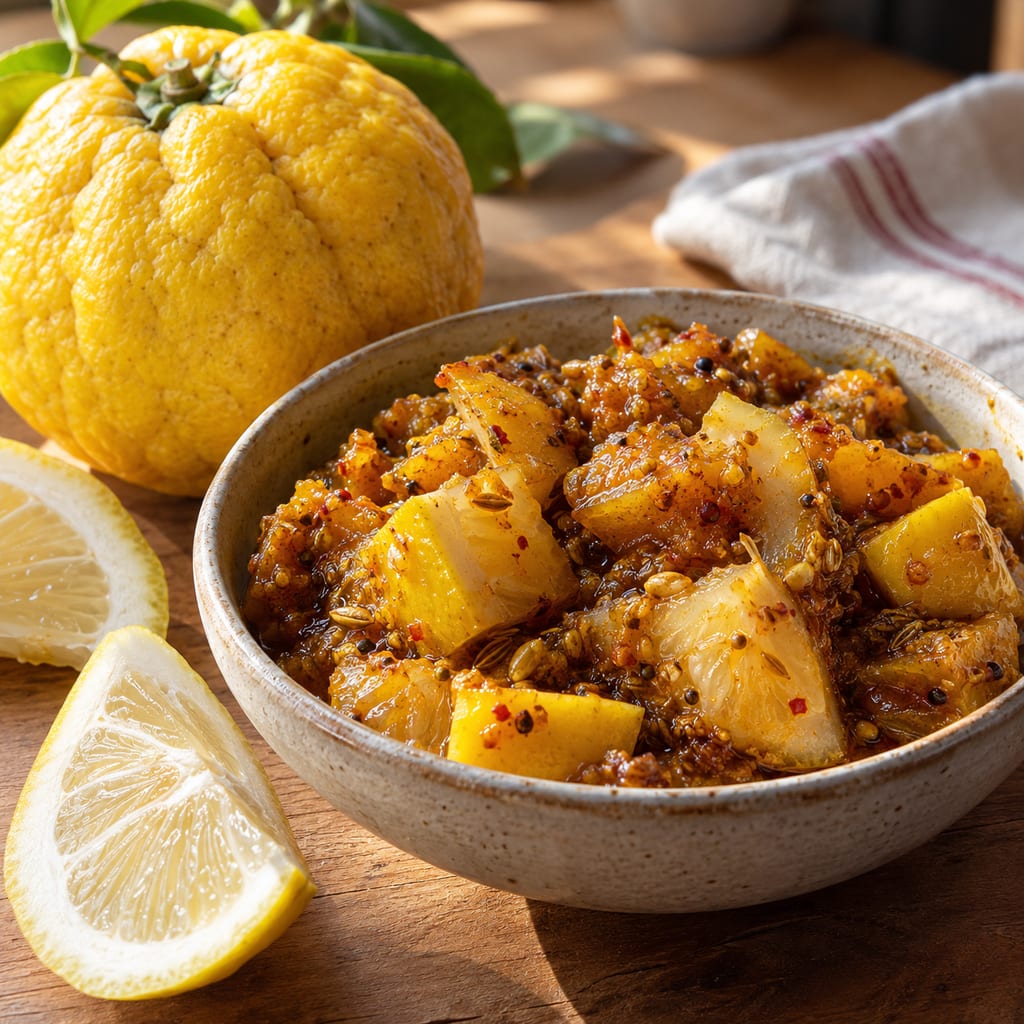
Galgal pickle
Ripe Himalayan galgal is boiled, sun-dried and cooked with mustard oil, spices and jaggery before a further rest in a ceramic jar.
 FermenteaWhere food goes to change
Spices and aromatics
Turmeric powder is dried, milled Curcuma longa rhizome. Its pigments and aroma season three documented fruit pickles at distinct stages; it is not their fermentation culture.
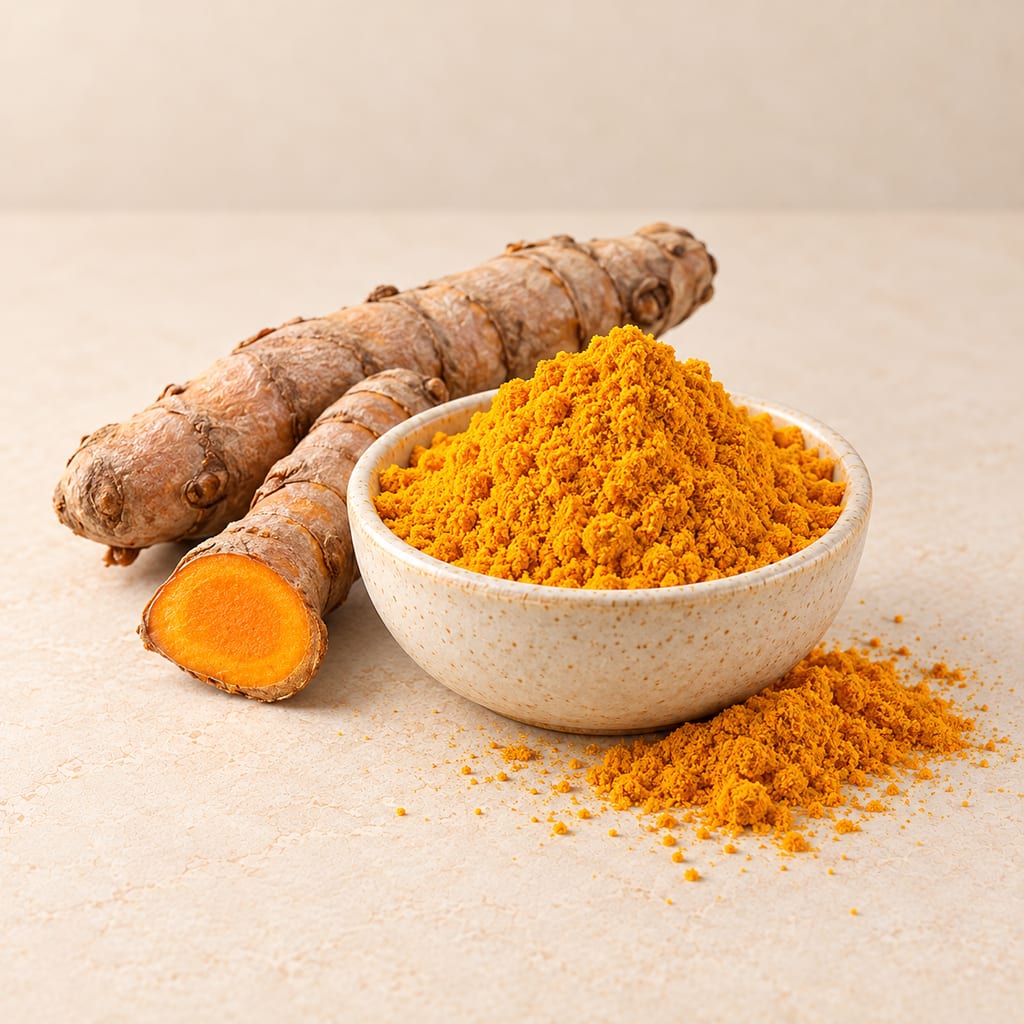
Turmeric powder is made from the rhizome of Curcuma longa, a cultivated member of the ginger family. A rhizome is an underground stem, even though cooks often call it a root. The distinction matters when reading descriptions of the crop: the thick, ringed piece dug from the soil is the spice source and also the planting material. Kew describes this cultivated plant as sterile, propagated by rhizomes rather than viable seed. The powder on a kitchen shelf is a later form of that harvested stem, after heat treatment in many production systems, drying and milling. It is not a separate species or a blend of spices.
Fresh turmeric is moist and firm; dried pieces have lost much of that water; ground turmeric disperses as small particles in food. Curry powder may contain turmeric but has other ingredients. An oleoresin or purified curcumin is a concentrated preparation with a different composition and use. Related plants such as mango ginger, wild turmeric and zedoary also belong to Curcuma, yet their names do not make them interchangeable with C. longa powder. A label naming only “turmeric” may not convey cultivar, place of cultivation or milling history, but the botanical identity and the form remain useful first checks.
The crop has a striking colour and an aroma that cannot be read from its colour alone. Its yellow-orange pigments are curcuminoids; its fragrant volatile oil contains turmerones and other compounds. These groups answer different questions in a kitchen. The pigments colour oil and the finished dish, while the volatile fraction contributes an earthy, warm aromatic impression. Powder is a convenient measured seasoning in fruit achar, but it is neither a starter culture nor a reliable sign that a pickle has fermented. The fruit, salt, oil, sugar, heat and resting stages must be read from each recipe on their own terms.
Turmeric has a long food and colouring history in South Asia. Kew records names including haldi in northern India and manjal in the south, and describes culinary, textile and craft uses of the rhizome. An ethnobotanical survey by Velayudhan, Dikshit and Nizar assembles examples from particular communities and regions, including uses in Odisha and Kerala. Their account places turmeric among foods, colours and ceremonial materials, but the examples belong to those places and practices rather than every kitchen in India. Its value as a dye helps explain why an ingredient with a forceful colour travelled through many forms of domestic work as well as through cooking.
The crop’s wild ancestor and point of domestication are less secure than a neat origin story suggests. Kew’s current taxonomy lists it as a cultigen from southwest India, while Kew’s broader species profile says its exact origin is unknown and discusses a possible South or Southeast Asian origin. The plant is known as a domesticated form, not as a confidently identified wild population. The ethnobotanical authors propose an early South Asian domestication, but their historical and cultural synthesis is not an archaeological date for the first cultivation. These statements can coexist: strong regional connections do not specify the first farmer, village or century.
Names on older trade bags tell another part of the story. FAO’s 2004 post-harvest account describes Madras and Alleppey as commercial types associated with different colour and quality characteristics in trade. Those market descriptions do not rank the flavour or pigment level of a jar bought today. Cultivar, climate, soil, maturity and processing all contribute variation. Two rhizome harvests can enter different curing and drying systems before either reaches a mill, and their finished powders may therefore differ in colour and aroma. A cook can expect the recognizable earthy spice character while still finding that one measured spoonful stains or scents a dish differently from another supplier’s. The trade names are historically useful descriptions of a varied crop, not a promise that every batch from a named region has identical properties.
Farmers plant rhizome pieces and later lift clumps when the crop matures. FAO’s post-harvest account describes harvest when above-ground growth dries, often roughly seven to ten months after planting in the systems it surveys; variety and growing conditions alter that interval. Soil, roots and leaf remains are removed. Some rhizomes become planting stock, while others continue toward the spice trade. Fresh pieces may be used directly, but a dried powder requires further transformation. The crop cannot simply be equated with a dry powder at harvest.
In a common production route, harvested rhizomes are cured by boiling before they are dried. FAO explains that heat gelatinizes their starch and helps the material dry more evenly; it also reduces a fresh earthy odour and distributes colour through the flesh. Curing here means a heat treatment, not a microbial ferment. Practices vary by rhizome size, equipment and producer. FAO reports an Indian research recommendation of about 45 minutes to an hour in plain water alongside other methods. Too little or too much treatment changes the quality of the eventual dried piece. The hot stage also separates the fresh rhizome sold for immediate cooking from the prepared material intended for stable drying and milling; both come from the same crop but offer a different texture and aromatic impression in food.
Drying then removes enough moisture for storage and milling. In the FAO account, sun drying may take ten to fifteen days, with climate and method determining the actual result. Light can change surface colour, so some producers use protected or mechanical drying. Polishing whole dried rhizomes removes rough scales and rootlets. A mill then breaks the dry material into particles that can be sifted to a desired fineness. Heat, oxygen and light during processing can alter pigments and drive away volatile aroma. The powder in a spoon therefore reflects the field crop and several later choices. Fineness also affects how readily it spreads in oil and clings to fruit or other ingredients, even when two powders are ground from the same botanical species.
Curcuminoids provide much of turmeric’s characteristic yellow-orange colour. Curcumin is the best-known member, alongside demethoxycurcumin and bisdemethoxycurcumin. They are distinct from the volatile oil, which contains aroma-active compounds including turmerones. A sensory comparison of fresh and dried turmeric reported different aroma descriptors and detected odor-active molecules in its tested material. Thus a brightly coloured powder need not smell exactly like a freshly cut rhizome: the colour compounds and aromatic compounds are different groups, and curing, drying and milling expose them to different conditions. In a cooked achar the powder colours the oil and fruit while adding its own earthy, warm spice note. Colour intensity alone cannot measure the complex aroma reaching the plate.
Processing changes these fractions differently. FAO describes changes during curing and milling and warns that light, oxygen and heat can reduce aspects of ground turmeric quality. Powder is convenient because small particles spread through hot oil and mixed ingredients; its pigments and particles do not behave like a freely water-soluble dye. In the linked achar recipes, turmeric meets mustard oil and other spices during a hot seasoning stage, bringing colour into the mixture before it is served or jarred. The fruit’s acidity, the oil, and other seasonings then affect the finished impression. The studies and recipes document these stages without quantifying pigment transfer from an individual spoonful to a specific jar.
Commercial quality is broader than the brightest possible yellow. A powder can differ in hue because of cultivar and growing conditions, while aroma may change with age and handling. FAO’s account discusses colour, volatile oil and cleanliness as different quality considerations. A reliable supplier, intact packaging and the product’s own storage information matter more than judging strength by colour alone. The visible stain is memorable, but it cannot prove freshness, purity or a particular culinary effect.
In Nirmala’s 2016 account of lapsi ko achar, turmeric powder is a measured half teaspoon in a preparation built around two kilograms of ripe lapsi. The author boils and peels the fruit, roasts and grinds some spices, then heats mustard oil and adds fenugreek and turmeric before combining the fruit with sugar, salt and seasonings. Nirmala connects her own version to tasting an achar in Bhadaure village and later making it in Kathmandu. That is a personal, dated account of a cooked sweet-sour fruit accompaniment. Its turmeric quantity belongs to her batch and method; the author’s stated jar life is not independently validated by the ingredient.
A 2020 Western Himalayan galgal account uses one tablespoon of turmeric powder with one kilogram of ripe fruit and seven to nine tablespoons of mustard oil. The fruit is briefly heated, dried and left out for two nights, then pieces are sautéed in oil with spices and jaggery before a sun-exposed jar rest. The source calls it pickle and describes serving it with local foods including kachouri and siddu. Its three-to-five-day sun interval and fifteen-to-twenty-day readiness claim describe that author’s sequence, without establishing a measured fermentation endpoint. The turmeric contributes seasoning and colour during the sauté; the page gives no evidence that this amount preserves the jar.
A separate 2016 Himachal Pradesh survey documents another Galgal pickle. Its method blanches ripe fruit for two minutes, sun-dries and cuts it, browns fenugreek in mustard oil, then cooks the fruit for five to ten minutes with salt, red chilli, thyme, sugar, turmeric and fennel. The mixture is cooled and left to ferment for fifteen to twenty-five days. The authors report organisms isolated from sampled pickle, yet they do not quantify the turmeric, link a particular household to the written method or isolate turmeric as the reason fermentation occurs. The survey associates the pickle with several districts and notes a winter tandoor setting in upper Himalayan areas. This is a distinct sourced preparation, not a measured variant of the 2020 recipe.
The three fruit preparations give the same ground rhizome different company. Nirmala adds it early to hot oil seasoning for boiled lapsi; the 2020 Galgal author sautés fruit with it; the Himachal survey places it among several spices before a longer rest. Their fruit, sweeteners, oil quantities and intervals differ, so their turmeric amounts cannot be assembled into a single formula. Its yellow colour and warm aroma are perceptible contributions, while cooked fruit, sugar, salt, oil and the stated resting stage shape each final accompaniment. The surveyed pickle is the one whose authors report microbial isolates; the other two sources do not thereby become measured fermentations. Turmeric is a spice in these records, not a measured starter or a demonstrated preservation control.
A kitchen jar holds an already dried and milled spice. Keep it closed, dry and protected from strong light and heat, following the maker’s package directions. FAO’s discussion of light, moisture, oxygen and milling explains why colour and aroma may decline with rough storage, but gives no single expiry date for every powder. A fading yellow or weaker smell can affect a dish’s sensory quality; neither is a reliable food-safety test. Ready ground turmeric enters the linked recipes as a measured seasoning, so the farmer’s rhizome curing and drying operations have already happened before the home cook opens the packet.
Supply-chain evidence deserves proportion. A 2024 study sampling dried turmeric and powder in South Asian markets found some products with lead contamination and evidence suggestive of lead chromate adulteration. The finding concerns the tested products and market channels, not every packet of turmeric. Its yellow colour cannot reveal whether a batch meets a contaminant limit. A traceable food supplier and relevant controls are more informative than a home comparison of brightness. The same pigment that makes turmeric appealing in fruit achar also makes visual inspection an unreliable way to judge purity.
Culinary powder differs from concentrated turmeric or curcumin supplements. Health-agency cautions about high-dose or enhanced-absorption products do not describe a half teaspoon in fruit achar, and the spice amount in a food recipe cannot establish a clinical benefit. Kew notes that plant contact can irritate some people. For the linked dishes, turmeric’s documented contribution is the spice form, colour and aroma at a particular stage; the rest of the jar’s ingredients determine other aspects of suitability. A cook reading a label needs the product’s identity and handling information, not a therapeutic promise attached to its yellow stain.
Kew taxonomy lists a southwest Indian cultigen range while its profile says exact origin is unresolved.
Ripe Himalayan galgal is boiled, sun-dried and cooked with mustard oil, spices and jaggery before a further rest in a ceramic jar.

In a surveyed Himachal method, ripe galgal is blanched, sun-dried, cooked with mustard oil, fennel and thyme, then left to ferment.
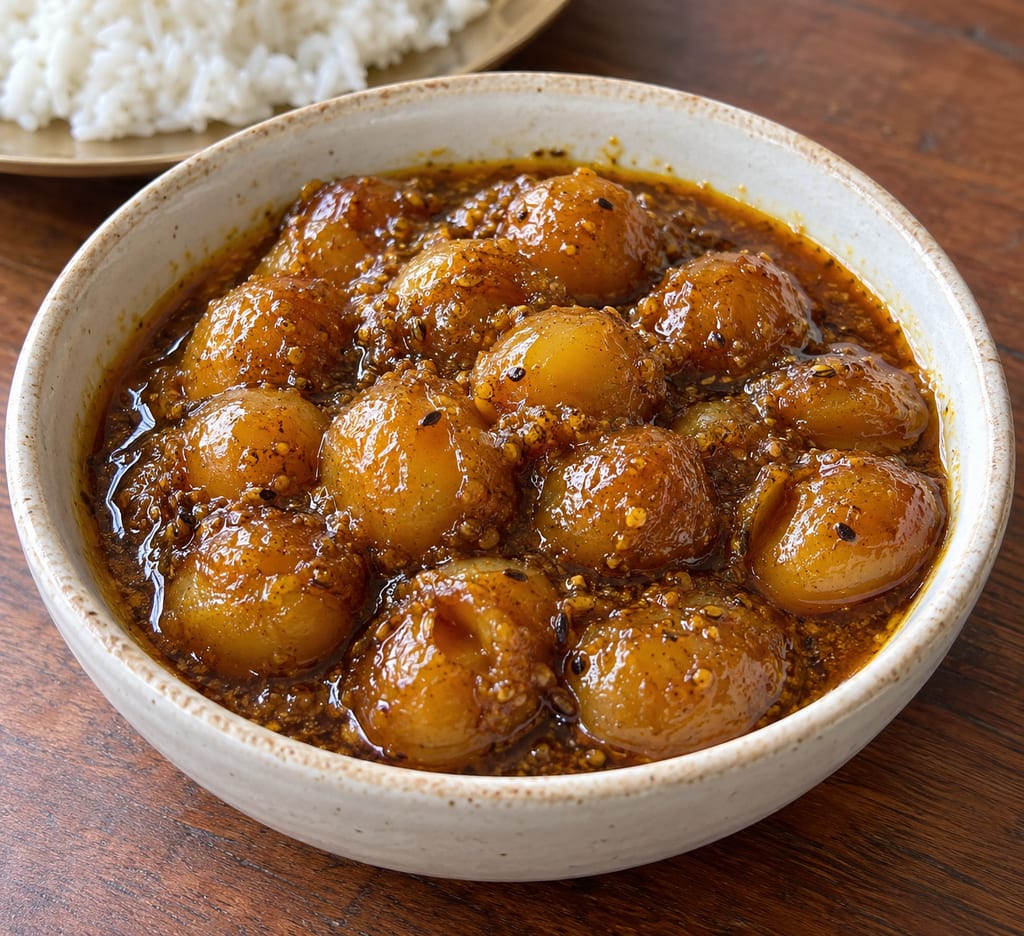
Ripe Nepali lapsi is boiled, peeled and cooked with mustard oil, salt, sugar and roasted spices to make a sweet-sour achar served alongside a meal.

A gelling polysaccharide extracted from red seaweeds, sold as kanten strips or powder; it sets firm at a low concentration and stays solid until about 85 °C.
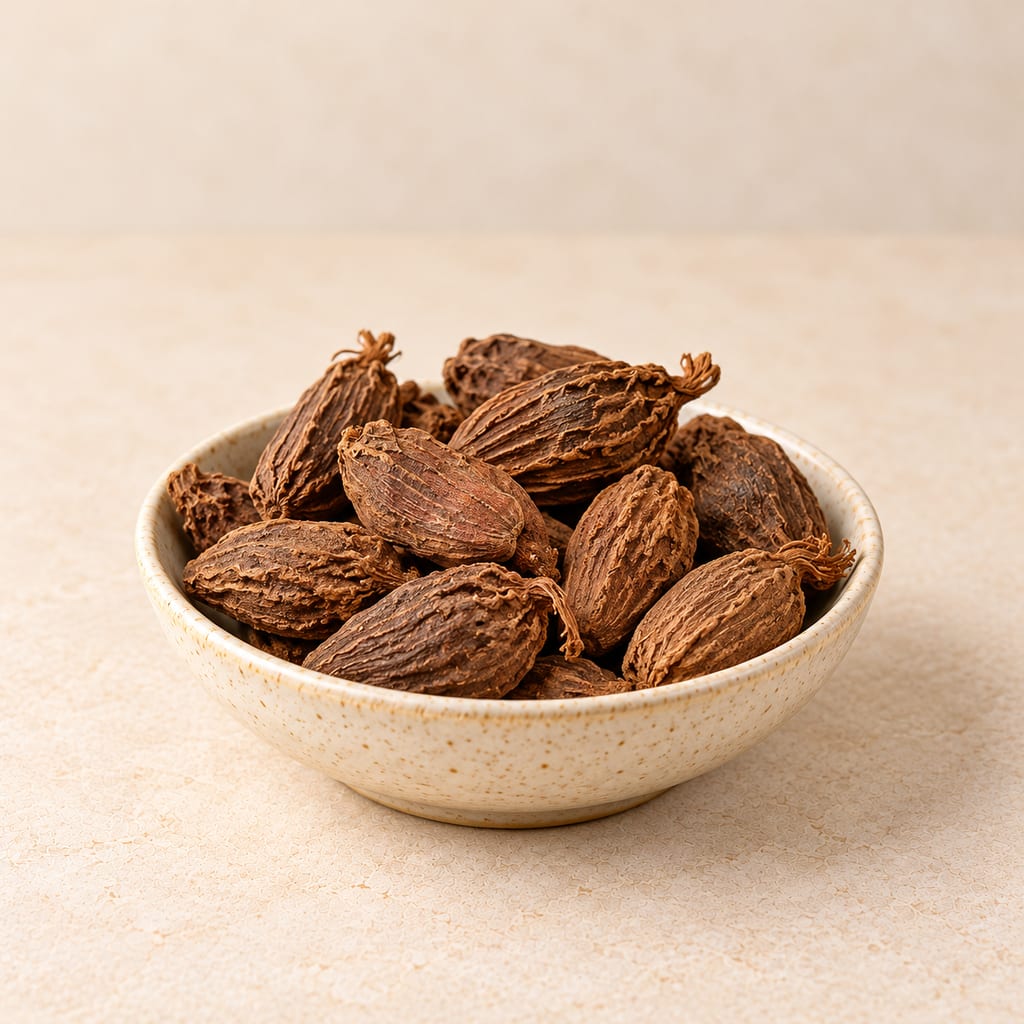
Alainchi is the large or black cardamom of the eastern Himalaya, the dark, smoke-dried pods of Amomum subulatum. Its camphor-cool, smoky seeds season Himalayan and North Indian cooking and a sweet Nepali lapsi achar.
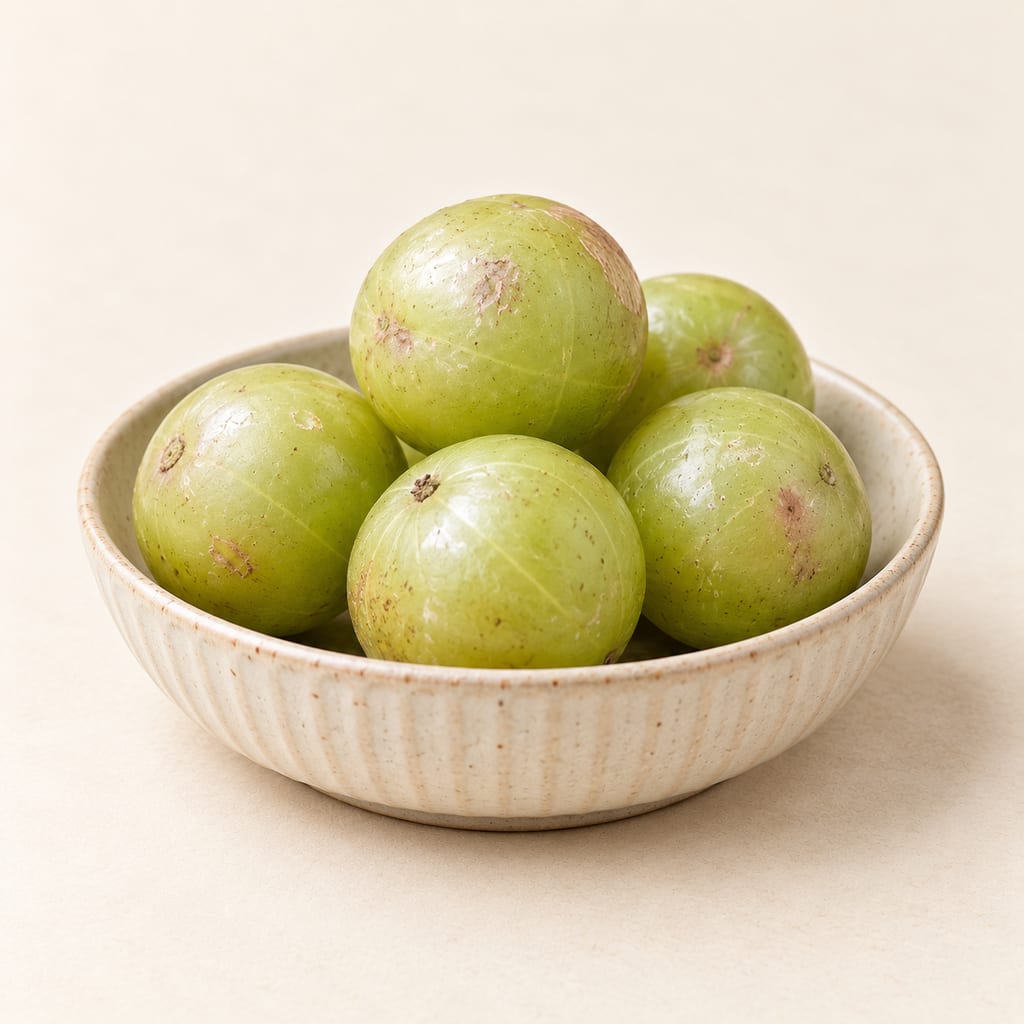
Amla is the firm, sharply sour fruit of Phyllanthus emblica. Cooks transform it into murabba, pickles, chutneys, drinks and dried snacks.
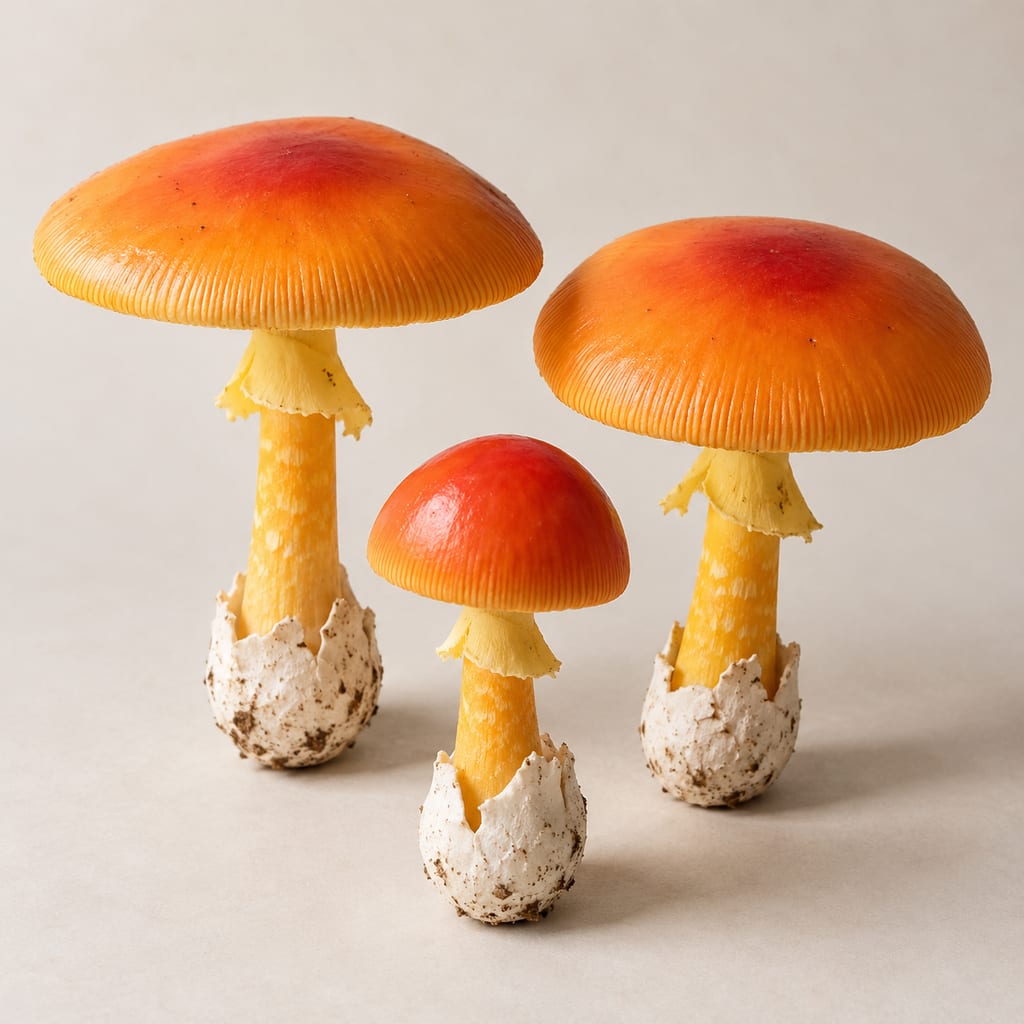
A wild Asian Amanita reported as food in regional literature and listed in China’s edible-fungi catalogue. Lookalikes include lethal species; this record is not a guide to identifying wild mushrooms.
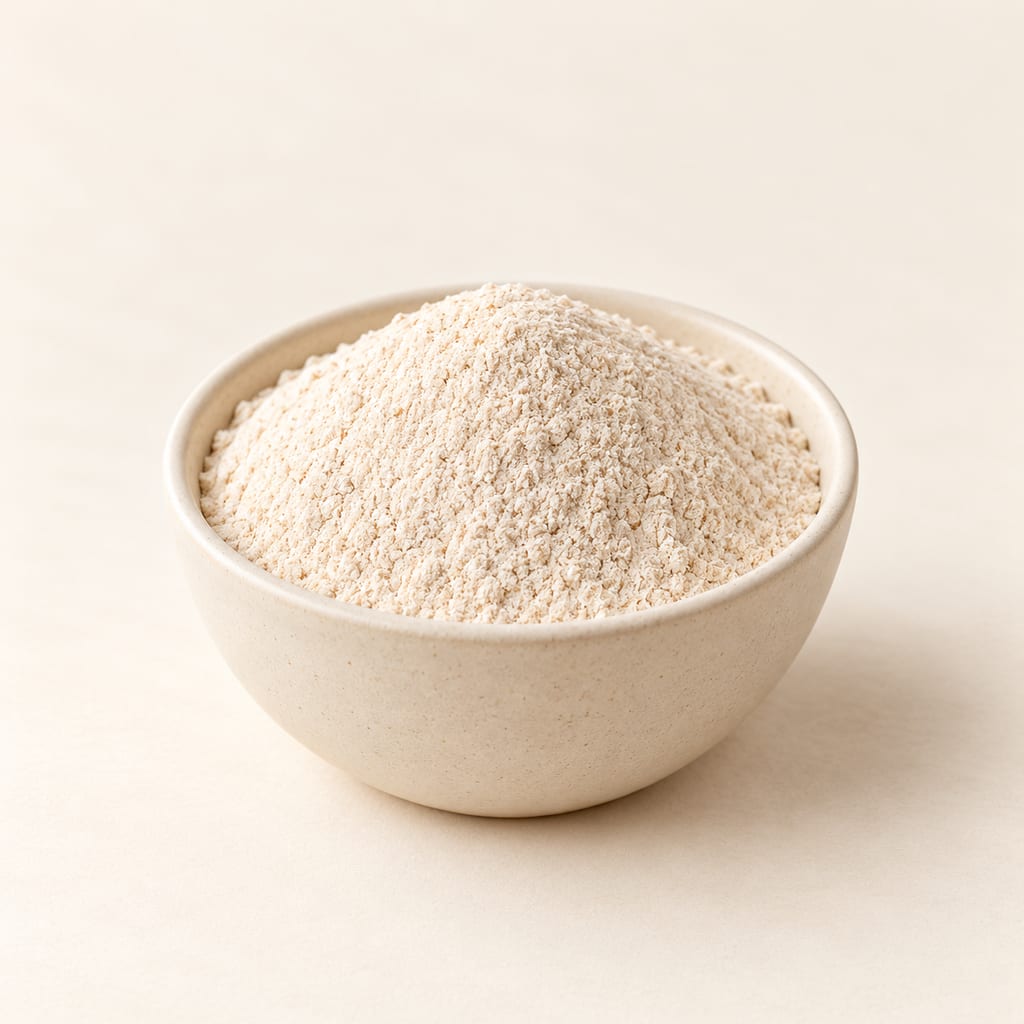
Atta is wheat flour used across South Asian bread traditions. Indian standards distinguish wheat flour (atta) from resultant atta; milling route and particle size shape its behavior in chapati dough.

Bamboo shoots are the young culms of many bamboo species, eaten after boiling or leaching in Asia, and fermented into sour and preserved foods in the Himalayas, northeast India and Burma.
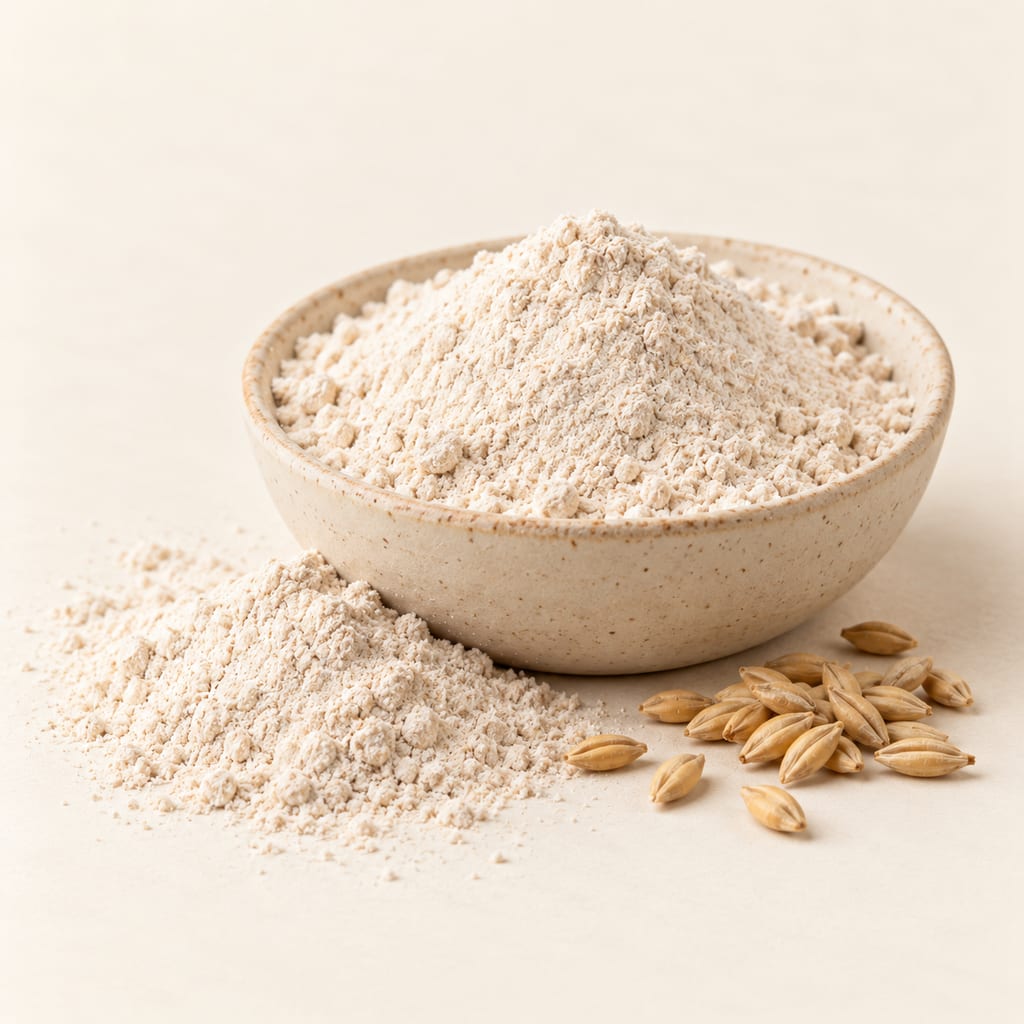
Barley flour is ground barley grain; whether it comes from pearled or hulless kernels, its milling and limited wheat-like gluten-forming ability shape the doughs and foods it can make.

Black carrot is the anthocyanin-pigmented Eastern carrot (Daucus carota var. atrorubens), the purple root that preceded orange types and still colours kanji and şalgam.
No community contributions have been published for this entry yet.
Sign in to contribute. Published comments and photos are free to read.
Royal Botanic Gardens, KewIdentity · History
Curcuma longa L.Accepted species, rhizome, cultivated origin uncertainty and food/dye uses.
Cited in: The rhizome behind the yellow powder; A cultivated spice with several histories; Keeping the powder useful
Food and Agriculture Organization of the United NationsProcess · Science · History
Turmeric: Post-harvest Operations2004 processing account, curing/drying/milling, trade types and storage.
Cited in: The rhizome behind the yellow powder; A cultivated spice with several histories; From harvested rhizome to a millable spice; What colour and aroma reveal; Keeping the powder useful
Indian Journal of Traditional KnowledgeHistory
Ethnobotany of turmeric2012 synthesis of regional South Asian cultural and food uses; origin claims interpretive.
Cited in: A cultivated spice with several histories
Food and Applied Bioscience JournalScience
Characterization of odor active compounds of fresh and dried turmericStudy abstract and sensory descriptors.
Cited in: What colour and aroma reveal
FoodsScience
Variations in the Volatile Compositions of Curcuma SpeciesOpen research on volatile oil differences among species.
Cited in: What colour and aroma reveal
Nirmala’s DelightUse
How to make Lapsiko Achar (Hog Plum pickle)16 September 2016 personal recipe, measured turmeric and method.
Cited in: Three fruit pickles, three distinct roles
Himalayan Wild Food PlantsUse
Citrus pseudolimon Tanaka: Galgal1 December 2020 Galgal pickle ingredients and method.
Cited in: Three fruit pickles, three distinct roles
Indian Journal of Traditional KnowledgeUse
Traditional pickles of Himachal Pradesh2016 survey p. 335 Galgal method, turmeric ingredient, process and regional account.
Cited in: Three fruit pickles, three distinct roles
Science of the Total EnvironmentSafety
Evidence of turmeric adulteration with lead chromate across South Asia2024 sampled-market study abstract; bounded contamination finding.
Cited in: Keeping the powder useful
US NIH NCCIHSafety
Turmeric: Usefulness and SafetySupplement safety discussion distinguished from food spice.
Cited in: Keeping the powder useful
