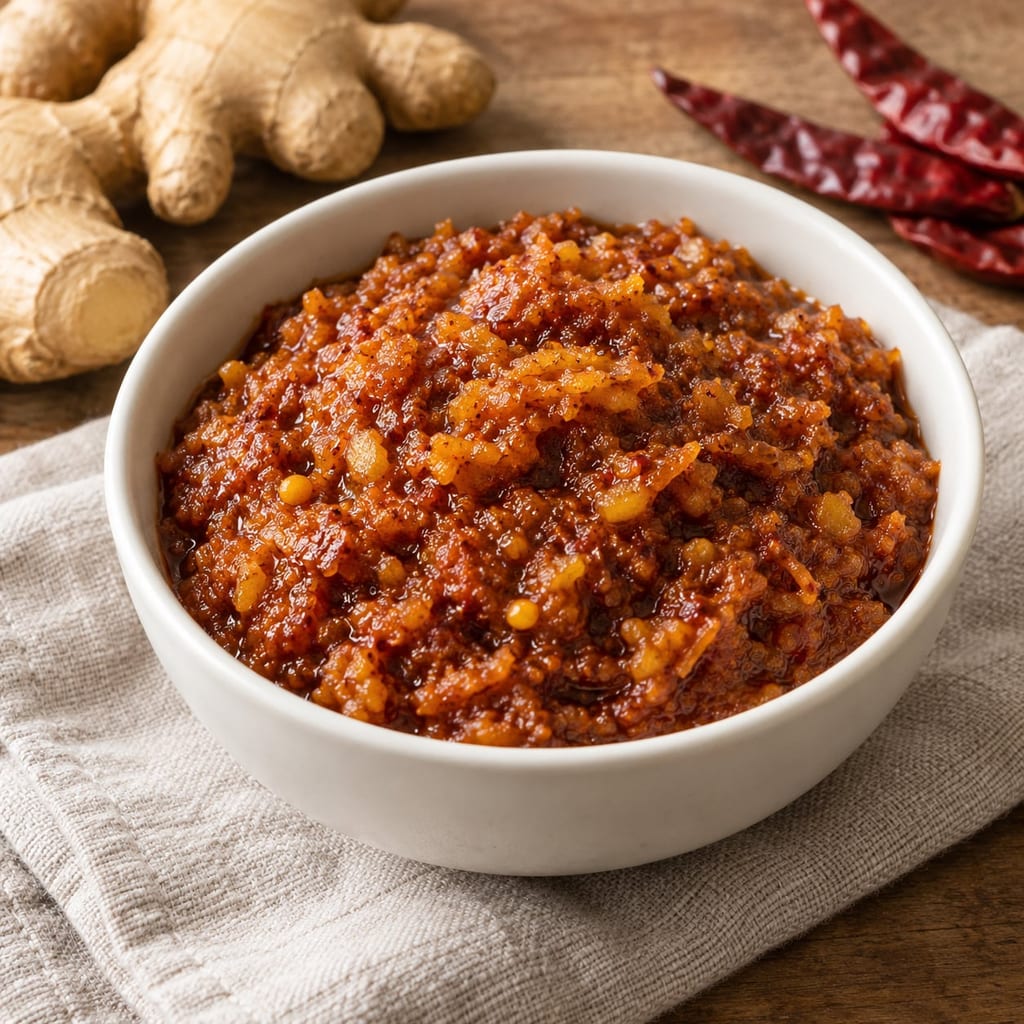
Allam pachadi
An Andhra ginger-and-urad chutney in which browned dal and briefly fried ginger and chillies are cooled, then ground with jaggery to a coarse paste.
 FermenteaWhere food goes to change
Traditional method
పల్లీ పచ్చడి (palli pachadi) · Rayalaseema peanut chutney
A moist Andhra peanut chutney: roasted groundnuts ground with fried dried chillies and tamarind, folded into a roasted tomato-and-spice mix with raw onion, and eaten with khichdi, attu or idli.
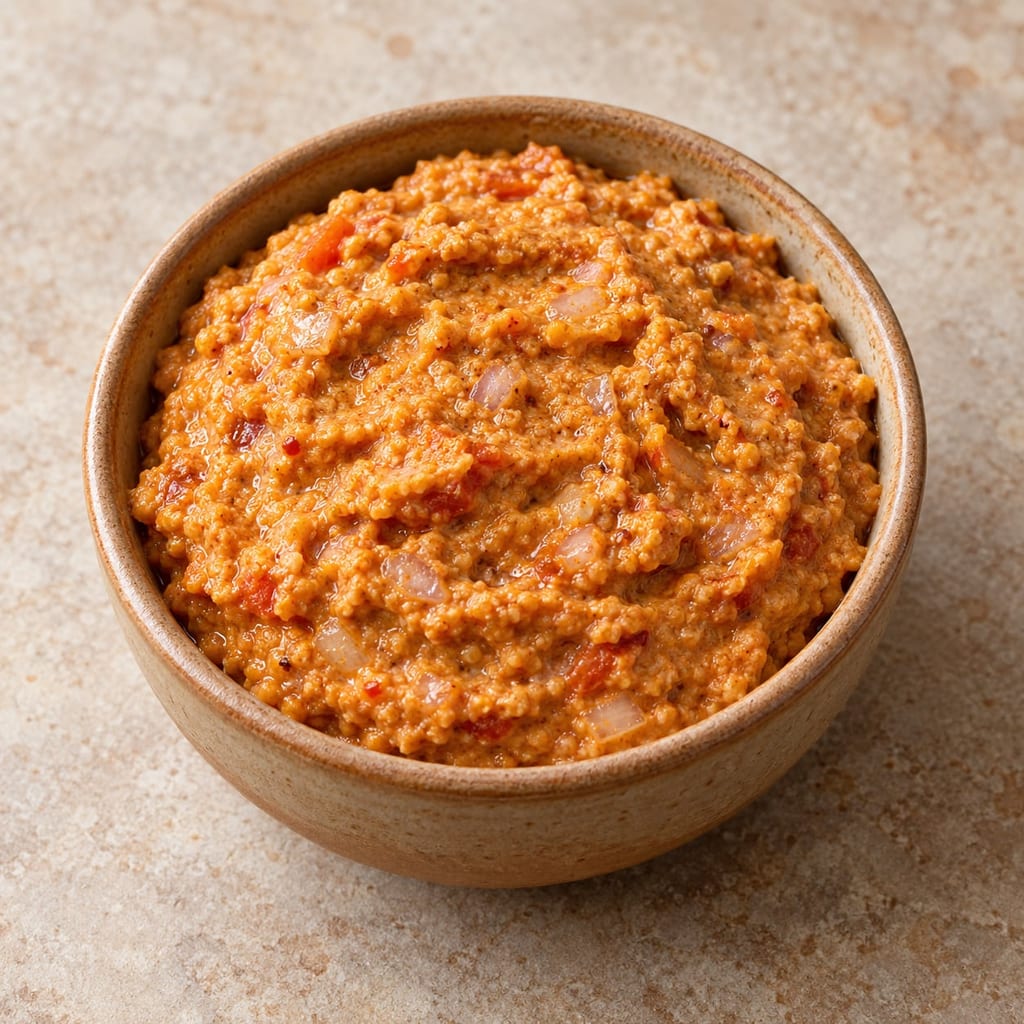
In Telugu, peanut chutney goes by palli pachadi or verusenaga pachadi. Neither name fixes one recipe. The Vismai page identifies its version with Rayalaseema, with the author saying she learned it at a friend's home in Kurnool and does not herself come from the region. She describes Rayalaseema cooking as spicy. A second blog labels its recipe Rayalaseema and Telangana. These are recipe-level attributions and do not establish a single origin or a regional standard.
The recipe above is the Vismai version for six. It differs from a dry peanut powder in being a wet paste: peanuts are roasted and skinned, then ground with fried chillies and soaked tamarind and water, and a separately roasted mix of coriander seed, cumin, turmeric, salt and tomato is pulsed and stirred in. Raw chopped onion goes in last, so it keeps some bite.
The page says the chutney is hot enough to eat with pulagam, a simple khichdi, and suggests 3 to 4 more chillies for eating with plain rice. It also offers it with attu, a dosa-style pancake, or with idli, or with hot rice and a little pachi pulusu. A reader reports serving it with hot rice and gingelly oil. The page lists garlic but never says when to add it, and this entry does not guess.
The MAA Abhiruchi blog, in 2010, gives a different formula for three to four people: 1 cup roasted peeled peanuts, a small onion, a pod of garlic, 6 de-seeded dried chillies, 2 teaspoons sesame oil, half a cup of water, tamarind from a lemon-sized ball soaked 15 minutes, or 1 tablespoon of paste, and salt. Garlic and chillies are fried briefly, the onion is cooked 4 to 5 minutes until translucent and cooled, and everything is ground coarsely with the peanuts and tamarind. A tempering of mustard seeds, asafoetida and 8 to 10 curry leaves in a little oil is poured over.
That author serves it with idli or dosa, mixed with rice and ghee, or as a spread or dip. Leaving out onion and garlic suits Jain, Vaidika and Sattvika diets, and fresh coconut or coriander can be added. The two versions are separate formulas and are not interchangeable.
A 2014 paper in the Journal of Nutrition, Health and Food Engineering tests its own ready-to-eat peanut chutney: 70 g peanut with weighed curry leaf, tamarind, garlic, spices, oil and water. Peanuts are sand-roasted at 100 to 110 degrees C, other ingredients fried and ground, and the work compares 5 and 10 percent vinegar treatments, glass or foil packaging and storage at 35 plus or minus 2 or 5 plus or minus 2 degrees C. The paper does not state the basis of the vinegar percentage, and it describes the best package as glass in its tables but aluminium foil in one discussion sentence. Its shelf-life estimates model quality attributes, not microbiological safety. The study concerns a different product and does not validate the household recipes.
All of these preparations roast, fry, grind and mix. None adds a starter or lets the paste ferment. A reader who sees gas or sourness in a stored batch should treat it as spoilage.
Peanuts are a major allergen. No source here sets a safe holding time for a homemade moist chutney, and no dated history of the dish was found. An ICAR groundnut recipe booklet lists a peanut, coconut and curd chutney, but its full text could not be read for this entry.
No source dates palli pachadi. The recipe pages give personal and regional attributions, not an origin history.
Yield 6 servings · Scaling: source batch only
Peanuts are the main ingredient of every version.
Hazard sourceRaw onion is folded in at the end and the chutney is kept as a moist paste. The page gives no tested holding time.
Hazard sourceThe page suggests 3 to 4 extra chillies for a large batch stored in the fridge. That is the author's advice, not a tested preservation step, and no holding time is given.
A 2014 storage study used a different formula with vinegar and packaging controls; it does not validate this recipe.
The recipe page names Rayalaseema and says the author learned it in Kurnool; that is a recipe-level attribution, not evidence of a regional standard or an origin.
A second blog labels its groundnut chutney Rayalaseema and Telangana; the label is the author's own.
An Andhra ginger-and-urad chutney in which browned dal and briefly fried ginger and chillies are cooled, then ground with jaggery to a coarse paste.
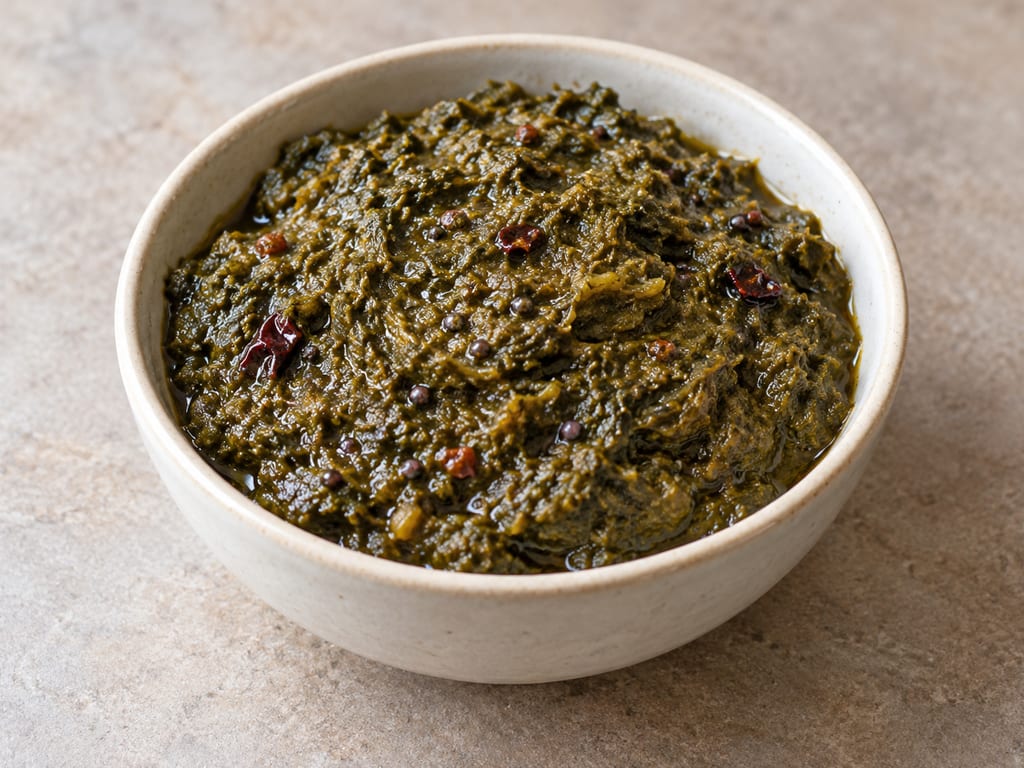
A hot, sour Andhra chutney of gongura (sorrel) leaves cooked soft and ground with fried dried chillies, garlic and onion, then finished with a hot tempering of dals, mustard and curry leaves.
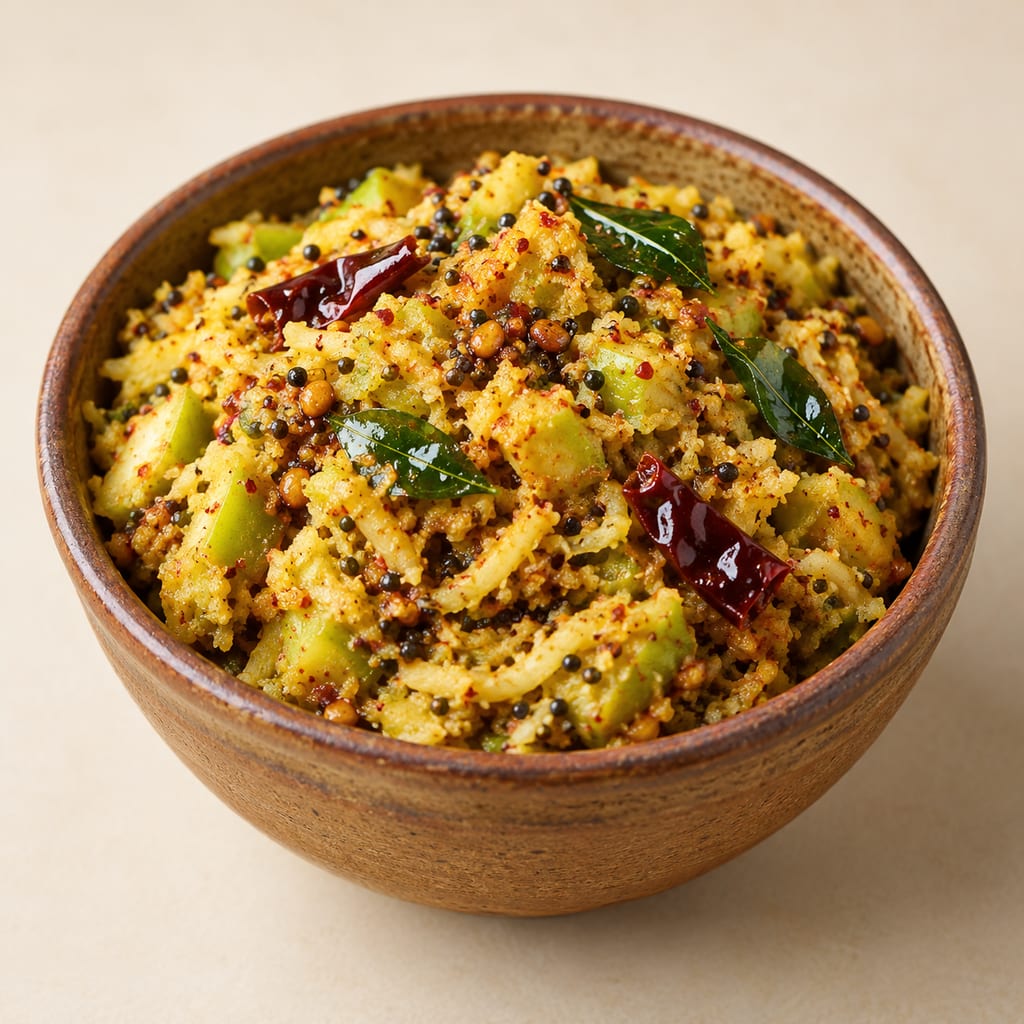
A Telugu coconut and raw mango pachhadi with a separately fried spice mixture.
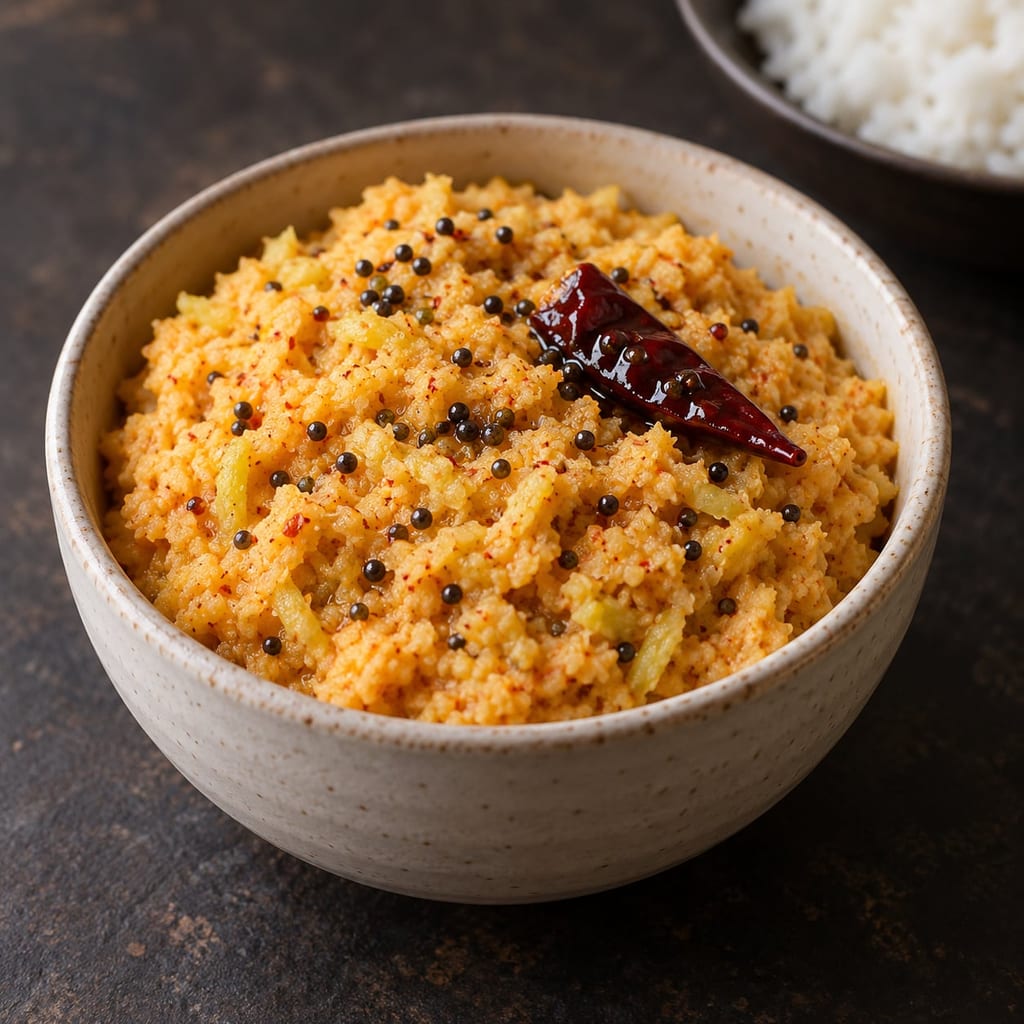
A coarse, sour Andhra chutney of raw mango and fresh coconut ground with browned urad dal and hot chillies, finished with a mustard tempering and eaten with hot rice.
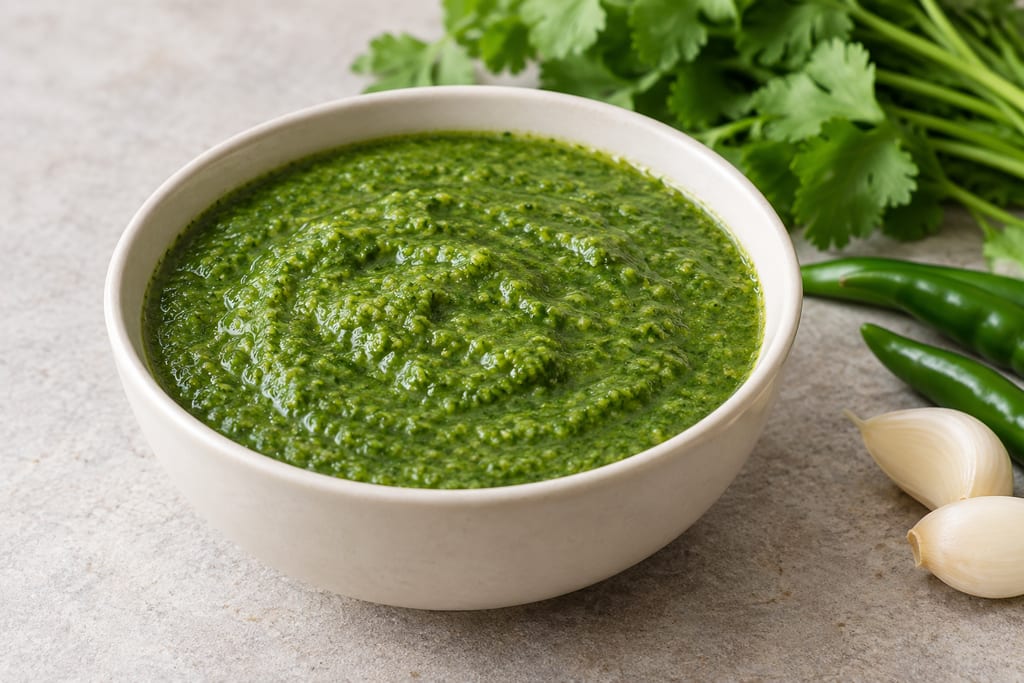
Afghan coriander chatni is a sharp, hot herb sauce with garlic and vinegar. A 2008 Afghanistan manual records green or red pepper and optional walnut; heat and household versions vary.
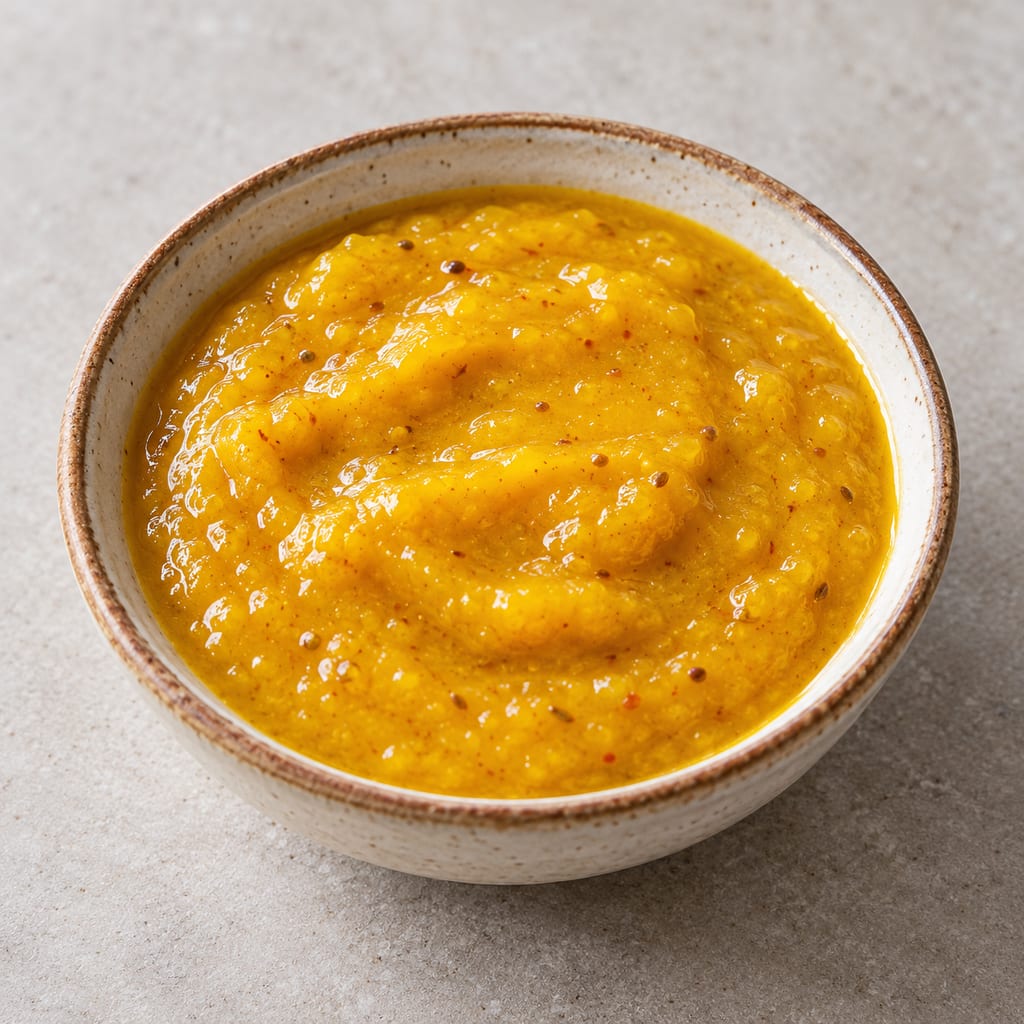
This cooked amba follows a Jewish Food Society recipe that simmers ripe mango with onion, garlic, mustard seed and warm spices into a tangy Middle Eastern condiment.
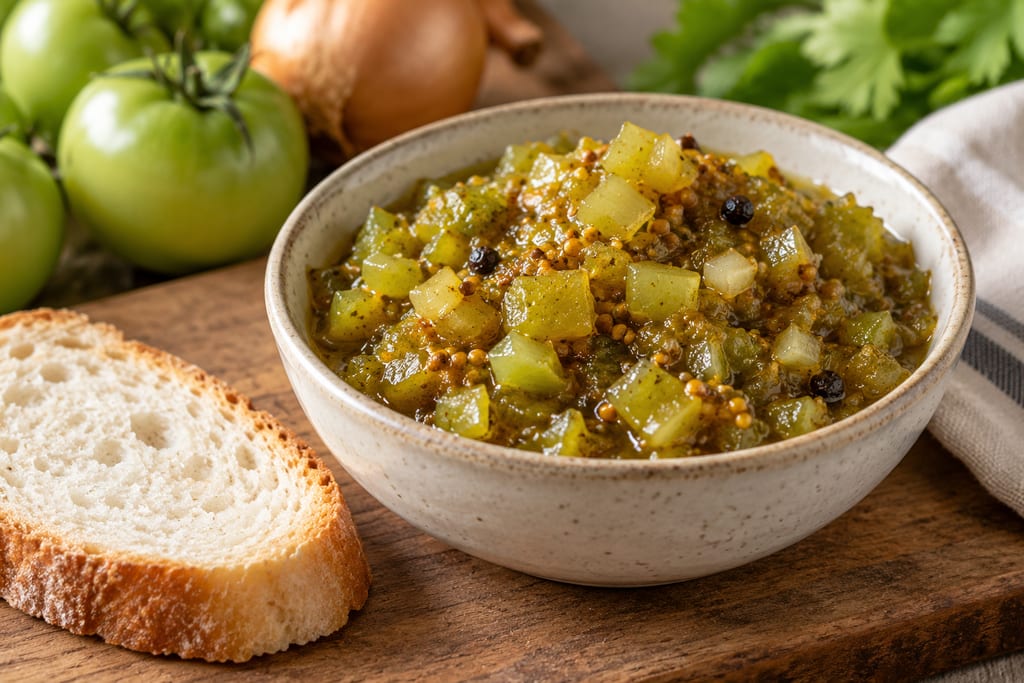
Australian green tomato pickles and relishes vary. This partial version follows ABC Western Victoria’s 2018 pickle recipe, not Beerenberg’s commercial formula. Sources document examples from 1944 onward, not a single origin.
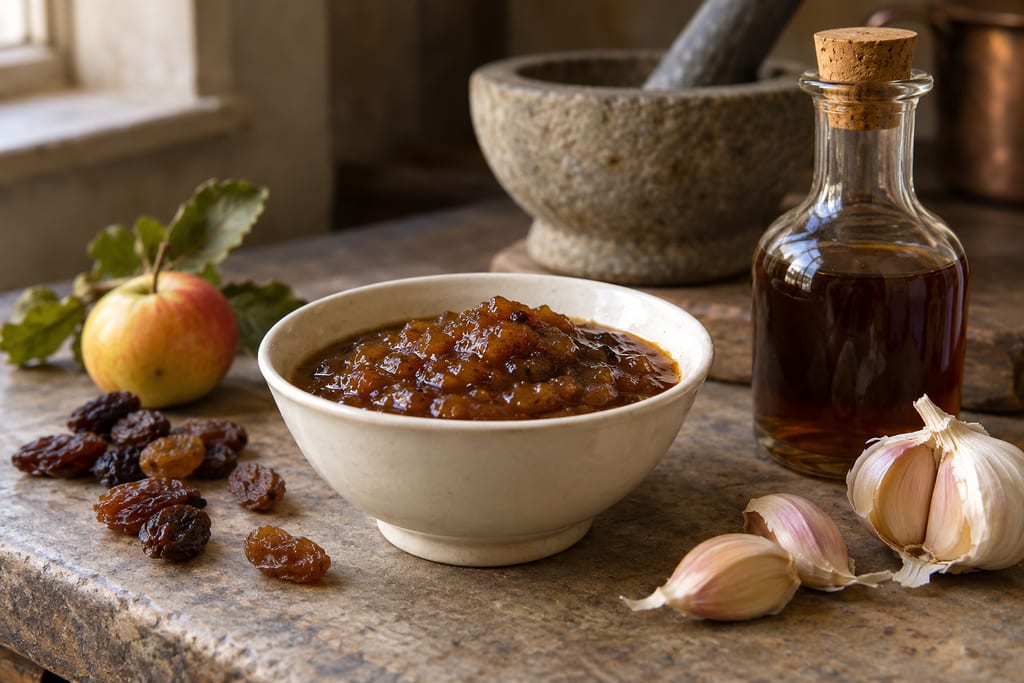
Eliza Acton's Bengal receipt for chetney sauce: stoned raisins and a hard acid fruit pounded with brown sugar, ginger, salt, cayenne and garlic, then thinned with vinegar to the consistence of thick cream.
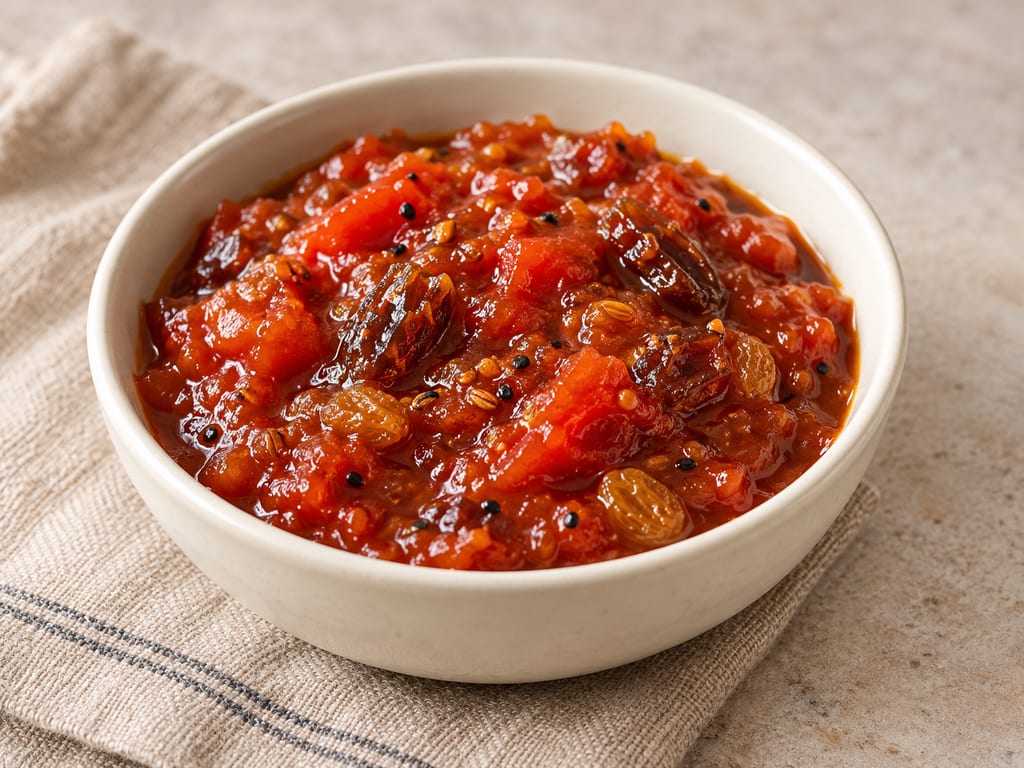
A cooked Bengali meal chutney combining tomatoes, dates, raisins, ginger and panch phoron.

A spicy South African vegetable relish of onion, carrot, pepper, tomato, curry seasoning and beans, cooked briefly and served warm or cold beside pap and grilled meat.
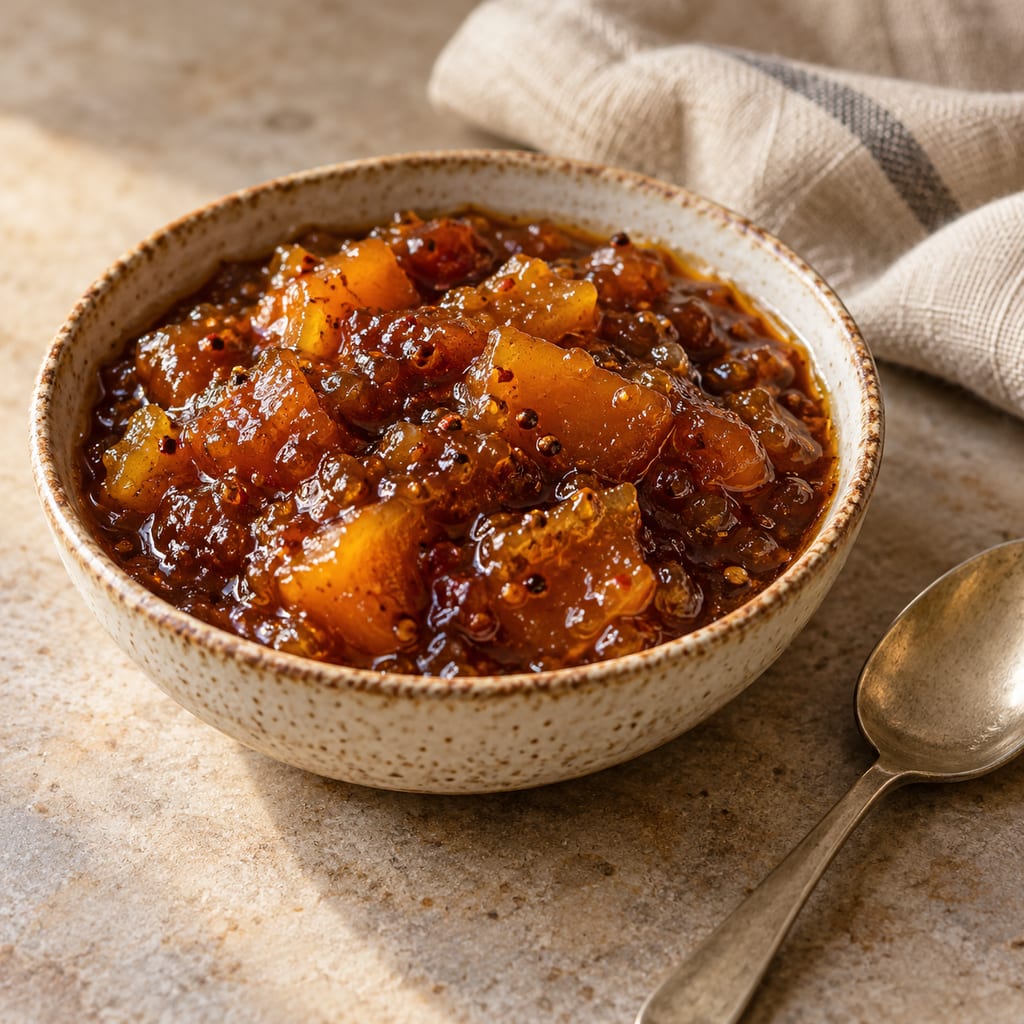
A broad account of cooked chutney traditions: fruit or vegetables combined with sugar, spices and sometimes acid, often boiled into a thick condiment. This record is historical and process context, not a formula or storage recipe.
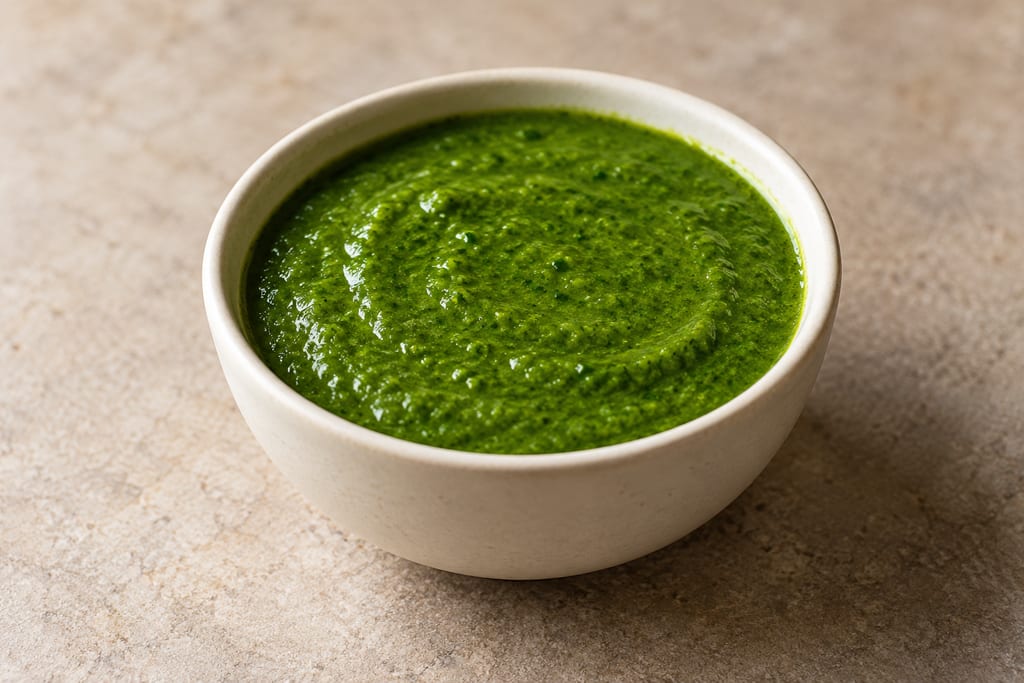
A cold-blended coriander and mint chutney with ginger, green chilli and optional cumin and lemon; the author serves it with snacks, chaat and sandwiches.
No community contributions have been published for this entry yet.
Sign in to contribute. Published comments and photos are free to read.
Vismai FoodMethod · Use · Geography
Rayalaseema Palli Chutney | How to make perfect Rayalaseema Palli Chutney with TipsIngredients, method, serving and tips
Kurnool and Rayalaseema attribution
Cited in: A family of peanut chutneys; The moist Rayalaseema batch; Not a fermentation; Allergen and open questions
MAA ABHIRUCHIVariant · Use
Verusenaga Pacchadi / Groundnut ChutneyA second recipe with tempering, variations and serving
Cited in: A family of peanut chutneys; A second household version with a tempering
Journal of Nutrition, Health & Food Engineering / MedCraveSafety
Quality kinetics and storage stability studies of ready to eat peanut chutneyA different weighed formula with vinegar, packaging and storage treatments
Cited in: A 2014 storage study of a different formula
ICAR-IIGRIdentity
Nutritious and Delicious Groundnut Preparations: Some RecipesA peanut, coconut and curd chutney appears in the booklet
Cited in: Allergen and open questions
