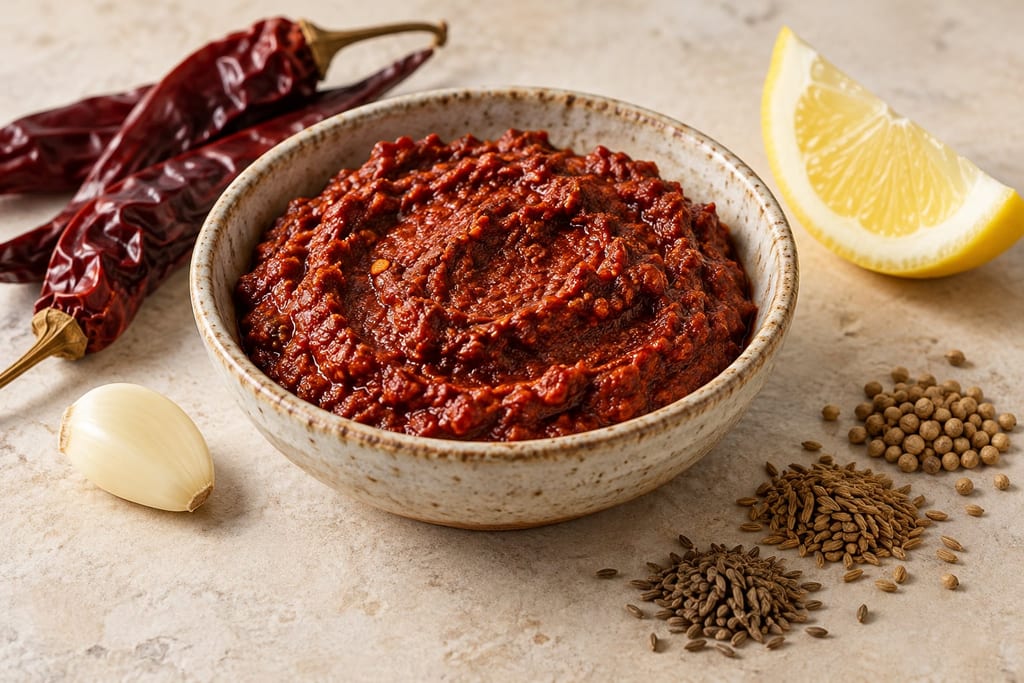
Dried-chilli harissa-style paste
A fresh chilli paste made from rehydrated dried red peppers, garlic, olive oil, lemon and warm spices; this small-batch formula adapts the harissa family rather than reproducing a tested Tunisian method.
 FermenteaWhere food goes to change
Spices and aromatics
Dried red chillies are ripe chilli pods, mostly Capsicum annuum, preserved by drying and used whole, soaked, flaked or ground in pastes such as harissa and in spice blends.
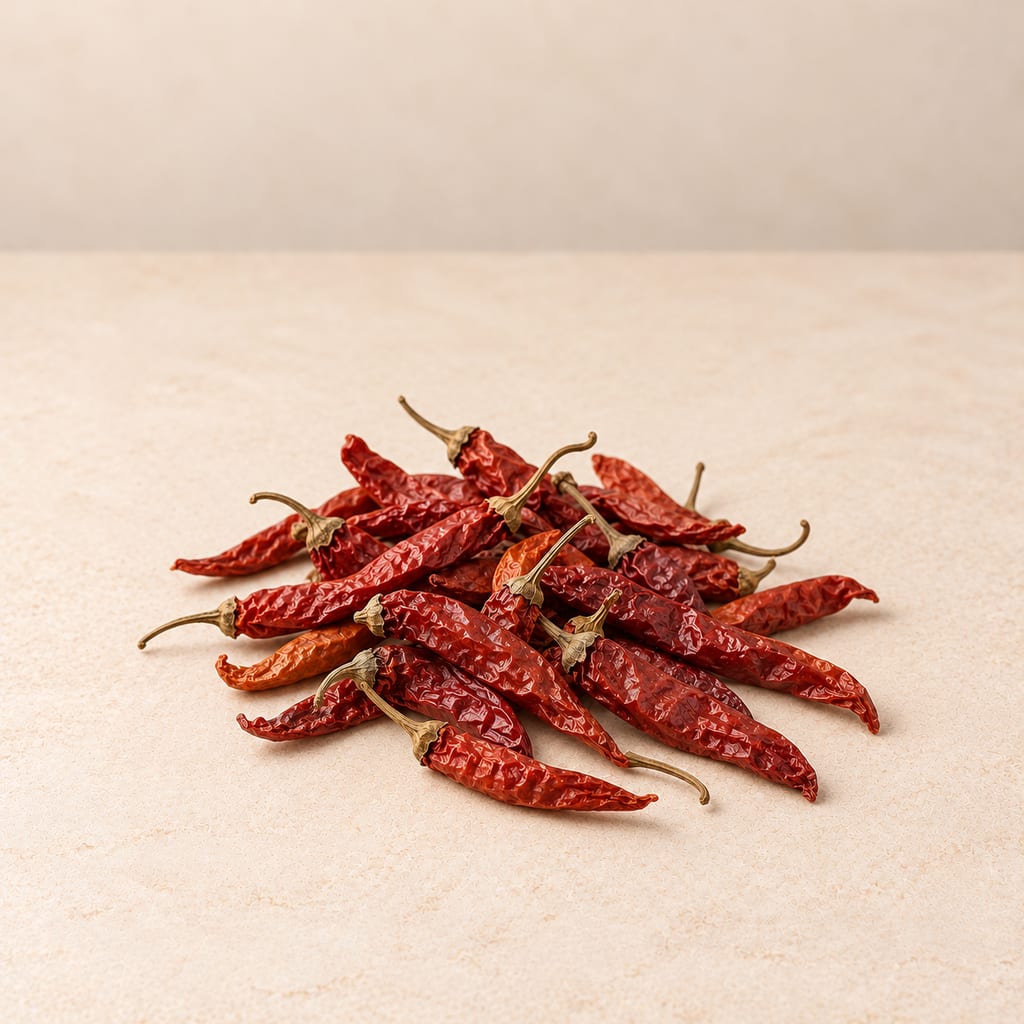
A dried red chilli is the ripe fruit of a Capsicum plant, left to lose its water until it is hard, brittle or leathery, and kept for months or longer. Most of the chillies sold this way belong to Capsicum annuum, the species domesticated in Mexico, though other species are dried too. The red colour comes from carotenoids, chiefly capsanthin and capsorubin, which are described as unique, powerful and highly stable; the pigment profile and concentrations change as the fruit matures.
Dried chillies keep through the winter in temperate climates, and in hot countries chillies are often dried on the ground in the sun. At home they can be threaded on cotton and hung in a warm, dry place. The dried pods are used whole, torn into flakes, ground to powder, smoke-dried to make chipotle, or steeped into chilli oil. Worldwide, about 5.5 million tonnes of dried chillies were produced in 2024, led by China, Thailand and Bangladesh with more than 300,000 tonnes each, against roughly 45 million tonnes of fresh green chillies.
In Mexico the fresh and dried forms of a chilli often have different names, and the dried name is the one cooks use in sauces. The fresh poblano becomes the ancho when dried, a name meaning wide: a broad, flat, heart-shaped pod that starts dark purplish green and ripens to a red so dark it is nearly black, rated at about 1,000 to 1,500 Scoville heat units, and often ground to powder. A related, darker, sweeter and softer variety is the mulato. The pasilla is sometimes wrongly called a poblano, especially in the United States, but it is a distinct pepper. The fresh mirasol becomes the guajillo, the second most common dried chilli in Mexican cooking: thin-skinned, shiny and reddish-brown, around 8 to 10 centimetres long, generally sweet and somewhat fruity, and mild to medium in heat, with sources giving figures from 2,500 to 5,000 Scoville units and a wider range of about 2,000 to 15,000. Its smaller, hotter relative is the guajillo puya, and Zacatecas is named as a main producer.
The same logic applies elsewhere. Cayenne and paprika are dried and ground annuum pods. Paprika is traditionally made from the Longum group, with milder grades made mostly of flesh with the seeds removed and hotter ones keeping some seeds, stalks and calyces. Spanish pimentón de la Vera is smoked over oak and holds a Denomination of Origin, covering about 1,500 hectares and some 4.5 million kilograms a year, while pimentón de Murcia is unsmoked and dried in sun or kilns. Hungarian paprika is graded from the delicate különleges through édesnemes, félédes and rózsa to the hot erős. In Korea gochugaru is made from sun-dried red peppers known as taeyangcho; it ranges from fine powder to flakes and is described as spicy, sweet and slightly smoky. Kashmiri chilli powder is bright red but mild.
A confusing coincidence deserves a mention. The Peruvian ají mirasol is a dried ají amarillo, a Capsicum baccatum, while the Mexican mirasol that becomes the guajillo is a Capsicum annuum. The shared word mirasol, meaning looking at the sun, describes the way both are dried and not a shared plant.
Capsicum annuum was domesticated in Mesoamerica about 6,000 years ago by selective breeding of wild peppers, and remains of wild chillies from caves and sites such as the Oaxaca Valley suggest they were eaten more than 8,000 years ago. Diego Álvarez Chanca sailed with Columbus on his second voyage in 1493 and published his observations on the plant's medicinal uses in 1494. By the middle of the sixteenth century chillies were common in Spanish gardens, they appeared in Italy by 1526 and Germany by 1543, and they reached the Balkans by 1569, where they became paprika. Portuguese traders carried them to Africa and Arabia and then to Goa, Sri Lanka and Malacca; the Spanish took them to the Philippines; and the earliest Chinese record dates from 1591. The Maya and Aztecs also used the plant in traditional medicine.
Hungary shows how an imported chilli became a national spice. The Ottoman Empire ruled central Hungary for much of the sixteenth and seventeenth centuries, and industrial paprika production began near the end of the seventeenth and was well developed by the eighteenth. The earliest Hungarian dictionary entry, from 1604, calls the spice Török-bors, Turkish pepper, and the name paprika entered Hungarian use in 1775. Central European paprika stayed hot until the 1920s, when a breeder in Szeged found a sweet-fruited plant. In Tunisia, chillies came through the Columbian exchange, presumably during the Spanish occupation of Hafsid Tunisia from 1535 to 1574, and became the basis of harissa.
Drying removes water and concentrates flavour and colour. The way the pods are dried matters: for paprika, the drying method, the cultivar and the length of storage all affect the final colour, and sun-drying can take up to 10 days in good conditions. The carotenoids that give the colour, capsanthin and capsorubin, are described as highly stable, which is why a well-dried red pod keeps its colour. Smoke is a drying route of its own: the chipotle is a smoke-dried ripe jalapeño, and Spanish pimentón de la Vera is smoked over oak.
A dried chilli is still a raw agricultural product, and moulds are its main hazard. Chillies are among the staple commodities regularly contaminated with aflatoxins, the toxins of certain moulds, along with maize, peanuts, rice and wheat, and spices in general are affected. Moulds can invade crops before harvest or in storage, and prolonged high humidity and stresses such as drought raise the risk. Conditions that favour aflatoxin production include a moisture content of at least 7 percent and temperatures between 13 and 40 degrees Celsius, with an optimum of 27 to 30. Chronic exposure is linked to liver and gallbladder cancer, and United States regulators set action levels of 20 to 300 parts per billion depending on the food. The control the literature names is a clean supply chain: rejecting mouldy material and testing batches before use.
Dried chillies are also a known target for adulteration: published work includes methods for detecting illegal dyes in chilli products, and brick powder is a recorded adulterant of Kashmiri chilli powder.
A dried chilli is usually put back into water before it becomes a sauce. For guajillo the pods are seeded, soaked or simmered, then pulverised, mashed or pureed into a paste, which is cooked with other ingredients to make a sauce; the same treatment underlies salsas, marinades, adobo pastes, butters and spice rubs, as in mole, carne adobada, pambazos and consomés. Removing the seeds and the pale placenta lowers the heat.
Gochugaru goes straight into the seasoning. Korean kimchi is salted first and then dressed with a paste that carries the chilli flakes; the measured Oregon State University Extension kimchi, which uses half a cup of dried Korean chilli flakes for about two pounds of napa cabbage, is one example. The chilli does not drive the fermentation, which is the work of the lactic acid bacteria on the cabbage; it supplies colour, heat and flavour to the brine. Chillies reached Korea in the early seventeenth century, with the first mention in the 1614 encyclopaedia Jibong yuseol, but early kimchi had no chilli at all and its use did not become widespread until the nineteenth century.
Dried chillies colour and season a long list of dishes. Oaxacan black mole uses them, and Mexican cooks make adobo pastes, marinades and salsas from guajillo and ancho. Paprika is essential to chorizo in Spain and Portugal, where it is called colorau, and appears in paella and sofrito; in Hungary it is central to gulyás, pörkölt and paprikás and is often a table condiment; in France it flavours the sauce hongroise and the rouille served with bouillabaisse; in Germany and Austria it goes into goulash; and in Morocco and the Middle East it appears in bissara, chermoula and baharat and as a garnish for hummus and baba ghanoush. Italy uses little of it, though it appears in Liptauer in Friuli and in ventricina in Molise.
In India, Kashmiri chilli powder goes into tandoori chicken, tiger prawns, pickles, chutneys, pav bhaji and misal pav, mainly for colour, and in Korea gochugaru seasons kimchi and other dishes. Chilli oil is the other everyday route: dried pods steeped in oil carry heat and colour into noodle, dumpling and rice dishes.
Tunisian harissa is the classic preserve built on dried chillies, and its method is set out on the linked recipe pages. What matters here is what the chilli contributes. Harissa is traditionally made from sun-dried peppers that are split, destemmed and deseeded, washed and ground with salt, garlic and coriander, and kept in glass or pottery vessels; it is usually prepared by women in a convivial family or neighbourhood setting, and the practice was inscribed on UNESCO's list of intangible cultural heritage in 2022. The name comes from the Arabic root harasa, to pound or break into pieces. Tunisian harissa is often made with Baklouti peppers and chillies grown around Nabeul and Gabès, which are relatively mild at 4,000 to 5,000 Scoville units, so the character of the paste comes from the quantity and the drying as much as from the pod.
Chillies reached Tunisia through the Columbian exchange, presumably during the Spanish occupation of Hafsid Tunisia from 1535 to 1574. The paste has relatives across the region: hrous is a Maghrebi paste made with green peppers, and filfel chuma is a Libyan Jewish sauce of powdered sweet and hot peppers and crushed garlic.
In a ferment the dried chilli is a seasoning and a colour, not the thing being fermented. Kimchi takes gochugaru into a brine of fermenting cabbage, and some Tunisian harissa variations include fermented onions or lemon juice. Fresh red chilli mash can ferment on its own, and hot-sauce makers use it that way, but that is a different material from a dried pod.
What the dried pod adds to such foods is chemical: capsaicinoids for heat and carotenoids for the red colour. Salt level, acidity and storage temperature, set by tested procedures, are what control the safety of a chilli ferment.
The labels that matter are the type, the cultivar and the heat, because dried chillies sold under one word can range from the almost mild ancho to a hot cayenne. Heat can be unpredictable even among pods from the same plant, as with the poblano, so tasting a small piece is better than trusting the name. Pods should be dry, free of mould and kept dry.
The heat is the main hazard: capsaicinoids bind to pain receptors in the mouth and throat.
Heat ranges for dried types such as the guajillo differ between references, and drying temperatures and times for chillies are not standardised. The exact form of household harissa varies from family to family.
Household harissa from sun-dried chillies; the Nabeul and Cape Bon associations come from the encyclopaedia entry, not the UNESCO page.
Area of domestication of the species most dried chillies come from; not a birthplace of any particular dried chilli.
Paprika as a dried and ground chilli product; included as one of several dried-chilli traditions.
A fresh chilli paste made from rehydrated dried red peppers, garlic, olive oil, lemon and warm spices; this small-batch formula adapts the harissa family rather than reproducing a tested Tunisian method.
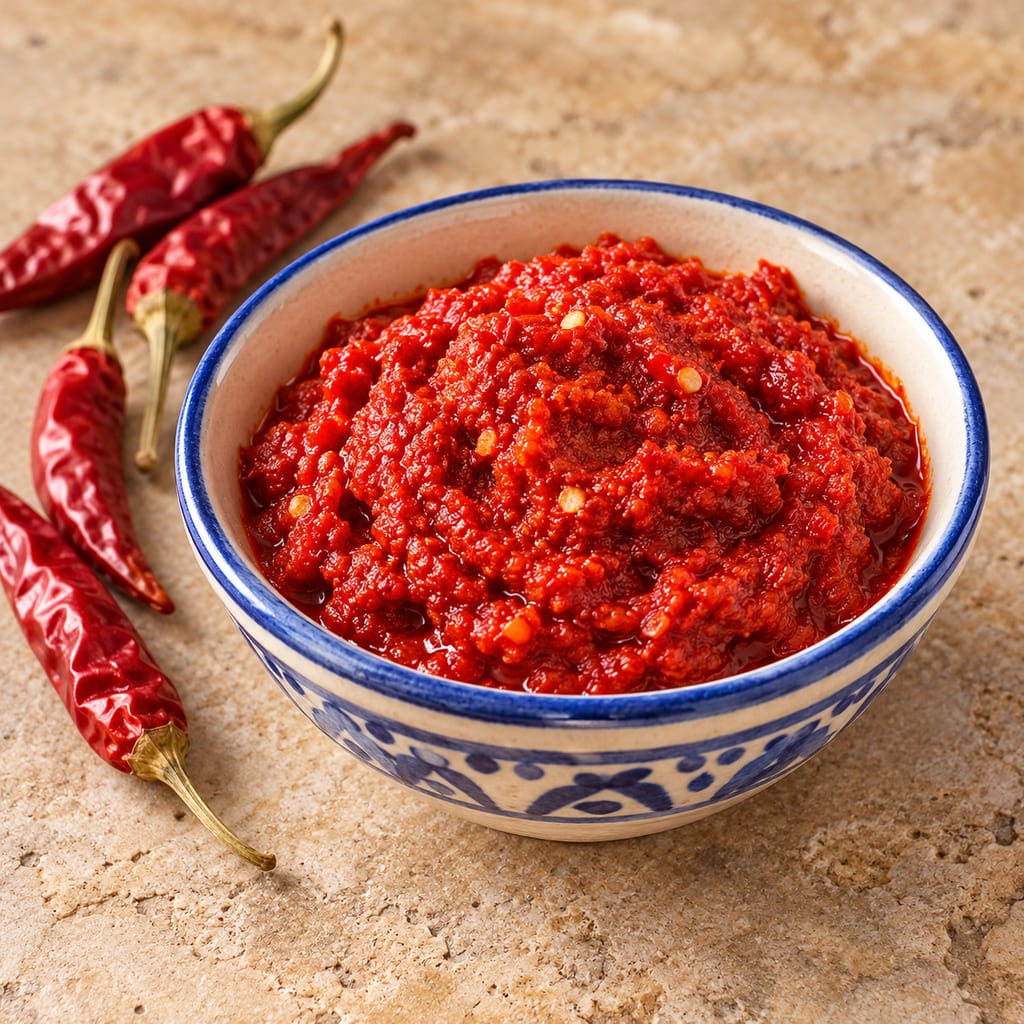
A Tunisian hot chilli paste from Cap Bon and Nabeul: red peppers pounded with garlic, caraway, coriander, cumin and olive oil, with many household and commercial variants.
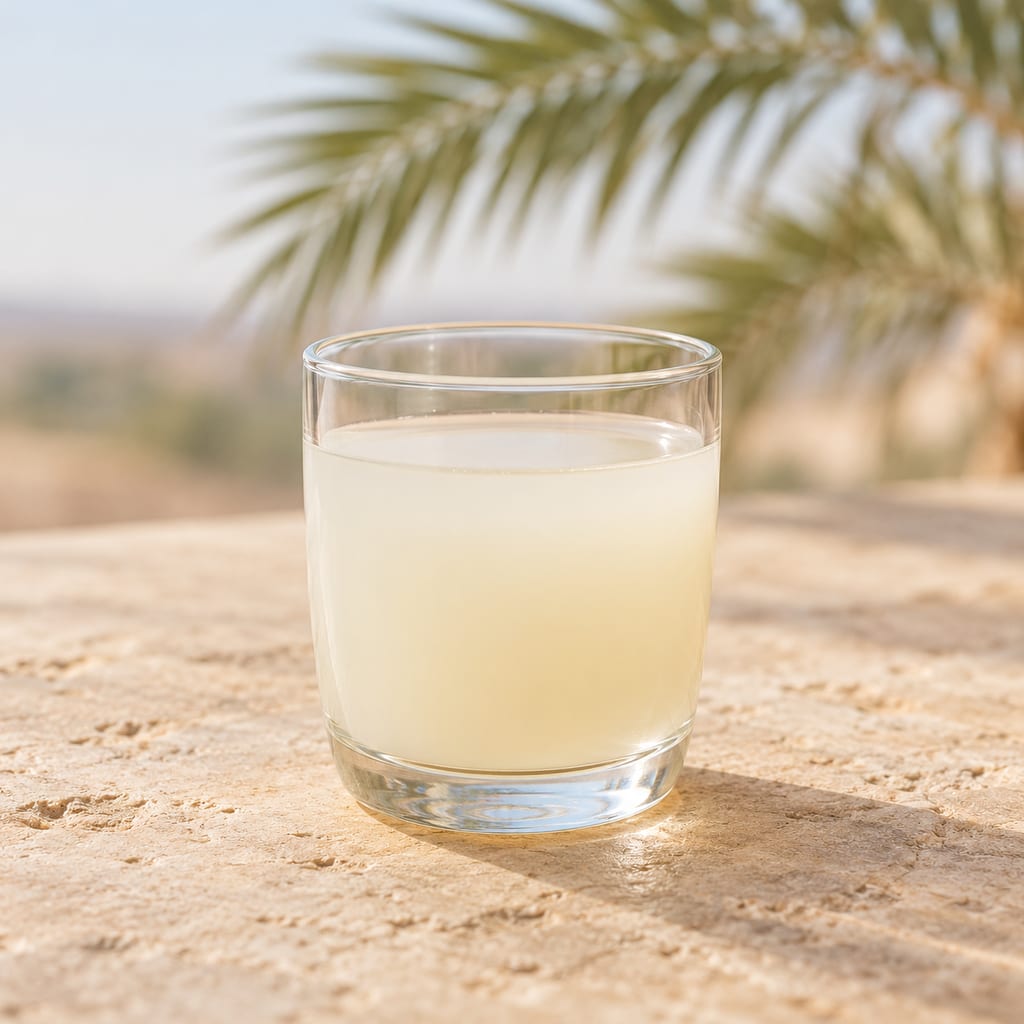
Legmi is sweet sap tapped from date palms in southern Tunisia. It is consumed fresh and can ferment rapidly through native yeasts, lactic acid bacteria and acetic acid bacteria.
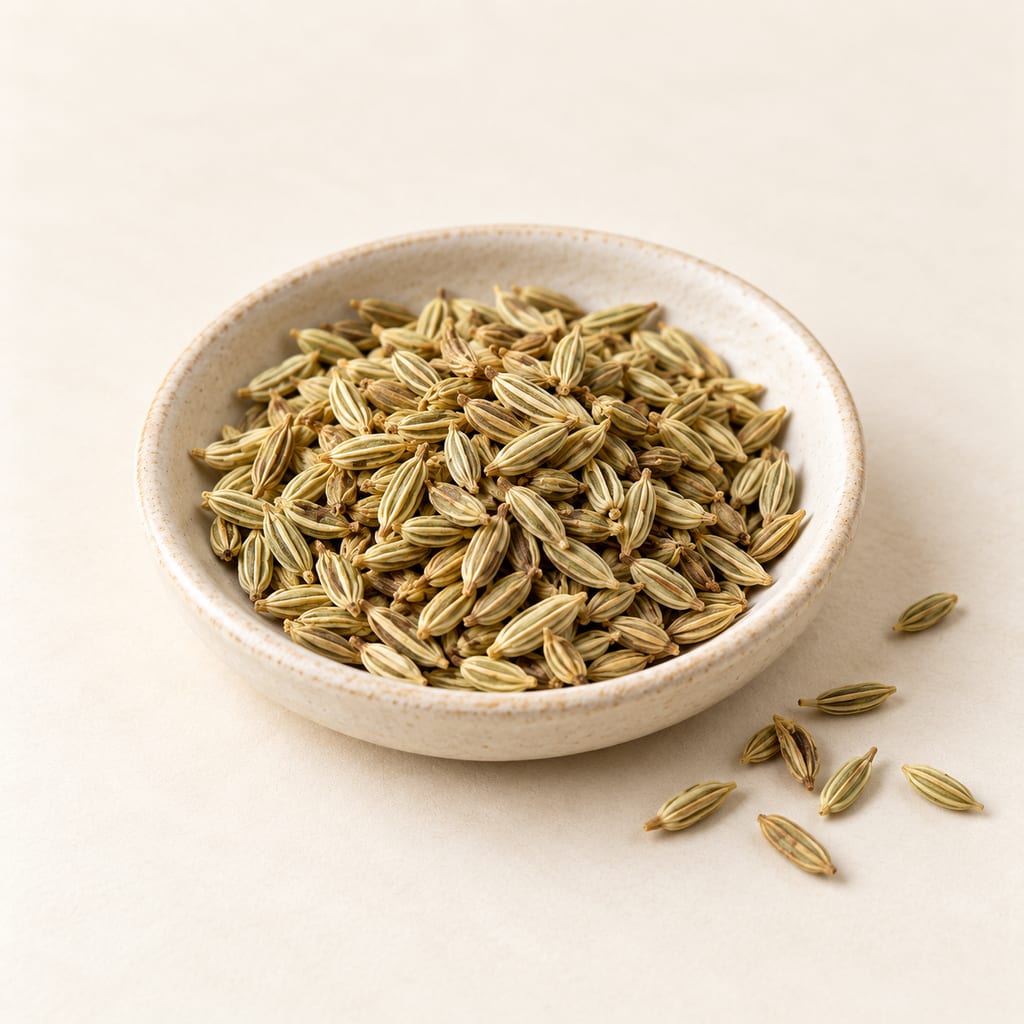
Fennel seed is the dried aromatic fruit of Foeniculum vulgare; a Himachal Pradesh survey records it among the seasonings of Galgal pickle.
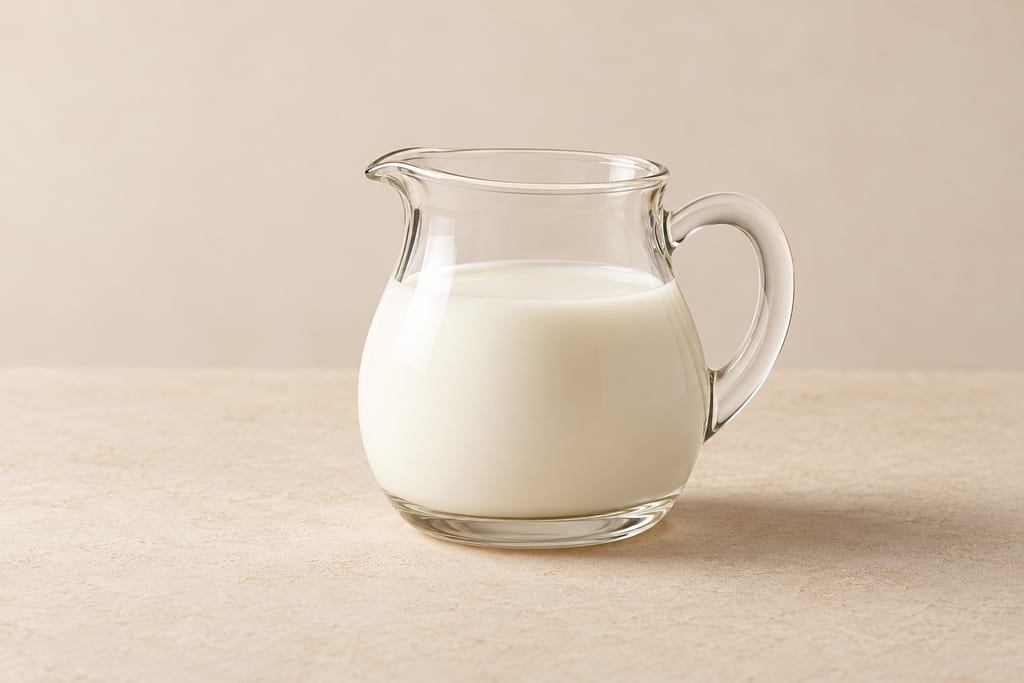
Mare milk is milk produced by a lactating female horse. Its composition varies with breed and lactation; raw milk, pasteurized milk and fermented drinks such as airag or qymyz are distinct forms with different handling and evidence.
Sugar-rich liquid tapped from different palms, gathered fresh or transformed into local drinks and sweeteners; species and collection stage shape its composition.
Pasteurized mare milk is liquid horse milk treated before sale or fermentation. Its relatively low fat and casein and high lactose distinguish it from cow milk, with composition varying by animal and lactation.
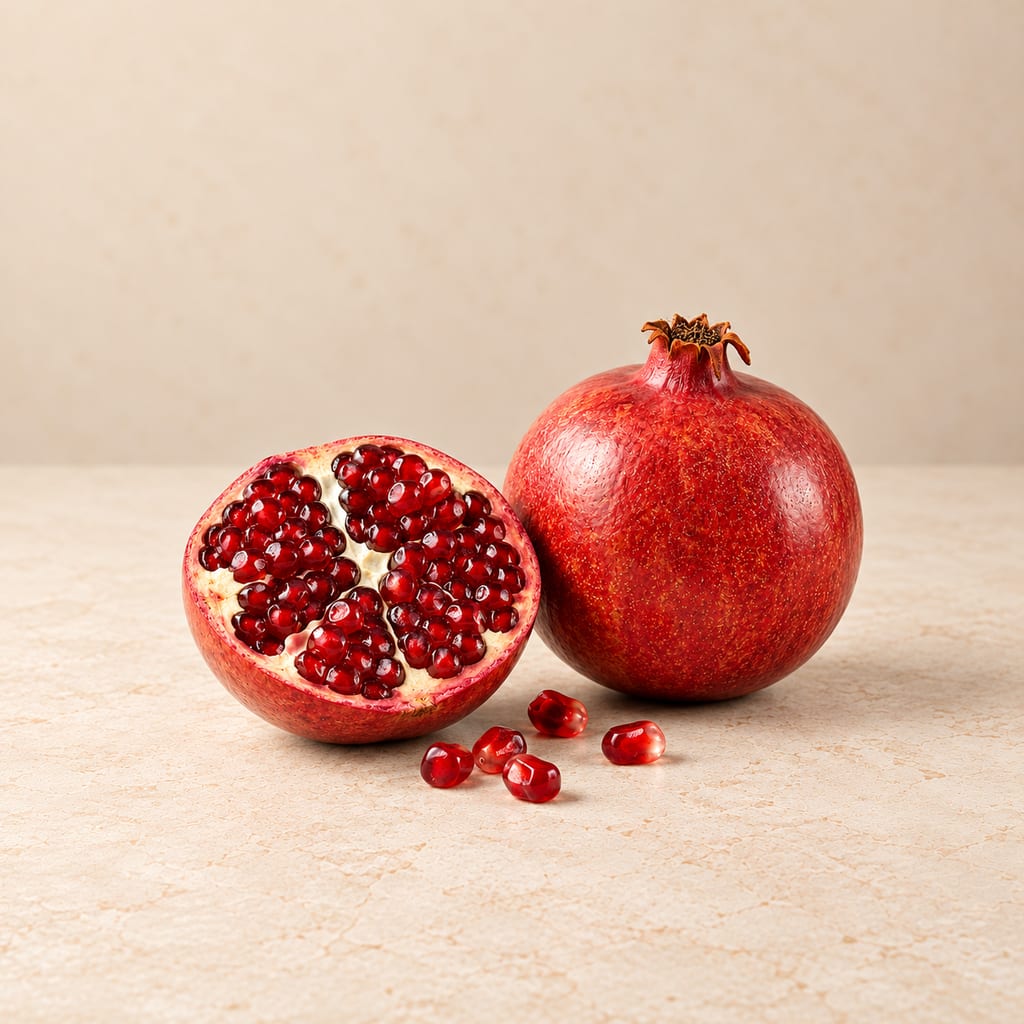
The pomegranate (Punica granatum) is a seed-filled fruit whose arils run from sweet to sharply sour, depending on citric acid. Sour fruit becomes juice, molasses and dried anardana.

At North Abydos in Egypt, a fixed early Dynastic brewery comprised parallel semi-subterranean installations with rows of ceramic mash vats; excavation reports revise their number, scale and estimated batch capacity.

Ají amarillo is the orange-yellow Peruvian chilli cultivar group of Capsicum baccatum, used to colour and season huancaína sauce and ají de gallina. Published heat estimates do not establish one range for the named cultivar.

Toasted almonds are whole sweet almond kernels dry-roasted until golden to brown. Heat replaces their marzipan note with a roasted, nutty one; they thicken and flavour romesco.

Kodiak salmon, halibut and cod cut as seg'aq and hung on an initaq rack to become tamuuq, with kac'amaasaq and kupcuunaq named as different results.

Aniseed is the dried ripe fruit of Pimpinella anisum, an aromatic Apiaceae spice commonly called a seed. It adds a sweet, warm aroma to breads such as Moroccan krachel and South African mosbolletjies, and is distinct from star anise.

A fixed Late Chalcolithic installation in Areni-1 cave combined a shallow clay pressing basin with a large jar set into the cave floor and storage vessels nearby.

Ripe avocado flesh is the soft, buttery, fat-rich pulp of Persea americana, eaten raw. It is low in acid, so it is a fresh ingredient that needs care in chilled dishes.

A portable dome and pan used over a hearth, with embers on the lid and heat from below. Regional peka and saç forms share this principle while differing in materials, pan shape and how the food is cooked.
No community contributions have been published for this entry yet.
Sign in to contribute. Published comments and photos are free to read.
WikipediaGeneral · History
Chili pepperDrying as the main preservation method and dried forms
Spread of chillies in the sixteenth century
Production of dried and green chillies in 2024
Capsaicinoids bind to pain receptors
Cited in: What a dried chilli is; From Mexico to every kitchen; What drying does to a chilli; Where dried chillies go; Choosing and keeping them
WikipediaIdentity · History
Capsicum annuumDomestication in Mesoamerica about 6,000 years ago
Eaten fresh, dried, pickled or powdered
Cited in: What a dried chilli is; From Mexico to every kitchen; Where dried chillies go
WikipediaIdentity
PoblanoAncho as the dried poblano
Heat range and unpredictability
Mulato and pasilla
Cited in: One pod, two names; Choosing and keeping them
WikipediaIdentity · Use
Guajillo chiliMirasol fresh and guajillo dried
Heat figures, flavour, size
Preparation of the dried pod into pastes
Cited in: One pod, two names; Rehydrating and pasting; Open questions
WikipediaIdentity · History
PaprikaPaprika and pimentón production and grades
Effect of drying and storage on colour
Hungarian history from 1604 and 1775
Cited in: One pod, two names; From Mexico to every kitchen; What drying does to a chilli; Where dried chillies go
WikipediaIdentity
Korean chili pepper (gochugaru)Sun-dried taeyangcho, textures and flavour
Cited in: One pod, two names; Where dried chillies go
WikipediaIdentity
Chili powderKashmiri chilli powder is bright red and mild
Cited in: One pod, two names
WikipediaSafety
AflatoxinChillies among commodities regularly contaminated
Moisture and temperature conditions, health effects, US action levels
Cited in: What drying does to a chilli; Open questions
WikipediaUse · History
HarissaBaklouti peppers, Cape Bon and Nabeul
Introduction under Hafsid Tunisia 1535 to 1574
Regional uses and variants
Cited in: From Mexico to every kitchen; Harissa and the dried-pepper pastes; Dried chillies in fermented foods
UNESCO Intangible Cultural HeritageMethod · History
Harissa, knowledge, skills and culinary and social practicesSun-dried chillies split, destemmed, deseeded, washed and ground with salt, garlic and coriander
Stored in glass or pottery; usually made by women; inscribed 2022
Cited in: Harissa and the dried-pepper pastes
Oregon State University ExtensionFermentation
Kimchi basicsGochugaru quantity in a measured kimchi
Salting, fermentation temperature and time, pH 4.2, salt 2 to 5 percent
Cited in: Rehydrating and pasting; Dried chillies in fermented foods
Antioxidants (Basel), via PubMedScience
Carotenoids of Capsicum Fruits: Pigment Profile and Health-Promoting Functional AttributesCapsanthin and capsorubin dominate chilli carotenoids and are highly stable
Cited in: What a dried chilli is; What drying does to a chilli
HortiDailyScience
NMSU researchers investigate how super hot peppers pack their powerful punchCapsaicinoid vesicles on the placenta in most chillies
Andina, Agencia Peruana de NoticiasIdentity
Dia de los Ajies Peruanos: conoce los ejemplares emblematicos de nuestra gastronomiaAjí mirasol is sun-dried ají amarillo
Cited in: One pod, two names
WikipediaSafety
Kashmiri chiliBrick powder as a known adulterant
Cited in: What drying does to a chilli; Where dried chillies go
WikipediaHistory · Fermentation
KimchiChillies reached Korea in the early seventeenth century; first mention in 1614; widespread use in the nineteenth century
Early kimchi had no chilli
Cited in: Rehydrating and pasting; Dried chillies in fermented foods