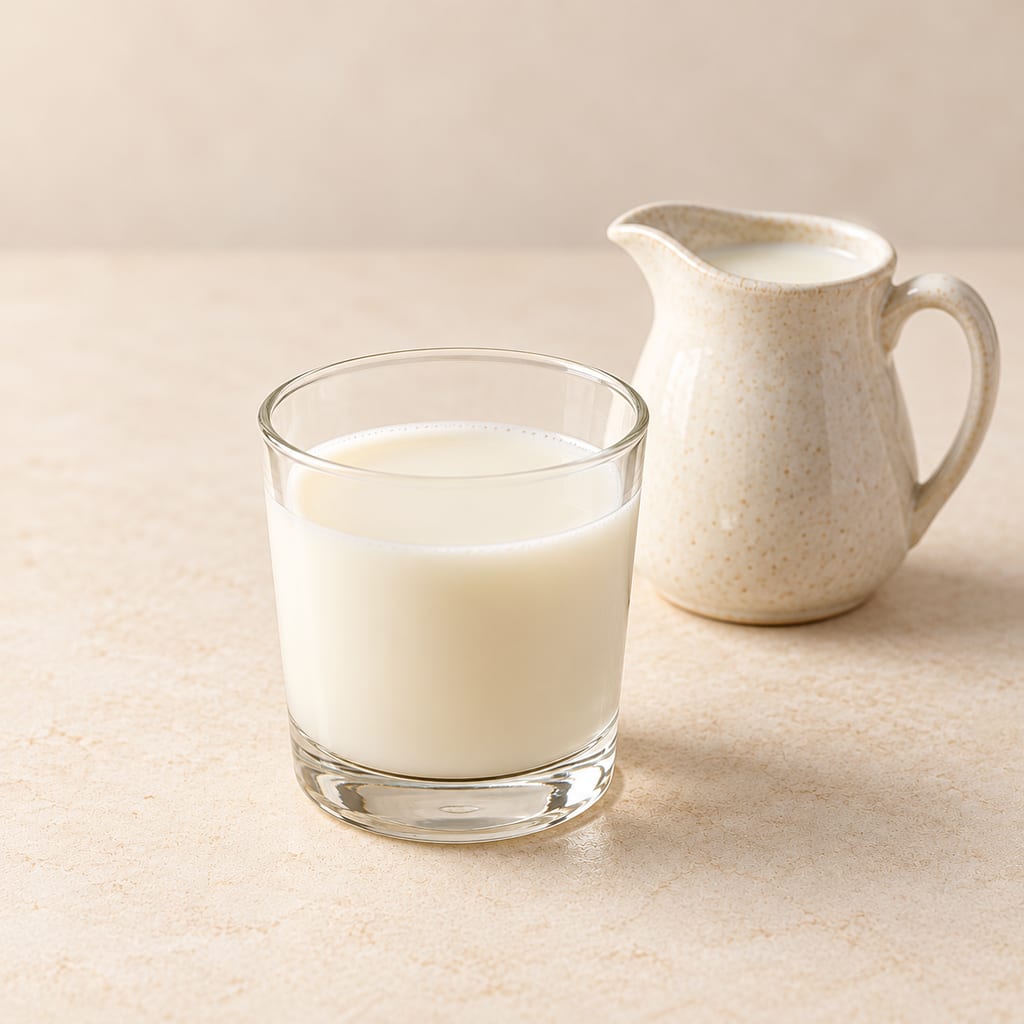
Koumiss (pasteurized mare milk)
Koumiss is a sour, lightly alcoholic mare-milk drink made by lactic bacteria and yeasts. This technical method uses pasteurized milk, a previous-batch starter and staged cooling.
 FermenteaWhere food goes to change
Substrates
Pasteurized mare milk is liquid horse milk treated before sale or fermentation. Its relatively low fat and casein and high lactose distinguish it from cow milk, with composition varying by animal and lactation.
Pasteurized mare milk is liquid milk from a female horse that has received a heat treatment before sale or further processing. It is the starting material for the koumiss preparation linked here. Milk and koumiss remain distinct foods: pasteurization is a treatment of the milk, while koumiss making introduces or carries forward a culture and allows fermentation to change the liquid.
The Kazakh name saumal is used commercially for mare milk, including a pasteurized liquid product. That form differs from fermented qymyz or koumiss, from raw milk and from freeze-dried powder. A bottle of liquid milk and a powder made from milk may have the same animal source but require different handling and preparation. The word mare identifies the animal; it does not specify processing or storage.
For a fermentation, both parts of the name matter. A method calling for pasteurized mare milk asks for a particular animal milk in a particular condition. Replacing it with raw milk changes its microbial starting point. Replacing it with cow milk changes composition as well. Neither substitution follows merely because all three can look like white liquids.
Milk proteins preserved in ancient human dental calculus provide direct evidence that people consumed milk. Archaeological work across Mongolia identified proteins attributable to several livestock groups, with horse-specific milk proteins appearing in individuals from the late second millennium BCE. These finds concern consumption. They do not reveal whether the milk was drunk fresh, fermented or prepared in another way.
That distinction matters when discussing the history of koumiss. Evidence of horse milk is not by itself evidence of a koumiss recipe, a particular starter or a single invention. Archaeological samples also represent the people and sites examined, rather than every population that may have milked horses. The history is richer when those different questions remain separate.
William of Rubruck's thirteenth-century journey offers a later written account of mare-milk processing among the Mongols. In the account translated by W. W. Rockhill, foals, milking, leather vessels and repeated beating belong to the making of the drink he called cosmos. Milk supply was tied to herds and the summer season. The description makes the pastoral setting tangible, but the finished drink and its historical handling are not specifications for a present-day bottle of pasteurized milk.
Collecting mare milk involves the relationship between a dam and her foal. Dairy management has to accommodate both the foal's feeding and the milk available for people. The equine mammary gland has a relatively small storage capacity, and much of the milk is held in the milk-producing tissue rather than a large storage compartment. This helps explain the repeated milking sessions described in pastoral and commercial systems.
A session is more than the moment a bucket is filled. It includes arranging access to the mare, managing the interval since the foal last suckled and encouraging milk release. In dairy-horse systems, the foal's presence can help stimulate the hormonal response involved in milk ejection. Those features make a dairy mare's routine different from simply applying a cow-milking schedule to a horse.
Hand milking and adapted mechanical equipment are both documented. Intensive farms may use equipment adapted from sheep-milking systems to suit equine anatomy. Trained animals and skilled operators matter to the routine, while equipment use and cleaning affect the milk's microbial quality. Mechanisation does not remove the need for careful handling of the mare or the milk.
The amount collected is not a fixed property of the species. Stage of lactation, feeding, farming system, individual milkability and milking strategy all affect reported yields. Studies also measure production in different ways, so a quantity obtained in one milking session cannot automatically be treated as total daily production. The milk available for sale must be understood alongside the foal's needs and the farm's management.
A mare-milk enterprise depends on the land around the herd as well as on the milking place. Horses consume fibrous forage and can use grazing resources that differ across landscapes. Forage quality and availability change through the season; the animals' requirements change too. Matching the herd to those resources is part of milk production, not an optional detail added after the milk reaches the dairy.
Frequent milking also puts practical limits on distance. Grazing needs to be accessible from the milking site, and bringing animals in repeatedly takes labour. Shelters, milking facilities, clean working areas and access to suitable feed shape how a farm operates. A production system with extensive grazing therefore differs from a more intensive enterprise even when both sell mare milk.
European pasture systems illustrate why no single calendar fits everywhere. Short northern summers, the longer grazing opportunities of some central regions and summer dryness farther south create different forage patterns. Supplementary feeding and pasture management respond to those conditions. The point is not that one region supplies a universal model, but that milk production follows the interaction of animals, land and work.
In Kazakhstan, mare-milk fermentation belongs to both household production and more organised dairy businesses. Seasonal supply and the movement from small producers to commercial processing affect the form in which milk and fermented products reach consumers. The agricultural context explains part of the product's availability; it does not establish a geographical origin for pasteurization or a recipe's exact process.
Mare milk contains water, lactose, proteins, fat and minerals, but their proportions differ from those of cow milk and vary among samples. Broad comparisons describe relatively low fat and protein and a comparatively high lactose content. The composition is influenced by nutrition, genetics, lactation and the health of the mammary gland. An average in a review is a description of the assembled measurements, not a guaranteed specification for a bottle.
The distinction between species averages and individual measurements is useful in the kitchen. A milk's animal source gives a starting expectation, but a particular fat or protein content needs a product specification or measurement. A litre remains a volume; it does not establish a fixed amount of fat, casein or fermentable sugar across every source of mare milk.
A Tunisian study followed sixteen purebred Arabian mares through four months of lactation. In that cohort, fat and protein declined as lactation progressed, while lactose increased. The result shows composition changing within a defined group, rather than proving that every breed or farm follows an identical curve. It also illustrates why stage of lactation belongs in the interpretation of milk research.
The differences matter to food making. A lower fat content changes how much richness the milk itself contributes. The relative amounts and types of proteins affect its behaviour during coagulation. Lactose supplies a substrate for organisms able to ferment it. These are technological characteristics, not evidence that mare milk has a particular therapeutic effect or is nutritionally interchangeable with another milk.
Milk protein is not one uniform substance. Caseins and whey proteins are distinct groups, and their balance differs among animal milks. Mare milk has a lower casein proportion than cow milk. Its relatively low kappa-casein content contributes to the difficulty of applying conventional rennet cheesemaking to it. That is a matter of protein composition and process response, rather than proof that it can never form a curd.
In the Arabian-mare study, controlled trials did coagulate the milk using a specified combination of starter, calf rennet and calcium chloride. The outcome demonstrates a possibility under the tested conditions. It does not make a standard cow-milk cheese method transferable, and it is separate from the use of mare milk in a drinkable fermentation.
For koumiss, microorganisms use the milk as a growth medium. Lactic acid bacteria ferment sugars and produce acid; suitable yeasts contribute alcoholic fermentation. As the culture develops, acidity, residual sugar and other compounds change. Enzymatic breakdown of milk protein can also release peptides and amino acids that participate in microbial nutrition and flavour development.
A comparison of traditional and industrial koumiss making in Inner Mongolia measured declining lactose together with increasing acids, ethanol and free amino acids. The production systems differed in their milk treatment, temperature and scale. Those findings connect the starting milk to a changing fermented product, without supplying a universal endpoint for every koumiss method. The liquid milk is the substrate; the particular culture and process determine what happens to it.
Mare milk reaches consumers in several forms. Farm sales of raw milk, pasteurized products and milk powder are all documented in the equine-dairy literature. The animal source alone cannot tell a buyer which form is offered. Read the processing description, the product name and the storage directions together.
The SAUMAL Fresh product page identifies a liquid mare milk that receives pasteurization and is offered seasonally in Kazakhstan. That is evidence for one commercial form and supply setting. Its description does not define the treatment of all mare milk, and a manufacturer's keeping claim belongs to that product with its specified conditions.
Powder removes water and requires a separate preparation if a liquid is wanted. Frozen milk introduces a thawing stage. Neither form should be silently treated as the same starting material as a recipe's pasteurized liquid milk unless the method establishes how to use it. Buying a form that keeps differently is a practical choice with consequences for the preparation.
The handbook koumiss diagram begins with pasteurized mare milk and then adjusts its temperature for inoculation. It gives no pasteurization schedule for producing that ingredient. The named starting condition should therefore be preserved rather than completed with a time and temperature borrowed from cow milk or from a different manufacturer's process.
Choose milk whose producer identifies the animal source, processing condition and intended storage. Keep the product's directions with it. A sealed bottle, a clean appearance or a mild flavour does not identify the heat treatment it received. The relevant information comes from the product and its handling history.
Pasteurization and later hygiene do different work. A treatment can reduce hazards present at that point, but milk can be contaminated again through equipment, containers or handling. Research on equine dairy production highlights the importance of sanitation and packaging even after treatment. Keep the milk refrigerated as directed and use clean utensils when opening or measuring it.
General dairy food-safety guidance favours pasteurized milk over raw milk and calls for prompt refrigeration of perishable foods. It does not assign every mare-milk product the same shelf life. Follow the actual label's keeping conditions and use date; a fermentation recipe's warm incubation belongs to that controlled preparation, not to ordinary storage of the milk.
Mare milk contains milk proteins and lactose. Its composition differs from cow milk, but difference does not make it allergy-free or lactose-free. A published clinical case documented an IgE-mediated reaction to mare milk in a person who tolerated cow milk. That establishes that mare-milk allergy can occur without corresponding cow-milk allergy; it cannot supply a population-wide risk estimate.
Milk allergy concerns reactions to proteins, while lactose intolerance concerns handling the milk sugar. Fermentation may change the amount of lactose in a particular finished product, but the unfermented ingredient is not thereby suitable for every lactose-intolerant person. Nor does pasteurization establish suitability for a milk-allergic person. Select the milk for its documented food-making role and assess dietary needs separately from claims made for its rarity or traditional use.
Milk proteins; mare-milk allergy can occur. Contains lactose; pasteurization does not establish lactose-free or allergy-safe status.
Commercial pasteurized liquid product and mare-milk dairy production context; not an origin claim.
Evidence of mare-milk consumption and processing; neither establishes pasteurization or the linked modern recipe.
Specific Arabian-mare milk study; not a birthplace or generic pasteurized product specification.
Koumiss is a sour, lightly alcoholic mare-milk drink made by lactic bacteria and yeasts. This technical method uses pasteurized milk, a previous-batch starter and staged cooling.
Camel milk from one- and two-humped camels supplies fresh drinks, fermented milks and specialised cheeses across pastoral food systems in Africa and Asia.
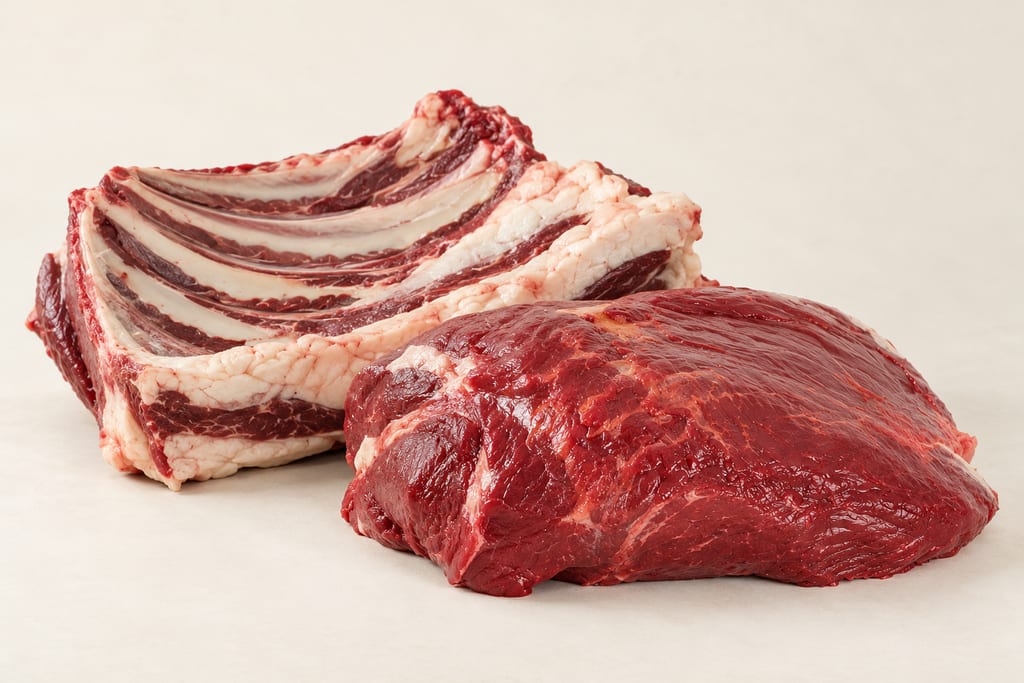
Horse meat is raw equine muscle and fat used fresh or in regionally distinct cooked and preserved foods; cuts and processes vary, and no single culinary origin is established.
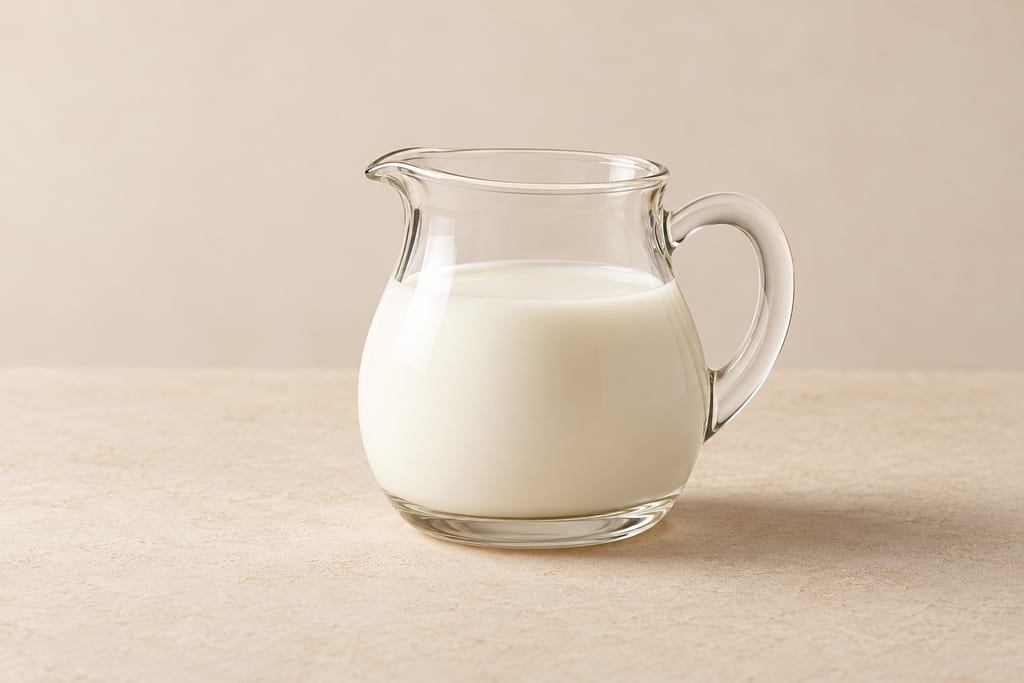
Mare milk is milk produced by a lactating female horse. Its composition varies with breed and lactation; raw milk, pasteurized milk and fermented drinks such as airag or qymyz are distinct forms with different handling and evidence.
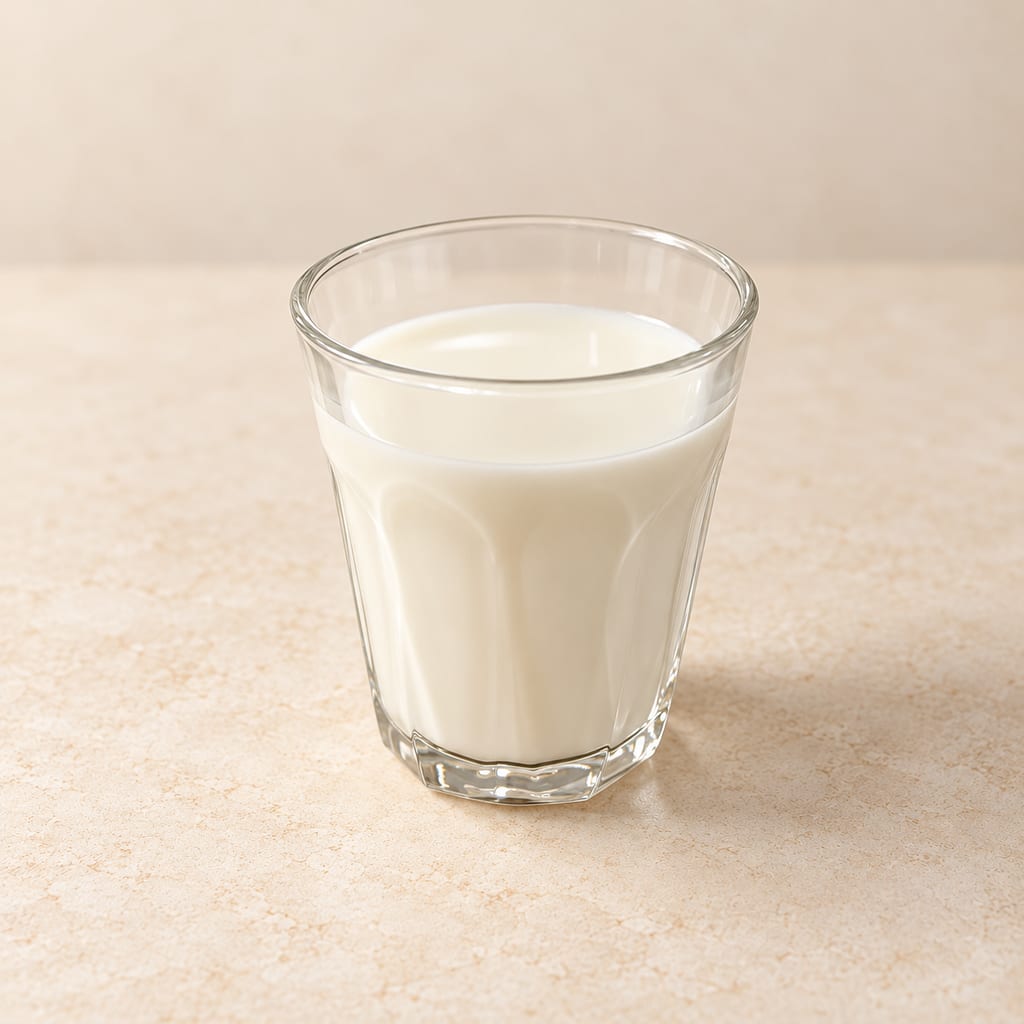
Milk supplies protein, fat and lactose for cultured drinks and cheese. Animal species, composition and processing each affect how it behaves.
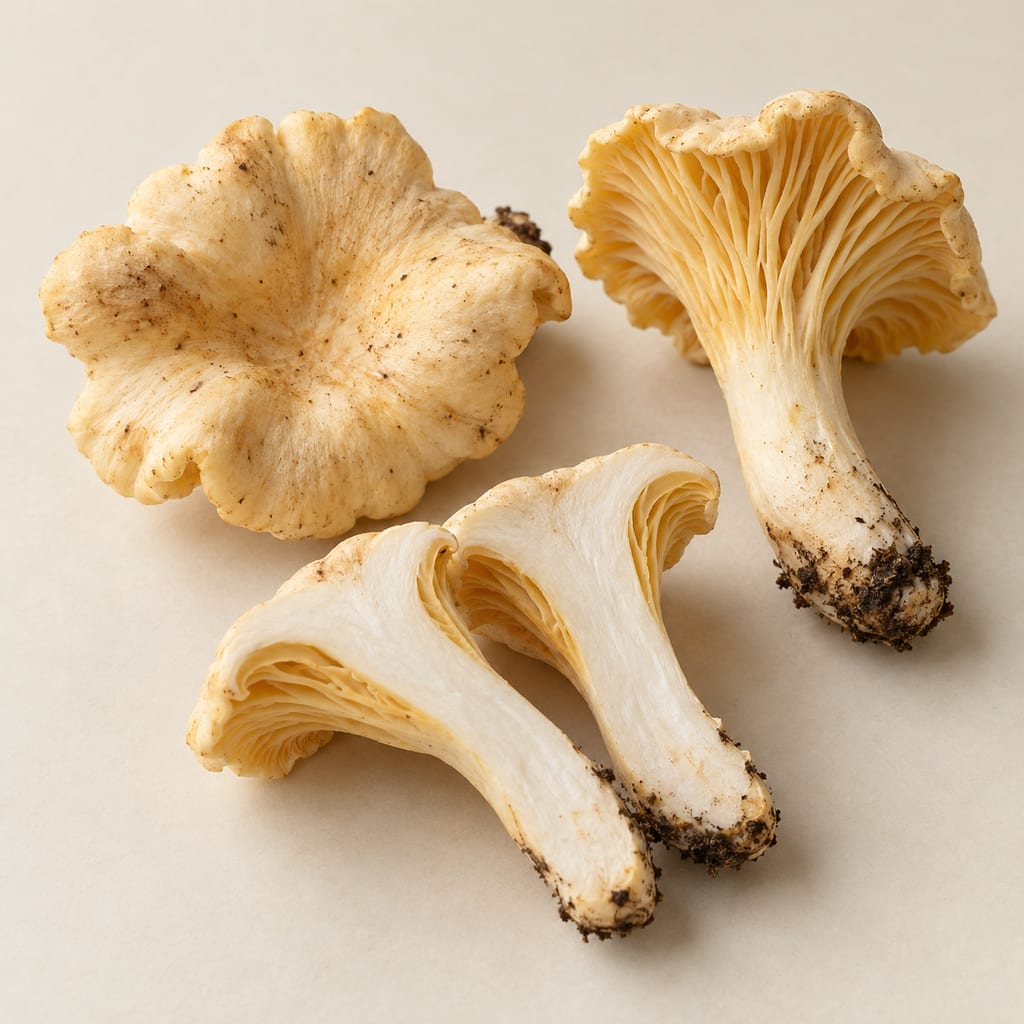
Cantharellus pallens is a pale, fleshy European chanterelle with orange-yellow folded ridges. It is gathered and sold as food in documented regional traditions, but its variable appearance makes photographs unreliable for identification.
No community contributions have been published for this entry yet.
Sign in to contribute. Published comments and photos are free to read.
Animals 10(2),353 / MDPIIdentity · Production · Forms
Equine Milk Production and Valorization of Marginal Areas—A ReviewSections 2.1 and 3.1–3.4 discuss composition variability, dam and foal management, milking, pasture, commercial forms and post-treatment hygiene. Mare and donkey findings have distinct scopes.
Cited in: Mare milk before it becomes koumiss; The mare, the foal and the milking session; Pasture, season and the cost of collecting milk; A composition that changes with the animal; Protein, curd and fermentation; Pasteurized liquid, frozen milk and powder; Choosing and keeping the liquid milk; Milk allergy and lactose are separate questions
SAUMALProduct example · Regional use
About the product: Saumal FreshThe producer identifies pasteurised liquid mare milk and seasonal sales in Kazakhstan. This does not define a shelf life for other mare-milk products.
Cited in: Mare milk before it becomes koumiss; Pasteurized liquid, frozen milk and powder
Marcel DekkerRecipe use · Process
Fermented Liquid Milk Products, chapter 45 in Handbook of Food and Beverage Fermentation TechnologyChapter 45, pp 824–826 and Figure 3 on p 825, identifies pasteurised mare milk as an input but gives no pasteurisation schedule.
Cited in: Mare milk before it becomes koumiss; Pasteurized liquid, frozen milk and powder
Nature Ecology & Evolution4,346–355History · Geography
Dairy pastoralism sustained eastern Eurasian steppe populations for 5,000 yearsResults and Table 1 identify horse-specific milk peptides in later Bronze Age Mongolian dental calculus. This supports consumption, rather than proof of fermentation.
Cited in: Horse milking in the historical record
Hakluyt Society; University of Washington Silk Road SeattleHistory
The Journey of William of Rubruck to the Eastern Parts of the World,1253–1255: food selectionThe historical account describes foals, milking, leather vessels, beating and seasonal supply; it is not guidance for pasteurised liquid milk.
Cited in: Horse milking in the historical record
Food and Agriculture Organization of the United NationsGeography · Production
Dairy Development in KazakhstanHousehold, small-enterprise and industrial-production chapters provide modern dairy-supply and kumys context.
Cited in: Pasture, season and the cost of collecting milk
Journal of Food Science and Technology59,1840–1846Composition · Process
Arabian mare’s milk characterisation and clotting abilityThe study follows sixteen Arabian mares in Tunisia across four lactation months and includes controlled coagulation trials. Its composition and processing findings are sample-specific.
Cited in: A composition that changes with the animal; Protein, curd and fermentation
AIMS MicrobiologyFermentation function
Lactic acid bacteria as starter cultures: An update in their metabolism and geneticsSections 2.1 and 2.3 explain general sugar fermentation and protein breakdown, rather than a mare-milk starter specification.
Cited in: Protein, curd and fermentation
Fermentation10(1),66 / MDPIFermentation function
Microbiological and Physicochemical Dynamics in Traditional and Industrial Fermentation Processes of KoumissMethods 2.1 and Results 3.3 compare raw and pasteurised mare-milk systems and changes in lactose, acids, ethanol and free amino acids. Their measurements are not universal endpoints.
Cited in: Protein, curd and fermentation
Centers for Disease Control and PreventionSafety · Handling
Raw MilkThe guidance recommends pasteurised dairy, contamination prevention and refrigerated handling. It supplies no mare-specific shelf life.
Cited in: Choosing and keeping the liquid milk
Journal of Allergy and Clinical Immunology97(6),1304–1307Allergen
Allergy to the heat-labile proteins alpha-lactalbumin and beta-lactoglobulin in mare’s milkThe abstract describes an IgE-mediated mare-milk allergy in a cow-milk-tolerant patient. A single case does not establish prevalence or a protective heat treatment.
Cited in: Milk allergy and lactose are separate questions