
Fermented meat around the world
Dry salami, sour pork with rice, matured sheep and aged blubber follow different paths from animal to food. Their stories connect microbes with climate, slaughter, migration and the meals people share.
 FermenteaWhere food goes to change
Substrates
Horse meat is raw equine muscle and fat used fresh or in regionally distinct cooked and preserved foods; cuts and processes vary, and no single culinary origin is established.
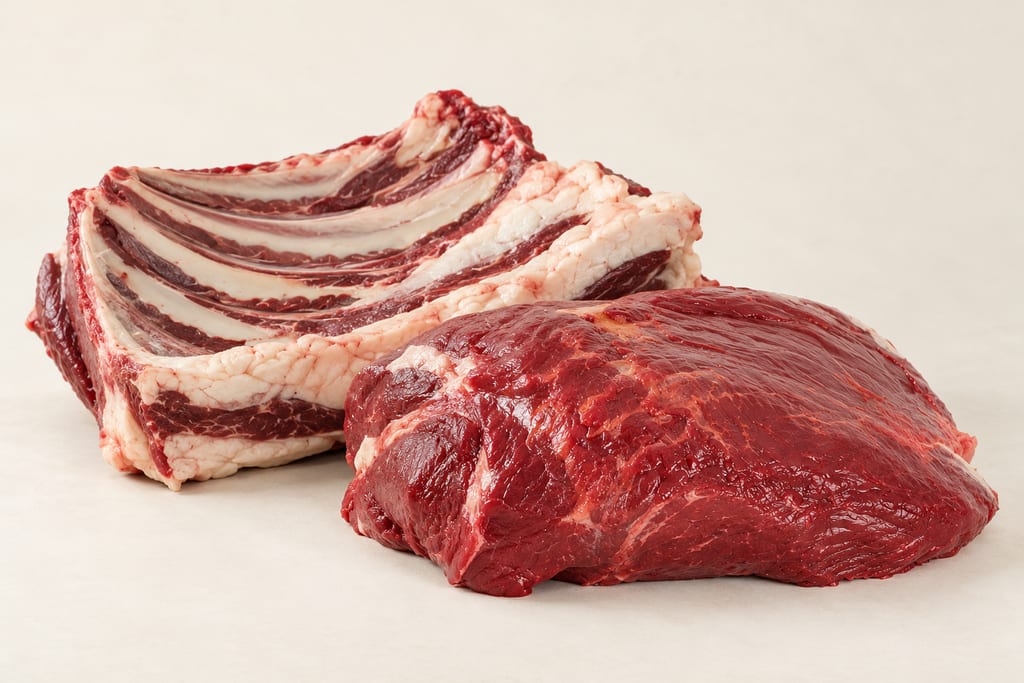
Horse meat is the edible skeletal muscle and associated fat of the domestic horse, generally listed as Equus caballus. Donkey meat is listed separately as Equus asinus, so the two are not interchangeable names for one species. In retail it may be sold as whole cuts, minced meat, or portions intended for cooking, and it may also be processed into sausages and preserved products. This ingredient record concerns the raw material. A sausage, dried strip or smoked meat is a made food with its own process and belongs on a preparation page.
The appearance depends on the animal, the muscle and the cut. Fresh muscle is red to deep red; the amount and placement of visible fat differ from one cut to another. Horse meat is sometimes described as lean, but that cannot be applied to every cut or product: rib meat used for qazy may carry substantial fat, while another cut may be much leaner. A photograph of one portion cannot identify its breed, age, exact muscle, origin or food-safety status.
In meat science, horse meat is commonly called equine meat or horsemeat. Local names tend to refer to a dish or cut rather than to one uniform commercial grade. The Kazakh term qazy (қазы, also transliterated kazy) names a horse-meat sausage, not a synonym for every horse-meat cut. Kyrgyz chuchuk (чучук) is another sausage preparation, with regional variants. These words belong with their foods and languages; they do not define a universal curing method.
Cuts contribute more to the final texture than the animal name alone suggests. A rib section carries muscle arranged around bone and may retain seams of fat; loin and other boneless muscles have a different structure. Kazakhstan’s official cultural account describes qazy made from ribs and loin and emphasizes keeping meat and fat together when the ribs are portioned. This is evidence for that named preparation, not an instruction to select the same ratio for every sausage.
Muscle composition also varies within a carcass. A peer-reviewed study measured several muscles from a small group of horses and found differences in their fatty-acid profiles. It used a defined laboratory sampling and aging protocol, so its values describe those animals and those conditions. It does not establish that all horse meat has one fat level, a nutritional advantage, or a general aging response.
When interpreting an ingredient label or market photograph, separate three questions: which species the source identifies, which physical cut or form is visible, and what place the evidence actually establishes. A raw muscle cut, a rib strip and minced meat are all horse meat, but they do not behave alike in a recipe. The mince has been reduced to small particles; a whole-muscle slice remains structurally different. Neither form by itself reveals whether the meat was raised, slaughtered or inspected under a particular system.
Horse meat has documented culinary associations in multiple places, but those associations are not a single tradition with one point of origin. Government of Kazakhstan material names horse meat among the country’s foods and describes qazy as a traditional horse-meat sausage. A separate official account describes horse meat in beshbarmak or asylğan et, alongside other meats. These sources support a Kazakh culinary association; they do not prove that every household or region prepares it in the same way.
A historical account of Kyrgyz foodways reports that horse meat was valued in many Kyrgyz communities in the late nineteenth and early twentieth centuries. It describes meat as a significant food and names chuchuk and kazy among horse-meat preparations. The account also distinguishes boiling and frying from preservation operations such as drying, freezing and smoking. That distinction matters: a food can appear in a preservation atlas without every version being fermented.
Modern research on chuchuk has sampled products sold in bazaars in Kyrgyzstan. The researchers examined the specimens they collected under cold-chain conditions. The study helps document contemporary market products and measured variation, but it is not a universal household formula, a validated process schedule or proof that all chuchuk is microbiologically safe.
The atlas also links horse meat to preserved preparations elsewhere, including dried horse meat and kyspa in Russia and hrossabjúgu in Iceland. These entries are separate named foods. Their inclusion shows the range of documented uses; it does not justify collapsing them into one recipe or claiming that horse meat itself ferments.
Archaeological work in Kazakhstan has considered horse remains and lipid residues preserved in vessels as evidence for funerary foodways. The study connects horse-bone fragments and vessel residues with the consumption of horse meat in Eneolithic and Bronze Age contexts at particular sites. This is valuable evidence that people ate horse meat there in ancient times.
An archaeological context is not the same as a first recipe or an origin date. Bone deposits and vessel lipids can document use, but they do not identify a single invention, the first horse-meat dish, or an unbroken lineage from an ancient meal to a modern sausage. Horse meat is a broad ingredient used in different settings. The earliest attestation of the ingredient as a general category is therefore recorded as unknown, while the Kazakhstan evidence remains attached to its own dated archaeological contexts.
Geographic claims are kept at the level the sources support. The official Kazakh pages support use in Kazakhstan; the historical account and the chuchuk study support associations with Kyrgyzstan. A photograph taken in Mongolia, Japan, Finland or France documents what the photographer saw in that place, but the image alone does not establish a country’s cuisine or the birthplace of a preparation.
Horse meat can be eaten fresh after cooking or used as a substrate for preservation. In qazy, documented preparations combine rib or loin meat and fat with casing and salt; some accounts describe drying or smoking before the product is cooked for service. In Kyrgyz descriptions, chuchuk and kazy also have forms that are boiled or fried. Each step changes the product in a different way: salting seasons the meat and changes how water and salt are distributed; drying removes moisture; smoke deposits compounds from combustion on the surface; cooking uses heat to change texture and reduce microbial hazards.
None of those words alone establishes fermentation. Salted, dried, smoked, aged and cooked meat may or may not also have a documented microbial fermentation stage. A sausage stuffed into a casing is not necessarily fermented, and a traditional name cannot substitute for evidence of acidification or microbial activity. Fermented meat products need their own source-backed process description, because the recipe’s culture, salt, nitrite where used, temperature, humidity, drying and pathogen controls must be specific to that product.
The atlas treats qazy, chuchuk and neighboring foods with care because some are preserved and others are primarily cooked dishes. The horse-meat ingredient page therefore supplies no universal salt percentage, pH target, time, temperature, water-activity endpoint or storage period. Such numbers belong only to a specific sourced method and should not be inferred from a category name.
Raw or undercooked horse meat carries food-poisoning risk. Japan’s Ministry of Health warns that horse meat and horse liver can transmit foodborne illness when eaten raw, and describes contamination by pathogens and parasites. The European Commission notes that horses can be infected by Trichinella and that people can develop trichinellosis after eating raw or undercooked infected meat. EU rules require systematic testing of horses for Trichinella. These are specific public-health and regulatory facts; they do not certify an untested portion.
A French public-health investigation traced a 2020 Salmonella Newport outbreak to raw or undercooked ground horse meat. Ground meat deserves attention because grinding distributes material from the surface through the mince, but that outbreak does not mean every horse-meat product is contaminated. It does show why rawness, a familiar dish name, or a careful-looking counter is not a safety test.
For a home cook, the meaningful questions are whether the meat is intended for human consumption, whether it came through a regulated and inspected supply chain, what the local authority requires for the intended use, and whether the chosen recipe has a validated safety process. Follow the current local health authority guidance for raw meat and temperature control. Do not use appearance, smell, taste, a cured surface, smoke, bubbles or a home pH reading as proof that a meat product is safe.
Residues are a separate hazard from microbes. The Canadian Food Inspection Agency identifies phenylbutazone, often called bute, as a concern because the drug is not approved for food-producing animals in Canada. Canada uses an Equine Information Document, veterinary review and residue monitoring in its system. Those rules describe Canada and should not be generalized to other countries. In any market, buying from a traceable, legally inspected food supply is more informative than guessing from the animal’s appearance or the meat’s colour.
Plain horse muscle is not a food on the European Union’s mandatory list of 14 allergen groups. That does not mean a prepared horse-meat product is automatically free from allergens: sausages and marinades may include ingredients such as mustard, milk, cereals containing gluten or other declared allergens. Read the product’s current ingredient and allergen labels, especially for seasoned, processed or ready-to-eat products. An individual can also react to foods outside a jurisdiction’s mandatory declaration list.
Horse-meat labels and rules differ by market. Species identity, country of origin, intended use and inspection status are distinct pieces of information. One should not be used as a substitute for another. A photo of raw meat identifies a visible form; a seller’s listing may identify the species; neither on its own proves the complete traceability record.
The ingredient taxonomy places horse meat under meat substrates because it can supply animal muscle and fat to meat preparations. This classification is about its role in the catalogue, not a judgement about the food, a recommendation to ferment it, or a claim that every preparation uses the same cut.
Fermentea connects this raw material to the preparations that name it, including qazy and chuchuk, dried horse meat, kyspa, sugum, yylky kyima and the Icelandic hrossabjúgu. The linked pages carry the method evidence for each food. Some are preserved meats and some include cooking or serving steps; the connection does not assert that all are fermented.
Outside those linked preparations, documented uses include horse meat in Kazakh beshbarmak or asylğan et and in raw horse-meat dishes in Japan. The latter is a cultural and culinary use, not a safe-use recommendation. Public-health sources warn that raw horse meat can carry hazards, and individual jurisdictions may apply separate standards to meat sold for raw consumption.
For readers comparing horse meat with beef or other red meats, the most useful starting point is the actual cut and preparation. Horse meat’s flavour, tenderness and fat can vary by muscle and product. The available study supports variation among the muscles it sampled; it does not justify a universal taste description or a health claim. Start with the source-specific dish page when the intended product is salted, dried, smoked, stuffed into casing or cooked.
Official cultural sources document horse meat in Kazakh cuisine and qazy; this is a country-level association, not a claim of origin.
Historical and modern studies document horse-meat dishes and chuchuk in Kyrgyzstan; methods vary.
Japan's ministry discusses raw horse meat as a consumed food while warning of food-poisoning risk; no recipe birthplace is claimed.
A 2020 investigation documented consumption of raw or undercooked ground horse meat during a specific Salmonella outbreak; this is not a traditional-origin claim.
The cited photograph documents minced horse meat sold at Tampere Market Hall; it does not establish a broader tradition.
Dry salami, sour pork with rice, matured sheep and aged blubber follow different paths from animal to food. Their stories connect microbes with climate, slaughter, migration and the meals people share.
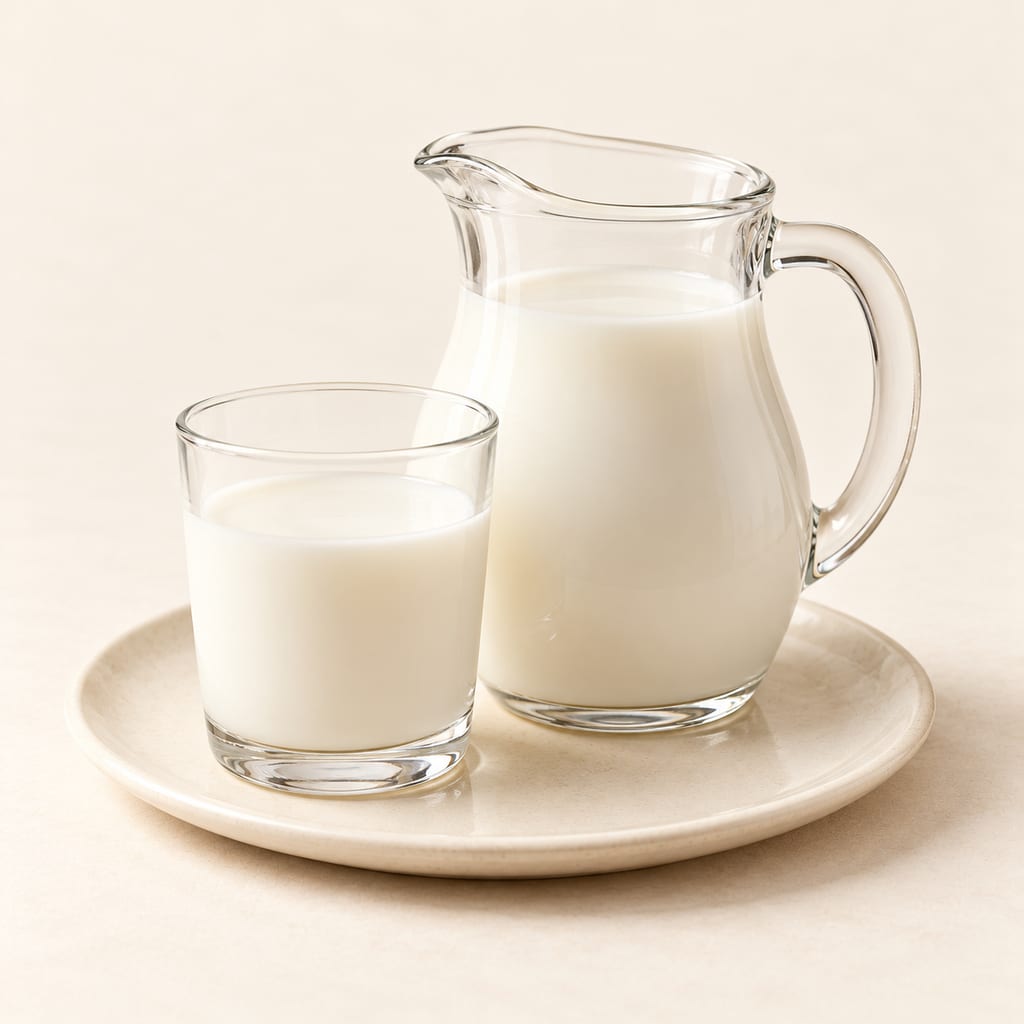
Camel milk from one- and two-humped camels supplies fresh drinks, fermented milks and specialised cheeses across pastoral food systems in Africa and Asia.
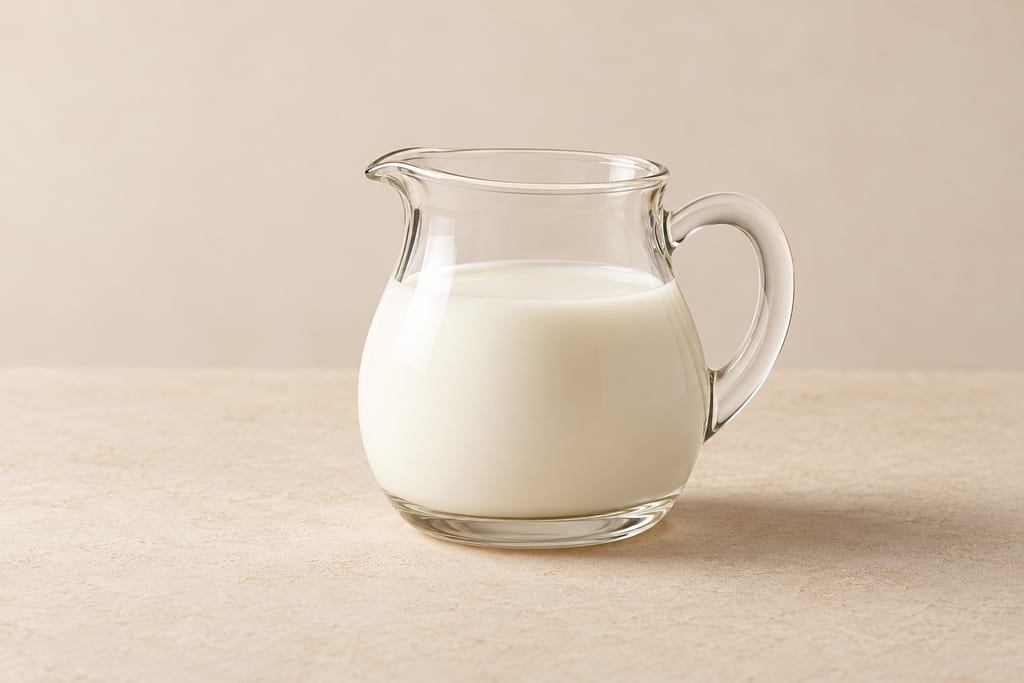
Mare milk is milk produced by a lactating female horse. Its composition varies with breed and lactation; raw milk, pasteurized milk and fermented drinks such as airag or qymyz are distinct forms with different handling and evidence.
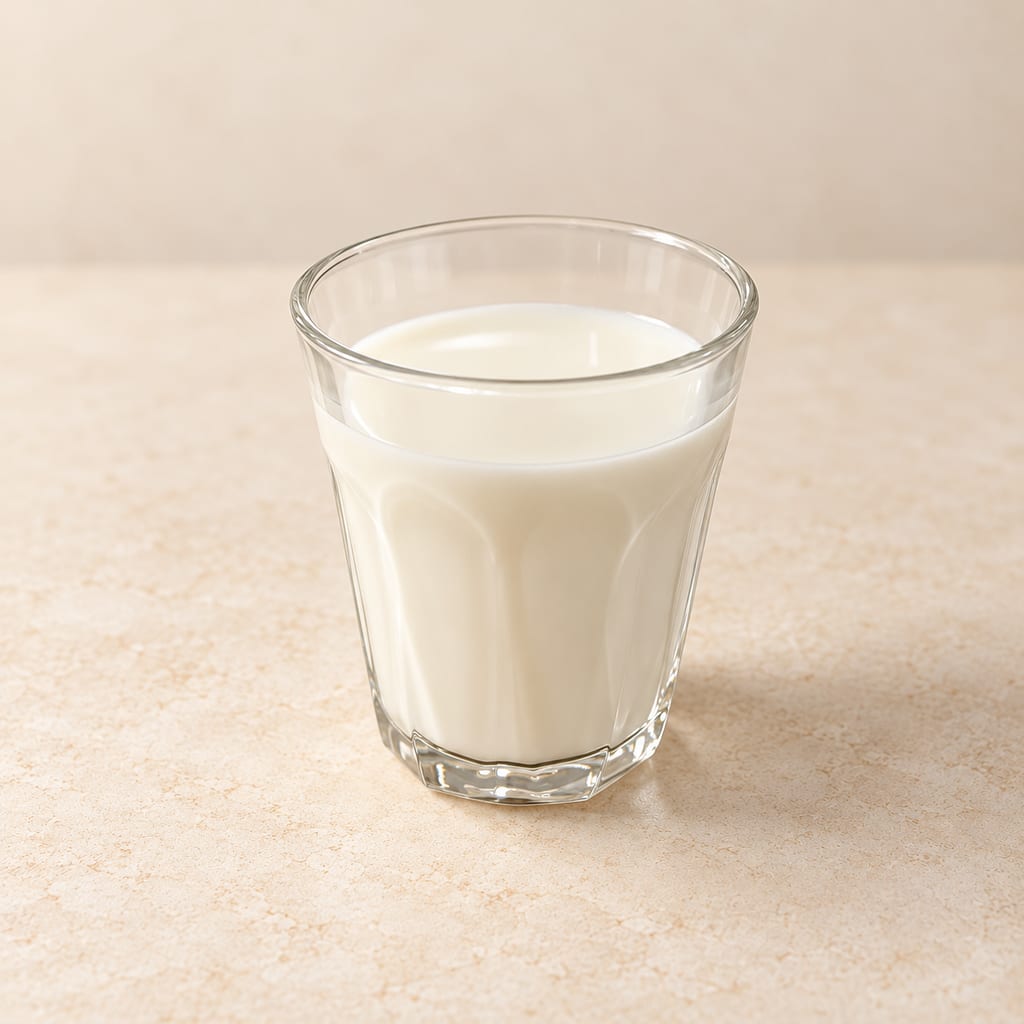
Milk supplies protein, fat and lactose for cultured drinks and cheese. Animal species, composition and processing each affect how it behaves.
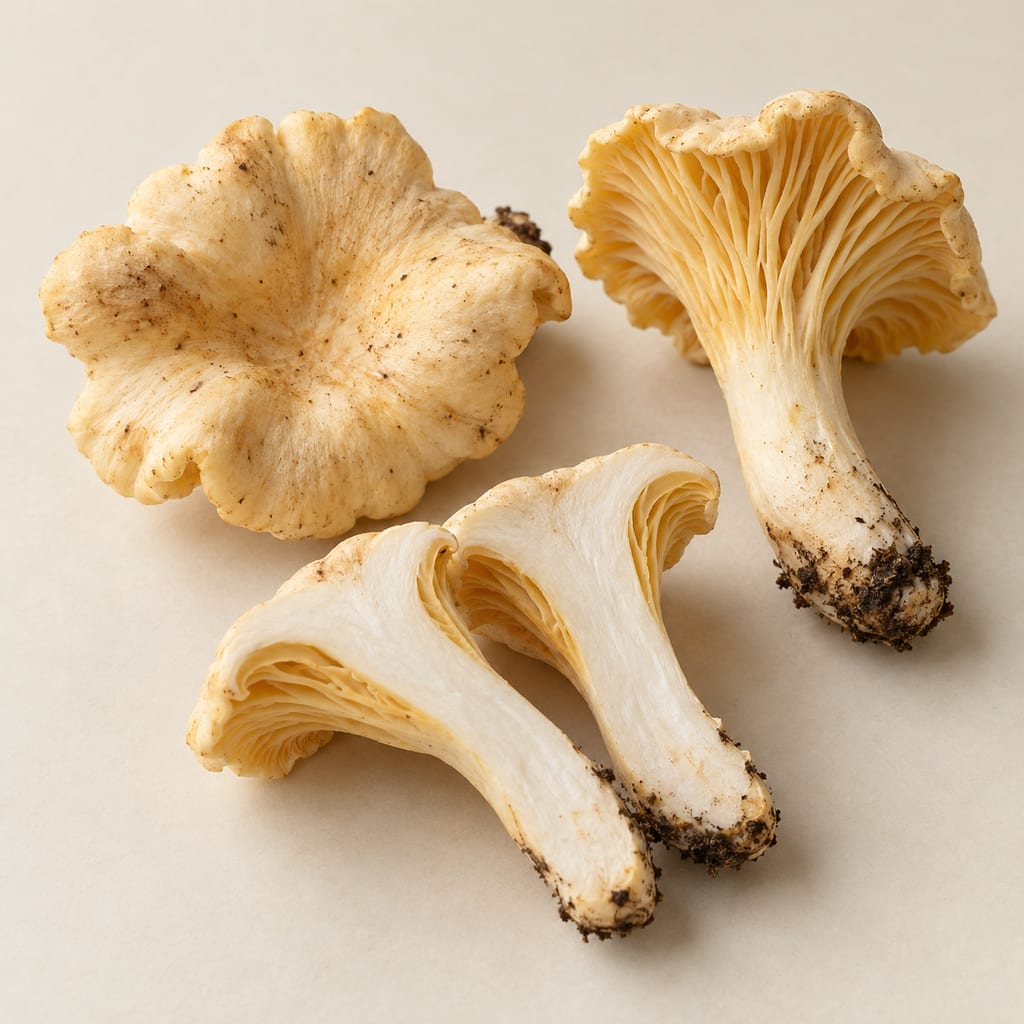
Cantharellus pallens is a pale, fleshy European chanterelle with orange-yellow folded ridges. It is gathered and sold as food in documented regional traditions, but its variable appearance makes photographs unreliable for identification.
Pasteurized mare milk is liquid horse milk treated before sale or fermentation. Its relatively low fat and casein and high lactose distinguish it from cow milk, with composition varying by animal and lactation.
No community contributions have been published for this entry yet.
Sign in to contribute. Published comments and photos are free to read.
Government of KazakhstanCulinary tradition · Preparation
National DishesHorse meat is used in beshbarmak/asylğan et.
Qazy uses rib and loin cuts and preserves their meat-fat structure.
The page describes qazy as a preserved horse-meat sausage.
Cited in: Horse meat as an ingredient; Cuts, muscle and fat; A food with several regional histories; Preservation is a process, not a property of the meat; Following the ingredient into its foods
Government of KazakhstanCulinary context
Culture of KazakhstanHorse meat is part of Kazakh cuisine; qazy is named as a traditional horse-meat food.
Cited in: A food with several regional histories; Archaeology and the limits of an origin story
Open.kgHistorical culinary context
The Meat Diet of the Kyrgyz in the 19th CenturyThe account describes horse meat in Kyrgyz diets in the late 19th and early 20th centuries.
It names chuchuk and kazy and distinguishes drying, freezing and smoking as preservation methods.
Cited in: Horse meat as an ingredient; A food with several regional histories; Archaeology and the limits of an origin story; Preservation is a process, not a property of the meat
Journal of Applied Biological SciencesFood science · Modern market samples
Evaluation of Microbiological and Physico-Chemical Quality Properties of Horse Meat Sausage ‘Chuchuk’The study collected 32 chuchuk samples from bazaars in Kyrgyzstan under cold-chain conditions and analyzed microbial and physicochemical measures.
The results describe those sampled products only, not a universal recipe or safety threshold.
Cited in: A food with several regional histories; Archaeology and the limits of an origin story; Preservation is a process, not a property of the meat
Antiquity, published by Cambridge University PressArchaeology · History
Horses for the Dead: Funerary Foodways in Bronze Age KazakhstanHorse remains and vessel lipid evidence support horse consumption at archaeological settlement and cemetery sites in Kazakhstan across Eneolithic and Bronze Age contexts.
The evidence does not identify a first horse-meat use or a single birthplace for horse-meat cuisines.
Cited in: Archaeology and the limits of an origin story
FoodsMeat composition · Food science
Nutritional Profile of Donkey and Horse Meat: Effect of Muscle and Aging TimeThe study sampled named muscles from 12 horses and compared composition across muscles.
It reported muscle-specific differences in fatty-acid profiles and studied aging under one defined protocol; findings are not a universal nutrition claim.
Cited in: Cuts, muscle and fat; Following the ingredient into its foods
Canadian Food Inspection AgencyFood safety · Regulation
Safety of Horse MeatPhenylbutazone is not approved for food-producing animals in Canada.
Canada uses Equine Information Documents, veterinary review and residue monitoring; this is Canadian policy.
Cited in: Raw use, handling and distinct hazards; Allergens, labels and what the field means
European CommissionFood safety · Regulation
Control of TrichinellaHorses can carry Trichinella; raw or undercooked meat from infected animals can transmit trichinellosis.
EU rules require systematic testing of horses for Trichinella.
Cited in: Raw use, handling and distinct hazards
Santé publique FranceFood safety · Outbreak investigation
Cases of salmonellosis linked to the consumption of raw or undercooked horse meatA 2020 Salmonella Newport outbreak was linked to raw or undercooked ground horse meat.
The outbreak shows a hazard in a particular event, not that every horse-meat product is contaminated.
Cited in: Raw use, handling and distinct hazards
Ministry of Health, Labour and Welfare, JapanFood safety · Public guidance
Raw meat and offal consumption carries a food-poisoning riskJapan's ministry states that raw horse meat and horse liver can cause food poisoning and discusses pathogen contamination and parasites.
Cited in: Raw use, handling and distinct hazards; Following the ingredient into its foods
European CommissionAllergen labeling
AllergiesEU mandatory allergen declarations cover 14 listed allergen groups; plain horse muscle is not among the listed groups, while recipes may add declared allergens.
Cited in: Allergens, labels and what the field means
Wikimedia CommonsMarket photograph · Geographic documentation
File:01-hepojauheliha.jpgThe file description identifies minced horse meat at Tampere Market Hall in Finland; the image documents this market example, not a broader culinary tradition.
NCBI TaxonomyScientific name
Taxonomy Browser: Equus caballusNCBI Taxonomy currently lists Equus caballus as horse and records Equus ferus caballus as a synonym; the database notes that it is not an authoritative source for nomenclature.
Cited in: Horse meat as an ingredient
NCBI TaxonomyScientific name · Near relative distinction
Taxonomy Browser: Equus asinusNCBI Taxonomy lists Equus asinus as donkey; its disclaimer cautions that it is not authoritative for nomenclature.
Cited in: Horse meat as an ingredient