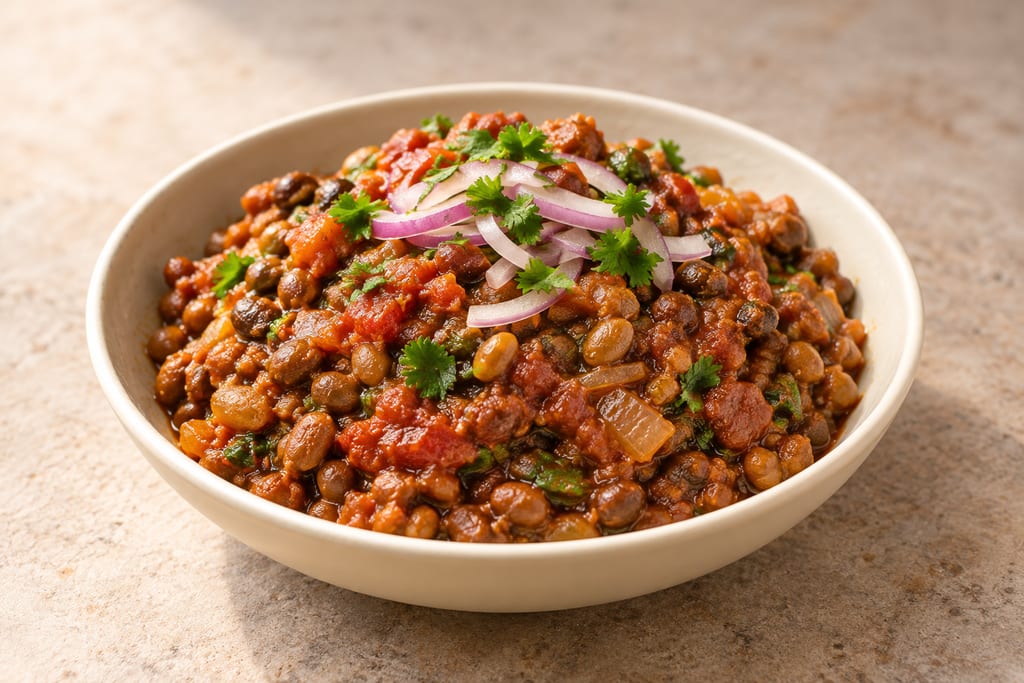
Kinema tomato achar
Kinema ra golbheda ko achar combines already-fermented soybean kinema with tomatoes, onion, garlic and spices, finished with sesame powder and fresh garnish, and is eaten with rice or toast.
 FermenteaWhere food goes to change
Modern adaptation
Momo ko Achar (Sesame-Tomato Dipping Sauce) · Momo ko achar · Golbeedaa achar · MOMO achar (sesame-tomato achar for MOMO) · Tomato achar
A roasted tomato dip thickened with toasted sesame and seasoned with dried chilli, cumin and timur. This measured version follows a contemporary published momo achar recipe; it is one documented formula, not a national standard.
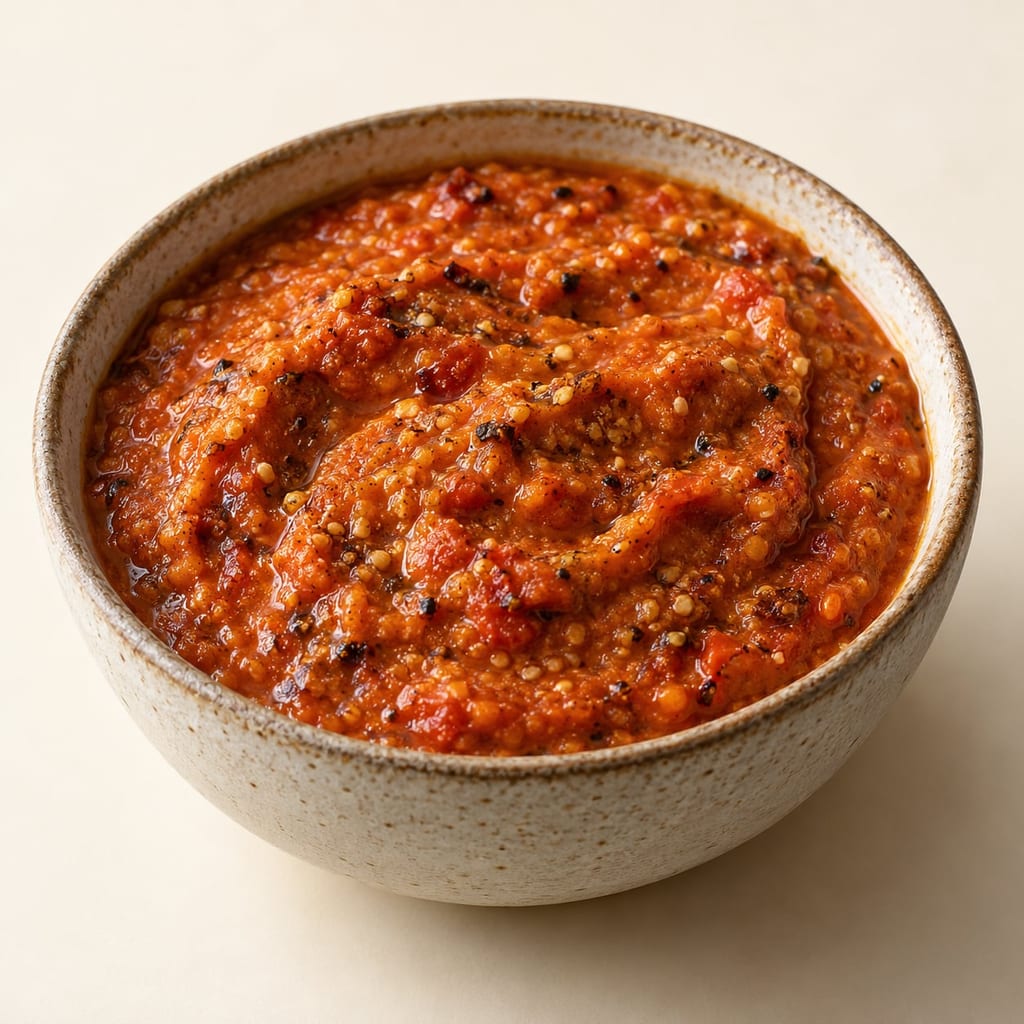
In Kathmandu food writing, momo ko achar is a tomato-based accompaniment served with momos. One contemporary published recipe roasts tomatoes and garlic, toasts sesame and spices, then blends them into a thick dip. Its formula includes timur, which the publisher identifies as Nepali Sichuan pepper. This version follows that measured recipe; other accounts describe different ratios and additions, so it should not stand in for every Nepali household or shop's achar.
The source combines ripe tomato with half a cup of sesame for eight servings, then seasons the mixture with dried red chillies, garlic, ginger, timur and cumin. It also uses lemon juice and mustard oil. The ingredients suggest a tangy tomato base with toasted, nutty sesame, chilli heat and timur's tingling aromatic quality; that flavor description follows the source's ingredient list and sensory notes rather than asserting one canonical taste.
A 2018 Kathmandu food article distinguishes momo ko achar from jhol achar, a thinner, sour sauce, and from the more recent chilli-forward C momo sauce. It describes tomato as the base for these different accompaniments and fried sesame and soybean as contributors to momo ko achar's nutty character. A 2025 Nepali Times report likewise records sesame-and-soybean jhol as one momo-cha accompaniment and tomato achar as another sauce served in Kathmandu eateries. These are accounts of modern practice, not evidence that this exact formula is old or was invented in one place.
The dumpling's own history is also debated. Smithsonian reports that momo's precise origin is unknown and discusses trade and Newar connections as accounts rather than a settled date. That context cannot date the condiment. The sources consulted do not establish when tomato-sesame momo achar first appeared, so this recipe's historical period remains unknown.
The source's method builds flavor in stages: roast the tomatoes and garlic until blistered and softened, toast the sesame until pale gold, then briefly toast the chillies, cumin and timur. It warns that burnt sesame makes the achar bitter. Grinding the sesame before adding the other toasted spices gives the dip its body; blending with the tomato and aromatics and adding water as needed sets the final texture. The source finishes with mustard oil heated until smoking, cooled briefly, then mixed into the sauce. No numeric heating temperature is supplied.
The publisher says the sauce is best within three days when refrigerated. That is its own recipe note, not a validated shelf-life study. This fresh tomato preparation has no preservation claim. FDA's general guidance is to refrigerate perishable foods promptly, keep a refrigerator at or below 40°F (4°C), and not leave perishables at room temperature for more than two hours, or one hour above 90°F (32°C). Sesame is a major food allergen and should be disclosed to diners.
The sources do not agree on one formula, so the measured batch above is one of several. The UK Nepal Friendship Society home-cookery booklet gives Golbeedaa Achar, a spiced tomato pickle that the booklet describes as smooth and sauce-like. It uses about eight to ten cherry tomatoes, half to three-quarters of a large brown onion, 2 cm of ginger, three or four garlic cloves, fresh chilli, coriander, fenugreek with optional thyme seed, lemon, two tablespoons of oil, white sesame, turmeric and salt. The cook blends the tomato, onion and spices into a puree, fries the fenugreek in hot oil, adds the puree with water, chilli, turmeric and salt, reduces it while stirring, and finishes with lemon. Several amounts are given as to taste or not stated.
A recipe archived on iNepal, credited to Tulsi Regmi and titled MOMO Achar (Sesame-Tomato Achar for MOMO), uses a charred method. It roasts two large tomatoes for about 30 minutes or until charred, toasts and grinds one cup of sesame with cumin and mustard seed, and blends the tomato with the ground seed, a cup of cilantro, five fresh red chillies, garlic, ginger, timur, asafoetida, lime juice and zest, and salt. Water may thin it. The page gives no yield, and the archived text has transcription errors, including lime zest printed as lime jest.
The Nepali Taste home batch, by Ritu G, serves six and starts from about 500 g of medium tomatoes with a quarter cup of white sesame, two dried red chillies, four garlic cloves, a tablespoon of ginger and two tablespoons of mustard oil. The tomatoes are charred over flame, three to four minutes each, or about ten minutes under a broiler. The sesame is toasted for two to three minutes. The mustard oil is heated until it smokes, a pinch of fenugreek is sizzled briefly, and the oil is cooled to lukewarm before the sauce is ground coarsely, mixed with lemon juice and rested for at least fifteen minutes.
These are separate formulas and this record does not merge them. The three share a serving role and a tomato-and-sesame base, but they differ in how the tomato is cooked, whether it is fried or charred, and whether mustard oil or no oil is used. A cook who wants one of them should follow that source's batch rather than mix the lists.
The UK Nepal Friendship Society booklet presents tomato achar as a classic accompaniment to steamed momos. It also pairs the sauce with dal-bhat-tarkari and rice dishes. The contributor, Deepak Tamrakar, describes learning the tomato achar at home in his teens and serving it with momos and dal-bhat-tarkari. The booklet uses the sauce to set Nepali momo accompaniment apart from the Chinese dumpling accompaniments it compares it with.
Those are one contributor's family memory and one booklet's framing. They are not evidence of where the sauce began. No dated archive, cookbook chronology or map of regional variants was found in the inspected material, and this record does not assign an origin to the momo achar or to the dumpling it accompanies.
The archived iNepal recipe is direct on use: serve with steaming momos. The Asian Foods Daily recipe, by Asha, presents the sauce as a dipping sauce for four to six people and makes about one cup.
Two home sources give a refrigerator period. Ritu G says the achar keeps for up to one week refrigerated in a clean glass jar. The Asian Foods Daily recipe says it keeps refrigerated for five days. Neither source describes a validated test, a cooling step or a room-temperature shelf life, and neither gives a water activity or pH.
This record therefore does not set a storage limit. The sauce is a fresh, oil-finished, sesame-and-tomato dip, and the sources treat it as a refrigerated product. Sesame is also a food allergen that must be declared, which the FDA guidance linked in the sources covers. Treat the periods above as the home authors' own claims and keep the batch cold.
ECS Nepal's 2018 Kathmandu food account describes momo ko achar as a tomato sauce thickened and flavored with fried sesame and soybeans, and distinguishes it from soupy sour jhol achar and chilli sauce. A 2025 Nepali Times report describes Kathmandu momo-cha with sesame-and-soy jhol achar and reports several contemporary sauce pairings. These accounts document present practice and variation, not the age or birthplace of this specific tomato-sesame-timur formula.
Yield 8 servings · Scaling: source batch only
The recipe contains white sesame seeds; FDA identifies sesame as a major food allergen.
Hazard sourceTell diners that this achar contains sesame; avoid serving it to anyone with a sesame allergy.
Control sourceRefrigerate perishable prepared sauce within two hours, or one hour when the surrounding temperature is above 90°F (32°C), and keep the refrigerator at or below 40°F (4°C). These are FDA general handling instructions, not a shelf-life validation for this formula.
Control sourceThe source's note says this sauce is best within three days when refrigerated; this is the recipe publisher's advice, not a validated safety shelf life. The formula's shelf life has not been established.
A contemporary recipe page labels this preparation Kathmandu Valley, and a 2018 Kathmandu food account describes momo achar practices there. This association does not establish origin or a nationwide standard.
Kinema ra golbheda ko achar combines already-fermented soybean kinema with tomatoes, onion, garlic and spices, finished with sesame powder and fresh garnish, and is eaten with rice or toast.
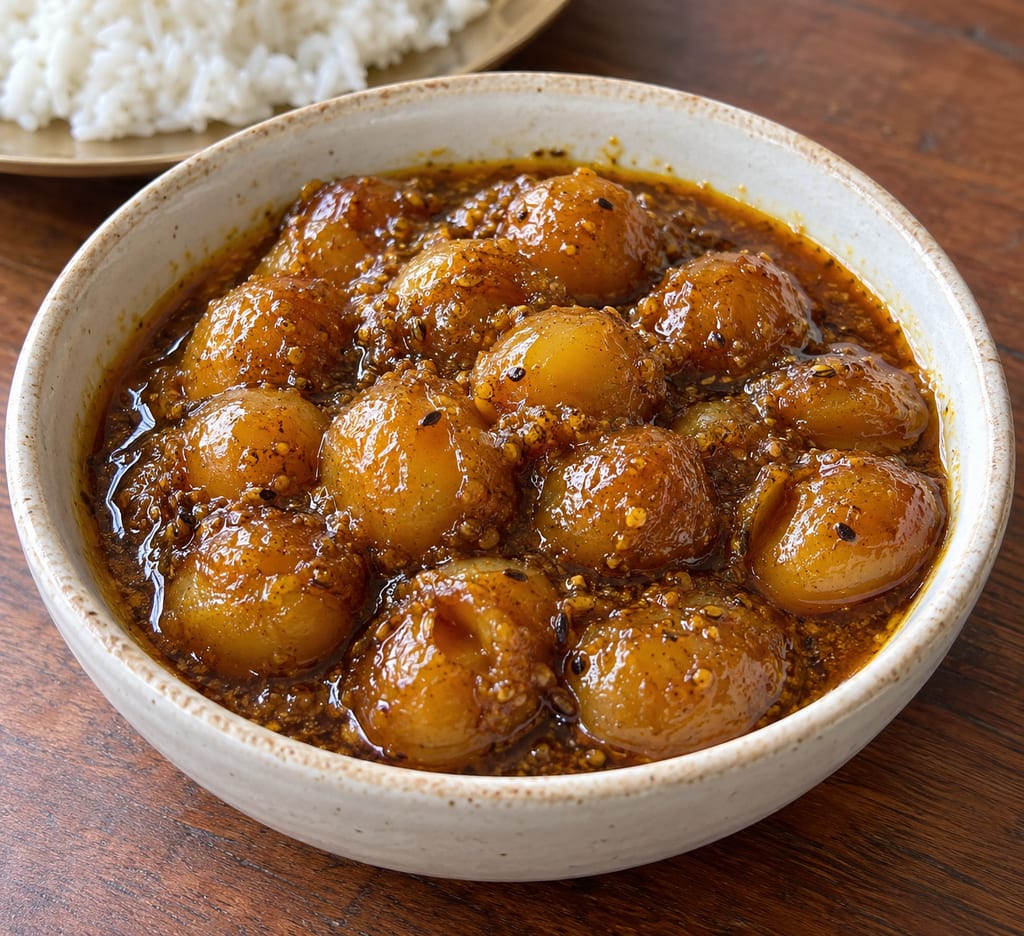
Ripe Nepali lapsi is boiled, peeled and cooked with mustard oil, salt, sugar and roasted spices to make a sweet-sour achar served alongside a meal.
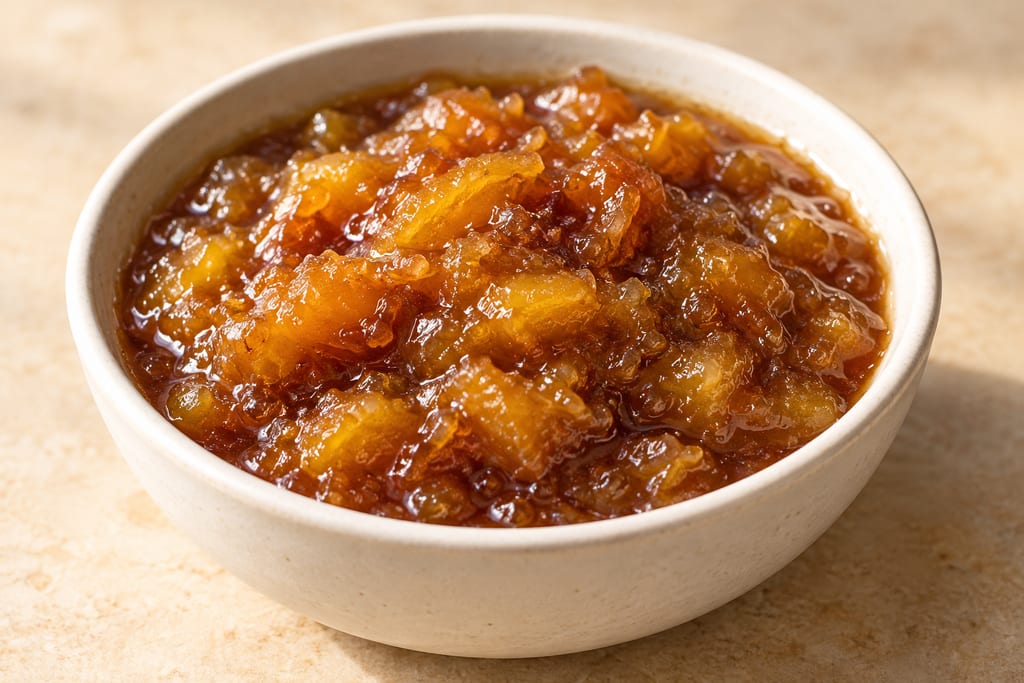
A Suryabinayak municipal recipe cooks ripe lapsi pulp in sugar syrup with cloves, cardamom, cinnamon, sukumel and ginger juice to make a sweet Nepali achar.
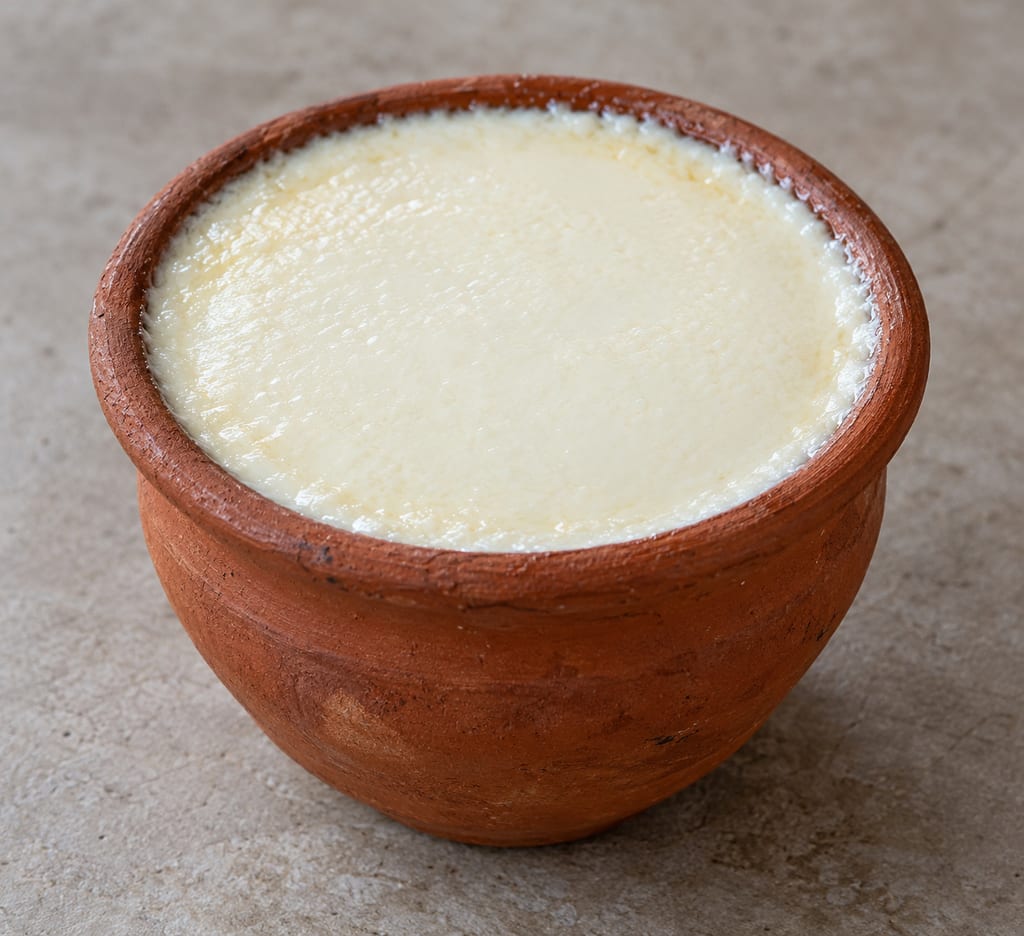
Juju dhau is a rich Newar cultured milk associated with Bhaktapur, Nepal. A local account describes buffalo milk concentrated by boiling, inoculated with previous-day curd and set in earthen pots.
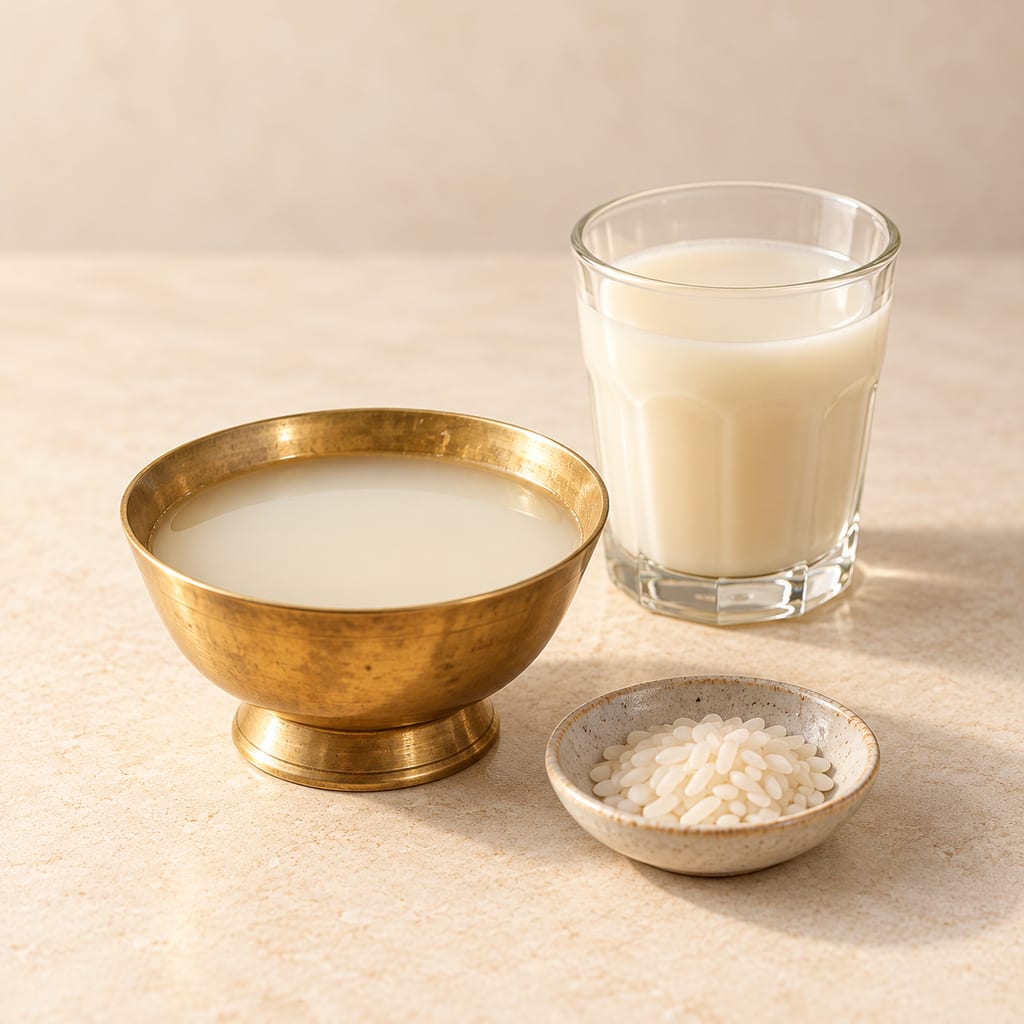
A Kathmandu rice beer in which a marcha starter saccharifies and ferments cooked white rice, the mash later thinned with water for drinking.
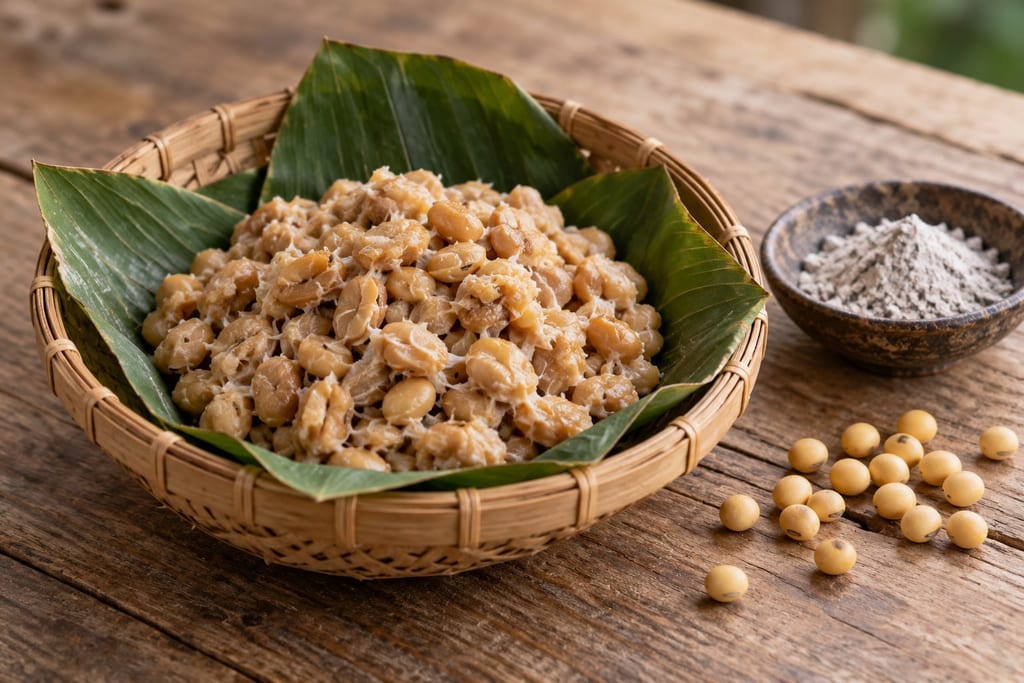
A sticky fermented soybean food of the eastern Himalaya, made here with a measured addition of firewood ash as an alkaline aid to the bacteria that drive it.
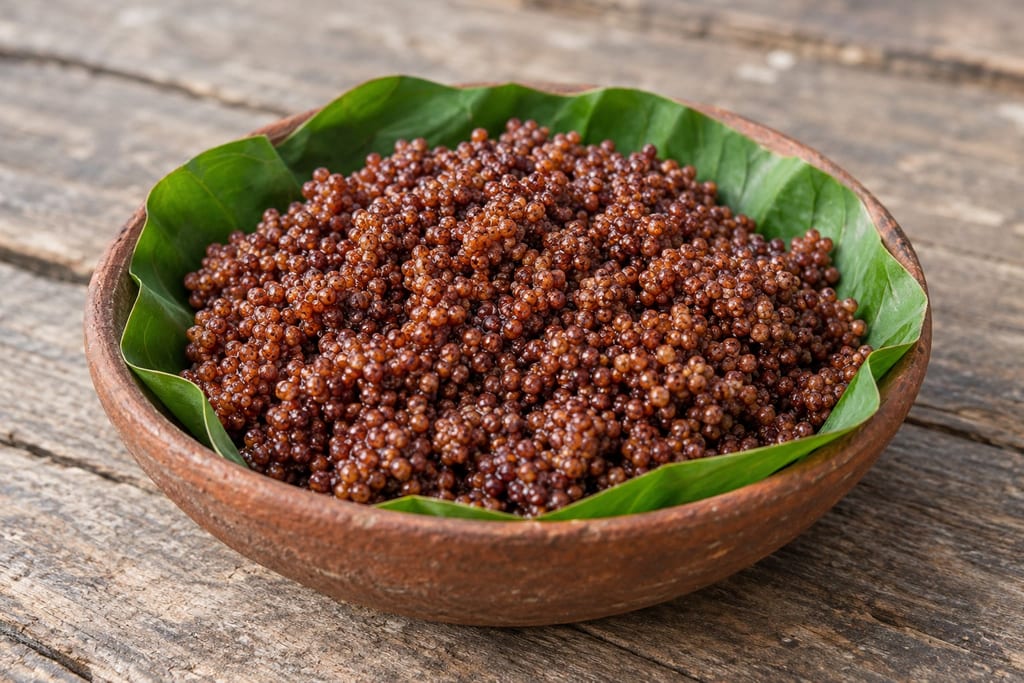
Finger millet fermented with marcha in surveyed Darjeeling and Sikkim communities. Tongba is the later warm-water extraction from the fermented grain. The cited accounts do not establish a complete or validated home batch.

An ethnographic record of marcha (murcha), a dry starter cake used in Eastern Himalayan cereal fermentations. This page documents source-specific community knowledge and is not a recipe for making or storing starter.
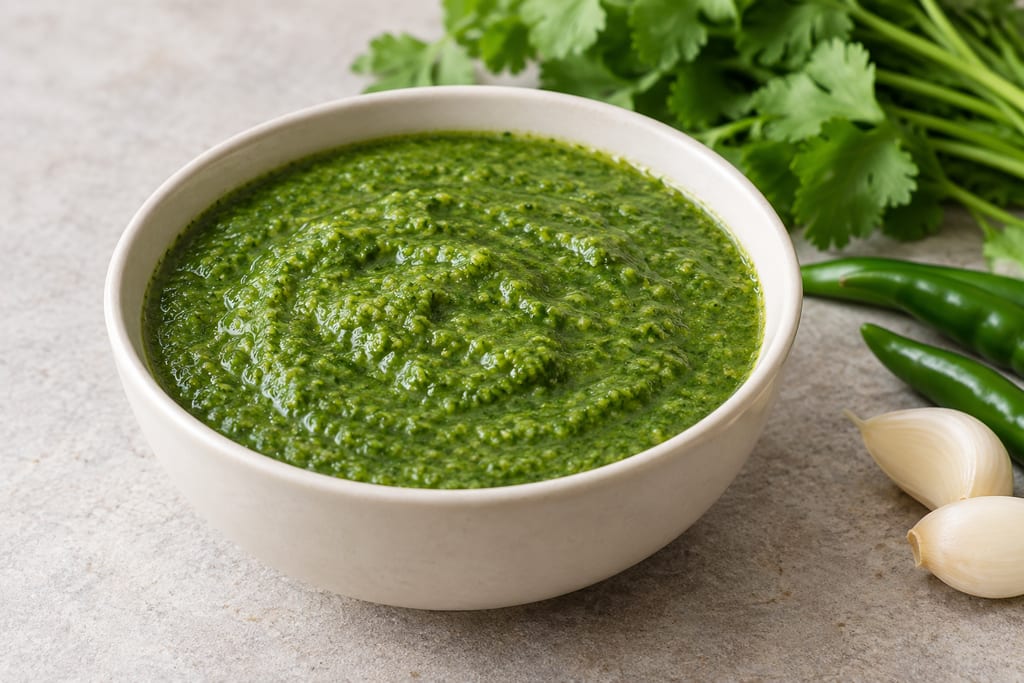
Afghan coriander chatni is a sharp, hot herb sauce with garlic and vinegar. A 2008 Afghanistan manual records green or red pepper and optional walnut; heat and household versions vary.
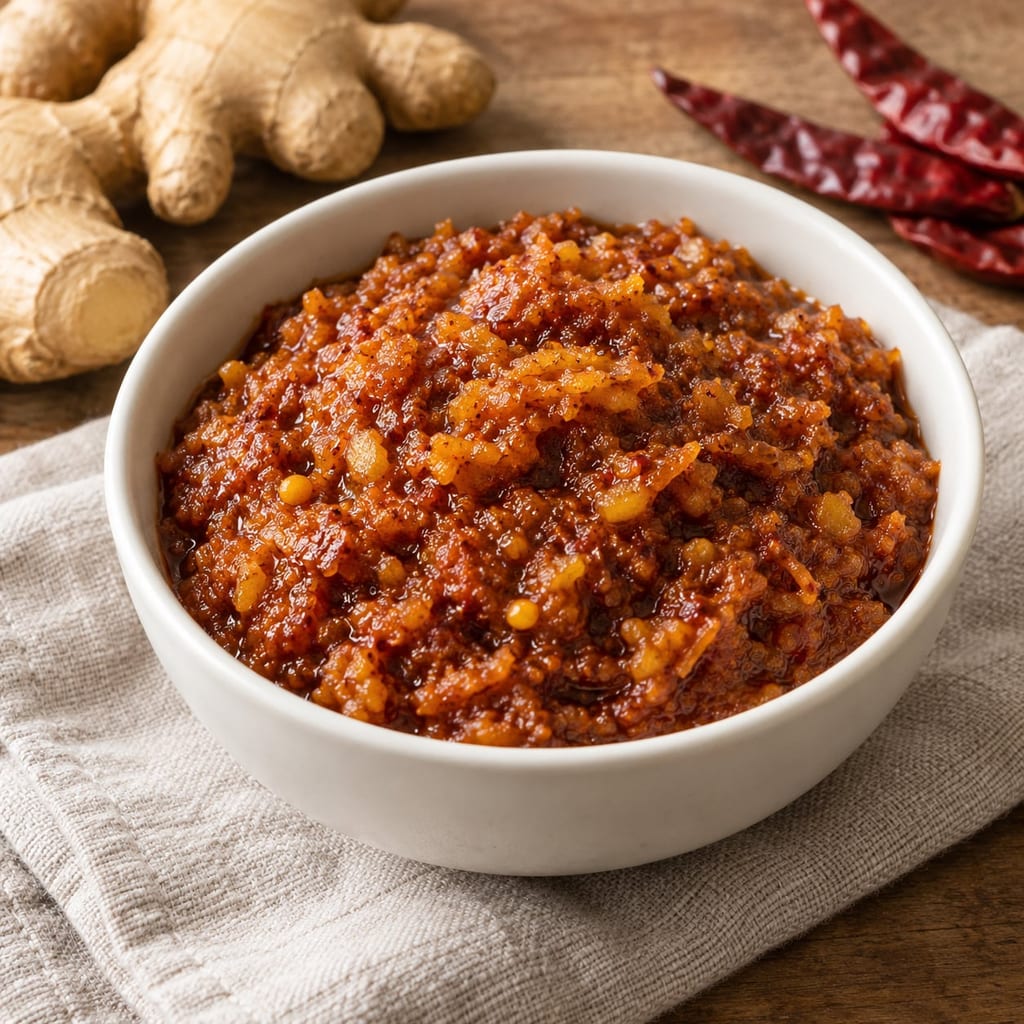
An Andhra ginger-and-urad chutney in which browned dal and briefly fried ginger and chillies are cooled, then ground with jaggery to a coarse paste.
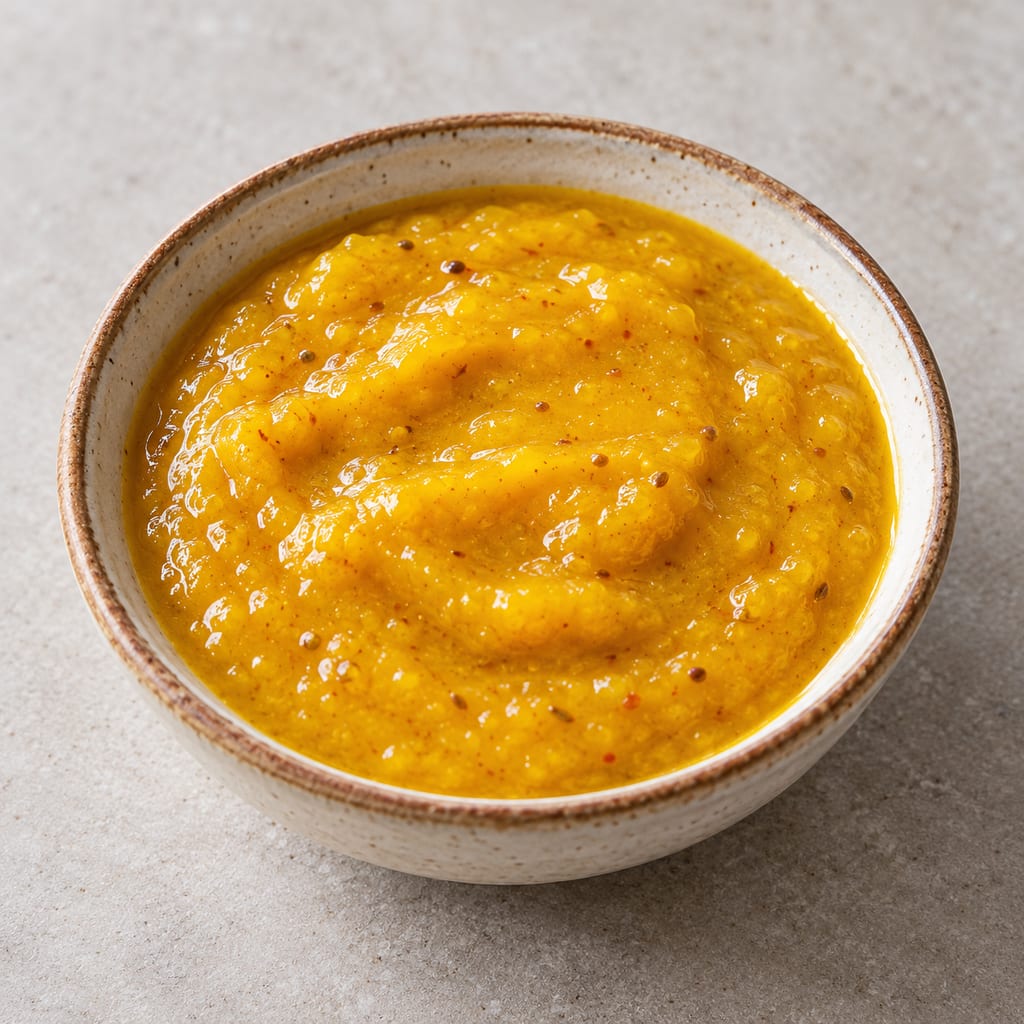
This cooked amba follows a Jewish Food Society recipe that simmers ripe mango with onion, garlic, mustard seed and warm spices into a tangy Middle Eastern condiment.
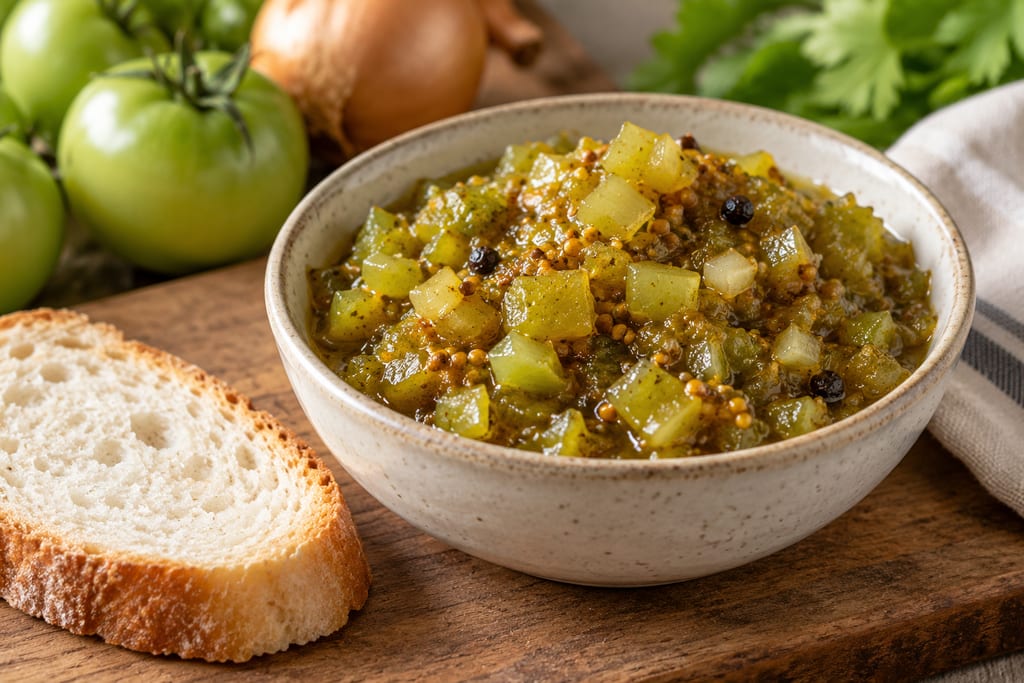
Australian green tomato pickles and relishes vary. This partial version follows ABC Western Victoria’s 2018 pickle recipe, not Beerenberg’s commercial formula. Sources document examples from 1944 onward, not a single origin.
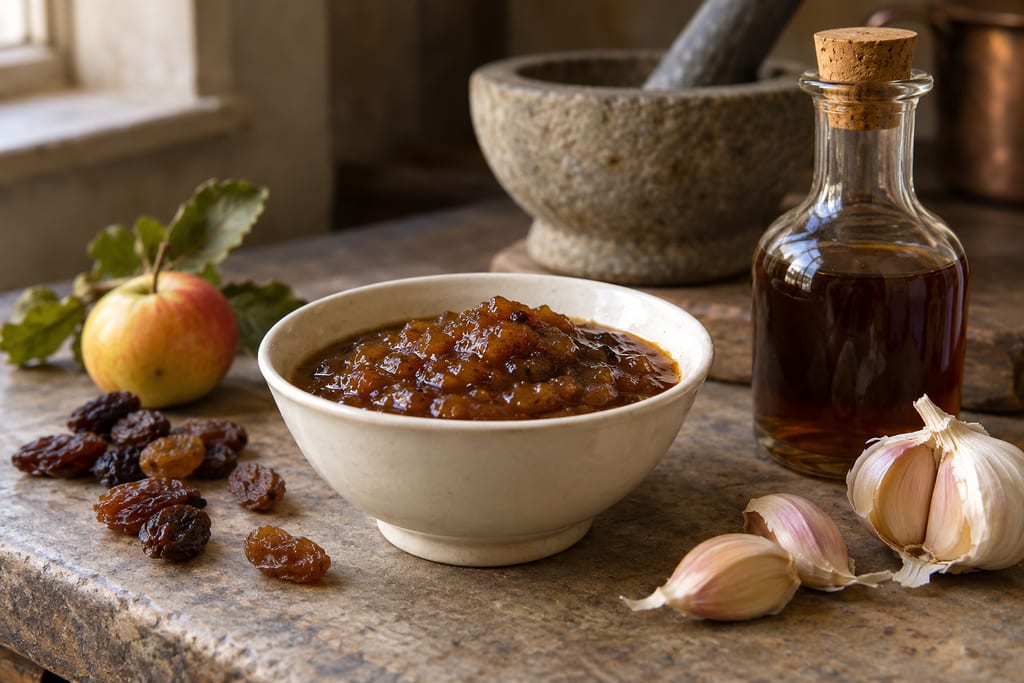
Eliza Acton's Bengal receipt for chetney sauce: stoned raisins and a hard acid fruit pounded with brown sugar, ginger, salt, cayenne and garlic, then thinned with vinegar to the consistence of thick cream.
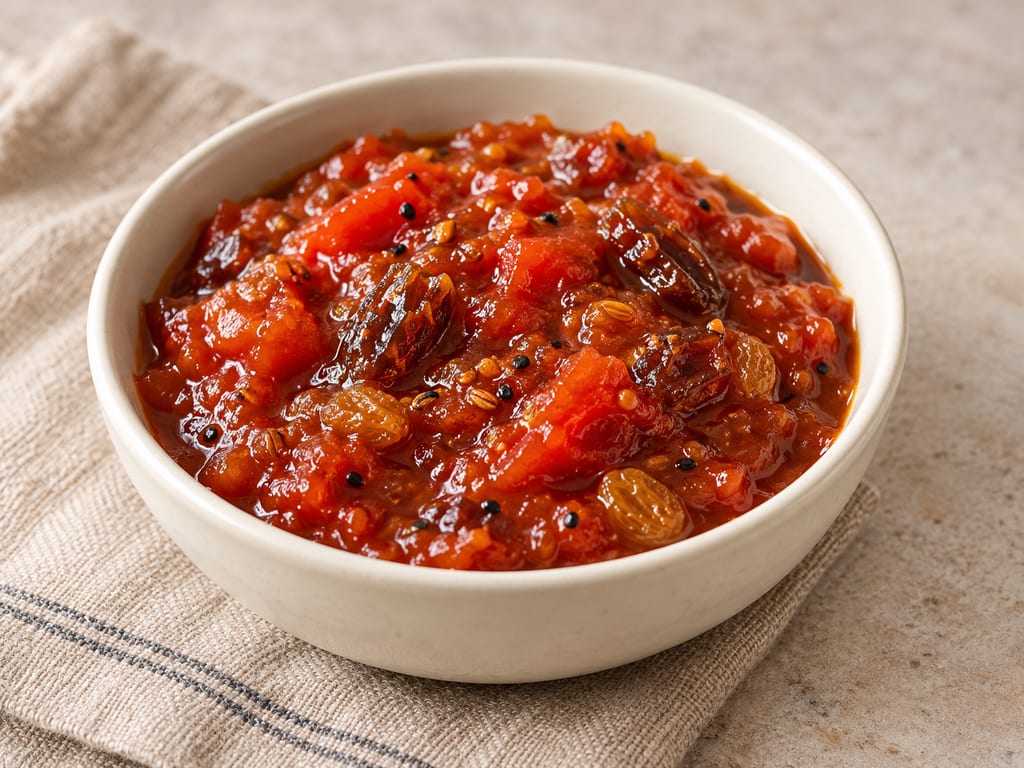
A cooked Bengali meal chutney combining tomatoes, dates, raisins, ginger and panch phoron.

A spicy South African vegetable relish of onion, carrot, pepper, tomato, curry seasoning and beans, cooked briefly and served warm or cold beside pap and grilled meat.
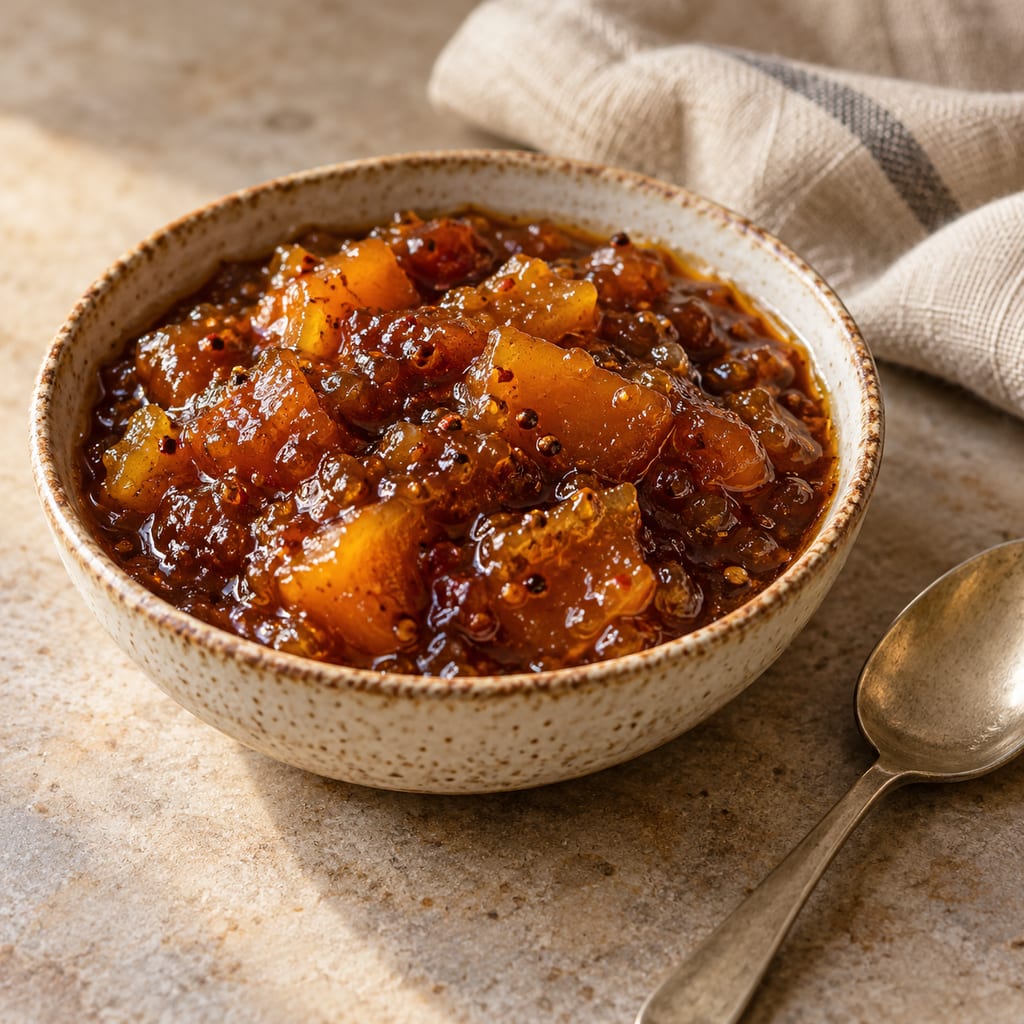
A broad account of cooked chutney traditions: fruit or vegetables combined with sugar, spices and sometimes acid, often boiled into a thick condiment. This record is historical and process context, not a formula or storage recipe.
No community contributions have been published for this entry yet.
Sign in to contribute. Published comments and photos are free to read.
TastyNepalMethod · Inspiration · Geography · Taste · Safety
Momo ko Achar (Sesame-Tomato Dipping Sauce)A measured recipe for eight servings using tomato, sesame, dried chilli, garlic, ginger, timur, cumin, mustard oil, salt, lemon juice, water and fresh coriander.
The page labels the dish Kathmandu Valley and describes a nutty, tingling dip served with momo.
The method and its 'best within three days, kept refrigerated' note are recorded as the publisher's recipe directions, not as independent shelf-life validation.
Cited in: A tomato achar for momo; Toast carefully and serve fresh
ECS NepalHistory · Geography · Usage · Taste
The Secret's in the SauceThe January 2018 article describes Kathmandu momo sauces and distinguishes momo achar, jhol achar and C momo sauce.
It says momo ko achar combines cooked tomato with crushed fried sesame and soybean; ingredients and spice balance vary.
The account describes the sauce as a nutty accompaniment; it does not give a measured recipe.
Cited in: A tomato achar for momo; Achar, jhol and the history that remains open
Nepali TimesHistory · Geography · Usage
MOMO LOCOA 2025 report describes momo and achar/jhol as contemporary Kathmandu eating practice.
It cites a momo-cha served with sesame-and-soybean jhol achar and records tomato achar and other sauce pairings at Kathmandu eateries.
The article reports a cookbook author's account of momo history; it does not date this achar.
Cited in: Achar, jhol and the history that remains open
Smithsonian MagazineHistory · Geography
A History of Momo, the Dumpling That Defines Nepali CuisineThe source says momo's exact origins are unknown and describes momo as commonly served with spicy tomato-based achaar.
Its historical account concerns the dumpling, not the origin or age of momo achar.
Cited in: Achar, jhol and the history that remains open
U.S. Food and Drug AdministrationSafety
The FASTER Act: Sesame Is the Ninth Major Food AllergenFDA identifies sesame as the ninth major food allergen.
Cited in: Toast carefully and serve fresh; Storage claims in the sources
U.S. Food and Drug AdministrationSafety
Are You Storing Food Safely?FDA's general guidance says refrigerate perishables within two hours, or one hour above 90°F, and keep refrigerator temperature at or below 40°F.
This is general food-handling guidance rather than validation of the achar's specific storage life.
Cited in: Toast carefully and serve fresh
UK Nepal Friendship SocietyMethod · History · Serving
Home cookery: Foods of Nepal (e-book)Golbeedaa Achar: tomato, onion, ginger, garlic, chilli, fenugreek, lemon, sesame, turmeric; puree then reduction; smooth, sauce-like, reddish-orange
Contributor learned it at home in his teens; served with momos and dal-bhat-tarkari; contrasted with Chinese dumpling accompaniments
Cited in: Three documented formulas, kept apart; Where the sauce sits with momos
iNepal.orgMethod · Serving
MOMO Achar (Nepali Food Recipe)Charred tomatoes, toasted and ground sesame, cumin, mustard seed, timur, asafoetida, lime juice and zest, cilantro
Serve with steaming momos; page gives no yield; transcription error in lime zest
Cited in: Three documented formulas, kept apart; Where the sauce sits with momos
Nepali TasteMethod · Storage
Momo Achar (Tomato Sesame Chutney for Momos)Serves six; four medium tomatoes, quarter cup white sesame, mustard oil, fenugreek, timur, lemon, cilantro
Tomatoes charred over flame or broiled; sesame toasted; mustard oil heated and cooled; rest at least 15 minutes
Author says keeps refrigerated up to one week in a clean glass jar
Cited in: Three documented formulas, kept apart; Storage claims in the sources
Asian Foods DailyServing · Storage · Photo
Momo Achar Recipe (Nepali Dipping Sauce)Serves 4 to 6 as a dipping sauce; makes about one cup
Roasted tomato and sesame achar; author states it keeps refrigerated for five days
Cited in: Where the sauce sits with momos; Storage claims in the sources