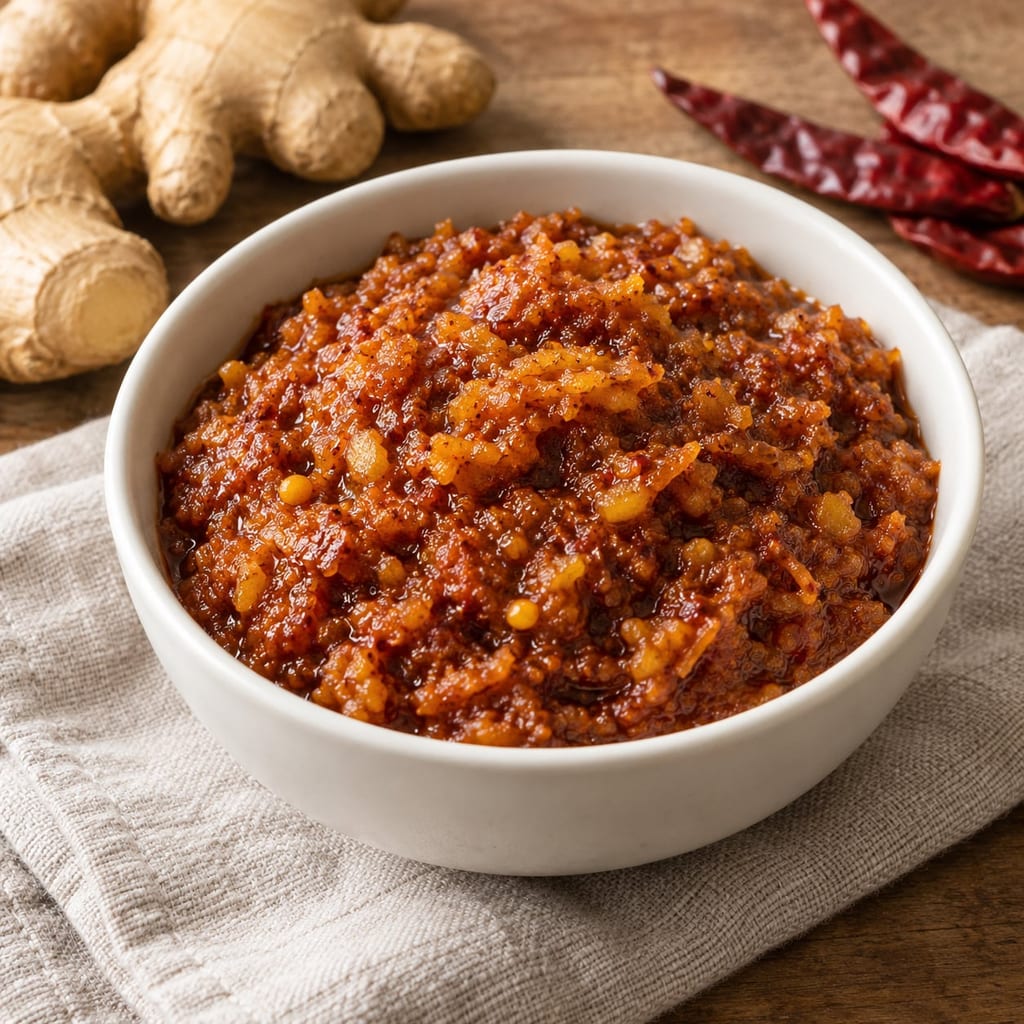
Allam pachadi
An Andhra ginger-and-urad chutney in which browned dal and briefly fried ginger and chillies are cooled, then ground with jaggery to a coarse paste.
 FermenteaWhere food goes to change
Traditional method
लहसुन मिर्च चटनी (lahsun mirch chutney) · Lasun mirch chutney
A wet Rajasthani chutney of tomato, soaked dried red chillies, garlic and coriander seed ground with salt and water. A 2017 study gives its proportions as a ratio and tested a stored batch.
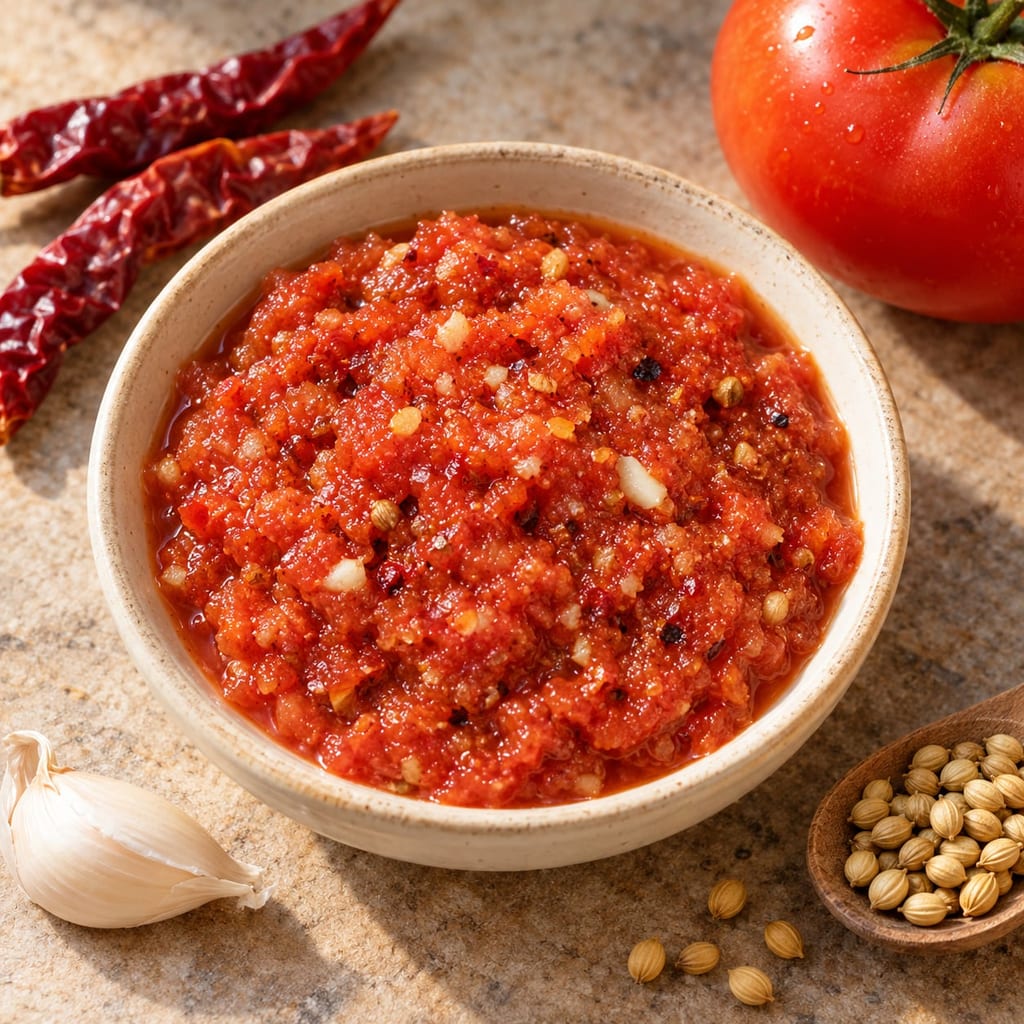
This chutney is documented in a 2017 paper in the International Journal of Current Microbiology and Applied Sciences by Meena and colleagues, titled for the antioxidant potential of a traditional Rajasthani chilli-garlic chutney and its shelf life. Unlike the dry garlic powders eaten elsewhere in India, it is a wet paste, and tomato is its largest ingredient.
Tomato, red chilli, garlic, coriander seed, water and salt go in at 60:11:9:7:10:3. The figures are given as a ratio, without saying whether they are by weight or volume. Dried red chillies are soaked for 30 minutes in warm water and drained, then ground with the garlic, coriander seed and tomato. Salt and water are added for consistency. Vinegar is not part of the formula.
The authors stored 10 g portions in zip-lock bags at 0 degrees C, which they describe as deep freezing, and analysed samples on days 15 and 30. Those are the conditions of one experiment. They do not show how long a home batch lasts in a refrigerator, nor how it behaves when frozen and thawed in a household freezer. The wording of 0 degrees C as deep freezing is kept as the paper gives it.
A Marathi fresh chutney of grated coconut, garlic, chilli powder, lemon juice and salt, pounded on a stone slab, is a separate food with its own page. Maharashtra Times also prints a cooked Marathi chutney of 150 g ginger, 12 to 14 garlic cloves and red chillies, ground smooth with lemon. Its ingredient list leaves the chillies as required while the method says five large chillies, and it says the lemon prevents spoilage without any test. Neither is a variant of this formula.
Neither the study nor the Marathi pages describe a starter or any fermentation. Soaking, grinding and cooking are all that is done.
No dated origin or seasonal history was found. The formula's basis, the batch size and the finished yield are not stated. The Food Safety and Standards Authority of India standard for commercial fruit-and-vegetable chutney is a separate product category and cannot be applied to this home chutney without its own analysis.
Described as a traditional Rajasthani chutney. No date or origin is given.
Scaling: source batch only
The chutney is an uncooked, moist paste of tomato and garlic. The study tested keeping only for small frozen portions.
Hazard sourceThe study stored 10 g portions in zip-lock bags at 0 degrees C and analysed them on days 15 and 30. That describes the experiment, not ordinary refrigerator storage, and gives no household keeping time.
No vinegar is part of this formula, and the proportions have no stated basis, so a home batch cannot be scaled from them with confidence.
The study calls the product a traditional Rajasthani chutney; it gives no narrower place and no origin.
An Andhra ginger-and-urad chutney in which browned dal and briefly fried ginger and chillies are cooled, then ground with jaggery to a coarse paste.
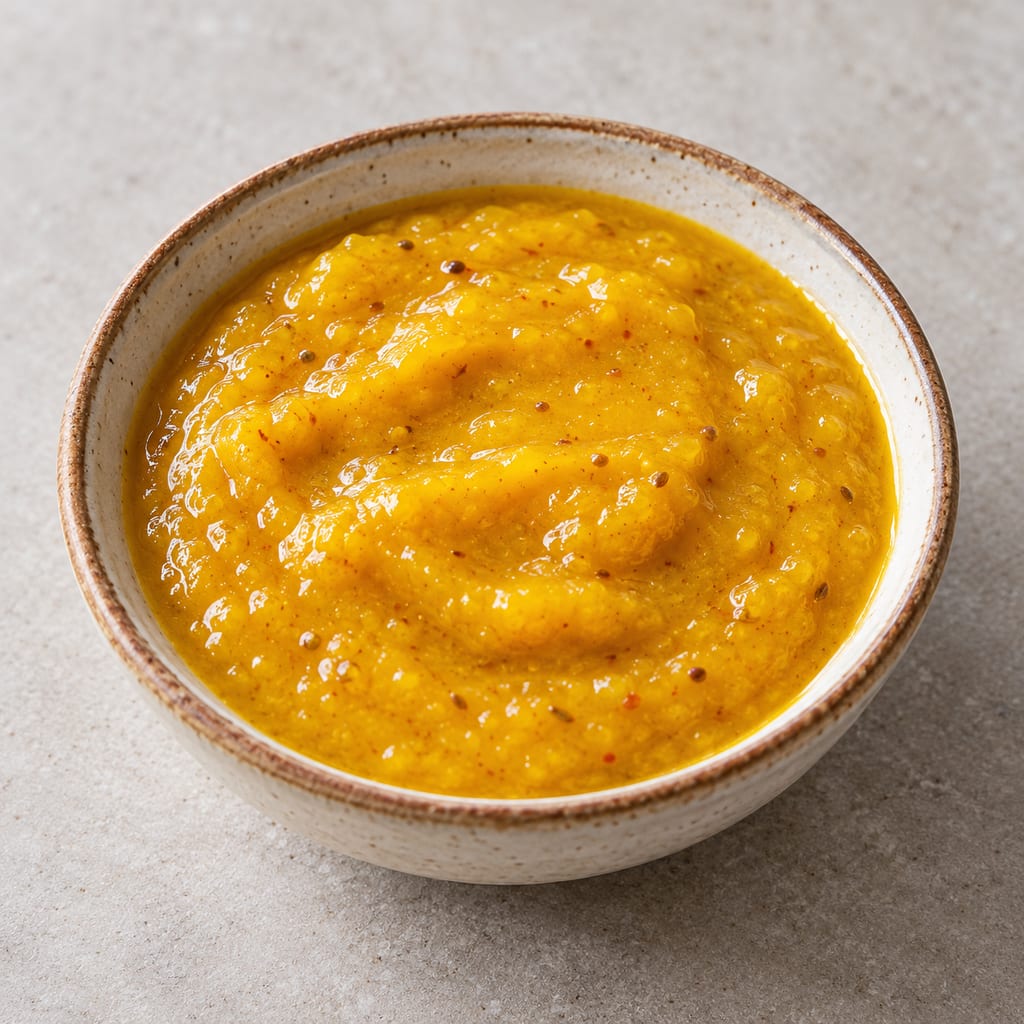
This cooked amba follows a Jewish Food Society recipe that simmers ripe mango with onion, garlic, mustard seed and warm spices into a tangy Middle Eastern condiment.
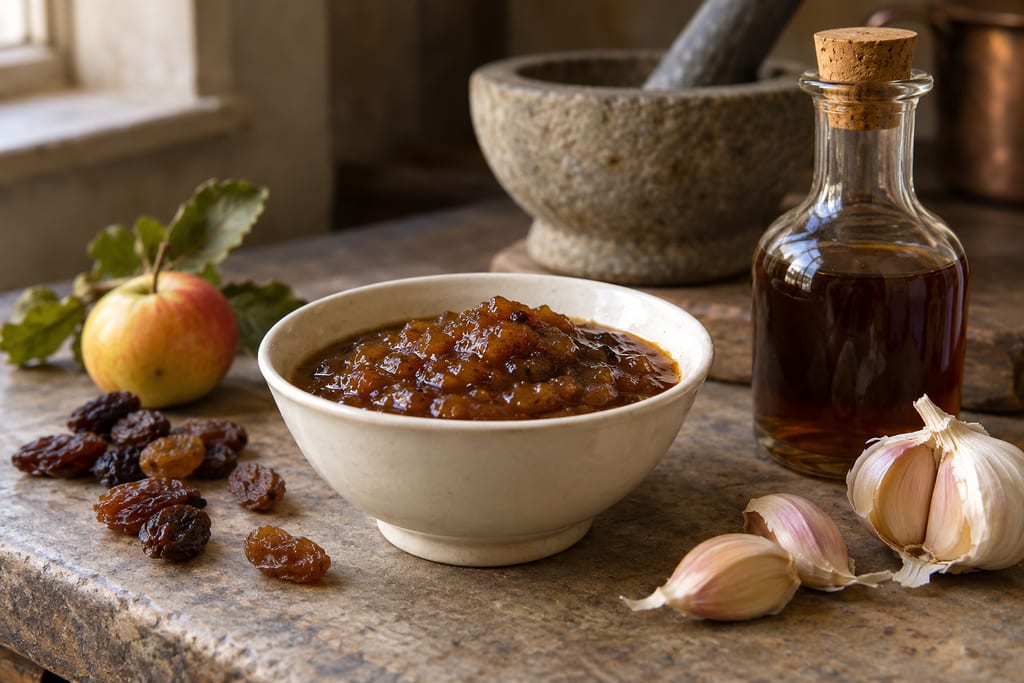
Eliza Acton's Bengal receipt for chetney sauce: stoned raisins and a hard acid fruit pounded with brown sugar, ginger, salt, cayenne and garlic, then thinned with vinegar to the consistence of thick cream.
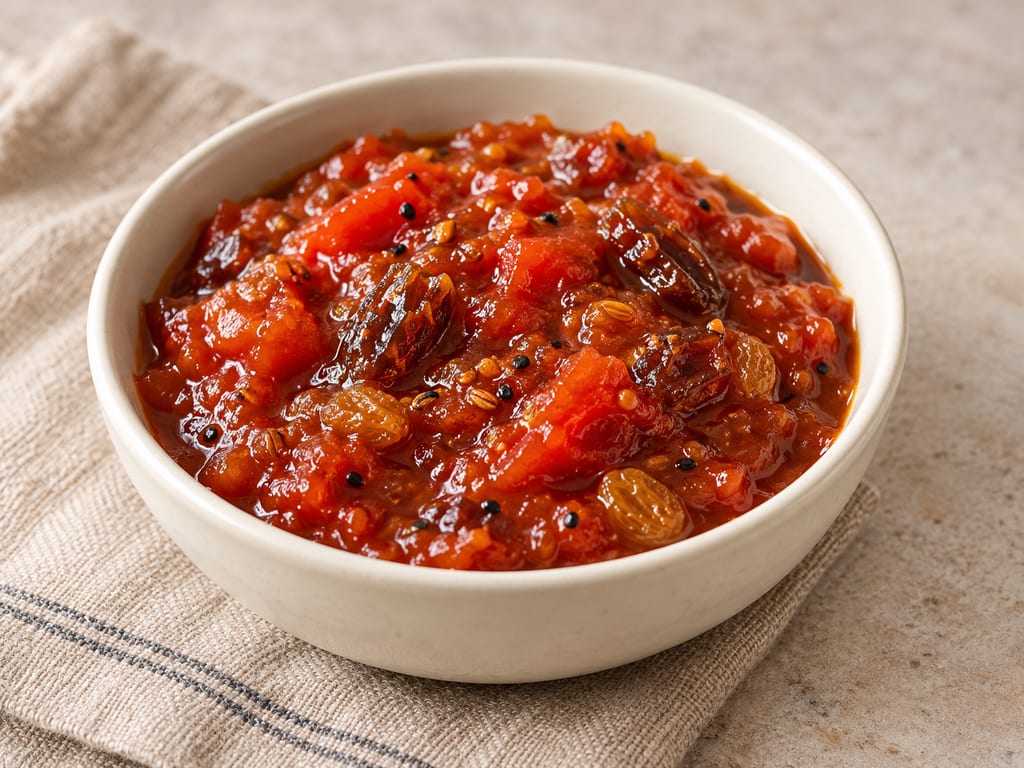
A cooked Bengali meal chutney combining tomatoes, dates, raisins, ginger and panch phoron.
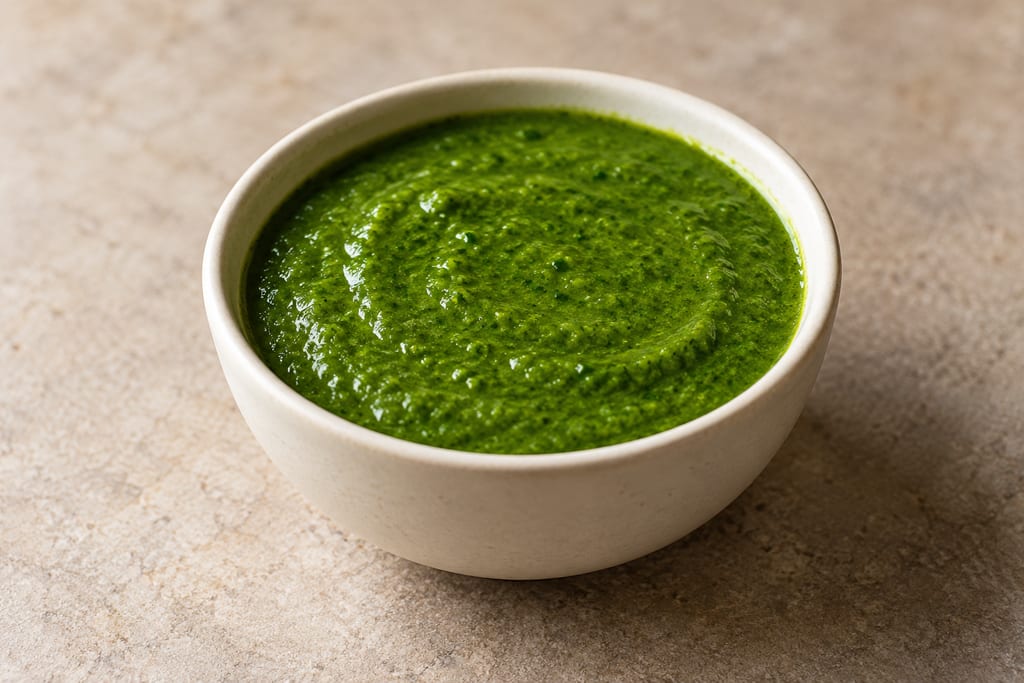
A cold-blended coriander and mint chutney with ginger, green chilli and optional cumin and lemon; the author serves it with snacks, chaat and sandwiches.
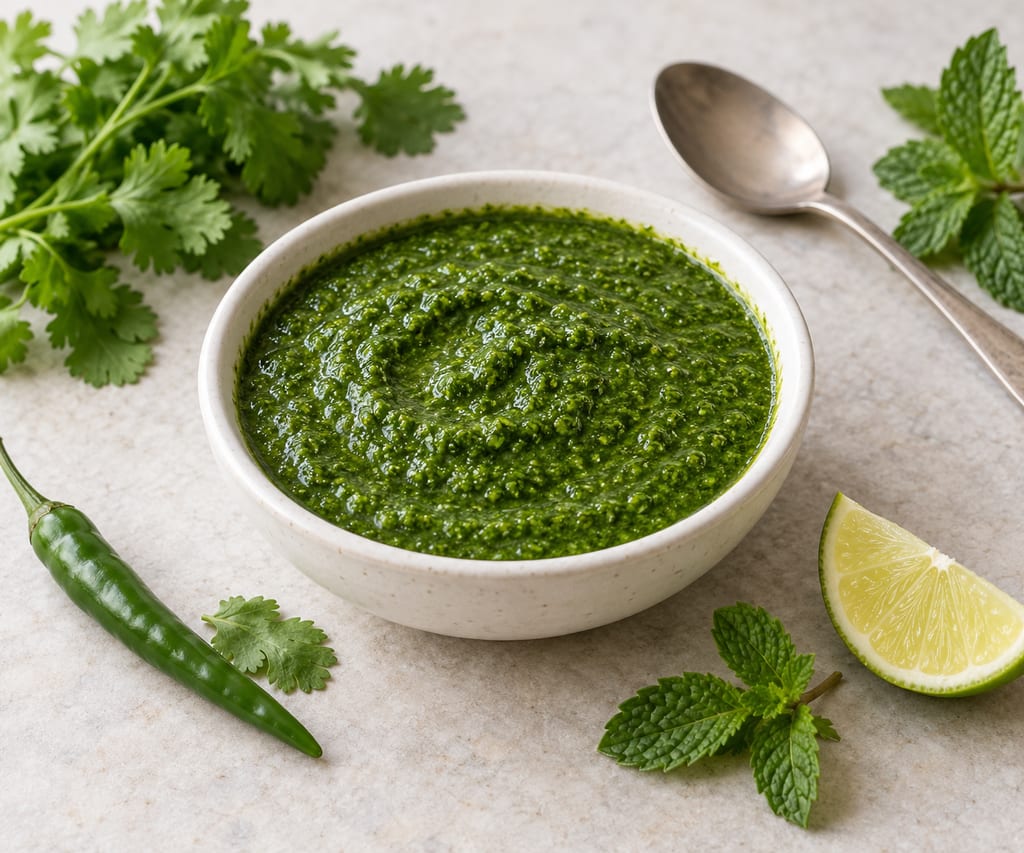
A fresh, uncooked green chutney blended from coriander, mint, chilli and citrus. This measured development batch is untested and intended for prompt serving.
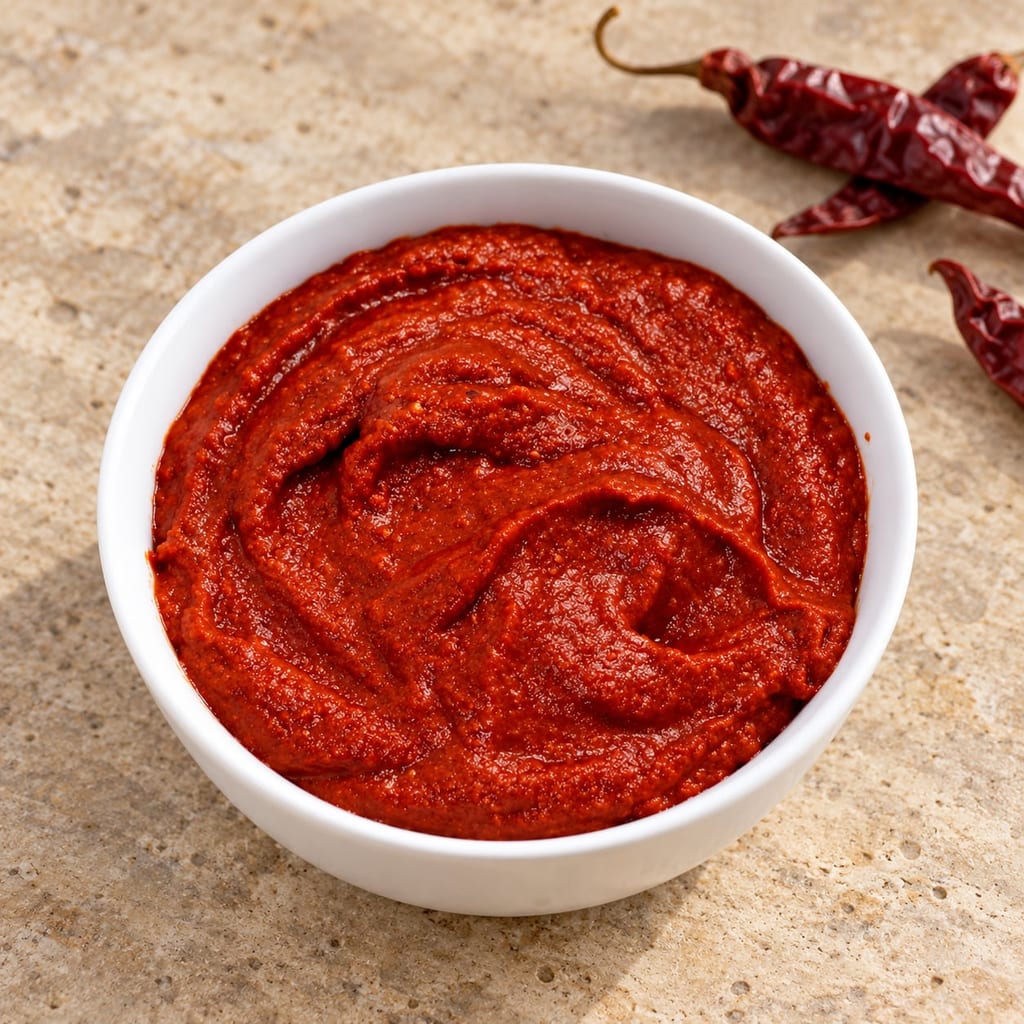
Recheado is a red Goan spice paste of Kashmiri chillies, garlic and spices ground in vinegar, best known as the stuffing for fried fish such as mackerel.
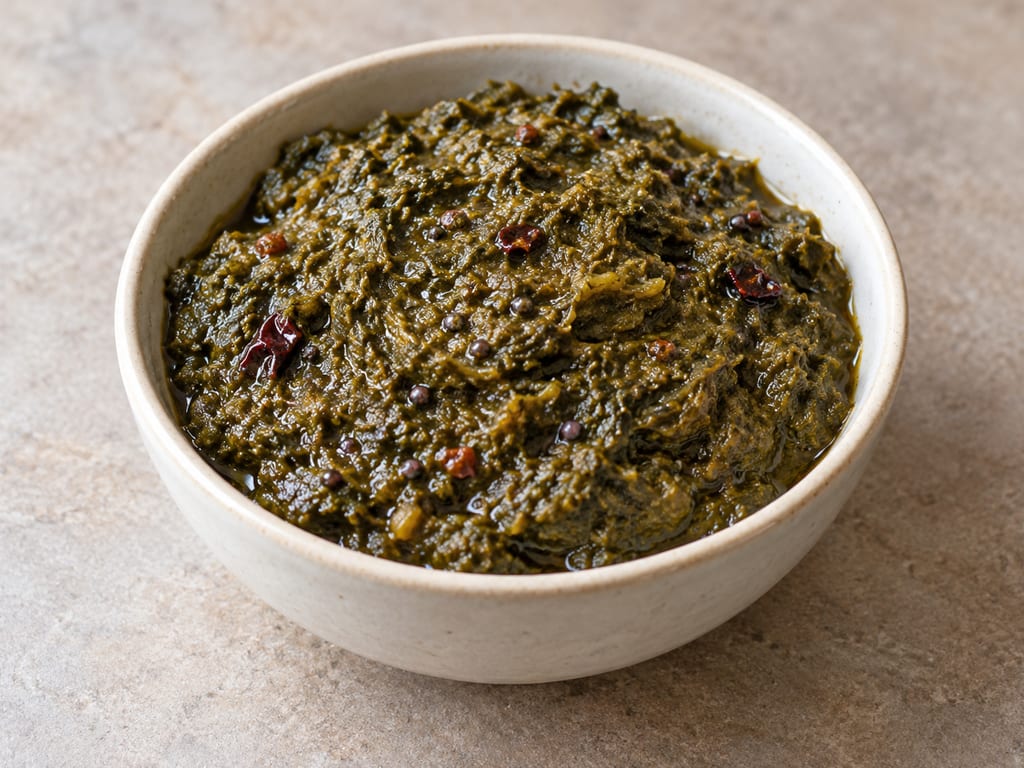
A hot, sour Andhra chutney of gongura (sorrel) leaves cooked soft and ground with fried dried chillies, garlic and onion, then finished with a hot tempering of dals, mustard and curry leaves.
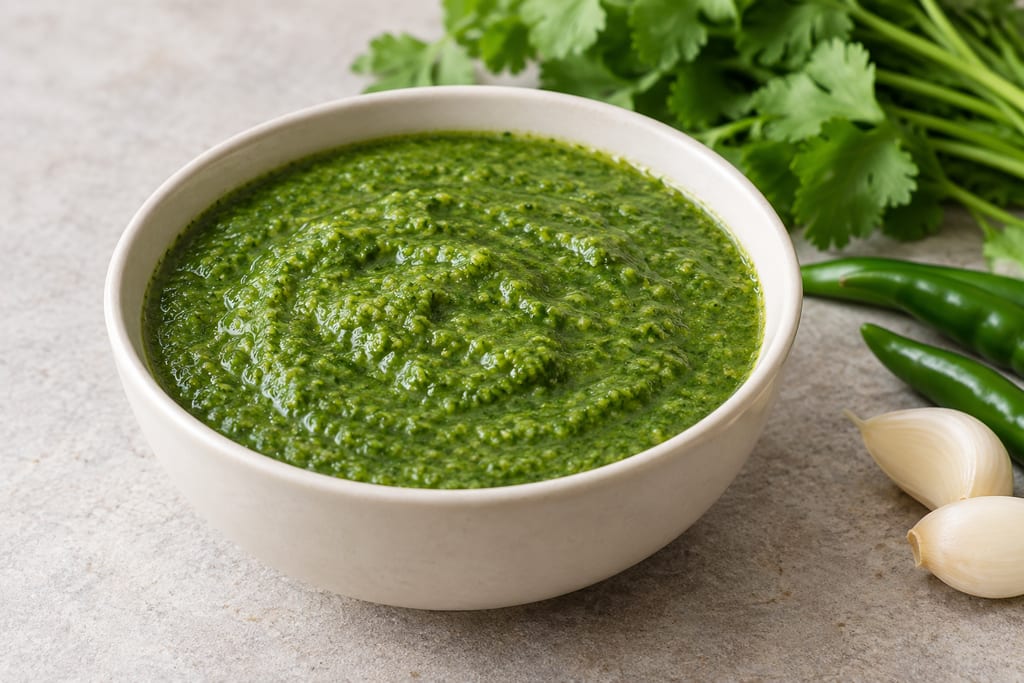
Afghan coriander chatni is a sharp, hot herb sauce with garlic and vinegar. A 2008 Afghanistan manual records green or red pepper and optional walnut; heat and household versions vary.
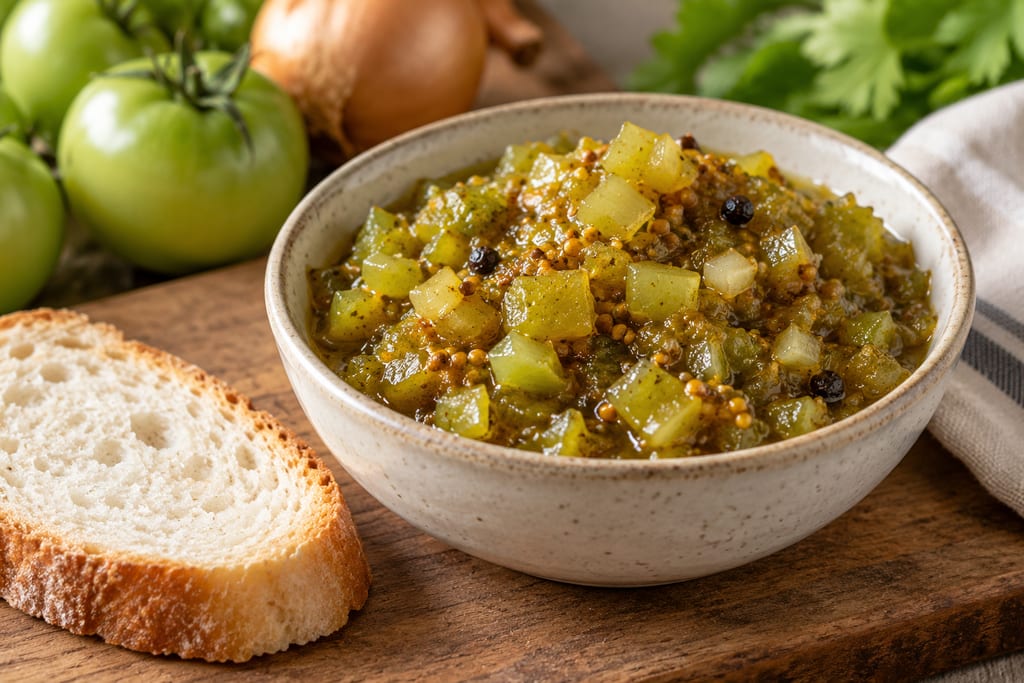
Australian green tomato pickles and relishes vary. This partial version follows ABC Western Victoria’s 2018 pickle recipe, not Beerenberg’s commercial formula. Sources document examples from 1944 onward, not a single origin.

A spicy South African vegetable relish of onion, carrot, pepper, tomato, curry seasoning and beans, cooked briefly and served warm or cold beside pap and grilled meat.
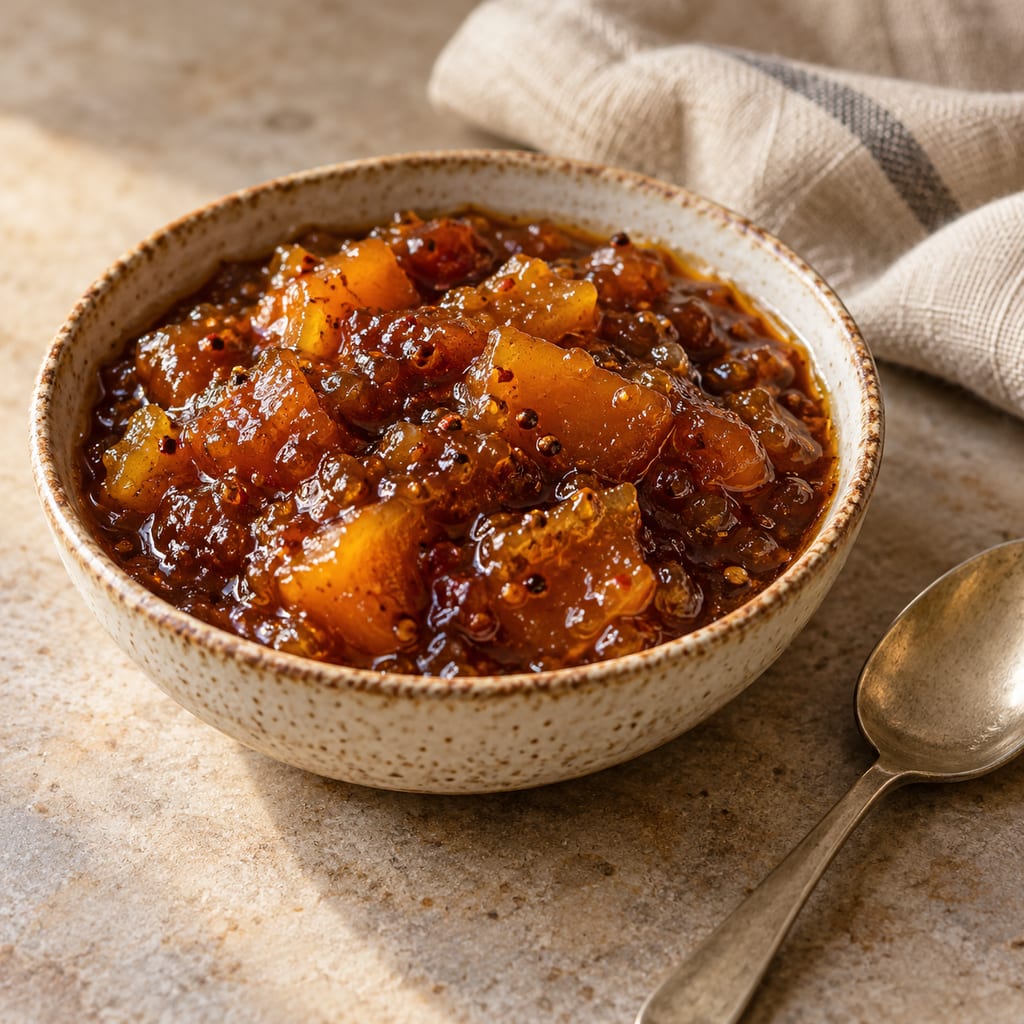
A broad account of cooked chutney traditions: fruit or vegetables combined with sugar, spices and sometimes acid, often boiled into a thick condiment. This record is historical and process context, not a formula or storage recipe.
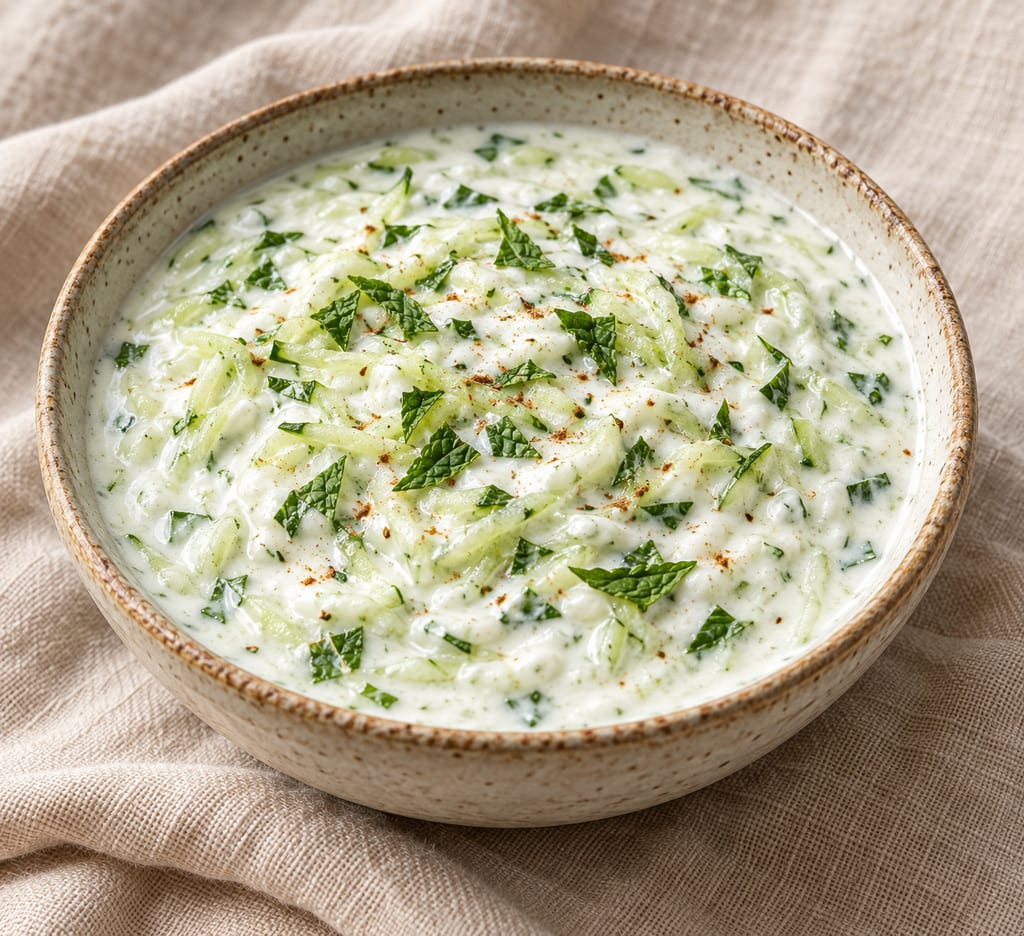
Cucumber and chopped herbs are folded into plain yoghurt with salt and roasted cumin for a cool South Asian accompaniment to spiced food.
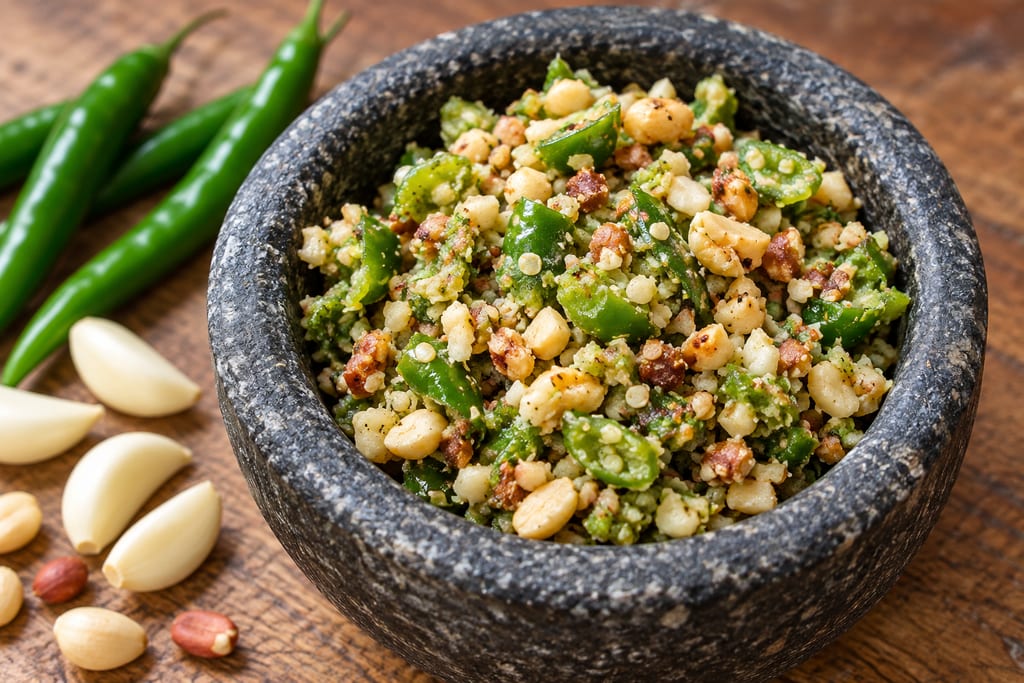
A fresh Maharashtrian thecha of green chillies, peanuts and garlic, roasted separately in the same oil and crushed with salt. Optional coriander joins the pan before grinding; serve with bhakari.
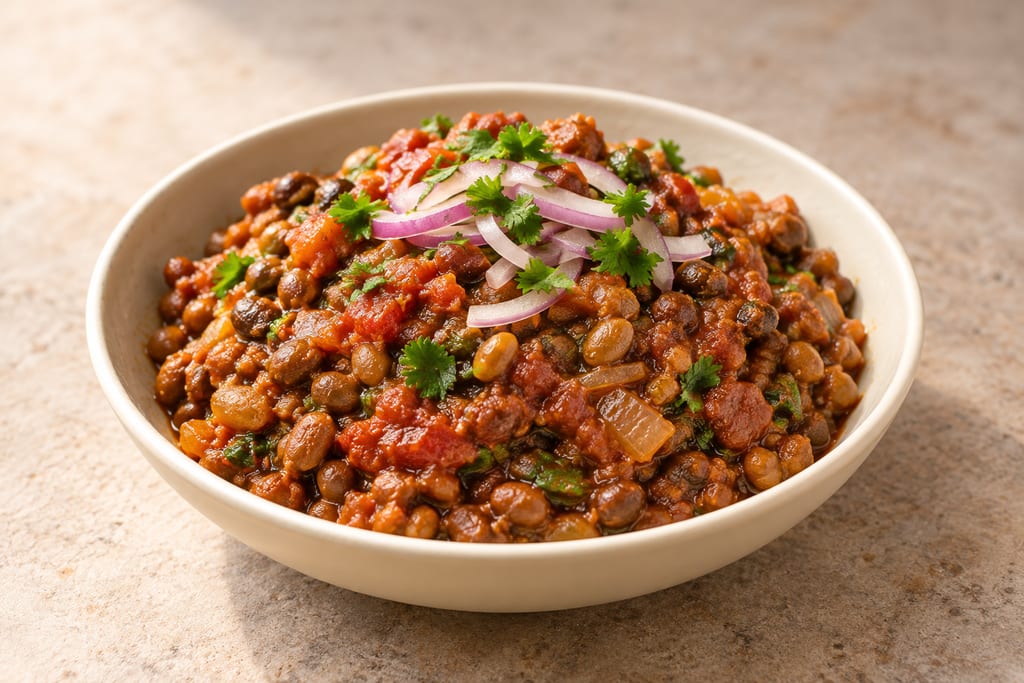
Kinema ra golbheda ko achar combines already-fermented soybean kinema with tomatoes, onion, garlic and spices, finished with sesame powder and fresh garnish, and is eaten with rice or toast.
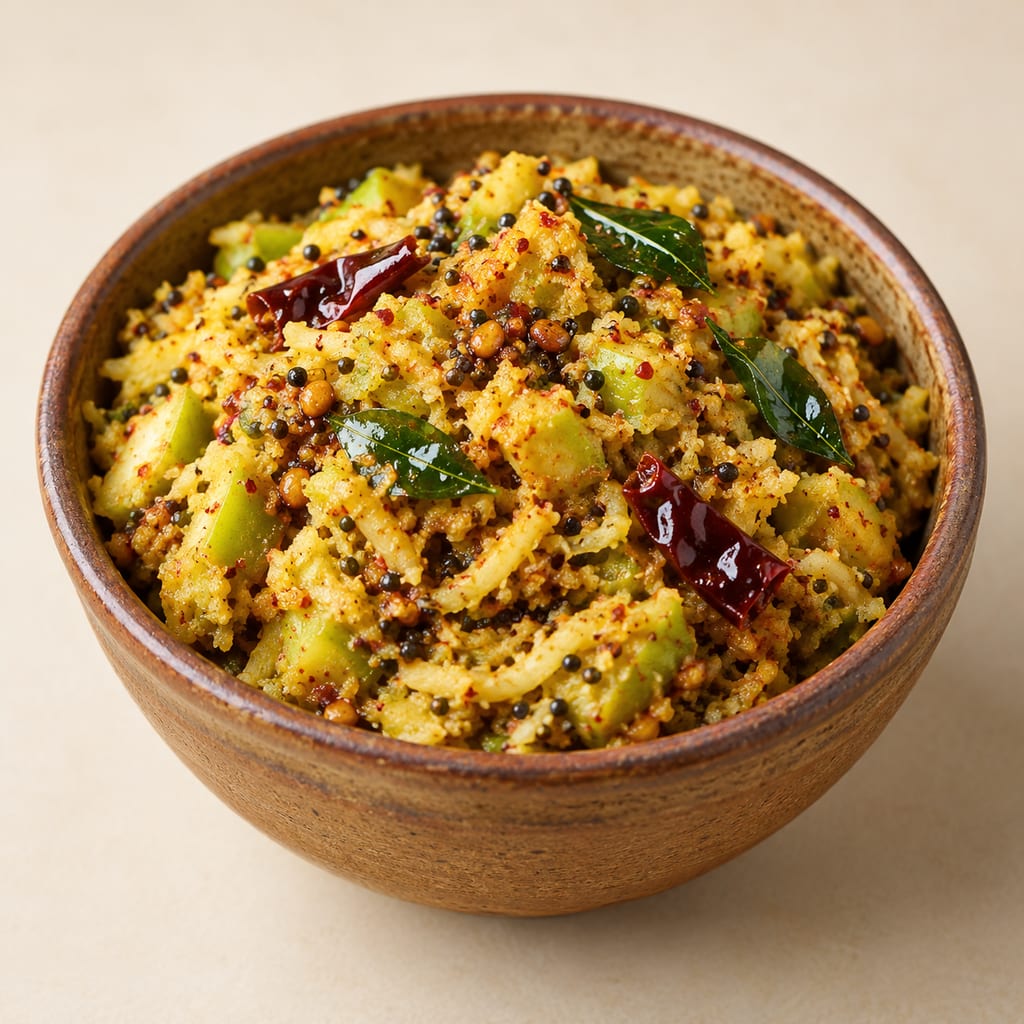
A Telugu coconut and raw mango pachhadi with a separately fried spice mixture.
No community contributions have been published for this entry yet.
Sign in to contribute. Published comments and photos are free to read.
International Journal of Current Microbiology and Applied Sciences / Excellent PublishersMethod · Safety · Geography
Antioxidant Potential of Traditional Rajasthani Chilli Garlic Chutney and its Shelf LifeRatio, soaking and grinding method
Storage experiment at 0 degrees C on 10 g portions, sampled on days 15 and 30
Cited in: A wet chutney from a study; The formula and how it was made; What the storage test was; Open questions
Royal Chef SujataIdentity
Khamang Lasoon Chutney Recipe in MarathiA separate Marathi fresh coconut and garlic chutney
Cited in: Other garlic chutneys
Maharashtra TimesVariant
लसूण व लाल मिरचीची चटणी [Garlic and red chilli chutney: an easy recipe]A cooked Marathi ginger, garlic and red chilli chutney
Cited in: Other garlic chutneys
FSSAISafety
Compendium of Food Product Standards and Food Additives, Version XXVIICommercial fruit-and-vegetable chutney is a separate standard category
Cited in: Open questions